INTERNACIONAL
Taliban sends first envoy to India in diplomatic milestone as regional tensions reshape alliances


NEWYou can now listen to Fox News articles!
Nearly five years after the Taliban’s takeover of Afghanistan, Kabul has appointed its first envoy to India, marking a significant milestone in diplomatic engagement between the two countries.
Noor Ahmad Noor, a Taliban-appointed diplomat, has assumed responsibility as Chargé d’Affaires at the Afghan Embassy in New Delhi, the first such posting to India since the Taliban returned to power more than four years ago. The move is the latest step in cultivating goodwill, as India’s role evolves in Afghanistan.
Taliban security personnel walk past a damaged car after cross-border clashes between Afghanistan and Pakistan. (Getty Images)
The renewed political and economic engagement with the Taliban comes at a time of surging cross-border violence between Afghanistan and Pakistan, which has plunged relations between the two neighbors to a dangerously low point. Just this week, tensions flared back up after a fresh round of deadly strikes and clashes. And nuclear-armed India wasted no time in strongly condemning Islamabad over the attacks and voiced support for Kabul’s sovereignty.
Against this backdrop of sustained hostilities, India stands out as one country that has much to gain. Experts say India’s reset with the Taliban reflects a pragmatic policy, aimed at countering Pakistani influence while protecting its own long-term security interests in the region.
«This is a classic case of ‘the enemy of my enemy is my friend,’» Sid Dubey, a visiting professor at Bennett University in India, told Fox News. «The only thing the two parties are mutually aligned on is Pakistan and the enmity both have toward the Islamic Republic.»
Kabul’s rapidly deteriorating relationship with Islamabad factors heavily into India’s calculations. For decades, Pakistan sought what it called «strategic depth» in Afghanistan, backing Taliban factions to ensure a friendly government in Kabul. But now, as frictions rise over border disputes, closer coordination between India and Afghanistan stretches Pakistan’s capacity to manage tensions on multiple fronts.
At the same time, analysts say, it gives India the opportunity to extend its influence in the region at the expense of another rival, China. Furthermore, Pakistan buffers India and Afghanistan, making strategic alignment between New Delhi and Kabul particularly significant.
TRUMP: US TRYING TO GET BAGRAM AIRBASE ‘BACK’ FROM TALIBAN IN AFGHANISTAN
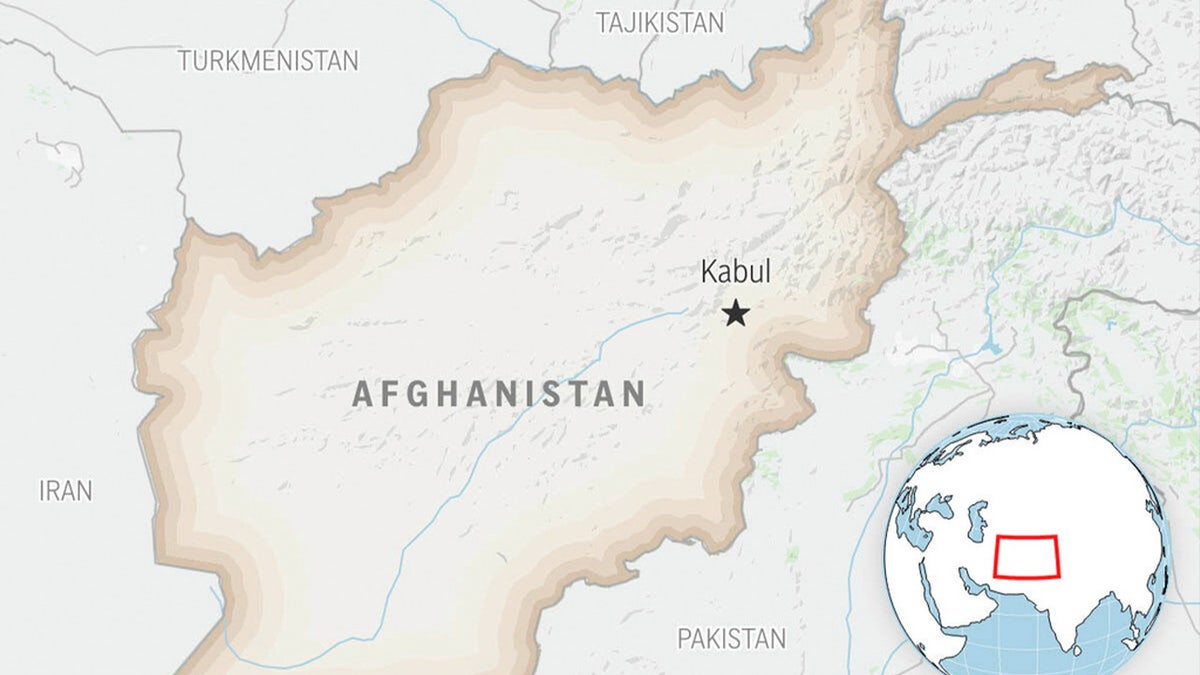
Eastern Afghanistan shares a border with India’s neighbor Pakistan. (AP Photo)
«Afghanistan is cursed by its geography and proximity to foreign powers who will always meddle,» Dubey explained, as regional fault lines only continue to sharpen. «And with virtually no American influence on the Taliban government anymore, Delhi feels secure in going ahead with its own India-centric Afghan policy.»
Like most other countries, India does not formally recognize the Taliban regime in Afghanistan. Nevertheless, both nations have been taking a series of quiet but significant steps to deepen ties. Over the last year, several high-level diplomatic interactions have been billed as groundbreaking. Cooperation has expanded across the board, from healthcare and humanitarian aid to cultural exchanges and economic projects.
Dubey claimed there’s another big reason for Delhi’s push. «India supports all this in the hope or understanding that one day, if needed, India can use Afghanistan as a platform to strike Pakistan.»
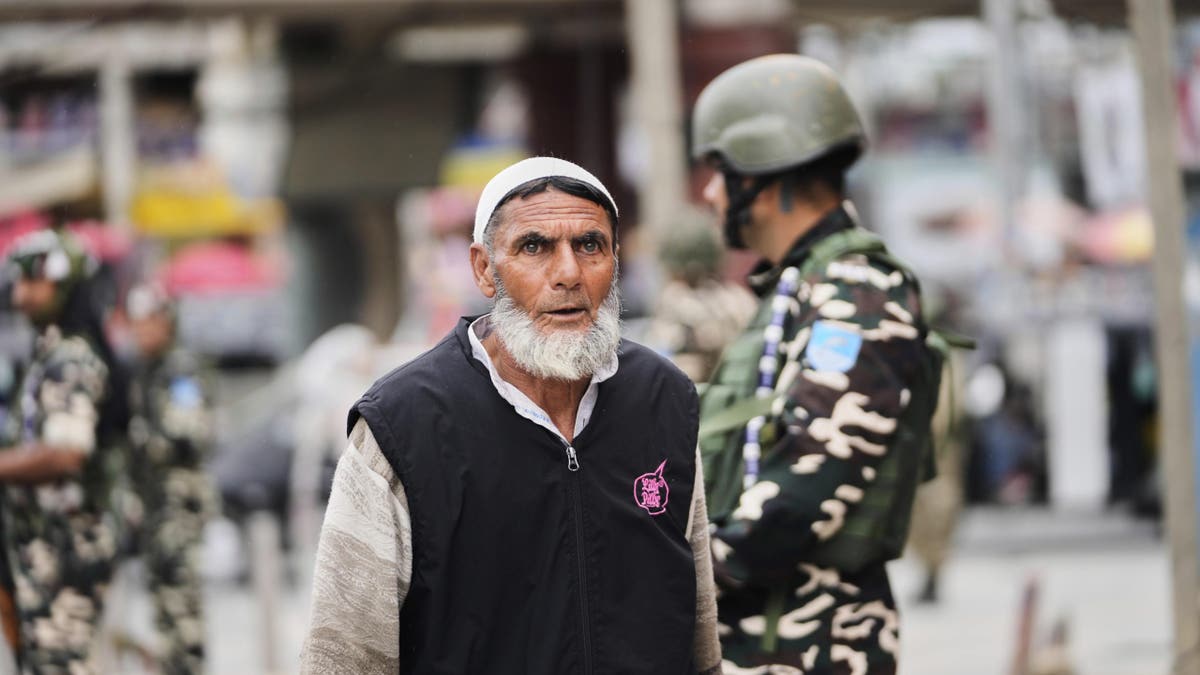
Indian soldiers stand guard as a Kashmiri Muslim man walks by, in Srinagar, Indian-controlled Kashmir, Friday, May 9, 2025. (AP Photo/Mukhtar Khan)
For its part, Kabul is embracing this new era of cooperation, hailing the stronger ties with India as Pakistan views these developments with deep suspicion. Engagement with India also offers the Taliban a measure of legitimacy on the world stage.
As Dubey noted, Afghanistan remains one of the poorest and least developed countries in the world, heavily dependent on external assistance, making India’s aid extremely beneficial.
CLICK HERE TO GET THE FOX NEWS APP

Anand Prakash, joint secretary of the Pakistan, Afghanistan and Iran (PAI) Division at India’s Ministry of External Affairs (MEA), Afghanistan’s Taliban Foreign Minister Amir Khan Muttaqi and Vikramjit Singh Sahney, member of Rajya Sabha and an Indian entrepreneur, participate in a roundtable at the Federation of Indian Chambers of Commerce & Industry (FICCI) in New Delhi, India, Oct. 13, 2025. (Anushree Fadnavis/Reuters)
If sustained, India’s growing engagement with the Taliban could reshape changing regional dynamics. A weakened Pakistan-Taliban relationship undercuts Islamabad’s long-standing leverage in Kabul, altering the formerly established balance of power. It also complicates China’s calculus, as Beijing weighs its own security concerns.
Looking further ahead, if Washington again expands its involvement in Afghanistan, New Delhi could serve as a key intermediary, given that U.S. and Indian ties are also on an upward trajectory.
Related Article
india,afghanistan,pakistan,conflicts,trade













NEWYou can now listen to Fox News articles!
President Donald Trump warned that Iran is working to build missiles that could «soon reach the United States of America,» elevating concerns about a weapons program that already places U.S. forces across the Middle East within range.
Iran does not currently possess a missile capable of striking the U.S. homeland, officials say. But its existing ballistic missile arsenal can target major American military installations in the Gulf, and U.S. officials say the issue has emerged as a key sticking point in ongoing nuclear negotiations.
Here’s what Iran can hit now — and how close it is to reaching the U.S.
What Iran can hit right now
A map shows what is within range of ballistic missiles fired from Iran. (Fox News)
Iran is widely assessed by Western defense analysts to operate the largest ballistic missile force in the Middle East. Its arsenal consists primarily of short- and medium-range ballistic missiles with ranges of up to roughly 2,000 kilometers — about 1,200 miles.
That range places a broad network of U.S. military infrastructure across the Gulf within reach.
Among the installations inside that envelope:
IRAN SIGNALS NUCLEAR PROGRESS IN GENEVA AS TRUMP CALLS FOR FULL DISMANTLEMENT
- Al Udeid Air Base in Qatar, forward headquarters for U.S. Central Command.
- Naval Support Activity Bahrain, home to the U.S. 5th Fleet.
- Camp Arifjan in Kuwait, a major Army logistics and command hub.
- Ali Al Salem Air Base in Kuwait, used by U.S. Air Force units.
- Prince Sultan Air Base in Saudi Arabia.
- Al Dhafra Air Base in the United Arab Emirates.
- Muwaffaq Salti Air Base in Jordan, which hosts U.S. aircraft.
U.S. forces have drawn down from some regional positions in recent months, including the transfer of Al Asad Air Base in Iraq back to Iraqi control earlier in 2026. But major Gulf installations remain within the range envelope of Iran’s current missile inventory.
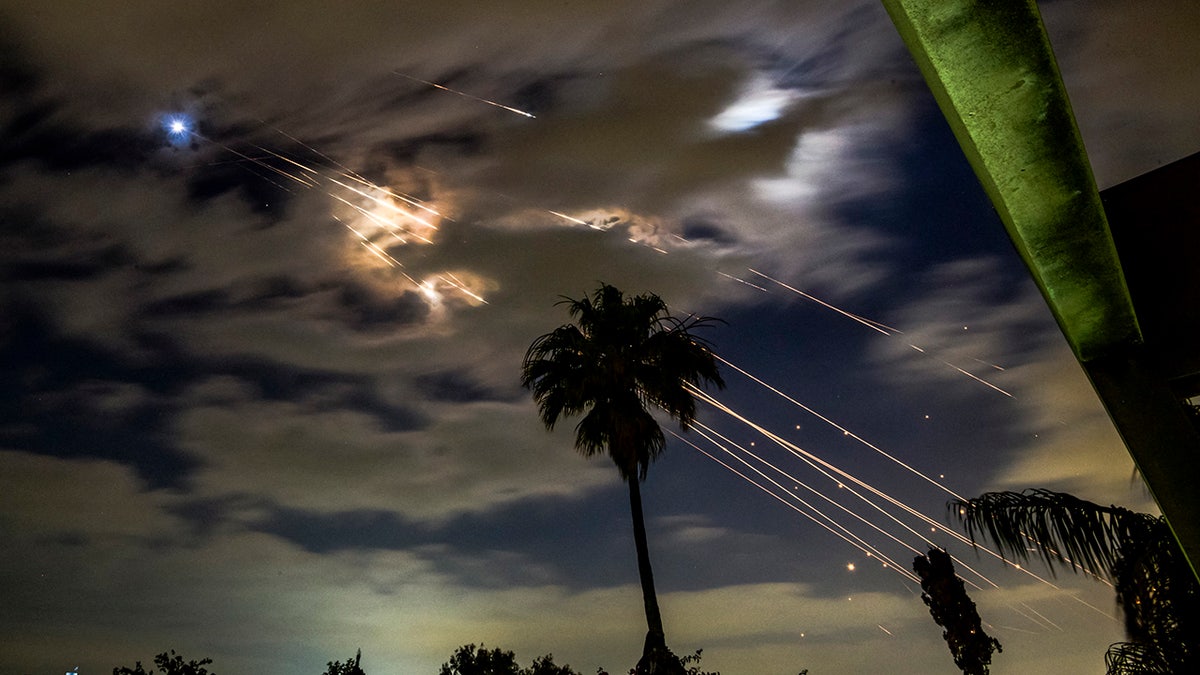
Israel’s air defense targets Iranian missiles in the sky of Tel Aviv in Israel, June 16, 2025. (MATAN GOLAN/Middle East Images/AFP via Getty Images)
Multiple U.S. officials told Fox News that staffing at the Navy’s 5th Fleet headquarters in Bahrain has been reduced to «mission critical» levels amid heightened tensions. A separate U.S. official disputed that characterization, saying no ordered departure of personnel or dependents has been issued.
At the same time, the U.S. has surged significant naval and air assets into and around the region in recent days.
The USS Abraham Lincoln Carrier Strike Group is operating in the Arabian Sea alongside multiple destroyers, while additional destroyers are positioned in the eastern Mediterranean, Red Sea and Persian Gulf.
The USS Gerald R. Ford Carrier Strike Group is also headed toward the region. U.S. Air Force fighter aircraft — including F-15s, F-16s, F-35s and A-10s — are based across Jordan, Saudi Arabia and Bahrain, supported by aerial refueling tankers, early warning aircraft and surveillance platforms, according to a recent Fox News military briefing.
Iran has demonstrated its willingness to use ballistic missiles against U.S. targets before.
In January 2020, following the U.S. strike that killed Islamic Revolutionary Guard Corps Gen. Qassem Soleimani, Iran launched more than a dozen ballistic missiles at U.S. positions in Iraq. Dozens of American service members were later diagnosed with traumatic brain injuries.
That episode underscored the vulnerability of forward-deployed forces within reach of Iran’s missile arsenal.
Can Iran reach Europe?
Most publicly known Iranian missile systems are assessed to have maximum ranges of around 2,000 kilometers.
Depending on launch location, that could place parts of southeastern Europe — including Greece, Bulgaria and Romania — within potential reach. The U.S. has some 80,000 troops stationed across Europe, including in all three of these countries.
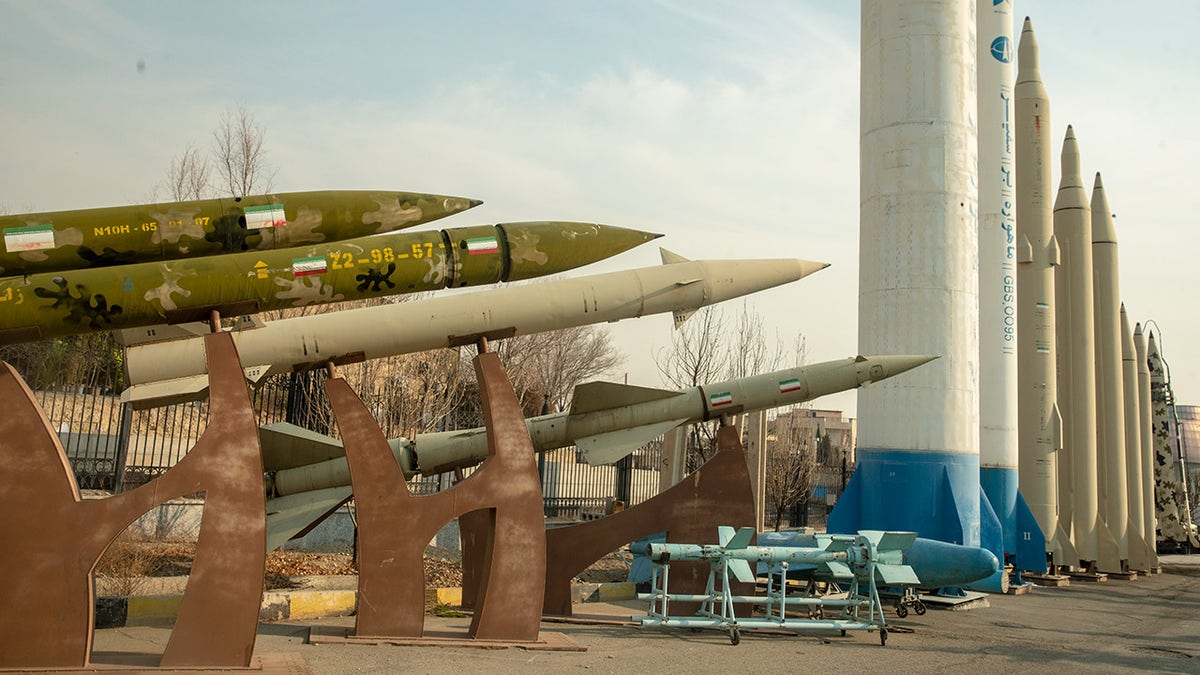
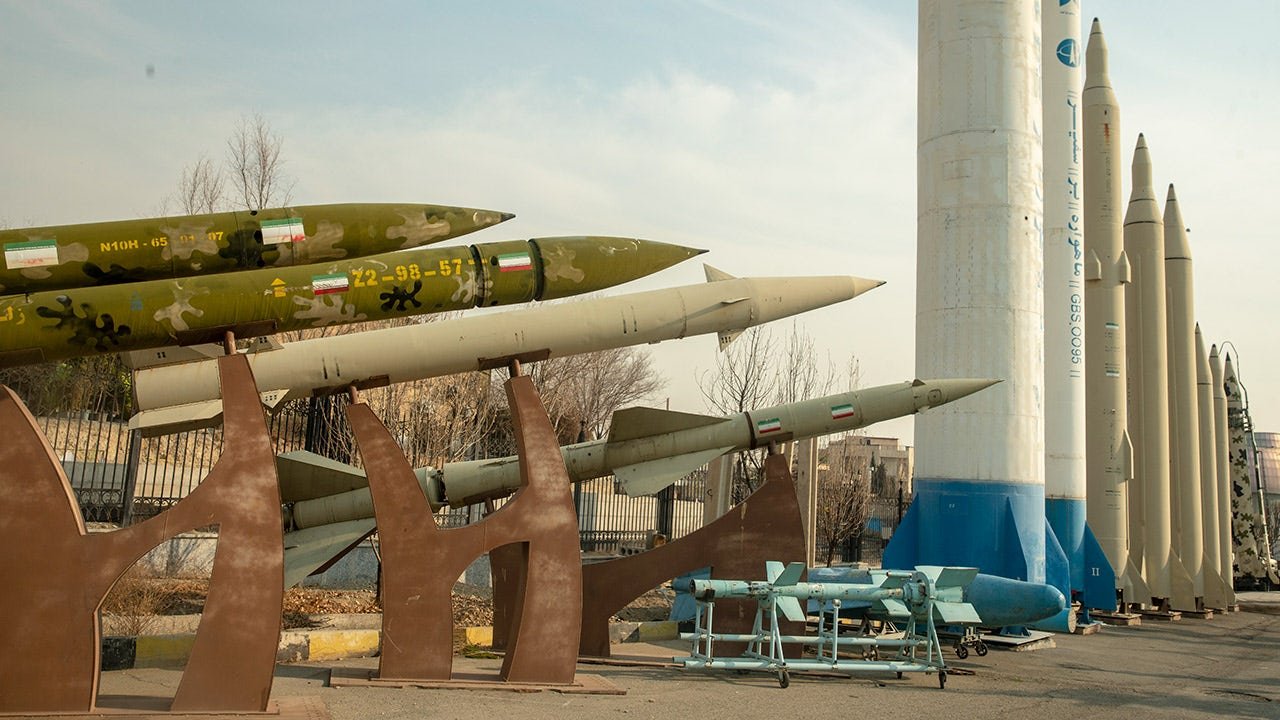
Iran is widely assessed by Western defense analysts to operate the largest ballistic missile force in the Middle East. (Majid Saeedi/Getty Images)
Reaching deeper into Europe would require longer-range systems than Iran has publicly demonstrated as operational.
Can Iran hit the US?
IRAN NEARS CHINA ANTI-SHIP SUPERSONIC MISSILE DEAL AS US CARRIERS MASS IN REGION: REPORT
Iran does not currently field an intercontinental ballistic missile (ICBM) capable of striking the U.S. homeland.
To reach the U.S. East Coast, a missile would need a range of roughly 10,000 kilometers — far beyond Iran’s known operational capability.
However, U.S. intelligence agencies have warned that Iran’s space launch vehicle program could provide the technological foundation for a future long-range missile.
In a recent threat overview, the Defense Intelligence Agency stated that Iran «has space launch vehicles it could use to develop a militarily-viable ICBM by 2035 should Tehran decide to pursue the capability.»
That assessment places any potential Iranian intercontinental missile capability roughly a decade away — and contingent on a political decision by Tehran.
U.S. officials and defense analysts have pointed in particular to Iran’s recent space launches, including rockets such as the Zuljanah, which use solid-fuel propulsion. Solid-fuel motors can be stored and launched more quickly than liquid-fueled rockets — a feature that is also important for military ballistic missiles.
Space launch vehicles and long-range ballistic missiles rely on similar multi-stage rocket technology. Analysts say advances in Iran’s space program could shorten the pathway to an intercontinental-range missile if Tehran chose to adapt that technology for military use.
For now, however, Iran has not deployed an operational ICBM, and the U.S. homeland remains outside the reach of its current ballistic missile arsenal.
US missile defenses — capable but finite
The U.S. relies on layered missile defense systems — including Terminal High Altitude Area Defense (THAAD), Patriot and ship-based interceptors — to protect forces and allies from ballistic missile threats across the Middle East.
These systems are technically capable, but interceptor inventories are finite.
During the June 2025 Iran-Israel missile exchange, U.S. forces reportedly fired more than 150 THAAD interceptors — roughly a quarter of the total the Pentagon had funded to date, according to defense analysts.
The economics also highlight the imbalance: open-source estimates suggest Iranian short-range ballistic missiles can cost in the low hundreds of thousands of dollars apiece, while advanced U.S. interceptors such as THAAD run roughly $12 million or more per missile.
Precise inventory levels are classified. But experts who track Pentagon procurement data warn that replenishing advanced interceptors can take years, meaning a prolonged, high-intensity missile exchange could strain stockpiles even if U.S. defenses remain effective.
Missile program complicates negotiations
The ballistic missile issue has also emerged as a key fault line in ongoing diplomatic efforts between Washington and Tehran.
Secretary of State Marco Rubio has said Iran’s refusal to negotiate limits on its ballistic missile program is «a big problem,» signaling that the administration views the arsenal as central to long-term regional security.
While current negotiations are focused primarily on Iran’s nuclear program and uranium enrichment activities, U.S. officials have argued that delivery systems — including ballistic missiles — cannot be separated from concerns about a potential nuclear weapon.
CLICK HERE TO DOWNLOAD THE FOX NEWS APP
Iranian officials, however, have insisted their missile program is defensive in nature and not subject to negotiation as part of nuclear-focused talks.
As diplomacy continues, the strategic reality remains clear: Iran cannot currently strike the U.S. homeland with a ballistic missile. But U.S. forces across the Middle East remain within range of Tehran’s existing arsenal — and future capabilities remain a subject of intelligence concern.
Related Article

iran,conflicts defense,middle east,pentagon
INTERNACIONAL
La política exterior de Trump y algunas señales de lo que vendrá: ¿Resucitar el imperio?
INTERNACIONAL
Newsom staffer who told California reporter to ‘f— off’ is raking in massive taxpayer-funded salary

NEWYou can now listen to Fox News articles!
Isaac «Izzy» Gardon, a longtime Gavin Newsom staffer who made headlines earlier this week for telling a national reporter to «f— off» after she pressed him on the California governor’s reported dyslexia diagnosis, is raking in a hefty six-figure salary, a Fox News Digital review found.
While Newsom’s dyslexia diagnosis has been public for decades, interest in the matter was amplified amid the California governor’s book tour he launched this month. During one of his first stops on the tour, in Atlanta, Newsom was asked about his dyslexia in conversation with Democratic Mayor of Atlanta Andre Dickens, who asked what he hoped readers would take away from the discussion about his diagnosis in the governor’s new book.
«I’m like you. I’m no better than you. You know, I’m a 960 SAT guy,» Newsom said in response, garnering criticism online that he was pandering to the Black community.
Amid the rebukes from MAGA world and Republicans, Real Clear Politics (RCP) national correspondent Susan Crabtree reached out to Gardon for verification on his childhood disability diagnosis. In response, Gardon told her to «respectfully, f— off.»
Democratic Party Governor of California, Gavin Newsom, holds up his new memoir during a book tour event in South Carolina earlier this month. (Peter Zay/Anadolu via Getty Images)
The testy response led to further criticism targeting Newsom’s office and Gardon, including from RCP’s Carl Cannon, who questioned why people who are offended so deeply by Trump «consistently imitate his worst behavior.» Newsom’s press office has been known to meet the White House’s pointed and often hostile social media posts targeting Democrats, which frequently include AI generated images, with similarly hostile social media posts targeting Trump and Republicans.
When reached for comment on this story, Gardon told Fox News Digital that «Susan is not a journalist.»
«She’s a MAGA blogger who writes about conspiracy theories,» Gardon added.
Transparent California, a statewide public pay and pension database, revealed that Gardon is being paid quite handsomely to be one of Newsom’s most ardent defenders online. Gardon has risen in stature from an administrative assistant making around $30,000 per year in 2019, to earning $212,154.02 in 2024 as a senior assistant and a in Newsom’s office.
NEWSOM BLASTED BY CA GOP CHAIR OVER VIRAL CLIP LABELED ‘RACIST’ BY CRITICS: ‘HE SHOULD BE EMBARRASSED’
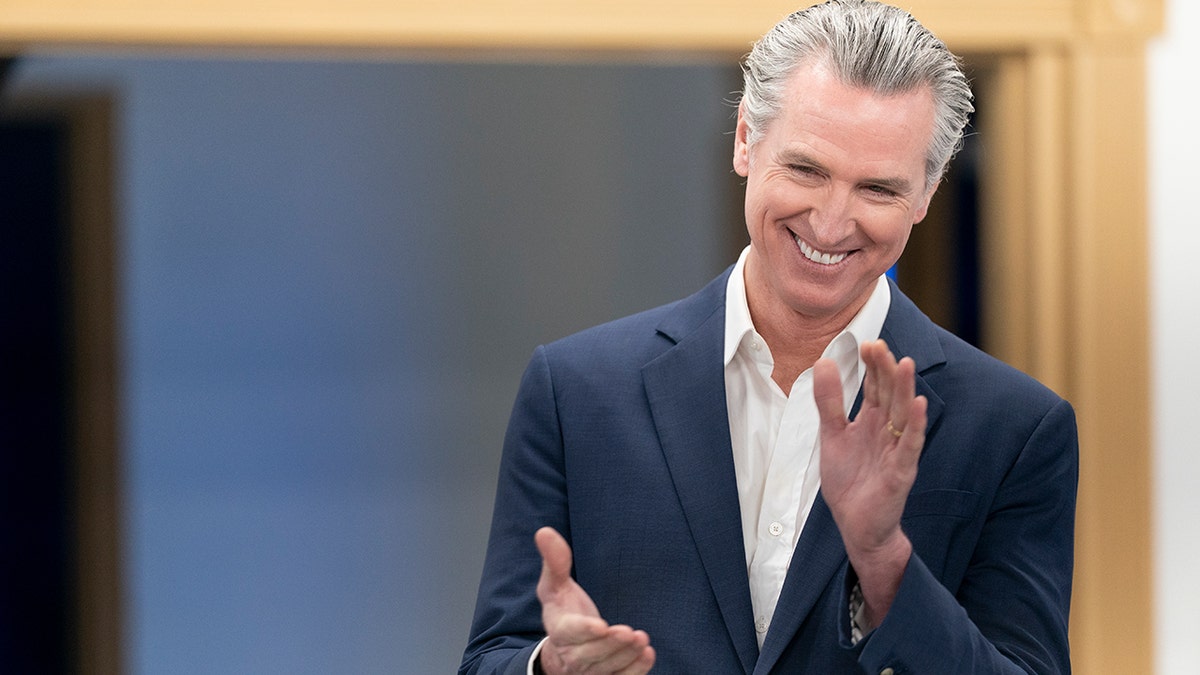
California Gov. Gavin Newsom (D) seen laughing at an event earlier this month hosted by the South Carolina Democratic Party. (Sean Rayford/Getty Images)
Gardon’s «regular pay» in 2024 was $152,091.05. That was also supplemented by nearly $57,000 in benefits and another $3,141.16 in «other pay,» according to the database, leading to a combined annual payment of $212,154.02. However, his current pay, which does not appear to be publicly available online, is likely to be higher.
Following news of Gardon’s response to Crabtree’s follow-up, a senior reporter for the California Post also shared an email from Gardon in response to one of his media inquiries.
In Gardon’s response, he referred to the New York Post as the «New York Comic Book.» Then, when Koehn followed up, indicating the San Francisco Chronicle was covering the same story, Gardon replied, «I’d put that outlet in the same bucket,» according to Koehn, who posted screenshots of the pair’s back-and-forth on X.
CLICK HERE TO GET THE FOX NEWS APP

A man is seen holding a copy of California Gov. Gavin Newsom’s new memoir titled «Young Man In A Hurry.» (Sean Rayford/Getty Images)
While some top Newsom staffers have praised Gardon’s style, including his boss and senior advisor of communications, Bob Salladay, who told Politico that «Izzy’s creativity and imagination is part of what the governor is doing.» Some Democratic operatives have vocally been critical about his communication style, including Garry Tan, a prolific Democratic donor and CEO of Y Combinator
«Most unprofessional person to ever work in politics,» Tan posted on X. «Izzy Gardon brings shame to the Newsom campaign.»
Gardon also came under fire earlier this month when he referred to rapper and MAGA activist Nicki Minaj as a «stupid hoe» on X. He defended his social media post by pointing to her 2012 song called, «Stupid Hoe.»
Related Article

gavin newsom,politics,california,elections state and local,governors

Actualizan los valores de las asignaciones familiares en marzo 2026: cuáles son los nuevos montos

Javier Milei y sus medidas, EN VIVO: el Gobierno pidió activar el acuerdo con el Mercosur y la Unión Europea anunció que se aplicará desde mayo

Se sortearon los octavos de final de la Europa League: así quedaron todos los cruces

Where Iran’s ballistic missiles can reach — and how close they are to the US

El mensaje de Javier Milei tras conocerse la aprobación de la modificación a la Ley de Glaciares

Quiénes son los invitados de Juana Viale en su regreso a la televisión

Jorge Macri prepara su discurso para abrir el año legislativo: el deseo de reelección y el espejo en Bukele

Crisis en la industria: otra multinacional se achica y cierra una planta en la Argentina

Daiana Fernández Molero defendió la reforma laboral: “Va a haber mayor creación de empleo porque va a ser más fácil contratar en blanco”

Uno por uno, todos los famosos que saludaron a Mirtha Legrand por sus 99 años

 POLITICA2 días ago
Jorge Macri prepara su discurso para abrir el año legislativo: el deseo de reelección y el espejo en Bukele
- ECONOMIA2 días ago
Crisis en la industria: otra multinacional se achica y cierra una planta en la Argentina
- CHIMENTOS3 días ago
Natalie Weber, entre rezarle a San Cupertino o enviar a su hija Mía a una maestra particular: “Felicitaciones”