INTERNACIONAL
Where Iran’s ballistic missiles can reach — and how close they are to the US

NEWYou can now listen to Fox News articles!
President Donald Trump warned that Iran is working to build missiles that could «soon reach the United States of America,» elevating concerns about a weapons program that already places U.S. forces across the Middle East within range.
Iran does not currently possess a missile capable of striking the U.S. homeland, officials say. But its existing ballistic missile arsenal can target major American military installations in the Gulf, and U.S. officials say the issue has emerged as a key sticking point in ongoing nuclear negotiations.
Here’s what Iran can hit now — and how close it is to reaching the U.S.
What Iran can hit right now
A map shows what is within range of ballistic missiles fired from Iran. (Fox News)
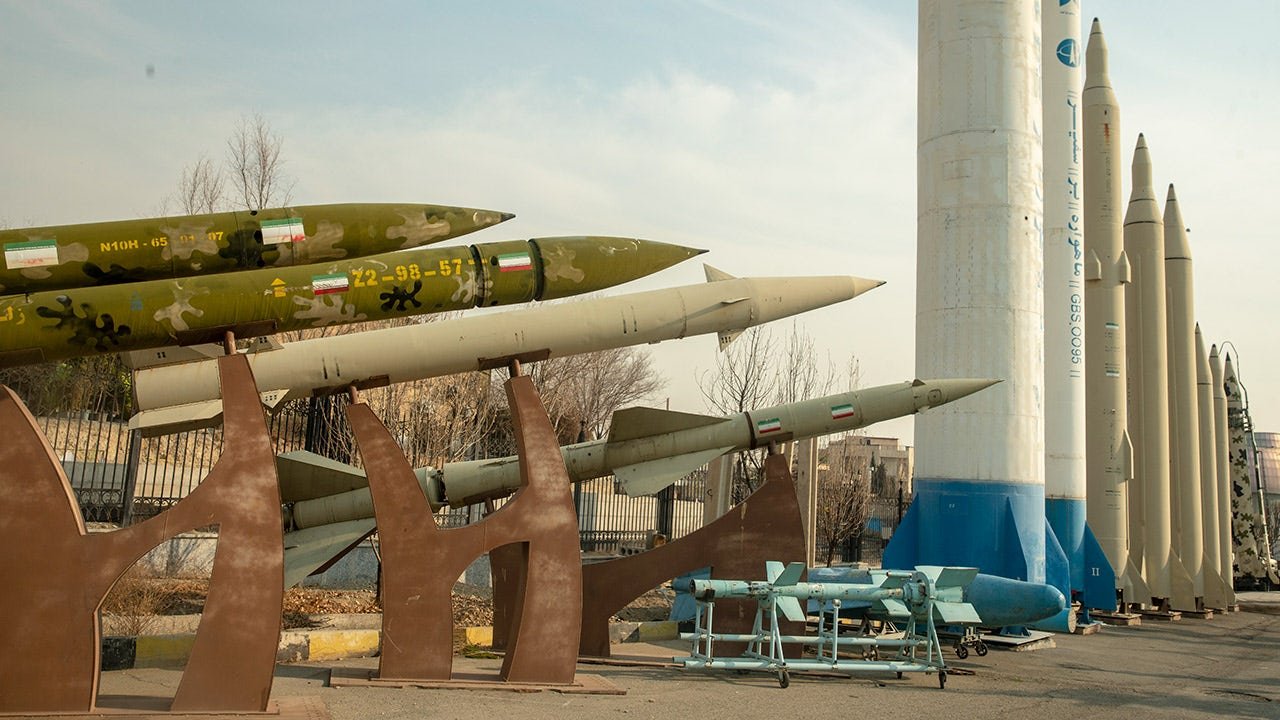
Iran is widely assessed by Western defense analysts to operate the largest ballistic missile force in the Middle East. Its arsenal consists primarily of short- and medium-range ballistic missiles with ranges of up to roughly 2,000 kilometers — about 1,200 miles.
That range places a broad network of U.S. military infrastructure across the Gulf within reach.
Among the installations inside that envelope:
IRAN SIGNALS NUCLEAR PROGRESS IN GENEVA AS TRUMP CALLS FOR FULL DISMANTLEMENT
- Al Udeid Air Base in Qatar, forward headquarters for U.S. Central Command.
- Naval Support Activity Bahrain, home to the U.S. 5th Fleet.
- Camp Arifjan in Kuwait, a major Army logistics and command hub.
- Ali Al Salem Air Base in Kuwait, used by U.S. Air Force units.
- Prince Sultan Air Base in Saudi Arabia.
- Al Dhafra Air Base in the United Arab Emirates.
- Muwaffaq Salti Air Base in Jordan, which hosts U.S. aircraft.
U.S. forces have drawn down from some regional positions in recent months, including the transfer of Al Asad Air Base in Iraq back to Iraqi control earlier in 2026. But major Gulf installations remain within the range envelope of Iran’s current missile inventory.
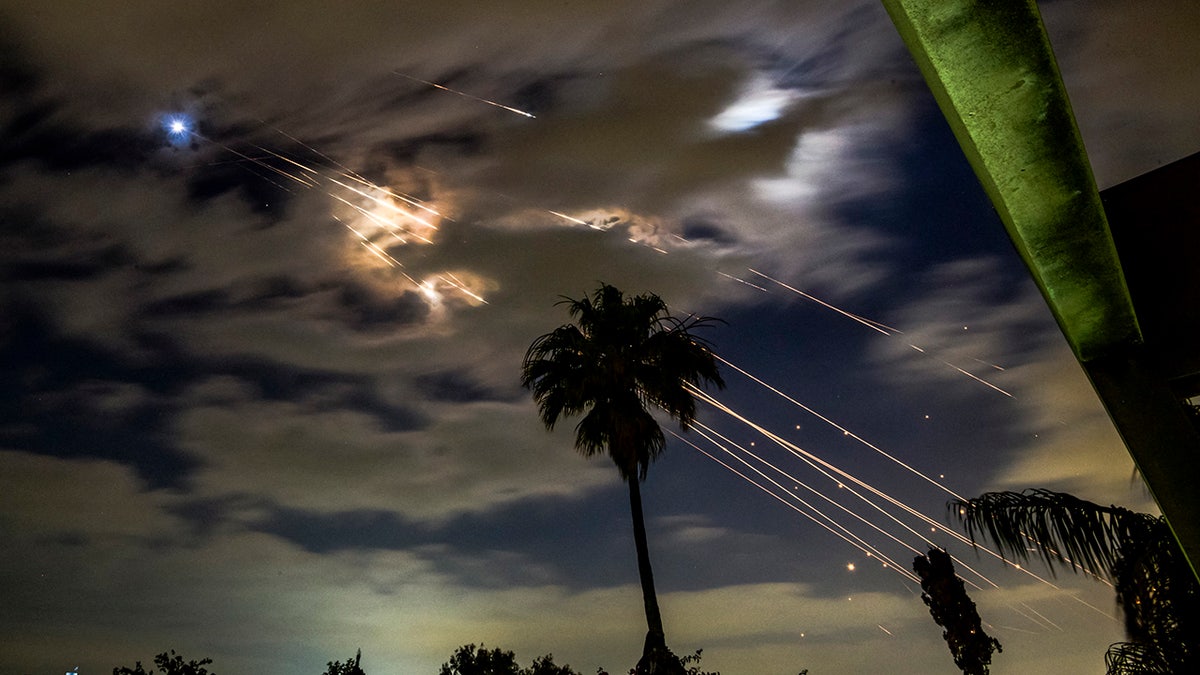
Israel’s air defense targets Iranian missiles in the sky of Tel Aviv in Israel, June 16, 2025. (MATAN GOLAN/Middle East Images/AFP via Getty Images)
Multiple U.S. officials told Fox News that staffing at the Navy’s 5th Fleet headquarters in Bahrain has been reduced to «mission critical» levels amid heightened tensions. A separate U.S. official disputed that characterization, saying no ordered departure of personnel or dependents has been issued.
At the same time, the U.S. has surged significant naval and air assets into and around the region in recent days.
The USS Abraham Lincoln Carrier Strike Group is operating in the Arabian Sea alongside multiple destroyers, while additional destroyers are positioned in the eastern Mediterranean, Red Sea and Persian Gulf.
The USS Gerald R. Ford Carrier Strike Group is also headed toward the region. U.S. Air Force fighter aircraft — including F-15s, F-16s, F-35s and A-10s — are based across Jordan, Saudi Arabia and Bahrain, supported by aerial refueling tankers, early warning aircraft and surveillance platforms, according to a recent Fox News military briefing.
Iran has demonstrated its willingness to use ballistic missiles against U.S. targets before.
In January 2020, following the U.S. strike that killed Islamic Revolutionary Guard Corps Gen. Qassem Soleimani, Iran launched more than a dozen ballistic missiles at U.S. positions in Iraq. Dozens of American service members were later diagnosed with traumatic brain injuries.
That episode underscored the vulnerability of forward-deployed forces within reach of Iran’s missile arsenal.
Can Iran reach Europe?
Most publicly known Iranian missile systems are assessed to have maximum ranges of around 2,000 kilometers.
Depending on launch location, that could place parts of southeastern Europe — including Greece, Bulgaria and Romania — within potential reach. The U.S. has some 80,000 troops stationed across Europe, including in all three of these countries.
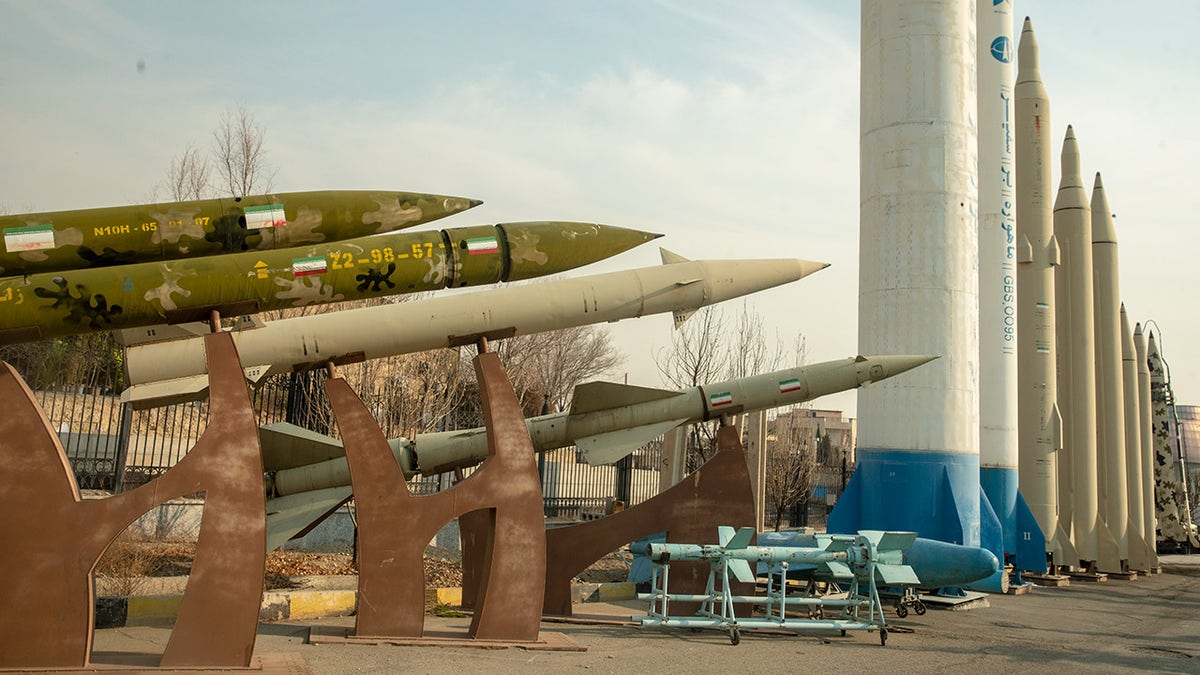
Iran is widely assessed by Western defense analysts to operate the largest ballistic missile force in the Middle East. (Majid Saeedi/Getty Images)
Reaching deeper into Europe would require longer-range systems than Iran has publicly demonstrated as operational.
Can Iran hit the US?
IRAN NEARS CHINA ANTI-SHIP SUPERSONIC MISSILE DEAL AS US CARRIERS MASS IN REGION: REPORT
Iran does not currently field an intercontinental ballistic missile (ICBM) capable of striking the U.S. homeland.
To reach the U.S. East Coast, a missile would need a range of roughly 10,000 kilometers — far beyond Iran’s known operational capability.
However, U.S. intelligence agencies have warned that Iran’s space launch vehicle program could provide the technological foundation for a future long-range missile.
In a recent threat overview, the Defense Intelligence Agency stated that Iran «has space launch vehicles it could use to develop a militarily-viable ICBM by 2035 should Tehran decide to pursue the capability.»
That assessment places any potential Iranian intercontinental missile capability roughly a decade away — and contingent on a political decision by Tehran.
U.S. officials and defense analysts have pointed in particular to Iran’s recent space launches, including rockets such as the Zuljanah, which use solid-fuel propulsion. Solid-fuel motors can be stored and launched more quickly than liquid-fueled rockets — a feature that is also important for military ballistic missiles.
Space launch vehicles and long-range ballistic missiles rely on similar multi-stage rocket technology. Analysts say advances in Iran’s space program could shorten the pathway to an intercontinental-range missile if Tehran chose to adapt that technology for military use.
For now, however, Iran has not deployed an operational ICBM, and the U.S. homeland remains outside the reach of its current ballistic missile arsenal.
US missile defenses — capable but finite
The U.S. relies on layered missile defense systems — including Terminal High Altitude Area Defense (THAAD), Patriot and ship-based interceptors — to protect forces and allies from ballistic missile threats across the Middle East.
These systems are technically capable, but interceptor inventories are finite.
During the June 2025 Iran-Israel missile exchange, U.S. forces reportedly fired more than 150 THAAD interceptors — roughly a quarter of the total the Pentagon had funded to date, according to defense analysts.
The economics also highlight the imbalance: open-source estimates suggest Iranian short-range ballistic missiles can cost in the low hundreds of thousands of dollars apiece, while advanced U.S. interceptors such as THAAD run roughly $12 million or more per missile.
Precise inventory levels are classified. But experts who track Pentagon procurement data warn that replenishing advanced interceptors can take years, meaning a prolonged, high-intensity missile exchange could strain stockpiles even if U.S. defenses remain effective.
Missile program complicates negotiations
The ballistic missile issue has also emerged as a key fault line in ongoing diplomatic efforts between Washington and Tehran.
Secretary of State Marco Rubio has said Iran’s refusal to negotiate limits on its ballistic missile program is «a big problem,» signaling that the administration views the arsenal as central to long-term regional security.
While current negotiations are focused primarily on Iran’s nuclear program and uranium enrichment activities, U.S. officials have argued that delivery systems — including ballistic missiles — cannot be separated from concerns about a potential nuclear weapon.
CLICK HERE TO DOWNLOAD THE FOX NEWS APP
Iranian officials, however, have insisted their missile program is defensive in nature and not subject to negotiation as part of nuclear-focused talks.
As diplomacy continues, the strategic reality remains clear: Iran cannot currently strike the U.S. homeland with a ballistic missile. But U.S. forces across the Middle East remain within range of Tehran’s existing arsenal — and future capabilities remain a subject of intelligence concern.
Related Article

iran,conflicts defense,middle east,pentagon









INTERNACIONAL
Swalwell campaign sets off alarm bells after accepting $25K donation from CCP-tied lawyer: ‘Outrageous’
NEWYou can now listen to Fox News articles!
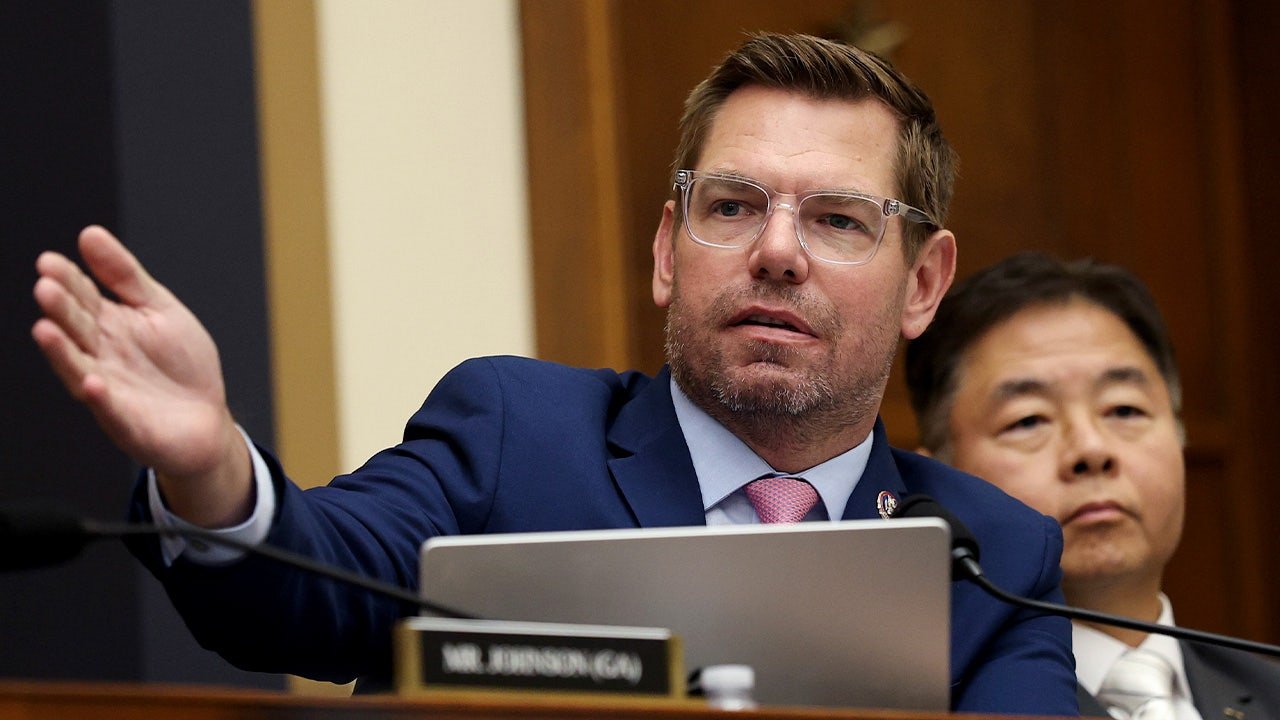
FIRST ON FOX: Rep. Eric Swalwell’s, D-Calif., gubernatorial campaign continues to be bankrolled by Keliang «Clay» Zhu despite concerns over his ties to China and the Chinese Communist Party (CCP).
Zhu donated another $25,000 to Swalwell’s campaign earlier this month after he had already donated $5,000 to Swalwell’s gubernatorial campaign in November and previously donated over $10,000 to his House campaigns.
Zhu is a partner at DeHeng Law Offices PC, a top Beijing law firm that has deep ties to the Chinese Communist Party, and has also donated thousands to Swalwell’s gubernatorial campaign. The law firm’s website shows their lone «Silicon Valley Office,» located in Pleasanton, Calif., appears to only have a single lawyer who works there – Zhu, who has a history of fighting for Chinese interests in the U.S.
«Once again, Congressman Swalwell got caught with his hand in the CCP cookie jar,» lamented Michael Lucci, a top China expert and the founder and CEO of State Armor Action. «It’s simply outrageous that Congressman Swallwell would take even more money from Keliang Zhu after Zhu’s connections to the CCP were made public.»
SWALWELL GOVERNOR BID HIT WITH RESIDENCY QUESTIONS AFTER COURT FILING ALLEGES HE DOESN’T LIVE IN CALIFORNIA
California gubernatorial candidate Eric Swalwell waves before speaking at the 2026 California Democratic Party State Convention in San Francisco, Saturday, Feb. 21, 2026. (AP Photo/Jeff Chiu)
A Fox News Digital review in January revealed that the law firm Zhu is a partner in was founded as the China Law Office, which was a subsidiary firm established by the CCP’s Ministry of Justice in the early 1990s before being renamed the DeHeng Law Offices in 1995.
While the firm, which has over two dozen offices in China, portrays itself as independent, the firm and its lawyers continue to have longstanding cooperation with the Chinese government’s departments and major state-owned enterprises. Many of the firm’s China-based attorneys also have a history of working in Chinese politics.
Zhu, who is originally from China, touts several examples of how he has helped Chinese state-owned enterprises and other Chinese companies get a foothold in the United States, according to his bio on the law firm’s website.
For example, he touts representing an «investment fund of a major state-owned enterprise in acquiring majority shares in one data analytics software company in the Silicon Valley,» which he valued at $100 million. Another bio for Zhu touts how he «has assisted Chinese companies and funds to complete more than $9 billion investments in the fields of chips, unmanned vehicles, new energy, artificial intelligence, industrial automation, and biopharmaceuticals in the United States.»
«On behalf of Chinese enterprises, he has negotiated with the U.S. Department of Commerce, the U.S. Department of Treasury and other organizations for many times and achieved compliance plans, which greatly reduced the compliance risks for Chinese clients in the United States,» the bio continued.
ERIC SWALWELL’S SECRET POETRY EXPOSED
The bios also indicate Zhu helped advise «a governmental investment fund from Shenzhen for its compliance with CFIUS regulations in the U.S.» and represented «WeChat users in a historic lawsuit that sued President Trump and successfully stopped his WeChat ban in 2020.»
At the time, Trump’s first administration sounded the alarm over WeChat and said the «data collection threatens to allow the Chinese Communist Party access to Americans’ personal and proprietary information» and was concerned that the CCP would use data to stalk dissenters or control messaging inside the United States, such as launching disinformation campaigns. Similar efforts to restrict WeChat have occurred in countries like Australia and India, according to the White House.
Meanwhile, after a federal judge dismissed a lawsuit intended to stop a Texas law banning Chinese nationals from owning or leasing land in the state, Zhu described the legislation as «unfair, unconstitutional and un-American,» according to AsAmNews, a daily news site focused on Asian-American and Pacific-Islander communities. Zhu similarly expressed disfavor with a Florida law meant to prevent individuals from countries that are foreign adversaries to the United States, such as China, from buying up land.

Chinese land grabs in the United States have been an ongoing concern for lawmakers. Currently, Congress is considering multiple bills related to the matter, while almost two dozen states have already passed legislation to implement changes around foreign land purchases in their states. (Getty Images)
DeHeng Law Office’s other China-based attorneys have a history of working in Chinese politics as well. This has largely been through the Chinese People’s Political Consultative Conference (CPPCC), which is a «key mechanism for multi-party cooperation and political consultation» under the leadership of the CCP, according to the CPPCC website, and is a crucial tool of the United Front strategy to influence U.S. policy.
For example, Zhixu Wu, who is a «Director and Senior Partner» of the Kunming, China-based office of DeHeng Law Offices, is a member of the «Standing Committee of the 13th Kunming Committee of the CPPCC» and a member «of the 12th Yunnan Committee of the CPPCC.» His bio also says he was previously awarded in 2017 with «the title of ‘Excellent League Member’ for the second assistance event of the National Lawyers Service Group,» which was approved by the «Eight Bureau of United Front Work Department of CPC Central Committee, Guidance Department of Lawyer’s Notarization Work of the Ministry of Justice.»
HUNTER BIDEN’S FORMER ‘SUGAR BROTHER’ LAWYER DROPS BIG MONEY ON SWALWELL’S CAMPAIGN: ‘BIGGEST CHEERLEADER’
Swalwell’s ties to China have come under scrutiny before, particularly after Chinese national, Christine Fang, also known as «Fang Fang,» gained special access to him and his campaign. She was deemed by U.S. officials to be part of a counterintelligence effort linked to China meant to influence and get close to U.S. political figures.
Swalwell has repeatedly claimed he cut off ties as soon as U.S. intelligence officials warned him of the threat and a congressional ethics investigation into the matter eventually found no wrongdoing on Swalwell’s behalf. However, he was ultimately removed by Republicans from his post on the House Intelligence Committee, with then-House Speaker Kevin McCarthy citing Swalwell’s past run-in with a suspected Chinese spy.
Fox News Digital uncovered a previously unreported 2013 Facebook post by China’s San Francisco consulate last month showing Swalwell touting «great potential» for U.S.-China cooperation during a meeting with a senior CCP diplomat early in his career, which came during the same time period when Swalwell was allegedly targeted by Chinese espionage efforts.
The Facebook post was also «liked» by Fang Fang, Fox News Digital’s review found.
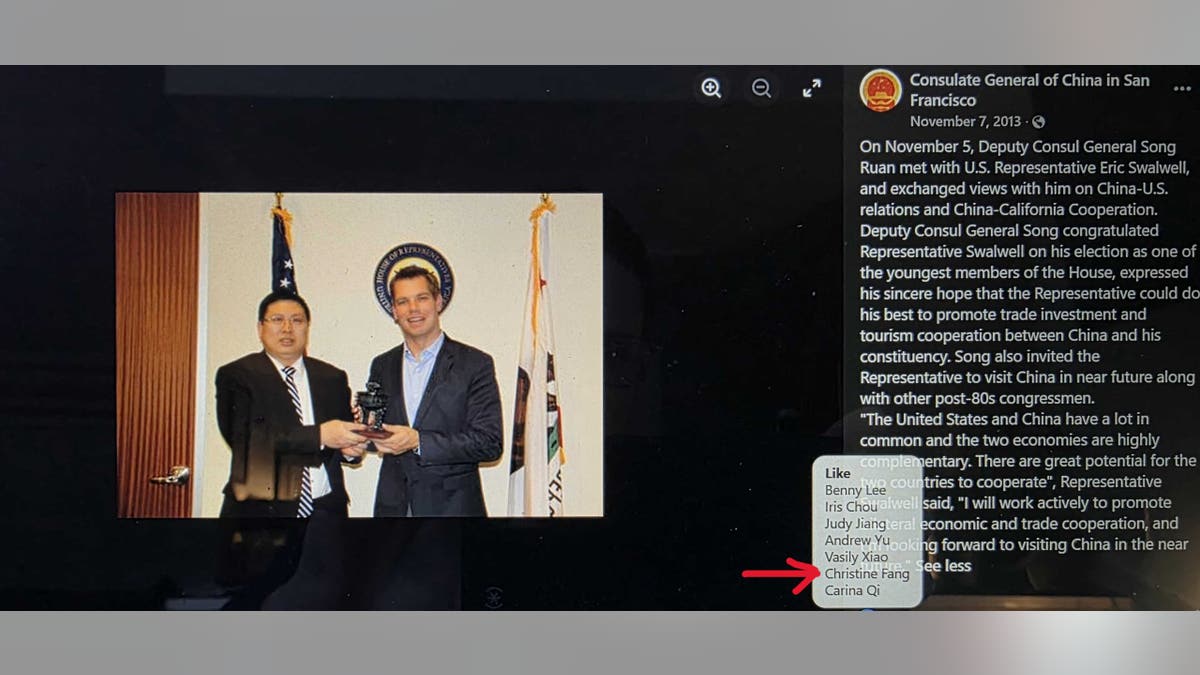
Then-freshman member of Congress Rep. Eric Swalwell, D-Calif., seen posing in a photo with Deputy Consul General at China’s Bay Area consulate in San Francisco Song Ru’an in 2013. (Consulate General of the People’s Republic of China in San Francisco)
CLICK HERE TO GET THE FOX NEWS APP
«First, Swalwell had a fiery romance with Fang Fang, a CCP honeypot. Then he was caught taking campaign money from China’s favorite big law firm. Congressman Swalwell is either totally oblivious to the dangers of flirting with CCP operatives, or he doesn’t care and would take a check from Xi Jinping himself,» Lucci told Fox News Digital. «Congress should pass a law to prohibit campaign cash from Communist China before Swalwell’s sweet tooth has him hunting for another CCP honey pot or cookie jar.»
Neither the Swalwell campaign, DeHeng Law Offices nor Zhu responded to Fox News Digital’s requests for comment.
Related Article
eric swalwell,governors,elections
INTERNACIONAL
State Dept authorizes non-essential US Embassy personnel in Jerusalem to depart ahead of possible Iran strikes
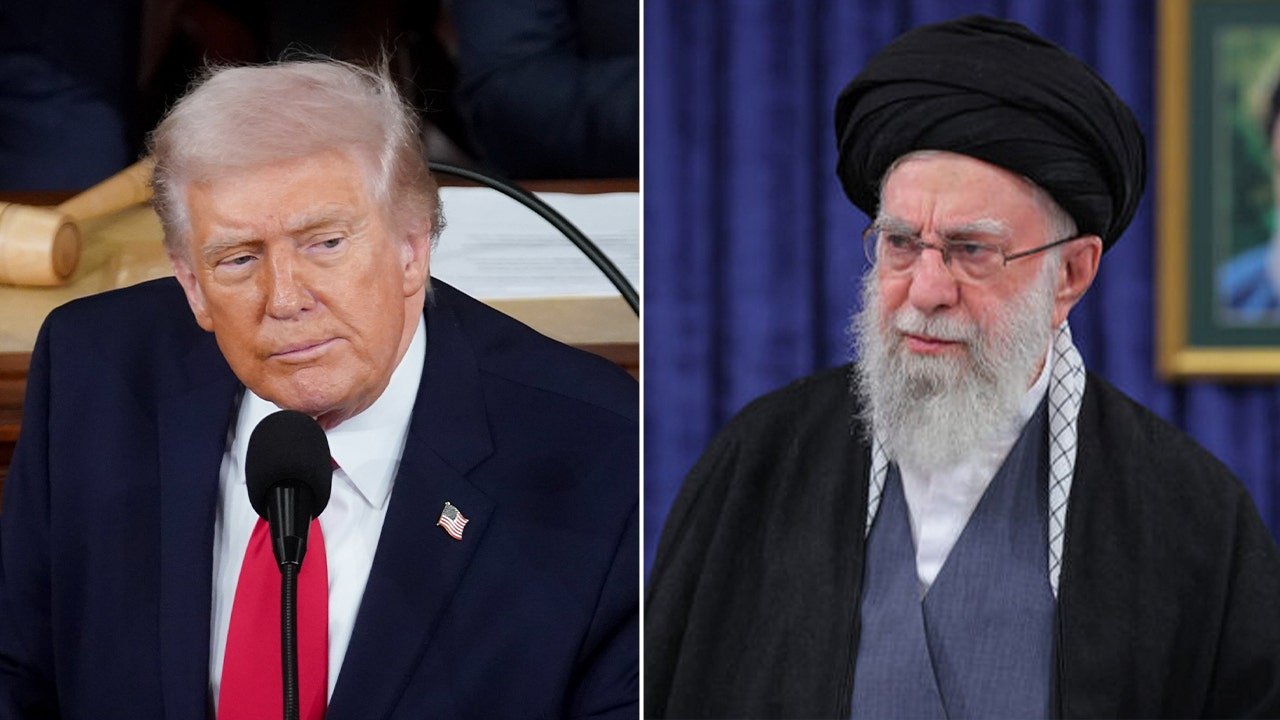
Deadline looms for Iran-US nuclear deal
U.S.-Iran nuclear talks intensify in Switzerland as President Trump’s deadline approaches. Vice President JD Vance states there’s ‘no chance’ of endless war in the Middle East.
NEWYou can now listen to Fox News articles!
The State Department is allowing non-essential personnel working at the U.S. Embassy in Jerusalem to leave Israel ahead of possible strikes on Iran. The embassy announced the decision early Friday morning and said that «in response to security incidents and without advance notice» it could place further restrictions on where U.S. government employees can travel within Israel.
The decision came after meetings and phone calls through the night Thursday into Friday, according to The New York Times, which reviewed a copy of an email that U.S. Ambassador to Israel Mike Huckabee sent to embassy workers.
The Times reported that the ambassador said in his email that the move was a result of «an abundance of caution» and that those wishing to leave «should do so TODAY.» He reportedly urged them to look for flights out of Ben Gurion Airport to any destination, cautioning that the embassy’s move «will likely result in high demand for airline seats today.»
The U.S. has authorized non-essential embassy personnel to leave Israel amid escalating tensions with Iran. (Al Drago/Bloomberg via Getty Images; Iranian Leader Press Office/Anadolu via Getty Images)
In the email, Huckabee also said that there was «no need to panic,» but he underscored that those looking to leave should «make plans to depart sooner rather than later,» the Times reported.
«Focus on getting a seat to anyplace from which you can then continue travel to D.C., but the first priority will be getting expeditiously out of country,» Huckabee said in the email, according to the Times.
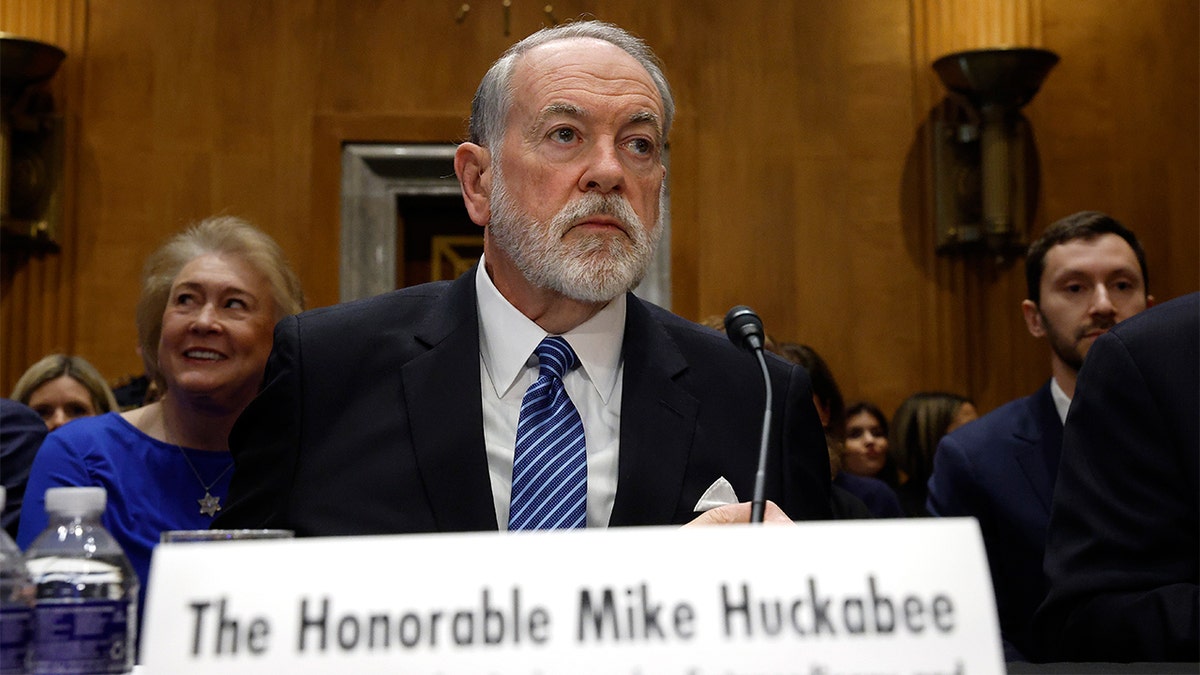
Former Arkansas Gov. Mike Huckabee, U.S. President Donald Trump’s nominee to be ambassador to Israel, arrives to testify during his Senate Foreign Relations Committee confirmation hearing at the Dirksen Senate Office Building on Mar. 25, 2025, in Washington, D.C. (Kevin Dietsch/Getty Images)
TRUMP MEETS NETANYAHU, SAYS HE WANTS IRAN DEAL BUT REMINDS TEHRAN OF ‘MIDNIGHT HAMMER’ OPERATION
The embassy reiterated the State Department’s advisory for U.S. citizens to reconsider traveling to Israel and the West Bank «due to terrorism and civil unrest.» Additionally, the department advised that U.S. citizens not travel to Gaza because of terrorism and armed conflict, as well as northern Israel, particularly within 2.5 miles of the Lebanese and Syrian borders because of «continued military presence and activity.»
It also recommended that U.S. citizens not travel within 1.5 miles of the Egyptian border, with the exception of the Taba crossing, which remains open.
«Terrorist groups, lone-actor terrorists and other violent extremists continue plotting possible attacks in Israel, the West Bank, and Gaza. Terrorists and violent extremists may attack with little or no warning, targeting tourist locations, transportation hubs, markets/shopping malls, and local government facilities,» the embassy said in its warning. «The security environment is complex and can change quickly, and violence can occur in Israel, the West Bank, and Gaza without warning.»
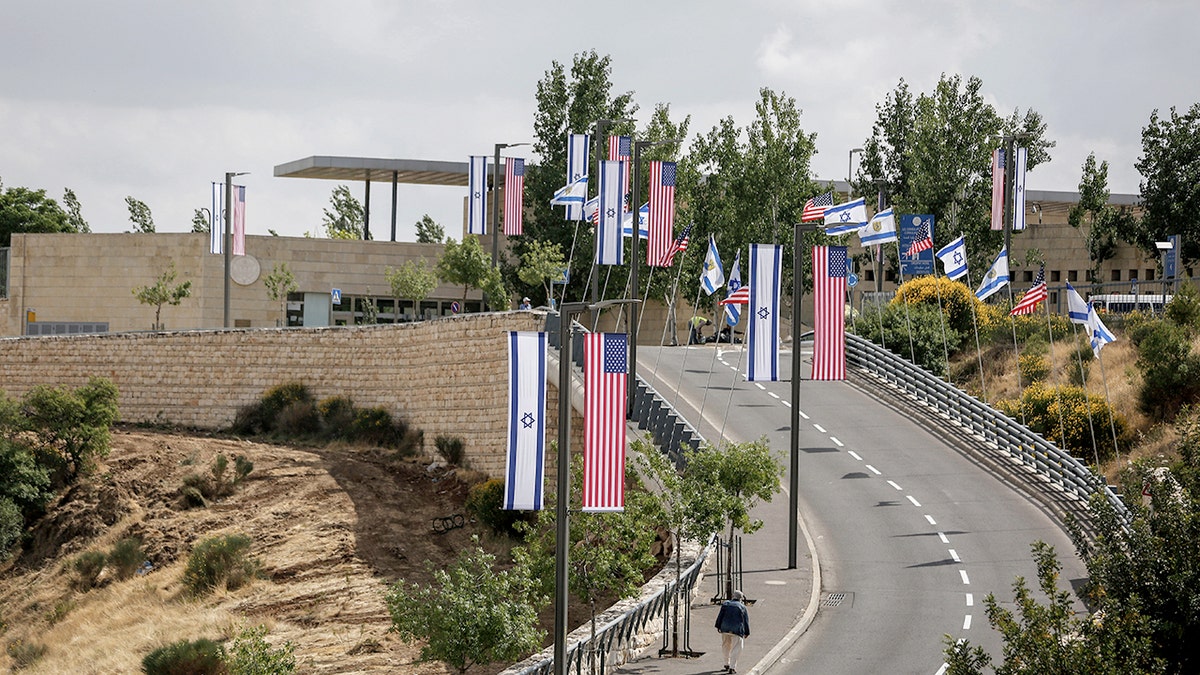
Israeli and U.S. flags are placed on the road leading to the U.S. consulate in the Jewish neighborhood of Arnona, on the East-West Jerusalem line in Jerusalem, May 9, 2018. (Corinna Kern/picture alliance via Getty Images)
CLICK HERE TO DOWNLOAD THE FOX NEWS APP
While the embassy did not specifically mention Iran in its warning, it referenced «increased regional tensions» that could «cause airlines to cancel and/or curtail flights into and out of Israel.»
Fox News Digital reached out to the State Department and the White House for comment on this matter.
Related Article

world,israel,iran,middle east
INTERNACIONAL
Qué es la “ficción reparadora”, el género literario que no sólo muestra el dolor sino que intenta sanarlo

En los últimos años empezó a circular, en el ámbito literario y crítico, una expresión que despierta curiosidad: “ficción reparadora”. No designa un género ni una moda pasajera, sino una manera de entender para qué sirve contar historias. La idea es sencilla y, al mismo tiempo, potente: hay relatos que no solo representan el dolor o el conflicto, sino que trabajan sobre ellos, los transforman simbólicamente y ofrecen una experiencia de elaboración. En lugar de limitarse a mostrar la herida, intentan intervenirla desde la imaginación.
No se trata de un género con reglas fijas ni de una fórmula de autoayuda encubierta, sino de una sensibilidad narrativa: historias que parten de una pérdida, una decepción o una crisis vital y acompañan a sus personajes en un proceso de recomposición. En un presente saturado de distopías y relatos de colapso, estas ficciones eligen otro foco: no negar la oscuridad, pero sí explorar cómo se reconstruye una vida después del quiebre.
Un ejemplo es La tienda de los deseos, de Hiyoko Kurisu, donde una tienda aparentemente común en un barrio japonés ofrece algo más que objetos: cada artículo, mínimo y cotidiano, habilita a sus clientes a revisar heridas íntimas y ensayar cambios posibles. En la misma línea, Mis días en la librería Morisaki, de Satoshi Yagisawa, sitúa la reparación en el corazón de una librería de Tokio: entre estanterías y cafés, los vínculos inesperados y la hospitalidad del mundo del libro se convierten en una forma de recomenzar. En ambos casos, la ficción no promete milagros; propone algo más verosímil y acaso más poderoso: la posibilidad de volver a armarse, página a página.

La “ficción reparadora”, originaria de Japón y Corea, ha captado el interés de importantes casas editoras en Estados Unidos y Reino Unido, que han acelerado la adquisición de derechos y la publicación de títulos similares tras el crecimiento exponencial de lectores en los últimos años.
Este tipo de ficción ocupa un lugar destacado en las listas de best sellers, con ventas superiores a 3 millones de ejemplares solo en mercados angloparlantes para series como Antes de que se enfríe el café de Toshikazu Kawaguchi.
El organismo público coreano Literature Translation Institute informó que 150 obras coreanas se publicaron en español entre 2001 y 2024, la mayoría en el último lustro. Destacadas editoras, como Shannon DeVito de Barnes & Noble y Sara Nelson de Harper, consideran que este fenómeno representa el mayor boom de narrativa traducida desde el auge del noir escandinavo, apoyado por la acción concertada de libreros, agentes de derechos y plataformas digitales.

El modelo editorial se orienta a capitalizar la demanda de libros que funcionen como refugio emocional, impulsando la publicación masiva de títulos inéditos en español e inglés, así como lanzamientos y reediciones notables como La asombrosa tienda de la señora Yeom de Kim Ho-Yeon, que acumula más de 1 millón de copias vendidas y ha sido traducida a 23 idiomas, y El misterio de la lavandería de Yeonnam-dong de Kim Jiyun, que alcanzó 18 reediciones antes de su adaptación musical.
En la Argentina, ya se está escribiendo el género. Por ejemplo, la periodista y escritora Silvia Cordano -que es coautora de Nuestras Mujeres de Malvinas- por estos días está presentando los relatos de Las acuarelas prodigiosas.
Las novelas que se agrupan bajo la etiqueta de ficción reparadora se distinguen por tramas centradas en escenarios cotidianos —cafeterías, librerías, lavanderías o tiendas de barrio— y abordan conflictos emocionales, como la soledad, el duelo o la culpa, desde la contención y la empatía más que desde la intensidad dramática. El componente mágico realista aparece de forma recurrente: cafeterías donde se puede viajar en el tiempo, gatos sanadores, tiendas que venden sueños y librerías cuyas recomendaciones pretenden transformar vidas.

Editoras como Elena Ramírez de Planeta y Anik Lapointe de Salamandra describen este tipo de literatura como una narrativa de detalles sin sobresaltos, centrada en el bienestar y el valor de la comunidad frente a la incertidumbre global.
Estos títulos suelen tener estructura episodica y breve, favoreciendo la lectura en dispositivos móviles, y se destinan a un público joven-adulto, especialmente mujeres de 18 a 35 años, aunque el alcance se expande a adolescentes gracias a la penetración de la cultura coreana y japonesa en el entretenimiento masivo.
El protagonismo de los libros, la comida y los gatos —elemento visual utilizado por editoriales en portadas, aunque no siempre central— refuerza la construcción de marca y contribuye a la viralización de estas obras en redes sociales y espacios destacados de librerías.
La difusión masiva de la ficción reparadora tiene su raíz en la viralización en TikTok e Instagram, como demuestran los vídeos vinculados a la saga de Kawaguchi, que superan los 28 millones de visualizaciones y han llevado a sellos como Hanover Square Press, Sunmark, Planeta, Plaza & Janés y Duomo a redoblar la apuesta por el género. Los eventos de firmas en ciudades como Nueva York, Toronto, Los ángeles o Dubái reflejan la dimensión internacional y la capacidad de estas historias para movilizar lectores y ventas en mercados muy distintos.

Un factor central en la expansión ha sido el papel de la traducción y la intermediación editorial. Según fuentes periodísticas, la preferencia por títulos japoneses en Reino Unido es tal que el 43 % de los libros traducidos más vendidos provinieron de Japón. El español ya es el sexto idioma con mayor recepción de obras coreanas, superando los 150 títulos en 25 años, con crecimiento acelerado desde la pandemia.
La respuesta de editoriales como Berkley (Penguin Random House) y HarperOne (HarperCollins) ha impulsado la publicación de secuelas y spin-offs ligados a best sellers recientes, incluyendo adaptaciones rápidas de fenómenos como Te receto un gato de Syou Ishida y Mis días en la librería Morisaki de Satoshi Yagisawa.
El auge de la ficción reparadora es reflejo del renovado interés global por la cultura japonesa y coreana, alimentado por el éxito transversal del K-pop, los K-dramas, el manga y el anime, así como el reconocimiento de la creatividad empática presente en estas narrativas.
Directivos como Jaekwang Shin del Centro Cultural Coreano en España han trazado paralelismos históricos y sociales entre estas culturas y sus mercados editoriales de referencia, mientras responsables de librerías independientes, como Andrea Stefanoni en Madrid y Jessica Callahan en Estados Unidos, han comprobado el aumento del interés y la capacidad de estas historias para atraer nuevos lectores.
librería,Japón,Corea,magia,fantasía,juventud,comunidad,gatos,lectura,consuelo

Evangelina Anderson contó qué pasará con sus hijos ante el próximo desafío de Martín Demichelis en España

Swalwell campaign sets off alarm bells after accepting $25K donation from CCP-tied lawyer: ‘Outrageous’

State Dept authorizes non-essential US Embassy personnel in Jerusalem to depart ahead of possible Iran strikes

AFAGate: apareció otra cuenta de Javier Faroni en EE.UU. que desvió más de US$3 millones a cinco sociedades fantasma

Derrumbe de SanCor: más de 1.000 reclamos laborales y la láctea deja de producir para terceros

Sesión especial en el Senado: el oficialismo consiguió quórum para sancionar la reforma laboral y bajar la edad de imputabilidad a 14 años

Jorge Macri prepara su discurso para abrir el año legislativo: el deseo de reelección y el espejo en Bukele

Crisis en la industria: otra multinacional se achica y cierra una planta en la Argentina

Daiana Fernández Molero defendió la reforma laboral: “Va a haber mayor creación de empleo porque va a ser más fácil contratar en blanco”

Uno por uno, todos los famosos que saludaron a Mirtha Legrand por sus 99 años

 POLITICA2 días ago
Jorge Macri prepara su discurso para abrir el año legislativo: el deseo de reelección y el espejo en Bukele
- ECONOMIA2 días ago
Crisis en la industria: otra multinacional se achica y cierra una planta en la Argentina
- CHIMENTOS3 días ago
Natalie Weber, entre rezarle a San Cupertino o enviar a su hija Mía a una maestra particular: “Felicitaciones”