INTERNACIONAL
Trump awards Medal of Honor to three soldiers, honors ‘unsurpassed courage’

NEWYou can now listen to Fox News articles!
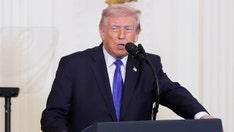
President Donald Trump bestowed the Medal of Honor to three U.S. Army soldiers Monday, in a White House ceremony honoring their «unsurpassed courage.»
The president touted the «three really incredible American heroes — one living and two no longer with us.»
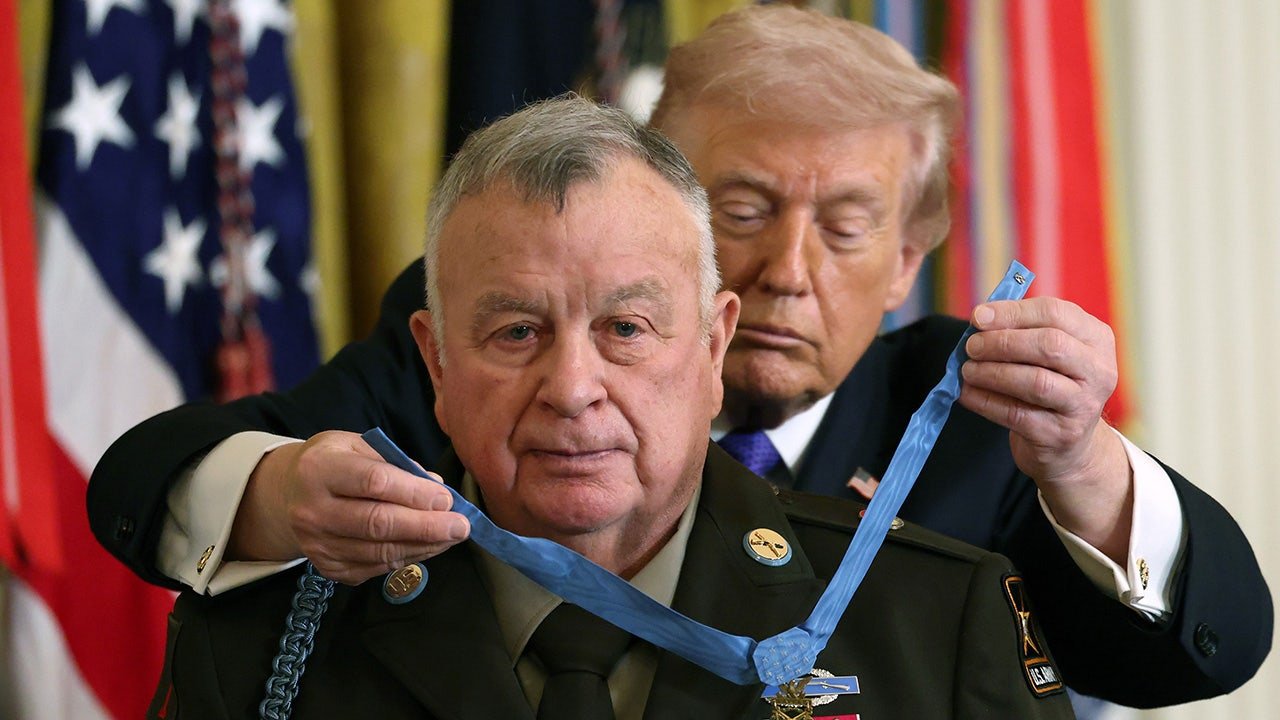
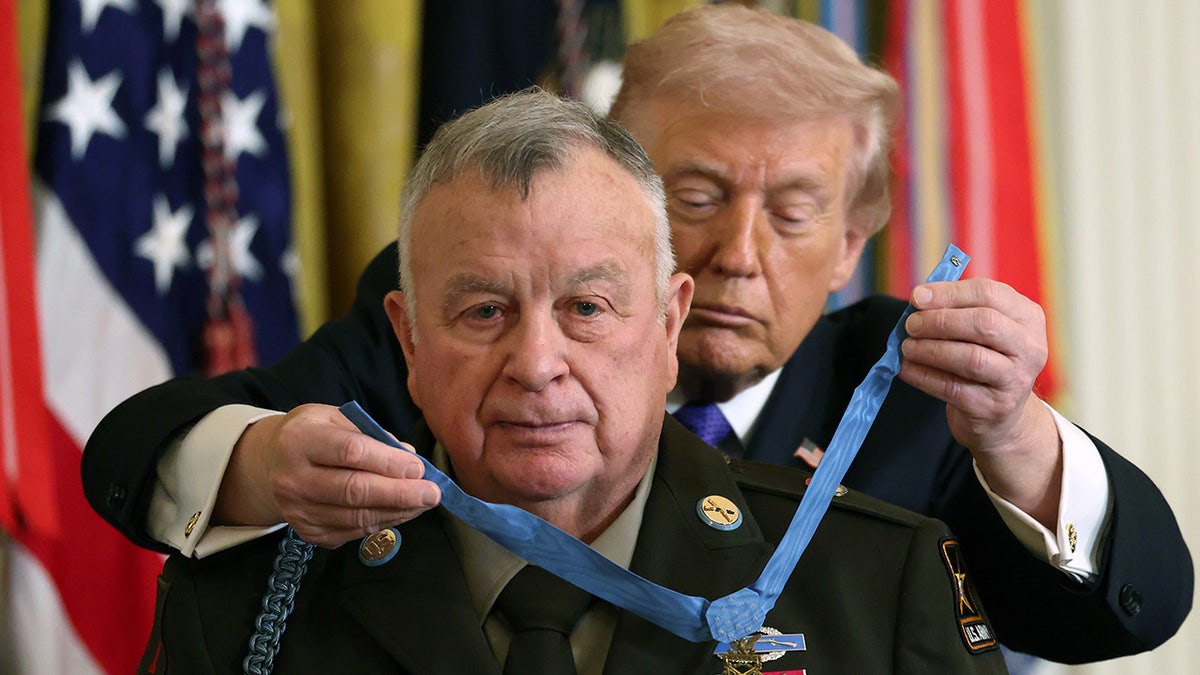
The president posthumously awarded the Medal of Honor to Master Sgt. Roderick (Roddie) W. Edmonds; posthumously awarded the medal to Staff Sgt. Michael H. Ollis and awarded the medal to Command Sergeant Major Terry P. Richardson.
The president, Monday, first introduced the award for Edmonds.
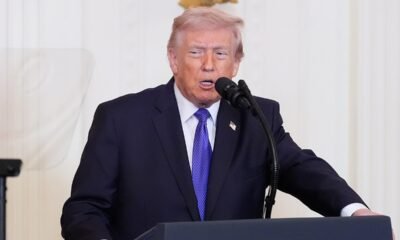
President Donald Trump speaking before participating in a Medal of Honor ceremony in the East Room of the White House, Monday, March 2, 2026, in Washington. (Mark Schiefelbein/The Associated Press )
«In 1941, Roddie Edmonds of Knoxville, Tennessee, enlisted in the US Army and soon rose to one of the youngest master sergeants in the military,» the president said. «In 1944, he sailed to Europe vim and vigor, Roddie soon found himself on the front lines of the Battle of the Bulge. That was a big one, massively outnumbered by enemy forces, his 1,200 soldier unit fought valiantly until they were completely overrun. The force was massive on the other side. … After a four day death march, one that was covered very well by the history books, through bitter cold, they were put into a German POW camp.»
The president said Edmonds «was the top ranking infantryman and the camp he was number one, meaning he was responsible for the lives of his fellow service members.»
«On July 26th, 1945, a Nazi SS officer issued an order over the camp loudspeaker, loud and strong, he said that only American Jews were to show up to roll call. Following this morning, he added all who disobey this order will be shot immediately,» the president explained. «There were more than 200 Jewish American soldiers in the camp, and Roddy knew their separation from the group would mean certain death. So that night he summoned his team and devised a plan. The next morning, all 1200 American men fell in line together, shoulder to shoulder. Enraged, the Nazi commandant rushed forward, drew his Luger pistol, and pressed the barrel between Sergeant Edmond’s eyes. He barked at Roddy, they cannot all be Jews! He screamed loud and again and again, and staring straight back into the raging face of evil, Sergeant Edmonds replied fearlessly, ‘we are all Jews here.’The Nazi officer lowered his weapon and the soldiers erupted in cheers.»
The president said that «with total disregard for his own life, Roddie had saved over 200 of his fellow service members.»
«Their camp was liberated two months later,» the president said.
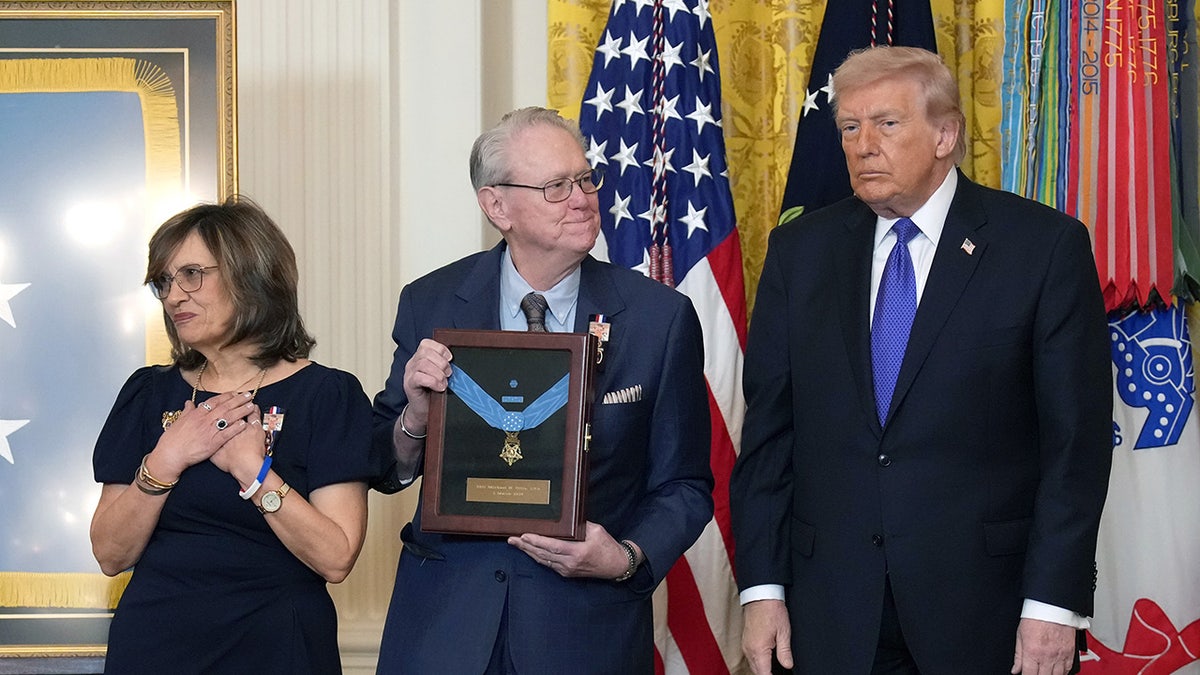
The award was accepted by Edmonds’ son, Chris.
Next, the president honored Richardson.
«On September 12th, 1968, 102 brave men of Terry’s Alpha Company were tasked with securing Hill 222 deep behind the enemy’s line in Vietnam,» Trump said.
«They didn’t know it at the time, had no idea, but the area was totally infested with nearly 300 enemy bunkers and many, many enemy soldiers, far outnumbering them by at least 4- or 5-, even 6-to-1,» the president said. «As Terry led Lima Platoon up Hill 222, the enemy launched an ambitious and violent attack, unleashing a withering fire of machine guns and rocket propelled grenades. Just didn’t stop. They just kept coming, pinned down and hell on Earth.»
The president said, «Terry summoned unimaginable courage. Three times. He exposed himself to enemy fire to rescue severely wounded comrades, and three times he dragged them back to the group.»
«Terry soon realized that the 82 remaining men had one chance of survival. That was air support. Acting without regard of his own life, he grabbed the radio and charged up hill 222 alone. He needed to be there. It was the only place you’d get reception,» the president explained. «He withstood a storm of enemy bullets, eventually reaching the top where he spent the next eight hours calling in tactical strikes, completely exposed….An enemy sniper shot rang out and the bullet tore through his right leg violently. He was in bad shape, but Terry disregarded that and pushed through. And after seven more hours of calling in American fire from above, the enemy retreated.»
«Later that day, his team found him with both eardrums totally ruptured and a mangled right leg and foot, but still barely living but living nevertheless,» the president said. «Due to Terry’s actions above and beyond the call of duty 82 men, Alpha company survived this battle, including two in this room.»
The president invited Norm Meyer and Dave Hemmer to stand up.
IN MEMORY OF WORLD WAR II VETERAN LESTER TANNER: ‘WE ARE ALL JEWISH’
The president congratulated Richardson, and told him that «today you entered the ranks of the bravest warriors ever to strike the face of the earth.»
Finally, the president posthumously awarded the Medal of Honor to Staff Sgt. Michael H. Ollis for gallantry and intrepidity above and beyond the call of duty, while serving in Afghanistan.
«On August 28th, 2013, terrorists detonated a 400 pound car bomb on the east wall of the Forward operating base Kinzie, ripping open a 60 foot wide breach into a compound that housed NATO coalition forces,» the president explained. «A lot of them, ten Taliban fighters wearing suicide vests swarm through from across the compound.»
«Michael saw the pillar of white smoke rising and ran to join the fight, rushing without his gear, wearing almost no gear, no Kevlar helmet, no body armor. Just one magazine in his rifle,» the president continued. «Along the way, he encountered a Polish soldier, and together they advanced under heavy fire. Very, very heavy fire. At one point, shrapnel ripped through the Polish soldier’s legs, rendering him unable to walk very, very severely hurt. In that chaos of gunfire, explosions and charred human remains, a terrorist insurgent appeared rounding a corner with his suicide vest, fully armed. And you could see it. It was going to happen.»
The president said the terrorist «charged the wounded Polish soldier without hesitation.»
«Michael raised his gun and forced himself between the insurgent and the man he just met, shielding him with his own body. He knew what was going to happen,» the president said. «He shielded him with his own body.»
«You know, bravery is amazing. You never really know who’s brave, who’s not until they’re really tested,» the president said. «We think some people are brave, and they’re not. We think others aren’t. And they are. You never know.»
But Trump said Ollis «was tested.»
«That’s called the ultimate test, right? And it perhaps his final heartbeat,» the president said. «Michael fired his weapon, and the terrorist detonated his vest. Simultaneously, staff Sergeant Ollis was killed just weeks before his 25th birthday. And nobody was any more brave than that.»
The president added: «And his final act on earth, Michael, absorbed the blast, sparing the life of that Polish warrior who we are grateful to have in the room with us today.»
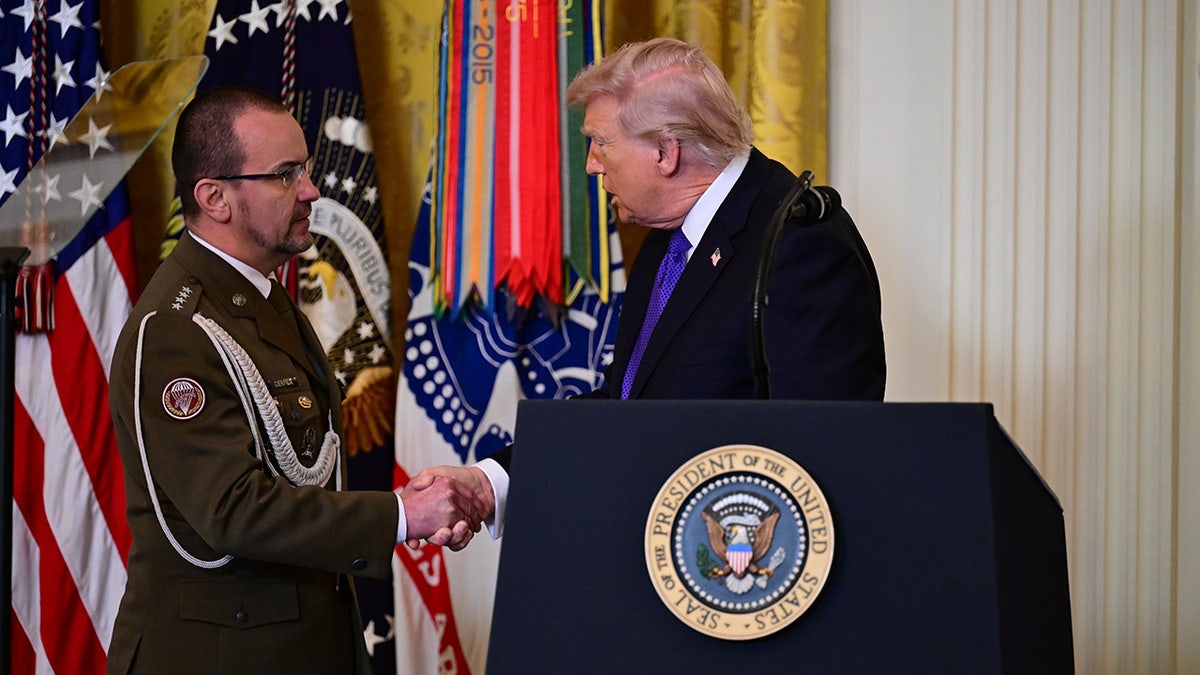
The president invited Polish Second Lieutenant Carol Sarah Piqua to come to the podium.
The Medal of Honor is awarded to members of the Armed Forces who, according to the White House, «distinguish themselves conspicuously by gallantry and intrepidity at the risk of their own lives above and beyond the call of duty.»
CLICK HERE TO GET THE FOX NEWS APP
The White House said the honorees are individuals who «engaged in an action against an enemy of the United States; engaged in military operations involving conflict with an opposing foreign force; or serving with friendly foreign forces engaged in an armed conflict against an opposing armed force in which the United States is not a belligerent party.»
The White House said the conduct «must involve great personal bravery or self-sacrifice so conspicuous as to clearly distinguish the individual above his or her comrades and must have involved risk of life.»
«There must be incontestable proof of the performance of the meritorious conduct, and each recommendation for the award must be considered on the standard of extraordinary merit,» the White House said.
Related Article
white house,donald trump,military








INTERNACIONAL
Trump admin warned lawmakers Israel was ‘determined to act with or without us’ before massive Iran strikes
NEWYou can now listen to Fox News articles!
Speaker Mike Johnson, R-La., described the recent U.S.-Israeli strikes on Iran as a defensive measure, saying, «Israel was determined to act with or without us» following a classified briefing on Monday evening.
Johnson told reporters after the briefing that Israel viewed Iran’s capabilities as an existential threat and was prepared to conduct operations regardless of U.S. participation. He said Israel’s assessment shaped American deliberations, and it was «determined to act in their own defense here, with or without American support.»
The speaker said administration officials had to weigh risks to U.S. forces, regional assets and interests before supporting the operation.
«They had to evaluate the threats to the U.S., to our troops, to our installations, to our assets in the region and beyond. And they determined, because of the intelligence that we had, that a coordinated response was necessary,» Johnson said.
Speaker of the House Mike Johnson, R-La., gestures as he meets with reporters ahead of a key procedural vote to end the partial government shutdown, at the Capitol in Washington, Tuesday, Feb. 3, 2026. (J. Scott Applewhite/AP Photo)
Johnson said he guarantees that if the U.S. had not acted, the Trump administration would have been hauled in by Congress and asked why they waited if they had «existential intelligence, knowing that that would happen.»
«I am convinced that they did the right thing,» he said.
Rubio confirmed that Israel was prepared to act against Iran and said the president «made a very wise decision.»
«We knew that there was going to be an Israeli action. We knew that that would precipitate an attack against American forces,» he told reporters. «And we knew that if we didn’t preemptively go after them before they launched those attacks, we would suffer higher casualties.»
FIRES RAGE AT IRAN’S BANDAR ABBAS NAVAL HEADQUARTERS, STRAIT OF HORMUZ TRAFFIC STALLED
Sen. Mark Warner, D-Va., a top Democrat on the Intelligence Committee, emerged from the briefing and said he did not believe there was an «imminent threat» prior to Saturday’s strikes.
«There was no imminent threat to the United States of America by the Iranians. It was a threat to Israel,» he said. «We equate a threat to Israel is the equivalent of an imminent threat to the United States. Then we are in uncharted territory.»
«We have seen the goals for this operation change now, I believe 4 or 5 times,» he went on.
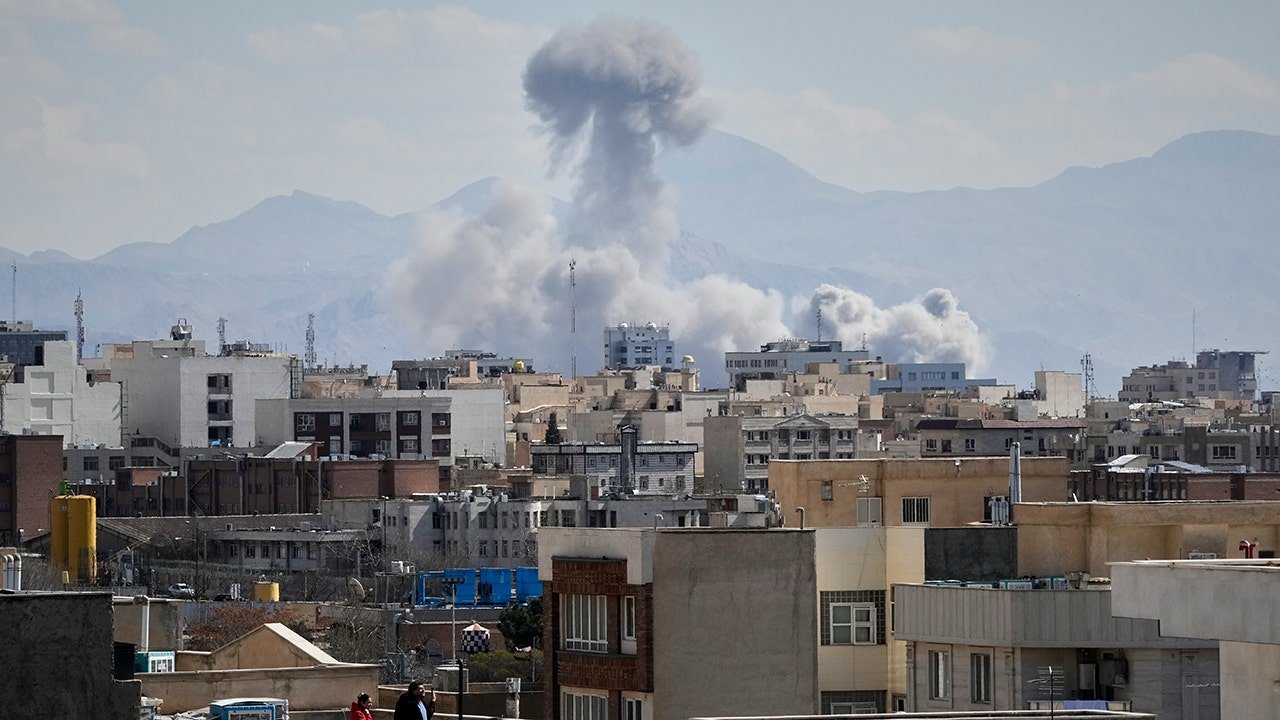
Plumes of smoke from two simultaneous strikes rise over Tehran, Iran, Monday, March 2, 2026. (Mohsen Ganji/AP Photo)
US SURGES FORCES TO MIDDLE EAST AS PENTAGON WARNS IRAN FIGHT ‘WILL TAKE SOME TIME’
Rubio insisted the operation was not about Iranian regime change but about taking out its capabilities as a threat to the region – focused on ballistic missiles and naval capacity.
He did not say whether strikes would extend to nuclear facilities.
«I do believe there is more than adequate justification for our American and Israeli actions,» Senate Armed Services Committee Chairman Roger Wicker, R-Miss., told reporters he believes there is «more than adequate justification for our American and Israeli actions,» without saying more.
House Foreign Affairs Committee Chairman Brian Mast, R-Fla., told Fox News Digital in an interview afterward that he felt administration officials did a good job of illustrating the threat level faced by the U.S. in the days leading up to the strikes.
«I think that’s largely been very open source. The president laid that out, you know, very clearly. It does go beyond that to what I can’t get into, but it goes beyond that. I’m sure it’ll come out in the administration’s good time, but it’s not for me to say,» Mast said.
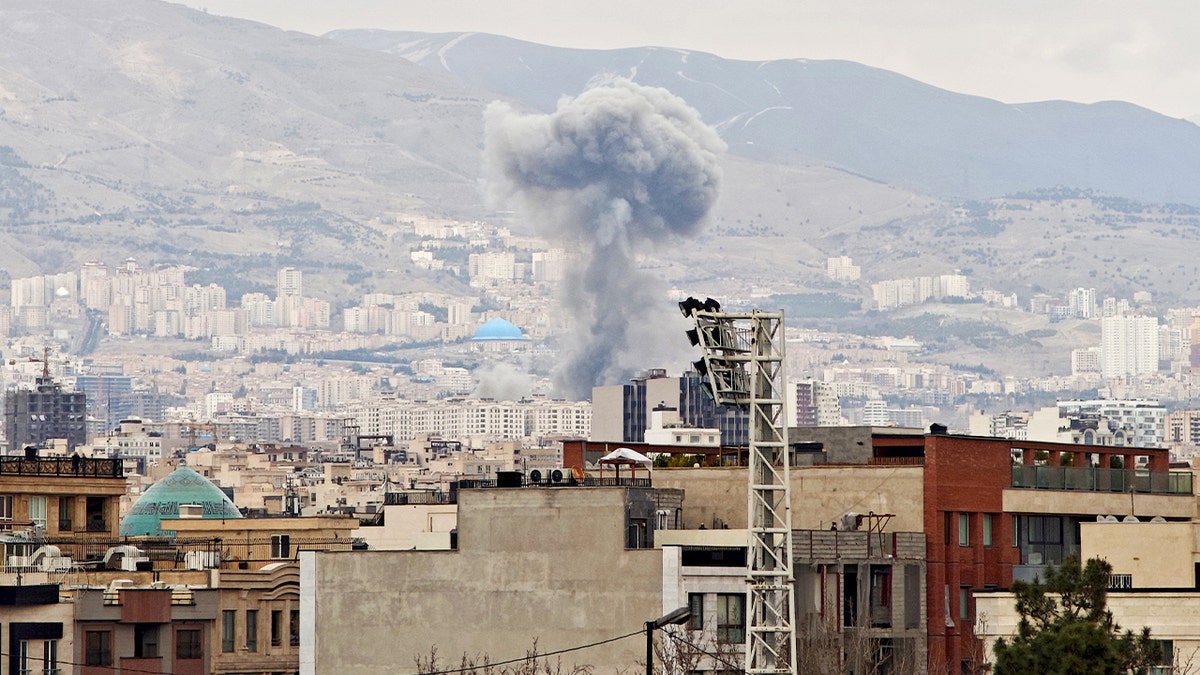
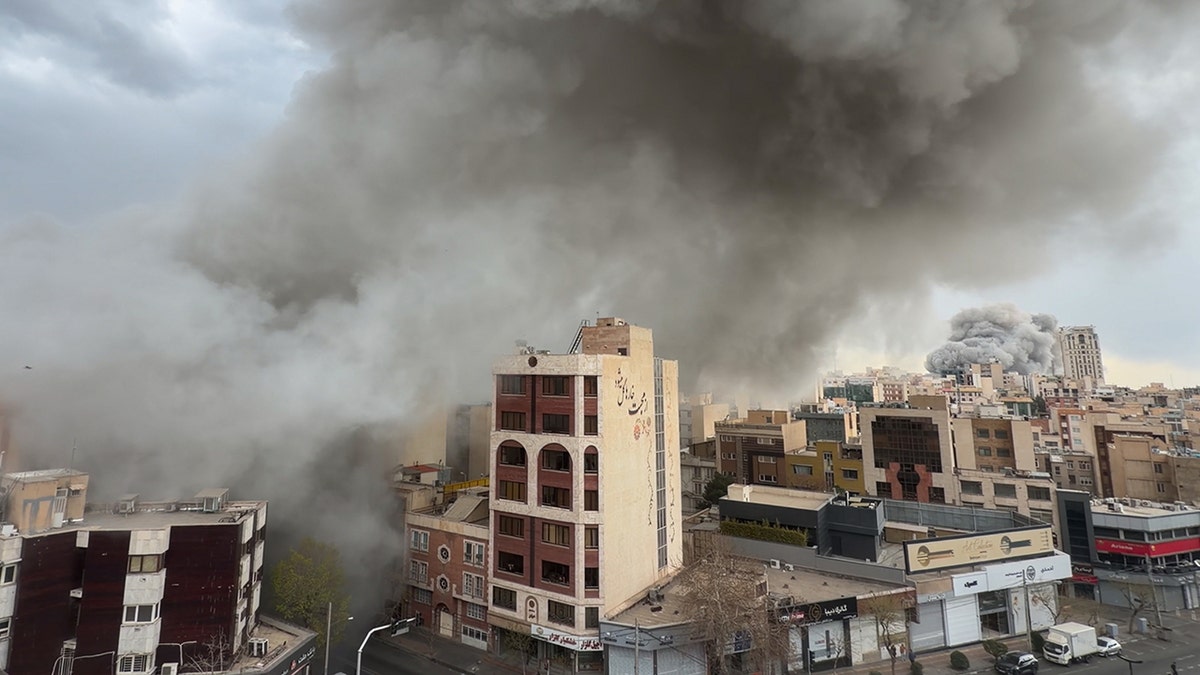
Smoke rises in Tehran following an explosion on March 2, 2026, amid ongoing U.S. and Israeli military strikes. (Majid Saeedi/Getty Images)
«But the more immediate nature of threats — I’m going through the negotiations with [Special Envoy Steve Witkoff], [Jared Kushner], Rubio, others that were a part of having those conversations and throughout that 10-day window of, you know, let’s call it countdown to make a deal, the threats that were going on in that window is probably the high-side information that you have.»
He also said there was a lot of daylight between what Democrats and Republicans in the briefing considered an «imminent threat.»
«It’s like, for me as a soldier, right, if I see an enemy machine gun nest, that to me, given that it’s an enemy machine gun nest, is an imminent threat,» Mast said. «To Democrats, unless that machine gun is burning up its barrels firing at you, it’s not yet an imminent threat. And those are the two separate ways that we’re looking at it.».
CLICK HERE TO DOWNLOAD THE FOX NEWS APP
On February 26th, the U.S. launched Operation Epic Fury against Iran in coordination with Israel. The offensive campaign has resulted in the death of 49 top Iranian leaders, including the Supreme Leader, Ayatollah Ali Khamenei. Six U.S. service members have lost their lives in Iranian counterattacks.
The opening phase of the conflict struck more than 1,000 targets in the first 24 hours, according to Gen. Dan Caine, chairman of the joint chiefs of staff. American B-2 bombers flew 37-hour round-trip missions from the continental United States to hit underground facilities with penetrating munitions, he added.
Related Article
war with iran,mike johnson,iran,middle east foreign policy
INTERNACIONAL
Iran starts ‘indiscriminate’ strikes across Gulf of Oman, hits shadow tanker tied to regime
NEWYou can now listen to Fox News articles!
Iran is conducting «indiscriminate» targeting of vessels across the Gulf of Oman and the wider Persian Gulf following the launch of U.S.-Israeli strikes under Operation Epic Fury, according to a maritime intelligence firm.
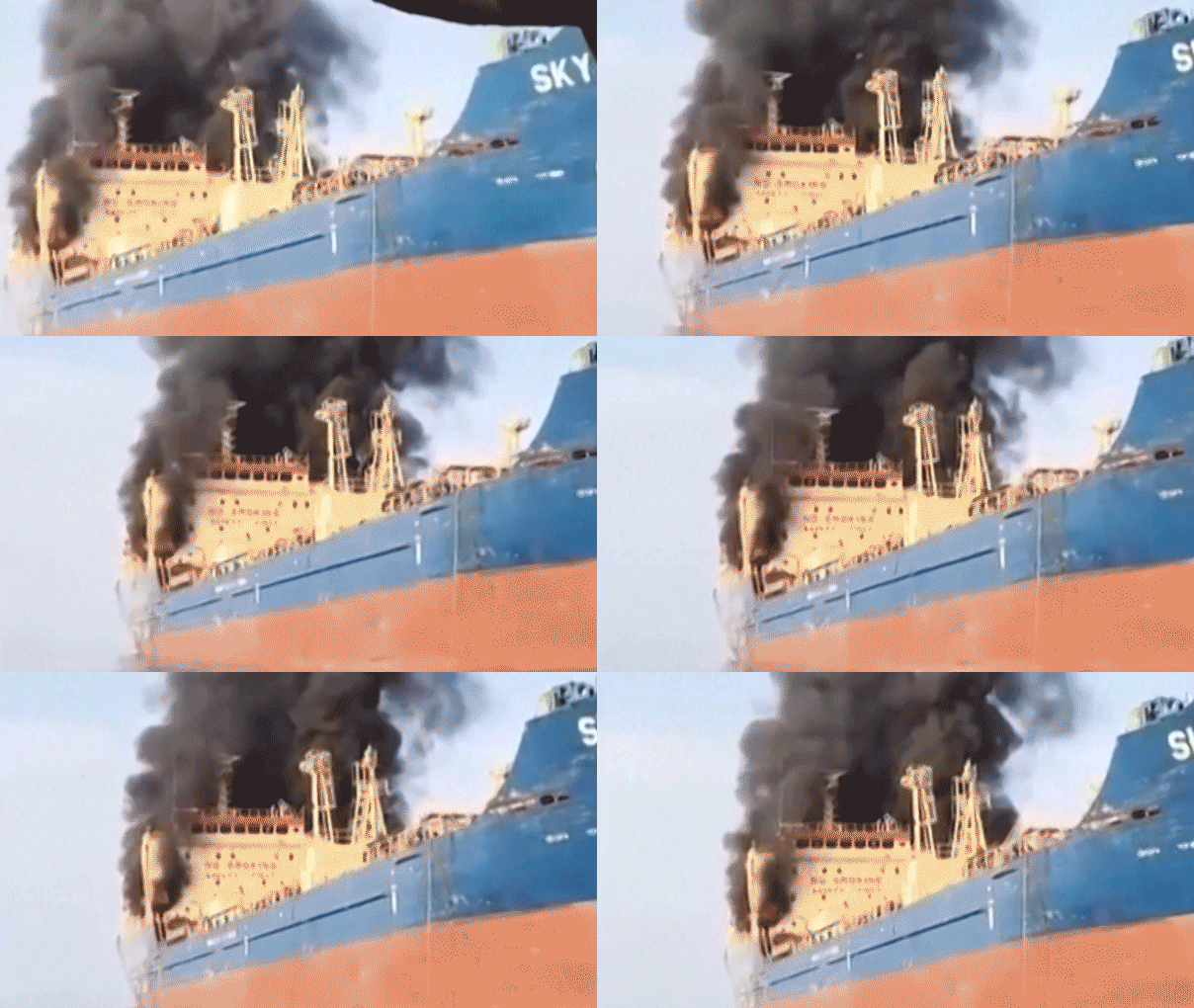
Windward AI noted the sanctioned Palau-flagged tanker Skylight was hit as the conflict across the Middle East entered its second day, with the tanker also holding Iranian nationals among the crew and ties to the regime.
«Analysis of vessel affiliations, targeting patterns, and cargo data points to a strategy of indiscriminate area denial — not precision targeting — aimed at demonstrating Iran’s capability to disrupt the Strait and deter commercial shipping,» the firm said Monday.
Gulf of Oman tanker attacks escalate as Iran retaliates against Operation Epic Fury with missiles targeting U.S. allies, disrupting commercial traffic through choke point. (Reuters)
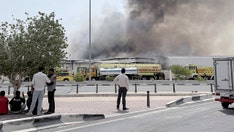
Iran has been retaliating with missiles and drones targeting U.S. and allied positions across the region, including in Qatar, Kuwait and the United Arab Emirates.
Maritime traffic through the Strait of Hormuz, which links the Gulf of Oman to the Persian Gulf, is the world’s most critical energy chokepoint.
While three other vessels were reported attacked since the hostilities escalated Feb. 28, Windward described Skylight as «the highest-risk vessel in the group and the most anomalous target.»
The UKMTO Operation Centre also later confirmed attacks on Skylight, MKD Vyom and Hercules Star, warning of significant military activity across the Gulf of Oman, the Persian Gulf, the North Arabian Sea and the Strait of Hormuz.
Skylight had been sanctioned by the U.S. Treasury’s Office of Foreign Assets Control in December 2025, and was used to transport Iranian petroleum products, according to reports.
It was operated by United Arab Emirates-based Red Sea Ship Management LLC, which Windward noted has documented ties to front companies linked to Iran’s Ministry of Defense.
The vessel had been at anchor since Feb. 22 and carried 20 crew members — 15 Indians and five Iranians.
DUBAI HOTEL FIRE APPEARS TO BE CAUSED BY IRANIAN STRIKE; INJURIES REPORTED
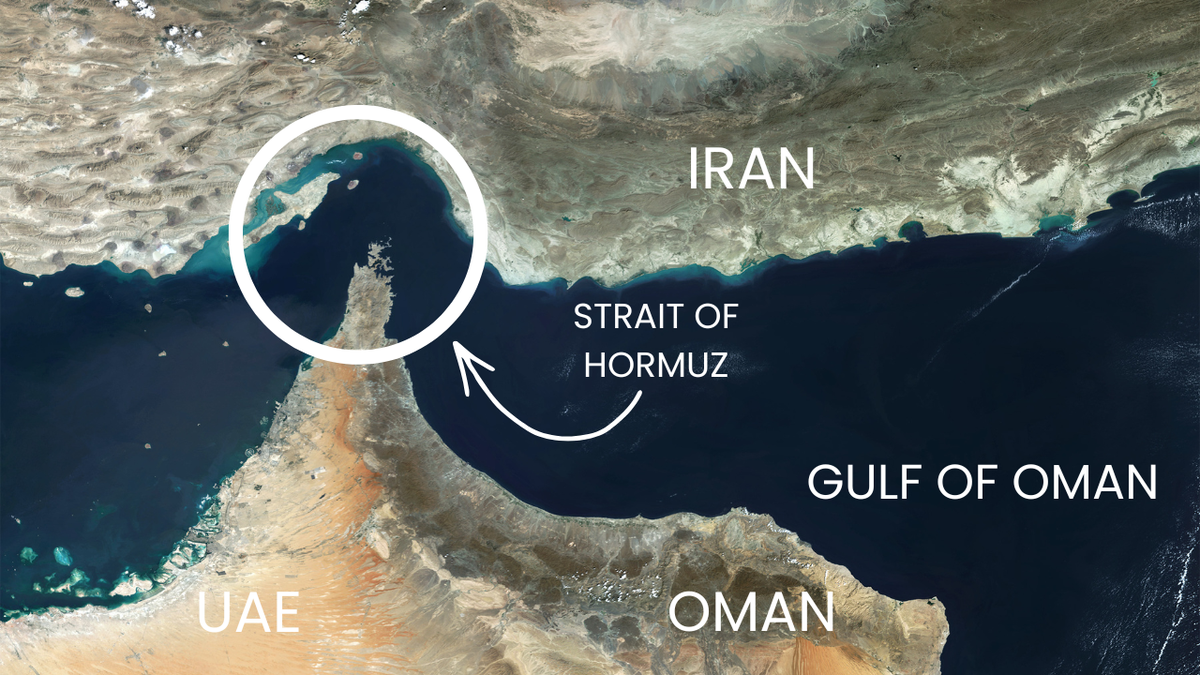
A satellite view of the Strait of Hormuz, a critical chokepoint for global energy supply, connecting the Persian Gulf to the Gulf of Oman. (Gallo Images/Orbital Horizon/Copernicus Sentinel Data 2025/Amanda Macias/Fox News Digital)
«The Skylight anomaly — striking a vessel with an Iranian crew, Iranian operational ties, and active OFAC sanctions — is the single strongest piece of evidence against deliberate targeting by affiliation,» Windward said.
Reuters also reported March 1 that the Palau-flagged tanker was hit off Oman’s Musandam Peninsula in the Gulf of Oman, injuring four.
CLICK HERE TO DOWNLOAD THE FOX NEWS APP
Oman’s Maritime Security Center said in a post on X that Skylight was attacked about 5 nautical miles north of Khasab Port, caught fire and was evacuated.
Related Article
war with iran,iran,middle east,wars,ali khamenei
INTERNACIONAL
Así se gestó la ofensiva de Estados Unidos e Israel en Irán: la Unidad 8.200 y cámaras hackeadas en Teherán
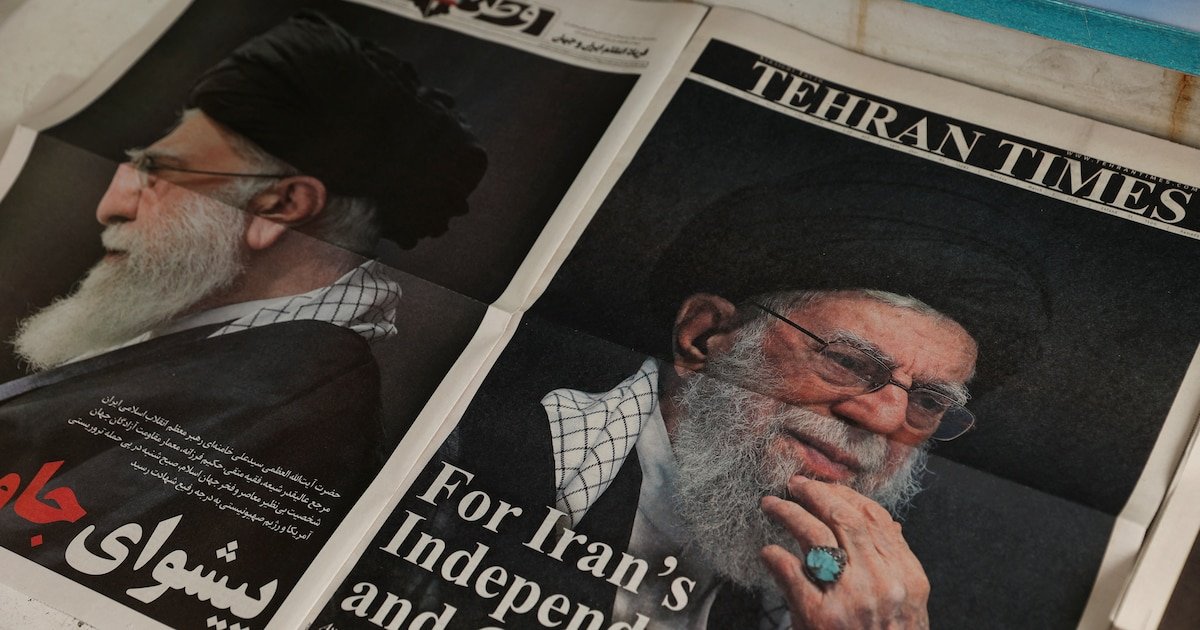
Las maniobras militares y el mensaje de Trump generaron un impacto regional que desafía la estabilidad y abre un debate sobre el futuro del régimen iraní
En los últimos años, Israel desplegó un sistema de vigilancia excepcional sobre Teherán, enfocando sus recursos en el entorno inmediato de Ali Khamenei, líder supremo iraní. La operación alcanzó su punto culminante el sábado, cuando Khamenei murió en un ataque aéreo israelí cerca de Pasteur Street, en la capital iraní.
Las cámaras de tráfico de la ciudad, ampliamente distribuidas en puntos estratégicos, habían sido vulneradas desde hacía años, informó Financial Times. Imágenes captadas en tiempo real se enviaban de manera cifrada a servidores en Tel Aviv y el sur de Israel, permitiendo observar los movimientos cotidianos de los guardaespaldas y conductores asignados a altos funcionarios iraníes.
Un ángulo de cámara se volvió particularmente valioso: facilitó identificar los lugares donde preferían estacionar sus vehículos personales y reveló detalles del funcionamiento interno en zonas habitualmente protegidas. Así, la vigilancia constante sobre el entorno del líder supremo ofreció a los servicios de inteligencia israelíes una visión sin precedentes sobre las rutinas y vulnerabilidades en el corazón del poder iraní.
Una cámara, en particular, proporcionó el ángulo exacto para identificar dónde estacionaban sus automóviles los integrantes del círculo de seguridad, abriendo una ventana a los hábitos y la rutina interna del recinto protegido.
Sobre esa base, se aplicaron algoritmos avanzados para construir expedientes sobre los miembros del equipo de seguridad. Estos expedientes incluían datos como direcciones, horarios de servicio, rutas habituales y, crucialmente, el perfil de las personas a las que custodiaban y transportaban. Este proceso permitió establecer lo que la inteligencia militar denomina un “patrón de vida”, una herramienta clave para anticipar movimientos y vulnerabilidades.
Además del hackeo de cámaras, la operación involucró la manipulación de torres de telefonía móvil en la zona de Pasteur Street. Israel logró interrumpir selectivamente componentes de una docena de torres, haciendo que los teléfonos parecieran ocupados y bloqueando la posibilidad de que la escolta de Khamenei recibiera alertas a tiempo.
Este conjunto de técnicas, basadas en la integración de datos en tiempo real y el análisis de comportamientos, resultó determinante para planificar el ataque con precisión y reducir el margen de error en la identificación del objetivo.

El desarrollo y ejecución de la operación para asesinar a Ali Khamenei dependió de la sincronización entre la Unidad 8.200 y el Mossad, dos de los pilares de la inteligencia israelí. La Unidad 8200, especializada en inteligencia de señales, fue responsable de recolectar y procesar enormes volúmenes de datos electrónicos. Su labor incluyó la interceptación de comunicaciones, el hackeo de cámaras urbanas y la manipulación de sistemas de telefonía móvil, aportando un flujo constante de información sobre los movimientos y hábitos del entorno de Khamenei.
Por su parte, el Mossad —la agencia de inteligencia exterior de Israel— tuvo a su cargo la gestión de activos humanos en territorio hostil. Gracias al reclutamiento de informantes y la obtención de datos sensibles a través de contactos en Irán, el Mossad pudo complementar la vigilancia tecnológica con información contextual de alto valor operativo.

La conjunción de ambas entidades permitió alimentar una cadena de inteligencia que procesaba diariamente montañas de datos para generar informes precisos y actualizados. Este método se apoyó en el uso de análisis matemático de redes sociales para identificar nodos de decisión y posibles blancos, afinando así la selección de objetivos.
La cultura operativa israelí, según exfuncionarios de inteligencia consultados por Financial Times, eleva la obtención de “inteligencia de targeting” (información precisa para eliminar un objetivo) al máximo nivel táctico. En el caso de Khamenei, los organismos trabajaron con el objetivo expreso de garantizar que, si la decisión política de eliminarlo llegaba, la información necesaria estuviera lista para ejecutar la orden con rapidez y exactitud.

La capacidad tecnológica de Israel ha sido un factor decisivo en la ejecución de operaciones encubiertas y ataques selectivos dentro de Irán. Esta superioridad se hizo evidente durante la guerra de 12 días en junio de 2025, cuando agentes israelíes eliminaron a más de una docena de científicos nucleares y altos mandos militares iraníes en cuestión de minutos, marcando un hito en la historia de la inteligencia regional.
En esa ofensiva, Israel logró inutilizar las defensas aéreas iraníes mediante una combinación de ciberataques, drones de corto alcance y municiones de precisión disparadas desde fuera de las fronteras iraníes. El daño incluyó la destrucción de radares de lanzadores de misiles de fabricación rusa, lo que dejó a Irán sin capacidad de respuesta inmediata.
La sofisticación tecnológica también se manifestó en la selección de armamento. Los pilotos israelíes emplearon misiles del tipo Sparrow, capaces de alcanzar blancos tan pequeños como una mesa de comedor desde distancias superiores a 1.000 kilómetros. Esta precisión permitió atacar objetivos estratégicos sin exponerse al alcance de los sistemas de defensa iraníes.

En palabras de un actual funcionario de inteligencia israelí citado por Financial Times, el éxito operativo radicó en “quitarles los ojos primero”, refiriéndose a la neutralización de las capacidades de vigilancia y defensa de Irán antes de lanzar los ataques principales. La misma lógica de supremacía tecnológica y de información se aplicó en la operación contra Ali Khamenei, maximizando el margen de sorpresa y minimizando los riesgos para las fuerzas israelíes.
La preparación del ataque contra Ali Khamenei implicó un exhaustivo proceso de verificación, en el que participaron distintas ramas de la inteligencia israelí y sus aliados. Para un objetivo de tan alto valor, la doctrina militar de Israel exige que dos oficiales superiores, trabajando de manera independiente, confirmen con alto grado de certeza la presencia del objetivo en el lugar señalado y la identidad de quienes lo acompañan.
En esta ocasión, los servicios israelíes contaban con información precisa procedente de inteligencia de señales, como la vigilancia de cámaras de tráfico intervenidas y la intercepción de redes de telefonía móvil. Esa vigilancia permitió verificar que la reunión en la oficina de Khamenei seguía en pie y que los altos funcionarios iraníes ya se dirigían al lugar pactado.
El componente estadounidense añadió un nivel adicional de certidumbre. Según fuentes familiarizadas con la operación, la CIA aportó un informante humano con acceso directo, lo que permitió corroborar la asistencia de Khamenei y su círculo al encuentro.
Con la confirmación multinivel, los pilotos israelíes —que ya se encontraban en vuelo para llegar a tiempo— lanzaron hasta 30 municiones de precisión, según dijo a Financial Times un ex alto mando de inteligencia israelí. El ataque se realizó en horario matutino, lo que brindó un elemento de sorpresa adicional pese a la elevada alerta iraní. El ejército israelí señaló que atacar de día, en vez de por la noche, permitió sorprender tácticamente por segunda vez, a pesar de la preparación defensiva de Irán.
El golpe israelí inaugura una etapa de escalada y sofisticación en la guerra de inteligencia entre Irán e Israel, con posibles efectos globales.
Middle East,Obituaries,Government / Politics,Military Conflicts

Karina Milei le baja línea a LLA: quiere que en 2027 se vote con Boleta Única Papel en todas las provincias

Impactante: Mariano de la Canal fue mordido por un perro y terminó con la cara desfigurada

Trump admin warned lawmakers Israel was ‘determined to act with or without us’ before massive Iran strikes

Conflicto docente: la CGT denunció que el Gobierno no hizo ninguna oferta salarial y advirtió sobre nuevas protestas

¿Cuánta plata necesitás para renovar y ampliar una cocina en marzo de 2026?

La amenaza que Arturo Vidal le lanzó a un campeón del mundo: «Me lo cruzo y le meto una dura»

Evangelina Anderson contó qué pasará con sus hijos ante el próximo desafío de Martín Demichelis en España

¡Tensión en vivo! Aníbal Pachano y Nancy Pazos protagonizaron un cruce explosivo en la mesa de Mirtha Legrand

Destrozaron a Andrea del Boca por el terrible pecado que tuvo en Gran Hermano: “La quiero presa”, apuntaron contra la actriz por un detalle en la cocina

Las predicciones más importantes en la vida de cada signo del horóscopo en marzo, según Jimena La Torre: «Será un cambio rotundo»

 CHIMENTOS2 días ago
¡Tensión en vivo! Aníbal Pachano y Nancy Pazos protagonizaron un cruce explosivo en la mesa de Mirtha Legrand
- CHIMENTOS1 día ago
Destrozaron a Andrea del Boca por el terrible pecado que tuvo en Gran Hermano: “La quiero presa”, apuntaron contra la actriz por un detalle en la cocina
- CHIMENTOS2 días ago
Las predicciones más importantes en la vida de cada signo del horóscopo en marzo, según Jimena La Torre: «Será un cambio rotundo»