INTERNACIONAL
‘Quiet Death’: What to know about the American torpedo that sank Iranian warship, killing 87

NEWYou can now listen to Fox News articles!
The sinking of the Iranian warship IRIS Dena by a single Mk 48 torpedo has put renewed focus on the U.S. Navy’s primary undersea weapon, a heavyweight torpedo that first entered operational service in 1972 and has been steadily upgraded for modern naval warfare.
The strike on the IRIS Dena marked the first time since World War II that a U.S. submarine used a torpedo to sink an enemy ship.
«In the Indian Ocean, an American submarine sunk an Iranian warship that thought it was safe in international waters. Instead, it was sunk by a torpedo. Quiet Death,» War Secretary Pete Hegseth said at a press conference on Wednesday.
The Navy says the Mk 48 has long served as its principal undersea weapon, designed to «defeat all threat surface ships and submarines in all ocean environments.»
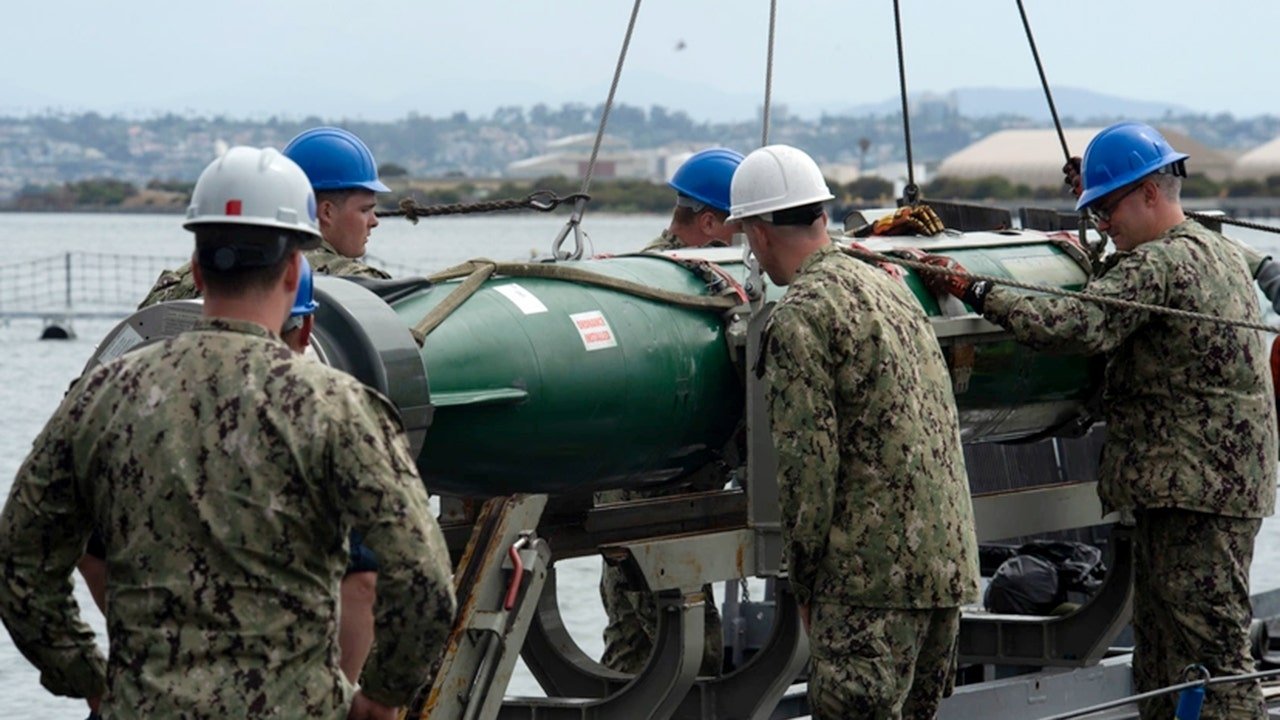
Equipment Operator Constructionman Travis Fryar, right, signals a crane to lower a hook onto an inert MK 48 training torpedo during an expeditionary ordnance loading exercise at Naval Station Rota in Spain on Jan. 13, 2017, showcasing the U.S. Navy’s ability to load weapons at non-traditional locations in the U.S. 6th Fleet area of operations. (U.S. Navy Photo by Mass Communication Specialist 1st Class Michael C. Barton/Released)
The Mk 48 is a submarine-launched torpedo that uses information from the launching submarine and its own sensors to find and strike submarines or surface ships.
Physically, the weapon is built for destructive power. According to Navy specifications, the torpedo measures 21 inches in diameter, weighs about 3,744 pounds and carries a 650-pound high-explosive warhead.
According to the Department of the Navy’s fiscal year 2025 budget estimates, a single Mk 48 torpedo costs approximately $4.2 million.
AMERICA STRIKES IRAN AGAIN — HAS WASHINGTON PLANNED FOR WHAT COMES NEXT?
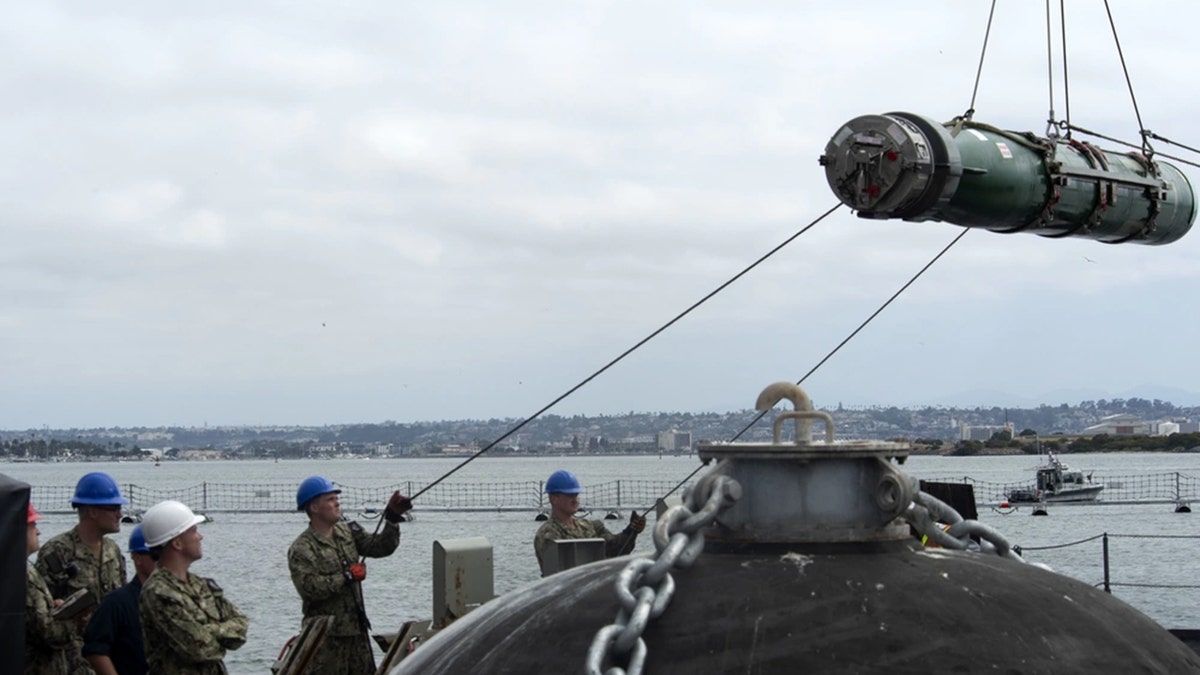
Sailors position a Mk 48 Advanced Capability torpedo onto the Los Angeles-class submarine USS Scranton (SSN 756) on June 24, 2021, as part of ongoing U.S. Navy operations in the Indo-Pacific. (U.S. Navy photo by Chief Mass Communication Specialist Josue L. Escobosa/Released)
Lockheed Martin, one of the Mk 48 torpedo program’s primary contractors, says it can be guided in real time by wire from the launching submarine, allowing operators to update targeting information and adjust its course after launch.
If the wire connection is lost, the torpedo can switch to autonomous homing, relying on digital guidance systems and onboard signal processing to continue its pursuit independently.
Over time, the torpedo has evolved through hardware variants known as «Mods,» each integrating upgraded sensors, guidance and control systems, and propulsion improvements.
OIL SLICK, LIFE RAFTS, DOZENS OF BODIES: WHAT SRI LANKAN NAVY FOUND AFTER US SANK IRANIAN WARSHIP

U.S. Navy Petty Officer Devin Simpson checks an MK 48 torpedo aboard the Virginia-class fast-attack submarine USS Minnesota during a port visit at HMAS Stirling in Rockingham, Western Australia, on Feb. 26, 2025. (Colin Murty/Pool/AFP via Getty Images)
CLICK HERE TO DOWNLOAD THE FOX NEWS APP
The current fleet includes the Mod 7 configuration, developed in partnership with the Royal Australian Navy, while Mod 8 is in development and Mod 9 is being pursued as a rapid prototyping effort, according to the Department of War’s Fiscal Year 2024 Annual Report by the Director of Operational Test and Evaluation.
In addition to hardware upgrades, the Mk 48 undergoes recurring software updates known as Advanced Processor Builds, or APBs, which modify tactics, classification algorithms and operator interfaces to improve performance in increasingly complex undersea environments.
Related Article

military,war with iran,us navy












INTERNACIONAL
La guerra en Oriente Medio: el exilio iraní en Francia recibe amenazas de muerte del régimen persa y refuerzan la seguridad

NEWYou can now listen to Fox News articles!
Sri Lanka began offloading 208 crew members from a second Iranian vessel a day after 87 people were killed and several others were still missing following a U.S. submarine strike on an Iranian warship in the same region.
«After detailed discussions with all parties, Sri Lanka has decided to assist the Iranian vessel,» Sri Lankan President Anura Kumara Dissanayake told reporters at a press briefing in Colombo, Reuters reported.
Among the crew members being offloaded the ship, which is near the port of Colombo, were 53 officials, 84 cadets, 48 senior sailors and 23 sailors, Dissanayake said.
Iranian warship IRIS Dena is seen in the Bay of Bengal. (AP Photo)
The Iranian ship, the IRIS Dena, was sunk Wednesday off Sri Lanka’s coast in the Indian Ocean. Officials there have dispatched two freezers to store 87 bodies recovered at sea.
Gen. Dan Caine, chairman of the Joint Chiefs of Staff, said the ship was «effectively neutralized» in a Navy «fast attack» using a single Mark 48 torpedo. He added that the U.S. Navy achieved «immediate effect, sending the warship to the bottom of the sea.»
TRUMP OVERSEES US STRIKES ON IRAN FROM MAR-A-LAGO, SPEAKS WITH NETANYAHU: WH

An injured Iranian sailor is moved on a stretcher at Galle National Hospital, where the sailors are receiving treatment, following a submarine attack on the Iranian military ship, IRIS Dena, off the coast of Sri Lanka, in Galle, Sri Lanka, March 5, 2026. (Reuters/Thilina Kaluthotage)
Iran contends the ship was sunk in international waters without warning.
«The U.S. will bitterly regret the precedent it has set,» Iranian Foreign Minister Abbas Araqchi said in a post on X.
Iran has asked Sri Lanka to assist with the repatriation of the bodies.
Sri Lankan officials said the Dena was on its way home after taking part in a naval exercise organized by India in the Bay of Bengal from Feb. 18 to 25.
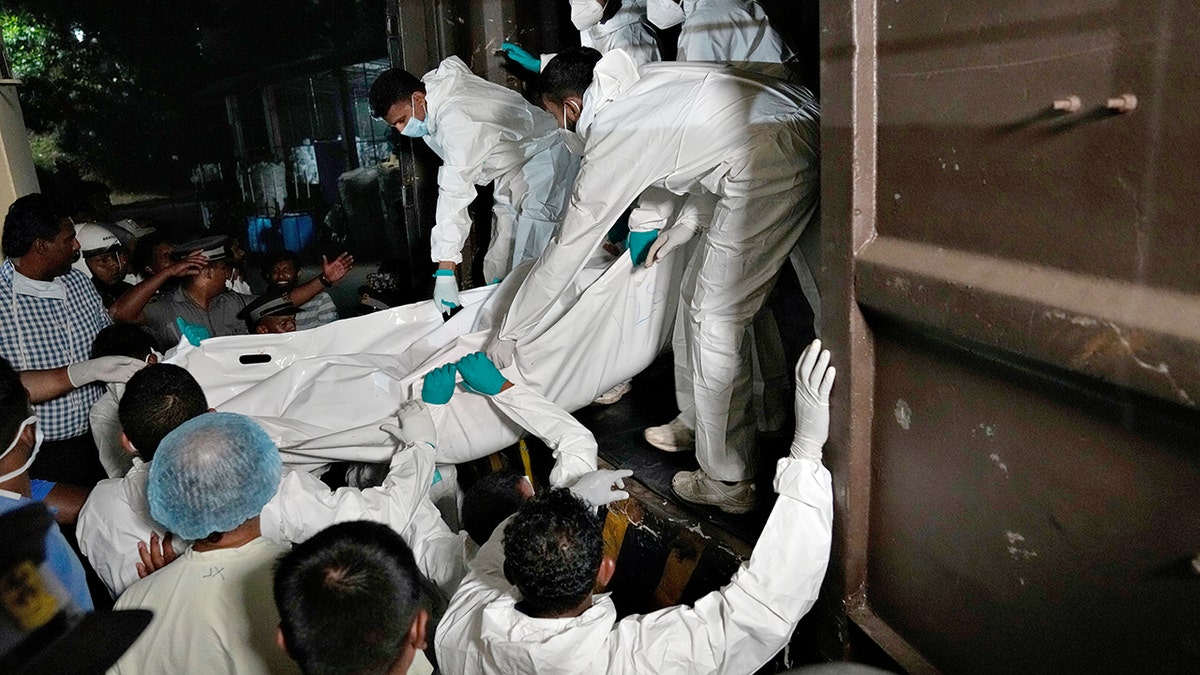
Healthcare workers unload the bodies of Iranian sailors from a vehicle who died when their IRIS Dena warship sank outside Sri Lanka’s territorial waters, in Galle, Sri Lanka, Wednesday, March 4, 2026. (AP Photo/Eranga Jayawardena)
CLICK HERE TO DOWNLOAD THE FOX NEWS APP
Search and rescue operations would continue for an estimated 10 people who remain unaccounted for, they said.
Related Article

war with iran,military,iran

NEWYou can now listen to Fox News articles!
House Democrats largely voted to allow the Department of Homeland Security (DHS) shutdown to keep going on Thursday, shrugging off Republicans’ concerns about the increased domestic terror threat amid the U.S.-Israeli operation in Iran.
It comes hours after President Donald Trump shocked Capitol Hill by ousting DHS Secretary Kristi Noem and appointing Sen. Markwayne Mullin, R-Okla., as his replacement.
But that did not stop the vast majority of Democrats from voting against a bipartisan DHS funding bill aimed at funding the cabinet agency through Sept. 30, the end of the fiscal year.
Nearly identical legislation already passed the House in January, but House GOP leaders wanted to force the vote again in light of heightened national security concerns within the country’s borders.
House Minority Leader Hakeem Jeffries speaks during a press conference on Capitol Hill on Nov. 3, 2025. (Roberto Schmidt/Getty Images)
While largely symbolic, it shows Republicans’ pressure strategy is falling on deaf ears as the left continues to protest President Donald Trump’s strategy to combat illegal immigration.
The bill was the product of original bipartisan negotiations that followed the longest-ever full government shutdown in U.S. history, which ended in November after 43 days.
It would fully fund all aspects of DHS while also including new guardrails on Immigration and Customs Enforcement (ICE) demanded by Democrats, like a body-worn camera mandate and new required training on public engagement and de-escalation.
But Democrats walked away from the deal en masse amid fallout from Trump’s immigration crackdown in Minnesota, which saw two U.S. citizens shot and killed by federal agents during anti-ICE demonstrations there. The operation has since ended.
Democratic leaders are still insisting on withholding their caucus’ support, however, until further restrictions are put on ICE and Customs and Border Protection (CBP) agents on the ground in various cities.

A person holds an image of Iran’s Supreme Leader Ayatollah Ali Khamenei as Iranian demonstrators protest against the U.S.-Israeli strikes, in Tehran, Iran, Feb. 28, 2026. (Majid Asgaripour/WANA (West Asia News Agency) via Reuters)
And House Minority Leader Hakeem Jeffries, D-N.Y., signaled to reporters that Noem’s ouster was not enough.
«It’s not like Kristi Noem was the one who was involved in negotiating anything. She was a corrupt lackey. So we were dealing with the White House before, and we’re going to continue to deal with the White House at this point,» he said.
Meanwhile, the resulting DHS shutdown has taken on new significance as the U.S. continues its campaign to take out Iran’s top leadership and its military sites.
Republican leaders are warning that keeping DHS in a shutdown state is dangerous for national security, given its jurisdiction over agencies that monitor threats from home and abroad.
SWALWELL PRESSED ON DEMOCRATS’ RESISTANCE TO FULLY FUNDING DHS AMID IRAN THREAT
«Now is the time to be vigilant at home and to ensure that all of our doors are locked, so to speak,» Speaker Mike Johnson, R-La., said during a press conference Wednesday. «And yet, as all this is happening, we have Democrats running around here playing political games in Congress. It’s infuriating. They’ve shut down the very agency that is responsible for securing the homeland.»

Speaker of the House Mike Johnson, R-La., pauses for questions from reporters as he arrives for an Republican Conference meeting at the Capitol in Washington, Feb. 3, 2026. (J. Scott Applewhite/AP Photo)
House Minority Leader Hakeem Jeffries, D-N.Y., called Republicans’ argument «insane» when asked by Fox News Digital earlier this week.
CLICK HERE TO DOWNLOAD THE FOX NEWS APP
«Donald Trump launches an unauthorized war in the Middle East. … He decides that he wants to spend billions of dollars to bomb Iran, rather than spend taxpayer dollars to lower the grocery bills that are crushing the American people, and then wants to use his unauthorized war as an excuse to continue spending taxpayer dollars to brutalize or kill American citizens by continuing to unleash ICE without restriction on the American people?» Jeffries posed. «I think it’s ridiculous.»
It’s the Senate, however, where passing that DHS funding bill is actually key to ending the shutdown. The upper chamber voted again Thursday on the original legislation that passed the House in January, but it failed to reach the 60 votes necessary to overcome a filibuster.
Related Article

house of representatives politics,government shutdown,homeland security,war with iran,politics

Mezclar shampoo con bicarbonato: por qué recomiendan hacerlo y para qué sirve

El juez Martínez de Giorgi investigará a Patricia Bullrich por la represión en una marcha de jubilados

Ian Lucas se hartó de las mentiras de Evangelina Anderson y confirmó que fueron novios: “Ella me da vergüenza”

Santa Fe y Neuquén firmaron un convenio para promover el desarrollo de empresas en Vaca Muerta

Cuánto cobra un albañil por hora: los sueldos de la construcción en marzo de 2026

Las vibraciones de El Palacio ponen en peligro el debut de Coudet

Puertas adentro, Villarruel explotó: «El esfuerzo no lo hizo la política» y demolió el relato económico de Milei

Pampita se mudó a un castillo francés de detalles alucinantes: «1000 metros, 14 ambientes, vale 11 millones de dólares»

Escándalo en la primera fiesta de Gran Hermano: piden sanción para Lola, Lolo y Titi

El drama que vive Oriana Sabatini a horas del nacimiento de su hija con Paulo Dybala: se complicó la salud de su abuela de 90 años

 POLITICA3 días ago
Puertas adentro, Villarruel explotó: «El esfuerzo no lo hizo la política» y demolió el relato económico de Milei
- POLITICA3 días ago
Petri y Villarruel se cruzaron por un gesto en el Congreso: de “golpista” a “te conozco por el trencito de la alegría”
- CHIMENTOS1 día ago
¡Interna total! Pablo Layus explotó y blanqueó quiénes son los que arruinan Intrusos: «Te matan»