INTERNACIONAL
Private flights account for 30% of departures from Oman airport as wealthy evacuate Middle East

NEWYou can now listen to Fox News articles!
Long border crossings, SUV convoys and six-figure jet charters have become the new escape route out of the Middle East as Operation Epic Fury intensifies, with private flights now accounting for nearly a third of all departures from Oman’s main airport.
FlightRadar24, a real-time flight tracking platform, reported that while Oman continues to be a «vital» hub for evacuation and repatriation flights, private flights accounted for 31% of operations Wednesday at Muscat International Airport.
As of Thursday afternoon, the platform reported more than 30% of all movements at the airport were private flights.
Semafor reported earlier this week that airports in Oman and Saudi Arabia were drawing ultra-wealthy travelers looking to leave the countries.
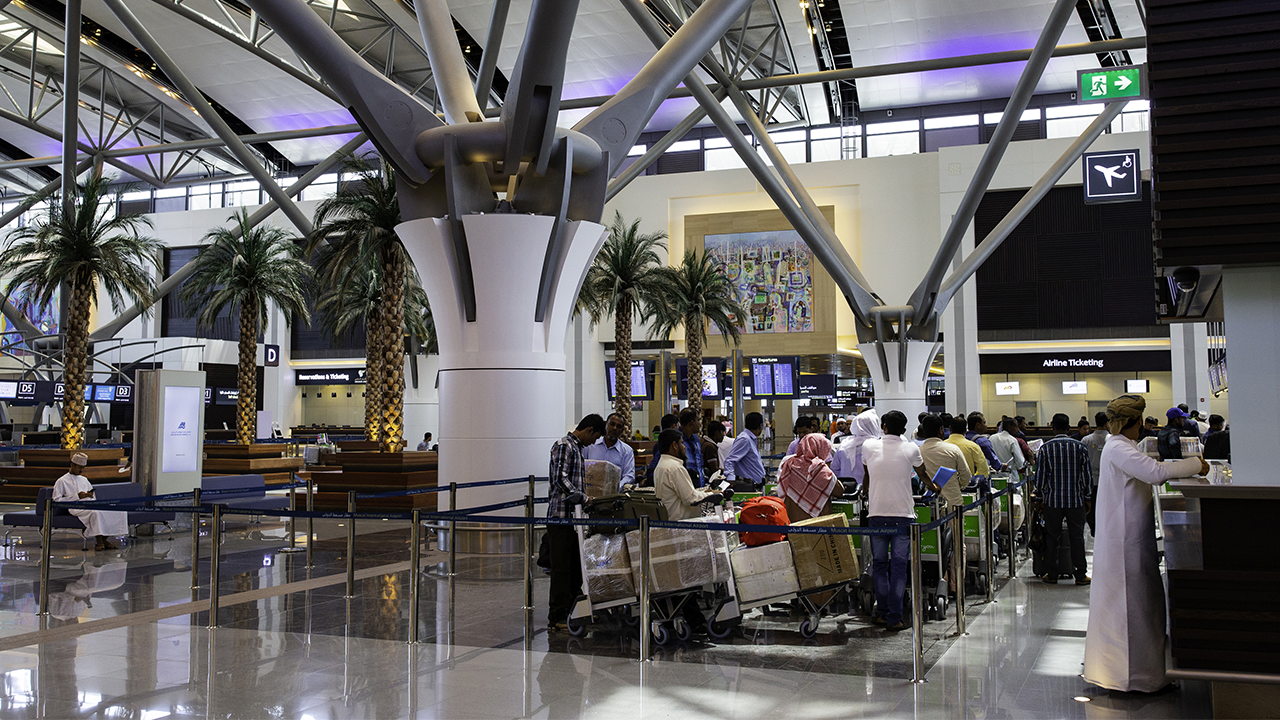
Oman continues to be a «vital» hub for evacuation flights at its Muscat International Airport. (Christopher Pike/Bloomberg via Getty Images)
People familiar with the matter told the outlet that private security companies have been booking fleets of SUVs to take people on the 10-hour drive from Dubai to Riyadh, Saudi Arabia, where private flights are available.
The clientele evacuating the region are a mix of senior executives at global finance firms and wealthy travelers in the region for business or vacation, according to Semafor.
LIV golfer Jon Rahm, a two-time major winner, was just one of the wealthy who arranged flights amid the turmoil.
MIDDLE EAST CRUISE NIGHTMARE DEEPENS AS IRAN AIRSTRIKES LEAVE PASSENGERS STRANDED
Rahm arranged a charter flight through his partnership with VistaJet, a private aviation company, to fly the seven stranded LIV golfers and a caddie from Oman to Hong Kong after their flights were canceled.
After a more than four-hour drive to Oman, the crew flew to Hong Kong.
A spokesperson for Air Charter Service, a company that acts as a global broker for private jets and freight transport, told FOX Business the company has arranged more than 10 evacuation flights, with more scheduled, mainly out of Oman with passengers looking to flee Dubai.
AMERICAN STUCK IN MIDDLE EAST ESCAPES IN RACE TO REACH CRITICALLY ILL HUSBAND IN CALIFORNIA
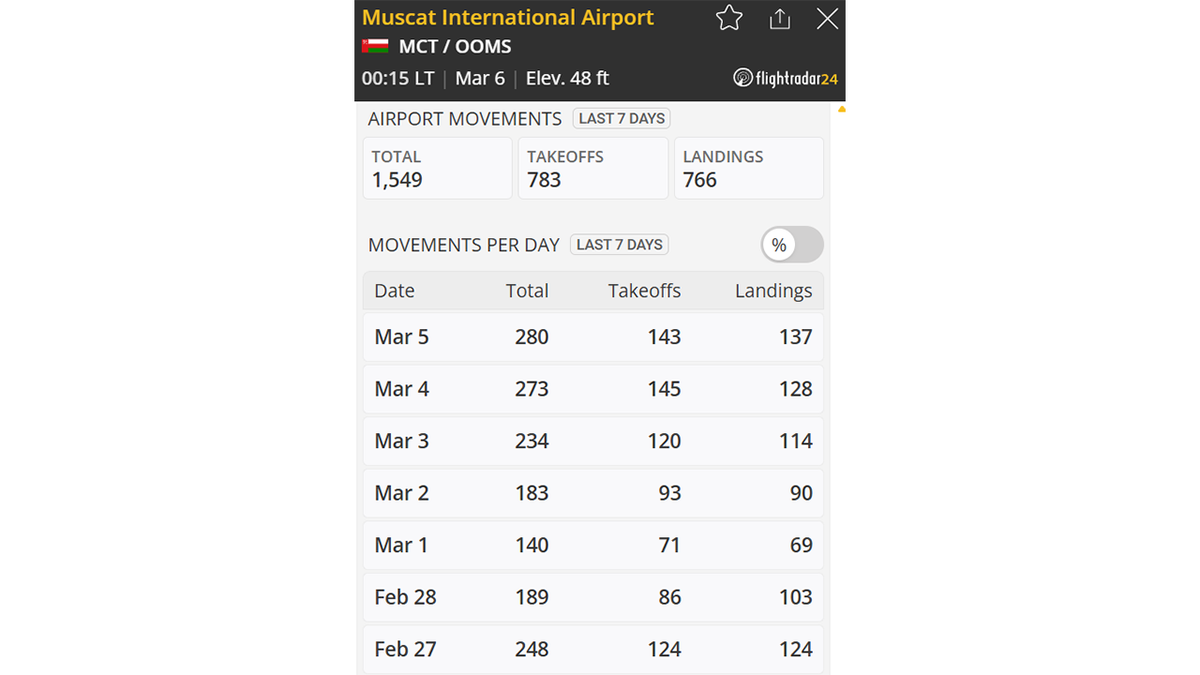
FlightRadar24 shared flights flying in and out of Muscat airport. (@Flightradar24 via X)
«We evacuated some of our own staff who were just visiting the region, and we arranged transport via the Hatta crossing into Oman from the UAE to get them to Muscat from where they flew out of the region,» the spokesperson said. «The border crossing time at Hatta took around 3–4 hours, as of Sunday, but I suspect this has increased now, as more people look at this option.»
Light flight jet trips from Muscat, Oman, to Istanbul, Turkey, are reportedly going for more than $93,000, according to Forbes, which said the price was about double the usual rate.
The outlet added the same route on heavy jets can cost up to $140,000.
AMERICANS IN MORE THAN A DOZEN MIDDLE EAST NATIONS URGED TO FLEE

This map shows the targets of Iran’s retaliatory strikes. (Fox News)
The U.S. and Israel launched attacks on Iran Saturday, triggering retaliatory attacks targeting countries in the region that host U.S. interests.
Mora Namdar, Assistant Secretary of State for Consular Affairs, advised U.S. citizens to leave Bahrain, Egypt, Iran, Iraq, Israel, the West Bank and Gaza, Jordan, Kuwait, Lebanon, Oman, Qatar, Saudi Arabia, Syria, the United Arab Emirates and Yemen.
CLICK HERE TO DOWNLOAD THE FOX NEWS APP
The limited number of available aircraft has pushed up prices, as citizens and travelers attempt to flee.
Fox News Digital’s Ryan Morik and Ashley Carnahan contributed to this report.
Related Article

war with iran,middle east,airports,travel,world,airlines,lifestyle








NEWYou can now listen to Fox News articles!
FIRST ON FOX: As U.S. and Israeli military pressure on Iran intensifies, and President Donald Trump signals support for Kurdish forces, Kurdish opposition groups along the country’s western frontier tell Fox News Digital they are watching closely for an opportunity to strike back against the Islamic Republic, which they have fought for decades.
Kako Aliyar, a member of the leadership committee of the Kurdish opposition party Komala, told Fox News Digital from an undisclosed location in Iraq that the Kurdish movements are ready to act if conditions allow.
«Kurds have been waiting for a moment to do something,» Aliyar said. «We believe that those moments are not far from us.»
But Aliyar said Kurdish forces cannot yet move against the regime because Iran still retains the ability to launch missile and drone attacks, which opposition fighters would struggle to defend against.
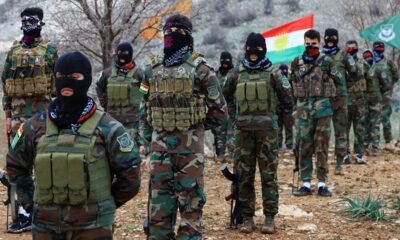
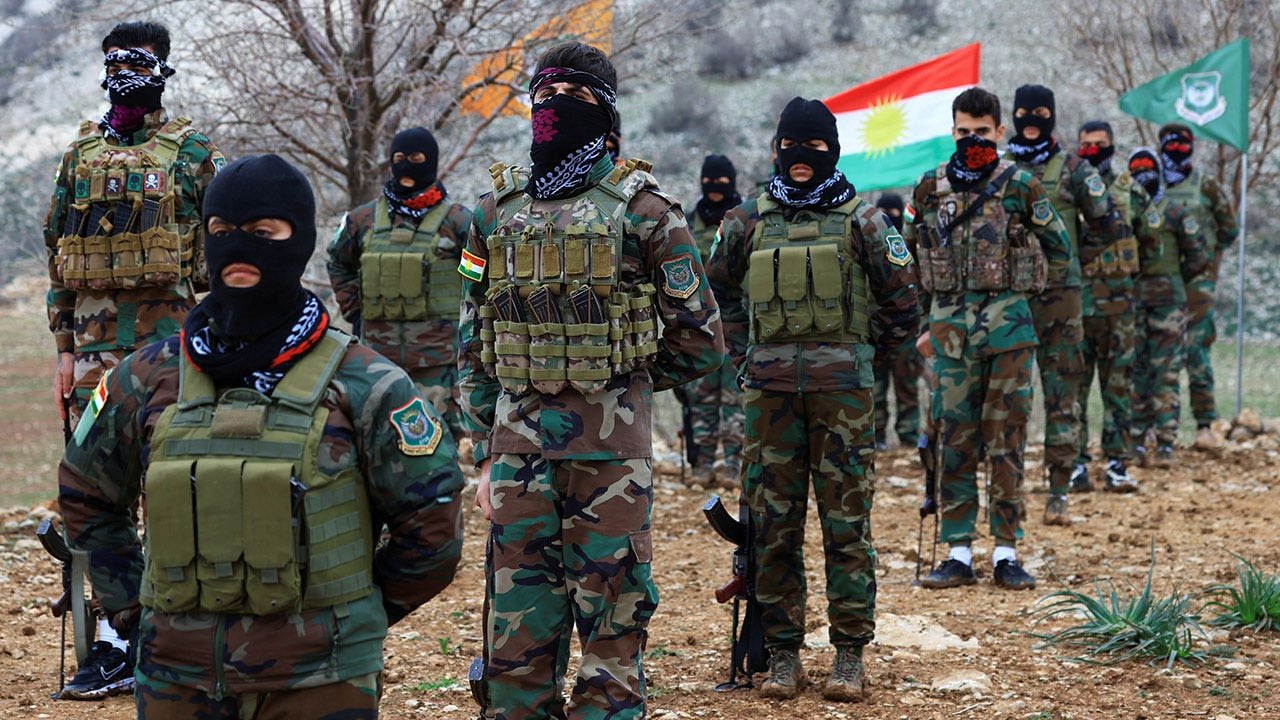
Iranian Kurdish fighters from the Kurdistan Freedom Party (PAK) take part in a training session at a base on the outskirts of Erbil, Iraq Feb. 12, 2026. (Thaier Al-Sudani/ Reuters)
Aliyar said Iranian forces continue to target Kurdish opposition bases across the border in Iraq’s Kurdistan region.
Trump signaled support for Kurdish fighters launching an offensive against Iran, saying in a telephone interview with Reuters Thursday that he would back such a move.
«I think it’s wonderful that they want to do that — I’d be all for it,» Trump said.
Asked whether the United States would provide air cover for a Kurdish offensive, Trump declined to elaborate.
«I can’t tell you that,» he said.
Aliyar said Kurdish groups remain under pressure from Iran and continue to face attacks on their bases across the border in Iraq’s Kurdistan region.
«Our camps, the Kurdish political parties, are still under attack by the Iranian regime, and we can’t go into detail,» he said.
Still, he indicated that if the opportunity arises, Kurdish fighters would attempt to return to Iranian territory.
«If we get an opportunity to go back to our own country, we will use it,» he said.
Kurdish opposition signals unity
The comments come as Iranian Kurdish opposition groups attempt to present a united front against Iran.
In February, several factions formed the Coalition of Political Forces of Iranian Kurdistan, bringing together parties including Komala, the Democratic Party of Iranian Kurdistan (PDKI), PJAK and the Kurdistan Freedom Party.
Aliyar said the coalition is still organizing itself but carries an important political message.
«Politically, it’s a huge message for the Kurdish people inside the country and the international community that Kurds are united,» he said. «We are working together, and we are trying to reach our goals together.»
Kurdish groups have long fought the Iranian government. Armed clashes between Kurdish militants and Iranian forces date back to the years following the 1979 Islamic Revolution, when Kurdish factions sought autonomy and were violently suppressed by Tehran.
Today, many Kurdish opposition groups operate from neighboring Iraqi Kurdistan, where they maintain political offices and limited military forces.
NETANYAHU INSISTS US AND ISRAEL’S STRIKES ON IRAN WON’T LEAD TO ‘ENDLESS WAR’
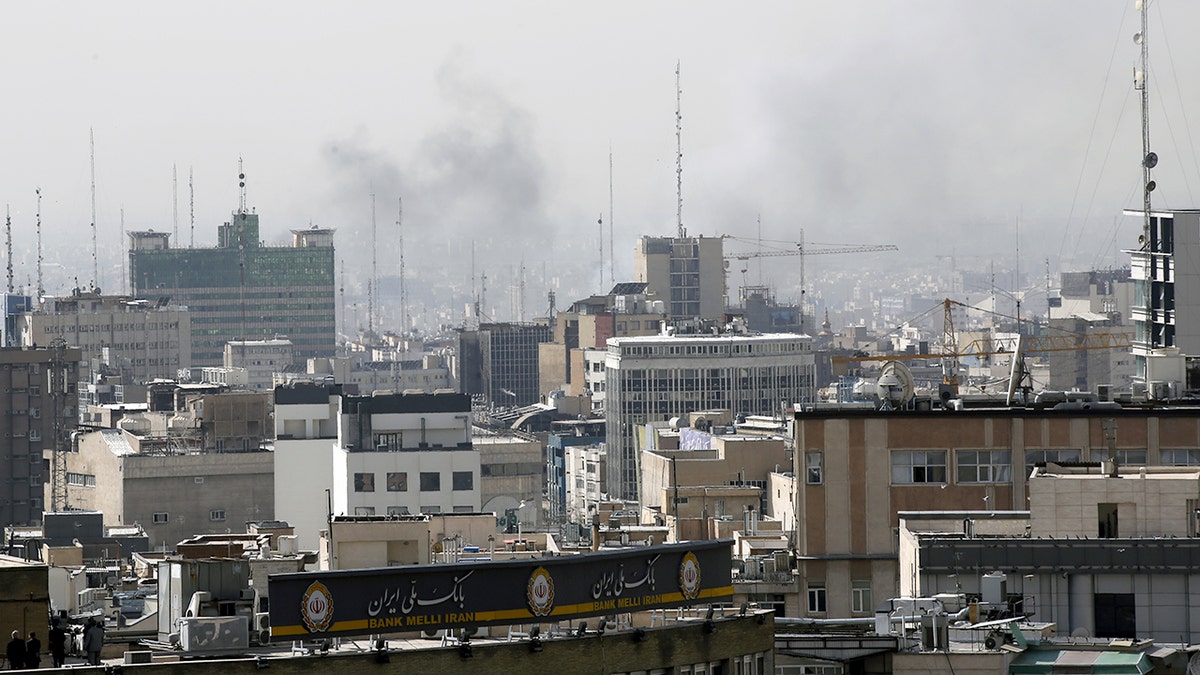
A general view of Tehran, Iran, with smoke visible in the distance after explosions were reported in the city, March 2, 2026. (Contributor/Getty Images)
Waiting for Iran’s military capabilities to weaken
Aliyar suggested Kurdish forces would only be able to move if Iran’s military capabilities are significantly degraded.
«I believe those missile and drone abilities have to be more weakened or totally removed because we are not able to defend ourselves against them,» he said.
Iran’s ability to launch missiles and drones remains one of the regime’s strongest deterrents against internal or external challengers.
«They can still launch missiles and they can still kill people,» Aliyar said.
If those capabilities were reduced, he believes Kurdish forces could attempt to exploit the moment.
«I think everyone has the capacity to do so because Kurdish political parties have huge legitimacy among the people,» he said. «People support them, people support us.»
However, Aliyar cautioned that no one can predict how events will unfold.
«When a war starts, you are trying to find a way to use it in your best way, but you cannot predict what happens tomorrow,» he said.
Kurdish resistance rooted in decades of struggle
Kurds in Iran represent one of the country’s largest ethnic minorities and have historically maintained organized opposition movements.
Kurdish parties developed armed wings and political networks decades ago, giving them a level of organizational structure that many other Iranian opposition movements lack.
Jino Victoria Doabi, an international political analyst focused on Iran and Kurdistan, told Fox News Digital, «Kurds inside Iran have their own history and tradition of struggle and resistance with political parties and armed forces.»
Doabi said Kurdish forces are unlikely to move without clear backing from Washington.
TRUMP TELLS IRANIANS THE ‘HOUR OF YOUR FREEDOM IS AT HAND’ AS US-ISRAEL LAUNCH STRIKES AGAINST
IRAN
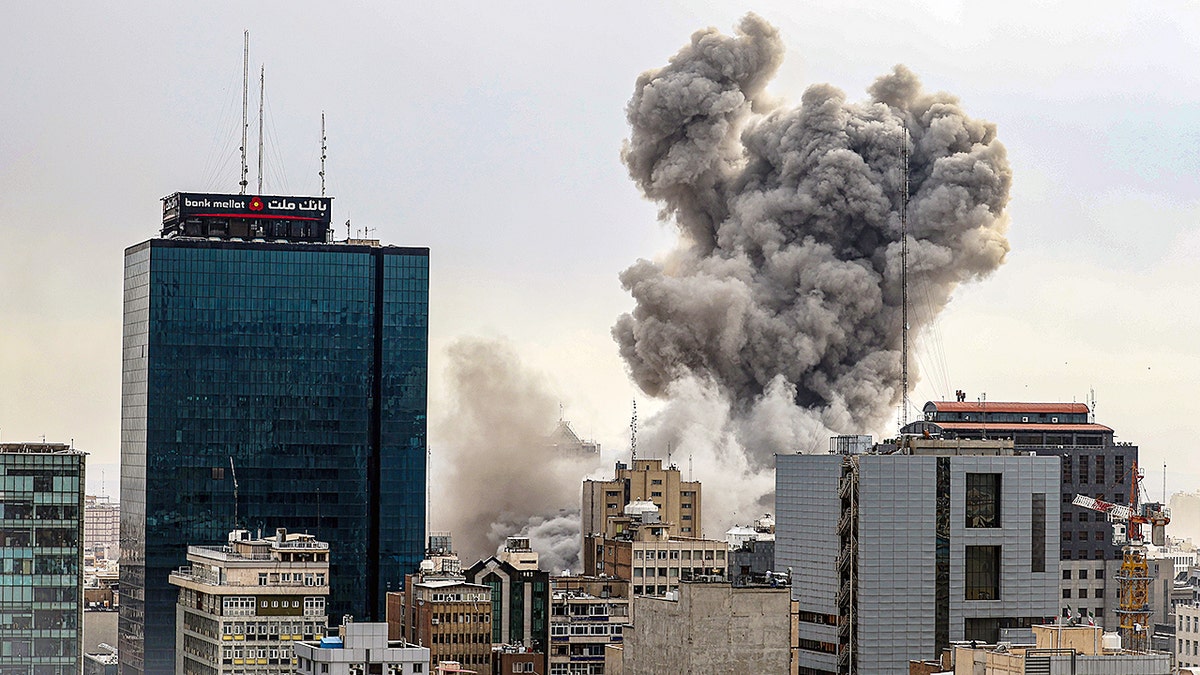
Bombing occurs in Iran on Feb. 28, 2026. (Fatemeh Bahrami/Getty Images)
«For that to happen, they need assurance from America, both politically but also security-wise,» Doabi said.
«Kurds have learned that they cannot just do it for the good cause anymore, because that’s going to cause civilians a lot of pain and destruction and killings.»
Discussions about the idea of Kurdish involvement may have been underway long before the recent escalation, according to Doabi.
«I don’t think this has happened overnight,» she said. «I think this has been discussed for a long time.»
Regional complications
Despite the growing attention on Kurdish groups, Aliyar emphasized that Iraqi Kurdish authorities are not directly involved in any potential campaign.
«Iraqi Kurds are not part of it,» he said. «I am not Iraqi, so I cannot comment on that.»
Analysts say Kurdish insurgents alone are unlikely to topple the Iranian regime. But if internal unrest spreads and Kurdish forces coordinate with broader opposition movements, Iran’s western frontier could become a serious pressure point for Iran.
CLICK HERE TO DOWNLOAD THE FOX NEWS APP
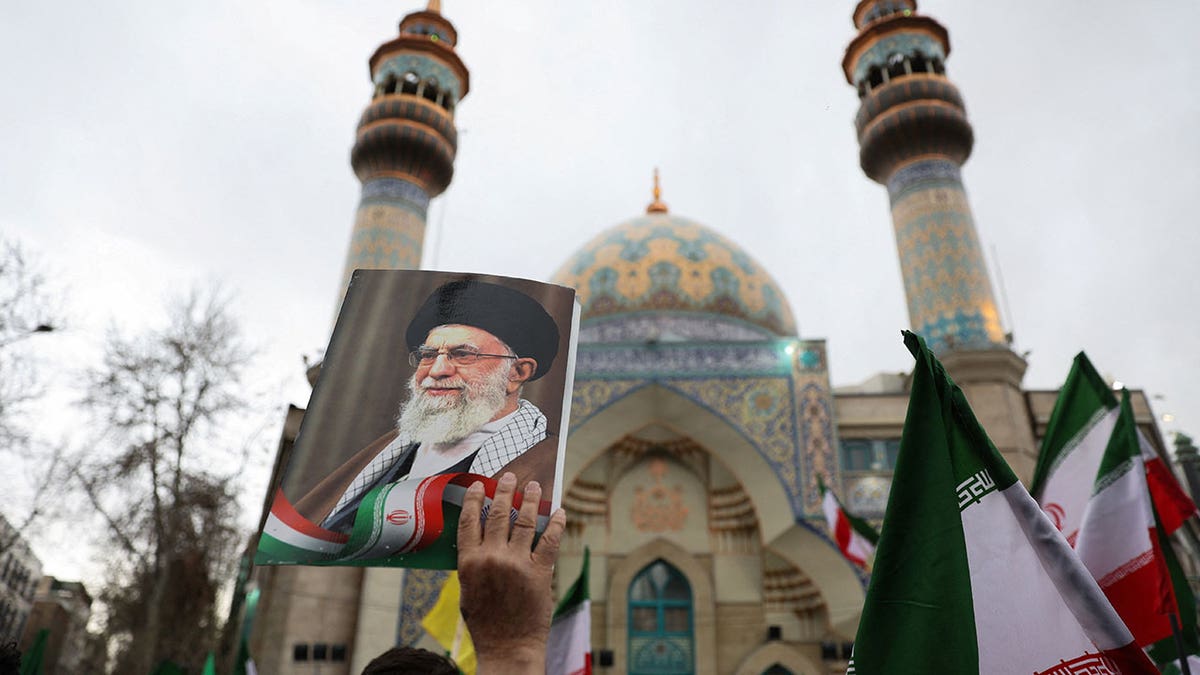
A person holds an image of Iran’s supreme leader, Ayatollah Ali Khamenei, as Iranian demonstrators protest against the U.S.-Israeli strikes, in Tehran, Feb. 28, 2026. (Majid Asgaripour/West Asia News Agency via Reuters)
For Aliyar and other Kurdish leaders, however, the goal remains clear after decades of opposition to the Islamic Republic.
«We have had this desire for 47 years,» he said. «If we get an opportunity, we will use it.»
Related Article
war with iran,iraq,donald trump,iran
INTERNACIONAL
Operation Epic Fury destroys Iran’s navy and cuts missile attacks by 90% in ongoing campaign
NEWYou can now listen to Fox News articles!
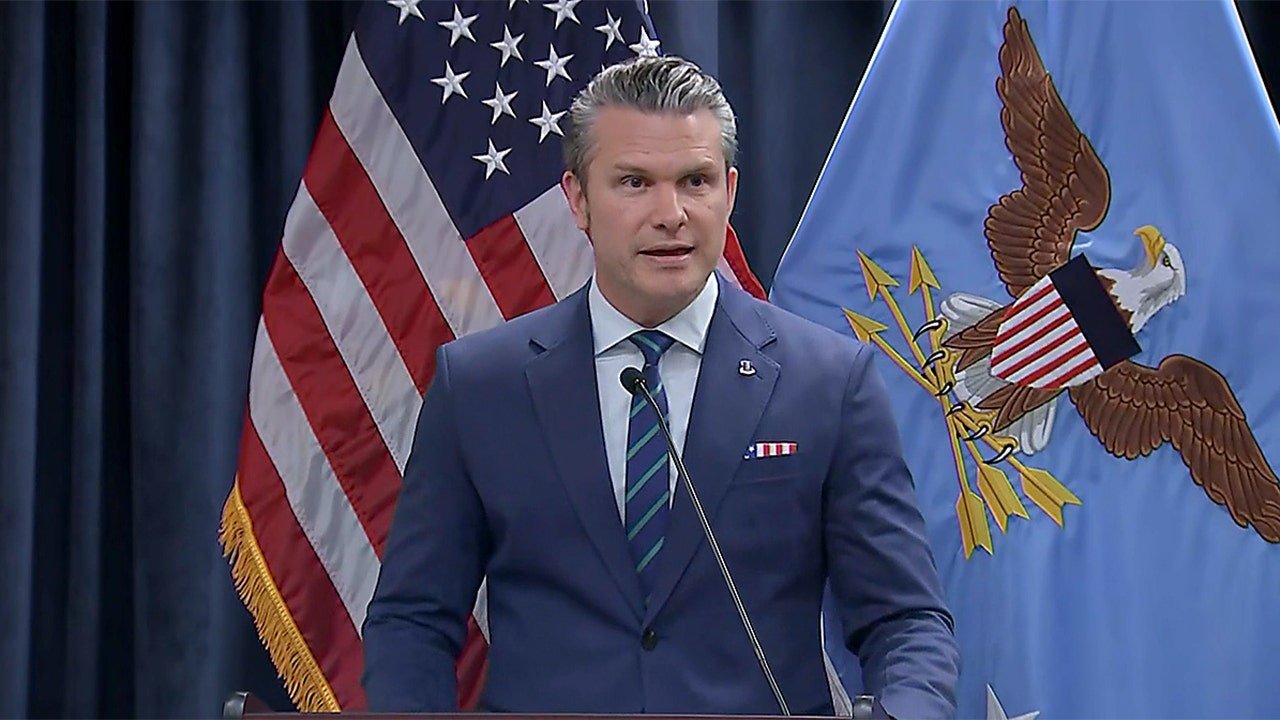
Secretary of War Pete Hegseth said Thursday that U.S. forces have delivered devastating blows to Iran’s military in the opening days of Operation Epic Fury, crippling key naval and missile capabilities while signaling that a larger and more sustained campaign is underway.
Speaking alongside U.S. Central Command (CENTCOM) Commander Adm. Brad Cooper at CENTCOM headquarters at MacDill Air Force Base in Tampa, Florida, Hegseth described a fast-moving operation that has significantly degraded Iran’s ability to threaten U.S. forces and regional partners as officials shift toward preventing Tehran from rebuilding its military strength.
«In just days of Operation Epic Fury, you and your team have delivered nothing short of devastating, precise strikes taking out the better part of Iran’s navy, making it combat ineffective, neutralizing missile sites and launchers and establishing total dominance over the skies,» Hegseth told Cooper.
«Our forces are executing with unmatched skill, and the mission is advancing decisively.»
Cooper detailed the expanding maritime campaign, saying U.S. forces have intensified strikes against Iranian vessels in recent hours, surpassing previously disclosed totals and further weakening Tehran’s ability to project power at sea.
U.S. officials say Operation Epic Fury has sunk more than 30 Iranian ships, slashed missile launches and shifted toward dismantling Tehran’s missile production. (Fox News)
«You may have heard the president say just a little while ago that we have sunk or destroyed 24 ships. That was true. At the moment, we’re now up over 30 ships,» Cooper said. «In just the last few hours, we hit an Iranian drone carrier ship roughly the size of a World War II aircraft carrier. And, as we speak, it’s on fire.»
Beyond naval losses, sustained air operations have sharply reduced Iran’s ability to launch retaliatory attacks. U.S. bombers have targeted launchers, command infrastructure and air defenses deep inside the country in an effort to limit both immediate threats and future strike capacity.
«Ballistic missile attacks have decreased by 90% since day one. Drone attacks have decreased by 83% since day one,» Cooper said.
RED CROSS SHARES AUDIO OF IRANIAN CIVILIAN EXPLAINING SITUATION ON THE GROUND IN TEHRAN: ‘NO RESPITE’
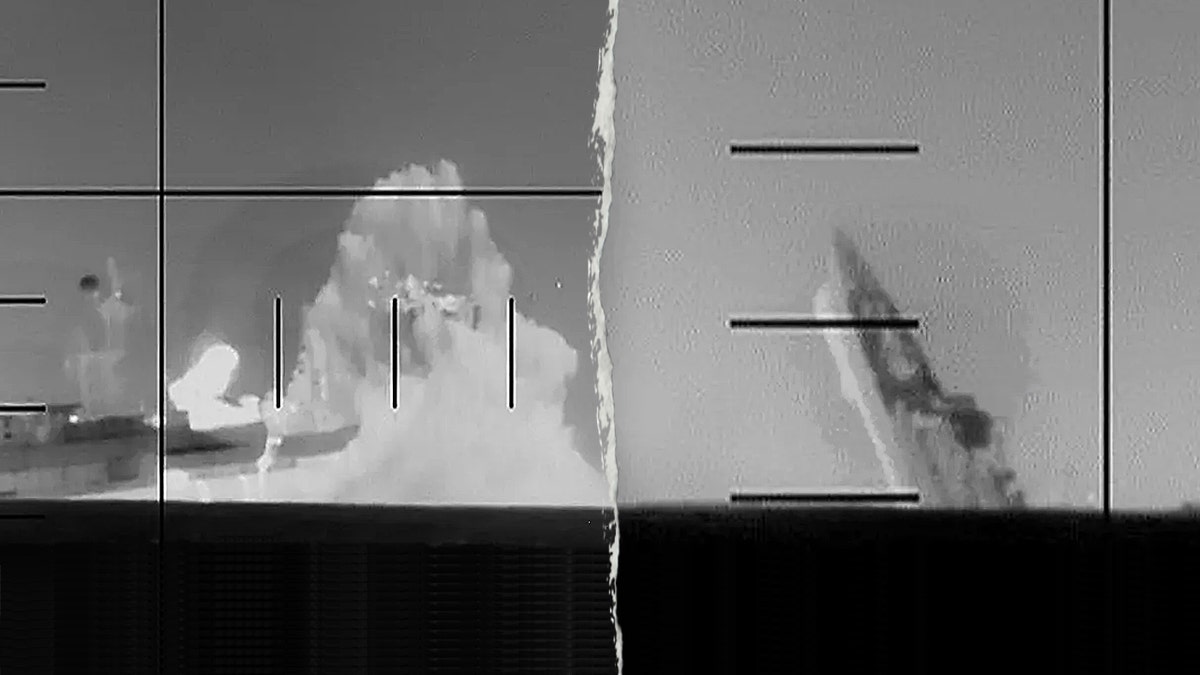
A U.S. submarine sank an Iranian warship in international waters in the Indian Ocean, War Secretary Pete Hegseth confirmed Wednesday. (@DeptofWar/X)
The sharp decline in launches, officials indicated, reflects both the destruction of key systems and the disruption of Iran’s command-and-control networks, forcing Tehran onto the defensive as U.S. aircraft continue operating over the country.
Hegseth made clear the operation is not slowing down, warning that significantly more firepower is moving into the region as additional forces and assets come online.
«We have only just begun to fight and fight decisively,» Hegseth said. «The amount of combat power that’s still flowing, that’s still coming, that we’ll be able to project over Iran is multiples of what it currently is right now.»
PENTAGON POLICY CHIEF GRILLED AS DEM CLAIMS TRUMP BROKE PROMISE ABOUT GOING TO WAR WITH IRAN
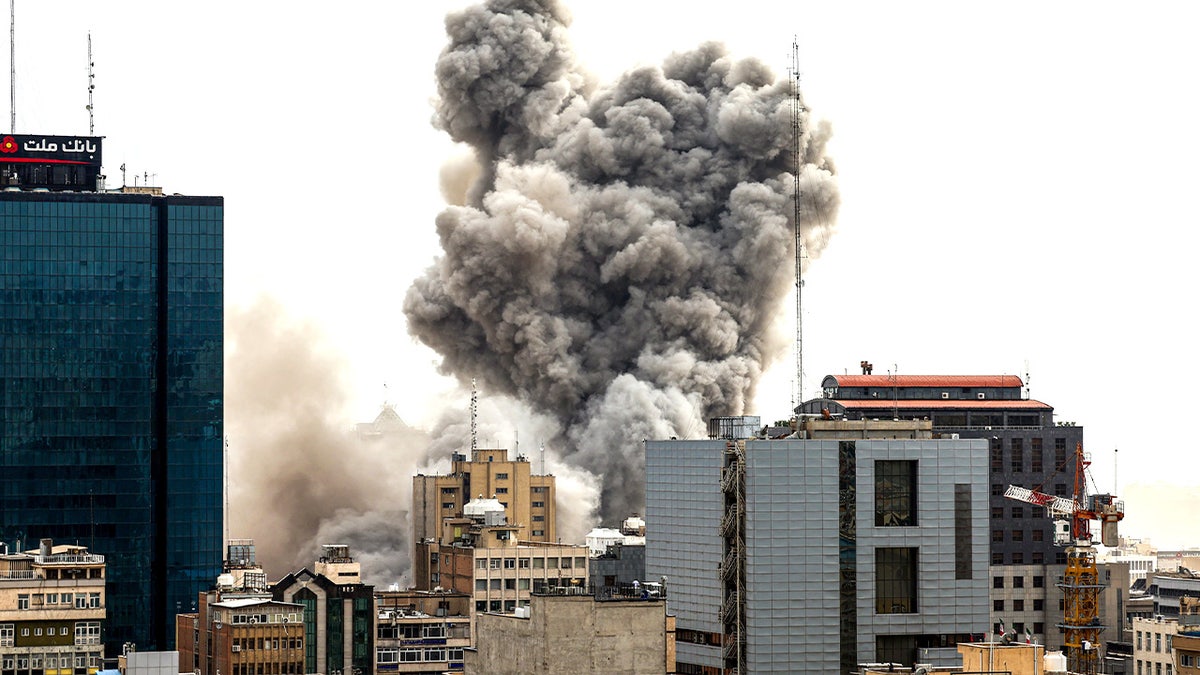
President Donald Trump confirmed the launch of U.S. strikes on Iran Saturday. (Contributor/Getty Images)
He also sought to counter any suggestion that the U.S. could face supply constraints as the campaign continues, emphasizing both capacity and staying power.
«Our capabilities are overwhelming and gathering still, as are those of our Israeli partners,» Hegseth said. «Our munitions are full up and our will is ironclad, which means our timeline is ours and ours alone to control as long as it takes to ensure the United States of America achieves these objectives.»
Cooper confirmed the mission is entering a new phase aimed at Iran’s long-term missile production capacity, shifting from degrading existing stockpiles to preventing their regeneration.
CLICK HERE TO DOWNLOAD THE FOX NEWS APP
«We’re not just hitting what they have. We’re destroying their ability to rebuild,» Cooper said. «As we transition to the next phase of this operation, we will systemically dismantle Iran’s missile production capability for the future.»
Together, the remarks underscored both the scale of the battlefield damage already inflicted and the administration’s message that the campaign — bolstered by additional forces and sustained munitions capacity — is positioned to intensify in the days ahead.
Related Article
war with iran,pete hegseth,military,pentagon,florida,politics,defense
INTERNACIONAL
Los ataques de Irán dejaron más de 60 militares heridos en Kuwait desde el inicio del conflicto en Medio Oriente
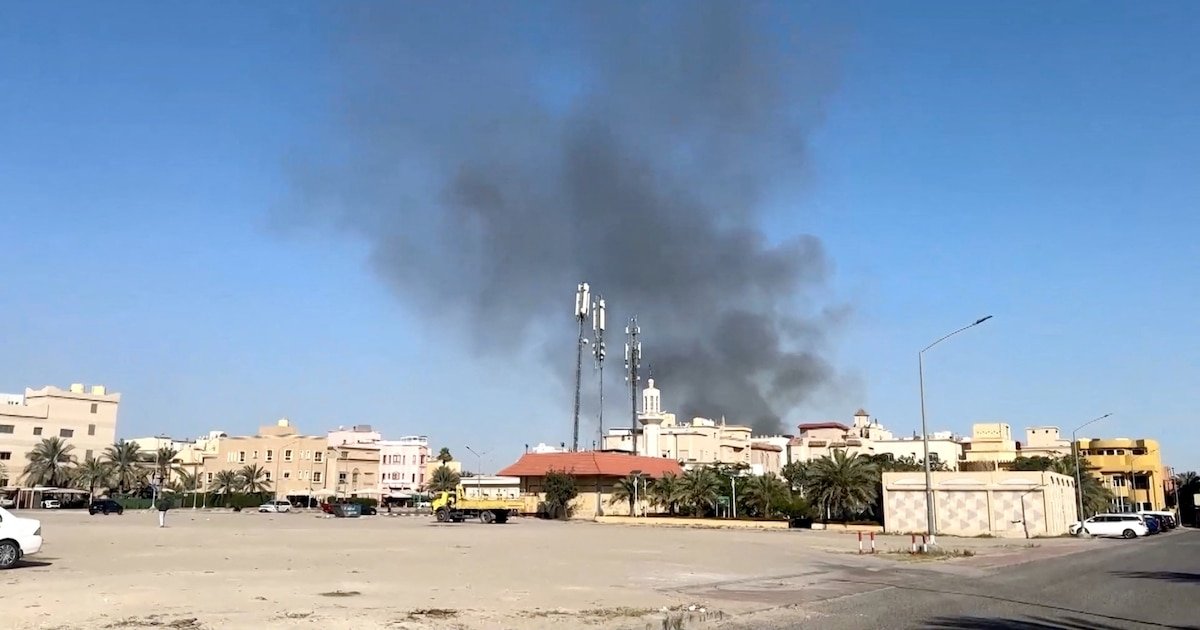
El Gobierno de Kuwait informó que casi 70 militares de su país resultaron heridos por los ataques del régimen de Irán contra diversas ubicaciones en países de Medio Oriente que albergan bases e instalaciones de Estados Unidos, tras el inicio de la ofensiva estadounidense-israelí el 28 de febrero.
El portavoz del Ministerio de Defensa, Saud Abdulaziz al Atuan, señaló en la primera rueda de prensa informativa del Centro de Comunicación del Gobierno que “se han registrado 67 heridos entre el personal del Ejército”, según recogió la agencia estatal kuwaití KUNA. Al Atuan precisó que todos los afectados recibieron atención médica y se encuentran en condición de salud estable, aunque dos permanecen bajo observación médica.
Kuwait, junto a Arabia Saudí, Emiratos Árabes Unidos, Qatar y Bahréin, fue blanco en los últimos días de repetidos bombardeos iraníes, enfocados principalmente en bases militares con presencia de tropas estadounidenses y otras instalaciones vinculadas a fuerzas norteamericanas.
En este contexto, la defensa aérea kuwaití detectó y neutralizó hasta 212 misiles balísticos y 394 drones, según detalló el portavoz ministerial. Mientras tanto, el Ejército nacional, que opera en el máximo nivel de preparación y mantiene actividad las 24 horas, continúa respondiendo a nuevos bombardeos, según advirtió la institución militar en la madrugada del viernes a través de sus redes sociales.
El ministro de Exteriores de Kuwait, Yaber al Ahmed al Sabá, afirmó que la seguridad de los países miembros del Consejo de Cooperación para los Estados Árabes del Golfo constituye un asunto indivisible y advirtió que cualquier infracción a la soberanía de uno de sus Estados implica una vulneración directa de la seguridad colectiva regional.

La cadena iraní IRIB reportó que la Armada de Irán reconoció haber atacado una base de las Fuerzas Armadas de Estados Unidos en territorio kuwaití días atrás. Según un comunicado citado por el medio, “las unidades de drones de la Armada atacaron la base”, en referencia a las instalaciones estadounidenses.
En respuesta, el Ministerio de Exteriores de Kuwait calificó el uso de drones sobre instalaciones estadounidenses en el país como “una flagrante violación de la soberanía del Estado de Kuwait”.
El ministro Al Sabá señaló que esta acción representa también un incumplimiento del Derecho Internacional y de la Carta de Naciones Unidas, además de vulnerar la soberanía regional al afectar a los Estados miembros del Consejo de Cooperación para los Estados Árabes del Golfo.
Kuwait reafirmó su derecho a proteger su integridad y la de su población bajo el amparo del Artículo 51 de la Carta de Naciones Unidas, que reconoce la legítima defensa ante actos de agresión. El gobierno indicó su disposición a emplear “todas las medidas necesarias” para salvaguardar tanto su soberanía como la seguridad de los ciudadanos y residentes en su territorio, en un contexto de amenazas crecientes en la región.

El Ministerio de Exteriores kuwaití advirtió sobre el impacto potencial de los ataques en la estabilidad energética internacional, al subrayar la importancia de la seguridad del tráfico marítimo y el funcionamiento de los puertos en el Golfo para el suministro global de energía. “La amenaza iraní a la seguridad de navegación y movimiento de buques se extiende a la seguridad energética mundial, la estabilidad económica internacional y la sostenibilidad de las cadenas de suministro”, afirmó el comunicado divulgado por la diplomacia kuwaití.
El ministro Al Sabá remarcó que la postura de Kuwait es coordinar acciones diplomáticas junto al resto de los países del Consejo de Cooperación para los Estados Árabes del Golfo con el fin de contener cualquier riesgo a la seguridad colectiva. Por último, señaló que cualquier acto hostil contra uno de los Estados miembros pone en peligro a todo el bloque y puede derivar en una ampliación del conflicto en una región clave para la economía y la seguridad globales.
(Con información de Europa Press)
jt,wn

Córdoba impulsó una ley para proteger a las víctimas de delitos cometidos por menores tras el caso Joaquín Sperani

Bancos empiezan a recibir dólares del colchón: cómo usar el esquema de Inocencia Fiscal

El Santos de Neymar acepta una millonaria oferta y ya negocia su venta

El juego gratuito Sky: Niños de la Luz detalla y lanza tráiler de su evento Days of Bloom 2026 – Nintenderos

Quiénes fueron los dos participantes que se salvaron de la gala de eliminación en Gran Hermano: la placa final

Tras jurar como ministro de Justicia, Mahiques espera que le entreguen el expediente de la AFA para definir si designa veedores

Puertas adentro, Villarruel explotó: «El esfuerzo no lo hizo la política» y demolió el relato económico de Milei

Pampita se mudó a un castillo francés de detalles alucinantes: «1000 metros, 14 ambientes, vale 11 millones de dólares»

El drama que vive Oriana Sabatini a horas del nacimiento de su hija con Paulo Dybala: se complicó la salud de su abuela de 90 años

Petri y Villarruel se cruzaron por un gesto en el Congreso: de “golpista” a “te conozco por el trencito de la alegría”

 POLITICA3 días ago
Petri y Villarruel se cruzaron por un gesto en el Congreso: de “golpista” a “te conozco por el trencito de la alegría”
- CHIMENTOS1 día ago
El hijo adoptivo de José María Muscari tomó una tajante decisión de vida a los 18 años
- CHIMENTOS2 días ago
¡Interna total! Pablo Layus explotó y blanqueó quiénes son los que arruinan Intrusos: «Te matan»