INTERNACIONAL
Operation Epic Fury destroys Iran’s navy and cuts missile attacks by 90% in ongoing campaign

NEWYou can now listen to Fox News articles!
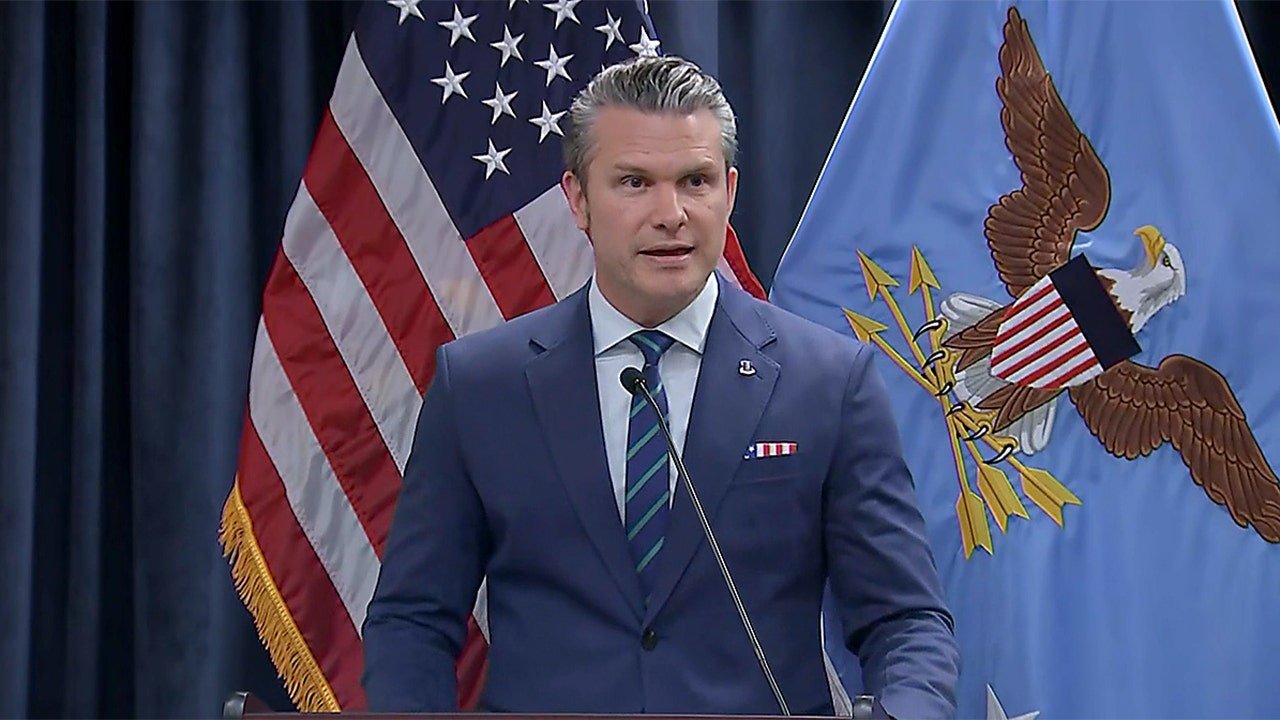
Secretary of War Pete Hegseth said Thursday that U.S. forces have delivered devastating blows to Iran’s military in the opening days of Operation Epic Fury, crippling key naval and missile capabilities while signaling that a larger and more sustained campaign is underway.
Speaking alongside U.S. Central Command (CENTCOM) Commander Adm. Brad Cooper at CENTCOM headquarters at MacDill Air Force Base in Tampa, Florida, Hegseth described a fast-moving operation that has significantly degraded Iran’s ability to threaten U.S. forces and regional partners as officials shift toward preventing Tehran from rebuilding its military strength.
«In just days of Operation Epic Fury, you and your team have delivered nothing short of devastating, precise strikes taking out the better part of Iran’s navy, making it combat ineffective, neutralizing missile sites and launchers and establishing total dominance over the skies,» Hegseth told Cooper.
«Our forces are executing with unmatched skill, and the mission is advancing decisively.»
Cooper detailed the expanding maritime campaign, saying U.S. forces have intensified strikes against Iranian vessels in recent hours, surpassing previously disclosed totals and further weakening Tehran’s ability to project power at sea.
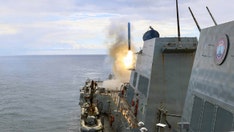
U.S. officials say Operation Epic Fury has sunk more than 30 Iranian ships, slashed missile launches and shifted toward dismantling Tehran’s missile production. (Fox News)
«You may have heard the president say just a little while ago that we have sunk or destroyed 24 ships. That was true. At the moment, we’re now up over 30 ships,» Cooper said. «In just the last few hours, we hit an Iranian drone carrier ship roughly the size of a World War II aircraft carrier. And, as we speak, it’s on fire.»
Beyond naval losses, sustained air operations have sharply reduced Iran’s ability to launch retaliatory attacks. U.S. bombers have targeted launchers, command infrastructure and air defenses deep inside the country in an effort to limit both immediate threats and future strike capacity.
«Ballistic missile attacks have decreased by 90% since day one. Drone attacks have decreased by 83% since day one,» Cooper said.
RED CROSS SHARES AUDIO OF IRANIAN CIVILIAN EXPLAINING SITUATION ON THE GROUND IN TEHRAN: ‘NO RESPITE’
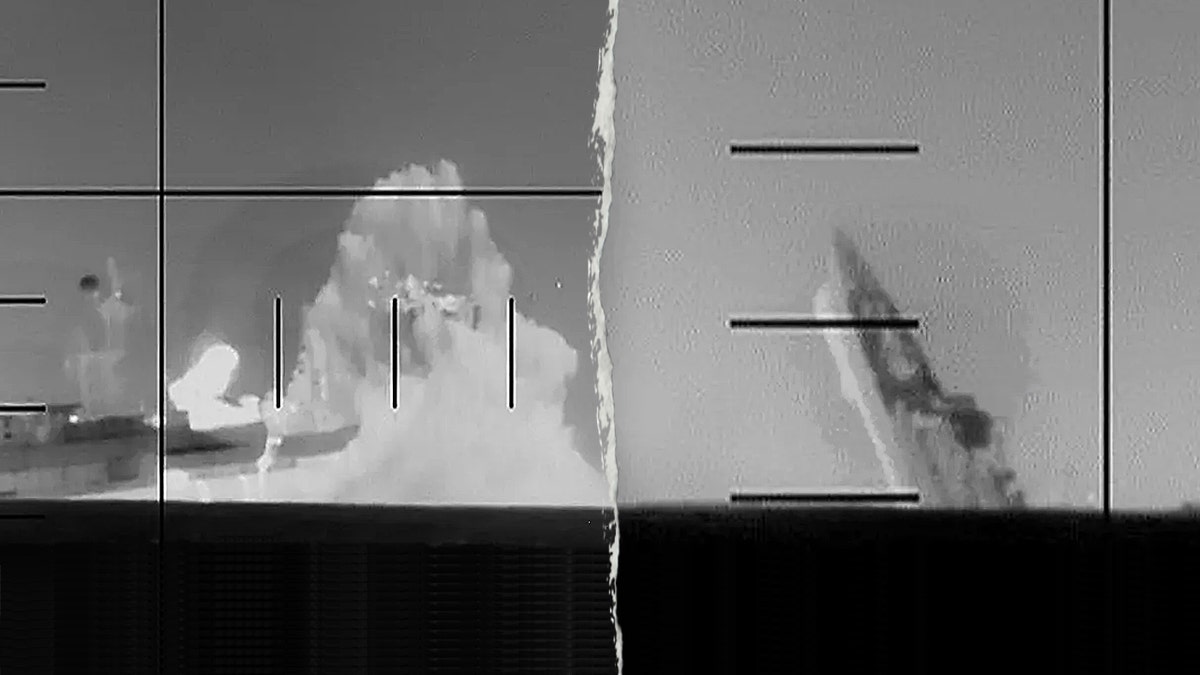
A U.S. submarine sank an Iranian warship in international waters in the Indian Ocean, War Secretary Pete Hegseth confirmed Wednesday. (@DeptofWar/X)
The sharp decline in launches, officials indicated, reflects both the destruction of key systems and the disruption of Iran’s command-and-control networks, forcing Tehran onto the defensive as U.S. aircraft continue operating over the country.
Hegseth made clear the operation is not slowing down, warning that significantly more firepower is moving into the region as additional forces and assets come online.
«We have only just begun to fight and fight decisively,» Hegseth said. «The amount of combat power that’s still flowing, that’s still coming, that we’ll be able to project over Iran is multiples of what it currently is right now.»
PENTAGON POLICY CHIEF GRILLED AS DEM CLAIMS TRUMP BROKE PROMISE ABOUT GOING TO WAR WITH IRAN
President Donald Trump confirmed the launch of U.S. strikes on Iran Saturday. (Contributor/Getty Images)
He also sought to counter any suggestion that the U.S. could face supply constraints as the campaign continues, emphasizing both capacity and staying power.
«Our capabilities are overwhelming and gathering still, as are those of our Israeli partners,» Hegseth said. «Our munitions are full up and our will is ironclad, which means our timeline is ours and ours alone to control as long as it takes to ensure the United States of America achieves these objectives.»
Cooper confirmed the mission is entering a new phase aimed at Iran’s long-term missile production capacity, shifting from degrading existing stockpiles to preventing their regeneration.
CLICK HERE TO DOWNLOAD THE FOX NEWS APP
«We’re not just hitting what they have. We’re destroying their ability to rebuild,» Cooper said. «As we transition to the next phase of this operation, we will systemically dismantle Iran’s missile production capability for the future.»
Together, the remarks underscored both the scale of the battlefield damage already inflicted and the administration’s message that the campaign — bolstered by additional forces and sustained munitions capacity — is positioned to intensify in the days ahead.
Related Article
war with iran,pete hegseth,military,pentagon,florida,politics,defense












NEWYou can now listen to Fox News articles!
Israeli forces struck a meeting of Iran’s Supreme Council on Tuesday as officials gathered to choose a successor to the late Ayatollah Ali Khamenei, a senior Israeli official told Fox News.
«Israel struck while they were counting the votes for the appointment of the supreme leader,» the official said.
The strike came just south of Tehran as Iran continued targeting Israeli population centers, with Israel signaling that continued attacks on civilians would not be tolerated.
Israeli officials believe multiple Iranian officials responsible for counting the votes in the succession process were killed in the strike. The officials were not among the ruling clerics or top mullahs, but the attack marked a substantial escalation as Israel continued expanding its target set inside Iran.
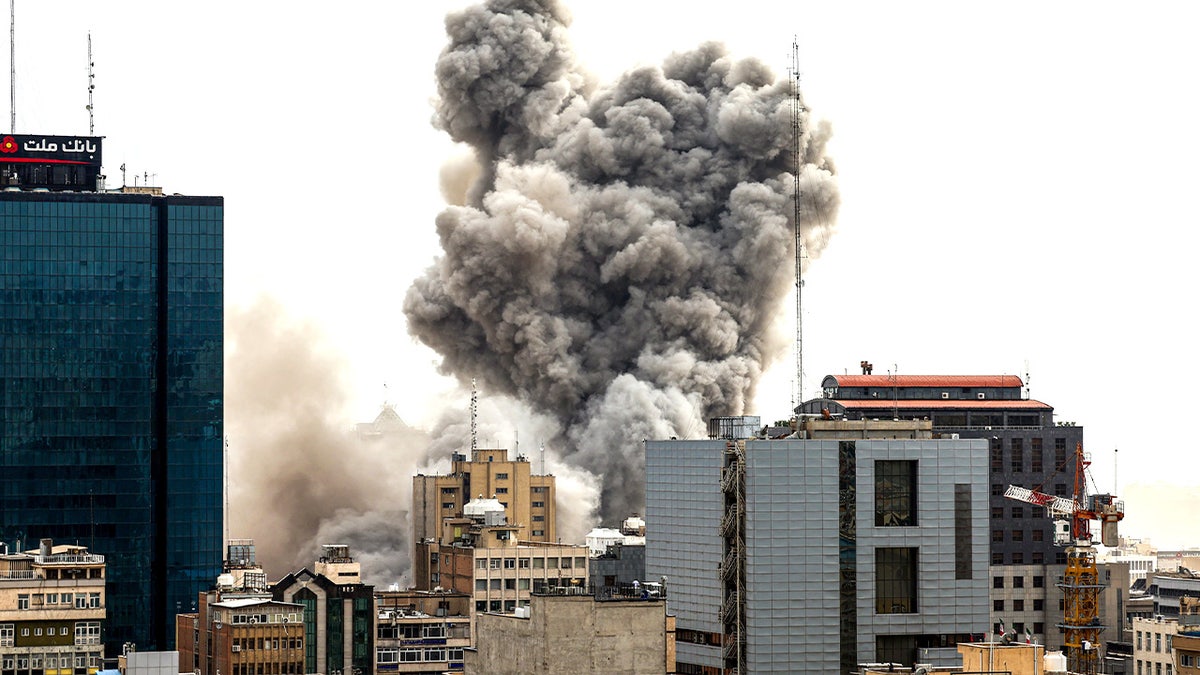
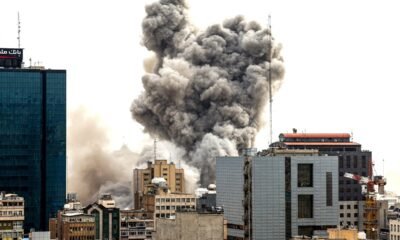
Smoke rises over Tehran, Iran, on March 2, 2026, after explosions were reported in the city during the joint U.S.-Israel operation against Iran. (Contributor/Getty Images)
The strike underscored the depth of Israeli intelligence penetration inside Tehran and marked one of the most dramatic escalations yet in the joint U.S.-Israeli campaign aimed at dismantling Iran’s political and military leadership from the top down.
It came as Iran’s leadership structure appeared increasingly hollowed out.
More than 40 of Iran’s most senior leaders — including Khamenei — have been killed since the operation began, with 49 eliminated in the opening salvo of Operation Epic Fury early Saturday, fracturing the regime’s command structure and dealing a crippling blow to its military leadership and command-and-control networks.
Israeli analysts estimated that more than 1,000 enemy combatants have been killed inside Iran since the United States launched Operation Epic Fury and Israel launched its parallel campaign, Operation Roaring Lion, on Saturday. The estimate came from Israel’s latest battle damage assessment, according to a senior Israeli official.
Israeli Prime Minister Benjamin Netanyahu framed the conflict as part of a broader effort to neutralize Iran’s ballistic missile and nuclear ambitions.
KEY MILITARY SITES TARGETED INSIDE IRAN AS PART OF COORDINATED US-ISRAELI STRIKES
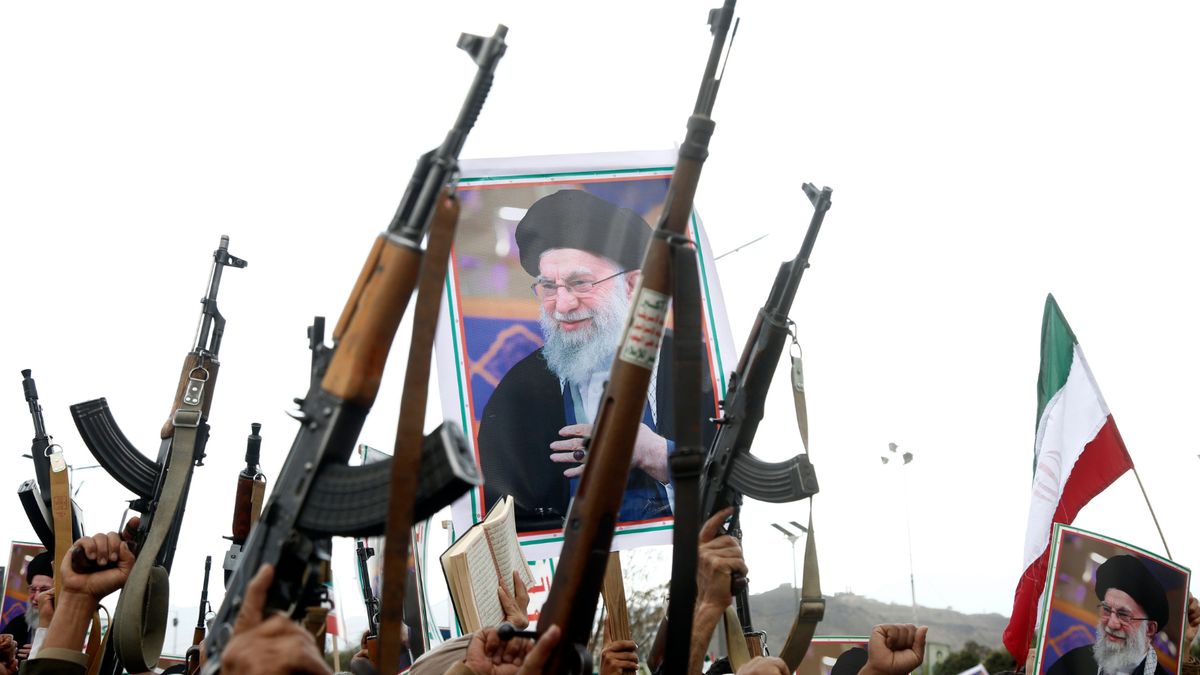
Pro-Iran protesters brandish weapons and signs depicting the late Iranian leader Ali Khamenei at a protest in Yemen. (Mohammed Hamoud/Getty Images)
«With these ballistic missiles, these weapons of mass death, these weapons, they bombed all these countries,» Netanyahu said. «And when they developed these ballistic missiles, they’ll try and eventually they’ll bomb you. This is what President Trump understood.»
Vice President JD Vance said the administration had set a clear, limited objective for the operation.
«There’s just no way that Donald Trump is going to allow this country to get into a multi-year conflict, with no clear end in sight and no clear objective,» Vance said. «He’s defined that objective as Iran cannot have a nuclear weapon and has to commit long-term to never trying to rebuild the nuclear capability.»
The joint U.S.-Israel assault entered its fourth day Tuesday, with no signs of slowing down.

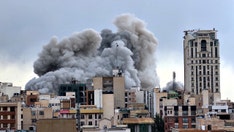
A satellite image from Planet Labs shows a plume of smoke above Tehran, Iran, on March 1, 2026. (Planet Labs PBC)
President Donald Trump said the plan was ahead of schedule following the early elimination of Iran’s top leaders.
CLICK HERE TO DOWNLOAD THE FOX NEWS APP
The U.S. urged Americans to leave 14 countries across the Middle East as Iran’s counterattacks intensified. The State Department also closed two embassies in Kuwait and Saudi Arabia.
The Gulf Cooperation Council warned Iran it would take «all necessary measures,» including possible military action, in response to Tehran’s missile and drone attacks.
Related Article
war with iran,iran,israel,wars,middle east,military
NEWYou can now listen to Fox News articles!
A group of two dozen state attorneys general sued President Donald Trump Thursday in an effort to block his new 10% tariffs from taking force, a move that all but ensures Trump’s newly revived tariff regime will end up back before the federal courts for the second time in nearly as many years.
The lawsuit was filed Thursday in the Court of International Trade by attorneys general from 24 states, including New York, Oregon, California and Arizona.
The state attorneys general argued in the lawsuit that Trump lacks the authority to impose the 10% tariffs under Section 122 of the Trade Act of 1974.
They described the effort as an attempt to «sidestep» last month’s 6-3 Supreme Court ruling, which blocked Trump’s use of the International Emergency Economic Powers Act (IEEPA) to unilaterally impose his 10% global tariff announced last April.
A protester holds a sign as the U.S. Supreme Court hears arguments on President Trump’s tariffs Nov. 5, 2025. (Bill Clark/CQ-Roll Call, Inc via Getty Images)
Trump responded to the ruling by immediately invoking Section 122 to keep the 10% tariffs in place in the near term. He also said then that the administration is planning to increase the import duties from 10% to 15% for certain countries.
In the lawsuit, the state AGs said Trump «has made clear that he is going to impose worldwide tariffs by any means necessary» and argued that the effort is «an exercise of completely unrestrained executive power.»
«As with his unlawful use of IEEPA, the President has once again exercised tariff authority that he does not have — involving a statute that does not authorize the tariffs he has imposed — to upend the constitutional order and bring chaos to the global economy,» they added.
Next steps in the case are unclear, though the new lawsuit is likely to be met with fierce opposition from the White House and Justice Department.
Trump has continued to embrace tariffs as the signature economic policy of his second White House term. Trump, who previously billed himself the «Tariff Man,» has described the issue as «life or death» for the U.S. economy.
Last April, Trump declared a national trade emergency to invoke IEEPA, citing the law as a means to address trade imbalances, reduce deficits with key trading partners and boost domestic manufacturing and production.
FEDERAL JUDGE BLOCKS 5 TRUMP TARIFF EXECUTIVE ORDERS
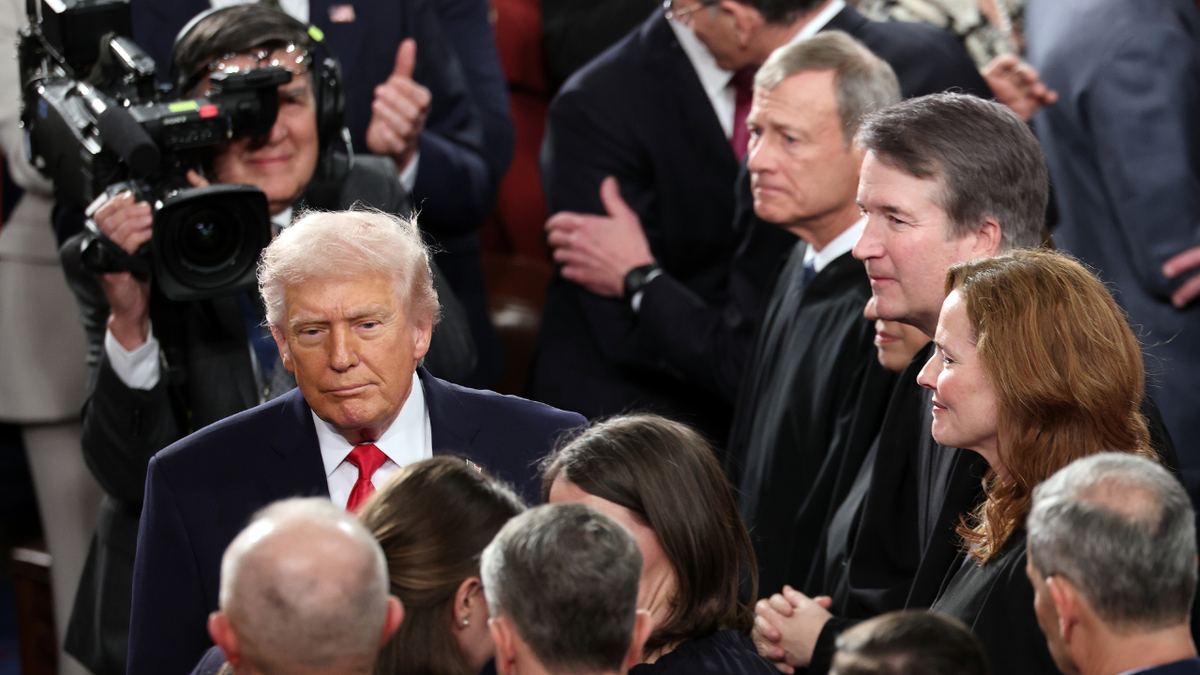
President Donald Trump walks past Supreme Court justices during a State of the Union address at the U.S. Capitol. (Win McNamee/Getty Images)
Two federal courts — the U.S. Court of International Trade (CIT) and U.S. Court of Appeals for the Federal Circuit — previously blocked Trump’s use of IEEPA to enact his tariffs, prompting the administration to kick the case to the Supreme Court last year for emergency relief. (The Manhattan-based Court of International Trade ruled last year that Trump, as commander in chief, does not have «unbounded authority» to impose tariffs under the emergency law.)
Lower courts had pressed the Justice Department to explain why Trump invoked IEEPA when other, more narrowly tailored statutes enacted by Congress more specifically address tariffs, including laws that cap tariffs at certain levels or set timeframes subject to congressional review.
Section 122 tariffs can remain in place for up to 150 days without congressional approval, and Sen. Chuck Schumer, D-N.Y., vowed on the Senate floor last week that the Democratic caucus would not approve an extension of the broad import duties.
Legally, the administration could have its work cut out for it as well.
Some economists — as well as the state AGs — argue that there is a difference between a traditional balance of payment deficit and the trade deficit between the U.S. and other countries.

Traders work on the floor of the New York Stock Exchange in New York City March 28. (Spencer Platt/Getty Images)
«Contrary to the Section 122 Proclamation, a trade deficit is not a balance of payments deficit,» the states argued in their lawsuit.
Justin Wolfers, an economist at the University of Michigan, told Fox News Digital in an interview last year that Trump’s focus on the trade «deficit» is in fact based on a common misconception.
«We have a dollar deficit, but we have a stuff surplus,» he said.
CLICK HERE TO GET THE FOX NEWS APP
«What that means is we sell China a small amount of stuff, and they sell us a large amount of stuff,» Wolfers explained. For every dollar bill that goes to China, the U.S. gets something for it that Americans want to buy, like T-shirts.
Related Article
donald trump,supreme court,economy,federal courts,us,national security
INTERNACIONAL
La guerra desde adentro de Irán: «Es un alivio que, por fin, alguien va a venir a eliminar a nuestros verdugos»
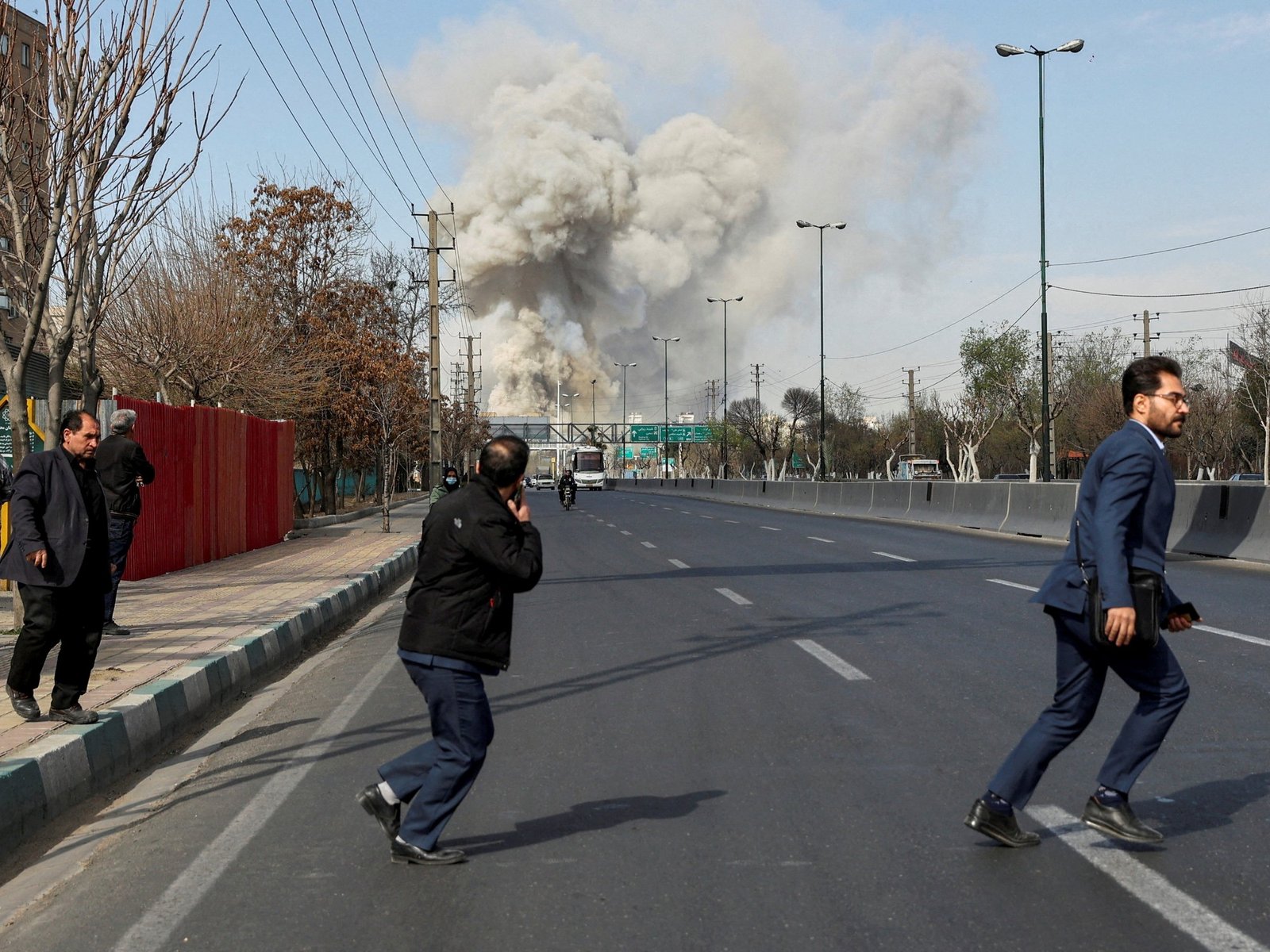
Qué signifca la guerra para los iraníes
Desde el interior de irán
La gente ha estado cantando, bailando, abrazándose y felicitándose por la eliminación de la cabeza de la máquina de matar que hemos tenido gobernándonos
La guerra de Israel y Trump
Aquí y ahora no hay ninguna posibilidad de que el pueblo iraní pueda derrocar un sistema tan opresor con las manos vacías
En estos momentos se ha dado la casualidad de que los intereses políticos de Estados Unidos e Israel coinciden con los intereses del pueblo iraní en cuanto al derrocamiento de la inquisición islamista
No hay comida ni medicamentos
La miseria es lo que nos ha traído este gobierno. Ha utilizado todos nuestros recursos para enriquecimiento propio y el lujo repugnante en el que viven casi mil familias en la teocracia islamista
Lo que para mí como activista de derechos humanos sería muy grato es que por una vez antepongamos las vidas humanas a nuestras ideologías políticas y luchemos por poder establecer un mínimo de armonía en un mundo desquiciado

Reforma laboral: qué dice la reglamentación de la ley y cuáles son los principales cambios para el trabajador

Sabrina Rojas contó qué es lo que más añora de su relación con Luciano Castro: “Lo único que extraño del matrimonio”

Una lámina desarrollada en España es capaz de generar hasta 100 voltios con una sola gota de agua

Israel strikes Iranian leadership meeting choosing Khamenei successor

Las propiedades del ex senador Edgardo Kueider están abandonadas y acumulan deudas millonarias

Trump’s new tariff plan barrels back to court following multistate lawsuit

Puertas adentro, Villarruel explotó: «El esfuerzo no lo hizo la política» y demolió el relato económico de Milei

Pampita se mudó a un castillo francés de detalles alucinantes: «1000 metros, 14 ambientes, vale 11 millones de dólares»

El drama que vive Oriana Sabatini a horas del nacimiento de su hija con Paulo Dybala: se complicó la salud de su abuela de 90 años

El hijo adoptivo de José María Muscari tomó una tajante decisión de vida a los 18 años

 CHIMENTOS1 día ago
El hijo adoptivo de José María Muscari tomó una tajante decisión de vida a los 18 años
- POLITICA3 días ago
Petri y Villarruel se cruzaron por un gesto en el Congreso: de “golpista” a “te conozco por el trencito de la alegría”
- CHIMENTOS2 días ago
¡Interna total! Pablo Layus explotó y blanqueó quiénes son los que arruinan Intrusos: «Te matan»