INTERNACIONAL
Why Gulf states aren’t joining the war against Iran — despite attacks on their soil

NEWYou can now listen to Fox News articles!
Even as Iran expands attacks across the Persian Gulf, several of the countries directly targeted are still refusing to join the fight against Iran, opting instead for restraint and diplomacy. Gulf governments say their priority is defending their territory while preventing a wider conflict that could destabilize the region and global energy markets.
When asked by Fox News White House senior correspondent Peter Doocy about Iran’s strikes on Gulf states Monday, Donald Trump said experts had not anticipated Tehran would target neighboring countries.
«Nobody. Nobody. The greatest experts — nobody thought they were going to hit,» Trump said when Doocy asked about Iranian attacks targeting Qatar, Saudi Arabia, the United Arab Emirates, Bahrain and Kuwait.
TRUMP SEEKS WARSHIPS FROM OTHER COUNTRIES TO HELP SECURE STRAIT OF HORMUZ
A plume of smoke rises from the Zayed Port following a reported Iranian strike in Abu Dhabi on March 1, 2026. Iran’s retaliatory missile and drone campaign in the Gulf has killed three people and wounded 58 in the United Arab Emirates since it began, Emirati authorities said on March 1, the day after the U.S. and Israel launched a nationwide attack on Iran killing its supreme leader. (Ryan Lim / AFP via Getty Images)
Tehran widened the conflict after U.S.-Israeli strikes on Iranian oil facilities earlier this month, expanding retaliation to Gulf energy infrastructure and shipping routes in the Strait of Hormuz, according to the Armed Conflict Location & Event Data Project.
Armed Conflict Location & Event Data Project (ACLED) recorded at least 25 Iranian attacks against shipping in the Gulf and the Strait of Hormuz since Feb. 28, as well as strikes targeting energy infrastructure across several Gulf states.
«Tehran targeted Gulf energy infrastructure and shipping in the Strait of Hormuz seeking to raise the costs of the war for the U.S. and its regional partners,» said Luca Nevola, ACLED’s senior analyst for Yemen and the Gulf.
Jacob Olidort, chief research officer at the America First Policy Institute, told Fox News Digital that, «Since Operation Epic Fury began, our Gulf partners have responded with an unprecedented unified front against threats posed by the Iranian regime,» he said, adding that their actions have focused on stopping attacks rather than expanding the war. «This reflects not just a desire to stabilize the region but also a recognition that the U.S. military’s success is what makes that possible.»
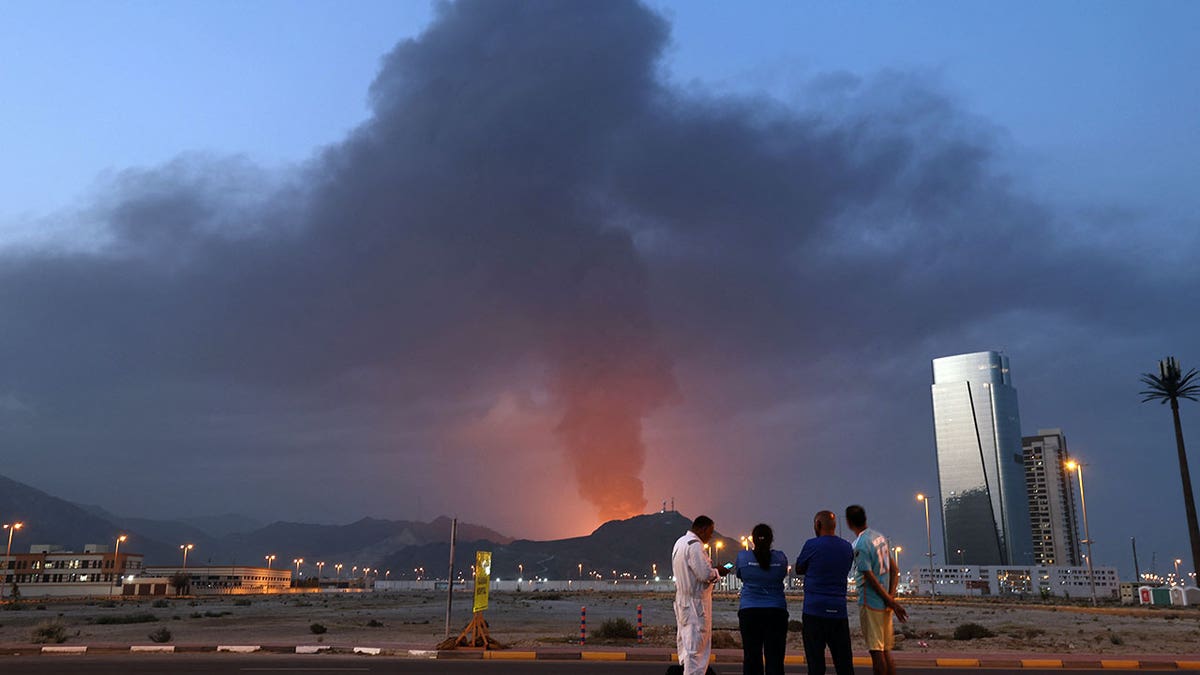
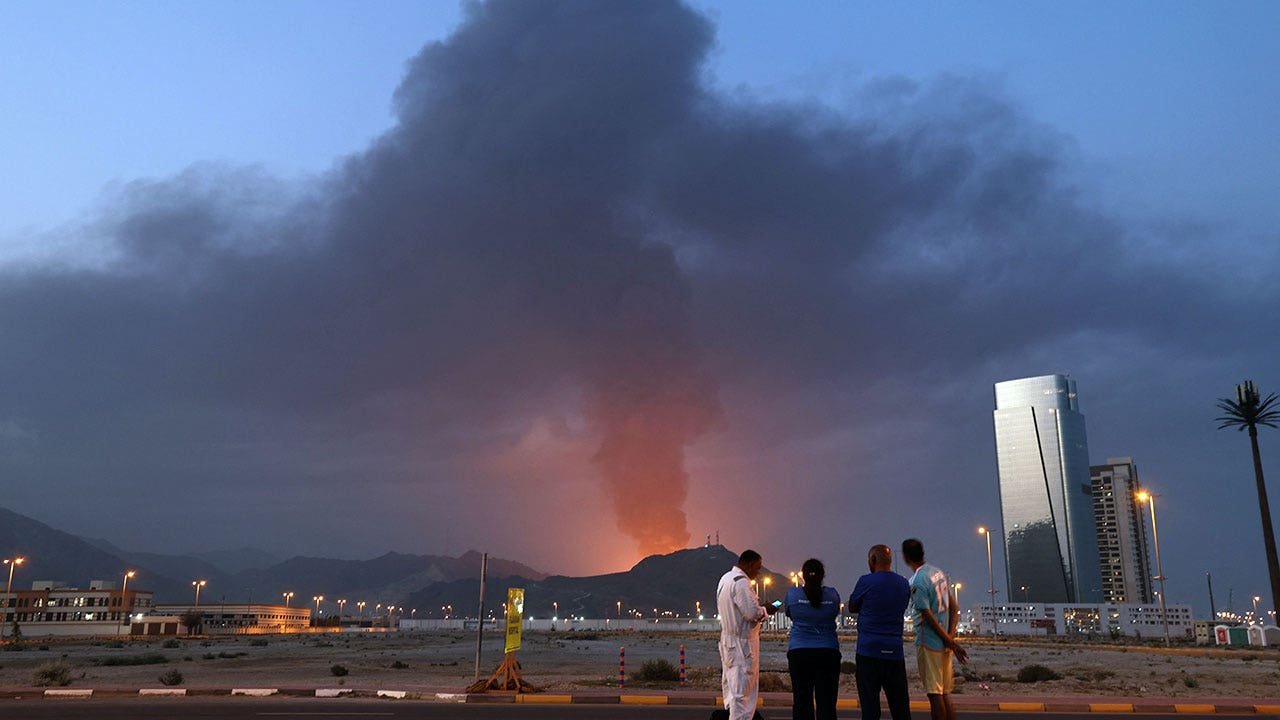
Foreign workers look at a tall plume of black smoke ascends following an explosion in the Fujairah industrial zone on March 3, 2026. Iran’s strikes on Gulf neighbors since February 28, following the U.S.-Israeli attack, forced the UAE to shut its airspace, blindsiding travelers who thought they were headed to one of the region’s safest holiday destinations. (Fadel Senna / AFP via Getty Images)
Salman Al-Ansari, a Saudi geopolitical researcher, told Fox News Digital that Riyadh is focusing on maintaining global market stability. «Riyadh is exercising maximum restraint at the moment, but the real question is how long that restraint can last,» Al-Ansari said.
Al-Ansari pointed to a long-standing Saudi strategic philosophy. «Over a hundred years ago, the founder of Saudi Arabia, King Abdulaziz Al Saud, said: ‘The living do not fight the dead.’ Perhaps Riyadh is following this doctrine, at least until further developments unfold,» he said.
Qatar has taken a similar approach. «The State of Qatar’s policies always seek to de-escalate conflicts,» a Qatari official told Fox News Digital. «Qatar is not a party to this war, and we strongly believe that the violence must end through negotiations. At the same time. Qatar continues to defend its country and sovereignty following the Iranian attacks.»
IRAN WAR, 11 DAYS IN: US CONTROLS SKIES, OIL SURGES AND THE REGION BRACES FOR WHAT’S NEXT
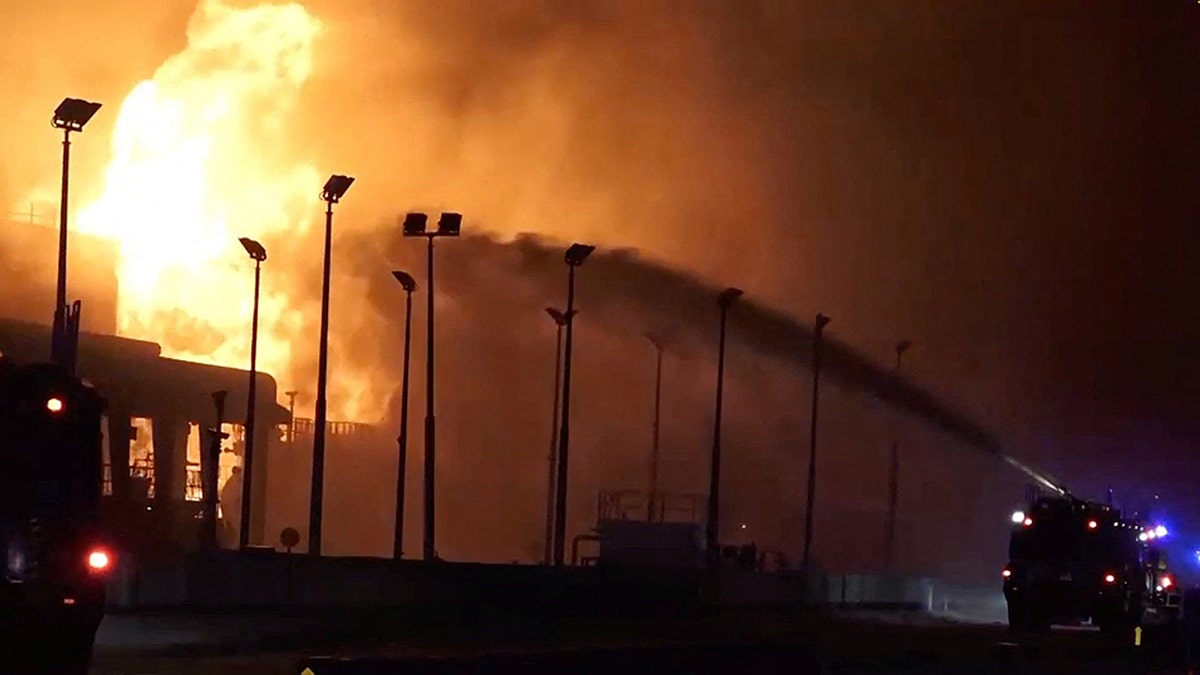
Firefighters work in Muharraq, Bahrain, after reported Iranian strikes triggered a fire at fuel tanks near the airport, on Thursday, March 12, 2026. (Bahrain Information Ministry/Reuters)
Another factor shaping Gulf restraint is a regional policy of refusing to allow their territory to be used for attacks on Iran. Some U.S. military experts say the Gulf’s hesitation is also tied to long-standing concerns about Washington’s reliability in the region.
Vice Adm. Robert S. Harward, a former deputy commander of U.S. Central Command, told Fox News Digital that inconsistent U.S. policies have eroded trust among Gulf partners. «Our policies in the Middle East have been more cyclical than a revolving door,» Harward said. «We have failed to earn the trust and confidence of our Gulf partners over the last decade and a half. And that lack of trust and confidence has only exacerbated the threat from Iran to the region.»
The now retired vice admiral said Gulf governments are weighing the risks of escalation carefully. «As these countries consider whether to go on the offensive, they are worried about what happens when we leave,» he said. «Admittedly, these countries are challenged to defend themselves against a country of 90 million without us.»
Regional analysts say Gulf leaders are concerned that if even one country joins the fighting, the conflict could quickly engulf the region.
Abdullah Aljunaid, a Bahraini analyst, told Fox News Digital that if one member of the Gulf Cooperation Council enters the war, it could drag the entire bloc with it. «If any member of the GCC decided to join this offensive, it would obligate the rest of the GCC countries to join at the same time,» Aljunaid said.
The consequences could extend far beyond the battlefield. «You could imagine what the oil prices would be. We are definitely talking about north of $150 per barrel,» he claimed.
HEGSETH BLASTS BRITS, SAYS IRAN’S CHAOTIC RETALIATION HAS DRIVEN ITS OWN ALLIES ‘INTO THE AMERICAN ORBIT’
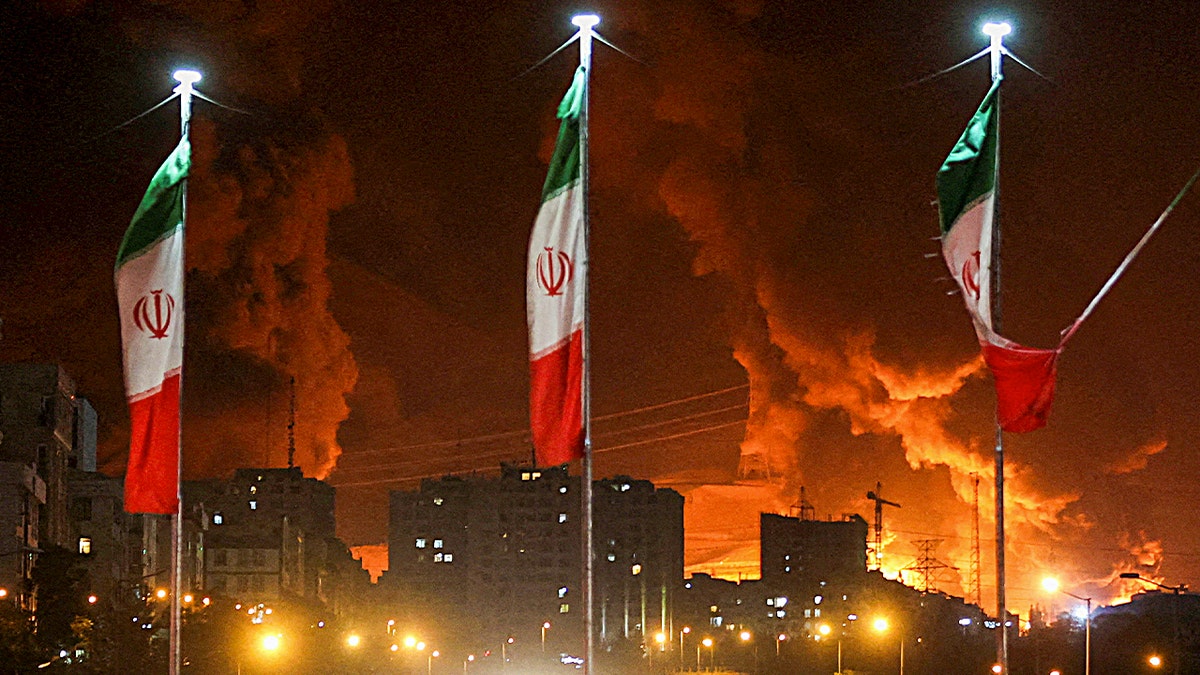
Iranian flags fly as fire and smoke from an Israeli attack on Sharan Oil depot rise, following Israeli strikes on Iran, in Tehran, Iran, June 15, 2025. (Majid Asgaripour/WANA (West Asia News Agency) via Reuters)
Aljunaid said Gulf leaders are also wary of open-ended military campaigns in the region. «Past experiences show that every time military action is initiated in the region, it never ends according to what was promised,» he said.
Instead, he said Gulf countries are focusing on defensive measures while quietly supporting diplomatic channels, including mediation efforts through Oman.
Lt. Gen. Richard Y. Newton III said Iran made a major strategic mistake by striking Gulf countries. «Iran made a strategic blunder by striking Gulf nations – our allies and friends – with ballistic missiles and drone attacks,» Newton told Fox News Digital.
The retired Air Force commander warned that attacks on key infrastructure such as oil fields or desalination plants could push Gulf states toward a more aggressive response.
«I’m inclined to believe there may potentially be one or two nations in the region inclined to join with the U.S. by going offensive against Iran,» Newton said. «That is certainly within the realm of possibility in the coming weeks.»
CLICK HERE TO DOWNLOAD THE FOX NEWS APP
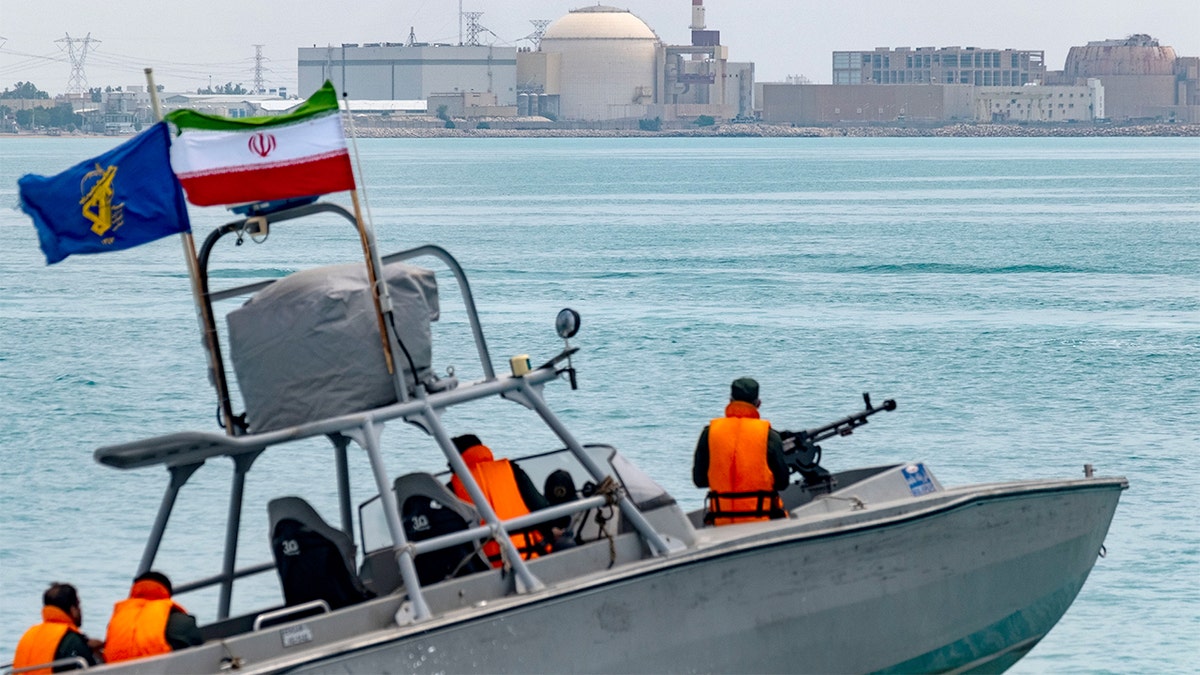
An Islamic Revolutionary Guard Corps speedboat sails in the Persian Gulf during an IRGC marine parade marking Persian Gulf National Day near the Bushehr nuclear power plant in Bushehr, Iran, on April 29, 2024. (Morteza Nikoubazl/NurPhoto via Getty Images)
Newton added that the long-term objective for the U.S. and its partners should be preventing Iran from threatening regional stability and global shipping routes. «That includes achieving maritime dominance in the Persian Gulf and setting the conditions for safe passage for commercial shipping through the Strait of Hormuz,» he said.
For now, however, Gulf leaders appear determined to contain the conflict rather than escalate it, even as Iranian strikes have already reached their territory.
The UAE did not immediately respond to requests for comment.
war with iran,saudi arabia,middle east foreign policy,wars,israel,donald trump







INTERNACIONAL
¿Un golpe a la negociación? El impacto de la muerte de Ali Larijani en el diálogo con Estados Unidos
Un Shah con turbante
¿Era el negociador con Estados Unidos?

Una poderosa familia de clérigos

La crisis de los estudiantes
El testamento
¿Quién era Soleimani?


NEWYou can now listen to Fox News articles!
The European Union’s foreign policy chief said Tuesday that the bloc is consulting with Gulf countries to potentially «bring forward proposals for Iran, Israel and the U.S.» to get out of their war in a situation where «everybody saves face.»
Kaja Kallas, the EU High Representative for Foreign Affairs and Security Policy, made the remark to Reuters, adding that «it would be in the interest of everybody if this war stops.»
«We have been consulting with regional countries like the Gulf countries, Jordan, Egypt, [about] whether we could also bring forward proposals for Iran, Israel and the U.S. to get out of this situation so that everybody saves face,» Kallas was quoted as saying.
«The problem with wars is that it’s easier to start than to stop them, and it always gets out of hand,» she also reportedly said, noting that the EU is willing to assist «diplomatically to bring the parties together to really stop this war.»
TRUMP SEEKS WARSHIPS FROM OTHER COUNTRIES TO HELP SECURE STRAIT OF HORMUZ
EU High Representative for Foreign Affairs and Security Policy, Kaja Kallas, left, and President Donald Trump. (Omar Havana/Reuters; Nathan Howard/Reuters)
Kallas also pushed back after President Donald Trump said over the weekend that, «Many Countries, especially those who are affected by Iran’s attempted closure of the Hormuz Strait, will be sending War Ships, in conjunction with the United States of America, to keep the Strait open and safe.»
«Nobody is ready to put their people in harm’s way in the Strait of Hormuz,» Kallas told Reuters on Tuesday. «We have to find diplomatic ways to keep this open so that we don’t have a food crisis, fertilizers crisis, energy crisis as well.»
TOP COUNTERTERRORISM OFFICIAL RESIGNS IN PROTEST OF US WAR AGAINST IRAN
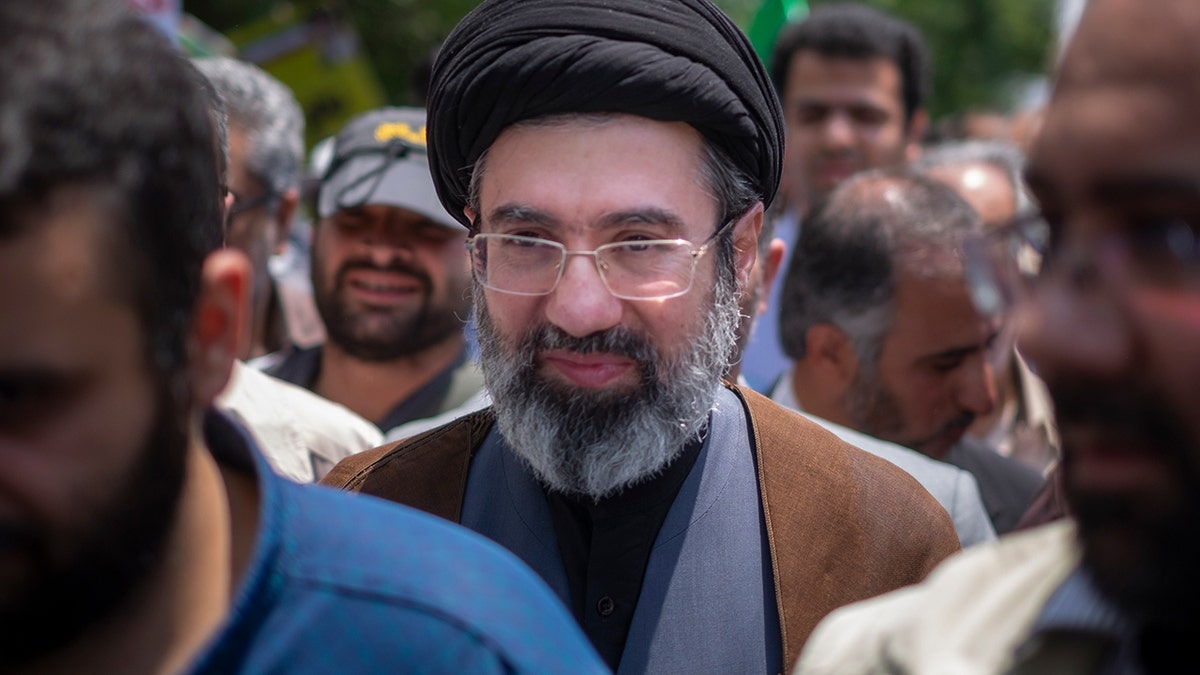
Mojtaba Khamenei, son of Iran’s late Supreme Leader Ayatollah Ali Khamenei and the new leader of Iran. (Morteza Nikoubazl/NurPhoto via Getty Images)
Trump said on Truth Social on Saturday that, «We have already destroyed 100% of Iran’s Military capability, but it’s easy for them to send a drone or two, drop a mine, or deliver a close range missile somewhere along, or in, this Waterway, no matter how badly defeated they are.»
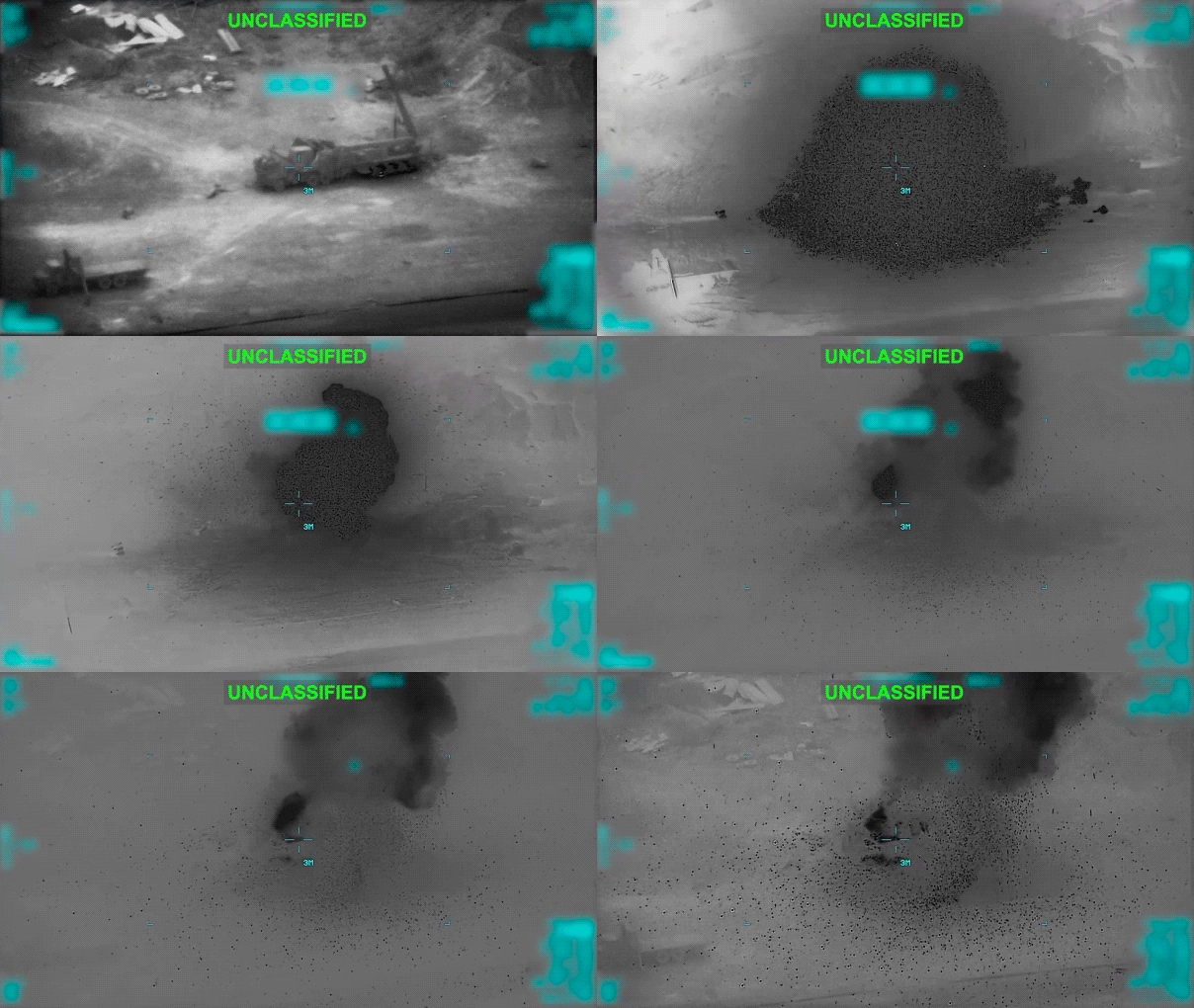
U.S. Central Command footage showing strikes on Iranian mobile missile launchers. (@CENTCOM via X)
CLICK HERE TO DOWNLOAD THE FOX NEWS APP
«Hopefully China, France, Japan, South Korea, the UK, and others, that are affected by this artificial constraint, will send Ships to the area so that the Hormuz Strait will no longer be a threat by a Nation that has been totally decapitated,» Trump wrote. «In the meantime, the United States will be bombing the hell out of the shoreline, and continually shooting Iranian Boats and Ships out of the water. One way or the other, we will soon get the Hormuz Strait OPEN, SAFE, and FREE!»
war with iran,middle east foreign policy,iran,foreign affairs,israel,the european union
INTERNACIONAL
NYC $30 minimum wage proposal pushed by Mamdani would ‘obliterate’ certain industries: expert warns
NEWYou can now listen to Fox News articles!
The city council in New York City is weighing a proposal to boost the minimum wage to up to $30 — a move that newly elected Mayor Zohran Mamdani signaled that he would sign on the campaign trail — causing consternation among the business community.
The proposal from New York City Council Member Sandy Nurse, a Democrat representing Brooklyn, would require employers to pay workers $25 an hour if those employers provide qualifying benefits and $30 an hour if not. The current $17 minimum wage would undergo a phased increase to reach $30 per hour by 2030 for businesses with 500+ employees and $29 by 2032 for smaller businesses.
Santiago Vidal Calvo, a policy analyst at the Manhattan Institute, told Fox News Digital that the new law will have «unintended consequences» and «constrain the economy for everybody that actually needs the current minimum wage to live.»
«You don’t make a place more affordable by making people earn more. That’s not directly correlated in the best way,» Calvo explained. «If you have people earning more, then prices are likely going to also increase, so my question for many of those people is, okay, you’re earning more, but also prices have increased in the same amount, are you actually making things more affordable?»
SMALL NEW YORK LANDLORDS ‘AT THEIR BREAKING POINT’ UNDER MAMDANI’S HOUSING POLICIES: REPORT
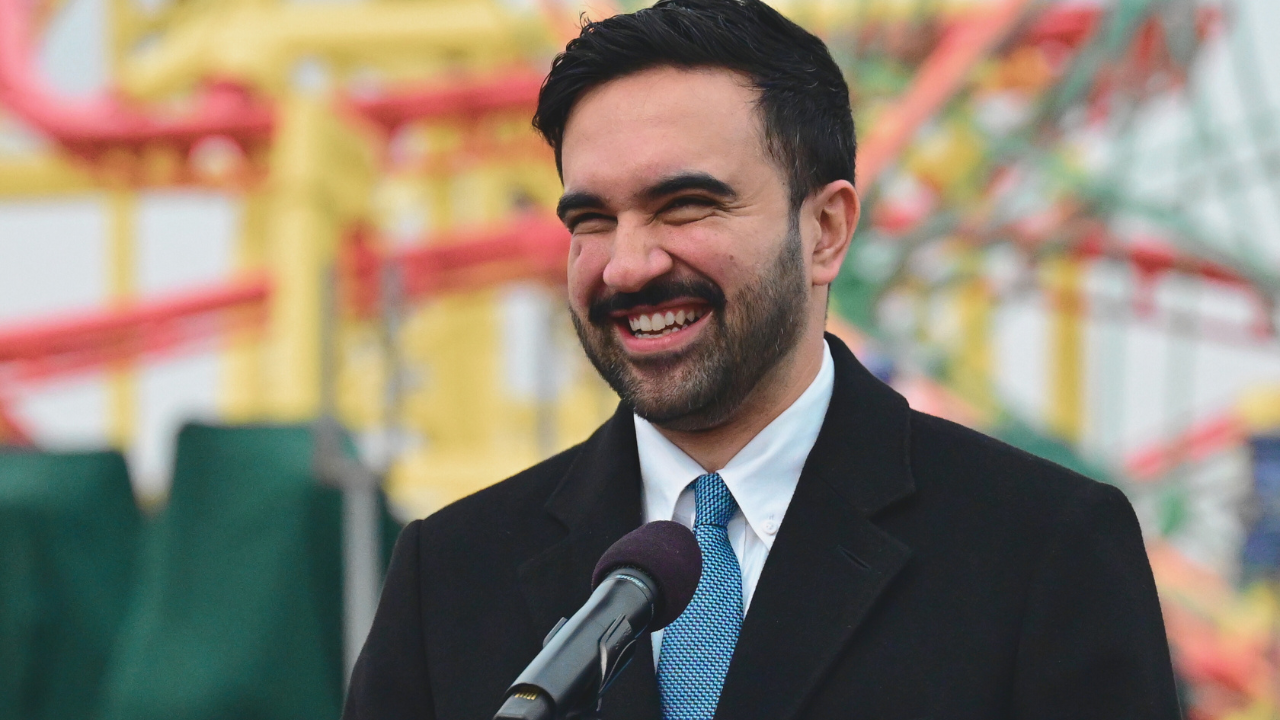
New York City Mayor Zohran Mamdani speaks at a press conference at Deno’s Wonder Wheel on Coney Island in the New York City Borough of Brooklyn, New York City, on Feb. 15, 2026. (Kyle Mazza/Anadolu/Getty Images)
Calvo continued, «That’s one of the fallacies that a lot of people that don’t know about economics fall into. So many of these champagne socialists go and believe that increasing the minimum wage is going to solve everybody’s problems, because people are going to earn more and prices are going to stay the same. That’s Econ 101. That’s not going to happen. That’s why many socialist countries have failed around the world.»
The legislation echoes a prominent campaign pledge from Mamdani, who promoted a «$30 by ‘30» minimum wage message.
«In the world’s richest city, making the minimum wage shouldn’t mean living in poverty,» Mamdani posted on X last year. «As Mayor, I’ll work with City Council to raise the wage floor to $30/hour by 2030. When working people have more money in their pocket, the whole economy thrives.»
Fox News Digital reached out to Mamdani’s office for comment on whether he intends to sign the legislation if it were to arrive at his desk, but did not receive a response.
THE SOCIALIST EXPERIMENT COMES TO NYC: MAMDANI’S VISION FOR A MORE AFFORDABLE CITY
While many proponents of raising the minimum wage argue that the cost of living in New York City makes it nearly impossible to comfortably live, business owners are warning that the increase will force a reduction in jobs for businesses that can’t absorb the wage increase, Wall Street Journal reported.
In other states across the country, minimum wage laws have had adverse effects on lower-income workers, including in Los Angeles where Fox News Digital reported earlier this year the hotel industry is already cutting workers in response to a $30 minimum wage law that recently took effect.
Calvo told Fox News Digital that workers in certain industries, like fast food and healthcare will be «completely obliterated» by a $30 minimum wage and that «young and low income workers» will be «hurt the most.»
CLICK HERE TO DOWNLOAD THE FOX NEWS APP

The sun sets on the skyline of midtown Manhattan and the Empire State Building in New York City. (Gary Hershorn/Getty Images)
«We’re going to see a huge portion of the workforce just immediately disappear from the city and I think that people are underestimating how much certain sectors are going to suffer compared to others,» Calvo said.
Calvo explained the importance of the Kaitz index, an economic indicator used to gauge where the minimum wage should be compared to the economy and that most economists agree the number should be between 0.4 and 0.55.
«This proposal will likely put that Kaitz index at 1.1, which is, by many standards, if not highly interventionist, a huge economic blunder,» Calvo said.
Fox News Digital reached out to Councilwoman Nurse’s office for comment but did not receive a response.
politics,new york city,zohran mamdani

¿Puede granizar en CABA hoy, martes 17 de marzo?

Renunció el titular de la ANSES y será reemplazado por Guillermo Arancibia en medio de cambios en la gestión del organismo

Oriana Sabatini, un nacimiento entre goles, la despedida de una amiga y el nuevo capítulo de su vida en Roma

El Gobierno dio de baja el programa Volver al Trabajo y lo reemplazará por vouchers de capacitación

El ChatGPT de la industria: en medio de la crisis, el sector busca acelerar la aplicación de IA en las fábricas

Racing vs. Estudiantes de Río Cuarto: formaciones, hora y dónde ver por tv

TRAICIÓN Y ÉXODO: La promesa rota de Monteoliva que desató una ola masiva de bajas en la Policía Federal

La fuerte exigencia a Mauro Icardi para poder ver a sus hijas con Wanda Nara: “A Maurito se lo va a multar si no lleva a las menores al colegio”

BOMBAZO – Guerra abierta: Feinmann y Rossi contraatacan tras la denuncia de Victoria Villarruel

Video: así fue el feroz temporal que azotó Tucumán y causó inundaciones, rutas cortadas y suspensión de clases

 POLITICA17 horas ago
TRAICIÓN Y ÉXODO: La promesa rota de Monteoliva que desató una ola masiva de bajas en la Policía Federal
- CHIMENTOS3 días ago
La fuerte exigencia a Mauro Icardi para poder ver a sus hijas con Wanda Nara: “A Maurito se lo va a multar si no lleva a las menores al colegio”
- INTERNACIONAL1 día ago
Insólito: un esquiador británico terminó la Copa del Mundo de Oslo bajo los efectos del alcohol