INTERNACIONAL
Warren warned Hegseth’s tattoo made him a potential ‘threat’ — now she backs candidate with Nazi-linked ink


NEWYou can now listen to Fox News articles!
Sen. Elizabeth Warren, D-Mass., sidestepped Democratic Maine Senate candidate Graham Platner’s Nazi-linked tattoo in her glowing endorsement Thursday, despite previously expressing alarm over Department of War Secretary Pete Hegseth’s Christian tattoos.
Warren, one of the Senate’s most liberal members who is seeking to recruit progressive candidates, endorsed Platner’s campaign in a video posted to social media Wednesday, calling him «the real deal.»
«Graham Platner has the grit to go against the grain and to fight for what is right,» Warren said. «And the people in Maine are fired up and excited for change.»
The 41-year-old oyster farmer has been widely criticized for having a chest tattoo of a skull and crossbones resembling a symbol associated with the SS. Platner has since had the tattoo removed and pleaded ignorance, saying he was unaware of the symbol’s meaning.
Graham Platner, a Democratic candidate for U.S. Senate in Maine, points to a covered tattoo that had previously been an image recognized as a Nazi symbol, during an interview on Wednesday in Portland, Maine. (WGME via AP)
DEM SENATE CANDIDATE MOCKED AFTER CLAIM ABOUT DISMANTLING ICE GOES VIRAL: ‘UNMASK THESE THUGS’
When asked about Platner’s host of controversies, Warren largely brushed it off.
«Look, he has apologized for that, and he’s out there talking to the people of Maine every single day,» Warren told Huffpost on Thursday.
Warren’s remarks sharply contrasted with her scrutiny of Hegseth for his Christian tattoos. In the lead-up to Hegseth’s confirmation hearing in early 2025, Warren implied that Hegseth could be a traitor for having certain Christian symbols on his body.
The Massachusetts Democrat specifically referenced a Reuters report detailing Hegseth being removed from National Guard duty during former President Joe Biden’s inauguration by a supervisor, who appears to have made a dubious assumption that he could be an «insider threat» over his Christian tattoos.
Hegseth had volunteered for inauguration security as a member of the D.C. National Guard and had been employed by Fox News at the time. A senior National Guard member expressed concern over his tattoos of the Jerusalem Cross and the Latin phrase «Deus Vult,» which translates to «God wills it.»
Four years later, Warren used the incident to question Hegseth’s loyalty to the United States, despite his completing multiple overseas deployments and earning two Bronze Stars.
«We cannot have a Defense Secretary whose fellow servicemembers feel concerned enough about to report as a potential insider threat,» Warren wrote in a 33-page letter to Hegseth.
Fox News Digital reached out to Warren’s office for comment.

Sen. Elizabeth Warren, D-Mass., heavily scrutinized Pentagon Secretary Pete Hegseth for his Christian tattoos in early 2025. (Aaron Schwartz/Getty Images; Mandel Ngan/AFP via Getty Images)
ANTI-ICE LAW SET TO TAKE EFFECT IN MAINE AS GOVERNOR FACES INCREASED CRITICISM FOR ALLOWING IT AMID SENATE RUN
Hegseth defended his tattoos in an exchange with Sen. Kristen Gillibrand during his confirmation hearing. Gillibrand, who chairs Senate Democrats’ campaign arm, is notably backing Gov. Janet Mills, Platner’s opponent in the Senate primary.
Both Mills and Platner are vying for the Democratic nomination to unseat longtime Sen. Susan Collins, R-Maine.
The tattoo is spotlighted in a blistering new attack ad against Platner launched by Mills’ campaign.
The ad, which the Mills campaign says it’s spending six figures to run statewide, closes with video of Platner shirtless as the narrator in the spot says, «The closer you look, the worse it gets.»
Controversial comments Platner made over a decade ago on Reddit about rape are also included in the ad.
The Mills campaign’s spot highlights Platner’s comments while an actor — in a voice that resembles the candidate — reads the comment aloud. Among the comments is one from 2013, which Platner later deleted, saying people concerned about rape should not «get so f—ed up they wind up having sex with someone they don’t mean to.»
Four women in the Mills ad responded to the comments, calling them, «a horrible thing to say,» «disgusting» and «disqualifying.»
Platner apologized for his controversial Reddit posts after they made headlines last fall soon after he launched his Senate campaign.
«For those of you who have read these things and been offended, have read these things and seen someone that you don’t recognize, I am deeply sorry,» he said in a video that went viral.
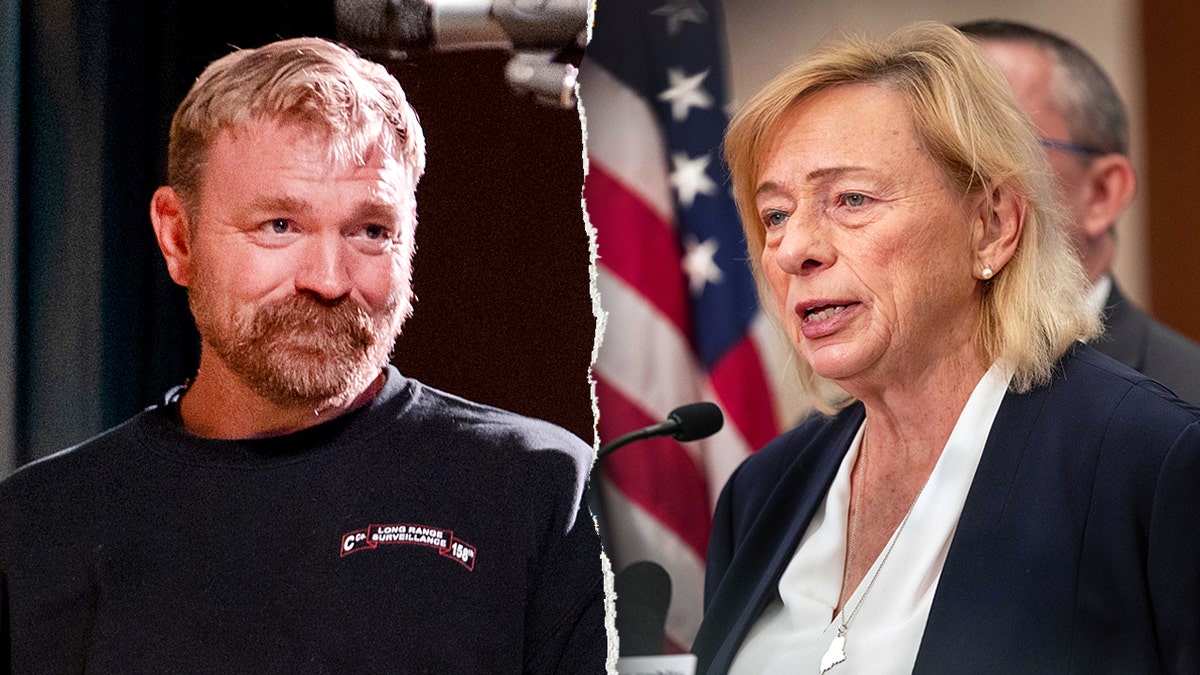
Senate candidate Graham Platner of Maine, left, and two-term Gov. Jane Mills are facing off in the state’s Democratic Senate primary. (Sophie Park/Getty Images; Scott Eisen/Getty Images)
CLICK HERE TO DOWNLOAD THE FOX NEWS APP
The Mills ad was launched as Platner appeared to be gaining momentum while drawing large crowds at campaign events across the state. According to recent polls, Platner holds a large lead over Mills with less than three months until Maine’s primary.
Democrats view Collins as vulnerable as she seeks a sixth Senate term in the left-leaning New England state. The race is considered a must-win contest for Democrats as they try to claw back the chamber’s majority from the GOP in this year’s midterms.
elizabeth warren,pete hegseth,campaigning,democrats elections,politics












INTERNACIONAL
Descartes, el arquitecto del racionalismo moderno: entre la duda metódica y las pasiones del alma

René Descartes articuló el paradigma fundacional de la filosofía moderna al sistematizar el problema mente-cuerpo y establecer un método racionalista que disoció el conocimiento de la autoridad, la experiencia sensorial y los razonamientos previos. La introducción de su método de duda metódica representa el punto de inflexión por el que posteriormente se definirían los ejes entre empirismo y racionalismo en la tradición occidental. Su abordaje, fundamentado en la máxima “Pienso, luego existo” (Cogito, ergo sum), inauguró una nueva estructura epistémica que transformó los criterios de certeza y la función de la razón en la investigación científica y filosófica.
El desarrollo de su dualismo ontológico, que distingue entre la mente (res cogitans) y la materia (res extensa), sentó la base para el debate contemporáneo en torno al problema mente-cuerpo. Descartes formuló que la esencia de la mente es el pensamiento, mientras que la de la materia es la extensión espacial. Está documentado que su racionalismo sostiene la existencia de ideas innatas —incluidas las de mente, materia y Dios—, aunque su trabajo experimental y observacional en física y fisiología fue de orientación empirista y mecanicista.
En 1633, Descartes resolvió suspender la publicación de El Mundo al conocer la condena de Galileo Galilei por sustentar el modelo copernicano. Consideró que su cosmología, alineada con la idea de que la Tierra gira alrededor del Sol, podría hacerlo vulnerable a la censura eclesiástica. Este cálculo editorial ilustra el rango de riesgos y restricciones institucionales que modelaron la difusión de innovaciones científicas en el siglo XVII. No obstante, Descartes proyectó que, en el futuro, su física reemplazaría el paradigma aristotélico y sería incorporada en la enseñanza oficial de la Iglesia católica.
En 1637, publicó el Discurso del método en francés, una estrategia lingüística que, según explicó el propio autor, buscaba democratizar el acceso al conocimiento. Allí fundamentó que todas las personas dotadas de buen sentido podían discernir lo verdadero de lo falso mediante el uso de la razón. Acompañó el Discurso… con tres ensayos originales: “La Dióptrica”, donde derivó la ley de refracción; “Meteorología”, en el que explicó el arcoíris; y “Geometría”, que incluye su exposición fundacional de la geometría analítica. Contribuyó a la notación algebraica al perfeccionar el sistema vigente, asignando letras a cantidades conocidas y a incógnitas y empleando superíndices para indicar potencias.
En el Discurso del método, Descartes también formuló un código moral provisional, posteriormente declarado final. Entre sus prescripciones se incluye obedecer leyes y costumbres locales, tomar decisiones con consistencia sobre la mejor evidencia disponible y perseguir de forma activa la verdad. Esta propuesta subraya su orientación conservadora en el plano prudencial y su énfasis en la autodeterminación racional.

En 1641, Descartes publicó las Meditaciones sobre la filosofía primera en latín, dirigida a los jesuitas de la Sorbona, acompañada por réplicas críticas de figuras como Antoine Arnauld, Thomas Hobbes y Pierre Gassendi. Esta edición consolidó un modelo dialógico inédito en la interacción filosófica pública, pues las objeciones y respuestas recogidas por Marin Mersenne marcaron un precedente de discusión colaborativa en un contexto dominado por el dogmatismo.
En la Meditaciones…, Descartes institucionalizó el método de la duda como procedimiento radical: rechazar provisionalmente todo aquello que haya tenido, o pueda tener, margen de error, ya provenga de la autoridad, la experiencia sensorial o el razonamiento lógico. Recurrió a la hipótesis de un “genio maligno” capaz de engañar al sujeto en cada faceta de su percepción y reflexión. Así, la única certeza indubitable sobreviviente es la conciencia de existir en tanto se piensa: “Pienso, existo” (Cogito, sum), una formulación que el propio Descartes prefirió en las Meditaciones para evitar la interpretación del cogito como argumento deductivo.
La consecuencia inmediata de este método es la emergencia del solipsismo: si sólo es incuestionable la propia existencia, la existencia del mundo externo y de los demás queda en suspenso epistemológico. Descartes sortea esta reducción apelando al principio de claridad y distinción: todas las ideas tan claras y distintas como el “pensamiento” deben ser verdaderas. Desde este fundamento, y mediante la postulación de ideas innatas, establece la distinción ontológica entre sustancias mentales e individuales y una sustancia material común.
El argumento ontológico para la existencia de Dios, retomado de Anselmo de Canterbury y reformulado por Descartes, sostiene que la idea de Dios como ser perfecto implica necesariamente su existencia, pues la inexistencia sería una imperfección. Este razonamiento, piedra angular del racionalismo cartesiano, permite deducir la existencia de Dios y del mundo material sin recursos a la experiencia sensorial. Arnauld subrayó la circularidad del argumento —llamada posteriormente el Círculo cartesiano— al criticar que la verdad de las ideas claras y distintas depende de la existencia de Dios, la cual a su vez se deduce de esas mismas ideas.

Descartes proyectó su visión racionalista y mecánica en las ramas aplicadas del árbol del conocimiento. Publicó, en 1644, los Principios de filosofía y, en 1649, Las pasiones del alma, donde formalizó su análisis sobre la interacción mente-cuerpo. Argumentó que la glándula pineal era el punto de integración entre la conciencia y las respuestas corporales, ya que era el único órgano cerebral no duplicado. Describió la transmisión de estímulos a través de los nervios y su traducción en vibraciones que originan emociones y acciones, conceptualizando un modelo de arco reflejo precursor en fisiología.
Su experimentación incluyó la disección animal para demostrar que los cuerpos, desprovistos de alma, operan como máquinas exentas de pensamiento o sensación. Descartes llegó a practicar la vivisección, una práctica que justificó bajo este esquema teórico. Identificó equivocadamente el mecanismo de la circulación sanguínea e integró sus resultados fisiológicos en una visión mecanicista de la moralidad y la psicología.
En síntesis, el itinerario intelectual y experimental de René Descartes redefinió los marcos operativos para la filosofía, la ciencia y la moralidad modernas. Su apuesta metodológica por la duda radical, el racionalismo de las ideas innatas y la modelización fisiológica de la mente-cuerpo ofrecen una plataforma teórica de referencia obligada tanto en la epistemología como en la historia de las ciencias.
INTERNACIONAL
Iranian man, Romanian woman charged after allegedly trying to enter UK nuclear missile base, officials say

NEWYou can now listen to Fox News articles!
An Iranian man and a Romanian woman have now been charged after allegedly unsuccessfully attempting to enter a nuclear missile base in Scotland this week, Police Scotland announced Saturday.
The agency said around 5 p.m. on Thursday, «we were made aware of two people attempting to enter HM Naval Base Clyde.»
«A 34-year-old Iranian man and a 31-year-old Romanian woman have been arrested and charged in connection with the incident. They are due to appear at Dumbarton Sheriff Court on Monday, March 23,» Police Scotland said. «Enquiries are ongoing.»
Fox News Digital has reached out to Police Scotland for further comment.
IRANIAN MAN, SECOND PERSON ARRESTED AFTER ALLEGEDLY TRYING TO ENTER UK NUCLEAR MISSILE BASE
HMS Artful, an Astute-class nuclear-powered fleet submarine, is shown at His Majesty’s Naval Base Clyde on March 4, 2025. ((Jeff J Mitchell/Getty Images)
Citing the Times, the Telegraph newspaper reported that the suspects were turned away from the base because they lacked the correct passes and were later arrested nearby for allegedly «acting suspiciously in the vicinity.»
HM Naval Base Clyde — commonly known as Faslane — is considered the primary base for the United Kingdom’s missile fleet.
The Royal Navy says the base is home «to the core of the Submarine Service, including the nation’s nuclear deterrent, and the new generation of hunter-killer submarines.»
TRUMP WARNS OF IRANIAN ‘SLEEPER CELLS’ AS CANADA ACCUSED OF HARBORING REGIME OPERATIVES

A general view of His Majesty’s Naval Base Clyde on March 4, 2025 in Faslane, Scotland. (Jeff J Mitchell/Getty Images)
The U.K. Parliament says the Royal Navy currently operates a fleet of nine submarines, with the entire fleet based at HM Naval Base Clyde.
«Five of those are conventionally-armed nuclear-powered attack submarines of the Astute class. A further four are ballistic missiles submarines (SSBN) of the Vanguard class that comprise the UK’s submarine-based nuclear deterrent,» it added.

HMS Artful, an Astute-class nuclear-powered fleet submarine, is shown at His Majesty’s Naval Base Clyde on March 4, 2025 in Faslane, Scotland. (Jeff J Mitchell/Getty Images)
CLICK HERE TO DOWNLOAD THE FOX NEWS APP
A Royal Navy spokesperson said in a statement to Fox News Digital on Friday, «Police Scotland have arrested two people who unsuccessfully attempted to enter HM Naval Base Clyde on Thursday 19 March. As the matter is subject to an ongoing investigation, we will not comment further.»
united kingdom,navy,armed forces,counter terrorism,iran,world

NEWYou can now listen to Fox News articles!
Senate Republicans blocked an attempt by Senate Minority Leader Chuck Schumer, D-N.Y., to only pay Transportation Security Administration (TSA) workers as the Homeland Security shutdown drags on.
Despite being in the minority and not controlling the Senate floor, Schumer used an arcane tactic to force a procedural vote to allow the Senate to get onto the bill in Democrats’ move to shift the narrative of the ongoing Department of Homeland Security (DHS) shutdown.
«It is unacceptable for workers and travelers and entire airports to get taken hostage in political games,» Schumer said on the Senate floor. «But that’s what the Republicans are doing. It is unacceptable to say we will only pay TSA workers if it is attached to a bill that funds ICE with no reforms, but that’s what the Republicans have been doing.»
GOP SENATOR’S GAMBIT EXPOSES FALSE DEM CLAIMS ABOUT SUPPORTING VOTER ID
Senate Minority Leader Chuck Schumer, D-N.Y., forced a rarely used procedural tactic to pay TSA workers, which Senate Republicans blocked in their quest to fully reopen DHS. (Heather Diehl/Getty Images)
The shutdown entered its 36th day on Saturday as the ongoing partial closure hurtles toward matching the record-breaking full government shutdown from last year. Schumer’s failed gambit follows increasingly long wait times at airports as thousands of TSA agents go without pay.
Senate Democrats have dug in deep in their demands for stringent reforms to Immigration and Customs Enforcement (ICE) and have so far refused to reopen the agency or temporarily extend funding to end the closure until they get what they want.
Senate Republicans and the White House made a new compromise offer to Democrats on Friday night after an open letter from the administration on several reforms to immigration operations was revealed earlier this week. The letter spurred two back-to-back meetings on Capitol Hill with Republicans, Democrats and administration officials.
THUNE ACCUSES CRITICS OF ‘CREATING FALSE EXPECTATIONS’ AMID BACKLASH OVER STALLED SAVE AMERICA ACT

Travelers wait in line at a Transportation Security Administration (TSA) checkpoint at Hartsfield-Jackson Atlanta International Airport (ATL) in Atlanta, Georgia, (Elijah Nouvelage/Bloomberg via Getty Images)
Whether they accept that offer or counter remains in the air for now. Sen. Katie Britt, R-Ala., who was in the meeting, said that she hoped there would be another soon.
«That will be up to them, but I hope so,» Britt said.
Still, Republicans tried and failed for a fifth time to fully reopen the agency on Friday. In the background, there have been several attempts by Senate Democrats to move forward with standalone funding bills — like Schumer’s gambit — to open parts of DHS, save for immigration enforcement.
DHS SHUTDOWN TIED FOR SECOND-LONGEST EVER AS DEMS AGAIN BLOCK FUNDING AMID AIRPORT CHAOS, TERRORISM CONCERNS
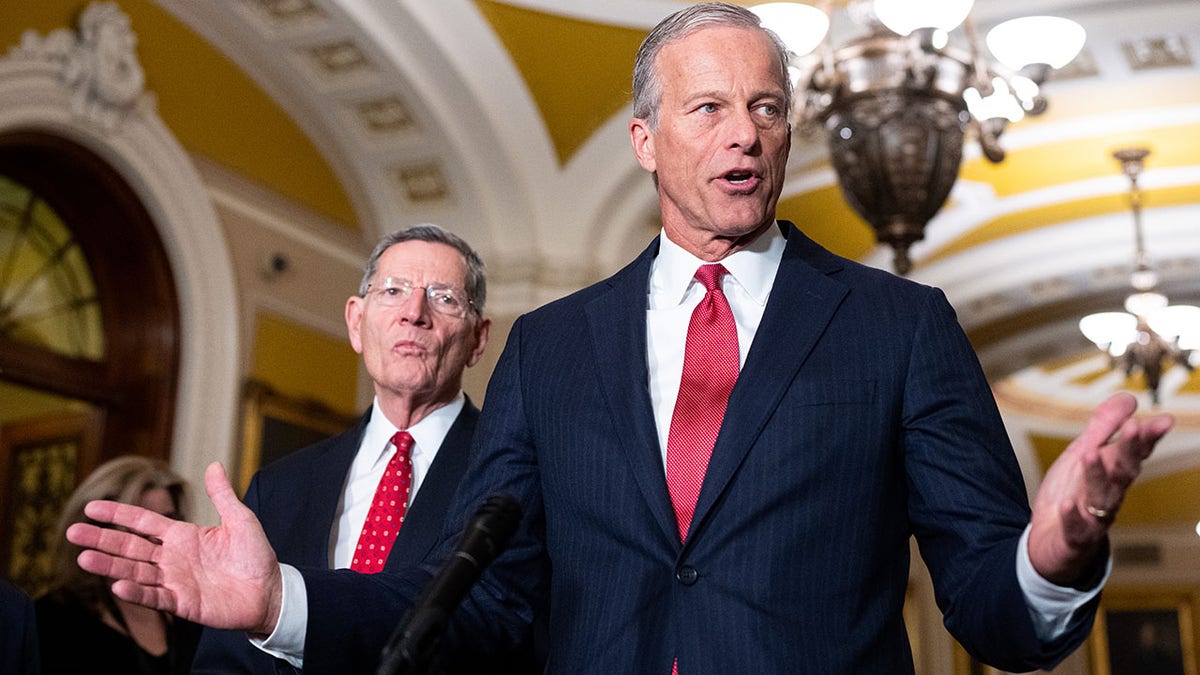
Senate Majority Leader John Thune, R-S.D., speaks during the Senate Republicans’ news conference in the Ohio Clock Corridor in the U.S. Capitol on Tuesday, Feb. 10, 2026. (Bill Clark/CQ-Roll Call, Inc via Getty Images)
Time is also running out for lawmakers to find middle ground on reopening the agency, given that they are set to leave Washington, D.C., for a two-week break at the end of next week.
At a press conference earlier Saturday, Senate Majority Leader John Thune, R-S.D., told Fox News Digital that it’d be «very, very hard to explain if we leave town this next week without having funded the Department of Homeland Security.»
CLICK HERE TO DOWNLOAD THE FOX NEWS APP
«At some point the Democrats are going to be held accountable for this,» Thune said.
«I know they think it’s, as has been described by one of their leaders, ‘very serene, very serene’ with their position,» he continued. «Well, I’m telling you something, the people who are sitting in those lines at the airports right now don’t see it as very serene. This needs to be resolved.»
politics,senate,government shutdown,chuck schumer,john thune

Ranking de riesgo país: qué lugar ocupa la Argentina en la región tras la suba semanal y a cuánto está del primer puesto

Defensa y Justicia recibe a Unión en busca de ser escolta de la Zona A del Torneo Apertura: la agenda completa

Descartes, el arquitecto del racionalismo moderno: entre la duda metódica y las pasiones del alma

“Qué dolor despertar con esta noticia”: la desgarradora despedida de Andrés Ciro Martínez a Daniel Buira, el baterista fundador de Los Piojos

La Justicia argentina dio otro paso en la causa por posible daño ambiental de la planta de hidrógeno en Uruguay

Iranian man, Romanian woman charged after allegedly trying to enter UK nuclear missile base, officials say

Juicio por YPF: la Justicia de EEUU benefició a Argentina y suspendió todas las demandas hasta que se defina la cuestión de fondo

Senado: la oposición pidió explicaciones por $LIBRA y los vuelos de Adorni y Bullrich defendió al Gobierno

Kicillof desembarcó en CABA, lanzó su proyecto 2027 y empezará a ampliar su armado político en todo el país

¿DÓNDE ESTÁ ESMERALDA? El grito de una madre que sacude a la Argentina: «Me la arrebataron de la puerta»

 POLITICA3 días ago
Senado: la oposición pidió explicaciones por $LIBRA y los vuelos de Adorni y Bullrich defendió al Gobierno
- POLITICA2 días ago
Kicillof desembarcó en CABA, lanzó su proyecto 2027 y empezará a ampliar su armado político en todo el país
- POLITICA2 días ago
¿DÓNDE ESTÁ ESMERALDA? El grito de una madre que sacude a la Argentina: «Me la arrebataron de la puerta»