INTERNACIONAL
Trump delays Xi meeting as Iran conflict lets US strong-arm China’s oil supply

NEWYou can now listen to Fox News articles!
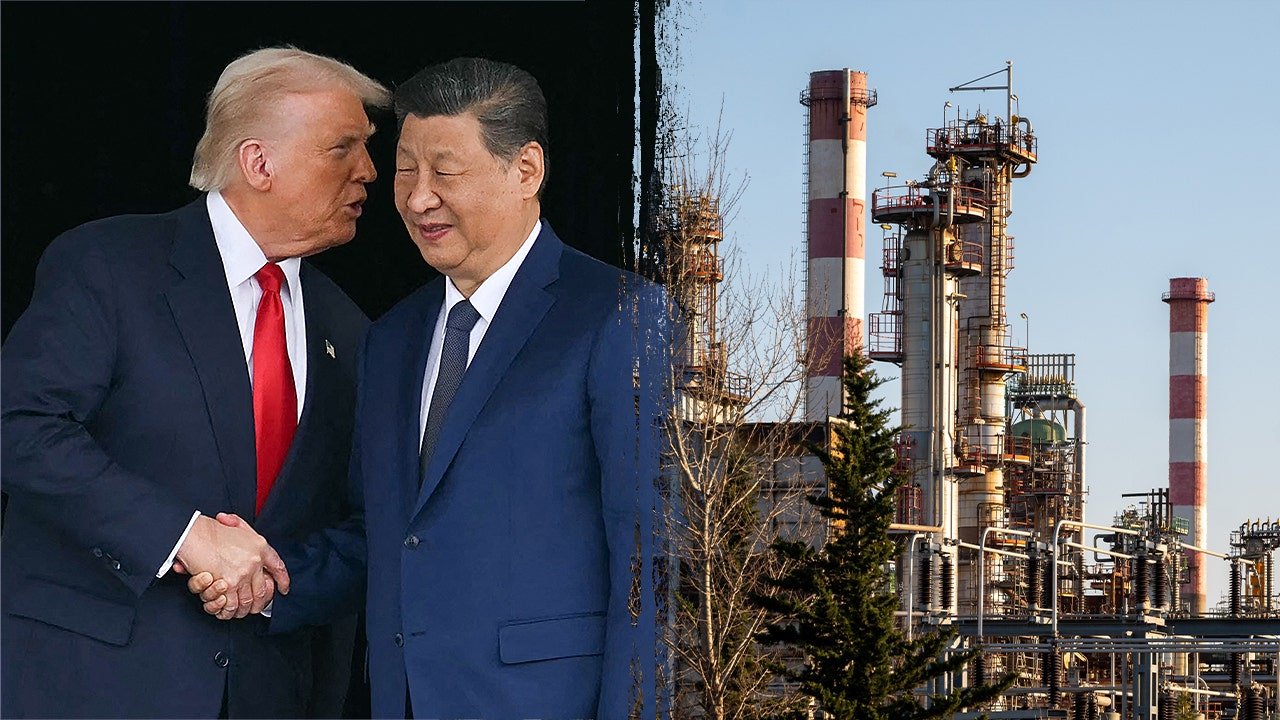
President Donald Trump’s decision to delay a planned meeting with Chinese President Xi Jinping as the U.S.’ conflict with Iran unfolds is raising a new question in Washington: whether pressure on global oil flows is factoring into U.S. leverage with Beijing.
The summit originally had been planned for March 31 to April 2, but Trump said on March 16 that he had asked China to delay it by «a month or so,» explaining, «We got a war going on. I think it’s important that I be here.»
The following day, Trump said the meeting would instead take place in «about five or six weeks,» adding, «We’re working with China — they were fine with it.»
«The president has some things here at home in May that he has to attend to,» White House press secretary Karoline Leavitt told reporters March 16, adding that the two sides would set a date «as soon as we can.»
US INTEL SOFTENS ON CHINA THREAT, SAYS NO TAIWAN INVASION PLANNED BY 2027 DESPITE MILITARY BUILDUP
At the same time, U.S. strikes on Iran — and earlier pressure on Venezuela — have been affecting countries central to China’s energy supply, disrupting shipping and raising costs without fully cutting off flows.
China remains the largest buyer of Iranian oil, and shipments are still moving despite the conflict. But increased risk, higher prices and logistical disruptions are squeezing one of Beijing’s most important energy lifelines — raising the prospect of Washington gaining leverage by driving up the cost and risk of the oil China depends on.
Pressure on China’s energy and influence
China remains the largest buyer of Iranian oil, and shipments are still moving despite the conflict. (Farzad Frames/Getty Images)
In recent months, U.S. actions have hit two countries where China has built deep economic ties — Venezuela and Iran, both tied to Beijing through oil and investment.
In 2023, China helped broker a deal restoring relations between Saudi Arabia and Iran, a move widely seen as a sign of Beijing’s growing influence in the Middle East. That détente is now under strain as the conflict escalates, exposing the limits of China’s ability to sustain stability once fighting begins.
Those developments point to China’s position more clearly: a global power with significant economic reach, but limited willingness — and potentially limited ability — to shield its partners when conflict escalates.
«It is very much connected,» said Brent Sadler of the conservative Heritage Foundation Washington think tank. «It’s all connected to China at the end of it.»
For Beijing, the stakes are primarily economic. China is the world’s largest oil importer, and disruptions to Iranian supply can raise costs, complicate logistics and reduce access to discounted crude that has helped fuel its economy.
At the same time, the conflict itself is rooted in long-running tensions with Iran, including its nuclear program, missile capabilities and support for regional proxy groups.
«It’s not all about China,» said Piero Tozzi of the America First Policy Institute. «It’s primarily about Iran.»
That distinction — between what is driving the conflict and what it affects — has shaped the debate in Washington over how much the fallout could influence broader U.S.-China dynamics.
The delay adds another layer to that dynamic, coming as energy markets tighten and U.S.-China discussions continue.
Oil flows disrupted — but still moving
China’s dependence on Iranian oil remains a central vulnerability, even as the conflict disrupts shipping lanes and raises risks in the Strait of Hormuz, through which roughly half of China’s seaborne oil imports pass.
Shipping through the Strait of Hormuz has dropped sharply and become far more volatile, with only limited oil shipments still getting through under heightened risk.
Iran accounts for roughly 13% of China’s crude imports, while China remains Tehran’s largest customer, purchasing an estimated 80–90% of its exports.
Much of that oil is sold at a discount — often $8 per barrel to $10 per barrel — giving Chinese refiners access to cheaper crude that is difficult to replace elsewhere.
US DESTROYS 16 IRANIAN MINE BOATS AS STRAIT OF HORMUZ OIL SHOWDOWN ESCALATES
Much of the trade is handled by smaller independent «teapot» refineries, allowing Beijing to maintain imports while limiting exposure of its state-owned energy companies to U.S. sanctions.
In many cases, those transactions are conducted in yuan rather than dollars, with proceeds often recycled into Chinese goods and infrastructure projects.
«One of China’s long-term objectives is challenging the supremacy of the dollar,» Tozzi said.
TRUMP ORDERS WAR DEPT TO POSTPONE STRIKES ON IRANIAN ENERGY SITES, CITING ‘PRODUCTIVE’ TALKS TO END WAR
«It’s going to be hard to turn off the supplier side of this,» Sadler said, pointing to the entrenched networks that keep crude moving despite sanctions and conflict.
Those networks — built over years of sanctions — allow Iranian oil to be rerouted through indirect channels, often using tankers that operate outside traditional tracking systems.

Officials have not cited China as a rationale for the operation, but the overlap in resources and priorities has fueled debate in Washington over how to balance immediate threats in the Middle East with longer-term competition with Beijing. (Li Gang/Xinhua via Getty Images)
For China, that means continued access to supply, but at higher cost and greater risk, as shipments become more difficult to move and insure.
The result is sustained pressure rather than a cutoff: fewer shipments, higher prices and increased uncertainty around a supply line Beijing has come to rely on.
The Trump administration also has taken an unusual step to stabilize energy markets, temporarily easing sanctions on Iranian oil already loaded on tankers to allow those barrels to be sold. The short-term waiver, covering an estimated 140 million barrels, is aimed at easing supply disruptions caused by the conflict.
But it also widens access to oil that had largely been flowing to China, increasing competition for those barrels rather than allowing Beijing to remain the dominant buyer.
The U.S. also has eased some restrictions on Russian oil in recent weeks, allowing additional supply to flow to Asia. Taken together, the moves are reshaping global oil flows — forcing China to compete more directly for supply rather than relying as heavily on discounted crude.
U.S. intelligence assessments reflect similar limits, describing the China-Iran relationship as economically significant but largely transactional rather than a coordinated strategic bloc.
Combat experience — and a strain on stockpiles
The Iran conflict is giving U.S. forces real-world experience that cannot be replicated in training environments, allowing different branches of the military to operate together under live conditions and test how their systems perform.
«There’s a lot of real-world experience getting gained,» Sadler said. «We are refining our capabilities in a massive way.»
But those gains come with costs.
«We’re also wearing down our sailors, as well as the material, the aircraft and the ships.»
The same stockpiles being used in the Middle East would be needed to deter any conflict in the Indo-Pacific.
«We don’t produce munitions at the speed and capacity that we should be. It’s not a new problem,» Sadler said. «We’re going to go through a lot of our interceptor missiles very quickly.»
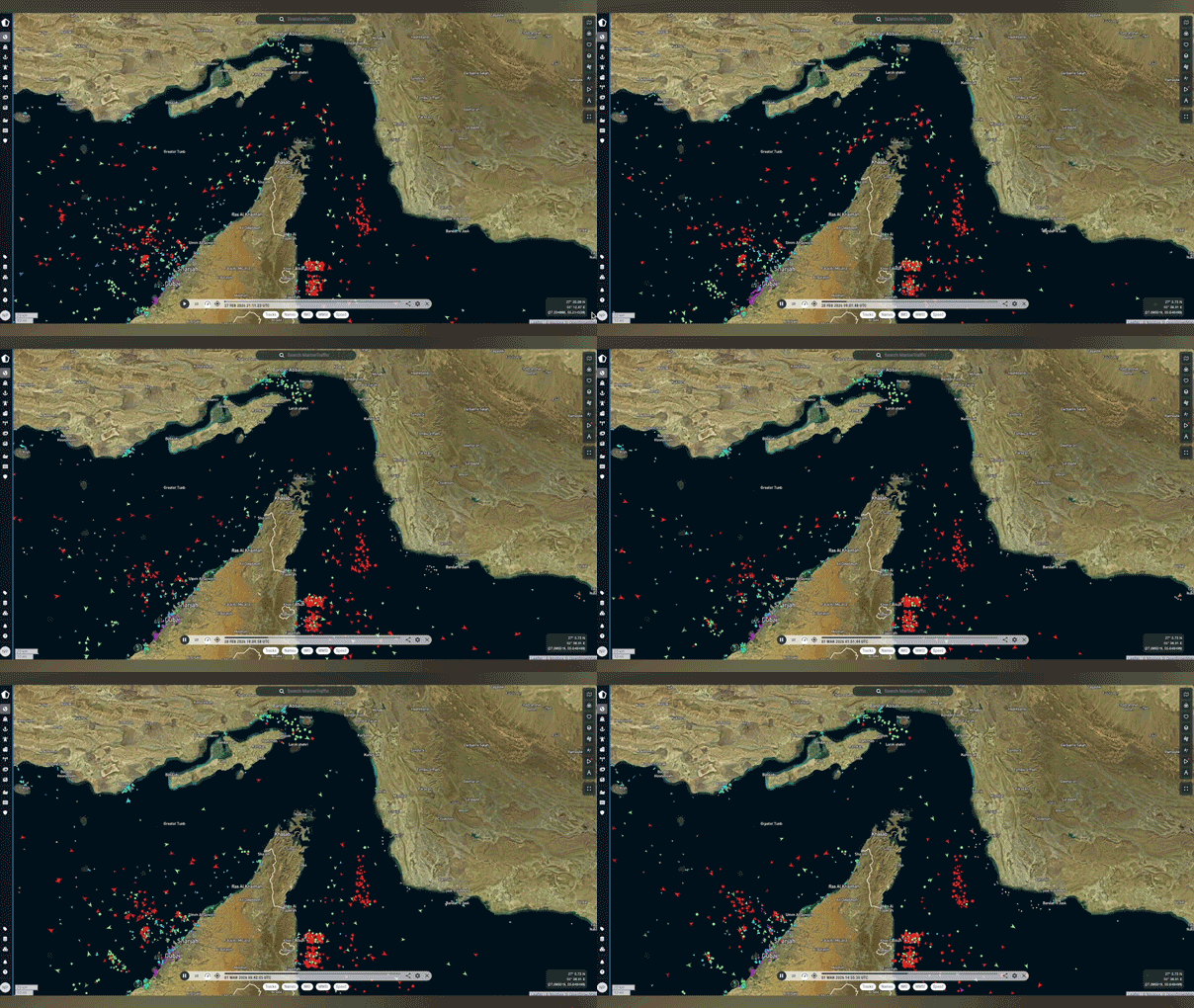
China’s dependence on Iranian oil remains a central vulnerability, even as the conflict disrupts shipping lanes and raises risks in the Strait of Hormuz, through which roughly half of China’s seaborne oil imports pass. (Kpler/Marine Traffic)
He warned that at current production rates, inventories could last only «maybe a week or two,» assuming they are used judiciously.
As of late 2025, the U.S. had roughly 414 SM-3 interceptors and 534 Terminal High Altitude Area Defense (THADD) interceptors, according to the Center for Strategic and International Studies. THAAD is one of the U.S. military’s primary systems for intercepting ballistic missiles in their final phase of flight.
Those systems have been used heavily in recent Middle East operations, and they also would be central in any potential conflict with China, particularly in defending U.S. forces and allies in the Indo-Pacific from missile attacks.
Drawing down those stockpiles now raises a practical concern: the more the U.S. uses these interceptors in the Middle East, the fewer are immediately available for a high-end conflict with Beijing.
China keeps its distance
Beijing has avoided direct involvement in the U.S.–Israel conflict in Iran, focusing on diplomacy, with its deep oil reserves as a fallback.
«They’re all very opportunistic,» Sadler said. «They don’t want to take any undue risk.»
CLICK HERE TO DOWNLOAD THE FOX NEWS APP
«The more diplomatic noise they make, the more it draws attention from their incapacity to stand up for their partners,» he said.
The conflict’s effects extend beyond the region, testing China’s role as a global power while forcing the United States to weigh immediate military demands against its longer-term competition with Beijing.
Chinese officials said they were «highly concerned» by the escalation and urged an immediate halt to military operations, while Foreign Minister Wang Yi described the strikes as «unacceptable.»
The Chinese embassy could not immediately be reached for comment.
china, iran, war with iran, conflicts defense









NEWYou can now listen to Fox News articles!
The United States stood alone at the United Nations in early March after a European-led procedural move blocked a vote on defining gender in biological terms at one of the world’s leading forums on women’s rights.
At the conclusion of the U.N. Commission on the Status of Women, the U.S. was the only country to oppose the body’s annual «Agreed Conclusions,» citing concerns that the language departs from biological definitions of women and girls. No other member state voted with the United States.
At the center of the dispute is how the United Nations defines «gender.» Current U.N. frameworks, rooted in the 1995 Beijing Declaration, do not provide a fixed definition and instead rely on evolving interpretations tied to broader concepts of gender identity, according to EU officials.
The U.S. proposal sought to anchor the term explicitly in biological sex.
UPROAR AFTER IRAN NAMED VICE-CHAIR OF UN BODY PROMOTING DEMOCRACY, WOMEN’S RIGHTS
The U.S. introduced a resolution titled «Protection of women and girls through appropriate terminology,» which sought to clarify how gender is understood across U.N. policy.
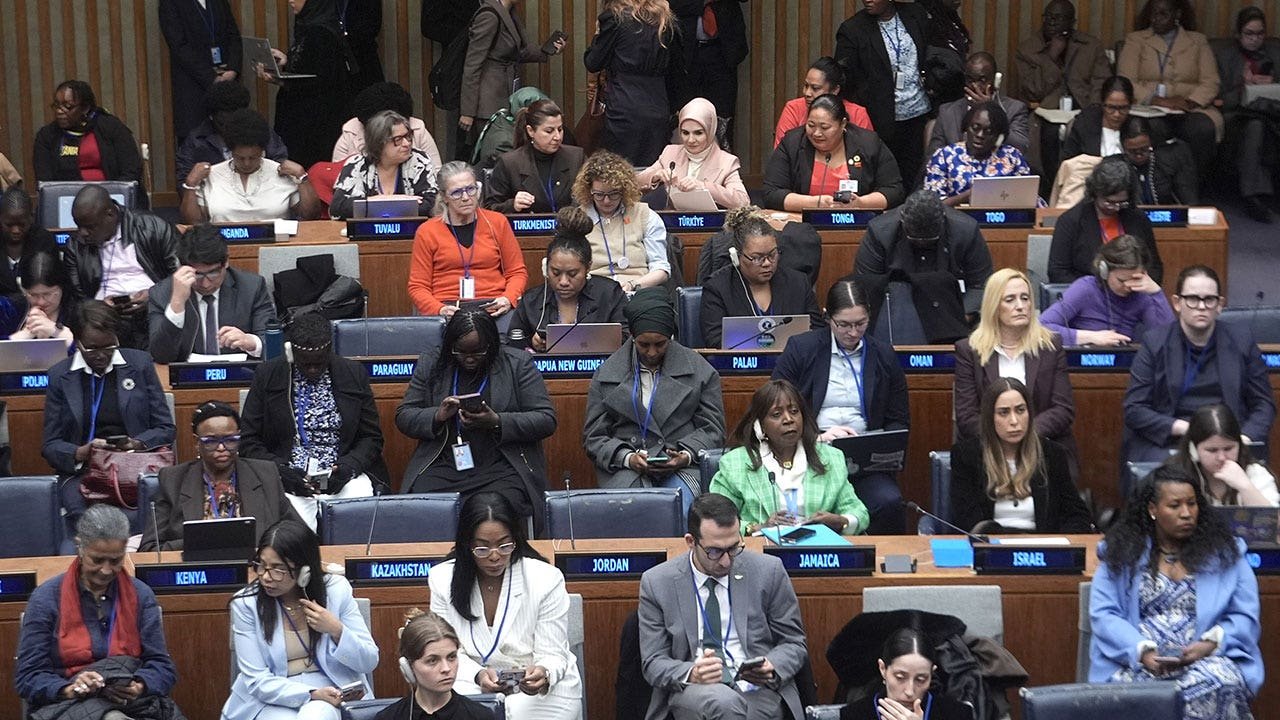
The «Violence Against Women and Girls» meeting, part of the 70th session of the United Nations Commission on the Status of Women in New York, on March 12, 2026. (Selcuk Acar/Anadolu via Getty Images)
The draft states that the term «gender» should be interpreted «according to its ordinary, generally accepted usage, as referring to men and women.»
The proposal never reached a vote. Belgium, speaking on behalf of the European Union, introduced a «no action motion,» a procedural tool that blocks debate and prevents a proposal from being considered.
The motion passed, halting the U.S. resolution before it reached the floor.
That distinction carries practical implications. U.N. language shapes global standards tied to development funding, humanitarian programs, education policy and anti-discrimination frameworks.
Bethany Kozma, director of global affairs at the Department of Health and Human Services, told Fox News Digital the move reflects a broader effort to shut down debate at the U.N.
STATE DEPT MOVES TO EXPAND MEXICO CITY POLICY, TARGETING ABORTION, DEI AND GENDER IDEOLOGY IN FOREIGN AID

The Belgian flag is photographed in Antwerp, Belgium, on May 17, 2015. (Photo by Michael Jacobs/Art in All of Us/Corbis via Getty Images)
«While our redlines were ignored, the United States Government will not stand by and watch as malicious forces misuse multilateral organizations to promote their ideologies and social agendas, obstructing nations’ abilities to exercise their national sovereignty,» Kozma said. «We will always protect women and girls from dangerous gender ideology and affirm biological truth.»
She added that the decision to block the vote was driven by political calculation.
«The EU blocked our resolution to define gender to mean men and women at the U.N. because they feared we would win and they would lose,» Kozma said. «We will not give up on doing what is right for women and girls. Even if we stand alone like we did at the U.N. last week, we will always stand to protect women and girls from dangerous radical gender ideology and always affirm biological truth.»
STATE DEPARTMENT DECLARES ‘INTERNATIONAL BUREAUCRACIES’ WILL NO LONGER GET ‘BLANK CHECKS’ FROM THE US
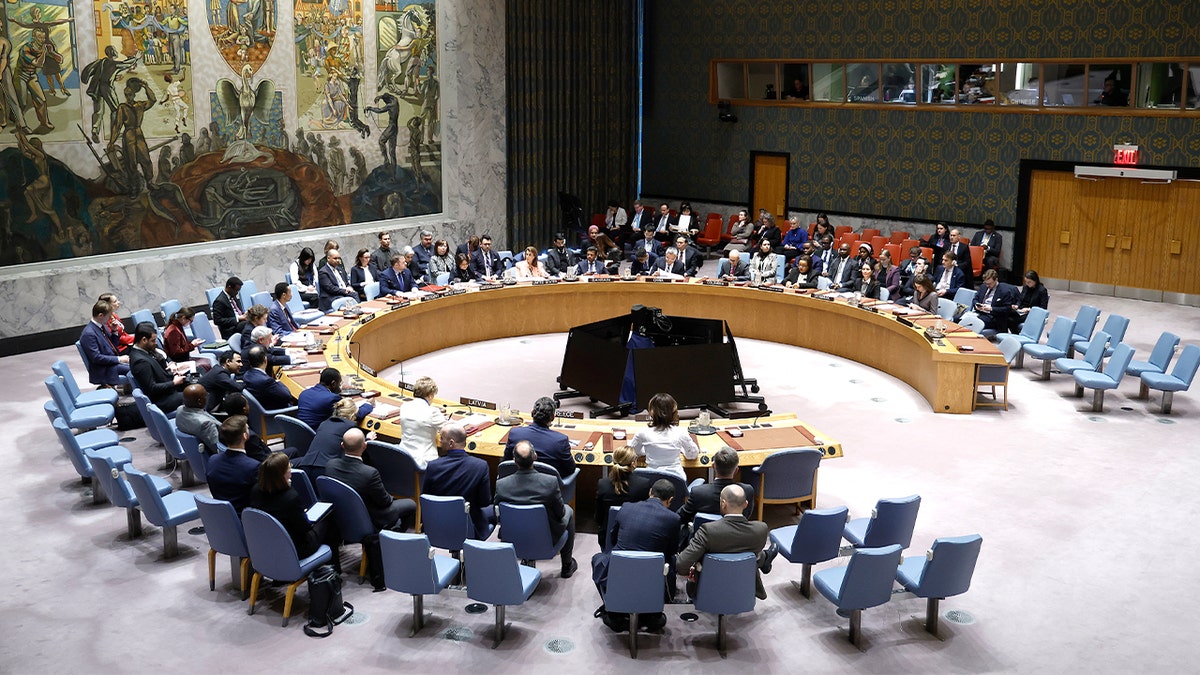
Delegates attend a United Nations Security Council meeting on Feb. 24, 2026, in New York City. (John Lamparski/Getty Images)
A State Department official, speaking on background, described the move as part of a broader coordinated effort led by European countries.
«These are procedural games that these countries are not prepared for,» the official said, referring to smaller delegations that may lack guidance on complex procedural votes.
The official said the maneuver allowed opponents to block a vote despite what the U.S. believed was growing support. These claims could not be independently verified.
The European Union rejected the U.S. criticism, saying the proposal was flawed and rushed.
«The draft resolution presented by the U.S. was factually incorrect,» said David Jordens, spokesperson for Belgium’s foreign ministry, adding that it «misquotes and contradicts» language agreed to in the 1995 Beijing Declaration.
CLICK HERE TO DOWNLOAD THE FOX NEWS APP
The United Nations in New York City. (iStock)
«While the EU respects member states’ prerogative to put forward new initiatives for consideration, CSW members should not be forced to rush a decision on an issue of this importance by the unilateral initiative of one member state, without any prior consultations or negotiations,» Jordens said.
He added that «there is no universally agreed definition of the term ‘gender’. As reflected in the outcome of the Fourth World Conference on Women, the term was understood in accordance with its ordinary and generally accepted usage, without establishing a fixed or exhaustive definition. The United Nations should continue to approach gender equality in an inclusive and forward-looking manner, respectful of diversity. Any effort to revisit or reinterpret internationally agreed language must take place through broad, transparent consultations with the full membership.»
united nations, womens health, state department, the european union

NEWYou can now listen to Fox News articles!
A Democratic candidate in a key Wisconsin battleground is highlighting support from a major environmental group as her Republican opponent warns the endorsement could drive up energy costs and hurt farmers.
Rep. Derrick Van Orden, R-Wis., blasted Democratic challenger Rebecca Cooke’s endorsement by the Natural Resources Defense Council (NRDC) Action Fund, arguing it signals policies that could raise costs for farmers and rural communities.
«Rebecca Cooke is completely out of touch with Wisconsin, touting an endorsement from the radical NRDC,» Van Orden told Fox News Digital. «It’s a clear sign of how quickly she’ll sell out Wisconsin farm families to please Washington Democrats.»
«Farmers and businesses across Wisconsin have time and again rejected the radical Green New Deal because it would increase the price of fertilizer, diesel and cover up more of our black dirt with solar wastelands,» he said.
REPORTER’S NOTEBOOK: GOP TARGETS AFFORDABILITY WITH RECONCILIATION 2.0 PLAN AHEAD OF MIDTERMS
The clash underscores how energy costs and their impact on Wisconsin’s farm economy are emerging as a central fault line in one of the most competitive House races in the country, where control of the chamber could hinge on battleground districts like the 3rd.
Cooke, who is challenging Van Orden in Wisconsin’s 3rd Congressional District, recently touted the NRDC Action Fund endorsement.
«Growing up on a dairy farm I know how important it is to be steward to the land, I want to protect Western Wisconsin’s natural resources and ensure the next generation has clean air and clean water,» Cooke wrote following the endorsement. «Investing in clean energy will create good-paying local jobs and help lower costs for working families. I’ll work with anyone to strengthen our economy and help strengthen our community.»
Jed Ober, managing director of the Natural Resources Defense Council Action Fund, said the group is «proud to support her campaign for Congress,» adding that Cooke «will be a champion for working families who are worried about rising energy costs.»
The Natural Resources Defense Council Action Fund is the political arm of the environmental advocacy group focused on climate and conservation issues.
A Democratic candidate in a key Wisconsin battleground is highlighting support from a major environmental group as her Republican opponent warns the endorsement could drive up energy costs and hurt farmers. (Kayla Wolf/Getty Images)
Van Orden criticized Cooke’s embrace of the endorsement, telling Fox News Digital, «Rebecca Cooke is completely out of touch with Wisconsin, touting an endorsement from the radical NRDC. It’s a clear sign of how quickly she’ll sell out Wisconsin farm families to please Washington Democrats.»
DEMOCRATS NAME CANDIDATES TO ‘RED TO BLUE’ INITIATIVE, AIMING TO FLIP GOP MAJORITY DURING MIDTERMS
«Farmers and businesses across Wisconsin have time and again rejected the radical Green New Deal because it would increase the price of fertilizer, diesel, and cover up more of our black dirt with solar wastelands.»
«Energy prices are out of control in western Wisconsin because of Derrick Van Orden’s failed leadership. He voted to increase electricity costs while handing out tax breaks to the ultra-rich,» Cooke responded in a statement to Fox News Digital. «He’s cheerleading a war of choice in the Middle East that sent the prices of gas and diesel skyrocketing in less than a month. It’s hurting our farmers who have already been hit hard by the tariffs Van Orden has supported every step of the way.»
The Natural Resources Defense Council has backed efforts to curb fossil fuel production, including supporting restrictions on hydraulic fracturing and praising the Biden administration’s pause on new liquefied natural gas (LNG) export approvals.
Republicans and industry groups argue those kinds of policies can raise energy costs in states like Wisconsin, where agriculture and fuel prices are closely linked.
Diesel powers much of the nation’s farm equipment, while fertilizer production is closely tied to natural gas — making energy prices a key concern for farmers.
Democrats argue that investments in clean energy can benefit rural communities through job creation and lower utility costs over time.
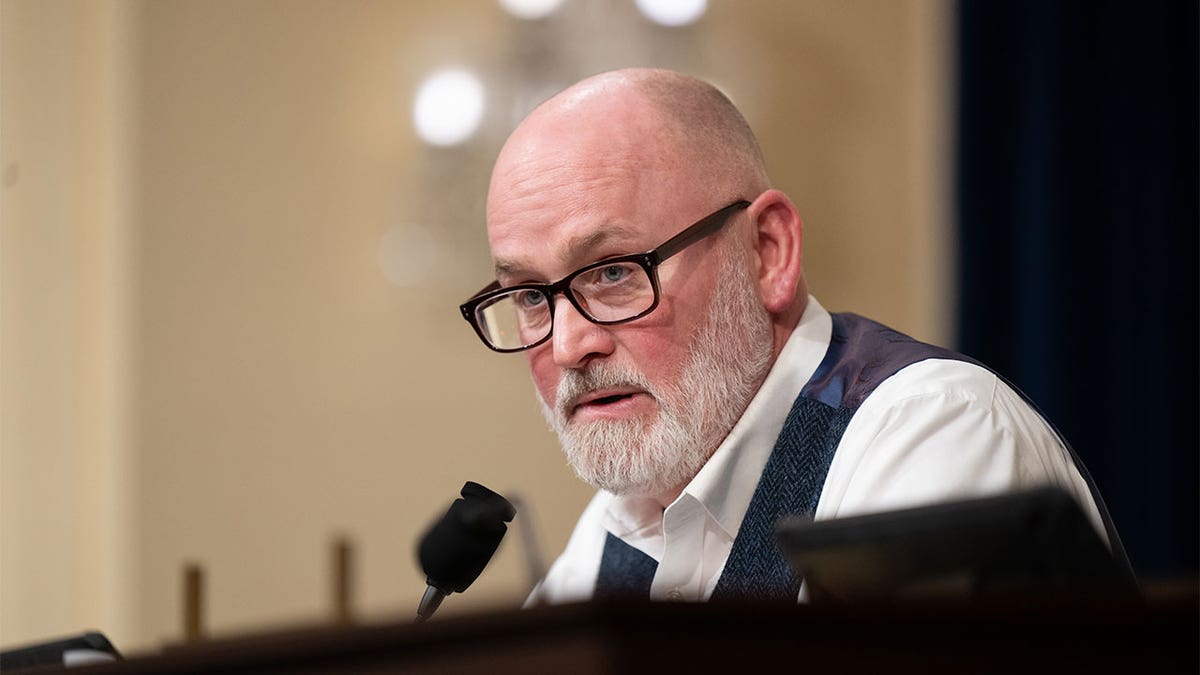
Rebecca Cooke, who is challenging Rep. Derrick Van Orden in Wisconsin’s 3rd Congressional District, recently touted an endorsement from the Natural Resources Defense Council (NRDC) Action Fund. (Provided by the office of Congressman Derrick Van Orden)
While Wisconsin does not have significant hydraulic fracturing operations, it plays a major role in the industry as a leading producer of silica sand used in fracking nationwide, meaning changes in domestic energy production can affect parts of the state’s economy.
The Natural Resources Defense Council also has opposed projects like the Enbridge Line 5 pipeline, which transports oil and natural gas liquids through the Great Lakes region. Supporters, including some industry and labor groups, say the pipeline is critical to maintaining reliable and affordable energy supplies in the Midwest, while environmental groups have raised concerns about environmental risks.
Cooke also received support from prominent Democrats, including Sen. Bernie Sanders and former Transportation Secretary Pete Buttigieg.
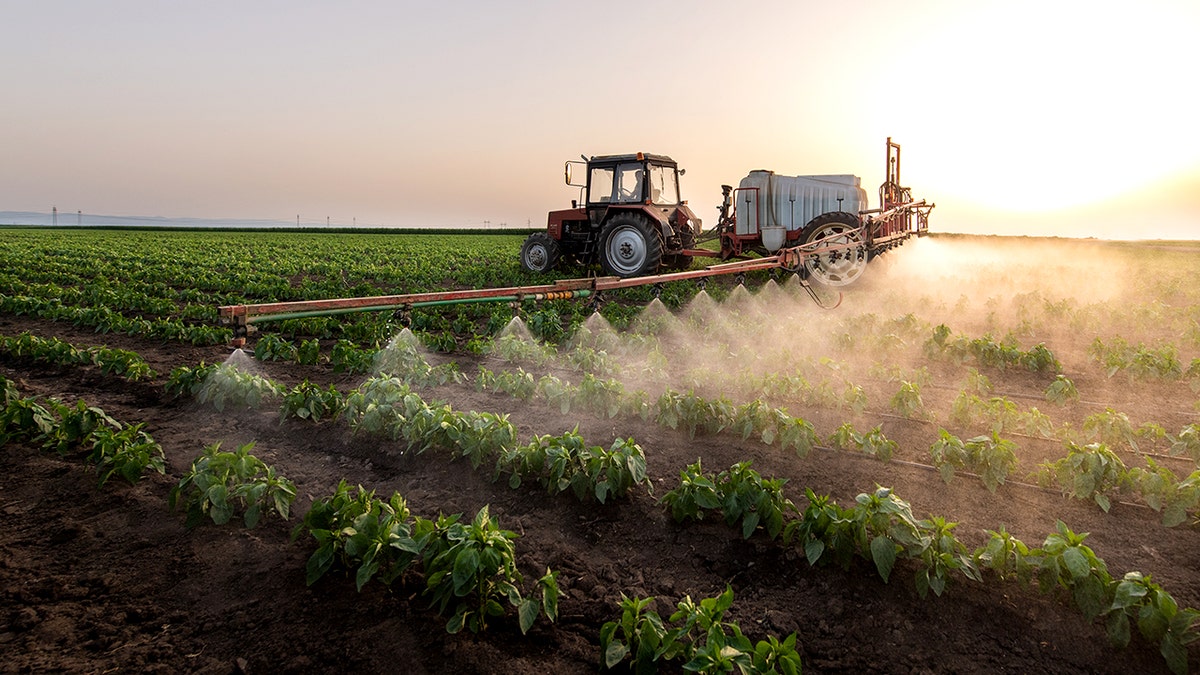
Van Orden criticized Cooke’s embrace of the endorsement, telling Fox News Digital, «Rebecca Cooke is completely out of touch with Wisconsin, touting an endorsement from the radical NRDC. It’s a clear sign of how quickly she’ll sell out Wisconsin farm families to please Washington Democrats. (iStock)
CLICK HERE TO DOWNLOAD THE FOX NEWS APP
The race between Cooke and Van Orden is expected to be highly competitive, with both parties viewing Wisconsin’s 3rd District as a key battleground that could help determine control of the House.
With control of the chamber at stake, energy costs and their impact on Wisconsin’s farm economy are poised to be a central fault line in the race.
wisconsin, energy, campaigning, house of representatives politics
INTERNACIONAL
Vulnerable pero vital: el oleoducto saudí que actúa como único pulmón del mercado petrolero


Las acciones y los bonos argentinos subieron fuerte en Wall Street en un día de recuperación para los mercados globales

Gabriel Magalhaes, nueva baja para Ancelotti en Brasil

EU blocks US vote to define gender as biological men and women at UN women’s forum

La justicia porteña citará a indagatoria a 7 agresores del ex delegado golpeado por una patota de Camioneros

El comediante y streamer libertario Martín “Negro” Almeida: “El humor político es clave en la batalla cultural”

Antes de $LIBRA: así fue el plan secreto para hacer negocios y recaudar millones con la imagen presidencial de Milei

Kicillof desembarcó en CABA, lanzó su proyecto 2027 y empezará a ampliar su armado político en todo el país

¿FIN DE CICLO? Escándalo por la mansión no declarada y viajes de lujo empujan a Manuel Adorni fuera del Gobierno: Su salida sería inminente

¿MACRI 2027? El «operativo retorno» que sacude al PRO y los nombres que suenan para la vicepresidencia

“Tiro al facho”: la repudiable “intervención” en Facultad de Medicina en la que había que tirarle dardos a Javier Milei

 POLITICA3 días ago
¿FIN DE CICLO? Escándalo por la mansión no declarada y viajes de lujo empujan a Manuel Adorni fuera del Gobierno: Su salida sería inminente
- POLITICA1 día ago
»¡VAN A FUNDIR A MEDIO PAÍS!»: El lapidario diagnóstico de Roberto Cachanosky sobre el plan de Milei
- POLITICA2 días ago
Apareció otra factura y complica más a Adorni: el vuelo de vuelta también lo pagó su amigo Grandio