INTERNACIONAL
Vulnerable pero vital: el oleoducto saudí que actúa como único pulmón del mercado petrolero




NEWYou can now listen to Fox News articles!
A top Virginia Democrat appeared to admit that state Democratic lawmakers’ effort to redraw the commonwealth’s congressional map is more about stopping President Donald Trump and his agenda than about ensuring fairness for voters in the Old Dominion.
A referendum drafted by Richmond’s Democratic majority and set to go before voters in April would allow the assembly to redraw Virginia’s congressional map in a way that Richmond Democrats signaled would draw out four of five Republican congressmen and draw the populations of most new districts from dense, left-wing Fairfax County.
In comments to NBC News, Rep. Donald Beyer, an Alexandria-Fairfax Democrat, appeared to admit redistricting’s true purpose while commenting on early voting figures that appeared to lean in the GOP’s favor.
Beyer said the redistricting effort is «not a done deal by any means» and that Democrats need to «effectively make the case that even though this seems unfair in Virginia, it’s totally fair for America, for those of us who believe that taking back the House is the most significant thing we can do to stop Donald Trump.»
NEW DEM STAR’S QUICK HARD-LEFT TURN AFTER ‘MODERATE’ CAMPAIGN WON HER COVETED RESPONSE TO TRUMP: LAWMAKER
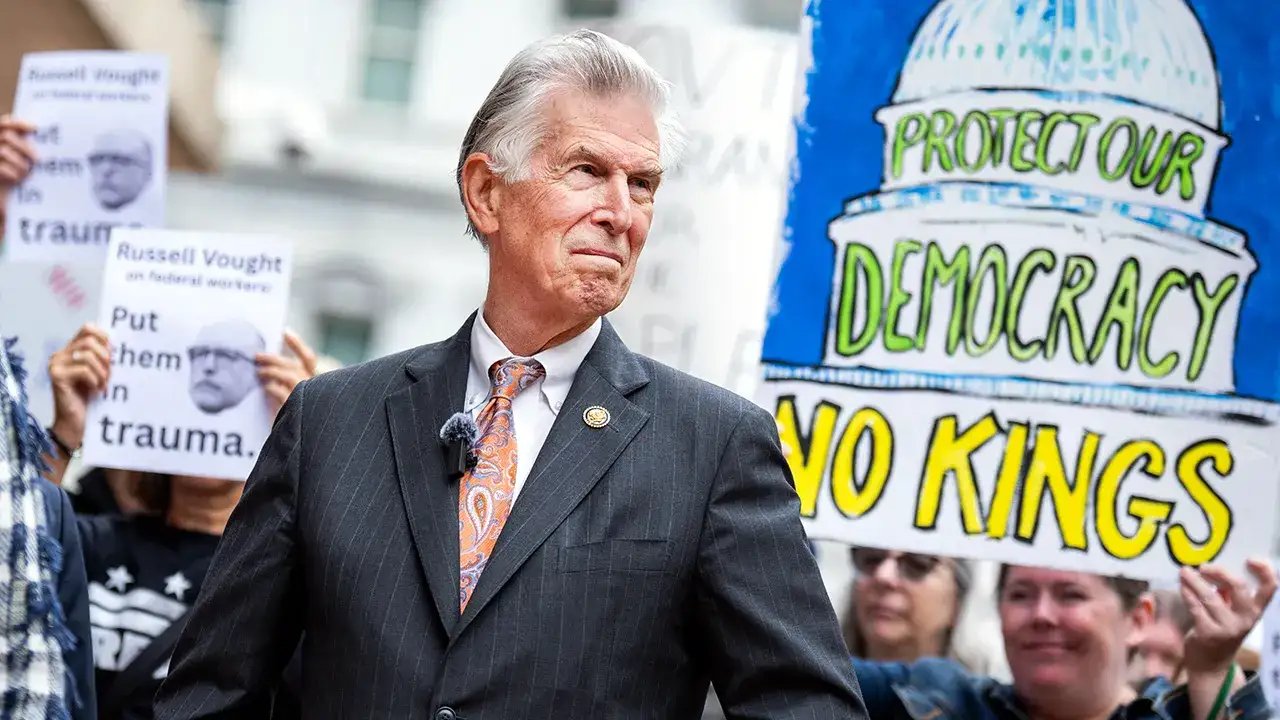
Rep. Donald Beyer Jr., D-Va., attends a protest in Washington. (Tom Williams/Getty Images)
«Don said the quiet part out loud,» Virginia House Minority Leader Terry Kilgore, R-Gate City, told Fox News Digital on Monday.
«This is manifestly unfair for the Commonwealth of Virginia. We’re a 51-49 state, not a 90-10 state. If they’re willing to silence nearly half the Commonwealth’s voters in the name of ‘fairness,’ what else are they willing to do?» Kilgore said. His legislative seat in the far southwest would sit in the sole Republican-favored congressional district under the new map.
«Last November, Democrats sold Virginians a fake ‘affordability’ agenda that is false, a total hoax, and a con job,» Senate Minority Leader Ryan McDougle, R-Hanover, said.
«Now they are back at it, trying to shove another partisan power grab down our throats, this time wrapped in the phony label of ‘fairness,’» he told Fox News Digital.
Fox News Digital reached out to Beyer for further comment and to Gov. Abigail Spanberger for her take on his admission.
5 VIRGINIA CONGRESSMEN: DEMOCRATS ARE REJECTING VOTERS TO GERRYMANDER OUR STATE

Representative Don Beyer, a Democrat from Virginia, speaks during a campaign event for Terry McAuliffe, Democratic gubernatorial candidate for Virginia, in Arlington, Virginia, U.S., on Friday, July 23, 2021. McAuliffe is bringing President Biden to the vote-rich suburbs as he works to keep a national focus in the race and tie his Republican opponent to former President Trump. Photographer: Oliver Contreras/Sipa/Bloomberg via Getty Images
The text of the amendment facing voters next month asks whether the Constitution of Virginia should be amended to allow the General Assembly to temporarily adopt new congressional districts to restore fairness in the upcoming elections.
The tagline «restore fairness» has become a clarion call for critics who claim exactly what Beyer appeared to admit: that the definition of «fairness» used is questionable at best.
«Representative Beyer said the quiet part out loud. This isn’t about fairness, transparency, or representing Virginians,» Rep. Ben Cline, R-Va., said. His Shenandoah Valley district stands to be chopped into several Fairfax-connected pieces under the new map.
«It’s about political power and Democrats’ determination to rig the map to ‘take back the House.’ When Democrats admit they’re willing to defend an unfair process in Virginia for the sake of national political power, it exposes exactly what’s driving this effort, and it has nothing to do with the people they’re supposed to represent,» Cline told Fox News Digital.
Five of Virginia’s 11 congressional districts would originate in Arlington or Fairfax counties and encompass meticulously drawn swaths of the state’s conservative interior, including one district ridiculed for resembling a lobster or scorpion, as it begins at the Potomac River and winds southwest through Democratic suburbs before splitting into two halves. One half includes rural Greene, Rockingham, and Augusta counties closer to West Virginia, while the other stretches down the Zachary Taylor Highway into Goochland and Powhatan counties west of Richmond.
In turn, a likely Democrat-majority district would form, narrowly connecting the independent cities of Harrisonburg, Staunton, and Waynesboro within Rockingham and Augusta counties and linking them via conservative areas like Nelson County with Lynchburg and Roanoke far to the south.
Beyer’s current district would likely become the new 8th and stretch down the west bank of the Potomac River through current Rep. Rob Wittman’s, R-Va., rural 1st District in the Northern Neck, collecting nearly a dozen small red counties in the state’s oyster country anchored by the deep-blue city.
The only Republican deemed safe under the map would be Rep. Morgan Griffith, R-Va., in the far southwest, which would become an overwhelmingly Republican seat.
Rep. Jennifer Kiggans’ evenly split Eastern Shore and Hampton Roads district would draw in just enough urban and suburban population to potentially turn blue.
CLICK HERE TO DOWNLOAD THE FOX NEWS APP
Since early voting began this month, yard signs emblazoned with «VOTE NO» have begun popping up in several red counties threatened by the new map, including Culpeper, Shenandoah, Highland, Orange, and Page, home to Luray Caverns.
«VOTE YES» signs were, in turn, observed in rural Clarke and suburban Prince William counties over the weekend.
democrats elections, republicans, abigail spanberger, virginia, house of representatives
INTERNACIONAL
Cómo funcionan los humedales flotantes que ya muestran resultados prometedores en la lucha contra la polución
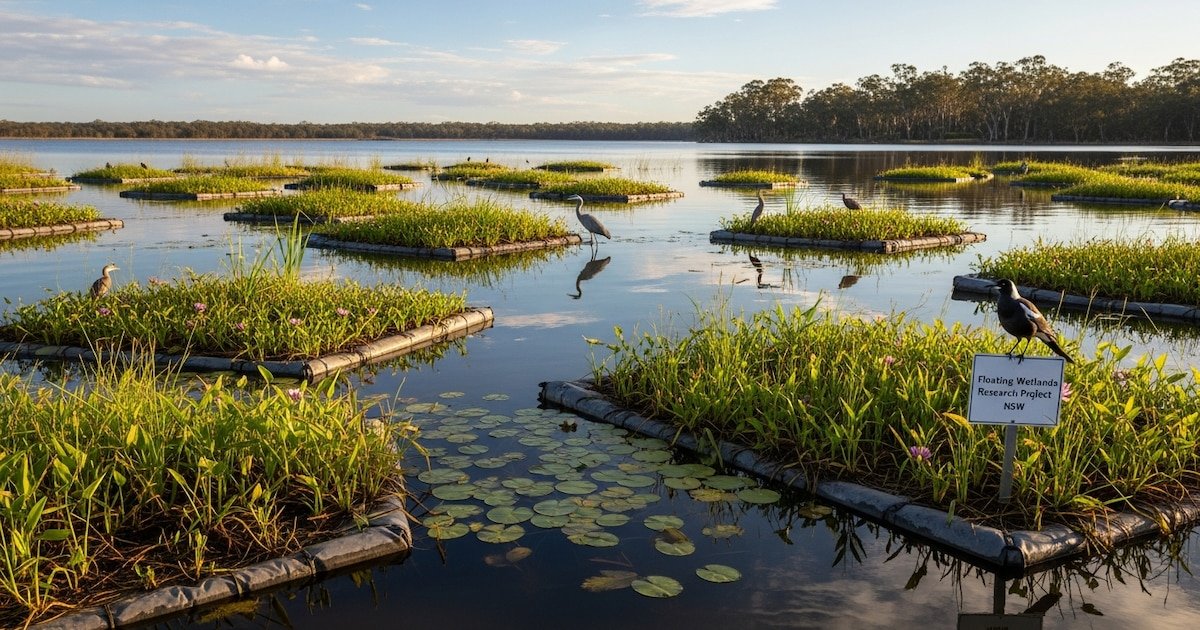
La instalación de plataformas vegetales en una laguna de aguas residuales permitió disminuir los niveles de nitrógeno y metano. El estudio, realizado por el Instituto Real de Tecnología de Melbourne (Australia) en la isla Phillip (Australia), mostró una reducción del 22 % en los gases de efecto invernadero. El 19 de marzo de 2026, se implementó un sistema de humedales flotantes en una laguna de retención de aguas residuales para comprobar su eficacia en la mejora de la calidad del agua y la reducción de emisiones contaminantes.
Investigadores australianos, en colaboración con organismos asociados, instalaron plataformas prefabricadas cubiertas de especies vegetales autóctonas sobre la superficie de la laguna. El experimento evidenció una disminución de la contaminación y de los gases de efecto invernadero en la zona intervenida.
Los datos obtenidos durante el estudio señalaron que la zona con humedales artificiales presentó niveles de nitrógeno un 12 % más bajos que otras áreas similares expuestas a procesos convencionales de tratamiento. Además, la presencia de plantas como junco articulado y carrizo común contribuyó a un descenso del metano y otros gases asociados a la descomposición de materia orgánica.
Según la revista científica Science, el éxito de la intervención se midió comparando directamente zonas con y sin humedales flotantes; la medición mostró que se logró reducción del 22 % en los gases de efecto invernadero, especialmente por una caída en las emisiones de metano, detectada en solo 4 meses. Los autores aclaran que la extrapolación a otras lagunas requiere cautela, ya que los resultados pueden variar según la composición del agua y las especies utilizadas.

La técnica de humedales flotantes surge como alternativa a la infraestructura tradicional de tratamiento de aguas residuales. De acuerdo con la revista, la descomposición microbiana de nutrientes en aguas residuales genera entre 7 % y 10 % de las emisiones globales de metano y óxido nitroso, gases cuyo potencial para retener calor supera ampliamente al dióxido de carbono. Por esto, el uso de plantas acuáticas para filtrar contaminantes se reconoce como una vía menos costosa que las instalaciones convencionales.
Las plataformas instaladas cubrieron un área equivalente a 2 canchas de tenis y se diseñaron con materiales resistentes para soportar el peso de las plantas y el contacto permanente con el agua. El sistema permitió que las raíces de las especies vegetales absorbieran nutrientes y retuvieran físicamente residuos presentes en el agua, lo que favoreció la disminución de contaminantes y la mejora de la transparencia.
Según el portal, la red radicular de los humedales artificiales creó microhábitats que favorecieron la proliferación de microorganismos capaces de metabolizar gases de efecto invernadero. Este proceso, junto con la acción de las plantas, ralentizó el ascenso de burbujas y disolvió gases antes de que escaparan a la atmósfera. La cobertura vegetal funcionó además como barrera física y bloqueó la liberación directa de emisiones, reforzando la eficacia del sistema.
El estudio, liderado por Lukas Schuster, científico ambiental del Instituto Real de Tecnología de Melbourne (Australia), incluyó mediciones periódicas de calidad del agua y gases en diferentes puntos de la laguna. Los resultados indicaron que, tras 7 meses, las emisiones de dióxido de carbono y óxido nitroso también descendieron, aunque la mayor diferencia se observó en las emisiones de metano.

El costo total del proyecto ascendió a USD 234.010, cifra que comprende la construcción de las plataformas y la plantación de especies autóctonas. La inversión fue menor que la requerida para mejoras convencionales en infraestructura de plantas de tratamiento de aguas residuales. Schuster subrayó que este enfoque constituye una “solución basada en la naturaleza”.
La alternativa de humedales flotantes permitió disminuir la carga de nutrientes y las emisiones de gases, además de facilitar la proliferación de plantas nativas en ambientes urbanos. Los expertos consideran que el método podría extenderse a otras regiones para mejorar la gestión de aguas residuales y preservar ecosistemas locales.
A pesar de los resultados obtenidos, especialistas como Jan Vymazal, químico del agua en la Universidad Checa de Ciencias de la Vida de Praga (República Checa), han solicitado más estudios para precisar la composición del agua y los mecanismos que explican la reducción observada en las emisiones. Science recogió su opinión, añadiendo que la duda central radica en identificar qué procesos exactos dentro del humedal flotante originan la disminución específica de metano y otros gases, y si estos pueden replicarse en diferentes contextos ambientales.
El equipo australiano continuará con la monitorización del humedal flotante y evaluará su impacto en el largo plazo. Schuster expresó que las mediciones apuntan a una reducción sostenida de contaminantes y a la promoción de biodiversidad en entornos urbanos. Además del descenso de nutrientes y gases, se prevé que las plataformas ayuden a reducir la presencia de metales tóxicos y otros elementos dañinos.
Según la revista científica, las plantas acuáticas filtran contaminantes mediante la absorción de nutrientes y el atrapamiento de residuos, mientras que el diseño modular de las plataformas permite adaptarlas a distintos tipos de lagunas y cuerpos de agua. Las autoridades locales ya manifestaron interés en expandir el uso de humedales flotantes en otras instalaciones similares.
humedales flotantes,Australia,ecosistema,biodiversidad,investigación,aves,conservación,medio ambiente,sostenibilidad,lago
NEWYou can now listen to Fox News articles!
The United States stood alone at the United Nations in early March after a European-led procedural move blocked a vote on defining gender in biological terms at one of the world’s leading forums on women’s rights.
At the conclusion of the U.N. Commission on the Status of Women, the U.S. was the only country to oppose the body’s annual «Agreed Conclusions,» citing concerns that the language departs from biological definitions of women and girls. No other member state voted with the United States.
At the center of the dispute is how the United Nations defines «gender.» Current U.N. frameworks, rooted in the 1995 Beijing Declaration, do not provide a fixed definition and instead rely on evolving interpretations tied to broader concepts of gender identity, according to EU officials.
The U.S. proposal sought to anchor the term explicitly in biological sex.
UPROAR AFTER IRAN NAMED VICE-CHAIR OF UN BODY PROMOTING DEMOCRACY, WOMEN’S RIGHTS
The U.S. introduced a resolution titled «Protection of women and girls through appropriate terminology,» which sought to clarify how gender is understood across U.N. policy.
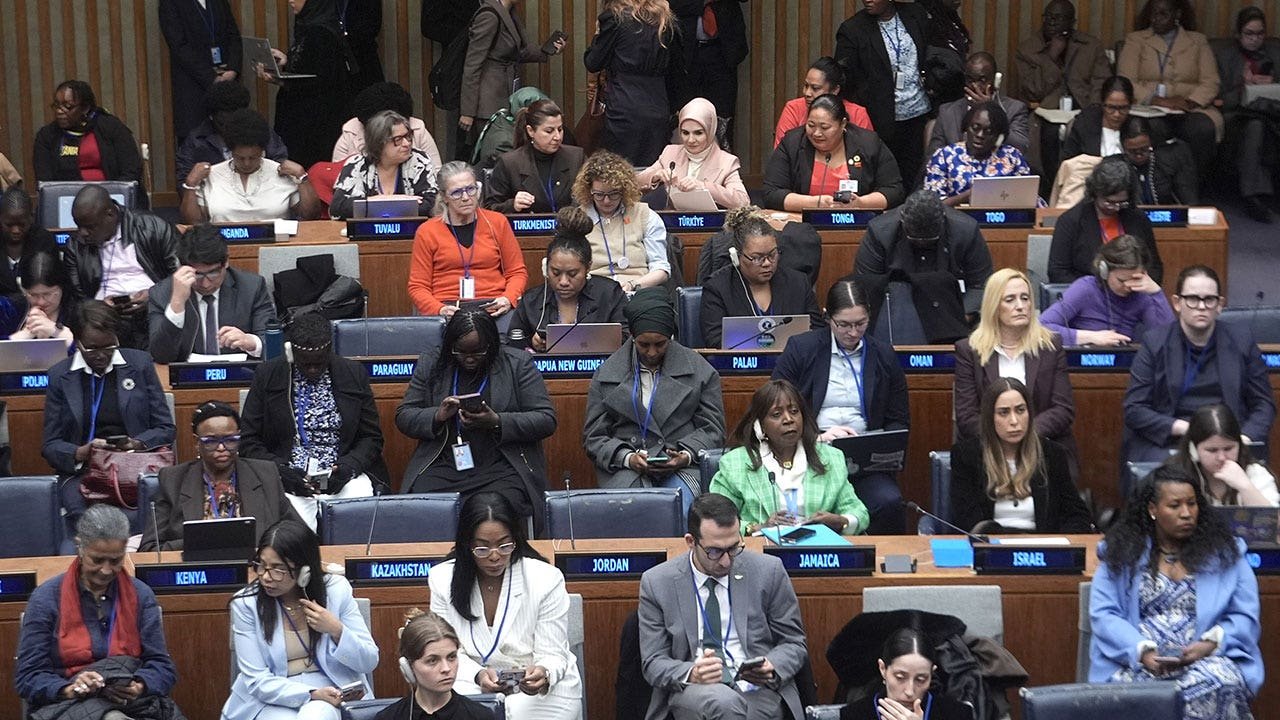
The «Violence Against Women and Girls» meeting, part of the 70th session of the United Nations Commission on the Status of Women in New York, on March 12, 2026. (Selcuk Acar/Anadolu via Getty Images)
The draft states that the term «gender» should be interpreted «according to its ordinary, generally accepted usage, as referring to men and women.»
The proposal never reached a vote. Belgium, speaking on behalf of the European Union, introduced a «no action motion,» a procedural tool that blocks debate and prevents a proposal from being considered.
The motion passed, halting the U.S. resolution before it reached the floor.
That distinction carries practical implications. U.N. language shapes global standards tied to development funding, humanitarian programs, education policy and anti-discrimination frameworks.
Bethany Kozma, director of global affairs at the Department of Health and Human Services, told Fox News Digital the move reflects a broader effort to shut down debate at the U.N.
STATE DEPT MOVES TO EXPAND MEXICO CITY POLICY, TARGETING ABORTION, DEI AND GENDER IDEOLOGY IN FOREIGN AID

The Belgian flag is photographed in Antwerp, Belgium, on May 17, 2015. (Photo by Michael Jacobs/Art in All of Us/Corbis via Getty Images)
«While our redlines were ignored, the United States Government will not stand by and watch as malicious forces misuse multilateral organizations to promote their ideologies and social agendas, obstructing nations’ abilities to exercise their national sovereignty,» Kozma said. «We will always protect women and girls from dangerous gender ideology and affirm biological truth.»
She added that the decision to block the vote was driven by political calculation.
«The EU blocked our resolution to define gender to mean men and women at the U.N. because they feared we would win and they would lose,» Kozma said. «We will not give up on doing what is right for women and girls. Even if we stand alone like we did at the U.N. last week, we will always stand to protect women and girls from dangerous radical gender ideology and always affirm biological truth.»
STATE DEPARTMENT DECLARES ‘INTERNATIONAL BUREAUCRACIES’ WILL NO LONGER GET ‘BLANK CHECKS’ FROM THE US
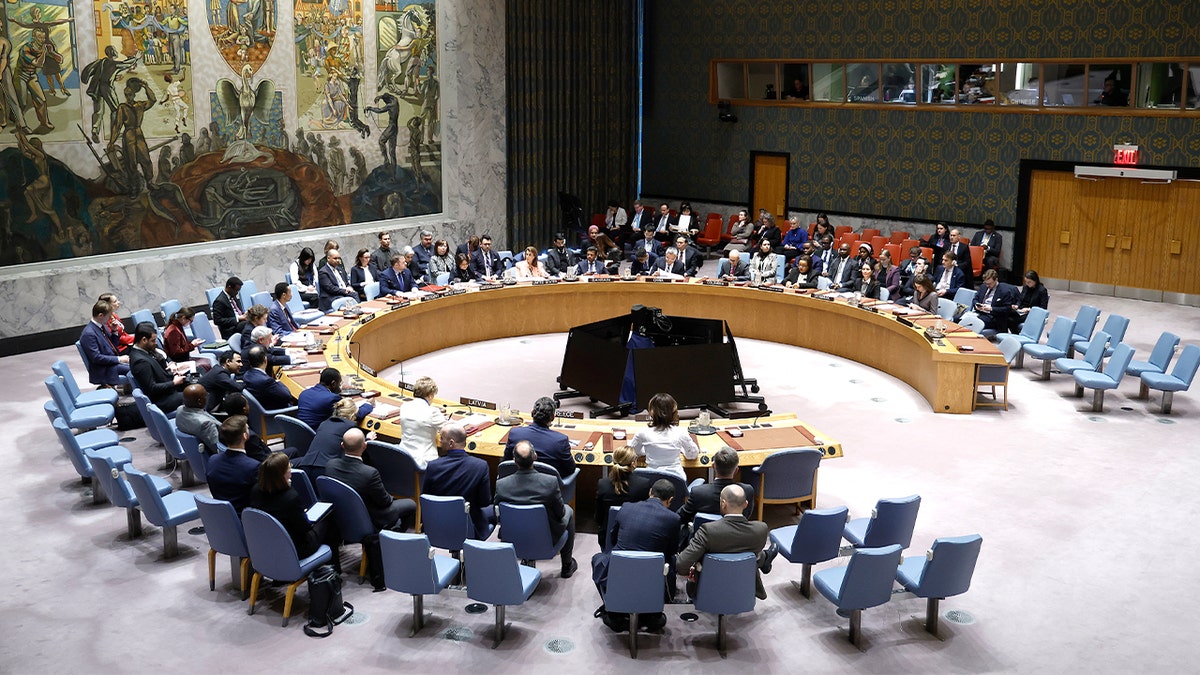
Delegates attend a United Nations Security Council meeting on Feb. 24, 2026, in New York City. (John Lamparski/Getty Images)
A State Department official, speaking on background, described the move as part of a broader coordinated effort led by European countries.
«These are procedural games that these countries are not prepared for,» the official said, referring to smaller delegations that may lack guidance on complex procedural votes.
The official said the maneuver allowed opponents to block a vote despite what the U.S. believed was growing support. These claims could not be independently verified.
The European Union rejected the U.S. criticism, saying the proposal was flawed and rushed.
«The draft resolution presented by the U.S. was factually incorrect,» said David Jordens, spokesperson for Belgium’s foreign ministry, adding that it «misquotes and contradicts» language agreed to in the 1995 Beijing Declaration.
CLICK HERE TO DOWNLOAD THE FOX NEWS APP
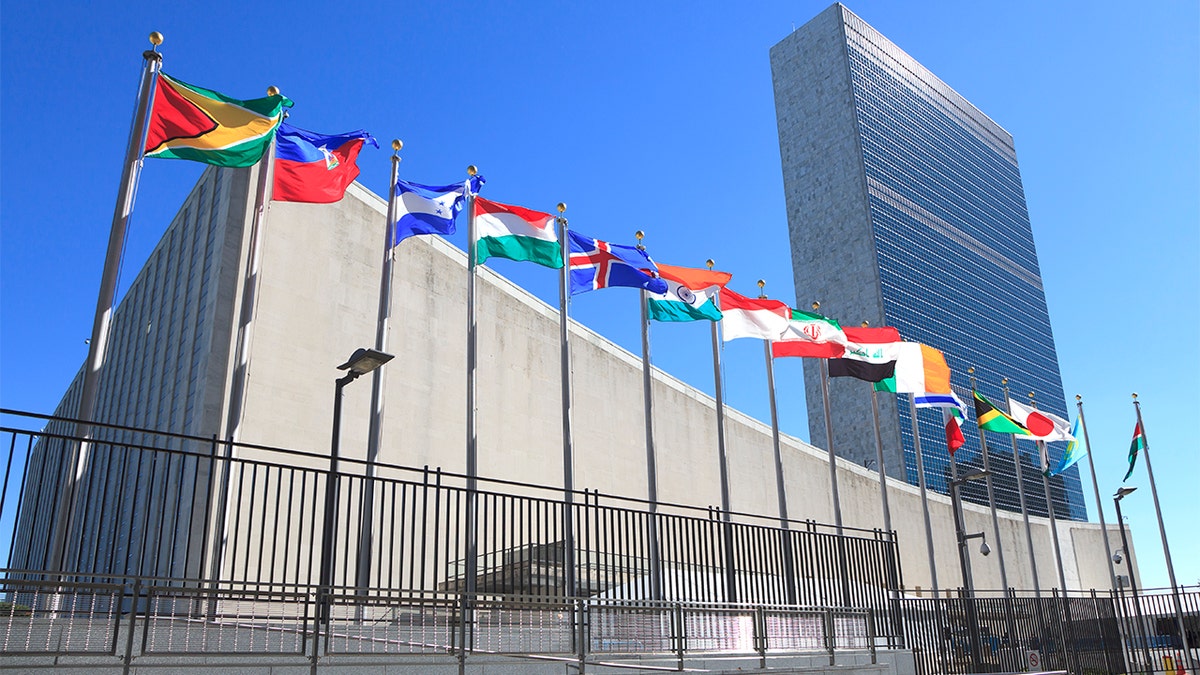
The United Nations in New York City. (iStock)
«While the EU respects member states’ prerogative to put forward new initiatives for consideration, CSW members should not be forced to rush a decision on an issue of this importance by the unilateral initiative of one member state, without any prior consultations or negotiations,» Jordens said.
He added that «there is no universally agreed definition of the term ‘gender’. As reflected in the outcome of the Fourth World Conference on Women, the term was understood in accordance with its ordinary and generally accepted usage, without establishing a fixed or exhaustive definition. The United Nations should continue to approach gender equality in an inclusive and forward-looking manner, respectful of diversity. Any effort to revisit or reinterpret internationally agreed language must take place through broad, transparent consultations with the full membership.»
united nations, womens health, state department, the european union

San Lorenzo anunció oficialmente la contratación de Gustavo Álavarez como nuevo DT

Juana Tinelli, en problemas: tras los escándalos que rodean a su familia, enfrenta un revés judicial

El oficialismo demora la conformación de la comisión de juicio político en Diputados

Virginia Dem admits redistricting push aims to ‘stop Trump’, not about ‘fairness’

Feriados 2026: cuándo es el próximo fin de semana largo en la Argentina

Desde La Anónima hasta ChangoMás, los súper sufren el peor impacto y redefinen sus plan de negocios

Kicillof desembarcó en CABA, lanzó su proyecto 2027 y empezará a ampliar su armado político en todo el país

¿FIN DE CICLO? Escándalo por la mansión no declarada y viajes de lujo empujan a Manuel Adorni fuera del Gobierno: Su salida sería inminente

¿MACRI 2027? El «operativo retorno» que sacude al PRO y los nombres que suenan para la vicepresidencia

“Tiro al facho”: la repudiable “intervención” en Facultad de Medicina en la que había que tirarle dardos a Javier Milei

 POLITICA3 días ago
¿FIN DE CICLO? Escándalo por la mansión no declarada y viajes de lujo empujan a Manuel Adorni fuera del Gobierno: Su salida sería inminente
- POLITICA1 día ago
»¡VAN A FUNDIR A MEDIO PAÍS!»: El lapidario diagnóstico de Roberto Cachanosky sobre el plan de Milei
- POLITICA2 días ago
Apareció otra factura y complica más a Adorni: el vuelo de vuelta también lo pagó su amigo Grandio