INTERNACIONAL
Sauer cites ‘striking’ figures on secretive birth tourism in high-stakes SCOTUS case


NEWYou can now listen to Fox News articles!
Birth tourism in the U.S. remains notoriously difficult to measure, but Solicitor General John Sauer on Wednesday pointed the Supreme Court to what he called «striking» figures as the justices weighed President Donald Trump’s effort to curb birthright citizenship.
«Here’s a fact about it that I think is striking,» Sauer said. «Media reported as early as 2015 that, based on Chinese media reports, there are 500 — 500 — birth tourism companies in the People’s Republic of China whose business is to bring people here to give birth and return to that nation.»
Sauer’s response came after Chief Justice John Roberts asked him about the prevalence of birth tourism, which is the practice of traveling to the United States for the purpose of giving birth, so the child can automatically receive U.S. citizenship.
Sauer acknowledged that «no one knows for sure» about firm data in the industry before citing media figures estimating more than 1 million cases from China alone.
NEARLY ALL REPUBLICAN AGS ADD FIREPOWER TO TRUMP’S BIRTHRIGHT CITIZENSHIP PUSH
Wednesday’s oral arguments centered on Trump’s 2025 executive order advancing a narrower interpretation of the 14th Amendment’s citizenship clause so that children born in the United States to parents who are in the country illegally or temporarily would not automatically receive U.S. citizenship.
The administration has argued the amendment’s birthright citizenship provision incentivizes and rewards illegal immigration.
Supreme Court Chief Justice John Roberts and Associate Justice Sonia Sotomayor stand on the House floor ahead of the annual State of the Union address in 2024. (Shawn Thew-Pool/Getty Images)
Conservatives have long raised concerns about birth tourism. Senate Republicans wrote in a 2022 report that it was a lucrative industry that «short circuits and demeans the U.S. naturalization process.» But the scale of birth tourism remains elusive, and proponents of birthright citizenship have downplayed it, contending it occurs infrequently.
The GOP senators noted in the report that they could not calculate birth tourism numbers because the U.S. government does not have a way to track them. Existing visa data cannot distinguish between birth tourism and other categories of traveling to the United States, such as medical travel, they said.
Sauer, however, rattled off a string of statistics in an attempt to illustrate the magnitude of the issue.
«There’s a March 9 letter from a number of members of Congress to [the Department of Homeland Security] saying, ‘Do we have any information about this?’ The media reports indicate estimates could be over a million, or 1.5 million, from the People’s Republic of China alone,» Sauer said.
«The congressional report that we cite in our brief talks about certain hot spots, like Russian elites coming to Miami through these birth tourism companies.»
BIRTHRIGHT CITIZENSHIP SUPPORTERS GET THE LAW WRONG BY IGNORING OBVIOUS EVIDENCE
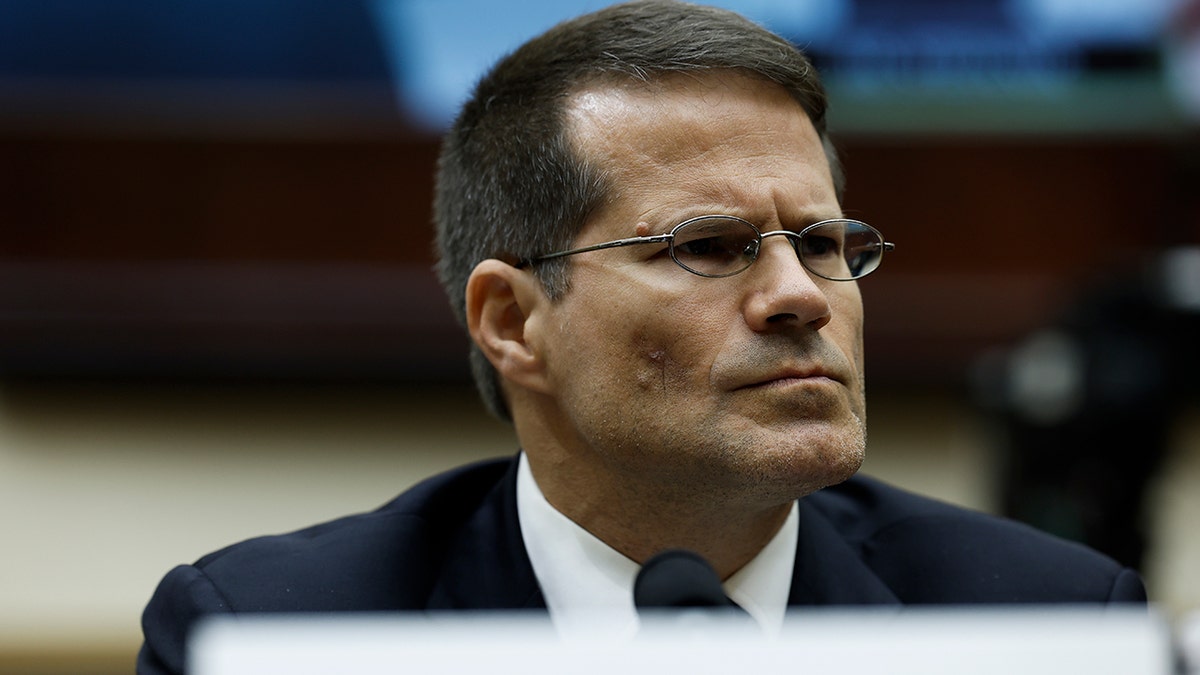
U.S. Solicitor General D. John Sauer (Anna Moneymaker/Getty Images)
Although the numbers remain unclear, prosecutors have secured convictions for birth tourism businesses. In 2024, Michael Liu and Phoebe Dong were found guilty by a jury of conspiracy and money laundering for running a birth tourism operation that helped pregnant Chinese women travel to the United States under false pretenses to give birth. Prosecutors said the couple coached clients to deceive immigration officials.
Sauer noted in his opening remarks to the Supreme Court that the United States’ nearly unconditional birthright citizenship policy has «spawned a sprawling industry of birth tourism, as uncounted thousands of foreigners from potentially hostile nations have flocked to give birth in the United States in recent decades, creating a whole generation of American citizens abroad with no meaningful ties to the United States.»
HOW THE SUPREME COURT’S INJUNCTION RULING ADVANCES TRUMP’S BIRTHRIGHT CITIZENSHIP FIGHT
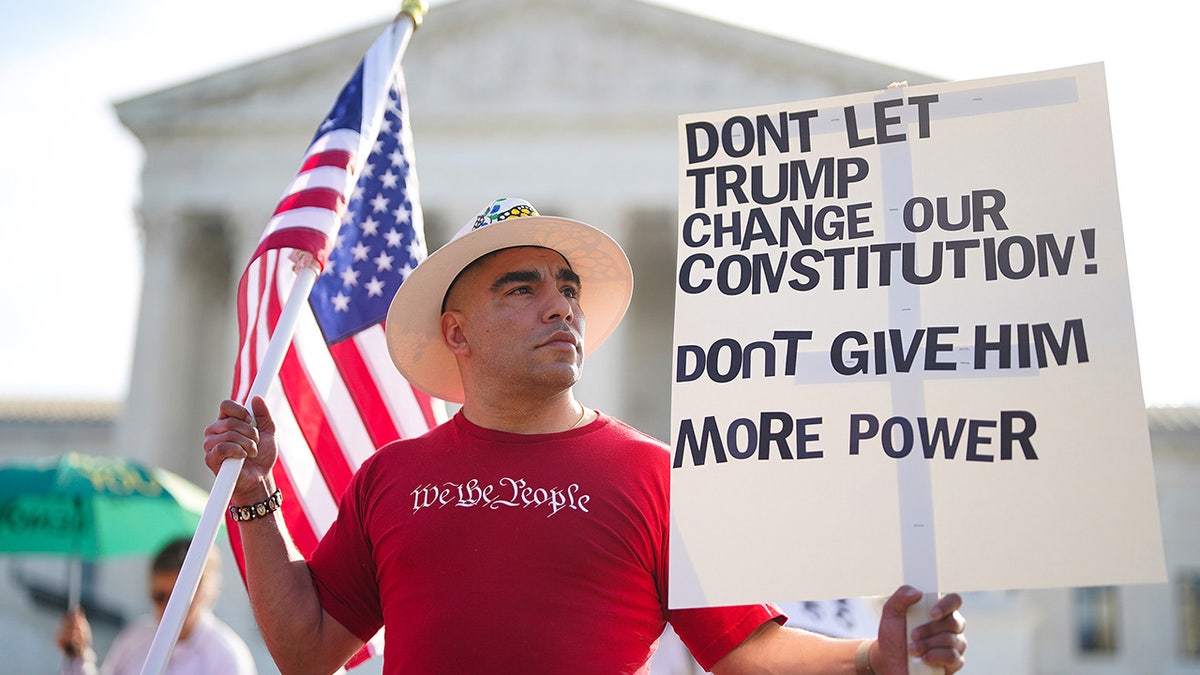
A demonstrator outside the U.S. Supreme Court ahead of U.S. President Donald Trump’s expected arrival on April 1, 2026, in Washington, D.C. The Supreme Court is hearing oral arguments in Trump v. Barbara to determine if President Trump’s executive order ending birthright citizenship is constitutional. (Al Drago/Getty Images)
At issue in the case before the Supreme Court is the language in the amendment that says anyone born in the United States and «subject to the jurisdiction thereof» is automatically a citizen. Trump said the provision was a relic of the Civil War.
«It had to do with the babies of slaves,» Trump said Tuesday as he announced he planned to attend the oral arguments, making him the first sitting president to do so. «It didn’t have to do with the protection of multimillionaires and billionaires wanting to have their children get American citizenship. It is the craziest thing I’ve ever seen.»
Sauer argued that illegal immigrants and temporary visitors lacked the ability to establish a «domicile» in the United States, meaning they were subject to the jurisdiction of another country.
Roberts questioned the relevance of Sauer’s birth tourism claims, asking him to confirm that it had «no impact on the legal analysis before us.»
Modern-day implications of the amendment, including birth tourism, «could not possibly have been approved by the 19th century framers,» Sauer replied.
«We’re in a new world now, as Justice Alito pointed out, where 8 billion people are one plane ride away from having a child who’s a U.S. citizen,» Sauer added.
CLICK HERE TO GET THE FOX NEWS APP
Roberts made his skepticism of Sauer’s argument apparent.
«Well, it’s a new world. It’s the same Constitution,» Roberts said.
supreme court, donald trump, immigration, politics, illegal immigrants, in court











INTERNACIONAL
El uso de biocombustibles ayuda a estabilizar los precios en Brasil pese al shock petrolero por Irán



NEWYou can now listen to Fox News articles!
What would you say if one body of Congress didn’t take a formal roll call vote on a major piece of legislation – yet passed it at 2:19 on a Friday morning?
Would you try to outdo your colleagues across the Capitol Rotunda with some Congressional chicanery of your own? Perhaps by passing an equally important version of the same bill – while officially sidestepping a direct up/down vote on the measure – at 11:28 p.m. on that same Friday night.
That’s what happened late last week. The Senate scored approval from all 100 senators to pass a bill to fund most of the Department of Homeland Security for the rest of the fiscal year – but did it on a voice vote at 2:19 a.m. Friday with only five senators in the chamber.
House Republicans scoffed at this. So they passed their own bill – to fund all of DHS – just before the witching hour Friday. But technically, the House didn’t even vote directly on the legislation itself. The House voted to approve a «rule» (which manages debate for bills). With adoption of that rule, the House «deemed» the underlying DHS funding measure as passed.
GOP LEADERS ENDORSE TRUMP’S SHUTDOWN-PROOF MOVE TO END DHS FUNDING LAPSE
The Senate managed to net the approval of 100 senators to pass a bill to fund most of the Department of Homeland Security for the remainder of the fiscal year – but did it on a voice vote at 2:19 am Friday with only five senators in the chamber. (Emma Woodhead/Fox News Digital)
But despite all of this, the House and Senate weren’t aligned. They hadn’t approved the same bill. And despite the parliamentary antics, House Republicans then implored the Senate to pass the measure it approved Friday night on Monday morning – without a roll call vote and with just two senators in the chamber.
If you followed all of that, that is exactly what’s unfolded on Capitol Hill the past few days as lawmakers struggled to end the six-week Department of Homeland Security shutdown.
It was clear early Thursday evening that there wasn’t a path in the Sente to approve a partisan GOP bill to fund DHS after a lengthy roll call vote which started in the afternoon.
But something was afoot.
TRUMP ADMINISTRATION MAKES MAJOR MOVE TO RELIEVE ‘UNFAIR BURDEN’ ON DHS WORKERS AS SHUTDOWN DRAGS ON
Congress was staring at a 15-day recess for Easter and Passover on Friday. Failure to address the crisis now meant that lawmakers would leave town until the middle of April – extending the shutdown until then as airport lines swelled.
So Senate Majority Leader John Thune, R-S.D., got to work on something which could pass the Senate – and potentially pass the House – before everyone abandoned Washington for the break.
Thune suggested earlier in the week that the Senate usually has to get «to Thursday» before frozen positions may begin to thaw. He was right. There was a corridor for the Senate to approve a bipartisan bill to tackle most of the funding crisis at DHS. So Thune’s charge late Thursday night and into the wee hours of Friday morning was not necessarily to persuade bipartisan senators to support the bill he was putting on the floor. But instead, Thune’s goal was to coax skeptical senators not to object and blow the whole thing up.
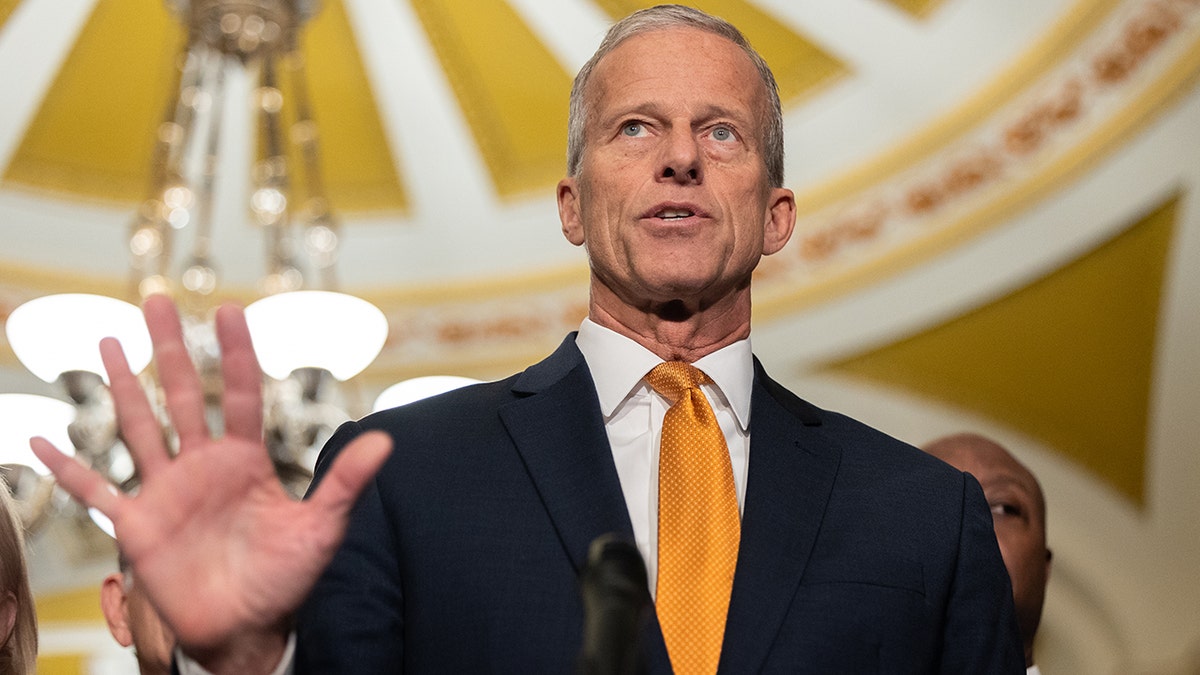
Senate Majority Leader John Thune, R-S.D., hatched a plan for something that could pass the Senate before Washington was abandoned for the Easter Recess. (Nathan Posner/Anadolu via Getty Images)
There’s something called a «hotline» in the Senate. Any time the leadership wants to set up a series of votes, make particular amendments in order and perhaps allocate wedges of time to debate, it sends around a «hotline» to all 100 senators. If any senator objects, they let the leadership know. This streamlines the process ahead of time. It also ensures that senators aren’t blindsided by something called a «unanimous consent» request. Unanimous consent requests, or «UC’s,» happen all the time in the Senate.
One of the most powerful tools in the Senate is «unanimous consent.» If you obtain the «unanimous consent» of all 100 senators, you can make the sun rise in the west. But all it takes is one objection to block a UC – even if all other 99 senators agree.
The behind the scenes hotline takes care of this in advance. Any senator could object and block Thune’s proposal to fund most of DHS. But there shouldn’t be any problem if he cleared it with all 100 senators offstage in advance.
That’s why Thune went to the floor at 2:19 a.m. Friday. Not a single senator flagged his proposal. And so the South Dakota Republican went to the floor with a team of five senators – and passed the bill. Not by UC. But by something called a «voice vote. Those in favor shout yea. Those who oppose holler nay. The louder side wins. The Senate passed the bill. There was no roll call vote.
HOUSE GOP RAMS THROUGH NEW DHS FUNDING PLAN WITH SHUTDOWN FAR FROM OVER
So, this wasn’t something snuck by in the dead of night on the sly. If any senator had a reservation, they could have flagged it. Or better yet, come down to the floor at 2:19 a.m. and contested it. In short, there were 100 senators, 100 chiefs of staff, 100 legislative directors and 100 counsels who should have known about Thune’s plan. That’s a universe of at least 400 people – if not more. So, this wasn’t an episode of someone pulling a fast one.
By morning, Sen. Rick Scott, R-Fla., said he «opposed this bill.» Same with Sen. Mike Lee, R-Utah.
Well, that’s fine. But no one objected nor pushed back on the hotline. No one went down to the floor to demand a roll call vote – or even argued that the Senate couldn’t do anything because there wasn’t a quorum present to conduct business. So anything said by Republican senators upset about the bill were simply academic or rhetorical objections. If those senators truly opposed the bill, they missed their opportunity to do something about it.
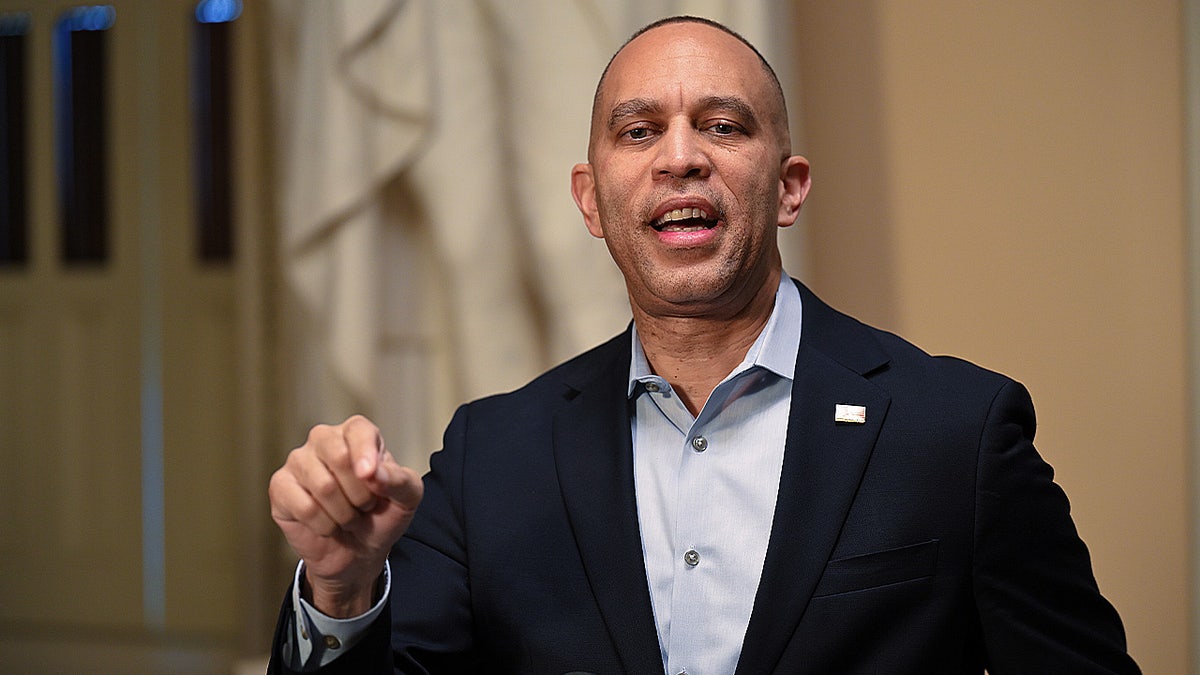
Minority Leader Hakeem Jeffries, D-N.Y., even signaled support for the bill. (Roberto Schmidt/Getty Images)
It was thought that the House might take up the bill – reluctantly – the next day to end most of the shutdown and pay TSA workers. House Minority Leader Hakeem Jeffries, D-N.Y., signaled support. So did Rep. Rosa DeLauro, D-Conn., the top Democrat on the Appropriations Committee. Granted, liberal Democrats might oppose the bill because there weren’t changes at ICE. But the bill probably would have passed with some Republicans and lots of Democrats. In fact, there may have been more Democratic yeas than Republican yeas. That would have been toxic for House Speaker Mike Johnson, R-La. Former House Speaker Kevin McCarthy, R-Calif., lost his gavel over moving a bipartisan bill to avoid a shutdown in the fall of 2023.
So by Friday afternoon, Johnson strenuously lodged his opposition to the Senate bill.
«Republicans are not going to be any part of any effort to reopen our borders or to stop immigration enforcement,» said Johnson, noting that the Senate plan left out funding for ICE and the Border Patrol. «This gambit that was done last night is a joke. I’m quite convinced that it can’t be that every Senate Republican read the language of this bill.»
In other words, were they not dialed in on the hotline?
THE HITCHHIKER’S GUIDE TO WHAT TO EXPECT ON DHS FUNDING WHEN THE SENATE MEETS MONDAY
Yours truly questioned the Speaker, asking why he and Thune weren’t on the same page. Johnson accused Senate Minority Leader Chuck Schumer, D-N.Y. of being behind the bill. I pointed out that Thune «was the engineer behind this.»
«I wouldn’t call John Thune the engineer of this,» said Johnson.
«He didn’t have the accept it,» I countered.
«Let me answer the question, Chad,» sighed an exasperated Johnson.
So the House forged ahead and passed its own bill to fully fund DHS Friday night. Some House Republicans then expected the Senate to break custom and pass its bill – by unanimous consent – during a brief pro forma session Monday. In other words, House Republicans ripped the Senate for what it did early Friday morning. But those same House Republicans wanted senators to approve THEIR bill on Monday the same way they criticized the Senate for passing its bill on Friday.
Note that there was no hotline for the House bill at that point.
«We’d love to see them do that,» said Rep. Mike Haridopolos, R-Fla., on Friday.
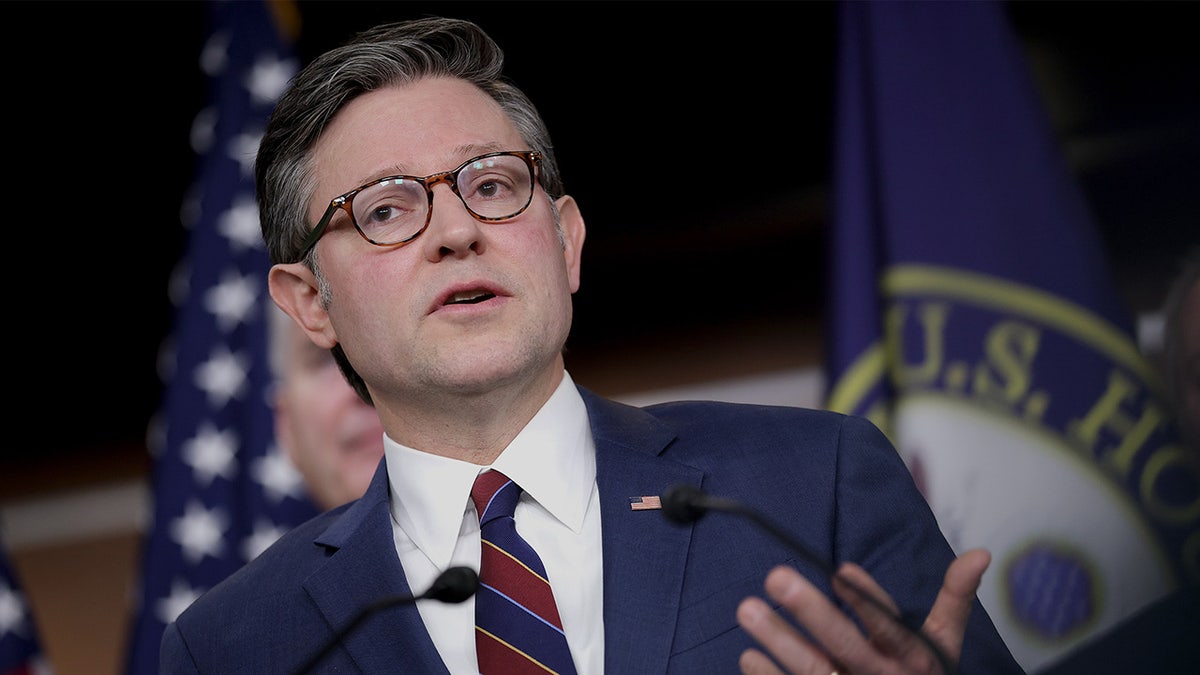
Speaker of the House Mike Johnson, R-La., said he «wouldn’t call John Thune the engineer» behind the bill. (Kevin Dietsch/Getty Images)
But Democrats dispatched a watchdog to guard the floor against any possible GOP chicanery as the Senate met for 31 seconds with meager attendance.
The Senate gaveled in. The Senate gaveled out. Nothing happened.
«I was there to object,» said Sen. Chris Coons, D-Del. «I was here just in case there were some shenanigans.»
Rep. Randy Fine, R-Fla., called it «insane» that Senate Republicans «didn’t even try» to pass the House bill. But the lone Senate Republican on duty said the presence of Coons doomed that to failure.
«We don’t have consent yet,» said Sen. John Hoeven, R-N.D., who presided over the session. «They declined. Obviously Sen. Coons was there to do that.»
CLICK HERE TO DOWNLOAD THE FOX NEWS APP
But by Wednesday, the bill which Johnson trashed Friday afternoon was on its way to passage. Despite a sea of opposition from conservative Republicans, the House would accept the Senate bill and end most of the DHS shutdown. The Earth shifted. President Trump was fine with this. Suddenly, Johnson and Thune were on the same page.
So the Republican House would eat what the Senate originally cooked up early Friday morning. And the House would likely approve it with lots of Republicans spread around the country. But like Senate Republicans early Friday morning, no one would likely return to block it.
And by now, this wasn’t something engineered in the dead of night that only 400 people knew about. The entire country was more than aware what happened.
congress, homeland security, senate, house of representatives politics

El ejército estadounidense intensifica sus esfuerzos para obtener un mayor acceso a Groenlandia, una clara señal de que el interés del presidente Donald Trump por la enorme isla ártica no ha disminuido.
Estados Unidos está negociando con Dinamarca el acceso a tres bases adicionales en Groenlandia –incluidas dos previamente abandonadas por los estadounidenses–, lo que supondría la primera expansión estadounidense allí en décadas, según un alto mando del Pentágono, el general Gregory Guillot.
Leé también: Lo que Donald Trump no dice sobre Groenlandia: historia, riquezas y el sueño de construir una Cúpula Dorada
Guillot, jefe del Comando Norte de Estados Unidos, declaró ante los legisladores en una audiencia del Congreso a mediados de marzo que el ejército quería “un mayor acceso a diferentes bases en toda Groenlandia, dada la creciente amenaza y la importancia estratégica de Groenlandia”.
“Estoy trabajando con nuestro departamento y con otros para intentar desarrollar más puertos y más aeródromos, lo que proporcionará más opciones a nuestro secretario y al presidente, en caso de que los necesitemos en el Ártico”, añadió Guillot.
La solicitud coloca a Dinamarca en una situación delicada. Groenlandia es un territorio semiautónomo que forma parte del reino danés desde hace más de 300 años. Trump, por su parte, se ha obsesionado con adquirir Groenlandia y, durante meses, amenazó con usar la fuerza antes de ceder en enero.
El Gobierno danés ha invocado un pacto de defensa danés-estadounidense de 1951 para hacer frente a las amenazas de Trump y ha señalado que Estados Unidos ya tiene un amplio acceso militar.
Los funcionarios estadounidenses ahora utilizan ese mismo acuerdo para trazar planes de expansión. Los expertos afirman que Dinamarca puede hacer poco para frenarlos, aunque la confianza entre Estados Unidos y Dinamarca se haya visto sacudida, si no es que rota.
La capitana de corbeta Teresa Meadows, portavoz del Comando Norte de Estados Unidos, afirmó que los planificadores militares tenían en el punto de mira las localidades de Narsarsuaq, en el sur de Groenlandia, que cuenta con un puerto de aguas profundas, y Kangerlussuaq, en el suroeste de Groenlandia, que ya dispone de una larga pista capaz de recibir aviones de gran tamaño.
Ambos lugares habían sido bases estadounidenses durante la Segunda Guerra Mundial y la Guerra Fría, pero fueron cedidos a las autoridades danesas y groenlandesas después de que los estadounidenses abandonaran Narsarsuaq en la década de 1950 y Kangerlussuaq en la de 1990. Gran parte de su infraestructura militar ha sido desmantelada, aunque ambos emplazamientos aún cuentan con pequeños aeropuertos en funcionamiento.
Los funcionarios del Pentágono no especificaron cuántas tropas se enviarían a la isla. Guillot indicó que el ejército necesita bases para soldados de operaciones especiales y “capacidades marítimas”.
Durante la Segunda Guerra Mundial, cuando Dinamarca fue ocupada por los nazis, Estados Unidos ayudó a defender Groenlandia. Envió miles de soldados y abrió más de una decena de bases. Mantuvo muchas de ellas operativas durante la Guerra Fría. En la actualidad, solo queda una base activa: una remota instalación de defensa antimisiles con unos pocos cientos de soldados.
Trump parece decidido a cambiar eso. Sus amenazas del año pasado de “conseguir” Groenlandia, “de un modo u otro”, desencadenaron una crisis en Europa. Esa crisis se ha calmado, por ahora, ya que el presidente se ha visto absorbido por la guerra en Irán. Pero muchos europeos, incluida la líder de Dinamarca, Mette Frederiksen, temen que Trump no haya renunciado a adquirir la gigantesca isla cubierta de hielo, lo que podría dejar a Dinamarca acorralada de nuevo.
Hasta ahora, las conversaciones sobre la ampliación de la base parecen ir sobre ruedas. Guillot citó el acuerdo de 1951 durante su testimonio ante el Congreso, y cuando los legisladores demócratas le preguntaron si Dinamarca o Groenlandia habían puesto algún obstáculo, respondió que no.
“Han sido socios muy, muy comprensivos”, dijo el general.
A diferencia de lo que ha sugerido Trump, Guillot dijo: “En realidad no necesitamos un nuevo tratado. Es muy completo y, francamente, muy favorable para nuestras operaciones o posibles operaciones en Groenlandia”.
Leé también: Detrás del vértigo que generó Trump con su reclamo de Groenlandia, hay una estrategia que empezó a fallar
El plan de expansión sigue envuelto en el secreto. El Departamento de Estado se negó a emitir comentarios, al igual que el Ministerio de Asuntos Exteriores de Dinamarca y la oficina del primer ministro de Groenlandia. Jens-Frederik Nielsen, primer ministro de Groenlandia, junto a la premier danesa Mette Frederiksen en una conferencia de prensa en Copenhague el 13 de enero de 2026. (Foto: Tom Little/REUTERS)
No está claro cómo reaccionarán los groenlandeses, la mayoría de los cuales son indígenas inuits. El sentimiento antiestadounidense ha ido en aumento en la isla, que cuenta con menos de 60.000 habitantes. A principios de este año estallaron protestas contra Trump y varios groenlandeses entrevistados expresaron su preocupación por la llegada de más tropas estadounidenses.
“Mucha gente no quiere más militares en Groenlandia, pero si eso es lo que deciden, no hay nada que podamos hacer”, dijo Anso Lauritzen, que dirige un centro de trineos tirados por perros en el oeste de Groenlandia.
Agnetha Mikka Petersen, una residente jubilada de Nuuk, la capital, dijo que la perspectiva de una mayor presencia estadounidense la hace sentir “inquieta”.
“No me gusta nada”, afirmó.
El acuerdo de defensa de 1951 y su actualización de 2004 otorgan a los estadounidenses una posición de fuerza. Antes de realizar cualquier cambio importante en su presencia militar, se supone que Estados Unidos debe “consultar e informar” a las autoridades de Dinamarca y Groenlandia. Los expertos afirman que eso significa que Estados Unidos puede hacer prácticamente lo que quiera y comunicárselo a los daneses y groenlandeses más tarde.
“Dinamarca y Groenlandia pueden, en principio, decir que no a Estados Unidos, pero en la práctica nunca se hace”, afirmó Ulrik Pram Gad, investigador sénior del Instituto Danés de Estudios Internacionales. “Porque si lo hacen, Estados Unidos puede presentar el control de Dinamarca y Groenlandia sobre la isla como un riesgo para la seguridad y argumentar que él mismo debería asumir el control”.
*Por Jeffrey Gettleman, corresponsal internacional radicado en Londres y que cubre sucesos mundiales. Ha trabajado para el Times por más de 20 años.
Eric Schmitt es corresponsal de seguridad nacional para el Times. Ha informado sobre asuntos militares y de antiterrorismo de Estados Unidos durante más de tres décadas.
The New York Times, groenlandia

El horóscopo de hoy: jueves 2 de abril

Pese al bono que otorgó el Gobierno, las fuerzas federales mantienen la marcha en reclamo por los salarios

Jornada perfecta para el tenis argentino en Houston: Tomás Etcheverry, Thiago Tirante y Román Burruchaga avanzan a paso firme

Manuel Adorni recibió siete veces en la Casa Rosada a la escribana que avaló las compras del departamento en Caballito y la casa del country

Fuerte apoyo empresario al proyecto de la Corte Suprema para transparentar la selección de jueces

El uso de biocombustibles ayuda a estabilizar los precios en Brasil pese al shock petrolero por Irán

El Gobierno cambia su propuesta de reforma: endurece penas para delitos comunes, pero no para los casos de corrupción

Nuevas críticas de Marcela Pagano contra los Milei: “Karina es la que gobierna”, aseguró

Dos jubiladas que le habrían prestado dinero a Manuel Adorni negaron conocerlo

Quiénes son las dos acreedoras del préstamo con el que Adorni compró su departamento en Caballito

 POLITICA2 días ago
Dos jubiladas que le habrían prestado dinero a Manuel Adorni negaron conocerlo
- POLITICA2 días ago
Quiénes son las dos acreedoras del préstamo con el que Adorni compró su departamento en Caballito
- POLITICA18 horas ago
El Gobierno reevalúa la estrategia de comunicación por el caso Adorni y mide el impacto en la imagen de Milei