INTERNACIONAL
Trump unveils $1.5T defense surge, deep domestic cuts — what’s on the budget chopping block


NEWYou can now listen to Fox News articles!
The White House on Friday proposed a sweeping fiscal year 2027 budget that would dramatically increase military spending to roughly $1.5 trillion while cutting billions from domestic programs, marking a sharp shift in federal priorities toward national security and border enforcement.
The proposal outlines roughly $1.5 trillion in total defense resources, a figure the administration says is needed to address growing threats from China, Russia and other adversaries.
The request includes about $1.1 trillion in base discretionary funding for the Department of War, along with an additional $350 billion in mandatory funding to support priorities such as munitions production and expansion of the defense industrial base.
TRUMP REWRITES NATIONAL SECURITY PLAYBOOK AS MASS MIGRATION OVERTAKES TERRORISM AS TOP US THREAT
If enacted, the plan would represent one of the largest increases in U.S. defense spending in decades, though the total includes a mix of discretionary funding and mandatory resources that are not typically combined in standard Pentagon budget comparisons.
The White House on Friday proposed a sweeping fiscal year 2027 budget that would dramatically increase military spending to roughly $1.5 trillion while cutting billions from domestic programs, marking a sharp shift in federal priorities toward national security and border enforcement. (AP photo)
Weapons production, ships and emerging technologies
The budget places heavy emphasis on rebuilding weapons stockpiles and strengthening domestic manufacturing capacity, areas that defense officials have identified as key vulnerabilities in recent years.
It calls for accelerated procurement of critical munitions and expanded investments in the defense industrial base, alongside increased funding for nuclear modernization.
Shipbuilding is another major focus, with $65.8 billion requested to procure 18 Navy battle force ships and 16 non-battle force vessels as part of a broader effort to expand maritime capacity.
The proposal also continues funding for the «Golden Dome» missile defense system, which aims to develop a layered homeland defense using space-based sensors and interceptors.
Emerging technologies play a central role in the plan.
The budget highlights investments in artificial intelligence, drones and counter-drone systems, and next-generation aircraft, including continued development of the F-47 — a sixth-generation fighter designed to operate alongside autonomous systems — with the program targeting a first flight as early as 2028.

The proposal also continues funding for the «Golden Dome» missile defense system, which aims to develop a layered homeland defense using space-based sensors and interceptors. (Chip Somodevilla/Getty Images)
Defense increases paired with domestic cuts
TRUMP NATIONAL SECURITY BLUEPRINT DECLARES ‘ERA OF MASS MIGRATION IS OVER,’ TARGETS CHINA’S RISE
The increase in defense spending is paired with a proposed 10% reduction in nondefense discretionary spending.
Budget tables show nondefense funding dropping to about $660 billion, while defense-related funding rises significantly, with base defense funding reaching roughly $1.15 trillion.
The fiscal year 2026 National Defense Authorization Act (NDAA) authorized approximately $890 billion to $901 billion in defense spending.
The administration also is proposing continued reductions in nondefense spending in future years, signaling a longer-term effort to rebalance federal spending toward national security priorities.
Several major agencies would see significant reductions under the plan, including: NASA, cut by about $5.6 billion, or 23%, State Department and international programs, down roughly $15.5 billion, or 30%, Environmental Protection Agency, cut by more than half, Department of Labor, reduced by about $3.5 billion and Department of Housing and Urban Development, down $10.7 billion.
The reductions are likely to face pushback from lawmakers, particularly over cuts to scientific research, housing programs and foreign aid.
«Donald Trump’s budget is rotten to the core, and Democrats will make sure it never passes,» Senate Majority Leader Chuck Schumer, D-N.Y., said in a statement. «Trump is already spending massive sums on never-ending wars abroad, and now he’s pushing for a record-breaking $1.5 trillion in defense spending while slashing programs that Americans and seniors care about and rely on.»

Several major agencies would see significant reductions under the plan, including NASA, cut by about $5.6 billion. (Austin DeSisto/NurPhoto via Getty Images)
Border security and law enforcement funding expands
The budget also increases funding tied to immigration enforcement and domestic security.
The Department of Homeland Security would continue to rely on more than $190 billion in multiyear funding provided through prior legislation to support border wall construction, detention capacity and enforcement operations, including tens of thousands of detention beds.
PENTAGON SEEKS AT LEAST $200B FROM CONGRESS FOR IRAN WAR
At the same time, the Department of Justice would receive $40.8 billion in discretionary funding, a 13% increase, with additional resources aimed at addressing violent crime, drug trafficking and cartel activity.
The proposal also includes continued support for military involvement in border operations, as well as expanded funding for the Coast Guard.
Foreign aid reduced as priorities shift
The budget proposes a roughly 30% reduction in funding for the State Department and international programs, including cuts to humanitarian aid, global health initiatives and contributions to international organizations.
At the same time, it creates a new $5 billion fund intended to support strategic partnerships and national security priorities, along with expanded financing for allied nations purchasing U.S. defense equipment.
The changes reflect a broader shift toward prioritizing security-focused spending over traditional foreign assistance programs.
Industrial policy tied to national security
Beyond military spending, the budget links national security more directly to economic and industrial policy.
It includes funding to expand domestic production of critical minerals and support supply chains, alongside investments in advanced computing, including artificial intelligence supercomputers at national laboratories.
Officials say those efforts are intended to reduce reliance on foreign suppliers and improve the United States’ ability to sustain long-term competition with adversaries.
Economic assumptions and next steps
The budget is based on projections that assume steady economic growth of about 3% annually and inflation stabilizing near 2%, estimates that could face scrutiny from outside analysts.
The proposal now moves to Congress, where it is expected to face significant debate over both the scale of defense spending and the extent of domestic cuts.
CLICK HERE TO DOWNLOAD THE FOX NEWS APP
Lawmakers also will likely scrutinize the administration’s use of mandatory funding and reconciliation to support defense increases, an approach that differs from traditional budget negotiations.
While presidential budgets are rarely enacted as written, the proposal provides a clear outline of the administration’s priorities heading into the next fiscal year, with a focus on military strength, border enforcement and a reduced role for many domestic programs.
homeland security, national security, border security, state department, spending










INTERNACIONAL
El fundador de Telegram afirmó que 65 millones de rusos acceden a la app con VPN pese a la censura impuesta por Putin

La campaña de bloqueo y censura impulsada por el gobierno de Vladimir Putin contra Telegram -y otras plataformas- provocó una interrupción bancaria nacional y no logró frenar el uso de la aplicación, según su fundador Pavel Durov, quien afirmó que 65 millones de rusos siguen conectados a diario mediante VPN.
Las restricciones impuestas por las autoridades rusas a Telegram y a las redes privadas virtuales, conocidas como VPN, tuvieron efectos de alcance inesperado. De acuerdo con The Moscow Times y otros medios internacionales, el intento de bloqueo derivó en fallas masivas en el sistema bancario nacional, afectando pagos con tarjeta, cajeros automáticos y transferencias. Las entidades Sberbank, VTB y T-Bank notificaron fallos el 3 de abril, coincidiendo con la fase más intensa de la ofensiva digital.
En este contexto, Pavel Durov, fundador de Telegram, utilizó su propio canal en la plataforma para asegurar que más de 65 millones de personas en Rusia acceden cada día a la aplicación, pese al bloqueo, y que más de 50 millones envían mensajes diariamente. Durov calificó el fenómeno como una “Resistencia Digital”, en la que decenas de millones de usuarios emplean VPN y servidores proxy para sortear la censura.
Durov recordó que una estrategia similar en Irán solo generó un uso masivo de herramientas de evasión. “El gobierno esperaba migraciones hacia apps de vigilancia, pero solo consiguió que millones adoptaran VPN”, afirmó el empresario, quien prometió adaptar el tráfico de Telegram para dificultar su detección y bloqueo por parte de los sistemas de inspección rusos.

La ofensiva regulatoria fue liderada por Roskomnadzor, el regulador de internet de Rusia, que en febrero pasado comenzó a ralentizar el acceso y, a partir del 1 de abril, activó un bloqueo nacional. El objetivo oficial era redirigir a los usuarios hacia plataformas de mensajería alineadas con el Estado, como Max, una aplicación obligatoria en nuevos dispositivos desde 2025.
Especialistas en ciberseguridad, como Fyodor Muzalevsky de RTM Group, explicaron a The Moscow Times que el bloqueo de direcciones IP vinculadas a servicios financieros contribuyó a la caída bancaria. El incidente dejó fuera de servicio terminales de pago, cajeros y aplicaciones de banca móvil en todo el país. El metro de Moscú incluso permitió el acceso gratuito y comercios de la capital solo aceptaron efectivo durante horas.
La presión estatal crece sobre los servicios de mensajería y las VPN. El Ministerio de Desarrollo Digital ruso ordenó a las plataformas restringir el acceso a usuarios de VPN antes del 15 de abril, y analiza multas de hasta 30.000 rublos para quienes utilicen herramientas no autorizadas. Reuters destacó que Roskomnadzor ya bloqueó más de 400 servicios de VPN desde mayo de 2025, un aumento del 70% en comparación con el año anterior.
La respuesta social, según datos de Carnegie Endowment for International Peace, se refleja en cifras de uso: Telegram sumó cerca de 96 millones de usuarios en enero de 2026 antes de las restricciones. Aunque la cifra descendió tras el bloqueo, el mantenimiento de 65 millones de usuarios diarios ilustra la persistencia de la plataforma incluso bajo prohibición.

El conflicto digital abarca también otros servicios. Las autoridades intensificaron restricciones sobre aplicaciones extranjeras, como WhatsApp, luego de que su matriz, Meta, supuestamente incumpliera la legislación nacional. El portavoz del Kremlin, Dmitry Peskov, instó a la población a migrar a servicios estatales.
Los apagones de internet móvil se suman a la estrategia de control. Desde mayo de 2025, en 83 regiones rusas se han reportado cortes selectivos de conectividad, que solo permiten acceso a sitios aprobados por el gobierno. Este modelo incrementa la dependencia de herramientas de evasión para acceder a información y servicios básicos.
Telegram, además de mensajería, se consolidó como fuente principal de noticias y coordinación social, llegando incluso a ser utilizada por militares rusos en el conflicto de Ucrania, según The Moscow Times. El bloqueo de la plataforma tiene así consecuencias que trascienden lo tecnológico y afectan la operatividad social y política en el país.
De esta manera, el gobierno de Putin enfrenta la disyuntiva de endurecer el control sobre VPN y plataformas digitales, o ajustar su estrategia para evitar nuevos daños colaterales. Mientras tanto, la “Resistencia Digital” de millones de usuarios persiste, desafiando las restricciones y adaptando sus métodos para permanecer conectados.
Business,Corporate Events,Europe
INTERNACIONAL
A de facto pro forma: Why Washington fixated these sessions as the DHS shutdown dragged on through recess
NEWYou can now listen to Fox News articles!
Carpe diem. If you’ve wondered why all of Washington buzzed so much this week about «pro forma» sessions in the House and Senate, here’s your chance to find out why.
Come on now. Tempus fugit. There’s no time like the present. Hopefully, when you finish reading this, you can declare veni, vidi, vici when it comes to your understanding of pro forma sessions in the House and Senate.
Let’s start with what pro forma means and why it holds application in Congress.
SEN. MIKE LEE URGES TRUMP TO INVOKE RARE CONSTITUTIONAL POWER TO FORCE CONGRESS BACK FROM SPRING RECESS
In Latin, «pro forma» refers to «a matter of form.» In other words, something appears real, but it’s just perfunctory. For decades, the House and Senate have used the parliamentary artifice of a «pro forma» session to adhere to the Constitutional requirement of meeting every three days.
Article I, Section 5 of the Constitution states that «Neither House, during the Session of Congress, shall, without the Consent of the other, adjourn for more than three days, nor to any other Place than that in which the two Houses shall be sitting.» That means the House and Senate must convene at three-day intervals — unless both bodies approved the same «adjournment resolution» to allow one another to depart Washington for an extended period of time. In other words, the House and Senate must vote and agree to be out at the same time. And if there’s no consensus on an adjournment resolution, the House and Senate technically must «meet» every three days.
The House and Senate often fail to sync up on an adjournment resolution because the party opposite the President wants to block him from using his power to install cabinet officials or other figures via a «recess appointment» — thus circumnavigating the Senate confirmation process. That makes it challenging to approve an adjournment resolution. But that’s another matter.
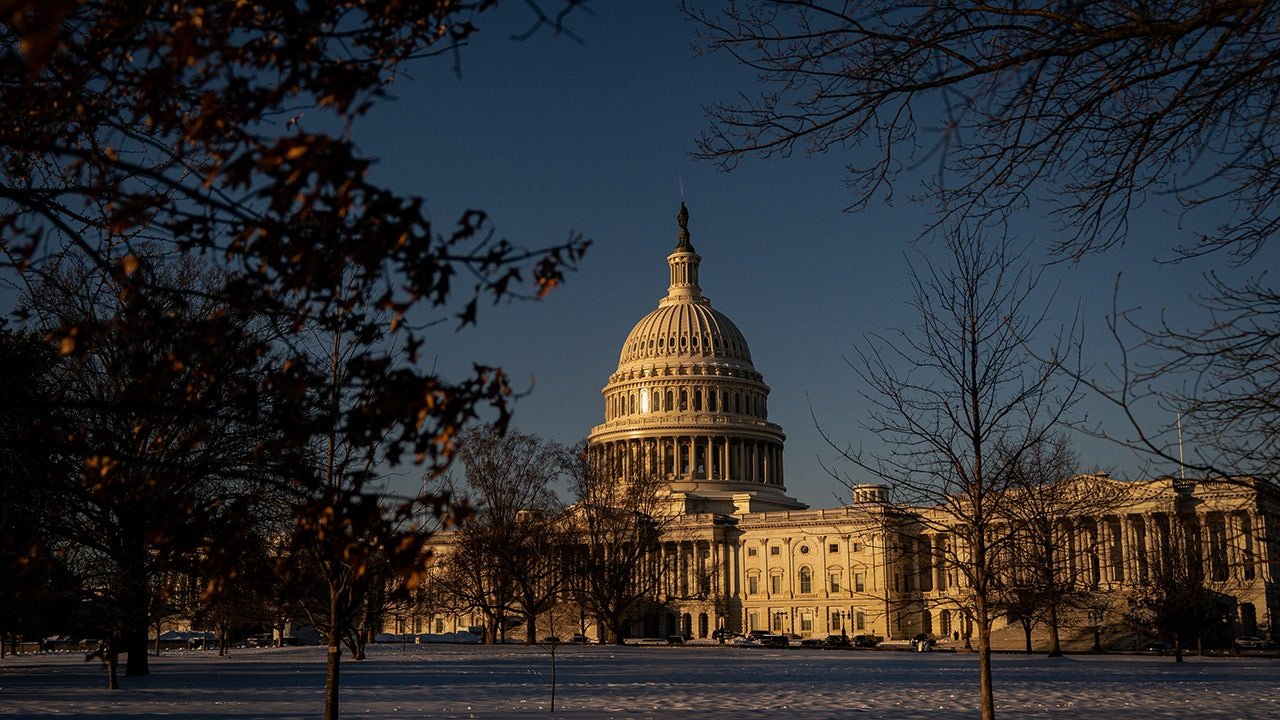
Sunrise light hits the U.S. Capitol dome on Thursday, January 2, 2025. (Bill Clark/CQ-Roll Call, Inc via Getty Images)
Back to pro forma sessions.
Sans an adjournment resolution, the House and Senate simply gavel in and gavel out every three days. There is (usually) no legislative business. These are pro forma sessions. The House and Senate meet «in form.» But don’t accomplish anything. There’s often only one lawmaker on hand — the person who presides. House pro forma sessions usually run two or three minutes. Senate sessions are even more abbreviated — usually lasting 25 to 35 seconds.
What constitutes a Congressional meeting? Just those few seconds of session time suffices.
Some years ago, senators actually held an informal competition, racing through pro formas in an attempt to see who could conduct the meeting the fastest. The quickest pro forma session clocked in at a blistering 21 seconds.
Here’s the parliamentary posture of the House and Senate last week:
The Senate adjourned for the day in the wee hours on Friday, March 28. The House followed suit just before midnight the same night. Without an adjournment resolution, both would meet the next Tuesday. Therefore, if the House or Senate wouldn’t have to meet again until Tuesday.
GOP RAILS AGAINST ‘S— SANDWICH’ DEAL AS ALL EYES TURN TO HOUSE TO END DHS SHUTDOWN
There’s nothing written prohibiting the House or Senate from conducting legislative business during a pro forma session. In other words, either body just has to conduct some legislative business to convert a pro forma session into a de facto session. So that’s why it was though that the Senate’s pro forma session on Tuesday was ripe for activity as the DHS shutdown continued.
Some House Republicans demanded that the Senate align with what the House passed Friday night: a bill which funded all of the Department of Homeland Security for two months.
The Senate gaveled to order on Tuesday morning around 10:33 am et (a couple of moments late). Sen. John Hoeven, R-N.D., presided. But after 31 seconds, Hoeven adjourned the Senate without any business. Hoeven himself — or any senator — could have tried to pass the House bill with the skeleton crew on hand. Sen. Chris Coons, D-D.E., was the only other senator in the chamber. Coons or anyone else could have sought recognition to speak. But none of that happened.
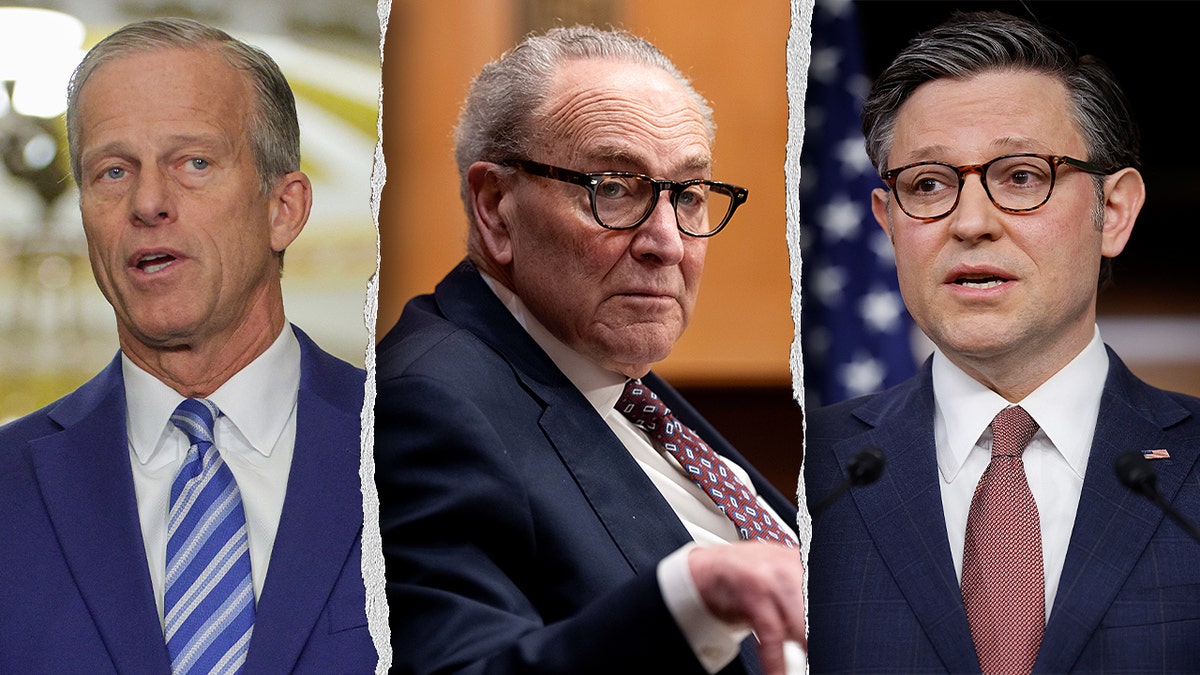
Amid the ongoing Department of Homeland Security shutdown, Senate Minority Leader Chuck Schumer, D-N.Y., has not had his immigration reform demands met while Senate Majority Leader John Thune, R-S.D., and House Speaker Mike Johnson, R-La., passed rival DHS funding proposals. (Photo by Alex Wong/Getty Images; Aaron Schwartz/Bloomberg via Getty Images; Photo by Chip Somodevilla/Getty Images)
And then the Senate adjourned, only to meet again Thursday morning (note the three-day interlude) at 7 a.m. for another pro forma session.
Pro forma sessions are customarily one of the most dull exercises in Congress. A skeleton crew of floor staff are there. Those asked to preside over the sessions are lawmakers who need to be in Washington for some reason over a recess or those who don’t go home often. Depending on which party has the majority, lawmakers from Maryland, Virginia or West Virginia frequently preside — simply because they are nearby. A limited number of reporters surface. They’re all thirsty for a quote or soundbite — simply because so few other lawmakers are available thanks to the recess. The whole enterprise starts and wraps up within minutes and everyone goes back home.
But that was not the case with last Tuesday’s Senate session. Everyone wanted to see if Republicans might try to approve the House-passed DHS bill. Or for that matter, if the House may attempt to align with the Senate and pass its bill. Neither happened. Even though a flood of reporters descended on the Capitol.
BEHIND THE SCENES OF CONGRESS’ ELEVENTH-HOUR RUSH TO FUND THE DHS
But the drama was higher this past Thursday morning. On Wednesday, House Speaker Mike Johnson, R-La., dramatically reversed himself and consented to the Senate-passed bill to fund all the Department of Homeland Security through Oct. 1 — except the Border Patrol and ICE. Johnson and Senate Majority Leader John Thune, R-S.D., published a joint statement endorsing the Senate’s strategy. And so around dawn on Thursday, Thune himself showed up to pass the Senate package again.
The presence of the Majority or Minority Leader on the floor during a pro forma session is nearly unprecedented. It’s a magna momemti when it comes to a pro forma meeting.

A Transportation Security Administration agent watches as passengers queue for security screening at LaGuardia Airport in New York City on March 22. (Charly Triballeau/AFP via Getty Images)
This was not an ordinary pro forma. And even though nothing happened on Tuesday, neither of those sessions were far from the customary pro formas Congress usually sees during a recess.
It was presumed that the House would align in its pro forma session later Thursday morning. But consternation gripped the House Republican Conference. How was Johnson suddenly endorsing the Senate deal which he just characterized as a «joke» a few days earlier? That’s to say nothing of Johnson twisting himself in multiple knots and aggravating all wings of the GOP Conference.
So the House took no action. Which is why DHS remains shut down since the House and Senate have magnified the scope and potential for all four pro forma sessions held in recent days.
CLICK HERE TO DOWNLOAD THE FOX NEWS APP
It turns out that all of these high-profile pro forma sessions were just bona fide pro forma sessions.
Nil actum est. Congress didn’t accomplish anything. Again.
house of representatives politics, senate, government shutdown, politics, john thune, chuck schumer
INTERNACIONAL
El piloto desaparecido en Irán reaviva el fantasma de la crisis de los rehenes de 1979 y deja a Estados Unidos en alerta máxima

El derribo de un avión de combate estadounidense sobre territorio iraní y la intensa búsqueda de uno de sus tripulantes han generado preocupación de que pueda ser capturado y proporcionar a Irán un valioso recurso que podría utilizar para presionar a Estados Unidos.
La operación de rescate se encontraba en su segundo día este sábado, con tropas estadounidenses realizando una búsqueda exhaustiva y el ejército iraní también intentando encontrar al tripulante.
Como muestra del afán del régimen por atrapar al aviador, un presentador de una filial local de la cadena estatal iraní leyó el viernes en televisión un comunicado en el que instaba a los residentes a capturar al «piloto o pilotos enemigos» y entregarlos vivos a las fuerzas de seguridad a cambio de una recompensa.
La posibilidad de que Irán capture al aviador evoca el temor a una repetición de la crisis de rehenes de Irán de 1979, un suceso traumático en la historia estadounidense que sentó las bases de casi cinco décadas de relaciones hostiles entre Estados Unidos e Irán.
La crisis, en la que estudiantes militantes tomaron la embajada estadounidense en Teherán y mantuvieron cautivos a 52 estadounidenses durante 444 días, sentó un precedente para Irán que perfeccionaría en las décadas siguientes como forma de acaparar titulares internacionales, infligir daño a sus adversarios y obtener concesiones.
Desde 1979, el gobierno iraní ha utilizado repetidamente la toma de rehenes como táctica contra sus adversarios. Ha detenido a estadounidenses, europeos y otros ciudadanos extranjeros, a veces manteniéndolos encarcelados durante años antes de liberarlos, a menudo a cambio de dinero o la liberación de sus propios ciudadanos encarcelados en el extranjero. Ha utilizado a los rehenes como herramientas de propaganda y para obtener influencia.
La crisis de 1979 marcó el último año de la presidencia de Jimmy Carter y, para muchos, se convirtió en un símbolo de sus fracasos.
Donald Trump ha criticado repetidamente la gestión de la crisis de rehenes por parte del Carter, calificándola de «patética». En 1980, declaró a un periodista: «Que este país se quede de brazos cruzados y permita que un país como Irán retenga a nuestros rehenes, a mi parecer, es un horror, y no creo que lo harían con otros países».
Hamidreza Azizi, experto en seguridad iraní del Instituto Alemán de Asuntos Internacionales y de Seguridad, una organización de investigación, afirmó que Irán podría adoptar dos estrategias si logra capturar al aviador.
Si la captura se mantiene en secreto, los iraníes podrían contactar a Estados Unidos en privado y llegar a un acuerdo secreto, exigiendo concesiones a cambio de la liberación del tripulante. O bien, Irán podría exhibir al aviador ante las cámaras como propaganda.
Según él, esa era la estrategia más probable. «Realmente quieren proyectar esta imagen de victoria y, además, humillar a Trump», afirmó Azizi.
Ali Alfoneh, investigador principal del Instituto de los Estados Árabes del Golfo, con sede en Washington, mencionó un incidente de 2007 en el que Irán capturó a marineros británicos, alegando que sus embarcaciones habían entrado ilegalmente en aguas iraníes. Los marineros fueron vendados, amenazados y sometidos a presión psicológica antes de prestar declaración en vídeo, en la que parecían disculparse. Sin embargo, no se reportó que sufrieran daños físicos, señaló Alfoneh.
“El entonces presidente Mahmoud Ahmadinejad aprovechó al máximo la cobertura mediática internacional al anunciar su liberación y les estrechó la mano personalmente”, declaró el Alfoneh en un correo electrónico. Añadió que el trato al aviador estadounidense probablemente sería diferente, dado que Estados Unidos e Irán están en guerra.
Incluso si el tripulante desaparecido es rescatado, el incidente subraya los riesgos de realizar misiones sobre territorio hostil contra un adversario con capacidad de represalia. Las operaciones de rescate son intrínsecamente peligrosas porque ponen en riesgo a otros miembros del servicio estadounidense.
Fuente: The New York Times

Dólares del colchón: una por una, las opciones financieras que ofrecen los bancos para hacer rendir los ahorros

Bernardita Barreiro celebró su cumpleaños en Madrid junto a Agustina Macri: amigos, banquete y tres tortas

Del gol de Simeone y la expulsión de Nico González a la brutal patada a Thiago Almada: las perlitas de Atlético de Madrid-Barcelona

Con la mira en Adorni, la oposición planea convertir la próxima sesión informativa en una interpelación por su patrimonio

Un exdirector de Call of Duty dice que el gunplay de Fallout es "terrible", y le ha dado una idea a Todd Howard para mejorarlo de cara a Fallout 5

Los números de la pobreza: «Hay un problema de medición y de realismo de esas mediciones»

El Gobierno reevalúa la estrategia de comunicación por el caso Adorni y mide el impacto en la imagen de Milei

Milei se pone al frente de la defensa de Adorni y lo suma a un acto por Malvinas en una nueva muestra de respaldo

Oriana Sabatini sorprendió al elegir a una famosa como madrina de Gia, su hija con Paulo Dybala

Banco lanza un plazo fijo inédito: sigue a la inflación y permite retirar intereses todos los meses

 POLITICA3 días ago
Milei se pone al frente de la defensa de Adorni y lo suma a un acto por Malvinas en una nueva muestra de respaldo
- CHIMENTOS2 días ago
Oriana Sabatini sorprendió al elegir a una famosa como madrina de Gia, su hija con Paulo Dybala
- POLITICA2 días ago
La Armada sorteará 30 lugares en el buque que escoltará la salida de la Fragata Libertad: cómo anotarse