INTERNACIONAL
Dem civil war hits primary debate stage as El-Sayed and Stevens clash: ‘What are you hiding?’

NEWYou can now listen to Fox News articles!
The high-stakes fight between the left-wing and the center-left establishment for the future of the Democratic Party took center stage Tuesday in battleground Michigan.
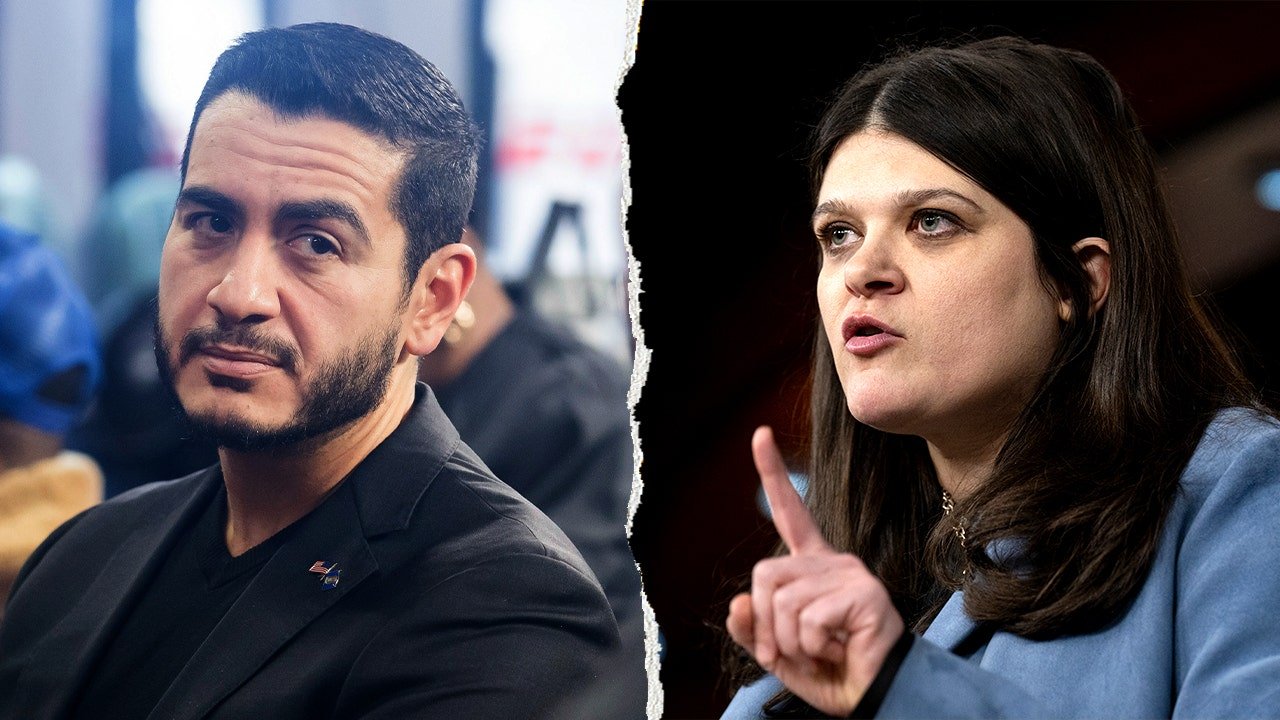
That’s where moderate Rep. Haley Stevens, who is backed by Senate Minority Leader Sen. Chuck Schumer, D-N.Y., and the party establishment, faced off in a fiery Senate nomination debate against former Wayne County Health Department Director Abdul El-Sayed, a far-left candidate endorsed by progressive champions Sen. Bernie Sanders I-Vt., and Rep. Alexandria Ocasio-Cortez, D-N.Y.
The sharpest exchanges centered on campaign money, outside spending and U.S. policy toward Israel, with El-Sayed repeatedly accusing Stevens of benefiting from millions of dollars in outside spending from pro-Israel and corporate-aligned groups.
«If you want your politics dictated by AIPAC or Chuck Schumer, then I’m not your guy,» El-Sayed said, arguing the Democratic Party would not change if it continued to elect leaders who take money from corporations. Stevens countered by accusing El-Sayed of benefiting from Republican efforts to boost him in the primary. «What my opponent needs to answer is, why is the GOP spending thousands of dollars to prop up his campaign, saying that he will make Mike Rogers the next U.S. senator?» Stevens said.
DEMOCRATIC SENATE CANDIDATE CALLED FOR MASS RELEASE OF CRIMINALS DURING PRISON ABOLITION WEBINAR
Rep. Haley Stevens of Michigan, right, and former Wayne County Health Department Director Abdul El-Sayed are facing off in the August 4, 2026 Democratic Senate primary in the Great Lakes battleground state. (Evan Cobb for The Washington Post via Getty Images; Bill Clark/CQ-Roll Call, Inc via Getty Images)
The showdown came four weeks before Michigan’s primary, with the winner taking on former Republican Rep. Mike Rogers, who is on a glide path to the GOP nomination, in the crucial midterm battle to succeed retiring Democratic Sen. Gary Peters.
The rare open Senate seat is a top Republican target and is a must-hold for the Democrats as they aim to win back the Senate majority from the GOP, which currently controls the chamber with a slim 53-47 margin.
The anti-establishment El-Sayed, who has been sharply critical of Israel, blamed AIPAC’s influence in American politics and accused politicians, like Stevens, of being «bought off by AIPAC» on Tuesday night. «So long as our politicians continue to be bought off by AIPAC do not be surprised when we fight wars that are in their best interest,» El-Sayed said.
LEFT-WING ACTIVISTS HECKLE PRO-ISRAEL DEMOCRAT HALEY STEVENS AT MICHIGAN CONVENTION
Stevens, meanwhile, sought to flip El-Sayed’s attacks over outside spending back onto him, pressing the progressive candidate to release his tax returns and accusing him of being less than transparent about who was funding his own campaign and career.
«Well, look, transparency is also important, and this is why I have released my tax returns. My opponent, Abdul, he said that transparency is key, but yet he hasn’t released his tax returns,» Stevens said. «Abdoul, you talk about getting money out of politics and putting money in people’s pockets. But who is putting money in yours? What are you hiding?
Stevens, who agreed with El-Sayed on an immediate end to U.S. involvement in Iran, also drew a contrast between herself and her opponent by emphasizing her support for a two-state solution.
«The difference between my opponent and myself on this issue is that I believe in a two-state solution,» Stevens said. «I can say that Israel has a right to peacefully exist alongside the people of Palestine and in Gaza.»

An Israeli soldier takes up position on the border with the Gaza Strip in southern Israel. (AP/Tsafrir Abayov)
Immigration enforcement also became a flashpoint during the debate, with El-Sayed saying ICE needed to be abolished and accusing Stevens of shifting her tone to be more aggressive towards the agency Tuesday night than she has in the past.
Stevens responded by accusing El-Sayed of using «Republican tactics,» saying a House vote El-Sayed referenced, claiming Stevens «voted to thank ICE and increase their budget,» was a «cynical» move by the GOP to include condemnation for an antisemitic terrorist attack in Boulder, Colorado alongside funding for the federal immigration agency.
FOUR MONTHS TO MIDTERMS: 12 RACES THAT WILL DETERMINE THE SENATE MAJORITY
«There was a bill on the House floor to condemn an antisemitic terrorist attack that in Boulder, Colorado, that killed an individual and injured a Holocaust survivor. Instead of bringing us together, Republicans put in a cynical point about thanking ICE,» Stevens said in response to El-Sayed’s claims she is a supporter of ICE. «I am always going to stand up to violence, and I just wish my opponent wouldn’t pursue the cynical approaches of Republicans when we do need to be united.»
On child care, Stevens pointed to expanding grants and paid family leave, while El-Sayed called for making child care «100% free» and paying for it by taxing billionaire wealth. The debate also featured a lengthy exchange on artificial intelligence and data centers. El-Sayed called for stricter federal guardrails, union labor requirements, community benefit agreements and an «FDA for AI’s,» while Stevens said data centers should be forced to pay utility and water bills, so Michigan families are not stuck with higher costs.
Tuesday night’s debate was held two days after progressive state Sen. Mallory McMorrow, once the third major Democrat in the primary, suspended her campaign.
McMorrow, who has seen her national profile expand in recent years and was running as a progressive in an ideological space between El-Sayed and Stevens, suspended her campaign amid faltering poll numbers and fundraising that weren’t keeping pace with her two main rivals.
McMorrow pledged to fully support whichever Democrat wins the primary and will ultimately face-off with Rogers, who is running for the Senate for a second straight cycle after losing in 2024 to now-Sen. Elissa Slotkin by a razor-thin margin.
DEMOCRACY ’26: STAY UP TO DATE WITH THE FOX NEWS ELECTION HUB
Following McMorrow’s exit from the race, Stevens praised her fellow Democrat by calling her an «important voice» for policies that benefit Michigan families. Stevens, who has been backed by millions in super PAC spending, including big bucks from Israel-aligned groups, argued that she is the strongest Democratic candidate to win the primary and defeat Rogers in November.
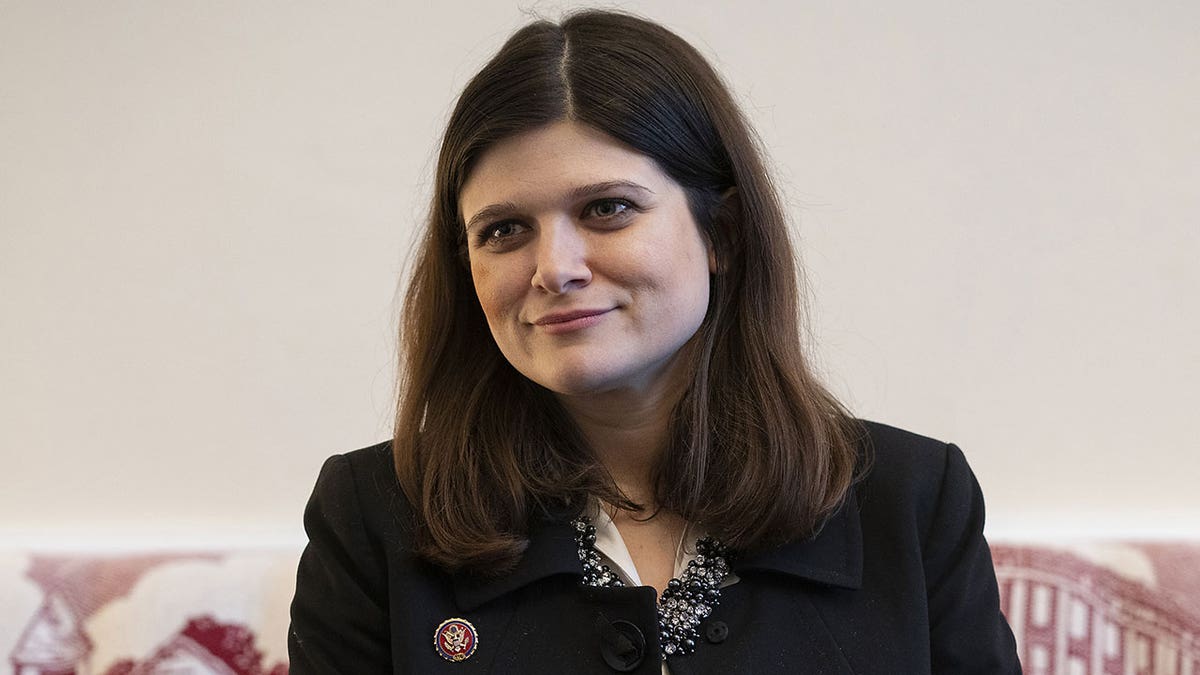
Representative Haley Stevens, a Democrat from Michigan, listens during an interview on Capitol Hill in Washington, D.C., U.S., on Wednesday, Oct. 16, 2019. Stevens represents Michigan’s 11th congressional district. Photographer: Melissa Lyttle/Bloomberg via Getty Images (Melissa Lyttle/Bloomberg via Getty Images)
El-Sayed praised McMorrow for having the «courage» to challenge what he described as a rigged political system, accusing Democratic Party insiders of spending millions to influence the primary. While he did not name specific groups, his remarks appeared to reference corporate PACs and establishment party leaders such as Schumer.
El-Sayed, who, if elected, would make history as the nation’s first Muslim senator, is an epidemiologist who unsuccessfully ran for governor as an insurgent candidate in 2018. He has made support for «Medicare-for-all» a major component of his campaign.
The far-left candidate has also called for abolishing Immigration and Customs Enforcement (ICE), and is a vocal critic of Israel amid its war with Hamas — even characterizing Israel’s actions in Gaza as «genocide» against Palestinians. And El-Sayed, who served as a top surrogate on Sanders’ 2020 presidential campaign, has vowed not to accept PAC donations.
SIGN UP TO GET THE POLITICS NEWSLETTER
Schumer and the party establishment view Stevens as more electable than El-Sayed, who has sparked controversy with his past comments. They worry that El-Sayed as the party’s nominee would jeopardize the Democrat-controlled Senate seat by pushing the party too far to the left in a state that President Donald Trump carried two years ago by just over one percentage point.
A victory by El-Sayed over Stevens in next month’s primary would give the far left a major win on a statewide stage, and likely further boost their momentum in the battle for the Democratic Party’s future.
On Tuesday night, Stevens leaned into her congressional record, tenure in the Obama administration’s U.S. Auto Rescue Task Force, her manufacturing background, and bipartisan efforts in Congress, including work on legislation aimed at blocking Chinese cars from undercutting American automakers.
«We can build affordable cars here in Michigan without having the Chinese come in and eat our lunch. Not on my watch,» Stevens said.
CLICK HERE TO DOWNLOAD THE FOX NEWS APP
El-Sayed leaned on being a political outsider who refuses corporate and Super PAC donations, while he pointed to his UAW endorsement and argued that Democrats need to be more aggressive in confronting Wall Street and corporate influence across many areas.
«There’s a reason that the UAW has endorsed me in this race,» El-Sayed said, arguing that corporations are «a lot more interested in a quarterly bottom line than they are in the long term sustainability of manufacturing.»
bernie sanders, chuck schumer, alexandria ocasio cortez, midterm elections, democrats elections, michigan, senate elections










NEWYou can now listen to Fox News articles!
An unlikely reason has chipped away, for now, at Senate Republican resistance against President Donald Trump’s flagship election priority.
The Safeguarding American Voter Eligibility (SAVE) America Act has hit brick wall after brick wall in the Senate, and has only twice mustered 50 votes. Still, Trump wants Republicans to pass it by any means necessary.
Republicans, however, aren’t unified behind it. One lawmaker, Sen. Mitch McConnell, R-Ky., has routinely voted against the bill in its variety of iterations, earning the personal ire of Trump.
MCCONNELL FACES FRESH CALLS TO COME CLEAN ABOUT HEALTH ISSUES
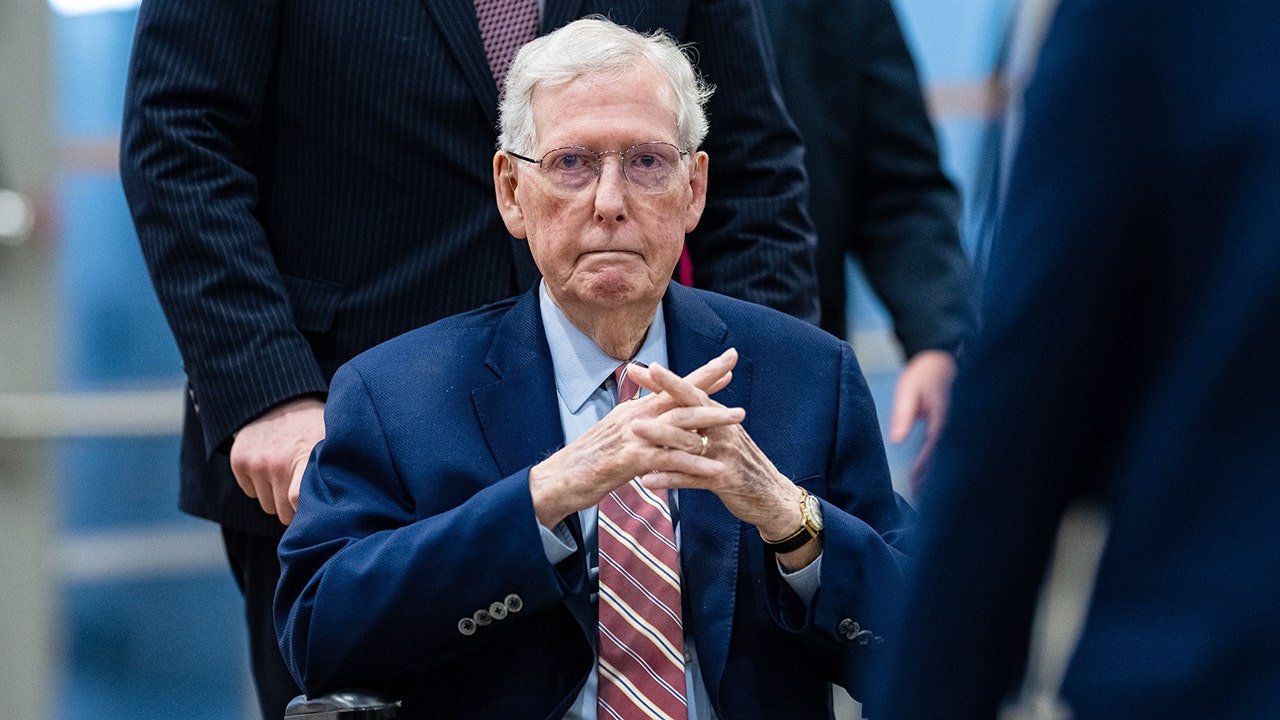
Sen. Mitch McConnell, a Republican from Kentucky, is pushed in a wheelchair in the Senate Subway of the U.S. Capitol in Washington, D.C., on March 4, 2026. (Graeme Sloan/Bloomberg via Getty Images)
«Mitch McConnell,» Trump told reporters last month. «He’s very disloyal to John Thune. You know, John Thune was a very good person for him. I mean, he’s a very loyal person, and Mitch McConnell’s against him almost all the time because he’s angry, I guess. Probably at me.»
McConnell has been absent from the Senate, which is currently in recess, for almost three weeks due to health issues. When he will return still remains unclear.
But without his resistance, that’s one less «no» vote that Republicans have to contend with.
REPUBLICAN SAYS TRUMP’S TOP ELECTION PRIORITY ‘DEAD’ IN SENATE AS GOP FRACTURES AHEAD OF MIDTERMS
Still, it doesn’t address the broader math problem in the Senate weighing down the chances of the SAVE America Act passing.
Senate Democrats are unified against it, meaning Trump and the SAVE America Act’s biggest proponents can’t break through the 60-vote filibuster, which has, in part, fueled the president’s demands to nuke the filibuster.
Senate Republicans don’t have the votes to do that, either.
«The only way you could get there is to undo or get rid of the legislative filibuster, and there aren’t even close to the votes here in the United States Senate in order to achieve that,» Senate Majority Leader John Thune, R-S.D., said last month.
There is the talking filibuster, which Sen. Mike Lee, R-Utah, has pushed for months, which Republicans have yet to turn to, largely over concerns of floor time being eaten away and fractured unity leading to Democratic wins.
Then there is the budget reconciliation route, which Trump has pushed Congress to consider. While Senate Republicans aren’t leaping at the prospect, the House is moving full steam ahead.
GOP INFIGHTING OVER TRUMP’S VOTER ID BILL ERUPTS AS TOP SENATOR CALLS STRATEGY ‘FANTASY’
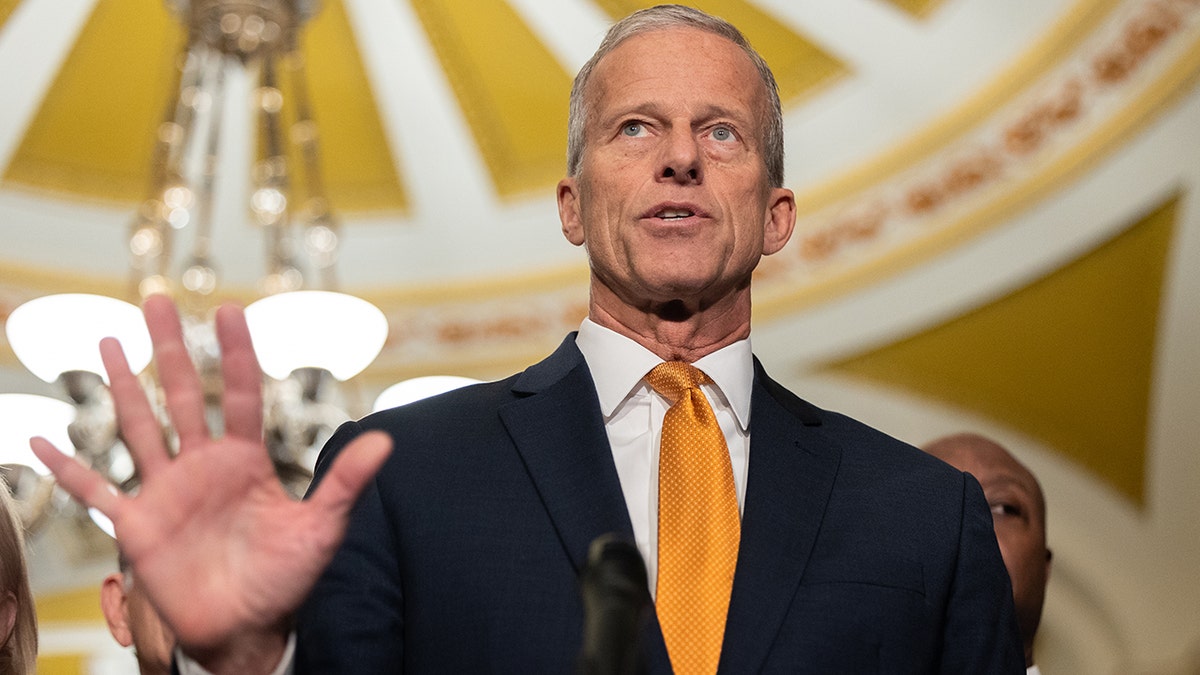
Senate Majority Leader John Thune, R-S.D., speaks at a press conference with other members of Senate Republican leadership after a policy luncheon in Washington, D.C., on Oct. 28, 2025. (Nathan Posner/Anadolu via Getty Images)
House Speaker Mike Johnson, R-La., told Fox News’ Shannon Bream that he would move ahead with the reconciliation plan.
«We passed it three times in the House. We’re going to try one more time on a budget reconciliation bill, and I think that will be the way to get it through the Senate, and finally, to the president’s desk.»
Notably, though, House Republicans have not passed the version of the SAVE America Act that Trump desires, which would include a strict crackdown on mail-in balloting, a ban on transgender athletes in women’s sports and a ban on transgender surgical procedures for minors.
But even the bill’s biggest backers see reconciliation as a far-fetched option.
CLICK HERE TO DOWNLOAD THE FOX NEWS APP
Lee last month told Fox News Digital that the SAVE America Act was «policy, it’s non-budgetary. Therefore, SAVE America itself is not eligible for consideration in a third reconciliation.»
There could be alterations, like giving states federal funding to start doling out enhanced REAL IDs with citizenship verification in a reconciliation package, while separately passing a voter ID bill.
However, Lee believed that there was «no evidence that there is a viable path to a third reconciliation bill.»
«I hope there is. I would love to be wrong on that. I want us to do that. I think we should do that. But the schedule that we’ve got, to my great disappointment, is not — it doesn’t accommodate any of it.»
politics, republicans, mitch mcconnell, senate elections, john thune, donald trump

En el mundo animal, la monogamia de por vida suele asociarse a especies que presentan vínculos estables. Un ejemplo es el lobo ártico, donde la pareja dominante permanece unida durante toda su existencia. Los agapornis africanos también muestran este comportamiento: eligen un solo compañero, se alimentan juntos y manifiestan angustia si se separan. Estas conductas no representan la norma en el reino animal.
La mayoría de las aves practica la llamada monogamia social, pero rara vez mantiene la misma pareja año tras año. Solo algunos loros, cisnes, águilas y albatros se emparejan de por vida. Entre los mamíferos, la fidelidad permanente es aún menos común y, en otros grupos animales, prácticamente una rareza. Bart Kempenaers —director de Ornitología en el Max Planck Institute— resalta que la monogamia verdadera es, en realidad, la excepción.

(Imagen Ilustrativa Infobae)
Bart Kempenaers explica que la monogamia social en aves está vinculada al beneficio de la cooperación parental. Cuando ambos progenitores colaboran, la experiencia y la coordinación mejoran la supervivencia de las crías. Especies como los cardenales mantienen su unión incluso fuera de la época de cría, defendiendo juntos su territorio. Esta colaboración genera ventajas evolutivas claras para la pareja y su descendencia.
En mamíferos como lobos, coyotes y zorros, el trabajo conjunto incluye la caza y la defensa territorial, además del cuidado de las crías. Los castores y nutrias colaboran en tareas como la construcción de presas y refugios. En los peces ángel franceses, la pareja patrulla su zona de alimentación siempre unida, aunque no cuida a los jóvenes. La monogamia permite dividir tareas, optimizar recursos y mejorar la supervivencia.

La longevidad es un factor en la fidelidad de pareja, según Bart Kempenaers. Las aves grandes y longevas, como los albatros, tienen más posibilidades de permanecer con la misma pareja durante varias temporadas.
Un albatros puede vivir más de 50 años, mientras que aves pequeñas como los carboneros rara vez superan los tres años. La supervivencia de ambos miembros es esencial para consolidar vínculos duraderos.
La capacidad de reencontrarse es también determinante: las especies que permanecen juntas todo el año o que regresan al mismo sitio de anidación tienden a mantener la pareja. Este fenómeno, llamado fidelidad al sitio, facilita que los mismos ejemplares se reúnan cada año. Por el contrario, las aves pequeñas enfrentan más depredadores y tienen menos oportunidades.

El término “divorcio” se utiliza para describir la ruptura de parejas en especies monógamas, aunque no implica siempre una decisión consciente. En aves migratorias como grullas y cisnes, la pareja suele viajar y reproducirse en familia, fortaleciendo el lazo. No obstante, en la mayoría de las aves migratorias, cada miembro viaja por separado y puede formar una nueva pareja si su antiguo compañero no regresa a tiempo.
Bart Kempenaers señala que este comportamiento responde a la urgencia de aprovechar la temporada reproductiva. Si el primer integrante que llega se encuentra solo, suele buscar otro compañero en vez de esperar indefinidamente. Un estudio con cisnes mudos mostró que la “tasa de divorcio” se triplica en parejas que no logran criar con éxito. La presión reproductiva prima sobre la fidelidad estricta.

La monogamia social no siempre equivale a exclusividad sexual entre los miembros de la pareja. Muchas aves y algunos mamíferos mantienen un vínculo estable, pero pueden tener descendencia con otros individuos. Bart Kempenaers documenta que, en ocasiones, el padre social cría polluelos que no son genéticamente suyos. En los cisnes negros, hasta el 40 % de los nidos contienen al menos un polluelo de otro macho.
Los motivos de esta conducta varían según el sexo y la especie. Los machos buscan aumentar el número de descendientes, mientras que las hembras pueden asegurarse así la viabilidad genética si su pareja resulta infértil. En especies como el herrerillo común, las hembras reciben ayuda adicional de otros machos, favoreciendo la supervivencia de sus crías. La infidelidad puede aportar beneficios evolutivos inesperados.

Bart Kempenaers reconoce que muchas preguntas sobre la cooperación y el apareamiento en animales siguen sin respuesta. No está del todo claro por qué algunos sistemas evolutivos favorecen la monogamia estricta, mientras que otros promueven el cambio de pareja.
El caso del long-billed dowitcher en Alaska resulta desconcertante: a pesar de practicar la monogamia social y compartir el cuidado de los huevos, cada año elige una nueva pareja y un nuevo sitio para anidar.
El estudio, con ayuda de rastreadores satelitales, mostró que las hembras abandonan antes la zona de cría y pasan el invierno en lugares distintos a los machos. Esta separación física impide el reencuentro y explica el cambio constante de compañero. Sin embargo, la razón evolutiva detrás de esta estrategia, en contraste con otras aves del mismo entorno, sigue siendo un misterio para la ciencia.
albatros,agapornis,lobos,biodiversidad,ecosistemas,ilustración
INTERNACIONAL
A horas del quinto aniversario del 11J, Cuba batió su récord de represión con 1.306 presos políticos y 40 menores detenidos
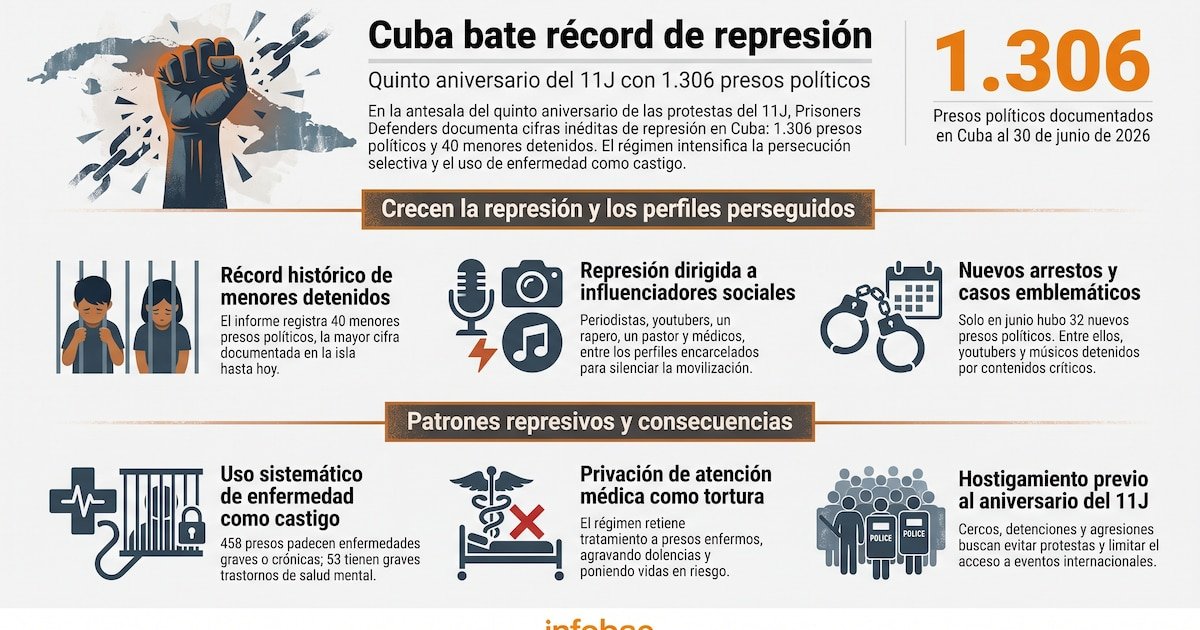
La organización de derechos humanos Prisoners Defenders publicó este jueves su informe mensual sobre presos políticos en Cuba con dos cifras sin precedentes en sus registros: 1.306 personas privadas de libertad por motivos políticos al cierre de junio y 40 de ellas detenidas cuando eran menores de edad, el número más alto documentado hasta la fecha.
El reporte llega dos días antes del quinto aniversario de las protestas del 11 de julio de 2021 -más conocidas como 11J-, la mayor movilización ciudadana registrada en la isla desde 1959.
“El régimen cubano acaba de marcar dos siniestros nuevos récords de represión a las puertas del quinto aniversario del 11J: 1.306 prisioneros políticos y 40 de ellos detenidos siendo menores de edad”, afirmó Javier Larrondo, presidente de Prisoners Defenders, en conversación con Infobae.
Solo en junio, la organización verificó 32 nuevos casos, con otros 21 aún en proceso de investigación. De los 40 menores registrados en la lista total, 16 permanecen recluidos en prisiones y centros penitenciarios destinados a población adulta.

El informe documentó un cambio en el perfil de las víctimas. La represión ya no apunta únicamente a quienes participan en manifestaciones o ejercen activismo político, sino a personas con capacidad para informar, movilizar o influir en distintos sectores de la sociedad.
“El régimen está encarcelando de forma selectiva a personas con capacidad de influencia social: periodistas, youtubers, un rapero, un pastor evangélico, médicos, ex presos del 11J y numerosos jóvenes”, señaló Larrondo; al tiempo que acotó: “Todo ello con el objetivo de desactivar cualquier posibilidad de movilización ciudadana en el quinto aniversario del 11J”.
Entre los casos documentados en junio figuran los de Eduardo Ceballos Pérez, conocido como “Eddy Jones”, y Christian Rodríguez Riverón, creadores del canal de YouTube Despingovery Channel, arrestados por publicar videos sobre instalaciones militares abandonadas y en ruinas. Las autoridades los procesaron por presuntos delitos de “Espionaje” o “Revelación de secretos concernientes a la Seguridad del Estado”, cargos que en el Código Penal cubano se castigan con entre 10 y 30 años de prisión, cadena perpetua o muerte.
Ceballos fue detenido el 1 de junio y trasladado a la prisión Combinado del Este, donde permaneció incomunicado; mientras que Rodríguez Riverón fue arrestado el 14 de junio al acudir a una citación policial, sin orden judicial.

Las protestas registradas en el reparto Barbosa, en La Habana, durante la segunda quincena de junio, motivadas por prolongados apagones y la crisis económica, desencadenaron una nueva ola de detenciones. Entre los arrestados figura el rapero y activista Andrés Matos Alcántara, conocido como “MC K-LIBRE”, detenido el 25 de junio tras acudir a una citación policial.
Las autoridades le atribuyen falsamente el liderazgo de los cacerolazos, pese a que su familia y testigos afirman que solo pasó por el lugar durante unos minutos. Durante los primeros días de su detención, el régimen ocultó su paradero, lo que llevó al Comité contra la Desaparición Forzada de Naciones Unidas a activar una Acción Urgente. El 4 de julio fue trasladado a la prisión de Valle Grande pese a padecer Enfermedad Pulmonar Obstructiva Crónica (EPOC) y diabetes tipo 1.
En la misma protesta, los hermanos Yoan Arévalo Álvarez y Yosban Arévalo Álvarez fueron detenidos el 21 de junio sin orden de arresto. Según testimonios de allegados, ambos sufrieron golpes durante la detención. En el caso de Yoan, las agresiones le provocaron múltiples fracturas en las costillas, una herida en el pecho y lesiones en los pies, sin que las autoridades le proporcionaran atención médica.
Una redada masiva en los barrios La Cuba y Maffo de Contramaestre (Santiago de Cuba), el 22 de junio, añadió 10 nuevos presos políticos muy jóvenes, seis de ellos menores de entre 15 y 17 años: Ander Magdiel del Toro Suárez (15 años), Dian Daniel Mora Acuña (15 años), José Ángel Borrero Zorrilla (17 años), José Jorge Menéndez Vázquez (17 años) y Ángel Luis Leyva (17 años), junto a Cristian Fernández Sarmiento (15 años), detenido el 19 de junio durante las manifestaciones de Altamira.

Prisoners Defenders documentó que 458 presos políticos padecen patologías médicas graves o crónicas, y 53 presentan trastornos de salud mental severos previos a su detención. “La privación deliberada de la atención médica se utiliza de forma sistemática como un instrumento de represión y de tortura”, advirtió Larrondo a este medio.
Tres casos concentran la mayor gravedad. Carlos Alberto MacDonald Ennis fue excarcelado el 12 de junio tras más de dos años en prisión provisional, aunque continúa sometido a proceso penal. Durante su encarcelamiento desarrolló un tumor maxilar que crece hacia estructuras internas de la cabeza sin recibir tratamiento, y al salir pesaba apenas 48 kilogramos, con hipertensión y diabetes agravadas.
En tanto, Juan Enrique Pérez Sánchez, condenado a ocho años de prisión por el 11J, contrajo tuberculosis en prisión y presenta desnutrición severa, trastornos neurológicos y crisis recurrentes de asma. La Comisión Interamericana de Derechos Humanos (CIDH) le otorgó medidas cautelares por el riesgo para su vida, pero continúa recluido. Prisoners Defenders lo incluyó entre los 33 presos políticos con riesgo gravísimo para su vida e integridad física.
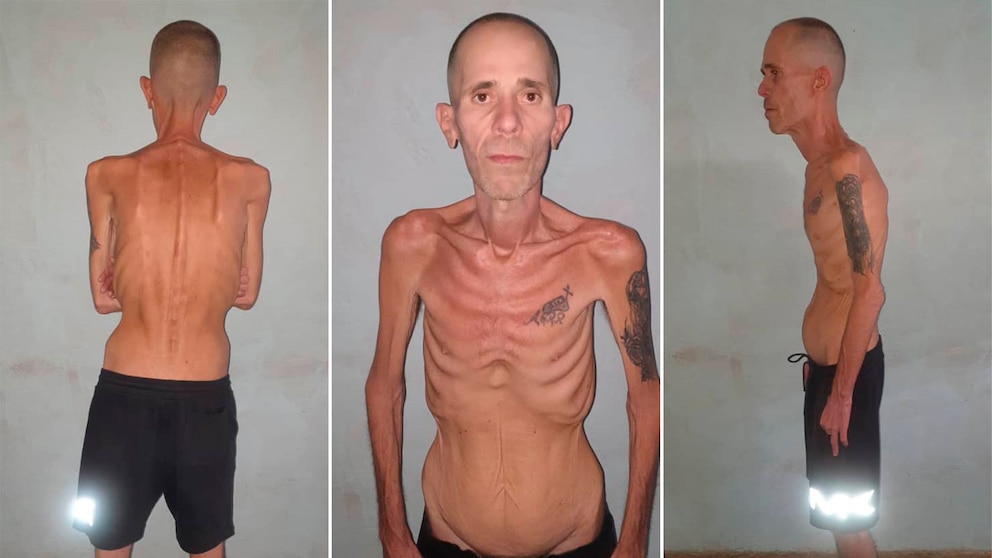
Por su parte, Rolando Yusef Pérez Morera, activista del Movimiento Opositores por una Nueva República (MONR) y también condenado a ocho años, mostró en imágenes obtenidas durante un permiso penitenciario temporal un deterioro físico extremo producto de la desnutrición severa.

A escasos días del quinto aniversario, las autoridades cubanas desplegaron una operación de hostigamiento contra activistas de distintas organizaciones. El 2 de julio, decenas de ellos fueron impedidos de asistir a la recepción organizada por la Embajada de Estados Unidos en La Habana con motivo del 250 aniversario de la independencia estadounidense, mediante cercos domiciliarios, detenciones arbitrarias, agresiones físicas y traslados forzosos.
José Elías González Agüero, coordinador nacional del Partido Unión por Cuba Libre (PUNCLI), y el ex preso político Alexander Díaz Rodríguez fueron trasladados esposados a una zona boscosa en las afueras de La Habana, donde fueron obligados a desnudarse y fotografiados en esa situación. Según el testimonio de González Agüero, uno de los agentes le colocó una pistola en la cabeza mientras le decía “se acabó tu historia y te vamos a matar aquí”, y los represores realizaron disparos simulando ejecuciones.
Díaz Rodríguez —cuya fotografía al salir de prisión tras cumplir una condena de cinco años por el 11J recorrió el mundo por su parecido con imágenes de campos de concentración— fue golpeado repetidamente y tuvo un papel introducido en la boca por la fuerza mientras permanecía esposado. En prisión había adquirido un cáncer de garganta y tiroides en fase terminal, hepatitis B, anemia severa y un cuadro de desnutrición severa terminal.
Los hermanos Amanda Beatriz y Abel Alejandro Andrés Navarro, del colectivo juvenil Fuera de la Caja Cuba, fueron retenidos por la Seguridad del Estado durante cerca de 11 horas para impedir su asistencia al mismo evento. Tras recuperar la libertad, denunciaron que el objetivo era silenciarlos y amedrentarlos.
En paralelo, las autoridades reabrieron un proceso penal previamente archivado contra la influencer y activista Anna Sofía Benítez Silvente (“Anna Bensi”), sometiéndola junto a su madre a nuevos interrogatorios de más de ocho horas.
El informe señaló también el caso del pastor evangélico Alexis Padrón Lorenzo, de 58 años, detenido el 11 de junio en el municipio de Regla tras increpar verbalmente a funcionarios que dispersaban una protesta vecinal contra los apagones y la escasez de agua. Al ser visitado por su esposa el 26 de junio, apenas nueve días después de su detención, presentaba pérdida considerable de peso, pies hinchados y dolores agravados por una artritis reumatoide sin tratamiento.
El informe de Prisoners Defenders apuntó directamente a la inacción pública de gobiernos democráticos como factor que permite al régimen cubano sostener la escalada represiva sin consecuencias políticas.
La organización mencionó a España —con referencia expresa al gobierno de Pedro Sánchez—, la Comisión Europea y Canadá entre los actores que no se pronuncian ni defienden públicamente, de forma sostenida, a las nuevas víctimas de la represión.
En los últimos 12 meses —de julio de 2025 a junio de 2026—, la lista de Prisoners Defenders sumó 264 nuevos presos políticos, un promedio de 22 por mes. Cuba ocupa además el primer lugar mundial en desapariciones forzadas ejecutadas por el propio gobierno, con 193 de las 194 Acciones Urgentes presentadas ante el Comité contra la Desaparición Forzada de Naciones Unidas promovidas por la propia organización.
Cuba,presos políticos,represión,Prisoners Defenders,11J,derechos humanos

Cuánto vale tu auto usado: modelo por modelo, todos los precios actualizados a julio

Trump’s voter ID bill catches unlikely break as McConnell remains sidelined

Javier Milei en el Tedeum, en vivo: el Presidente encabezará el evento junto a integrantes de su gabinete

Por qué algunos animales forman pareja de por vida y otros cambian cada temporada

Contundente respaldo de la FIFA tras las críticas a los árbitros de Argentina-Egipto: “Las acusaciones infundadas no tienen cabida”

Javier Milei y sus medidas, EN VIVO: el Presidente participa del Tedeum del 9 de julio en la Catedral Metropolitana

La producción textil aceleró su caída y la capacidad instalada siguió entre las más bajas de la industria

Ojo con las multas de tránsito: las más caras llegan a $3.8 millones

Portugal vs España: formaciones, hora y dónde ver por tv