INTERNACIONAL
El día que la CIA le pidió ayuda a Lanusse para que Salvador Allende no asumiera en Chile y la respuesta que permaneció décadas en secreto

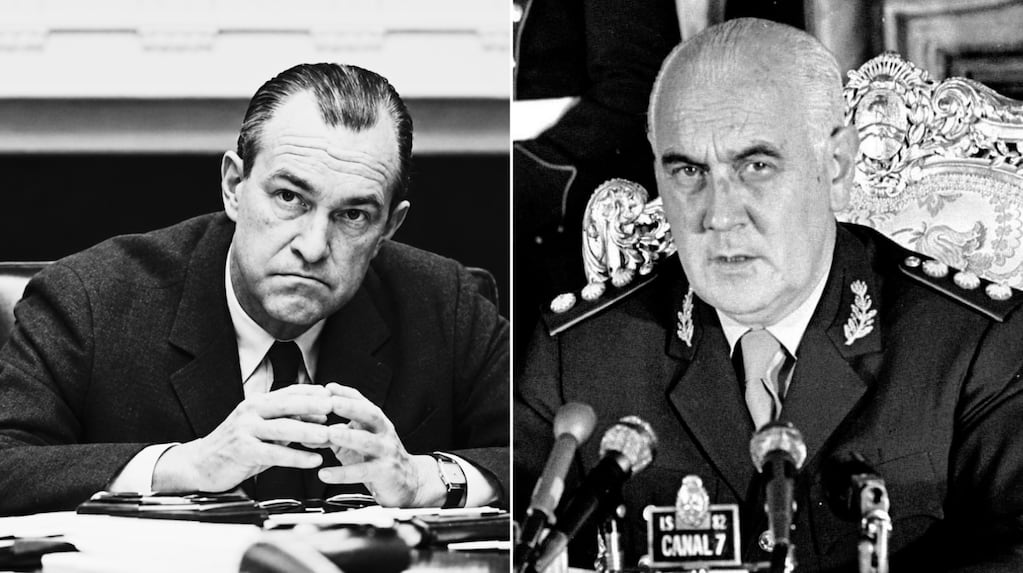
La respuesta no pasó a la historia porque la historia no fue conocida hasta muchos años después. De no haber existido esa respuesta, el baño de sangre que iba a desatarse en los años 70 en el continente pudo haber sido mayor y de consecuencias imprevisibles: podríamos vivir aún hoy la herencia de aquel desastre que no ocurrió.
El 15 de septiembre de 1970, hace cincuenta y seis años, Richard Helms, el jefe de la CIA, la agencia de inteligencia de los Estados Unidos, recibió en Washington al entonces jefe de la Junta Militar argentina, general Alejandro Lanusse, y le ofreció “lo que la Junta necesite”, a cambio de que Argentina participara en los esfuerzos estadounidenses para impedir que el presidente electo de Chile, el socialista Salvador Allende, asumiera el poder. Lanusse se negó con aquella respuesta histórica de la que jamás habló, como jamás habló de aquel encuentro suyo con el director de la CIA.
Todo lo que rodeó a aquella reunión secreta es un poquito intrincado, pero vale la pena reconstruirlo por si el tiempo juega al azar con la memoria. El 4 de septiembre de ese año, apenas once días antes de la reunión entre Lanusse y Helms, Chile había elegido presidente a Allende en elecciones libres y democráticas. Allende presidía entonces la Unidad Popular, una coalición que integraban los partidos Socialista, Comunista, Radical y Socialdemócrata, el Movimiento de Acción Popular, MAPU y la Acción Popular Independiente, API, que ganó la elección con cifras muy ajustadas: 36,6 por ciento de los votos, contra el 34,9 por ciento de su rival de la derecha, Jorge Alessandri, que había presidido Chile entre 1958 y 1964.
Ese resultado electoral exigía que el Congreso chileno ratificara a Allende como presidente en una sesión que se iba a celebrar el 24 de octubre; si Allende era ratificado, asumiría la presidencia el 4 de noviembre. Su triunfo electoral sacudió al gobierno de Richard Nixon, decidido a impedir la llegada de “otro Fidel Castro al continente”. Apenas once días después de la victoria del socialista chileno, la CIA ya implementaba un plan continental para impedir que el Congreso lo consagrara presidente. El desconcierto estadounidense había quedado reflejado por un mensaje al Departamento de Estado que dirigió, al día siguiente de las elecciones, el entonces embajador americano en Chile, Edward Korry. Con resignado fatalismo, el diplomático escribió: “Los, chilenos, tranquilamente, han elegido a un gobierno marxista”.
No todo estaba tan tranquilo en Chile. Y menos en la Casa Blanca. Nixon pidió a Helms un plan de la CIA para impedir la asunción de Allende, o la vía para derrocarlo ni bien hubiese asumido. También le impuso un plazo para presentar ese plan: cuarenta y ocho horas. ¿Quién era Richard Helms? Era un halcón de la CIA que, en 1963 había estado sospechado, lo está aún hoy cuando ha pasado más de medio siglo, de encubrir el asesinato de John Kennedy, si es que la CIA no armó la mano asesina. Para esta parte de la historia es indispensable la investigación volcada en JFK vs CIA, de Michael Calder. Durante años, Helms escaló los áridos peldaños de la agencia de inteligencia hasta llegar a dirigirla; era un fervoroso anticomunista y un apasionado de la mano dura en la política exterior de su país: en plena Guerra Fría, la CIA fue responsable de varios intentos de asesinar a Castro en Cuba.
¿Cómo llegó Helms a Lanusse? El jefe de la CIA tenía un amigo, Thomas “Tom” Polgar, otro de los “duros” de la agencia. Era un húngaro de Budapest que durante la Segunda Guerra había sido paracaidista aliado, y se había lanzado sobre Berlín cuando estaba a punto de caer en manos soviéticas para organizar allí tareas de espionaje y sabotaje. Helms y Polgar habían visto nacer a la CIA porque habían trabajado juntos en su antecesora, la Oficina de Servicios Estratégicos (OSS). En 1970, Polgar era jefe de la base de la CIA en Buenos Aires y fue a él a quien Helms le envió un mensaje urgente, una orden perentoria: le pidió que abordara “el primer avión hacia Washington junto con el jefe de la junta militar argentina, general Alejandro Lanusse”. Polgar cumplió de inmediato.
Para variar, el mundo político de entonces en Argentina no era un paraíso. Lanusse ya le había dado un giro a la dictadura militar instaurada en junio de 1966, tras el derrocamiento del presidente Arturo Illia por un golpe militar liderado por el general Juan Carlos Onganía, que había pretendido instaurar un Reich de veinte años. A su pesar, porque era un ferviente antiperonista, Lanusse había comprendido que la Argentina era ingobernable si no se permitía el retorno de Juan Perón, exiliado en España, y si no se habilitaba la participación electoral del peronismo, sin proscripciones de ningún tipo, incluida la del propio Perón.
Luego, Lanusse haría lo imposible porque Perón no retornara al poder del que había sido desalojado en septiembre de 1955 por un sangriento golpe militar, que se hizo llamar Revolución Libertadora. Perón había encarcelado a Lanusse por su participación en el alzamiento su contra liderado en 1951 por el entonces general retirado Benjamín Menéndez. Luego del derrocamiento de Perón, y a sus treinta y ocho años, Lanusse había sido jefe del Regimiento de Granaderos a Caballo y custodia del presidente de facto de la Libertadora, general Pedro Eugenio Aramburu.
El país era un polvorín en septiembre de 1970. En mayo, un grupo guerrillero peronista, hasta entonces desconocido y que se hacía llamar “Montoneros”, había secuestrado a Aramburu y lo había asesinado. Su cadáver apareció enterrado en una chacra de Timote, provincia de Buenos Aires, propiedad de los padres de uno de los guerrilleros. El asesinato hizo que Onganía fuese derrocado por sus propios camaradas, Lanusse incluido, y que llegara a su fin un gobierno ya resquebrajado por una gigantesca revuelta popular, el “Cordobazo”, en mayo del año anterior, y por una política económica que disparaba los precios y congelaba los salarios.
La presidencia la ocupaba entonces un oscuro general, casi desconocido, Roberto Marcelo Levingston, que en el momento de la caída de Onganía era agregado militar en la Embajada argentina en Washington. La tradición decía que el jefe de la Junta Militar debía ocupar el cargo vacante en la Casa de Gobierno. Pero en esos meses, el jefe de la Junta era el almirante Pedro Gnavi y, también lo decía la tradición, el heredero del poder debía ser un militar de Ejército. Lanusse llegaría a la presidencia en 1971.
Ese era el contexto, mucho más intrincado de lo que estas líneas sugieren, que rodeaba el viaje de Lanusse a Washington para entrevistarse con el director de la CIA, un viaje que el militar mantuvo en estricto secreto. Lo vistió en cambio con el ropaje de una visita de su hijo Marcos, inválido después de un accidente, a los médicos de Estados Unidos que trabajaban en su recuperación. Era verdad, pero a medias.
Lanusse y Polgar abordaron un avión a Washington el 10 de septiembre de 1970, tres días después de que, en un tiroteo con la policía en William Morris, provincia de Buenos Aires, fuesen muertos Fernando Abal Medina y Carlos Gustavo Ramus, sindicados como autores del secuestro y asesinato del general Aramburu. Cinco días después de salir de Buenos Aires, el 15 de septiembre, Lanusse estrechó la mano de Helms en el mítico cuartel general de la CIA en Langley, Virginia, para escuchar qué tenía que decirle el poderoso director de inteligencia de Estados Unidos. La reconstrucción de aquel encuentro fue revelada, y detallada, por el historiador Tim Weiner en su libro Legado de cenizas – La historia de la CIA.
Helms estaba inquieto cuando llegó a su encuentro con Lanusse: venía de hablar con Nixon que le había ordenado que organizara un golpe militar en Chile sin que lo supieran ni el secretario de Estado, ni el de Defensa, ni el embajador Korry en Santiago, ni siquiera el jefe de la base de la CIA en la capital chilena debía enterarse. Weiner revela que Helms había garabateado en un bloc las órdenes de Nixon y que esos garabatos decían: “Tal vez una posibilidad entre diez, pero ¡hay que salvar a Chile! 10.000.000 de dólares disponibles… Los mejores hombres que tengamos… Hacer chirriar la economía…” Años más tarde, Nixon, según las memorias de su mano derecha, Henry Kissinger, entonces asesor de seguridad de la Casa Blanca, diría que había que “hacer crujir la economía chilena” y aportó para eso cuarenta millones de dólares. Y ya en los días previos al golpe que derrocaría a Allende el 11 de septiembre de 1973, el presidente fue más claro y específico con Kissinger: “Vayan allá y patéenles el culo”.
Poco después de su encuentro con Lanusse, Helms, que estaba bajo la supervisión directa de Kissinger, esbozó en tiempo récord, esos eran los deseos de Nixon, dos planes alternativos para el “Caso Allende” que fueron bautizados sin demasiada imaginación, “Vía Uno” y “Vía Dos”. El primero contemplaba la guerra política, la presión económica y una intensa campaña publicitaria contra las todavía futuras autoridades democráticas chilenas. La “Vía Uno” también contemplaba la compra de votos en el Congreso chileno para evitar la confirmación de Allende como presidente. Si todo eso fallaba, el embajador Korry había propuesto convencer al presidente saliente, Eduardo Frei Montalva, para que diera un golpe constitucional que condujera a nuevas elecciones. La “Vía Dos” era el golpe militar. Las dos opciones fueron exploradas y en algún modo iniciadas al menos en parte, pero nunca se llevaron a cabo en aquellos agitados días.
Nixon










INTERNACIONAL
Little-known IRS program could be unfairly crushing landowners, according to alarming study and whistleblower

FIRST ON FOX: A new study is raising questions about whether the Internal Revenue Service (IRS) has been putting its finger on the scale to hit American landowners with higher tax bills through a little-known conservation tax program, as a whistleblower who spent many years at the agency warns the findings show the IRS has «lost its way.»
The study, conducted by Infinity Advisory Services, examined more than 130 IRS valuation reviews and found that, in 115 conservation easement tax incentive cases with comparable figures, the agency slashed taxpayers’ appraised values by an average of roughly 97%, with reductions of 99% or more common.
The study makes the case that the pattern across different properties, tax years and reviewers points to a process designed to reach a predetermined answer, which effectively wiped out the value underpinning taxpayers’ conservation deductions rather than fairly evaluating each property.
The conservation easement tax incentive allows landowners to claim a charitable tax deduction for permanently giving up certain development rights on their property, helping preserve farmland, forests and other protected land. The landowners keep ownership, but restrictions limit how the property can be developed. An appraisal determines the value of the rights donated, which generally forms the basis of the deduction and is at the center of these IRS disputes.
DOJ UNVEILS NATIONWIDE TAX FRAUD CRACKDOWN INVOLVING 76 DEFENDANTS, NEARLY $500M IN ALLEGED LOSSES
«This report examines a single question,» the study’s authors explain in the executive summary. «We ask whether the government’s valuation position in conservation easement matters was settled as a matter of policy before it was tested against the facts of individual properties. The record we have assembled to date is consistent with that view, and in our judgment the pattern in the data is difficult to explain on another basis.»
A former IRS valuator, who spent many years with the agency, told Digital that he experienced officials pressuring appraisers to reach predetermined conclusions and brushing aside evidence from taxpayers who donated development rights to their land in exchange for tax deductions. Instead of distinguishing legitimate donations from abusive tax shelters, he said, the agency is «setting up taxpayers that they know are innocent,» leaving them facing steep tax bills and penalties.
«I’m looking at the IRS, and they’ve developed a culture that says bigger dollars is a good thing,» the whistleblower said.
«And they’re in a mode of not wanting to know what the facts are from the taxpayer’s perspective. And in the application of the law, the application of the law is slanted, having watched both sides in this process,» the whistleblower added. «If you’re going to have a valuation issue, it should be addressed by someone who has expertise in valuation. When I was at the IRS, that would not have been tolerated.»
TRUMP PUTS FRAUDSTERS ON NOTICE WITH $25M WHISTLEBLOWER PROGRAM OFFERING CASH FOR TIPS THAT DELIVER
In one case involving a historic Cleveland building, the same IRS reviewer initially valued a donated preservation easement at between $18.1 million and $23.2 million, then reduced it to $400,000 in a follow-up review that dramatically shifted the landowner’s tax burden, according to the study.
The revised report explicitly cited instructions from IRS counsel to exclude certain development rights from consideration. The study’s authors argue that the dramatic reversal reflected a directive covering an entire class of properties rather than new evidence about the building itself.
The whistleblower cited one specific case from personal experience where the agency identified eight areas of concern but refused to hear the taxpayer’s explanations. When the taxpayer offered to address each point, an IRS Appeals technical advisor responded, «I don’t want to hear it,» according to the whistleblower. The mediation ended without an agreement, he said, citing the exchange as an example of the agency’s unwillingness to fairly consider taxpayers’ evidence.
«How can you be involved in post- or pre-litigation and say, I don’t even want to hear your response to the issues we raised,» the whistleblower said, adding that the concerns shouldn’t be viewed as being the fault of a particular administration but that the information should be looked at from a factual perspective in a nonpartisan way.
Steve Moore, chairman and co-founder of Unleash Prosperity and former advisor to President Donald Trump, recently penned an article arguing that the IRS’s crackdown on conservation easement deductions has swept up honest taxpayers who relied on qualified appraisers and professional advice.
«Some of it is due to the fact that the IRS is in the business of trying to get as much money out of people as they can. And part of it is that there has been fraud. There are cases of fraud where people will way overvalue through a fraudulent appraisal,» Moore told Digital in an interview. «And so what’s happened, though, is literally, almost literally throwing the baby out with the bathwater. They’re putting everybody in the same boat.»
Moore said that after his article was published, he heard from numerous families and landowners across the country saying they have been «victimized» by the process.
AG BLANCHE UNVEILS FEDERAL CHARGES AGAINST 160 DEFENDANTS IN PANDEMIC RELIEF SWEEP
The IRS acknowledged in an August press release that standardized settlement offers with fixed deadlines were «not well suited to the full range of conservation easement cases,» ending that initiative and announcing a new Office of Conservation Easements. But the announcement did not address the central questions raised by the study and the former IRS official: whether the agency fairly considered evidence supporting taxpayers’ deductions and whether its valuations reflected independent analysis or predetermined conclusions.
«The IRS does realize that they have poked a hornet’s nest here because they’ve made people so angry across the country, and they did put out a press release saying, we’re going to deal with this,» Moore explained. «But guess what? They haven’t dealt with it. It was just words on a piece of paper. And so, the same groups of people I’ve been working with to try to get them some justice here have not received that justice and there’s been in most of these cases nothing done about it but just words on a piece of paper. So this has to be resolved because some people may go bankrupt as a result of this.»
Digital reached out to the IRS for comment and was directed to the August press release.
The IRS has secured significant court victories over inflated conservation easement valuations, including two major wins in the past year.
In July, the 11th U.S. Circuit Court of Appeals upheld a decision valuing an easement over 103 acres in Georgia at $480,000, compared with the partnership’s claimed $23 million deduction. The court rejected the proposed quarry development underlying the higher valuation as economically unviable and upheld a 40% penalty for grossly overstating the easement’s value.
In August, the 11th U.S. Circuit Court of Appeals upheld a $900,000 valuation for a Georgia conservation easement that a partnership, Mill Road 36 Henry LLC, had used to claim an $8.9 million deduction. The court found that comparable property sales and a recent transaction involving the land supported the lower valuation, and it upheld a 40% penalty for grossly overstating the easement’s value.
The Tax Court has repeatedly rejected IRS efforts to impose civil fraud penalties in conservation easement disputes, including in a February ruling that cited three earlier cases reaching the same conclusion, among them Mill Road.
politics, taxes, investigations, real estate, land
INTERNACIONAL
Ukraine releases video showing damage to Putin’s prized bridge following ‘unprecedented operation’ in Crimea

NEWYou can now listen to Fox News articles!
The Security Service of Ukraine released two videos Tuesday showing the aftermath of a devastating drone attack on Russian President Vladimir Putin’s prized Crimea bridge.
Ukrainian President Volodymyr Zelenskyy said Monday’s attack on the Kerch Strait bridge was part of an «unprecedented operation in response to Russian strikes on our infrastructure.»
«Today, everyone can see the consequences for the main military crossing from Russian territory into our Ukrainian Crimea,» Zelenskky wrote on X. «This is the result of the seventh stage of an operation carried out over several weeks … Our warriors gradually destroyed air defense systems, radars, electronic warfare equipment, and other designated targets on the way to the final objective.
«Today, at the key stage, the ‘Palianytsia’ drones performed exceptionally well, striking the road section of the bridge, while ‘Neptune’ missiles, ‘Ruta’ drones, and FP-5 drones struck the railway section. Using ‘Flamingo,’ our warriors carried out a precision-guided strike – and the communications uplink worked flawlessly until the very last seconds,» Zelenskyy added.
UKRAINE HITS PUTIN’S PRIZED BRIDGE IN RECORD DRONE BLITZ AS KREMLIN TELLS LAWMAKERS TO PREPARE FOR ‘VICTORY’
Artem Dekhtyarenko, a spokesperson for the Security Service of Ukraine (SBU), said Monday’s strikes destroyed one of the bridge’s two steel arches and the road span that was underneath it.
Footage released by Ukrainian authorities showed half of the bridge missing.
Russian-installed Crimean Governor Sergei Aksyonov confirmed that the Kerch Strait bridge, linking occupied Crimea to mainland Russia, had been struck. However, the Kremlin claimed the damage as minor.
FRENCH TROOPS SECRETLY DEPLOYED INSIDE UKRAINE AS EX-NATO CHIEF PRAISES MACRON’S ‘GUTS’
Ukraine said Monday’s strikes destroyed one of the Kerch Strait bridge’s two steel arches and the road span that was underneath it. (Security Service of Ukraine)
The bridge is both a strategically important supply route and a symbol of Russia’s 2014 annexation of Crimea.
«We have repeatedly offered Russia steps toward de-escalation – and every proposal has been met with loud rejection,» Zelenskyy said Tuesday.

A view shows the Kerch Strait Bridge linking Russia to Crimea, which was targeted in an explosion by Ukraine. (Reuters/Alexey Pavlishak)
«Russia strikes our infrastructure every day, including bridges in Zaporizhzhia, Dnipro, Kyiv, and the Odesa region. We are restoring our infrastructure. But we are also reminding Russia that war will always return to where it began,» he added. «Ukraine’s defensive capabilities are strong and will remain so, and we will never leave terror against our cities and people unanswered.»
Fox News’ Thomas Ferraro, Efrat Lachter and Reuters contributed to this report.
ukraine, volodymyr zelenskyy, drones, vladimir putin, world
INTERNACIONAL
Finlandia y Ucrania firmaron un acuerdo sobre producción conjunta de material de defensa
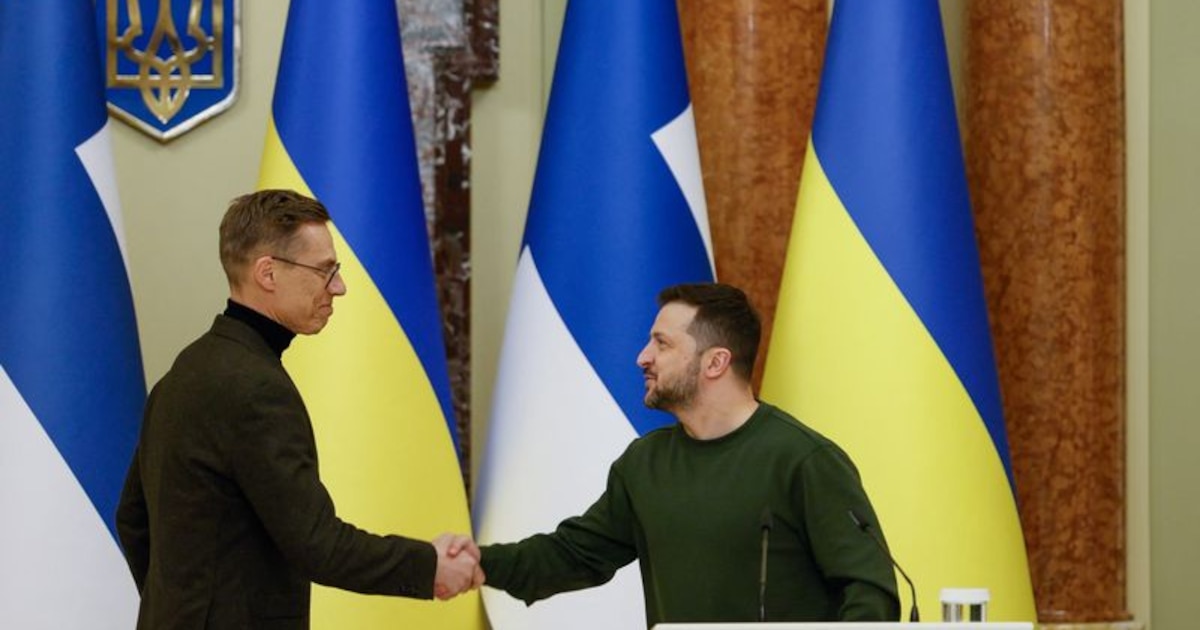
Finlandia y Ucrania firmaron el martes un memorando de entendimiento para impulsar la producción conjunta de material de defensa, un acuerdo que permitirá a empresas de ambos países fabricar armamento en territorio finlandés en medio de la presión rusa sobre la región y el área armamentística.
Los ministros de Defensa finlandés, Antti Häkkänen, y ucraniano, Yevgueni Jmara, suscribieron el documento en Bruselas. El Ministerio de Defensa de Finlandia informó que el pacto establece un marco técnico para futuros proyectos de coproducción.
Las iniciativas se diseñarán de acuerdo con las necesidades de las Fuerzas Armadas de ambos países. Mientras continúe la guerra con Rusia, la mayor parte del material fabricado tendrá como destino Ucrania, precisó el comunicado. El acuerdo también contempla la identificación conjunta de oportunidades de cooperación en investigación y desarrollo dentro de la industria de defensa.
El memorando amplía la colaboración bilateral en este sector. En septiembre, el presidente finlandés, Alexander Stubb, y el presidente ucraniano, Volodímir Zelenski, firmaron otro entendimiento sobre intercambio tecnológico y fabricación conjunta de drones.
“Con este nuevo documento de cooperación sentamos las bases para proyectos de coproducción en el sector de la industria de defensa entre Finlandia y Ucrania. Esto respalda la lucha defensiva de Ucrania, que en estos momentos es sin duda la prioridad número uno”, afirmó Häkkänen en el comunicado.

El ministro señaló que Finlandia aporta conocimientos tecnológicos y empresas vinculadas a la defensa y la seguridad. Añadió que el trabajo conjunto con Ucrania también “contribuirá a reforzar aún más la defensa de Finlandia y su capacidad industrial”.
Además, el grupo de contacto de apoyo a Ucrania anunció el martes nuevas contribuciones de armas, con prioridad en defensas aéreas, misiles, munición y drones, durante una reunión en la sede de la Organización del Tratado del Atlántico Norte (OTAN), en Bruselas.
El encuentro, que reunió a representantes de cerca de 50 países y estuvo presidido por Alemania y el Reino Unido, abordó también la capacidad de Ucrania para atacar objetivos en Rusia. Yevgueni Jmara defendió el derecho de Kiev a responder a las ofensivas rusas: “Tenemos derecho a defendernos. Tenemos derecho a tomar represalias”.
El funcionario aludió al ataque ucraniano contra el puente de Crimea, que Rusia construyó tras la anexión de la península ucraniana en 2014. Según explicó, la acción respondió a los “ataques sistemáticos” rusos de octubre contra puentes ucranianos que conectan las dos orillas del río Dnipro. “Quiero que la Federación Rusa reciba un mensaje claro: por cada ataque que lancen contra nuestro territorio, responderemos con el doble, con diez veces más, y ese es nuestro derecho a defendernos”, sostuvo.
El subsecretario de Guerra de Estados Unidos, Elbridge Colby, pidió a los países europeos que asuman un papel central en la ayuda militar a Ucrania y que sostengan la compra de armamento estadounidense, incluidos interceptores Patriot, a través del programa PURL de la OTAN.
Colby cuestionó los ataques ucranianos de largo alcance dentro de Rusia que, según afirmó, buscan “infligir sufrimiento” a la población civil. “Aunque el debate público se centra en el espectáculo de los ataques de gran alcance destinados a infligir sufrimiento a la población rusa, nuestra valoración”, dijo Colby, “es que dichos ataques no han sido eficaces para poner fin a la guerra, ni contribuyen a frenar los avances de Rusia en el frente”.
El secretario general de la OTAN, Mark Rutte, respondió que los aliados coinciden en que Ucrania debe defenderse de los ataques rusos, que, según señaló, alcanzan en gran medida a civiles e infraestructuras. También destacó la resistencia ucraniana en el frente y consideró necesario que la maquinaria militar rusa “quede neutralizada”.
El titular de la Alianza Atlántica informó que el programa PURL ya reunió más de USD 10.000 millones. La iniciativa permite financiar la adquisición de armas estadounidenses para Ucrania.
Por su parte, el ministro británico de Defensa, Wes Streeting, comunicó un paquete adicional de 240 millones de libras para defensa aérea. Las entregas comenzarán desde mediados de diciembre e incluirán más de 1.000 misiles de corto alcance y sus lanzadores.
(Con información de EFE)

La Anmat prohibió un gel utilizado en ecografías y se frenó la actividad en la planta que lo fabricaba

La racha goleadora de Julián Alvarez para volver con confianza a Atlético de Madrid

Mauro Icardi enfureció de celos ante las versiones de romance entre la China Suárez y Leandro Paredes: su explosivo mensaje

El peronismo se reunió en San Fernando y dejó un mensaje para Kicillof: “Unidad por encima de las aspiraciones individuales”

Little-known IRS program could be unfairly crushing landowners, according to alarming study and whistleblower

El desafío de conseguir trabajo después de los 45: claves para superar los prejuicios y volver al mercado laboral

La inflación de octubre: el dato que sorprendió a casi todos y la distancia que persiste con los parámetros internacionales

U2 vuelve con 12 nuevas canciones y una pregunta incómoda sobre si el rock todavía puede decir algo nuevo

Democrats seize on midterm wins to push massive minimum wage hikes, but economists see trouble ahead

La respuesta sin filtro de Wanda Nara a la China Suárez: «Le pidió al bobo que necesitaba una familia en Turquía»

 ECONOMIA2 días ago
La inflación de octubre: el dato que sorprendió a casi todos y la distancia que persiste con los parámetros internacionales
- POLITICA1 día ago
Milei dijo que el riesgo país sube por el miedo a "Orcolandia" y afirmó: "Los argentinos no van a votar hacia el pasado"
- INTERNACIONAL1 día ago
Caída de sistemas, fallas y sospechas: qué hay detrás de la suspensión del tráfico aéreo y los problemas en los bancos de EE.UU.