INTERNACIONAL
Reporter’s Notebook: Congress dodged a fall shutdown, but the real fight looms

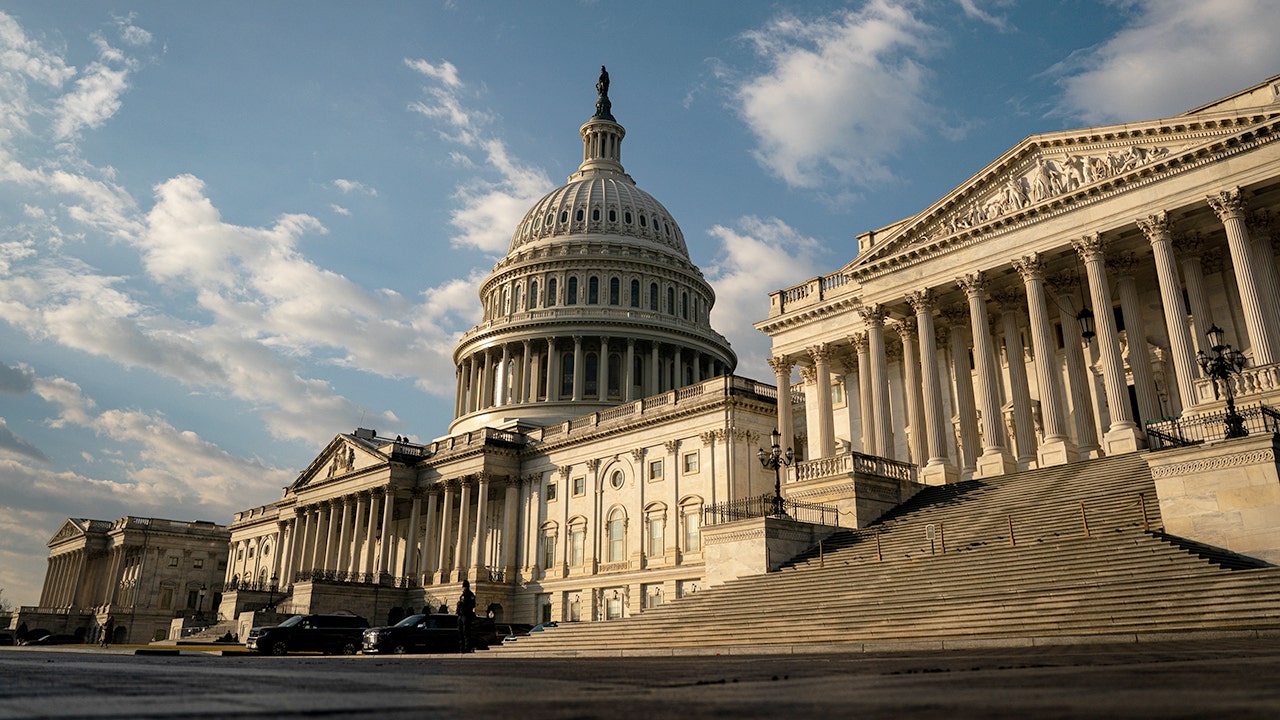
«And all at once, summer collapsed into fall…» – Oscar Wilde
Congress certainly collapsed into fall this year. It lacked the usual mayhem of an imminent government shutdown for the first time in years. The government is usually only funded through September 30, the end of the federal fiscal year. Lawmakers solved that fiscal riddle early.
So the beginning of fall in Congress is usually anything but enjoyable. Others are devouring cobbler, enjoying spiced pumpkin lattes and viewing leaves of amber. When a government shutdown looms, the infernality of summer continues to stew on Capitol Hill. Imagine simmering political temperatures mixed with boiling urban concrete and a soupçon of petrichor. That epitomizes the customary fall tension in the halls of Congress when lawmakers are on the precipice of a shutdown.
But this year is different.
TRUMP SIGNS GOVERNMENT FUNDING BILL, AVOIDING A SHUTDOWN AHEAD OF MIDTERMS
No shutdown. That’s a good thing, considering last year’s 43-day shutdown odyssey which crawled from October 1 into mid-November. Everything is funded through December 11. So at least members and journalists can enjoy some of those autumnal fall trappings and dash to the pumpkin patch. That’s because we don’t know what’s going to await everyone for the next spending round in mid-December.
Lawmakers are recovering from the battle scars of last fall. So with the midterms approaching, no one wanted to return to the 2025 contretemps. The sides are willing to tussle over spending. But only after the midterms.
Does that mean a shutdown in December? Unclear.
If Democrats seize control of the House or Senate — or both — that could compel House and Senate Republicans to fund the government the way they want through the fall of 2027 right away. They won’t want an interim spending bill which punts things into early next year when Democrats may have power.
That said, if Democrats capture either the House or Senate, they will argue that the voters have spoken and it’s incumbent on them to decide how to spend taxpayer money next year. Under those scenarios, Democrats will push for a stopgap bill, hoping to tangle with President Trump in the early days of 2027.
The only thing which is known is that President Trump will in fact still be in office come January. This scenario could spark a shut down next year – if not December.
The reason? You still need 60 votes to clear a filibuster (and probably two) in the U.S. Senate. That means Republicans just can’t ram through whatever spending package they want. That may work in the House. And the GOP could even test the willingness of Reps. Jared Golden, D-Maine, and Marie Gluesenkamp Perez, D-Wash., to buck their party and assist passing a GOP-favored spending measure in the lame duck.
FETTERMAN STRONGLY SUPPORTS THE FILIBUSTER AS TRUMP URGES SENATE REPUBLICANS TO SCRAP IT
But in the Senate, Republicans will certainly need the cooperation of at least seven Democrats to help them hit the 60 vote threshold. Those Democrats won’t be anxious to assist unless they won the majority and think they can apply their stamp on federal spending in the first quarter of next year.
This is the same problem which vexed the Senate during the shutdown of 2025.
The House passed a partisan spending bill to re-up all current funding on an interim basis. But Senate Republicans could never break a filibuster to lug that spending package across the finish line. The same circumstances may be true in December.
So could the 120th Congress begin in January with a shutdown?
It’s happened before. In fact, under very similar circumstances.
Democrats flipped control of the House during the 2018 midterms – two years into President Trump’s first term. But the President and outgoing House Speaker Paul Ryan, R-Wis., balked at a bipartisan spending package the Senate cleared just before Christmas that year. So the government closed. There was no way to resuscitate the Senate-approved package. So the 116th Congress began with a shutdown. It ran a then-record 35 days.
A possible government shutdown over spending disputes frankly serves as a symptom for what could be ahead if voters flip either or both bodies of Congress. Democrats will convulse at spending plans made by Republicans and the President. Plus, House Democrats likely add several progressives and Democratic Socialists to their ranks in November in solidly blue districts. Granted, those left-wing politicians won’t take office until January. But House Minority Leader Hakeem Jeffries, D-N.Y., must court the support of candidates Melat Kiros in Colorado along with Darializa Avila Chevalier and Claire Valdez in New York to win the Speaker’s gavel. Any missteps by the Democratic brain trust in the lame duck could ignite an internecine firestorm – before Democrats potentially seize the majority in January.
Republicans could face their own issues, too.
SCHUMER PREACHES AFFORDABILITY IN DEM MIDTERM PITCH WHILE SABOTAGING GOP FIXES FOR SOARING COSTS
Some rank-and-file Republicans are ready to move on from House Speaker Mike Johnson (R-LA). Granted, it is said that Johnson is Speaker as long as President Trump wants him in the job. But what’s not clear is what happens if Republicans lose control of the House. Will the President and others support Johnson for Minority Leader? Does Johnson want that job? What happens to House Majority Leader Steve Scalise (R-LA) and House Minority Whip Tom Emmer, R-Minn.?
There are signals that House Judiciary Committee Chairman Jim Jordan, R-Ohio, is interested in moving into leadership. Especially if the GOP loses the majority. Jordan is tight with President Trump. He lost a bid to become Speaker three years ago after Republicans unceremoniously ousted former Speaker Kevin McCarthy, R-Calif.
If Republicans lose the majority, it’s not clear that some Republicans will back Johnson for the top GOP job in the House – regardless of what President Trump says. Some House Republicans will blame the President if the party loses the House. Especially since they believe he’s responsible for the toxic political climate they face right now. It’s unknown if a Republican party out of power might begin pushing back against President Trump, frustrated by the economy, tariffs, the price of gasoline and the war in Iran. Most GOPers have shown a reluctance to break with the President so far. But that could change if voters hand Congressional Republicans their head in the midterms.
We haven’t even raised the question about the future of Senate Minority Leader Chuck Schumer, D-N.Y. – although the New York Democrat insists he isn’t going anywhere. But questions would emerge if Democrats don’t flip the Senate, considering that progressives and younger activists want to move on from the 75-year-old Schumer.
The same with Senate Majority Leader John Thune, R-S.D. President Trump and Thune have never been close. If Republicans lose the Senate, would the President use that as a reason to call for the removal of the South Dakota Republican?
All of this will color those questions about spending bills, maybe renewing FISA – or even getting the House to sync up with the Senate on the college sports bill during the lame duck Congress.
Summer collapsed into fall. Capitol Hill was bereft of the usual autumnal mayhem.
So go pick out some pumpkins. Sip a cinnamon spice latte. Prepare for trick or treating. Fall is here.
But that autumn Congressional bedlam is only delayed. It will hit Capitol Hill after the election.
politics, congress, government shutdown, midterm elections, house of representatives, senate










INTERNACIONAL
Protesters call for regime change in Iran following deadly crash that killed 13 oil and gas workers
NEWYou can now listen to Fox News articles!
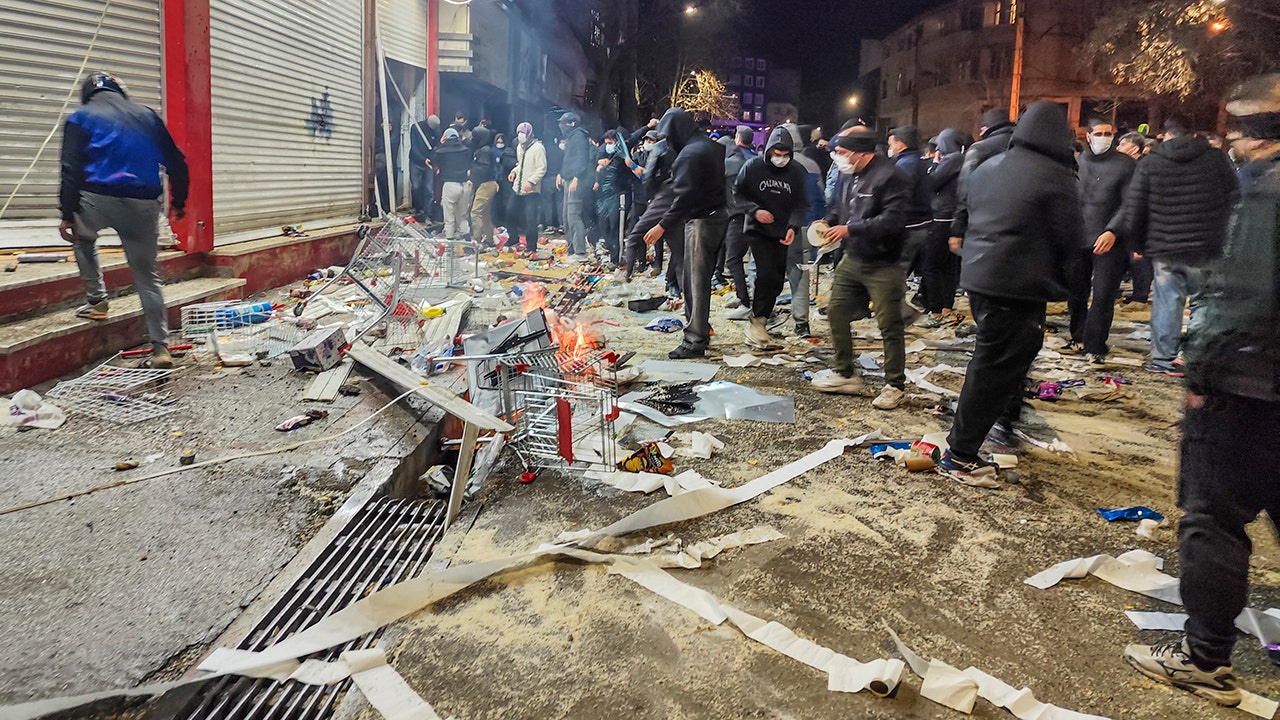
Hundreds of protesters poured into the streets of western Iran on Tuesday following a deadly bus crash that killed 13 oil and gas workers, with demonstrations quickly escalating into anti-government chants with some protesters calling for the return of the Pahlavi monarchy.
The unrest erupted in Abdanan, a city in Iran’s Ilam province near the Iraqi border, where residents initially gathered to demand accountability for Saturday’s fatal accident before turning their anger toward the Islamic Republic’s leadership.
Videos obtained by Fox News Digital showed large crowds marching through the streets, chanting «Death to the dictator!»
IRANIAN PROTESTER HANGED HOURS AFTER MARRYING HIS IMPRISONED FIANCÉE OVER JAIL PHONE LINE
In this photo obtained by The Associated Press, protesters chant slogans during an anti-government protest in Tehran, Iran, Thursday, Jan. 8, 2026. (UGC via AP)
Iranian-American journalist and foreign policy analyst Lisa Daftari said the demonstrations underscore the deeper political tensions facing Tehran. «Abdanan is a reminder that the Islamic Republic sits on top of a dormant volcano,» Daftari told Fox News Digital. «These uprisings start with different catalysts, and in this case it was a local grievance, but they always arrive at the same conclusion.»
«The slogans we hear are ‘Death to the Dictator’ and ‘Javid Shah,’ not complaints about a policy. They are an indictment of the entire system, top to bottom,» she said.
New reports Wednesday indicated that Iranian security forces arrested at least seven people, including a 15-year-old boy, during the unrest in Abdanan.
The Hengaw Organization for Human Rights said two detainees had been released, but the whereabouts of five others remained unknown. The Kurdistan Human Rights Network separately reported that security forces fired tear gas at demonstrators and that internet access was disrupted during the crackdown.
Iran’s Revolutionary Guard-affiliated Fars news agency acknowledged the demonstrations, reporting that approximately 200 to 300 people initially gathered in Abdanan’s Vali-e Asr Square before the crowd grew to roughly 1,000.
Fars reported that the slogans initially focused on the deadly accident but subsequently took on a political character. Police were deployed as protesters moved into surrounding streets, according to AFP’s Nov. 17 report.
ONE GLARING ISSUE GOES UNADDRESSED IN UN CHIEF’S HIGH-STAKES TALKS WITH IRAN’S PRESIDENT
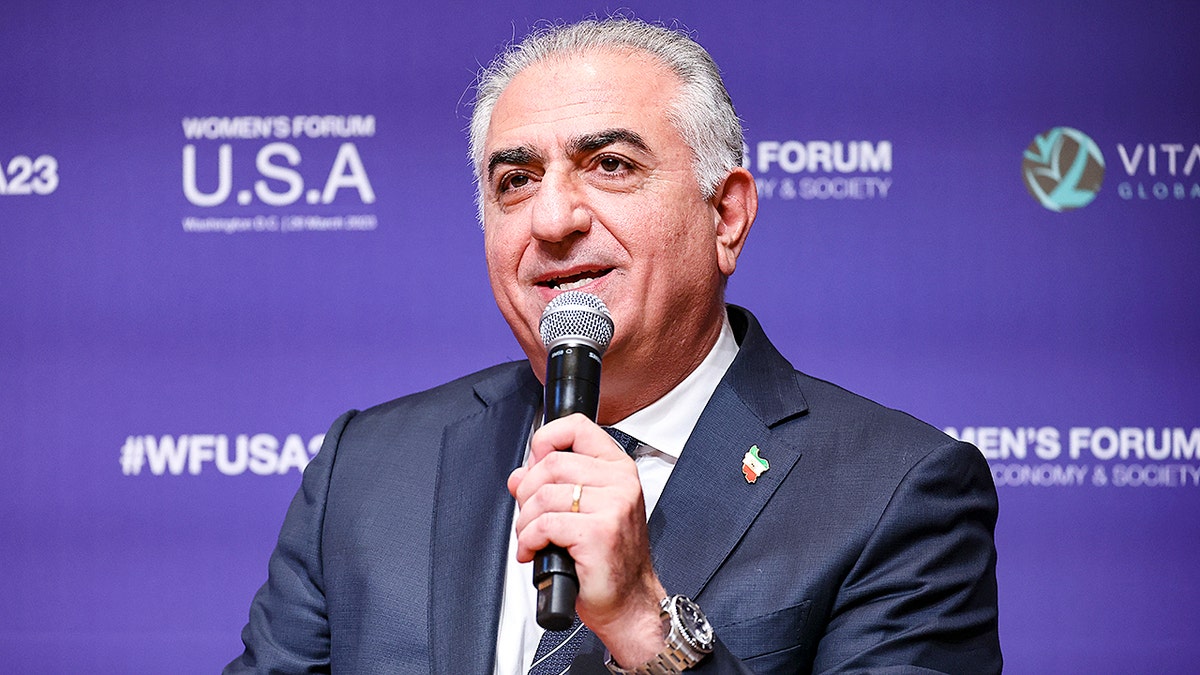
Reza Pahlavi, the exiled crown prince of Iran, said the Islamic Republic is «crumbling» and called for a democratic transition following recent U.S. and Israeli military strikes. (Paul Morigi/Getty Images)
The protests followed Saturday’s overturning of a bus transporting workers from the Dehloran gas processing project. Thirteen people were killed and more than a dozen injured, according to Iranian media reports.
Euronews Persian reported on Nov. 17 that provincial traffic police identified driver negligence, irregularities involving the company’s bus contract and inadequate road barriers as factors contributing to the accident. Prosecutors have announced legal proceedings against the company and provincial transportation officials, although responsibility has not been established in court.
Authorities warned against allowing the demonstrations to escalate.
«Individuals who seek to exploit this incident to disrupt public order or incite public sentiment will be dealt with firmly,» Abdanan prosecutor Amrollah Misaie said, according to Iran’s judiciary-affiliated Mizan news agency, as quoted by AFP on Nov. 17.
Daftari, The Foreign Desk editor-in-chief, argued that the Iranian government’s greatest challenge may ultimately come from within, regardless of its confrontation with Washington and Jerusalem. «Whatever happens in the military standoff with the United States and Israel, Tehran will still face its most serious adversary at home,» she said.
She also pointed to the protesters’ willingness to return to the streets following the deadly crackdown earlier this year, saying that «despite thousands being killed by the regime for protesting in January, we still see bravery on the part of the Iranian people to tell the world of their grievances and to stand up to their murderers.»
At the United Nations’ daily briefing on Tuesday, Fox News Digital asked the U.N. spokesperson whether the organization was monitoring the situation, particularly the actions of Iranian security forces on the ground. «Well, we’re keeping an eye on the situation and we want to make sure that all peaceful protests are allowed to proceed without obstruction and without harassment of protesters,» the spokesperson said and added, «Certainly our human rights colleagues will continue to monitor the situation as we’ve done in the past.»
IRAN TURNS CITIZENS INTO INFORMANTS AS CHILLING CRACKDOWN SPREADS BEYOND ITS BORDERS
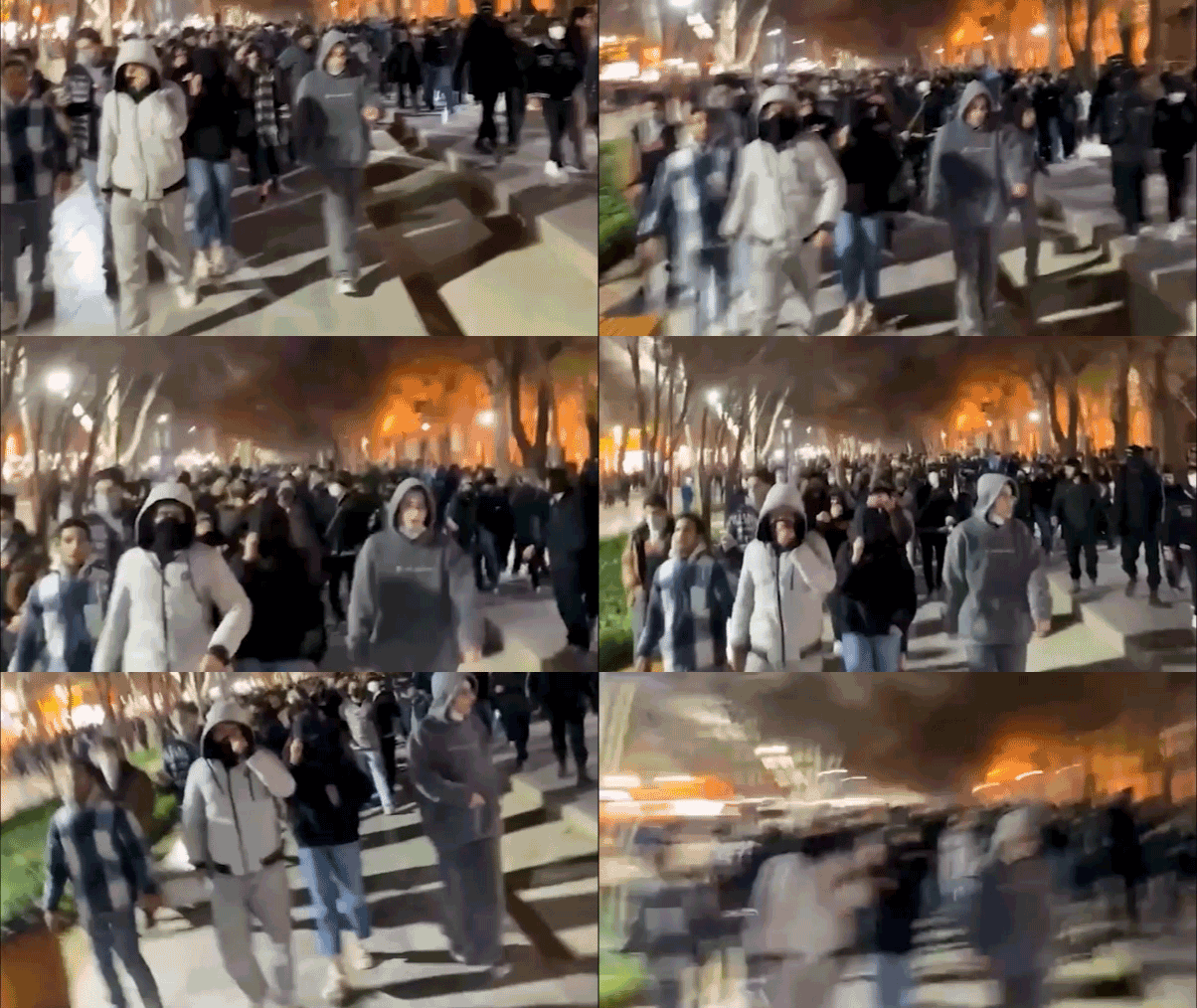
Hundreds of protesters swarm the streets as they march against the Iranian regime. (Simay Azadi)
The demonstrations carry particular significance because Abdanan was previously a flashpoint during Iran’s nationwide anti-government protests earlier this year.
Reuters reported on Jan. 9 that it had verified footage showing demonstrators marching through the city during the broader uprising against the Islamic Republic.
The city also witnessed renewed tensions during mourning ceremonies for protesters killed in the January unrest. Reuters reported on Feb. 18 that witnesses and activists said security forces opened fire on hundreds of mourners gathered at a cemetery in Abdanan.

Iranian security forces are seen near a crowd during demonstrations amid ongoing unrest, according to images released by the Iranian opposition group National Council of Resistance of Iran (NCRI). (NCRI)
Tuesday’s demonstrations mark another outbreak of public anger in a city with a recent history of confrontations with Iranian authorities.
world protests, iran, war with iran, world
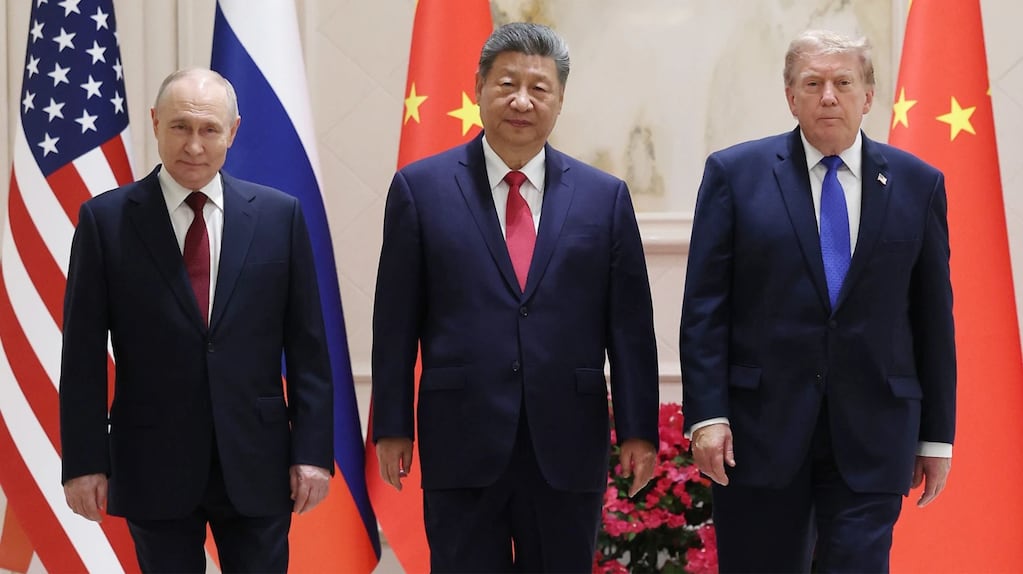
China, Estados Unidos y Rusia adoptaron este jueves una declaración conjunta de paz durante una cumbre sin precedentes entre sus tres presidentes, en un escenario internacional atravesado por la guerra en Ucrania, el conflicto de Washington e Israel con Irán y la disputa por la influencia geopolítica. El encuentro se realizó en la ciudad china de Shenzhen y reunió a Xi Jinping, Donald Trump y Vladimir Putin.
El documento, difundido después de la reunión, establece compromisos para reformar las Naciones Unidas, proteger la inmunidad diplomática y garantizar el suministro de energía. También cuestiona el alcance de la jurisdicción de la Corte Penal Internacional (CPI) y propone abrir un diálogo sobre la reducción de los riesgos nucleares.
“Los tres jefes de Estado mantuvieron un intercambio profundo de opiniones sobre la situación internacional actual y se comprometieron a defender la estabilidad estratégica y la seguridad internacional”, señalan medios estatales chinos.
La negociación a puertas cerradas duró una hora y 20 minutos y se desarrolló al margen de la cumbre de la Cooperación Económica Asia-Pacífico (APEC). Trump aseguró que los tres mandatarios habían hecho “historia”, mientras que Putin habló de una “nueva página en la historia de la diplomacia”. Xi, por su parte, sostuvo que los países comparten una perspectiva común sobre la preservación de la paz mundial.
Uno de los puntos más sensibles de la declaración fue el referido a la Corte Penal Internacional. Los tres gobiernos coincidieron en que ese organismo y otras instituciones similares no deben abusar de su jurisdicción. La postura tiene una implicancia directa para Putin, sobre quien pesa una orden de arresto internacional por la invasión rusa a Ucrania.
Además, los mandatarios se comprometieron a impulsar una reforma de la ONU para mejorar su capacidad de respuesta ante los desafíos globales y fortalecer su función de preservar la paz. En materia energética, plantearon aumentar la producción y el suministro de productos petrolíferos refinados para garantizar un flujo estable de recursos en medio de las alteraciones provocadas por los conflictos armados.
La cumbre también generó preocupación por la posibilidad de que las tres potencias busquen establecer nuevas esferas de influencia y adopten decisiones sobre conflictos internacionales sin consultar a los países directamente involucrados, como Ucrania, ni a sus aliados europeos.
En el plano militar, la declaración incluyó el compromiso de iniciar conversaciones sobre desarme y no proliferación nuclear. El tema cobró relevancia después de la expiración, en febrero, del tratado bilateral entre Washington y Moscú sobre armas atómicas. China sostiene que ambas potencias deben reducir primero sus arsenales, considerablemente superiores al suyo.
ONU
INTERNACIONAL
Prohibido volver a casa: el nicaragüense que cruzó clandestino entre cafetales, vivió oculto en su propio país y pidió asilo en España

Manuel regresó clandestinamente a Nicaragua después de que el gobierno de Daniel Ortega le prohibió abordar en Madrid un vuelo de vuelta a su país tras unas vacaciones en España. Meses más tarde volvió a salir por una ruta irregular y solicitó asilo político en territorio español, según información de BBC Mundo.
La restricción migratoria no es un caso aislado. El Grupo de Expertos en Derechos Humanos sobre Nicaragua de la ONU documentó al menos 318 casos de denegación de entrada entre junio de 2018 y agosto de 2025; muchas de esas personas quedaron desterradas y pidieron asilo, mientras otras regresaron por pasos no habilitados y permanecieron en clandestinidad.
Manuel, un nombre ficticio utilizado por razones de seguridad, llegó al aeropuerto de Barajas con sus maletas y se acercó al mostrador de la aerolínea. La empleada le informó que las autoridades de su país no le permitían ingresar y le entregó un contacto del Ministerio del Interior de Nicaragua, según relató a BBC Mundo.
La reacción fue inmediata: sintió frío, taquicardia y una sensación de vacío en medio del bullicio del aeropuerto. “Me fui a un rincón y me senté en el suelo a llorar. Recuerdo que no hubo nadie que se me acercara y me preguntara: ‘¿Estás bien? ¿Qué pasó?’. Es una sensación horrible, de abandono”, recordó.
Una política respaldada por reformas legales
La Asamblea Nacional reformó en noviembre de 2024 la Ley de Migración y Extranjería para habilitar las negativas de ingreso, los destierros y las desnacionalizaciones. La norma otorgó a la Dirección General de Migración y Extranjería la potestad de autorizar o denegar entradas, revocar permanencias y cancelar residencias o nacionalidades nicaragüenses adquiridas.
La modificación también incorporó al Código Penal penas de dos a seis años de prisión para los nicaragüenses que entren, salgan o intenten salir de forma irregular con fines de “menoscabar la integridad, la independencia, la soberanía y la autodeterminación de la nación”.
En noviembre de 2025, la ministra de Interior, María Amelia Coronel, defendió la aplicación discrecional de esas restricciones para nicaragüenses y extranjeros a quienes el gobierno considere un riesgo para la seguridad nacional. “Nicaragua se reserva el derecho de admisión al país en diversos casos relacionados a la seguridad nacional, el orden público y la prevención de delito”, afirmó en un medio oficialista.
La decisión se añadió a la revocación de ciudadanía de 316 opositores en 2023 y a la medida aplicada contra 135 presos enviados a Guatemala en septiembre de 2024. En enero de 2025, otra reforma constitucional anuló el derecho a la doble nacionalidad.
Rosario Murillo, copresidenta de Nicaragua y esposa de Ortega, respondió por correo electrónico a una consulta sobre estas restricciones con una única frase: “Gracias por su interés”.
Manuel había participado en las manifestaciones de 2018, iniciadas por el rechazo a las reformas del sistema de seguro social y transformadas luego en una exigencia de renuncia para Ortega y Murillo. La represión de aquellas protestas dejó al menos 328 muertos, de acuerdo con la Comisión Interamericana de Derechos Humanos.
Después de ese año dejó de involucrarse políticamente. Antes de viajar a España revisó y eliminó sus cuentas de redes sociales, bloqueó su correo electrónico y borró información personal para evitar que las autoridades encontraran algún elemento que pudiera perjudicarlo durante el control migratorio.
Salió de Nicaragua sin inconvenientes y recorrió nueve ciudades españolas. Creía que, si tenía alguna restricción, se la comunicarían en el aeropuerto de Managua antes de partir.
El cruce por cafetales y platanales desde Honduras
Tras recibir la prohibición de embarque, Manuel regresó a Murcia, donde se encontraba con familiares. Aunque amigos y parientes le aconsejaron quedarse en España y solicitar protección internacional, decidió volver por sus vínculos familiares, su casa, sus mascotas y sus bienes en Nicaragua.
Consiguió contactos que organizarían su entrada desde Honduras y compró otro boleto aéreo. El segundo viaje le costó más de USD 1,000, una suma que, según dijo, influyó en su decisión de continuar el trayecto pese al temor.
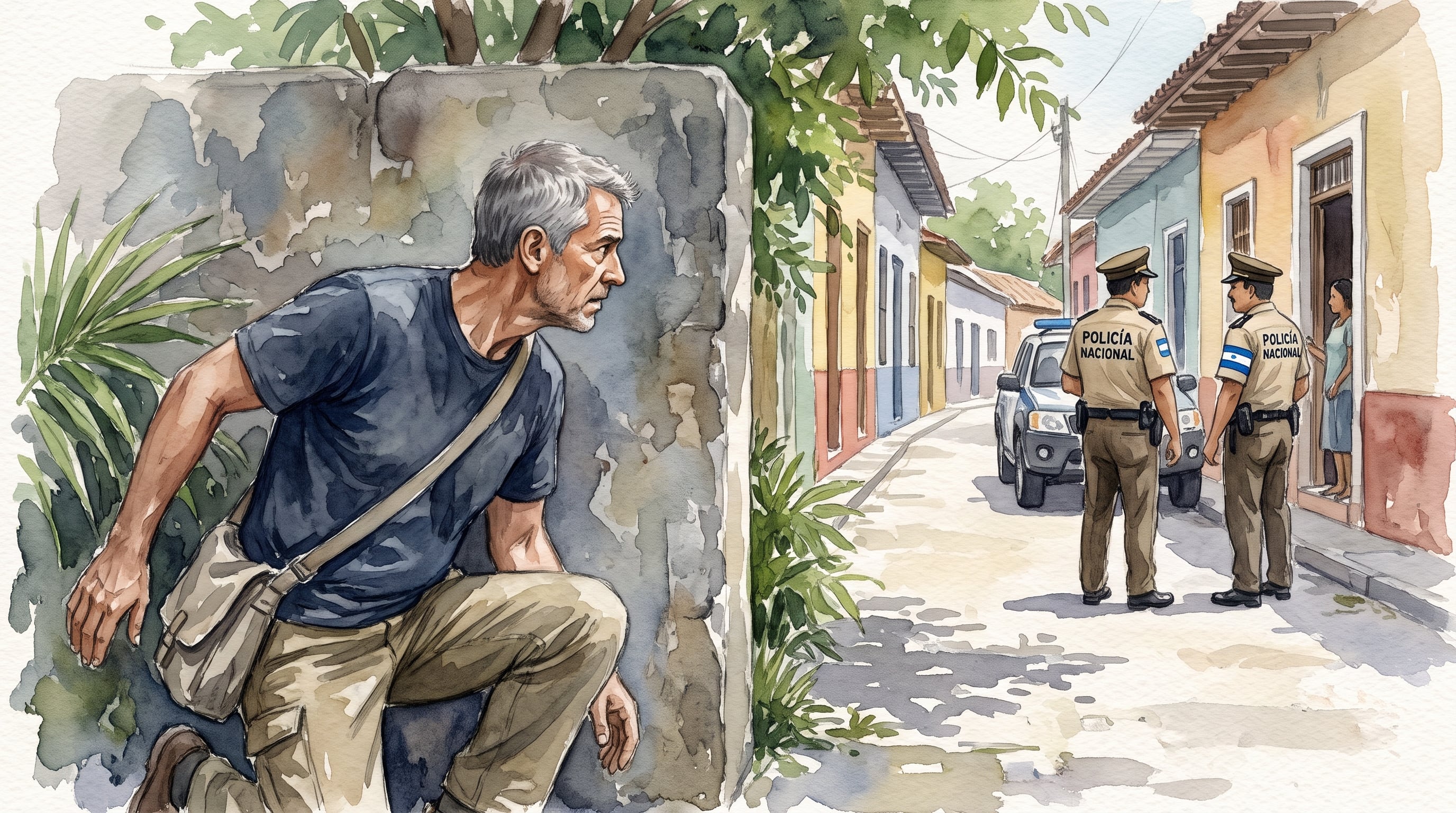
Aterrizó de madrugada en Honduras y viajó durante varias horas hasta la frontera. Allí obtuvo un sello de salida hondureño, pero no se dirigió al puesto de control nicaragüense: siguió a un guía por un camino que se internaba en el monte.

Vestía jeans, camiseta y tenis, y llevaba un bolso con documentos, una maleta de mano y dos valijas grandes. No quiso abandonar los vinos, jamones y alfajores que había comprado para sus amigos y familiares.
El recorrido debía durar unos 20 minutos, pero una lluvia intensa de la noche anterior dejó el terreno cubierto de barro. Manuel avanzó entre cafetales y platanales, se hundía en el lodo, se sostenía de ramas y se quemó las manos con la savia de las plantas de plátano.
El trayecto se prolongó cerca de media hora después de un vuelo transatlántico de 10 horas y otras cinco horas de viaje por carretera. “Te da esa sensación de que te están tratando como criminal. Es tan denigrante. Te sentís como que no valés”, relató.
Al divisar la carretera entendió que ya estaba dentro de Nicaragua. Un familiar lo esperaba a pocos metros en una camioneta, pero el retorno no restableció su vida anterior.
La clandestinidad dentro del propio país
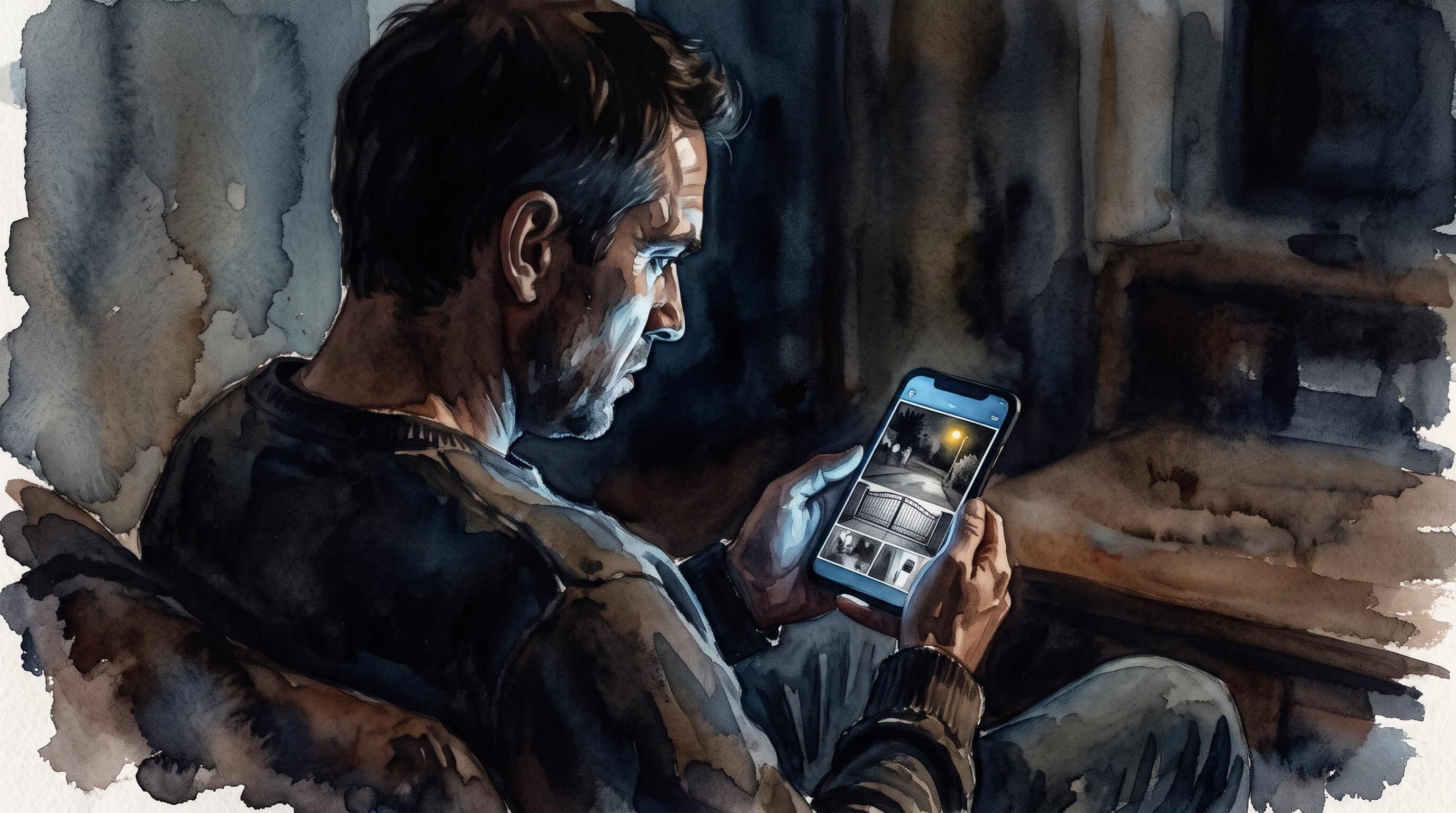
Durante las primeras semanas, Manuel dormía poco y se despertaba de madrugada con miedo de que la policía derribara el portón de su casa. Pasó un mes encerrado, revisando las cámaras de seguridad y buscando señales de movimientos extraños alrededor de su vivienda.
Después cambió de gimnasio, dejó de frecuentar restaurantes y comenzó a pedir comida a domicilio. Evitaba los lugares concurridos y redujo al mínimo sus salidas.
Yader Valdivia, coordinador de documentación del Colectivo de Derechos Humanos Nicaragua Nunca Más, afirmó que la organización ha identificado dos formas de retorno tras una negativa de ingreso. Una consiste en que empresarios envían cartas de disculpa al gobierno y pagan sumas de entre USD 6,000 y USD 9,000 para obtener autorización.
La otra modalidad comprende a quienes ingresan de manera irregular y viven ocultos porque el exilio tampoco representa una alternativa para ellos. Valdivia no precisó cuántos casos de este tipo han registrado.
Manuel permaneció varios meses en esa situación hasta que decidió salir nuevamente del país por una ruta clandestina. Su principal temor era ser detenido mientras permanecía sin una condición migratoria reconocida dentro de Nicaragua.
Ahora está otra vez en España y ha iniciado el trámite de asilo político. “Esta vez vine con el plan de reiniciar mi vida. Me duele haber dejado a mi familia, mis cosas, para venir a lo incierto”, dijo.
Nicaragua,cafetal,acuarela,café

Protesters call for regime change in Iran following deadly crash that killed 13 oil and gas workers

Norberto Marcos, ex de Fátima Florez, fue operado por un cuadro pulmonar y permanece en terapia intensiva: cómo sigue su salud

El texto completo de la “Declaración de Paz” que firmaron Trump, Xi Jinping y Putin

El Senado se encamina a sancionar una nueva ley de discapacidad pese a las resistencias del Gobierno

Canales para ver EN VIVO y ONLINE el Argentina vs Australia por el Mundial Sub 17

Hay un juego que sí se ha atrevido a competir contra GTA 6, y le está yendo mucho mejor de lo que podrías imaginar

La inflación de octubre: el dato que sorprendió a casi todos y la distancia que persiste con los parámetros internacionales

Milei dijo que el riesgo país sube por el miedo a "Orcolandia" y afirmó: "Los argentinos no van a votar hacia el pasado"

Se agudiza la suba de tasas y se complica la economía mundial

Encontraron muerto a un trabajador en el Observatorio de La Plata

 POLITICA3 días ago
Milei dijo que el riesgo país sube por el miedo a "Orcolandia" y afirmó: "Los argentinos no van a votar hacia el pasado"
- SOCIEDAD3 días ago
Encontraron muerto a un trabajador en el Observatorio de La Plata
- CHIMENTOS3 días ago
¡Bomba! Sofía Jujuy Jiménez confirmó su primer embarazo a los 35 años: tras pasar una escandalosa infidelidad, conoció a su nuevo novio y será mamá