INTERNACIONAL
Mike Arana, el prodigio de la Rivera Hernández que lleva el sueño de Honduras a su segundo Mundial juvenil


Mike Arana, jugador de Real España, tiene 17 años y se prepara para disputar su segundo Mundial juvenil con Honduras, después de convertirse en el futbolista más joven en debutar con la selección absoluta del país. El joven nacido en la colonia Rivera Hernández de San Pedro Sula aspira a que su carrera le permita comprar una casa para sus padres, relató en una entrevista para Diario Diez.
El futbolista marcó un doblete en el triunfo de Real España sobre Juticalpa FC el pasado fin de semana. Ese rendimiento se suma a sus goles en la Liga Nacional y a una trayectoria que comenzó cuando tenía tres años, en las calles de la colonia 6 de Mayo, dentro de la Rivera Hernández.
Marvin Arana y Marilyn Meléndez son padres de cuatro hijos, y Mike es el menor. Los vecinos ya advertían su capacidad con la pelota: de niño pedía botines de fútbol antes que autos de juguete y esperaba terminar el jardín de infantes para ponerse el uniforme de la selección hondureña que usaba su hermano mayor, aunque le quedara grande.
Su madre dejó de hacer trenzas a niños y niñas de la comunidad, una tarea que realizaba desde su adolescencia, para acompañarlo a partidos y entrenamientos. “Para llegar a la meta hay que luchar. Todo es sacrificio”, afirmó Marilyn.
Más de 400 goles en las categorías infantiles
La formación de Arana comenzó en la Academia Centuriones y continuó en Pumas, donde conoció a “Chico” Bruck. Bruck se ofreció a recogerlo y llevarlo de regreso a su casa todos los días para que no faltara a los entrenamientos.
A los siete años, el jugador viajó solo a Miami tras recibir una invitación para disputar un partido. Marilyn recordó que dudaba de permitirle el viaje por su edad, pero su hijo le respondió: “Sí mamá, yo me voy”.

El zurdo fue máximo goleador en las categorías U-8, U-10, U-14, U-18 e Intermedia, con más de 400 goles en el fútbol infantil. Cristóbal Bu, técnico hondureño y uno de sus mentores, detalló que Mike convirtió 90 goles en U-8 y 89 en U-9.
“Hubo un partido donde él metió 19 goles con siete años. Luego con la edad de 12 años lo pasamos a jugar a la U-14 y aún en la 14 fue campeón de goleo”, contó Bu al diario. Más tarde pasó a U-16 a los 14 años y volvió a liderar la tabla de anotadores; en dos torneos de Intermedia fue goleador con 16 y 18 tantos.
Los propietarios de equipos de categorías menores ofrecían refrigeradores, juegos de sofás, estufas y otros electrodomésticos a la familia para obtener los documentos del jugador y registrarlo en sus clubes. Sus padres mantuvieron su recorrido deportivo en las instituciones donde se formó.
Arana nació en su casa, no en un hospital. Marilyn entró en trabajo de parto mientras estaba enojada con Marvin y no le avisó que su segundo hijo varón estaba por nacer; cuando Mike llegó al mundo, ella le pidió que buscara a una partera para cortar el cordón umbilical.
El sueño de retribuir el esfuerzo familiar
El joven es conocido en su barrio como “Lamine Yamal”, un apodo ligado a su admiración por el futbolista del Barcelona y a las similitudes que los vecinos encuentran en su manera de jugar. Durante la conversación con Diario Diez, su madre le dijo: “Vos sos mi Lamine Yamal, hijo. Con goles o sin goles, vos sos el mejor de aquí y nadie me lo quita de la cabeza”.

La prioridad de Arana no está asociada a los lujos que suele imaginar para un futbolista profesional. “Comprarles una casa a mi mamá y a mi papá, porque sé todo el sacrificio que han hecho por mí”, expresó.
Marvin Arana trabajó como técnico en electricidad y su hijo adquirió curiosidad por los aparatos eléctricos al verlo en ese oficio. Mike suele desarmar objetos en su casa durante su tiempo libre, aunque después intenta volver a armarlos.
Hace cinco años, su padre dejó en pausa el trabajo de electricista para ser bombero en una gasolinera de San Pedro Sula. Allí trabaja de lunes a sábado entre las 6:00 y las 14:30, y explicó: “De aquí sale el apoyo para mi familia, aquí luchamos”.
El seleccionador nacional, José Francisco Molina, los entrenadores que acompañaron los primeros pasos del jugador y quienes lo dirigieron en Real España han señalado que Arana posee condiciones para seguir creciendo en el fútbol hondureño.

INTERNACIONAL
Transmisores de radio sobre más de 1.700 individuos: así es el proyecto que busca salvar a las mariposas monarca

Científicos colocan transmisores de rastreo en mariposas monarca para descifrar las rutas de su migración continental, de hasta 4.800 kilómetros, y encontrar los sitios de descanso clave antes de que desaparezcan.
Según informó AFP, la Federación Nacional de Vida Silvestre (NWF) y un equipo trinacional de investigadores colocaron en 2026 pequeños dispositivos de radio en casi 1.750 mariposas monarca para obtener, por primera vez con precisión, un mapa de sus rutas migratorias a lo largo de Norteamérica. La iniciativa ya arrojó descubrimientos inéditos y encendió esperanzas para una especie cuya población oriental se redujo más del 80% desde mediados de los años noventa.
La científica principal del proyecto, Rebeca Quiñonez-Piñón, lleva años preguntándose dónde se detienen las monarcas durante sus travesías. Ahora, junto a otros investigadores, dirige un estudio que combina seguimiento en tiempo real con ciencia ciudadana para identificar esas paradas en Texas, un estado por el que pasa una porción significativa de las mariposas que viajan al este de las Montañas Rocosas cada otoño.

Las monarcas recorren un corredor conocido como el “embudo de Texas” y sus rutas varían año a año
Las mariposas que migran al este de las Montañas Rocosas atraviesan un estrecho corredor texano —el llamado “embudo de Texas”— en busca de agua, néctar y refugios nocturnos. Su trayectoria exacta cambia según las condiciones ambientales de cada temporada, un detalle que durante décadas eludió a los científicos por falta de tecnología adecuada.
Los transmisores utilizados, desarrollados por Cellular Tracking Technologies, cuestan USD 200 por unidad y pesan aproximadamente lo mismo que una gota de agua. Solo las mariposas que superan los 400 miligramos —el peso de una pastilla estándar— son aptas para recibirlos, con el fin de no sobrecargarlas. David La Puma, vicepresidente de la empresa y coordinador del Proyecto Monarch Collaboration, explicó que otros investigadores también buscan ejemplares con alas más largas para marcarlos.
El proceso de colocación requiere precisión: las mariposas se capturan con redes, se mantienen a temperaturas frescas para calmarlas y se fijan sobre una tabla especial. Con un hisopo de algodón se aplica adhesivo en el abdomen del insecto y en la etiqueta, que luego se presiona con suavidad antes de liberar al animal.

Desde que comenzó el seguimiento, los científicos hallaron conexiones migratorias que antes solo habían podido hipotetizar
El rastreo ya produjo resultados que sorprendieron al equipo. Los investigadores encontraron la primera prueba documentada de una mariposa monarca proveniente de Utah —al oeste de las Montañas Rocosas— que se unió a las monarcas orientales en el centro de México. Otros ejemplares migraron por la costa este hasta Florida, cruzaron el Golfo de México y continúan su recorrido por territorio mexicano: una conexión que los científicos no habían observado antes en tal escala.
“Existen todas estas historias únicas sobre sus trayectorias, conexiones entre las poblaciones, que desconocíamos o que habíamos hipotetizado, pero no pudimos probar”, dijo Emma Pelton, bióloga conservacionista sénior de la Sociedad Xerces para la Conservación de Invertebrados. Desde que comenzó la migración en 2026, unas 175 mariposas marcadas fueron detectadas en México.
Louie Yang, ecólogo de insectos de la Universidad de California en Davis, calificó la tecnología de “bastante notable”, aunque advirtió sus limitaciones: el sistema no indica la ubicación exacta del insecto, sino el punto donde el receptor lo detectó. Además, una detección no garantiza que la mariposa siga con vida. Yang señaló que serán necesarios más estudios para determinar cómo —y si— las etiquetas afectan el comportamiento de los animales.

Los pesticidas, el cambio climático y la pérdida de hábitat siguen diezmando a la especie
Las monarcas suelen vivir entre dos y seis semanas, pero las que migran a México pueden alcanzar los nueve meses de vida. Ese ciclo largo —que incluye el vuelo hacia el sur, el invierno en los bosques de abetos oyamel del centro de México y el regreso al norte para reproducirse— las convirtió en símbolo de los derechos de los migrantes internacionales.
Sin embargo, su población lleva décadas en retroceso. La población occidental se redujo alrededor del 95% desde mediados de los años noventa. Los pesticidas representan una amenaza directa para la asclepia, la planta donde las monarcas depositan sus huevos y única fuente de alimento para sus orugas.
Tierra Curry, científica sénior y codirectora de especies en peligro de extinción del Centro para la Diversidad Biológica, señaló que el cambio climático altera los patrones de migración: las altas temperaturas en las zonas del norte retrasan las señales de partida, y si luego las temperaturas caen bruscamente, muchas mariposas no llegan a México. Las sequías prolongadas reducen las fuentes de néctar y agua, mientras que en California los bosques donde invernan las monarcas occidentales ceden espacio a proyectos urbanísticos.

Nuevas medidas buscan frenar la caída de la población en carreteras, jardines y corredores naturales
Ante ese panorama, los conservacionistas impulsan alternativas concretas. En Texas, redes instaladas sobre algunas carreteras incentivan a las mariposas a volar más alto, especialmente de noche, cuando descienden para posarse. La plantación masiva de algodoncillo y flores polinizadoras en jardines, bordes de carreteras y corredores de transporte también suma adeptos. Según Curry, varios estudios muestran que estas prácticas están fortaleciendo las poblaciones locales.
“Los polinizadores son fundamentales para proteger y garantizar que nuestros ecosistemas se mantengan saludables, y también para tener las fuentes de alimento que necesitamos como seres humanos”, destacó Quiñonez-Piñón. El público puede seguir el desplazamiento de cada mariposa marcada a través de la aplicación gratuita Project Monarch Science.
mariposa monarca,flor silvestre,fotografía macro
INTERNACIONAL
Supreme Court offers support for Catholic preschools challenging state funding requirements

The Supreme Court’s conservative majority offered clear support Tuesday for Catholic preschools that claim Colorado’s taxpayer-funded program improperly excludes them by unconstitutionally intruding on their religious rights.
At issue is whether those private education institutions that deny admission to children of LGBTQ+ parents violate state anti-discrimination laws, and can therefore be denied a generally applicable public benefit.
It is the latest high-profile religious rights appeal to reach the high court in recent years, several of them originating from Colorado.
CATHOLIC SCHOOLS, BANNED RIFLES AND ‘CLIMATE LAWFARE’: BLOCKBUSTER FIGHTS AWAIT SUPREME COURT
In a lively two-hour oral argument, the justices debated competing interests involving both religious liberty and a state’s interest in ensuring equal opportunity for gay and lesbian parents.
«I’m hard-pressed to think that, given those [Catholic] teachings, that any homosexual family is going to choose to go to one of these schools, but that should be their choice, not your choice to exclude them,» said Justice Sonia Sotomayor to the lawyer for the plaintiffs. «That’s what you’re asking for… You want an official statement by the State that I will subsidize you with public money even though – because I have a right to reject children.»
ANDREA PICCIOTTI-BAYER: COLORADO’S UNIVERSAL PRESCHOOL REVIVES VILE ANTI-CATHOLIC LAWS
But Justice Brett Kavanaugh said the state’s motives, however well-intentioned, are promoting a kind of conformity that is not constitutionally permissible.
«Why not seek the win/win?» Kavanaugh asked the attorney for the state. «There are plenty of opportunities to respect the rights of the religious believers and respect the ability of LGBT parents to find among the 2,000 [Colorado] schools an appropriate fit for their children.
«It seems like this is a would-be solution in search of a problem that is unnecessary to create this clash,» he added. «There’s an ability for everyone to go to the school, a good school that’s a fit for them, and respect religious rights.»
Colorado established a Universal Preschool Program (UPK) in a 2020 ballot measure, distributing public funds for participating schools, with the requirement they «provide eligible children an equal opportunity to enroll and receive preschool services regardless of race, ethnicity, religious affiliation, sexual orientation, gender identity, lack of housing, income level, or disability.»
Two Catholic parishes sued, arguing the policy targets their sincerely held beliefs about same-sex marriage.
The archdiocese in the state manages 34 preschools, with a policy to only admit students from families who support Catholic ideology, including on same-sex relationships and gender identity.
They seek exemptions to the Colorado law, arguing their exclusion is a form of religious discrimination in violation of the First Amendment.
The Trump administration has signaled its support of the religious plaintiffs.
The state counters its public benefit conditions are neutral and generally applied to every preschool.
It provides a $6,300 annual benefit per child for up to 15 hours a week of preschool, with money coming from a tobacco tax.
Officials told the nine-member bench that religious schools are free to participate but must abide by nondiscrimination laws, similar to those affecting low-income and disabled students.
As part of its review of the Colorado dispute, the high court will decide whether to narrow a 36-year-old precedent that religious practices do not create exemptions from broadly applicable laws.
The First Amendment states, «Congress shall make no law respecting an establishment of religion, or prohibiting the free exercise thereof.»
The Supreme Court in prior decades had focused on the first part, ensuring a constitutional separation of church and state, when disputes over religious rights reached the public sphere.
But the current conservative bench in the past few years — led by Justice Samuel Alito — has trended toward favoring religious institutions raising «free exercise» claims.
The justices have separately backed a Colorado baker, mental health counselor and website developer, who all challenged the state’s anti-discrimination policies.
The oral arguments Tuesday seemed to divide along ideological lines.
Conservative justices focused on the «free exercise» claims by the Catholic parishes that state requirements for receiving public benefits amounted to religious discrimination.
«Explain what the difference is between [explicitly excluding Catholic schools] and then choosing to impose a condition that you know that those schools will be unable to agree to?» said Justice Amy Coney Barrett.
But Justice Elena Kagan cited the court’s prior cases, which she said affirmed the idea «you can’t treat religious institutions differently.»
«That’s not the principle that’s at issue here,» Kagan said. «The principle at issue here is: Do you have to treat them better?»
Chief Justice John Roberts asked tough questions of both sides and his vote could prove determinative. At one point, he expressed skepticism that recent rulings favoring the rights of religious schools over similar claims should also prevail in the current petition.
«The law in those cases, in each of them, expressly discriminated against religious schools on its face,» Roberts told Reaves. «That’s not the case here,» suggesting Colorado’s law may be applied fairly across the board.
The current dispute was brought by plaintiffs including St. Mary Catholic School.
Erika Nagle, whose children attend the Littleton facility, told Digital that two of her children were denied access to the state’s preschool funding program, leaving her family to cover additional education expenses.
«We are being excluded from this benefit because we are Catholic,» Nagle said in an interview with Digital. «And so in a state that preaches inclusion, they are actively going out of their way to exclude a huge chunk of people because of our religious beliefs.
«We have had two preschools in the archdiocese that have been closed down,» she added. «The state is dangling a carrot over here, incentivizing people to leave their faith, to abandon the Catholic education that they want.»
The Becket Fund for Religious Liberty represented the plaintiffs in court, arguing the state’s policies are having severe consequences, with enrollment at archdiocesan preschools falling 20% and two schools shuttered.
The state counters that religious entities like Catholic Charities, at least three dozen Christian schools, one Muslim and three Jewish schools continue to participate in the preschool funding program.
«Colorado welcomes religious preschools» to its program, state attorney Helen Norton told the high court. «The only thing Colorado asks is that they comply with the same conditions that every publicly funded preschool must meet, religious and secular alike.»
The case is St. Mary Catholic Parish v. Roy (25-581), with a ruling expected by next spring.
politics, supreme court, first amendment religion us, colorado, religion, family personal freedoms, judiciary, law
INTERNACIONAL
ASRA NOMANI: Muslim reformers reject ‘fire will rise’ warning if El-Sayed loses as ‘Jihad First’
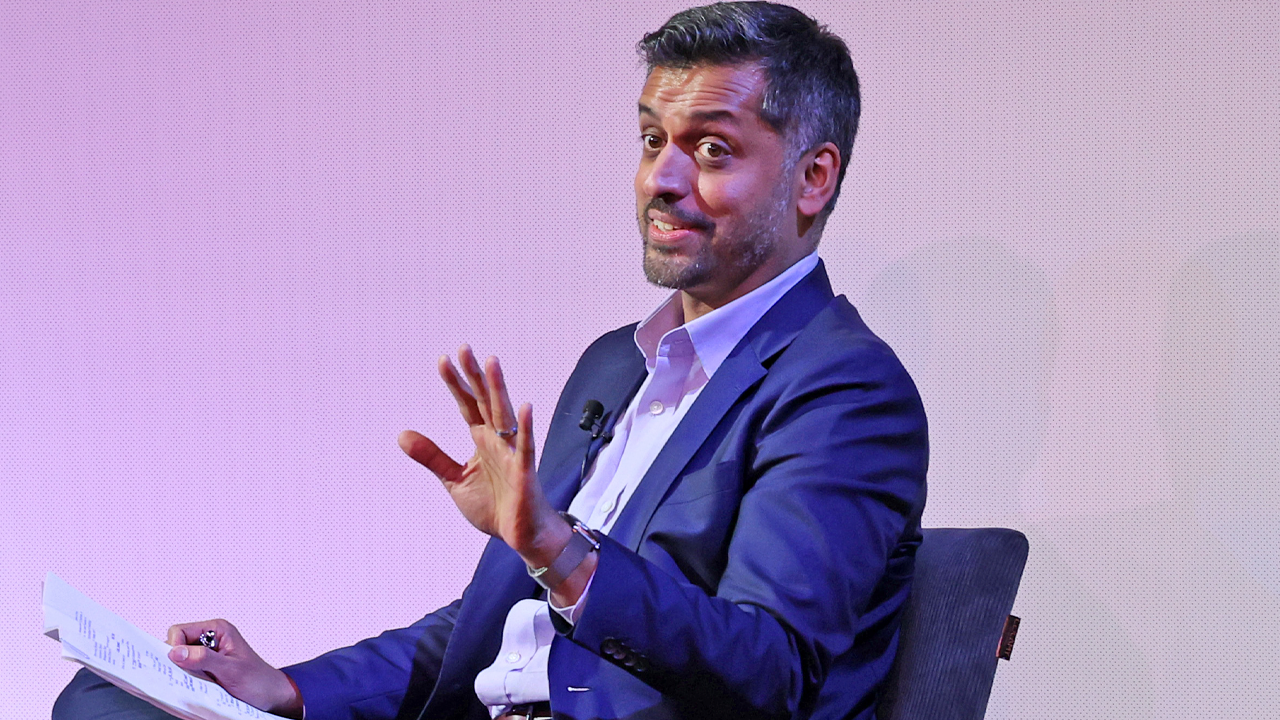
American Muslim reformers are torching political commentator Wajahat Ali after he warned that «the fire will rise» and people will be «radicalized» if Democratic candidate Abdul El-Sayed loses his Michigan Senate bid, saying his language echoes a «Jihad First» intimidation rhetoric used by religious tyrants before elections in the Middle East.
On Monday, Ali drew fire on X when he wrote: «If, God forbid, Abdul loses, this will be a watershed moment in Democratic politics. The fire will rise. It’s over. People will be radicalized against corporate, pro-Israel Dems. There will be a reckoning. If, when, he wins, it will be a watershed moment. And that reckoning will still come.»
After facing backlash, Ali posted another message Tuesday morning, expressing no regrets and instead scolding critics for alleged bigotry. «Ah, that Islamophobia and anti-Arab bigotry are so pure and naked,» Ali wrote. «People are just coming out in the open about how they’ve always felt. Great. Please, be honest. Just share the ugliness with the world so we can all see.»
Ali didn’t respond to a request for comment from Digital.
Reform-minded Muslim leaders aren’t buying Ali’s rhetoric.
The divide with Muslim reformers reflects a broader fissure within American Muslim politics: between establishment organizations and leaders who accept political Islam, or Islamism — the idea that religion should shape government and political life — and reform-minded critics who challenge orthodoxy, reject anti-Israel and anti-Western rhetoric and support secularism, including the separation of mosque and state.
«What Wajahat Ali said on the eve of elections is actually the language we’ve seen Islamists use before elections in countries in the Middle East, including Egypt,» Dalia Ziada, an Egyptian Muslim reformer and critic of political Islamism, told Digital.
«The threat is usually: If you don’t choose us, this will lead to radicalization, and this will lead to violence,» added Ziada, who is Washington, D.C., director at the Institute for the Study of Global Antisemitism and Policy. «Maybe we need to expect troubles coming up.»
EL-SAYED’S PAST MUSLIM BROTHERHOOD COMMENTS RAISE RED FLAGS AS HE EYES POWERFUL ROLE
Soraya Deen, a Muslim reform activist, attorney and co-founder of the Los Angeles Women’s Multifaith Alliance, said Ali’s language shouldn’t be treated as a routine social-media outburst.
«His words are deeply troubling,» Deen told Digital. «His warning that ‘the fire will rise,’ that people will be ‘radicalized,’ and that a ‘reckoning’ is coming deserves serious scrutiny.»
«Losing an election is not a license for radicalization,» added Deen, . «We must reject intimidation, political extremism and the politics of perpetual grievance.»
EX-DSA MEMBER RIPS ABDUL EL-SAYED AND WARNS FAR-LEFT ADOPTING POLITICS OF FOREIGN TERROR ORG
Dr. Zuhdi Jasser, a Muslim reformer and founder of the American Islamic Forum for Democracy, said Ali’s comments reflect what he describes as a «Jihad First» lens for viewing political conflict.
«Wajahat Ali, like Abdul El-Sayed, proves yet again their decades of anti-American Islamist obsession and the ‘Jihad First’ lens through which they view every cultural, social, military and political conflict,» said Jasser, who is running for Congress as a Republican candidate in Arizona’s 4th Congressional District.
Jasser’s comments were directed at what he described as the political rhetoric surrounding El-Sayed’s campaign. The reformers didn’t accuse Ali of belonging to an Islamist organization. Their criticism focused on language they said resembles tactics used to pressure voters by warning that rejecting a candidate could produce violence or radicalization.
EL-SAYED TRIES TO MAKE PEACE WITH JEWISH DEMOCRATS BUT DRAWS LINE AT DUMPING HASAN PIKER
Ali’s comments came as El-Sayed’s campaign draws support from a wide network of Muslim advocacy groups, Palestinian activist organizations, progressive groups, labor organizations and political influencers.
A Digital review of campaign endorsements, public statements and voter-mobilization efforts identified 70 Muslim groups and influencers supporting El-Sayed’s political orbit one way or another. The records include formal endorsements, campaign-listed support, voter mobilization and public amplification. Not every organization has the same relationship with the campaign.
They include CAIR Action, Americans for Justice in Palestine Action, Bangladeshi Americans for Political Progress, Emgage Action and the US Campaign for Palestinian Rights. El-Sayed’s official website includes endorsements from «Muslims for Abdul,» the Yemeni American Michigan Democratic Caucus, the Michigan Bangladeshi American Democratic Caucus and Palestinian American political operative Linda Sarsour’s MPower Action, among others.
ABDUL EL-SAYED REPORTEDLY CALLED HASAN PIKER WARNING HIS RHETORIC WAS ‘COSTING’ VOTES
The broader coalition supporting El-Sayed includes Democratic Party organizations and Democratic Socialists of America chapters, as well as online commentators and political figures including Hasan Piker, Linda Sarsour, Rep. Ilhan Omar and Rep. Rashida Tlaib.
The organizations and individuals have overlapping priorities, including opposition to U.S. support for Israel, demands for an arms embargo or cease-fire, support for Palestinian activism, criticism of Democratic moderates and efforts to mobilize Muslim and progressive voters.
The coalition’s critics have described it as a «red-green» alliance involving «red» left-wing political organizations and «green» Muslim advocacy groups.
«Their red-green ‘Jihad First’ filter — threatening fire and radicalization — is simply an unmooring of their own dreams to live the jihad of Islamism and destroy the American dream and everything for which it stands,» Jasser said. «Patriotism is not in their vocabulary.»
TRUMP SAYS ISRAEL WILL STOP RECEIVING $4B IN US AID BY YEAR’S END, CAN STILL BUY WEAPONS
For Ziada, the significance of Ali’s post lies in the suggestion that an election loss could trigger radicalization.
«Muslims like Wajahat Ali are just using the political movement backing Abdul El-Sayed as a staircase to bring them to the power of a chair they want to claim,» Ziada said. «Once they get there, they don’t care what they may have promised. And if they don’t get there, they will turn it into fire.»
Ziada also criticized El-Sayed’s campaign rhetoric about Israel, comparing what she described as repeated attacks on Israel to political tactics used by leaders in the Middle East. Tuesday morning, President Donald Trump announced that he would cut off $4 billion of aid to Israel, one of the network’s demands, designed to isolate the nation.
«The demonization of Israel that we saw very prominently in the campaign of El-Sayed is a tactic that we saw Middle Eastern dictators resorting to every now and then,» Ziada said.
«Whenever they are stuck with economic issues or politics, they just bring up the ‘Israel is bad’ card,» she added. «Again, he is just copying dictators in the Middle East.»
Jasser said the episode should prompt Muslim voters and Democratic leaders to examine the language used by political influencers who claim to speak for Muslim communities.
«Any honest Muslim who reads that post will see ‘Jihad First’ and everyone else be damned, including patriotic Muslims,» Jasser said.
Ali has emerged as a prominent media figure over more than two decades, writing for and appearing on outlets including The Daily Beast, The New York Times, CNN and The Guardian. He also hosted programming for Al Jazeera America.
His political activism began after the Sept. 11, 2001, terrorist attacks, when he became involved in campus protests at the University of California, Berkeley. He later worked with Democratic operative Faiz Shakir, who became campaign manager for Sen. Bernie Sanders’ 2020 presidential campaign, at the Center for American Progress, a nonprofit established by former Clinton administration chief of staff John Podesta.
Ali has continued to weigh in on Israel, Democratic Party strategy and Muslim political activism, regularly drawing fire. Earlier this year, in a broadcast with former MSNBC host Joy Reid, the two decried «weak White mean» in a heated anti-Trump rant.
Most recently, Ali hosted a speaker who criticized Democratic House Speaker Hakeem Jeffries for receiving political contributions from the American Israel Public Affairs Committee, calling him an «AIPAC monkey.» The smear drew cries of racism against Jeffries, who is Black.
Now, Muslim reformers are scolding Ali for making comments that seem to threaten voters with «fire,» a «reckoning» and a «radicalized» citizenry if his preferred candidate loses.
Deen said the response to an election should be political disagreement, not warnings of unrest.
«Losing an election is not a license for radicalization,» Deen said. «We must reject intimidation, political extremism and the politics of perpetual grievance.»
politics, elections, white house, congress, democratic party, republicans

Tras el ataque en Palermo, la Federación Argentina LGBT alertó por el aumento de los crímenes de odio

Transmisores de radio sobre más de 1.700 individuos: así es el proyecto que busca salvar a las mariposas monarca

Caputo respondió a los pedidos para inyectar pesos y reactivar el crédito en 2027: “Los bancos no prestan por incertidumbre”

Abogado de una de las empresas de Trump sostuvo que Cristina Kirchner “seguirá el camino de Lula” para recuperar sus derechos políticos

Ángel de Brito confirmó su polémica salida de América TV y anticipó su futuro: «Es la mejor oferta»

Manchester United venció a Roma por Champions League: Lisandro Martínez entró en el segundo tiempo

Qué pasó con el Refugio de Eli y por qué hizo enfurecer a Santi Maratea: «Fue un desastre, él nunca más le contestó y le prohibió…»

El “efecto Lula” sigue pegando en Argentina: los bonos sintieron el impacto, pero el tipo de cambio aguantó

Durante la visita a la Argentina, León XIV expondrá su mirada sobre la pobreza, el desarrollo y la educación, que cuestiona los planes de ajuste

Milei visita Neuquén para inaugurar una iglesia evangélica: tensiones internas y señales de cara a las elecciones 2027

 CHIMENTOS2 días ago
Qué pasó con el Refugio de Eli y por qué hizo enfurecer a Santi Maratea: «Fue un desastre, él nunca más le contestó y le prohibió…»
- POLITICA3 días ago
Agustín Caulo: “El Gobierno sigue trabajando para que no se politice la visita de León XIV a la Argentina”
- CHIMENTOS3 días ago
Benjamín Amadeo revivió el peor momento que pasó después de separarse de Lali Espósito: «Me sentí expuesto»