INTERNACIONAL
La plataforma Doctor SV triplicó su red médica y acumuló 5.4 millones de consultas en su primer año en El Salvador


Doctor SV triplicó su red médica en El Salvador durante su primer año de operaciones, al pasar de unos 1,200 profesionales en sus primeros meses a cerca de 3,000 médicos generales y especialistas. La plataforma informó que acumuló 5.4 millones de consultas y superó los dos millones de usuarios registrados desde su lanzamiento.
Los datos fueron expuestos por el director de Doctor SV, Manuel Bello, y el director de Operaciones, Reynaldo Reyna, durante una entrevista en el programa Frente a Frente de Telecorporación Salvadoreña.
Bello indicó que el crecimiento de la plantilla respondió a la demanda de atención remota. “Comenzamos con más o menos 1,200, 1,300 médicos los primeros meses, pero debido a la aceptación de la población ahora tenemos aproximadamente 3,000 médicos”, afirmó.
La aplicación nació como una alternativa para consultas de medicina general, como cuadros gripales, fiebre, dolores leves o problemas digestivos. Con el aumento de usuarios, incorporó programas para pacientes con hipertensión, diabetes, enfermedades renales, afecciones pulmonares y alteraciones del colesterol.

También desarrolla servicios de salud mental, nutrición, ginecología y seguimiento de enfermedades crónicas. Según los responsables de la plataforma, el sistema busca mantener controles periódicos para prevenir complicaciones y orientar a los pacientes cuando requieren atención presencial.
Reyna señaló que Doctor SV alcanzó 5.4 millones de consultas en 12 meses, con una tendencia ascendente desde su puesta en funcionamiento. En los primeros días, el servicio recibió cerca de 5,000 consultas diarias. La cifra llegó luego a un promedio de entre 22,000 y 24,000 atenciones por día.
“Tenemos récord de consulta de más de 24,000 consultas en un solo día”, dijo el director de Operaciones. La plataforma apunta a una capacidad de 30,000 consultas diarias, de acuerdo con sus proyecciones.
El servicio reportó además 1.4 millones de descargas. La diferencia frente a los más de dos millones de usuarios se explica porque una misma cuenta permite incorporar a familiares, como hijos, padres o cónyuges.

Los directivos sostuvieron que el sistema funciona las 24 horas, todos los días del año. En casos en los que un médico identifica una emergencia, Doctor SV coordina la derivación hacia el sistema presencial y, según explicaron, puede articular el envío de una ambulancia.
La red asociada a Doctor SV reúne más de 1,000 establecimientos distribuidos en El Salvador, entre farmacias, laboratorios y centros de diagnóstico por imágenes. Reyna precisó que el total asciende a 1,077 puntos de atención y que incluye más de 400 farmacias.
La plataforma ofrece medicamentos, estudios de laboratorio e imágenes sin costo para los usuarios, según explicaron sus autoridades. La red también incluye procedimientos de mayor complejidad, como resonancias magnéticas, ecocardiogramas, mamografías, monitoreos Holter y mapas de presión arterial.
“Garantizamos que todo ese ciclo se dé, porque nuestro objetivo es resolverle el problema a la población a la brevedad posible”, sostuvo Reyna. El sistema utiliza georreferenciación y mapas de demanda para orientar a los pacientes hacia establecimientos con menor carga de atención.

Los directivos afirmaron que Doctor SV registra un 97% de satisfacción entre los usuarios, según las evaluaciones efectuadas dentro de la aplicación después de las consultas y de los servicios complementarios.
La inteligencia artificial asiste al médico durante la consulta
La inteligencia artificial ocupa un lugar central en la operación de Doctor SV, aunque los responsables insistieron en que no sustituye el criterio profesional. La herramienta transcribe la conversación clínica, organiza antecedentes, ordena resultados de exámenes y presenta diagnósticos preliminares basados en protocolos médicos.
Bello explicó que el sistema permite reducir el tiempo que los médicos destinan a tareas administrativas. “El médico habla y la inteligencia artificial lo escucha. Comienza a transcribir toda esa conversación y la ordena en una historia clínica”, señaló.
La aplicación también puede advertir al profesional sobre preguntas pendientes o datos relevantes para la evaluación del paciente. “Es como tener al mejor médico a la par de uno”, describió Bello, quien aclaró que la decisión diagnóstica y terapéutica permanece en manos del médico tratante.

Según los directivos, la automatización permite que el personal se concentre en la escucha, la empatía y el contacto directo con cada paciente.
El modelo redujo consultas presenciales y atrajo interés regional
Bello afirmó que estudios realizados durante los primeros meses de funcionamiento detectaron una reducción del 11% en las consultas de medicina general en unidades públicas de salud hasta marzo. El objetivo, dijo, es complementar la atención presencial y liberar capacidad para pacientes que requieren otras intervenciones.
El desarrollo del modelo también despertó interés de autoridades y organizaciones de otros países. Los responsables de Doctor SV mencionaron contactos con representantes de Perú, Panamá, Uruguay y Costa Rica, además de intercambios con organismos internacionales sobre la posibilidad de adaptar el sistema a otros territorios.
“Ya demostramos que somos un sistema efectivo y eficiente”, afirmó Bello. La plataforma mantiene abierta la inscripción para ciudadanos salvadoreños y para sus grupos familiares mediante la aplicación.
Business,General Health,Medicines,Science,Technology,Corporate Events,Health / Medicine,South America / Central America,Science / Technology












INTERNACIONAL
Israel’s political shake-up enters new phase as former PM plays kingmaker — and deadline looms

NEWYou can now listen to Fox News articles!
Israel’s newly elected parliament was sworn in Tuesday, marking the beginning of a political transition that could end Prime Minister Benjamin Netanyahu’s long tenure in power. Despite the opposition’s parliamentary gains, the country remains without a new government, and negotiations to form one face significant obstacles.
At the center of those negotiations is former Israeli military chief Gadi Eisenkot, who was tasked by President Isaac Herzog on Sunday with assembling Israel’s next governing coalition after 67 lawmakers recommended him for the position, compared with 46 who supported Netanyahu.
Although Eisenkot’s Yashar party won 21 seats in the Oct. 27 election, he is working closely with former Prime Minister Naftali Bennett, whose B’Yachad party, formed with former Prime Minister Yair Lapid, secured another 12 seats.
NETANYAHU FACES COALITION SHOWDOWN AS RIVALS MANEUVER TO FORM ISRAEL’S NEXT GOVERNMENT
Former military chief Gadi Eisenkot, Israeli Prime Minister Benjamin Netanyahu, Israeli President Isaac Herzog and other Israeli officials pose for a photo on the day of the inauguration of Israel’s 26th parliament, at the Knesset in Jerusalem, Nov. 10, 2026. (Ronen Zvulun/Reuters)
The two parties have not merged, but their cooperation effectively gives Eisenkot the negotiating backing of 33 lawmakers — more than Netanyahu’s Likud, which remains the largest individual party in the Knesset with 27 seats.
A source with knowledge of discussions within the bloc seeking to replace Netanyahu told Fox News Digital that Bennett has decided to act as a political kingmaker, supporting Eisenkot’s leadership bid rather than seeking the premiership himself.
Bennett intends to coordinate closely with Eisenkot throughout the negotiations while preserving his party’s independent leadership and parliamentary identity, according to the source.

Parliament members attend an opening ceremony on the day of the inauguration of Israel’s 26th parliament, at the Knesset in Jerusalem, Nov. 10, 2026. (Ronen Zvulun/Reuters)
The arrangement does not create a new 33-seat party or guarantee that the two leaders will agree on every coalition arrangement. But it places Eisenkot in a stronger negotiating position than his party’s 21 seats alone would suggest.
During Tuesday’s swearing-in of the new Knesset, Netanyahu called for a national unity government, citing Israel’s security challenges, but also sharply attacked the Arab parties, accusing them of supporting terrorism and warning against forming a government dependent on their votes.
Bennett, normally an outspoken political figure who has largely avoided the spotlight during the coalition negotiations, broke his relative silence to repeatedly confront Netanyahu during the speech.
FORMER ISRAELI PM EMERGES AS WILD CARD IN HIGH-STAKES ELECTION WITH MIDDLE EAST’S FUTURE AT STAKE

Israeli Prime Minister Benjamin Netanyahu delivers remarks during a toast by heads of Israel’s political factions, at the Knesset in Jerusalem, Nov. 10, 2026. (Ronen Zvulun/Reuters)
«What about your Qatari advisors?» Bennett shouted, referring to the investigation into allegations that members of Netanyahu’s inner circle had financial ties to Qatar while working for the prime minister. Bennett also demanded to know why Netanyahu had not established a state commission of inquiry into the Oct. 7, 2023, Hamas attacks and challenged him to declare Qatar an enemy state.
The confrontation disrupted Netanyahu’s address, with other lawmakers joining the shouting as the prime minister continued warning against a government supported by Arab parties.
Eisenkot responded with an unusually forceful condemnation. «I sat and listened to the outgoing prime minister’s delusional, divisive, hate-filled and shameful speech,» Eisenkot said in a statement provided to Fox News Digital on Nov. 10. «I am now even more convinced that he is unfit to remain in office for even one more minute.»
Eisenkot subsequently instructed his negotiating team to cancel a meeting scheduled with Likud representatives for Wednesday.
In a separate statement, Yashar said the canceled meeting had been intended to explore coalition possibilities based on Eisenkot’s four governing principles, but Netanyahu’s speech made the planned discussions untenable.
FORMER ISRAELI ARMY CHIEF GADI EISENKOT EMERGES AS NETANYAHU’S LEADING ELECTION CHALLENGER
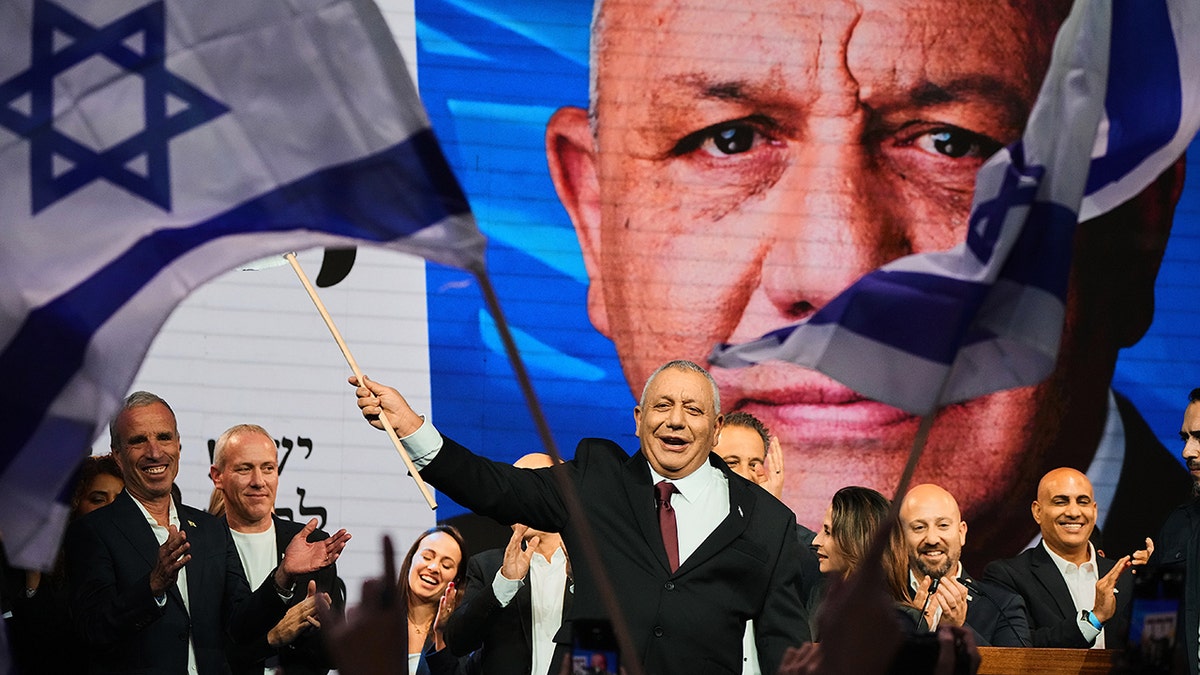
Gadi Eisenkot, leader of the Yashar («Straight») party, waves an Israeli flag onstage following the release of the first exit poll results in Israel’s general election in Tel Aviv, Oct. 28, 2026. (Ariel Schalit/AP Photo)
Netanyahu, however, continued advocating for a unity government on Wednesday, arguing that Israel’s security challenges demanded cooperation across political divisions, according to The Times of Israel.
Despite the public confrontation, a national unity government remains one of the most tangible scenarios under consideration, according to a source with knowledge of negotiations within the bloc seeking to replace Netanyahu.
The source told Fox News Digital that such an arrangement would depend on Netanyahu agreeing not to serve as prime minister first, potentially allowing Eisenkot to lead the government under a rotation agreement while Netanyahu assumes the position of alternate prime minister.
Eisenkot’s allies are keeping several options open, according to the source, including agreements with ultra-Orthodox or Arab parties, partly to strengthen their negotiating position and increase pressure on Netanyahu to accept a power-sharing arrangement.
But whether Netanyahu would agree to relinquish the premiership, even temporarily, remains unclear. The source emphasized that negotiations are fluid and that no agreement has been reached.
NETANYAHU GAINS OVERNIGHT AS ISRAEL ELECTION HEADS TOWARD POLITICAL DEADLOCK
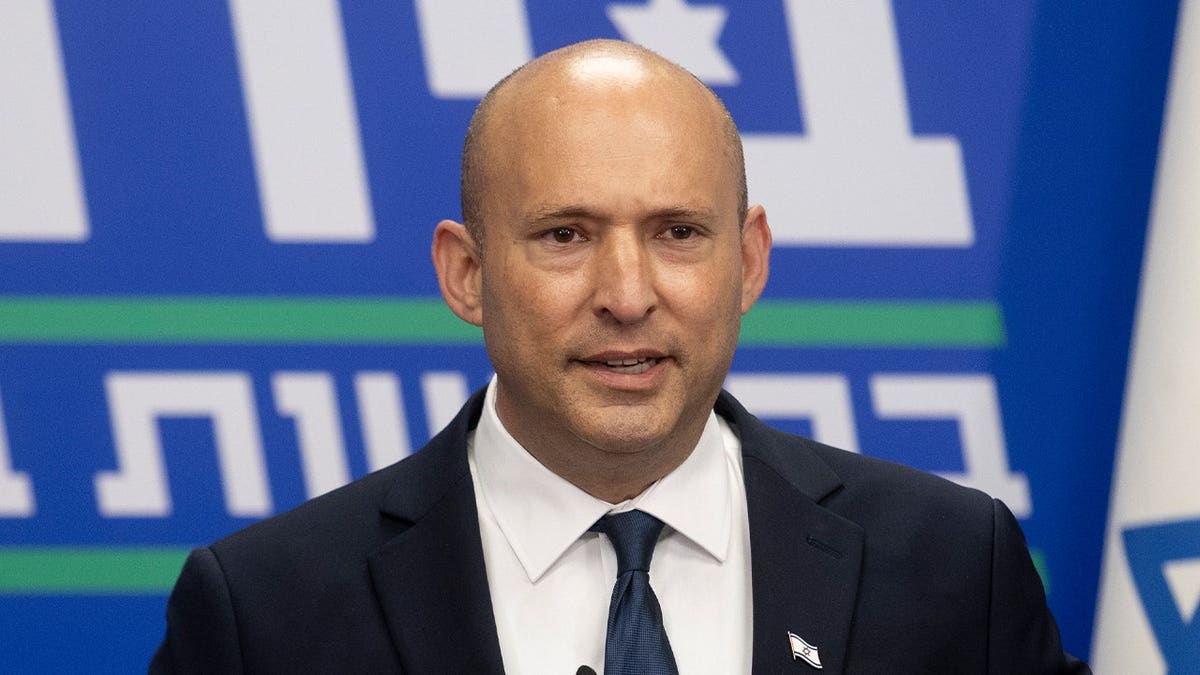
Naftali Bennett, former prime minister and head of the Together party, speaks at a press conference at the Israeli parliament on May 20, 2026, in Jerusalem. (Amir Levy/Getty Images)
Why forming a government remains so complicated
The official election results left Netanyahu’s bloc with 53 seats, while the four parties seeking to replace him secured 48. The remaining 19 seats went to two Arab-led parties: the Joint List, with 11, and Ra’am, led by Mansour Abbas, with eight.
While 67 lawmakers supported Eisenkot receiving the mandate to form a government, that support does not automatically translate into a workable governing coalition.
Herzog acknowledged the challenge during consultations with parliamentary leaders, citing disagreements and mutual political vetoes that could prevent either side from forming a stable government.
Eisenkot’s principal partners are Bennett, Lapid, Yair Golan of the Democrats and Avigdor Liberman of Yisrael Beytenu. Together, their parties hold 48 seats, 13 short of the 61 generally needed for a parliamentary majority.
Eisenkot has outlined four principles for potential coalition partners: recognizing Israel as a Jewish and democratic state, accepting the values of the Declaration of Independence, supporting military or civilian national service for all, and recognizing Hamas as a terrorist organization whose military and governing capabilities must be dismantled.
But those conditions have created a difficult political equation.
The ultra-Orthodox parties, Shas and United Torah Judaism, collectively hold 13 seats — precisely the number Eisenkot’s existing four-party bloc would need to reach 61.
However, both parties have historically opposed broadening military conscription to include ultra-Orthodox religious students, directly conflicting with Eisenkot’s demand for national service.
At a Nov. 10 faction meeting, Eisenkot reiterated that he would not abandon the principle of universal military, national or civilian service, according to The Times of Israel.
The disagreement became even more visible Wednesday, when Bennett’s party submitted legislation proposing expanded benefits for soldiers and reservists, while United Torah Judaism introduced bills seeking to preserve military draft exemptions for religious students, The Times of Israel reported Tuesday.
The Arab parties present a different challenge.
While Ra’am’s eight lawmakers could help Eisenkot establish a government, Liberman has rejected relying on Arab parties, and the political acceptability of such an arrangement remains disputed within the bloc.
A source within Eisenkot’s party told Fox News Digital that the party has not categorically ruled out cooperation with Ra’am, provided its leadership accepts the four governing principles.
The source acknowledged that negotiations remain difficult and that multiple coalition arrangements are still under consideration.
One option involves securing the support of ultra-Orthodox parties. Another would require cooperation with Arab lawmakers, potentially including support from outside the government. A broader national unity arrangement involving Likud has also been discussed.
Each scenario presents political obstacles, leaving Eisenkot facing the difficult task of assembling a coalition among parties with sharply different views on religion, national identity and security policy.
NETANYAHU DEFIES EXIT POLLS AS VOTE SHIFTS IN HIS FAVOR, BUT MAJORITY REMAINS ELUSIVE
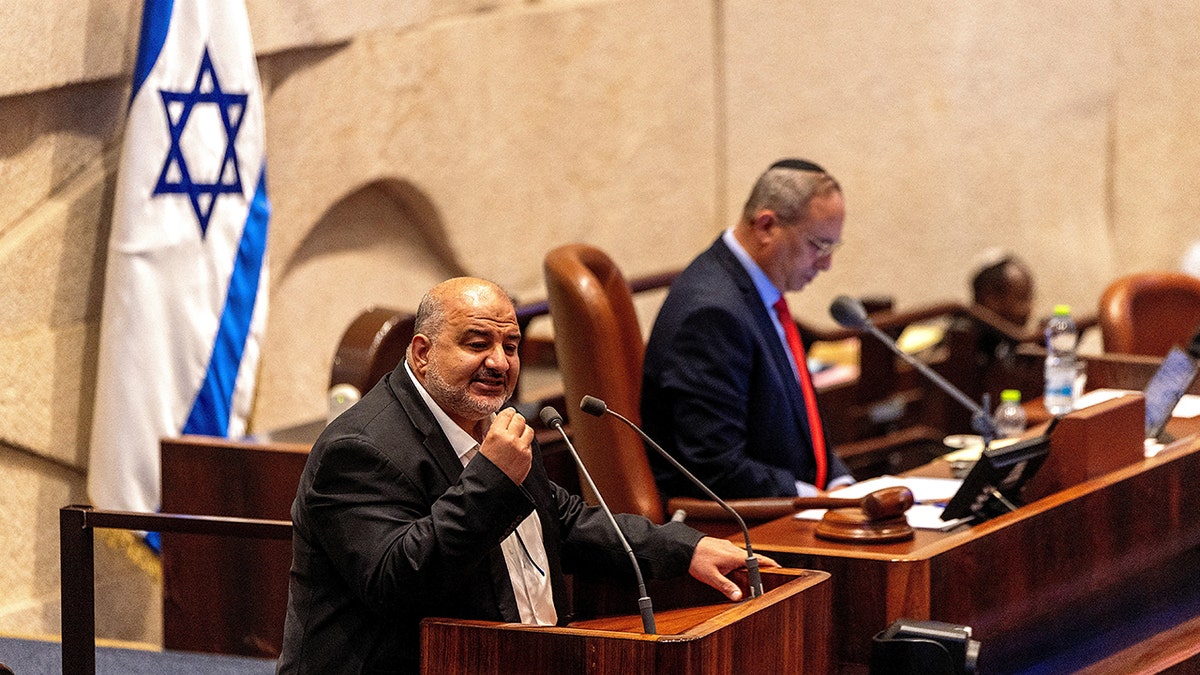
Mansour Abbas, leader of the Ra’am party, speaks at the plenum at the Knesset, Israel’s parliament, in Jerusalem, July 13, 2026. (Ronen Zvulun/Reuters)
Eisenkot moves to challenge Netanyahu before taking power
Even without a new government, Eisenkot and his allies have begun exercising their influence in the newly sworn-in parliament.
In a Monday statement provided to Fox News Digital, Yashar announced that it had submitted legislation to establish a state commission of inquiry into the Oct. 7, 2023, Hamas attacks and introduce term limits for the prime minister.
The party also submitted proposals to repeal legislation associated with Netanyahu’s judicial overhaul, including changes to the judiciary, the attorney general’s authority, the police and the circumstances under which a prime minister can be declared unable to serve.
A vote to replace current Knesset Speaker Amir Ohana, a Netanyahu ally, is scheduled for Nov. 17.
The appointments could give Eisenkot’s allies considerable influence over Israel’s legislative agenda before they secure control of the government.
Eisenkot signals a different approach to Washington
Beyond the domestic political negotiations, Eisenkot has also sought to reassure American leaders about the future of U.S.-Israel relations.
In a Nov. 4 public statement addressed to Americans and the international community, Eisenkot pledged to restore bipartisan cooperation with Washington and deepen Israel’s relationship with the United States.
«The bond between Israel and the United States is more than an alliance between governments,» Eisenkot wrote. «It is a partnership between peoples, built over generations, sustained by shared democratic values, and strengthened by the conviction that our nations are more secure and more prosperous when we stand together.»
He also directly addressed his willingness to work with President Donald Trump.
«I look forward to working closely and constructively with President Trump and his administration, whose friendship and commitment to Israel we deeply value,» Eisenkot said.
The message comes amid heightened debate in Washington over the future of U.S. support for Israel, following the American midterm elections and disagreements over the country’s regional policies.
A source within Eisenkot’s party told Fox News Digital that rebuilding relations with the United States, including with both major American political parties, would be among the priorities of a new government.
Eisenkot has also emphasized his intention to pursue regional cooperation and diplomatic opportunities while maintaining Israel’s security commitments.
ISRAEL HEADS INTO DEEPLY DIVIDED ELECTION AS OCT. 7 RECKONING LOOMS: WHAT TO KNOW
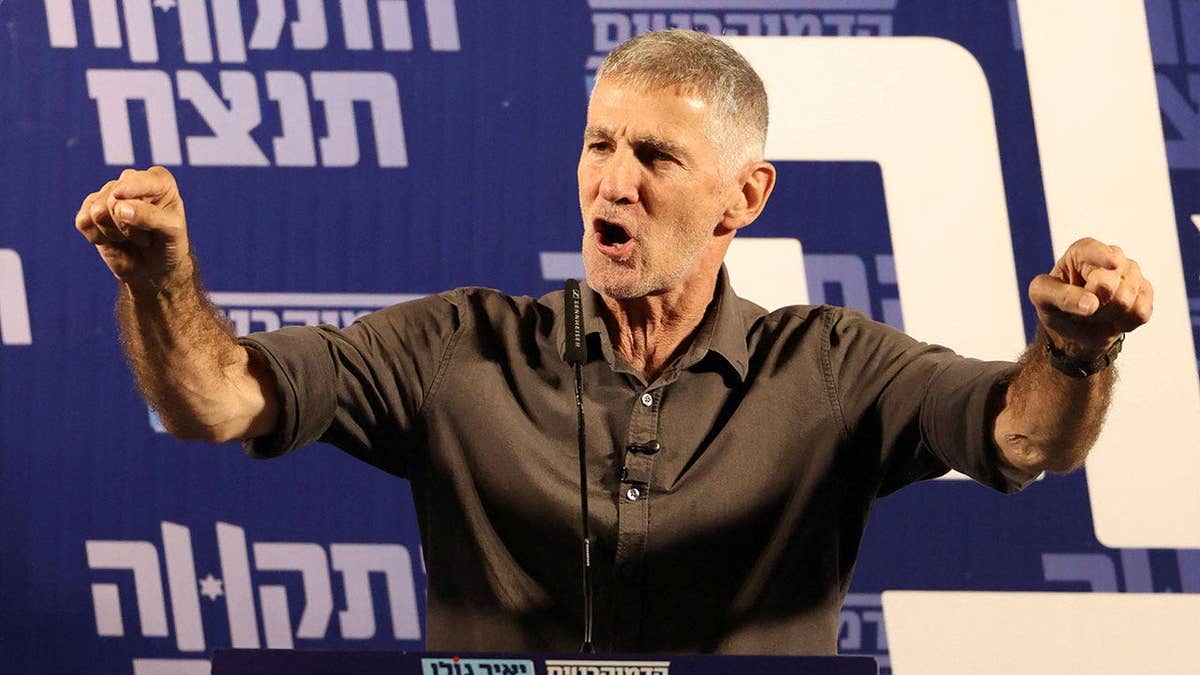
Yair Golan of the Democrats party speaks during a rally to demand the establishment of an independent state commission of inquiry into the Oct. 7, 2023, Hamas-led attacks and the events leading up to them, in Tel Aviv, Israel Oct. 24, 2026. (Kevin Coombs/Reuters)
What happens next?
Under Israeli law, Eisenkot has 28 days from Nov. 8 to form a government, giving him until Dec. 6 to reach an agreement. Herzog can grant an extension of up to 14 additional days, potentially pushing the deadline to Dec. 20.
If Eisenkot fails, the president may give another lawmaker the opportunity to form a government. Additional parliamentary procedures would follow if a second attempt also fails, potentially culminating in another national election.
The outcome could determine not only who becomes Israel’s next prime minister, but also the country’s direction on military conscription, judicial reform, accountability for October 7 and its relations with Washington.
For now, Israel is experiencing an unusual political transition: a newly elected parliament is beginning to challenge the outgoing government’s agenda, while the leader tasked with forming its replacement is still negotiating over who will join him.
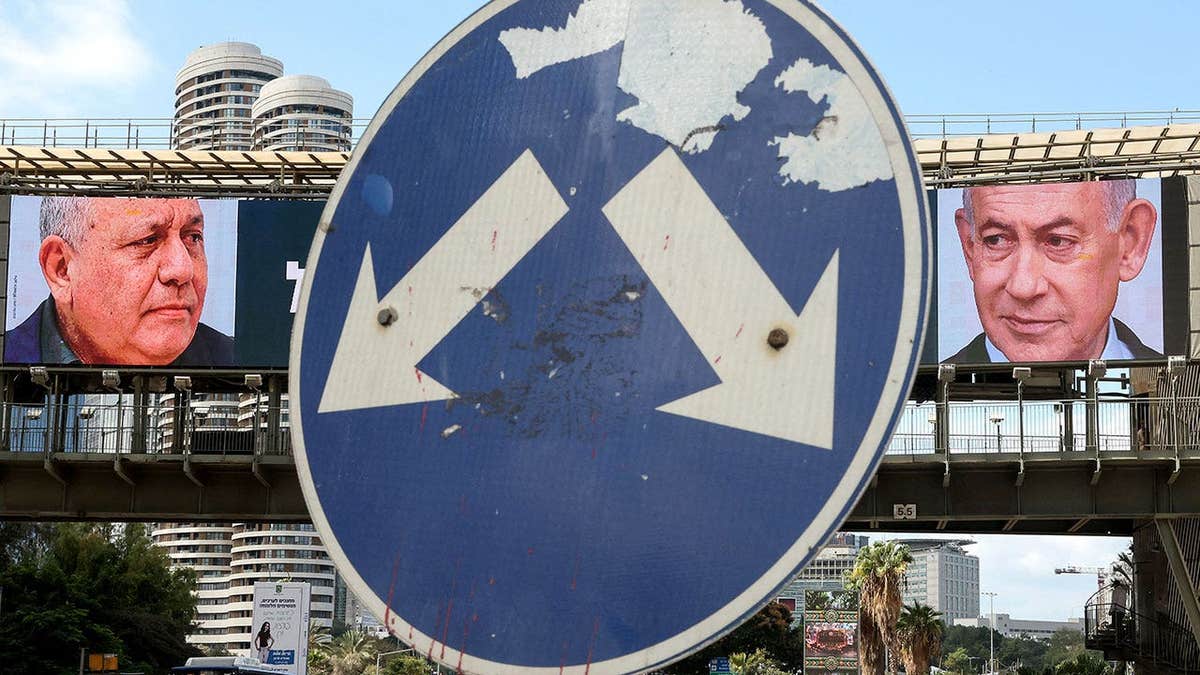
A road sign stands in front of a billboard featuring Prime Minister Benjamin Netanyahu and Gadi Eisenkot, in Ramat Gan on Oct. 20, 2026. (Jack Guez/AFP via Getty Images)
Eisenkot has the presidential mandate, Bennett’s backing and the support of a parliamentary majority willing to recommend him. What he does not yet have is an agreement among those parties on how to govern together.
israel, elections, middle east, benjamin netanyahu, politics
INTERNACIONAL
Cuatro hospitales de Panamá superan el 80% de ocupación ante alta demanda por enfermedades respiratorias

La Caja de Seguro Social (CSS) advirtió sobre una elevada ocupación hospitalaria en varias de sus instalaciones, debido al incremento de pacientes con enfermedades respiratorias, influenza, otros virus y dengue.
La institución señaló que esta situación ha aumentado la presión sobre los servicios de urgencias y las salas de hospitalización, por lo que pidió a la población reforzar las medidas de prevención y utilizar adecuadamente los servicios médicos.
La entidad informó que varios de sus hospitales registran una ocupación superior al 80%, entre ellos el Complejo Hospitalario Dr. Arnulfo Arias Madrid, el Hospital Irma de Lourdes Tzanetatos, el Hospital Regional Dr. Rafael Estévez, en Aguadulce, y el Hospital Regional Dr. Rafael Hernández, en David.
La advertencia corresponde exclusivamente a instalaciones administradas por la CSS y no incluye hospitales públicos gestionados por el Ministerio de Salud (Minsa).
Complejo Arnulfo Arias Madrid

La institución explicó que los niveles de ocupación responden a pacientes con diferentes patologías, incluidas afecciones respiratorias y otras condiciones que requieren hospitalización.
Aunque reconoce una mayor demanda de atención médica, el comunicado no precisa cuántas personas permanecen hospitalizadas, el número de camas disponibles ni el porcentaje individual de ocupación de cada establecimiento mencionado.
El panorama coincide con los registros epidemiológicos del Minsa, que durante la semana epidemiológica 40, correspondiente del 4 al 10 de octubre de 2026, identificó una positividad de influenza del 14.8%. El indicador se mantuvo por encima del umbral de alerta por segunda semana consecutiva, con una tendencia al aumento, según el informe nacional de vigilancia de virus respiratorios.
El mismo documento identificó una positividad del 29.6% para el virus sincitial respiratorio (VSR), mientras el rinovirus alcanzó el 40% entre los otros virus respiratorios vigilados. La bronquiolitis presentó una incidencia de 8.5 casos por cada 100,000 habitantes, por encima del umbral estacional, aunque el síndrome gripal y las neumonías permanecieron por debajo de sus respectivos umbrales.

En cuanto a la mortalidad, el informe epidemiológico contabilizó 65 defunciones por influenza acumuladas hasta la semana 40, de las cuales el 61.5% correspondió a personas de 65 años o más. Además, el 96.4% de los fallecidos no tenía actualizada la vacunación contra la influenza correspondiente a la temporada de 2026, mientras el 81.5% presentaba factores de riesgo.
El reporte también registró 26 defunciones acumuladas por virus sincitial respiratorio y 13 por COVID-19. En el caso del coronavirus, se notificaron 21 nuevos contagios durante la semana analizada, con 12 pacientes hospitalizados en salas y ninguno en cuidados intensivos. Estas cifras corresponden a la vigilancia epidemiológica nacional y no representan el número actual de hospitalizaciones en la CSS.
Respecto al dengue, el Minsa acumulaba 11,080 casos confirmados y 20 defunciones hasta la semana epidemiológica 40, con 1,372 pacientes clasificados con signos de alarma y 64 casos graves. Colón encabezaba los registros con 2,521 contagios, seguido de la región Metropolitana con 2,474 y Chiriquí con 1,380. La CSS también incluyó esta enfermedad entre los factores de presión asistencial, sin detallar cuántos pacientes permanecen ingresados por dengue.
A la circulación de influenza, virus sincitial respiratorio y otras enfermedades respiratorias se suman nuevos casos de tosferina, una infección altamente contagiosa que mantiene en vigilancia a las autoridades sanitarias.
El Ministerio de Salud confirmó el 9 de noviembre cuatro casos durante la semana, dos en menores de edad y dos en adultos, además del fallecimiento de una niña de un año y cuatro meses en la comunidad de Platanares, distrito de Santa Fe, provincia de Veraguas.

Recuperación de instalaciones afectadas por el terremoto
Paralelamente a la presión hospitalaria, la CSS informó que mantiene un proceso de recuperación de instalaciones afectadas por el terremoto del 9 de octubre, mientras aplica medidas para garantizar la continuidad de los servicios.
Entre las unidades cerradas figura la Policlínica Presidente Remón, cuyos pacientes reciben atención en otros establecimientos de la institución dentro de la región metropolitana.
En Herrera y Los Santos, respectivamente, el CAPPS de Los Pozos y la ULAPS de Tonosí mantienen servicios en áreas temporales fuera de sus edificios. Por su parte, el Hospital Dr. Ezequiel Abadía, en Soná, atiende pacientes en toldas instaladas en el exterior, como parte de los ajustes operativos adoptados mientras avanzan las evaluaciones y trabajos de recuperación.
En Chitré, el Hospital Dr. Gustavo Nelson Collado mantiene operativos los servicios de hospitalización, urgencias y hemodiálisis, aunque el salón de operaciones, la cocina y la lavandería continúan en reparación. La Policlínica Dr. Roberto Ramírez De Diego atiende en una estructura modular, mientras que la Policlínica Dr. Horacio Díaz Gómez, en Santiago, conserva el funcionamiento habitual de urgencias, consultas y hemodiálisis.

Ante este escenario, la CSS pidió reservar los servicios de urgencias para situaciones que requieran atención inmediata, mantener los tratamientos de enfermedades crónicas y respetar los horarios de hemodiálisis.
También recomendó actualizar la vacunación contra la influenza, reforzar la higiene respiratoria y eliminar criaderos de mosquitos, mientras continúa la recuperación de las instalaciones afectadas y la atención de pacientes en todo el país.
influenza,hospitalización,adultos mayores,oxigenoterapia,enfermedades respiratorias
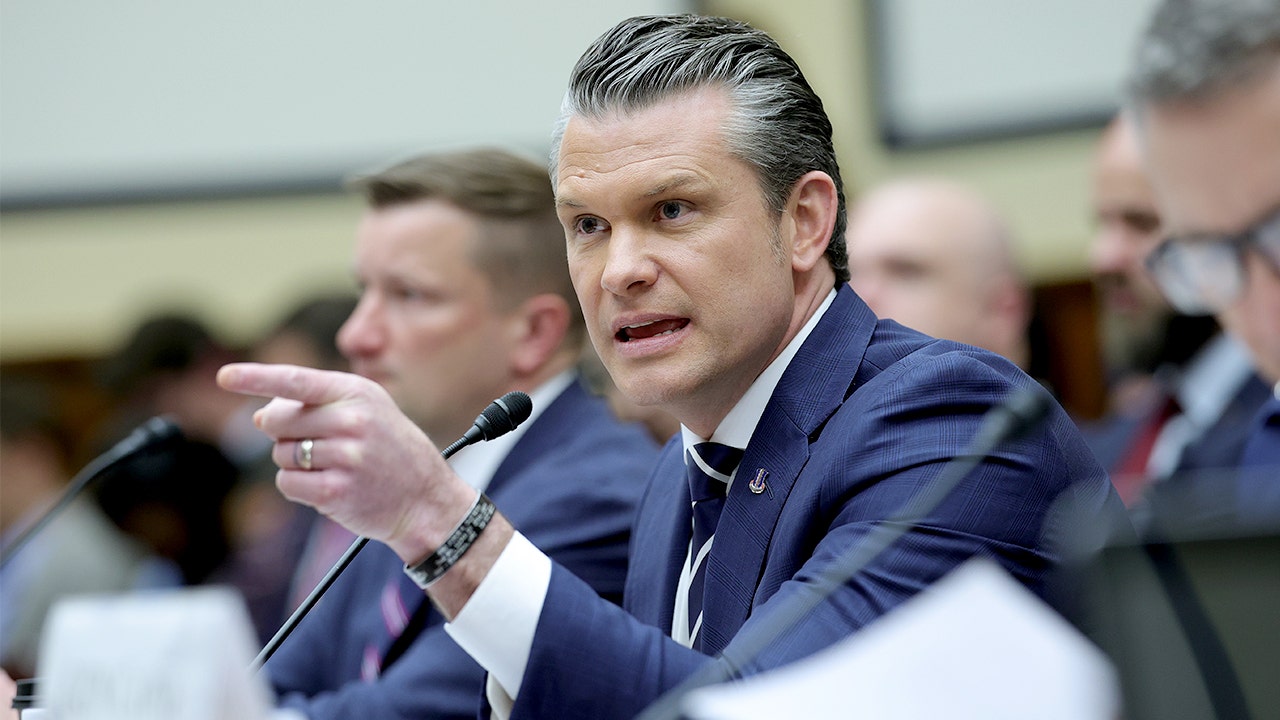
FIRST ON FOX: Some House Democrats are leaving the door open to additional articles of impeachment against War Secretary Pete Hegseth over his handling of military aid to Ukraine, according to lawmakers who spoke with Digital after a failed impeachment effort led by Republican Rep. Thomas Massie.
But a conservative legal expert suggested the renewed impeachment push may be less about removing Hegseth from office than discouraging conservatives from serving in future Republican administrations.
Massie, R-Ky., told Digital that while he could not substantiate allegations that Hegseth improperly withheld military assistance to Ukraine, he believes Democrats will investigate the matter and potentially introduce additional articles of impeachment when they take control of Congress in January.
«I believe [Democrats] may use some of the same articles of impeachment when they’re in the majority, but I also believe there are gonna be some other articles of impeachment based on hearings and committees,» Massie told Digital. «I think the Democrats will do that.»
DEMOCRATS RALLY BEHIND GOP LAWMAKER’S HEGSETH IMPEACHMENT PUSH, SIGNAL MORE TO COME IN JANUARY
«I heard that as one of the complaints that wasn’t in my impeachment resolution,» Massie added.
Massie acknowledged that another impeachment effort could be largely symbolic if the Senate fails to convict Hegseth, but argued that the proceedings could still pressure the war secretary to resign.
While impeachment requires a simple majority in the House, conviction and removal from office require a two-thirds majority in the Senate.
Massie said he hopes a Democratic-controlled Senate would hold a trial if the House impeaches Hegseth.
«So there’s still a reason to proceed,» Massie said.
His remarks came after the House rejected his effort Tuesday to impeach Hegseth over military operations against Iran and suspected drug smugglers in the Atlantic and Pacific oceans without congressional authorization.
The Constitution grants Congress the power to declare war, while the president, as commander in chief, has authority to direct military operations. The extent to which a president can initiate hostilities without congressional authorization remains legally disputed.
Senate Minority Leader Chuck Schumer, D-N.Y., also called on the House Monday to impeach Hegseth and urged the Senate to hold a trial to remove him from office.
Schumer did not respond to Digital’s request for comment.
Zach Smith, a legal fellow at the Heritage Foundation, criticized Democrats’ plans to pursue impeachment and potential prosecution of Trump administration officials, calling the efforts an «unfortunate waste of time» given the two-thirds Senate majority required to convict and remove an impeached official.
Smith argued, however, that Democrats are prioritizing impeachment proceedings to discourage conservatives from serving in future Republican administrations, not to actually remove Hegseth.
He added that the efforts would also divert congressional attention from «the many very important issues that our country is facing today,» including concerns Democrats campaigned on ahead of the midterm elections, such as driving down the cost of living.
«Not only does this mean that the House and the Senate will have to take time away from the legislative activities they should be focusing on, but it will also make it more difficult for members of the Trump administration to do their duties as well, because they’ll have to be dealing with these requests and other efforts by Congress,» Smith told Digital.
Despite Smith’s concerns, Rep. Adelita Grijalva, D-Ariz., echoed Massie’s expectations, telling Digital that she anticipates congressional oversight committees will investigate Hegseth’s handling of military assistance to Ukraine.
Grijalva said she expects congressional committees to hold hearings examining Hegseth’s handling of Ukraine funding.
‘LAWYER UP’: DEMS IMMEDIATELY PUT TRUMP ON NOTICE AMID REPUBLICANS’ MIDTERM BLOODBATH
«This is an issue that will come up again, because once we have more information into how bad his handling has been, we will likely have more movement and possibly more articles of impeachment,» Grijalva told Digital.
The Arizona Democrat, who described herself as «a big believer in process and getting the facts out,» argued that voters sent a clear message during the 2026 midterm elections.
Grijalva said Americans spoke «very clearly» when they voted, signaling that «they want to put an end to the corruption.»
Digital could not independently verify the allegation that Hegseth improperly withheld Ukraine funding or engaged in any wrongdoing related to the matter.
Hegseth did not respond to Digital’s request for comment.
Rep.-elect Scott Wiener, D-Calif., told Digital that he had «no idea» whether additional impeachment articles would be introduced and was unaware of evidence supporting the allegations. However, he expressed support for removing Hegseth from office.
«I will fully support impeaching him,» Wiener told Digital. «He’s a disaster to our military and our country.»
Republicans, meanwhile, accused Democrats of pursuing politically motivated impeachment proceedings against Trump administration officials.
House Foreign Affairs Committee Chairman Brian Mast, R-Fla., told Digital following Tuesday’s vote that he was «not surprised» by Democrats’ interest in impeaching Hegseth.
Mast argued that Democrats were determined to impeach «anyone who was appointed by the president,» regardless of whether evidence supported the allegations.
The discussions come as Democrats prepare to take control of Congress in January, giving the party greater power to launch investigations, hold hearings and pursue impeachment proceedings.
politics, pete hegseth, congress, hearings house of representatives politics, democrats

Oficialismo y oposición coincidieron en la celebración de la figura de León XIV: “Gracias por venir”

El Gobierno rechazó la decisión de Irán de declarar como organizaciones terroristas a la Armada y la Fuerza Aérea argentinas

Una estancia de Córdoba tenía 350.000 hectáreas y criaba 5 tipos de ganado: en 1868 donaron tierras para crear una ciudad de más de 60.000 habitantes

Los motivos que dispararon la tensión entre Zinedine Zidane y Kylian Mbappé en la selección de Francia

Brasil amplía brecha de precios con Argentina y algunos productos cuestan hasta 70% menos

Israel’s political shake-up enters new phase as former PM plays kingmaker — and deadline looms

La queja de Yanina Latorre tras asistir al VIP de la misa del papa León XIV: “Estuve al rayo del sol haciendo nada y…”

Así fue el saludo entre Javier Milei y el papa León XIV en Aeroparque tras la llegada a la Argentina

Elecciones desdobladas y lejos de las nacionales: la estrategia de los gobernadores patagónicos en 2027

Cuándo volverá a correr Franco Colapinto en la Fórmula 1 tras su participación en el GP de Brasil

 CHIMENTOS2 días ago
La queja de Yanina Latorre tras asistir al VIP de la misa del papa León XIV: “Estuve al rayo del sol haciendo nada y…”
- POLITICA3 días ago
Así fue el saludo entre Javier Milei y el papa León XIV en Aeroparque tras la llegada a la Argentina
- POLITICA3 días ago
Elecciones desdobladas y lejos de las nacionales: la estrategia de los gobernadores patagónicos en 2027