INTERNACIONAL
Top Trump officials’ holiday emails to staff calling Jesus ‘our Savior’ went ‘too far,’ judge rules

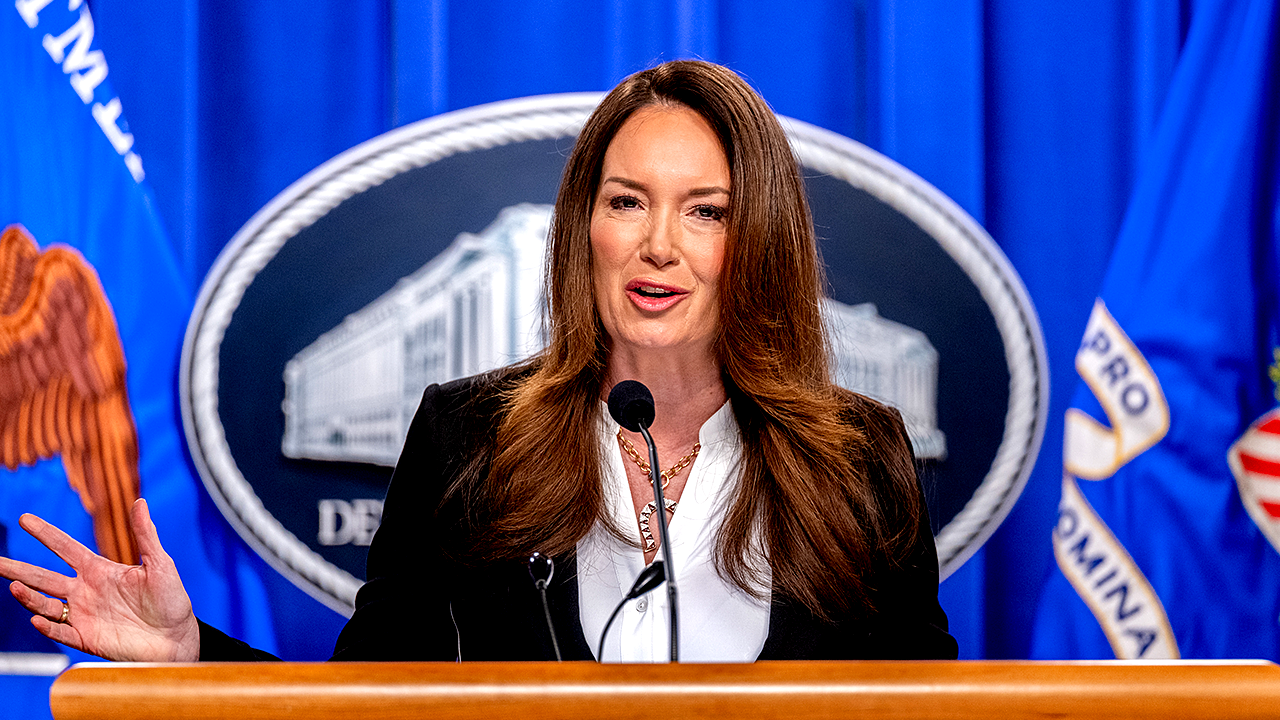
A Biden-appointed judge in California issued a preliminary injunction barring Agriculture Secretary Brooke Rollins from using her official email or authority to send unwelcome religious messages to employees, finding two of Rollins’ previous holiday messages promoting Christianity «go too far» and amounted to «coercive» pressure on nonbelieving employees .
The Thursday ruling from U.S. District Judge Trina Thompson comes as President Donald Trump’s administration has sought in his second term to expand religious expression protections for federal workers, including through 2025 Office of Personnel Management guidance allowing employees to display religious items and discuss their faith at work and the creation of a White House Faith Office.
However, Thompson found that two emails Rollins sent to all U.S. Department of Agriculture employees — which referred to Jesus Christ as «our Savior» and «our risen Lord» during the 2025 Christmas and 2026 Easter seasons — likely violated the First Amendment’s Establishment Clause .
FEDERAL EMPLOYEES ACCUSE USDA SECRETARY OF ‘CHRISTIAN PROSELYTIZING’ IN HOLIDAY EMAILS TO STAFF
«The wisdom of the Founders was in recognizing that independence requires freedom of conscience,» Thompson ruled. «The command of the Establishment Clause, thus, is to prohibit the government from using its authority to try to sway an individual’s decision about whether and how to practice their faith.»
The ruling stems from a lawsuit brought in May by the National Federation of Federal Employees and six multi-faith and nonreligious employees, who accused Rollins of excluding other religious groups by not acknowledging their holiday traditions in emails, creating a captive audience that couldn’t opt out and violating the USDA’s own policies on religious expression in the workplace .
«‘If there is any fixed star in our constitutional constellation, it is that no official, high or petty, can prescribe what shall be orthodox in politics, nationalism, religion, or other matters of opinion.’ Yet during her approximately fifteen months at the helm of USDA, Secretary Rollins has done just that,» the plaintiffs said in the lawsuit.
Thompson agreed with the plaintiffs’ concerns that Rollins’ language — in a Dec. 23, 2025, Christmas email sharing a video about the birth of Jesus and an April 5, 2026, Easter email recounting Jesus’ resurrection — treated those beliefs as if they spoke for everyone in the federal agency.
CHRISTIAN NURSE SAYS OREGON HOSPITAL TRIED TO FORCE EMPLOYEE GROUP TO GO ‘INTERFAITH’
«The Secretary’s use of ‘we,’ ‘us,’ and ‘our,’ along with her failure to recognize other religious holidays or acknowledge that other employees may have different beliefs, expresses a culture and environment within the USDA which ostensibly universally conforms with the Secretary’s beliefs,» Thompson wrote.
«Given the inclusion of first-person plural pronouns, there is no way of reading the challenged messages other than ascribing the Secretary’s particular religious view among all its recipients (that is, all USDA staff),» Thompson continued.
The order noted that one employee uncomfortable with the messaging asked to opt out, but was told it was «not possible» and that continuing to raise concerns would «create trouble» for her.
The order also noted previous public comments in which Rollins said she had been sued before for talking about Jesus too much, adding, «I’ll never stop talking about Jesus.»
National Federation of Federal Employees President Randy Erwin celebrated Thompson’s ruling.
«Federal employees are public servants, not an audience for their bosses’ personal religious beliefs,» Erwin said in a statement. » NFFE is proud to stand with the workers who brought this challenge and will continue to defend our members’ constitutional rights and their ability to serve the American people free from religious coercion.»
BISHOP ROBERT BARRON: MY YEAR WITH DOJ’S RELIGIOUS LIBERTY COMMISSION: WHY I SAID YES
Meanwhile, a spokesperson for the U. S. Department of Agriculture said it is considering its options, including an appeal.
«This is a completely unprecedented attempt to muzzle a Cabinet Secretary,» a spokesperson said in a statement to Digital.
SIGN UP TO GET THE POLITICS NEWSLETTER
A month after taking office, Trump established the White House Faith Office, which operates under the Domestic Policy Council, to coordinate with faith-based organizations and the attorney general’s office to identify gaps in enforcing federal religious liberty protections.
«Well, we want to bring religion back stronger, bigger, better than ever before — very important — and this is a good start,» Trump said during the February 2025 National Prayer Breakfast. «This is really good. We have to have religion, and it suffered greatly over the last few years, but it’s coming back. It’s coming back strong.»
politics, first amendment religion us, federal courts, religion, controversies









INTERNACIONAL
ASRA Q. NOMANI: Communist, hard-left groups mount global youth strike to bring ‘socialist revolution’
NEWYou can now listen to Fox News articles!
Red hammer-and-sickle flags flew over Europe at protests across the continent Friday, but media coverage barely mentioned them.
Media outlets described the day’s demonstrations as «youth protests» over wages, schools, climate, «austerity» and the alleged «genocide» in Israel.
The streets told a different story.
A Fox News Digital investigation reveals that a transnational network of self-described communist, Marxist and socialist groups organized the protests with an explicitly ideological appeal: using party banners, mass-produced recruitment posters and calls for a «communist mass movement» and «socialist revolution.»
Officials in Hamburg, Germany, warned that «left-wing extremist» groups were behind the Friday actions.
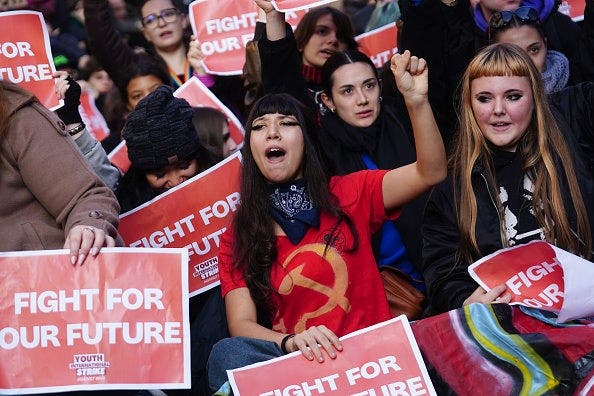
In Milan, a young woman wore a red hammer-and-sickle shirt, raising her fist among demonstrators holding placards that read «FIGHT FOR OUR FUTURE» above small branding for «Youth International Strike Against War,» the socialist coalition that organized the day’s actions.
A woman wearing a red hammer-and-sickle shirt joins students at a protest during a nationwide general strike in Milan, Italy, on Nov. 20, 2026. They carry signs pre-made by the «Youth International Strike Against War.» (Piero Cruciatti/Anadolu via Getty Images)
By late Friday, the protests were promoted by BreakThrough News, a nonprofit funded by Neville Roy Singham, an American-born communist tech tycoon living in Shanghai , supporting the Chinese Communist Party and President Xi Jinping’s «new world order.»
According to a Fox News Digital analysis, the «International Youth Strike» brought together 114 communist youth organizations, revolutionary Marxist and socialist groups alongside far-left student unions, climate campaigners and anti-Israel activists. The official website lists actions in 24 countries.
A Fox News Digital tracker of groups involved in the International Youth Strike finds that most of them self-describe as communist, Marxist, Trotskyist, socialist or far-left. The remaining entries include education, environmental and other issue-based organizations, as well as groups whose ideology hasn’t been established.
CHAOS INC.: WHO’S WHO IN THE GLOBAL MAYHEM NETWORK? COMMUNISTS, ANTIFA, AGITATORS IN THE RED-GREEN ALLIANCE

A protester holds a flare during the International Youth Strike rally in central London on Nov. 20, 2026, while a demonstrator carries a placard, «FOLLOW FRANCE: FIGHT THE SYSTEM,» with the name of the organization, Socialist Worker. (Brook Mitchell/AFP via Getty Images)
FROM ‘RED SPROUTS’ TO SCHOOL BOARD RACES, DSA’S YEARS-LONG EFFORT TO REACH CHILDREN GAINS MOMENTUM
The mobilization in Europe comes after Democratic Socialists of America celebrated its midterm election victories by declaring that voters had «emphatically endorsed socialism.»
In the U.K., members of Socialist Students, one of the lead organizers, marched behind bright red banners that read, «FIGHT FOR A SOCIALIST FUTURE.»

Members of an organization, Socialist Students, march in York, England, on Nov. 20, 2026, carrying a banner, «FIGHT FOR A SOCIALIST FUTURE.» (Socialist Students)
Also in the U.K., the Revolutionary Communist Students urged members to walk out of school under the slogan «SMASH IMPERIALISM / FIGHT FOR REVOLUTION.»
A wing of Revolutionary Communist International, a global organization that runs Marxist.com, the group promoted the protest with a video of members holding copies of their newspaper, the «Communist.» And their members turned out in Cambridge, Liverpool, Leeds, Newcastle and Brighton in the U.K.

«Youth Strike» protesters arrive at Downing Street on Nov. 20, 2026, in London, England, carrying a sign by Socialist Students that reads: «FIGHT FOR SOCIALISM.» (Guy Smallman/Getty Images)
The platform framed the protests as «YOUTH-LED STRIKES ACROSS EUROPE AGAINST WAR AND LIVING COSTS.» It featured a representative of Sindicat d’Estudiants in Spain without identifying the group’s revolutionary Marxist politics as «revolutionary communists» with Barcelona headquarters at Casal Marxista, or «Marxist House.»
The protests played into anti-West narratives, and Press TV, Iran’s official propaganda network, published a story about youth protests «over wages and living costs.»
The mobilization follows student blockades and nationwide demonstrations in France, where Fox News Digital established that a network of far-left groups, including communists, socialists and Antifa, helped orchestrate the unrest.
The strike’s manifesto seeks NATO’s «dissolution» and «radical system change,» placing students alongside the working class as a «revolutionary force.» In Rome, one sign featured the silhouette of Marxist guerrilla Che Guevara and demanded, «CHE IS DEAD / STEP UP.»
BEHIND FRANCE’S STUDENT RIOTS: COMMUNISTS, UNIONS AND A GLOBAL PROPAGANDA NETWORK

Demonstrators march through downtown Rome streets on Nov. 20, 2026, with a sign with a silhouette of Marxist revolutionary leader Che Guevera and the message: «CHE IS DEAD / STEP UP!» (Gregorio Borgia/AP Photo)
In Hamburg, the Ministry of the Interior and Sport’s State Office for the Protection of the Constitution published a report on on Wednesday warning about «linksextremistische,» or «left-wing extremist» groups playing a «significant role» in coordinating the protests.
Hamburg government officials said protest organizers weren’t concerned about legitimate debate over policy issues, like the economy or conscription, but warned about «enemies of the constitution who attempt to exploit these and other legitimate causes for their anti-democratic ideology, for example, through relevant images and videos on social media.»
For example, Young Struggle, a Europe-wide socialist group, founded in Stuttgart, Germany, said that its members are «struggling against a system of capitalism, of endless exploitation, of war, imperialism and patriarchy.» In another report, Hamburg officials warned that Young Struggle is a wing of a Turkish left-wing extremist group, the Marxist-Leninist Communist Party.
Young Struggle blasted its triumphs from the protests on social media, with menacing fast-cut videos, as Hamburg officials warned they would do from Lyon, France, Austria and elsewhere, and the message: «LA JEUNESSE PRÉPARE LA RÉVOLUTION (THE YOUTH PREPARES THE REVOLUTION.»
«What we’re witnessing in Europe is part of a pattern of malign actors using students and youth as foot-soldiers in protest movements,» Brandy Shufutinsky, director of education and national security at the Foundation for Defense of Democracies, a think tank based in Washington, D.C., told Fox News Digital.
«In the U.S. we’ve seen these entities attempt to connect things like climate justice, immigration, and workers’ rights to boycotts and sanctions against Israel,» said Shufutinsky, a trained social worker.
«Often, these organizations form ‘youth’ wings as a way to garner support for their movements amongst younger generations. This happened with the formation of the Soviet Union, Nazi Germany, Communist China and Islamist Iran.»

Activists of the anti-revisionist Marxist-Leninist party Fonte Comunista (Communist Front) hold a large banner reading «Enough with rearmament and the high cost of living. Either our lives or their profits» during a general strike on Nov. 20, 2026, in Milan, Italy. (Emanuele Cremaschi/Getty Images)
Many of the European strike organizers explicitly call for revolutionary changes to governance, ownership, wealth, taxes, laws and political power, much like in the U.S.
Germany’s Socialist German Workers’ Youth, another protest organizer, says it grounds its mission in «Marx, Engels and Lenin.» Its theory page invokes Vladimir Lenin’s declaration: «Without revolutionary theory there can be no revolutionary movement.»
Fellow signatory REVOLUTION, operating in Germany, Austria and elsewhere, describes itself as an «independent communist youth organization.» Its mission advocates «revolutionary overthrow,» a «communist mass movement» and a «world party of socialist revolution.»
Sweden’s Revolutionary Communist Youth, which led protests, identifies its ideological foundation as «Marxism-Leninism» and describes organizing through «class struggle.»
Symbols of the far-left Antifa movement, which the Trump administration declared a terrorist group, also appeared at protests.
In Tel Aviv, Israel, the far-left emerged with an «ANTIFA ACTION» flag, much like one that fluttered in Cologne, Germany, where protesters flew a flag with the message, «ANTIFASCHISTISCHE AKTION,» meaning «Anti-Fascist Action» in German, commonly associated with Antifa. The name originated with a campaign launched by Germany’s Communist Party in 1932. Today, its familiar two-flag emblem is used by antifascist groups and activists worldwide.

Israeli youth hold an «Antifascist Action» banner during a march in Tel Aviv, Israel, on Nov. 20, 2026, as part of a global youth strike. (Jamal Awad/picture alliance via Getty Images)
Italy
In Italy, demonstrators marched beneath communist party flags, hammer-and-sickle emblems and historical resistance banners.
In Turin in northwestern Italy, near the French border, members of the Confederazione Generale Italiana del Lavoro, or the Italian General Confederation of Labour, filled a square, waving red hammer-and-sickle flags and protesting beside members of the Partito Comunista dei Lavoratori, or Workers’ Communist Party, a far-left, Trotskyist political party.
Italy’s Giovani Comunisti, the Communist Refoundation Party’s youth organization, joined the protests, too. The group describes its members as «proudly communist.» Its website promotes Marxist political education under the instruction: «Educate yourselves. Agitate. Organize.»
Others marched behind a banner marked «FC-FGC,» referring to the Communist Front (Fronte Comunista, FC) and the Front of Communist Youth (Fronte della Gioventù Comunista, FGC).
In Rome, a flag with the hammer and sickle and the name «Partito Comunista Rivoluzionario,» Italian for «Revolutionary Communist Party,» flew at a protest, along with a flag of Cuba, a symbol of support for the Communist Party of Cuba.

A student waves a Cuban flag during a protest by the Autonomous Roman Student Coordination in Rome on Nov. 20, 2026. (Filippo Monteforte/AFP via Getty Images)
Nearby, members of the Garibaldi Brigades, named after a formation of the Italian Communist Party that fought in the resistance during World War II, waved their flag with a red star over the Italian tricolor.

At a protest on Nov. 20, 2026, a demonstrator waves a flare and an Italian flag bearing a red star, the emblem of the Garibaldi Brigades partisans who fought in the World War II Resistance. (Alessandra Tarantino/AP Photo)
A demonstrator also carried a flag of the former Soviet Union over his shoulder, while a red hammer-and-sickle flag appeared beside Palestinian flags at the monument to Giuseppe Garibaldi, a 19th century revolutionary who led guerrilla fighters called «Redshirts.»
Activists of a Marxist–Leninist party, Fronte Comunista (Communist Front), unfurled their hammer-and-sickle flag on the streets.
In Milan, a protester dressed as Karl Marx, the communist theorist, carried a depiction of his treatise, «Das Kapital.»

A protester holds a Soviet Union flag during a general strike in Milan, Italy, on Nov. 20, 2026. (Emanuele Cremaschi/Getty Images)

A man dressed as German philosopher and revolutionary socialist Karl Marx holds a cardboard copy of «Das Kapital» while sitting on a sidecar during a general strike on Nov. 20, 2026, in Milan, Italy. (Emanuele Cremaschi/Getty Images)
United States
The mobilization also drew support from American communist and socialist organizations.
In Los Angeles, the Party for Socialism and Liberation held a Friday evening forum to discuss global student protests. The communist group works closely with the nonprofit network funded by Singham.
In Denver, Denver Communists, Colorado Revolutionary Communists and other far-leftists descended on the Colorado State Capitol with demands expressed by the «youth strike» movement: the «abolition of all forms of military conscription,» solidarity with the «struggles of oppressed peoples around the world, starting with the Palestinian people,» «climate justice and social justice,» «radical transformation of the system we live in» and a challenge to «authoritarianism, repression and the far right.»

During the International Youth Strike rally in central London on Nov. 20, 2026, protesters carry placards from Socialist Students, reading, «FIGHT FOR SOCIALISM.» (Brook Mitchell/AFP via Getty Images)
United Kingdom
In Britain, political organizations used recruitment placards, newspapers and advertisements to reach potential supporters with Marxism 101.
At King’s College London, a protester carried a copy of the «Socialist Worker» newspaper alongside fliers promoting «MARXISM IN A DAY!» – a Nov. 28 event sponsored by the Socialist Workers Party.
«Revolts have broken out across the world. From Paris, to Mumbai, from Madrid to Milan, from Tirana to Lisbon – the youth is taking to the streets to fight for a better world,» the event promotion says.

At King’s College London on Nov. 20, 2026, in London, England, a protester carries a copy of the Socialist Worker newspaper and copies of a flyer promoting a workshop, «WORKSHOP IN A DAY!» (Alishia Abodunde/Getty Images)
«Now more than ever, revolutionary Marxist ideas are crucial to the fight backs against a world of capitalist catastrophe,» it continues.
The promotion promises «socialists and anti-fascist campaigners from France,» including Zoé Lewkowicz, a French socialist and «anti-fascist» organizer with Autonomie de Classe, a revolutionary socialist organization based in Paris.
In London, a man held a red flare in front of signs that declared «FIGHT FOR SOCIALISM,» while demonstrators covered their faces with keffiyehs and surgical masks beside red hammer-and-sickle flags and Socialist Worker placards declaring, «FOLLOW FRANCE: FIGHT THE SYSTEM.»

«Youth Strike» protestors arrive at Downing Street on Nov. 20, 2026, in London, England, carrying signs distributed by Socialist Worker, reading «FOLLOW FRANCE: FIGHT THE SYSTEM.» (Guy Smallman/Getty Images)
Like professional protest organizers do in the U.S., Socialist Worker activists piled pre-made signs at a lamppost for demonstrators to pick up just before the 9 a.m. The placards were bundled with tape around their wooden handles and grouped by message. An image of a Malcolm X appeared on one design bearing the demand: «FIGHT FOR SOCIALISM!»
Others said: «JOIN SOCIALIST STUDENTS.»
Soon, the recruitment message was moving through the crowd. Surrounded by police in reflective vests, marchers carried the signs piled moments earlier against the lamppost.

An «ANTIFA» flag appears behind a banner depicting a fist gripping a pencil during a march in Bremen, Germany, on Nov. 20, 2026. Another banner reads «Jugend gegen Wehrpflicht,» or «Youth against conscription,» and bears the initials «AFSK» for Antifaschistisches Schüler:innen Kollektiv, an «antifascist» collective. (dpa/picture alliance via Getty I)
Germany
In Bremen, Germany, marchers carried a flag marked «ANTIFA» behind a banner depicting a clenched fist holding a pencil in front of a globe with the message «NOT THEIR WARS.» They marched in front of a flag that said, «JUGEND GEGEN WEHRPFLICHT, AFSK LEIBNIZPLATZ.»
«AFSK» refers to the Antifaschistisches Schüler:innen Kollektiv, an «antifascist» collective in Bremen that mobilizes students to join «red blocs,» or «roter block.»
«Jugend gegen wehrpflicht» means «Youth against conscription.»
Researchers at Konrad-Adenauer-Stiftung, a center-right think tank, have also warned that far-left groups use these student demonstrations to channel youth frustration toward broader far-left, pro-Russian foreign policy narratives.

In a protest in Bochum, Germany, on Nov. 20, 2026, a demonstrator carries a poster bearing the initials, «DKP,» for Deutsche Kommunistische Parteiinitials (German Communist Party). Its messages translate as «Stop the preparations for war,» «No to conscription» and «German armed forces out of schools and universities.» (Hesham Elsherif/Anadolu via Getty Images)
In Bochum, a man with a white beard and mustache carried a sign bearing the initials «DKP» for the German Communist Party.
His poster read, «Stoppt die Kriegsvorbereitungen,» or «Stop the preparations for war.»
It also bore the message, «Nein zur Wehrpflicht,» or «No to conscription.» It continued: «Bundeswehr raus aus Schulen und Universitäten» — «German armed forces out of schools and universities.»
In Bochum, students carried a banner, «GenZ Regelt,» as «GenZ sorts it,» beside another banner, «Sozialismus regelt,» translated as, «Socialism will sort it out» or «Socialism fixes it,» with generational branding while downplaying explicit socialist messaging.

People take part in a protest march on Nov. 20, 2026, in Bochum, Germany. Banners reading «GenZ Regelt,» or «Gen Z sorts it out,» and «Sozialismus regelt,» or «Socialism sorts it out,» appear together, pairing generational branding with an explicitly socialist message. (Hesham Elsherif/Anadolu via Getty Images)
West Bank and Gaza
From London to Berlin, the Palestinian flag and keffiyeh scarf, representing Palestinian «resistance» to a Jewish state of Israel, was a fixture at protests, even flapping outside the Colosseum in Rome beside the tricolor flag of the Garibaldi Brigades.
In the West Bank and Gaza, 11 Palestinian groups associated with the Boycott, Divest and Sanctions Movement, whose officials have said they seek the end of a Jewish state of Israel, issued an announcement supporting the youth actions and called for the «right of our refugees to return to their homes and receive reparations.»

Students wave a Palestinian flag in front of the Colosseum during a demonstration against Italian government policies in Rome, Italy, on Nov. 20, 2026. (Riccardo De Luca/Anadolu via Getty Images)
‘International Socialist Youth Network’
The mobilization’s planning meetings show ambitions extending beyond Friday.
According to Britain’s Socialist Party, 12 organizations from eight countries met in Cologne on June 14, months before France’s autumn unrest. Socialist Students proposed the campaign’s slogan, «Fight for Our Futures, Not Their Wars.» Its own mission seeks a «socialist transformation of society.»
By the time of an Oct. 17 meeting in Paris, participation had grown to 27 organizations from 11 countries. Delegates discussed connecting national grievances under the international banner, joined the street demonstration and agreed to continue organizing after Nov. 20, according to Socialist Students’ account. A larger conference is planned in Italy in February 2027.

Demonstrators march in front of the Colosseum in downtown Rome during a general strike on Nov. 20, 2026. (Alessandra Tarantino/AP Photo)
Socialist Students urged that gathering to establish an «international socialist youth network,» making the walkouts a potential recruiting ground for a continuing political action.
In the United Kingdom, Shabbir Lakha, a national spokesman for the «Stop the War Coalition,» stood on a stage at Downing Street, accusing governments of having «facilitated the genocide in Gaza» and urging demonstrators to unite to «break their imperialist power.» The coalition doesn’t list its donors.

A protester ignites a flare during a student protest as part of an international youth strike across 24 countries under the slogan «Fight for Our Future, Not Their Wars» in London on Friday, Nov. 20, 2026. (AP Photo/Kirsty Wigglesworth)
At day’s end, Stop the War Coalition shared a Guardian article, headlined «Young people across Europe stage coordinated ‘fight for our future’ protests.» There was no mention of the communist and socialist ideological underpinnings of the protests or the hammer-and-sickle flags and revolutionary banners that defined the day on the streets.
The coalition also promoted another mobilization for Jan. 23, calling for yet another «mass movement against war, militarism and austerity» – and socialism and communism.
world, antifa, world protests, nato, globalism, europe, socialism
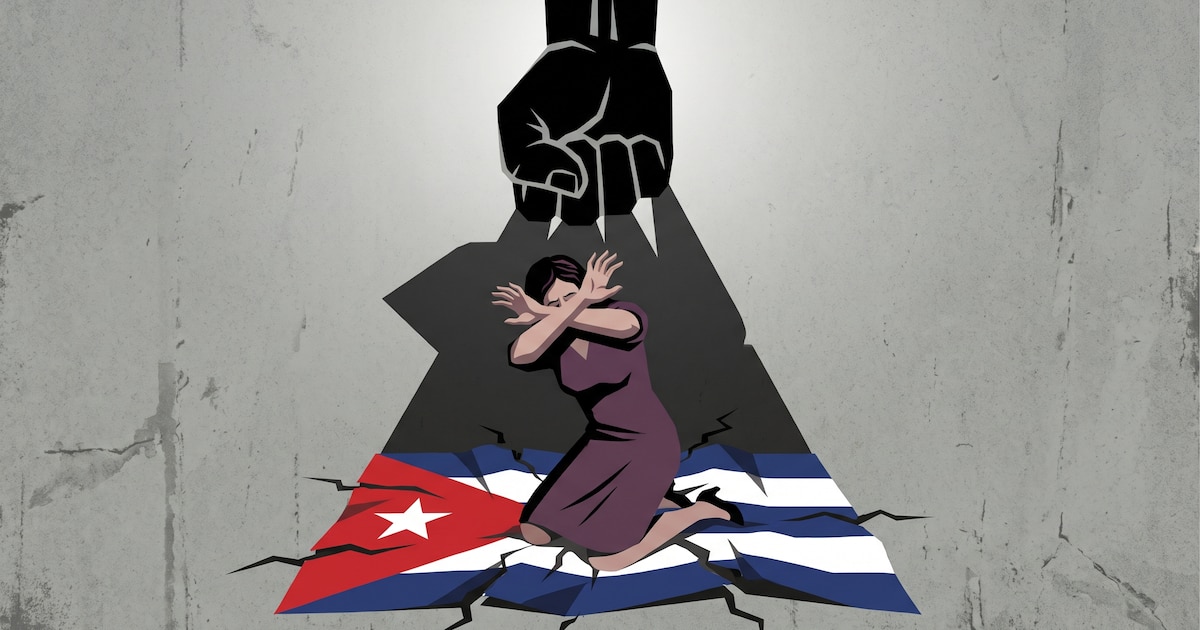
Al menos 389 eventos represivos contra 106 mujeres familiares de presos políticos cubanos se documentaron entre el 11 de julio de 2021 y el 31 de octubre de 2026. La cifra forma parte de un informe de Justicia 11J difundido en el marco de la campaña “Mujeres que sostienen la lucha”.
Siete de cada diez de esos hechos afectaron a parientes de personas encarceladas por las protestas del 11J. Entre los registros figuran citaciones, interrogatorios, detenciones arbitrarias, vigilancia, desnudos forzados, coerción sexual y agresiones durante el embarazo y el posparto.
La campaña, impulsada por Justicia 11J y difundida en declaraciones al programa Abriendo Espacios, de Martí Noticias, se extiende durante noviembre y hasta el 10 de diciembre, Día de los Derechos Humanos. Forma parte de una iniciativa mayor, “Cinco años sin justicia”, lanzada en julio para conmemorar el quinto aniversario de las protestas del 11 de julio de 2021.
Testimonios que no habían sido denunciados públicamente
Camila Rodríguez, directora ejecutiva del Centro de Documentación de Prisiones Cubanas y fundadora de Justicia 11J, explicó a Martí Noticias que la campaña busca acercar al público una realidad que suele quedar relegada cuando se habla de la prisión política.
“Ese dolor del día a día de sostener a una persona presa mientras afuera todavía hay que sostener la vida de otros integrantes de la familia”, dijo Rodríguez a la emisora.
La organización incorporó entrevistas en profundidad con seis mujeres que permitieron conocer experiencias inéditas. De los 389 eventos documentados, 355 proceden del monitoreo habitual y otros 34 fueron conocidos mediante esas conversaciones.
El informe sostiene que madres, esposas, hermanas e hijas de encarcelados por motivos políticos sufren una represión que combina persecución política con violencia de género: amenazas, vigilancia, coerción sexual y presiones económicas por sostener a sus familiares presos, además de un deterioro documentado en su salud mental.
Rodríguez señaló ante la emisora que la amenaza de prisión se usa para frenar las denuncias y explotar el temor de las mujeres a dejar sin apoyo a sus familiares. Relató que una de las preguntas que los agentes les plantean es: “¿Quién le va a llevar la jaba?”.
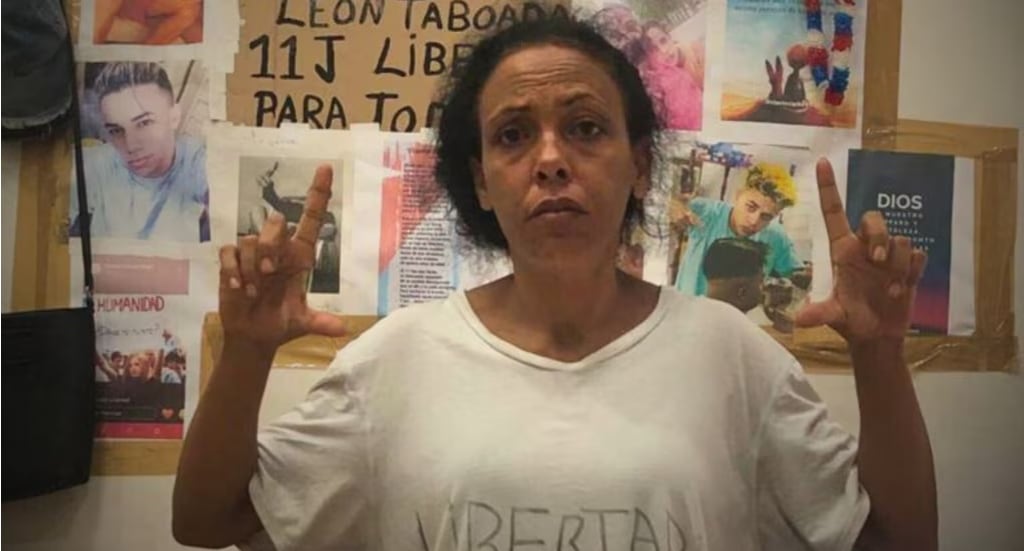
Seis mujeres pasaron de acompañantes a procesadas
El informe identifica al menos seis mujeres que pasaron de acompañar a un familiar preso a ser procesadas, encarceladas o condenadas. Rodríguez atribuyó el silencio sobre buena parte de estos episodios al pudor, el estigma y la vergüenza asociados a ese tipo de violencia.
“Es un tipo de violencia muy difícil de denunciar públicamente”, señaló la activista a Martí Noticias, y agregó que las cifras documentadas no reflejan toda la magnitud del problema.
La directora de Justicia 11J planteó además la pregunta que atraviesa su trabajo: “La mujer está en el centro de toda la familia, vive los sufrimientos y las circunstancias de toda la familia, ¿y qué espacio queda para ella?”.
Más allá del hostigamiento estatal, estas mujeres deben conseguir alimentos, medicamentos y recursos para visitar las prisiones, mientras atienden a hijos menores, personas mayores y otros familiares dependientes.
Rodríguez expresó especial preocupación por el agotamiento y la tensión constante de decidir cuándo denunciar y cómo proteger a sus seres queridos.
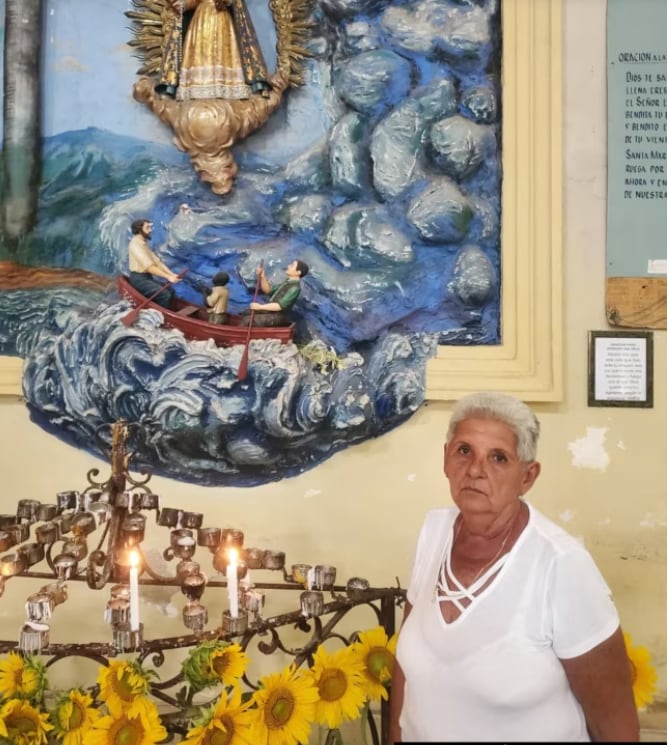
Una carta exige a la FMC romper el silencio
Entre las acciones de la campaña figura la recogida de firmas para una carta abierta a la oficialista Federación de Mujeres Cubanas (FMC), impulsada junto a Alas Tensas y otras organizaciones. El documento exige que la entidad se pronuncie sobre la violencia ejercida por agentes estatales contra familiares de presos políticos.
Rodríguez anunció a la emisora que prevén entregar la carta el 25 de noviembre, Día Internacional de la Eliminación de la Violencia contra la Mujer. Las promotoras reclaman también que la federación se desvincule públicamente de los actos de repudio y las campañas de estigmatización contra las mujeres que denuncian.
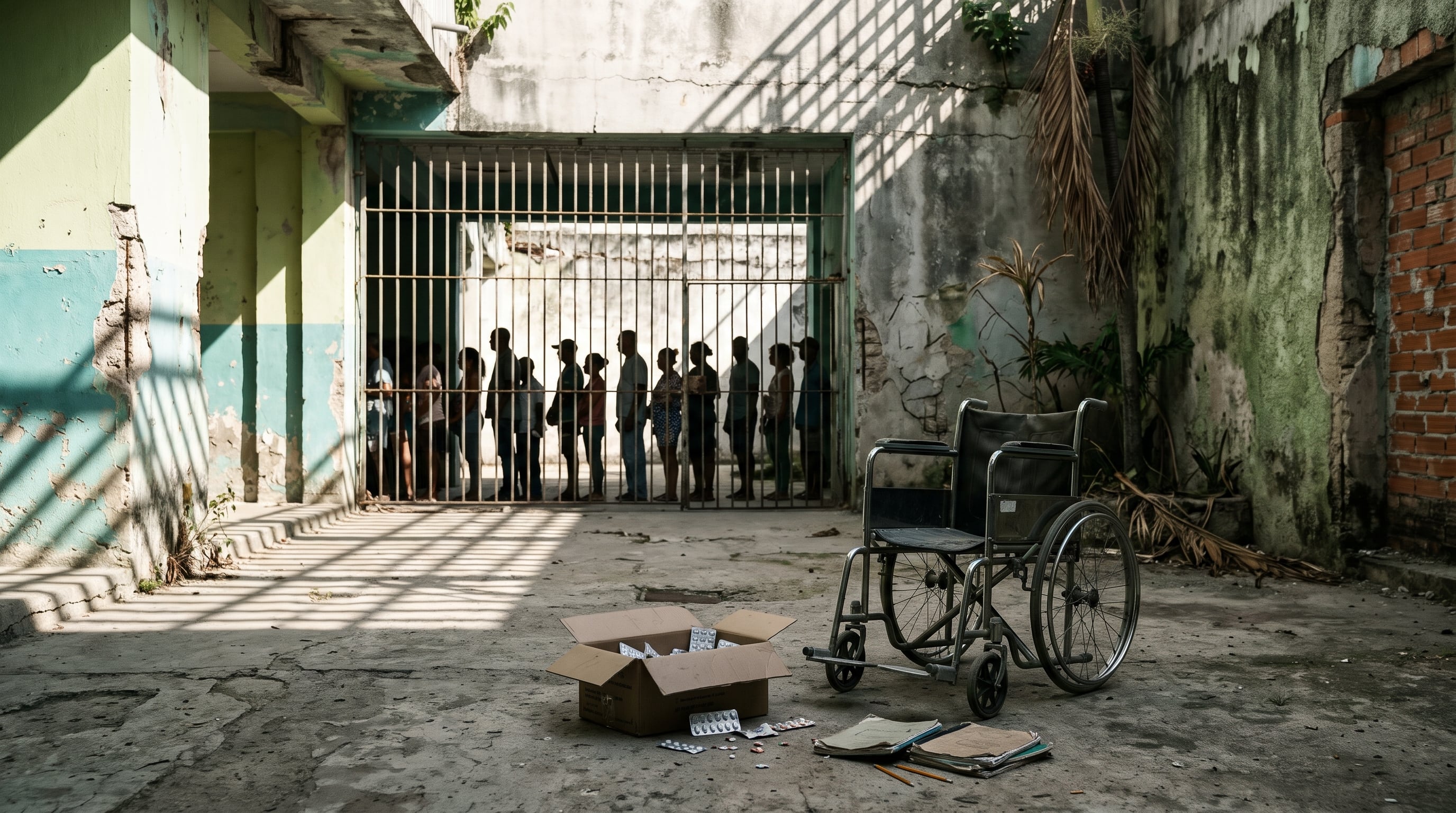
“No tenemos muchas esperanzas de que todas estas peticiones se cumplan”, reconoció Rodríguez ante Martí Noticias, aunque defendió la importancia de exigir a la organización que asuma las responsabilidades que dice representar.
Quienes se encuentran dentro de Cuba pueden sumarse al reclamo con iniciales o de forma anónima, con el propósito de reducir su exposición a represalias, o bien suscribir la carta con el nombre completo.
Rodríguez solicitó además a la Comisión Interamericana de Derechos Humanos (CIDH) que continúe otorgando medidas cautelares tanto a las personas encarceladas por razones políticas como a sus familiares, y pidió a los gobiernos democráticos considerar sanciones individuales contra funcionarios responsables de los abusos documentados.
“Vamos a seguir trabajando hasta la libertad de Cuba, hasta la libertad de todas las personas privadas de libertad por razones políticas”, afirmó la activista a la emisora.
Un récord histórico de presos políticos
La campaña se desarrolla en medio de un deterioro documentado de la situación carcelaria en Cuba. Según un informe de Prisoners Defenders, organización española de defensa de presos políticos, publicado el 12 de noviembre y recogido por Infobae, la isla acumuló 1,353 presos políticos al cierre de octubre, un récord histórico tras sumar 39 nuevos casos en ese mes.
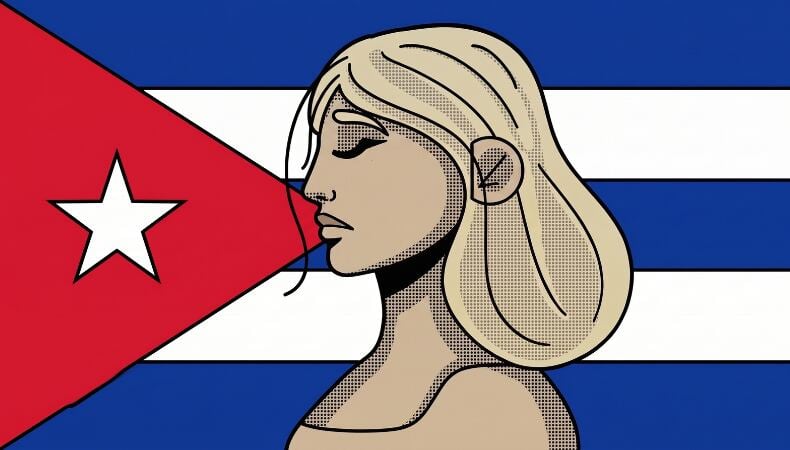
Del total, 158 son mujeres y 43 fueron detenidos siendo menores de edad, según ese mismo informe. La organización documentó además 464 presos políticos con enfermedades graves sin tratamiento adecuado, de los cuales 236 sufren desnutrición forzosa.
Desde julio de 2021, Cuba acumuló 2.256 presos políticos en poco más de cinco años, de acuerdo con Prisoners Defenders. La cifra equivale, según la organización, a casi cinco veces el total de detenidos durante la Primavera Negra de 2003, represión que entonces motivó una amplia condena internacional.
Cuba,violencia de género,derechos de las mujeres,ilustración editorial
INTERNACIONAL
Millions could lose paid benefits due to Congress ignoring decades of Social Security warnings: experts
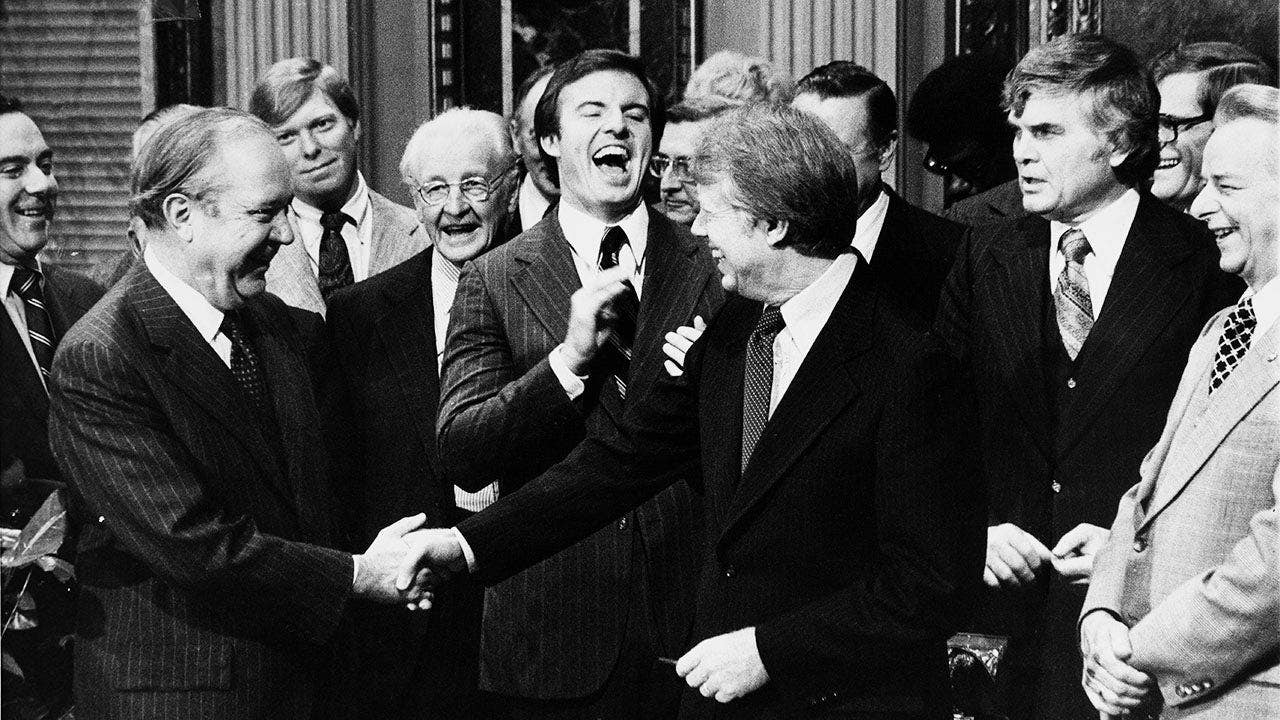
A panel filled with top economists, including a Nobel Peace Prize winner, warned Congress decades ago that their reforms to Social Security could spell disaster.
Now, experts tell Digital that group from a bygone era was right, as the safety-net program hurtles toward a crisis that could affect millions.
«Social Security benefits were put on autopilot back in 1977,» Andrew Biggs, a senior fellow of the American Enterprise Institute, told Digital. «Since then, Congress has done as little as it possibly could.»
Senate Budget Committee Chair Ron Johnson, R-Wis., unveiled a report on the decades-old program that blasted it as a «Ponzi scheme,» and warned that Social Security’s slide into insolvency began in the 1970s, when, despite warnings, lawmakers opted to tie benefit growth to wages rather than inflation.
AMERICANS MISLED ON SOCIAL SECURITY FOR DECADES AS CLOCK COUNTS DOWN ON BENEFITS, EXPLOSIVE REPORT REVEALS
Johnson wrote in his report that at the time, an expert panel was formed that warned lawmakers that if they were to tie benefits to inflation, «Social Security would likely be sustainable today.»
Still, lawmakers at the time ran with their own amendments to the program, which were signed into law by former President Jimmy Carter in December 1977.
«What they said in 1977 was if you index benefit growth to wages, you’re effectively building a solvency crisis into the program,» Biggs said. «You are over-promising, you’re going to build in benefits that the current system can’t afford to pay, and you’re committing future taxpayers to pay rates of taxes that the taxpayers in 1977 weren’t willing to pay.»
In the decades since, Congress has done little to change the program.
SENATE REPUBLICANS BREAK THROUGH WASHINGTON GRIDLOCK WITH MASSIVE AMERICAN ENERGY, DATA CENTER OVERHAUL
Romina Boccia, the Cato Institute’s director of budget and entitlement policy, told Digital that’s largely because lawmakers have not had the political will to do it.
She agreed with Johnson that Social Security was effectively a «Ponzi scheme,» and said «there’s this misconception that a lot of Americans think that Social Security is a retirement savings program.»
«But for that, you would actually need to have savings occur in the system, and there would need to be assets that would be invested in earning returns,» Boccia said. «That’s not the case. We’re talking about a pay-as-you-go program.»
One of the side effects of Congress’ lack of action to rein in the program is that the wage growth formula relies on workers in the economy contributing with their paychecks.
Boccia noted that as the decades have gone on, «We’ve seen a severe decline in the number of workers compared to the number of retirees collecting benefits as a result of a decline in fertility.»
DEMOCRATS COULD ENTER CONGRESSIONAL MAJORITY IN A GOVERNMENT SHUTDOWN
Congress’ last real successful effort to reform Social Security came in the early 1980s, Biggs noted, when lawmakers were forced to step in to deal with the «funding crisis» hitting the program.
«They raised taxes. They increased the retirement age. So they did this with months to spare to fix Social Security,» Biggs said. «It’s not something they wanted to do, but they were forced to do.»
«Now in 2032, we’re going to face the same situation, where Congress will be forced to take action sometime before the trust fund runs out in 2032, not because they want to, but because they’re forced to do it,» he continued.
If Social Security’s trust fund runs dry by 2032, Americans’ benefits would be slashed and the onus of paying for the shortfall would add trillions more to the nation’s debt.
But Johnson, in his report, declared that the Social Security problem could not be fixed between now and then because of Congress’ inaction for the last several decades, and he suggested that the solution would be to repeal a possible benefits reduction as the program’s trust fund heads toward insolvency in just under seven years.
Biggs, who was part of former President George W. Bush’s effort to reform Social Security over two decades ago, said that had Congress taken action «25 years ago, you could fix Social Security in barely noticeable ways.»
«There is no easy fix to Social Security today, and that stems entirely from the fact that every year, when Congress has had the opportunity to fix Social Security, they chose to duck the issue for political reasons and kick the can down the road,» Biggs said.
Boccia disagreed with Johnson’s solution and contended that the real answer was one that lawmakers of yesterday and today would be hesitant to approach — raising taxes.
«The real way to think about this is that there’s almost no way to imagine Congress would let those benefit cuts take effect,» Boccia said. «It will be so politically toxic. So most likely they’re going to try to find a different solution.»
«The last time the trust fund was running out of money in 1982, Congress put together a commission and then voted on a bill that increased taxes and reduced benefits, including raising the social security retirement age,» she continued. «The problem is that the funding gap now is much larger, more than two times bigger than it was in the ‘80s.»
politics, social security, congress, growing the debt, reform

Nuevo parte médico de Harry Kane: operado con éxito y una promesa para 2027

Top Trump officials’ holiday emails to staff calling Jesus ‘our Savior’ went ‘too far,’ judge rules

ASRA Q. NOMANI: Communist, hard-left groups mount global youth strike to bring ‘socialist revolution’

La provocativa respuesta de Wanda Nara y Martín Migueles a la perimetral que pidió Mauro Icardi

Menos confianza en la reelección y más demanda de dólares: las señales que inquietan al mercado y disparan el riesgo país

Karina Milei retomó el vínculo con Macri, pero la interna del PRO no permite destrabar el acuerdo en CABA

Javier Milei y sus medidas, en vivo: “Hoy discutimos si crecemos un punto más o menos”, dijo el Presidente

¿Dónde ver EN VIVO y ONLINE el Boca Juniors vs Banfield por la Copa Argentina?

El 92% de los jóvenes argentinos busca trabajo, pero menos de la mitad tiene empleo: cuáles son las principales barreras

Javier Milei destacó el desembarco de Tesla en el país y aseguró: “Esto también es devolverle la libertad a los argentinos”

 POLITICA2 días ago
Javier Milei y sus medidas, en vivo: “Hoy discutimos si crecemos un punto más o menos”, dijo el Presidente
- POLITICA14 horas ago
Javier Milei destacó el desembarco de Tesla en el país y aseguró: “Esto también es devolverle la libertad a los argentinos”
- INTERNACIONAL2 días ago
El brote de ébola está fuera de control en la República Democrática del Congo y crece el temor a una epidemia continental