INTERNACIONAL
African nations on ‘knife’s edge’ as US embassy warns Americans of long-range attacks

NEWYou can now listen to Fox News articles!
The entire Horn of Africa region is said to be on a knife’s edge. As explosions reportedly claimed to be caused by drones hit Ethiopia’s capital city in early October, the U.S. Embassy in Addis Ababa warned U.S. citizens of the danger of «long-range attacks.»
Analysts say there’s a high probability that Ethiopia and Eritrea are about to erupt in a new war, with worrying regional backing for both sides.
Former CIA analyst and National Security Council Africa Director Cameron Hudson says the Trump administration needs to become more involved. He told Fox News Digital, «Regional leaders will say privately that they don’t want a regional war. But with so many armed actors and so much meddling going on in each other’s countries, a regional conflagration becomes increasingly likely. It is this kind of miscalculation that the Trump administration needs to be working now to guard against.»
EXCLUSIVE: TRUMP ENVOY BLASTS SOUTH AFRICA OVER HATEFUL ‘KILL’ CHANT, SAYS COUNTRY IS DRIFTING TOWARD US FOES
The U.S. Embassy in Addis Ababa took to its website to caution Americans in Ethiopia that it «is aware of reports of possible long-range attacks directed at Ethiopian military installations on several instances in October of this year. U.S. citizens should accordingly exercise caution and follow the advice of local authorities.»
The Embassy also hit out at reported disinformation, «some social media accounts contain false and misleading reports about the security situation in Ethiopia. U.S. citizens are urged to verify information using multiple sources or reliable information.»
Indeed, although explosions in and around Addis Ababa, mainly at military installations, can be confirmed as having taken place, it cannot be established that the frightening spectacle of drones crashing into buildings in a major African city which houses the headquarters of the African Union happened.
Requests for comment to the Ethiopian government were not returned.
Analysts say there is a high probability that Ethiopia and Eritrea are about to erupt in a new war. (Getty Images)
TRUMP GETS MAJOR WIN AGAINST CHINA IN AFRICAN RARE EARTH MINERALS RACE
Blen Mamo, executive director of the Ethiopian Horn Review think-tank, told Fox News Digital this is potentially a worrying development. «If identified as an aerial or drone attack, they exceed the capabilities of Ethiopia’s domestic insurgent groups, confirming Ethiopia’s allegation of foreign state involvement.»
The rebel groups opposing Ethiopia’s government have joined together to form the Ethiopian Peoples’ Forces Alliance for Survival. This coalition claimed responsibility for the Addis Ababa attacks, stating they used drones.
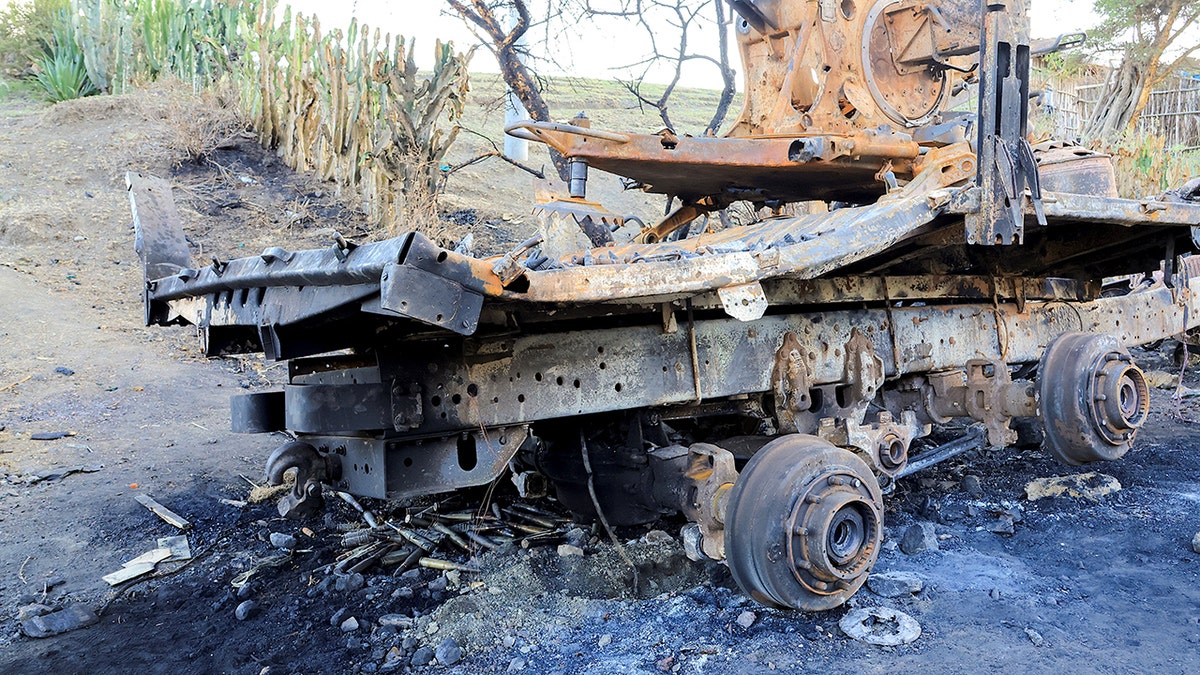
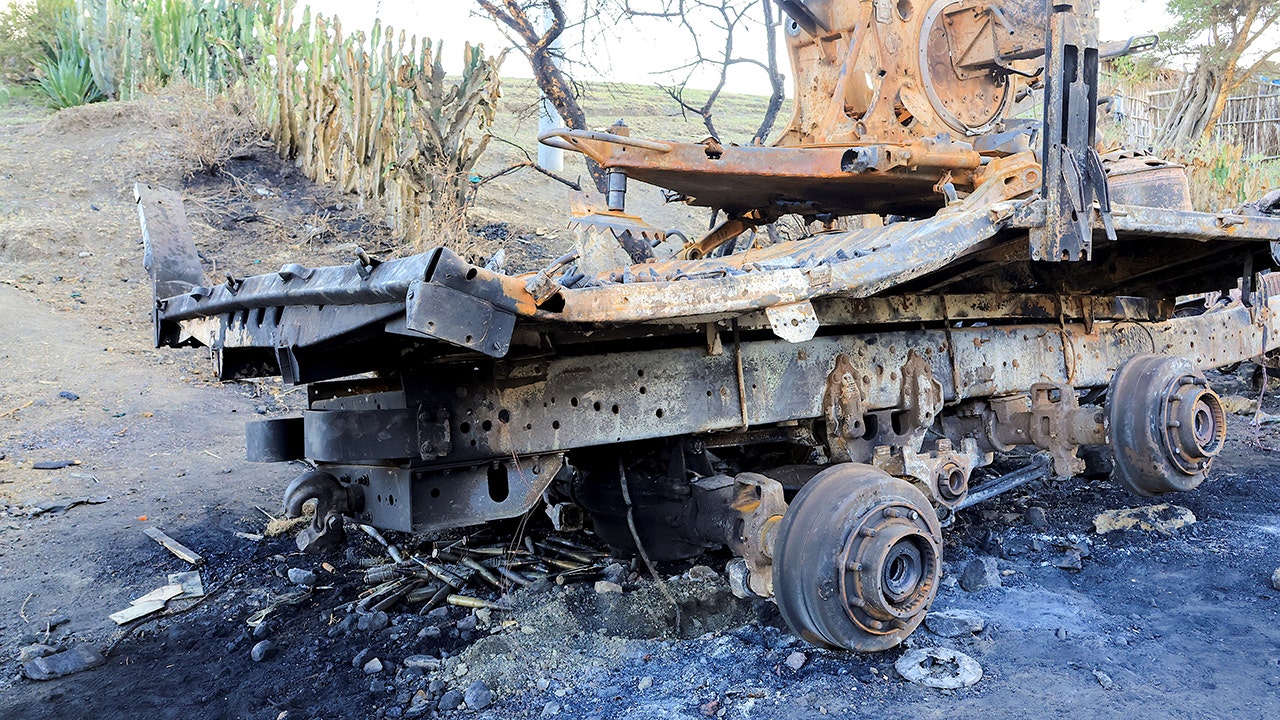
Destroyed ammunition lies on the ground under the charred wreckage of an abandoned truck damaged by a drone strike during fighting between the Ethiopian National Defense Force (ENDF) and the Tigray People’s Liberation Front (TPLF) forces in Adi Mesno, Southern Tigray region, Ethiopia, Oct. 9, 2026. (Reuters)
Dr. Jalale Getachew Birru, regional expert of the U.S.-based Armed Conflict Location and Event Data research group, is also concerned about a new phase of conflict using drones. Birru told Fox News Digital, «should the Alliance for Survival possess drone capabilities, it could fundamentally alter the dynamics of the conflict, refocusing strategic control on aerial dominance.»
In early October, Ethiopian troops pushed out rebel groups who had occupied the Tigrayan capital, Mekelle. This operation ended a four-year-long ceasefire between Ethiopia and Tigray, the northernmost province of Ethiopia.
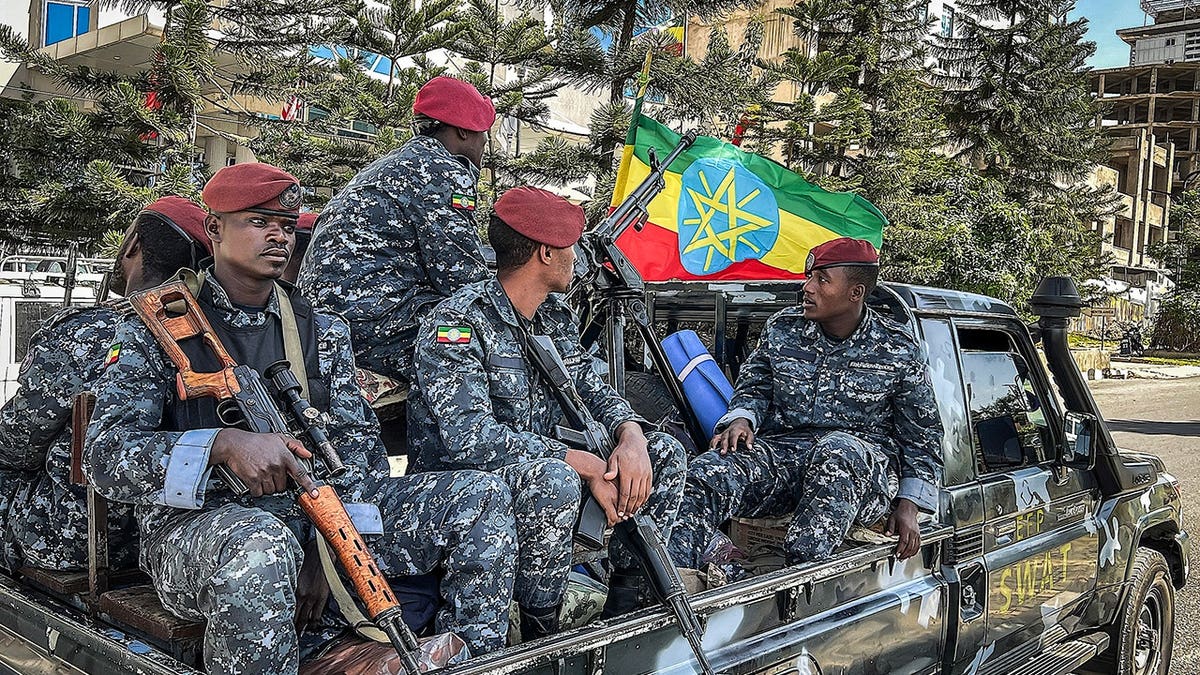
Members of the Ethiopian Federal Police (EFP) patrol aboard a pickup truck as they resumed operations after federal forces pushed back the rebel Tigray People’s Liberation Front (TPLF) in Mekelle on Oct. 9, 2026. Ethiopia and Eritrea each accused the other of starting a war of aggression as an internal Ethiopian conflict threatened to escalate into a regional war. Over the past week, the Ethiopian army has pushed back the rebel Tigray People’s Liberation Front (TPLF) and seized their capital city, Mekelle, with Ethiopian Airlines saying flights to the city would resume from Oct.11. (AFP via Getty Images)
Last week, reports claimed Eritrean troops had entered Ethiopia. Although the allegations have not been independently verified, Fox News Digital has seen multiple videos showing what appears to be large convoys of trucks carrying uniformed soldiers passing through the Ethiopian city of Adigrat. Addis Ababa is said to have subsequently launched drone attacks and pushed the Eritreans back over the border.
The latest fighting was sparked principally by Ethiopia’s statements that it wants to get access to Red Sea ports. The country became landlocked when Eritrea became independent in 1993. In a speech as he was sworn in for a new five-year term Oct. 5, Ethiopian Prime Minister Abiy Ahmed said sea access was «of vital importance to Ethiopia’s civilization.»
He added, «Based on the principle of give and take, we will work diligently to ensure that Ethiopia has an outlet to the sea.»
US VISA CLASH EXPOSES SUDAN’S FORGOTTEN WAR AS FOREIGN POWERS COMPETE FOR STRATEGIC FOOTHOLD
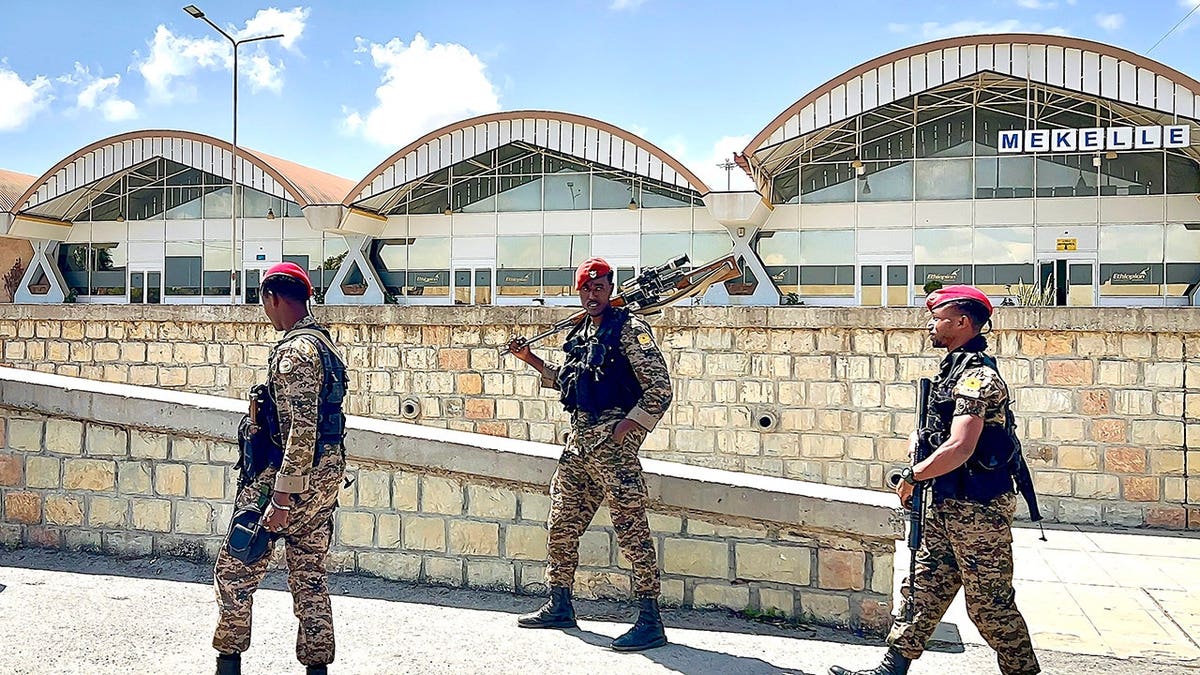
Members of the Ethiopian National Defense Force (ENDF) gather in front of Mekelle Alula Aba Nega International Airport after federal forces retook control of the facility in Mekelle on Oct. 6, 2026. (AFP via Getty Images)
Possible regional expansion of any conflict also comes from the creation of the Grand Ethiopian Renaissance Dam. Egypt and Sudan are at odds with Addis Ababa, after it built the dam across the Blue Nile, affecting access to water to these countries which are downstream. Egypt this month took up a formal position against Ethiopia, when it created a coalition with Sudan, Eritrea and Somalia.
The State Department has been active diplomatically to try and resolve the situation. A spokesperson told Fox News Digital that Undersecretary of State for Political Affairs Allison Hooker met this month with Eritrean Foreign Minister Osman Saleh and spoke with Ethiopian Foreign Minister Gedion Timotheos.
Also, Assistant Secretary for African Affairs Frank Garcia met with Minister Saleh. The spokesperson added, «Both U.S. officials underscored the importance of respecting the sovereignty and territorial integrity for all countries in the Horn of Africa.»
Following these discussions, State Department spokesman Thomas «Tommy» Piggott released a statement, saying, «Increasing cross-border tensions between Ethiopia and Eritrea have the potential to affect the entire region. The Horn of Africa cannot sustain another military conflict and humanitarian crisis. A conflict jeopardizes ongoing U.S. collaboration on shared interests with both countries.»
Piggott added, «We strongly urge Ethiopia and Eritrea to respect the sovereignty and territorial integrity of their neighbors, exercise maximum restraint and return to dialogue and cooperation as agreed in their 2018 peace framework. Peace through dialogue is the only path toward sustainable security, economic growth, and prosperity.»
The Horn Review’s Mamo told Fox News Digital the reality on the ground is «increasingly pointing toward a conflict that may prove impossible to avoid,» and warned of Egypt’s motives: «Parallel military and technical cooperation with Asmara (the capital of Eritrea) also adds strategic depth along Ethiopia’s northern frontier, while Egypt’s expanding role in Somalia and Red Sea port initiatives extends its regional influence.»
«The situation in Ethiopia and in the region is extremely dynamic,» analyst Cameron Hudson told Fox News Digital. Hudson added, «The question remains, given the weakness of the internal (rebel) coalition, will external forces attempt to step in and exert greater leverage against Abiy.»
He continued, «We are seeing Eritrea begin to move forces into Ethiopia, while a coalition of regional states including Somalia, Egypt, Sudan and Eritrea have issued a statement that amounts to a veiled threat against Ethiopia and its regional ambitions to establish a Red Sea naval presence and expand a series of hydroelectric dams on the Nile. The entire Horn of Africa region is on a knife’s edge and it is being made only more complicated by Houthi efforts to shut Red Sea shipping and the war in Iran.»
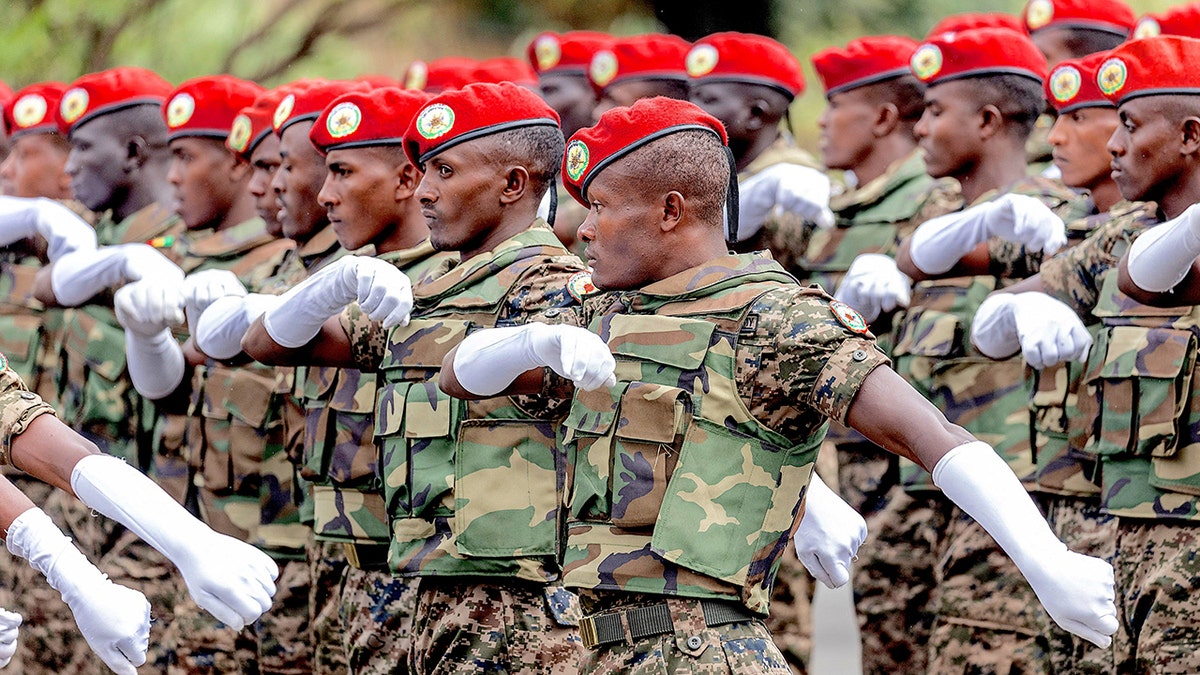
Members of the Ethiopian National Defense Force parade during a celebration of Ethiopian Defense Force day in Addis Ababa, Ethiopia. (Amanuel Sileshi/AFP via Getty Images)
«The risk of regional conflict remains high,» Hudson said. «Egypt would be happy to see Ethiopia bogged down in internal conflict and unable to pursue its ambitions on the Nile and in the Red Sea. Similarly, Sudan hopes that internal conflict in Ethiopia distracts Addis from its support of the rapid support forces militia in Sudan’s war.»
«Local disputes can quickly become regional and international disputes with global consequences very quickly in this corner of the world,» Hudson added, «Closure of the Bab el Mandab Strait, owing to unchecked tensions and violence across the Red Sea, will quickly be felt in the U.S.»
world, africa, wars, geopolitics










INTERNACIONAL
Fabián Calle analizó el futuro de Trump tras la derrota electoral: “El Partido Republicano no puede prescindir de él”
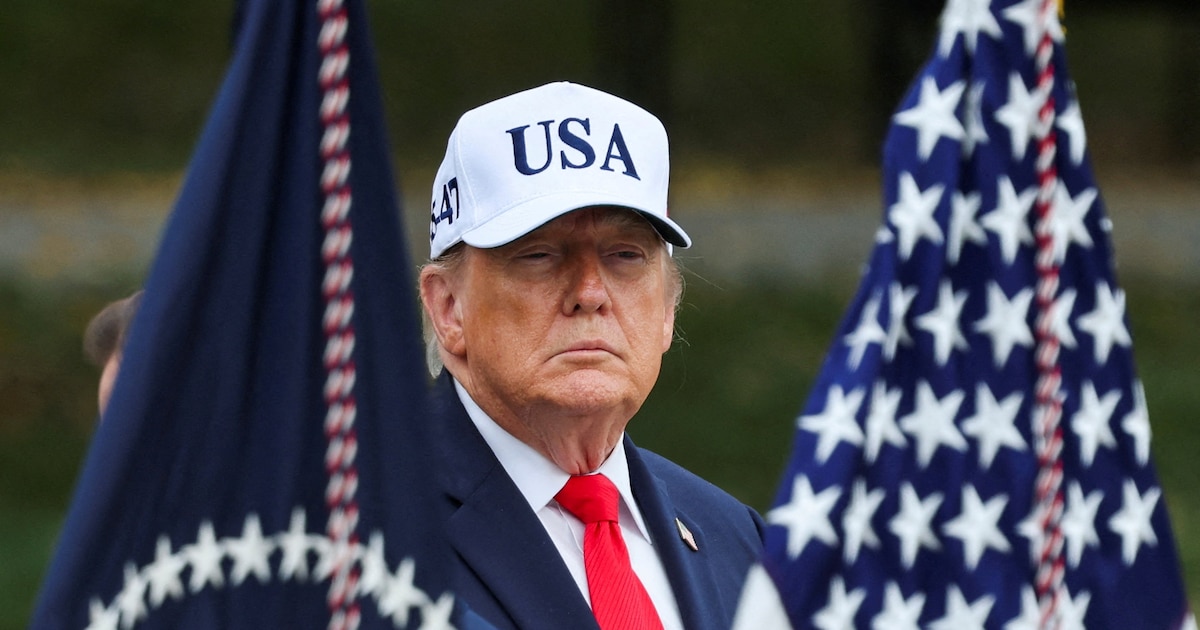
La derrota de Donald Trump en las elecciones de medio término abrió un nuevo escenario político en Estados Unidos y profundizó las dudas sobre el futuro del Partido Republicano. Los demócratas recuperaron el control de ambas cámaras del Congreso, revirtieron bancas en estados como Texas, Kansas y Carolina del Sur y dejaron al presidente frente a un Poder Legislativo opositor. Para el analista internacional Fabián Calle, el resultado no solo limita la capacidad de acción de la Casa Blanca: también complica los planes del mandatario para ordenar su sucesión.
Durante una entrevista en Infobae a la Tarde, Calle analizó las consecuencias de los comicios, el impacto económico de la guerra con Irán y las perspectivas de la relación entre Washington y América Latina. En su diagnóstico, la derrota republicana debe entenderse tanto por sus efectos institucionales como por las tensiones que anticipa dentro del oficialismo.
El especialista comenzó por relativizar la magnitud de las pérdidas republicanas al compararlas con otros antecedentes electorales. Según explicó, desde 1946 los oficialismos estadounidenses perdieron, en promedio, 26 bancas en la Cámara de Representantes durante las elecciones de medio término. En esta oportunidad, los republicanos cedieron 25.
“Clinton perdió 63. Obama, 56”, recordó. En el Senado, en cambio, el retroceso fue mayor: los republicanos perdieron siete escaños, frente a un promedio histórico de cuatro.
Para Calle, la particularidad de estos comicios no estuvo solamente en los números, sino en el clima de confrontación política que rodeó el resultado. “Lo que cambió no es tanto los números, que son relativamente bajos en cantidad de pérdida de representantes, sino cómo se vive”, explicó.
La derrota que complica la sucesión de Trump
Uno de los principales efectos políticos de la elección será la disputa por el liderazgo republicano de cara a 2028. Sin posibilidades de buscar otra reelección, Trump deberá convivir con dirigentes que aspiran a sucederlo y que, al mismo tiempo, necesitan conservar el respaldo de su electorado.
Calle consideró que el resultado legislativo puede reducir la capacidad del presidente para imponer un candidato. “Esta derrota republicana le dificulta un poco a Trump marcar el sucesor”, afirmó.

Entre los posibles protagonistas de esa competencia mencionó al vicepresidente J.D. Vance, al secretario de Estado Marco Rubio y al gobernador de Florida Ron DeSantis. Sobre Vance y Rubio, destacó sus perfiles diferentes: “Vance es MAGA puro, él es MAGA. Trump es un neoyorquino pragmático que navega los vientos. Y Rubio, bueno, es el latino exitoso”.
El analista también interpretó que Trump ha evitado darle demasiado protagonismo a cualquiera de sus posibles herederos. “Ha jugado levantando a Rubio; en vez de empoderarlo a Vance desde el primer momento, lo ha tenido siempre cortito con la figura de Rubio”, señaló.
Sin embargo, advirtió que el presidente todavía conserva una influencia decisiva dentro del partido. La próxima candidatura republicana deberá contemplar el peso de su núcleo electoral, incluso si el liderazgo comienza a desplazarse hacia otras figuras.
“La gente más capaz del Partido Republicano sabe que no se puede solo con Trump, pero tampoco se puede sin Trump”, resumió Calle. Y agregó: “El 30% podés no ganar, pero podés hacer perder”.

El costo económico de la guerra con Irán
Para el especialista, uno de los factores que contribuyeron al desgaste electoral republicano fue el impacto económico de la guerra con Irán. Calle identificó el conflicto como uno de los principales errores de la administración Trump, por sus consecuencias sobre los combustibles y los costos de producción.
“La economía sufrió el simbronazo de, para mí, el peor error de la administración Trump, que es la guerra de Irán”, sostuvo.
Según explicó, el enfrentamiento se prolongó mucho más de lo previsto y terminó trasladando sus costos a la economía cotidiana. “Ha duplicado el precio del diésel, que eso ha generado todo un efecto en la economía: el aumento de los fertilizantes, el aumento del aluminio”, detalló.
Calle aclaró que Estados Unidos mantenía indicadores económicos relativamente sólidos antes de la escalada militar, sin problemas significativos de desempleo o inflación. Sin embargo, el encarecimiento de los combustibles terminó afectando directamente el poder adquisitivo. “Ha sido un choque en el bolsillo”, sintetizó.
También vinculó el retroceso republicano con la estrategia migratoria del presidente. A su entender, la exposición pública de las deportaciones generó un malestar que trascendió a los sectores directamente afectados por esas medidas y alcanzó a parte de la comunidad latina.

“Obama lo hacía calladito y la administración Trump lo hacía de manera grandilocuente”, comparó. Según Calle, el discurso del mandatario provocó que muchos latinos se sintieran incluidos en una generalización sobre la inmigración ilegal. Consideró que esa reacción ayuda a explicar el resultado adverso en Texas.
Pese a la pérdida del Congreso, el analista descartó que Trump quede sin capacidad de gobierno. “Esta idea que Trump es, o como cualquier presidente que pierde una elección de medio término, un pato rengo que queda inmóvil, no es así”, afirmó.
Su margen de acción se reducirá especialmente en la agenda doméstica, donde deberá negociar con una oposición fortalecida. Sin embargo, conservará atribuciones importantes en política exterior y económica. “Conserva mucho poder en todo lo que es uso de la fuerza, en el uso, por ejemplo, de swap, que es un tema que interesa mucho a la Argentina”, señaló.
China, América Latina y el margen de maniobra argentino
Al analizar las consecuencias regionales, Calle advirtió sobre un error frecuente en la interpretación de la política estadounidense: trasladar las divisiones partidarias de Washington a las relaciones internacionales sin considerar los intereses estratégicos que comparten republicanos y demócratas.
“Lo peor que podemos hacer es filtrar la elección americana con la chiquita nuestra”, planteó.
Para el especialista, la principal prioridad de Estados Unidos en América Latina durante las próximas décadas será limitar la influencia china. “El objetivo estratégico de Estados Unidos en América Latina en las próximas décadas es neutralizar a China”, afirmó.

En ese sentido, consideró que la presión de Washington sobre los gobiernos que mantengan vínculos estrechos con Beijing no dependerá del partido que ocupe la Casa Blanca. “Cualquier actor político, no importa qué estética tenga, que favorezca a China o que Estados Unidos vea que favorezca a China, va a ser atacado por todos los medios, por demócratas y republicanos”, advirtió.
Calle también se refirió a Brasil y a la relación entre Lula da Silva y Washington. Cuestionó las lecturas que presentan al país como un bloque político homogéneo y destacó el peso territorial y económico de los gobernadores de derecha. Sobre el vínculo bilateral, sostuvo que dependerá de la capacidad del presidente brasileño para mantener una orientación pragmática.
En cuanto a la Argentina, descartó que el resultado electoral estadounidense determine por sí mismo el futuro político del gobierno de Javier Milei. Para Calle, la continuidad presidencial dependerá principalmente de la evolución de las variables económicas internas.
“El argentino no vota mirando a Trump, mirando a Lula, no importa”, sostuvo. En cambio, identificó tres condiciones que pueden favorecer una reelección: estabilidad cambiaria, inflación controlada y un mercado laboral que no registre un deterioro significativo.
“Un presidente que llega con un dólar estable, que llega a una inflación que no se espiraliza, que llega a una tasa de desempleo que no se espiraliza, tiene altísima posibilidad de reelegir”, concluyó.
Por último, el analista volvió sobre el conflicto con Irán y consideró que el costo económico y electoral de una nueva escalada podría favorecer una salida negociada. Mencionó las conversaciones indirectas entre Washington y Teherán con mediación de Qatar y planteó que las próximas semanas serían determinantes para evaluar las posibilidades de un acuerdo.
–
Infobae te acompaña cada día en YouTube con entrevistas, análisis y la información más destacada, en un formato cercano y dinámico.
• De 7 a 9: Infobae al Amanecer: Nacho Giron, Luciana Rubinska y Belén Escobar.
• De 9 a 12: Infobae a las Nueve: Gonzalo Sánchez, Tatiana Schapiro, Ramón Indart y Cecilia Boufflet.
• De 12 a 15: Infobae al Mediodia: Maru Duffard, Andrei Serbin Pont, Fede Mayol y Facundo Kablan.
• De 15 a 18: Infobae a la Tarde: Manu Jove, Maia Jastreblansky y Paula Guardia Bourdin; rotan en la semana Marcos Shaw, Lara López Calvo y Tomás Trapé.
• De 18 a 21: Infobae al Regreso: Gonzalo Aziz, Diego Iglesias, Malena de los Ríos y Matías Barbería; rotan en la semana Gustavo Lazzari, Martín Tetaz y Mica Mendelevich
Seguinos en nuestro canal de YouTube @infobae.
North America
INTERNACIONAL
Trump ‘couldn’t transfer the love’ of his supporters to other Republicans amid historic midterm loss
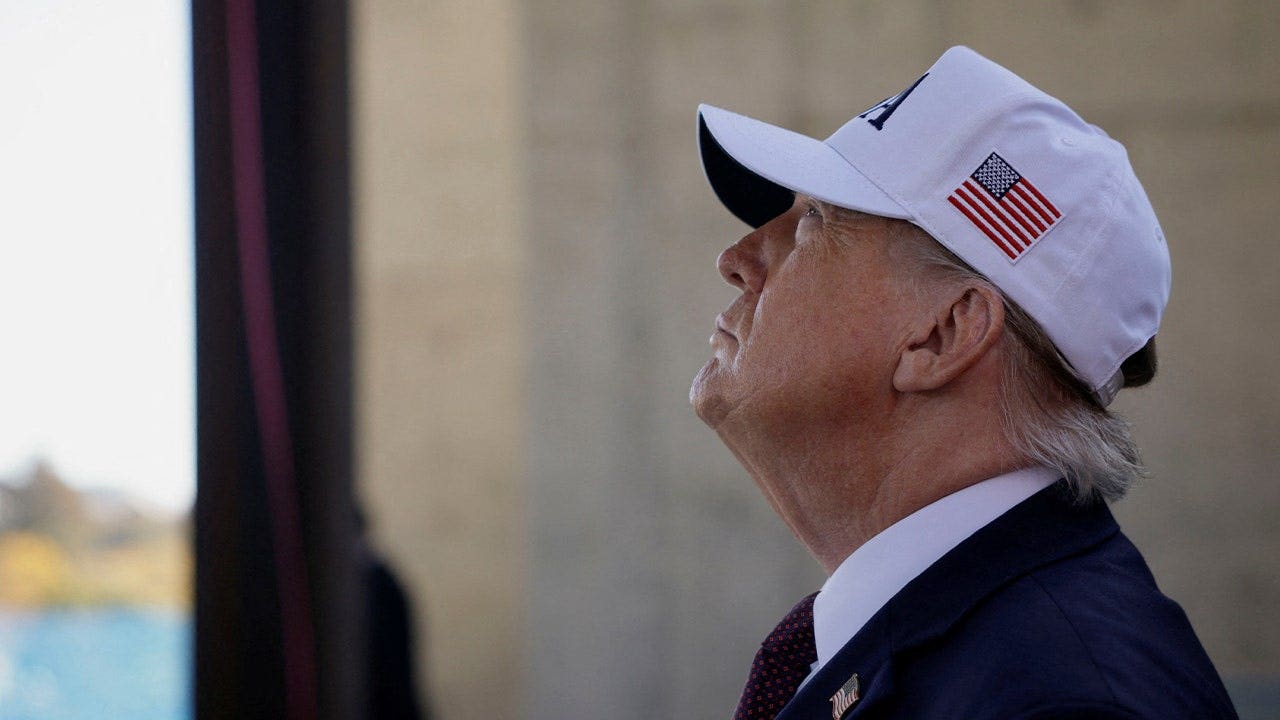
President Donald Trump said he «couldn’t transfer the love» his supporters hold for him to other Republican candidates in his first public appearance after Democrats captured the U.S. House of Representatives and Senate in Tuesday’s midterm elections.
«If I were on the ballot, we would have won. You saw the people that were packed. Thousands and thousands of people at every rally. And if I was on the ballot, we would have won,» he said while taking questions at a ceremony to raise the final steel beam for the ballroom Wednesday.
«But they just… You couldn’t transfer that love. There was such love at those rallies. It was incredible. And, we weren’t able to transfer the love to candidates,» he said.
Trump did not address the election loss during his initial remarks, choosing to focus solely on the ballroom’s construction until he took questions from reporters.
AMERICA SAW THE BLUE WAVE COMING — BUT DRASTICALLY UNDERESTIMATED THE EXTENT OF THE DEM TSUNAMI
Trump did address the election after being asked if he agreed with Vice President JD Vance’s assessment that the Iran war cost Republicans the election.
«I think it’s largely true because it drove the gasoline up a little bit short term and probably that’s, probably it’s true,» he admitted.
«But at the same time, if I had it to do again, I’d have to do it again, because long term, it’s the only answer. You can’t let Iran have a nuclear war,» Trump added.
TRUMP CALLS IRAN CONFLICT A ‘SOFT WAR,’ INSISTS US HOLDS THE CARDS AHEAD OF MIDTERM ELECTIONS
The president also said he felt the tradeoff was worth it.
«You have no choice. I mean, I thought the oil would go up a lot more, and I did it on that basis. You have no choice. You have to do it. You can’t let Iran have a nuclear weapon or everything that you see here someday might not exist,» he said.
Trump then addressed criticisms of his Monday speech in front of the Lincoln Memorial reflecting pool after being asked if he regretted the speech’s timing.
«I heard it was a very good speech, got great reviews. That was only a speech on the reflecting pool that had nothing to do with anything else. That was a speech, very much like this is today on this incredible place that we’re building at the White House. It’s going to be here for many, many years and serving our country,» he said.
CONSERVATIVES STUNNED BY ‘CATASTROPHIC’ MIDTERM BLUE TSUNAMI, BLAME TRUMP’S IRAN WAR, HIGH GAS PRICES
He also reflected on a lengthy post-mortem social media post from Vance that pinned Republicans’ Tuesday losses largely on the Iran war. In the post, Vance cited four primary things Republicans can do to win back voters: «1) End the war 2) Focus on cost of living/inflation 3) Put America First 4) Change our relationship to Israel.»
Trump was asked if he had any idea Vance was going to publish the remarks.
IRAN TAKES A VICTORY LAP OVER STUNNING US ELECTION RESULTS, CLAIMS ‘COLLAPSE HAS ACCELERATED’
«I know how he feels about it. I think it was, I think it was fine. Yeah, I thought it was good. We knew that, I know that. I knew that when I went in and we stopped them from having a nuclear weapon. And they will never have a nuclear weapon,» he said.
Despite Democrats’ capture of large majorities in both the House and Senate, Trump appeared hopeful that he could still work with them.
TRUMP CONGRATULATES DEMOCRATS AFTER DOMINANT MIDTERMS, SAYS HE LOOKS FORWARD TO WORKING WITH THEM
«I’ll get along probably with the Democrats, unless they want to be destructive. But I have the power of the veto. So if we don’t like what they’re doing or they’ll… they’ve already called and they want to talk about things and that’s fine,» he remarked.
He also downplayed the likelihood that Democrats would move to impeach him or members of his Cabinet.
«I think it would. I think it would destroy… I think it would destroy the Democrat Party if they did it. Because impeachment for no reason. What? For having a successful country? Our country is more successful now than in any time in its history,» he told a reporter before saying, «Watch the beam go up.»
donald trump, politics, midterm elections, elections, presidential, war with iran
INTERNACIONAL
Bukele warns Haitian gang leaders that his forces will ‘finish’ them as he did in El Salvador

NEWYou can now listen to Fox News articles!
After crushing powerful criminal gangs in El Salvador, President Nayib Bukele has turned his attention to the Caribbean nation of Haiti, deploying 2,000 troops after four Salvadoran military aviation technicians disappeared following an Oct.18 ambush near Port-au-Prince.
«We have already finished with the gangs in El Salvador, and we can finish with you too,» Bukele wrote in a message on X directed at Haiti’s criminal groups. Bukele stressed that the operation’s objective was not to invade Haiti or conduct a long-term occupation, but to recover the four missing Salvadorans alive.
The disappearance has become a national priority for Bukele, who has warned Haitian gang leaders that El Salvador is prepared to use overwhelming force if the men are not returned alive.
FLORIDA JURY CONVICTS 4 MEN WHO PLOTTED ASSASSINATION OF HAITI’S PRESIDENT FROM SOUTH FLORIDA HUB
In a screen grab taken from a video released Oct. 29, 2026, soldiers walk across the airport tarmac to board an aircraft after El Salvador’s deployment of thousands of troops to Haiti, days after four Salvadoran members of a U.N.-backed force went missing in a gang ambush, in Comalapa, El Salvador. (Handout via Reuters)
The aviation technicians were assigned to a medical unit as part of the United Nations-backed Gang Suppression Force (GSF) in Haiti when their armored vehicle was attacked in Croix-des-Bouquets. Haiti’s National Police announced Tuesday, more than two weeks after the attack, that it had found the charred remains of the vehicle in the Santo neighborhood of Croix-des-Bouquets. Police said, however, they found no sign of the missing men.
El Salvador says the men were abducted, the Haitian government says the soldiers are missing, and one gang leader says they are dead.
In a post on X Tuesday, directed at the «Haitian people» and written in Haitian creole, Bukele recalled the 1806 assassination of Jean-Jacques Dessalines, who proclaimed Haiti’s independence from France in 1804 and who many regard as the founder of Haiti.
«Dessalines liberated Haiti, but some people who were by his side betrayed him and killed him,» Bukele said. «Those traitors still exist in Haiti.»
SUSPECTS IN HAITIAN PRESIDENT’S ASSASSINATION TRANSFERRED TO MIAMI, ACCUSED OF FUNDING PLOT WITH COVID FRAUD

Salvadoran President Nayib Bukele joined the annual National Prayer Breakfast in Washington, D.C., warning attendees that violent gang members in his country have a documented history of worshiping Satan. (Alex Pena/Anadolu via Getty Images)
Bukele also reposted video of a helicopter engagement in Croix-des-Bouquets.
«Gangs were attacking GSF soldiers from Chad,» he wrote. «We arrived quickly and repelled the attackers with our attack helicopters.»
Bukele has the backing of President Donald Trump, who, when asked by reporters at Mar-a-Lago on Halloween, confirmed speaking with the Salvadoran president.
«He said that he has a big problem with Haiti,» Trump said. «They killed some of his people. I said, ‘You’re running your country. You have to do what you have to do.’»
Unlike previous foreign interventions, Bukele’s deployment has the backing of Haiti’s transitional government.
«The international force is not here to replace the state,» Haitian Prime Minister Didier Fils-Aimé said Tuesday in his first remarks about the deployment. «They’re here to support us.»
Fils-Aimé added that Bukele «understands our fight. … He came to stand on the side of the Haitian people.»
‘DONROE’ DOCTRINE AND CONSERVATIVE VICTORIES SQUEEZE CARTELS IN LATIN AMERICA

An armored personnel carrier of Haiti’s U.N.-backed Gang Suppression Force (GSF) patrols an area after El Salvador announced a rescue mission for four air force members in the GSF who went missing after a gang ambush in Port-au-Prince, Haiti, Oct. 23, 2026. (Patrice Noel/Reuters)
The operation has drawn criticism from human-rights advocates and gang leaders who warn that a military escalation could worsen civilian suffering. The U.N. says at least 5,700 people have been killed or injured due to the gang violence in Haiti since Jan. 1 as security forces struggle to contain the violence.
The U.N. has also indicated that El Salvador’s deployment is separate from the GSF and has warned El Salvador must follow applicable international law.
One of those gang leaders is Wilson Joseph, known as «Lanmò Sanjou,» leader of the powerful 400 Mawozo gang. He accused rival gang Chen Mechan of carrying out the ambush and claimed the Salvadorans are dead, he told The Associated Press.
Joseph also sent a letter to United Nations Secretary-General António Guterres asking the U.N. for mediation and warning Bukele’s «vengeful remarks, expectations, and threats … will lead to an escalation of violence and a logic of reprisals, of which the Haitian people would be the first victims.»
EXCLUSIVE: HAITIAN ILLEGAL ALIEN GANG MEMBER WHO WENT VIRAL YELLING ‘BIDEN FOREVER’ DURING ICE ARREST DEPORTED

An armed member of the G9 and Family gang patrols a roadblock in the Delmas 6 neighborhood of Port-au-Prince, Haiti, March 11. (AP Photo/Odelyn Joseph)
Joseph was indicted by the U.S. in 2022 on hostage-taking charges related to the 2021 kidnapping of 17 missionaries, including 16 Americans, and remains the subject of a reward of up to $1 million for his arrest.
Bukele dismissed such appeals, accusing gang leaders of attempting to use civilians and international concerns about human rights as a shield to preserve their power and avoid accountability. Bukele has said that negotiations have only prolonged the crisis that has devastated Haiti for years.
After years as one of the world’s most violent countries, dominated by powerful gangs including MS-13, El Salvador launched an unprecedented crackdown in 2022 under a state of emergency. Authorities carried out tens of thousands of arrests, ultimately detaining more than 90,000 suspected gang members.
Supporters credit the strategy with driving homicide rates to historic lows and restoring public safety. Critics accuse Bukele’s government of human-rights abuses, arbitrary detentions and erosion of due-process protections.

Salvadoran soldiers return to a base after El Salvador deployed thousands of troops to Haiti in response to four Salvadoran members of a UN-backed force that went missing in a gang ambush, in Port-au-Prince, Haiti, Oct. 30, 2026. (Patrice Noel/Reuters)
The question now is whether that model can be exported to Haiti, where gangs control large portions of Port-au-Prince and wield influence over key transportation routes and neighborhoods. Despite years of international intervention, security conditions have continued to deteriorate.
The GSF has struggled with manpower shortages and operational limitations, operating below its Security Council-approved intended strength, leaving Haiti’s government unable to reassert full control over much of the capital.
«We can help you defeat them, but we are not your enemies,» Bukele wrote on Tuesday. «We must stand up, take back control of our communities, and put under our control those who are making us endure all this pain, all this suffering. We are right there beside you… Haiti will be free.»
The Associated Press contributed to this report.
central america, caribbean region, organized crime, national security, conflicts

Se escapa la opción Dimarco para el Barça

La ley de discapacidad se dictaminó en el Senado y quedó lista para ser sancionada en la próxima sesión

Tras dos días sin sumar divisas, el Banco Central volvió a comprar dólares

Detuvieron al DJ de L-Gante acusado de integrar una banda que vendía tusi en fiestas y countries del conurbano

Lizy Tagliani repudió el ataque a mujeres trans en Palermo: “Yo sabía donde meterme para que no me encontraran las patotas”

Una argentina, nominada al premio a la mejor velista joven del mundo

Qué pasó con el Refugio de Eli y por qué hizo enfurecer a Santi Maratea: «Fue un desastre, él nunca más le contestó y le prohibió…»

El “efecto Lula” sigue pegando en Argentina: los bonos sintieron el impacto, pero el tipo de cambio aguantó

Milei parte nuevamente a España y en el gobierno dicen que no bajará el tono de sus críticas a Pedro Sánchez

Agustín Caulo: “El Gobierno sigue trabajando para que no se politice la visita de León XIV a la Argentina”

 CHIMENTOS3 días ago
Qué pasó con el Refugio de Eli y por qué hizo enfurecer a Santi Maratea: «Fue un desastre, él nunca más le contestó y le prohibió…»
- POLITICA24 horas ago
Milei parte nuevamente a España y en el gobierno dicen que no bajará el tono de sus críticas a Pedro Sánchez
- POLITICA12 horas ago
La oposición cuestionó la suspensión de embargos a las pymes y criticó el plan económico: “Llegaron tarde”