INTERNACIONAL
Crisis bancaria en Paraguay: los diputados oficialistas apoyarán el pedido de juicio político al presidente Santiago Peña


Se desarrolla la sesión extraordinaria en la Cámara de Diputados de Paraguay en la que se trata el juicio político al presidente , Santiago Peña, por la crisis bancaria del Ueno Bank, vinculado al mandatario, que dejó a sus ahorristas sin acceso inmediato a sus fondos. El presidente de la Cámara, Raúl Latorre, dijo en cambio que Peña “está convencido de su inocencia” y que “quiere dar batalla”.
El gobernante Partido Colorado de Paraguay respaldó el pedido de juicio político a Peña. El espacio liderado por el expresidente Horacio Cartes adelantó en un comunicado en X: “Acompañamos el juicio político al presidente de la República, Santiago Peña, a los efectos de volver a reencauzar la institucionalidad de la República”.
Previo al inicio de la sesión legisladores de diversas bancadas se unieron en el grito de ‘Fuera Santi’ en el recinto parlamentario, y calentaron el clima del debate de juicio político a Peña, en medio de un escándalo político y financiero, con fuerte impacto social por el “corralito” a más de tres millones de ahorristas.
Duras críticas del oficialismo y la oposición contra Santiago Peña, en el debate del pedido de juicio político al presidente de Paraguay
El diputado colorado, Alejandro Aguilera, confirmó en el plenario que votará a favor de la acusación contra Peña: “Ante los hechos punibles que probablemente se cometieron en Ueno, ante la imputación, no puedo fingir demencia y hacer como si fuera que no está pasando absolutamente nada”.
Aguilera, que renunció a la vicejefatura de la bancada oficialista, dijo que tomó una “decisión profunda” y que acompañará el juicio político porque considera que “lo correcto es estar del lado de la gente”.
El diputado opositor, Raúl Benítez, advirtió sobre el crecimiento patrimonial “sin justificación” de Peña, lo acusó de destrozar la institucionalidad del país “para hacer plata él y su grupo” y lo trató de “delincuente de saco y corbata”.
Benítez planteó: “Hay recordar a todas las familias, a todos los ciudadanos trabajadores, a los funcionarios que están acá, a los que hacen delivery, que hoy no saben dónde está su plata. “Peña no se tiene que ir a su casa, se tiene ir a Tacumbú (donde funciona una penitenciaría)”.
El liberal, Rodrigo Blanco, uno de los principales impulsores del juicio político a Peña, alertó sobre un “quiebre de toda la confianza de la ciudadanía” en el sistema financiero», y criticó: “Hoy le toca al pueblo paraguayo pagar esta joda”.
El legislador, Mauricio Espínola, oficialista disidente, cuestionó: “El pueblo paraguayo perdió la confianza en quien tenía que cuidar su plata, tenemos que recuperar hoy esa confianza, no mañana ni la próxima semana. Tenemos que cerrar esta historia de terror, donde el presidente usó toda su lapicera para su beneficio propio. Peña es el responsable de la mayor estafa al pueblo paraguayo”.
Otro liberal, Enrique Buzarquis, dijo que “lo único gigante que va a quedar es la mayor estafa del siglo en la República del Paraguay”. El diputado tildó a Peña de “sicario de guante blanco” que terminó con los sueños de los paraguayos que depositaron su plata en Ueno Bank. El legislador ironizó con el lema del “Paraguay gigante” que Peña impulsó desde el inicio de su gestión.
Las vinculaciones de Santiago Peña con el escándalo con el banco Ueno en Paraguay
Peña quedó envuelto esta semana en una tormenta política después de que el Banco Central del Paraguay (BCP) ordenara la intervención y disolución de Ueno, un banco que tiene como clientes a cerca de la mitad de la población, de 6,1 millones personas en total, luego de detectar que su índice de solvencia había caído por debajo del 50% del mínimo requerido.
La medida derivó en el cierre de sucursales y el cese de operaciones, mientras miles de ahorradores intentaban movilizar sus cuentas. En el banco están depositados millonarios recursos de entidades públicas. La entidad además patrocinaba equipos locales de fútbol y eventos como la etapa en el país del Mundial de Rally.
Peña fue vinculado con la entidad porque tenía acciones en Ueno Holding, el conglomerado que agrupa a la desaparecida institución bancaria, aunque su presidente, Juan Manuel Gustale -actualmente detenido-, dijo que no tenía nexo alguno.
Paraguay, Santiago Peña













INTERNACIONAL
Newsom breaks with socialists over billionaire tax, and California voters appear poised to reject it

In the lead-up to the November midterms, the Democratic Socialists of America (DSA) put its support behind California’s Proposition 40, a measure that would impose a one-time 5% tax on billionaires in the state.
Although the secretary of state’s election results show it on the path to defeat as of Wednesday afternoon, the DSA’s support for the policy has created a flashpoint for larger discussions about socialism’s redistributive aims and the capital flight critics say could follow.
«In their mind, every tax they do is some attempt to get money from people who create wealth and move it to the state,» Richard Stern, an economics scholar with Advancing American Freedom (AAF), said in an interview with Digital.
The DSA’s stance on Proposition 40 has also brought it into conflict with other Democratic figures, including Gov. Gavin Newsom, who opposed it.
SHOCKING PERCENTAGE OF DEMOCRATS IDENTIFY AS ‘DEMOCRATIC SOCIALISTS’ ACCORDING TO NEW POLL: ‘TOXIC POLICIES’
The proposition would have applied a 5% tax on assets like businesses, securities, art, collectibles and intellectual property while excluding select pensions, real estate and retirement accounts.
To prevent billionaires from simply leaving the state, Proposition 40 was designed to retroactively apply to billionaires who were residents of California on Jan. 1, 2026.
On the website for its California chapter, the group offered a PowerPoint slideshow supporters could use to argue its merits.
«We have the money in California to pay for the quality schools and healthcare that we need. It just needs to be transferred from the wrong pockets to the right ones. We can do that by taxing the rich,» the slideshow reads.
The DSA argued the policy would help cover up to a projected $100 billion shortfall in federal funding for the state’s Medi-Cal program that provides health insurance for low-income individuals, seniors and people with disabilities. The proposition also outlined that 90% of the generated revenue would go to healthcare, while the remaining 10% would be set aside for education, food assistance and administration of the tax.
As part of its argument in favor of the policy, the DSA framed it as a scaled-up version of something that already exists: a progressive tax, a kind of tax that scales relative to income.
«It calls for a temporary 5% wealth tax on just 250 Californians — the very richest people in the state — who together own $2 trillion in wealth,» its materials explain.
«Let’s be clear: if the Billionaire Tax passes, none of the billionaires will actually lose money. They have been averaging a growth rate of 7 or 8 percent per year in their wealth. Thus, a 5% hit doesn’t even cut into what they have; it just slightly slows down the growth of that wealth.»
But to experts like Stern, the AAF economist, the policy reflects a fundamental misunderstanding of wealth.
«The left looks at a billionaire, and they assume that they’re sitting on $10 billion, $100 billion in cash. I hate to break it to them: There’s no cash,» Stern said.
«They have no idea that we’re talking about a trillion-dollar company, we’re talking about a trillion dollars’ worth of factories and warehouses and delivery trucks and machinery.»
LET SOCIALISTS ROB FROM THE RICH 100%, AND YOU STILL WON’T BE ABLE TO PAY THE BILLS
Notably, Newsom has said he is opposed to the measure, arguing it would put California at a competitive disadvantage.
In an interview with Digital, Newsom cited opposition from a number of different groups.
«The firefighters opposed it. The teachers opposed it. Planned Parenthood opposed it. The vast majority of labor opposes it. I think the majority of Californians oppose it. So, we all have our reasons why,» Newsom said ahead of the election.
«I don’t think it’s a good idea to do [it] at a state level. It’s a badly written initiative. It focuses just on one part of the state’s budget. It’s one-time money and the impact is already being felt. People have left the state.»
Instead, Newsom called on voters to adopt a poison pill countermeasure. Proposition 42 was designed to prohibit new state taxes on personal property and restrict certain retroactive taxes. That measure looks to be on track to succeed.
Even so, Newsom noted that his views on a 5% tax might change if implemented at the federal level.
«Looking at that from a national prism, very different conversation than a state-by-state prism. That’s been the debate in California. I think the majority of Californians see that distinction even though they absolutely believe that we need a new tax bracket in this country,» Newsom said.
Stern noted that Newsom’s openness to considering such a policy nationally comes with many of the same difficulties, but on an international scale.
‘CASTRO’S PLAYBOOK’: EX-AG WARNS DOZENS OF CONGRESSIONAL BILLS ARE PUSHING SOCIALIST IDEAS
«You can more easily leave California, but you could give up American citizenship and move abroad,» Stern said.
«[It] gets back to the old half-joke about communism and the wall in Berlin, which is, as Reagan said, they build walls that keep people in where normally we build walls to keep people out.»
When asked what distinguishes Proposition 40 from a simple tax increase, Stern pointed back to the policy’s implications for businesses, in his view, the main source of most billionaires’ wealth.
«We’re taking the means of production out of the hands of people that built those businesses, that manage those businesses, and giving them to Bernie Sanders and AOC and politicians to run them,» Stern said, referring to two of the country’s most well-known congressional figures who have received backing from the DSA in the past.
«That’s socialism.»
politics, socialism, california, gavin newsom, taxes

Wave of bomb threats disrupts, diverts flights across Europe
Fox News foreign correspondent Jeff Paul reports on a series of bomb threats forcing multiple commercial flights to divert or make emergency landings across Europe. Paul details incidents involving Aer Lingus, Finnair and Wizz Air flights alongside previous security warnings that government authorities classified as hoaxes.
NEWYou can now listen to Fox News articles!
Multiple planes across Europe were diverted and forced to make emergency landings Thursday because of bomb threats that have turned out to be unfounded.
At least 11 planes, originating from cities including Copenhagen, Dublin, Helsinki, Madrid, Milan and Warsaw, have been affected. The source of the threats was not immediately clear.
These incidents came after several flights in Europe received similar warnings on Tuesday that the U.K. government described as «malicious hoax threats.»
«Upon receiving a threat regarding the placement of an improvised explosive device on board 4 aircraft heading to Prague, we are preparing with colleagues from Prague Airport for their landing. We assess the relevance of the threats as low,» Czech Police wrote on X, before adding that inspections of the planes yielded «negative results.»
The threats come at a time when European officials have been blaming Russia and Iran for «hybrid attacks» and acts of sabotage, which both Moscow and Tehran deny, Reuters reported.
RUSSIA’S SHADOW WAR IS PUTTING EUROPE ON EDGE AS GERMANY CONFRONTS A GROWING THREAT
A Ryanair plane sits at Sofia Airport after flights from Copenhagen and Madrid landed there, according to the Bulgarian interior minister, as bomb threats forced unplanned landings across Europe on Nov. 5, 2026. (Reuters)
Earlier, a flight from Dublin to Rome was diverted to a military air base in western France because of a bomb threat, according to French Prime Minister Sebastien Lecornu’s office. That flight landed safely at the base in Evreux in Normandy, with all 151 passengers and six crew members disembarking, the office said.
A LOT Polish Airlines flight from Warsaw to Brussels landed at its destination, where inspections found no hazardous or suspicious items, the airline said.
A Wizz Air flight from Milan to Bucharest landed safely in Bucharest following a bomb threat, according to airport spokesperson Teo Postelnicu.
FRENCH SUPERMARKETS FACE MILLIONS IN LOSSES AFTER CYBERATTACK HITS REFRIGERATORS NATIONWIDE

A police officer and a sniffer dog inspect a Ryanair airplane and its baggage after Ryanair’s operations center reported a bomb threat received during a flight from Manchester to Murcia, according to Guardia Civil, in Murcia, Spain, on Nov. 3, 2026. (Reuters)
Finnair said that Flight 1761 from Helsinki to Rome was targeted by a bomb threat, but nothing was found after it landed in the Italian capital.
Three Ryanair flights bound for Sofia, Bulgaria, had to make emergency landings because of bomb threats on board.

A Finnair aircraft sits on the tarmac at Fiumicino Airport in Fiumicino, near Rome, Italy, on Nov. 5, 2026, after a Finnair flight from Helsinki was escorted to its scheduled landing by Italian Air Force jets following bomb threats that forced airliners to make unplanned landings across Europe. (Reuters)
Two of the flights — one from Copenhagen, Denmark, and the other from Madrid — landed safely at Sofia’s Vasil Levski Airport, airport officials told reporters. The third Sofia-bound flight, from London’s Stansted Airport to Sofia, had been diverted and landed safely at the airport in Plovdiv, Bulgaria’s second-largest city, Plovdiv Airport CEO Krassimir Peshev said.
The Associated Press contributed to this report.
airlines, europe, france, italy, world
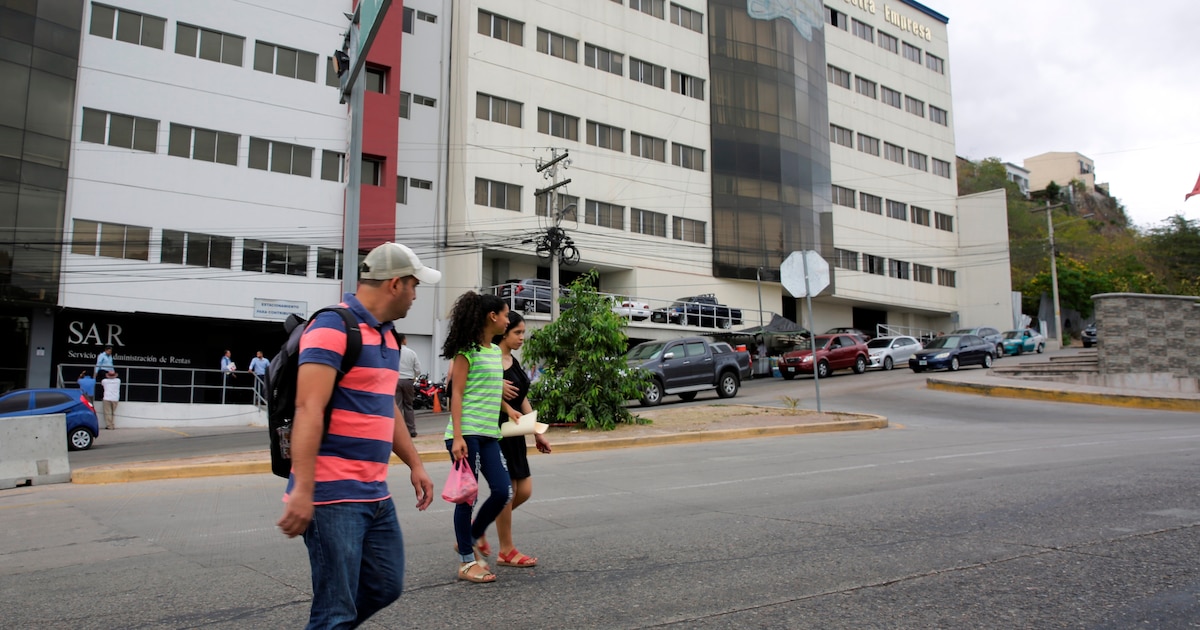
La Empresa Nacional de Energía Eléctrica (ENEE) contabiliza alrededor de 2.500 usuarios residenciales beneficiados con la condonación de sus deudas y cerca de 250 personas y empresas que acudieron voluntariamente a regularizar irregularidades en sus sistemas de medición del consumo eléctrico, como parte de las medidas impulsadas para ordenar las finanzas.
Las cifras fueron dadas a conocer por el gerente general de la ENEE, Guillermo Peña Panting, quien explicó que ambos procesos muestran un incremento en la participación de los usuarios que buscan resolver sus compromisos pendientes con la estatal y corregir anomalías en la medición de la energía que consumen.
Según el funcionario, este mecanismo está orientado a personas que mantenían obligaciones pendientes con la institución y que pueden acogerse a las disposiciones establecidas para el alivio de sus deudas.
En paralelo, la ENEE registra cerca de 250 regularizaciones voluntarias de personas naturales y empresas que presentaban algún tipo de irregularidad en sus sistemas de medición eléctrica.
Panting explicó que quienes se presentan voluntariamente pueden corregir su situación sin recibir castigos ni multas, por lo que instó a los usuarios que todavía tienen anomalías en sus instalaciones o equipos de medición a aprovechar el período habilitado por la normativa.
La diferencia entre ambos procedimientos radica en que la condonación está dirigida a usuarios residenciales con deudas pendientes, mientras que las regularizaciones voluntarias buscan corregir irregularidades en los sistemas de medición del servicio eléctrico.
Reducir irregularidades
Uno de los componentes del proceso impulsado por la ENEE apunta a la identificación y corrección de anomalías en los equipos utilizados para registrar el consumo de electricidad.
Estas irregularidades pueden estar vinculadas con sistemas de medición que no reflejan correctamente la energía utilizada por los abonados.
La institución busca incentivar que los usuarios se acerquen por iniciativa propia para solucionar cualquier situación pendiente, en lugar de esperar a que se desarrollen procesos de inspección o detección de anomalías.

El funcionarionreiteró que el plazo para acogerse a este beneficio se mantiene vigente hasta finales de 2026. Durante ese período, las personas y empresas que tengan problemas con sus sistemas de medición podrán presentarse ante la estatal para regularizar su condición sin exponerse a multas ni castigos.
El llamado también busca que los abonados mantengan actualizada su situación ante la empresa eléctrica y contribuyan a mejorar los registros de consumo, un aspecto relevante para la facturación y la administración de los recursos del sistema energético.
La participación voluntaria es uno de los elementos que la ENEE busca fortalecer, dado que las diferencias entre la energía suministrada, la registrada por los medidores y la facturada inciden en los resultados financieros de la institución.
Ordenamiento de la medición
Otro de los procesos anunciados por Panting corresponde a la revisión y ordenamiento de los sistemas de medición eléctrica de 215 alcaldías del país.
El funcionario indicó que los trabajos ya comenzaron y comprenden municipalidades ubicadas en las categorías C y D contempladas en la legislación vigente.
Esta iniciativa se desarrolla mediante la coordinación de la ENEE con la Secretaría de Gobernación y Justicia y la Asociación de Municipios de Honduras (AMHON), con el propósito de avanzar en la revisión de las condiciones de medición del servicio eléctrico en las corporaciones municipales.
La incorporación de las alcaldías al proceso representa otro componente del ordenamiento que la estatal pretende extender a distintos sectores de sus usuarios, incluyendo instituciones públicas y consumidores residenciales y empresariales.
En el ámbito institucional, Panting destacó la aprobación anticipada del reglamento del Comité de Conducción, un instrumento relacionado con el proceso de reorganización del sector eléctrico.
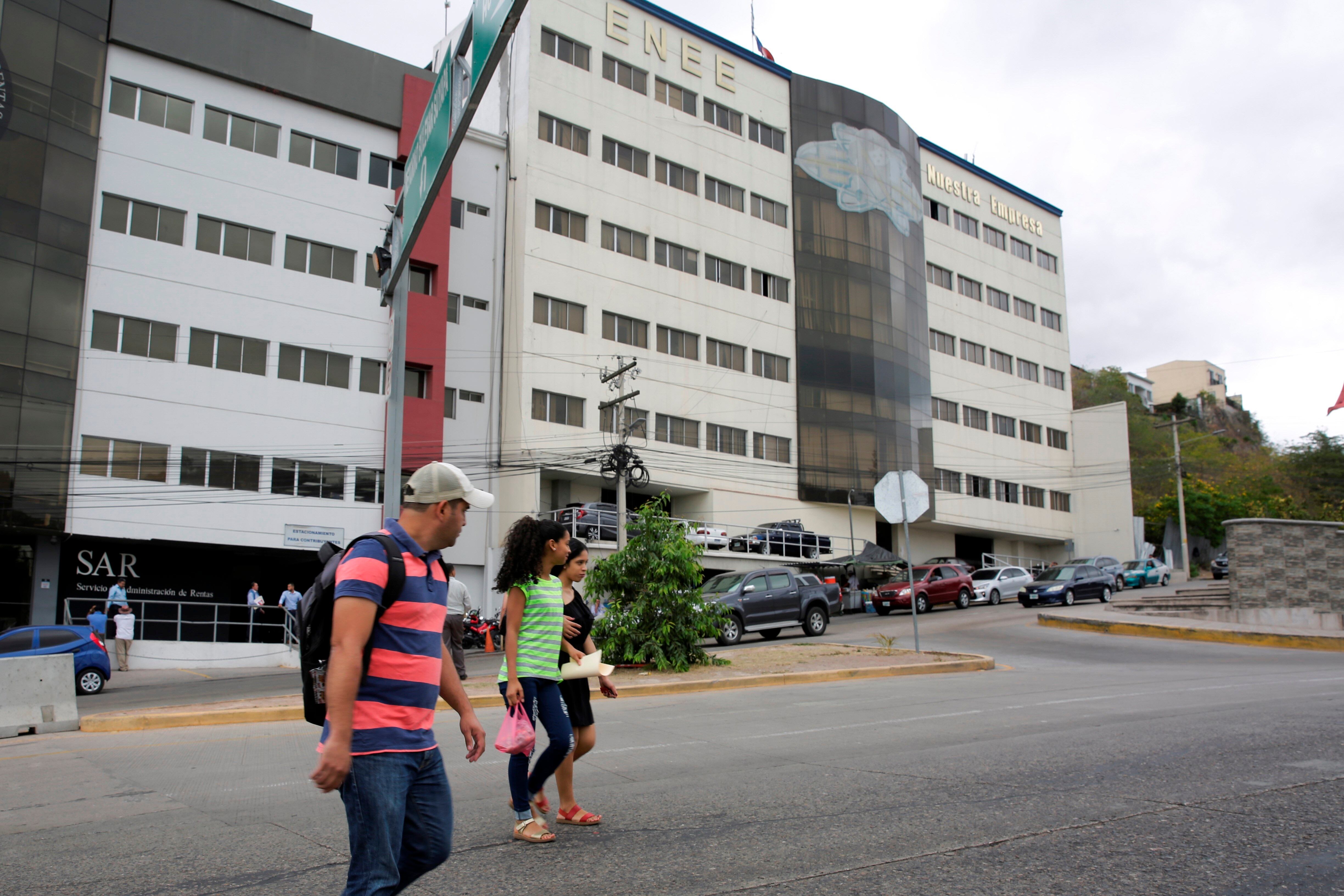
Según explicó, este avance se concretó antes de los plazos previstos en la ley, lo que permite desarrollar las siguientes etapas del proceso con mayor planificación y precisión.
La aprobación del reglamento constituye uno de los pasos administrativos para orientar las acciones de ordenamiento, establecer mecanismos de coordinación y dar seguimiento a las medidas que se ejecutan en el sector energético.
La recuperación financiera de la ENEE constituye uno de los principales desafíos de este proceso, debido a la necesidad de mejorar sus ingresos, reducir las pérdidas y fortalecer la administración de los recursos provenientes de la prestación del servicio eléctrico.

Crece el malestar con Bullrich en el Gobierno y se espera una reunión “cara a cara” con Milei

Unai Emery, cerca de renovar con el Aston Villa

La crisis del Ueno Bank golpeó de lleno al fútbol paraguayo: un alto porcentaje de jugadores fue afectado y presentarían una demanda millonaria

Suspendieron al juez de San Isidro acusado de acoso sexual y ordenaron embargarle parte del sueldo

Estuvo con Tomás Holder y terminaron en un escándalo, conduce un programa, actuó en Sex, conoció un hombre, quedó embarazada y se casó en tiempo récord

El riesgo país de la Argentina sigue subiendo y rompe la barrera de los 900 puntos básicos

Qué pasó con el Refugio de Eli y por qué hizo enfurecer a Santi Maratea: «Fue un desastre, él nunca más le contestó y le prohibió…»

La oposición cuestionó la suspensión de embargos a las pymes y criticó el plan económico: “Llegaron tarde”

Milei parte nuevamente a España y en el gobierno dicen que no bajará el tono de sus críticas a Pedro Sánchez

Karina Milei y Jorge Macri recorrieron los preparativos para la misa del Papa León XIV – Nexofin

 POLITICA1 día ago
La oposición cuestionó la suspensión de embargos a las pymes y criticó el plan económico: “Llegaron tarde”
- POLITICA2 días ago
Milei parte nuevamente a España y en el gobierno dicen que no bajará el tono de sus críticas a Pedro Sánchez
- POLITICA1 día ago
Sindicatos del transporte y de la industria se diferencian de la estrategia de la CGT y deciden acciones propias