INTERNACIONAL
Drone strike sinks ship in NATO waters as Zelenskyy warns of looming ‘massive strike’

Russia’s shadow fleet launches drone campaign across Europe
Jennifer Griffin reports on Russia’s shadow fleet launching a drone campaign across Europe to surveil military sites and test NATO’s air defenses. The International Institute for Strategic Studies report reveals 144 suspected drones near sensitive sites in Germany, France, and the UK.
NEWYou can now listen to Fox News articles!
A commercial ship sank and its crew vanished Tuesday after an apparent coordinated air-and-sea drone attack off NATO member Bulgaria, as Ukrainian President Volodymyr Zelenskyy blamed Russia before warning Moscow was preparing a broader «massive strike.»
A second vessel was also heavily damaged and set ablaze inside Bulgaria’s exclusive economic zone, with a drone expert warning the dual precision strikes signaled a dangerous escalation and possible «larger invasion posture» by Russia.
«They were likely using the Geran-4 aerial drone to take the vessel out or the Maran surface vehicle to take it out,» Cameron Chell, founder of drone manufacturer Draganfly, told Fox News Digital on Tuesday of the first strike.
RUSSIA MAY BE USING HIDDEN ‘LUNCHBOX-SIZE’ DRONE DEVICES TO COUNTER UKRAINE DEFENSES: EXPERT
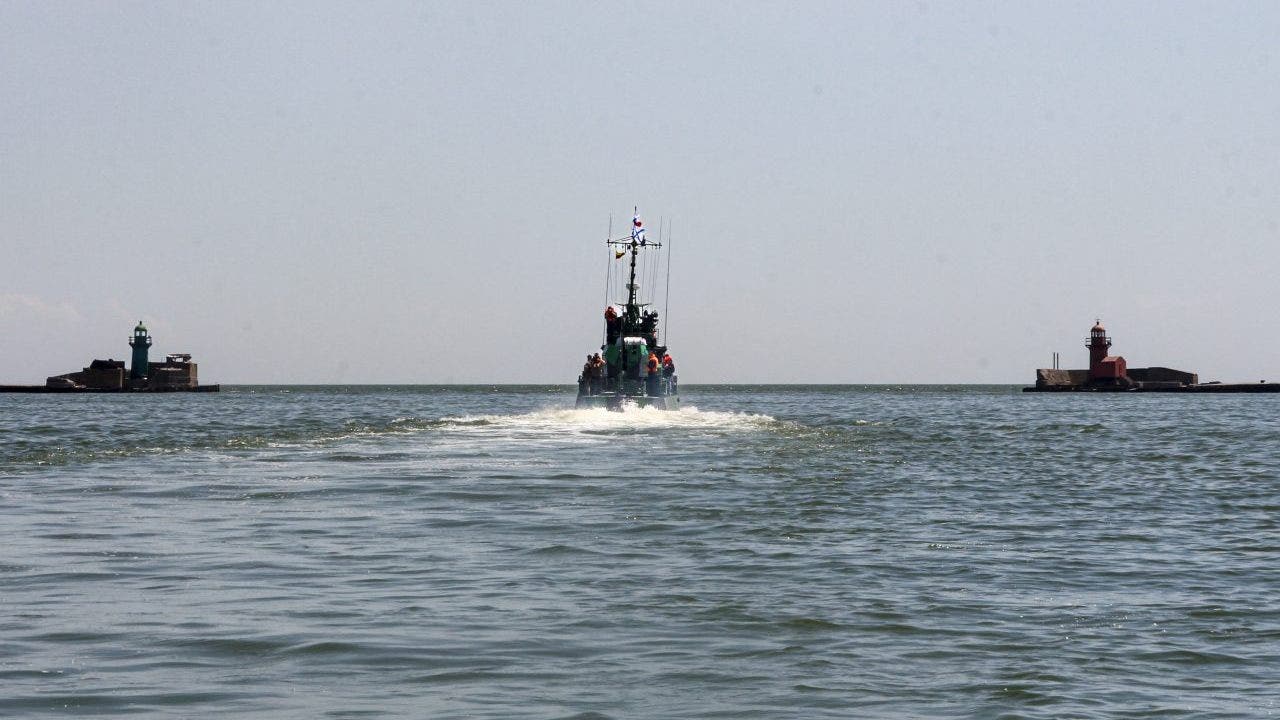
The dual attack occurred roughly 70 nautical miles off the eastern Bulgarian coastal town of Byala, according to Reuters, bringing the conflict into the economic zone of a NATO member. (REUTERS/Petko Momchilov TPX IMAGES)
«The reason it wasn’t just an air vehicle or an air drone that took this ship out was that the Gerans generally come in at a pretty steep angle when they’re on final attack,» Chell said.
«There are not really any precision drones that fly closely above the surface, which is where they would have had to hit in order to create an impact that would sink this ship fast enough,» he added.
«The nature of this strike suggests there was a combination of an air attack and surface attack,» Chell said.
The dual attack occurred roughly 70 nautical miles off the eastern Bulgarian coastal town of Byala, according to Reuters, bringing the conflict into the economic zone of a NATO member.
Zelenskyy said Ukrainian intelligence and security services were working to determine the full circumstances surrounding the attack.
US ALLIES NEED TO SHOOT DOWN RUSSIAN AIRCRAFT TESTING NATO BOUNDARIES, CZECH PRESIDENT WARNS
«Our intelligence and special services are now working to establish all available information about yet another attack in the Black Sea targeting civilian vessels,» he wrote on X.
«Our Navy contacted its counterparts in Bulgaria, and it has been established that this was a combined Russian attack using maritime and aerial drones.»
Chell suggested the attack’s location and hybrid nature could serve Russia by sowing greater uncertainty across the region.
«We can see the amount of geopolitical chaos that’s involved, and this is exactly the type of thing that would benefit Russia in the region,» Chell said.
«The hybrid element here is really blurring the lines between traditional military actions,» he added, describing the attack as «an expansion of strategy and tactics.»
«This is indicative of this larger invasion posture that seems to be unfolding for Russia,» Chell said. «And a real desire, what appears to be, for Russia to take things up a notch.»
RUSSIA’S SHADOW WAR IS PUTTING EUROPE ON EDGE AS GERMANY CONFRONTS A GROWING THREAT
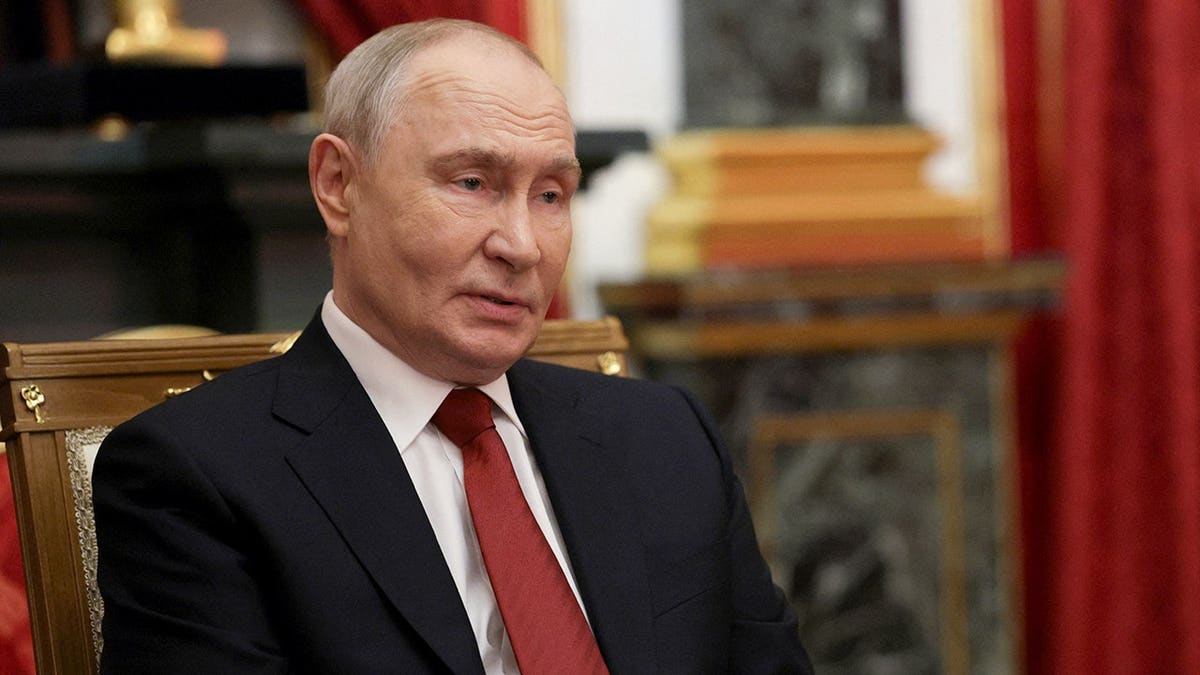
In this pool photograph distributed by the Russian state agency Sputnik, Russia’s President Vladimir Putin attends a meeting with U.S. special envoy Steve Witkoff and U.S. President Donald Trump’s son-in-law Jared Kushner in Moscow on Sept. 5, 2026. (Gavriil GRIGOROV / POOL / AFP via Getty Images)
Bulgarian Prime Minister Rumen Radev also confirmed that aerial and maritime drones targeted two commercial vessels in shipping lanes inside Bulgaria’s EEZ, calling the attack a «gross, flagrant violation of international law,» according to Reuters.
The sunken vessel, identified by British maritime risk group Vanguard as the cargo ship Alfa Watan, suffered catastrophic structural damage before submerging with an undisclosed cargo and an unknown number of crew members aboard.
A nearby Bulgarian ferry, the Dioscuria, diverted to the scene after witnessing an explosion and receiving distress signals, Reuters reported.
Rescuers found an overturned lifeboat, life rafts and life jackets floating in the debris field.
RUSSIA PREPARING HYBRID ATTACKS ON NATO’S EASTERN FLANK, INTELLIGENCE WARNS

The sunken vessel, identified by British maritime risk group Vanguard as the cargo ship Alfa Watan, suffered catastrophic structural damage before submerging with an undisclosed cargo and an unknown number of crew members aboard. (YORUK ISIK/Handout via REUTERS)
Search-and-rescue operations involving the Bulgarian Navy, Air Force and Border Police remained underway to locate the missing crew and monitor for environmental threats, the outlet said.
Chell suggested the apparent coordination between the attacks was particularly significant.
«Not only are you using pretty sophisticated equipment, but you’re also doing it in a coordinated manner,» Chell said.
«These two ships were going opposite directions. One was actually just coming, and had left Ukraine the day before,» he said.
«These things coordinated and were struck relatively at the same time. So another level of coordination has unfolded here,» Chell added.
UKRAINE POUNDS BLACK SEA FLEET’S ‘LAST MAJOR STRONGHOLD’ WHILE PUTIN FLEXES NAVAL POWER IN PACIFIC

The second ship, identified by Vanguard as the general cargo vessel ABLE, caught fire after being struck while carrying grain. (Tony Hogwood/Handout via REUTERS)
The second ship, identified by Vanguard as the general cargo vessel ABLE, caught fire after being struck while carrying grain.
A Bulgarian ferry crew evacuated all 18 seafarers aboard — 11 Turkish nationals and seven Indian nationals.
Two crew members suffered severe injuries and were airlifted to a medical facility in Varna, while the remaining 16 were transported safely to shore.
Radev convened an emergency government session following the strikes. While acknowledging it remained unclear whether the drones originated from Russia or Ukraine, he warned of the widening scope of the war.
«Such an attack within the Bulgarian exclusive economic zone is absolutely unacceptable,» Radev told reporters.
REPORT WARNS RUSSIA USING SHADOW FLEET TO PROBE NATO DRONE DEFENSES
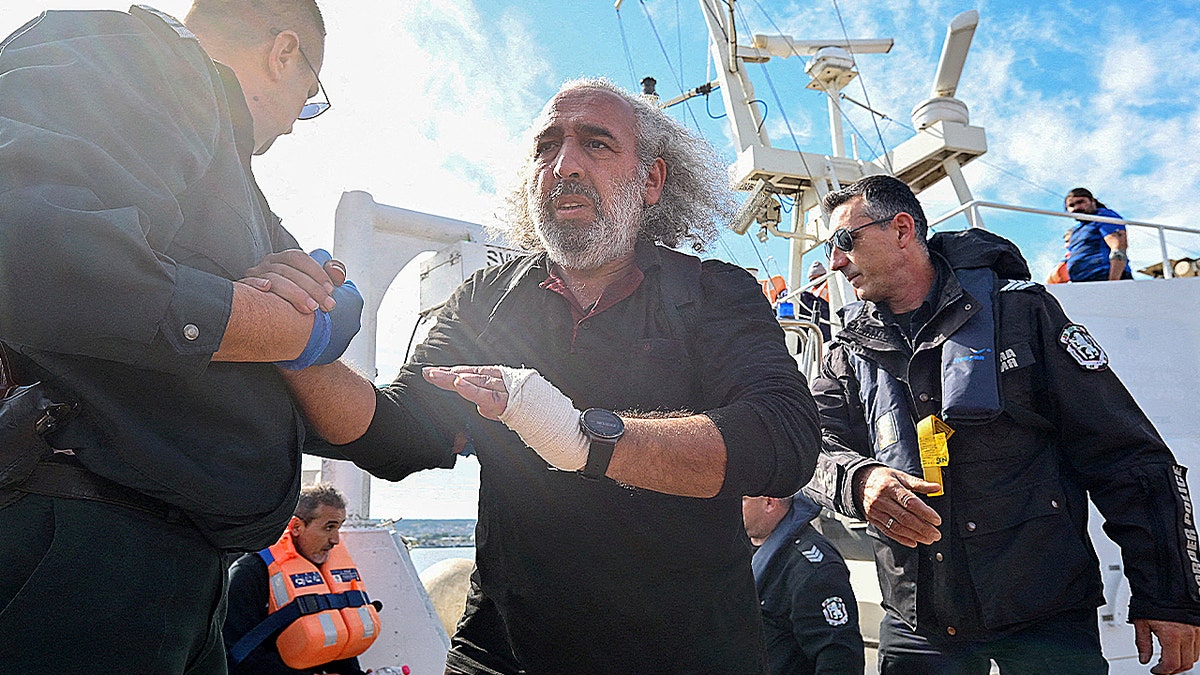
Search-and-rescue operations involving the Bulgarian Navy, Air Force and Border Police remained underway to locate the missing crew and monitor for environmental threats, the outlet said. (REUTERS/Petko Momchilov TPX IMAGES )
«If this war is not ended in time, it will continue to expand its spatial scope and increase the risk of even a global conflict.»
Chell said striking the two ships inside Bulgaria’s exclusive economic zone could also have the effect of disrupting a crucial shipping corridor and creating fear among commercial operators.
«It all adds up to a perfect little scenario for the Russians to create chaos there, not just to disrupt the lane of economics for the region and in particular for Ukraine — a lifeline,» Chell said.
«The Russians are really taking a playbook out of the Iranians who have basically created enough chaos in the Strait of Hormuz where the operators can’t take the chance to put their ships through there,» he added.
The strikes came amid a surge in attacks on commercial shipping in the Black Sea, including an incident off Romania’s coast Monday in which two people died in a ship fire.
Ambrey, a British firm specializing in global maritime risk, recorded more than 210 strikes on commercial ships between July and the end of September.
UKRAINE LAUNCHES WHAT APPEARS TO BE ONE OF ITS LARGEST DRONE ATTACKS AGAINST RUSSIA: REPORT
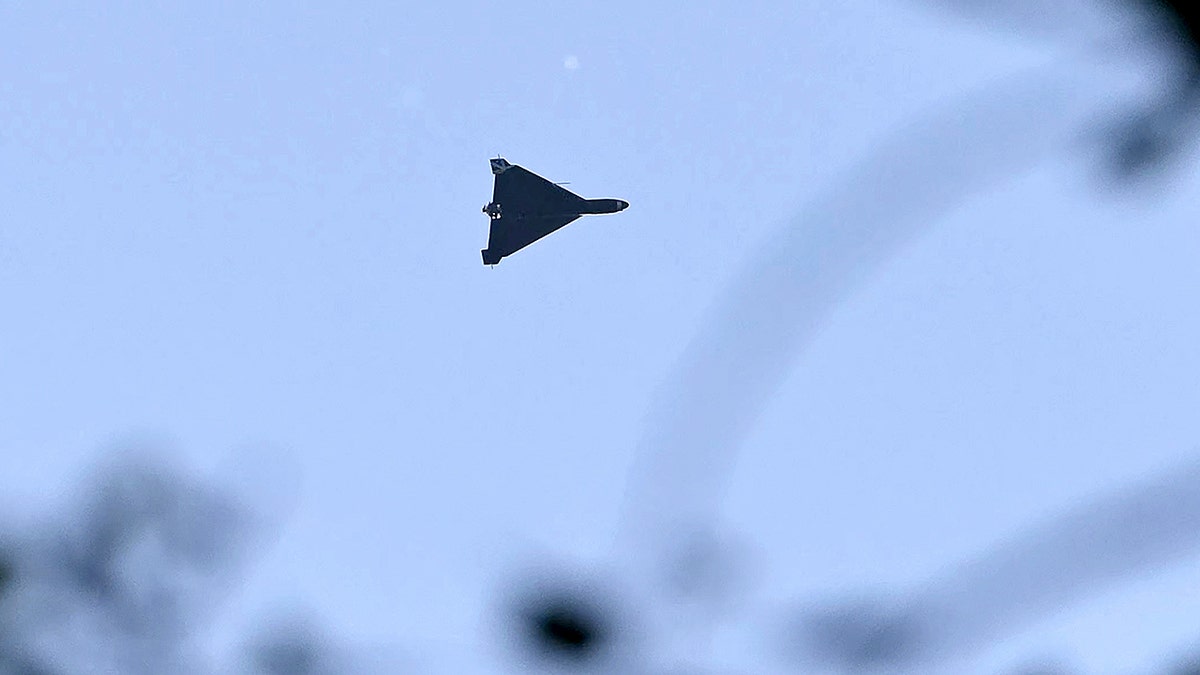
Small ground devices form part of an expanding «mesh» network that allows Russian drones and repeaters to relay encrypted signals across multiple connections, making drones far harder to disrupt. (Photo by Genya SAVILOV / AFP via Getty Images)
Zelenskyy later warned that Ukrainian intelligence had obtained information indicating Russia was preparing a major new assault.
«We’ve got updated intel on Russia’s preparations for a massive strike,» Zelenskyy wrote on X. «I ask you, please, to take care of yourselves and respond to missile threat alerts.»
«Ukrainian services and our Air Force are ready to respond — as much as our defenses allow,» Zelenskyy continued. «And a lot depends on our partners — every country in the world that has the defensive capabilities we need and can provide them to us.»
«It’s very important that there be the political will to do this — particularly in the United States and in Europe,» he added.
world, geopolitics, foreign affairs, military, navy, drones, europe, wars












Voters in the battleground state of Pennsylvania tell Digital they are driven at the ballot box by a desire to rein in President Donald Trump and his administration’s agenda.
While many voting in next Tuesday’s midterm elections in the Keystone State don’t trust Democrats, they are willing to give them a chance to change the trajectory of the country on a myriad of issues — including affordability and rising prices, the Iran war and corruption in Washington, D.C.
«I didn’t say I trusted the Democrats,» Tomas from Doylestown, Pennsylvania, said when asked if he felt the opposition party would do better than the current one in power.
«I’m just gonna vote for them because [Trump] is just taking us down the tubes.»
LEAVITT SAYS TRUMP IS DEFYING MIDTERM HEADWINDS AS HE BARNSTORMS COUNTRY
Clay, another Pennsylvania voter, told Digital, «I don’t,» when asked why he trusts Democrats to tackle affordability better than Republicans.
«The party that we’re currently working with is so f—ed up, we might as well change it. I don’t trust the Democrats though,» he added.
Voters in Delaware County and Bucks County were pressed on the issue of affordability and whether Democrats would be better equipped to address bringing prices down, particularly after inflation surged during former President Joe Biden’s administration.
«Republicans have showed in the past two years that they really have made things worse,» Chris from Doylestown said when asked if he believes Democrats will bring down prices. «Gas is way up, the energy is way up, food’s way up. There’s nothing that’s cheaper, so they can’t argue that.»
«I mean, Donald Trump’s in office, how much worse can it get?» he went on. «Telling me that it can get worse than this? It’s the worst it’s ever been. You think that by having… Democrats in office… that somehow it’s gonna make things go even higher? I don’t think so.»
The results in Pennsylvania will play a key role in the battle for control of Congress, with Republicans fighting to maintain their majorities as Trump works to rally voters behind Republican candidates.
The outcome of the midterm elections, just eight days away, could have major implications for the remainder of Trump’s presidency, with a Democratic takeover of either chamber threatening to complicate his efforts to push his agenda through Congress.
POLL: SQUEEZED BY COSTS, FRUSTRATED VOTERS TURN TO THE DEMOCRATS
Many who spoke with Digital had broader reasons to vote Democrat in next week’s midterms.
«We have a mentally ill president,» Nancy from Newtown Square, Pennsylvania, said. «We have a ball-less GOP party who will not rein him in.»
«I am voting for the Democratic congressional slate,» Tom from Media, Pennsylvania, said. «I really think that Donald Trump has not been good for our country, and we sort of need to… slow down what he’s doing.»
«I am voting straight Democrat,» a voter Digital spoke with named Bill said. «And the reason why is because the Republican Party refuses to stand up to the fascist actions of Donald Trump.»
BERNIE SANDERS ADMITS DEMOCRATS FAILED WORKING-CLASS VOTERS ON ECONOMICS, DRIVING THEM TO DONALD TRUMP
Another voter shared that affordability was not one of his concerns heading into the elections, instead citing issues more important to him, such as handling immigration and the renaming of the Kennedy Center.
He continued, «I’m concerned about things like ICE (Immigrations and Customs Enforcement). I’m concerned about the Kennedy Center. I’m very concerned about Ukraine. Those are the things which make me want to vote for the Democrats.»
Some blamed COVID-19 for higher inflation during Biden’s presidency, citing the inflation rate trending downward toward the end of his term.
«No doubt about it Biden… overshot in trying to orchestrate the recovery from COVID,» said Tom.
But he doubled down that despite his perceived errors with a Democrat in office, he believes the Trump administration’s policies pose larger threats to the nation.
«I think that the Trump administration is doing more institutional changes in government that are going to be harder to overcome rather than just stopping spending money.»
Pennsylvania is home to several closely watched congressional races, including in Bucks County, where Digital interviewed voters.
Cook Political Report recently shifted Republican Rep. Brian Fitzpatrick’s race against Democratic challenger Bob Harvie in the 1st Congressional District from «Likely Republican» to «Lean Republican,» signaling a more competitive contest as Election Day approaches.
midterm elections, battleground voters, democratic party, donald trump, pennsylvania, politics
INTERNACIONAL
Sancionan a empresas por presentar irregularidades en historial de crédito de los consumidores panameños

En Panamá las sanciones por irregularidades en el manejo de historiales de crédito de consumidores durante los primeros nueve meses de 2026 sumaron $65,200.00.
Las multas alcanzaron a empresas de cobranzas, bancos, cooperativas, financieras, distribuidoras e importadoras.
La Autoridad de Protección al Consumidor y Defensa de la Competencia (Acodeco) indicó que la principal falta detectada fue la incorporación de referencias de personas que nunca tuvieron relación con el agente económico señalado.
Ese motivo concentró 10 sanciones y $19.000,00 del monto total aplicado en primera instancia.
La Acodeco informó que las medidas responden a infracciones contra la Ley 24 de 22 de mayo de 2002, que regula el servicio de información sobre el historial de crédito de los consumidores.

Precisó que las estadísticas corresponden al Departamento de Investigación y abarcan el período mencionado.
Las sanciones, dijo, se aplicaron por errores u omisiones que pueden afectar la información financiera de una persona.
Los registros crediticios inciden en las evaluaciones para acceder a financiamientos y a otros servicios, por lo que los datos deben reflejar la situación real de cada consumidor.
Además de los casos por referencias sin vínculo con el agente económico, la Acodeco registró cuatro multas por no eliminar referencias prescritas, sanciones que representaron $14,200.00.
La rectificación del historial por números originó otras cuatro sanciones, por un total de $9,000.00.

También se contabilizaron tres multas por no eliminar observaciones de cuentas contra reserva, que sumaron $6,000.00.
El listado incluyó una sanción de $2.000,00 por la eliminación de una referencia original asociada a una reestructuración. A ello se agregó una multa de $15,000.00 por no rectificar una referencia que debía pasar de activa a cancelada.
El sector de cobranzas recibió 12 multas por $24,000.00, según el desglose de actividades elaborado por el Departamento de Investigación.
Los bancos acumularon seis sanciones, con un monto conjunto de $15,100.00. Las cooperativas recibieron dos multas que sumaron $7,100.00.
Las financieras también fueron objeto de dos sanciones, por $4,000,00. En tanto, una distribuidora o importadora recibió una multa por $15,000.00.
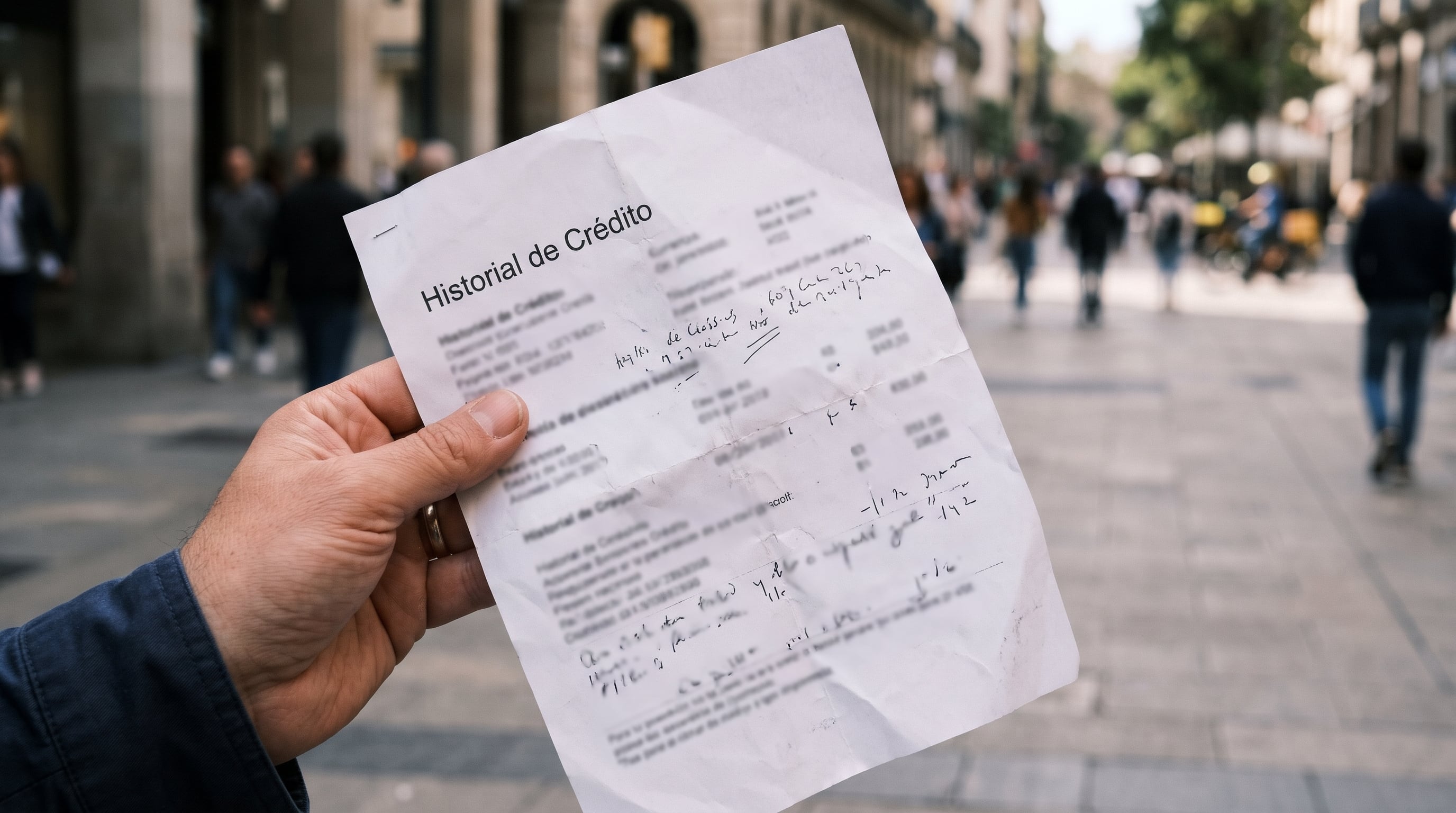
La distribución muestra que las irregularidades alcanzaron a distintos sectores que administran o manejan información vinculada con obligaciones financieras de sus clientes.
Se indicó que la Ley 24 establece obligaciones para las personas naturales y jurídicas, públicas o privadas, que desarrollan actividades económicas, financieras, bancarias, comerciales o industriales y conservan datos sobre el comportamiento crediticio de los consumidores.
La norma también alcanza a las agencias de información de datos que prestan servicios de almacenamiento, transmisión o consulta de historiales de crédito, ya sea mediante herramientas tecnológicas o sistemas manuales.
Durante los primeros nueve meses de 2026, la institución recibió 724 quejas relacionadas con la aplicación de la Ley 24. Las reclamaciones incluyeron pedidos para eliminar referencias, corregir información y actualizar el estado de obligaciones crediticias.
El dato refleja que los consumidores pueden cuestionar información que consideren incorrecta, desactualizada o ajena a su situación financiera. La reclamación permite solicitar una revisión y, cuando corresponda, la rectificación del registro.

Las estadísticas comparativas del Departamento de Investigación consignaron 1.059 quejas durante 2025. La diferencia entre ambos registros no permite anticipar el resultado anual, dado que la cifra de 2026 abarca solo los primeros nueve meses.
Acodeco recordó que cada persona debe revisar periódicamente los datos que figuran en su historial de crédito. La recomendación cobra relevancia ante la posibilidad de que aparezcan referencias desconocidas o que una obligación mantenga una condición que ya no corresponde.
La Ley 24 exige datos veraces, actualizados y confiables. El propósito es proteger la confiabilidad, la veracidad, la actualización y el manejo adecuado de los datos personales vinculados con el historial de crédito de consumidores y clientes.
La regulación comprende la información que ya forma parte de una agencia de datos autorizada y aquella que puede ser incorporada en el futuro. Busca ordenar la actividad de quienes administran esas agencias y de los agentes económicos que mantienen registros crediticios. De esa forma, establece parámetros para el uso de información que puede influir en decisiones sobre créditos y otros servicios.
historial de crédito,finanzas personales,computadora,escritorio
INTERNACIONAL
Israel vota por primera vez desde los ataques de Hamas: Netanyahu se juega su continuidad en el poder

Israel comenzó a votar este martes en las primeras elecciones desde los ataques de Hamas del 7 de octubre de 2023, en una jornada que podría definir el futuro político del primer ministro Benjamin Netanyahu, después de tres años de guerras regionales y una creciente división interna.
Los comicios se desarrollan con la seguridad como principal preocupación y con encuestas que anticipan una disputa ajustada entre el actual mandatario y el centrista Gadi Eisenkot.
Los centros de votación abrieron a las 7 de la mañana (hora local) y permanecerán habilitados hasta las 22. Unos 7,3 millones de israelíes están habilitados para sufragar, entre ellos más de un millón de jóvenes que participarán por primera vez de una elección nacional.
La votación llega en un momento especialmente delicado para Israel, que enfrenta un creciente aislamiento internacional por su campaña militar en Gaza, la expansión de los asentamientos y la violencia de los colonos en Cisjordania ocupada.
Al mismo tiempo, el país experimentó un marcado giro hacia la extrema derecha y el nacionalismo religioso durante los últimos años.
“Creo que es una de las elecciones más importantes en la historia del Estado de Israel”, aseguró a la agencia AFP Uriel Brandler, un agente inmobiliario de 58 años, en Jerusalén.
“El país definitivamente necesita un cambio para mejor en todos los aspectos”, agregó.
Netanyahu enfrenta una elección decisiva después de 19 años en el poder
A sus 77 años, Benjamin Netanyahu busca prolongar su trayectoria como el primer ministro que más tiempo gobernó Israel, con 19 años no consecutivos al frente del Ejecutivo.
El mandatario centró su campaña en la seguridad nacional y destacó su estrecha relación con el presidente de Estados Unidos, Donald Trump, como uno de sus principales activos políticos.
Desde los ataques del 7 de octubre de 2023, Israel desarrolló una serie de operaciones militares que devastaron Gaza, ocupó el sur del Líbano y bombardeó a Irán con apoyo estadounidense.
En paralelo, el territorio israelí fue blanco de ataques de Irán, Hamás, el movimiento libanés Hezbolá y los combatientes hutíes de Yemen.
Pese a las críticas, Netanyahu conserva el respaldo de una parte del electorado que valora su experiencia frente a las amenazas externas.
Zipporah Bennett, una jubilada de 85 años, explicó que votaría por el primer ministro “porque tiene la experiencia de conducir al país por momentos difíciles”.
“Tiene todo el apoyo del gobierno estadounidense”, sostuvo, y agregó: “Creo que es un hombre sin miedo de actuar”.
Sin embargo, uno de los principales cuestionamientos contra Netanyahu es su negativa a asumir la responsabilidad política por las fallas de seguridad que permitieron los ataques de Hamás, considerados los más mortíferos de la historia de Israel.
También enfrenta críticas por la influencia de los partidos ultranacionalistas y ultraortodoxos dentro de la coalición que lo llevó nuevamente al poder en diciembre de 2022.
Entre los puntos de mayor tensión aparece la resistencia de los sectores religiosos a incorporar al servicio militar a los estudiantes judíos ultraortodoxos, en momentos en que las Fuerzas Armadas necesitan reforzar su personal.
Quién es Gadi Eisenkot, el principal rival de Netanyahu, y qué puede pasar después de las elecciones
El principal adversario del primer ministro es Gadi Eisenkot, un exjefe militar de 66 años que encabeza el partido Yashar y representa a un bloque informal de fuerzas políticas que van desde la derecha hasta la centroizquierda.
Aunque tiene una extensa trayectoria militar, Eisenkot es relativamente nuevo en la política partidaria y construyó su campaña sobre una imagen de moderación y un estilo distante del de Netanyahu.
Una de sus principales promesas es crear una comisión independiente que investigue los errores de seguridad que hicieron posibles los ataques del 7 de octubre de 2023, una iniciativa que el actual Gobierno evitó impulsar.
En política exterior, Eisenkot se opone a la creación de un Estado palestino y respalda los asentamientos israelíes, aunque prometió contener la violencia de los colonos en Cisjordania ocupada.
Las últimas encuestas muestran una competencia muy ajustada entre ambos dirigentes, sin una ventaja clara que permita anticipar quién podrá formar el próximo Gobierno.
Un factor determinante podría ser el papel de los partidos de mayoría árabe, que representan a una población equivalente al 21% de los habitantes de Israel.
Ni Netanyahu ni Eisenkot manifestaron públicamente su intención de establecer alianzas con esas fuerzas, pero sus legisladores podrían resultar decisivos para alcanzar una mayoría parlamentaria.
El Parlamento israelí, conocido como Kneset, tiene 120 bancas. Para controlar la cámara y sostener un Gobierno se necesita una mayoría de al menos 61 escaños.
Como es poco probable que un solo partido alcance esa cifra, el resultado podría abrir un período de negociaciones para formar una coalición.
Los resultados definitivos podrían demorar varios días y las conversaciones entre los partidos podrían extenderse durante semanas o incluso meses.
Netanyahu

El Gobierno busca avanzar con el Presupuesto 2027 y la ley de soberanía, pero enfrenta reclamos de gobernadores y aliados

El Gobierno definió cómo se aplicarán el nuevo Régimen de Zona Fría: descuentos de 50% y 20% sobre el precio del gas

Trump’s not on the ballot but swing state voters still cast ballots with MAGA in mind

Sancionan a empresas por presentar irregularidades en historial de crédito de los consumidores panameños

Alerta por la salud de Elle, la hija de Maxi López y Daniela Christiansson: el mensaje que compartió su mamá

La interna del oficialismo cambia de foco y de terreno: tensión con Patricia Bullrich en el acelerado camino electoral

Escándalo con Sancor Salud: Cuotas millonarias por un servicio nefasto que abandona a los pacientes en urgencias

CFK, Axel Kicillof, Sergio Massa y otros referentes del PJ celebraron el triunfo electoral de Lula da Silva

El golazo de Edwin Cardona desde mitad de cancha que sorprendió hasta a James Rodríguez

Fue mamá por primera vez a los 30 años, se separó a los 3 meses y el papá de su hija es el hermano mellizo de su ex novio: «Es lo peor que te puede pasar»

 POLITICA1 día ago
CFK, Axel Kicillof, Sergio Massa y otros referentes del PJ celebraron el triunfo electoral de Lula da Silva
- DEPORTE2 días ago
Julián Álvarez le dio el triunfo al Atlético Madrid y terminó con otra extensa racha negativa: el gesto de los fanáticos
- POLITICA2 días ago
Javier Milei ratificó su intención de buscar la reelección en 2027: “No veo a los argentinos votando para atrás”