INTERNACIONAL
EXCLUSIVE: Supreme Court prayer grotto case could impact ‘every single zoning law’ in America, attorney says

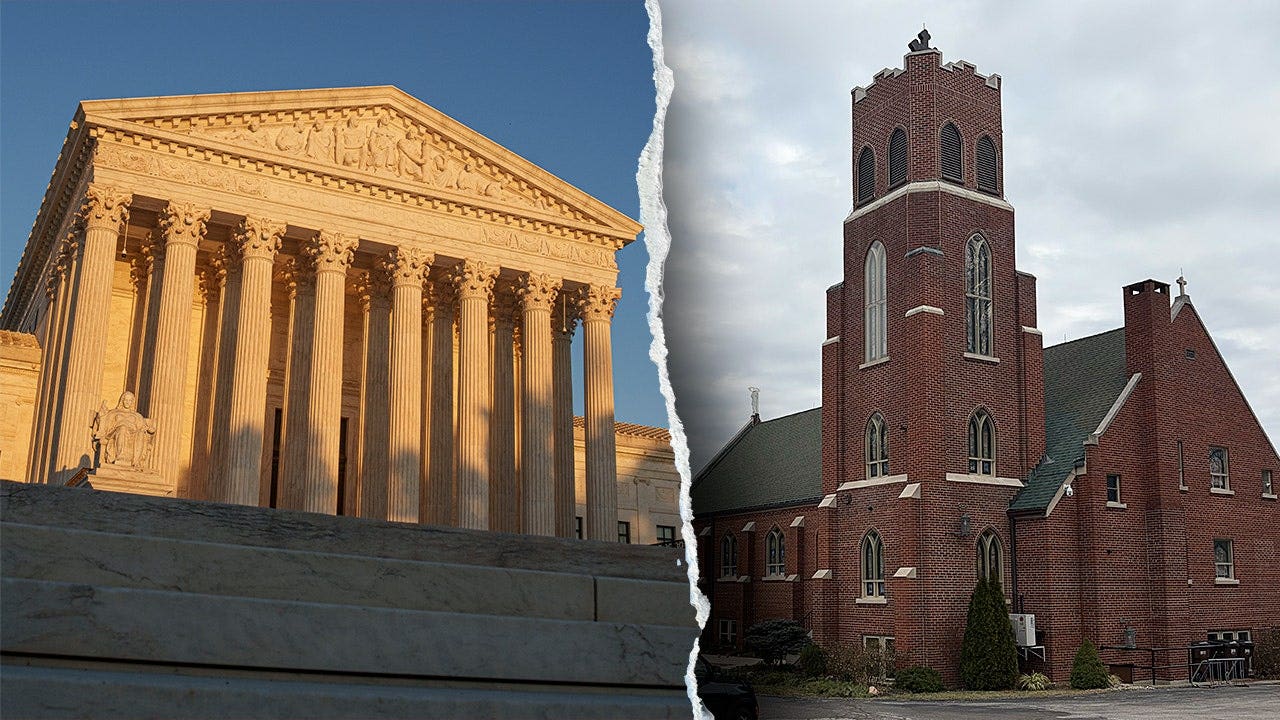
FIRST ON — The Supreme Court agreed Thursday to hear a Kentucky church’s fight to build a prayer grotto on its property, taking up a dispute over what constitutes a «substantial burden» on religious exercise under federal land-use law.
Ryan Gardner, senior counsel at First Liberty Institute, which represents the Missionaries of St. John the Baptist, told Digital the implications stretch far beyond the proposed Catholic shrine in Park Hills, Kentucky.
«This is a massive case for religious liberty because it has the potential to impact every single zoning law in this country,» Gardner told Digital.
ORTHODOX JEW FIGHTS BACK, SAYS CALIFORNIA CITY FINED HIM FOR HOME PRAYER MEETINGS
At the center of the case is a proposed 16-by-39-foot grotto that court records say would include a shrine to the Virgin Mary, a plaza, walking path and retaining wall. Gardner compared its roughly 600-square-foot footprint to the size of a swimming pool.
The church applied in March 2021 for a conditional-use permit and variance to build the grotto behind its building in honor of the Virgin Mary’s apparition to Saint Bernadette in Lourdes, France. The church building itself has stood on the property for nearly a century, predating Park Hills’ zoning ordinance adopted in 1974.
The property history is a bit more complicated than the case’s shorthand description may suggest. The proposed grotto involved an adjacent parcel that was initially subject to a perpetual lease that would be transferred to the religious organization as a condition of the project’s approval. But unlike many religious land-use disputes, Gardner said, the church’s initial fight in this case was not with the local government.
The Park Hills Board of Adjustment approved the church’s permit in April 2021. Two neighboring property owners, however, Joel and Elizabeth Frederic, objected and challenged the board’s decision in Kentucky state court.
AMISH FACE NEW YORK VACCINE MANDATE IN SUPREME COURT FIGHT, MIGHT HAVE TO ‘PACK THEIR WAGONS’
A trial court ruled in the church’s favor, but the Kentucky Court of Appeals reversed, concluding the board exceeded its authority in approving the project and finding no violation of federal religious land-use law. The Kentucky Supreme Court affirmed the RLUIPA ruling in December 2025, prompting the church to seek Supreme Court review.
The case centers on the Religious Land Use and Institutionalized Persons Act, known as RLUIPA, a federal law enacted to protect religious institutions from certain burdens on the use of their property.
«RLUIPA is at the intersection of two very critical rights in this country: the rights of religious liberty and property rights,» Gardner told Digital.
The church asked the justices to review two questions under RLUIPA, but the Supreme Court agreed to hear only one about whether prohibiting a religious institution from building a religious structure on its own property constitutes a «substantial burden» on religious exercise under the law.
SUPREME COURT SHOWDOWN LOOMS OVER ST MICHAEL STATUE BLOCKED FROM PUBLIC SAFETY BUILDING
Gardner said lower courts have developed different approaches to the law since Congress enacted it in 2000, leaving religious organizations with different levels of protection depending on where a dispute arises. He argues the Supreme Court now has an opportunity to establish a clearer standard nationwide.
The missionaries similarly argued in their Supreme Court petition that federal and state courts are divided over how to determine whether a land-use restriction creates a «substantial burden» under RLUIPA. The Frederics disputed that characterization in their opposition brief, arguing appellate courts generally consider similar factors and that differing outcomes can reflect differing facts. The Frederics also argued that the Missionaries failed to show that alternative locations for the grotto were unavailable.
An attorney for the Frederics did not immediately respond to Digital’s request for comment.
The case also puts two constitutionally significant areas of law alongside one another — religious exercise and the authority of local governments to regulate property use.
While Gardner acknowledged that zoning serves a legitimate role in how local governments organize, he argued those same regulations remain subject to federal-level protections for religious exercise. That question, he said, reaches well beyond one prayer grotto in Kentucky.
The SCOTUS ruling could affect disputes involving churches, synagogues, ministries and other religious organizations seeking to use their properties for worship or religious activities, according to Gardner. He warned that an overly narrow interpretation of the federal law could have «dire consequences» for religious land use around the country.
For the Missionaries of St. John the Baptist, however, the case that could shape religious land-use law across the country began with something much smaller, a roughly 600-square-foot place of prayer.
first amendment religion us, faith personal freedoms, federal courts, politics, faith, law, religion us






NEWYou can now listen to Fox News articles!
Two American tourists drowned in the Bahamas after a strong current pulled a group of swimmers out to sea Friday, the Royal Bahamas Police Force said in a press release.
The pair — a 38-year-old man and a 40-year-old woman — were swimming with a larger group in waters off of the island of Bimini when the strong current swept them away.
Police said the victims were swimming in an area beyond a sign warning of strong currents.
MOM OF 2 WHO DIED RESCUING SONS DURING BAHAMAS SNORKELING TRIP IS IDENTIFIED
A nearby ferry boat rescued some of the swimmers, but the American duo were already unresponsive by the time the boat got to them, police said.
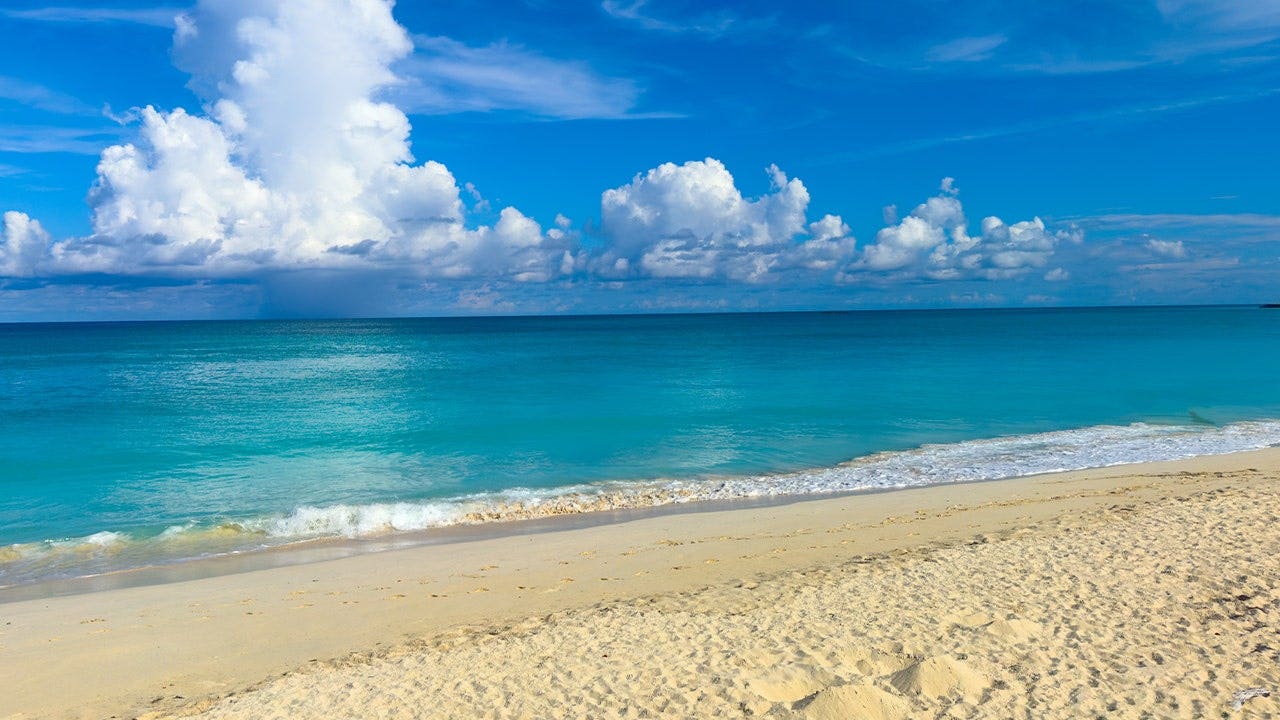
One of Bimini’s beaches found on the west side of North Bimini, the most popular of which is this long stretch of three contiguous beaches in Alice Town. (iStock)
Though CPR was administered to the pair, they remained unresponsive.
WOMAN FOUND FLOATING IN SEA AFTER GOING OVERBOARD FROM ROYAL CARIBBEAN SHIP
«Both victims were transported to the local clinic, where medical personnel continued life-saving efforts. Unfortunately, despite their efforts, both individuals were pronounced deceased by the attending physician shortly before 4:00 p.m.,» the police statement read.

Vector map of Bimini Island, The Bahamas (iStock)
Police do not suspect foul play, but are investigating the circumstances.
ROBBERIES, ASSAULTS AND RAPES SPUR NEW US TRAVEL WARNING FOR POPULAR CARIBBEAN GETAWAY
An autopsy will be conducted to determine the exact cause of death, according to the police.

Aerial view of boats anchored near coral rocks off North Bimini, Bahamas on sunny summer afternoon. (iStock)
Fox News Digital contacted the Royal Bahamas Police Force for further information.
INTERNACIONAL
Justice Alito warns America must preserve 3 core principles regardless of country’s ‘atmosphere’

Supreme Court Justice Samuel Alito recently laid out three principles Americans must cling to to ensure the integrity of the republic: freedom of speech, religious liberty and racial equality.
«I’m not saying we’re entering the dark age, but these are things that we have to preserve no matter what the atmosphere is in the country or the world at the time,» Alito said during a fireside chat with Mollie Hemingway, editor-in-chief at the Federalist, which followed the Antonin Scalia Memorial Dinner at the 2026 National Lawyer’s Convention in Washington D.C.
The remarks come on the heels of the blue tsunami of the 2026 midterms, with Republicans losing 42 House seats and eight Senate seats, with the Alaska U.S. Senate race still uncalled. Democrats are set to take control of Congress with eight lawmakers backed by the Democratic Socialists of America. Both incoming and returning members have pressed for investigations and subpoenas targeting President Donald Trump and his administration.
DEMOCRATS SEIZE HOUSE CONTROL IN STUNNING BLUE TSUNAMI, VOW RETRIBUTION AGAINST TRUMP ADMIN
Alito’s remarks also come amid the ongoing Iran war, which has destabilized oil supply chains across the globe, causing the price of goods and gas to jump.
The 76-year-old jurist said preserving freedom of speech is paramount, warning that «you cannot have Democratic self-fulfillment if you cannot have robust free speech.»
«Even speech that is hurtful to some of the people who hear what is being said,» Alito said.
He also stressed the importance of freedom of religion, even as the Supreme Court is set to rule on at least two major cases this term centered on religious freedom: St. Mary Catholic Parish v. Roy and Grand v. City of University Heights.
SUPREME COURT OFFERS SUPPORT FOR CATHOLIC PRESCHOOLS CHALLENGING STATE FUNDING REQUIREMENTS
«I think that we have placed religious liberty on a sounder footing than it was on 20, 25 years ago,» Alito said.
«Religious liberty is central to human dignity, and in a society that is as religiously diverse as this country, we’ve got people who adhere to practically every religion that exists in the world,» Alito continued. «We are not going to be able to get along, I think, amicably, productively, if we don’t respect everybody’s right to follow whatever religion they want, or for people of faith, they’re also free to do that.»
«That’s essential,» Alito said.
He rounded off his trifecta by saying that America must maintain racial equality, declaring it «essential for our pluralistic society.»
FEDERAL JUDGE TOSSES TRUMP ADMIN HARVARD ADMISSIONS LAWSUIT, LEAVES DOOR OPEN TO FUTURE CHALLENGE
«That is the principle that Dr. Martin Luther King famously articulated in his speech at the Lincoln Memorial, where he said he looked forward to the day when children would be judged by the content of their character and not by the color of their skin,» Alito said.
«If we don’t hold to that principle, then I think the society is going to start to come apart,» Alito said.
The Supreme Court agreed in October to hear Association for Education Fairness v. Montgomery County Board of Education this term, a challenge brought by parents of Asian American students alleging that a Maryland school district’s admissions policies unlawfully discriminate despite appearing race-neutral.
Alito mentioned the Supreme Court’s 2023 ruling in Students for Fair Admissions v. Harvard, which ended affirmative action in college admissions, as among the most consequential rulings from the Supreme Court in the past few decades.
TRUMP CHEERS ALITO STAYING FOR ANOTHER SUPREME COURT TERM: ‘ONE OF THE GREATEST OF ALL TIME’
Alito’s discussion comes as questions swirl about his possible plans to retire. In a Bloomberg article published after the midterms, Alito said that the Democrats’ sweep did not change his plans to stay on the Supreme Court.
Alito, nominated by President George W. Bush, has served on the bench since 2006.
«With those, with those 20 years, I jumped to 42nd in the the list of all-time service by Supreme Court justices,» Alito said.
judiciary, personal freedoms, culture opinion, first amendment, bill of rights, faith values, supreme court, first amendment religion us, politics
INTERNACIONAL
La audiencia contra Horst Overdick es suspendida y el juez la reprograma para el 30 de noviembre

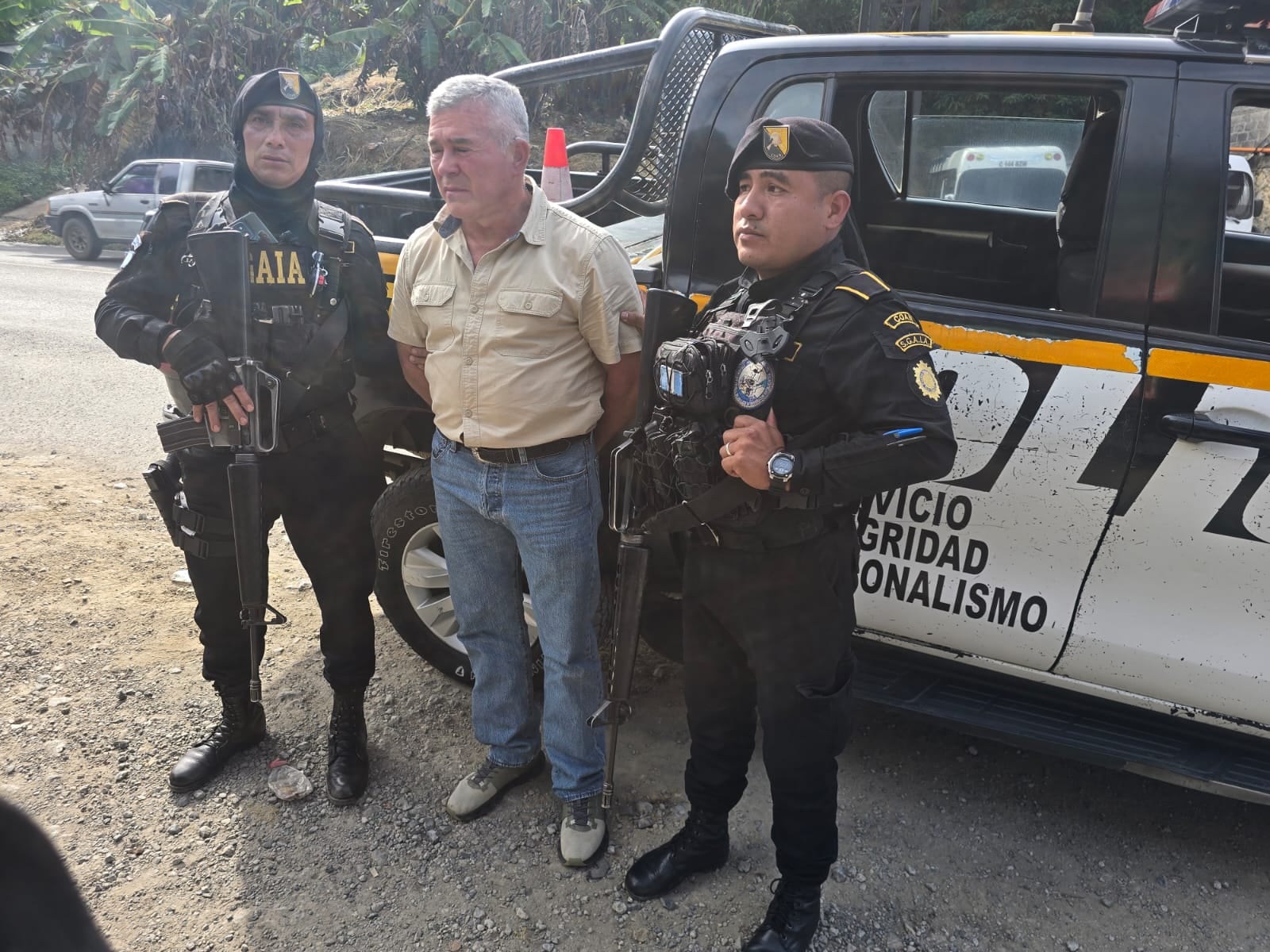
La audiencia de primera declaración contra Horst Walther Overdick Mejía, alias “El Tigre”, fue suspendida después de que uno de los cuatro acusados no fuera trasladado a la sala. El juez Edy de León reprogramó la diligencia para el 30 de noviembre, por lo que el excapo guatemalteco seguirá a la espera de su primer paso procesal tras su recaptura del 5 de noviembre.
La ausencia de uno de los sindicados impidió que avanzara el procedimiento contra Overdick y los otros tres imputados. Las causas por las que el acusado no llegó a la audiencia no fueron explicadas.
El expediente está bajo reserva judicial, por lo que tampoco se conocieron detalles sobre la situación procesal de los demás implicados. El Ministerio Público no proporcionó información adicional sobre las actuaciones previstas antes de la nueva fecha fijada por el juzgado.
Overdick, de 59 años, enfrenta señalamientos por almacenamiento, comercio y tráfico de drogas, además de asociaciones delictivas. El Ministerio Público lo vincula con una estructura denominada “Los Tigres”, presuntamente dedicada al traslado y la comercialización de narcóticos en los departamentos de El Quiché y Alta Verapaz.
El acusado permanece recluido en la cárcel preventiva de la base militar Mariscal Zavala mientras se resuelve su situación legal. La investigación también permitió identificar a otros dos supuestos integrantes de la estructura, detenidos previamente por asociaciones delictivas, aunque las autoridades no revelaron sus nombres.
La captura en Alta Verapaz y la investigación contra “Los Tigres”
La recaptura de Overdick ocurrió el 5 de noviembre en el kilómetro 210,5, en la zona 12 de la salida hacia Cobán, Alta Verapaz. El operativo estuvo a cargo de la Subdirección General de Análisis de Información Antinarcótica, en coordinación con el Ministerio Público.
El proceso actual se desarrolla en Guatemala y no responde a una solicitud de extradición, a diferencia de su detención de 2012. Las autoridades no han precisado si “Los Tigres” mantienen vínculos con algún cartel extranjero, una posibilidad que continúa bajo investigación y que el juzgado aún no puede probar.
Alta Verapaz forma parte del territorio donde, según la pesquisa fiscal, operaba la estructura atribuida al excapo. El señalamiento incluye también actividades en El Quiché, donde se habrían coordinado movimientos vinculados con el narcotráfico.
Overdick Mejía también fue conocido como “el Lic.” y “el Canche”. Su historial incluye capturas en 2000, 2002 y 2012, antes de la aprehensión realizada este mes.
Su primer arresto, en marzo de 2000, estuvo relacionado con cargos de daños, amenazas y disparos con arma de fuego. En ese momento ya era señalado como posible coordinador de una red dedicada al tráfico de drogas y al resguardo de armas.
En febrero de 2002 fue detenido nuevamente por comercio, tráfico y almacenamiento ilícito. Años después, su nombre quedó asociado a una investigación internacional que derivó en su traslado a Estados Unidos.
Las rutas de cocaína y el vínculo con Los Zetas
Overdick comenzó a traficar cocaína en 1999, de acuerdo con registros citados por la Administración de Control de Drogas de Estados Unidos, conocida como DEA. La agencia lo relacionó con Jorge Mario “el Gordo” Paredes Córdova y con la familia de Waldemar Lorenzana Lima, quienes posteriormente fueron detenidos por la justicia estadounidense.
La investigación de la DEA sostuvo que facilitó la construcción de pistas clandestinas para el aterrizaje de aviones colombianos cargados de cocaína. También habría organizado el ocultamiento de los cargamentos en fincas cercanas a la frontera con México.
Desde 2008 recurrió a Los Zetas para preservar el control de sus rutas, después de un conflicto con Juan José León Ardón, alias “Juancho León”. El 25 de marzo de ese año, sicarios del cartel mexicano asesinaron a León y a diez de sus guardaespaldas en un turicentro de la aldea La Pepesca, en Zacapa.
Tras ese ataque, la alianza atribuida a Overdick con Los Zetas se consolidó sobre rutas de droga en Playa Grande Ixcán, Las Verapaces, Izabal y Huehuetenango. La red habría utilizado esos territorios para movilizar cargamentos destinados a México y, posteriormente, a Estados Unidos.
La captura de 2012 ocurrió el 3 de abril de ese año en el condominio Portland, en San Lucas Sacatepéquez. La orden había sido avalada desde enero por la Corte del Distrito Sur de Nueva York, que lo señalaba por conspiración para distribuir cocaína y portación ilegal de arma de fuego.
Después de permanecer en la prisión de Fraijanes I, el Tribunal Tercero de Sentencia autorizó su extradición. Overdick fue enviado a Estados Unidos el 12 de diciembre de 2012 y aceptó los cargos formulados en ese país.
Ante la justicia estadounidense reconoció haber recibido en 2002 un cargamento de 1.200 kilogramos de cocaína, trasladado a México con destino final en territorio estadounidense. Cumplió una condena de seis años de prisión.
Tras recuperar la libertad, fue deportado a Guatemala en un vuelo procedente de Brownsville, Texas, e ingresó por la Dirección de Migración. Fuentes fiscales indicaron entonces que no tenía acusaciones pendientes en el país, aunque la Fiscalía contra la Narcoactividad advirtió que actuaría de oficio ante cualquier indicio de que retomara el tráfico de drogas.
Guatemala,Horst Walter Overdick Mejía,El Tigre,Los Zetas,Narcotráfico,Crimen Organizado,Ministerio Público,Policía Nacional Civil

Las perlitas que dejó la primera jornada de la Copa Potrero: del golazo de Dieguito Latorre a la presencia del ahijado de Messi

L-Gante salió en defensa de Wanda Nara tras su nuevo cruce con la China Suárez

Ronaldinho entrena con el Ravena un día antes de su regreso al fútbol profesional

Tensión por Malvinas: después de quince años, un buque chileno partirá de Punta Arenas hacia las islas

Two Americans drown after Caribbean current pulls them out to sea

Justice Alito warns America must preserve 3 core principles regardless of country’s ‘atmosphere’

PILIPOM: UNA NUEVA HERRAMIENTA EDUCATIVA PARA QUE LOS MÁS CHICOS APRENDAN JUGANDO

El Gobierno toma distancia de los mensajes del papa León XIV, mientras el peronismo intenta capitalizarlos

Es millonario, tiene apenas 22 años, heredó una fortuna enorme, se quedó afuera del VIP del Papa León XIV y la gente ovacionó su actitud

Harry Kane, el gran olvidado

 CHIMENTOS2 días ago
Escándalo íntimo en el cumpleaños de Emilia Mernes: un número uno, el mejor amigo, la novia del mejor amigo y una confesión que hizo estallar todo: «Me tocó y…»
- ECONOMIA2 días ago
Banco Santander anunció aumento de precio en sus paquetes y esto valdrá desde enero
- POLITICA2 días ago
La Justicia investiga los viajes de Abel Furlán y la “vecina” de Cristina Kirchner, y apunta a las coincidencias