INTERNACIONAL
Foreign leader on Putin’s doorstep sounds alarm over Iran fueling Moscow’s war machine


NEWYou can now listen to Fox News articles!
UNITED NATIONS — Latvian President Edgars Rinkēvičs warned Wednesday that military cooperation between Russia and Iran poses a growing security concern, telling Fox News Digital in an on-camera interview that Iranian drone technology has helped Moscow wage war in Ukraine as Latvia prepares to contribute to a U.S.-led effort in the Strait of Hormuz.
Speaking on the sidelines of the U.N. General Assembly, Rinkēvičs said Latvia, a country of approximately 1.84 million and still a core member of NATO’s eastern flank, has already made the political decision to send military specialists to support international operations in the Middle East in response to President Donald Trump’s request for European assistance.
«Yes, I am concerned. Actually, we have already seen Iran helping Russia a lot, especially at the very beginning of Russia’s aggression against Ukraine,» Rinkēvičs said when asked about the growing cooperation between Moscow and Tehran.
PUTIN AND IRAN ‘NEED EACH OTHER DESPERATELY,’ EXPERT SAYS, AS RUSSIA VOICES SUPPORT FOR REGIME
Latvian President Edgars Rinkēvičs speaks with reporters during U.N. General Assembly High-Level Week in New York City. (Brooke Curto/Fox News Digital)
«The first drones Iranian made, or Iranian-designed drones, were used by Russia. Now Russians are actually modernizing them, making completely new technologies. But, actually, the design is still Iranian.»
Earlier this week, Fox News Digital revealed documents obtained from the Russian Foreign Ministry detailing a roadmap between Russia and Iran for cooperation between 2024-2026 in multiple fields, including nuclear, finance and aviation, as well as infrastructure.
Asked whether Europe should take a more active role in countering Iran’s military activities and respond to Trump’s call for support, Rinkēvičs confirmed that Latvia has already taken steps toward joining an international effort in the Strait of Hormuz.
BATTLE-TESTED ZELENSKYY SOUNDS CHILLING ALARM ON WHERE PUTIN’S WAR COULD HEAD NEXT
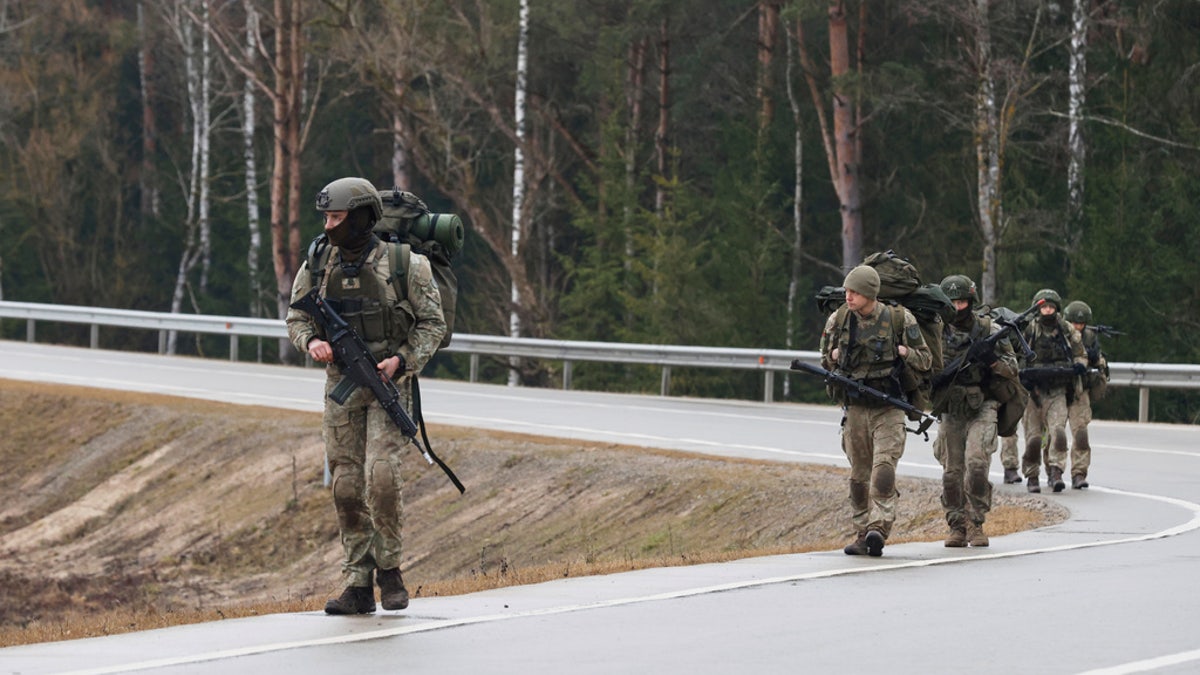
Soldiers walk along a road near a training range in Pabradė, north of the capital Vilnius, Lithuania, March 27, 2025. (AP Photo/Mindaugas Kulbis)
«From our side, we have already made a parliamentary decision. That our EOD (explosive ordnance disposal) diver specialists could be sent to the Strait of Hormuz or to the Middle East to help out the United States, the coalition that is being formed,» he said.
Rinkēvičs said Latvia hopes military activities will give way to a political solution and the restoration of global energy supplies, while expressing skepticism about the prospects for negotiations with Tehran and Moscow.
«It’s very, very difficult to have diplomacy with Iran. It’s very difficult with Russia,» he said.
Turning to the security situation in Europe, Rinkēvičs said Latvia does not see evidence of an imminent Russian military invasion despite growing concerns about Moscow’s intentions toward NATO’s eastern flank.
«If Russia were able to attack us … that would have happened already,» he said. «The Russian military is not the same as it used to be back in 2022. Remember they tried to take Kyiv in three days. They are still trying to take some certain small pieces of Ukrainian territory 4½ years after the full-fledged.»
IRAN’S DRONE HUNT ESCALATES AS TEHRAN TARGETS US SPY TECH TO EXPOSE BATTLEFIELD SECRETS

Iran conducts joint military exercises with Russia in the Strait of Hormuz after the U.S. deployed surveillance drones. (Iranian Army/Handout/Anadolu via Getty Images)
Explaining the immediate threat to Latvia comes instead from sabotage, cyberattacks and information campaigns, which he described as intensifying, adding that European leaders face the difficult task of preparing their populations for potential threats without creating unnecessary panic.
Rinkēvičs also warned that NATO must accelerate its adaptation to the rapidly changing nature of warfare, particularly the growing role of drones and missile technology.
While traditional military equipment, including tanks and armored personnel carriers, remains essential, the president said the war in Ukraine has demonstrated how quickly new technologies are transforming the battlefield.
The president welcomed increased NATO defense spending, crediting Trump’s push for greater investment, but cautioned that additional funding alone would not resolve the alliance’s military readiness challenges.
«You have money, but not always you can buy the stuff immediately, or at least you can order things. And they are delivered soon enough,» he said.

U.S. Army soldiers march during a military parade on Armed Forces Day in Vilnius. Armed Forces Day honors the restoration of the Lithuania armed forces on Nov. 23, 1918. (Yauhen Yerchak/SOPA Images/LightRocket via Getty Images)
Rinkēvičs said he plans to meet with U.S. defense companies during his visit to the U.S., saying, «When it comes to the U.S. support, let me just say that the United States does an amazing job already. We do have U.S. troops, not big numbers, but I think sufficient numbers are now stationed in our airbase in Lielvārde.
«U.S. presence in the Baltics is very important, and we are working with our U.S. partners about further rotations.»
united nations, war with iran, middle east, ukraine, foreign affairs, russia, nato











INTERNACIONAL
‘Puntos de Vista’ reúne ternura, ironía y crítica en cuentos narrados por gatos, libros y una inteligencia artificial
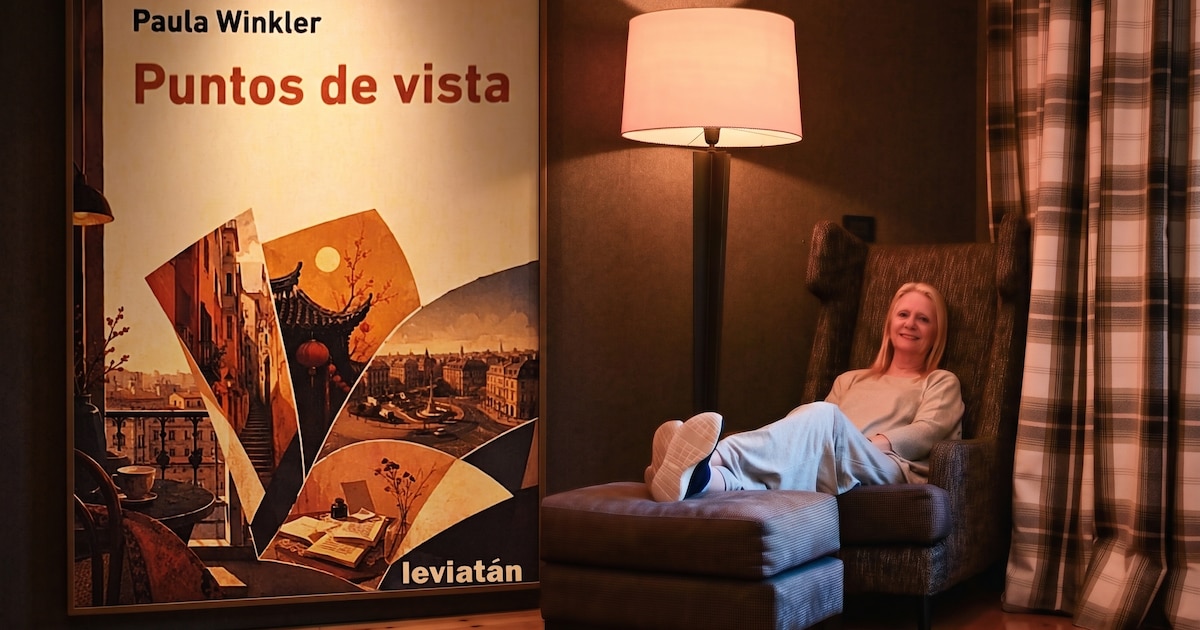
Nos suelen preguntar los lectores, avezados o no, por el modo en que se construyen nuestros textos. La cocina literaria… En 1999, en Los muros -mi primer libro de cuentos- , incluí un relato titulado “Etcétera” en el que una receta de cocina inventada y realizable dialogaba consigo misma y con los avatares vitales de la narradora, en busca de libertades. Entonces podía decirse que yo (no hay que confundir autor con narradora ni narratario) buscaba invertir el sentido clásico y conservador atribuido en la época a la mujer, en esencia ama de casa perfecta según un punto de vista meramente reproductivo, aun tratándose de profesionales o trabajadoras…
En 2026 en Puntos de Vista, una receta en lugar de relato, presta la función de epígrafe para la historia con un dejo de ironía anticipatorio. La protagonista espera con sus hijos a un marido que se retrasa en un vuelo para celebrar después, en familia, la Nochebuena. Como en 1999, las recetas escapan de su mera significación doméstica aunque conservan instrucciones culinarias realizables. Generosidad no compartida con las circunstancias que sufre la protagonista que prepara el plato en tanto, en efecto, “Vitello Tonnato”, que forma parte de mi último libro que publica Leviatán, contiene en sus inicios una receta que incluye sarcasmos y si bien alude a la forma en que yo misma cocino esta comida, sobre todo consumida en tiempos navideños, no será apreciada en la Nochebuena del cuento, de pocos aires celebratorios.
El libro, sin embargo, no ofrece miradas solo femeninas. Hay varones protagonistas que opinan rabiosos e ironizan; cosas, libros, animales.
Yendo a la cocina literaria me gustaría advertir que no hay en los inicios de Puntos de vista, ni en ninguno de mis textos, un orden creativo estratégico y anticipatorio. Esto es: no diseño el texto sino que este se me aparece y se escribe casi al correr del teclado, si bien es cierto que de inmediato intento controlar cómo y hacia dónde va la historia y cuidar de los personajes. Puntos de Vista reúne cuentos, relatos, viñetas y un poema, y debí ceñirme a mi primigenia idea al concebirlo: demostrar que la libertad creadora posee como único límite la coherencia, cierta belleza, una suerte de moral intrínseca. No hay literatura sin microclimas aun cuando se describan realidades y hablen personajes a su configurado entender. A menudo, uno de esos personajes nos tira a los escritores de las narices, nos elige.
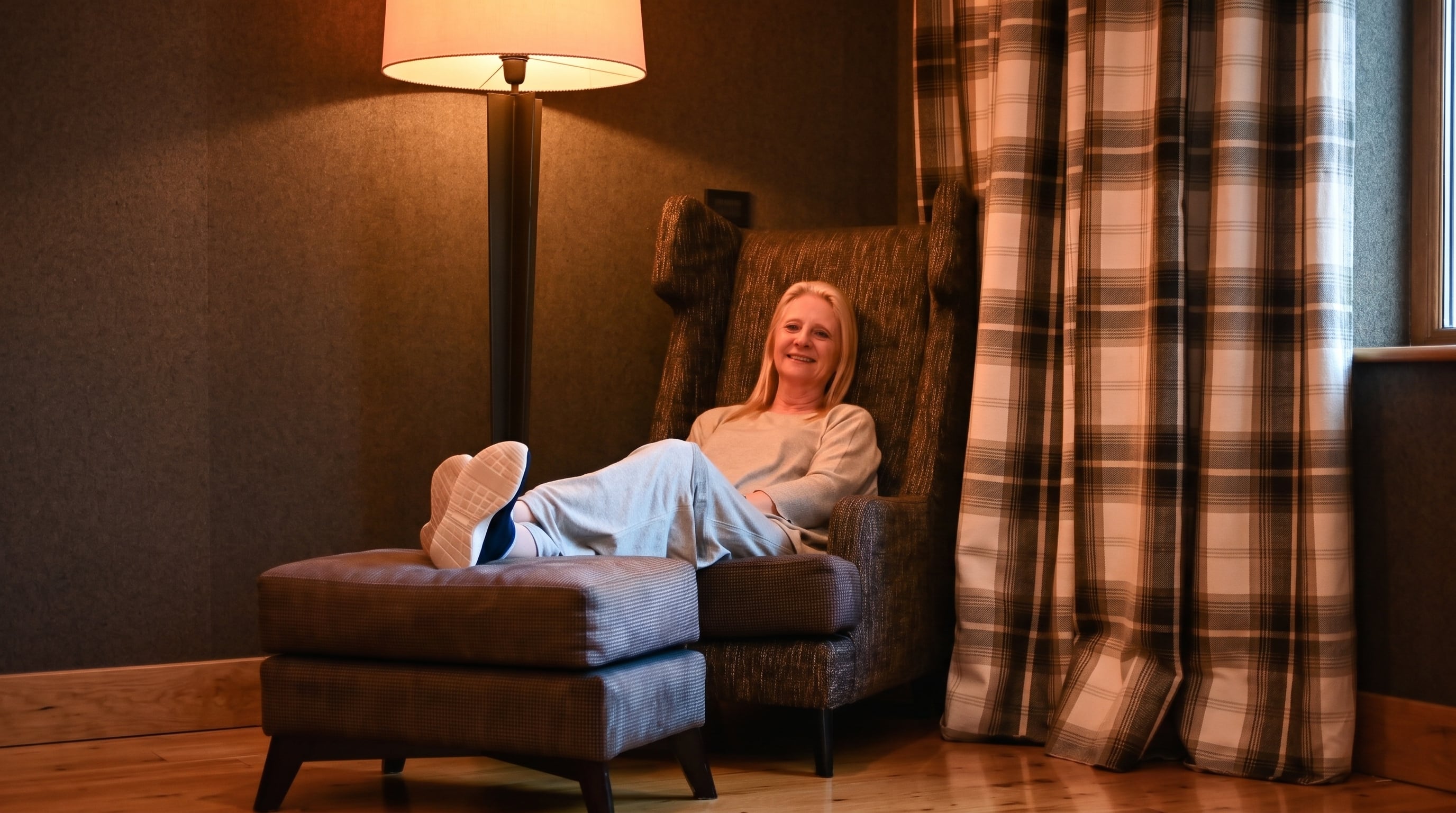
Para ejemplificar, en “La Señora Prentiss y el ratón Pérez”, me inspiré en el gato Beppo de Jorge Luis Borges y en esas personas que tratan a los seres sintientes no humanos como mascotas, sin tener en cuenta su autonomía, personificándolos, humanizándolos. Luego, recordé a Prentiss, personaje de una de mis novelas –“El marido americano” – y recurrí al legendario ratón Pérez como contrapunto. “La rotonda de Paratombú” es, en Santiago y en las Termas de Río Hondo, el refugio de perros callejeros atraídos por las luces del turismo y de la capital de provincia pero librados a su suerte. “Sueños” es contado por un joven cuya precaria vida no le impide imaginar, imaginación que abunda en poetas, novelistas y narradores, y que si bien no modifica la existencia, la repara, la acaricia… “Puntos de vista” alude a los estragos subjetivos de la Alemania de la Segunda Guerra y de la postguerra y “Sobriedad sonora” pone en el tapete la mirada escéptica sobre el mundo, que a veces me habita. Asimismo, en “Ora (lege) et labora”, un burócrata devela su presunta “creatividad”, al mismo tiempo el hecho de que, a menudo, la pirámide concebida para ofrecer supuestos servicios al ciudadano de a pie ralentiza sus objetivos declarados en apariencia, pero incumplidos en lo real atento a desplazamientos egoístas personales, volviendo a esas administraciones auténticos obstáculos kafkianos.
La construcción de un texto con unidad temática no fue fácil porque se reúnen aquí distintas opiniones y argumentos. Hay ironía, crítica, pero también ternura, amorosidad y esperanza. Sin embargo, la confección de narradores singulares, como un gato, libros que dialogan entre sí para sobrevivir en una biblioteca próxima a ser renovada por su dueño debido a una mudanza, mujeres de vida banal y un narrador omnisciente que discute con la IA y la desafía, tales narradores seleccionados, vierten aquello que buceo en el proceso humano mismo de significación: atribuimos sentido a significantes metaforizados por otros, damos por sentado el significado de situaciones que no deberían naturalizarse y sí, repensarse; repetimos discursos, nos deslumbramos de lo ajeno sin pensar, alardeando de lo propio.
Decía William James, el hermano del novelista, que hay gente que cree que piensa cuando solo ahonda en sus prejuicios. Prejuzgar constituye un alerta válido si es indicial: veo fuego, prejuzgo que hay peligro y, en consecuencia, llamo a los bomberos, aviso a los demás y huimos del lugar. En el orden de las ideas y del pensamiento, habría que tener cuidado de que gatos no pasen por liebres. Este libro no trata de añoradas liebres ni pícaros gatos y carece de mensaje. Los lectores sacarán sus conclusiones, en tanto aquí hay modos de ver desplazados en situaciones, cosas, en animales, a los que les atribuyo algún misterio. Mi escritura se va haciendo, siempre desnuda, entre puentes. Digo “desnuda” porque los textos nacen y se desenvuelven con la intervención lógica del autor pero se independizan no bien impresos: pertenecen a los lectores que los eligen o bien, los textos a ellos.
La lectora exigente que hay en mí cuando reviso me obliga a corregir y cambiar los muchos borradores que requiere cada escrito. Trabajan mi cuerpo, mis emociones, mi cerebro y el subconsciente. Como decía Roberto Bolaño, “tener el valor, sabiendo previamente que vas a ser derrotado y salir a pelear, eso es la literatura”, y esta, precisamente, es mi sensación (y son mis fantasmas) cuando termino un texto y lo doy a conocer.
Ustedes dirán…
Paula Winkler,Puntos de vista,Editorial Leviatán,libro,portada
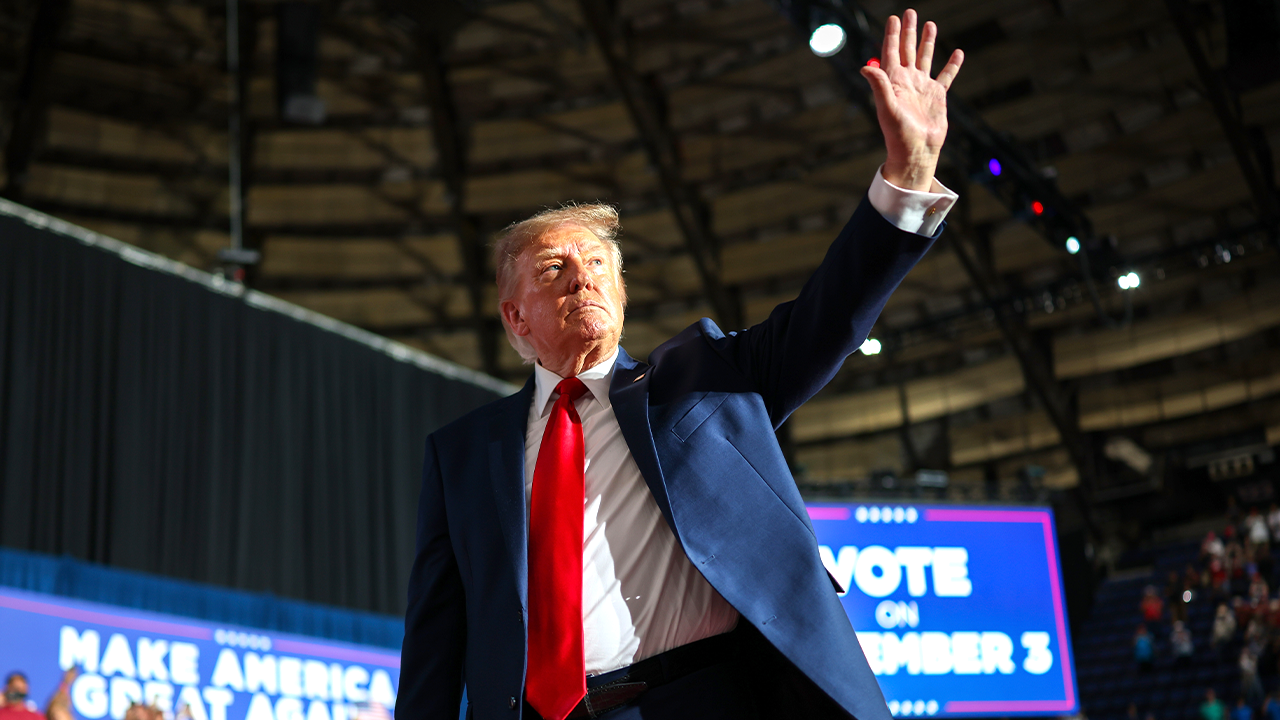
After the midterm elections, attention will turn to the 2028 race for the White House. What is on voters’ minds as they look ahead to the next presidential election?
Most Republicans want the next president to follow President Donald Trump’s policies, if not his style. Nearly 4 in 10 MAGA Republicans want Trump’s successor to emulate both, and about half want the next president to follow his policies alone. Non-MAGA Republicans are less enthusiastic: 45% want his policies to continue, but only about 15% of non-MAGA Republicans want a president with the same style.
Independents prefer something entirely different: 6 in 10 want the next president to break with both Trump’s policies and his style. Likewise, few Democrats want to see either his style or his policies repeated.
Even as the Democrats have won control of the Senate and the House of Representatives, and Trump finds his approval rating at 39%, a bloc of voters remains loyal to the president and is likely to influence the 2028 campaign. While half of voters want a successor who does not emulate his style or follow his policies, 26% want a president who will carry on his policies, and another 12% want the next president to copy his policies and his style.
VOTER POLL: 2026 MIDTERM ELECTIONS USHER IN A BLUE WAVE AS DEMOCRATS WIN CONTROL OF CONGRESS
Looking ahead, voters across party lines say improving economic conditions is the most important issue for the country to address over the next five years. Six in 10 voters feel they are holding steady financially while about 3 in 10 feel they are falling behind. Few, about 1 in 10 voters, feel they are getting ahead financially. Voters who describe their own financial situation as less than satisfactory, or say they are falling behind, are more likely to name the economy as the top issue.
What should Tuesday’s winners prioritize once sworn into office? When asked what is most important for newly elected officials to work on first in 2027, 3 in 10 voters want elected officials to address grocery costs. About 2 in 10 want action on gas prices, and a similar share say they should work on healthcare and prescription drug costs.
Slightly fewer are concerned about housing costs, while about 1 in 10 want officials to address electricity and other utility costs.
Voters are closely divided on whether the country can look forward to better days or if the good days are behind us. And it’s linked to how they’re feeling financially. About two-thirds of those who say they are getting ahead financially are optimistic about the future. However, about two-thirds of voters who are falling behind financially think the country’s best days are in the past.
Beyond the economy, priorities diverge. About 1 in 5 Democrats point to access to affordable healthcare, while about a similar share of Republicans say protecting individuals from government overreach is the top issue. About 1 in 10 independents say the country should address the affordability of healthcare, and about the same share say government overreach.
Voters are divided over AI’s effect on the U.S. economy during the next 10 years. About 4 in 10 say it will be harmful, while 3 in 10 expect benefits. About 1 in 10 expect AI to make no difference, while slightly more, about 2 in 10, are unsure. About 4 in 10 expect AI to negatively affect the environment and the arts and entertainment industry.
About half of voters want substantial changes in how the country is run. Party identification shapes how much change voters want and which branches of government they think most need reform. Democrats are about three times as likely as Republicans to want complete upheaval of how the country is run. Half of democratic socialists favor complete and total upheaval, compared with about 1 in 10 MAGA Republicans.
In the 2024 Voter Analysis conducted for the presidential election, most Republican voters said they wanted substantial change or total upheaval. Now, with a Republican in the White House and their party controlling both houses of Congress, they are less eager for major change.
VOTER POLL: HOW DEMOCRATS TOOK CONTROL OF THE SENATE
Overall, 4 in 10 voters think Congress should be substantially reformed, including three-quarters of MAGA Republicans and half of non-MAGA Republicans. Democrats are less likely to say Congress needs reform, but half say the executive branch should be improved. Few voters in either party want changes to the Constitution. Democrats are more likely than Republicans or independents to say the Supreme Court needs reform.
Voters across party lines support term limits for Congress and Supreme Court justices. Democrats favor abolishing the Electoral College, but Republicans and independents are less enthusiastic. Most Republicans support limiting mail voting to people physically unable to vote in person. MAGA Republicans are more supportive of limiting mail voting than non-MAGA Republicans (63% vs 40%). Democrats oppose the idea, regardless of whether they support the Democratic Socialists of America.
AMERICANS CLASH OVER SUPREME COURT EXPANSION AS FIGHT OVER 9 JUSTICES HEATS UP: ‘LET’S PACK IT NOW’
The expansion of artificial intelligence has triggered some public backlash against AI data centers. Voters are divided on whether AI will help or hurt during the next 10 years. More Democrats say the technology will be harmful while more Republicans expect benefits.
Among Republican voters, MAGA Republicans are more enthusiastic about AI than non-MAGA Republicans. Forty-five percent of MAGA Republicans believe AI will help the U.S. to compete with other countries, and another 4 in 10 feel AI will do more to help the economy.
Among Democrat voters, supporters of democratic socialism and those who do not support the movement are similarly likely to feel AI will help aspects of American society. However, supporters of democratic socialism are more likely than other Democrats to feel AI will do more to hurt than help.
Overall, 6 in 10 voters are extremely or very concerned about the effect of data centers on the price of utilities in the communities where they are being built. About half are concerned about the effect of data centers on pollution of natural resources, land development or the health of the local population, regardless of whether they live near a data center. Democrats are more concerned about the effects of data centers than Republican voters, again, regardless of their proximity to the facilities.
Voters across party lines support requiring companies to pay for electric grid upgrades needed for their data centers, increasing government regulation of AI, and limiting AI in schools. Most Democrats and independents oppose building a data center in their community. Most voters also oppose local construction, whether their county already has a data center.
AMERICA’S MULTI-BILLION TECH BOOM COMES INTO FOCUS AS 7 KEY STATES PUT IT TO A MIDTERM TEST
The economy is a top issue for most voters, yet 4 in 10 say they could support a candidate whose economic views differ from their own.
After the economy and jobs, nearly 6 in 10 voters see healthcare as an important issue, and about 6 in 10 would not support a candidate who disagrees with them on healthcare policy. About half could not back a candidate whose views on Israel and the Palestinians differ from theirs. Overall, about 6 in 10 say they could never support a candidate they disagree with on abortion, guns, or immigration.
Explore the results here: https://civichealth.norc.org/crosstabs.html
The NORC Civic Health & Elections Project (CH&EP) is a national survey of registered voters conducted Oct. 26 through Nov. 3, 2026, with 113,020 interviews. Interviews were conducted in English and Spanish. The margin of sampling error for the national sample, including the design effect, was ±0.5 percentage points for voters and ±1.2 percentage points for nonvoters. Margins of sampling error for individual states and subgroups vary based on sample size.
politics, polls, donald trump, republicans elections, economy, midterm elections
INTERNACIONAL
Crisis bancaria en Paraguay: pidieron el juicio político contra Santiago Peña y la Policía reprimió las protestas

Diputados opositores de Paraguay presentaron este miércoles ante el Congreso un pedido de juicio político para destituir al presidente Santiago Peña y al vicepresidente Pedro Alliana, en medio de una crisis bancaria que dejó a unos tres millones de personas con sus depósitos congelados. La iniciativa provocó una nueva escalada de tensión política, mientras cientos de manifestantes salieron a las calles de Asunción para reclamar la devolución de su dinero y se enfrentaron con la Policía, que utilizó gases lacrimógenos y camiones hidrantes para dispersarlos.
La presentación fue impulsada por legisladores opositores y disidentes del oficialismo, después de que el Banco Central de Paraguay interviniera Ueno Bank, una de las mayores entidades financieras del país, por insuficiencia de capital.
El diputado Mauricio Espínola, oficialista disidente, confirmó a la agencia AFP que el pedido de destitución reunió las firmas necesarias para ser tratado en la Cámara de Diputados. La sesión fue convocada para este jueves a las 10 (hora local).
La acusación presentada ante el Congreso solicita iniciar un juicio político contra Peña por “el mal desempeño de sus funciones en el ejercicio del cargo”. El mandatario también enfrenta cuestionamientos por un presunto conflicto de intereses y por el aumento de su patrimonio.
Peña había tenido acciones de un grupo empresarial que controlaba Ueno Bank, aunque se desvinculó de esa participación en 2025.
La crisis estalló el martes, cuando el Banco Central decidió intervenir la entidad y suspender sus servicios. Casi la mitad de los 6,4 millones de habitantes de Paraguay tienen cuentas en ese banco.
El escándalo también provocó la renuncia del presidente del Banco Central, Carlos Carvallo, y derivó en la detención de ocho directivos de Ueno Bank, entre ellos su presidente, Miguel Vázquez, después de una denuncia presentada por el organismo regulador ante la Justicia.
Incidentes en Paraguay: la Policía reprimió las protestas por los depósitos congelados
Cientos de personas volvieron a manifestarse este miércoles por segunda noche consecutiva en Asunción, donde reclamaron la devolución de sus ahorros y exigieron la salida del presidente.
“Devuelvan nuestra plata” y “juicio a Santi Peña” fueron algunas de las consignas que se escucharon durante la movilización, según constató la agencia AFP.
La protesta derivó en enfrentamientos entre manifestantes y efectivos policiales, que intentaron dispersar a la multitud mediante camiones hidrantes y gases lacrimógenos. Pese al operativo, numerosas personas continuaron con la movilización.
Más temprano, se habían registrado largas filas frente a las sucursales de Ueno Bank, donde los clientes intentaban recuperar su dinero.
“Es el dinero de nuestra jubilación que ahora no sabemos si lo vamos a cobrar”, expresó a la AFP Teresa Montiel, una médica de 50 años que participó de la protesta con una pancarta que decía “unidos somos más fuertes”.
El martes, otro de los afectados, Marcelino Vergara, de 68 años, había relatado entre lágrimas la situación que atravesaba tras el congelamiento de sus depósitos.
“Perdí los ahorros de toda mi vida, solo tengo 8.000 guaraníes (casi un dólar). Todos deben ir presos”, denunció.
Ante la magnitud de la crisis, el Gobierno paraguayo anunció un mecanismo para devolver una parte de los depósitos congelados.
Peña promulgó este miércoles una ley aprobada rápidamente por el Congreso que, según explicó, “permitirá a los ahorristas cobrar en el menor tiempo posible una parte de los fondos de garantía a fin de que los recursos vuelvan a las manos de quienes corresponde”.
La norma establece que los pagos deberán realizarse en los próximos cinco días.
El Banco Central precisó que los afectados recibirán un primer desembolso de hasta 10 millones de guaraníes, equivalentes a unos 1675 dólares.
Qué puede pasar con Santiago Peña tras el pedido de destitución en el Congreso
El futuro del presidente paraguayo dependerá de las negociaciones parlamentarias y, especialmente, de la posición que adopten los legisladores del Partido Colorado.
La oposición necesita conseguir el respaldo de una parte del oficialismo para avanzar con el juicio político, ya que el partido gobernante tiene mayoría propia tanto en Diputados como en el Senado.
Si la Cámara baja aprueba la acusación, el procedimiento pasará al Senado, que será el encargado de desarrollar el juicio.
Para concretar la destitución de Peña y Alliana, se necesitarán al menos 30 votos de los 45 senadores.
Sin embargo, la posibilidad de alcanzar esa mayoría es incierta. Aunque el Partido Colorado controla ambas cámaras, existen diferencias internas y su presidente, el exmandatario Horacio Cartes, está distanciado del Gobierno.
Los legisladores que impulsan el juicio político acusan a Peña de haber tomado “decisiones regulatorias presuntamente favorables a Ueno Bank” y cuestionan la concentración de fondos previsionales en la entidad, debido a sus anteriores vínculos comerciales con el grupo que la controlaba.
Paraguay tiene un antecedente de destitución presidencial mediante un juicio político. En 2012, el Congreso removió del cargo a Fernando Lugo tras una masacre que dejó 11 campesinos y seis policías muertos.
BANCOS

La incertidumbre política aleja a los inversores de los activos argentinos y el riesgo país alcanzó un nuevo máximo anual

El Gobierno minimiza el efecto de la derrota de Trump en el riesgo país, pero admite que la incertidumbre política condiciona al mercado

El sugerente mensaje del técnico de Defensa y Justicia a Boca Juniors antes del choque clave por la definición de la Tabla Anual

Sonríe Boca: Mineiro llegó a su quinta derrota consecutiva a 16 días de la final

‘Puntos de Vista’ reúne ternura, ironía y crítica en cuentos narrados por gatos, libros y una inteligencia artificial

Axel Kicillof invitó a la misa del Papa a Claudio “Chiqui” Tapia, quien recibió $100 millones anuales de su gobierno

Qué pasó con el Refugio de Eli y por qué hizo enfurecer a Santi Maratea: «Fue un desastre, él nunca más le contestó y le prohibió…»

La oposición cuestionó la suspensión de embargos a las pymes y criticó el plan económico: “Llegaron tarde”

Milei parte nuevamente a España y en el gobierno dicen que no bajará el tono de sus críticas a Pedro Sánchez

Agustín Caulo: “El Gobierno sigue trabajando para que no se politice la visita de León XIV a la Argentina”

 CHIMENTOS3 días ago
Qué pasó con el Refugio de Eli y por qué hizo enfurecer a Santi Maratea: «Fue un desastre, él nunca más le contestó y le prohibió…»
- POLITICA21 horas ago
La oposición cuestionó la suspensión de embargos a las pymes y criticó el plan económico: “Llegaron tarde”
- POLITICA1 día ago
Milei parte nuevamente a España y en el gobierno dicen que no bajará el tono de sus críticas a Pedro Sánchez