INTERNACIONAL
GOP push to make Trump’s 2017 tax cuts permanent, say going back would be a ‘dramatic’ change for many

[ad_1]
Tax season is done.
And this year, Congressional Republicans converted tax season to «sales» season. Republicans and President Donald Trump are pushing to approve a bill to reauthorize his 2017 tax cut package. Otherwise, those taxes expire later this year.
«We absolutely have to make the tax cuts permanent,» said Rep. Tom Tiffany, R-Wis., on FOX Business.
«We’ve got to get the renewal of the President’s Tax Cuts and Jobs Act. That’s absolutely essential,» said Sen. Mike Rounds, R-S.D., on FOX Business.
Rates for nearly every American spike if Congress doesn’t act within the next few months.
CONFIDENCE IN DEMOCRATS HITS ALL TIME LOW IN NEW POLL

Speaker of the House Mike Johnson, R-La., talks with the media after the House passed the budget resolution on Thursday, April 10, 2025. (Tom Williams/CQ-Roll Call, Inc via Getty Images)
«We are trying to avoid tax increases on the most vulnerable populations in our country,» said Rep. Beth Van Duyne, R-Texas, a member of the House Ways and Means Committee which determines tax policy. «I am trying to avoid a recession.»
If Congress stumbles, the non-partisan Tax Foundation estimates that a married couple with two children – earning $165,000 a year – is slapped with an extra $2,400 in taxes. A single parent with no kids making $75,000 annually could see a $1,700 upcharge on their tax bill. A single parent with two children bringing home $52,000 a year gets slapped with an additional $1,400 in taxes a year.
«Pretty significant. That’s an extra mortgage payment or extra rent payment,» said Daniel Bunn of the non-partisan Tax Foundation. «People have been kind of used to living with the policies that are currently in law for almost eight years now. And the shift back to the policy that was prior to the 2017 tax cuts would be a dramatic tax increase for many.»
But technically, Republicans aren’t cutting taxes.
«As simple as I can make this bill. It is about keeping tax rates the same,» said Sen. James Lankford, R-Oklahoma, on Fox.
Congress had to write the 2017 tax reduction bill in a way so that the reductions would expire this year. That was for accounting purposes. Congress didn’t have to count the tax cuts against the deficit thanks to some tricky number-crunching mechanisms – so long as they expired within a multi-year window. But the consequence was that taxes could climb if lawmakers failed to renew the old reductions.
«It sunsets and so you just automatically go back to the tax levels prior to 2017,» said Sen. Chuck Grassley, R-Iowa.
A recent Fox News poll found that 45% of those surveyed – and 44% of independents believe the rich don’t pay enough taxes.
Democrats hope to turn outrage about the perceived tax disparity against Trump.
«He wants his billionaire buddies to get an even bigger tax break. Is that disgraceful?» asked Senate Minority Leader Chuck Schumer, D-N.Y., at a rally in New York.
«Disgrace!» shouted someone in the crowd.
«Disgraceful! Disgraceful!» followed up Schumer.
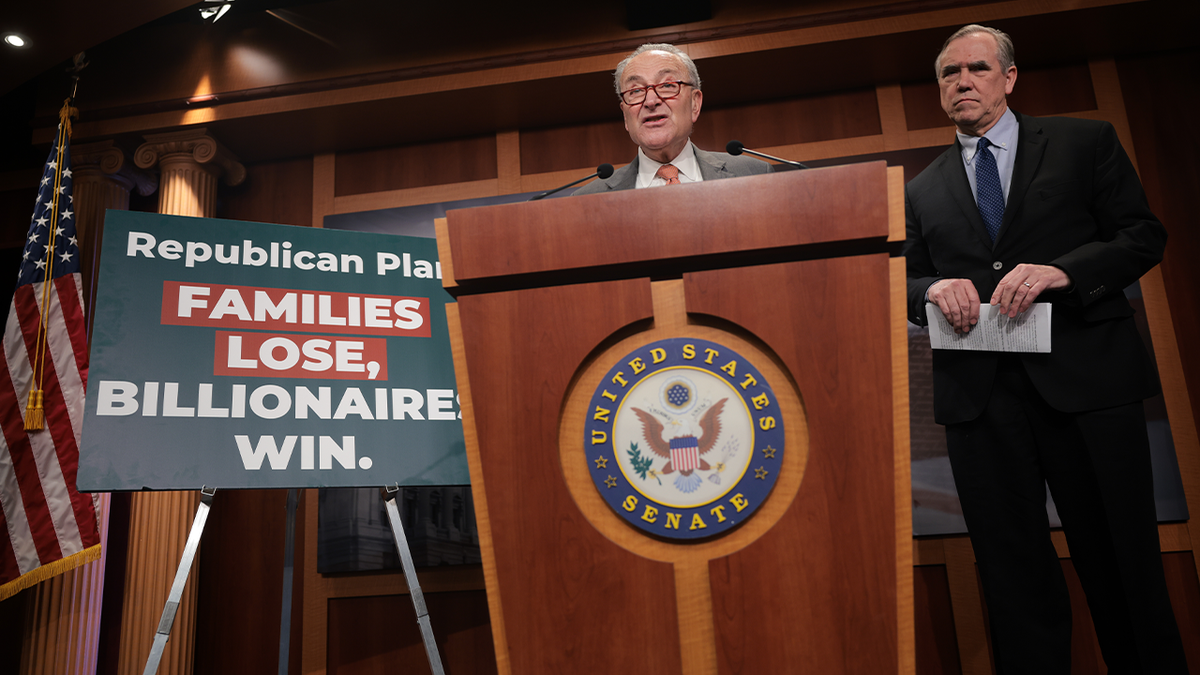
U.S. Senate Minority Leader Chuck Schumer, D-N.Y., (R) speaks alongside Sen. Jeff Merkley, D-Ore., (L) to reporters during a news conference on the impacts of the Republican budget proposal at the U.S. Capitol on April 10, 2025 in Washington, DC. (Kayla Bartkowski/Getty Images)
Some Republicans are now exploring raising rates on the wealthy or corporations. There’s been chatter on Capitol Hill and in the administration about exploring an additional set of tax brackets.
«I don’t believe the president has made a determination on whether he supports it or not,» said White House spokeswoman Karoline Leavitt.
«We’re going to see where the President is» on this, said Treasury Secretary Scott Bessent while traveling in Argentina. «Everything is on the table.»
A Treasury spokesperson then clarified Bessent’s remarks.
«What’s off the table is a $4.4 trillion tax increase on the American people,» said the spokesperson. «Additionally, corporate tax cuts will set off a manufacturing boom and rapidly grow the U.S. economy again.»
Top Congressional GOP leaders dismissed the idea.
«I’m not a big fan of doing that,» said House Speaker Mike Johnson on Fox. «I mean we’re the Republican party and we’re for tax reduction for everyone.»
FEDERAL JUDGE TEMPORARILY RESTRICTS DOGE ACCESS TO PERSONALIZED SOCIAL SECURITY DATA
«I don’t support that initiative,» said House Majority Leader Steve Scalise, R-La., on FOX Business, before adding «everything’s on the table.»
But if you’re President Donald Trump and the GOP, consider the politics of creating a new corporate tax rate or hiking taxes on the well-to-do.

Sunrise light hits the U.S. Capitol dome on Thursday, January 2, 2025, as the 119th Congress is set to begin Friday. (Bill Clark/CQ-Roll Call, Inc via Getty Images)
The president has expanded the GOP base. Republicans are no longer the party of the «wealthy.» Manual laborers, shop and storekeepers and small business persons now comprise Trump’s GOP. So maintaining these tax cuts helps with that working-class core. Raising taxes on the wealthy would help Republicans pay for the tax cuts and reduce the hit on the deficit. And it would shield Republicans from the Democrats’ argument that the tax cuts are for the rich.
Congress is now in the middle of a two-week recess for Passover and Easter. GOP lawmakers and staff are working behind the scenes to actually write the bill. No one knows exactly what will be in the bill. Trump promised no taxes on tips for food service workers. There is also talk of no taxes on overtime.
WHITE HOUSE PHOTO BLUNTLY SHOWS WHERE PARTIES STAND ON IMMIGRATION AMID ABREGO GARCIA DEPORTATION
Republicans from high-tax states like New York and Pennsylvania want to see a reduction of «SALT.» That’s where taxpayers can write off «state and local taxes.» This provision is crucial to secure the support of Republicans like Reps. Nicole Malliotakis, R-N.Y., and Mike Lawler, R-N.Y. But including the SALT reduction also increases the deficit.
So what will the bill look like?
«Minor adjustments within that are naturally on the table,» said Rounds. «The key though, [is] 218 in the House and 51 in the Senate.»
In other words, it’s about the math. Republicans need to develop the right legislative brew which commands just the right amount of votes in both chambers to pass. That could mean including certain provisions – or dumping others. It’s challenging. Especially with the slim House majority.
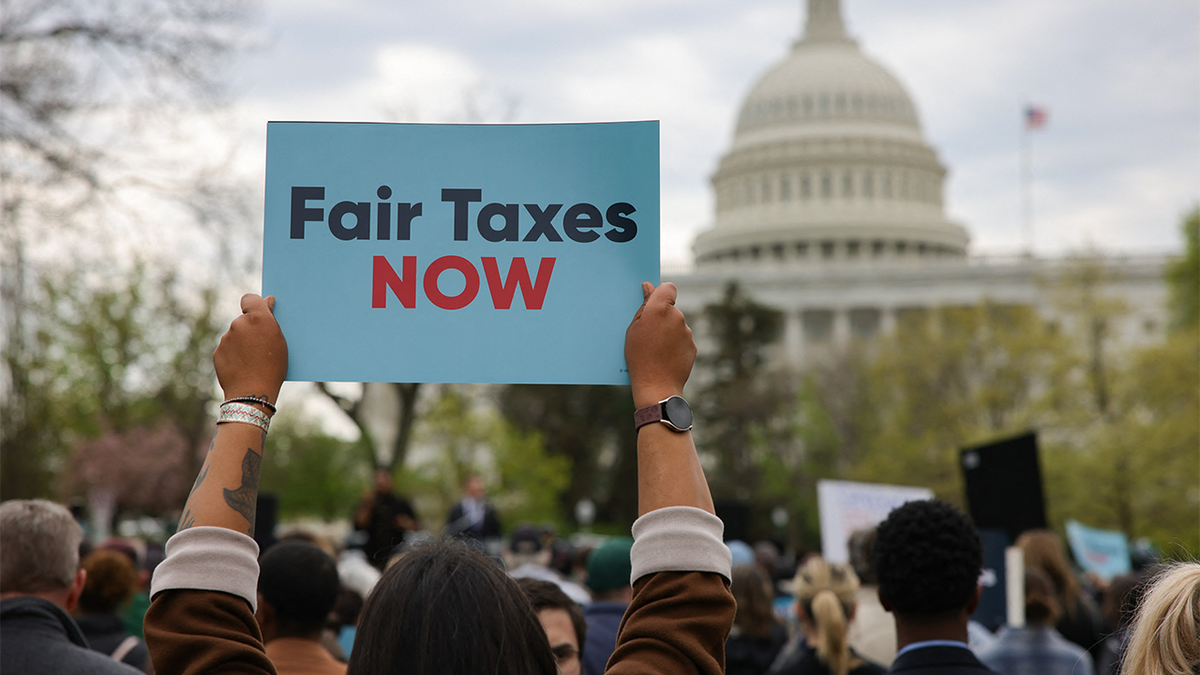
People attend a press conference and rally in support of fair taxation near the U.S. Capitol in Washington, D.C. on April 10, 2025. (Bryan Dozier / Middle East Images / Middle East Images via AFP)
«There were trade-offs and offsets within that bill that many people are dissatisfied with,» said Bunn of the 2017 bill. «And it’s not clear how the package is going to come together with those various trade-offs.»
Johnson wants the bill complete by Memorial Day. Republicans know this enterprise can’t drag on too late into the year. Taxpayers would see a tax increase – even if it’s temporary – if working out the bill stretches into the fall when the IRS begins to prepare for the next tax season.
It’s also thought that finishing this sooner rather than later would provide some stability to the volatile stock markets. Establishing tax policy for next year would calm anxieties about the nation’s economic outlook.
«The big, beautiful bill,» Trump calls it, adding he wants the legislation done «soon.»
CLICK HERE TO GET THE FOX NEWS APP
And that’s why tax season is now sales season. Both to the lawmakers. And to the public.
Politics,Taxes,Congress,Donald Trump
[ad_2]

INTERNACIONAL
US embassies in Bahrain, Egypt issue warnings as Iran threatens universities across Middle East

[ad_1]
NEWYou can now listen to Fox News articles!
The U.S. Embassy in Bahrain told American citizens in the country to shelter in place on Tuesday, as the embassy in Egypt issued its own caution to Americans amid threats that Iran and its terror proxies may try to target American universities across the Middle East.
The embassy in Manama directed all U.S. government employees, along with all other Americans in the country, to shelter in a secure structure and stay away from windows until further notice.
«Iran and its aligned terrorist militias may intend to target American universities in Bahrain,» the embassy said. «Iran has specifically threatened American universities across the Middle East.»
The embassy provided instructions to those Americans who wish to leave the Middle East.
TRUMP WARNS ‘WHOLE CIVILIZATION WILL DIE TONIGHT,’ AS IRANIAN OFFICIAL URGES HUMAN CHAINS AROUND POWER PLANTS

People crowd the Central Market for shopping during the final days of Ramadan in Manama, Bahrain, on March 18, 2026. (Ayman Yaqoob/Anadolu via Getty Images)
«If you want to leave the Middle East, the U.S. government is ready to assist by providing you the latest information about the departure options available,» it said.

A view of damage in Manama, Bahrain, after a kamikaze drone strike during Iran’s retaliatory attack on March 1, 2026. (Stringer/Anadolu/via Getty Images)
For those who wish to remain and shelter in place, the embassy reminded them to have a supply of food, water, medications and other essential items.
VANCE SAYS IRAN HAS ‘2 PATHWAYS’ AS 12-HOUR DEADLINE LOOMS, PRAYS US ON ‘GOD’S SIDE’ IN NIXING NUCLEAR THREAT
«We urge all Americans to remain vigilant, follow local authorities’ instructions, and review the latest guidance from the U.S. Embassy or Consulate,» the embassy said.

The headquarters of the U.S. 5th Fleet in Manama, Bahrain. (Petty Officer 2nd Class Adelola Tinubu/U.S. Naval Forces Central Command/U.S. 5th Fleet )
Meanwhile, the U.S. Embassy in Cairo advised U.S. citizens to closely monitor the news for regional developments.
CLICK HERE TO DOWNLOAD THE FOX NEWS APP
«Egyptian authorities generally offer effective security protection,» the embassy said. «However, extremists and Iranian-aligned actors have expressed interest in planning and carrying out attacks in the region. Iran and its aligned terrorist militias may intend to target universities in the Middle East. Iran has specifically threatened American universities across the Middle East.»
[ad_2]
middle east, war with iran, iran, world
INTERNACIONAL
Top White House officials encouraged potential Bondi replacement to make case to Trump for AG job: Sources
[ad_1]
NEWYou can now listen to Fox News articles!
FIRST ON FOX: Acting Attorney General Todd Blanche huddled with President Donald Trump in the hours after Pam Bondi was forced out last week to make his pitch for the job full-time, Fox News Digital confirmed.
Blanche was encouraged by top White House officials to speak with the president while other names, like Environmental Protection Agency Administrator Lee Zeldin, briefly circulated as possible contenders, two sources familiar told Fox News Digital. During that conversation, Blanche made his case for why he should be the next attorney general.
White House Press Secretary Karoline Leavitt confirmed to Fox News Digital that the president and his then-deputy attorney general spoke on Thursday, as did a source familiar with Blanche’s movements that day.
Trump announced Bondi’s departure from the Justice Department and in the same social media post last Thursday said that Blanche would be taking over the role in an acting capacity, as Fox News and Fox News Digital previously reported.
HOMAN VOWS IMMIGRATION MISSION ‘WON’T SKIP A BEAT’ AS BONDI EXITS DOJ
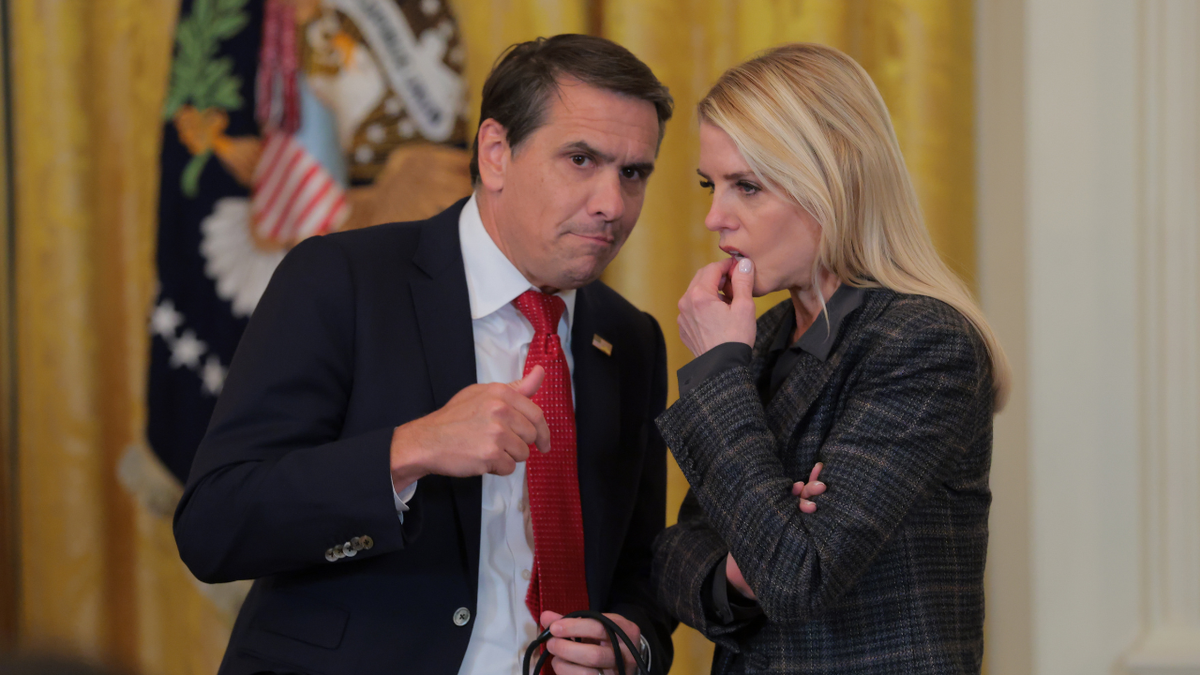
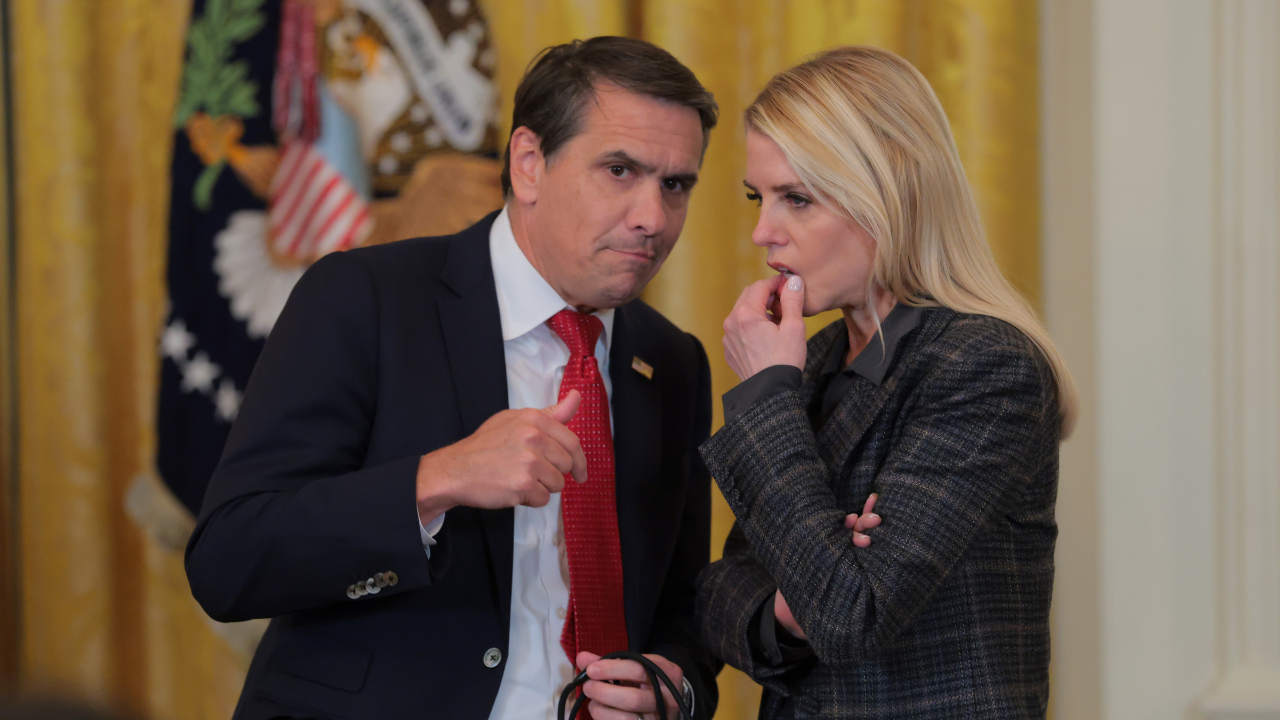
Todd Blanche will serve as Acting U.S. Attorney General after his former boss Pam Bondi was fired last week. (Anna Moneymaker/Getty Images)
The next moves could prove crucial for Blanche if he wants to clinch the president’s nomination – and with the countdown ticking to the midterm elections, he only has a few months to convince the president he can lead the roughly 120,000-employee DOJ before a potential party power change in Congress.
«It’s really Todd’s role to lose at this point,» one of the sources who spoke with Fox News Digital said.
A 30-year department veteran, however, speculated that Blanche won’t get the nomination and will continue to run the DOJ in an acting capacity.
PAM BONDI ALREADY FIRED AS ATTORNEY GENERAL, CABINET OFFICIAL TEED UP AS REPLACEMENT: SOURCES
«The safest thing for Trump to do is just to keep Blanche, the ultimate loyalist, in place as Acting, at least through the midterms, and avoid a confirmation fight,» former DOJ prosecutor Kevin Flynn told Fox News Digital. «In terms of advancing Trump’s retribution agenda, I think Blanche could do pretty much everything as Acting [Attorney General] as a confirmed AG could do.»
Trump fired Bondi on Wednesday, April 1, 2026, during an Oval Office meeting ahead of his speech to the nation on the war in Iran, Fox News Digital first reported a day after her ouster.
Trump confirmed her departure on Truth Social at 1:17 pm, roughly 45 minutes after the report became public.
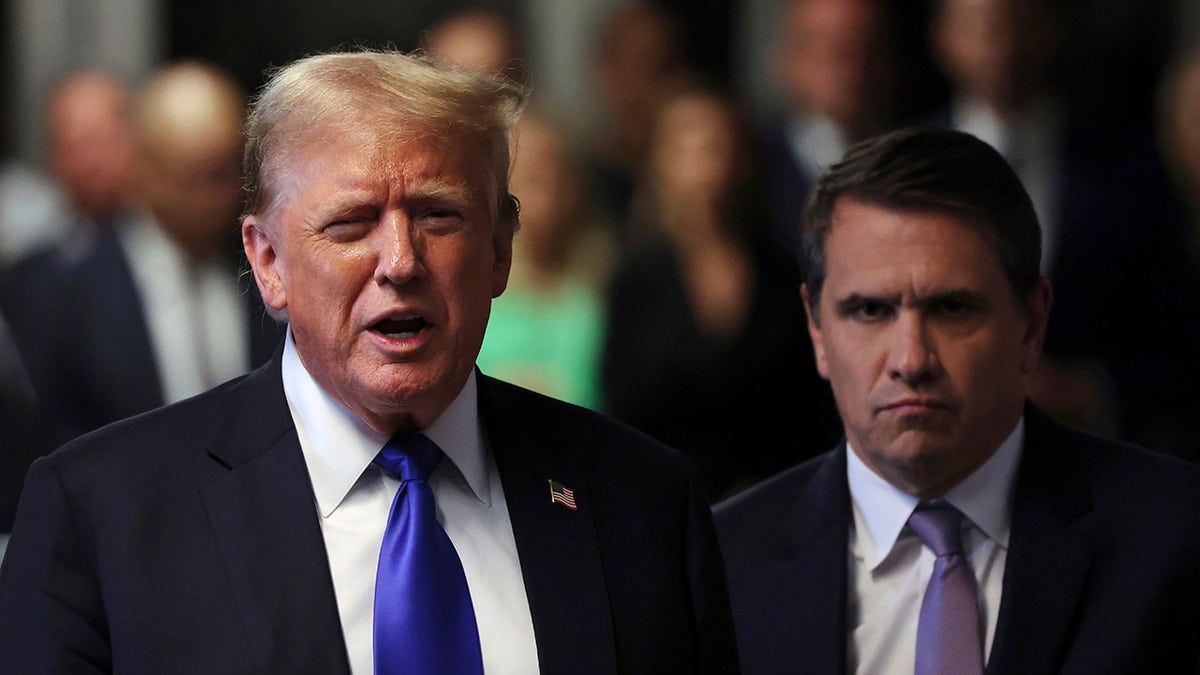
Todd Blanche served as a personal attorney for Trump during trials between his first and second terms. Here the two appear before the media after the conclusion of Trump’s hush money trial in New York City on Thursday, May 30, 2024. (Michael M. Santiago/Pool Photo via AP)
In the hours after Bondi was dismissed and before Trump made his official DOJ personnel announcement, Blanche allegedly had a consequential conversation with the president where he was informed he would be acting attorney general. Blanche lobbied to get the full-time position in a following discussion, one source familiar said.
They also said that Blanche went to the White House a few times for various reasons in the days after he became acting AG.
The other source said it was this follow-up conversation that provided the president with the confidence to give Blanche the nod – at least for now.
Trump told his one-time personal attorney, «Here’s your audition,» the source paraphrased.
Blanche «got a call from POTUS after leaving a podcast taping on Thursday following the report on Fox,» a spokesperson for the Justice Department told Fox News Digital.
When Leavitt was asked if the two chatted on Thursday, the president’s spokesperson replied, «Yes they spoke.»
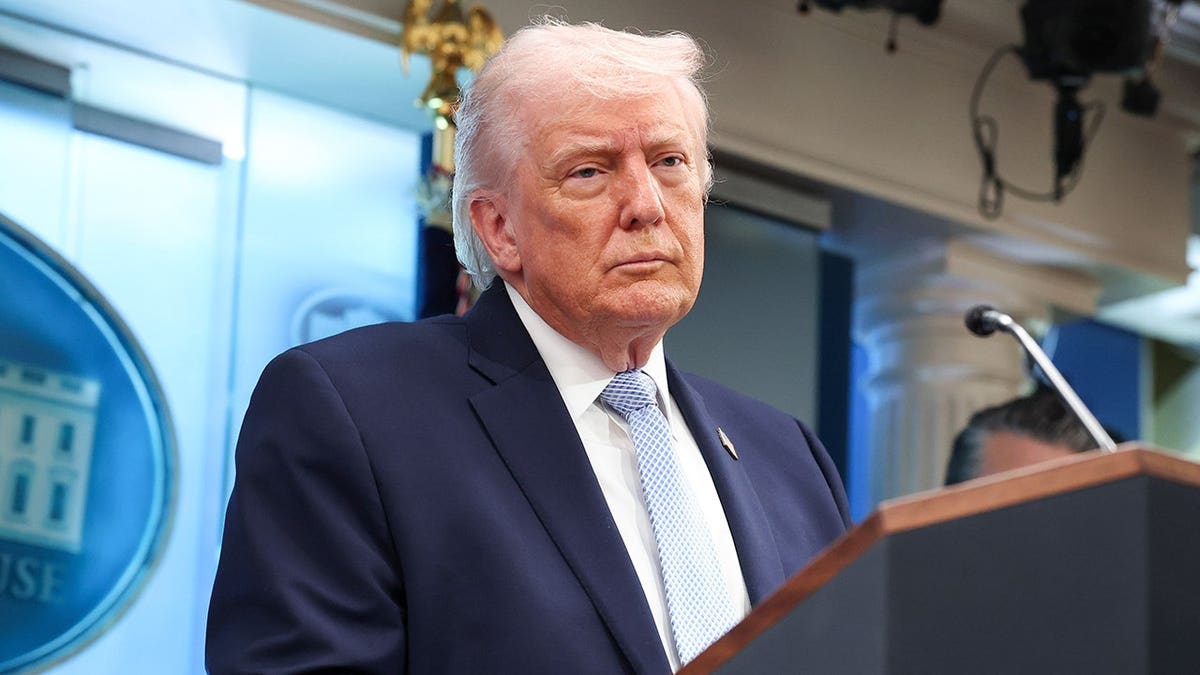
President Donald Trump fired Attorney General Pam Bondi in a meeting at the White House on Wednesday, April 1, 2026. (Anna Moneymaker/Getty Images)
Neither the DOJ nor White House would comment on what the two discussed last week and whether Blanche made his case for a promotion.
Either way, now it’s up to Blanche to prove he’s up for the job full-time.
His first test was a Tuesday afternoon press conference focused on Trump’s push to crack down on fraud.
Blanche likely passed the pulse test as he showered praise on the president and said there would be no love lost if he wasn’t selected to be the next attorney general. «I love working for President Trump,» he said. «It’s the greatest honor of a lifetime. And if President Trump chooses to nominate somebody else and asks me to go do something else, I’ll say, ‘Thank you very much, I love you, sir.’»
He got to work right away shaping the DOJ.
On Thursday, Blanche announced his appointment of Trent McCotter as the principal associate deputy attorney general. He also stood up the new DOJ fraud division at Tuesday’s press conference and put Colin McDonald in charge as assistant attorney general for the Fraud Division.
Additionally, he took two trusted advisers with him to the attorney general’s office, Shane Hedges and James McHenry.
Blanche will likely need to differentiate himself from Bondi and distance himself from her failures – namely the Jeffrey Epstein files debacle – if he wants longevity in the role, one of the sources familiar told Fox News Digital.
US INTERIM ATTORNEY GENERAL TODD BLANCHE CALLS SPECULATION SURROUNDING BONDI’S FIRING ‘SIMPLY NOT TRUE’
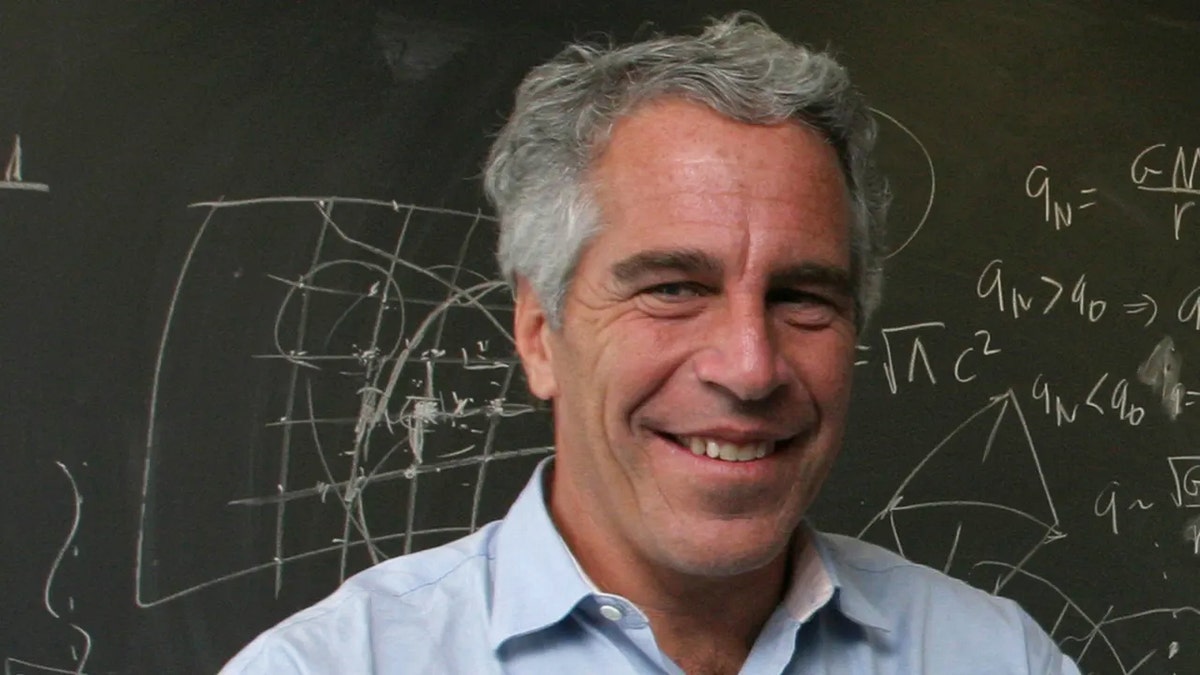
Many reports claim that Pam Bondi was fired, in part, for her handling of the Jeffrey Epstein files. (Rick Friedman/Rick Friedman Photography/Corbis via Getty Images)
In February 2025, Bondi said she had the Epstein files on her desk. A trickle of releases over the next year would yield no new investigations or prosecutions related to the sex trafficker’s crimes and left Americans unsatisfied.
The source familiar said every move Bondi made after that was an effort to «clean up» her broken promise to release the Epstein client list.
Convincing Trump he’s the right guy for the job is only the first hurdle. Blanche would also need to get past Congress and a confirmation process that is sure to be grueling.
CLICK HERE TO DOWNLOAD THE FOX NEWS APP
Bondi passed with a Senate vote of 54–46, with all 53 Republicans and lone Democratic Sen. John Fetterman, D-Pa., voting for her to be attorney general. Every other Democrat voted against her confirmation.
Blanche, with the legacy of Bondi tied to his tenure in the Trump administration, could face an uphill battle even with some Republicans who have grown critical of the DOJ’s handling of the Epstein files.
justice department, pam bondi, republicans, donald trump, white house
[ad_2]
INTERNACIONAL
Lluvias de fin de semana podrían dejar acumulados de hasta 125 milímetros de agua en República Dominicana

[ad_1]

Las autoridades meteorológicas de República Dominicana han advertido sobre un escenario de lluvias intensas para este fin de semana, con acumulados que podrían oscilar entre 100 y 125 milímetros en las próximas horas. Esta situación ha llevado a que 10 provincias del país amanezcan bajo alerta meteorológica, ante la amenaza de precipitaciones persistentes y la posibilidad de eventos extremos como crecidas de ríos, inundaciones urbanas y rurales, y deslizamientos de tierra.
La directora del Instituto Dominicano de Meteorología (Indomet), Gloria Ceballos, informó en rueda de prensa desde el Centro de Operaciones de Emergencias (COE) que un sistema frontal activo, asociado a una vaguada, es el responsable de este patrón meteorológico inestable. Según Ceballos, los acumulados de lluvia podrían alcanzar valores superiores en algunas zonas del territorio nacional, debido a la combinación de la vaguada, la humedad aportada por los vientos del este-noreste y la persistencia de nubosidad sobre el país.
El pronóstico oficial del tiempo, presentado por Saddan Font-Frías, encargado del Centro Nacional de Pronóstico, advierte que los aguaceros serán de moderados a fuertes y podrán alcanzar intensidad torrencial en varias regiones. Las precipitaciones estarán acompañadas de tormentas eléctricas, ráfagas de viento y, de forma aislada, posibles granizadas. Este fenómeno se extenderá durante todo el fin de semana y podría mantenerse al inicio de la próxima semana laboral, con condiciones húmedas y lluvias frecuentes entre lunes y martes.
Las precipitaciones tendrán un impacto especialmente significativo en ciertas regiones. El informe del Indomet señala que las áreas más vulnerables corresponden a la cordillera Central, el suroeste y la franja fronteriza. Entre las localidades bajo mayor vigilancia se encuentran San Juan, Santiago, La Vega, Monte Plata y Elías Piña, así como municipios y comunidades de Hato Mayor, Sánchez Ramírez, Duarte, San José de Ocoa, Monseñor Nouel, Santiago Rodríguez, Dajabón, Puerto Plata, Espaillat y Valverde.
Un grupo de rescatistas y civiles unen fuerzas para evacuar a una persona en una camilla improvisada a través de calles completamente anegadas por el agua./Defensa Civil Dominicana
En estas zonas, el riesgo de inundaciones urbanas y rurales es elevado, así como el de crecidas de ríos, arroyos y cañadas. Además, la posibilidad de deslizamientos de tierra se incrementa en laderas y suelos inestables, especialmente debido a que las precipitaciones de los días anteriores ya han provocado una saturación significativa de los suelos.
El Indomet mantiene los niveles de alerta y aviso meteorológico en distintas demarcaciones, en coordinación con el Centro de Operaciones de Emergencias (COE) y los organismos de protección civil.
El incremento en la nubosidad y las lluvias inició desde la madrugada en la costa caribeña, incluyendo el Gran Santo Domingo, para luego intensificarse en horas de la tarde. Para el domingo y lunes, el sistema frontal continuará casi estacionario al norte del país, mientras los vientos del este-noreste seguirán aportando humedad. Por ello, se esperan episodios de lluvias dispersas durante la mañana, que se intensificarán en la tarde con aguaceros fuertes, tormentas eléctricas y la posibilidad de granizadas en zonas localizadas.
Llamado a la población
Ante este panorama, las autoridades han emitido un llamado enfático a la ciudadanía para que se mantenga atenta a los boletines oficiales y siga las recomendaciones de los organismos de protección civil. Entre las sugerencias principales destacan evitar cruzar ríos o cañadas con altos niveles de agua y tomar medidas preventivas para proteger vidas y propiedades.

El Indomet ha reiterado que continuará proporcionando actualizaciones oportunas sobre la evolución de este sistema atmosférico, para que la población y las entidades responsables puedan actuar con antelación ante cualquier eventualidad. Se recomienda a los residentes en zonas de riesgo permanecer informados y acatar las indicaciones, dada la vulnerabilidad incrementada por la saturación de los suelos y la persistencia de lluvias en los próximos días.
Impacto en la infraestructura y la vida cotidiana
El pronóstico de intensas lluvias y el estado de alerta en 10 provincias podrían afectar la movilidad, la actividad comercial y la prestación de servicios básicos en varias regiones del país. Las autoridades han dispuesto operativos de vigilancia y respuesta rápida ante posibles emergencias, con especial atención en las zonas rurales y urbanas identificadas como puntos críticos.
El llamado de las instituciones es a priorizar la seguridad y a no subestimar los riesgos asociados a las lluvias intensas, en un contexto donde la saturación de los suelos y la inestabilidad atmosférica aumentan la exposición de la población a desastres naturales.
[ad_2]

Ancelotti suelta la bomba: no descarta a Neymar para el Mundial

US embassies in Bahrain, Egypt issue warnings as Iran threatens universities across Middle East

Top White House officials encouraged potential Bondi replacement to make case to Trump for AG job: Sources

Lluvias de fin de semana podrían dejar acumulados de hasta 125 milímetros de agua en República Dominicana

Una joven murió en Villa Devoto tras bajar del colectivo y ser atropellada: se le enganchó la mochila
La deuda de Argentina con el FMI creció un 36 % durante el primer año del nuevo programa Por EFE

Mario Kart Tour avanza su siguiente temporada de primavera con ciudades europeas – Nintenderos

Melania Trump’s forceful Epstein denial draws bipartisan support from lawmakers

Trump blasts Biden admin for releasing illegal immigrant now charged in fatal hammer attack on Florida mother

Acusan a la FIFA de engañar con los precios de las entradas del Mundial

 SOCIEDAD1 día ago
Mario Kart Tour avanza su siguiente temporada de primavera con ciudades europeas – Nintenderos
- INTERNACIONAL1 día ago
Melania Trump’s forceful Epstein denial draws bipartisan support from lawmakers
- INTERNACIONAL2 días ago
Trump blasts Biden admin for releasing illegal immigrant now charged in fatal hammer attack on Florida mother