
INTERNACIONAL
Incertidumbre global a la espera de los anuncios de Donald Trump sobre un paquete masivo de aranceles









La nave Orión reingresa a la atmósfera a una velocidad de 40.000 km/h.
Hace un minuto, la cápsula Orión se desacopló del módulo europeo de servicio y revelando el escudo térmico. La tripulación se prepara para el reingreso atmosférico y entrar a la Tierra a 40.000 km/h.
La NASA describe el tramo final del viaje de Artemis II como el “período de apagón planificado de seis minutos”, una ventana de silencio total que comienza cuando Orión entra en contacto con las capas más densas de la atmósfera a una altitud de 121.920 metros (400.000 pies).
La cápsula se precipita a una velocidad suficiente para cruzar de Nueva York a Tokio en menos de 20 minutos. Su objetivo es amerizar frente a las costas de San Diego, California, y culminar así un viaje de 1.118.624 kilómetros (695.000 millas) por el espacio.
La cápsula Orión de la misión Artemis II descenderá este viernes 10 de abril de 2026 a las 20:07 hora del Este (19:07 de México, Nicaragua, Costa Rica y El Salvador; 20:07 de Colombia, Perú, Ecuador y Bolivia; 21:07 de Argentina, Brasil y Chile. Serán las 00.07 GMT del sábado 11 de abril y 02.07 de España),
La cápsula Orión iniciará su reingreso a la atmósfera terrestre a una altitud de 121.920 metros, preparada para soportar temperaturas de hasta 2.760 grados Celsius y velocidades que superan los 40.000 kilómetros por hora.
El astronauta Victor Glover, uno de los cuatro integrantes de Artemis II, afirmó que el regreso a la Tierra “ha estado rondando su mente desde el día en que fue seleccionado” para la expedición. El equipo enfrenta una mezcla de desafío técnico y emoción contenida en las horas previas a la maniobra más crítica: el amerizaje frente a la costa de California.

Durante la fase final del descenso, los astronautas atraviesan una combinación de tensión técnica y esfuerzo psicológico. El entrenamiento intensivo y la coordinación con el equipo de rescate resultan fundamentales para afrontar temperaturas extremas, un periodo de incomunicación y la incertidumbre de un tramo considerado el más peligroso antes de ser extraídos y sometidos a una evaluación médica tras el retorno.
Glover describe el reingreso como “montar una bola de fuego a través de la atmósfera”, una expresión que refleja la intensidad de la experiencia cuando la nave inicia su caída desde más de 120.000 metros y el escudo térmico alcanza temperaturas extremas. Para el astronauta, estos momentos previos a la secuencia de reentrada son los más esperados y exigentes para cualquier miembro de una misión de este tipo.
El centro de control de la misión supervisa constantemente muchos factores antes del amerizaje. Uno de esos factores es el clima. Pero afortunadamente las cosas se encuentran bien encaminadas para la tripulación.
“Las condiciones meteorológicas en el Pacífico son ideales para el amerizaje de hoy”, declaró Rob Navias, responsable de relaciones públicas de la NASA.
“Hablamos de vientos de apenas 10 nudos y olas de menos de 1,2 metros. No se podría pedir mejor tiempo para este regreso a casa, para el Integrity, la primera vez que una tripulación ameriza en la nave del programa Artemis.”
Última maniobra de corrección de trayectoria

Hace pocos minutos, los astronautas de Artemis II realizaron la tercera y última maniobra de corrección de trayectoria de regreso de la cápsula Orión, para situarla en el correcto ángulo de ingreso atmosférico.
Se trató de la última maniobra importante de la misión que fue lanzada hace 10 días y en la cual llegaron a orbitar la Luna. La NASA comunicó que los propulsores de Orión se activaron durante 8 segundos para cambiar la velocidad de la nave espacial.
“Es un paso vital para asegurar que la cápsula Orion llegue al corredor de entrada sobre el Océano Pacífico antes del amerizaje. Parece que vamos a realizar una buena tercera maniobra de encendido del RTC y estamos evaluando los detalles”, comunicó el control de la misión en Houston a la tripulación.
Orión está viajando actualmente a 9950 kilómetros por hora y se encuentra a una distancia de 78.535 kilómetros de la Tierra.
La tripulación se despertó con la última canción antes del amerizaje
Cada día nuevo en el espacio, la tripulación de Artemis II fue despertada para iniciar sus actividades diarias con un tema musical, elegido por la NASA desde la Tierra.
Esta situación ha dado lugar a algunos diálogos divertidos entre el centro de control de la misión en Houston y la tripulación del Orión, como cuando durante el inicio del cuarto día de la misión, el comandante Reid Wiseman no se mostró contento que la canción “Pink Pony Club” de Chappell Roan se interrumpiera antes del estribillo.
Hoy, en un día cargado de tensión por lo que implica la peligrosa maniobra de reingreso atmosférico a 40.000 km/h y el posterior amerizaje en el océano Pacífico, la tripulación fue despertada con la canción Correr al agua o “Run To The Water” del grupo Live.
La misión Artemis II de la NASA enfrenta su tramo más complejo con el retorno de la nave Orión, que debe atravesar la atmósfera a más de 40.000 km/h y soportar temperaturas cercanas a los 2.700 °C antes de amerizar cerca de San Diego.

El descenso, previsto para las 21:07 en Argentina, implica una secuencia de maniobras críticas y el despliegue de paracaídas para garantizar la seguridad de los cuatro astronautas, quienes serán rescatados por la Marina de Estados Unidos. Este operativo pone a prueba los sistemas de protección térmica y rescate, y representa un paso clave en el programa lunar de la agencia espacial.
North America

Mark Dubowitz says Trump holds ‘maximum leverage’ over Iran as ceasefire begins
Mark Dubowitz, CEO of the Foundation for Defense of Democracies, analyzes President Trump’s firm Iran policy following a two-week ceasefire agreement. He highlights the regime’s weakened state after 15 months of Trump’s administration, making Iran’s 10-point peace plan with «ridiculous demands» unlikely to be accepted. Dubowitz discusses the choice facing Iran’s new regime.
NEWYou can now listen to Fox News articles!
The lack of a two-week pause in the fighting between Israel and Hezbollah appears to be a dealbreaker for Iran’s regime as the ceasefire takes effect.
While the Trump administration maintains the deal does not include the Tehran-backed terrorist movement Hezbollah, Iran is threatening to use that exclusion as a pressure point against the U.S., potentially collapsing the entire ceasefire.
On Wednesday, Iran’s Foreign Minister Seyed Abbas Araghchi wrote on X that «The Iran–U.S. Ceasefire terms are clear and explicit: the U.S. must choose—ceasefire or continued war via Israel. It cannot have both. The world sees the massacres in Lebanon. The ball is in the U.S. court, and the world is watching whether it will act on its commitments.»
IRAN REVEALS 10-POINT PLAN FOR PEACE WITH THE US – HERE’S WHAT’S IN IT
Rescue workers search for victims at the site of an Israeli airstrike that hit a crowded neighborhood south of Beirut, Lebanon, Sunday, April 5, 2026. (Hussein Malla/AP)
His comments were later echoed by Iran’s parliamentary speaker Mohammad Bagher Ghalibaf, citing Israeli attacks in Lebanon. Earlier in the day, Pakistan’s Prime Minister Shehbaz Sharif, a key intermediary in ceasefire talks between the U.S. and Iran over Operation Epic Fury, said the two-week ceasefire would include Lebanon.
Hezbollah reneged on a U.S. negotiated November 2024 ceasefire by entering the war against Israel on March 2025 to aid Iran. Many experts say long-term regional security depends on Lebanon’s government and army disarming the terror group.

Hezbollah al-Mahdi scouts parade with big portraits of Iran’s late leader Ayatollah Khomeini, foreground, and Iran’s supreme leader Ayatollah Ali Khamenei, background, during an event for Jerusalem day or Al-Quds day, in the southern town of Nabatiyeh, Lebanon, Thursday, Aug. 1, 2013. The last Friday of the Islamic holy month of Ramadan is observed in many Muslim countries as Al-Quds day, as a way of expressing support to the Palestinians and emphasizing the importance of Jerusalem to Muslims. (Hussein Malla/AP)
Edy Cohen, an Israeli security expert on Hezbollah, who was born in Lebanon, told Fox News Digital that «Hezbollah will never disarm itself. From its perspective, it protects two million Shiites. The only way to defeat Hezbollah is to first define it as a terrorist organization. Not to allow its political wing to exist and also to order the Lebanese army to gather in the areas under its control area by area.»
He added that «Dismantling Hezbollah must be carried out in stages. The Lebanese government must first take possession of the heavy weapons. Not to allow it to concentrate except in Dahiya [a Beirut suburb that is a Hezbollah and Shiite stronghold]. Leave it in one place and control all the roads leading to it. Little by little, it can be dismantled. Israel cannot and should not disarm Hezbollah. It can only assist with bombing from above.»
TRUMP’S IRAN CEASEFIRE ROCKED WITHIN HOURS AMID REPORTED MISSILE, DRONE ATTACKS

U.S. President Donald Trump welcomes Israeli Prime Minister Benjamin Netanyahu to his Mar-a-Lago club on December 29, 2025, in Palm Beach, Florida. (Joe Raedle/Getty Images)
On Wednesday, the IDF said it hit over 100 targets in 10 minutes, including, «Hezbollah headquarters, military arrays, and command-and-control centers: Intelligence command centers and central headquarters used by Hezbollah terrorists for directing and planning terror attacks against IDF soldiers and Israeli civilians.» Reuters, quoting the country’s health ministry, said some 91 people were killed in Beirut, with a total of at least 182 killed nationwide on Wednesday.
The IDF added, «The large-scale strike was based on precise IDF intelligence and was planned meticulously over weeks. Most of the infrastructure that was struck was located within the heart of the civilian population, as part of Hezbollah’s cynical exploitation of Lebanese civilians as human shields in order to safeguard its operations. Prior to the strikes, steps were taken to mitigate harm to uninvolved individuals as much as possible.»
Since the war started and before Wednesday’s attacks, Israeli airstrikes have killed more than 1,530 people in Lebanon, according to the Associated Press. The Long War Journal notes «that neither the Lebanese Health Ministry nor Hezbollah has provided an official count of the group’s fallen fighters.»

Hezbollah terrorists are shown in this image. A «terrorist network» funded and operated by Hezbollah and Iran has been foiled in the United Arab Emirates, according to a report. (Fadel Itani/NurPhoto)
Guila Fakhoury, whose father, Amer, was kidnapped by Hezbollah in 2019, told Fox News Digital that «Iran and the IRGC are occupying Lebanon through their proxy Hezbollah.»
Fakhoury, who was born in Lebanon, said, «The majority of Lebanese people believe the actions of Hezbollah caused Israel to occupy southern Lebanon and don’t want Iran and Hezbollah. Hezbollah is threatening the entire government.»
VANCE WARNS IRAN WILL ‘FIND OUT’ TRUMP IS ‘NOT ONE TO MESS AROUND’ IF CEASEFIRE DEAL FALLS APART

A mourner holds a poster depicting Ayatollah Mojtaba Khamenei, right, the successor to his late father Ayatollah Ali Khamenei, left, as supreme leader, during the funeral procession for senior Iranian military officials and civilians killed during the U.S.-Israel campaign in Tehran, Iran, Wednesday, March 11, 2026. (Vahid Salemi/AP)
As the president and co-founder of the Amer Foundation, an organization dedicated to help families of illegal detainees and educate on Middle East policy and geopolitics, she said is seeing some positive steps being taken including Lebanese President Joseph Aoun calling for negotiations with Israel.
She said the «only solution is to have peace with Israel. I think there a lot of Shiites who are against Hezbollah… The majority of the Lebanese people just want peace. We hope the Trump administration will push the Lebanese government and Israel’s government to start peace talks.»
Last week, Iran’s regime defied Lebanon’s expulsion order for its ambassador by saying he would stay, further increasing tensions in a country in the crosshairs of the latest fighting between the Iranian-backed Hezbollah and Israel.
Lebanon had declared Ambassador Mohammad Reza Shibani «persona non grata» to weaken Iran’s diplomatic presence and have a chargé d’affaires at its embassy instead. But the deadline to leave the country was Sunday and an Iranian spokesperson said the ambassador’s mission in Beirut continues.
CLICK HERE TO DOWNLOAD THE FOX NEWS APP
Fox News Digital reached out to Lebanon’s government and the Embassy in Washington D.C. for a comment.
The Associated Press and Reuters contributed to this report.
war with iran, lebanon, israel, counter terrorism, iran
INTERNACIONAL
Swalwell’s former female staffer drops bombshell allegations of sexual assault, exposing himself: report
NEWYou can now listen to Fox News articles!
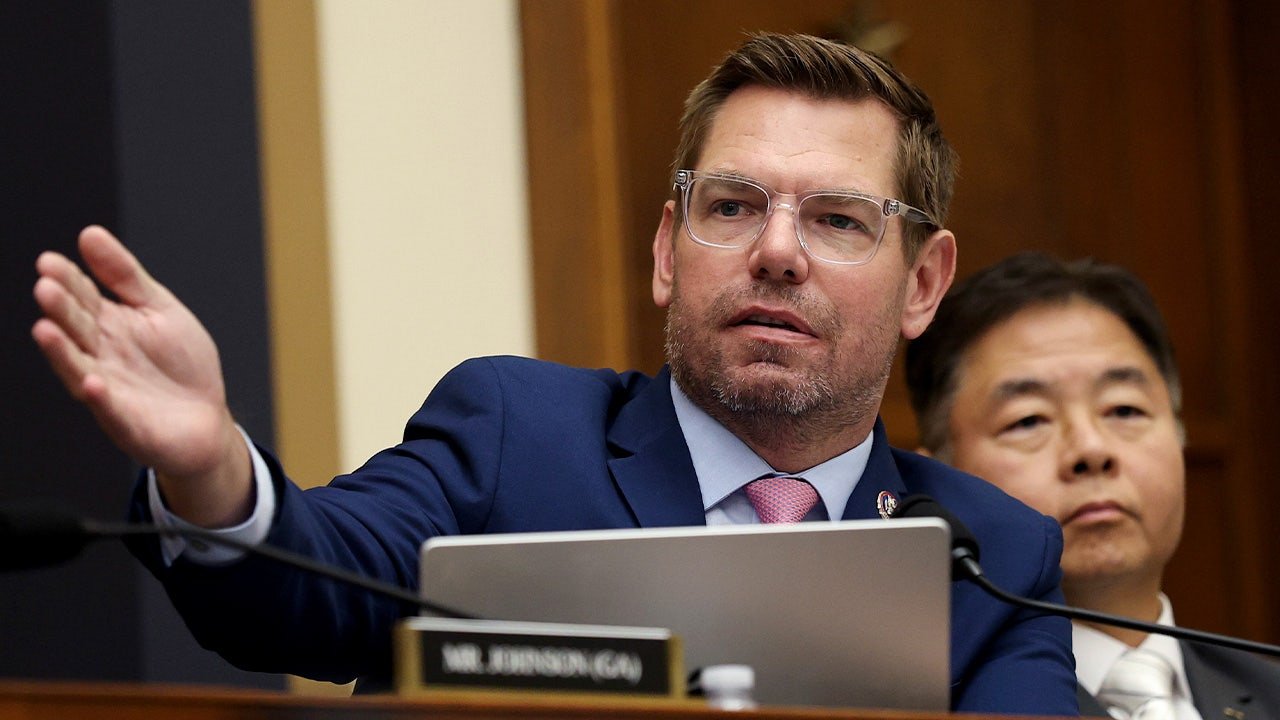
Sexual harassment allegations have been amplified online by Democrat-aligned politicos targeting Rep. Eric Swalwell, D-Calif., one of the leading Democratic candidates in California’s gubernatorial race.
Amid repeated denials and cease-and-desist letters sent by Swalwell’s lawyer, one of the alleged victims shared her story publicly for the first time, accusing Swalwell of taking advantage of her while she was intoxicated on multiple occasions, according to a bombshell report published by the San Francisco Chronicle Friday.
The alleged victim’s story also included claims that Swalwell pressured her to send naked pictures of herself and sent sexually explicit photos of his own, pulled out his private parts while driving in a car with her and requested she perform oral sex on him, among other incidents the victim said impacted how Swalwell treated her professionally.
DEM SENATOR RIPPED FOR ‘SMEAR’ OF FEMALE ACTIVIST ADVOCATING FOR SWALWELL’S ACCUSERS
The unnamed female accuser, who spoke to the San Francisco Chronicle, reportedly worked for Swalwell for about two years and revealed that he started pursuing her, despite being married, shortly after she was hired as a young 21-year-old staffer in his district office.
On multiple occasions, the young staffer recalls blacking out from alcohol consumption, before waking up naked in Swalwell’s hotel bed with signs she had engaged in intercourse. Swalwell allegedly distanced himself after the incident, and their relationship faded, before reuniting when she no longer worked for him, during which another incident allegedly took place.
Rep. Eric Swalwell, D-Calif., is running for governor of California in a crowded field of Democratic Party hopefuls. (John Lamparski/Getty Images)
«Eric Swalwell should immediately drop out,» Democratic strategist Bhavik Lathia said after the San Francisco Chronicle’s report dropped. «It is damning.»
Former San Jose Mayor and fellow Democratic Party gubernatorial candidate in California, Matt Mahan, also called on Swalwell to «drop out.»
«To the survivor who risked everything to come forward – I believe you,» Mahan said. «To the Democratic Party – you’d better hold him accountable.»
«If we don’t, we have no credibility asking anyone else to do the same,» he continued.
Sen. Ruben Gallego, D-Ariz., a longtime friend of Swalwell who faced backlash earlier this week for trying to discredit allegations against the California Democrat, posted on Friday that he «regret[s] having come to his defense on social media prior to knowing all the information. I am equally as shocked and upset about what has transpired.»
«What is described is indefensible. Women who come forward with accounts like this deserve to be heard with respect, not questioned or dismissed,» Gallego said. «I am withdrawing my endorsement of Congressman Swalwell, effective immediately.»
Swalwell’s team did not respond to Fox News’ request for comment, but he recently said during a press gaggle that the allegations are «false,» including allegations that Swalwell previously pressured female staffers to sign non-disclosure agreements so they cannot speak out, or that he was involved in an alleged hush money settlement.
«It’s false. And also some of the allegations I’ve seen, which is that we’ve had NDAs in the office – never. There’s never been an allegation, and there’s never been a settlement,» Swalwell insisted this week.
«This false, outrageous rumor is being spread 27 days before an election begins by flailing opponents who have sadly teamed up with MAGA conspiracy theorists because they know Eric Swalwell is the frontrunner in this race,» Micah Beasley, a spokesperson for Swalwell, also said on Tuesday.
Cheyenne Hunt, a former Capitol Hill staffer who is currently a nonprofit director at the group Gen-Z for Change, is among the voices acting as a proxy for alleged Swalwell accusers and has been helping amplify their stories.
On Friday, she blasted Swalwell for «tak[ing] a page out of the Trump playbook by attempting to silence women,» with cease-and-desist letters he allegedly sent out late Thursday night ahead of the San Francisco Chronicle’s report sharing a first-hand account from one of Swalwell’s alleged accusers.

Rep. Ruben Gallego, D-Ariz., with Rep. Eric Swalwell, D-Calif., and their wives during a 2021 trip to Qatar, which was funded by the U.S.-Qatar Business Council. (Fox News)
Fox News Digital has not independently verified the allegations from the report.
The alleged victim, who began working for Swalwell during his short-lived presidential campaign in 2019, said a married Swalwell, who was 38, began pursuing her, including through messages on Snapchat, which allows users to send photos that subsequently disappear after someone has looked at them.
She claimed the relationship rapidly progressed as Swalwell began asking for pictures of her face, then her naked body and eventually her genitalia. When messaging, the victim alleged Swalwell would sometimes send shirtless selfies or other images of his own genitalia.
SWALWELL THREATENS FBI WITH LEGAL ACTION AS PATEL REPORTEDLY WEIGHS ‘FANG FANG’ FILES RELEASE
Swalwell then allegedly tried to kiss the victim in her car when she drove him home from a donor meeting one night, and on another occasion he allegedly pulled out his penis while in the vehicle and asked her to perform oral sex on him. She admitted to doing so in a parking lot, but soon stopped out of fear someone might see them.
Meanwhile, in September 2019, the alleged victim, who was then working in Swalwell’s Castro Valley district office, reportedly said Swalwell invited her out for dinner and drinks when she drank too much and blacked out.
She claimed to have not even remembered leaving the restaurant, but was woken up in Swalwell’s hotel room the next day with vaginal soreness indicative of sexual intercourse. She also reportedly had a brief memory of Swalwell sucking her toes.
After the September 2019 incident at Swalwell’s hotel, the victim said the pair’s relationship faded as Swalwell distanced himself from her and began treating her more formally during public interactions. She eventually stopped working for Swalwell, but stayed in politics and noted Swalwell would occasionally remain in touch with her, including reaching out when she was looking for a job.
However, she claimed that five years later, while attending an April 2024 charity event Swalwell was being honored at, the pair reunited. She was not working for Swalwell at this later date, according to the San Francisco Chronicle. The woman indicated that she and Swalwell went out for drinks after the event, during which, once again, she became inebriated and could only remember bits and pieces about the night.
«Even though he had hurt me in the past, I felt like he was someone I could trust,» the alleged victim said, according to the San Francisco Chronicle. «Because we shared this secret together, it pulled me closer to him.»
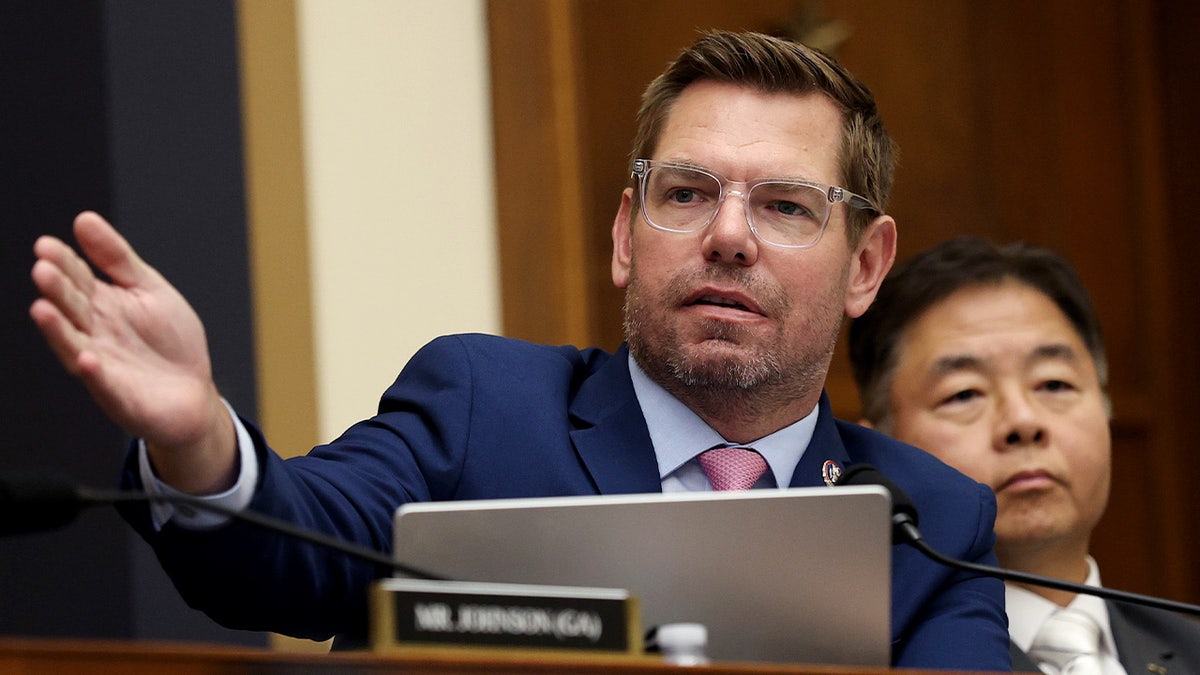
Rep. Eric Swalwell, D-Calif., speaks during a House Judiciary Committee hearing with FBI Director Kash Patel in the Rayburn House Office Building Sept. 17, 2025. (Win McNamee/Getty Images)
According to the San Francisco Chronicle’s reporting on the alleged victim’s experiences, one moment she did remember from the night was pushing Swalwell away and telling him «no» as he allegedly tried to force her to have sex with him. The woman reportedly texted a friend after the incident telling her she had been sexually assaulted by Swalwell. Other messages reviewed by the San Francisco Chronicle reportedly showed the victim indicating she had «blacked out» but «woke up once during it and even told him to stop at one point.»
«This happened one other time when I was working with him, but I convinced myself I was an equal party in it even though same pattern: I blacked out and he had sex with me,» the alleged victim wrote, referring to the 2019 incident, according to the San Francisco Chronicle’s reporting.
ERIC SWALWELL CAMPAIGN SETS OFF ALARM BELLS AFTER ACCEPTING $25K DONATION FROM CCP-TIED LAWYER: ‘OUTRAGEOUS’
The outlet also indicated it spoke with the friend the victim was allegedly texting, as well as the woman’s then-boyfriend who she reportedly told about the assault the next day. The boyfriend reportedly encouraged her to report Swalwell at the time.
However, she did not go to the authorities at the time, according to the San Francisco Chronicle, because she was afraid she would not be believed. Medical records reportedly showed she did obtain a pregnancy and STD test a week following the incident.
Swalwell subsequently messaged the alleged victim after the 2024 incident and told her not to tell anyone about their interaction that night, according to the San Francisco Chronicle. «He even sent me a message: you said you didn’t remember anything last time i hope you do now,» the alleged victim reportedly texted her friend three days after the incident. «And i said: yeah I’m trying to forget thanks.»
«He was sending messages like we just had a romantic encounter like he knows what he’s doing,» the alleged victim also allegedly wrote to her friend at the time. «He was gaslighting me into thinking it was consensual.»
Swalwell’s alleged victim began talking to the San Francisco news outlet roughly a month ago, as she was weighing whether to go public with her allegations as they began anonymously surfacing online.
The victim was confused how the rumors began, considering she only told family and a small group of friends about the incident. The victim reportedly called the Swalwell campaign in March to see if her name had surfaced among the rumored victims, to which one of Swalwell’s staffers reportedly asked her to vouch for Swalwell.
«He was so confident that I would stay silent that he wasn’t scared,» she said of Swalwell.
«I have no skin in the game of who becomes governor of California, but I feel people have a right to know whether the person who leads a state that is a safe haven for so many women actually treats women with dignity and will protect their rights,» continued the woman, who still works on Capitol Hill, according to the San Francisco Chronicle. «No one protected me from him, and so I have to protect the other young women like me who aspire to work in this field and he could prey upon.»

From left, Xavier Becerra, Steve Hilton, Matt Mahan, Tom Steyer, Tony Thurmond, Antonio Villaraigosa and Betty Yee stand on the stage during the California gubernatorial candidate debate Feb. 3, 2026, in San Francisco. (AP Photo/Laure Andrillon)
Late Thursday night, Swalwell’s attorney, Elias Dabaie, sent a cease-and-desist letter that Hunt, one of the individuals amplifying Swalwell’s accuser’s claims, argues is an effort to intimidate those trying to speak up about Swalwell’s history with women.
CLICK HERE TO DOWNLOAD THE FOX NEWS APP
«Today we learned [Swalwell] is intimidating survivors, serving cease and desist letters on those coming forward with stories of sexual harassment and abuse. He sent this threat in the dead of night — another attempt to delay the truth,» Hunt wrote on social media, attaching a copy of the first letter of the cease and desist letter she claimed to have obtained.
«This is what it looks like when powerful men get caught,» Hunt continued. «These cease and desists are a disgusting abuse of power against brave women who are courageously working together to share their stories. It begs the question: if Swalwell has done nothing wrong, as his campaign claims, why not let the women tell their stories in the light of day? Our team remains steadfast. We will not relent. The women will not recant.»
The Los Angeles Times reported Friday that it had confirmed the authenticity of the letter. Fox News Digital reached out to the attorney who sent the letter to confirm the authenticity of the letter independently, but did not immediately receive a response.
Following the San Francisco Chronicle’s report Friday, CNN published a separate report indicating three other women they had spoken to also alleged various kinds of sexual misconduct by the Democratic congressman – including Swalwell sending them unsolicited explicit messages or nude photos.
eric swalwell, democrats elections, california, governors, elections state and local, politics

Ziliotto judicializa la reforma de la ley de glaciares y pide su suspensión inmediata

Diputados: crece la preocupación en el oficialismo por el desgaste de Adorni y la oposición redobla la presión

Misión Artemis II: la cápsula Orión atraviesa la atmósfera a 40.000 km/h

Nuevo fondo de indemnización ante despidos: cuántos millones de dólares moverán al año

Carlos Queiroz, extécnico de la selección Colombia, desmintió oferta para dirigir a Ghana en el Mundial 2026

Iran threatens to end ceasefire over Hezbollah’s exclusion from truce deal

Mario Kart Tour avanza su siguiente temporada de primavera con ciudades europeas – Nintenderos

Melania Trump’s forceful Epstein denial draws bipartisan support from lawmakers

Un gobernador presentó un amparo contra la reforma de la Ley de Glaciares y pidió suspender su aplicación

Trump blasts Biden admin for releasing illegal immigrant now charged in fatal hammer attack on Florida mother
-
 SOCIEDAD17 horas ago
Mario Kart Tour avanza su siguiente temporada de primavera con ciudades europeas – Nintenderos
-
 INTERNACIONAL17 horas ago
Melania Trump’s forceful Epstein denial draws bipartisan support from lawmakers
-
 POLITICA16 horas ago
Un gobernador presentó un amparo contra la reforma de la Ley de Glaciares y pidió suspender su aplicación