INTERNACIONAL
Iran is trying to ‘create a rot from within’ through ‘information warfare,’ analyst warns


Iran, recognizing surefire defeat in a kinetic war, is leaning in on an information warfare campaign to undermine the United States and Israel from within, according to Yuval David, a strategic U.S.-Israel geopolitical communications advisor.
«You cannot beat Israel or the United States in a physical kinetic war,» David told Digital from Budapest, where he joined Israeli President Isaac Herzog for high-level diplomatic talks Wednesday, adding the warning of an «information warfare system.»
«And that’s what’s going on with social media, with our devices and the people who are on TikTok and Instagram and Facebook and X and YouTube and all of the different social media platforms where the Islamic Republic of Iran is able to affect people’s minds.»
IRAN TARGETS US WITH PSYCHOLOGICAL WARFARE CAMPAIGN TO MANIPULATE AMERICANS, EMBARRASS TRUMP: EXPERTS
«One of the things that it does is it tries to create a rot from within the societies and, sadly, it’s very much succeeding in doing so,» he added, stating that Iran’s campaign has enjoyed «guidance from Russia and China.»
David’s warning comes as Israel prepares for an election next week that analysts say could change its leadership but is unlikely to produce a fundamental shift in the country’s Iran policy.
NETANYAHU PRAISES TRUMP’S ‘WICKED SENSE OF HUMOR,’ DEFENDS IRONCLAD ALLIANCE AHEAD OF HISTORIC ISRAEL VOTE
A Reuters analysis published Wednesday found that Iran will likely remain Israel’s chief adversary, with military force continuing to serve as the country’s preferred tool against its enemies. The report said Israel’s security doctrine is centered on confronting Iran, maintaining buffer zones beyond its borders and keeping military pressure on to deter threats.
A victory for Prime Minister Benjamin Netanyahu, backed by conservative coalition partners, could deepen Israel’s confrontation with Tehran, not bring about appeasement. Even an opposition-led government would likely share the same broad strategic outlook, David said.
TRUMP IS DISMANTLING IRAN’S WAR MACHINE, BUT AMERICA STILL NEEDS AN ENDGAME
«The Islamic Republic of Iran is a massive concern for the world,» David said. «Tehran does not fear another diplomatic statement. It fears an America and an Israel with the intelligence, military capabilities and political will to act together.»
David said the U.S.-Israel alliance should not be judged by whether American leaders support the same Israeli candidate.
TRUMP SAYS NETANYAHU NEEDS TO BE RE-ELECTED, OR ELSE US WILL HAVE TO ‘FINISH THE JOB’ AGAINST IRAN ALONE
«Presidents come and go, prime ministers come and go. America’s and Israel’s enemies do not take election years off,» he said. «America doesn’t need to choose Israel’s prime minister, nor will it, nor can it, nor is it even trying to. America just needs a strong Israeli partner, whoever the Israelis elect.»
Reuters has cited regional analysts who said Netanyahu’s re-election could allow him to pursue a more aggressive campaign against Iran, while Arab states remain wary of his policies but want Tehran’s influence contained.
David said Iran’s hostility toward the United States and Israel extends beyond the current conflict.
IRAN’S PROXY WAR HAS CROSSED OCEANS AND IS NOW KNOCKING ON AMERICA’S DOOR
«The Islamic Republic of Iran has been waging this ideological war against America and also against Israel and also against democracies around the world since 1979,» he said. «The regime never stopped a war.
«Americans thought we have had a war, and then we didn’t have a war. Then we had one. Then we didn’t. Well, the Islamic Republic of Iran never ended that war. They’ve seen this as an ongoing war since 1979.»
FROM INTELLIGENCE SHARING TO MISSILE DEFENSE, HOW ISRAEL’S PARTNERSHIP PROTECTS AMERICAN SECURITY
He also framed U.S. support for Israel as a matter of serving American national security interests.
«America does not support Israel because Israel is helpless. America partners with Israel because Israel is capable,» David said. «Supporting Israel’s security isn’t charity. It’s American strategic self-interest.»
President Donald Trump’s endorsement of Netanyahu, contrasted with Vice President JD Vance’s decision to stay out of the race, reflects differing political approaches rather than a split over Iran or the U.S.-Israel alliance, according to David.
VP JD VANCE ADDRESSES US-ISRAEL RELATIONSHIP, WHETHER IRAN IS TRYING TO ‘PLAY’ THE UNITED STATES
«President Trump is endorsing Prime Minister Netanyahu – Vice President Vance is emphasizing American priorities, but supporting Israel’s security doesn’t require endorsing a particular Israeli politician,» he concluded.
«Trump is speaking to Israeli voters because that’s what Trump is able to do – Vance is speaking to American voters,» David said. «Far too many Americans don’t realize both Trump and Vance know that Tehran is listening.»
war with iran, israel, benjamin netanyahu, donald trump, jd vance













INTERNACIONAL
“Queremos crear una red de mujeres que puedan sostenerse”: UNIDAS impulsa emprendimientos con capacitación y mentoría
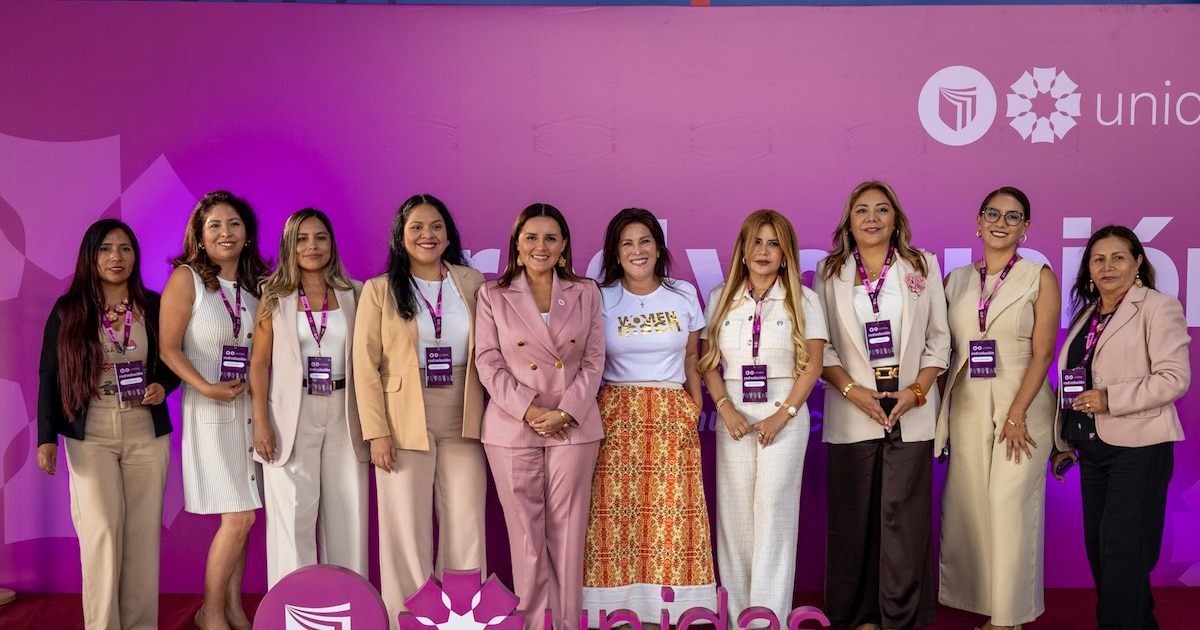
La Universidad César Vallejo (UCV) desarrolló en su campus Ate una jornada de UNIDAS, iniciativa orientada al emprendimiento femenino que incorpora capacitación, acompañamiento y una red de mentoría. Durante la actividad fueron reconocidas las primeras 10 mentoras, quienes acompañarán a mujeres en el desarrollo de sus negocios.
“A través de UNIDAS queremos dar un paso más allá. Queremos crear una red de mujeres que puedan sostenerse”, señaló Kelly Acuña Núñez, presidenta ejecutiva de la UCV.
El modelo plantea que las participantes no solo reciban orientación, sino que algunas puedan posteriormente acompañar a otras mujeres. Acuña explicó que la expectativa es que las emprendedoras que hoy forman parte del programa puedan convertirse en futuras mentoras.
Según las cifras proporcionadas por la universidad, más de 4.000 mujeres participaron en la iniciativa durante 2026. Entre los resultados reportados, el 25 % asumió roles de liderazgo, el 30 % mejoró su situación laboral, 280 desarrollaron sus propios emprendimientos y 245 iniciaron estudios universitarios.
La jornada incluyó además el panel “La tecnología como motor de desarrollo de las mujeres”, con la participación de Acuña y Jessica Freundt, representante de Women in Tech Latinoamérica, entre otras invitadas.
Talleres, tutorías y una ruta para los emprendimientos
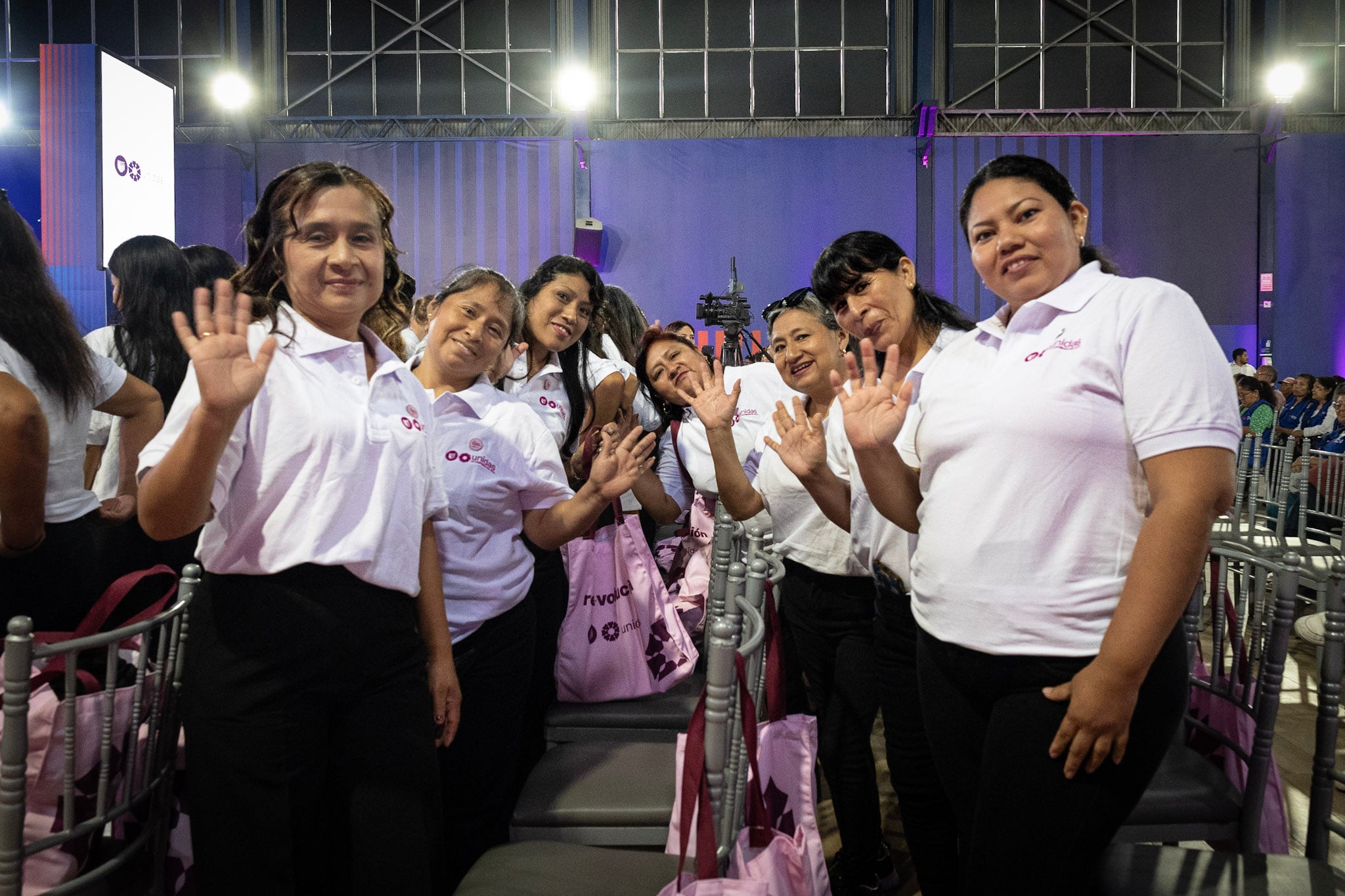
Carmen Aparcana Vizarrreta, directora de Responsabilidad Social Universitaria y Vallejo en la Comunidad de la UCV, explicó que los resultados corresponden al trabajo conjunto de los 13 campus presenciales y el campus virtual. Las participantes asisten una vez por semana a talleres y cuentan con tutores encargados de acompañarlas durante su proceso.
La formación continuará después de la jornada. Aparcana detalló que las emprendedoras pasarán por un taller de preincubación, otro de incubación y posteriormente una etapa de aceleración con acompañamiento personalizado, desarrollada junto con el Centro de Emprendimiento de la UCV.
“Hoy están aquí reunidas, van a pasar por un taller de preincubación, luego por el taller de incubación y luego serán acompañadas de manera personal a través del taller de aceleración”, explicó.
Entre las dificultades identificadas durante el trabajo con las participantes, Aparcana mencionó la falta de confianza en las propias capacidades, la dificultad que algunas mujeres encuentran para reservar tiempo para su formación y las brechas en el manejo de herramientas tecnológicas.
“Siempre tener esa voz interna que te dice: ‘Tú no puedes’”, señaló al referirse al denominado síndrome del impostor. Sobre las capacidades digitales, agregó: “Quien no maneja la tecnología en este momento realmente se queda atrás”.
De pedir ayuda a gestionar sus propios contenidos
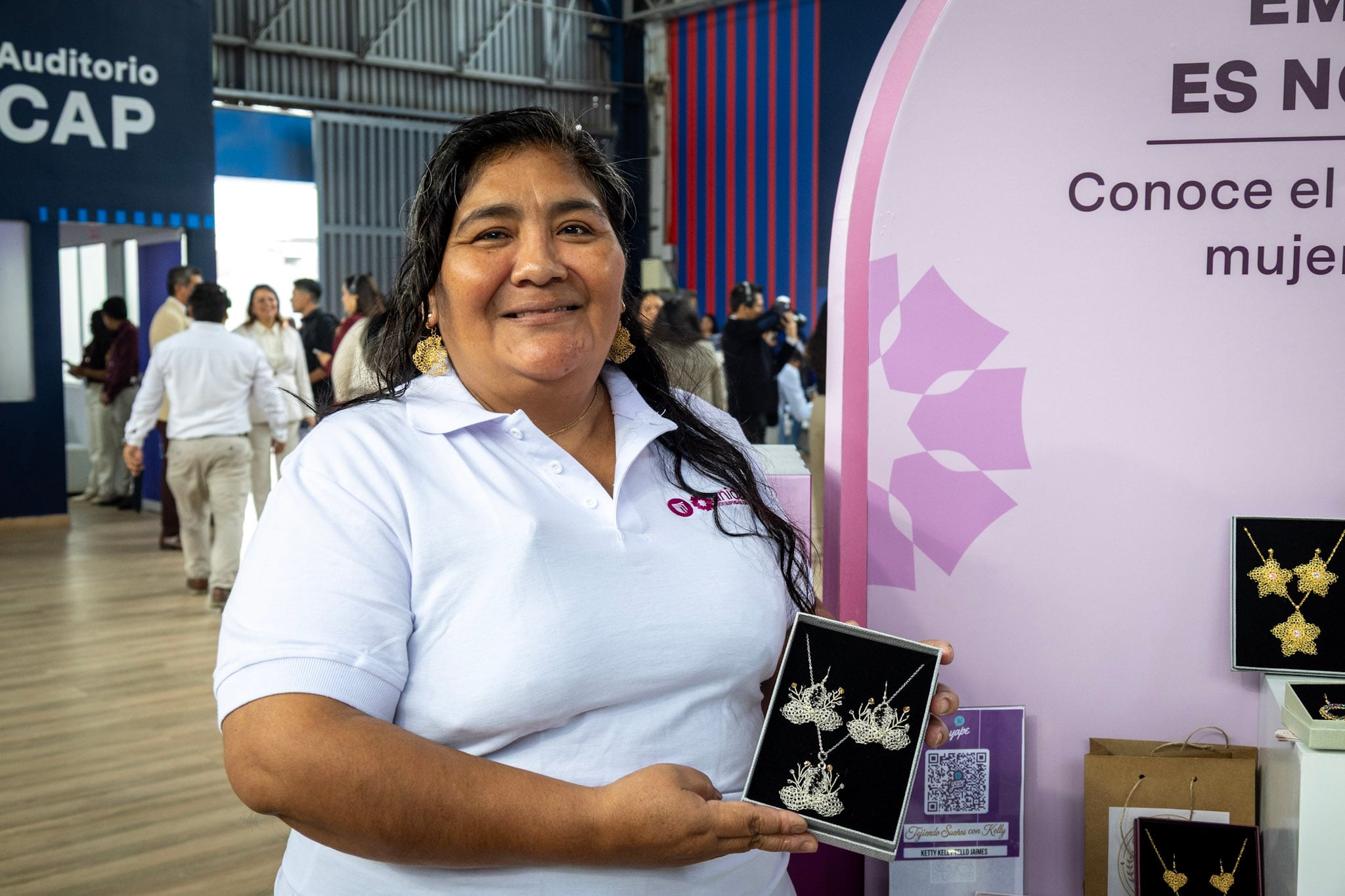
La experiencia de Ketty Kelly Tello Jaimes, creadora de Tejiendo sueños con Ketty, muestra una de esas dificultades. La emprendedora, dedicada a elaborar piezas tejidas a mano, recuerda que tenía conocimientos limitados sobre herramientas tecnológicas y necesitaba recurrir a su hija para realizar determinadas tareas.
“Ya no necesito pedir ayuda: ‘Hija, ayúdame’. Ahora ya yo puedo entrar a la computadora, puedo generar mis contenidos, puedo subir mis fotos, puedo editarlas. Lo que no sabía, ahora yo ya lo puedo hacer”, relató.
Tello reconoce que todavía necesita mejorar en herramientas como TikTok y la creación de videos. Su incorporación a esta nueva etapa de UNIDAS es reciente: participó en la apertura y señaló que ahora comenzará las capacitaciones.
La emprendedora también identifica la posibilidad de trabajar desde casa como uno de los cambios que le ha permitido combinar su actividad económica con el cuidado de sus hijos. “Me ha cambiado la vida porque con esto puedo ayudar a mis hijos ya desde casa, ya no los puedo descuidar. Estoy al pendiente de ellos, de su crecimiento escolar y a la vez puedo darme tiempo en emprender con mi pequeño negocio”, afirmó.

De un hobby a un emprendimiento formalizado
Rocío Rodríguez Vera, creadora de Creaciones J y S, llevando emociones instantáneas, presenta un recorrido más prolongado. La emprendedora de Cajamarquilla afirma que lleva cuatro años vinculada al proceso que comenzó bajo UCV Empodera y continúa actualmente con UNIDAS.
Rodríguez cuenta que comenzó elaborando flores y arreglos hechos a mano como un hobby desde casa, después de acercarse a una actividad de la universidad en la Casa del Emprendedor de su zona. Actualmente señala que maneja redes sociales y herramientas virtuales, cuenta con RUC y recibe solicitudes de empresas para sus productos.
Durante ese proceso también participó en clases de oratoria y aprendió herramientas relacionadas con las ventas. “Yo antes no era tan desenvuelta. O sea, yo no hablaba mucho, pero ahora gracias a eso, gracias a las clases de oratoria que también nos han dado, entonces aprendí a desenvolverme y también aprendí a vender, que es muy importante”, sostuvo.
Rodríguez destaca especialmente el cambio que experimentó en su dinámica laboral y familiar. Antes de desarrollar su emprendimiento, asegura que debía dejar a sus hijos en casa para cumplir jornadas laborales de ocho o doce horas.
“Ahora, gracias a este emprendimiento y gracias a la Universidad César Vallejo, lo hago en casa, en mis tiempos libres y en tema de ingresos gano muy bien”, afirmó.
Tras cuatro años vinculada a estas iniciativas, Rodríguez considera que una siguiente etapa debería enfocarse también en mujeres en situación de vulnerabilidad, particularmente aquellas que dependen económicamente de sus parejas, además de incorporar acompañamiento psicológico frente a esas circunstancias.

Una red que busca ampliar su alcance
Acuña señaló que la actividad desarrollada en Ate tuvo alcance nacional, con la conexión de los 13 campus físicos y UCV Virtual, y explicó que la meta es que más mujeres se incorporen, completen los módulos de formación y posteriormente desarrollen sus emprendimientos.
La presidenta ejecutiva adelantó además que la universidad ha mantenido reuniones con varias empresas interesadas en sumarse a UNIDAS.
La participación de actores externos ya incluye a Women in Tech Latinoamérica, cuya representante Jessica Freundt estuvo presente en la jornada. “Esto no es una iniciativa de la universidad, sino una iniciativa de la comunidad”, sostuvo Acuña.
La presidenta ejecutiva también invitó a mujeres del país que tengan acceso a una sede de la UCV a participar en las capacitaciones, que, según destacó, son gratuitas.
El objetivo planteado es que el acompañamiento no termine con la formación de las actuales participantes, sino que algunas puedan convertirse posteriormente en mentoras y acompañar a nuevas emprendedoras. Acuña resumió esa lógica durante la jornada: “Cuando una mujer ayuda a otra, el camino es más fácil”.
INTERNACIONAL
Índice Pokémon: la insólita inversión que está a punto de superar a NVDA como la de mejor rendimiento desde antes de la pandemia

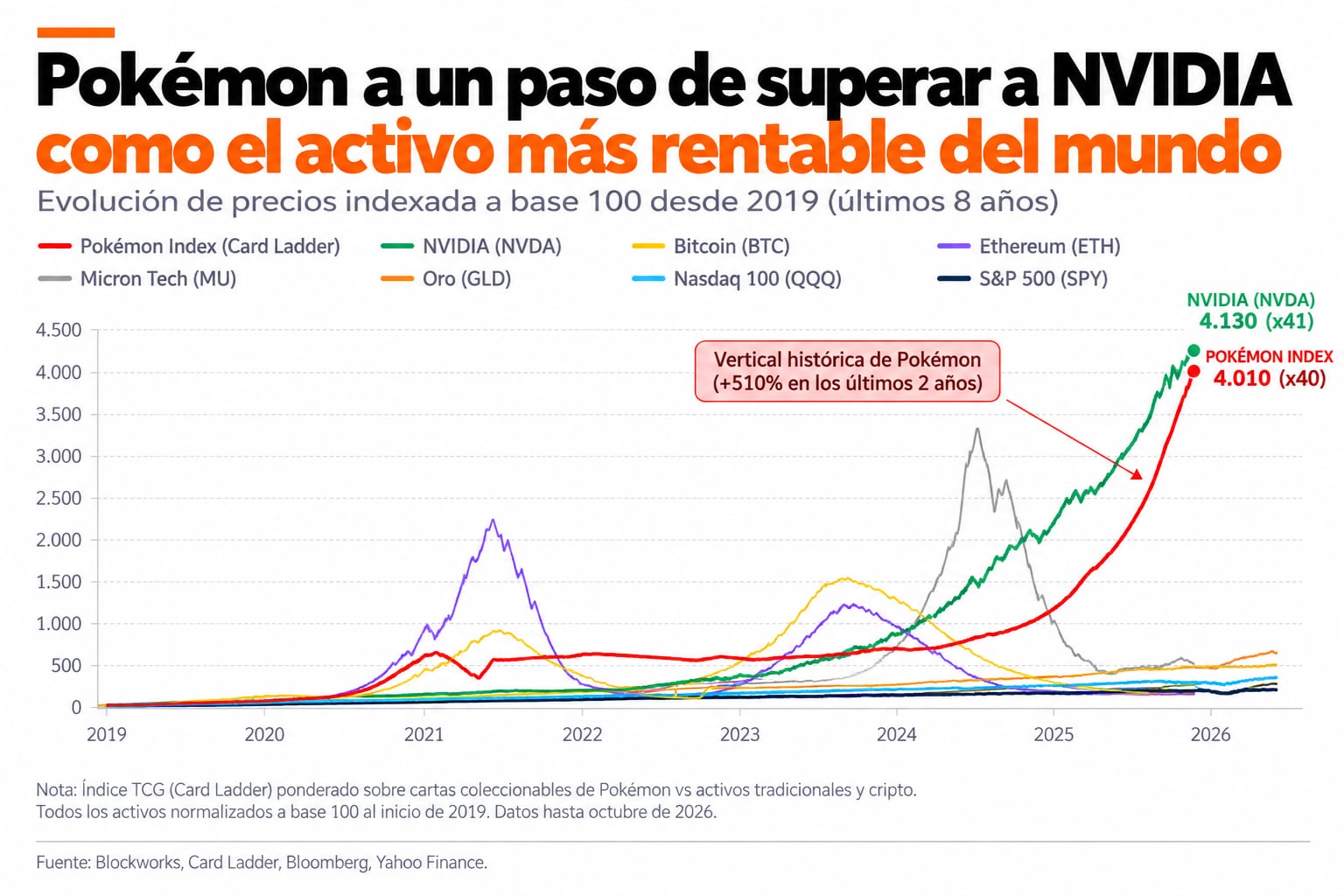
El mercado de cartas coleccionables de Pokémon quedó cerca de igualar el rendimiento de NVIDIA desde 2019, de acuerdo con una comparación que toma como referencia una base inicial de 100 puntos. La medición ubicó a NVDA en 4.130 puntos, equivalente a una multiplicación por 41 de su valor inicial, mientras que el índice de Pokémon llegó a 4.010 puntos, o unas 40 veces respecto del comienzo de la serie. La distancia entre ambos activos se redujo a 120 puntos.
La comparación parte de una base de 100 puntos en 2019
El registro no expresa los precios en dólares de una acción, una criptomoneda o una carta individual. Todas las referencias comenzaron en 100 en 2019 para permitir una comparación proporcional entre mercados de características distintas. Bajo esa metodología, el valor final muestra cuántas veces se multiplicó cada activo desde el inicio del período. Así, una marca de 4.010 indica una suba cercana a 40 veces frente al punto de partida.
La línea correspondiente a Pokémon mostró una primera escalada entre 2020 y 2021. Después atravesó una caída y una etapa de menor movimiento que se extendió hasta 2024. El cambio se produjo desde 2025, cuando la curva retomó una trayectoria ascendente y se acercó a la de NVIDIA. La variación señalada para las cartas fue de 510% en los últimos dos años.
La medición incluyó también a Bitcoin, Ethereum, oro, Nasdaq 100, S&P 500 y Micron. Cada activo registró comportamientos diferentes durante el período. Bitcoin y Ethereum exhibieron picos elevados entre 2021 y 2024, seguidos por una moderación de sus curvas. El oro, el S&P 500, el Nasdaq 100 y Micron permanecieron en valores inferiores dentro de la comparación, con recorridos menos pronunciados.
El índice reúne precios de cartas seleccionadas
El Pokémon Index es un indicador que sigue el desempeño agregado de una selección de cartas coleccionables. En este caso, la referencia corresponde a una metodología asociada con plataformas de análisis del sector como Card Ladder, que reúne operaciones de compra y venta para elaborar una serie de precios. El índice no representa a una compañía vinculada con la franquicia ni refleja la facturación de videojuegos, productos o licencias.
Su mecanismo busca ofrecer una referencia sobre el comportamiento general del mercado de cartas Pokémon. Para eso, incorpora ejemplares representativos, entre ellos cartas de alto valor, piezas secretas, ediciones como Base Set 1st Edition y unidades graduadas por empresas de certificación como PSA o BGS. La composición permite seguir la evolución de un conjunto de activos, en lugar de tomar el precio de una sola carta.
El modelo se asemeja al de un índice bursátil, aunque sus componentes y condiciones de negociación son diferentes. El S&P 500, por ejemplo, mide el comportamiento de un grupo de grandes empresas de Estados Unidos. El índice de Pokémon sigue una canasta de cartas seleccionadas y pondera sus cotizaciones de compra y venta. Por ese motivo, una suba del indicador no implica que todas las cartas de la franquicia registren la misma variación.
La conservación y la escasez inciden en las cotizaciones
El valor de cada carta depende de factores concretos. La escasez, el estado de conservación, la edición, la certificación y la demanda por determinados personajes o lanzamientos influyen sobre los precios. Una misma carta puede registrar cotizaciones diferentes según presente marcas, desgaste o defectos, y según obtenga una determinada calificación de empresas especializadas.
Las piezas graduadas concentran parte de la atención de este mercado porque la certificación establece una referencia sobre el estado físico del ejemplar. Las cartas de alta calificación, las ediciones limitadas y algunas piezas secretas integran el segmento que suele atraer operaciones de mayor valor. Esa dinámica forma parte de los criterios que explican por qué un índice de coleccionables puede diferir del recorrido de cartas de circulación más amplia.
El auge de las cartas de Pokémon combinó la nostalgia de quienes conocieron la franquicia desde su expansión inicial con la demanda global por productos coleccionables. A ese interés se sumó la compra de piezas como activos alternativos de inversión, una categoría que reúne bienes cuyo precio no depende de manera directa de los mercados financieros tradicionales. La demanda especulativa también incidió sobre las cotizaciones de cartas con oferta limitada.
La comparación con acciones, metales y criptomonedas permite observar la magnitud del avance registrado por el conjunto de cartas incluido en la medición. NVDA conservó el primer lugar con 4.130 puntos, mientras el índice Pokémon llegó a 4.010. El resto de los activos incluidos quedó por debajo de ambos en la escala utilizada para el período iniciado en 2019.
Pokémon,NVIDIA,Card Ladder,mercado financiero,cartas coleccionables
INTERNACIONAL
Democrats furious after pollster boosting far-left candidates admits fabricating surveys: ‘Absolute scumbags’

Democrats are up in arms after a so-called polling firm that projected far-left candidates as strong contenders in several primaries admitted that it had fabricated its polling data.
Wedgewood Polling, which billed itself as an election survey company, released a statement Tuesday night admitting it used «fabricated numbers» for an «experimental project to demonstrate the vulnerabilities, lack of oversight, and overall low barrier to entry in the modern political polling industry.»
The group’s polls were cited by Abdul El-Sayed’s campaign amid a high-profile primary race against Michigan state Sen. Mallory McMorrow and U.S. Rep. Haley Stevens, D-Mich. The nonpartisan polling aggregator Political Polls also cited Wedgewood in the Wisconsin gubernatorial race, showing socialist Francesca Hong having an edge over Republican candidate Rep. Tom Tiffany, R-Wis.
McMorrow said Wedgewood’s numbers led to her donations drying up and reporters having «hounded» her with calls to drop out of the race.
JONATHAN TURLEY: FAKE POLLSTER’S STUNT WAS A RECKLESS GAME WITH REAL RACES
«Sure, a point was proven. Polling is broken. But tens of thousands of people poured their hearts, time, energy, hard-earned money into something they believed in – for a year-and-a-half, and it was treated like a game,» she said in a statement on X. «Trust is already at an all-time low. We don’t get out of this mess without rebuilding trust. And media – who loves to ride the drama of a pollercoaster – needs to take a hard look at what’s legitimate and what’s not.»
Unlike El-Sayed, who advanced from Michigan’s Democratic Senate primary, Hong lost Wisconsin’s Democratic gubernatorial primary to the establishment-backed candidate. El-Sayed, a former Michigan public health official, is currently locked in a tight race against former U.S. Rep. Mike Rogers, R-Mich., for Michigan’s open Senate seat.
Democrat strategist Jennifer Holdsworth said she ran a super PAC that raised money for McMorrow and that «this poll was used by several donors to pull back funding at a time we were being outspent by $80 million.»
MORNING GLORY: THE POLLS GOT MICHIGAN BADLY WRONG. NOW DEMOCRATS MAY FACE A BIGGER RECKONING
Wedgewood’s numbers were cited by high-profile outlets like The New York Times and Decision Desk HQ, which both said they have since removed them from their projections.
The Times said it removed 15 polls released by Wedgewood between June and October after it admitted to fabricating data. The outlet said Wedgewood had «answered a series of questions regarding the identities of the pollsters; the methods they were using to draw their sample, contact respondents and weight their polls; and the source of their funding» during its vetting process.
Decision Desk HQ said it removed 17 Wedgewood polls from its projections but that it «has not changed the projected seat totals or chamber control probabilities in the Senate or House.»
Wedgewood Polling’s statement said it «was never intended to sway an election» but rather was aimed as a «wake-up call» about data integrity and vetting standards.
MYSTERIOUS POLLING FIRM BEHIND FAKE ELECTION SURVEYS CLOSES AFTER ADMITTING ‘SOCIAL EXPERIMENT’
«These people are absolute scumbags,» veteran Democratic strategist and former Kamala Harris advisor Mike Nellis told Digital. «They can try to claim that they have some moral high ground here, but they lied about their polling data, got caught, and are freaking out because they’ve committed fraud.»
«The people responsible for this should be run out of American politics, and if they can be, they should be prosecuted to the full extent of the law,» Nellis said. He added that both Democrats and Republicans, as well as the media, should reflect on how polling is verified «because there’s likely other people that are doing things like this.»
TOP ELECTION SCHEMES ROILING KEY MIDTERM RACES AS BOTH PARTIES ACCUSE RIVALS OF TRICKERY
Independent outlet FiftyPlusOne said it was investigating Wedgewood when it had released its statement. Co-founder G. Elliott Morris wrote on X, «We were investigating Wedgewood for faking their data and emailed them for comment this morning, ahead of publishing the findings tomorrow. They are trying to cover up their fraud with the ‘we were doing a social experiment’ excuse.»
Former Obama staffer Tommy Vietor said on X that Wedgewood’s actions amounted to «lying and fraud.»
A group called «Wedgewood Polls» had also previously created a GoFundMe to raise money for polling in Nebraska’s gubernatorial and Senate races. It raised $500 of its intended $5,000.
«I know they crowdfunded, I believe, a good chunk of their polls,» Nellis told Digital. «Are they going to return that money? And if not, are they going to be prosecuted?»
POLL: IT’S A LONE STAR SENATE SHOWDOWN BETWEEN TALARICO AND PAXTON
Other Wedgewood surveys showed Democrats with significant edges over Republicans in states like Texas, where a July Wedgewood poll showed James Talarico leading state Attorney General Ken Paxton among Hispanics by 64% to 30%.
Republicans, including President Donald Trump, have long heaped doubt on the veracity of polls.
Polls notably showed former Secretary of State Hillary Clinton with an edge over Trump in 2016 — far from the actual result.
And with the fight for control of Congress coming to a head in November, every data point is being scrutinized as political tea leaves.
Digital reached out to McMorrow’s state Senate office, Stevens’ campaign and strategist Lis Smith for further comment.
politics, polls, elections disputes, controversies state and local, state and local primaries, midterm elections

“Es absurdo”: lluvia de críticas al método de votación al Balón de Oro más grande de la historia, en la que Cristiano aventaja a Messi

Cuánto hay que invertir para poner una franquicia de la cadena de heladerías Lucciano’s

El último adiós a Antonio Grimau en el cementerio de la Chacarita: el dolor de la familia

Tensión por discapacidad: la Iglesia advierte sobre el dictamen del oficialismo y reclama la prórroga de la ley de emergencia

Míchel y Jordi Cruyff ‘acogen’ a un campeón de la Premier: ‘Estoy verdaderamente agradecido’

Pese al reclamo de Patricia Bullrich, la Casa Rosada rechaza apurar un acuerdo electoral con los gobernadores, el PRO y la UCR

El Gobierno pone en marcha un nuevo plan de retiros voluntarios y busca que haya 20.000 empleados menos en el Estado

Alerta roja en Sudamérica por el Súper Niño: cambio climático, inundaciones extremas y el hallazgo de microplásticos y metales en el granizo

“Feliz día a la mejor mamá del mundo”: el doble gesto del Chato Prada con Lourdes Sánchez y la reacción de ella

De cara al debate por el endeudamiento familiar, el Gobierno sostiene un discurso duro y considera que funciona para la imagen de Milei

 POLITICA2 días ago
El Gobierno pone en marcha un nuevo plan de retiros voluntarios y busca que haya 20.000 empleados menos en el Estado
- CLIMA2 días ago
Alerta roja en Sudamérica por el Súper Niño: cambio climático, inundaciones extremas y el hallazgo de microplásticos y metales en el granizo
- POLITICA2 días ago
El Gobierno reconoció que “está bajo análisis” la postura argentina en el Comité de Descolonización de la ONU