INTERNACIONAL
After the strikes, how would the US secure Iran’s enriched uranium?


NEWYou can now listen to Fox News articles!
When War Secretary Pete Hegseth was asked recently whether U.S. forces would ever move to secure enriched uranium reportedly stored at Iran’s Isfahan nuclear complex, he declined to say, citing operational security.
The exchange highlighted a question the U.S. and Israel’s air campaign alone cannot answer: even if U.S. strikes degrade Iran’s nuclear infrastructure, who would physically secure the enriched uranium, and how?
Iran is believed to possess a significant stockpile of uranium enriched to 60%, near weapons-grade. That material could theoretically be used in multiple nuclear devices if further refined.
Moving from 60% to weapons-grade 90% enrichment requires additional processing, and weaponization would involve further technical steps. But analysts say the more immediate issue is physical control of the material itself.
«If the U.S. wants to secure Iran’s nuclear materials, it’s going to require a massive ground operation,» Kelsey Davenport, director of nonproliferation policy at the Arms Control Association, told Fox News Digital.
Davenport said the highly enriched uranium believed to be stored at Isfahan appears to be deeply buried and contained in relatively mobile canisters. Securing it would likely require locating the full stockpile, accessing underground facilities and safely extracting or downblending the material.
Satellite imagery taken on Jan. 30, 2026 shows a new roof over a previously destroyed building at the Natanz nuclear site. (2026 PLANET LABS PBC/Handout via Reuters)
«It’s not even clear the United States knows where all of the uranium is,» she said, noting that the mobility of storage containers raises the possibility that some material could be moved or dispersed.
The administration repeatedly has said preventing Iran from obtaining a nuclear weapon remains a central objective of Operation Epic Fury.
«Ultimately, this issue of Iran’s nuclear pursuit and their unwillingness through negotiations to stop it is something President Trump has said for a long time needs to be dealt with,» Hegseth said.
Senior administration officials have argued that Iran sought to build up its ballistic missile arsenal in part to create a deterrent shield — enabling Tehran to continue advancing its nuclear program while discouraging outside intervention.
So far, however, the bulk of U.S. strikes have focused on degrading missile launchers, air defenses and other conventional military targets.
Experts note that dismantling missile systems may reduce Iran’s ability to shield a potential nuclear breakout. But physically controlling enriched uranium itself presents a separate and more complex challenge.
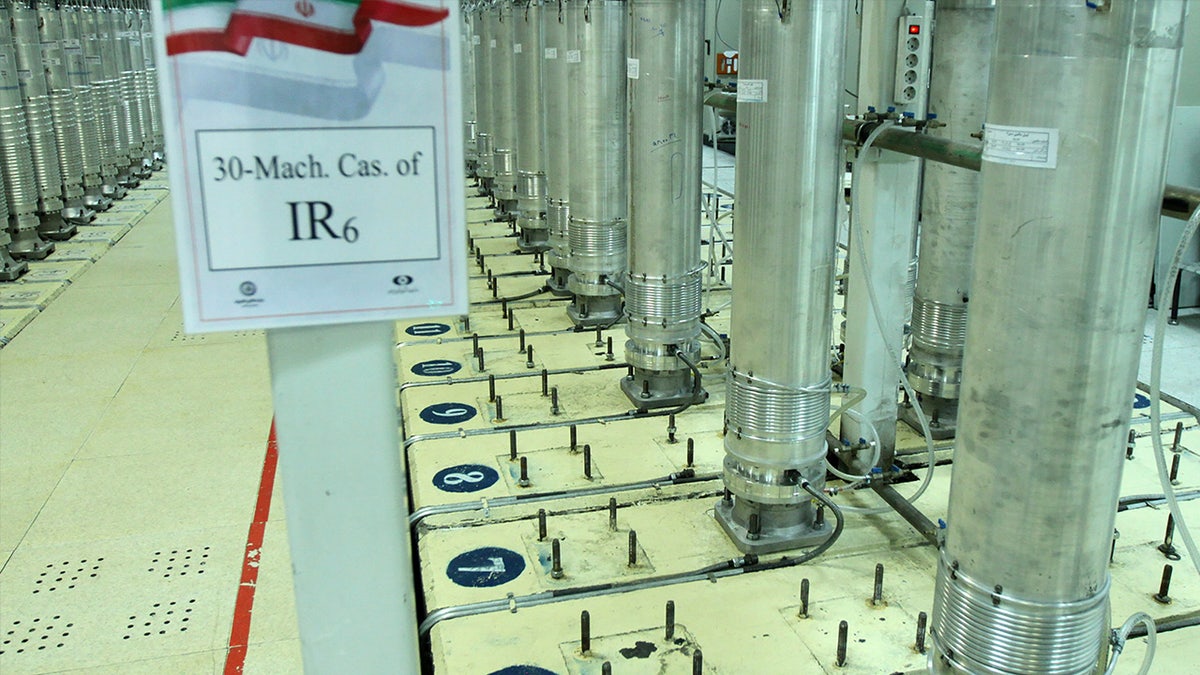
This photo released on Nov. 5, 2019, by the Atomic Energy Organization of Iran shows centrifuge machines in the Natanz uranium enrichment facility in central Iran. (Atomic Energy Organization of Iran via AP, File)
Airstrikes versus physical control
Defense officials have acknowledged that degrading nuclear infrastructure from the air is different from safely managing or securing nuclear material.
Airstrikes can destroy centrifuges, power systems and support buildings. But enriched uranium stored underground may remain intact unless it is physically secured, removed or verifiably downblended.
Striking or extracting nuclear material also carries safety risks that military planners must weigh.
If storage casks containing uranium hexafluoride gas were compromised, the material could pose chemical toxicity risks to personnel entering the site without proper protective equipment. Analysts say a conventional strike is unlikely to trigger a nuclear detonation, but dispersal of material could create localized hazards and complicate recovery efforts.
Chuck DeVore, a former Reagan-era defense official who worked on nuclear issues, argued that directly targeting the stockpile may not be a priority under current battlefield conditions.
«You don’t want to release the material into the surrounding areas and cause radioactive contamination,» DeVore said, adding that deeply buried facilities are difficult to reach from the air.
DeVore also downplayed the immediacy of a breakout scenario, arguing that further enrichment, weaponization and delivery would be difficult to execute undetected amid sustained U.S. air operations.
Even if Iran were able to further enrich uranium, he said, assembling a deliverable weapon under active military pressure would present significant technical and operational hurdles.
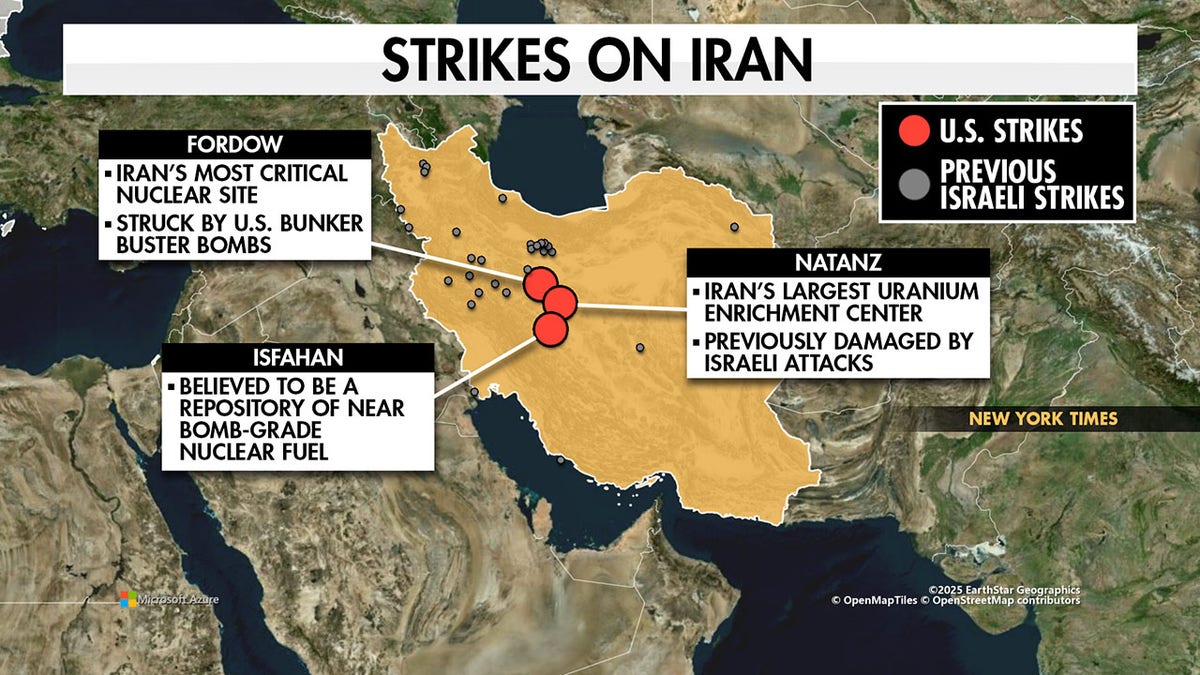
Trump said that the United States completed a «very successful» strike against Iranian nuclear sites at Fordow, Natanz and Isfahan, saying that Iran’s nuclear enrichment installations have been «obliterated.» (Fox News)
Still, DeVore acknowledged that long-term control of the uranium would ultimately require a political resolution inside Iran and some form of outside oversight.
What would securing it require?
Nonproliferation experts say securing enriched uranium generally involves more than military force. It requires verified accounting of the material, sustained access to storage sites and either removal or downblending to lower enrichment levels suitable for civilian use.
Davenport said internationally monitored downblending would be the safest option if political conditions allow.
«The IAEA remains the best place to go back into Iran to monitor the sites, to try to track down and account for the enriched uranium,» she said, describing downblending as a relatively straightforward technical process compared to attempting to extract and transport highly enriched material in a contested environment.
Both pathways — physical seizure or internationally monitored reduction — depend on conditions that do not currently exist.
Administration officials argue that dismantling Iran’s missile network weakens Iran’s ability to shield a nuclear breakout and reduces the immediate threat to U.S. forces and regional allies.
But suppressing missiles and controlling enriched uranium are separate challenges.
CLICK HERE TO DOWNLOAD THE FOX NEWS APP
Destroying infrastructure can slow or disrupt a program. Physically locating, accounting for and securing nuclear material requires sustained access, reliable intelligence and — ultimately — political conditions that allow it.
For now, the administration maintains that Iran will not be allowed to obtain a nuclear weapon. How the enriched uranium itself would be secured remains a question without a public answer.
Related Article

war with iran,iran,nuclear proliferation,nuclear disasters











INTERNACIONAL
Qué sabemos realmente sobre la electricidad estática y por qué aún asombra a la física moderna
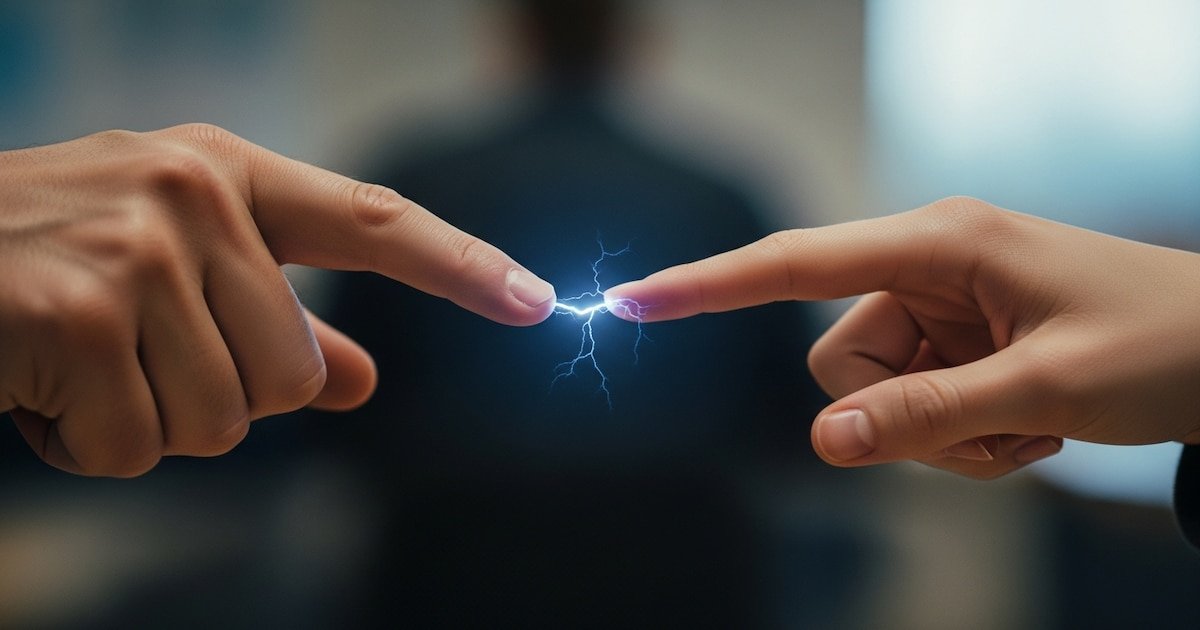
La electricidad estática se manifiesta en situaciones tan cotidianas como el cabello erizado al frotar un globo o el leve chasquido al tocar una manija después de caminar sobre una alfombra. Bajo esa apariencia cotidiana, la triboelectricidad —el intercambio de cargas opuestas entre materiales— representa un desafío persistente para la física experimental, que aún no ha logrado desentrañar plenamente su funcionamiento.
Este fenómeno ocurre cuando dos materiales entran en contacto y luego se separan, generando cargas opuestas en cada uno. Aunque la explicación completa de su mecánica sigue sin resolverse, la física ha reconocido la triboelectricidad como un proceso en el que abundan las incógnitas.
Mientras la mayoría de las personas vincula la electricidad estática a simples curiosidades domésticas, los científicos la identifican como un fenómeno en el que los mecanismos fundamentales permanecen en gran parte desconocidos.
Incertidumbre sobre el mecanismo de la triboelectricidad

Durante aproximadamente los últimos tres siglos, la física experimental ha intentado establecer qué ocurre exactamente cuando dos materiales se ponen en contacto y después se separan. Está confirmado que uno de ellos adquiere una carga positiva y el otro, una carga negativa. Sin embargo, los detalles sobre el proceso —el “cómo” y el “por qué”— siguen sin respuesta clara, a pesar de la ubicuidad cotidiana del fenómeno.
En el centro del interés científico reside la siguiente cuestión: ¿qué es lo que realmente se transfiere entre los materiales? Algunas de las principales hipótesis, formuladas por investigadores en física de materiales, sugieren la transferencia de electrones, iones e incluso fragmentos microscópicos de materia. Sin embargo, experimentos llevados a cabo bajo condiciones idénticas pueden mostrar resultados diferentes o contradictorios, lo que indica la posible existencia de factores desconocidos.
Los expertos han denominado este proceso triboelectricidad, término derivado del griego por “frotar” y “ámbar”. A pesar de contar con tecnología de última generación en laboratorios especializados, los físicos no han logrado ofrecer una explicación universal.
Avances recientes y factores que influyen en la carga eléctrica

Investigaciones recientes lideradas por equipos de física de materiales han comenzado a aportar claridad. Un descubrimiento relevante, demostrado por el físico del Instituto de Ciencia y Tecnología de Austria Scott Waitukaitis, mostró que dos objetos idénticos pueden cargarse de manera distinta dependiendo de cuántas veces han interactuado entre sí anteriormente. Este hallazgo respalda la hipótesis de una cierta memoria superficial en los materiales.
Otro descubrimiento proviene de investigaciones que identificaron cómo partículas invisibles pueden adherirse a las superficies de los materiales. Estas diminutas moléculas ricas en carbono, presentes en el aire, pueden modificar la dirección del intercambio de carga. Al eliminar estas moléculas mediante calor, se observó que el comportamiento eléctrico cambia significativamente, mostrando que los factores ambientales pueden ser determinantes.
Además, las investigaciones han comprobado que variables como la velocidad del contacto, el área de impacto o la ruptura de enlaces químicos juegan un papel fundamental. En ciertas colisiones, la creación de condiciones químicas propicias permite el intercambio de electrones. Aunque estas novedades no resuelven todas las incógnitas, han permitido enriquecer la comprensión de la triboelectricidad.
Un estudio publicado por el propio equipo de Waitukaitis reveló que, al modificar las condiciones superficiales y ambientales, como la presencia de moléculas contaminantes o la humedad, se pueden obtener resultados radicalmente diferentes en experimentos idénticos. Este hallazgo obligó a reconsiderar la idea de que el comportamiento eléctrico depende únicamente de la naturaleza intrínseca de los materiales.
Desafíos en la comprensión y aplicaciones tecnológicas

Lejos de simplificarse, el conocimiento sobre la electricidad estática ha demostrado que su comportamiento varía en función de numerosos factores y condiciones. La antigua noción de una “serie triboeléctrica” fija ha sido puesta en duda. Cada interacción resulta de una combinación compleja de variables.
El interés por descifrar completamente estos mecanismos tampoco es exclusivo del ámbito académico. Una comprensión profunda podría transformar tecnologías emergentes, como el desarrollo de nanogeneradores triboeléctricos, que convierten el movimiento en electricidad y permitirían alimentar sensores y dispositivos portátiles sin baterías convencionales. Además, este conocimiento es esencial para mitigar descargas peligrosas en entornos industriales o para explicar fenómenos eléctricos en otros planetas, como las tormentas de polvo en Marte.
Origen histórico y evolución científica del fenómeno
La historia de la electricidad estática se remonta a la Grecia antigua, cuando se advirtió que el ámbar frotado atraía objetos ligeros. A lo largo de los siglos, este fenómeno ha acompañado a la humanidad como una curiosidad recurrente. Por mucho tiempo, la electricidad estática fue considerada una rareza doméstica, hasta que los avances científicos la transformaron en objeto de estudio especializado.
Actualmente, la electricidad estática ocupa un lugar de permanente interés en la física experimental, donde cada avance abre nuevas preguntas y amplía el alcance de la investigación científica.
electricidad,estática,energía,conexión,manos,dedos,interacción,chispa,física,corriente
INTERNACIONAL
White House slams ‘trash reporting’ over claims ICE chief hospitalized for stress, yelled at by Trump admin

NEWYou can now listen to Fox News articles!
The White House pushed back hard Friday amid a news report that Todd Lyons, the acting director of U.S. Immigration and Customs Enforcement (ICE), has been hospitalized at least twice for stress-related issues with the Trump administration that left him visibly upset and strained.
The pushback came following a Politico report that said Lyons was hospitalized at least twice for stress-related issues while carrying out President Donald Trump’s immigration agenda.
The stress has left Lyons unable to carry out key decisions, the report states, citing two current and two former administration officials, who were unnamed.
ICE ASSAULTS SPIKE 1,500% AS DEMS DRAW ‘HARD RED LINE’ TO UNMASK AGENTS IN DHS BATTLE
ICE Acting Director Todd Lyons was reportedly hospitalized at least twice amid pressure from the Trump administration to ramp up deportations of illegal immigrants, according to a Politico report. (Suzanne Kreiter/The Boston Globe via Getty Images andJohn Moore/Getty Images )
«He would be visibly upset and struggling to make the decisions that were needed to be made by the director,» one former unnamed official told the news website.
«Trash reporting from a trash «reporter» pushing tabloid b*******in an attempt to divide and distract. Todd Lyons is an American Patriot,» the White House Rapid Response X account said in response to the story.
The episodes were attributed to pressure from above for Lyons to ramp up deportations and from top adviser Stephen Miller, who allegedly yelled at Lyons during morning phone calls with administration officials, Politico reported.
«This is b******* and more of the trash that Daniel Lippman has peddled over the years in the name of clicks and clout,» Miller’s wife, Katie Miller, wrote on X in response to Politico reporter’s story.
White House spokeswoman Abigail Jackson said Politico was given «on record» denials prior to the story being published.
WHITE HOUSE BLASTS TOP HOUSE DEMOCRAT AS A ‘BUFFOON’ AFTER JEFFRIES BRANDS STEPHEN MILLER A ‘HATEFUL BIGOT’
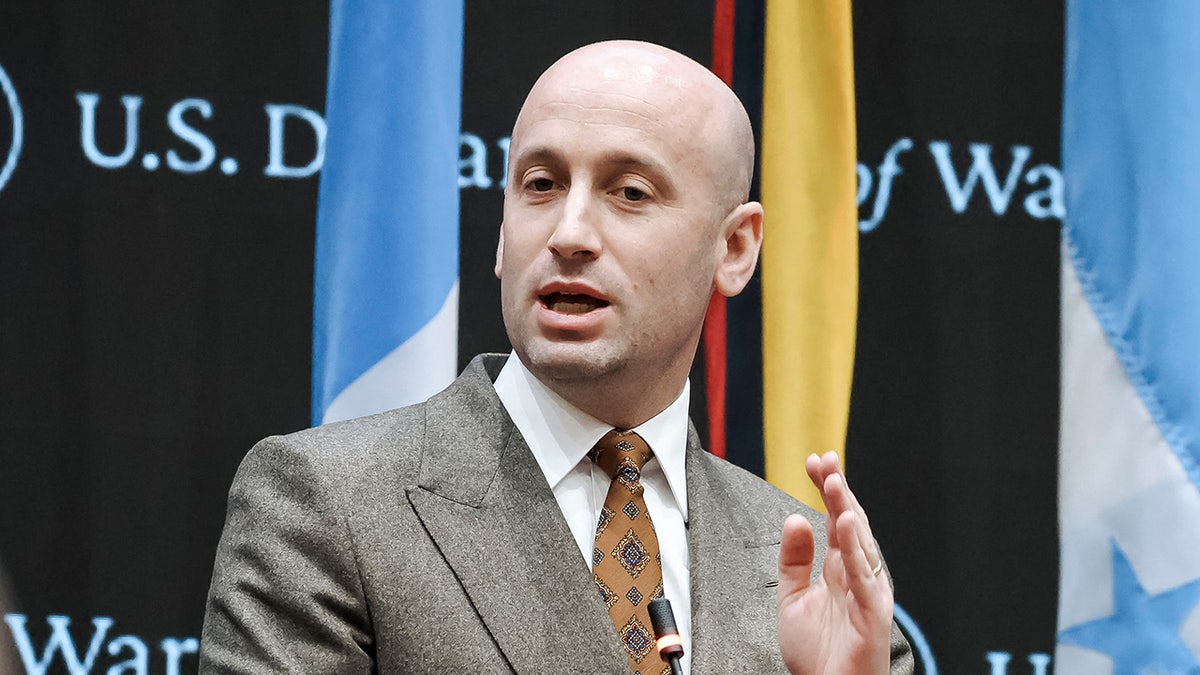
White House Deputy Chief of Staff for Policy Stephen Miller speaks during the inaugural Americas Counter Cartel Conference at the US Southern Command (SOUTHCOM) headquarters in Doral, Florida, on March 5, 2026. (Eva Marie UZCATEGUI / AFP via Getty Images)
«Shame on Politico for publishing such inaccurate trash,» Jackson wrote on X. «Todd Lyons is an American patriot who has worked tirelessly to undo Biden’s disastrous immigration policies that wreaked havoc on American communities. And the American people are deeply appreciative for his hard work making our country safer. Despite multiple on record denials and sources refuting their pathetic ‘reporting’ and *still* ran with this absurd article.»
The reported hospitalizations took place over several months. In one incident, Lyons was driven to a hospital by his security detail and he was admitted overnight.
In September, Lyons became distressed that ICE agents were unable to locate an illegal immigrant in Los Ángeles during a ride along with top administration officials.
One of his bodyguards took a portable defibrillator from a nearby government office to Lyons in case he needed medical intervention, the report said.

Acting ICE Director Todd Lyons speaking at a press conference at the John Joseph Moakley U.S. Courthouse in Boston on June 2. (Suzanne Kreiter/The Boston Globe via Getty Images)
After heated calls with Miller, Lyons expressed frustration that the White House was often mad at his agency, according to the current official and former official who heard such comments.
CLICK HERE TO GET THE FOX NEWS APP
«Todd, Stephen, and the entire White House team have a great working relationship and coordinate closely to deliver on the president’s many promises,» White House spokesperson Abigail Jackson said in a statement. «Todd Lyons is an American patriot who has worked tirelessly to undo Biden’s disastrous immigration policies that wreaked havoc on American communities.»
Fox News Digital has reached out to ICE and Politico.
white house, police and law enforcement, us, border security

Qué sabemos realmente sobre la electricidad estática y por qué aún asombra a la física moderna

Un fallo judicial suspendió dos artículos de la reforma laboral en los convenios del Sindicato de Comercio

Marruecos y Ecuador brillan en la fiesta del Metropolitano

Macri apuntó contra Cristina Kirchner por YPF y sostuvo que el fallo retoma argumentos de su gestión

Cuánto hay que ganar para vivir bien: el ranking de sueldos pretendidos, sector por sector

La estrategia del Gobierno para llegar al fallo favorable de YPF: “Fue clave no entrar en desacato”

¡VERGÜENZA NACIONAL! Humillan a la Policía Federal mandándolos a un merendero antes de darles un aumento de sueldo digno

24 DE MARZO: La historia completa que el relato omitió sobre el golpe de 1976 y el Juicio a las Juntas

El Presidente y Karina Milei volvieron a respaldar a Manuel Adorni tras la polémica por sus vuelos

Manuel Adorni: “Mi patrimonio lo construí antes de entrar al Gobierno, no tengo nada que esconder”

 POLITICA2 días ago
¡VERGÜENZA NACIONAL! Humillan a la Policía Federal mandándolos a un merendero antes de darles un aumento de sueldo digno
- POLITICA2 días ago
El Presidente y Karina Milei volvieron a respaldar a Manuel Adorni tras la polémica por sus vuelos
- POLITICA2 días ago
Manuel Adorni: “Mi patrimonio lo construí antes de entrar al Gobierno, no tengo nada que esconder”