INTERNACIONAL
Alivio para Benjamin Netanyahu: el Parlamento de Israel rechaza disolver el gobierno y anticipar las elecciones


Tras una larga sesión que comenzó el miércoles a la tarde y terminó a altas horas de la madrugada del jueves, el Parlamento de Israel rechazó, por una estrecha mayoría un proyecto de ley presentado por la oposición para disolver el cuerpo legislativo. El resultado le trae una bocanada de aire al primer ministro Benjamin Netanyahu, que de otro modo habría tenido que llamar a elecciones anticipadas.
Votaron contra el texto 61 de los 120 diputados del Knsset, y 53 lo hiceron a favor, en una lectura preliminar. La oposición, liderada por el partido Yesh Latid, necesitaba los votos de dos facciones ultraortodoxas que forman parte del gobierno de Netanyahu y que habían amenazado con retirarle su apoyo por su lentitud para aprobar una ley que permita eximir a gran parte de los judíos ultrarreligiosos de hacer el servicio militar obligatorio.
La oposición presentó el proyecto cuando la mayoría aparecía desunida sobre la polémica conscripción de judíos ultraortodoxos, y esperaban derrotar al gobierno atrayendo a los partidos ultraortodoxos aliados al primer ministro.
Los partidos Shas y Judaísmo Unido de la Torá (JUT) amenazaron con sumarse a la iniciativa debido a su oposición a la ley de reclutamiento, que busca terminar con la exención del servicio militar para los judíos ultraortodoxos.
Medios locales informaron el jueves que la mayoría de los legisladores ultraortodoxos terminaron por votar en contra de la propuesta para disolver el Parlamento.
Durante décadas, los ultraortodoxos se han beneficiado de una exención del servicio militar, un privilegio cada vez más criticado en la sociedad israelí, en plena guerra con el movimiento ultraislámico palestino Hamas en la Franja de Gaza desde el 7 de octubre de 2023.
Antes de la votación, el presidente de la comisión de Relaciones Exteriores y Defensa de la Knesset, Yuli Edelstein, publicó en X que se había alcanzado un acuerdo sobre el proyecto de reclutamiento de ultraortodoxos, sin dar detalles.
«Estoy feliz de anunciar que, después de largas discusiones, hemos llegado a un acuerdo sobre los principios básicos de un proyecto de ley sobre la conscripción», indicó el legislador del partido derechista Likud, de Netanyahu.
Los ultraortodoxos quieren que el gobierno apruebe un plan que permita mantener gran parte de las exenciones militares a los miembros de su comunidad que, desde la fundación del Estado de Israel, permitían a los judíos que estudiaban a tiempo completo en una escuela religiosa no hacer el servicio militar obligatorio.
En junio de 2024, tras expirar la disposición temporal que permitía las exenciones (el asunto nunca había sido ratificado por ley), el Tribunal Supremo ordenó al Ejército comenzar a alistar a los ultraortodoxos, lo que obligó al gobierno a poner en marcha una propuesta de ley para mantener gran parte de las exenciones, aunque también contempla el alistamiento de algunos ultrarreligiosos.
La propuesta, sin embargo, lleva meses bloqueada en el Parlamento por diferencias en el seno de la coalición gobernante sobre su alcance y los mecanismos para hacerla cumplir.
La exención militar de los ultraortodoxos es un asunto polémico en Israel, aún más desde que comenzó la guerra en la Franja de Gaza, que ha llevado al gobierno a prolongar la duración del servicio militar obligatorio y a movilizar a decenas de miles de reservistas para mantener su ofensiva.
Con el fracaso, la oposición tendrá que esperar seis meses para presentar otra iniciativa similar.
Pero el ministro de Finanzas, Bezalel Smotrich, de extrema derecha, declaró durante la sesión del Knesset que derribar al gobierno en tiempo de guerra constituiría un «peligro existencial» para Israel.
«La historia no perdonará a quien lleve al Estado de Israel a elecciones en tiempo de guerra», declaró.
El gobierno de Netanyahu se sustenta en una alianza entre el Likud, grupos de extrema derecha y los partidos ultraortodoxos, y la salida de cualquiera de los movimientos provocaría la caída del gobierno.
El resultado de la votación en el Parlamento trae alivio a Netanyahu, que enfrenta desde hace meses protestas en su contra y está cada vez más cuestionado dentro de su propia coalición de gobierno.
La disolución de la Knesset suponía el paso previo para convocar elecciones anticipadas, pero su permanencia le permite ganar tiempo a un Netanyahu, mientras intensifica la ofensiva en Gaza para «aniquilar» a Hamas.
Fuente: agencias AFP y EFE
Israel,Benjamín Netanyahu







INTERNACIONAL
Rodeada de océano, a ocho kilómetros de Islandia y sin vecinos: así es Ellidaey, la casa más solitaria del mundo

En una de las naciones más aisladas del planeta, donde la civilización parece diluirse en el horizonte, una pequeña construcción blanca ha logrado captar la atención mundial. La llamada “casa más solitaria del mundo”, situada en la remota isla Ellidaey, a ocho kilómetros al sur de la costa de Islandia, se ha convertido en un verdadero fenómeno global.
No solo ocupa un lugar central en videos y publicaciones virales que circulan en redes sociales, sino que también despierta la curiosidad de viajeros dispuestos a desafiar el aislamiento y la rigurosidad del entorno para conocerla en persona.
Lo que comenzó como una simple fotografía compartida en internet pronto se transformó en un imán para aventureros y entusiastas del misterio. La cabaña, de aspecto modesto y rodeada únicamente de verde, parece desafiar la lógica. El aislamiento extremo, sumado a la falta de otros signos de vida humana, alimenta la fascinación y el caudal de historias y teorías que la rodean.

Situada en el corazón del archipiélago de Vestmannaeyjar, la “casa más solitaria del mundo” se alza sobre un montículo rocoso, rodeada por el océano Atlántico y expuesta a los intensos vientos del norte. Este pedazo de tierra está localizado a unos ocho kilómetros de la costa sur de Islandia y tiene una extensión de 45 hectáreas, similar al tamaño de la Ciudad del Vaticano.
El entorno de Ellidaey está marcado por escarpados acantilados, laderas cubiertas de pasto y suelos rocosos. Forma parte de una cadena de 18 islas volcánicas, resultado de erupciones que han ocurrido durante los últimos 12.000 años. La isla, hoy deshabitada salvo por las colonias de frailecillos, destaca por su paisaje agreste y la ausencia total de infraestructura humana, salvo por esta única construcción blanca y un pequeño almacén cercano.
Desde la casa, se puede divisar tanto el océano que la rodea como las otras islas del archipiélago. La más próxima es Bjarnarey, ubicada a menos de un kilómetro y medio, donde también existe una pequeña cabaña. El único asentamiento permanente se encuentra a poco más de tres kilómetros, que es la isla de Heimaey, sede del pueblo de Vestmannaeyjabær, con una población aproximada de 4.400 habitantes.
La ubicación de la casa no solo la convierte en un lugar de difícil acceso, sino que realza la sensación de aislamiento absoluto. La isla carece de muelles o puertos, lo que obliga a los visitantes a escalar los acantilados con sus provisiones a cuestas. La vivienda, construida sobre un terreno elevado, resalta por su color blanco y por la soledad que la rodea, en contraste con el verde intenso de la vegetación y el azul profundo del Atlántico.

La casa y su entorno han sido descritos como ajenos al tiempo, en un ecosistema donde predomina la vida marina y donde la intervención humana es prácticamente inexistente, salvo por la presencia puntual de visitantes y de los miembros de la asociación que la mantiene.
Uno de los rumores más insistentes sostiene que la casa fue construida por un multimillonario aficionado a la supervivencia, quien buscaba un refugio seguro ante la posibilidad de un apocalipsis zombi, recogió All That Interesting. Sin embargo, no existe ninguna prueba que respalde esta historia, y su persistencia parece más ligada a la imaginación popular que a hechos verificables.
Otra teoría, alimentada por publicaciones y videos virales, vincula la propiedad con la famosa cantante islandesa Björk. Muchos creyeron que la artista era la dueña de la casa, o que le había sido ofrecida como un regalo especial.

El origen de este rumor se remonta al año 2000, cuando el primer ministro de Islandia, David Oddsson, efectivamente ofreció a la artista el uso exclusivo de una isla deshabitada llamada Ellidaey como reconocimiento a su contribución al país.
Sin embargo, la isla mencionada por Oddsson se encuentra en el oeste de Islandia, a más de 160 kilómetros de la cabaña que ha captado la atención mundial. La oferta fue rechazada, ya que no deseaba que su posible residencia atrajera turistas.
Si bien existen rumores que acercan a la vivienda a millonarios o personajes excéntricos, la realidad está muy alejada de los lujos. La verdadera historia está ligada a la tradición islandesa de la caza. El inmueble fue construido en 1953 por la Asociación de Caza de Ellidaey como un pabellón destinado a las expediciones para capturar frailecillos, aves marinas abundantes en la zona.
También conocida como Ball House, fue diseñada para brindar refugio y comodidad a los cazadores durante sus estancias en la isla. La estructura cuenta con una pequeña cocina alimentada a gas, baño, sala de estar en la planta baja y una habitación con camas en el piso superior. El interior, según visitantes recientes, está decorado con fotos familiares y objetos sencillos, reflejo del uso colectivo y funcional del espacio. También existe un pequeño almacén y, en consonancia con la cultura nórdica, una sauna.

Durante décadas, la caza de frailecillos (ave de plumaje negro y blanco con un pico anaranjado) representó una actividad significativa. Los miembros de la asociación se reunían en la isla para aprovechar la abundancia de aves marinas, que anidan allí cada temporada.
Aunque algunos informes recientes señalan que la caza ha disminuido y, a pesar de que no hay pruebas de que la casa siga utilizándose con ese fin, la propiedad continúa bajo el cuidado de la asociación, que se encarga de su mantenimiento.
En tanto, el acceso implica superar varios desafíos. La única vía de acceso es por mar, aunque la isla carece de puertos o muelles. El desembarco se realiza en botes que llegan hasta la orilla y luego una escalada por senderos rocosos y acantilados. A pesar del interés creciente, el turismo en Ellidaey se mantiene limitado.
La isla está protegida como parte del patrimonio natural de Islandia, y su estatus de conservación restringe la afluencia de personas para preservar tanto el entorno como la singular construcción. La Asociación de Caza gestiona el mantenimiento de la cabaña y se encarga de que la actividad humana no altere el delicado equilibrio ecológico.
Elliðaey,Vestmannaeyjar,Islandia,casa,isla,naturaleza,paisaje,océano,acantilados,montañas
NEWYou can now listen to Fox News articles!
Senate Democrats are set to grill Sen. Markwayne Mullin, R-Okla., during his confirmation hearing on Wednesday, his first hurdle to becoming the next Homeland Security chief.
Mullin’s confirmation hearing before the Senate Homeland Security and Governmental Affairs Committee comes as the Department of Homeland Security (DHS) remains shuttered over Democrats’ desire for stringent reforms to the agency’s immigration enforcement operations.
Senate Democrats on the panel plan to use those demands to gauge Mullin’s willingness to make changes at the agency. They have argued since current DHS Secretary Kristi Noem’s reassignment from the position that changes must go beyond a shift in personnel.
FIRED DHS CHIEF KRISTI NOEM FACES CRIMINAL REFERRAL FROM CONGRESSIONAL DEMOCRATS
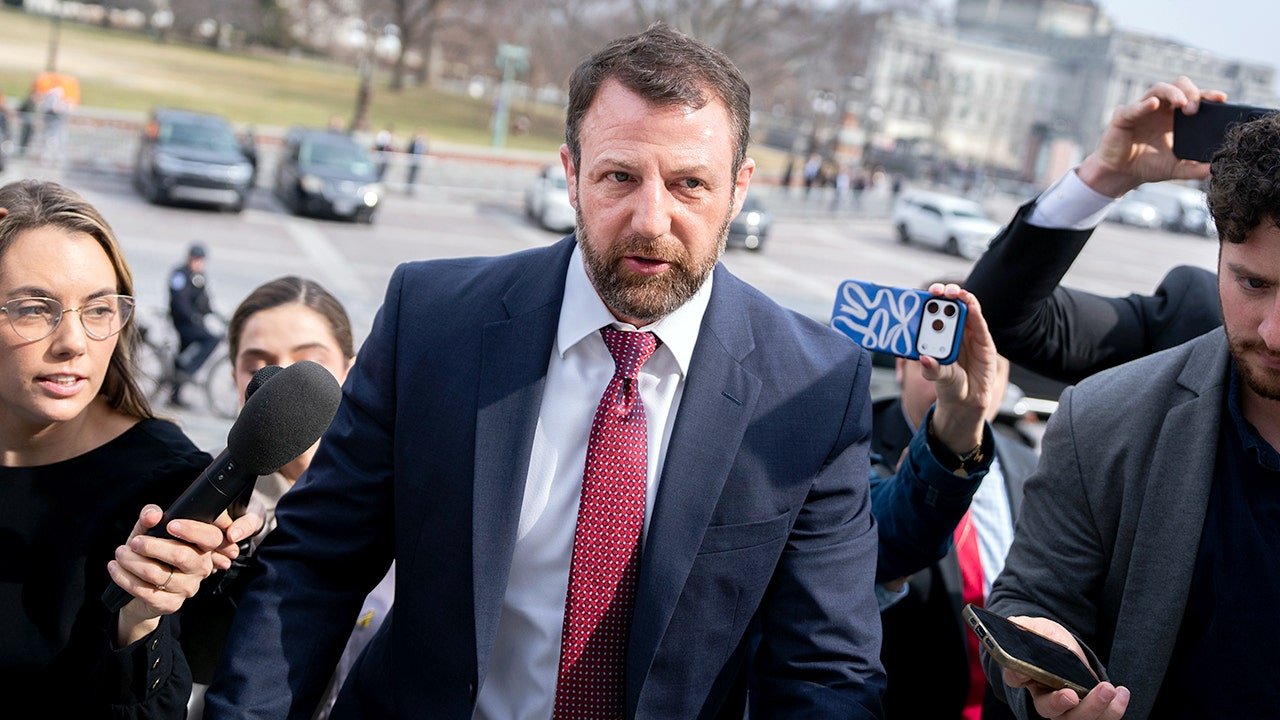
Sen. Markwayne Mullin speaks to reporters on the Capitol steps in Washington, D.C. (Tom Williams/Getty Images)
«He’s made some pretty incendiary statements that reflect his resistance to reform and would make him unqualified, unless he has a clear explanation and even retraction,» Sen. Richard Blumenthal, D-Conn., told Fox News Digital.
When asked if he wanted guarantees on changes to the agency, Blumenthal said Mullin «needs to make commitments for reform.»
«If he fails to make commitments to far-reaching and fundamental reform, he should be defeated and rejected,» he said.
Mullin also has an icy relationship with Sen. Rand Paul, R-Ky., who chairs the committee. When asked how the hearing could go, Paul said, «Come tomorrow, and you’ll find out more.»
Sen. Gary Peters, D-Mich., the top-ranking Democrat on the Homeland committee, said that he plans to give Mullin a fair shake but has questions about his colleague’s views on how the agency could change with him at the helm.
KRISTI NOEM FIRED FROM HOMELAND SECURITY POST AMID RECENT TURMOIL
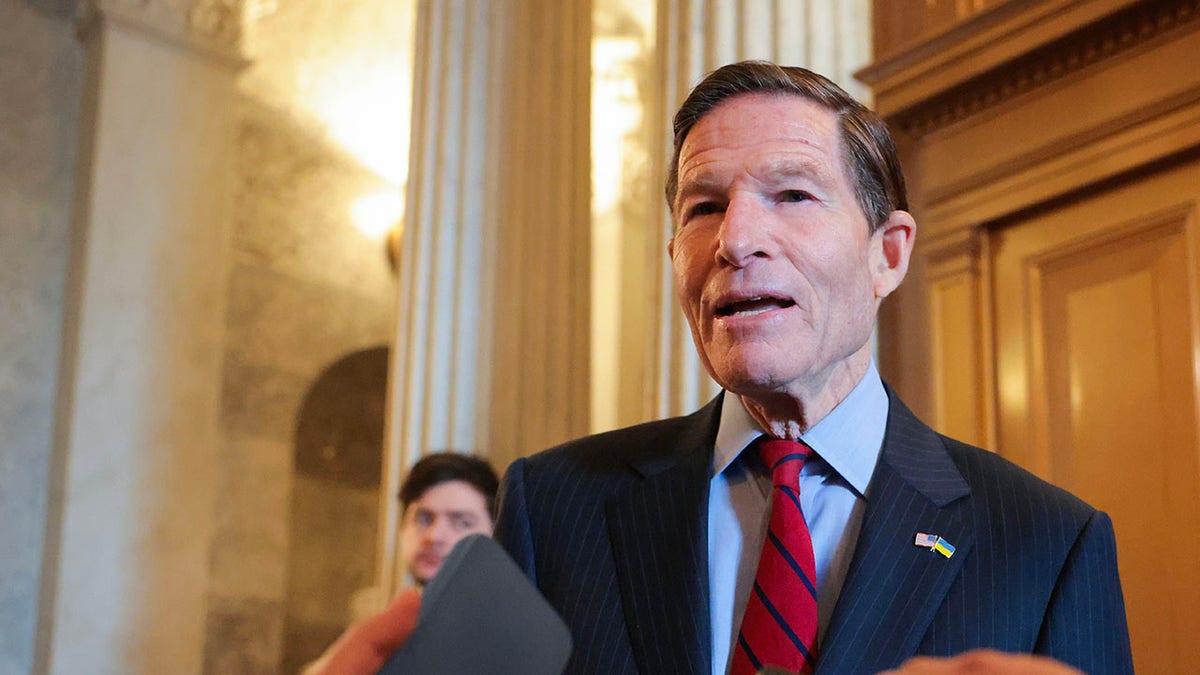
Sen. Richard Blumenthal, D-Conn., speaks to the press outside the Senate chamber after voting in the U.S. Capitol on Feb. 27, 2025, in Washington, D.C. (Getty Images )
«Certainly, I’d like to get his assessment of how he sees things currently and what he might change,» Peters told Fox News Digital. «That would be a fair range of questions.»
Senate Republicans are sprinting to move Mullin through the process, given that President Donald Trump wants Mullin in and Noem out by March 31. The confirmation hearing is the first step, and despite Democratic resistance, Mullin will likely clear that hurdle and head for a full vote in the Senate later this month.
Senate Majority Leader John Thune, R-S.D., said he and his leadership team haven’t tried to corral votes for Mullin, but noted that Democrats would «decide to turn on one of their colleagues in the Senate» after getting exactly what they wanted: Noem replaced.
DEM SENATORS CALL TO FUND DHS AFTER VOTING TO BLOCK IT 4 TIMES AMID SHUTDOWN FIGHT
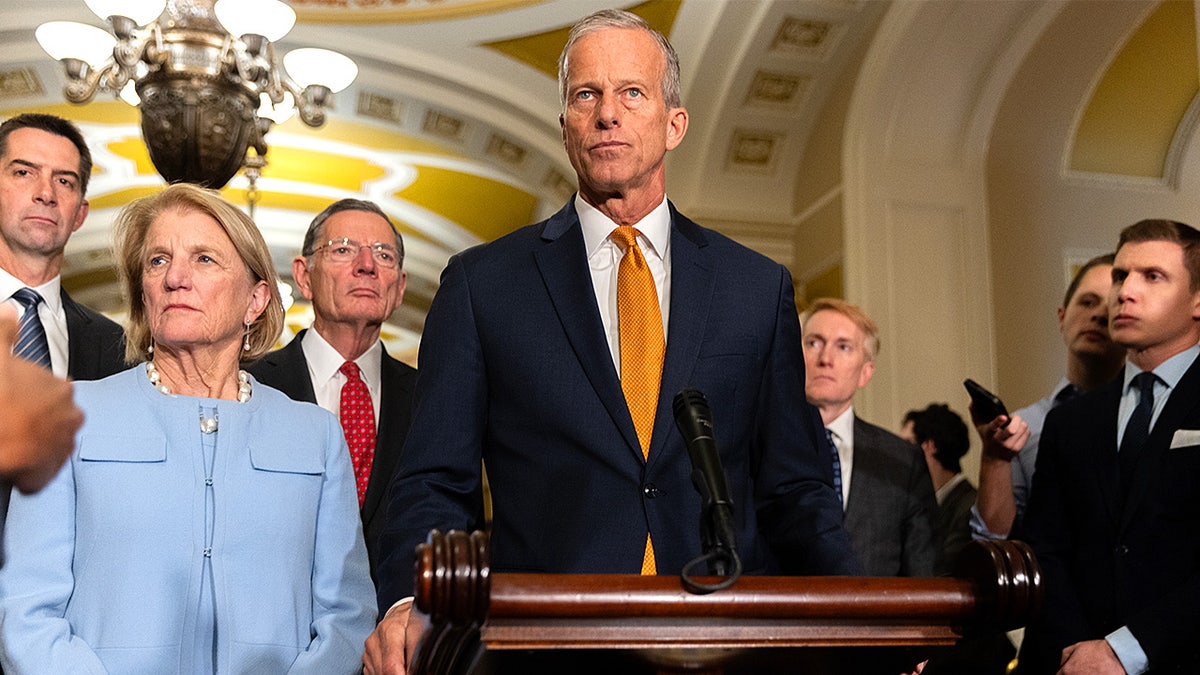
Senate Majority Leader John Thune speaks during a press conference with Senate Republican leadership following a policy luncheon on Capitol Hill in Washington, D.C., on Oct. 28, 2025. (Nathan Posner/Anadolu via Getty Images)
«He’s got good, strong relationships on the other side of the aisle,» Thune said. «And I mean, this is what the Democrats were clamoring for. They wanted a new change and shake-up in the leadership, and it’s now happening.»
While Mullin will walk into a hearing that will test his relationship with colleagues across the aisle, he does have at least one Democratic friend on the committee.
CLICK HERE TO DOWNLOAD THE FOX NEWS APP
Sen. John Fetterman, D-Pa., who almost immediately came out in support of Mullin’s nomination, said he is still having conversations with the lawmaker about reforms to DHS. Fetterman planned to meet with Mullin ahead of the hearing.
«Is it controversial to talk to members of the opposite party? It might be controversial for some people, but that’s going to be an ongoing dialogue with him,» Fetterman said. «You know, I’ve said it, he’s a good dude, and I got to know him on a CODEL over the years.»
politics,senate,hearings,donald trump,kristi noem
INTERNACIONAL
Gran Bretaña: un alto negociador con Irán dijo que la guerra fue «precipitada» porque Teherán había hecho propuestas serias sobre su plan nuclear

Un alto funcionario británico estuvo en las negociaciones con los iraníes y creyó que no era necesaria una guerra precipitada. Su presencia puede justificar el rechazo de Gran Bretaña a participar en la guerra contra Irán.
El asesor de seguridad nacional británico, Jonathan Powell, asistió a las conversaciones finales entre Estados Unidos e Irán en Ginebra. El asesor de seguridad nacional de Sir Keir Starmer y experto mediador consideró que la oferta de Teherán sobre su programa nuclear era “lo suficientemente significativa como para evitar una guerra precipitada”.
Powell opinó que se habían logrado avances en Ginebra y que el acuerdo propuesto por Irán era «sorprendente», según fuentes informaron al diario británico The Guardian.
Dos días después de finalizar las conversaciones, y tras acordarse una fecha para una nueva ronda de conversaciones técnicas en Viena, Estados Unidos e Israel lanzaron el ataque contra Irán, sin avisarle a sus socios.
La presencia de Powell en las conversaciones y su conocimiento detallado de su desarrollo fueron confirmados por tres fuentes. Una fuente indicó que Al Busaidi, canciller de Omán, se encontraba en la residencia del embajador de Omán en Cologny, actuando como asesor. Refleja la preocupación generalizada sobre la experiencia estadounidense en las conversaciones, representada por Jared Kushner, yerno de Donald Trump, y Steve Witkoff, enviado especial de Trump para diversos asuntos, que carecen de experiencia diplomática.
Kushner y Witkoff habían invitado al argentino Rafael Grossi, director general del Organismo Internacional de Energía Atómica (OIEA), a las conversaciones de Ginebra para que aportara su experiencia técnica. Aunque Kushner afirmaría más tarde que él y Witkoff tenían un conocimiento bastante profundo de los temas relevantes.
Expertos nucleares señalarían posteriormente que las declaraciones de Witkoff sobre el programa nuclear iraní estaban plagadas de errores fundamentales.
Powell cuenta con una dilatada experiencia como mediador y su propia fundación sobre tema: desde Irlanda del Norte, el acuerdo nuclear de la Troika con Irán, y Chagos, entre otros.
Una fuente indicó que Powell llevó consigo a un experto de la Oficina del Gabinete del Reino Unido. Un diplomático occidental comentó: «Jonathan creía que se podía llegar a un acuerdo. Pero Irán aún no estaba del todo preparado, especialmente en lo referente a las inspecciones de la ONU a sus instalaciones nucleares».
Un exfuncionario, informado sobre las conversaciones de Ginebra por algunos de los participantes, declaró: «Witkoff y Kushner no llevaron consigo un equipo técnico estadounidense. Utilizaron a Grossi como su experto técnico. Pero esa no es su función. Así que Jonathan Powell llevó a su propio equipo».
«El equipo británico se sorprendió por la propuesta iraní», añadió el exfuncionario. «No era un acuerdo completo. Pero representaba un avance y era improbable que fuera la oferta final de Irán. El equipo británico esperaba que la siguiente ronda de negociaciones se desarrollara sobre la base de los avances logrados en Ginebra», sostuvo la fuente.
La siguiente ronda de conversaciones debía celebrarse en Viena el lunes 2 de marzo. Pero nunca tuvo lugar. Estados Unidos e Israel habían lanzado su ataque a gran escala dos días antes, después de una llamada telefónica de Benjamin Netanyahu a Donald Trump. Y el principal mentor de las negociaciones iraníes, Ali Larijani fue ejecutado hoy por Israel.
La asistencia de Powell a las conversaciones de Ginebra, así como a una serie de reuniones previas a principios de mes en la ciudad suiza, ayuda a explicar en parte la reticencia del gobierno británico a respaldar el ataque estadounidense contra Irán. Una reticencia que ha sometido la relación entre el Reino Unido y Estados Unidos a una tensión sin precedentes.
El Reino Unido no vio pruebas contundentes de una amenaza inminente de un ataque con misiles iraníes contra Europa, ni de que Irán estuviera adquiriendo un arma nuclear. Esta es la primera vez que queda claro que Gran Bretaña estaba tan involucrada en las conversaciones y, por lo tanto, tenía buenas razones para decidir si se habían agotado las opciones diplomáticas y si un ataque estadounidense era necesario.
En cambio, el Reino Unido consideró “el ataque ilegal y prematuro”, ya que Powell creía que “seguía abierta la posibilidad de una solución negociada al problema de larga data de cómo Irán podría asegurar a Estados Unidos que no buscaba un arma nuclear”.
Downing Street declinó hacer comentarios al respecto. La presencia de Powell en las conversaciones de Ginebra o su opinión sobre ellas.
Keir Starmer ha sido duramente criticado por Trump por no haber apoyado más el ataque estadounidense, incluyendo su negativa inicial a permitir que Estados Unidos utilizara bases militares británicas, y por autorizar su uso con fines defensivos solo después de que Irán comenzara a atacar a los aliados del Reino Unido en el Golfo.
Trump advirtió que podría ser perjudicial para la OTAN si sus Estados miembros europeos no responden a su llamado a ayudar a abrir el estrecho de Ormuz, una demanda que ha sido rechazada. Las conversaciones indirectas en Ginebra entre Irán y Estados Unidos fueron mediadas por el ministro de Asuntos Exteriores de Omán, Badr bin Hamad Al Busaidi.

Por la Ley de Inocencia Fiscal, la Justicia benefició a Lázaro Báez en una causa por presunta evasión

El peso sigue fuerte y en la City calculan hasta cuándo el dólar seguirá lejos del techo de la banda

Senegal perdió el mayor premio en la historia de la Copa Africana tras ser descalificado por la CAF: la fortuna que recibió Marruecos

El oficialismo cruzó a Cristina Kirchner: “Durante años te dedicaste a saquear las arcas del Estado”

Quién es el nuevo líder de Gran Hermano que revolucionó la casa y le sacó el derecho a votar a 11 participantes

Tenía 26 años, quedó embarazada de un joven de 18 y él le dejó un detalle en su testamento que nadie logra explicar

TRAICIÓN Y ÉXODO: La promesa rota de Monteoliva que desató una ola masiva de bajas en la Policía Federal

La fuerte exigencia a Mauro Icardi para poder ver a sus hijas con Wanda Nara: “A Maurito se lo va a multar si no lleva a las menores al colegio”

Insólito: un esquiador británico terminó la Copa del Mundo de Oslo bajo los efectos del alcohol

BOMBAZO – Guerra abierta: Feinmann y Rossi contraatacan tras la denuncia de Victoria Villarruel

 POLITICA1 día ago
TRAICIÓN Y ÉXODO: La promesa rota de Monteoliva que desató una ola masiva de bajas en la Policía Federal
- INTERNACIONAL2 días ago
Insólito: un esquiador británico terminó la Copa del Mundo de Oslo bajo los efectos del alcohol
- POLITICA1 día ago
Adorni se disculpó por el viaje de su esposa: “Fue una pésima decisión, más allá de que no generó gasto para el Estado”