INTERNACIONAL
Alto el fuego en Gaza: Donald Trump presiona para convocar al consejo de paz ante las dudas de Israel y Hamas

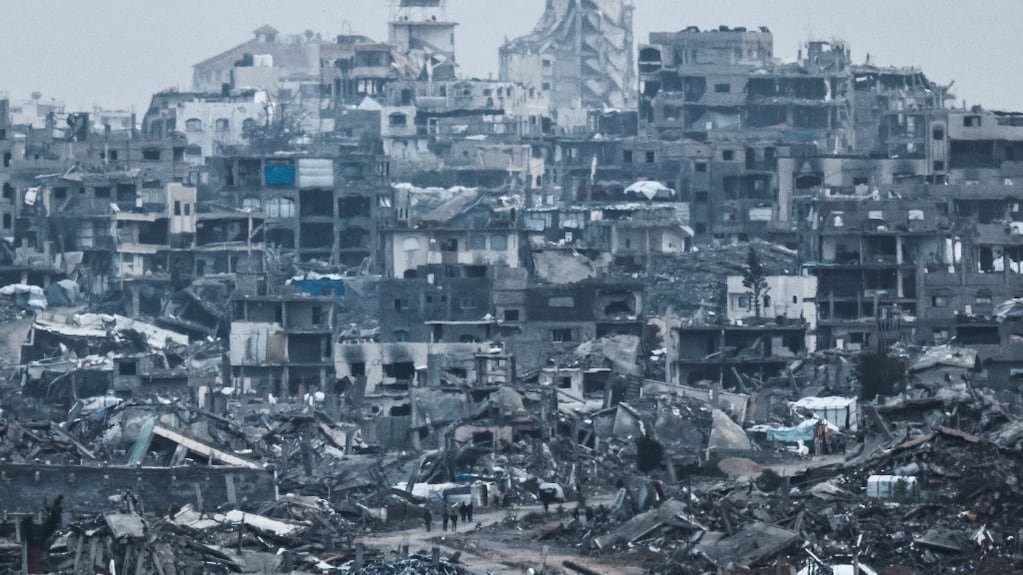
Donald Trump quiere convocar la primera reunión del Consejo de Paz para Gaza en el Foro de Davos, que se celebrará entre el 19 y el 23 de enero en Suiza. Tras su escalada en Venezuela, buscará entrar de lleno en la segunda fase del acuerdo de cese el fuego en el enclave palestino.
Hoy nadie habla de Gaza. Pero sigue allí, en el mismo lugar. Los palestinos sobreviven entre escombros y urgencias más allá de la frágil tregua vigente con Israel desde el 10 de octubre. Los disparos se escuchan a diario. Los muertos se acumulan en medio de acusaciones cruzadas de violaciones a un pacto que se mantiene apenas bajo amenazas mutuas.
Leé también: Tensión en Nicaragua: el sandinismo está en alerta tras la captura de Maduro y aumenta el control interno
Según el ministerio de Salud gazatí, en poder de Hamas, las fuerzas israelíes mataron al menos a 425 palestinos e hirieron a más de 1200 desde que el alto el fuego entró en vigencia. El ejército israelí, a su vez, afirma que milicianos palestinos mataron a tres de sus soldados durante el mismo período.
En ese marco de absoluta tensión, la primera parte del acuerdo está casi cumplida. Solo faltaría entregar el último de los cuerpos de los rehenes en poder de Hamas, un agente de policía de 24 años identificado como Ran Gvili. Israel dice que no avanzará con el acuerdo hasta que sea entregado el cadáver del último cautivo. Pero los restos siguen sin aparecer. Los plazos se complican cada vez más.
“Esta primera fase se cumplió, pero a medias, porque siguen los bombardeos y asesinatos selectivos y ciertos elementos de insurgencia” palestina, dijo a TN el analista y especialista en Medio Oriente Jairo Lugo Ocando, decano de la Facultad de Comunicación de la Universidad de Sharjah en los Emiratos Árabes Unidos.
La presión de Donald Trump
Donald Trump, el arquitecto de este débil alto el fuego junto a Qatar y Egipto, presiona a Hamas y a Israel. Quiere avanzar rápido a una segunda etapa, mucho más compleja que la primera.
El presidente estadounidense quiere anunciar este mes la formación de un gobierno de tecnócratas que sustituya a Hamas en Gaza y el despliegue de una fuerza internacional de estabilización en el territorio palestino. Son los puntos claves de la segunda fase del plan.
El presidente Donald Trump escucha durante una rueda de prensa con el primer ministro israelí Benjamin Netanyahu en Mar-a-Lago, el lunes 29 de diciembre de 2025, en Palm Beach, Florida. (AP Photo/Alex Brandon)
En ese escenario, el primer ministro israelí, Benjamin Netanyahu, anunció que un exenviado de la ONU para Oriente Medio, el diplomático búlgaro Nickolay Mladenov, será el director general del Consejo de Paz que supervisará el proceso.
Mladenov será el encargado de observar la implementación de la segunda y mucho más complicada fase del alto el fuego. En concreto, debe supervisar un nuevo gobierno tecnocrático palestino, el desarme de Hamas, el despliegue de una fuerza de seguridad internacional, retiradas adicionales de tropas israelíes y la reconstrucción de Gaza.
Leé también: Donald Trump ahora mira de reojo a Cuba, Colombia y México y mantiene su idea de apoderarse de Groenlandia
El portavoz de Hamás, Hazem Qassam, dijo que el grupo islámico está dispuesto a facilitar la entrega del gobierno a un comité independiente “tecnocrático y apolítico” previsto en el acuerdo y bajo la supervisión del Consejo de Paz.
Pero reclama la apertura del paso de Rafah (en la frontera con Egipto) en ambos sentidos, el ingreso de ayuda y suministros (que juzga hasta ahora insuficientes) y la transición inmediata hacia la segunda fase del acuerdo.
¿Hamas está dispuesto a entregar las armas?
Sin embargo, hay un punto que preocupa a los mediadores. El ala militar de Hamas dijo que no está dispuesta a cumplir con uno de los requisitos clave para entrar en esta segunda etapa: su desarme.
“Nuestro pueblo se defiende y no renunciará a sus armas mientras la ocupación perdure. No se rendirá, aunque tenga que luchar con las manos desnudas”, dijo el portavoz de las Brigadas Ezedin al Qasam, Abu Obeida, en una declaración en video en su canal de Telegram a fines de diciembre.
El grupo palestino propuso “una congelación o un almacenamiento de sus armas”, algo que ni Israel ni Estados Unidos están dispuestos a aceptar.
Egipto, Qatar y Turquía, los tres países mediadores del área, minimizaron esta amenaza y dijeron a la Casa Blanca que el grupo palestino aceptará finalmente un plan de desarme gradual. La primera etapa incluiría desprenderse de su armamento pesado, según medios árabes.
Las fuerzas israelíes controlan un poco más de la mitad de la Franja de Gaza desde la llamada “línea amarilla”, aunque mantienen un control absoluto sobre el espacio aéreo y los accesos terrestres y marítimos. El resto del enclave está en poder de fuerzas de Hamas, aunque no está claro si persisten bolsones de clanes rivales respaldados por Israel durante la guerra.
Leé también: Trump impone un acuerdo forzado al chavismo y el petróleo venezolano empezará a llegar a Estados Unidos
En su diálogo con TN, Lugo Ocando dijo que Hamas sostiene que, si entrega sus armas, Israel no se retirará de la llamada “línea amarilla” dispuesta en la Franja de Gaza. “Teme que esas serían las nuevas fronteras para asumir”, indicó. Por ello el grupo islámico exige el retiro total de los soldados israelíes del enclave.
En ese escenario, Trump amenazó al movimiento armado palestino con represalias.
“Tiene que haber un desarme de Hamas. Si no se desarman, tal y como acordaron, lo pagarán caro. Tienen que desarmarse en un período de tiempo bastante corto”, afirmó al recibir a Netanyahu en su residencia de Mar-a-Lago, en la Florida, en vísperas del año nuevo.
Lugo Ocando no es optimista. “Van a pasar por lo menos dos años de paz frágil donde nada se va a acordar. Soy pesimista. Hamas no tiene poder de presión” sobre EE.UU. e Israel para avanzar en un acuerdo de reconocimiento del Estado Palestino y sin ello el conflicto seguirá latente», dijo.
Además, afirmó: “Van a haber elementos simbólicos con planes de reconstrucción y la promesa de que los palestinos tendrán una vida mejor”.
Más allá del férreo respaldo de la Casa Blanca a Israel, funcionarios estadounidenses citados por la prensa norteamericana temen que el gobierno de Netanyahu y Hamas busquen retrasar el proceso. Trump quiere convocar la primera reunión del Consejo de Paz para Gaza en el foro de Davos, que se celebrará entre el 19 y el 23 de enero en Suiza, dijo el sitio estadounidense Axios.
Pero los plazos son muy breves para llegar a esa meta.
gaza, Israel, hamas, Donald Trump, Sumario











INTERNACIONAL
Nepal probe exposes $20M fraudulent rescue scheme involving lacing Mt Everest hikers’ food: report
NEWYou can now listen to Fox News articles!
An investigation has exposed a nearly $20 million insurance scam in Nepal involving guides who allegedly fake or induce mountainside rescues, including by lacing the food of some hikers near Mt. Everest, according to a report by The Kathmandu Post.
Kathmandu is the capital of Nepal, where some adventurous individuals go to climb Mount Everest, the world’s highest peak.
The mountain sits on the border of Nepal and the Tibet Autonomous Region of China.
MIKE TOBIN DOCUMENTS DARING MOUNT EVEREST CLIMB IN NEW FOX NATION SPECIAL
The Kathmandu Post reported that after it highlighted the fraud in 2018, the government established a fact-finding committee, issued a 700-page report and declared reforms.
But last year, the Nepal Police’s Central Investigation Bureau (CIB) reopened the matter and discovered that the fraud was increasing.
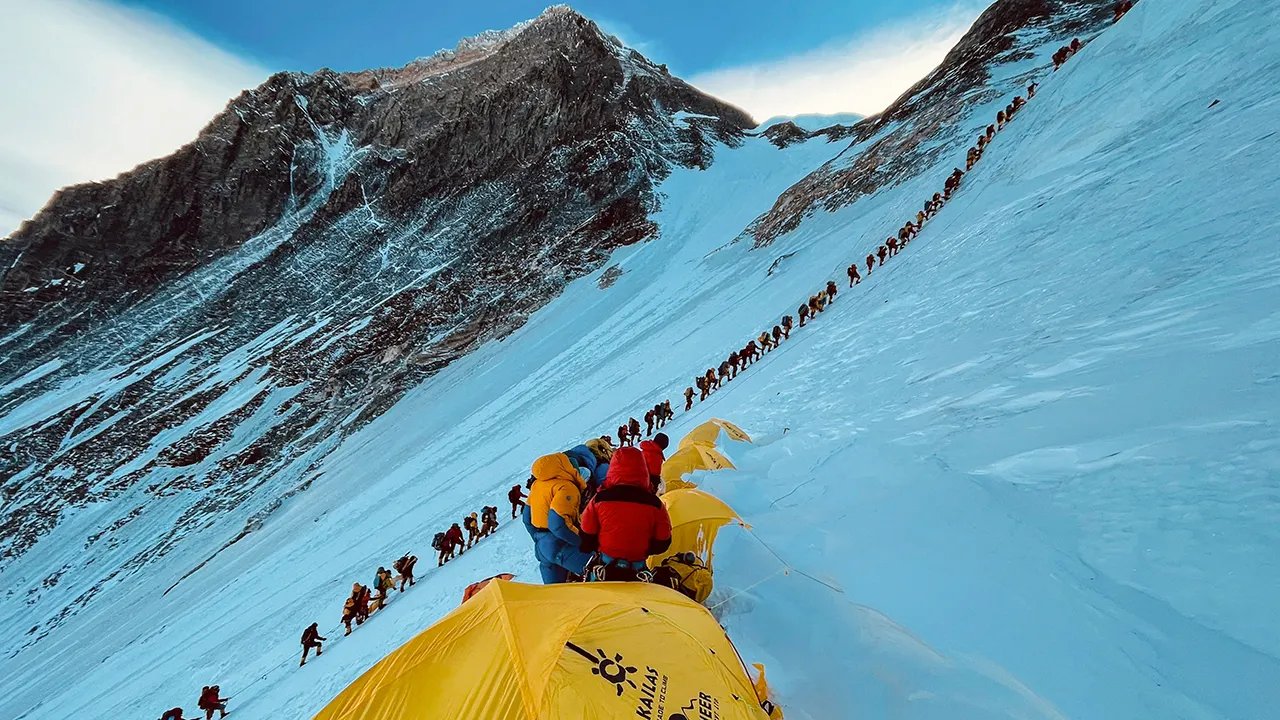
This photograph taken May 31, 2021, shows mountaineers lined up as they climb a slope during their ascension to the summit of Mount Everest in Nepal. (Lakpa Sherpa/AFP via Getty Images)
The outlet indicated that the CIB probe points out two main fraudulent scenarios.
One involves guides suggesting to tired adventurers who do not want to walk back that if they feign illness, a chopper will pick them up, according to The Kathmandu Post.
The outlet reported that, in the other scenario, guides and hotel staff, according to the CIB probe, have been coached to scare trekkers at high altitude, where altitude sickness can occur. They allegedly claim that the trekkers are in danger of dying and that only immediate evacuation will spare them.
In some instances, investigators discovered that Diamox (acetazolamide) tablets, utilized to prevent altitude sickness, were given in conjunction with excessive water intake to cause the symptoms that would give grounds for a rescue, the outlet reported.
In at least one instance noted in the investigation, guides allegedly laced food with baking powder to cause people to be unwell, the outlet stated.
AMERICAN JIM MORRISON MAKES HISTORY SKIING DOWN MOUNT EVEREST, DEDICATES RUN TO LATE PARTNER
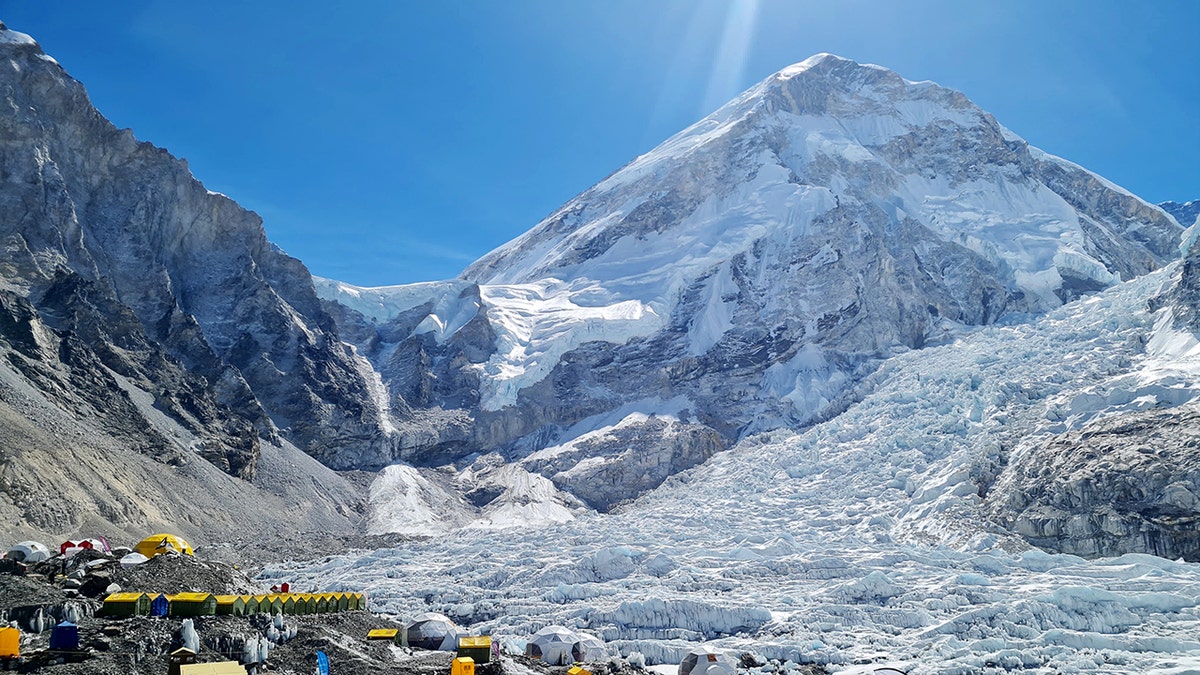
Tents of mountaineers are pictured at Everest base camp in the Mount Everest region of Solukhumbu district April 18, 2024, on the tenth anniversary of an avalanche that killed 16 Nepali guides. (Purnima Shrestha/AFP via Getty Images)
Police recorded a case in which four individuals were picked up on one chopper flight, but insurance claims were filed as more than one separate rescue, the report noted.
The framework tying the system of mass fraud together was detailed in police interrogations, according to the outlet, which reported that hospitals shell out 20% to 25% of the insurance money to trekking businesses and 20% to 25% to chopper rescue operators in return for patient referrals.
Trekking guides and their businesses get a boost from inflated invoices, the outlet suggested. In some instances, tourists are offered money to join in the scam, The Kathmandu Post added.
In the period between 2022 and 2025, investigators found a whopping 4,782 foreign patients serviced at implicated hospitals, with 171 cases verified as fraudulent rescues, the outlet reported. During that span, Era International Hospital raked in deposits of over $15.87 million for such activities and Shreedhi International Hospital got more than $1.22 million, the outlet reported.
Mountain Rescue Service carried out 171 fake rescues from an overall 1,248 charter flights, scoring around $10.31 million from insurers, the outlet reported, adding that Nepal Charter Service executed 75 fake rescues out of 471 flights, claiming $8.2 million. Everest Experience and Assistance was allegedly tied to 71 suspicious rescues out of 601 flights, with claims of $11.04 million.
HELICOPTER CRASHES INTO OCEAN OFF HAWAII COAST, LEAVING MULTIPLE DEAD AND INJURED

This photograph taken May 12, 2021, shows mountaineers as they climb during their ascent to the summit of Mount Everest in Nepal. (Pemba Dorje Sherpa/AFP via Getty Images)
CLICK HERE TO DOWNLOAD THE FOX NEWS APP
CIB charged 32 people last month with offenses against the state and organized crime, the outlet reported, noting that nine individuals were arrested while others were said to be absconding.
Individuals from Mountain Helicopters, Altitude Air and Manang Air, which was rebranded as Basecamp Helicopters, as well as physicians and administrators with Swacon International Hospital, Shreedhi International Hospital and Era International Hospital were among the individuals who have been charged, the outlet indicated.
world, asia world regions, mount everest
INTERNACIONAL
Trump administration accused of violating court order by sharing Medicaid data with ICE

NEWYou can now listen to Fox News articles!
More than a dozen Democratic-led states are accusing the Trump administration of violating a federal court order by sharing Medicaid data with Immigration and Customs Enforcement, asking a judge to enforce the ruling.
The states’ complaint asks the U.S. District Court for the Northern District of California to enforce its existing injunction blocking HHS from sharing Medicaid data with ICE.
«The Trump Administration appears to be defying a direct court order blocking it from sharing the personal, sensitive data of individuals including U.S. citizens and lawful permanent residents. It’s invasive — and deeply troubling,» said California Attorney General Bonta, who led the coalition of 22 states. «When Californians signed up for Medi-Cal, they did so with the understanding that their data would not be used for purposes unrelated to administering this program. I urge the court to enforce its earlier order and make clear that these guardrails exist for anyone who is lawfully residing in the United States.»
The complaint stems from a lawsuit spearheaded by California in July 2025 against the Trump administration. The lawsuit accused Health and Human Services of violating federal law through its «mass transfer of sensitive Medicaid data» of both lawful permanent and temporary residents. The lawsuit also argued that the sharing of the personal information will likely create a «chilling effect on individuals’ willingness to enroll in Medicaid programs» for which they are legally eligible.
SECOND FEDERAL JUDGE BLOCKS IRS FROM SHARING ADDRESSES WITH ICE
A split image shows Immigration and Customs Enforcement (ICE) agents patrolling Terminal C at LaGuardia Airport on March 24, 2026, in New York City (L), and U.S. President Donald Trump arriving at Miami International Airport on March 27, 2026, in Miami, Florida (R). President Trump deployed ICE agents to airports amid TSA staffing shortages, with border czar Tom Homan overseeing the effort. (Michael M. Santiago and Nathan Howard / Getty Images)
A federal judge ruled last December that the Trump administration is not allowed to collect the personal information of lawful permanent residents or citizens, but that it can continue to collect basic information from individuals such as addresses, birthdates and immigration status for residents with temporary status. However, the scope of data that can be collected is limited and cannot include sensitive health information.
The attorneys general accuse Health and Human Services of sharing «a large and complex» set of data on Medicaid recipients with ICE, which is in violation of a federal court ruling allowing the exchange of limited personal information but excluding the information of legal permanent residents. The complaint also accuses the Trump administration of failing to share its criteria for determining if a resident is being «lawfully present.»
CATO Institute Senior Legal Fellow Dan Greenberg told Fox News Digital there is «a strong possibility» that HHS and ICE violated the district court’s order.
LETITIA JAMES SUES HHS OVER TYING FEDERAL FUNDS TO TRANSGENDER POLICY
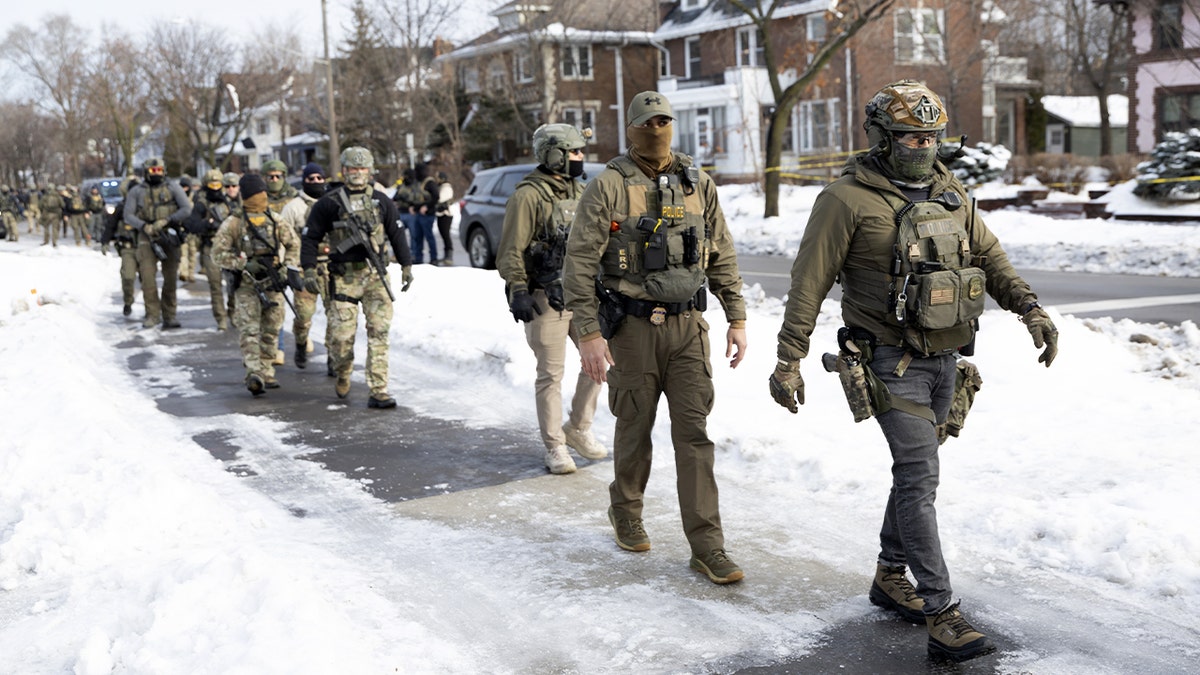
ICE agents stand at the scene where a woman was shot and killed earlier in the day during an enforcement operation on Jan. 7, 2026, in Minneapolis, Minnesota. (Christopher Juhn/Anadolu via Getty Images)
«The reason this is a strong possibility is that DHHS communications apparently indicate that it shared a ‘large and complex’ dataset of Medicaid recipients with ICE,» Greenberg said. «That phrase suggests that the dataset that was shared with ICE may have included information that is outside the scope of the court order. That is a question of fact: that is why the states are now asking the court to compel the federal government to explain just what was shared and how it is now being used.»
Greenberg also pointed out that the Transformed Medicaid Statistical Information System database does not «appear to have any simple or direct way to identify/single out immigrants who are undocumented,» making «information-sharing that complies with that court order difficult or impossible.»
«The TMSIS identifies people who are only eligible for emergency Medicaid services, but the problem is that this class of people includes both undocumented and lawfully present immigrants,» Greenberg said. «In short, it is as if the court order said that only some of the information in one particular file should be disclosed, but there is reason to believe that DHHS decided that — because they can’t figure out how to separate out this particular type of information – they may have handed over the whole filing cabinet.»

The US Department of Health and Human Services building is shown in Washington, D.C. (Saul Loeb/AFP)
CLICK HERE TO DOWNLOAD THE FOX NEWS APP
In addition to California, attorneys general of Arizona, Colorado, Connecticut, Delaware, Hawaii, Illinois, Massachusetts, Maine, Maryland, Michigan, Minnesota, Nevada, New Jersey, New Mexico, New York, Oregon, Rhode Island, Vermont, Washington, Wisconsin, and the governor of Kentucky signed on to the complaint.
Fox News Digital reached out to the White House and Health and Human Services for comment.
politics, california, health, immigration, donald trump
INTERNACIONAL
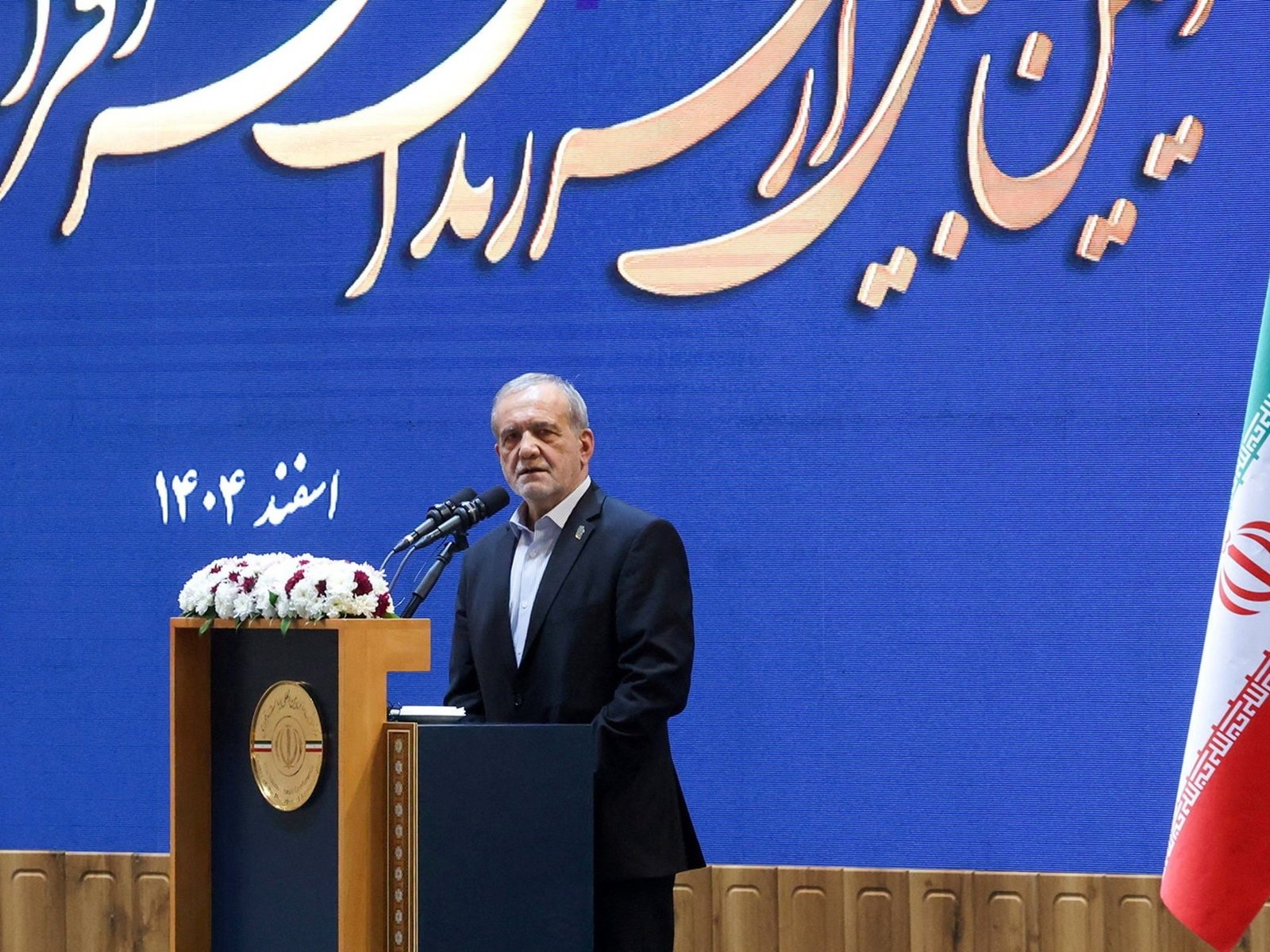
El presidente de Irán sugiere la posibilidad de un acercamiento diplomático en una carta dirigida al público estadounidense

El Presidente anticipó un reconocimiento especial para los veteranos de Malvinas y prometió mejores salarios para las Fuerzas

Nepal probe exposes $20M fraudulent rescue scheme involving lacing Mt Everest hikers’ food: report

El Inter Miami de Messi se entrenó por primera vez en su nuevo estadio: el video del recorrido por las modernas instalaciones

Villarruel no fue a Tierra del Fuego y homenajeó a los veteranos de Malvinas en Chivilcoy

La suba del petróleo pone en jaque al agro argentino: menos margen y exportaciones

Cecilia Goyeneche quedó entre las candidatas elegibles para ocupar un cargo en la Justicia Federal

Nuevas críticas de Marcela Pagano contra los Milei: “Karina es la que gobierna”, aseguró

Dos jubiladas que le habrían prestado dinero a Manuel Adorni negaron conocerlo

Quiénes son las dos acreedoras del préstamo con el que Adorni compró su departamento en Caballito

El Gobierno reevalúa la estrategia de comunicación por el caso Adorni y mide el impacto en la imagen de Milei

 POLITICA2 días ago
Dos jubiladas que le habrían prestado dinero a Manuel Adorni negaron conocerlo
- POLITICA3 días ago
Quiénes son las dos acreedoras del préstamo con el que Adorni compró su departamento en Caballito
- POLITICA1 día ago
El Gobierno reevalúa la estrategia de comunicación por el caso Adorni y mide el impacto en la imagen de Milei