INTERNACIONAL
America’s ‘BAT’ man unveils tech built to outsmart a Chinese first strike

NEWYou can now listen to Fox News articles!
Analysts say China has developed a chilling strategy for fighting a war with the United States: destroy America’s fighter jets before they ever leave the ground.
In nearly every modern conflict, disabling enemy aircraft on the ground has been the first move. When Israel struck Iranian nuclear sites earlier this year, it began by destroying Iranian runways — grounding Tehran’s air force before it could take off. Russia and Ukraine have done the same throughout their ongoing war, targeting airfields to cripple enemy aircraft. And when India clashed with Pakistan, the opening salvos hit Pakistani air bases.
Beijing has taken that lesson to heart. The People’s Liberation Army (PLA) has spent years building an arsenal of long-range precision missiles — including «carrier killers» like the DF-21D and DF-26 — capable of destroying U.S. aircraft carriers and striking American airfields across the Pacific. The goal: keep U.S. air power out of range before it can even launch.
ISRAEL TO DEPLOY FIRST COMBAT-READY LASER WEAPON SYSTEM FOR OPERATIONAL AIR DEFENSE
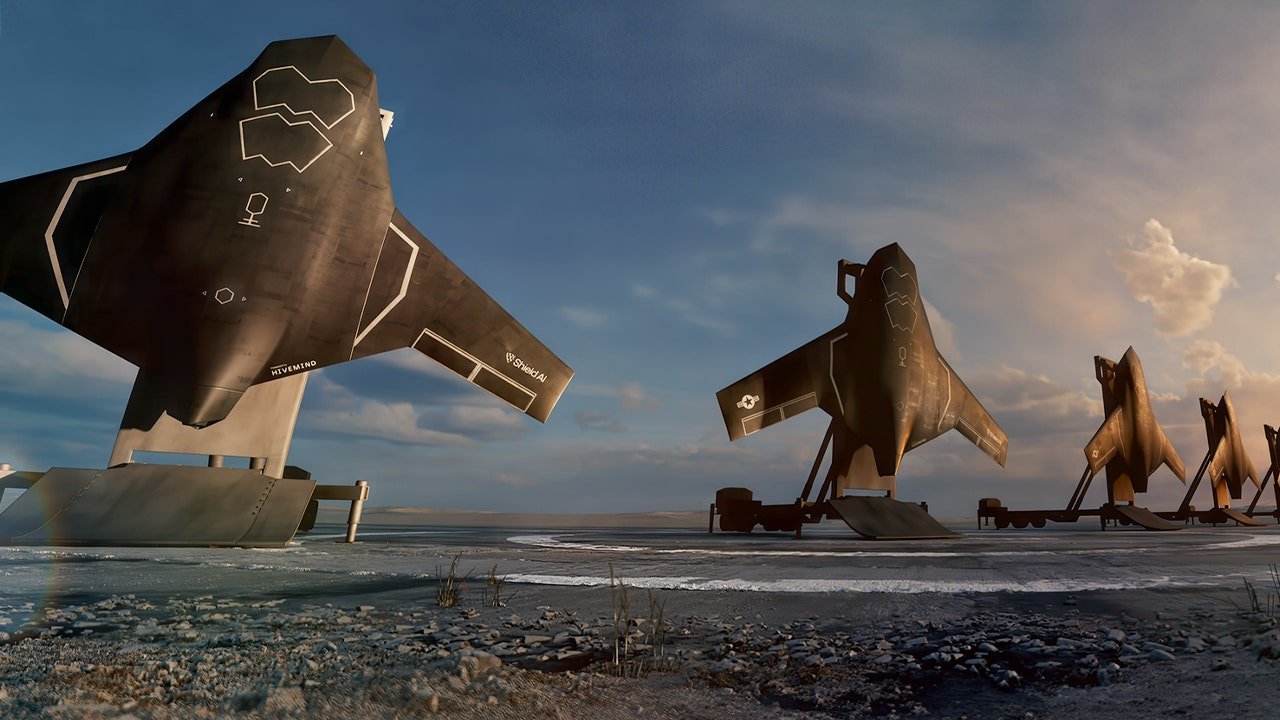
Shield AI unveils its X-BAT AI fighter jet.
Now, a U.S. defense technology firm says it has built a way to fight back. Shield AI, based in San Diego, has unveiled a new AI-piloted fighter jet designed to operate without runways, without GPS, and without constant communication links — an aircraft that can think, fly, and fight on its own.
Shield AI says the jet, called X-BAT, can take off vertically, reach 50,000 feet, fly more than 2,000 nautical miles, and execute strike or air defense missions using an onboard autonomy system known as Hivemind. It’s designed to operate from ships, small islands, or improvised sites — places where traditional jets can’t. The aircraft’s dash speed remains classified.
«China has built this anti-access aerial denial bubble that holds our runways at risk,» said Armor Harris, Shield AI’s senior vice president of aircraft engineering, in an interview with Fox News. «They’ve basically said, ‘We’re not going to compete stealth-on-stealth in the air — we’ll target your aircraft before they even get off the ground.’»
The jet launches vertically, and three X-BATs can fit in the space of one legacy fighter or helicopter.
According to Harris, the U.S. has spent decades perfecting stealth and survivability in the air while leaving its forces vulnerable on the ground. «The way to solve that problem is mobility,» he said. «You’re always moving around. This is the only VTOL fighter being built today.»
X-BAT’s Hivemind autonomy allows it to operate in denied or jammed environments, where traditional aircraft would be blind. The system uses onboard sensors to interpret its surroundings, reroute around threats, and identify targets in real time. «It’s reading and reacting to the situation around it,» Harris said. «It’s not flying a pre-programmed route. If new threats appear, it can reroute itself or identify targets and then ask a human for permission to engage.»
That human element, he emphasized, remains essential. «It’s very important to us that a human is always involved in making the use of lethal force decision,» Harris said. «That doesn’t mean the person has to be in the cockpit — it could be remote or delegated through tasking — but there will always be a human decision-maker.»
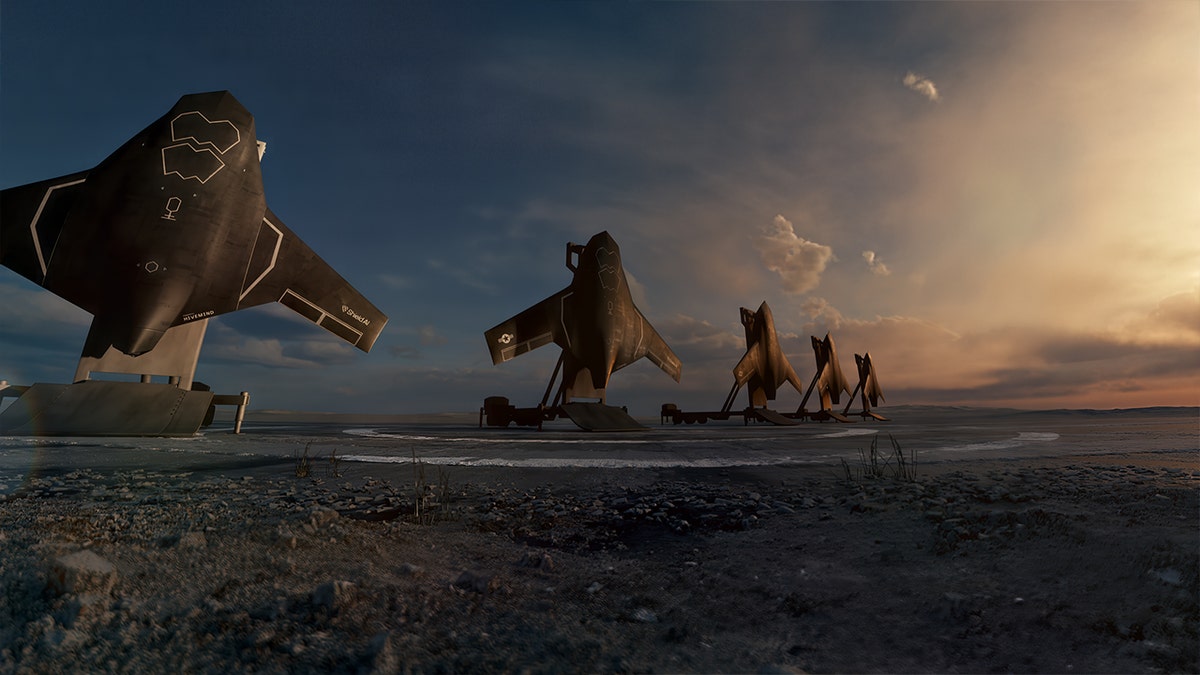
3 X-BAT fighter jets can fit in the space of one traditional fighter jet or helicopter, according to the company. (Shield AI )
Shield AI says X-BAT will be combat-ready by 2029 and is designed to deliver fifth- or sixth-generation performance at a small fraction of the cost of manned fighters. The aircraft’s compact footprint allows up to three X-BATs to fit in the deck space of a single legacy fighter or helicopter, giving commanders more flexibility in launching sorties from limited space.
AMERICA’S NEW STEALTH B-21 RAIDER TAKES NEXT STEP WITH SECOND BOMBER’S FIRST FLIGHT
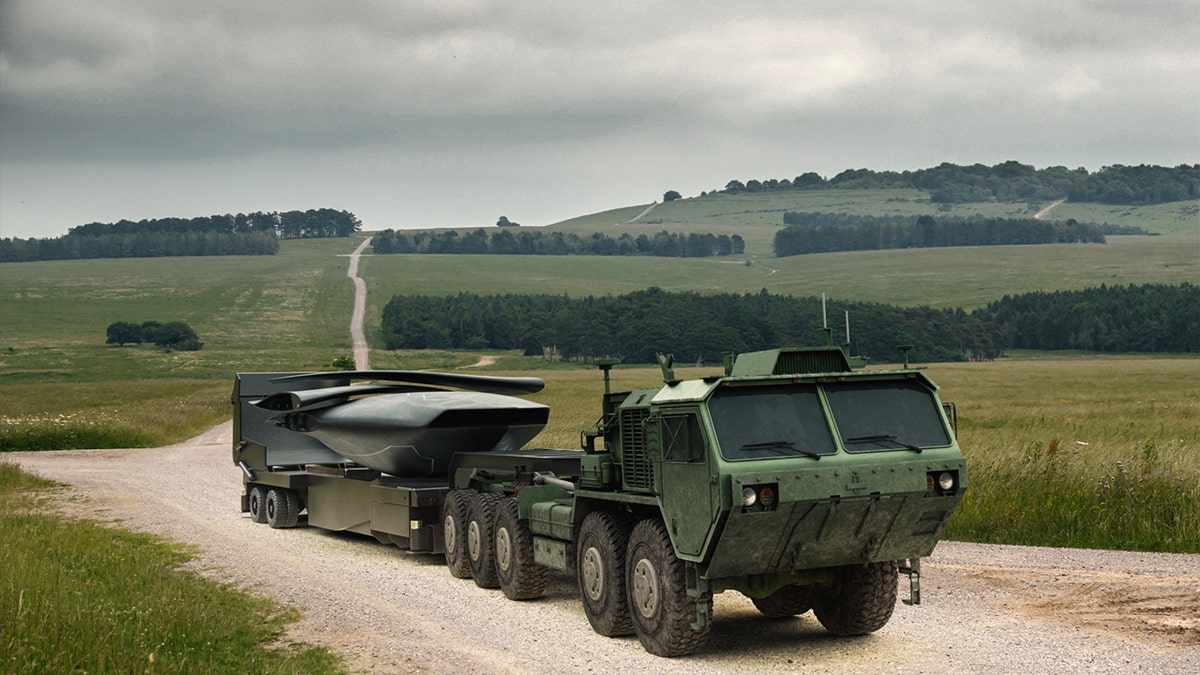
The AI fighter jet is designed to be able to vertically take off from sea, mobile or tight ground space. (Shield AI )
While Shield AI isn’t disclosing specific numbers, the company says X-BAT is priced in the same range as the Air Force’s Collaborative Combat Aircraft (CCA) program, the next generation of autonomous wingmen meant to fly alongside — and eventually ahead of — manned fighters. Costs vary depending on mission systems and configurations, but the company’s goal is to scale production to keep the jet affordable and sustainable throughout its lifecycle, breaking what it calls the traditional «fighter cost curve.»
The company estimates the aircraft will deliver about a tenfold improvement in cost per effect compared to legacy fifth-generation jets, including the F-35, while remaining «affordable and attritable» enough to be risked in high-end combat.
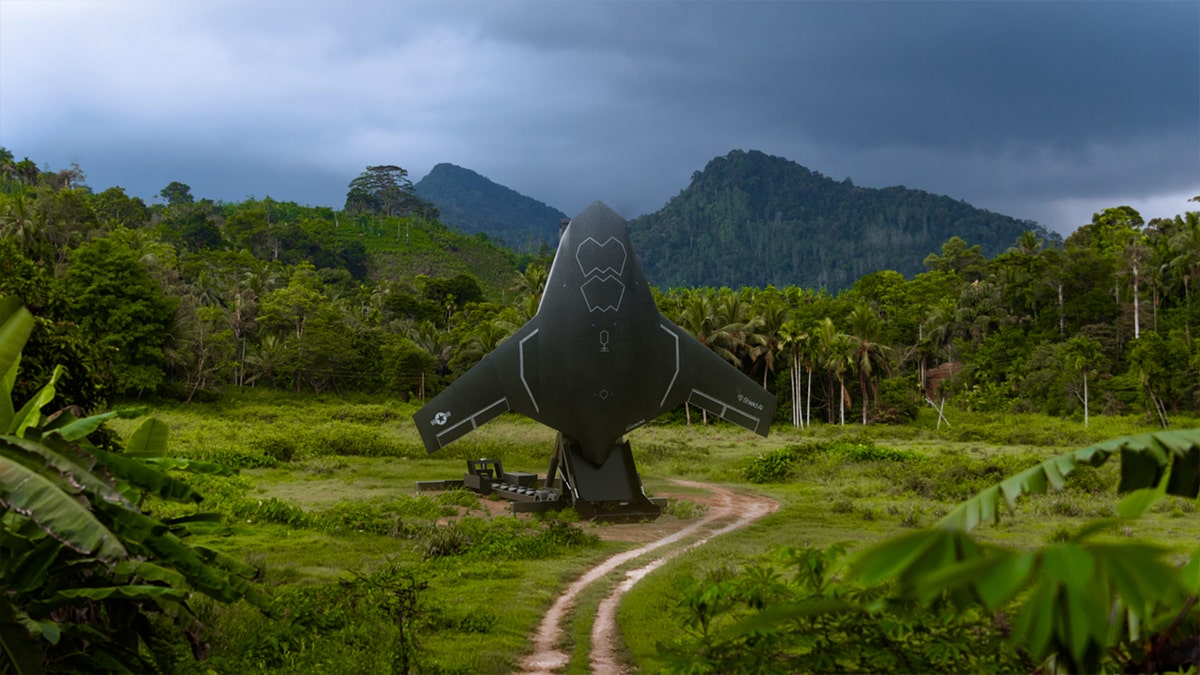
Designed with a potential Indo-Pacific conflict in mind, which would require maneuverability on small island chains. (Shield AI )
Shield AI is in discussions with both the Air Force and Navy about integrating X-BAT into future combat programs and with several allied militaries exploring joint development opportunities.
CLICK HERE TO DOWNLOAD THE FOX NEWS APP
Harris said the company views X-BAT as part of a generational shift toward distributed airpower — one that mirrors what SpaceX did in space. «Historically, the United States had a small number of extremely capable, extremely expensive satellites,» he said. «Then you had SpaceX come along and put up hundreds of smaller, cheaper ones. The same thing is happening in air power. There’s always going to be a role for manned platforms, but over time, unmanned systems will outnumber them ten-to-one or twenty-to-one.»
For Harris, that shift is about restoring deterrence through flexibility. «X-BAT presents an asymmetric dilemma to an adversary like China,» he said. «They don’t know where it’s coming from, and the cost of countering it is high. It’s an important part of a broader joint force that becomes significantly more lethal.
conflicts defense,military tech,armed forces topics,air and space,politics













NEWYou can now listen to Fox News articles!
Democratic Reps. Ilhan Omar and Rashida Tlaib, both progressive «Squad» members, lashed out at President Donald Trump on Saturday in response to his decision to strike Iran.
«Trump has launched an illegal regime change war,» Omar posted on X. «As someone who has survived the horrors of war, I know military strikes will not make us safer; they will inflame tensions and push the region further into chaos.»
Omar, who fled Somalia as a refugee as a young child, added, «When we abandon diplomacy, we choose destruction.»
Tlaib reacted on social media to a clip of Trump acknowledging that there may be American casualties in this attack.
Rep. Ilhan Omar, with Rep. Rashida Tlaib at her side, speaks at a press conference. (Renee Jones Schneider/Star Tribune via Getty Images)
«He doesn’t care about our loved ones in the military,» Tlaib posted on X in a message that was reposted by Omar. «He doesn’t care about the fact that Americans don’t want this war.»
«He doesn’t care about the Iranian people. He is corrupted. Don’t fall for the lies.»
Democratic Rep. Alexandria Ocasio-Cortez of New York also slammed President Donald Trump for abandoning diplomacy in favor of launching an attack against Iran, predicting the outcome will be «catastrophic.»
«The American people are once again dragged into a war they did not want by a president who does not care about the long-term consequences of his actions. This war is unlawful. It is unnecessary. And it will be catastrophic,» Ocasio-Cortez said.
«Just this week, Iran and the United States were negotiating key measures that could have staved off war. The President walked away from these discussions and chose war instead. President Trump flippantly acknowledged the possibility of American casualties, stating ‘that often happens in war,’» she continued. «Mr. President: this was not an inevitability. This is a deliberate choice of aggression when diplomacy and security were within reach. Stop lying to the American people.
Democratic Rep. Greg Casar, another progressive House member associated with the informal «Squad» group, called Trump’s actions an «illegal war» in a post on X.
«Yet again, an American president is sending other people’s kids to risk their lives in a senseless regime change war,» Casar said.
The U.S. and Israel launched the joint attack just after 9 a.m. local time in what the Pentagon has dubbed «Operation Epic Fury.»
IF KHAMENEI FALLS, WHO TAKES IRAN? STRIKES WILL EXPOSE POWER VACUUM — AND THE IRGC’S GRIP
In video remarks posted to Truth Social, Trump addressed the Iranian people directly and told them to «seize control of [their] destiny.»
«The hour of your freedom is at hand. Stay sheltered. Don’t leave your home. It’s very dangerous outside. Bombs will be dropping everywhere. When we are finished, take over your government. It will be yours to take,» Trump said. «This will be, probably, your only chance for generations. For many years, you have asked for America’s help, but you never got it. No President was willing to do what I am willing to do tonight. Now you have a President who is giving you what you want.»
CLICK HERE TO DOWNLOAD THE FOX NEWS APP

Rep. Alexandria Ocasio-Cortez, D-N.Y. (Photo by Drew Angerer/Getty Images)
While Trump focused some of his message on empowering the people of Iran, he stated that the intent of the operation is to «defend the American people by eliminating imminent threats from the Iranian regime,» which he described as «vicious» and «very hard, terrible people.»
Trump also said that while there may be American casualties as a result, the mission is «noble» as it is aimed at stopping a «wicked, radical dictatorship» from threatening American national security interests and destabilizing the Middle East.
Fox News Digital’s Michael Sinkewicz and Alex Nitzberg contributed to this report
Related Article

politics,iran,ilhan omar,rashida tlaib
INTERNACIONAL
Gulf states condemn Iranian retaliatory strikes on their territories following US-Israeli operation
NEWYou can now listen to Fox News articles!
Arab nations are sounding off against Iran after the regime launched strikes against U.S. interests in neighboring countries in the region in retaliation for U.S.-Israeli joint strikes against Iran’s leaders.
The Iranian response targeted all U.S. bases in the Gulf, except for U.S. bases in Oman, Fox News’ Jennifer Griffin reported, since the Omani foreign minister had tried to mediate the nuclear talks in Geneva, even flying to Washington, D.C., to meet Vice President JD Vance at the White House on Friday to try to avert what is quickly turning into a regional war.
Griffin reported that approximately 40 missiles had landed in Israel. Meanwhile, the U.S. military in Iraq intercepted at least one missile targeting U.S. facilities. Additionally, Iran appeared to hit the U.S. Navy’s Fifth Fleet, but no casualties were reported.
Iran also launched missiles at Saudi Arabia and Jordan, where the U.S. has squadrons of advanced fighter jets, Griffin reported.
This map shows the targets of Iran’s retaliatory strikes. (Fox News)
Qatar, Saudi Arabia, Jordan and the United Arab Emirates were among the Gulf states that condemned the Iranian strikes, with many saying they reserve the right to defend themselves and respond accordingly to attacks on their sovereign territories.
Qatar’s Foreign Ministry said it reserves its «full right» to defend itself after what it described as Iranian aggression targeting Qatari territory. Its Defense Ministry said it «successfully thwarted a number of attacks targeting the country’s territory» after multiple rounds of alerts sounded. Authorities reported no immediate injuries or damage in residential areas.
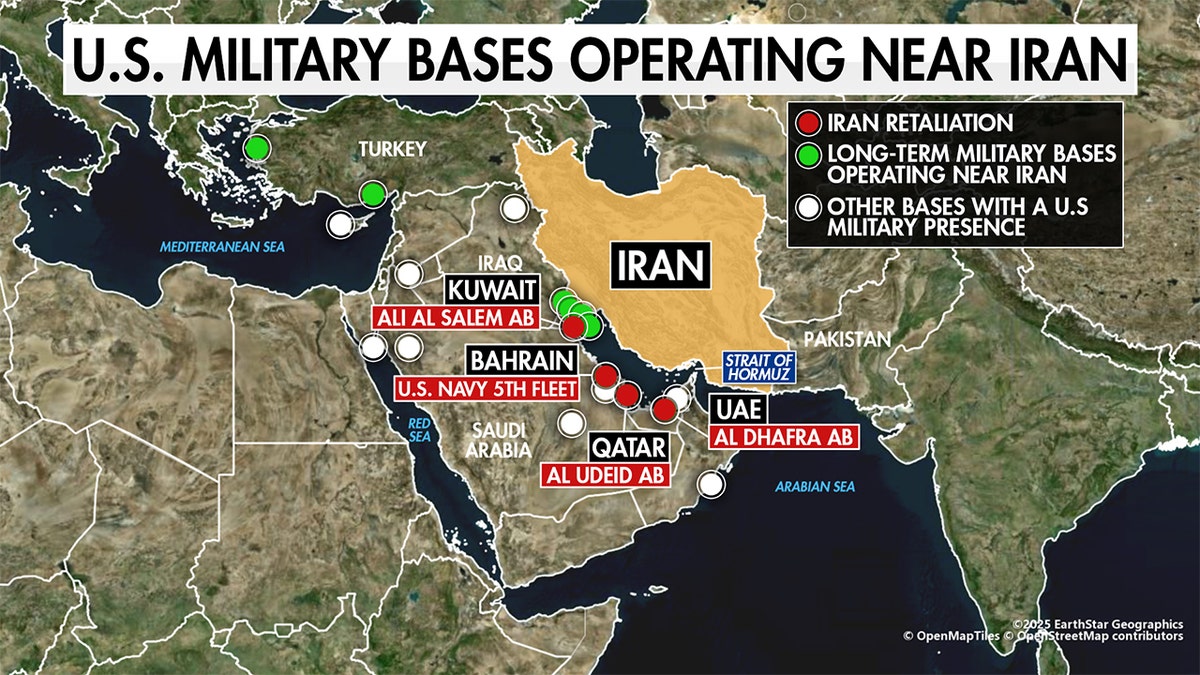
The locations of U.S. military bases throughout the Gulf are seen in relation to Iran. (Fox News)
Saudi Arabia’s Foreign Ministry said it affirmed «its full solidarity with and unwavering support for the brotherly countries» and warned of «grave consequences resulting from the continued violation of states’ sovereignty and the principles of international law.»
TRUMP ENVOY WITKOFF AND JARED KUSHNER IN GENEVA FOR CLOSELY WATCHED IRAN NEGOTIATIONS
The United Arab Emirates’ Ministry of Defense said the country «was subjected to a blatant attack involving Iranian ballistic missiles,» adding that air defense systems «successfully intercepted a number of missiles.» Authorities said falling debris in a residential area caused «one civilian death of an Asian nationality» and material damage.
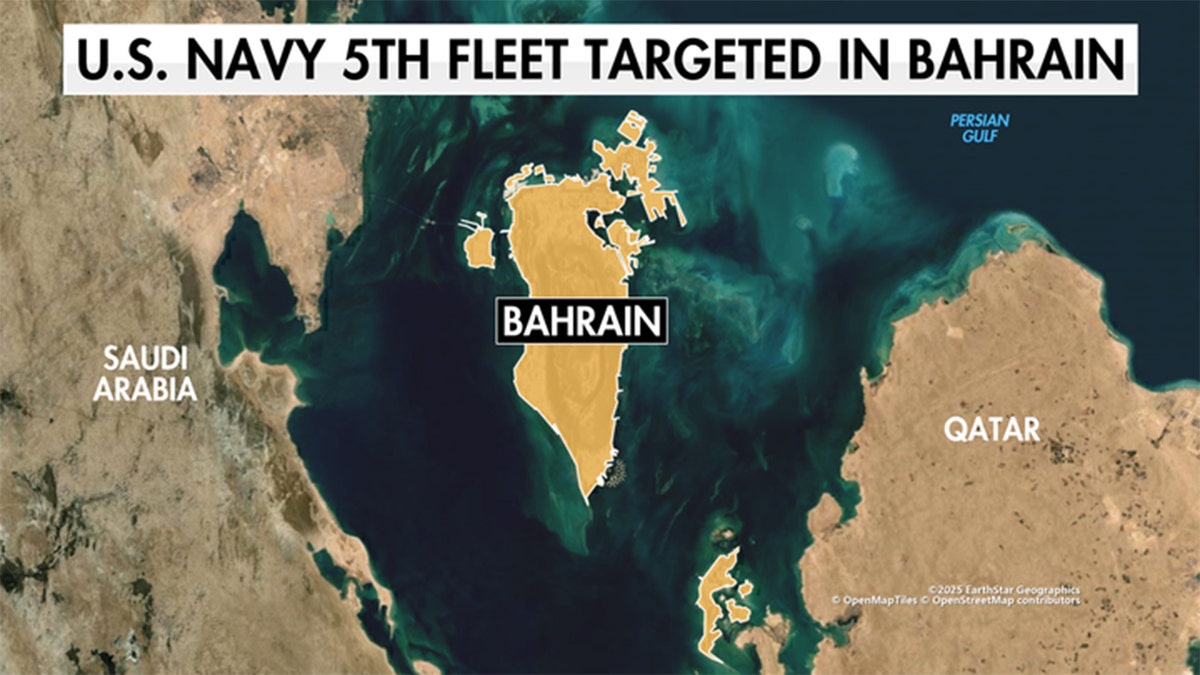
Fox News’ Jennifer Griffin reported that Iran appeared to hit the U.S. Navy’s Fifth Fleet, but no casualties were reported. (Fox News)
The ministry called the attack «a dangerous escalation and a cowardly act that threatens the safety of civilians and undermines stability,» and stated the UAE «reserves its full right to respond.»
Jordan’s foreign minister wrote a series of posts on X, saying that King Abdullah II «condemns the attack on the territories of Jordan, and any attacks on Arab countries,» expressing Jordan’s «solidarity with the brotherly Arab countries in confronting any aggressions that affect their sovereignty, security, and stability.»
Lebanon’s Ministry of Foreign Affairs said it also «strongly condemns the Iranian attacks,» adding that it «affirms its full solidarity with these fellow Arab States and firmly rejects any violation of their sovereignty, any threat to their security, or any action undermining their stability.»
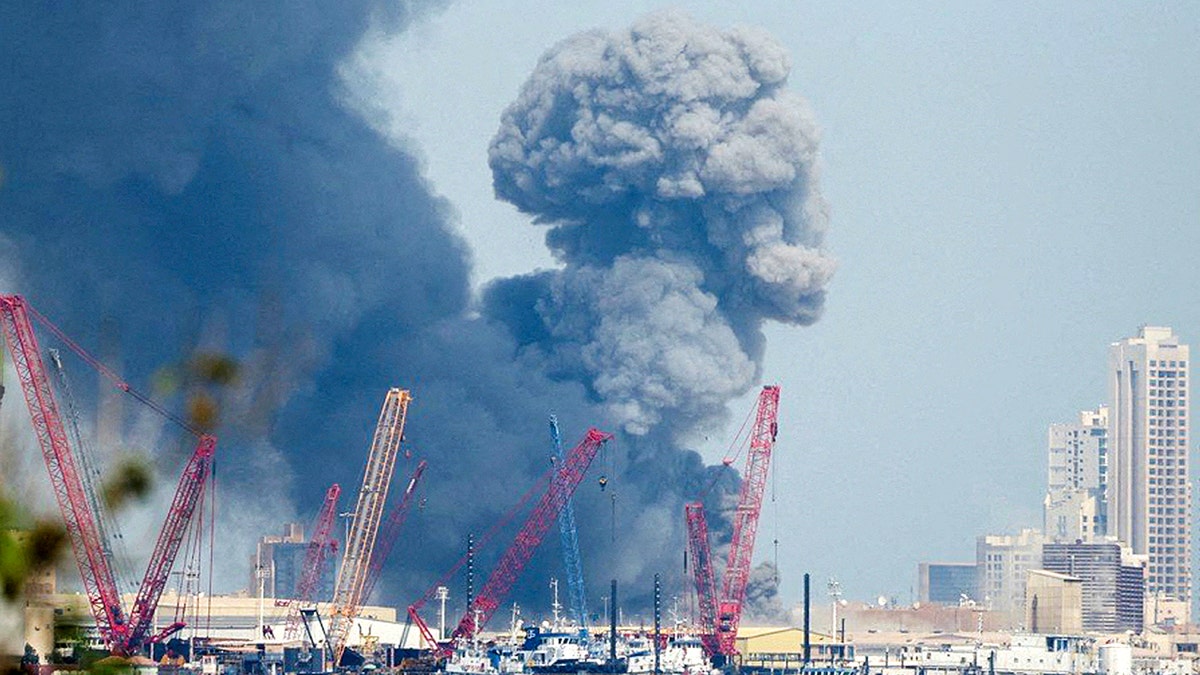
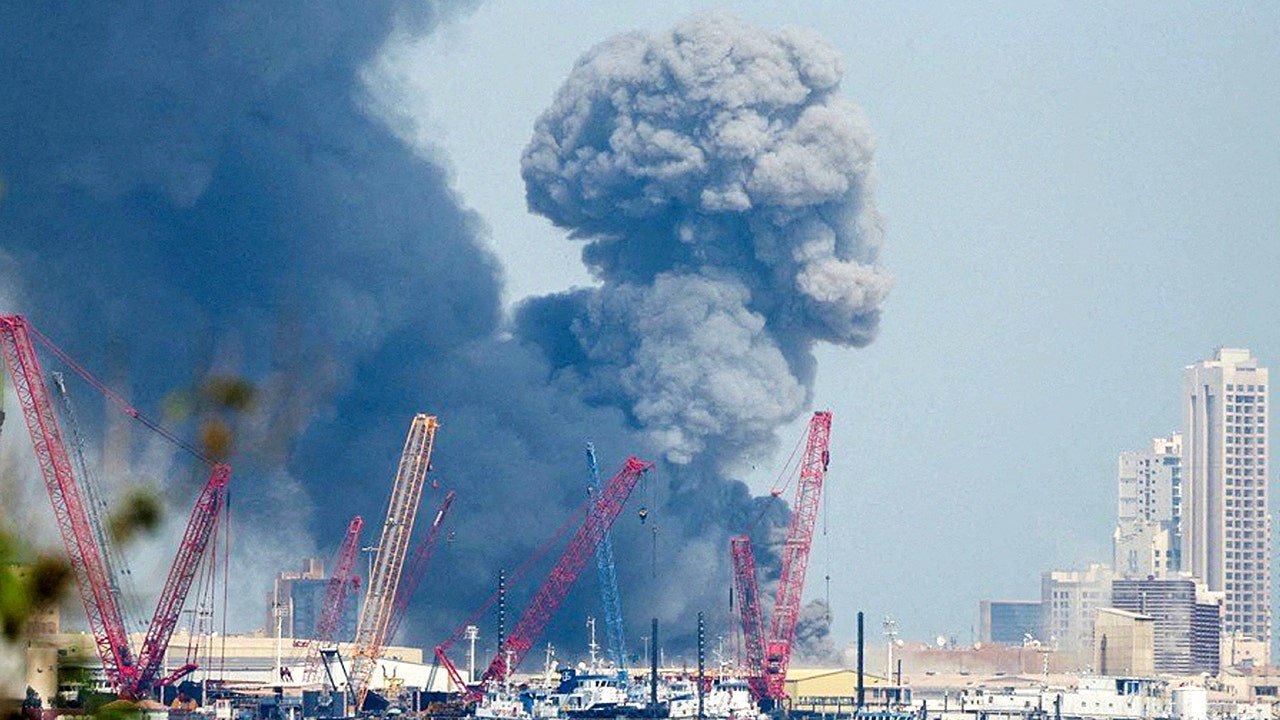
Smoke rises in the sky after blasts were heard in Manama, Bahrain, Feb. 28, 2026. (REUTERS/Stringer)
Meanwhile, the Omani Foreign Ministry condemned the U.S.-Israeli operation against Iran.
CLICK HERE TO DOWNLOAD THE FOX NEWS APP
«The Ministry of Foreign Affairs expresses the Sultanate of Oman’s profound regret over the military operations launched by Israel and the United States of America against the Islamic Republic of Iran, warning of the danger of the conflict expanding into consequences that cannot be rectified in the region,» the Omani Foreign Ministry said in a statement, according to X’s translation.
«The Sultanate of Oman considers this action to be in contravention of the rules of international law and the principle of resolving issues through peaceful means rather than hostile means, the shedding of blood, and calls on all parties to immediately suspend military operations, while urging the United Nations Security Council to convene an urgent meeting to impose a ceasefire and for the international community to take a clear stance in support of international law,» it added.
Fox News Digital’s Efrat Lachter contributed to this report.
iran,middle east,saudi arabia,lebanon,middle east foreign policy,world
INTERNACIONAL
Más de 25 estados bajo alerta por tres tormentas invernales con riesgo de hielo y cortes eléctricos

Durante el último fin de semana de febrero y los primeros días de marzo de 2026, una cadena de tres tormentas invernales comenzó a afectar a más de veinticinco estados del centro y noreste de Estados Unidos, generando nevadas, hielo y descensos abruptos de temperatura que impactan la vida cotidiana de millones de personas. El fenómeno, resultado de la interacción entre masas de aire frío provenientes de Canadá y flujos cálidos del Golfo de México, mantiene activas alertas y advertencias oficiales en una amplia franja del país.
Según reportes del Servicio Meteorológico Nacional (NWS) y la Administración Nacional Oceánica y Atmosférica (NOAA), los sistemas meteorológicos avanzan de oeste a este y presentan variabilidad en la cantidad de nieve y hielo esperada para cada región. Las proyecciones de las agencias especializadas, citadas por medios como The Weather Channel, indican que las tormentas actuales no superarían la magnitud de la tormenta de nieve que recientemente bloqueó el noreste, aunque podrían generar interrupciones en el transporte y el suministro de energía.
El antecedente inmediato es el temporal registrado a mediados de febrero, que dejó acumulaciones superiores a 60 centímetros en varias ciudades clave del noreste, según The Weather Channel. Esa tormenta obligó a declarar emergencias estatales y movilizar recursos de respuesta en estados como Nueva York, Nueva Jersey y Massachusetts, estableciendo un precedente para la alerta y la preparación ante los nuevos episodios invernales.
La primera ronda de tormentas comenzó el sábado 28 de febrero, con nevadas que iniciaron en Montana y las Dakotas, avanzando hacia el Medio Oeste y los Grandes Lagos durante la noche, de acuerdo con la NOAA. Las acumulaciones previstas para este primer evento se sitúan por debajo de los 8 centímetros (3 pulgadas) en la mayoría de los lugares, aunque ciertas áreas montañosas y zonas de esquí podrían recibir cantidades superiores. Ciudades como Pittsburgh, Albany y Manchester figuran entre las principales afectadas, según el NWS.
Para la madrugada del domingo, se esperaba nieve ligera en áreas metropolitanas como Nueva York, Boston y Providence, con acumulaciones cercanas a 2,5 centímetros (1 pulgada). Modelos consultados por el NWS advierten que algunas localidades de Nueva Inglaterra, especialmente en zonas de montaña, podrían registrar acumulados por encima de los 7,5 centímetros (3 pulgadas).

La tormenta de mediados de febrero, según The Weather Channel, dejó registros históricos de acumulación, con más de 60 centímetros (24 pulgadas) de nieve en ciudades como Filadelfia y Nueva York, acompañados de vientos sostenidos superiores a 64 kilómetros por hora (40 mph). Las autoridades meteorológicas recalcan que los sistemas actuales presentan una dinámica diferente, con acumulaciones menores y una distribución más dispersa de la precipitación.
El NWS sostiene que la magnitud de las tormentas de este fin de semana no alcanzará la severidad del episodio anterior, aunque mantiene el monitoreo sobre posibles impactos localizados, especialmente en áreas vulnerables a cortes de energía y bloqueos viales.
El segundo sistema, previsto para la noche del domingo 1 de marzo, surge de la interacción entre un frente frío y aire cálido y húmedo proveniente del Golfo de México. Según la NOAA, este fenómeno favorecerá la aparición de lluvias, nieve y episodios de lluvia congelante en el Medio Oeste y la región de los Grandes Lagos. Ciudades como St. Louis, Kansas City, Louisville e Indianápolis se encuentran bajo vigilancia especial por acumulaciones mixtas.
Las previsiones oficiales sitúan las acumulaciones de nieve entre 2,5 y 7,6 centímetros (1 a 3 pulgadas), mientras que las capas de hielo rara vez superarán los 2,5 milímetros (0,10 pulgadas). El NWS informó que “la amenaza de interrupciones graves en el transporte o en la red eléctrica será menor que en el evento anterior”. Sin embargo, la institución aconseja precaución en zonas donde la precipitación congelante coincida con temperaturas cercanas a cero.
El Servicio Meteorológico Nacional mantiene avisos de tormenta invernal y advertencias por bajas temperaturas desde Montana hasta Massachusetts. Las autoridades estatales de Nueva York, Pensilvania y Massachusetts han recomendado evitar desplazamientos no esenciales y mantener reservas de artículos básicos ante posibles interrupciones de servicios. La Agencia Federal para el Manejo de Emergencias (FEMA) recordó la importancia de preparar suministros y contar con alternativas de calefacción.
Las áreas rurales y regiones boscosas del noreste y el medio oeste son las más propensas a experimentar cortes de energía, ya que la acumulación de hielo puede dañar líneas eléctricas y árboles. El NWS señaló que “los descensos bruscos de temperatura aumentan el riesgo de averías en infraestructuras y accidentes viales por superficies resbaladizas”.

El tercer episodio invernal, que se espera alcance su mayor intensidad el martes 3 de marzo, se caracteriza por un flujo de aire húmedo desde el sur que choca con masas de aire frío persistente en el noreste. De acuerdo con la NOAA, este sistema dejará lluvias sobre la costa atlántica y precipitaciones de nieve o hielo en el interior, principalmente al norte de la Interestatal 90 y en los valles de Pensilvania y Nueva York.
Las proyecciones indican que las zonas de mayor elevación en Nueva Inglaterra y el norte del estado de Nueva York podrían acumular hasta 15 centímetros (6 pulgadas) de nieve hasta el miércoles 4 de marzo. Regiones como Virginia y Carolina del Norte podrían registrar entre 2,5 y 6,4 milímetros (0,10-0,25 pulgadas) de lluvia congelante, según la NOAA.
El NWS y la NOAA recomiendan que los residentes de las zonas bajo alerta consulten los avisos actualizados y sigan las indicaciones de las autoridades locales. La FEMA sugiere mantener a mano suministros de emergencia, equipos de calefacción alternativos y dispositivos de comunicación cargados. Los organismos meteorológicos insisten en la necesidad de mantenerse informados sobre los cambios en los pronósticos, ya que la situación puede variar rápidamente.
“Es fundamental que la población esté preparada para cambios bruscos en las condiciones meteorológicas y actúe con precaución ante las advertencias vigentes”, advirtió el Servicio Meteorológico Nacional en su último boletín.
De acuerdo con el análisis de la NOAA y el NWS, el patrón climático que favorece la generación de tormentas invernales persistirá durante la primera semana de marzo. Los expertos destacan que “la inestabilidad atmosférica y la sucesión de frentes fríos y cálidos mantienen elevado el riesgo de nuevos episodios de nieve y hielo, especialmente en el noreste y el medio oeste del país”.
El monitoreo constante de los modelos meteorológicos permite ajustar las previsiones y emitir alertas con antelación, aunque la variabilidad inherente a estos sistemas puede introducir cambios en la trayectoria y la intensidad de las tormentas.

La combinación de nieve, hielo y descensos térmicos afecta la movilidad urbana y rural, así como la operación de escuelas, hospitales y servicios esenciales. Según la NOAA, las interrupciones en rutas principales y secundarias pueden dificultar el acceso a centros de trabajo y servicios médicos, mientras que la formación de hielo en carreteras aumenta el riesgo de accidentes.
Las aerolíneas y empresas de transporte han emitido comunicados anticipando posibles demoras y cancelaciones, especialmente en los aeropuertos de Chicago, Nueva York y Boston. El NWS reiteró que “la colaboración entre autoridades federales, estatales y locales es clave para minimizar los impactos y garantizar una respuesta eficaz ante emergencias”.
Las agencias meteorológicas prevén que el patrón de tormentas invernales podría extenderse durante las próximas semanas. El Servicio Meteorológico Nacional indica que se mantiene la vigilancia sobre posibles nuevos sistemas, mientras la población de las regiones afectadas continúa adaptándose a condiciones cambiantes.
Weather,North America,Weather Markets / Weather

Una diputada libertaria impulsa un examen psicotécnico para ser candidato: “Es romper con un privilegio”

El valor de mercado de OpenAI se disparó después de recibir una histórica de inversión: cuántos millones vale

Gimnasia de Mendoza vs. Independiente: formaciones, hora y dónde ver por tv

Allegra Cubero celebró sus 15 años: el desfile con su mamá Nicole Neumann, el espectacular regalo que recibió y los shows

Omar, Squad lash out at Trump in response to Iran strike: ‘Illegal regime change war’

Cúneo Libarona prepara su renuncia y hay varios candidatos a sucederlo en el recambio más importante del Gabinete

Jorge Macri prepara su discurso para abrir el año legislativo: el deseo de reelección y el espejo en Bukele

Crisis en la industria: otra multinacional se achica y cierra una planta en la Argentina

Catherine Fulop contó el difícil momento que atraviesa su madre en Venezuela: “Está postrada”

Alarma por la salud de Divina Gloria tras salir de Gran Hermano: “La internaron directamente en terapia intensiva”

 ECONOMIA3 días ago
Crisis en la industria: otra multinacional se achica y cierra una planta en la Argentina
- CHIMENTOS3 días ago
Catherine Fulop contó el difícil momento que atraviesa su madre en Venezuela: “Está postrada”
- CHIMENTOS2 días ago
Alarma por la salud de Divina Gloria tras salir de Gran Hermano: “La internaron directamente en terapia intensiva”