INTERNACIONAL
Anti‑corruption protests hit European nation as calls for new elections grow


NEWYou can now listen to Fox News articles!
Anti-corruption protests rocked the Serbian capital of Belgrade as student-led demonstrators clashed with supporters of President Aleksandar Vucic and his political party, demanding new elections.
Violent clashes between anti-government protesters and Serbian security forces have intensified over the last week, with protesters setting fire to an office building belonging to the ruling party in Novi Sad.
«You will see the full determination of the Serbian state. We will use everything at our disposal to restore law, peace and order,» President Vucic said in an address to the nation Saturday night.
SERBIA ROCKED BY ANTI-CORRUPTION PROTESTS AFTER CONSTRUCTION TRAGEDY
Demonstrators stand in clouds of tear gas during anti-government protests in Belgrade on August 16. (Oliver Bunic/AFP via Getty Images)
Tens of thousands of college students have been marching and protesting since December, demanding justice and accountability after the deaths of 16 people in the collapse of a railway station in the Serbian town of Novi Sad. The canopy at the railway station collapsed Nov. 1 after renovations led by two Chinese companies.
The government is accused of not implementing student demands, including the release of all documentation related to the reconstruction of the train station. In his speech, Vucic said that justice must be served for all those responsible for the 16 victims of the Novi Sad rail station collapse.
Critics have called out the heavy-handed response used against protesters. Alan Berset, Secretary General of the Council of Europe, said in a post on X that he was concerned with the rising violence.
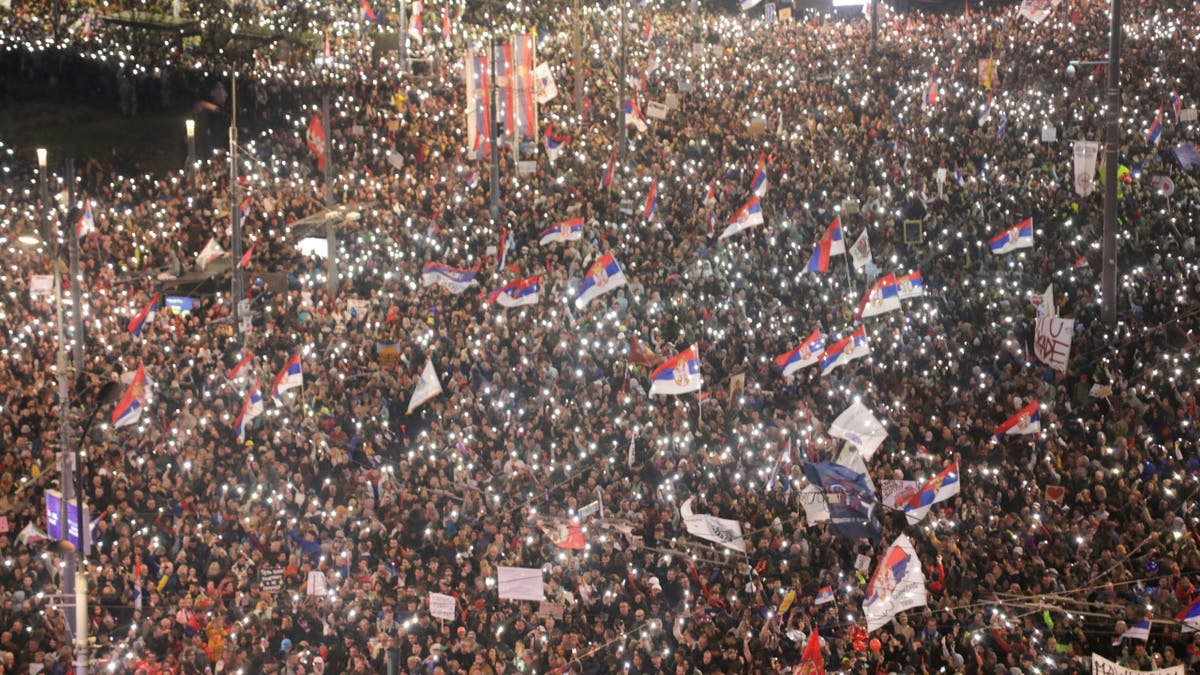
Students and anti-government demonstrators light the flashlights of their mobile phones during a protest, which has become a national movement for change following the deadly November 2024 Novi Sad railway station roof collapse, in Belgrade, Serbia, March 15. (Igor Pavicevic/Reuters.)
SERBIA, CAUGHT BETWEEN EUROPE AND RUSSIA, COULD MOVE ONE STEP CLOSER TO NORMALIZING RELATIONS WITH KOSOVO
«I call for calm and respect of the right to peaceful assembly. Serbian authorities must uphold Council of Europe standards. The rule of law and respect for human rights must prevail,» Berset said.
Serbia’s foreign minister, Marko Djuric, responded to the criticism in a statement to Fox News Digital. «We respect and protect peaceful protest—it is part of our democratic fabric. But when demonstrations turn into physical attacks and attempts to destabilize the country, the government has both the right and the duty to respond.»
SERBIA, CAUGHT BETWEEN EUROPE AND RUSSIA, COULD MOVE ONE STEP CLOSER TO NORMALIZING RELATIONS WITH KOSOVO
«This is by far the biggest threat Vucic has faced in the last 13 years, and it is very unlikely that Vucic will weather the storm without elections,» Helena Ivanov, senior fellow at the Henry Jackson Society, told Fox News Digital.
«The country is not functioning, and the situation is dangerously escalating. The only way out of the problem is to hold free and fair elections as soon as possible. «Everything else will further destabilize the situation, which could have devastating consequences,» Ivanov added.
The government is accused of not fulfilling one of the original student demands, including the release of all documentation related to the reconstruction of the train station.
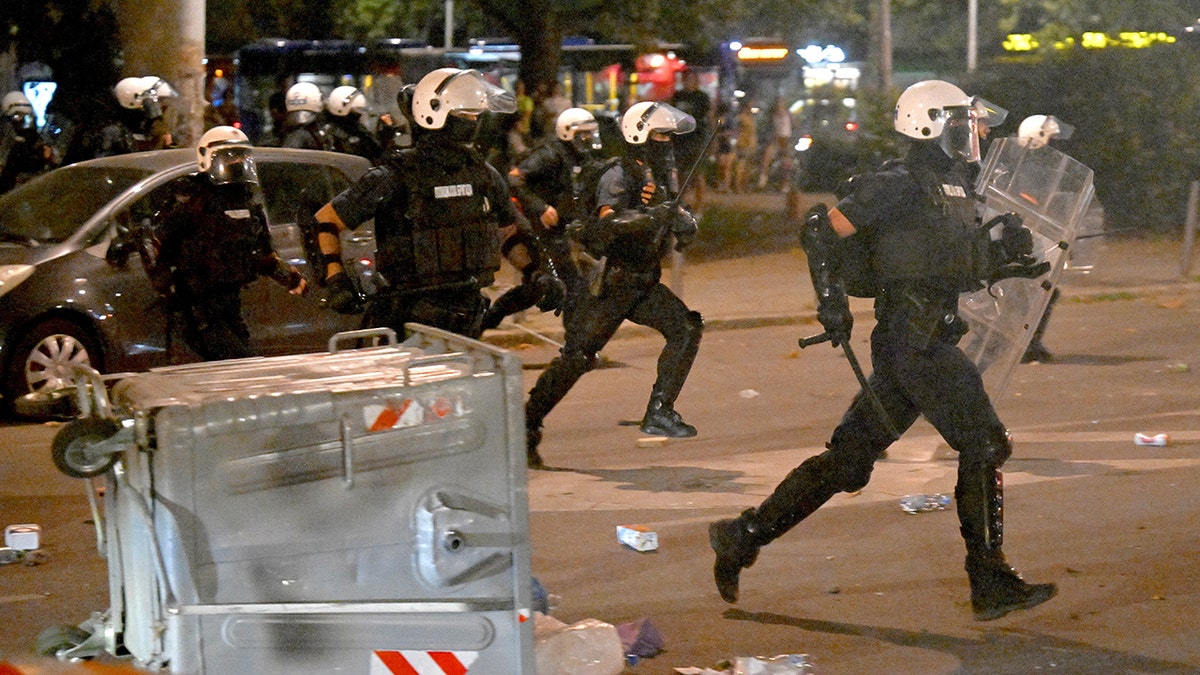
Serbian riot police clash with anti-government protesters in Belgrade on August 13. (Oliver Bunic/AFP via Getty Images)
What originally started as spontaneous protests voicing dissatisfaction with the government’s failed response to the railway catastrophe transformed into a movement opposing widespread corruption and the erosion of the rule of law under Vucic.
One of the largest protests in Serbia’s history took place on March 15, with nearly 350,000 people gathered in Slavija Square in central Belgrade.
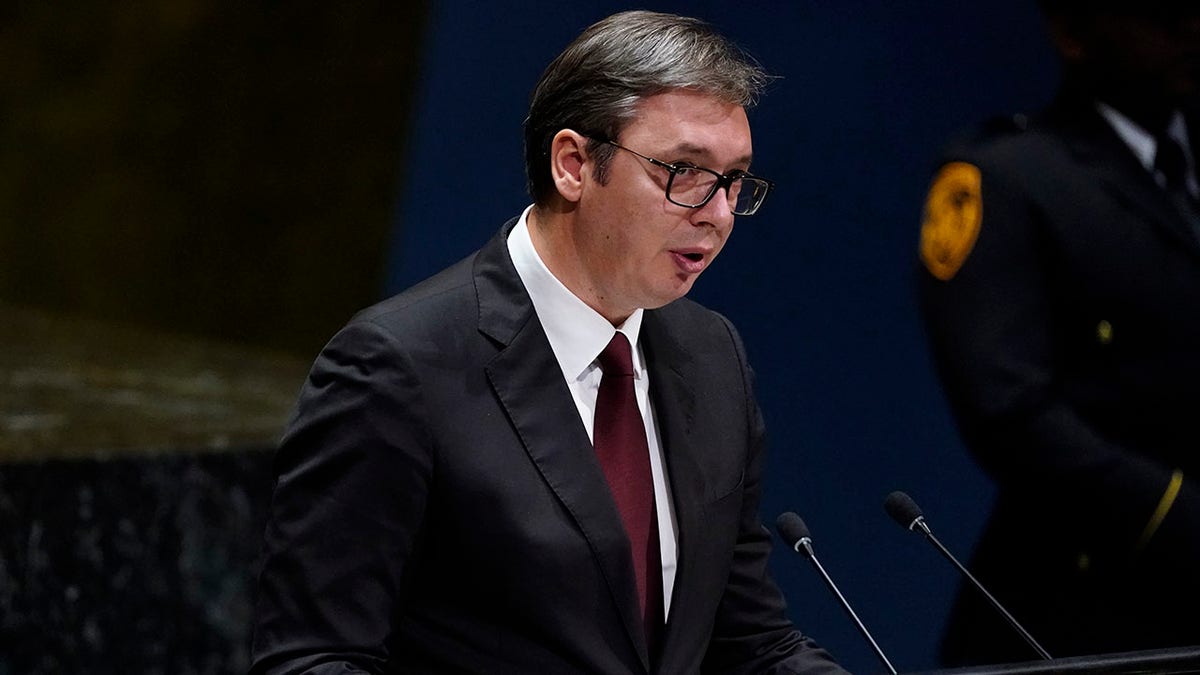
Serbia’s President Aleksandar Vucic United Nations General Assembly at U.N. headquarters in New York City in 2019. Vucic said he accidentally voted against Russia in a Ukrainian resolution because he was «probably tired.» (Reuters)
Serbia’s then-Prime Minister Milos Vucevic announced his resignation in January amid the nationwide protests, making him the most senior government member to step down.
CLICK HERE TO GET THE FOX NEWS APP
«Serbian students put forward several demands, the first and most important being the release of documentation regarding the reconstruction of the Novi Sad train station, where the collapse of the canopy killed 16 people. To this day, no one has been held accountable,» Filip Ubović, a student from the University of Belgrade and protest participant on the ground in Belgrade, told Fox News Digital.
Ubovic said the protests were originally aimed at influencing the institutions responsible for upholding the rule of law, and not directly against the ruling party. As the government failed to hold any officials accountable for the tragedy or release any information on the canopy collapse, the protesters realized that it was time to demand elections.
europe,the balkans,the european union,world protests,world,conflicts






INTERNACIONAL
Como con Kirchner en Argentina, sacaron un busto de Evo Morales del Palacio Legislativo en Bolivia
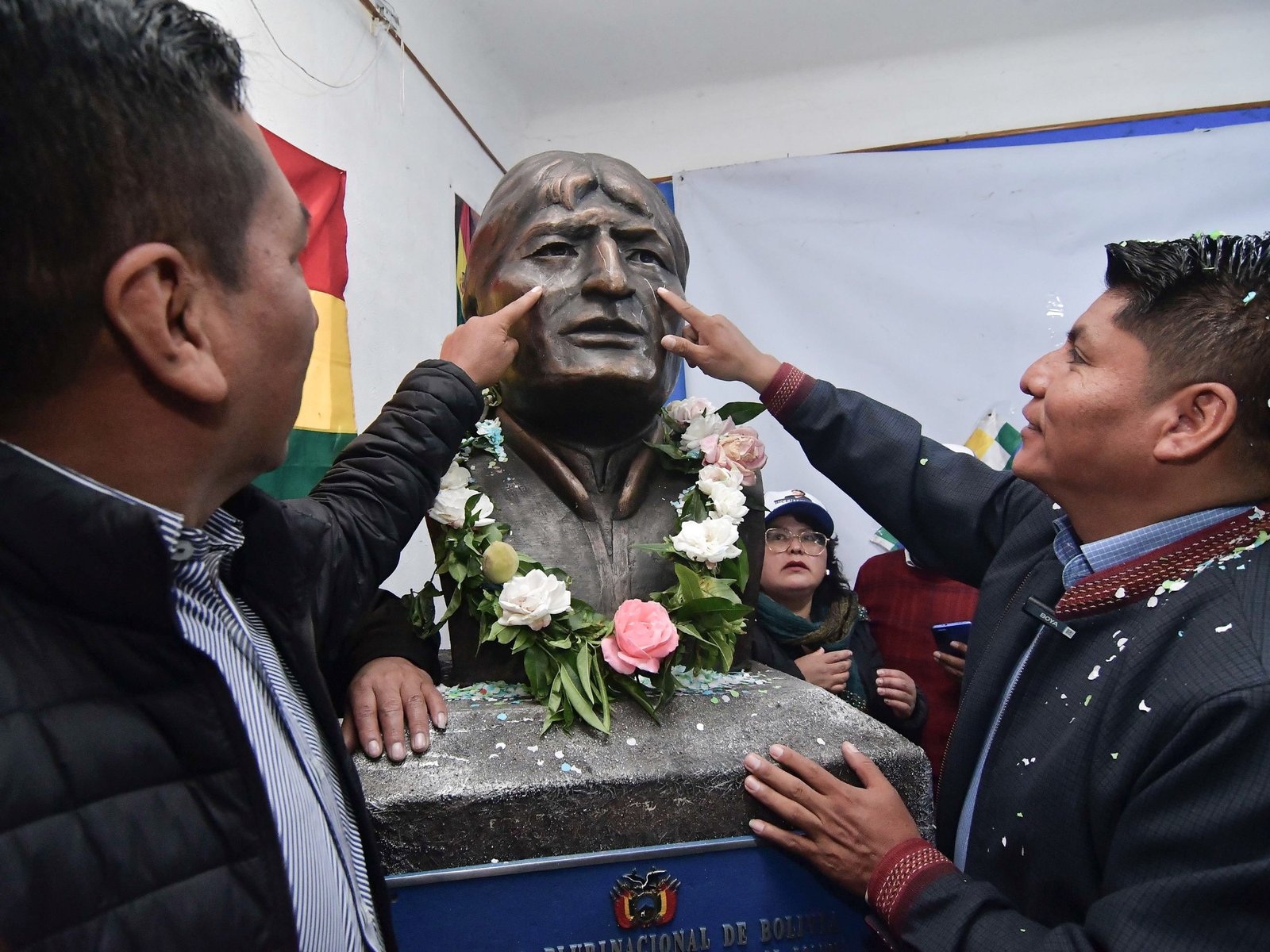
La figura de Evo Morales volvió a generar polémica en Bolivia, luego de que el Poder Legislativo retirara del Congreso un busto del expresidente y, tras una semana, se lo entregaran a militantes del dirigente cocalero. La situación recordó al retiro de una estatua de Néstor Kirchner en el Senado argentino.
«La Asamblea Legislativa debe recuperar su institucionalidad, es la casa de la democracia. Nunca más (debe haber) culto a ningún caudillo, sea de izquierda, de derecha o de centro. Aquí deben estar los símbolos patrios, nuestro escudo nacional, nuestra bandera de Bolivia», explicó el jueves Claudia Mallón, que promovió la resolución en la Cámara alta boliviana.
Mallón ya había quedado envuelta en polémica cuando, en febrero, pidió que se ofrezca una recompensa de 100 mil dólares para detener a Morales. El expresidente permanece desde octubre de 2024 en el Trópico de Cochabamba, su bastión político y sindical en el centro del país, para evitar ser detenido por un proceso en su contra por presunta trata agravada de personas, en el que la Fiscalía lo acusa de haber tenido una relación con una menor de edad con quien supuestamente tuvo un hijo en 2016, cuando era presidente.
En esa oportunidad, la senadora recibió «más de un centenar de amenazas, insultos e improperios» por la propuesta de un premio económico para atrapar a Morales.
El busto del expresidente se encontraba hasta la semana pasada en el vestíbulo principal del Palacio Legislativo boliviano. Lo habían colocado allí en enero de 2011, en medio de la extensa estadía del ahora exmandatario (fue jefe de Estado entre enero de 2006 y noviembre de 2019). Supuestamente, fue donado por un seguidor.
«Los que consideran que ese busto les pertenece pueden reclamarlo, llevarlo al patio de sus casas o al chaco (parcela) de un prófugo de la justicia como es Evo Morales», afirmó Mallón.
Mallón sostuvo que quienes acrediten con documentos que el busto les pertenece «pueden llevárselo» e insistió en que con su retiro se busca «recuperar la institucionalidad» del Parlamento.
Este jueves, dirigentes que responden a Evo Morales recogieron la escultura, que pasó una semana en un depósito del antiguo edificio del Parlamento de Bolivia. Lo llevarán a la sede partidaria del MAS. Denuncian que algunos senadores querían fundir el busto.
«Él decidirá en qué lugar se va a quedar de manera perpetua», dijo Omar Ramírez, de la fuerza Evo Pueblo, que subrayó que la localización definitiva rsponderá al deseo del expresidente.
Agradeció que los funcionarios administrativos de la Asamblea Legislativa entregaran la escultura porque, según el político, supuestamente algunos parlamentarios «ejercieron una fuerte presión» para que la imagen no fuera entregada, ya que tenían la intención de fundirla «y hacer barbaridades en actos públicos».
El Senado también había dispuesto que la escultura no fuera instalada en ninguna otra parte del Legislativo, lo cual provocó una reacción de los leales al mandatario para pedir su entrega.
El busto de Morales fue instalado en el vestíbulo del antiguo Palacio Legislativo durante el periodo 2011-2012.
El gobernador electo del departamento central de Cochabamba, el exsenador Leonardo Loza, destacó en la misma rueda de prensa que el busto fue «rescatado» de la sede del Legislativo.
«Evo es pueblo. La imagen del pueblo Evo Morales. Como alguien decía, podrán intentar destruir nuestra imagen, pero Evo Morales está en tantos hospitales que ha construido», dijo Loza, afín al exgobernante.
La gobernación de Cochabamba es la única plaza de peso ganada por el ‘evismo’ en los comicios regionales del pasado 22 de marzo, después de que en 2021 su partido tenía tres gobernadores.
La declinación del «evismo» y del Movimiento al Socialismo (MAS) tuvo como una causa el enfrentamiento entre Morales y el expresidente Luis Arce (2020-2025), preso desde diciembre por denuncias de corrupción.
La acusación formal contra el expresidente fue presentada en octubre pasado y está pendiente de que la Justicia fije la fecha para el inicio del juicio por este caso y que la Policía cumpla con la orden de captura vigente contra Morales.
La situación ocurrida en los últimos días en Bolivia recordó al caso del busto de Néstor Kirchner que Victoria Villarruel -vicepresidenta de la Nación y presidenta del Senado- mandó retirar del Salón de las Provincias, del Senado. «No fue senador, no fue vicepresidente y yo no soy su viuda», explicó Villarruel su decisión en febrero de 2024.
Desde el kirchnerismo hubo fuertes críticas a la vicepresidenta. El busto de Kirchner fue derivado en el bloque de Unión por la Patria. En su lugar, Villarruel inauguró uno de Isabel Perón, el 17 de octubre de 2024, en coincidencia con el Día de la Lealtad peronista.
NEWYou can now listen to Fox News articles!
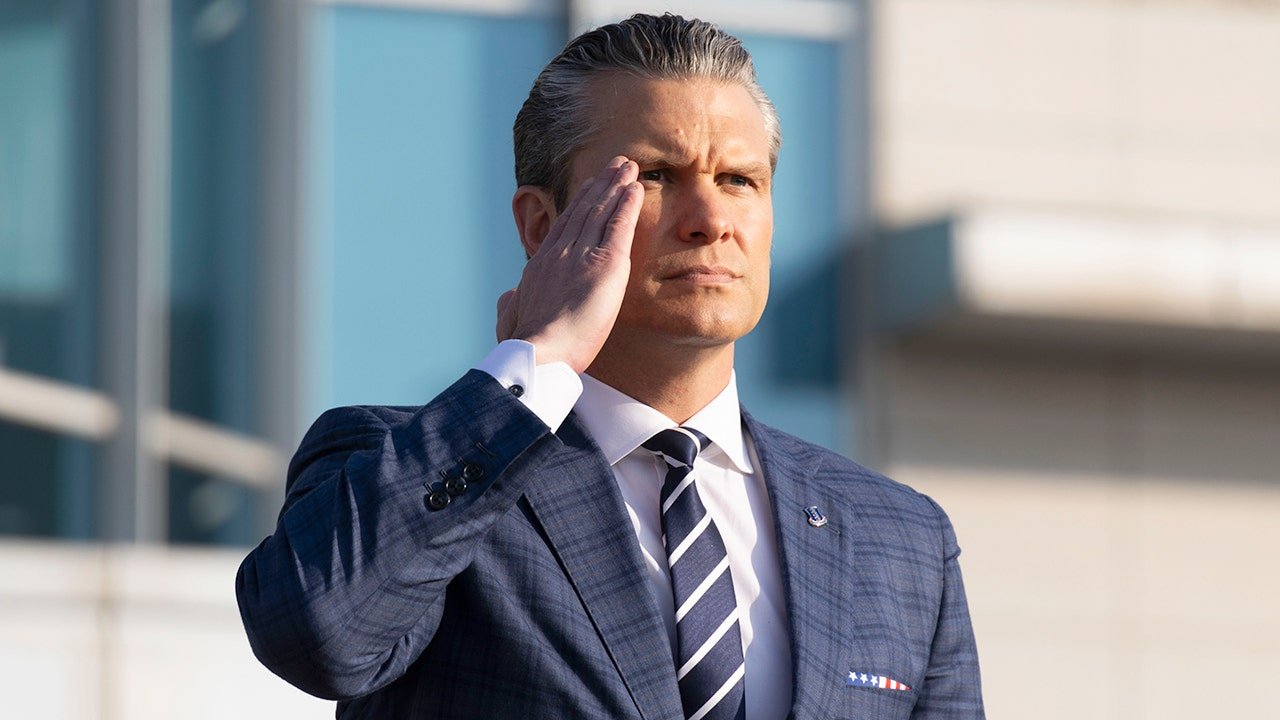
War Secretary Pete Hegseth signed a memo on Thursday ordering a major shift in base security policy, allowing service members to request permission to carry personal firearms for self-defense amid growing concerns about threats on U.S. installations.
In an announcement on social media, Hegseth said all American citizens have a God-given right under the Second Amendment to carry weapons for protection.
However, he said that right has not been extended to uniformed service members, who are «trained at the highest and unwavering standards.»
«These war fighters, entrusted with the safety of our nation, are no less entitled to exercise their God-given right to keep and bear arms than any other American,» Hegseth said. «Our war fighters defend the right of others to carry. They should be able to carry themselves.»
HEGSETH INSTATES ‘HIGHEST MALE STANDARD ONLY’ FOR COMBAT, OTHER CHANGES, DECLARING DEPT. OF DEFENSE ‘IS OVER’
Defense Secretary Pete Hegseth speaks to members of the media during a press briefing at the Pentagon in Washington, Thursday, March 19, 2026. (Manuel Balce Ceneta/AP Photo)
Citing recent tragedies at Fort Stewart, Holloman Air Force Base and Pensacola Naval Air Station, Hegseth said the incidents have «made clear» that «some threats are closer to home than we would like.»
«In these instances, minutes are a lifetime, and our service members have the courage and training to make those precious short minutes count,» he said. «Before today, it was virtually impossible … for War Department personnel to get permission to carry and store their own personal weapons aligned with the state laws where we operate our installations.»
While service members can already own personal firearms, concealing and carrying a weapon was previously not permitted on federal sites — including military installations.
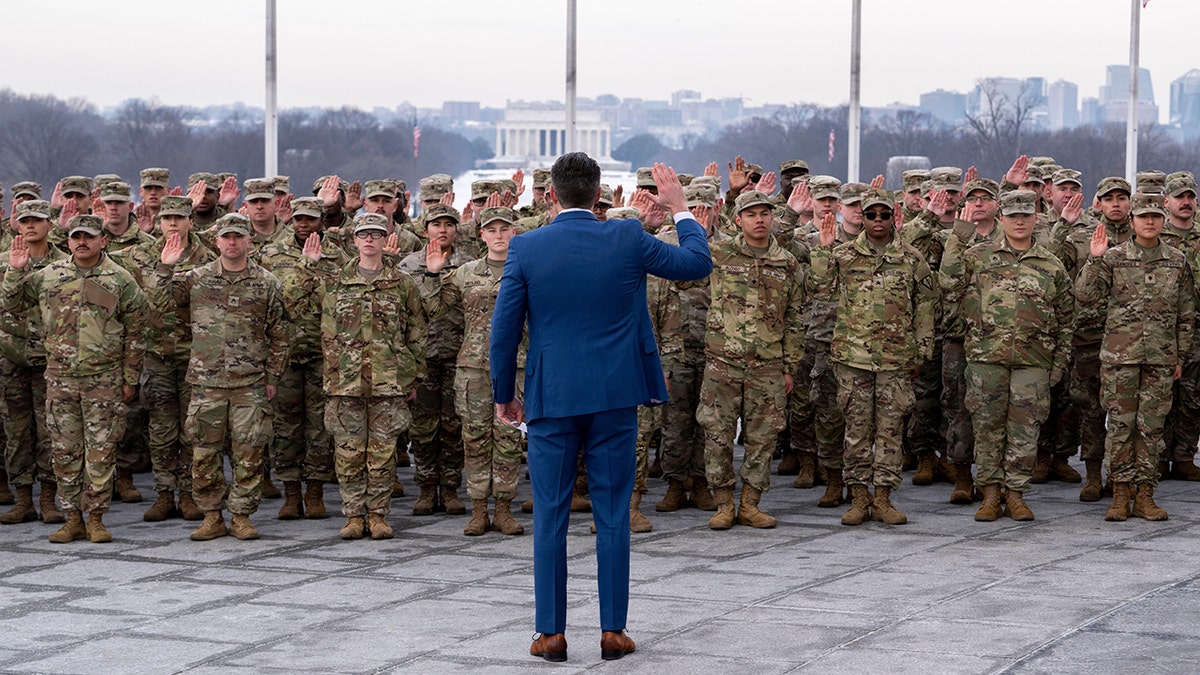
Defense Secretary Pete Hegseth administers the oath of enlistment to a group of National Guard soldiers, at the base of the Washington Monument, Friday, Feb. 6, 2026 in Washington. (Kevin Wolf/AP)
HEGSETH APPEALS RULING BLOCKING PUNISHMENT OF DEM SENATOR OVER ‘ILLEGAL ORDERS’ VIDEO
Those who owned personal weapons had to register their guns with base authorities and storage was often controlled by the installation.
Carrying on post was often restricted to military police, security and personnel on official duty.
«Effectively, our bases across the country were gun-free zones,» Hegseth said. «Unless you’re training, or unless you are a military policeman, you couldn’t carry. You couldn’t bring your own firearm for your own personal protection onto post. Well, that’s no longer.»
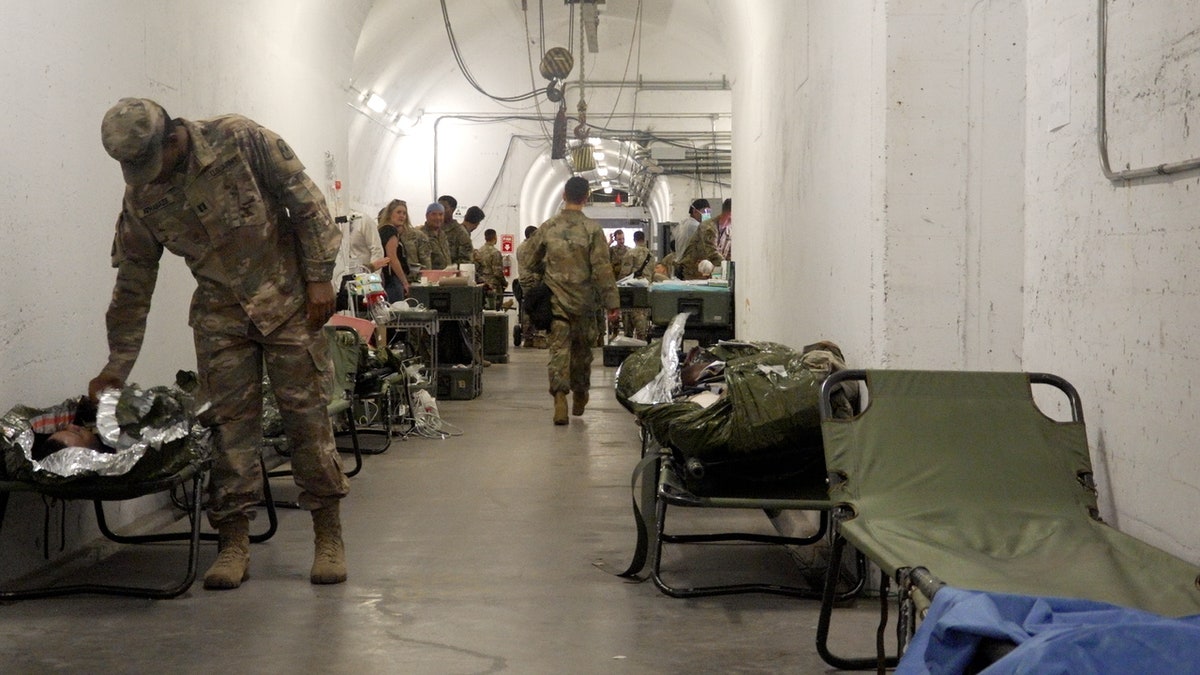
300 Soldiers treat and work on fake wounded soldiers for a training exercise (Fox News)
PENTAGON CITES ‘MERITOCRACY’ AS OFFICER REMOVALS DRAW DEMOCRATIC CRITICISM
The memo signed Thursday directs installation commanders to allow requests to carry a privately owned firearm, with the presumption that it is necessary for personal protection.
If a request is denied, Hegseth said the reason for that denial will be put in writing and will explain, in detail, the basis for that direction.
«Again, the presumption is service members will be able to have their Second Amendment right on post,» he said. «Not all enemies are foreign, nor are they all outside our borders. Some are domestic. Confirming your God-given right to self-protection is what I’m signing into action today, and I’m proud to do so.»
CLICK HERE TO DOWNLOAD THE FOX NEWS APP
Hegseth did not specify if training or certification will be required, or if storage and transport of weapons will be regulated.
It is also unclear if there will be uniform rules across all military branches.
second amendment, pete hegseth, armed forces, personal freedoms, military
INTERNACIONAL
El gobierno de Ecuador denunció a más de 21 jueces y fiscales por presuntamente favorecer la liberación de detenidos
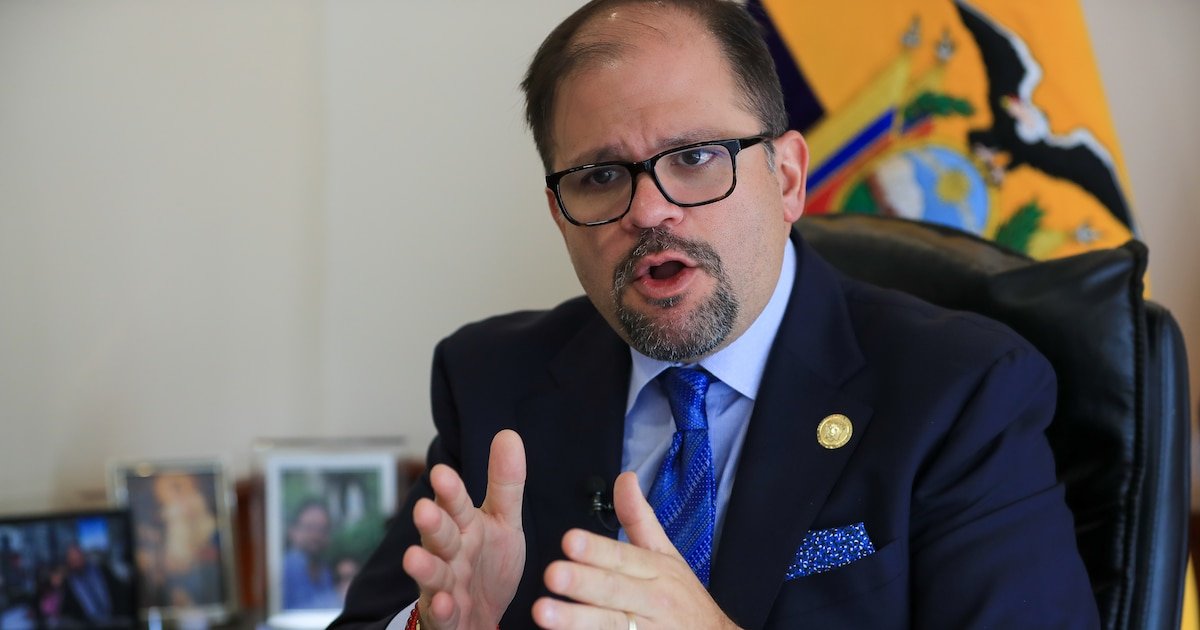
El ministro del Interior, John Reimberg, afirmó que su cartera de Estado ha presentado más de 21 denuncias contra jueces y fiscales que, según el Gobierno, habrían favorecido la liberación de personas detenidas en operativos contra el crimen organizado, en un contexto marcado por la intensificación de la política de seguridad impulsada por el Ejecutivo.
En una entrevista concedida a El Universo, el funcionario sostuvo que estas acciones forman parte de una estrategia más amplia orientada a reforzar la lucha contra las estructuras delictivas, no solo a través de operativos policiales y militares, sino también mediante el control institucional del sistema judicial. Según indicó, el objetivo es evitar que los esfuerzos de las fuerzas del orden se vean debilitados por decisiones judiciales que permitan la excarcelación de detenidos vinculados a delitos graves.
Reimberg señaló que existe una preocupación dentro del Gobierno respecto al funcionamiento de ciertos operadores de justicia, a quienes acusó de no actuar conforme a las demandas de seguridad de la ciudadanía. En ese sentido, aseguró que se han iniciado investigaciones en coordinación con la Fiscalía y que incluso ya se ha producido la detención de un juez por presuntamente favorecer a organizaciones criminales.

El ministro evitó precisar el número total de jueces investigados, argumentando que revelar esa información podría afectar las indagaciones en curso. No obstante, enfatizó que el mensaje del Ejecutivo es claro: cualquier funcionario judicial que incurra en prácticas irregulares enfrentará consecuencias penales. En sus declaraciones, insistió en que no se permitirá que la justicia “haga lo que hizo el año anterior”, en referencia a decisiones que, según el Gobierno, facilitaron la liberación de detenidos.
Estas afirmaciones se producen en el marco de un balance sobre las medidas de seguridad implementadas en varias provincias del país, particularmente los toques de queda aplicados en Guayas, Los Ríos, Santo Domingo de los Tsáchilas y El Oro. De acuerdo con Reimberg, estas acciones permitieron ejecutar operativos dirigidos a desarticular economías criminales, incluyendo actividades como el narcotráfico, la minería ilegal y el tráfico de armas.
El funcionario explicó que el uso del toque de queda respondió a la necesidad de minimizar riesgos durante intervenciones de alto impacto, en las que se requirió el uso de fuerza y el control de territorios considerados estratégicos para las organizaciones delictivas. También dejó abierta la posibilidad de aplicar medidas similares en otras provincias, dependiendo de la evolución de las operaciones y de los objetivos identificados por las autoridades.
En términos de resultados, Reimberg indicó que durante marzo se registró una reducción del 28% en ciertos indicadores de criminalidad que no incluyen homicidios, y detalló que se realizaron más de 2.200 allanamientos y se detuvo a unas 4.300 personas. Además, mencionó la captura de objetivos de alto e intermedio valor, así como la identificación de financistas de estructuras criminales.

Sin embargo, reconoció que la disminución de la criminalidad no es absoluta y que continúan registrándose hechos violentos, incluso en zonas donde se aplicaron restricciones de movilidad. Según explicó, esto se debe a que las operaciones contra grupos delictivos se mantienen activas y no dependen exclusivamente de medidas como el toque de queda.
El ministro también abordó la relación entre el Ejecutivo y el sistema judicial, subrayando que la lucha contra la delincuencia requiere una articulación efectiva entre ambas funciones del Estado. En ese contexto, insistió en que las denuncias presentadas buscan corregir lo que considera desviaciones en el actuar de jueces y fiscales, sin que ello implique una intromisión en sus competencias.
En paralelo, Reimberg destacó la cooperación internacional, especialmente con Estados Unidos, en materia de inteligencia y estrategias para atacar las estructuras económicas del crimen organizado. Este apoyo, según explicó, se enfoca en debilitar las fuentes de financiamiento de las organizaciones delictivas, consideradas un eje central en la política de seguridad del Gobierno.
Crime,Domestic Politics,International Relations,Law Enforcement,Crime,Diplomacy / Foreign Policy,South America / Central America,Government / Politics

El horóscopo de hoy: viernes 3 de abril

Contra Montoneros y la dictadura. Un cuento, una biografía y dos cartas críticas: que decían los últimos textos de Walsh

El petróleo sube y un sector que aporta millones de dólares puede colapsar

El Gobierno no puede salir del escándalo Adorni y ya lleva casi un mes de desgaste

Como con Kirchner en Argentina, sacaron un busto de Evo Morales del Palacio Legislativo en Bolivia

Con gol de Bareiro, Boca Juniors venció 1-0 a Talleres en Córdoba, por la fecha 13 del Torneo Apertura

Dos jubiladas que le habrían prestado dinero a Manuel Adorni negaron conocerlo

Quiénes son las dos acreedoras del préstamo con el que Adorni compró su departamento en Caballito

El Gobierno reevalúa la estrategia de comunicación por el caso Adorni y mide el impacto en la imagen de Milei

Milei se pone al frente de la defensa de Adorni y lo suma a un acto por Malvinas en una nueva muestra de respaldo

 POLITICA3 días ago
Dos jubiladas que le habrían prestado dinero a Manuel Adorni negaron conocerlo
- POLITICA2 días ago
El Gobierno reevalúa la estrategia de comunicación por el caso Adorni y mide el impacto en la imagen de Milei
- POLITICA17 horas ago
Milei se pone al frente de la defensa de Adorni y lo suma a un acto por Malvinas en una nueva muestra de respaldo