INTERNACIONAL
As Trump’s standoff with Maduro deepens, experts warn the next move may force a showdown


NEWYou can now listen to Fox News articles!
Absent direct military action, President Donald Trump is running low on options amid his standoff with Venezuelan President Nicolás Maduro, according to experts.
Strikes near Venezuelan waters aimed at drug traffickers, sanctions and a $50 million bounty have so far been unsuccessful in forcing Maduro, whom the U.S. has designated as a leader of the Tren de Aragua drug cartel, to step down from power.
After repeated threats, adversaries may now view a lack of direct military action as a sign of weakness from the U.S. But Maduro is in an equally difficult position — his own military capabilities are dwarfed in comparison to Trump’s, and experts say China and Russia lack the will to directly challenge the U.S. in its own hemisphere.
Meanwhile, the clock is ticking: Trump’s unprecedented military buildup in the Caribbean — including sending the world’s largest aircraft carrier to the region — is taking away resources from other theaters.
WASHINGTON’S SHADOW WAR: HOW STRIKES ON CARTELS THREATEN TO COLLAPSE MADURO’S REGIME
Navy deploys USS Gerald R. Ford and robotic vessels for anti-drug mission in Latin America. (Jonathan Klein/AFP via Getty Images)
Katherine Thompson, a senior fellow in defense and foreign policy studies at the libertarian think tank the Cato Institute, said that there are very few tools left at Trump’s disposal to oust Maduro, aside from a targeted strike against the Venezuelan leader or a land invasion.
While the White House has not directly said that it is seeking regime change, recent media reports indicate that Trump and Maduro have spoken about the Venezuelan leader departing his post.
Thompson noted that previous efforts to squeeze out Maduro, including imposing sanctions on Venezuela and backing opposition leader Juan Guaidó during Trump’s first term, have proven unsuccessful.
«It does not seem like there is — outside of the military option — anything new on the table that hasn’t really been tried,» Thompson said.
Even so, Thompson cast doubt on whether military action would prove successful.
«If the offer on the table from the Trump administration is we’re going to potentially execute an invasion unless you talk to us, perhaps that’s a strong enough diplomatic, strategic move that gets Maduro to capitulate,» Thompson said. «But it just doesn’t seem like we’re picking up that many signals from the Maduro regime that that is going to be palatable.»
Meanwhile, Thompson said that adversaries like Russia and China are probably confused about why the Trump administration has fixated on the Maduro regime, which doesn’t jeopardize U.S. interests as much as other actors, when the Trump administration has adopted an «American First» mantra.
«I imagine for them, it’s probably a bit puzzling, if they’re looking at it through a real, brass tacks, realist lens, why this administration would be prioritizing ousting the Maduro regime, as opposed to conflicts in other theaters,» Thompson said.
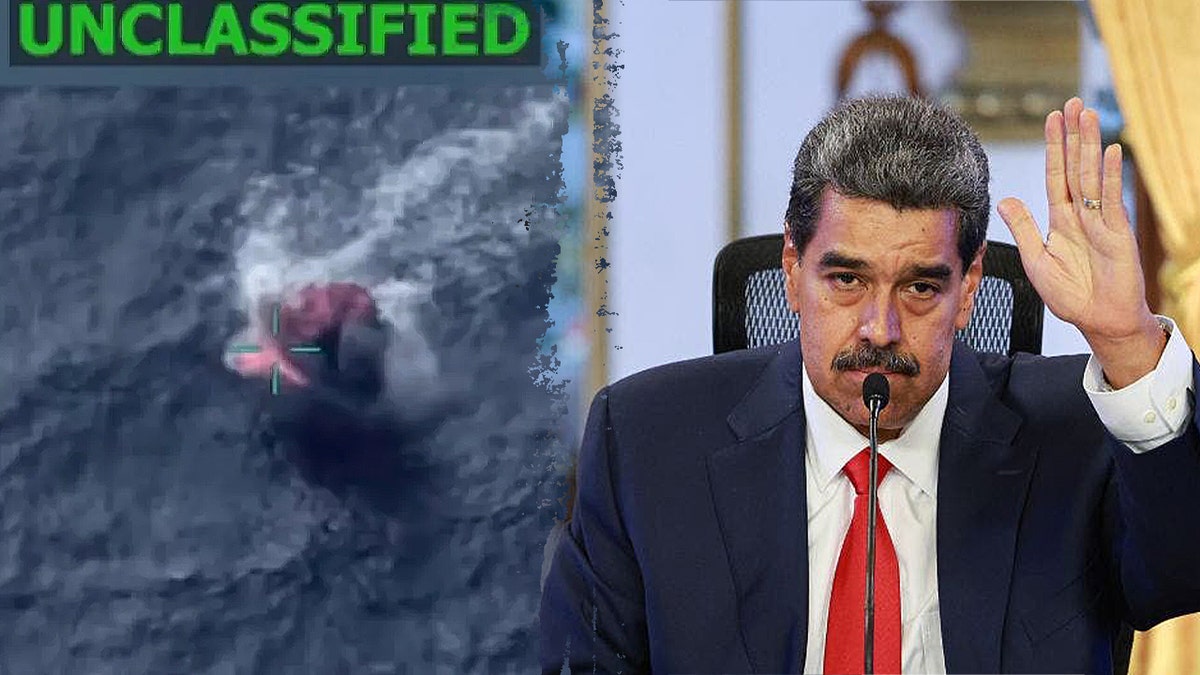
U.S. strikes on drug boats near Venezuelan waters may be targeted at taking out Venezuelan leader Nicolás Maduro. (@realDonaldTrump/Truth Social; Jesus Vargas/Getty Images)
TRUMP UNLEASHES US MILITARY POWER ON CARTELS. IS A WIDER WAR LOOMING?
As a result, the Trump administration’s actions focusing on Venezuela likely leave a bit of «befuddlement» on the part of Russia and China about how serious the U.S. is about putting American interests first, Thompson said.
She added that China may be wondering if the U.S. diverting resources, such as directing the aircraft carrier USS Gerald R. Ford to the Caribbean, could provide an opportunity for it to invade Taiwan if the U.S. is tied up with operations in Venezuela. Multiple U.S. officials have said they believe China will be capable of invading Taiwan by 2027.
Will Russia and China back Venezuela?
While there may be greater interest from China to take action within its own theater, experts agreed it was unlikely that Russia or China would actually get involved and back Venezuela should military operations between the U.S. and Caracas escalate — even though Moscow and Beijing are strategic allies with Venezuela.
Some analysts said Maduro would find himself largely isolated if Trump launched military strikes against Venezuela. Russia, still consumed by its war in Ukraine, is unlikely to offer anything beyond denunciations of U.S. action, and China, despite years of deep economic engagement with Caracas, is also expected to stop well short of military involvement, they said.
From Moscow’s perspective, there is both ideological and strategic discomfort with an American intervention — but little appetite or capability to counter it.
«Moscow opposes unilateral U.S. military intervention, especially when aimed at toppling a friendly authoritarian regime. That said, Russia lacks the will and ability to stop U.S. intervention in this part of the world should Trump decide to go that route,» said John Hardie, a Russian military analyst at the Foundation for Defense of Democracies (FDD).
TRUMP GAVE MADURO ULTIMATUM TO FLEE VENEZUELA AS LAND OPERATIONS LOOM: REPORT
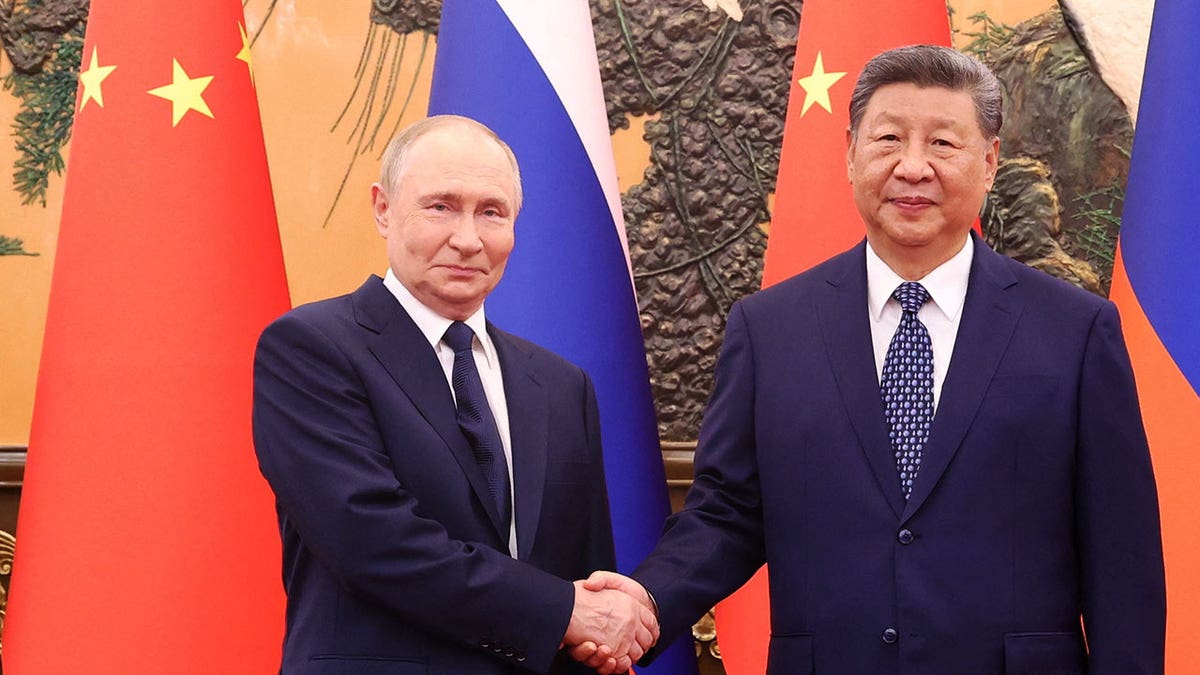
Chinese President Xi Jinping shakes hands with Russian President Vladimir Putin at the Great Hall of the People in Beijing, China, on Sept. 2, 2025. (China Daily via REUTERS)
Hardie said Russia is watching Washington’s internal debate carefully.
«Analysts in Moscow interpret the internal debate in Washington over Venezuela as evidence that although Republican views on foreign policy are shifting, the more traditional, hawkish camp still retains influence,» Hardie said. «This whole episode probably also reinforces Russian views of Trump as unpredictable and impulsive, though I suspect Moscow is glad to see Trump prioritizing the Western Hemisphere over other regions more central to Russian interests.»
China’s likely response would mirror its recent behavior in other conflicts. Beijing has major financial stakes in Venezuela but has shown little willingness to risk confrontation with the United States, especially in the Western Hemisphere.
Jack Burnham, a China analyst at FDD, said Maduro should take note of how China behaved during the 12-Day War, when Iran came under intense U.S.- and Israeli-led strikes.
«If Maduro is expecting support from China, he should have had his expectations corrected by Tehran’s recent experience under fire,» Burnham said. «Despite China providing key war-related materials to Iran prior to the 12 Day War, once the conflict escalated, Beijing stood down, content to stand on the sidelines and offer statements.»
Burnham said that same pattern would likely apply now: «If American military action accelerates, look for Beijing to engage in a war of words rather than send badly needed supplies to Caracas.»
Trump’s crusade against drugs
The Trump administration has beefed up its military presence off the coast of Venezuela and has adopted a hard-line approach to address the flow of drugs into the U.S. For example, it designated drug cartel groups like Tren de Aragua, Sinaloa and others as foreign terrorist organizations in February.
The Trump administration has repeatedly said it does not recognize Maduro as a legitimate head of state, but instead, a leader of a drug cartel. In August, the Trump administration upped the reward for information leading to Maduro’s arrest to $50 million, labeling him «one of the largest narco-traffickers in the world.»
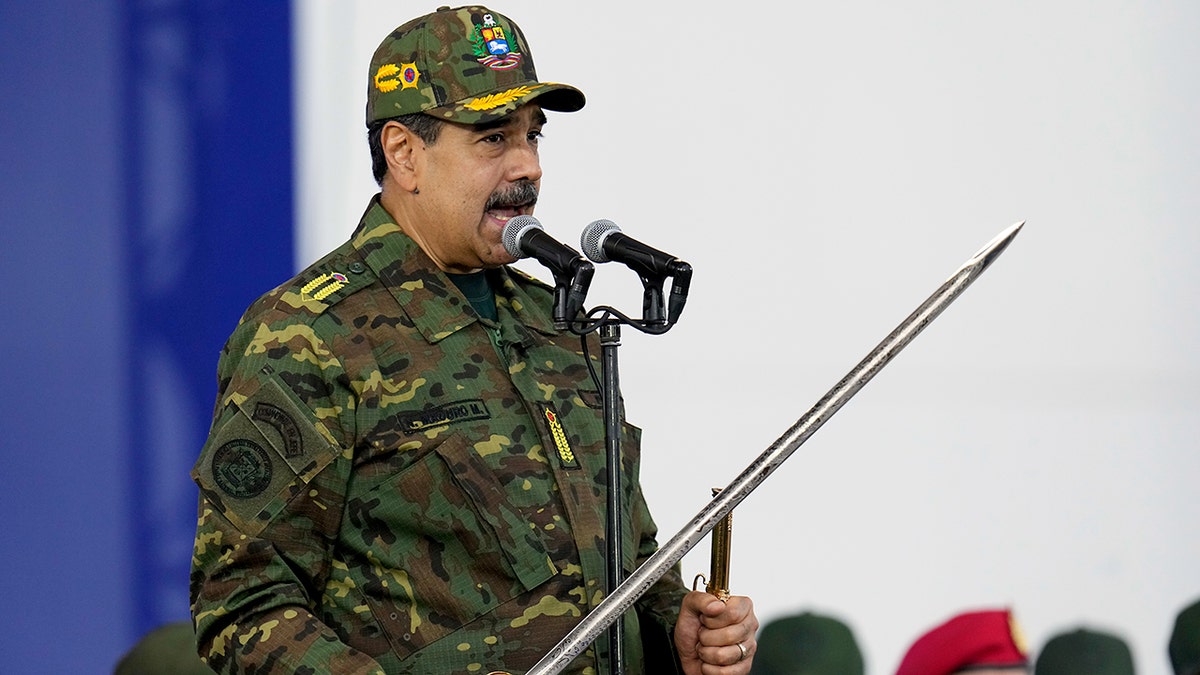
Venezuelan leader Nicolás Maduro brandishes a sword said to have belonged to independence hero Simon Bolivar during a civic-military event at the military academy in Caracas, Venezuela, Tuesday, Nov. 25, 2025. (Ariana Cubillos/AP Photo)
On Sunday, Trump confirmed that he spoke to Maduro over the phone last week, after the New York Times reported that the two had talked, but declined to provide specifics on what they discussed. However, The Miami Herald reported on Sunday that Trump gave Maduro an ultimatum, guaranteeing the Venezuelan leader and his family safety — if he resigned immediately.
MADURO BRANDISHES SWORD AT RALLY AS HE RAILS AGAINST ‘IMPERIALIST AGGRESSION’ AMID RISING TENSIONS WITH US
The White House did not provide comment when asked if the Trump administration is pushing a regime change, and whether Maduro had been offered any incentives to step down. However, the officials said all options are on the table to mitigate the influx of drugs into the U.S.
«President Trump has been clear in his message to Maduro: stop sending drugs and criminals to our country,» White House spokesperson Anna Kelly said in a statement to Fox News Digital on Tuesday. «The President is prepared to use every element of American power to stop drugs from flooding in to our country.»
The White House did not respond to a request for comment from Fox News Digital on The Miami Herald’s report.
Additionally, the New York Post reported on Tuesday that U.S. officials are discussing potentially sending Maduro to Qatar, although officials familiar with Qatar’s role in the negotiations said Maduro will not head there. It’s unclear where Maduro would flee to, and no countries have confirmed they will accept him.
Trump’s reported negotiation with Maduro comes as the strikes in the Caribbean are facing heightened scrutiny from the legal community and lawmakers.
TRUMP PUSHES PEACE IN EUROPE, PRESSURE IN THE AMERICAS — INSIDE THE TWO-FRONT GAMBLE
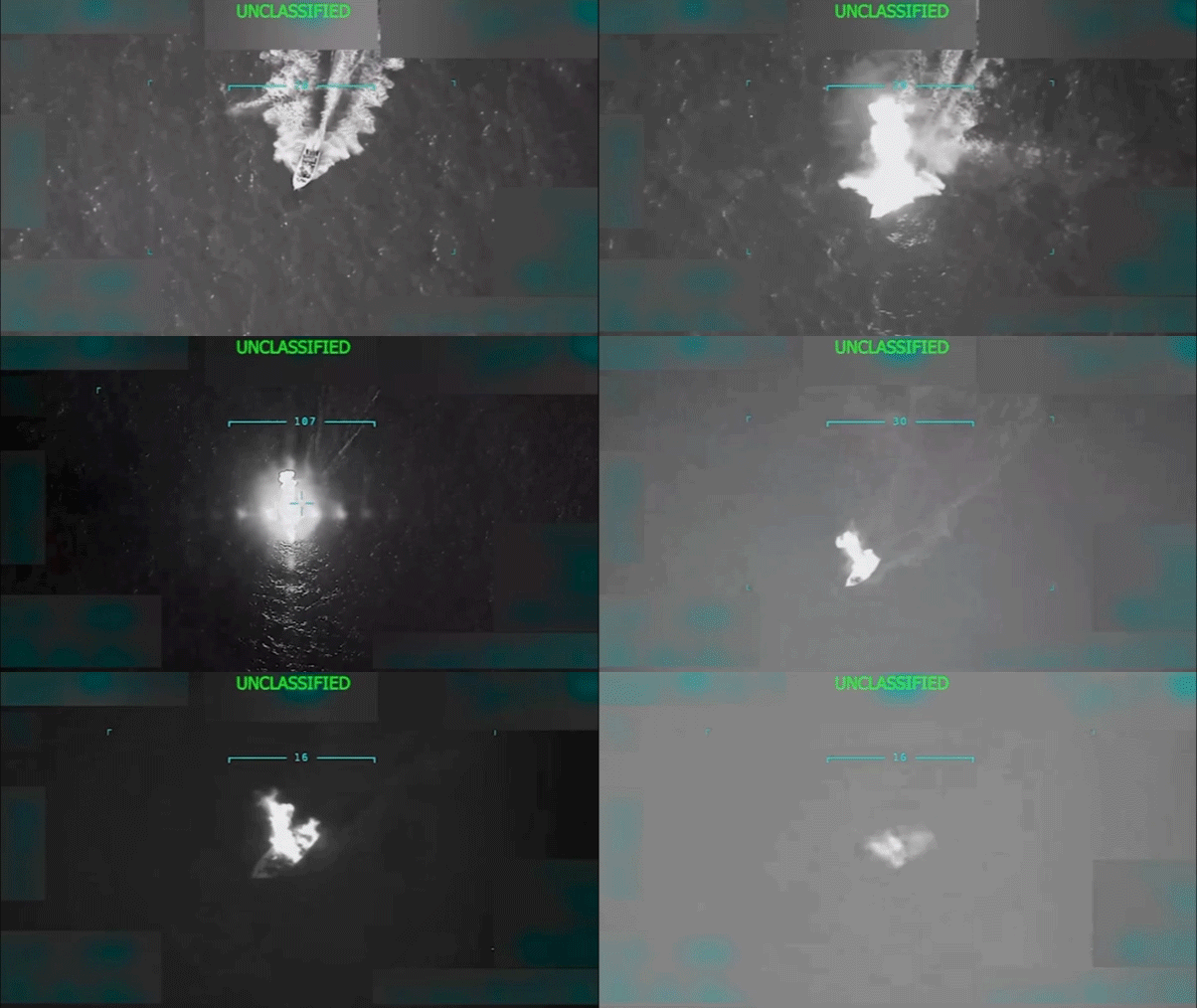
Venezuelan vessel destroyed during U.S. military strike off of Venezuela Sept. 2, 2025. (@realDonaldTrump via Truth Social)
While lawmakers have questioned the legality of the strikes since the beginning, the attacks have come under renewed scrutiny after the Washington Post reported on Friday that Secretary of War Pete Hegseth verbally ordered everyone onboard the alleged drug boat to be killed in a Sept. 2 operation. The Post reported that a second strike was conducted to take out the remaining survivors on the boat.
On Monday, the White House confirmed that a second strike had occurred, but disputed that Hegseth ever gave an initial order to ensure that everyone on board was killed when asked specifically about Hegseth’s instructions.
The White House also said Monday that Hegseth had authorized Adm. Frank «Mitch» Bradley to conduct the strikes, and that Bradley was the one who ordered and directed the second one.
At the time of the Sept. 2 strike, Bradley was serving as the commander of Joint Special Operations Command, which falls under U.S. Special Operations Command. He is now the head of U.S. Special Operations Command.
According to Hegseth, carrying out a subsequent strike on the alleged drug boat was the right call.
«Admiral Bradley made the correct decision to ultimately sink the boat and eliminate the threat,» Hegseth said Tuesday.
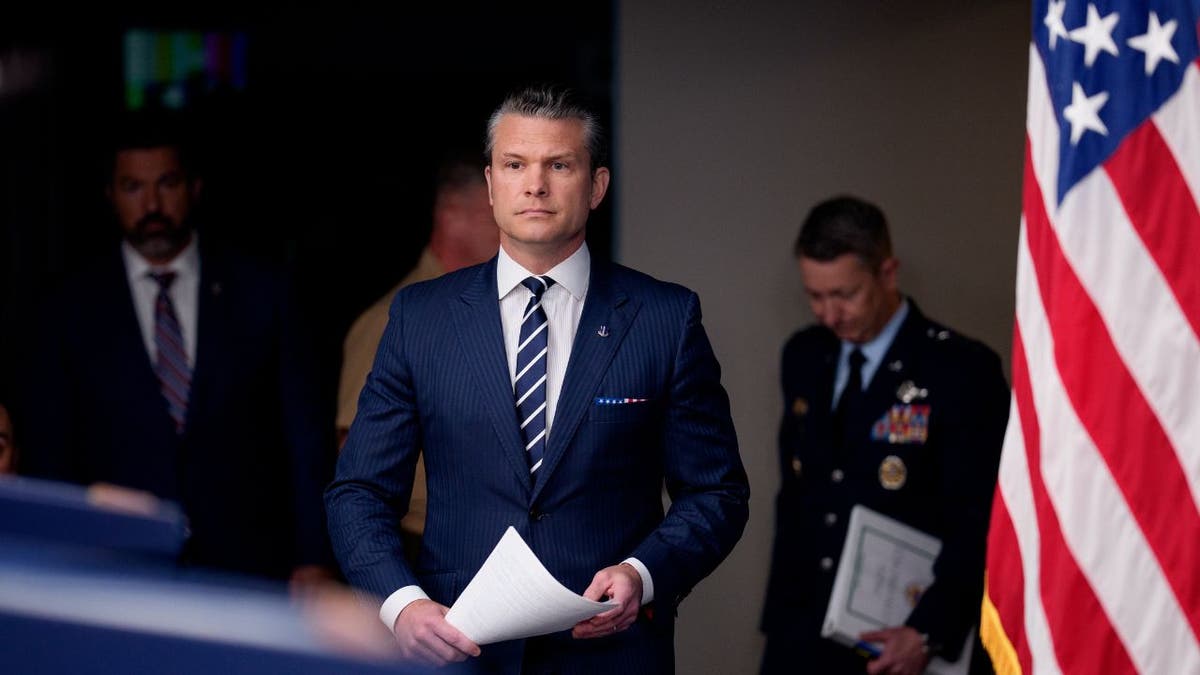
Defense Secretary Pete Hegseth arrives for a news conference at the Pentagon, June 22, 2025, in Arlington, Virginia. (Andrew Harnik/Getty Images)
Altogether, the Trump administration has conducted more than 20 strikes against alleged drug boats in Latin American waters, and has enhanced its military presence in the Caribbean to align with Trump’s goal to crack down on drugs entering the U.S.
CLICK HERE TO DOWNLOAD THE FOX NEWS APP
The last confirmed strike occurred on Nov. 15. Hegseth said Tuesday that although there has been a pause in strikes in the Caribbean because alleged drug boats are becoming harder to find, the Trump administration’s crusade against drugs will continue.
«We’ve only just begun striking narco-boats and putting narco-terrorists at the bottom of the ocean because they’ve been poisoning the American people,» Hegseth said Tuesday.
white house,pentagon,donald trump,venezuelan political crisis,defense







INTERNACIONAL
White men ‘clearly’ targeted as Virginia Dems’ race-sex bill hits Spanberger’s desk: experts

NEWYou can now listen to Fox News articles!
A Virginia state bill passed along party lines directing state agencies to consider the race and sex of small businesses’ ownership when distributing discretionary funds for procurement and contracts is likely to face major legal headwinds, experts told Fox News Digital.
The Small SWAM Business Procurement Enhancement Program Act «provides that executive branch agencies and covered institutions are required to increase their small SWAM business utilization rates by three percent per year until reaching the 42-percent target or, if unable to do so, to implement achievable goals to increase their utilization rates,» according to its text.
SWAM stands for small, women-owned and minority-owned.
Purchases between $10,000 and $200,000 must be set aside to be awarded to SWAM businesses as well, according to the text of the bill drafted by Delegate Jeion Ward, D-Hampton.
INVESTIGATION OF NIKE’S DEI PRACTICES COULD HAVE MAJOR NATIONWIDE IMPACT ON HIRING, SAYS ALAN DERSHOWITZ
Virginia Gov. Abigail Spanberger offers the Democratic response to the State of the Union address. (Mike Kropf/Getty Images)
As the bill approaches Democrat Gov. Abigail Spanberger’s desk, Oversight Project Vice President of Legal Kyle Brosnan told Fox News Digital it appears par for the course for the way Richmond is moving.
Brosnan said the bill constitutes «clearly intentional discrimination against White men.»
«Since reclaiming total control of state government, Virginia Democrats have shown their true colors as nothing short of radical ideologues,» Brosnan said.
«By setting race and sex quotas for 42% of the state discretionary spending on government contracts, Gov. Spanberger and her far left enablers in Richmond are showing their true colors as radicals.»
Zack Smith, a former federal prosecutor for the Northern District of Florida, added that whenever the government proposes to treat people differently based on race and gender, it is unconstitutional.
«I think we saw the Supreme Court speak explicitly to this with its Harvard and UNC decisions banning the use of race in admissions in higher education,» he said.
VIRGINIA DEMS INTRODUCE CLASSROOM DEI CURRICULUM LAW ON DAY 1 OF LEGISLATIVE SESSION
«As a result of that Students for Fair Admissions decision, we’ve seen some federal courts apply that same logic to other federal government programs that seek to prioritize minority-owned businesses (that) are treating people differently based on their race, and so I would certainly think the same logic would apply to this state law action as well.»
Chief Justice John Roberts authored the majority opinion in that Supreme Court case, and Justice Clarence Thomas wrote a concurrence in a historic decision ending affirmative action in college admissions.
«While I am painfully aware of the social and economic ravages which have befallen my race and all who suffer discrimination, I hold our enduring hope that this country will live up to its principles [that] all men are created equal … and must be treated equally before the law,» Thomas said at the time.
DEM GOVERNOR-ELECT TAPS CROCKETT’S FORMER ‘CHIEF BRAND STRATEGIST’ FOR TOP DEI ROLE
Smith said that, even prior to this, the Supreme Court found quotas «impermissible» and that if Spanberger signs the bill there will be business owners who are outraged and will demand accountability.
«I do think there is likely going to be litigation surrounding this because this would involve a federal constitutional issue in addition to other legal claims that may be raised,» Smith said Wednesday.
«This could be brought in federal court,» he said, suggesting arguments against it will fall on 14th Amendment grounds.
CORPORATE AMERICA HAS DECIDED THAT DEI NEEDS TO DIE
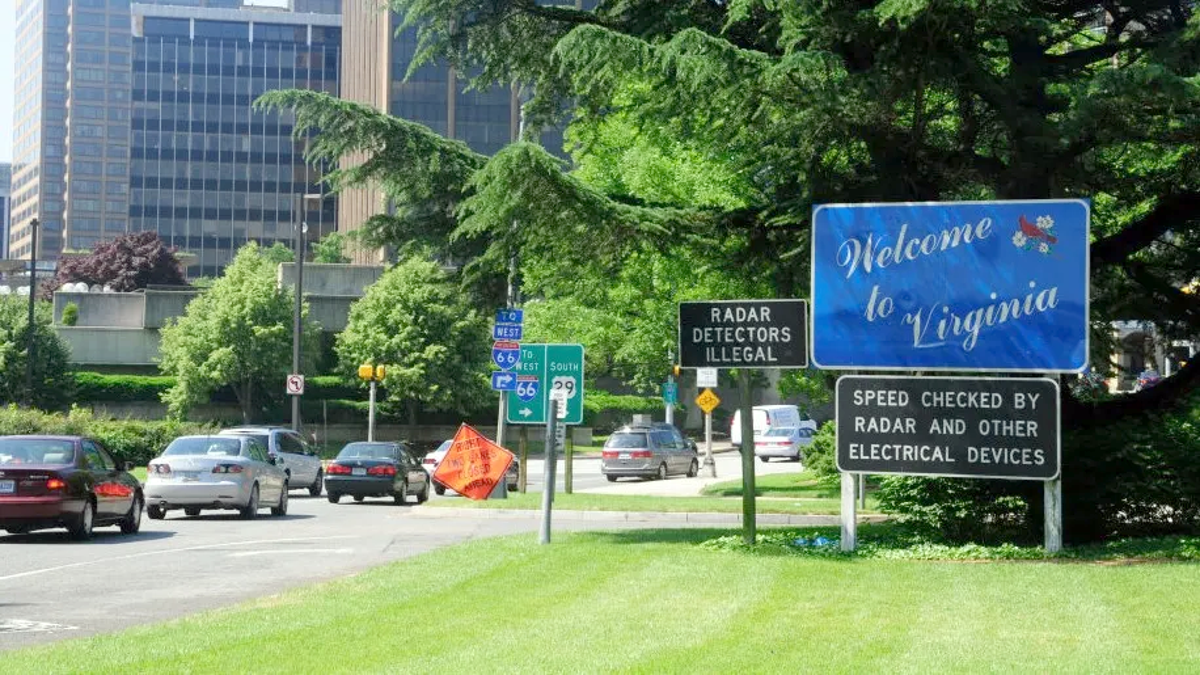
A welcome sign is posted in the grass near the intersection of Lee Highway, Key Bridge and the George Washington Memorial Parkway in Rosslyn, Arlington County, Va. (Universal Images Group/Getty Images)
Brosnan agreed, criticizing the bill’s section requiring Virginia taxpayers to fund $1 million for system updates, staffing and reporting to «institutionalize discrimination» in his words.
«It also ‘sets aside’ government contracts of up to $200,000 for women- and minority-owned businesses so long as their bids are no more than 5% higher than the lowest «noncertified» — read ‘White male-owned’— business.
«Did Virginians expect to get this institutionalized wokeism when they voted for the ‘moderate’ governor?»
The conservative outlet The Federalist said the bill instituted «racial rigging» and reported a section of the bill authorizes the director of the Department of Small Business and Supplier Diversity to conduct a «disparity study» every five years, which the outlet said translated to determining how to reduce the number of White males winning government contracts.
CLICK HERE TO DOWNLOAD THE FOX NEWS APP
Fox News Digital reached out to Spanberger for an indication whether she will sign the bill. Fox News Digital also reached out to Ward, who is also the chairwoman of the Labor & Commerce Committee on Capitol Square.
virginia,abigail spanberger,diversity,senate,bills
INTERNACIONAL
EN VIVO: Israel lanzó una nueva ola de ataques contra la infraestructura del régimen iraní en Teherán

En la madrugada del viernes, el régimen de Irán atacó una refinería saudí en el Mar Rojo, incendió instalaciones de gas natural licuado en Qatar y alcanzó dos refinerías de petróleo en Kuwait, además de causar daños menores en una planta en Israel. La ofensiva, en represalia por un ataque israelí contra el yacimiento gasífero de South Pars, disparó los precios de la energía: el crudo Brent acumula un alza superior al 60% desde el inicio de la guerra.
El primer ministro israelí, Benjamin Netanyahu, afirmó que Irán ya no cuenta con capacidad para enriquecer uranio ni fabricar misiles balísticos, y señaló que Israel suspenderá nuevos ataques contra yacimientos de gas iraníes a pedido del presidente estadounidense, Donald Trump.
En el terreno, la Media Luna Roja Palestina informó que al menos cuatro personas murieron en Beit Awa, en Cisjordania, tras un ataque con misiles iraníes contra Israel, que dejó además 13 heridos. El balance del conflicto en Israel asciende a 15 muertos por ataques iraníes, mientras que al menos 13 militares estadounidenses perdieron la vida.
A continuación, la cobertura minuto a minuto:

La refinería Mina Al Ahmadi en Kuwait fue blanco de ataques con drones en la madrugada del viernes, según informaron medios estatales que citaron a la empresa petrolera nacional.
La Guardia Revolucionaria afirmó que la producción de misiles continúa en tiempos de guerra
El Cuerpo de la Guardia Revolucionaria Islámica (CGRI) aseguró que la producción de misiles se mantiene activa a pesar del conflicto actual y que no existe escasez de existencias
“Nuestra industria de misiles merece una puntuación perfecta en 2025 y no hay ninguna preocupación al respecto ya que producimos misiles incluso en condiciones de guerra, lo cual es asombroso, y no existe ningún problema particular en cuanto al almacenamiento”, declaró Ebrahim Zolfaghari, portavoz del Cuartel General Central Khatam al-Anbiya de la CGRI.
Zolfaghari afirmó que la producción continúa en condiciones de guerra y advirtió sobre la posibilidad de “sorpresas” y operaciones más complejas en el futuro.
El general indicó que la guerra seguirá, señalando: “Esta gente espera que la guerra continúe hasta que el enemigo esté completamente agotado. Esta guerra debe terminar cuando la sombra de la guerra se disipe sobre el país”.
El brent desciende levemente en la apertura y cotiza en los 106 dólares

El barril de petróleo Brent para entrega en mayo registra leves caídas este viernes, en torno al 2%, y se sitúa en 106,7 dólares, tras el fuerte repunte de las últimas sesiones provocado por el conflicto en Oriente Medio. A las 7 de la mañana, el Brent bajaba un 1,78%.
Por su parte, el petróleo intermedio de Texas (WTI), que ya había cerrado la jornada anterior en negativo, desciende un 2,11% antes de la apertura oficial del mercado en Estados Unidos, hasta los 93,47 dólares.
El estrecho de Ormuz tiene una larga historia de perturbaciones
Esta no es la primera vez que el corredor marítimo entre Irán y Omán se utiliza como arma
Seguir en

La guerra entre Estados Unidos e Israel e Irán ha vuelto a colocar al estrecho de Ormuz en el punto de mira de un conflicto geopolítico. Prácticamente todo el tráfico marítimo se ha paralizado en la vía fluvial que conecta el Golfo Pérsico con el resto de los océanos del mundo, interrumpiendo una ruta crucial para el flujo mundial de petróleo . Los ataques a buques mercantes y las amenazas de nuevas huelgas han impedido que casi todos los petroleros transporten petróleo, gas y otras mercancías a través del estrecho. Esto también ha provocado recortes en la producción de algunos de los mayores productores del mundo, ya que su crudo no tiene adónde ir.
La refinería Mina Al-Ahmadi de Kuwait fue atacada con drones

La petrolera estatal de Kuwait, KPC, informó que su refinería Mina Al-Ahmadi fue atacada con múltiples drones a primera hora de la mañana, lo que provocó un incendio en algunas unidades, según la agencia estatal de noticias. No se reportaron víctimas en un primer balance.
Equipos de bomberos acudieron de inmediato al lugar y varias unidades de la refinería fueron desactivadas como medida de precaución para garantizar la seguridad del personal.
El régimen iraní disparó 12 andanadas de misiles contra diferentes puntos de Israel en un día
Los bombardeos encendieron las sirenas antiaéreas que sonaron en múltiples zonas del norte, centro y sur del territorio israelí. Hubo al menos cinco heridos leves, con lesiones provocadas por metralla y fragmentos de vidrio

El régimen de Irán lanzó este jueves doce andanadas de misiles contra diferentes puntos de Israel, incluidos proyectiles de racimo, en una nueva jornada de ataques en el marco de la ofensiva en curso. La última andanada se registró a las 22:42 hora local (20:42 GMT), y las sirenas antiaéreas sonaron en múltiples zonas del norte, centro y sur del país durante todo el día.
Los estados del Golfo responden a ataques con misiles y drones
Las defensas aéreas de Emiratos Árabes Unidos y Kuwait respondieron el viernes a ataques con misiles, según informaron las autoridades de ambos países del Golfo.
El Ministerio de Defensa saudí comunicó que interceptó y destruyó diez drones en el este del país y otro en el norte. Por su parte, el Ministerio del Interior de Baréin indicó que la metralla de una “agresión iraní” provocó un incendio en un almacén, el cual fue controlado sin que se registraran heridos.
Kuwait se enfrentó a una segunda oleada de ataques con misiles y drones
El Ejército de Kuwait informó que está respondiendo a “ataques hostiles con misiles y drones” y pidió a la ciudadanía seguir las instrucciones oficiales de seguridad.
Las autoridades militares señalaron que los sonidos de explosiones escuchados corresponden a la acción de los sistemas de defensa aérea, que lograron interceptar el ataque.
Hace poco más de una hora, el ejército kuwaití había reportado haber enfrentado un ataque previo con misiles y drones.
El príncipe exiliado Reza Pahlavi propuso un Irán sin aliados ni amenaza nuclear tras el fin de la guerra

El hijo del último sha de Irán, Reza Pahlavi, presentó una visión para el país posterior al régimen en la que se pondría fin al apoyo a milicias y grupos aliados, se detendría el enriquecimiento de uranio sensible y se garantizaría la cooperación plena con el Organismo Internacional de Energía Atómica (OIEA).
Pahlavi propone además impulsar la paz regional, incluyendo la ampliación de los Acuerdos de Abraham —a los que denomina “Acuerdos de Ciro”—, e insta a los países árabes a respaldar una transición organizada que favorezca la estabilidad y la prosperidad en la región.
En un artículo de opinión publicado el jueves en Asharq Al-Awsat, titulado “A nuestros vecinos árabes: el fin del régimen abrirá una nueva era de paz”, Pahlavi expone su visión de un Irán sin grupos afines ni amenazas nucleares, con el objetivo de tranquilizar a los estados árabes y asegurar su apoyo a una transición ordenada.
EEUU confiscó cuatro webs que atribuye a “operaciones represión psicológicas transnacional” del régimen iraní

El Departamento de Justicia de Estados Unidos anunció este jueves la confiscación de cuatro dominios web en el marco de una campaña dirigida a “desmantelar programas de ciberataques y represión transnacional”, así como “operaciones psicológicas” atribuidas a la inteligencia iraní.
Según el comunicado oficial, una orden judicial permitió la incautación de los sitios justicehomeland.org, Handala-Hack.to, karmabelow80.org y Handala-Redwanted.to, que ahora muestran un mensaje de confiscación junto a los logos del Departamento de Justicia y del FBI.
Las autoridades estadounidenses sostienen que estos dominios eran empleados por el Ministerio de Inteligencia y Seguridad de Irán para facilitar ciberataques, atribuirse operaciones de hackeo, publicar datos confidenciales obtenidos ilícitamente e incitar al asesinato de periodistas, disidentes y ciudadanos israelíes. Las webs también habrían servido para operaciones psicológicas dirigidas a adversarios del régimen iraní.
gasolinera
INTERNACIONAL
El dilema de Donald Trump: ¿Se justifican 200.000 millones de dólares para una guerra sin fin con Irán y una posible invasión terrestre?


Entre Ríos: la Justicia Federal apunta a las complicidades en el complot narcocriminal que se habría planeado en una cárcel

White men ‘clearly’ targeted as Virginia Dems’ race-sex bill hits Spanberger’s desk: experts

EN VIVO: Israel lanzó una nueva ola de ataques contra la infraestructura del régimen iraní en Teherán

Javier Milei en Tucumán: respaldó a Manuel Adorni y apuntó contra la “carnicería mediática”

Así abandonó Andrea del Boca la casa de Gran Hermano por su grave estado de salud

Caputo habló de la inflación y aseguró: «No puedo forzar a la gente a tener pesos en el bolsillo»

TRAICIÓN Y ÉXODO: La promesa rota de Monteoliva que desató una ola masiva de bajas en la Policía Federal

Adorni se disculpó por el viaje de su esposa: “Fue una pésima decisión, más allá de que no generó gasto para el Estado”

Horacio Rodríguez Larreta reapareció y lanzó “Metrópolis”, su nuevo espacio en la Ciudad de Buenos Aires

Insólito: un esquiador británico terminó la Copa del Mundo de Oslo bajo los efectos del alcohol

 POLITICA3 días ago
Las chicanas de Cristina Kirchner en el arranque de su indagatoria: “Tengo apodos, pero no me parecen adecuados”
- ECONOMIA2 días ago
Juicio por YPF: la Justicia de EEUU benefició a Argentina y suspendió todas las demandas hasta que se defina la cuestión de fondo
- POLITICA1 día ago
Senado: la oposición pidió explicaciones por $LIBRA y los vuelos de Adorni y Bullrich defendió al Gobierno