INTERNACIONAL
Australian boy fighting for life after shark attack, rescued by friends in Sydney Harbor waters

NEWYou can now listen to Fox News articles!
A 12-year-old Australian boy was fighting for his life after suffering catastrophic injuries in a shark attack in Sydney Harbor, surviving only because his friends leaped from a cliff and dragged him back to shore, authorities said.
The attack happened around 4:20 p.m. Sunday after the boy jumped from a 20-foot ledge known as Jump Rock near Shark Beach in the eastern Sydney suburb of Vaucluse, police said in a statement. Police said the boy suffered severe injuries to both legs from what is believed to have been «a large shark.»
His three friends immediately jumped into the water and pulled him to shore, actions authorities said likely saved his life.
«The actions of his mates who have gone into the water to pull him out have been nothing but brave,» said Superintendent Joseph McNulty of the New South Wales Police Marine Area Command, calling the injuries «very confronting» for the young rescuers to witness.
MINNESOTA WOMAN KILLED IN US VIRGIN ISLANDS SHARK ATTACK
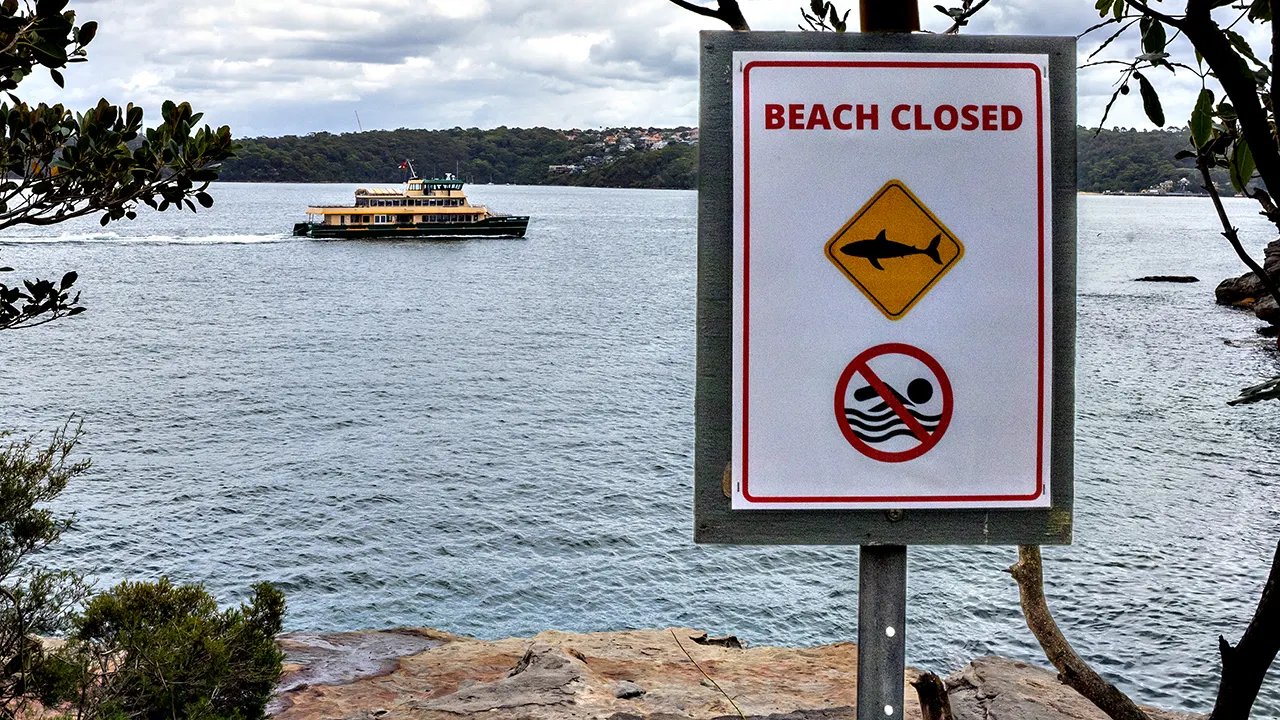
A ferry sails past a closed beach at Vaucluse in Sydney, Monday, Jan. 19, 2026, a day after a boy was attacked by a shark. (Sitthixay Ditthavong/AAP Image via AP)
Local media reports said the boy lost both legs in the attack.
«He is in for the fight of his life now, and the actions of emergency services yesterday gave him that chance,» McNulty said.
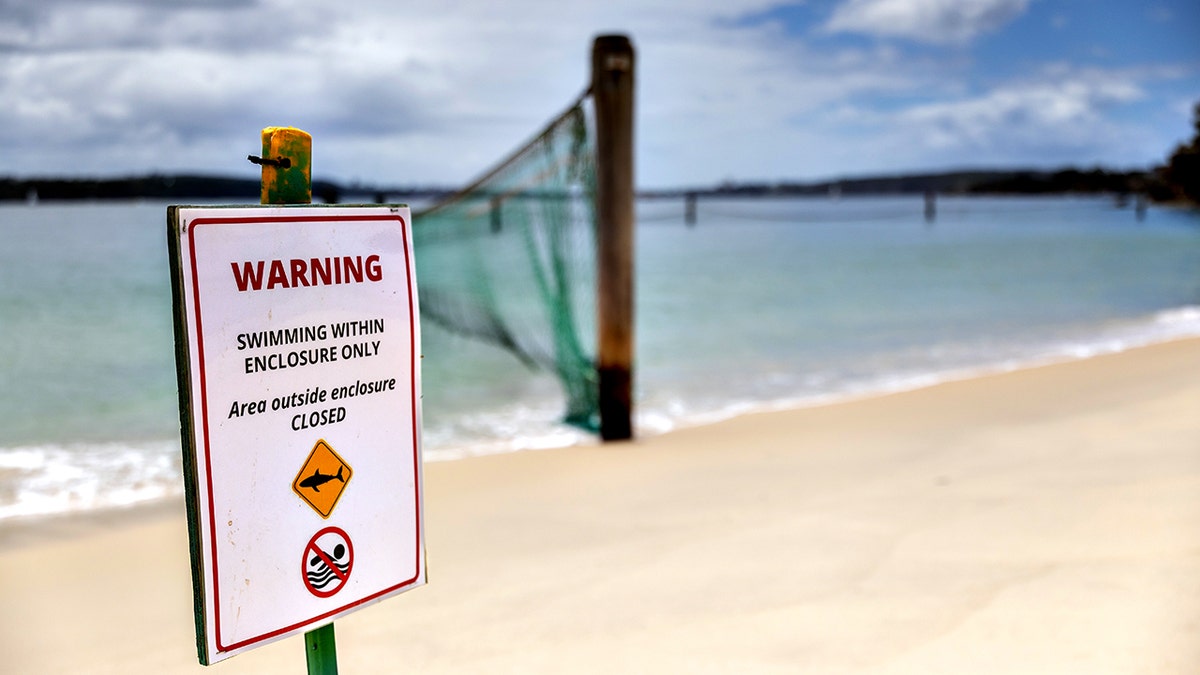
A net runs into Sydney Harbor at a closed beach at Vaucluse in Sydney, Monday, Jan. 19, 2026. (Sitthixay Ditthavong/AAP Image via AP)
The attack was one of three shark encounters reported in the Sydney area in just over 24 hours.
SURFER SAYS SHARK ATTACK FELT ‘LIKE BEING HIT BY A CAR’ AS BOARD BITTEN IN HALF: REPORTS
On Monday evening, a surfer in his 20s was bitten on the leg by a shark off North Steyne Beach in the northern suburb of Manly. Bystanders pulled him from the water, and he was taken to a hospital in critical condition, police said.
Earlier Monday, an 11-year-old boy escaped unharmed after a shark bit into his surfboard at Dee Why Beach, also north of Manly.

Authorities believe bull sharks, like the one pictured above, may have been responsible for at least two of the shark attacks. Police said the 12-year-old boy’s injuries were consistent with those from «a very large shark.» (Luis Javier Sandoval/VW Pics/Universal Images Group via Getty Images, File)
Authorities believe bull sharks may be responsible for at least the first two attacks. Police said recent heavy rainfall had increased murky freshwater runoff into Sydney Harbor, conditions known to heighten bull shark activity.
CLICK HERE TO DOWNLOAD THE FOX NEWS APP
Sydney’s northern beaches, including North Steyne and Dee Why, remained closed as a precaution. All three locations have shark netting, though officials said it was not immediately clear whether the attacks occurred near those barriers.
The Associated Press contributed to this report.
sharks,australia,beach,world











La reducción del déficit fiscal en Panamá durante 2025 fue presentada por el gobierno como una señal de corrección de las finanzas públicas y de recuperación tras años de presiones presupuestarias.
Las cifras oficiales muestran que el balance fiscal mejoró de forma significativa, apoyado en mayor recaudación, control del gasto y operaciones de manejo de deuda que permitieron reducir pagos de intereses. .
Sin embargo, el panorama fiscal todavía enfrenta desafíos estructurales, especialmente por el ritmo de crecimiento de la deuda y la necesidad de consolidar el ajuste sin afectar inversión y servicios públicos.
En ese contexto, el análisis más reciente de Fitch Ratings introduce un matiz relevante: la calificadora reconoce la caída del déficit, pero advierte que la mejora no es suficiente para frenar el aumento del endeudamiento ni garantizar la estabilización de la relación deuda/PIB.
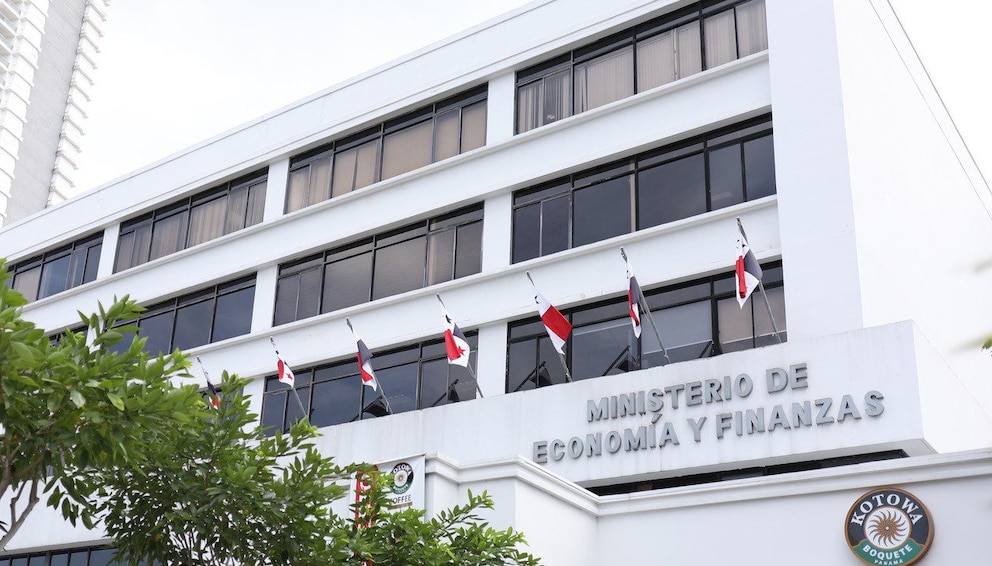
Fitch sostiene que el ajuste fiscal de 2025 se apoyó en factores puntuales y en decisiones con margen limitado de repetición, lo que mantiene abiertas interrogantes sobre la sostenibilidad de las finanzas públicas.
Según el informe, el déficit del Sector Público No Financiero (SPNF) se redujo a 3.7% del PIB en 2025, desde 6.2% en 2024, e incluso por debajo de la meta gubernamental de 4.0%.
El resultado confirma un ajuste significativo, pero Fitch subraya que parte de la mejora responde a elementos transitorios, como el menor pago de compromisos acumulados del año previo y el repunte de ingresos del Canal de Panamá tras la sequía.
En términos prácticos, el informe explica que en 2024 el Estado tuvo que enfrentar una mayor carga de pagos pendientes acumulados, lo que elevó el déficit de ese año.
En 2025, al reducirse esa presión, el resultado fiscal mejoró automáticamente, sin que ello implique necesariamente una transformación estructural del gasto público. Fitch considera que esta dinámica ayuda a entender por qué el déficit bajó, pero no elimina la necesidad de ajustes permanentes.

Otro factor relevante fue el impacto contable de la reforma previsional de la Caja de Seguro Social (CSS), que reclasificó como ingresos de la institución recursos que antes se registraban en cuentas individuales.
Esta modificación contribuyó a mejorar la medición del déficit, aunque Fitch advierte que el efecto es principalmente contable y no sustituye una consolidación fiscal estructural.
El informe también destaca el comportamiento de los ingresos Fitch reconoce un repunte de 9% en la recaudación tributaria, apoyado en mayor fiscalización y actividad económica, pero señala que el resultado convivió con una caída en las contribuciones de planilla a la CSS, pese a mayores aportes del lado empleador tras la reforma previsional.
Para la calificadora, este comportamiento refleja debilidad del mercado laboral y niveles elevados de informalidad, factores que limitan la sostenibilidad del ajuste fiscal.
La principal advertencia del análisis se centra en la deuda. . A pesar de la reducción del déficit, la deuda pública bruta aumentó en $5,500 millones y alcanzó $59,400 millones, situándose en 66% del PIB, por encima de la proyección oficial.
En otras palabras, Fitch concluye que el ajuste fiscal no se tradujo en una desaceleración del endeudamiento, lo que mantiene el riesgo sobre la trayectoria fiscal de mediano plazo.

Parte de la explicación está en el Gobierno Central, cuyo déficit alcanzó 5.2% del PIB, muy por encima del 3% previsto en el presupuesto. Fitch agrega que el endeudamiento neto fue aún mayor, situándose en 6% del PIB, con un financiamiento neto de 6.6% del PIB, lo que evidencia presiones de liquidez que no se reflejan plenamente en el resultado fiscal del SPNF.
El ministro de Economía y Finanzas, Felipe Chapman, ha señalado que el déficit del Sector Público No Financiero se ubicó en 3.68% del Producto Interno Bruto, una disminución cercana al 40% respecto al año anterior, equivalente a más de 2,069 millones de dólares.
El titular de Economía explicó que este resultado se alcanzó gracias a una combinación de disciplina fiscal, reducción del gasto, mejor recaudación y fortalecimiento institucional. Chapman señaló que esta mejora se tradujo en una disminución directa de las tasas de interés que paga el Estado y, de forma progresiva, en mejores condiciones crediticias4 para empresas y ciudadanos.
Como resultado, el país generó ahorros acumulados cercanos a 475 millones de dólares en el servicio de la deuda, recursos que ahora pueden destinarse a áreas prioritarias.
De acuerdo con el ministro, estos ahorros permiten cubrir una parte significativa del subsidio a las pensiones de la Caja de Seguro Social, uno de los compromisos centrales del actual Gobierno. Explicó que el objetivo ha sido garantizar el pago a los jubilados actuales y fortalecer el sistema para las futuras generaciones sin recurrir a endeudamiento excesivo ni a medidas traumáticas.

La calificadora también introduce preocupaciones sobre la transparencia fiscal y la calidad del proceso presupuestario. . Fitch señala que las necesidades adicionales de financiamiento respondieron a pagos de obligaciones no contempladas inicialmente, y advierte que este tipo de eventos podría repetirse, generando incertidumbre en los mercados sobre la previsibilidad de las cuentas públicas.
Uno de los pilares del ajuste fiscal de 2025 fue la reducción de la inversión pública, que cayó a 4% del PIB, su nivel más bajo en dos décadas. Fitch advierte que el margen para profundizar este recorte es limitado, dado el descontento ciudadano por la calidad de servicios de educación, salud y agua.
Además, una parte del ajuste se explica por el aplazamiento de pagos del proyecto llave en mano del Metro de Panamá, lo que reduce el gasto en 2025-2026 pero incrementará desembolsos entre 2027 y 2030.
En paralelo, el gobierno ha intentado mejorar su perfil financiero con operaciones de manejo de pasivos y nuevas emisiones. Una reciente transacción permitió reducir el saldo de deuda en $204 millones y generar ahorros anuales en intereses cercanos a $30 millones, con una demanda internacional superior a $13,000 millones.
La operación incluyó emisiones con vencimientos en 2034 y 2038, con tasas de 5.2% y 5.6%, respectivamente, lo que el Ejecutivo considera una señal de confianza de los mercados.
Fitch, sin embargo, insiste en que la estabilización de la deuda requerirá mayor consolidación fiscal estructural, combinando medidas de ingresos, control del gasto y mejoras en transparencia.

La calificadora observa que el gobierno no contempla una reforma tributaria y apuesta por medidas administrativas para elevar la recaudación, mientras evalúa cambios en aumentos salariales automáticos y en la regla que fija el presupuesto educativo en 7% del PIB.
El informe identifica además la posible reapertura de la mina Cobre Panamá como una fuente potencial de ingresos adicionales. . Aunque las perspectivas han mejorado, el proceso sigue sujeto a auditorías ambientales, negociaciones con la empresa First Quantum y posibles tensiones sociales, lo que introduce incertidumbre sobre su impacto fiscal.
En síntesis, Fitch plantea un diagnóstico de doble lectura: Panamá logró una mejora fiscal relevante en 2025, pero el desafío clave permanece en la trayectoria de la deuda y en la necesidad de consolidar el ajuste con medidas permanentes.
El escenario para 2026 se perfila como un equilibrio entre disciplina fiscal, crecimiento económico y presiones sociales, en un contexto donde la credibilidad del manejo presupuestario será determinante para la percepción de riesgo soberano.
americas,buildings,business news,central american,cityscape,containers,copper,economy,industries,latam,latin, latam,marine transport,markets,mines,mining,natural resources,panama,panamanian,port of balboa,sea ports and terminals,skyline,skyscrapers,transportation and logistics,urban scene

El despliegue militar estadounidense
NEWYou can now listen to Fox News articles!
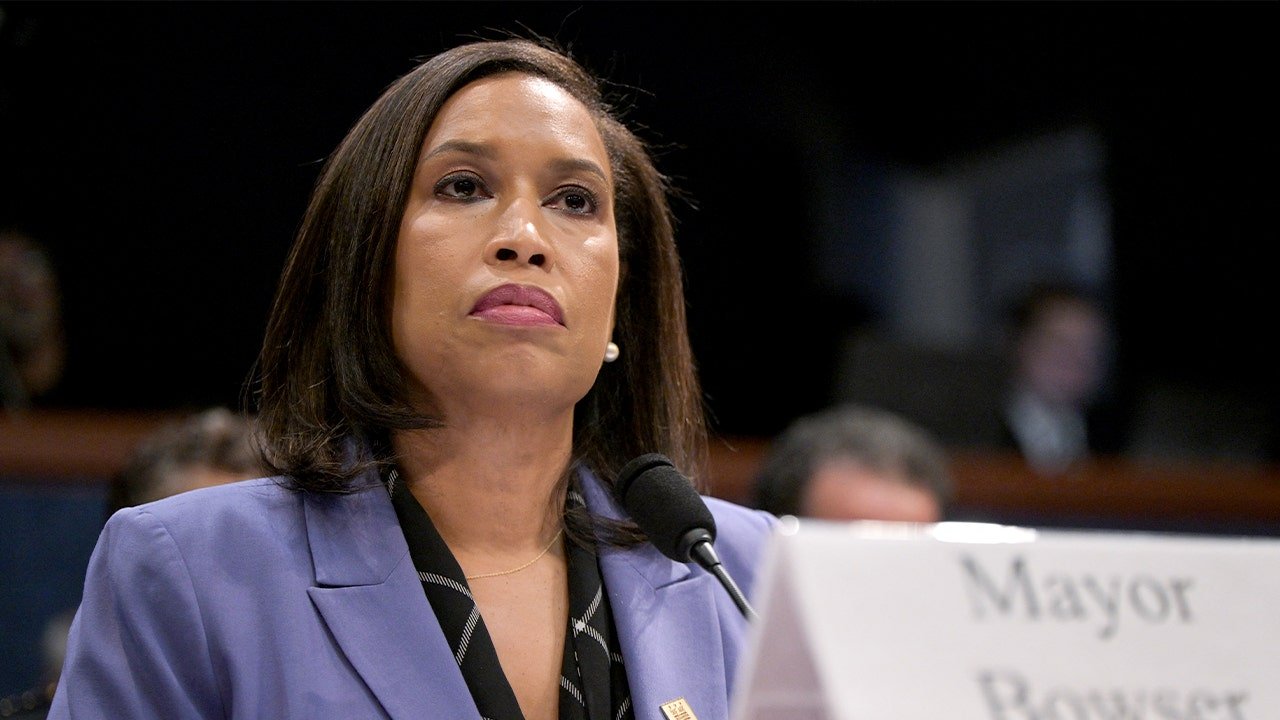
Washington, D.C. Mayor Muriel Bowser declared a disaster emergency over the Potomac sewage spill on Wednesday and requested federal assistance with the cleanup.
The sewage spill has now become the largest in U.S. history, dumping over 240 million gallons of raw sewage into the Potomac River. President Donald Trump has already lashed out at Maryland Gov. Wes Moore for his handling of the spill, saying he is concerned the river winding around the nation’s capital will still stink when America250 celebrations kick off this summer.
Bowser wrote a letter to Trump on Wednesday formally requesting that he issue an emergency disaster declaration, freeing up federal resources to help deal with the spill.
White House press secretary Karoline Leavitt emphasized Trump’s concerns in a press conference on Wednesday. Fox News’ Peter Doocy asked Leavitt if Trump is concerned the nation’s capital will «smell like poop.»
TRUMP EPA SLASHES 12 YEARS OFF SEWAGE CLEANUP CRISIS THAT HAS ROCKED CALIFORNIA FOR DECADES
District of Columbia Mayor Muriel Bowser called for a federal emergency disaster declaration on Wednesday. (Oliver Contreras/AFP via Getty Images)
«Yeah, he is worried about that,» Leavitt said. «Which is why the federal government wants to fix it. And we hope that the local authorities will cooperate with us in doing so.»
Leavitt called on leaders in Maryland, Virginia and D.C. to «step forward and to ask the federal government for help and to ask for the Stafford Act to be implemented here so that the federal government can go and take control of this local infrastructure that has been abandoned and neglected by Governor Moore in Maryland for far too long.»
«It’s no secret that Maryland’s water and infrastructure have been in dire need of repair,» Leavitt said. «Their infrastructure has received a nearly failing grade in the 2025 report card from the American Society of Civil Engineers. This is the same grade they’ve received, five years earlier. There has been no improvement under the leadership of Governor Moore. He’s clearly shown he’s incapable of fixing this problem, which is why President Trump and the federal government are standing by to step in.»
TRUMP SAYS HE COULD SEND THE NATIONAL GUARD TO MARYLAND TO ADDRESS CRIME
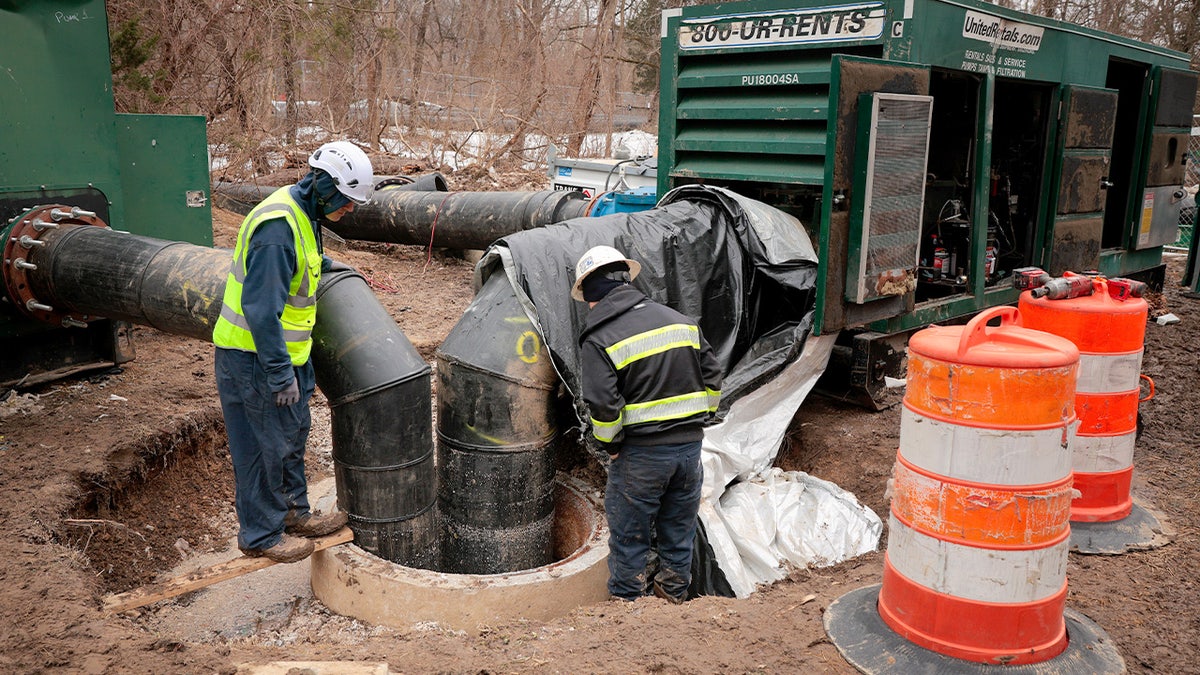
Repair work continues on the broken section of the Potomac Interceptor, a six-foot-wide sewage pipe that collapsed on January 19, in between the Clara Barton Parkway and the C&O Canal on Feb. 16, 2026 in Cabin John, Maryland (Chip Somodevilla/Getty Images)
Moore’s office has pushed back on the administration’s rhetoric surrounding the leak, claiming the federal government has oversight over DC Water, the District’s water and sewer utility.
«Since the last century, the federal government has been responsible for the Potomac Interceptor, which is the origin of the sewage leak. For the last four weeks, the Trump Administration has failed to act, shirking its responsibility and putting people’s health at risk,» a representative from Moore’s office said on Monday. «Notably, the president’s own EPA explicitly refused to participate in the major legislative hearing about the cleanup last Friday.»
Leavitt continued Wednesday that environmentalists should «pray» that local jurisdictions call on Trump to step in and shore up infrastructure and carry out clean up.
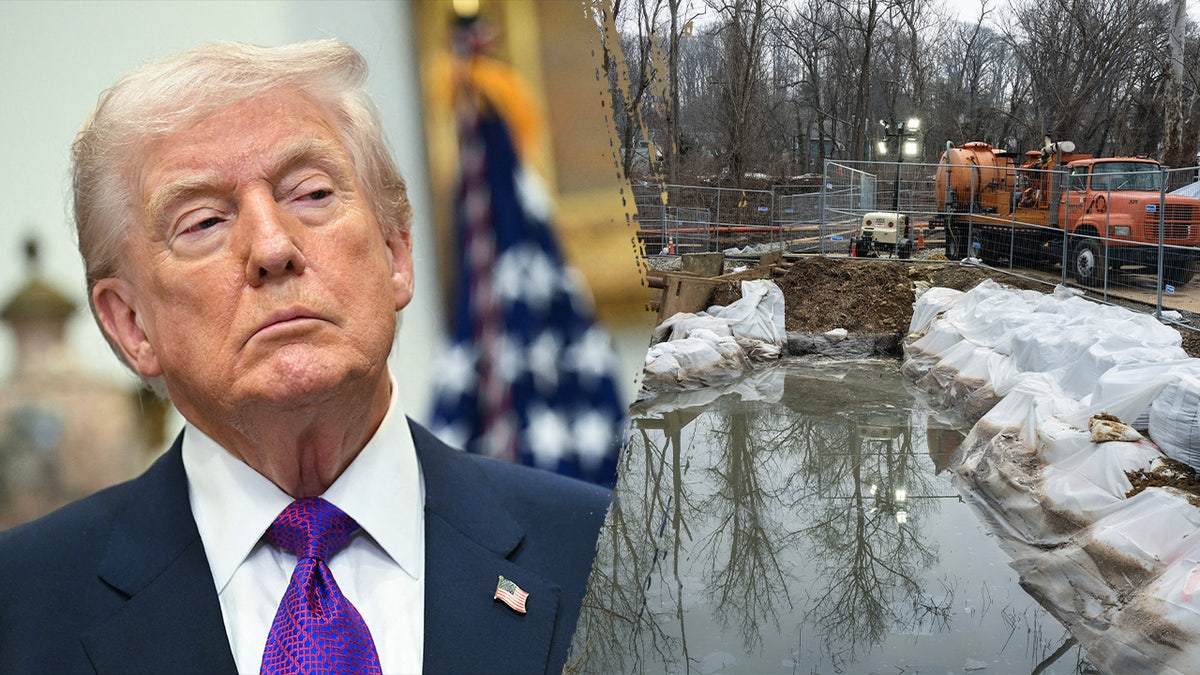
President Donald Trump is worried the Potomac River will still stink when America250 celebrations kick off this summer following a sewage leak that dumped millions of gallons of raw filth into the river, according to the White House. (Saul Loeb/Getty Images/Andrew Caballero-Reynolds/Getty Images)
CLICK HERE TO DOWNLOAD THE FOX NEWS APP
«For all of the environmentalists in the room and across the District of Columbia, let’s all hope and pray that this governor does the right thing and ask President Trump to get involved, because it will be an ecological and environmental disaster if the federal government does not step in to help,» she said. «But of course, we need the state and local jurisdictions to make that formal request.»
Read Bowser’s letter to Trump below (App users click here)
washington dc,politics,donald trump

Desde la CGT afirmaron que el paro tiene alto acatamiento y volvieron a criticar al Gobierno por el cierre de Fate

El Gobierno buscó minimizar el impacto del paro y criticó a la CGT y a la izquierda

Fitch valora reducción del déficit, pero señala debilidades fiscales en Panamá

Visa compra Prisma y expande su negocio de pagos digitales en la Argentina

Segundo día de los últimos test de pretemporada de la F1: Franco Colapinto sumó casi 100 vueltas y firmó el mejor tiempo de Alpine

La estrategia del Gobierno para avanzar con la reforma laboral en Diputados: el excel con los votos y el capítulo más sensible

Reforma laboral bomba: menos indemnización, más horas y despidos más fáciles — el cambio que puede sacudir el empleo en Argentina

Cristian Ritondo: “Vamos a apoyar la ley de modernización laboral, pero no el régimen de licencias por enfermedad”

El dólar no sólo cae en la Argentina: qué pasa con otras monedas emergentes y cuáles son las causas

Uno de los jefes de la CGT adelantó que convocarán a un paro general por la reforma laboral: “Trabajaremos para que sea una gran huelga”

 POLITICA2 días ago
Reforma laboral bomba: menos indemnización, más horas y despidos más fáciles — el cambio que puede sacudir el empleo en Argentina
- POLITICA3 días ago
Cristian Ritondo: “Vamos a apoyar la ley de modernización laboral, pero no el régimen de licencias por enfermedad”
- ECONOMIA3 días ago
El dólar no sólo cae en la Argentina: qué pasa con otras monedas emergentes y cuáles son las causas