INTERNACIONAL
‘Baby steps’: Leader Thune details his work to corral Republicans behind Trump’s legislative vision

NEWYou can now listen to Fox News articles!
FIRST ON FOX: Senate Majority Leader John Thune is weathering headwinds in his own conference over outstanding concerns in President Donald Trump’s «big, beautiful bill» that threaten to derail the legislation, but he’s taking it in stride and standing firm that the megabill will make it to the president’s desk by July 4.
«We have to hit it, and you know whether that means it’s the end of next week, or whether we roll into that Fourth of July week,» the South Dakota Republican told Fox News Digital during an interview from his leadership suite.
«But if we have to go into that week, we will,» he continued. «I think it’s that important. And you know what I’ve seen around here, at least in the past, my experience, if there’s no deadline, things tend to drag on endlessly.»
TOP TRUMP ALLY PREDICTS SENATE WILL BLOW PAST ‘BIG, BEAUTIFUL BILL’ DEADLINE
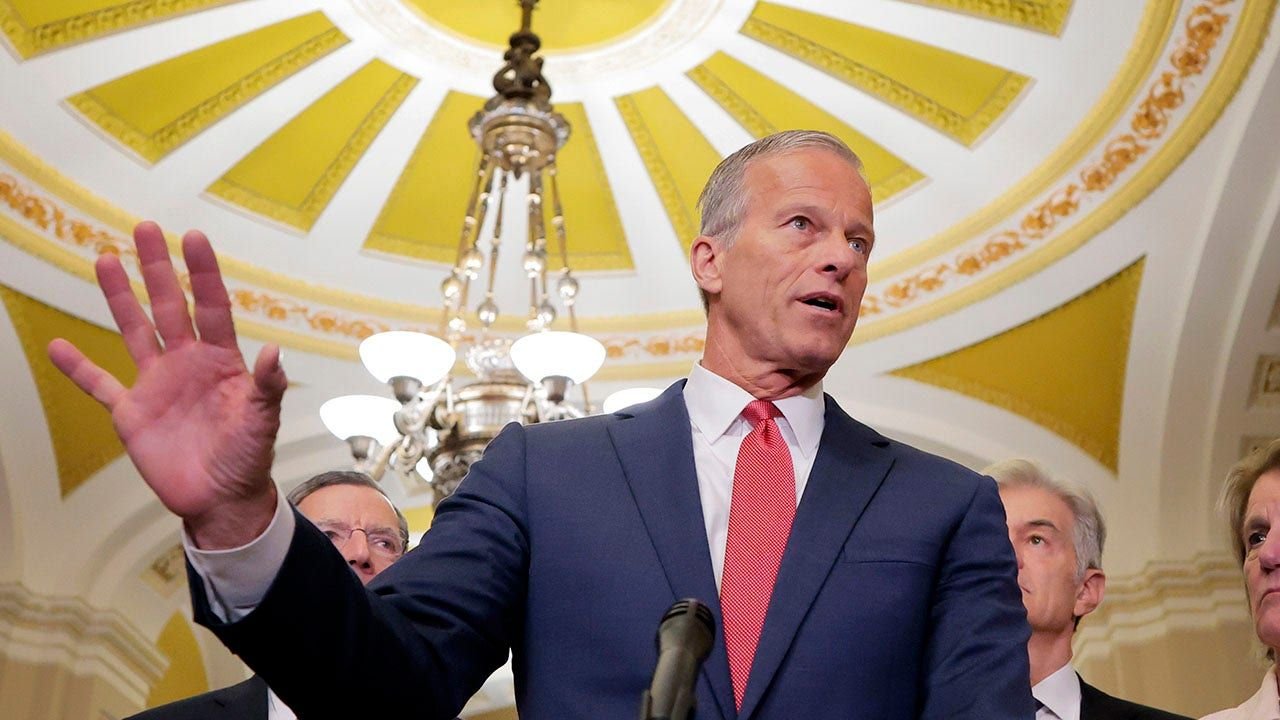
Senate Majority Leader John Thune speaks during a news conference at the U.S. Capitol on June 17, 2025. (Getty Images)
Senate Republicans have been working on their version of Trump’s mammoth bill, which includes priorities to make his 2017 Tax Cuts and Jobs Act permanent, sweeping changes to healthcare, Biden-era energy credits and deep spending cuts, among others, since the beginning of June.
Now that each portion of the bill has been released, Thune is eyeing having the bill on the floor by the middle of next week. But, he still has to wrangle disparate factions within the Senate GOP to get on board with the bill.
«It is a work in progress,» Thune said. «It’s, you know, sometimes it’s kind of incremental baby steps.»
A cohort of fiscal hawks, led by Sen. Ron Johnson, R-Wis., are unhappy with the level of spending cuts in the bill. Some Senate Republicans want to achieve at least $2 trillion in spending cuts over the next decade, but Johnson has remained firm in his belief that the bill should go deeper and return to pre-COVID-19 pandemic spending levels.
Others, including Sens. Susan Collins, R-Maine, Josh Hawley, R-Mo., and Lisa Murkowski, R-Alaska, are upset with tweaks to Medicaid, and the impact those changes could have on rural hospitals and working people on the healthcare program’s benefit rolls.
‘IT JUST BAFFLES ME’: SENATE REPUBLICANS SOUND ALARM OVER MEDICAID CHANGES, SPENDING IN TRUMP MEGABILL
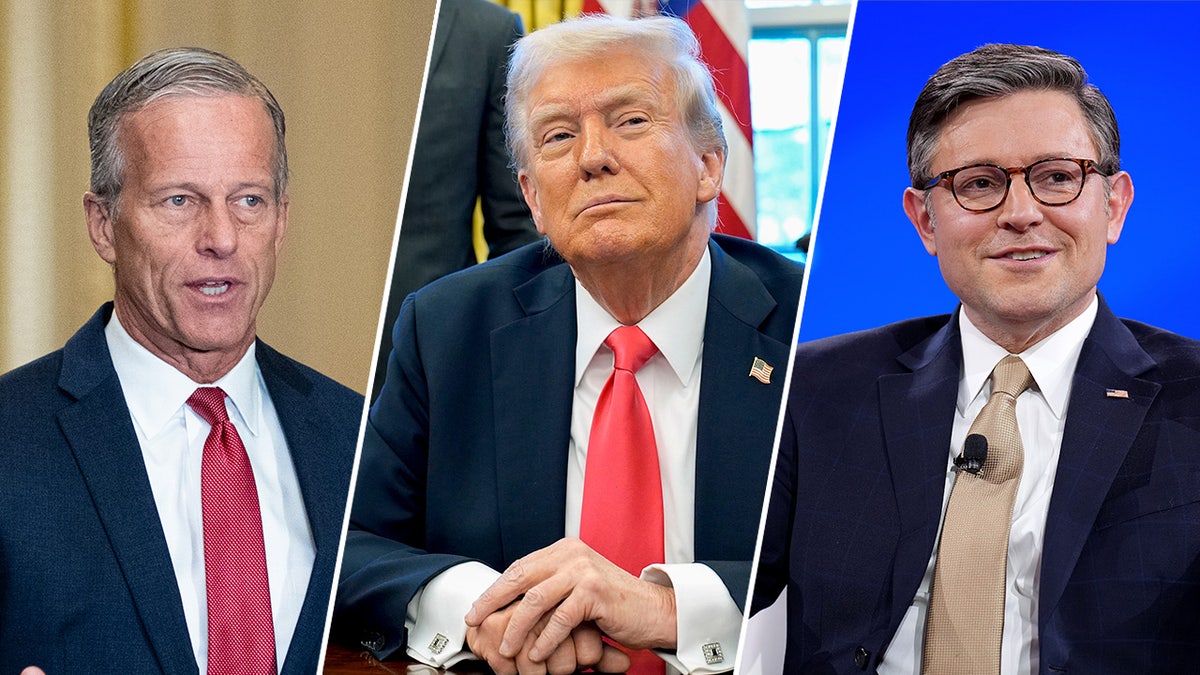
Senate Majority Leader John Thune is signaling that changes are likely to the House’s version of President Trump’s «big, beautiful bill.» (Getty Images)
Thune has to strike a precarious balancing act to sate the concerns of his conference, given that he can only afford to lose three votes. It’s a reality he acknowledged and described as trying to find «the sweet spot» where he can advance the bill back to the House.
He’s been meeting with the factions individually, communicating with the White House and working to «make sure everybody’s rolling in the same direction.»
«Everybody has different views about how to do that, but in the end, it’s cobbling together the necessary 51 votes, so we’re working with anybody who is offering feedback,» he said.
Collins and others are working on the side to create a provider relief fund that could offer a salve to the lingering issues about the crackdown on the Medicaid provider rate tax in the bill.
The Senate Finance Committee went further than the House’s freeze of the provider tax rate, or the amount that state Medicaid programs pay to healthcare providers on behalf of Medicaid beneficiaries, for non-Affordable Care Act expansion states, and included a provision that lowers the rate in expansion states annually until it hits 3.5%.
«We’re going to do everything we can to make sure that, for example, rural hospitals have some additional assistance to sort of smooth that transition,» Thune said.
BLUE STATE REPUBLICANS THREATEN REVOLT AGAINST TRUMP’S ‘BIG, BEAUTIFUL BILL’ IF SENATE CHANGES KEY TAX RULE
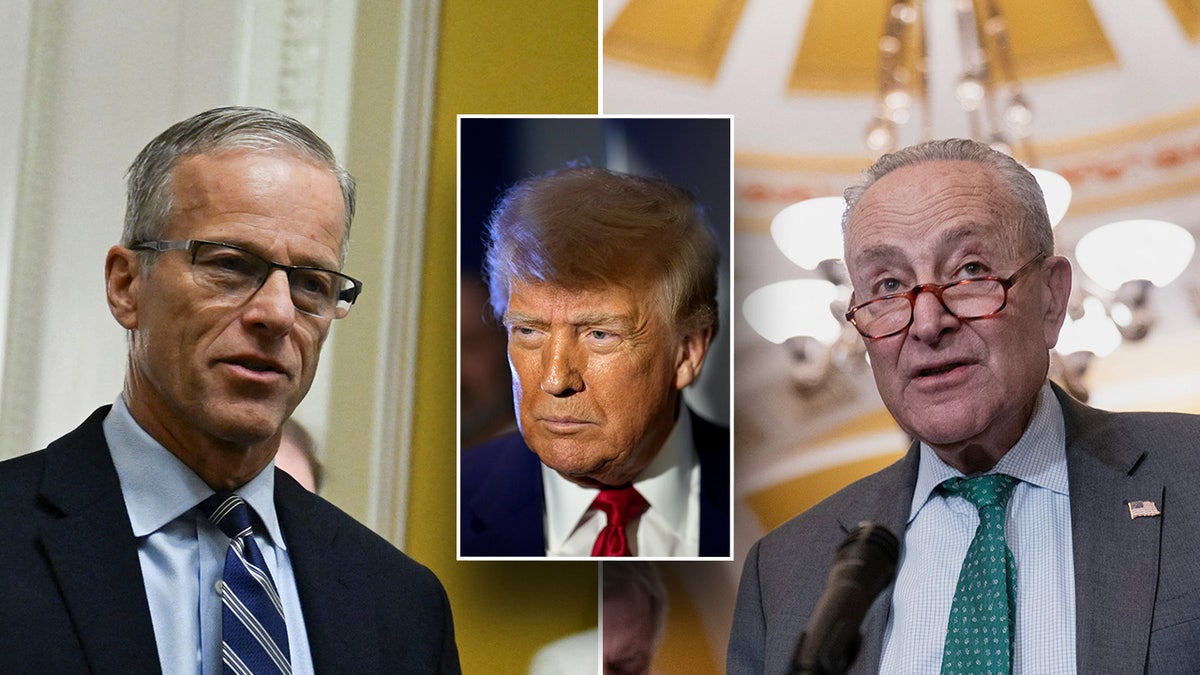
An amended version of the House-passed Trump budget was voted on at the end of a marathon vote series in the Senate. (Reuters)
Thune, who is a member of the Finance panel, noted that «we all agree that the provider tax has been gamed» and «abused» by blue states like New York and California, and argued that the changes were done to help «right the ship» in the program.
«I think that’s why the sort of off-ramp, soft-landing approach [from] the Finance committee makes sense, but these are substantial changes,» he said. «But on the other hand, if we don’t start doing some things to reform and strengthen these programs, these programs aren’t going to be around forever, because we’re not going to be able to afford them.»
The Senate’s product won’t be the end of the reconciliation process, however. The changes in the bill will have to be green-lit by the House, and one change in particular to the state and local tax (SALT) deduction cap already has a cohort of blue state House Republicans furious and threatening to kill the bill.
The Senate’s bill, for now, left the cap unchanged at $10,000 from the policy ushered in by Trump’s first-term tax cuts, a figure that Senate Republicans view as a placeholder while negotiations continue.
Indeed, Sen. Markwayne Mullin, R-Okla., is working with members of the SALT caucus in the House to find a compromise on the cap. But the appetite to keep the House-passed $40,000 cap isn’t strong in the Senate.
«The passion in the Senate is as strong as it is in the House against changing the current policy and law in a way that… favors high-tax states to the detriment and disadvantage of low tax states,» he said. «And so it’s the emotion that you see in the House side on that particular issue is matched in the Senate in a different direction.»
Meanwhile, as negotiations continue behind the scenes on ways to address issues among Senate Republicans, the Senate Parliamentarian is currently chunking through each section of the greater «big, beautiful bill.»
The parliamentarian’s role is to determine whether policies within each section of the bill comport with the Byrd Rule, which is the arcane set of parameters that govern the budget reconciliation process.
Thune has made clear that he would not overrule that parliamentarian on Trump’s megabill, and re-upped that position once more. The reconciliation process gives either party in power the opportunity to pass legislation on party lines and skirt the Senate filibuster, but it has to adhere to the Byrd Rule’s requirements that policy deals with spending and revenue.
CLICK HERE TO GET THE FOX NEWS APP
However, he countered that Senate Republicans planned to take a page from Senate Minority Leader Chuck Schumer, D-N.Y., when Democrats rammed former President Joe Biden’s agenda through Congress.
«The Democrats with the [Inflation Reduction Act] and [American Rescue Plan Act], for that matter, they dramatically expanded the scope of reconciliation and what’s eligible for consideration,» he said.
«So, we’ve used that template, and we’re pushing as hard as we can to make sure that it allows us to accomplish our agenda, or at least as much of our agenda as possible, and fit within the parameters of what’s allowed,» he continued.

INTERNACIONAL
Iran moves hundreds of millions in crypto during nationwide internet blackout, report reveals

NEWYou can now listen to Fox News articles!
EXCLUSIVE: Cryptocurrency infrastructure linked to Iran’s Islamic Revolutionary Guard Corps (IRGC) continued operating during the country’s nationwide internet blackout after the Feb. 28 U.S.–Israeli strikes, a cyber intelligence report reviewed by Fox News Digital claims. It allowed hundreds of millions of dollars in crypto to move out of the country.
Omri Raiter, founder and CEO of RAKIA, a cyber intelligence firm that develops data analysis platforms used by governments and security agencies, told Fox News Digital his team began monitoring Iranian cryptocurrency activity in real time after the attacks and quickly detected a surge of funds leaving Iranian-linked crypto accounts.
«We’ve seen a surge of funds since the first hours of the war,» Raiter said. «It started with tens of millions in the first hours, and it grew to hundreds of millions and more. Money was just flowing out from Iranian crypto accounts.»
Wallets linked to the IRGC received more than $3 billion in cryptocurrency in 2025, according to the internal report based on blockchain intelligence data cited by RAKIA. The report also cites publicly available data from blockchain analysis firm Chainalysis, which estimated Iran’s cryptocurrency ecosystem reached $7.78 billion in activity in 2025.
IRAN PROXIES WAGE WAR ON ISRAEL, THREATEN US INTERESTS AS IRAQ SLAMMED FOR NOT DISARMING THEM
Strikes on the Iranian leadership, the IRGC and Iranian naval vessels and oil infrastructure have roiled the markets. ( Sasan/Middle East Images / AFP via Getty Images)
Raiter said the data suggests Iran has developed a significant crypto-based financial infrastructure capable of operating even during heavy sanctions and communications shutdowns.
«The IRGC has been financing proxy operations through the very same crypto corridors that sanctions were designed to shut down,» Raiter said.
The U.S. Department of the Treasury sanctioned cryptocurrency exchanges tied to Iranian actors Jan. 30, marking one of the first times the U.S. targeted entire digital asset platforms rather than individual wallets for sanctions evasion linked to the Islamic Revolutionary Guard Corps.
Treasury Secretary Scott Bessent said the move was part of a broader effort to disrupt financial networks connected to Tehran, Iran.
«The Treasury will continue to pursue Iranian networks and corrupt elites who enrich themselves at the expense of the people,» Bessent said in a Treasury press release in January. «This also applies to attempts by the regime to use digital assets to circumvent sanctions.»
The recent surge appears to reflect two parallel trends: funds moving to support Iran’s regional proxy networks and money being moved by individuals connected to the regime seeking to protect their personal wealth, according to RAKIA’s analysis.
«The proxy war funding and the personal capital flight are two sides of the same coin,» Raiter said. «They move through the same pipelines.»
IRAN WAR, 11 DAYS IN: US CONTROLS SKIES, OIL SURGES AND THE REGION BRACES FOR WHAT’S NEXT

Tehran’s skyline, including the Azadi Tower, became the backdrop to a crisis shaped as much by cyber disruption as by missiles in the sky. (Kurt «CyberGuy» Knutsson)
Raiter said the firm identified cryptocurrency flows connected to networks previously associated with Iran-backed groups.
«Some of the accounts we saw are connected to areas where money historically flows to proxy wars,» he told Fox News Digital, citing activity linked to Lebanon and Yemen.
«Some of it could be people inside the IRGC trying to move their own money,» Raiter said. «But when you see the scale and the timing, it looks coordinated.»
The report produced by RAKIA claims the activity continued even after Iran imposed a sweeping internet shutdown across the country. National connectivity dropped to roughly 1% of normal levels during the blackout, according to internet monitoring group NetBlocks.
FROM MISSILES TO MINERALS: THE STRATEGIC MEANING BEHIND THE IRAN STRIKE

Military members of the Islamic Revolutionary Guard Corps in western Tehran, Iran (Morteza Nikoubazl/NurPhoto via Getty Images)
Despite that shutdown, RAKIA researchers said they detected more than 1,100 active cryptocurrency nodes operating inside Iran.
«When the internet is at one percent and you still see over a thousand active crypto nodes, you’re not looking at retail users,» Tom Malca, RAKIA’s head of cyber and AI research, said in the report. «Those nodes require dedicated bandwidth, stable power and deliberate exemption from the shutdown.»
RAKIA researchers said the activity suggests specialized infrastructure continued operating even as millions of Iranian civilians were cut off from the internet.
Most of the nodes were concentrated in the Tehran–Qom corridor, according to the report, an area that includes major government and IRGC institutions. Smaller clusters were detected in Iranian cities, including Isfahan, Mashhad, Tabriz and Kermanshah, according to the analysis.
CLICK HERE TO DOWNLOAD THE FOX NEWS APP

Islamic Revolutionary Guard Corps special forces walk on the U.S. flag during a rally commemorating International Quds Day, also known as Jerusalem Day, in Tehran, Iran, March 28, 2025. (Morteza Nikoubazl/NurPhoto via Getty Images)
RAKIA said its investigation relied on a combination of network monitoring and publicly available blockchain intelligence.
The Iranian mission to the United Nations in New York declined to comment on the report’s claims.
war with iran,terrorism,cybercrime
INTERNACIONAL
Florida Republicans send SAVE Act–style proof-of-citizenship voting bill to DeSantis’ desk
NEWYou can now listen to Fox News articles!
Florida lawmakers are sending Republican Gov. Ron DeSantis a strict elections bill modeled after the federal SAVE America Act strongly championed by President Donald Trump that mandates voters verify their citizenship when registering.
Lawmakers in Tallahassee, Florida, in the GOP-dominated state House approved the measure in a 77–28 vote Thursday, hours after the bill passed the Republican-controlled state Senate 27–12. The votes in both houses of the Florida legislature were nearly entirely along party lines.
DeSantis, a supporter of what he calls «the Florida version of the SAVE Act,» is expected to sign the measure when it reaches his desk.
«Although Florida has already enacted much of what the federal legislation contemplates, this will further fortify our state as the leader in election integrity,» the governor highlighted in a social media post.
SENATE GOP EYES BLAME GAME AS TRUMP-BACKED SAVE ACT HEADED FOR DEFEAT
The developments in Florida come as the federal bill faces an uncertain future in Congress.
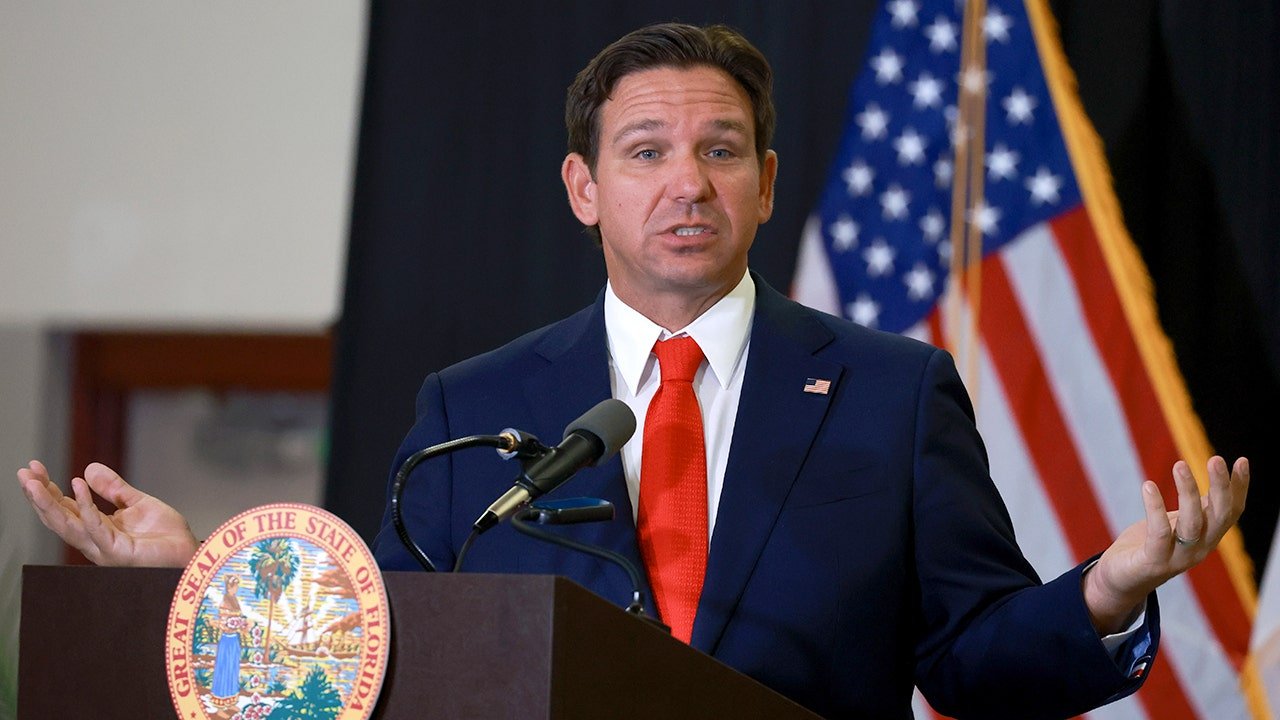
Republican Gov. Ron DeSantis of Florida supports a bill approved by his state’s legislature which mandates proof-of-citizenship when registering to vote. (AP Photo/Rebecca Blackwell, File)
The SAVE Act, which stands for Safeguard American Voter Eligibility, narrowly passed the GOP-controlled House in February mostly along party lines. But it’s stalled in the Senate, where Republicans hold a 53–47 majority in the chamber, far short of the 60 vote threshold needed to pass the bill.
The federal bill would require strict voter ID and proof-of-citizenship requirements across the country. Republicans say the bill is necessary to secure election integrity.
While polls indicate the vast majority of Americans — regardless of the political affiliation — support voter IDs at the polls and preventing noncitizens from voting in federal elections, Democrats argue the bill is not needed, since citizenship already is a requirement to vote and instances of noncitizen voting are rare.
THUNE GUARANTEES VOTER ID BILL TO HIT THE SENATE DESPITE SCHUMER, DEM OPPOSITION: ‘WE WILL HAVE A VOTE’
Democrats and voting rights groups also claim that the federal bill would create unnecessary barriers, making it harder for voters to cast a ballot.
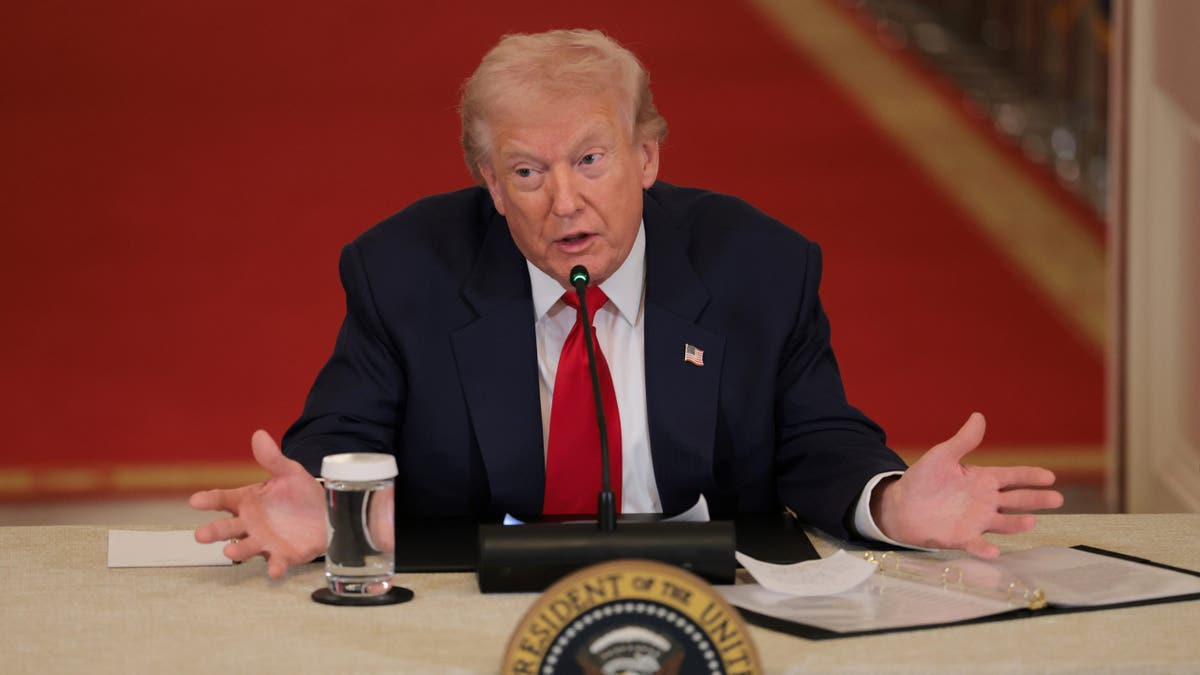
President Donald Trump has said that passing a federal bill that mandates proof-of-citizenship to register to vote should be the number one priority for Congress. (Anna Moneymaker/Getty Images)
Trump, who is intent on holding the Republican congressional majorities in the 2026 midterm elections, said earlier recently that the federal bill should be the top priority in Congress and that if passed, it «will guarantee the midterms» for Republicans.
But the Florida bill’s proof of citizenship requirement wouldn’t take effect until January, after the November 2024 midterm elections. And the bill also doesn’t limit the Sunshine State’s allowance for excuse-free mail-in-voting.
Trump has long railed against mail-in-balloting.
SCHUMER DOUBLES DOWN ON GOP VOTING BILL ‘JIM CROW 2.0’ DESPITE DEMOCRATIC VOTER SUPPORT
The Florida measure also would prevent college students from using their student IDs when voting in person, but that provision wouldn’t take effect until 2027.
«This bill creates real barriers for everyday Floridians, especially those with the fewest resources,» Democratic state Sen. LaVon Bracy Davis of Orlando argued in a social media post. «It will disproportionately impact working families, seniors, and college students who want to exercise their voice and right to vote.»
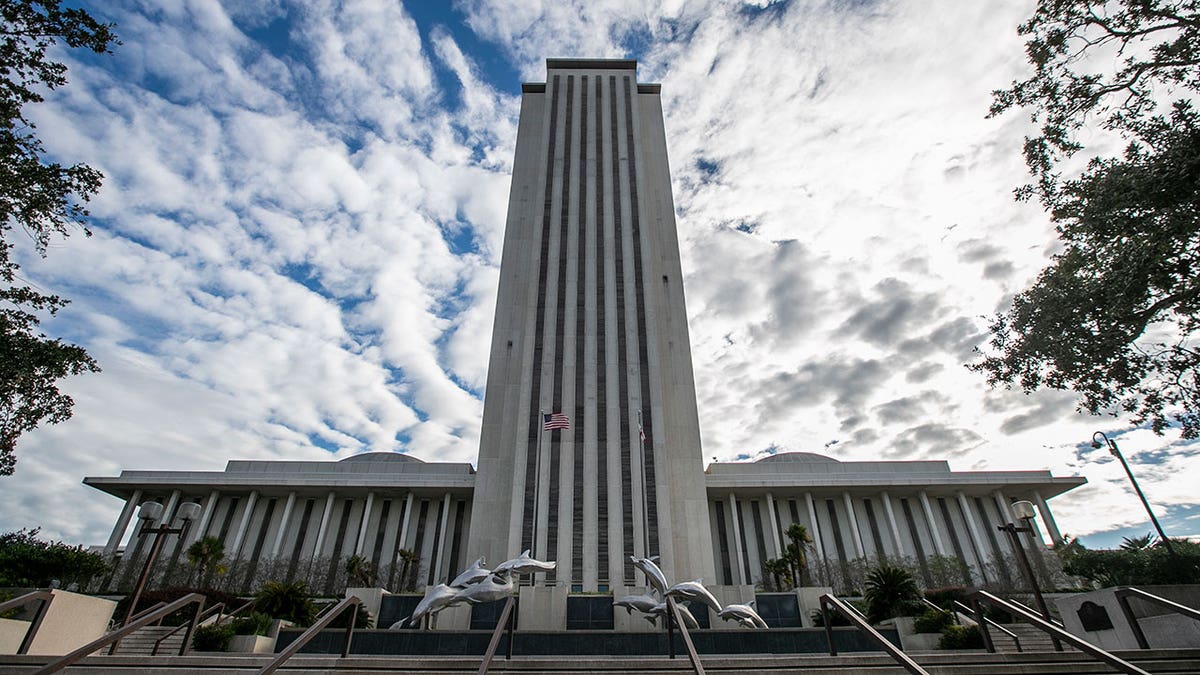
A view of the Florida State Capitol building in Tallahassee, Florida. (Mark Wallheiser/Getty Images)
And Florida Democratic Party Chair, Nikki Fried charged, «In the cover of night, Florida Republicans made it harder for U.S. citizens to vote.»
«While Democrats, civic groups, and voters voiced their concerns to stop this harmful policy, Republicans decided citizens’ voices didn’t matter and voted to disenfranchise hardworking Floridians,» she added.
The bill would make Florida the most populous state in the nation to mandate proof-of-citizenship to register to vote.
Arizona and Kansas enacted similar requirements in the past two decades, and Louisiana passed a law two years ago.
CLICK HERE TO DOWNLOAD THE FOX NEWS APP
Proof-of-citizenship bills passed recently in the South Dakota and Utah legislatures, and are awaiting the governors’ signatures.
And in 2024, New Hampshire mandated that all first-time voters show proof of citizenship when registering.
donald trump,ron desantis,voting,elections,midterm elections,florida
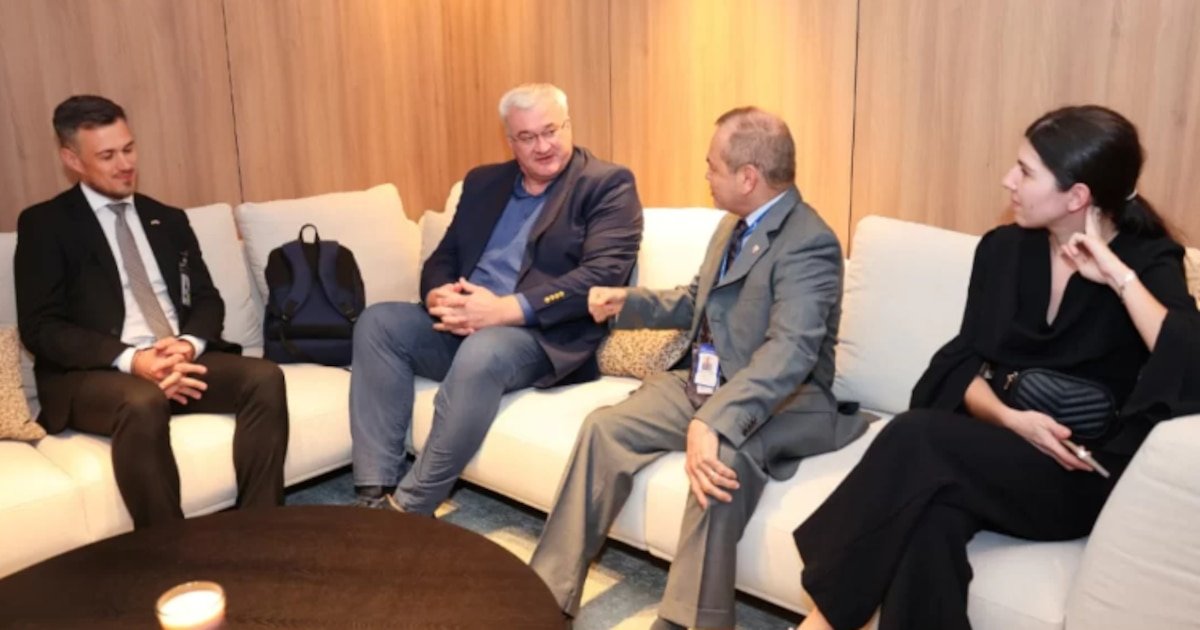
Panamá y Ucrania dieron un nuevo paso en su relación bilateral con la firma de una hoja de ruta para el periodo 2026-2029 y un memorando de cooperación académica, durante la primera visita oficial al país de un ministro de Asuntos Exteriores ucraniano.
En paralelo, el gobierno panameño reiteró su posición de respaldo a la soberanía de Ucrania y su rechazo al uso de la fuerza contra otro Estado. El conflicto entre Ucrania y Rusia se remonta al 24 de febrero de 2022, cuando Moscú lanzó una invasión a gran escala sobre territorio ucraniano, desencadenando la mayor guerra en Europa desde la Segunda Guerra Mundial.
Desde entonces han transcurrido más de cuatro años de combates que han dejado decenas de miles de muertos entre fuerzas militares de ambos bandos y miles de víctimas civiles.
La agenda del canciller ucraniano Andrii Sybiha incluyó una reunión con el ministro de Relaciones Exteriores de Panamá, Javier Martínez-Acha Vásquez, en el Palacio Bolívar, sede de la Cancillería.
Allí ambos funcionarios sostuvieron primero un encuentro privado y luego un diálogo ampliado con sus respectivas delegaciones, en el que abordaron temas bilaterales, regionales y multilaterales, además de asuntos vinculados con la seguridad internacional y la cooperación entre ambos países.

Un antecedente relevante de este acercamiento bilateral fue la reunión que sostuvieron en septiembre de 2024, en Nueva York, el presidente panameño José Raúl Mulino y su homólogo ucraniano, Volodímir Zelenski, en el marco de la Asamblea General de las Naciones Unidas.
En ese encuentro, ambos mandatarios abordaron oportunidades de cooperación y comercio, mientras Ucrania adelantó su intención de abrir una embajada en Panamá, una decisión que ahora se concreta. Panamá, además, reiteró entonces su respaldo a los esfuerzos orientados a alcanzar la paz.
Durante las conversaciones, los ministros subrayaron la importancia del respeto a los principios contenidos en la Carta de las Naciones Unidas, en especial la soberanía, la integridad territorial de los Estados y la primacía del derecho internacional. Panamá también expresó su preocupación por el deterioro de la paz y la seguridad internacionales desde el inicio de la guerra en 2022 y por las consecuencias humanitarias que ese conflicto ha tenido sobre la población civil.
En ese contexto, el gobierno panameño reiteró su rechazo a cualquier violación de la soberanía, la independencia política y la integridad territorial de Ucrania.
También reafirmó su condena al uso de la fuerza de un Estado contra otro, en línea con la posición que ha sostenido en distintos foros internacionales desde el inicio de la invasión rusa. Uno de los principales resultados de la visita fue la firma de la Hoja de Ruta para el Desarrollo de las Relaciones entre la República de Panamá y Ucrania para el periodo 2026-2029.
El documento servirá como marco para profundizar la relación bilateral y promover una mayor cooperación en distintas áreas, entre ellas el intercambio político, la coordinación diplomática y el desarrollo de iniciativas conjuntas.
A ello se sumó la suscripción de un Memorando de Entendimiento sobre Cooperación Académica entre el Ministerio de Asuntos Exteriores de Ucrania y el Ministerio de Relaciones Exteriores de Panamá.

El acuerdo prevé una colaboración activa entre la Academia Diplomática de Ucrania “Hennadii Udovenko” y la Academia Diplomática y Consular “Ernesto Castillero Pimentel”, con miras a impulsar programas de formación, intercambio de experiencias y fortalecimiento profesional.
Las delegaciones también expresaron interés en ampliar la cooperación en educación, ciencia e innovación tecnológica. Según lo planteado durante el encuentro, ambos países ven espacio para promover proyectos científicos conjuntos, compartir conocimientos y fortalecer los vínculos entre sus instituciones académicas y técnicas.
La visita del canciller ucraniano también incluyó una reunión en la Asamblea Nacional con la presidenta de la Comisión de Relaciones Exteriores, la diputada Walkiria Chandler, y otros legisladores.
En ese encuentro se abordaron temas relacionados con la cooperación parlamentaria y con el fortalecimiento de los vínculos políticos entre Panamá y Ucrania. Otro de los momentos relevantes de la jornada fue la inauguración de la nueva sede diplomática de Ucrania en Panamá, una decisión que refleja el interés de Kiev en reforzar su presencia en América Latina.

El acto fue acompañado por el canciller panameño y por miembros de la delegación oficial ucraniana. Sybiha llegó a Panamá acompañado por una delegación integrada por su esposa, Tetiana Sybiha; la directora para América Latina y el Caribe del Ministerio de Asuntos Exteriores de Ucrania, Oksana Dramaretska; el portavoz de la Cancillería, Heorhii Tykhyi; la consejera de la Dirección de Seguridad Internacional y Defensa, Karyna Rohuila; y el encargado de Negocios de la Embajada de Ucrania en Panamá, Oleksandr Rummo.
La visita tiene un peso diplomático particular porque es la primera vez que un ministro de Asuntos Exteriores de Ucrania realiza una visita oficial a Panamá desde que ambos países establecieron relaciones diplomáticas en 1993.
En más de tres décadas, Panamá y Ucrania han firmado siete acuerdos bilaterales y mantienen otros seis en negociación en áreas como comercio, cooperación técnica, intercambio de información tributaria y combate al tráfico de estupefacientes. Con esta visita, ambos gobiernos buscaron dar una señal de continuidad al diálogo político y abrir nuevas áreas de cooperación.
Tanto Panamá como Ucrania coincidieron en que existe espacio para seguir profundizando los vínculos en ámbitos diplomáticos, académicos, comerciales y tecnológicos en los próximos años.
corresponsal:Desde Panamá

Volatilidad global: las acciones cayeron, el riesgo país se acercó a los 600 puntos y el petróleo subió 11% en la semana

Iran moves hundreds of millions in crypto during nationwide internet blackout, report reveals

El gesto de Nico Paz que hace ilusionar al Inter

Florida Republicans send SAVE Act–style proof-of-citizenship voting bill to DeSantis’ desk

Video: así fue el feroz temporal que azotó Tucumán y causó inundaciones, rutas cortadas y suspensión de clases

Han pasado 19 años desde el estreno del primer Uncharted y un speedrunner ha descubierto un easter egg que seguía oculto

Muni Seligmann respondió las críticas tras el accidente de su bebé y su viaje a Miami: “Hay que contarlo y naturalizarlo”

El ex novio de Luana de Gran Hermano reveló información sensible sobre su relación: “El bolso tenía plata”

Juan Carlos Schmid deja la conducción de Dragado y Balizamiento después de 33 años

Sorpresa en Gran Hermano tras la expulsión de Carmiña: la reacción de la producción y las dudas sobre su reemplazo

 CHIMENTOS3 días ago
Muni Seligmann respondió las críticas tras el accidente de su bebé y su viaje a Miami: “Hay que contarlo y naturalizarlo”
- CHIMENTOS1 día ago
El ex novio de Luana de Gran Hermano reveló información sensible sobre su relación: “El bolso tenía plata”
- CHIMENTOS1 día ago
Sorpresa en Gran Hermano tras la expulsión de Carmiña: la reacción de la producción y las dudas sobre su reemplazo