INTERNACIONAL
Biden struggled to film 2024 campaign videos amid declining health, new book claims: ‘The man could not speak’

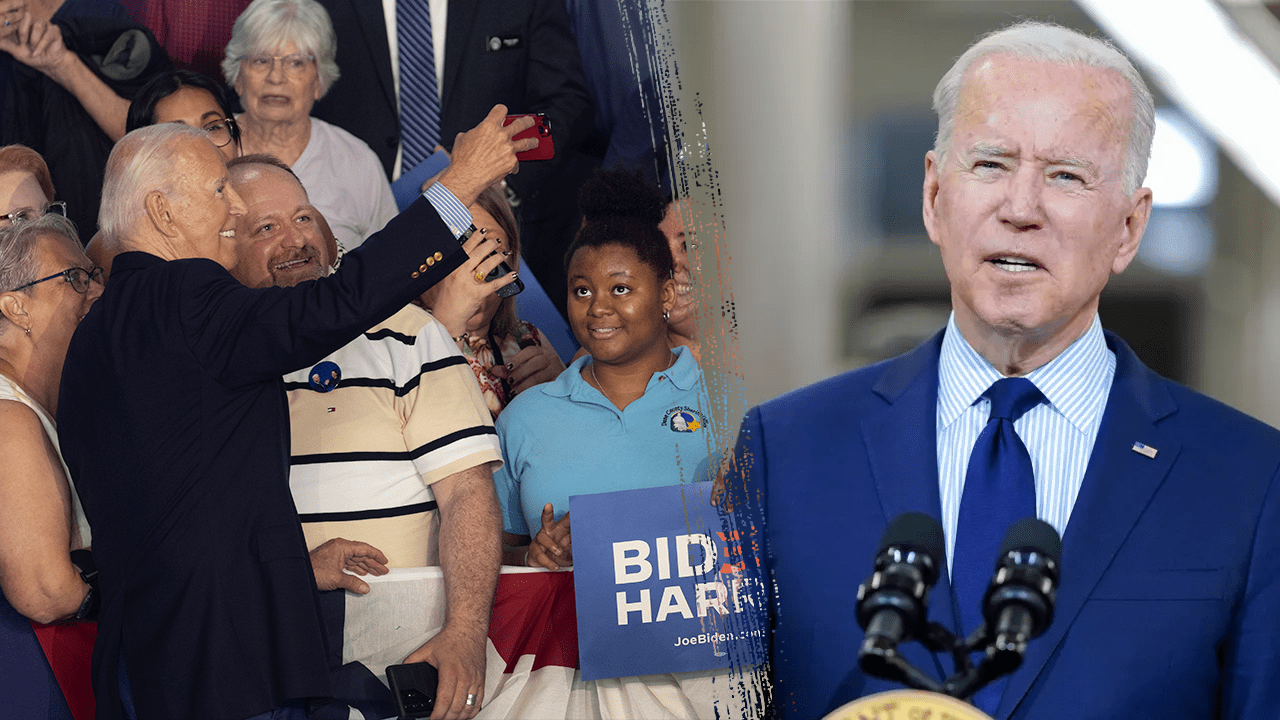
Former President Joe Biden struggled to get through filming campaign videos, or quick, filmed keynote addresses for various groups during the 2024 campaign due to his declining health, according to a new book.
The book, «Original Sin: President Biden’s Decline, Its Cover-up, and His Disastrous Choice to Run Again,» said that Biden stumbled through filming campaign videos so much that the footage was ultimately deemed «unusable.» The nonfiction book was published Tuesday and is authored by journalists Jake Tapper of CNN and Alex Thompson of Axios.
BIDEN FAMILY MISLED PUBLIC, CONCEALED DETAILS ON SON BEAU’S CANCER DIAGNOSIS, NEW BOOK SAYS
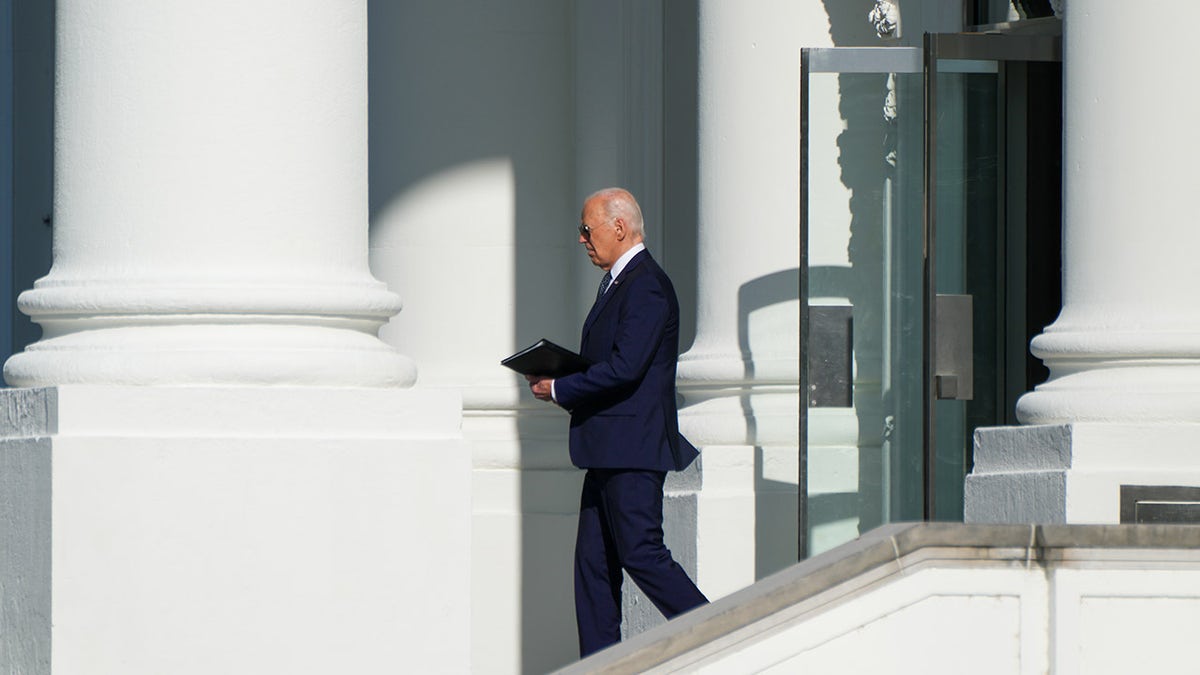
Then-President Joe Biden and then-first lady Jill Biden arrive on the South Lawn of the White House on Monday, Aug. 5, 2024 in Washington, D.C. (Evan Vucci/The Associated Press)
In one case, Biden’s team sought to film a video for the campaign for ads on television in a high school gym where people could ask questions like they would at a town hall meeting.
«The campaign was trying to make it look like the president was out there taking off-the-cuff questions from voters in public,» the book said. «But the event was closed to reporters, and the campaign had the full list of questions that people would ask.»
However, Biden had so much «trouble» getting through the questions that his team decided to scrap the footage. While some attributed challenges to poor lighting in the gym, the book said that others identified Biden as the real problem.
BIDEN MADE HARRIS CAMPAIGN A ‘NIGHTMARE,’ DESTROYED HER CHANCES BY STAYING IN 2024 RACE TOO LONG, AIDES CHARGE
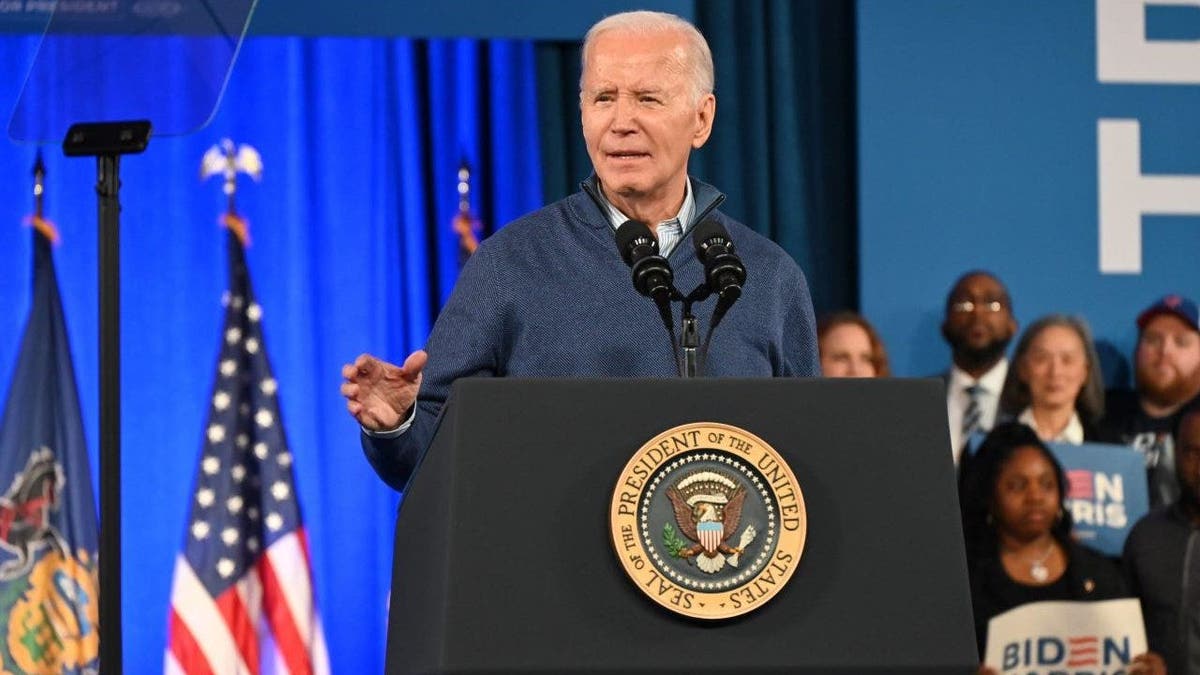
Former President Joe Biden struggled to get through filming campaign videos, or quick, filmed keynote addresses for various groups during the 2024 campaign due to his declining health, according to a new book. (Andrew Leyden/NurPhoto via Getty Images)
Similarly, when groups requested a five-minute video address of Biden for keynote events, the White House would work to provide a one- or two-minute video, the book said. Still, given the time constraint, Biden «often couldn’t make it through one or two minutes without botching a line or two,» according to the book.
«The man could not speak,» one person familiar with the effort said, according to the book. The person said Biden faced an «inability to find words, to remember what he was saying, to stay on one train of thought.»
BIDEN AIDES ‘SCRIPTED’ EVERYTHING, ALLOWED HIS FACULTIES TO ‘ATROPHY,’ NEW BOOK CLAIMS
Then-President Joe Biden, accompanied by then-first lady Jill Biden, attends a campaign event at Strath Haven Middle School in Wallingford, Pennsylvania. (Kyle Mazza/Anadolu via Getty Images)
«Aides would sometimes make the videos in slow motion to blur the reality of how slowly he actually walked,» the person said. «If he was off, editing footage in a way that cast him in the best light would require hours of work.»
The book also pinned the blame on Biden for then-Vice President Kamala Harris’ unsuccessful run in the 2024 election after Biden took so long to exit the race. David Plouffe, former President Barack Obama’s campaign manager in 2008 and a senior advisor on Harris’ 2024 campaign, said that Harris’ campaign was «a f—ing nightmare» because of Biden.
CLICK HERE TO GET THE FOX NEWS APP
A former Biden staffer pushed back on the claims included in the book, and told Fox News Digital, «This isn’t true. The book is riddled with falsehoods.»
Biden’s team has also challenged the material in «Original Sin,» which chronicles the 2024 election cycle and how Biden’s team allegedly plotted a cover-up to hide just how severely his mental faculties had declined.
«There is nothing in this book that shows Joe Biden failed to do his job, as the authors have alleged, nor did they prove their allegation that there was a cover up or conspiracy,» a Biden spokesperson said in a statement to Fox News Digital. «Nowhere do they show that our national security was threatened or where the President wasn’t otherwise engaged in the important matters of the Presidency. In fact, Joe Biden was an effective President who led our country with empathy and skill.»
The book is one of several that detail Biden’s decision to run in 2024 and details the deterioration of his cognitive function.
Joe Biden,White House,Elections,Campaigning,Biden Cover-Up












INTERNACIONAL
EN VIVO: Una segunda persona murió tras el ataque iraní con una bomba de racimo en el centro de Israel

Las víctimas trabajaban en una obra de construcción cuando el proyectil impactó en la zona
La Guardia Revolucionaria de Irán afirmó en la madrugada del martes que Teherán no permitirá la exportación de “ni un litro de petróleo” de la región si continúan los ataques estadounidenses e israelíes. En un comunicado, sostuvo que “las ecuaciones y el futuro de la región están ahora en manos de nuestras fuerzas armadas; las fuerzas estadounidenses no decidirán cuándo termina el conflicto”.
En respuesta, el presidente de Estados Unidos, Donald Trump, advirtió que Washington responderá “veinte veces más duramente” si el régimen de Irán intenta interrumpir el tránsito de crudo en el estrecho de Ormuz y advirtió con efectuar ataques devastadores que podrían volver “prácticamente imposible” la reconstrucción del país. El mandatario también señaló que persiste incertidumbre sobre el liderazgo iraní tras la muerte de figuras anteriores y afirmó que “ahora nadie tiene idea de quiénes serán los jefes del país” después de la muerte del ayatollah Ali Khamenei.
Desde Teherán, el portavoz del Ministerio de Asuntos Exteriores, Esmaeil Baghaei, aseguró que no existe espacio para conversaciones de alto el fuego mientras continúen los ataques estadounidenses e israelíes. Nuevos misiles y drones iraníes apuntaron contra Israel, bases estadounidenses en Medio Oriente e infraestructura energética en el Golfo.
A continuación, la cobertura minuto a minuto:
Una segunda persona murió tras el ataque iraní con una bomba de racimo en el centro de Israel

El alcalde de Petah Tikva, Rami Greenberg, informó que una segunda persona murió tras el ataque con misiles de racimo lanzado ayer por Irán en la ciudad de Yehud.
El ataque, que involucró un misil balístico equipado con bomba de racimo, provocó la muerte inmediata de un hombre y dejó a otros dos gravemente heridos. Esta mañana, la segunda víctima falleció en el Centro Médico Sheba, según reportaron medios israelíes.
Las víctimas trabajaban en una obra de construcción cuando el proyectil impactó en la zona. De acuerdo con los servicios de emergencia, ninguno de los dos se encontraba en un refugio antiaéreo al momento del ataque.
El presidente del parlamento iraní afirmó que Teherán no busca un alto al fuego

El presidente del Parlamento iraní, Mohammad Bagher Ghalibaf, afirmó este martes que Teherán no busca un alto el fuego en medio de la guerra.
“Ciertamente no buscamos un alto el fuego. Creemos que hay que atacar al agresor para que aprenda la lección y no vuelva a pensar en atacar a Irán”, escribió Ghalibaf en la red social X.
El dirigente sostuvo además que Israel depende de un ciclo de “guerra, negociaciones y alto el fuego y luego otra guerra” para mantener su dominio, y afirmó que Irán romperá ese ciclo.
Las bolsas europeas se recuperan tras los comentarios de Trump sobre el posible fin de la guerra
Las bolsas europeas subieron el martes tras una caída en los precios de la energía, después de que el presidente de Estados Unidos, Donald Trump, señalara que la guerra de Estados Unidos e Israel contra Irán podría terminar antes de lo previsto.
El índice DAX de Frankfurt, que reúne a las principales empresas alemanas, subió un 2,1%, mientras que el CAC 40 de París avanzó un 1,7% y el FTSE 100 de Londres ganó un 1,4%.
Los precios mundiales del petróleo cayeron alrededor de un 8%, y el gas natural europeo también bajó con fuerza después de que Trump afirmara que la guerra “terminaría pronto”.
Netanyahu afirmó que la ofensiva militar contra Irán “no terminó” y aseguró que el objetivos es debilitar el liderazgo del régimen

El primer ministro Benjamin Netanyahu advirtió que la ofensiva militar de Israel contra Irán “aún no terminó” y sostuvo que las operaciones buscan debilitar al liderazgo clerical iraní. Las declaraciones se realizaron durante una visita el lunes por la noche al Centro Nacional de Operaciones de Emergencia Sanitaria, según un comunicado publicado el martes.
“Nuestra aspiración es que el pueblo iraní se libere del yugo de la tiranía”, afirmó Netanyahu. “En última instancia, depende de ellos. Pero no cabe duda de que, con las medidas adoptadas hasta ahora, estamos machacando sus huesos, y aún no hemos terminado”.
El jefe del gobierno israelí sostuvo que un eventual cambio político en Irán depende de la población del país. “Si tenemos éxito junto con el pueblo iraní, lograremos un fin permanente —si tales cosas existen en la vida de las naciones— y generaremos un cambio”, indicó.
El Ejército de Israel bombardeó activos de la asociación financiera del grupo terrorista Hezbollah
Las Fuerzas de Defensa de Israel informaron que completaron una serie de ataques aéreos contra sucursales de la asociación Al-Qard al-Hasan, vinculada a Hezbolá, que según el ejército funciona como un cuasi-banco utilizado por el grupo.
Los bombardeos ejecutados por la Fuerza Aérea israelí alcanzaron varios activos y bóvedas de la institución, de acuerdo con el comunicado militar. La semana pasada, las fuerzas israelíes atacaron cerca de 30 activos de la entidad financiera en distintas zonas del Líbano.
El ejército israelí indicó que antes de los ataques emitió advertencias de evacuación a civiles libaneses. Según las FDI, Hezbolá utiliza Al-Qard al-Hasan para almacenar dinero, administrar salarios de sus agentes, transferir fondos desde Irán y comprar armas.
Turquía desplegó un sistema antimisiles en el centro del país luego de haber interceptado un misil iraní en su espacio aéreo
Turquía informó este martes el despliegue de un sistema de defensa antimisiles Patriot en el centro del país, un día después de que la OTAN interceptó un segundo misil balístico lanzado desde Irán que cruzó el espacio aéreo turco.
“Se están tomando las medidas necesarias para la seguridad de nuestras fronteras y espacio aéreo, y se mantienen consultas con la OTAN y nuestros aliados. Además de las medidas adoptadas a nivel nacional, la OTAN reforzó sus medidas de defensa aérea y antimisiles”, indicó el Ministerio de Defensa en un comunicado. “Dentro de este marco, un sistema Patriot asignado para apoyar la protección de nuestro espacio aéreo se despliega en Malatya”.
Malatya se ubica en el centro de Turquía y alberga la base aérea de Kurecik, una instalación clave operada por tropas estadounidenses que cuenta con un radar de alerta temprana de la OTAN capaz de detectar lanzamientos de misiles iraníes.
El despliegue del sistema Patriot ocurrió un día después de que la OTAN derribó un segundo misil iraní, lo que llevó a Washington a cerrar su consulado en la ciudad sureña de Adana y a instar a los ciudadanos estadounidenses a abandonar el sudeste de Turquía.
Las acciones asiáticas se recuperan y el petróleo cae mientras crecen las expectativas de un fin cercano del conflicto en Medio Oriente
El Nikkei 225 de Japón subió 2,9% y el S&P/ASX 200 de Australia avanzó 1,1%, mientras el Kospi de Corea del Sur ganó 5,4%. El Hang Seng de Hong Kong registró un alza de 2,1% y el índice compuesto de Shanghai aumentó 0,6%


Las acciones asiáticas se recuperaron el martes tras las fuertes caídas registradas el día anterior, en un contexto marcado por la volatilidad de los precios del petróleo y las expectativas de los inversores sobre la duración de la guerra con Irán. El movimiento se produjo mientras inversores globales apostaban a que el conflicto podría no durar demasiado.
El régimen de Irán atacó una base militar estadounidense en Irak
La Guardia Revolucionaria de Irán dijo el martes que atacó una base estadounidense en la región del Kurdistán iraquí mientras continúa la guerra con Estados Unidos e Israel.
“El cuartel general del ejército invasor estadounidense en la base aérea de Al-Harir, en la región del Kurdistán, fue atacado con cinco misiles”, dijeron los Guardias en un comunicado en su canal de Telegram.
El régimen de Irán afirmó que continuará con los ataques durante “el tiempo que sea necesario” y descartó negociar con Washington
“No creo que la cuestión de hablar o negociar con los estadounidenses vuelva a estar sobre la mesa”, declaró el ministro de Relaciones Exteriores de Teherán, Abbas Araqchi

El ministro de Relaciones Exteriores de Irán, Abbas Araqchi, afirmó el martes que su país continuará los ataques “el tiempo que sea necesario”, en medio de la escalada militar en Medio Oriente y después de que el presidente estadounidense, Donald Trump, asegurara que el conflicto terminaría “muy pronto”. El jefe de la diplomacia del régimen iraní también descartó retomar negociaciones con Washington y acusó a ambos países de atacar infraestructuras civiles en territorio iraní.
Israel afirmó que abatió a más de 1.900 soldados y comenadantes del régimen iraní desde el inicio de la guerra
“Tenemos muchos más objetivos, es un esfuerzo continuo y estamos profundizando los golpes a todos los niveles del régimen”, indicó el portavoz del Ejército de israelí, Effie Defrin

El portavoz del Ejército de Israel, Effie Defrin, afirmó el lunes que la fuerza aérea israelí mató a más de 1.900 soldados y comandantes del régimen iraní desde el inicio de la guerra entre ambos países, que ya supera una semana de enfrentamientos. El vocero también informó que Israel completó ataques contra seis aeródromos militares en Irán y sostuvo que la ofensiva aérea continuará.
Defense,Middle East
INTERNACIONAL
Katie Britt blasts Democrats for playing ‘political games’ with shutdown amid airport chaos

NEWYou can now listen to Fox News articles!
Senate Republicans are accusing their Democratic counterparts of playing «political games» as the caucus appears ready to escalate the standoff over funding the Department of Homeland Security (DHS).
There’s been little movement to reopen DHS during the weekslong partial shutdown, leading to outcry from Republicans over long wait times and missed flights at airports across the country. Some Democrats are threatening to continue their blockade of DHS funding unless serious action is taken to rein in President Donald Trump’s war powers in the Middle East.
«We shouldn’t let Republicans debate other legislation until they bring a war authorization to the United States Senate,» Sen. Chris Murphy, D-Conn., told NOTUS on Monday.
Murphy, the top Democrat on the appropriations panel overseeing DHS funding, has helped lead his party’s push to withhold funding for the department absent sweeping reforms to immigration enforcement.
Sen. Chris Murphy speaks to reporters following a briefing by Trump administration officials to members of the Senate on U.S. strikes on Iran, at the U.S. Capitol, March 3, 2026. (Nathan Posner/Anadolu via Getty Images)
SENATE DEMS REFUSING TO BUDGE ON DHS FUNDING MAY CAUSE HEADACHE FOR WORLD CUP TRAVELERS
His new threat to freeze Senate business over Trump’s Iran strikes underscores that some Democrats are prepared to extend the funding fight despite mounting impacts on air travel.
The Senate rejected a bipartisan resolution last week that would have narrowed Trump’s ability to launch future strikes on Iran. However, Murphy is signaling that Democrats’ attempts to limit the president’s power to wage war against Iran are just getting started.
Sen. Katie Britt, R-Ala., the chair of the Senate Homeland Security funding panel, scoffed at Murphy’s edict.
«The delay tactics we’re seeing from Democrats don’t change the fact that, because of their political games, lines at airports are growing, and the people tasked with keeping our homeland safe are being forced to do so without a paycheck,» Britt said in a statement to Fox News Digital.
Britt, who Senate Majority Leader John Thune, R-S.D., tapped to lead DHS negotiations with Senate Democrats, accused her counterparts of refusing to sit down with Republicans as the partial shutdown enters its fourth week.
«I urge my Democratic colleagues to stop putting politics above people and do what’s right for the security of our nation,» she said. «That starts with having a conversation so that we can find a pathway forward.»
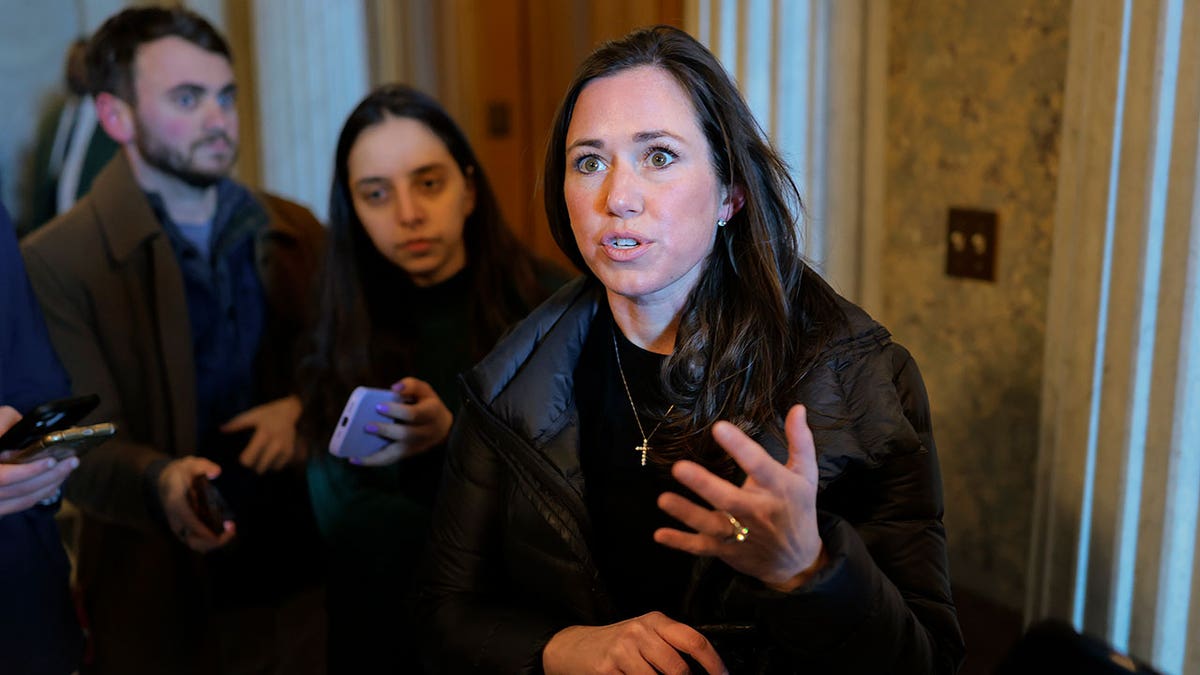
Sen. Katie Britt walks through the U.S. Capitol on Jan. 26, 2026. (Heather Diehl/Getty Images)
DHS SHUTDOWN TRIGGERS TSA ‘EMERGENCY MEASURES’ AS LAWMAKER WARNS AIRPORTS COULD FEEL ECONOMIC PAIN
Airports nationwide reported a spike in absences among Transportation Security Administration (TSA) employees on Monday. Roughly 50,000 TSA personnel — who are employed by DHS — are reporting to work without pay after receiving just a fraction of their salaries last week.
The agents will not receive another paycheck until the partial shutdown ends.
The New Orleans airport on Monday advised passengers to arrive at least three hours before their flight, citing a shortage of TSA employees. Passengers traveling through the Houston airport system have also been urged to arrive four to five hours before their departure.
«The shutdown is having very real consequences, and hardworking federal aviation workers, the airline industry and our passengers are being used as a political football once again,» Chris Sununu, CEO of Airlines for America and former New Hampshire governor, said in a statement. «This is simply unacceptable and un-American.»
TSA employees were also forced to forgo pay during the record-breaking government shutdown in late 2025.

Travelers wait in line at a Transportation Security Administration (TSA) checkpoint at William P. Hobby Airport in Houston, March 9, 2026. (Mark Felix/Bloomberg via Getty Images)
A majority of Democratic lawmakers in both chambers voted to continue the DHS shutdown last week despite new security concerns over Trump’s military operation in Iran. The bipartisan measure that Democrats overwhelmingly opposed would fund DHS through the remainder of the fiscal year.
Senate Minority Leader Chuck Schumer, D-N.Y., has demanded that federal immigration officers stop wearing masks and obtain judicial warrants before entering homes and businesses, among other reforms, in order to unlock funding for the agency.
Senate Democrats and the White House have been negotiating, but a deal has yet to materialize. The last counteroffer from the administration came nearly two weeks ago but has so far not been accepted by congressional Democrats.
Some Republicans hoped that Trump’s decision to tap Sen. Markwayne Mullin, R-Okla., to lead DHS could soften Democrats’ opposition, but the party has continued to take a hard line against funding the agency. Democrats had advocated for outgoing DHS Secretary Kristi Noem’s ouster as part of their numerous demands.
CLICK HERE TO DOWNLOAD THE FOX NEWS APP
A Democratic blockade of Senate business would jeopardize the passage of a bipartisan housing bill aimed at growing the supply of affordable homes, which is currently under consideration in the upper chamber. Trump-endorsed voter ID legislation would also be impacted, but Democrats were already expected to widely oppose the measure, known as the SAVE America Act.
Fox News Digital reached out to Murphy’s office for additional comment.
homeland security,government shutdown,war with iran,democrats senate,politics
INTERNACIONAL
El Parlamento de Venezuela avanzó en la aprobación de una ley minera que favorece a Estados Unidos

El Parlamento de Venezuela aprobó este lunes el proyecto de una ley de minas que busca aumentar las garantías jurídicas para generar confianza y atraer inversión nacional e internacional.
El proyecto es iniciativa de la presidenta Delcy Rodríguez, que asumió el poder tras la captura de Maduro en una operación militar estadounidense el 3 de enero.
Rodríguez, que gobierna bajo presión del presidente estadounidense Donald Trump, a quien entregó control del petróleo, también impulsó una reforma a la ley de Hidrocarburos, base de este proyecto de minería.
La ley deberá discutirse por segunda vez para ser definitivamente sancionada, luego de que EE.UU. emitiera una licencia que autoriza determinadas actividades relacionadas con la explotación de oro venezolano a cargo de empresas estadounidenses.
El proyecto de ley, que consta de 19 capítulos y 126 artículos, está conformado por «criterios técnicos» con una estructura acorde a «nuevas necesidades«, según dijo el diputado Orlando Camacho del Movimiento Somos Venezuela, quien presentó el proyecto de forma genérica ante la plenaria.
Asimismo, prosiguió, se busca que esta ley «pueda ayudar a aumentar todas las garantías jurídicas» para generar confianza y atraer inversión nacional e internacional.
La norma permitirá que se acuda «a mecanismos de mediación y arbitraje independientes para la resolución de controversias», siempre que se agoten «todas las instancias jurídicas nacionales», subrayó Camacho.
Además, busca fortalecer el rol el Ministerio Minero, cuyas funciones, dijo el diputado, se precisan en la ley para «regular, dirigir y organizar» toda la actividad del sector, que consiste en la «exploración, explotación, producción, arranque y acarreo de todos los minerales».
La propuesta se discutirá artículo por artículo en un segundo debate, después de ser sometida a consulta pública con sectores de la sociedad civil.
La norma establece la creación de un fondo social minero que establece «ingresos y funciones» para que se pueda «desarrollar y proteger la seguridad social» de los trabajadores de minería.
También fija la creación de la «superintendencia nacional de actividad minera» para fiscalizar y buscar beneficios que favorezcan la inversión nacional y extranjera.
Durante la sesión, transmitida por el canal del Parlamento en YouTube, el diputado opositor Luis Florido se quejó de la entrega del proyecto «a minutos de comenzar una sesión» y reclamó que las leyes se «presenten con tiempo».
Por su parte, el diputado Carlos Dickson Barbera, del partido opositor Un Nuevo Tiempo, decidió salvar el voto para «poder consultar a los asesores pertinentes» y hacer un «análisis respectivo» de la ley.
El viernes, el Departamento del Tesoro emitió una licencia que autoriza determinadas actividades relacionadas con la explotación y comercialización de oro venezolano por parte de empresas estadounidenses, un sector que hasta ahora estaba sujeto a sanciones.
La licencia general 51 permite a empresas estadounidenses comprar, transportar y revender oro de origen venezolano, incluso en operaciones que involucren al Gobierno de Venezuela o a la Compañía General de Minería de Venezuela (Minerven).
La autorización también abarca servicios logísticos, seguros y transporte vinculados al comercio de ese metal.
La emisión de esta licencia se dio días después de la reunión en Caracas entre la presidenta encargada de Venezuela, Delcy Rodríguez, y el secretario de Interior de Estados Unidos, Doug Burgum.
Durante ese encuentro, Rodríguez pidió dar celeridad a una reforma de la Ley de Minas, con el objetivo de ampliar el marco legal para desarrollar el sector con inversión nacional y extranjera.
A finales de enero pasado, el Parlamento aprobó por unanimidad la reforma de la Ley Orgánica de Hidrocarburos impulsada por Delcy Rodríguez para incentivar la inversión privada y extranjera en el sector petrolero.
Con información de la agencia EFE

En medio de su interna, el peronismo bonaerense piensa en el 2027 y discute si repetirá la estrategia de desdoblar la elección

EN VIVO: Una segunda persona murió tras el ataque iraní con una bomba de racimo en el centro de Israel

Quién fue el eliminado en la “placa planta” de Gran Hermano: Generación Dorada

Antes de terminar su mandato, Kicillof impulsará una reforma política que incluya la reelección de intendentes

Volatilidad extrema en el precio del petróleo: ¿puede dispararse y romper el récord histórico?

Batalla Cruzeiro-Mineiro: cuáles serían las sanciones, en qué torneo se cumplirán y cuándo se vuelven a cruzar

La cruda confesión de Amalia Granata por el trastorno que sufre su hijo Roque: “Le hicimos estudios y salió que tiene TDAH, dislexia y disgrafia”

Wanda Nara involucrada en la separación de su hijo Valentino: su ex nuera contó toda la verdad

El Gobierno promulgó la reforma laboral: desde cuándo rige y las claves

«Crisis industrial masiva»: alarmante informe de la UBA se mete en la pelea de Milei con la UIA

 CHIMENTOS2 días ago
La cruda confesión de Amalia Granata por el trastorno que sufre su hijo Roque: “Le hicimos estudios y salió que tiene TDAH, dislexia y disgrafia”
- POLITICA3 días ago
Trump anunciará la creación del Escudo de las Américas, una alianza regional que integrará Milei para enfrentar al narcoterrorismo y a China
- ECONOMIA2 días ago
El mercado le está corriendo el arco a Caputo y el riesgo país no baja: en la City palpitan medidas