INTERNACIONAL
Bill Clinton’s credibility threatened by decades of scandals amid grilling over Epstein ties

NEWYou can now listen to Fox News articles!
Former President Bill Clinton has vigorously denied many of them, allegations of sexual improprieties have punctuated his career and repeatedly made questions about his character the focus of national attention.
His truthfulness is again back in the national spotlight after lawmakers on Friday questioned Clinton about his connections to Jeffrey Epstein — the disgraced financier who died in 2019 while incarcerated on charges of sex trafficking minors.
Clinton has not been implicated in any wrongdoing.
Friday’s questioning, however, is just the most recent entry in a list of questions and controversies that stretches back almost 30 years.
Former President Bill Clinton was pictured in a pool in the newly released Epstein files. The images were released by the Department of Justice on Friday, Dec. 19. (Department of Justice)
Juanita Broaddrick – 1998
Allegations against Clinton began in 1998 when Juanita Broaddrick accused Clinton of raping her when he was running for governor of Arkansas in 1978. In the years since, Broaddrick described attempts she believes the Clintons made to keep her from speaking about the incident.
«I was at a fundraiser, but [Hillary Clinton] caught me before I left, and she came up very friendly and said, ‘Bill and I are so appreciative of everything you do.’ And then her voice changed,» Broaddrick recalled in an interview with Fox News in 2018.
«It frightened me,» she said.
By the time Broaddrick’s allegations became public, the statute of limitations protected Clinton from prosecution for the accusation.
Clinton has denied the claim.
HOUSE REPUBLICANS DESCEND ON CLINTONS’ HOMETOWN FOR HIGH-STAKES EPSTEIN PROBE GRILLING

Clinton was the governor of Arkansas before becoming president. (Getty Images)
Kathleen Willey – 1998
In an interview with Fox, Willey called herself a former friend of Clinton and said she supported him when he launched his presidential ambitions.
«We raised an awful lot of money for him,» Willey recalled.
Willey explained that her husband had fallen on hard financial times, prompting her to turn to the White House in 1993 in hopes of finding a job. Clinton was the president then.
«He sat down on the sofa. I proceeded to tell him what was going on, and I told him, ‘I need a job.’ He took my coffee cup from me and the next thing I knew he had me backed into a corner, hands all over me, trying to kiss me,» Willey said, describing an altercation between the two that took place in a study just outside the Oval Office.
Willey first went public with her allegation in a CBS interview with «60 Minutes» in 1998. Clinton has repeatedly denied the allegation.
Gennifer Flowers – 1992
A former television reporter, Gennifer Flowers claimed that she had a longstanding affair with Clinton from the late 1970’s through 1989.
Years later, she said Clinton’s advances started when she and Clinton met during a reporting assignment.
«He proceeded to come on to me for three months before I decided I wanted to have a relationship with him which at that point was consensual. In today’s standards, it was definitely sexual harassment,» Flowers said in an appearance on the Ingraham Angle in 2018.
The story spread to national media as Bill Clinton waged a presidential campaign, just weeks before the Iowa caucuses.
Clinton, in an interview with 60 Minutes in the fallout of the news, didn’t confirm the allegations from Flowers but said he had «acknowledged causing pain» in his marriage.
MONICA LEWINSKY SAYS BILL CLINTON ‘ESCAPED A LOT MORE THAN I DID’ AFTER WHITE HOUSE SCANDAL
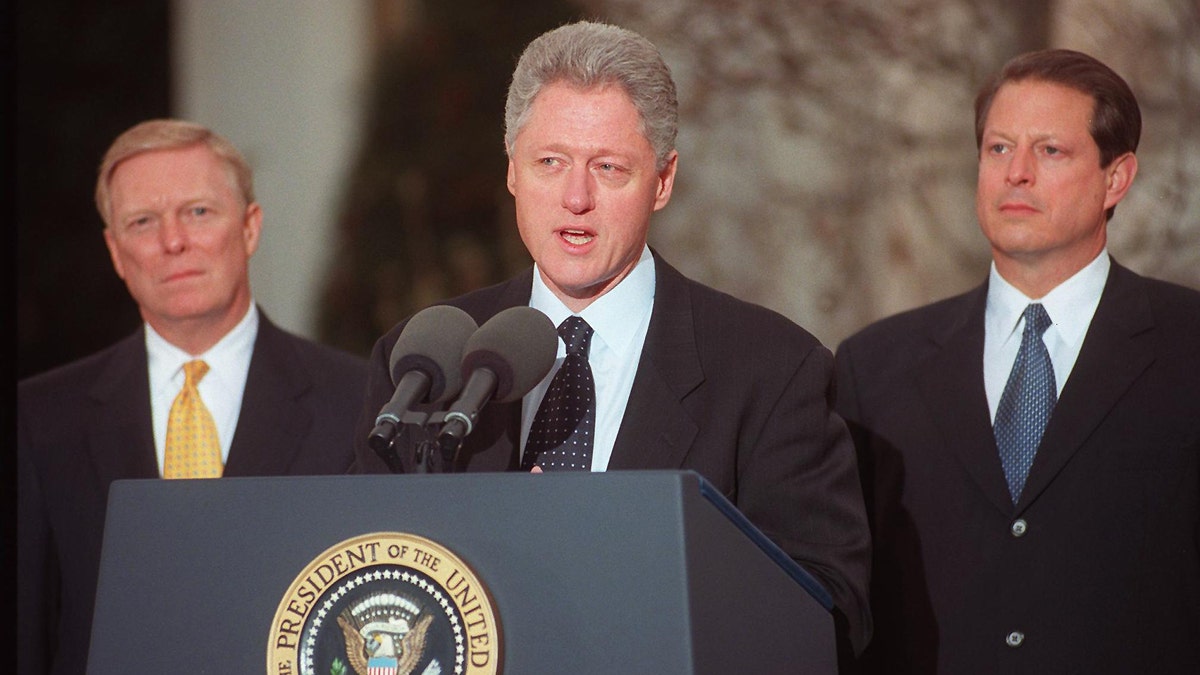
Former President Bill Clinton. (George Bridges / AFP via Getty Images)
Troopergate – 1993
Shortly after President Bill Clinton assumed office, allegations first reported by The American Spectator magazine began to surface that Clinton had used state troopers as governor to arrange sexual encounters with women.
Among them, Larry Patterson, Roger Perry and Danny Ferguson all claimed Clinton had ordered them to facilitate his encounters.
Time magazine quoted the original American Spectator allegations, stating that the troopers had said «their official duties included facilitating Clinton’s cheating on his wife.»
«They were instructed by Clinton to drive him in state vehicles to rendezvous points and guard him during sexual encounters … and to help Clinton cover up his activities by lying to Hillary.»
The allegations about the troopers also became a part of independent counsel Ken Starr’s later investigation of separate cases.
Paula Jones
Jones’ case, which eventually led to Clinton’s impeachment in 1998, began while Clinton was governor of Arkansas.
«I was asked to work the governor’s quality management conference,» Jones recalled in an interview with Sean Hannity in 2016. «His security was hanging out with us, and later that day, he came over and said, ‘The governor would like to meet with you.’»
Jones said she was escorted up to Clinton’s room at a hotel.
«We did some small talk, and then he started kinda getting a little comfortable. He said he liked my curves and then I’m like — I didn’t know what to do. It was him and me in the room,» Jones said.
Jones described how the governor then exposed himself to her before she left the room.
«’I’m not that kind of girl,’» Jones remembers telling Clinton.
After Jones launched a sexual harassment lawsuit in 1991, Ken Starr, an independent counsel who was assigned to the case, began an investigation that would uncover not just the details about the Jones incident but also the Monica Lewinsky scandal that finally led to Clinton’s impeachment in the House of Representatives.
Jones herself was awarded an $850,000 settlement as a result of her private suit.
BILL CLINTON FACES HIGH-STAKES HOUSE GRILLING IN EPSTEIN PROBE AND MORE TOP HEADLINES
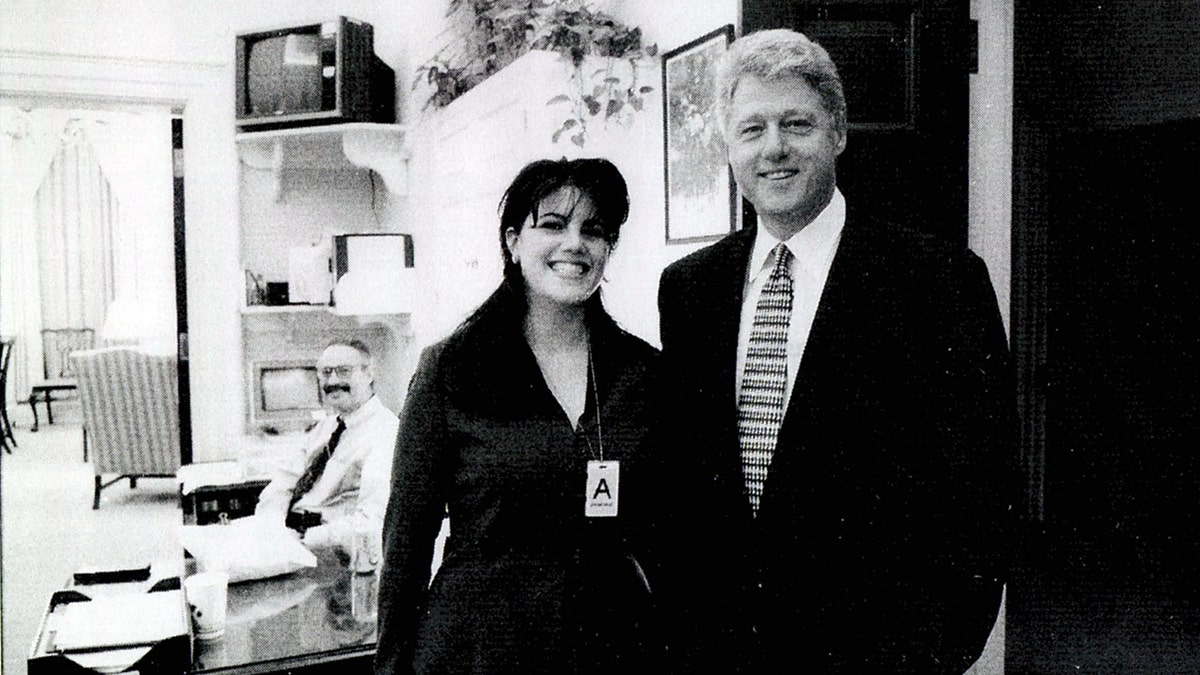
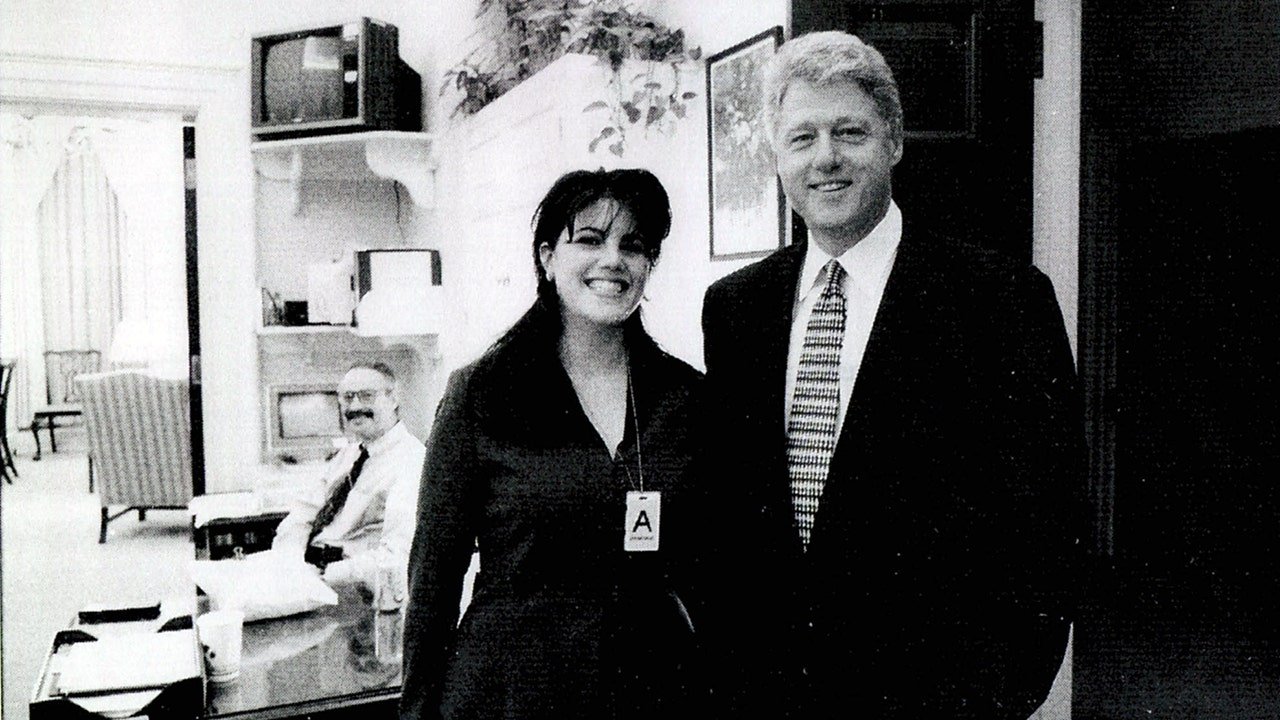
An image provided by the Starr team to the House shows Monica Lewinsky, center, and President Bill Clinton, right. (House Judiciary Committee/Getty Images)
Monica Lewinsky – 1998
The case that would eventually lead to Clinton’s impeachment first came to the public’s attention when the Drudge Report picked up a story, initially abandoned by Newsweek, that Clinton was having an affair with an intern at the White House.
«She was a frequent visitor to a small study just off the Oval Office, where she claims to have indulged the president’s sexual preference. Reports of the relationship spread in White House quarters, and she was moved to a job at the Pentagon, where she worked until last month,» the reporting read.
Clinton famously denied the allegations when answering questions under oath from Ken Starr, who, at the time, was investigating Paula Jones’ claims.
«I did not have sexual relations with that woman,» Clinton famously said in an interview at the White House.
Eventually, Clinton’s infidelity was confirmed when a friend of Lewinsky recorded her talking about the affair and turned the tapes over to Starr.
CLICK HERE TO DOWNLOAD THE FOX NEWS APP
Clinton would be forced to admit that he had misrepresented his boldest of assertions. At least one voter in Houston told NBC the admission left him with more questions.
«What else has he lied about?» a man asked reporters.
Related Article
jeffrey epstein,bill clinton,democratic party,hillary clinton








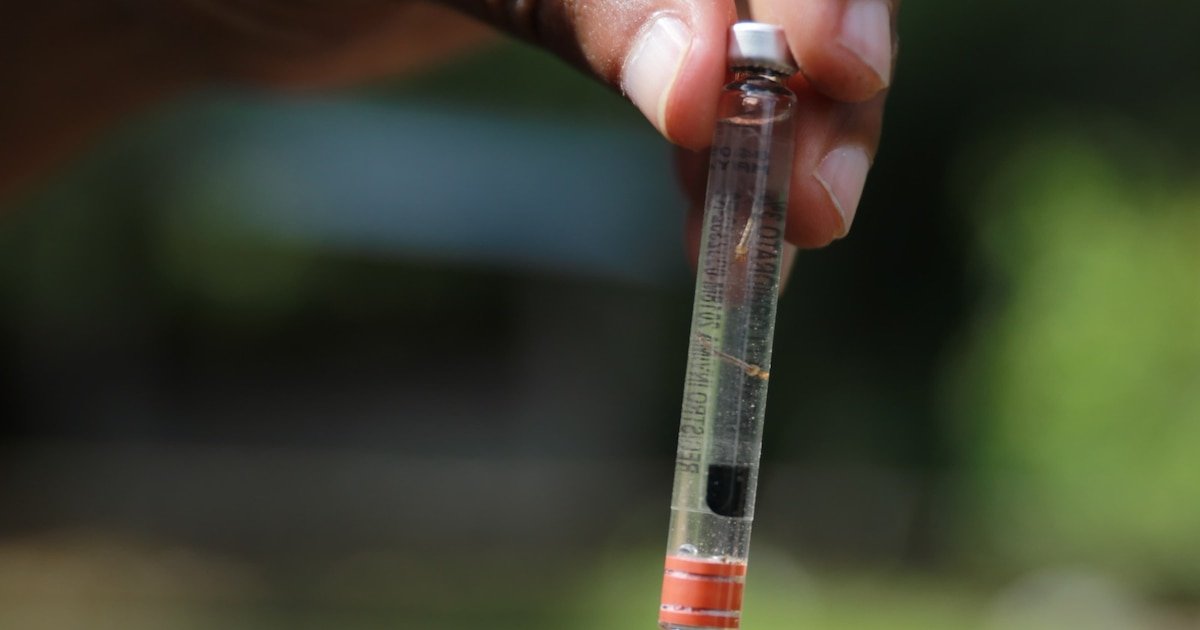
El dengue en Panamá muestra un comportamiento que comienza a encender alertas en la población más joven. Según el último informe del Ministerio de Salud (Minsa), el grupo de 10 a 14 años es actualmente el más afectado, con una tasa de incidencia de 32.4 casos por cada 100,000 habitantes, superando al resto de los rangos etarios.
Este dato refleja una tendencia que preocupa a las autoridades sanitarias, ya que evidencia una mayor exposición de los menores de edad a entornos donde prolifera el mosquito Aedes aegypti.
En términos generales, el país acumula 1,232 casos de dengue hasta la semana epidemiológica No. 8 de 2026. De ese total, 1,081 corresponden a casos sin signos de alarma, mientras que 146 presentan signos de alarma y 5 han sido clasificados como dengue grave, lo que mantiene la vigilancia activa del sistema de salud.
Las cifras evidencian que, aunque la mayoría de los contagios son leves, existe un grupo de pacientes que puede evolucionar hacia formas más complejas de la enfermedad.

El informe también detalla el impacto en el sistema hospitalario, con un total de 149 personas hospitalizadas a nivel nacional. Además, se han registrado 4 defunciones, correspondientes a Bocas del Toro, con tres casos, y Coclé, con uno.
Estas cifras, aunque contenidas en comparación con otros países de la región, reflejan que el dengue sigue siendo una enfermedad con potencial letal si no se detecta y atiende a tiempo.
A nivel territorial, la distribución de los casos confirma que el virus mantiene una circulación activa en distintas zonas del país. La Región Metropolitana encabeza la lista con 337 casos, seguida por Colón, Bocas del Toro, San Miguelito y Panamá Oeste, que concentran una parte importante de los contagios.
También destacan áreas como Panamá Este, Herrera y Panamá Norte, lo que evidencia que la transmisión no está focalizada, sino extendida en múltiples regiones.
Entre los principales síntomas del dengue, las autoridades mencionan la fiebre, el dolor de cabeza, el malestar general, los dolores musculares y el dolor ocular.

Ante la presencia de estos signos, el Minsa insiste en la importancia de no automedicarse y acudir de forma oportuna a un centro de salud. La detección temprana es clave para evitar complicaciones, especialmente en pacientes que pueden desarrollar signos de alarma como sangrados o dolor abdominal intenso.
En el contexto regional, la situación del dengue en las Américas muestra un comportamiento mixto. De acuerdo con la Organización Panamericana de la Salud (OPS), hasta la semana epidemiológica 7 de 2026 se han reportado 299,210 casos sospechosos, de los cuales 66,690 han sido confirmados, además de 458 casos graves y 47 muertes .
Aunque estas cifras representan una disminución frente a 2025, las autoridades mantienen la alerta debido a la circulación simultánea de varios serotipos del virus.

La OPS también ha advertido que el dengue sigue siendo una de las enfermedades vectoriales más relevantes en la región, con capacidad de generar brotes explosivos cuando las condiciones climáticas y ambientales favorecen la reproducción del mosquito.
Factores como el aumento de temperaturas, la acumulación de agua y el crecimiento urbano desordenado continúan impulsando la expansión del virus en países de América Latina.
En Panamá, las autoridades sanitarias han reiterado que el control del dengue depende en gran medida de la participación ciudadana. El Minsa ha intensificado los operativos a través del equipo de Control de Vectores, pero insiste en que la eliminación de criaderos en viviendas y comunidades es fundamental para reducir los casos.
Recipientes como latas, botellas, neumáticos y cualquier objeto que acumule agua representan un riesgo directo.
El comportamiento del dengue en 2026, tanto a nivel nacional como regional, confirma que la enfermedad sigue siendo un desafío constante para los sistemas de salud.
Aunque las cifras actuales muestran cierta contención en comparación con años anteriores, la presencia de casos graves, defunciones y el impacto en población joven obligan a mantener las estrategias de vigilancia, prevención y respuesta activa en todo el país.
paciente,psiquiatría,hospital,salud mental,descanso,cama,luz cálida,noche,recuperación,bienestar
INTERNACIONAL
Trump administration urges judge to dissolve injunction blocking Abrego Garcia’s deportation to Liberia

NEWYou can now listen to Fox News articles!
The Department of Justice (DOJ) on Friday urged a judge to dissolve the injunction that keeps the Trump administration from detaining Kilmar Abrego Garcia again so he can quickly be deported to Liberia.
«Dissolution is also warranted because the Court’s Memorandum Order failed to acknowledge that the Court’s own prior injunction against removal is the sole impediment to Petitioner’s prompt removal,» the DOJ wrote in a court filing obtained by Fox News Digital. «The Court cannot both impose the impediment that delays removal and consequently prolongs detention and, at the same time, hold that the resulting detention is impermissibly prolonged.»
It added, «Any attempt by this Court to permanently enjoin the government from exercising its authority to remove the Petitioner from this country is in direct contradiction to established judicial norms, and a clear error of law.»
The administration deported Abrego Garcia, who they claim is a member of MS-13, a year ago to a prison in his native El Salvador, but he was returned to the U.S. in June to face human smuggling charges in Tennessee related to a 2022 traffic stop despite at first saying the administration had no power to bring him back.
His Lawyers deny he is a member of MS-13.
US JUDGE VOWS TO RULE ‘SOON’ ON ABREGO GARCIA’S FATE AFTER MARATHON HEARING
Kilmar Abrego Garcia arrives at U.S. District Court for the District of Maryland in December. (Alex Wong / Getty Images)
He was released from detention in December on the grounds that the Trump administration had not obtained the final notice of removal order that is needed to deport him to a third country.
Abrego Garcia, 31, has become a flash point in the national immigration debate since last March, when he was deported to El Salvador in violation of a 2019 court order in what Trump administration officials acknowledged was an «administrative error.»
The Supreme Court later ruled that the administration had to work to bring him back to the U.S.
JUDGE ORDERS MIGRANT DEPORTED IN ‘ERROR’ FREE FROM ICE CUSTODY WITH CRIMINAL CASE LOOMING
He has pleaded not guilty on the human smuggling charges and is seeking dismissal of the charges on the grounds of vindictive and selective prosecution.
The 2019 court order prevents Abrego Garcia from being deported to El Salvador after an immigration judge determined he faced danger from a gang that had threatened his family. He immigrated to the U.S. illegally as a teenager and has been under the supervision of Immigration and Customs Enforcement (ICE).
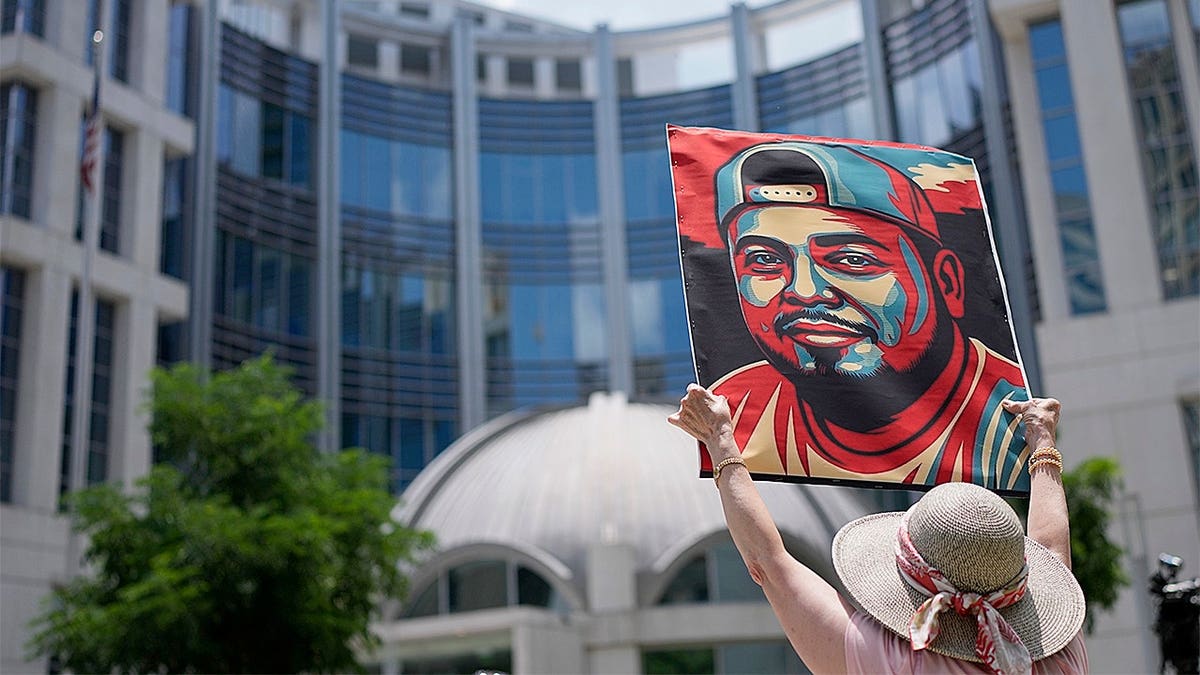
A protester holds a poster of Kilmar Abrego Garcia in front of the U.S. District Court in Nashville, Tenn. (Getty Images )
Last month, U.S. District Judge Paula Xinis agreed to convert her previous emergency order blocking ICE from immediately re-detaining Abrego Garcia into a longer-term form of injunctive relief sought by his lawyers.
She said that the Trump administration failed to provide the court with any «good reason to believe» that they plan to remove Abrego Garcia to a third country in the «reasonably foreseeable future.» Instead, she said, they «made one empty threat after another to remove him to countries in Africa with no real chance of success.»
Abrego Garcia has said he’s willing to be sent to Costa Rica, but Acting Immigrations and Customs Enforcement Director Todd Lyons said he will instead be removed to Liberia.
Abrego Garcia’s attorney said in December Abrego was willing to leave for Costa Rica immediately, and that the country had given him asylum status months ago.
CLICK HERE TO DOWNLOAD THE FOX NEWS APP
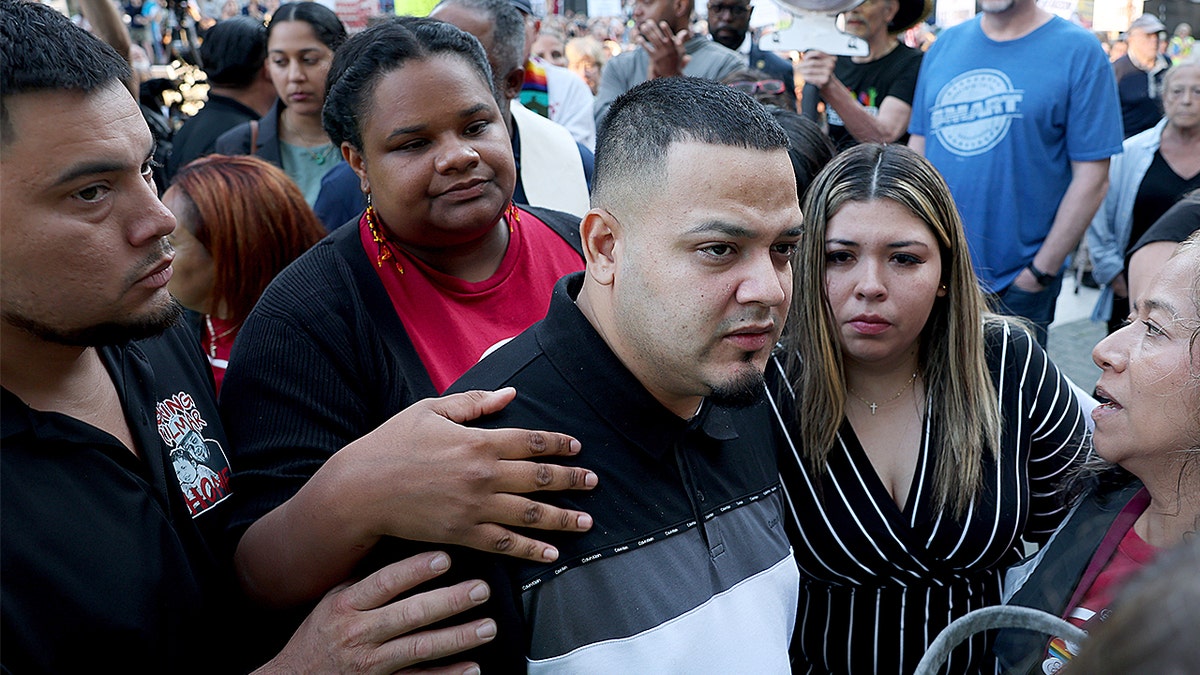
Kilmar Abrego Garcia enters a U.S. Immigration and Customs Enforcement (ICE) field office in Baltimore, Md. (Anna Moneymaker/Getty Images)
The government’s «persistent refusal to acknowledge Costa Rica as a viable removal option, their threats to send Abrego Garcia to African countries that never agreed to take him, and their misrepresentation to the Court that Liberia is now the only country available to Abrego Garcia, all reflect that whatever purpose was behind his detention, it was not for the ‘basic purpose’ of timely third-country removal,» Xinis said in December.
The administration asked the judge to rule on its request to have the injunction dissolved by April 17.
Fox News Michael Sinkewicz, Louis Casiano, Breanne Deppisch, and Jake Gibson contributed to this report.
justice department,federal courts,federal judges,immigration,politics,white house,donald trump

Un ataque misilístico de Irán sobre Dimona, una ciudad en la que funciona un centro nuclear clave para Israel, dejó este sábado por la tarde un saldo de más de 50 personas heridas. La televisión estatal iraní aseguró que se trató de un contraataque por la avanzada israelí-estadounidense sobre las instalaciones nucleares de Natanz, en el centro de Irán, más temprano este sábado.
Aunque en los últimos años el centro nuclear de Dimona ya había sido alcanzado por misiles enemigos, las autoridades israelíes todavía guardan parte de su armamento bélico allí, por lo que se trata de un objetivo de alta importancia. La máxima autoridad nuclear mundial aseguró que aún no se reportaron daños en el centro nuclear, pero volvió a lanzar un fuerte pedido a Irán, Israel y Estados Unidos.
Los reportes en los medios israelíes consignan más de 50 heridos tras el ataque a Dimona, una ciudad del centro de Israel, donde viven alrededor de 40 mil personas y que dista a menos de 14 kilómetros de un área que es mayor que su propia geografía: el Centro de Investigación Nuclear del Néguev Shimon Peres. Ese objetivo estratégico fue el blanco del ataque misilístico iraní y el contexto en que se reportaron los heridos.
La construcción de las instalaciones de Dimona comenzaron en 1958, en el marco del despegue del Programa Nuclear de Israel. Por esos años, los líderes David ben Gurion (el primero de los primeros ministros israelí) y Shimon Peres (quien luego también sería premier) habían recolectado U$S 40 millones, aproximadamente la mitad de lo que costaba un reactor nuclear construido en algún país amigo de Israel. Ese fue el envión del proyecto que configuraría el inicio de ese programa nuclear.
Para Israel se trataba de un objetivo estratégico, por lo que la elección del lugar para emplazar el centro nuclear debía ser concienzudamente elegido. Dimona fue una «ciudad desarrollo» de las que creó Ben Gurion en la década de 1950, aunque su nombre ya figuraba en los pueblos bíblicos compendiados en el Libro de Josué, del Antiguo Testamento. Pero lo de Dimona era más terrenal: está en medio del desierto del Néguev, relativamente aislada.
Podría decirse que Dimona desanduvo los años posteriores como una ciudad industrial de mediano tamaño, mientras la importancia de la zona escalaba a casi 14 kilómetros al sudeste de la ciudad, en el centro nuclear. Desde 1958, entonces, se construyó en secreto y en estricto aislamiento del Organismo Internacional de Energía Atómica (OEIA). Paradoja del tiempo: este sábado fue la OEIA la que confirmó públicamente que, a pesar del ataque iraní, el centro no sufrió daños físicos.
«Debe observarse la máxima moderación militar, en particular en las proximidades de las instalaciones nucleares», pidió Rafael Grossi, director general de la OEIA.
Entre 1962 y 1965, el reactor nuclear de Dimona ya no sólo estaba activo, sino también produciendo plutonio para las primeras armas nucleares con que iban contando las Fuerzas de Defensa de Israel (FDI) de cara a la Guerra de los Seis Días. Se estima que actualmente podría albergar entre 80 y 90 ojivas nucleares, según el Instituto de Investigación para la Paz de Estocolmo.
Sin embargo, ese centro nuclear de Israel ya no era secreto para los enemigos, al menos en los últimos años. En enero de 2012, las autoridades israelíes debieron suspender temporalmente la operatividad del reactor por considerar que ya se había convertido en un sitio vulnerable a un ataque de Irán.
Ese mismo año, en octubre y noviembre, las instalaciones fueron atacadas por Hamas, con misiles. El centro, no obstante, no resultó dañado, al igual que este sábado. En abril de 2021, un misil tierra-aire proveniente desde territorio sirio detonó cerca del centro nuclear de Dimona.
En la actualidad, la ciudad tiene una población de casi 40 mil habitantes, por fuera de las 25 más populosas del país. Sin embargo, este sábado quedó en el centro de las miradas.
Este sábado, la televisión estatal iraní no sólo adjudicó a ese país el ataque a Dimona, sino que explicó el porqué: «Una respuesta a un ataque anterior contra su sitio nuclear de Natanz», en el centro de Irán.

Entre la polémica y el show: el íntimo festejo de cumpleaños de Tini Stoessel antes de cantar en el estadio Kempes

Video: el primer gol de Rodrigo Castillo en Brasil

Caputo evitó dardos a los empresarios e hizo hincapié en la estabilidad: “El mayor riesgo es perder la chance de invertir en el país”

Dengue golpea con más fuerza a adolescentes en Panamá

Cristiano Ronaldo se cae de la lista de Portugal

TGS anunció la mayor inversión histórica en líquidos de gas natural: USD 3.000 millones y obras de Neuquén a Bahía Blanca

Senado: la oposición pidió explicaciones por $LIBRA y los vuelos de Adorni y Bullrich defendió al Gobierno

Juicio por YPF: la Justicia de EEUU benefició a Argentina y suspendió todas las demandas hasta que se defina la cuestión de fondo

Kicillof desembarcó en CABA, lanzó su proyecto 2027 y empezará a ampliar su armado político en todo el país

¿DÓNDE ESTÁ ESMERALDA? El grito de una madre que sacude a la Argentina: «Me la arrebataron de la puerta»

 POLITICA2 días ago
Kicillof desembarcó en CABA, lanzó su proyecto 2027 y empezará a ampliar su armado político en todo el país
- POLITICA3 días ago
¿DÓNDE ESTÁ ESMERALDA? El grito de una madre que sacude a la Argentina: «Me la arrebataron de la puerta»
- POLITICA2 días ago
¿MACRI 2027? El «operativo retorno» que sacude al PRO y los nombres que suenan para la vicepresidencia