INTERNACIONAL
Bipartisan deal on Obamacare subsidies fades as Republicans push HSA plan

NEWYou can now listen to Fox News articles!
The chances of a bipartisan solution to expiring Obamacare subsidies are growing slimmer with each passing day as the Senate gears up for a vote next week on extending the credits.
Senate Democrats made the subsidies the focal point of their position during the government shutdown, which ended only after a group of Democrats broke from Senate Minority Leader Chuck Schumer, D-N.Y., based largely on a guarantee from Senate Majority Leader John Thune, R-S.D., that lawmakers would get a chance to vote on extending the subsidies.
And next week is Thune’s deadline to get a proposal on the floor, but the likelihood that it is bipartisan is fast fading.
GOP WRESTLES WITH OBAMACARE FIX AS TRUMP LOOMS OVER SUBSIDY FIGHT
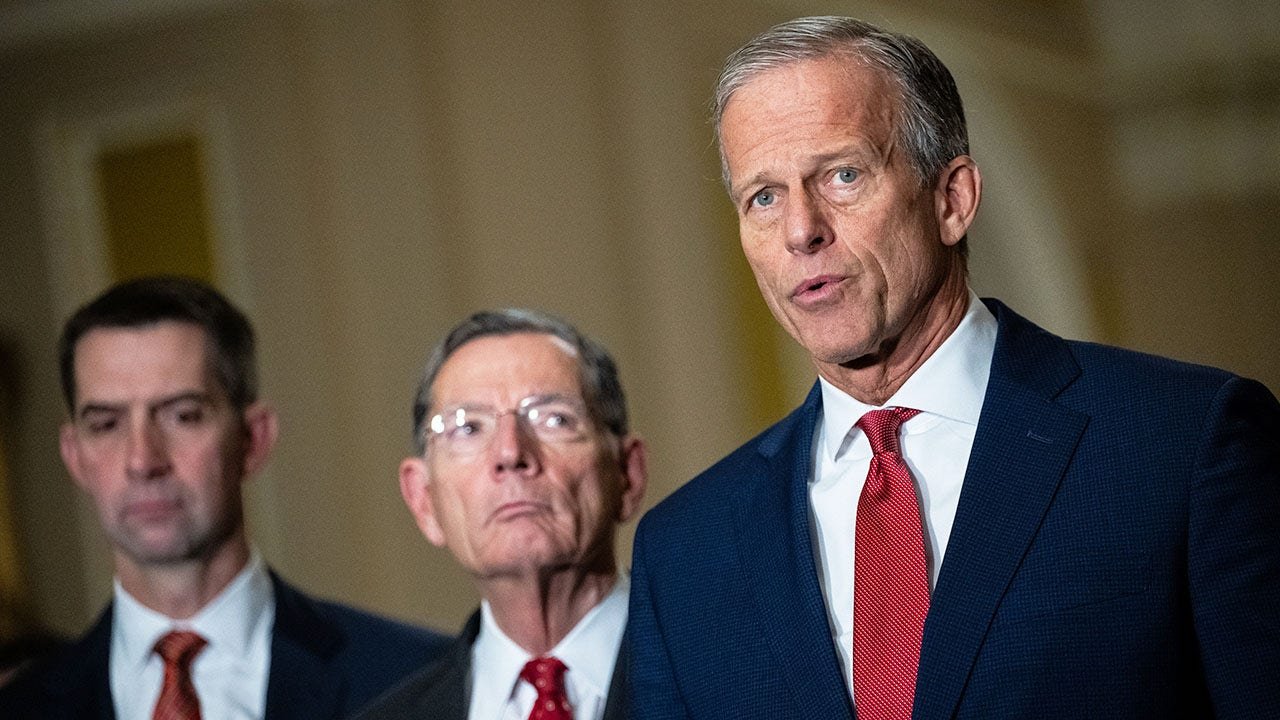
The Senate is fast running out of time to hammer out a bipartisan deal to extend expiring Obamacare subsidies, and Senate Majority Leader John Thune, R-S.D., is still prepared to hold a vote on a proposal next week. (Graeme Sloan/Bloomberg via Getty Images)
«I mean, my assumption is that by next week, when we have to have that vote, that we might not be far enough along in the bipartisan discussions. But my assumption is we’ll still have a vote of some kind, because that’s what we’re committed to do,» Thune said.
Bipartisan talks have been ongoing, both during the shutdown and in the weeks after. But those have yet to yield a plan that could muster the 60 votes necessary to break through the filibuster in the upper chamber.
Republicans want to see reforms to the program and are floating proposals that would see money from the subsidies that normally flows to insurance companies be sent directly to Health Savings Accounts (HSAs) — a plan previously floated by President Donald Trump.
Democrats, however, want a cleaner extension of subsidies but are open to reforms either up front or down the line.
RICK SCOTT CALLS DEMOCRATS ‘HEARTLESS’ AS HE PITCHES NEW OBAMACARE FIX
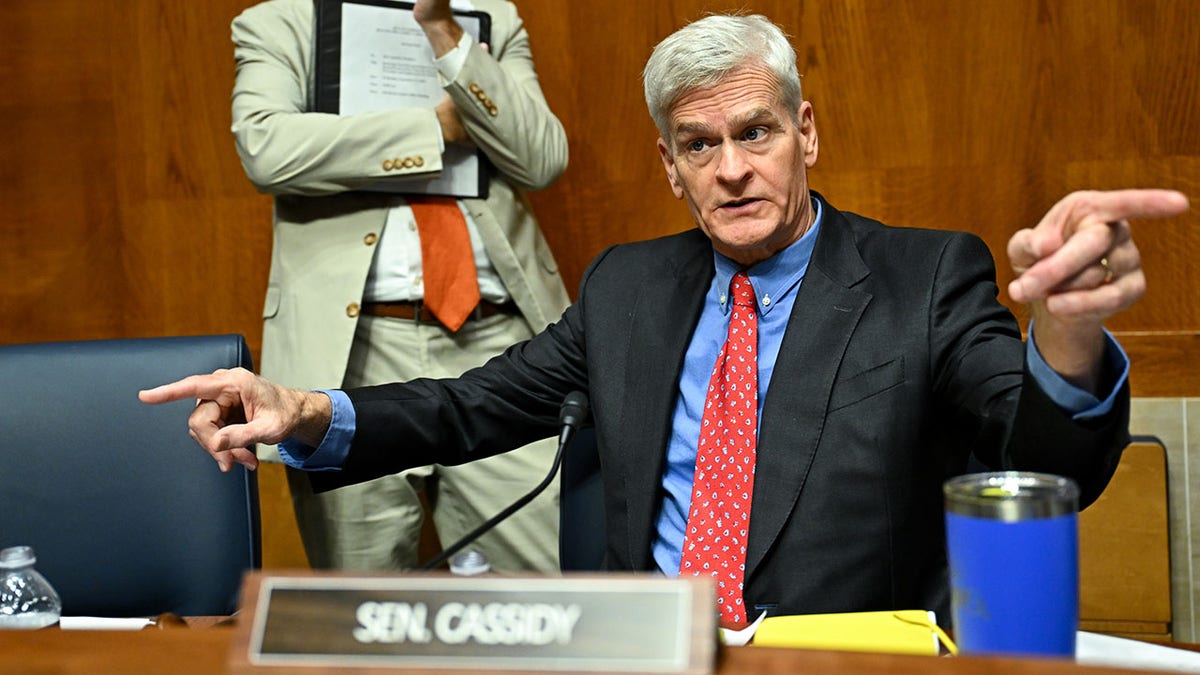
Sen. Bill Cassidy, R-La., is one of the leads negotiating a fix to expiring Obamacare subsidies. His plan, which he socialized with Senate Republicans during their closed-door meeting on Tuesday, revolves around sending money to Health Savings Accounts (HSAs) rather than insurance companies. (Graeme Sloan/Bloomberg via Getty Images)
Sen. Roger Marshall, R-Kan., told Fox News Digital he’s been involved in talks with colleagues across the aisle, but those discussions had recently slowed. He agreed that a bipartisan solution was likely out of reach by next week’s vote.
«I mean, I would love to see that, but it’s not realistic, and I’m putting my eggs into the basket for Jan. 30, a nice bipartisan package,» he said.
At that point, however, the subsidies will have expired.
That leaves the option of a possible side-by-side vote, with Democratic and Republican proposals put on the floor to see which survives. But that idea may not have much support, either.
«I don’t know about whether they would have the appetite for a side-by-side,» Sen. Tammy Baldwin, D-Wis., said. «We certainly have not seen Republicans come up with any sincere plans to help alleviate the concerns.»
Senate Health, Education, Labor and Pensions Chair Bill Cassidy, R-La., who is leading Republicans’ negotiations for a plan on the subsidies, scoffed that if Democrats spoke with him, «You’re going to be hearing a lot of sincerity.»
Cassidy’s plan revolves around HSAs, which he sketched out in broad terms to Fox News Digital. Under his plan, HSAs would be pre-funded with, «say $2,000,» that he argued would see Americans pay roughly the same health insurance deductibles and act as a much more workable day-to-day policy moving forward.
He noted that Democrats see where he’s coming from, but that he couldn’t say if he’s got «their vote yet.»
OBAMACARE STICKER SHOCK: THREE FACTORS PUSHING PREMIUMS TO RECORD HIGHS
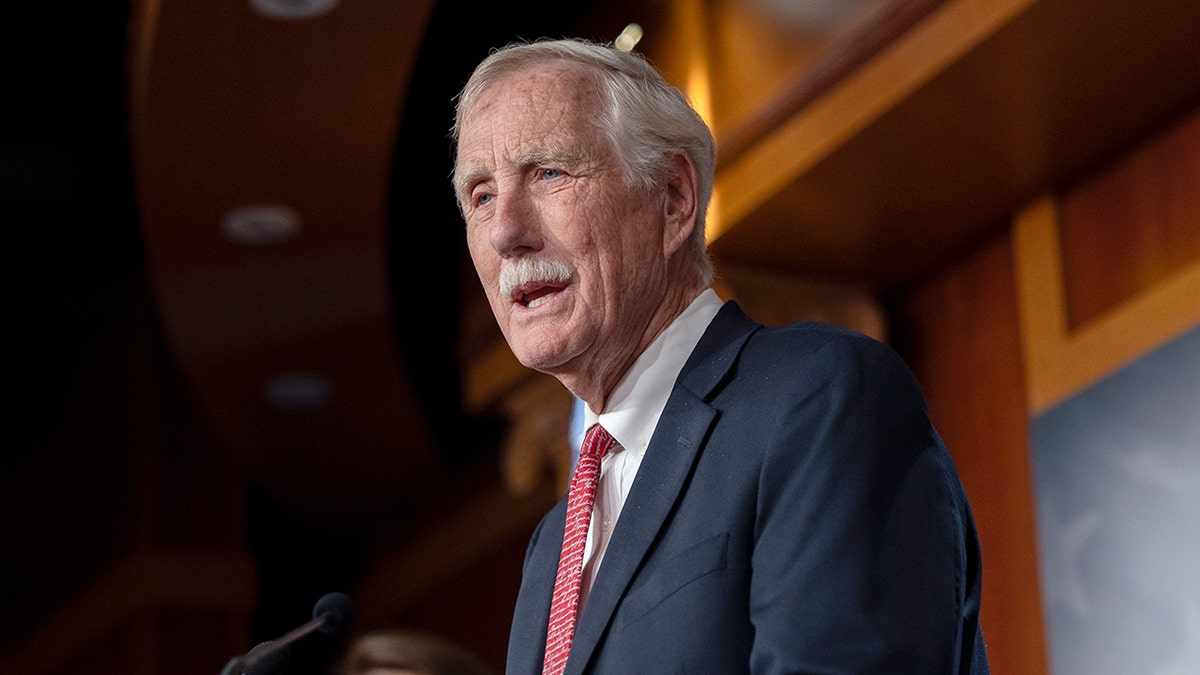
Sen. Angus King, I-Maine, speaks at a press conference with other Senate Democrats who voted to restore government funding, in Washington, Nov. 9, 2025. (Nathan Posner/Anadolu via Getty Images)
«If you look at the numbers, there are people who are in their 50s and 60s who will really, like, pay a third of their income for insurance on the exchange, and so the Democrats have set it up so there’s a cliff at the end of this year, and we’re trying to avoid that cliff,» Cassidy said.
«So [we’re] looking for a way that can take care of those folks but begin to transition to a system which is much more workable,» he continued. «The Obamacare subsidy system is not workable.»
Cassidy and Senate Finance Committee Chair Mike Crapo, R-Idaho, pitched ideas and options during the Senate GOP’s closed-door lunch on Tuesday, but there still wasn’t a solid consensus on a path forward on a Republican proposal.
Sen. John Kennedy, R-La., said it would take «divine intervention» for Republicans to agree on a plan to vote on by Thune’s deadline next week.
«Have you ever heard of a Rorschach test where it’s smeared all over the wall? That’s kind of where we’re at,» Kennedy said.
Members on both sides of the aisle believe that Trump should get more involved, too, given that anything that passes the Senate and works through the House would need his signature to become law.
CLICK HERE TO DOWNLOAD THE FOX NEWS APP
Sen. Angus King, I-Maine, one of the eight Democratic caucus members that voted to reopen the government with Republicans, said that it would help if Trump told the Senate GOP to make a deal.
«I think the easiest, clearest thing would be a straight extension with some modest reforms, and then we can move on,» King said. «And frankly, if it doesn’t happen, then the Republicans can own massive premium increases. And I don’t know why they would want to do that.»
senate,health care healthy living,donald trump,politics









INTERNACIONAL
Panamá cerró 2025 con más de 271 mil funcionarios y una planilla que supera $5,200 millones
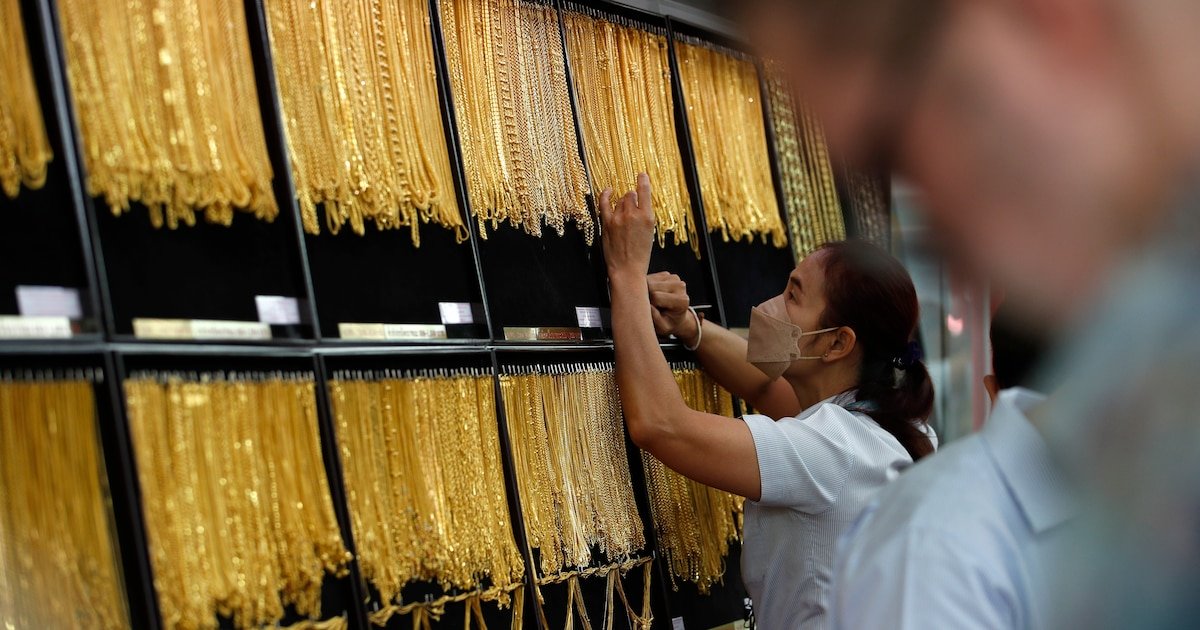
Panamá cerró diciembre de 2025 con 271,346 funcionarios públicos, lo que representó un aumento de 4,869 empleados frente a diciembre de 2024 y un alza de 348 funcionarios respecto a noviembre de 2025, según el más reciente informe de la Contraloría General de la República.
En paralelo, el sueldo bruto mensual de la planilla estatal llegó a $458.4 millones, con un incremento de $10.5 millones en un solo mes. El dato retrata con crudeza el tamaño que ha alcanzado el aparato público: más personal, más gasto permanente y menos margen para maniobrar cuando la caja aprieta.
Pero el dato que realmente pesa no es solo el cierre de diciembre, sino el costo total del año. La planilla pública acumuló en 2025 un gasto de $5,245.2 millones, por encima de los $5,177.0 millones de 2024.
Dicho de otra forma: solo en salarios públicos, Panamá desembolsó en un año $2,280.2 millones más que lo que aportó el Canal de Panamá al Tesoro Nacional en el año fiscal 2025, que fue de $2,965 millones.
Incluso supera en $2,051.4 millones la transferencia histórica que el Canal proyecta para la vigencia fiscal 2026, estimada en $3,193.8 millones, y rebasa en $764.2 millones el costo total estimado de la Línea 3 del Metro, calculado en más de $4,481 millones.

El crecimiento tampoco empezó ayer. Los informes anuales de la Contraloría muestran que el gasto acumulado en planilla pasó de $4,441.1 millones en 2020 a $4,738.8 millones en 2021, $4,880.3 millones en 2022, $5,014.8 millones en 2023, $5,177.0 millones en 2024 y $5,245.2 millones en 2025.
En conjunto, entre 2020 y 2025, el Estado panameño desembolsó alrededor de $29,497.1 millones en salarios públicos. Ese monto equivale a casi 10 veces el aporte canalero de 2025 y a más de 6.5 veces el costo estimado de la Línea 3.
Buena parte de ese ensanchamiento ocurrió en el quinquenio anterior. De acuerdo con la información que ya había divulgado la Contraloría y que el propio comportamiento mensual confirma en sus series, entre julio de 2019 y junio de 2024 el empleo público aumentó en 24,082 personas, al pasar de 238,248 a 262,330 funcionarios.
El resultado fue una estructura estatal más pesada, con mayor gasto recurrente, más compromisos salariales y menos flexibilidad presupuestaria. En 2025 esa inercia no desapareció: cambió de velocidad, pero no de dirección.
Las entidades que más sumaron personal en 2025 ayudan a entender hacia dónde se movió la expansión. El Ministerio de Educación cerró 2025 con 68,405 funcionarios y añadió 1,017 plazas frente a diciembre de 2024. La Asamblea Nacional terminó con 5,718 empleados y sumó 935.

El Ministerio de Seguridad Pública cerró con 33,473 funcionarios y agregó 660. El Ministerio de Obras Públicas llegó a 2,330 empleados, con un aumento de 523. El Órgano Judicial alcanzó 7,318 funcionarios y sumó 513.
En el bloque descentralizado también hubo movimientos relevantes. La Caja de Seguro Social cerró 2025 con 35,325 funcionarios y registró un incremento combinado de al menos 620 plazas entre personal permanente y eventual. Transporte Masivo de Pasajeros, S. A. terminó con 4,103 empleados y aumentó 279 funcionarios permanentes.
Ese peso del gasto de funcionamiento ha sido una de las alertas repetidas por organismos y calificadoras. Moody’s ha advertido sobre la rigidez de ciertas leyes y la dificultad del Estado panameño para recortar gasto público, mientras Fitch y el Fondo Monetario Internacional han insistido en que la consolidación fiscal sigue limitada por la presión del gasto corriente y la trayectoria de la deuda.

El ministro de Economía y Finanzas, Felipe Chapman, y el presidente José Raúl Mulino han reconocido que reducir el gasto en salarios es particularmente complejo, en parte por la existencia de leyes especiales que establecen incrementos obligatorios para educadores, estamentos de seguridad, médicos y otros profesionales del sector público.
Esa rigidez, han señalado, dificulta ajustes rápidos del gasto corriente y obliga a que cualquier estrategia de contención se apoye en reformas de mayor alcance, mejoras de eficiencia y revisiones de estructuras salariales y de contratación.
manos,dólares,pago,impuestos,transacción,billetes,recibo,economía,finanzas,dinero
INTERNACIONAL
EXCLUSIVE: Trump rejects shielding Biden records from Senate probes in executive privilege showdown
NEWYou can now listen to Fox News articles!
EXCLUSIVE: President Donald Trump rejected former President Joe Biden’s assertion of executive privilege over a tranche of documents requested by the Senate as part of various probes into the 46th president, determining it is «not in the best interests of the United States.»
White House counsel David Warrington wrote Monday in a letter addressed to the National Archives and Records Administration (NARA) and obtained by Fox News Digital that Trump «does not uphold the former President’s assertion of privilege» over records sought in four congressional probes. The letter directs NARA to provide the materials to Congress.
The dispute centers on documents related to investigations into Biden’s health, alleged politically motivated probes into Trump and his allies, and the Biden family’s financial dealings, which Republicans argue go to the heart of Congress’ constitutional authority to conduct oversight.
The letter came as a response to communication from NARA on Dec. 10 informing the White House that the former president had asserted executive privilege over the requested materials.
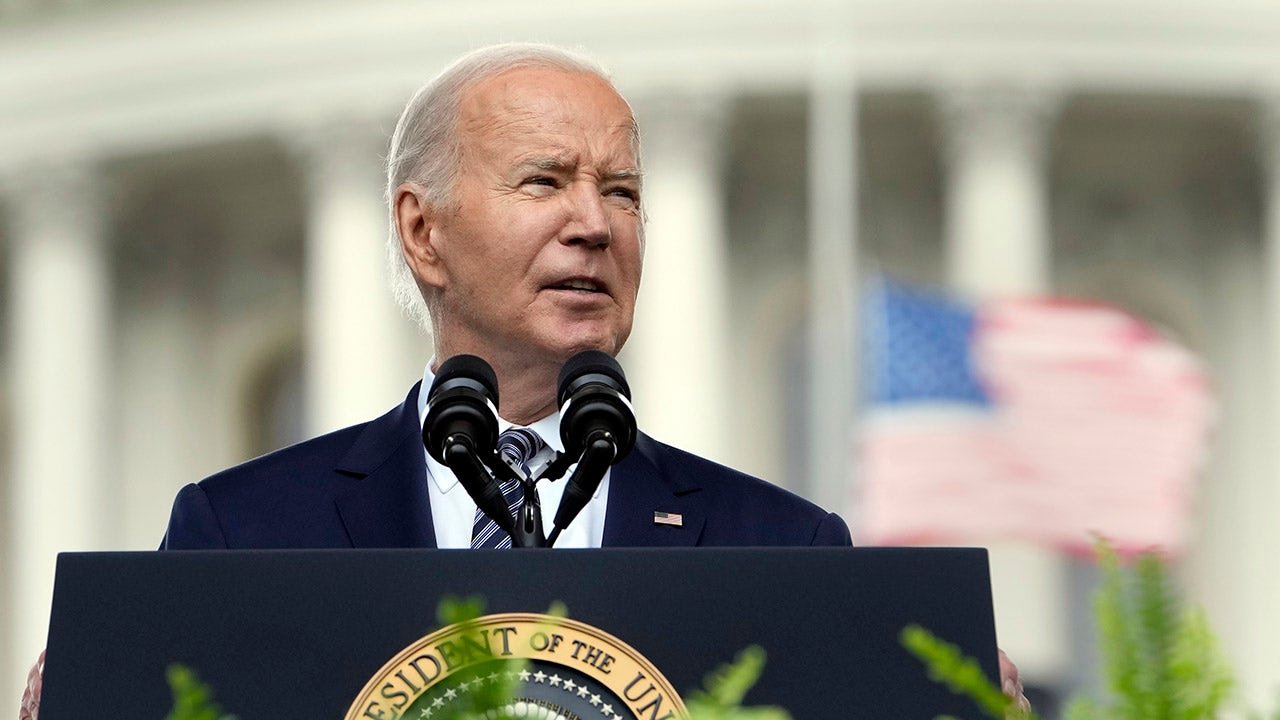
President Joe Biden speaks during an event in Washington, D.C., on May 15, 2024. (AP Photo/Susan Walsh)
Warrington said the assertion «is not justified» as to documents identified in two letters Biden sent to NARA on Oct. 22 and Dec. 3.
The first category of documents involved a request from the Senate Permanent Subcommittee on Investigations for records related to what the letter described as the «coverup of former President Biden’s health and cognitive decline.»
«The abuse of the autopen that took place during the Biden Presidency, and the extraordinary efforts to shield President Biden’s diminished faculties from the public, must be subject to a full accounting to ensure nothing similar ever happens again,» Warrington wrote, quoting a prior letter.
TRUMP TO VOID ALL DOCUMENTS ALLEGEDLY SIGNED BY BIDEN VIA AUTOPEN, THREATENS PERJURY CHARGE
Biden also asserted privilege over two Senate Judiciary Committee requests concerning «coordinated efforts by the Biden administration against President Trump and his staff through politically motivated investigations.»
The White House argued that «the constitutional protections of executive privilege should not be used to shield from Congress evidence of a President’s efforts to imprison his opponent.»
A third set of documents related to the «Biden family’s financial dealings and potential conflicts of interest,» the letter noted, referencing Biden’s use of private email accounts and his work on Ukraine as vice president while his son Hunter Biden held a lucrative position on the board of an energy company there.
CONSTITUTIONAL SCHOLAR USES BIDEN AUTOPEN TO FLIP DEMS’ ‘DEMOCRACY’ SCRIPT AGAINST THEM: ‘SCANDAL’
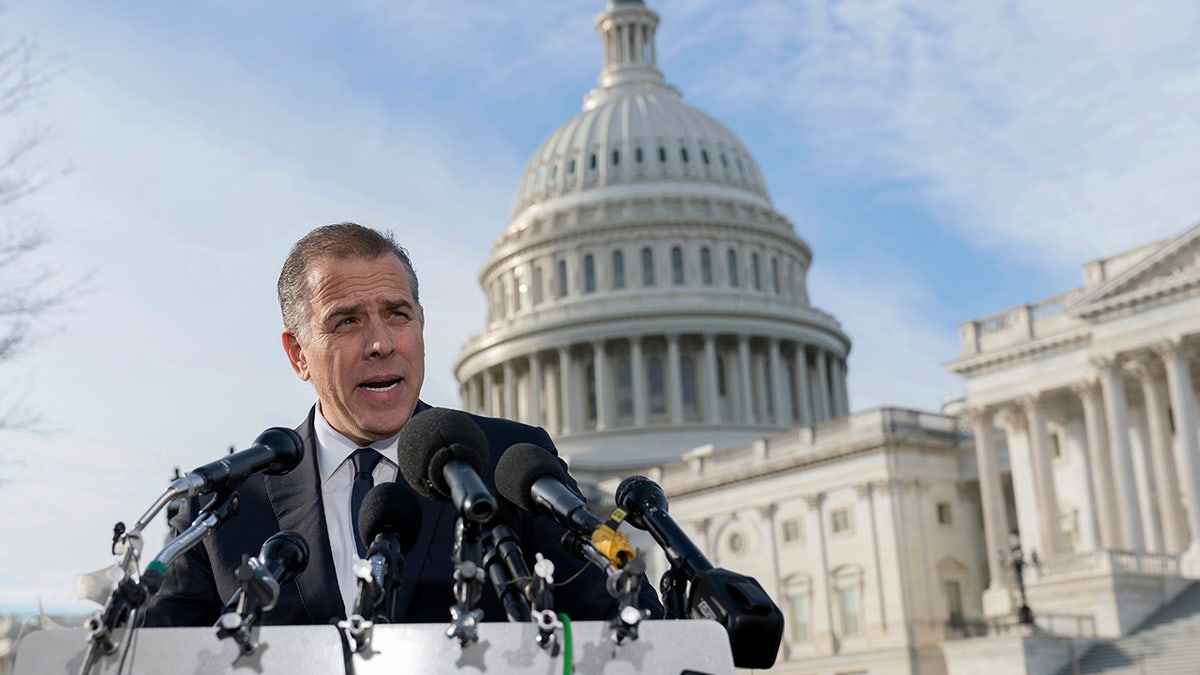
Hunter Biden, son of President Joe Biden, talks to reporters at the U.S. Capitol, in Washington, Dec. 13, 2023. (AP Photo/Jose Luis Magana)
Warrington acknowledged that the Supreme Court has recognized executive privilege as protecting presidential decision-making and deliberations but said he was «unaware of a Supreme Court ruling or constitutional text that extends those protections to former President Biden’s efforts to assist his son’s shady business deals,» underscoring a fight about how expansive the scope of executive privilege is in the face of Congress’ oversight demands.
«President Trump instructs you to provide to these congressional committees the pages identified as privileged by the former President,» Warrington wrote.
Warrington previously denied Biden’s privilege request over documents related to the Biden administration’s use of the autopen, Fox News Digital exclusively reported in December. Biden has denied accusations that official presidential documents were signed by the autopen without his knowledge, brushing them off as «ridiculous.»
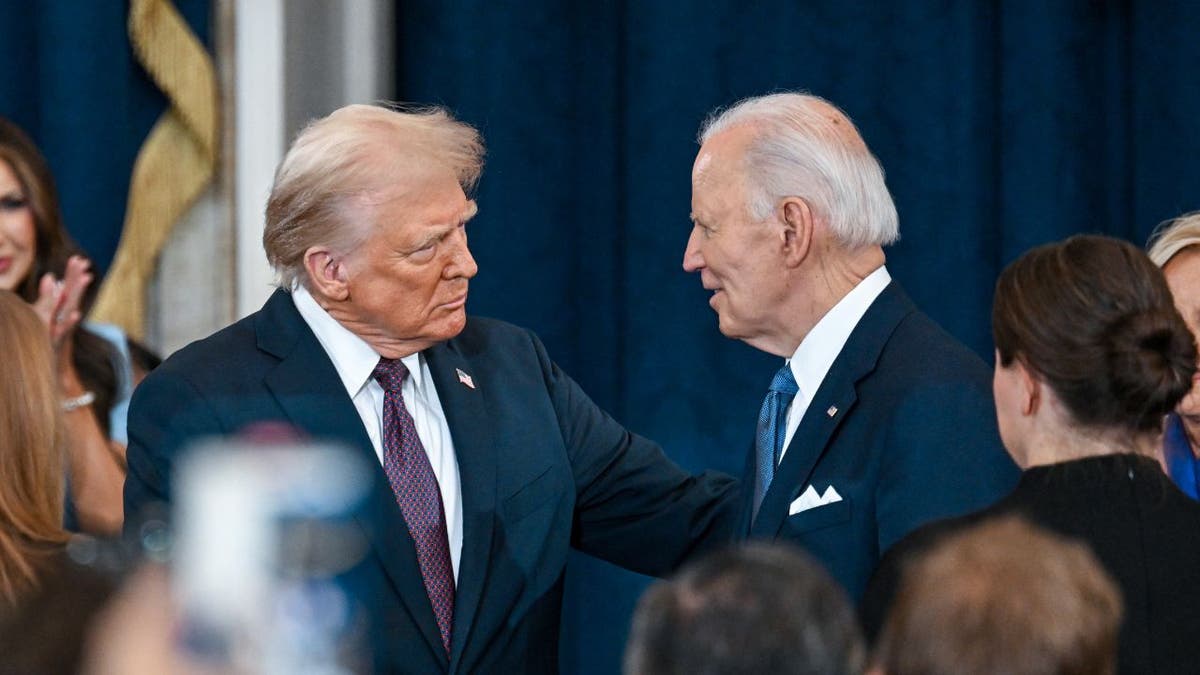
President-elect Donald Trump shakes hands with President Joe Biden at Trump’s inauguration in the Capitol Rotunda Jan. 20, 2025, in Washington. (Kenny Holston-Pool/Getty Images)
«Let me be clear: I made the decisions during my presidency. I made the decisions about the pardons, executive orders, legislation, and proclamations,» Biden said in a statement in June as Trump and Republicans sounded off about what they alleged was a scandal. «Any suggestion that I didn’t is ridiculous and false.»
Concerns over Biden’s mental acuity had simmered for years before reaching a boiling point in June 2024.
CLICK HERE TO DOWNLOAD THE FOX NEWS APP
Republicans sounded the alarm that it appeared Biden’s mental edge was slipping before even the 2020 election cycle. The media and Biden’s longtime Democratic allies joined conservatives in their alarm following Biden’s failed debate against Trump in early summer of 2024.
Biden dropped out of the race, but investigations and concerns over an alleged Biden administration coverup continue into the second Trump administration.
Fox News Digital reached out to a Biden representative and NARA for comment on Monday morning.
white house,joe biden,donald trump,congress

¿Qué es la Guardia Revolucionaria?
¿Cómo está estructurada la Guardia?
¿Quién comanda la Guardia?
Mirando hacia el futuro

Horacio Marín, CEO de YPF: “Insisto, no habrá cimbronazos en el precio de la nafta, seguiremos con nuestra estrategia, pero sin saltos”

Furor por Franco Colapinto en China para la carrera de Fórmula 1: de la gorra de Boca a los regalos de los fanáticos

El Gobierno dispuso una sanción millonaria contra dos gremios del transporte que se sumaron al paro de la CGT

Panamá cerró 2025 con más de 271 mil funcionarios y una planilla que supera $5,200 millones

“Que denuncie o se disculpe”: Javier Alonso cruzó a Alejandra Monteoliva por decir que “la Policía Bonaerense es parte del problema” de la inseguridad

La pregunta al hueso de Mirtha Legrand que descolocó a uno de sus invitados: «¿Por qué tu mujer te eligió a vos?»

Javier Milei habló de la crisis con la vicepresidenta: “No quiero la renuncia de Victoria Villarruel”

Fabi Cantilo festejó sus 67 años: invitados famosos, el regalo de Fito Páez y el susto que terminó en la guardia

Ian Lucas se hartó de las mentiras de Evangelina Anderson y confirmó que fueron novios: “Ella me da vergüenza”

Wanda Nara involucrada en la separación de su hijo Valentino: su ex nuera contó toda la verdad

 CHIMENTOS3 días ago
Wanda Nara involucrada en la separación de su hijo Valentino: su ex nuera contó toda la verdad
- ECONOMIA3 días ago
«Crisis industrial masiva»: alarmante informe de la UBA se mete en la pelea de Milei con la UIA
- CHIMENTOS23 horas ago
La cruda confesión de Amalia Granata por el trastorno que sufre su hijo Roque: “Le hicimos estudios y salió que tiene TDAH, dislexia y disgrafia”