INTERNACIONAL
Bold move to keep Americans safe from ‘terrorists’ is basis for US travel ban for some African nations

NEWYou can now listen to Fox News articles!
President Donald Trump’s restrictions on travel from 10 African countries are being praised by analysts for improving U.S. security internationally and domestically.
The president said on X the travel ban was being introduced after a terror attack against a pro-Israel group advocating for Hamas to release Israeli hostages in Boulder, Colorado, last weekend, allegedly by an Egyptian man who had overstayed his visa.
In a White House fact sheet, Trump said, «We will restore the travel ban, some people call it the Trump travel ban, and keep the radical Islamic terrorists out of our country.»
SUSPECT IN BOULDER TERROR ATTACK DETERMINED TO BE EGYPTIAN MAN IN US ILLEGALLY: FBI
President Donald Trump gestures to the crowd at the Conservative Political Action Conference at the Gaylord National Resort & Convention Center Feb. 22, 2025, in Oxon Hill, Md. (AP Photo/Jose Luis Magana)
This point was backed by the State Department’s principal deputy spokesperson, Tommy Pigott. In a briefing Thursday, Pigott said, «This is a national security imperative».
But observers believe there is an external, international reason.
«Most, if not all, of the African countries were added to this list either because of extreme instability and thus terrorist havens or because relations between them and the U.S. is either extremely poor or non-existent,» Bill Roggio, senior fellow at the Foundation for Defense of Democracies and editor of FDD’s Long War Journal, told Fox News Digital.
«For instance, the U.S. has been historically hard on Eritrea for its human rights abuses and also alleged support for terrorism. While in Chad, its military regime kicked the U.S. military out of its territory last year, further hurting the U.S. military posture in Africa.»
TRUMP BANS TRAVEL TO US FROM SEVERAL COUNTRIES TO BLOCK ‘DANGEROUS FOREIGN ACTORS’
Some of the restricted African countries listed below pose significant potential security concerns for the U.S.
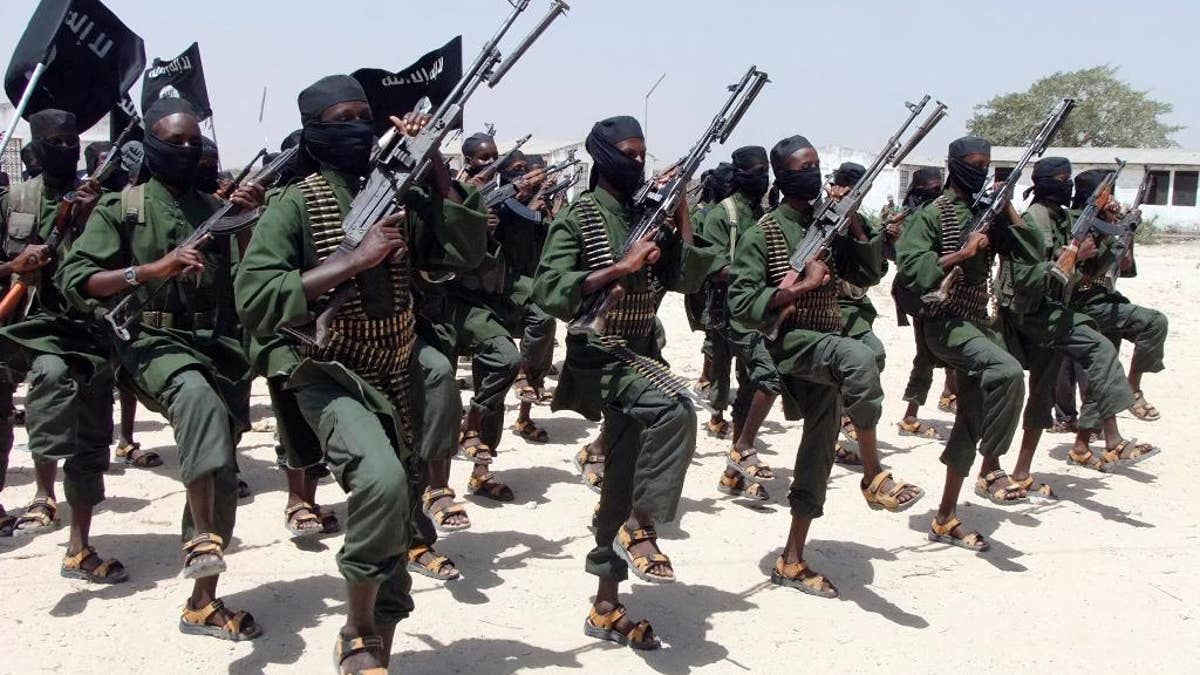
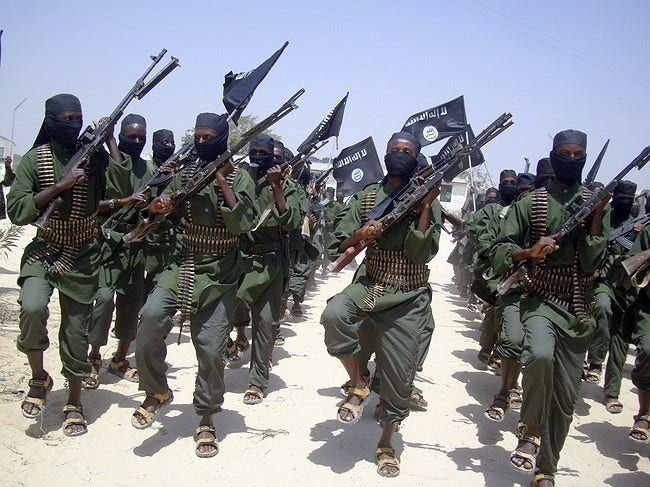
In this Feb. 17, 2011, file photo, hundreds of newly trained al-Shabaab fighters perform military exercises in an area south of Mogadishu, Somalia. (AP Photo/Farah Abdi Warsameh)
SOMALIA
The world’s two principal Islamist terror groups, ISIS and al Qaeda, represented here by Al-Shabaab, both operate openly in Somalia. The White House described it this week as «a terrorist safe haven.»
A briefing note accompanying the travel ban declared, «A persistent terrorist threat emanates from Somalia’s territory. Somalia also remains a destination for individuals attempting to join terrorist groups that threaten the national security of the United States.»
The U.S. Africa Command mounted five air attacks against operators from both groups in just the 12 days up to June 2.
LIBYA
Fighting and subsequent piles of bodies in the streets have been reported in the past month in Tripoli, the Libyan capital. The U.N.’s Support Mission in Libya recently posted on X that the situation could «spiral out of control.»
«The historical terrorist presence within Libya’s territory amplifies the risks posed by the entry into the United States of its nationals,» the White House note states, adding U.S. border officials can’t properly vet Libyans because «there is no competent or cooperative central authority for issuing passports or civil documents in Libya.»
SUDAN

Fighters of the Sudan Liberation Movement, a Sudanese rebel group active in Sudan’s Darfur State that supports army Chief Abdel Fattah al-Burhan, attend a graduation ceremony in the southeastern Gedaref state March 28, 2024. (Getty Images)
The U.S. has already imposed sanctions against the leaders of both parties involved in a two-year civil war that has reportedly killed 150,000 and displaced 12 million. The U.S. claims up to 28% of Sudanese overstay their visas.
ERITREA
The criminal records of Eritreans are not available for inspection by U.S. officials. With an overstay rate of up to 55%, the White House also reported that «Eritrea has historically refused to accept back its removable nationals.»
CRITICS HAVE MELTDOWN AND ACCUSE TRUMP OF IMPOSING RENEWED ‘MUSLIM BAN’ THROUGH ‘DISGUSTING’ TRAVEL ORDER
CHAD
The West African country is causing concern in Washington as it deepens relations with Russia. Chad President Idriss Deby went to Moscow last year for talks with Russian President Vladimir Putin, and Kremlin Foreign Minister Sergey Lavrov was then warmly welcomed in Chad’s capital, N’Djamena, for a reciprocal visit. Russia’s shadowy Wagner private mercenary group’s importance in the country is being questioned after three of its members were arrested in September and sent back to Moscow.

In this pool photograph distributed by Russian state-owned agency Sputnik, Russian President Vladimir Putin meets with Chad’s Transitional President Mahamat Idriss Deby at the Kremlin in Moscow Jan. 24, 2024. (Mikhail Metzel/Pool/AFP via Getty Images)
Banning nationals this week, the U.S. said Chad has had a visa overstay rate of up to 55%. In Chad, President Deby responded by saying, «I have instructed the government to act in accordance with the principles of reciprocity and suspend the issuance of visas to U.S. citizens.»
EQUATORIAL GUINEA
People from this West African country have reportedly overstayed their F, M and J visas by up to 70%.
REPUBLIC OF THE CONGO
Depending on the visa category, up to 35% of citizens in the U.S. are reported to have overstayed their visas.
Overstaying is the main issue for the other African countries whose nationals are partially restricted and now have only limited entry into the U.S.
SIERRA LEONE
Has an overstay rate of up to 35%, and, the White House says, «has historically failed to accept back its removable nationals.»

Libyan protesters gather in Tripoli’s Martyrs Square to call for the resignation of the national unity government May 14, 2025. (Getty Images)
CLICK HERE TO GET THE FOX NEWS APP
TOGO
Togo suffers from poor governance, nepotism and widespread corruption, which reportedly goes all the way to the president’s office. Over 50% of the population lives below what’s regarded as the international poverty line. Togo’s nationals have an overstay rate of up to 35% in the U.S.
BURUNDI
Burundi vies with South Sudan for the dubious title of poorest country in the world. Yet soaring inflation has caused a devastating rise in food prices. A former rebel group has led the country for two decades in an climate of political unrest and alleged repression. Burundi’s citizens have an overstay rate of up to 17% in the U.S.

INTERNACIONAL
Trump cabinet shakeup expands after Noem exit, Bondi firing — who’s under pressure next?

NEWYou can now listen to Fox News articles!
Kristi Noem is gone from the Department of Homeland Security and Pam Bondi is out the door at the Justice Department.
It’s not unusual for a president to shake up the cabinet ahead of crucial elections.
And that appears to be the case right now for President Donald Trump, who’s saddled with underwater approval ratings and an unpopular war ahead of this year’s crucial midterm elections, when Republicans are working to hold onto their slim House and Senate majorities.
The big question going forward: Who may be next on Trump’s chopping block.
PAM BONDI ALREADY FIRED AS ATTORNEY GENERAL, CABINET OFFICIAL TEED UP AS REPLACEMENT: SOURCES
U.S. President Donald Trump, accompanied by FBI Director Kash Patel, U.S. Deputy Attorney General Todd Blanche, U.S. Homeland Security Secretary Kristi Noem, U.S. Attorney General Pam Bondi, Sen. Marsha Blackburn and Sen. Bill Hagerty, speak during an event to sign a memorandum to send federal resources to Memphis, Tennessee, for a surge against local crime, in the Oval Office at the White House in Washington, D.C., Sept. 15, 2025. (REUTERS/Jonathan Ernst)
The White House is pushing back against reporting that other cabinet secretaries may soon be given pink slips. But it’s worth noting that Trump announced in a social media post that he was letting Bondi go hours after media reports first crossed that the attorney general’s job was in jeopardy.
Here’s a look at three cabinet members that media reports suggest could possibly be in the president’s crosshairs.
Tulsi Gabbard
The director of national intelligence may have earned Trump’s ire by failing to condemn former counterterrorism chief Joe Kent after his abrupt exit from the administration last month after criticizing the president’s move to strike Iran.
Gabbard, a former Democrat who unsuccessfully ran for her party’s 2020 presidential nomination before crossing over and supporting Trump in the 2024 election and a military veteran who deployed to the Iraq War two decades ago, has not been as vocally supportive of the current conflict with Iran as others in the cabinet.
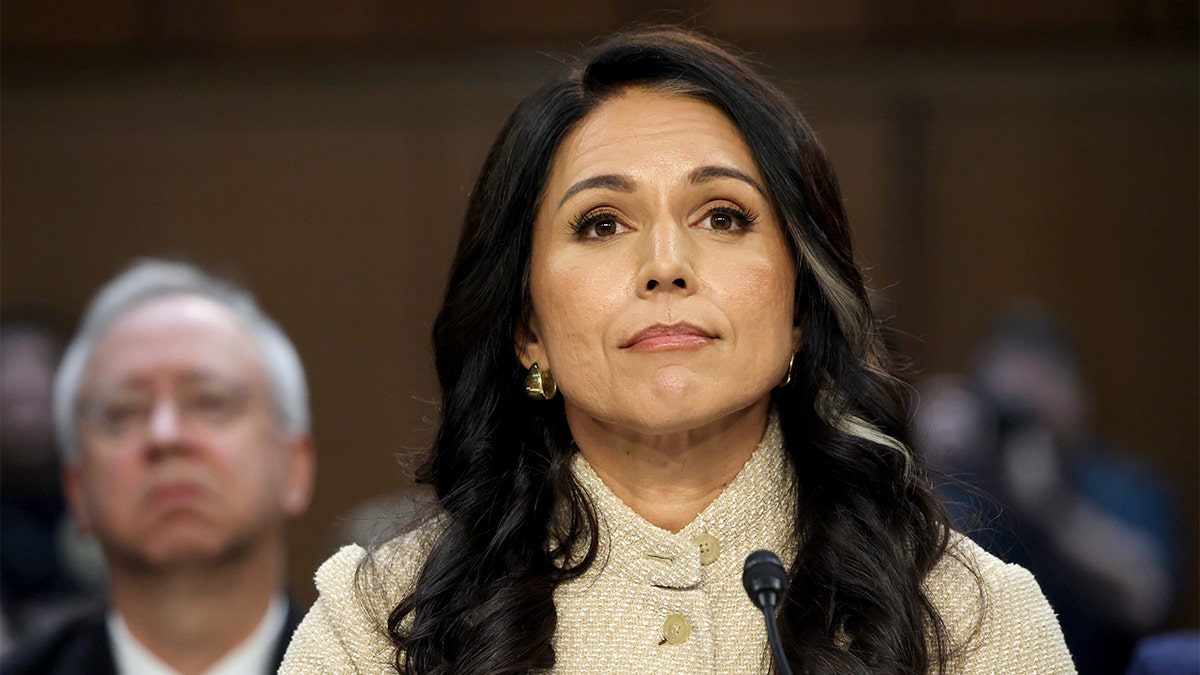
Director of National Intelligence Tulsi Gabbard testifies during a Senate Intelligence Committee hearing on worldwide threats at the Hart Senate Office Building on March 18, 2026, in Washington, DC. (Win McNamee/Getty Images)
In backing Gabbard, Trump last weekend pointed to her stance on Iran and said, «I think she’s probably a little bit softer on that issue, but that’s okay.»
Pushing back forcefully against speculation that Gabbard may be next to go, White House Communications Director Steven Cheung on Thursday said, «President Trump has total confidence in Director Gabbard, and any insinuation otherwise is totally fake news.»
«The President has assembled the most talented and impactful Cabinet ever, and they have collectively delivered historic victories on behalf of the American people.,» Cheung touted.
Lori Chavez-DeRemer
Trump’s labor secretary is under investigation by the Labor Department’s inspector general over numerous allegations, including drinking alcohol while working and having an affair with a security officer.
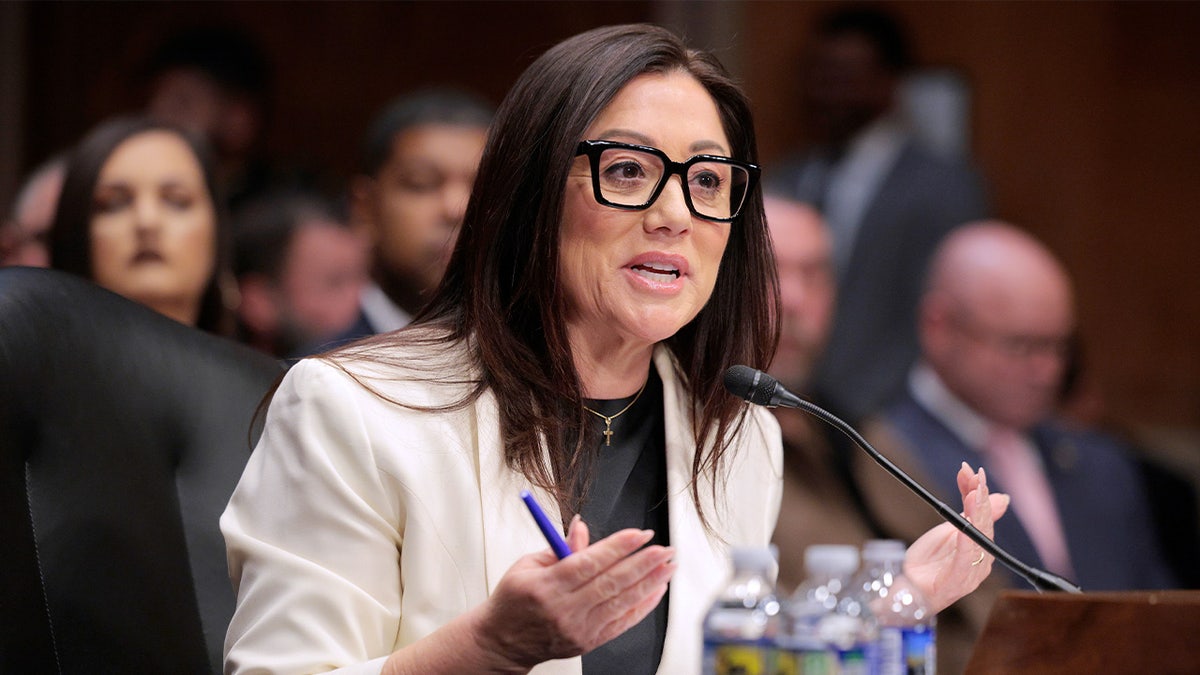
Department of Labor Secretary Lori Chavez-DeRemer is cracking down on reported H-1B abuse. (Chip Somodevilla/Getty Images)
The resignation of some of her top aides has not helped matters.
Howard Lutnick
The president’s commerce secretary is a longtime Trump ally.
But there’s speculation Lutnick may be on thin ice after admitting in February he traveled with his family to Jeffrey Epstein’s private Caribbean island in 2012, four years after Epstein was convicted of child sex trafficking.
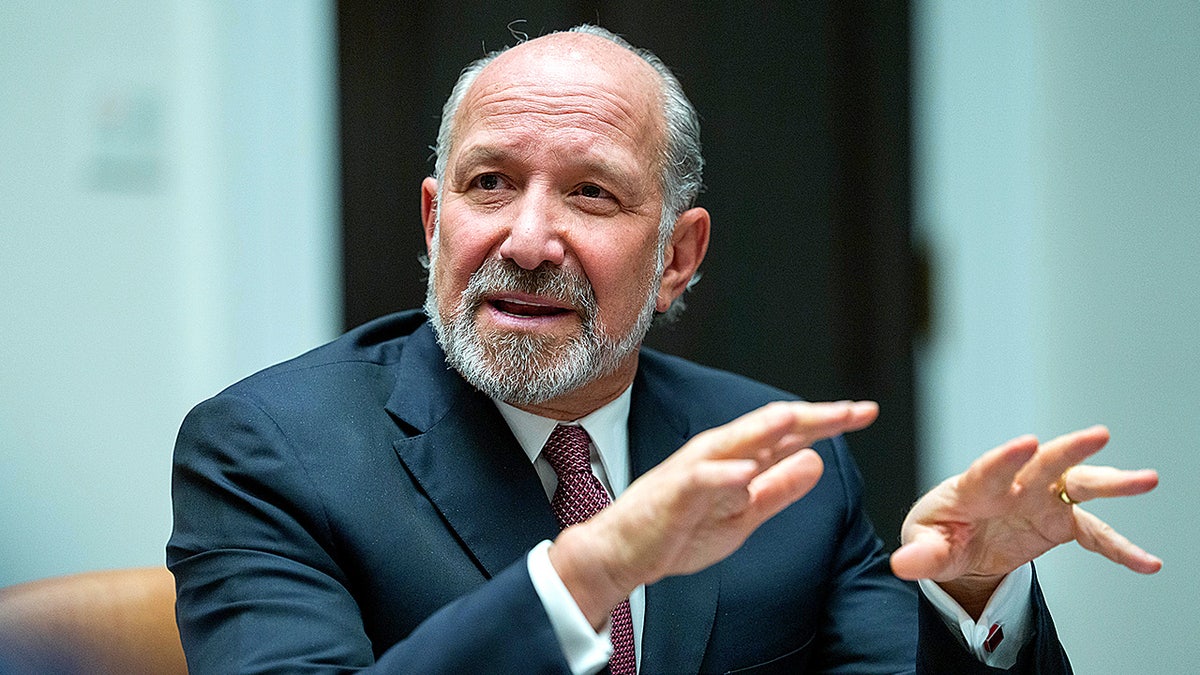
Howard Lutnick, commerce secretary, participates in a roundtable in the Roosevelt Room of the White House in Washington, D.C., on Dec. 10. (Aaron Schwartz/CNP/Bloomberg)
Lutnick previously denied having any relationship with Epstein and stated that he «barely had anything to do with that person.»
The White House is denying that either Lutnick or Chavez-DeRemer are in hot water.
«Secretaries Chavez-DeRemer and Lutnick are both doing a great job standing up for American workers, and they continue to have President Trump’s full support,» White House spokeswoman Taylor Rogers told Fox News.
CLICK HERE TO DOWNLOAD THE FOX NEWS APP
But a source in the president’s political orbit didn’t rule out further changes in Trump’s cabinet.
«The president is reshaping his team and his message is clear: loyalty is expected but performance is mandatory,» the source told Fox News.
pam bondi, donald trump, white house, kristi noem, cabinet, midterm elections
INTERNACIONAL
Carrera contra reloj en territorio iraní: habrían rescatado a uno de los pilotos de un caza de EE.UU. derribado



INTERNACIONAL
Holocaust survivor, 86, priced out of NYC says Mamdani skipped scheduled housing meeting

NEWYou can now listen to Fox News articles!
As a toddler, Sami Steigmann survived Nazi medical experimentation. Now, at 86, he is struggling to find safe housing in New York City.
His situation comes as New York City residents face rising housing costs, despite campaign promises from city leaders to improve affordability
Steigmann, who has called New York City home since the 1980s, can no longer safely navigate his second-story apartment in Harlem. Earlier this year, he asked to have a one-on-one meeting with New York Mayor Zohran Mamdani, who ran on a platform centered on lowering housing costs. Although the meeting was scheduled, Steigmann says the 34-year-old mayor never kept the appointment.
«Promises made, not kept,» Steigmann told Fox News Digital. «His claim to fame was affordable housing. I’m not disappointed because I didn’t expect him to keep his word. It is what it is.»
DEMS WHO RAN ON AFFORDABILITY NOW FACE BACKLASH AS COSTS CLIMB
Sami Steigmann, 86, a Holocaust survivor, is struggling to find safe, affordable housing in New York City as costs continue to rise. (Angela Weiss/AFP/Getty Images)
«It would have been nice, but you know politicians,» he said with a smile.
He added that he was no longer interested in meeting with Mamdani.
Mamdani’s office did not respond to Fox News Digital’s request for comment.
For now, Steigmann said his focus is on finding a safe place to live as New York City’s costs continue to climb.
«New York is the most expensive city in the country, especially for independent living. Rent is about $6,000 a month for a one-bedroom apartment,» he said.
Steigmann, who lives on a fixed income of $1,649 per month, said he cannot afford an apartment that is both safe and accessible to public transportation.
The physical toll of his current living situation has only added to the challenge.
Born in 1939 in Romania, Steigmann was deported with his parents to a Nazi labor camp at about age 2. Too young to work, he was subjected to medical experimentation for at least three years before the camp was liberated.
«I was subjected to medical experiments, so I’m in pain every single second, but I learned to live with it. Now, because of my age, 86, I have difficulty walking and climbing stairs,» he said.
While relocating to a more affordable city may seem like an option, he said leaving New York is not a simple decision.
«I did not give it serious thought because here I have agencies that are helping me,» he said. «I don’t know what it would be like in other cities because I don’t have those connections there.»
FROM FREE BUSES TO CITY-OWNED GROCERY STORES, HERE ARE MAMDANI’S KEY ECONOMIC PROMISES
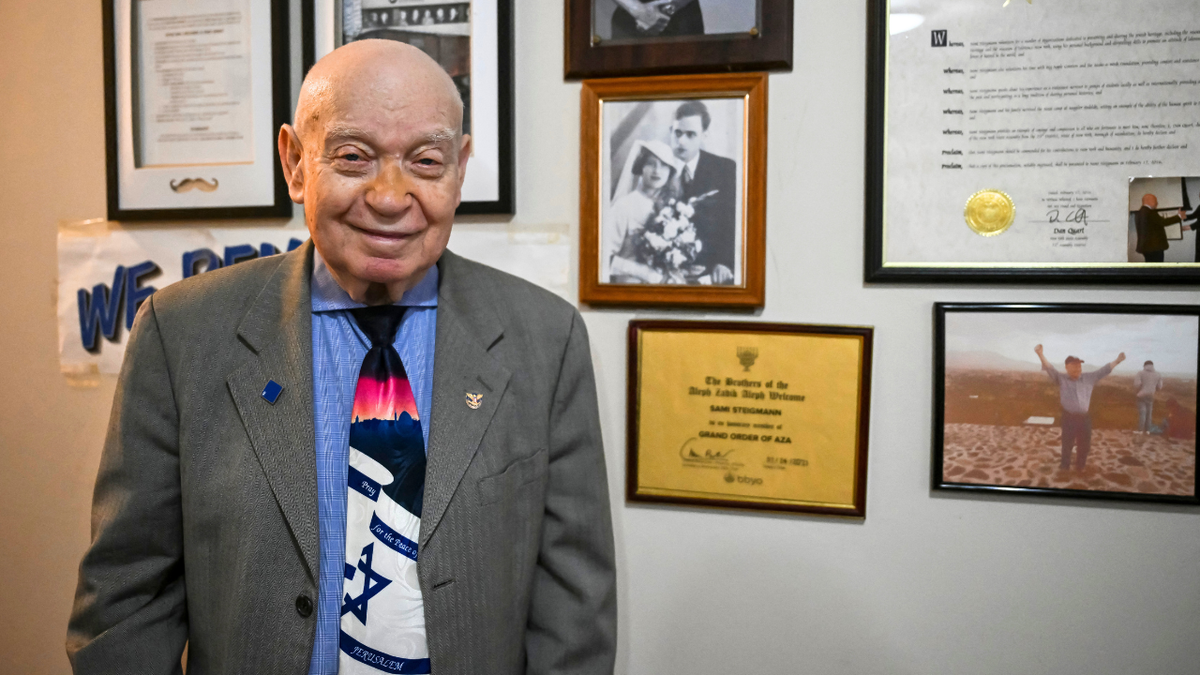
Steigmann faces a $2,200 monthly shortfall in rental costs. (Angela Weiss/AFP/Getty Images)
«I’m very safe here,» Steigmann said of his neighborhood, adding that his neighbors know him and watch his back.
He said a nursing home is a last resort he hopes to avoid.
«If I’m going to a nursing home, which I may have to go to if I cannot find something, basically, it’s the way to die because there is no life there.»
«It’s not for me. I’m still active. I don’t need assisted living in the sense that I can take a bath by myself. I can still do a lot of things,» he said.
Now, advocates are stepping in to help.
The Chicago Jewish Alliance recently launched «Project Ahava,» a fundraising initiative aimed at securing safe, stable housing for Steigmann as he struggles to remain independent in New York City.
Facing a roughly $2,200 monthly shortfall, the initiative aims to raise $132,000 to cover five years of housing. The group has so far raised about $18,000 for Steigmann.
«Sami has never asked for a dime, and he has given back to so many people. That’s just another reason why we wanted to give back to him and make sure that he has safe housing,» Susan Haggard, president of the Chicago Jewish Alliance, told Fox News Digital.
«And it’s important for him to stay in Manhattan where he is close to public transportation and still have that independence that is so important to him,» she added.
Maintaining that independence is key to his daily work and outreach.
CLICK HERE TO DOWNLOAD THE FOX NEWS APP

Holocaust survivor Sami Steigmann gives a salute while wearing his USS Intrepid volunteer uniform in New York City. (Courtesy of Sami Steigmann)
He spends his days volunteering aboard the aircraft carrier Intrepid, docked in New York City’s harbor, and speaking to school groups across the country about the Holocaust — a mission that has come to define his life.
«This is my life. Without it, there’s nothing for me, no reason to live,» he said.
new york city, zohran mamdani, housing, economy

La fiscalía pidió indagar a las máximas autoridades de la Cámara Federal de Córdoba por manipular el reparto de causas

Trump cabinet shakeup expands after Noem exit, Bondi firing — who’s under pressure next?

La indignación de Diego Latorre por la sanción del técnico del Chelsea a Enzo Fernández

Muna Pauls Cherri presentó a su novio y mostró quién es por primera vez: así vive su romance a los 16 años

Denuncian una operación rusa para infiltrar contenidos en medios argentinos y erosionar la imagen de Javier Milei

Cuáles son los 10 autos 0 km más baratos del mercado tras los cambios de precios de abril

Dos jubiladas que le habrían prestado dinero a Manuel Adorni negaron conocerlo

Quiénes son las dos acreedoras del préstamo con el que Adorni compró su departamento en Caballito

El Gobierno reevalúa la estrategia de comunicación por el caso Adorni y mide el impacto en la imagen de Milei

Milei se pone al frente de la defensa de Adorni y lo suma a un acto por Malvinas en una nueva muestra de respaldo

 POLITICA2 días ago
El Gobierno reevalúa la estrategia de comunicación por el caso Adorni y mide el impacto en la imagen de Milei
- POLITICA1 día ago
Milei se pone al frente de la defensa de Adorni y lo suma a un acto por Malvinas en una nueva muestra de respaldo
- CHIMENTOS1 día ago
Oriana Sabatini sorprendió al elegir a una famosa como madrina de Gia, su hija con Paulo Dybala