INTERNACIONAL
California mom appeals to Supreme Court in religious-based vaccine dispute, as son is banned from school


NEWYou can now listen to Fox News articles!
A California mom says the state is forcing her to choose between her Christian faith and her son’s education, and she’s asking the U.S. Supreme Court to step in.
The emergency application, filed Sept. 11 and formally docketed Friday, was submitted to Justice Elena Kagan, who handles emergency matters from the Ninth Circuit.
Kagan could decide on her own or refer the case to the full Court, a move that could make the mother’s fight a national test case over faith and vaccines in a majority-conservative bench.
The filing, brought by We the Patriots USA, Inc. and «Jane Doe,» contends that California’s health code unconstitutionally bars her son from attending school unless he receives vaccines she considers religiously objectionable.
RELIGIOUS LIBERTY IS AMERICA’S CORE RIGHT. WE MUST DEFEND IT FOR KIDS AND PARENTS
A California mother submitted a filing to Justice Elena Kagan on behalf of her son who refuses vaccinations on the basis of their Christian faith. (Wally Skalij/Los Angeles Times via Getty Images)
Doe argues the vaccines are linked to abortion through aborted fetal tissue used in development and testing and that her faith compels her to keep her and her son’s bodies pure as «the temple of the Holy Spirit.»
According to the application, her son had attended public school under a personal beliefs exemption until California had phased those out. When she pursued alternative immunization methods, Ventura Unified School District initially accepted them, only to later reject them and bar her son from classes in January.
In May, prosecutors issued Doe a criminal citation for truancy, though the case was later dropped. Once an honor-roll student, her son is now failing academically according to the filing and struggles socially after being kept out of school for months.
FEDERAL JUDGE STRIKES DOWN MINNESOTA LAW BARRING RELIGIOUS COLLEGES FROM STATE PROGRAM
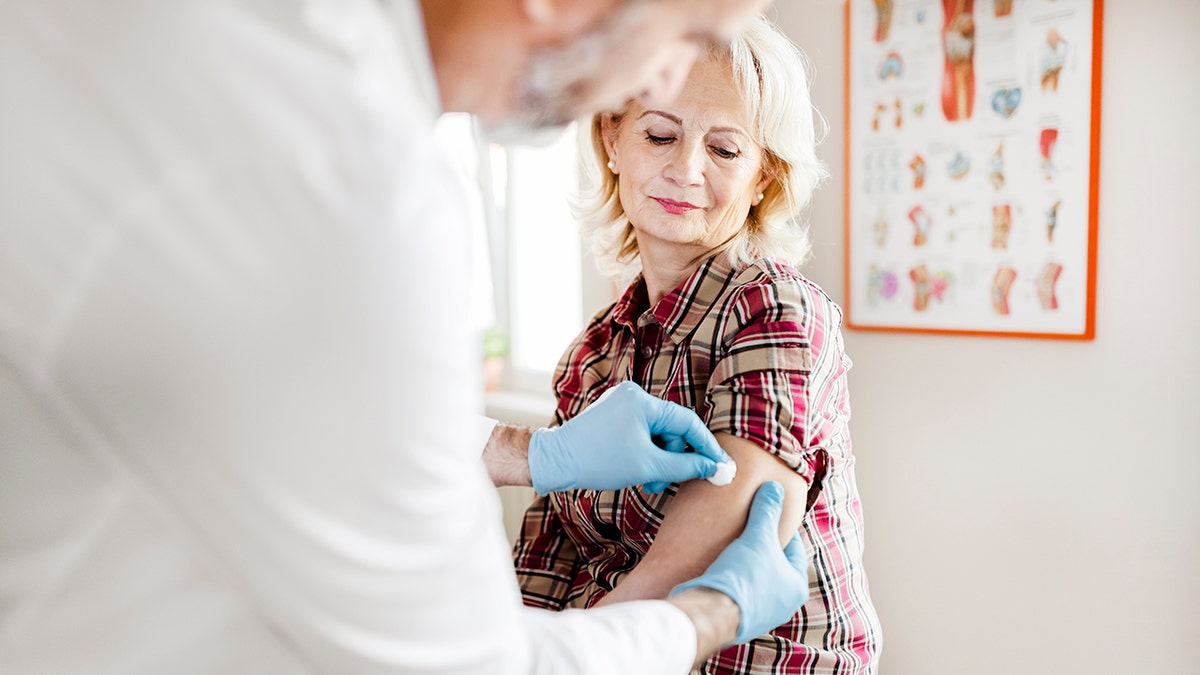
The California mother, identifying as «Jane Doe,» objects to vaccines which use aborted fetal cells on the basis of her Christian faith. (iStock)
Doe’s attorneys argue the law violates the First Amendment’s Free Exercise Clause, pointing to recent precedent that recognizes parents’ rights to direct their children’s religious upbringing. They contend California permits medical exemptions that pose the same public health risks as religious exemptions would, making the law discriminatory against people of faith.
«The First Amendment does not permit California to exile children from public school because their parents seek to raise them in accordance with their religious beliefs,» the filing states.
The brief warns that without relief, the unnamed teen risks missing his education entirely or being forced to choose between «obeying God and sacrificing their children’s futures, or caving to the state and sacrificing their souls and their children’s sanctity.»
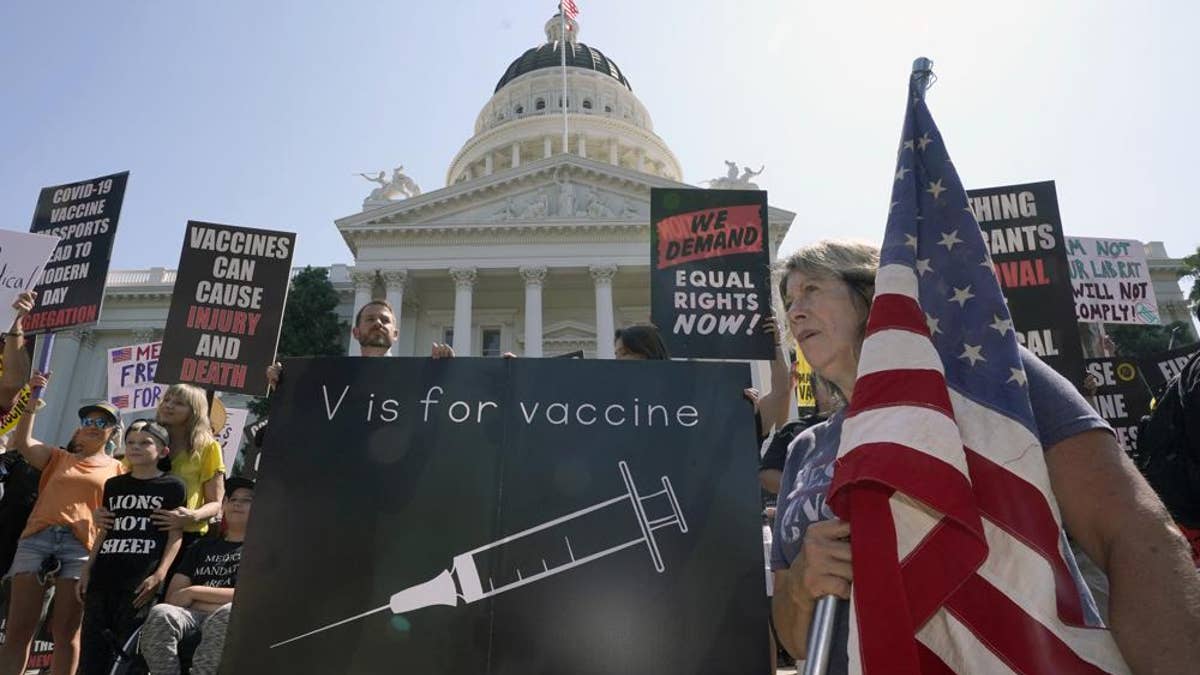
Protesters opposing vaccine mandates gather at the Capitol in Sacramento, Calif., Sept. 8, 2021. (AP Photo/Rich Pedroncelli, File)
Justice Kagan may call for a response from California officials or refer the application to the full Court for consideration. The mother is asking the justices to issue an injunction allowing her son to return to school while the broader case plays out in the lower courts.
Her lawyers also warn that unless the Court steps in, families like hers may be forced to «literally flee California» to practice their faith, something the brief says the First Amendment was designed to prevent.
CLICK HERE TO GET THE FOX NEWS APP
The case comes amid ongoing national debates over vaccine mandates, religious liberty and parental rights under the Trump administration.
The filing follows the Supreme Court’s recent decision in Mahmoud v. Taylor, which strengthened protections for parents directing their children’s religious upbringing.
supreme court,education,vaccines,california








Las exigencias por Ormuz

Irán va a atacar los hoteles militares en el Golfo

La presión sobre Gran Bretaña

La voz de la experiencia
«Trump quiere retirarse de la guerra”
INTERNACIONAL
Obama-appointed judge reverses course, rules voter ID law isn’t discriminatory in GOP win
NEWYou can now listen to Fox News articles!
An Obama-appointed federal judge who once blocked North Carolina’s voter identification law has reversed course and ruled it constitutional, delivering a major win for Republicans and election security advocates after a seven-year court fight.
Judge Loretta Biggs upheld the law on Thursday, finding the liberal voting rights groups that sued North Carolina’s election board failed to prove the voter ID law was discriminatory. The ruling leaves North Carolina’s voter ID law in place ahead of the 2026 midterm elections.
It also comes as President Donald Trump has been advocating stricter voter ID laws nationwide, alleging what he has said is widespread fraud in elections and to prevent illegal immigrants from potentially casting ballots.
The North Carolina case centered on a bill that the GOP-led Senate crafted in 2018 to govern how the state would enforce an amendment requiring voters to present a photo ID at the polls. The amendment had been approved by about 55% of North Carolina voters and the legislation dictated how the amendment would be put into practice.
THUNE ACCUSES CRITICS OF ‘CREATING FALSE EXPECTATIONS’ AMID BACKLASH OVER STALLED SAVE AMERICA ACT
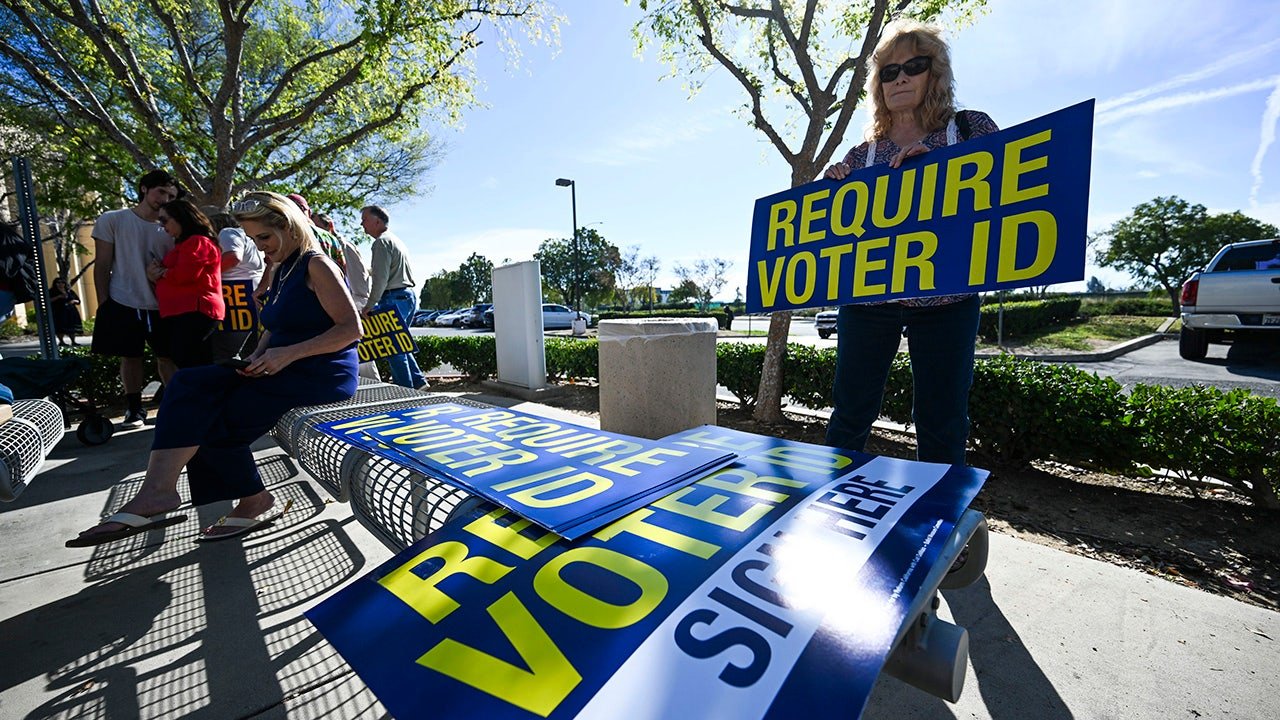
A volunteer picks up a «Require Voter ID» sign at a press conference at the Riverside County Registrar of Voters on March 2, 2026, in California as GOP lawmakers gather in support of placing a voter ID measure on the November ballot. (Anjali Sharif-Paul/MediaNews Group/The Sun via Getty Images)
«Finally. After seven years, we can put to rest any doubt that our state’s Voter I.D. law is constitutional,» said Republican state Sen. Phil Berger, who intervened in the case to defend the law.
Biggs emphasized in her 134-page decision that North Carolina had a «history of extensive official discrimination against African Americans» that was undisputed by parties in the case. The judge said she found evidence that the voter ID law served to disenfranchise Black and Latino voters but that precedents set by higher courts meant the evidence was not enough to invalidate the law.
HOUSE REPUBLICANS PUSH JOHNSON TO GO TO WAR WITH SENATE OVER SAVE ACT
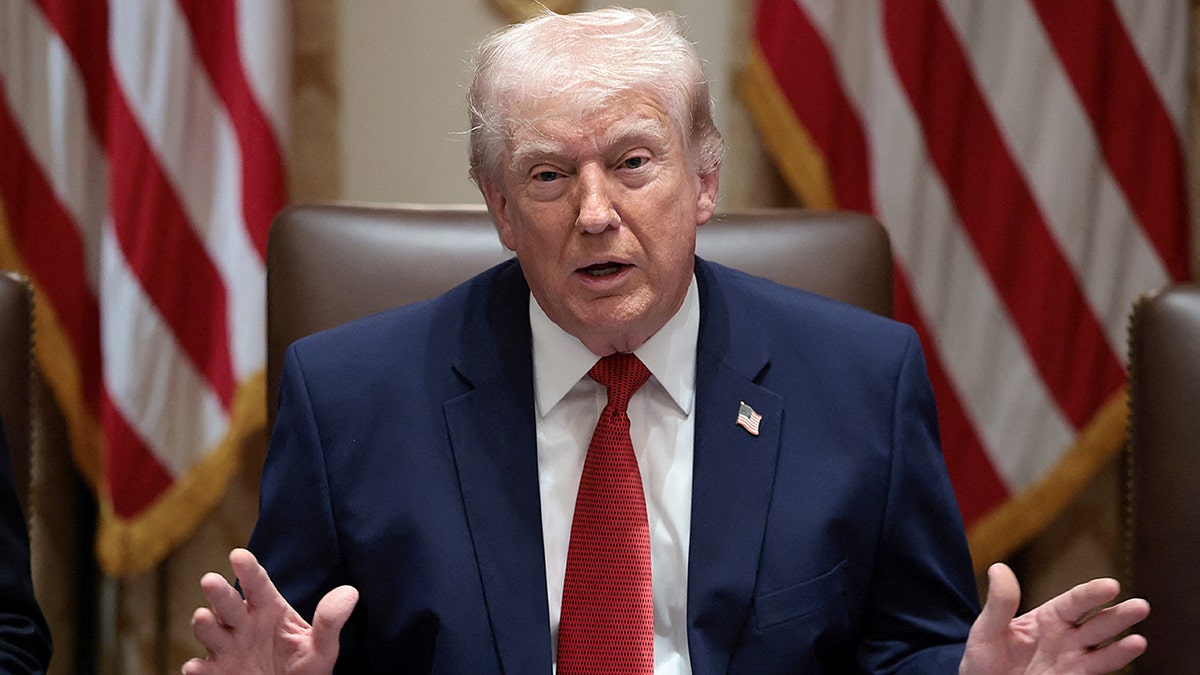
President Donald Trump holds a Cabinet meeting at the White House in Washington, D.C., March 26, 2026. (REUTERS/Evelyn Hockstein)
«This Court … concludes that it is compelled by controlling case law to render Judgment in favor of the Defendants,» Biggs said, tossing out the plaintiffs’ allegations that the law violated the Fourteenth and Fifteenth Amendments and the Voting Rights Act.
The judge said the «case law requires this Court to assign less weight to the historical background. It further requires almost impenetrable deference to the presumption of legislative good faith.»
The judge’s findings echo prominent Democrats, including Senate Minority Leader Chuck Schumer, D-N.Y., who have called voter ID laws «Jim Crow 2.0.» Schumer has said the SAVE America Act, which he is currently blocking from Senate passage, is «a dagger to the heart of our democracy.»
Trump has been aggressively urging Congress to pass the SAVE America Act, a bill that would impose a nationwide requirement that people provide a physical document proving U.S. citizenship when they register to vote. But tensions have flared on Capitol Hill after the bill passed the House but stalled in the Senate because of Democrats’ opposition to it.
The decision marked a reversal for Biggs after she issued a preliminary injunction in December 2019 that blocked the state from enforcing the voter ID law for the 2020 election cycle. In that opinion, she cited the state’s «sordid history of racial discrimination and voter suppression,» arguing that parts of the law were «impermissibly motivated, at least in part, by discriminatory intent.»
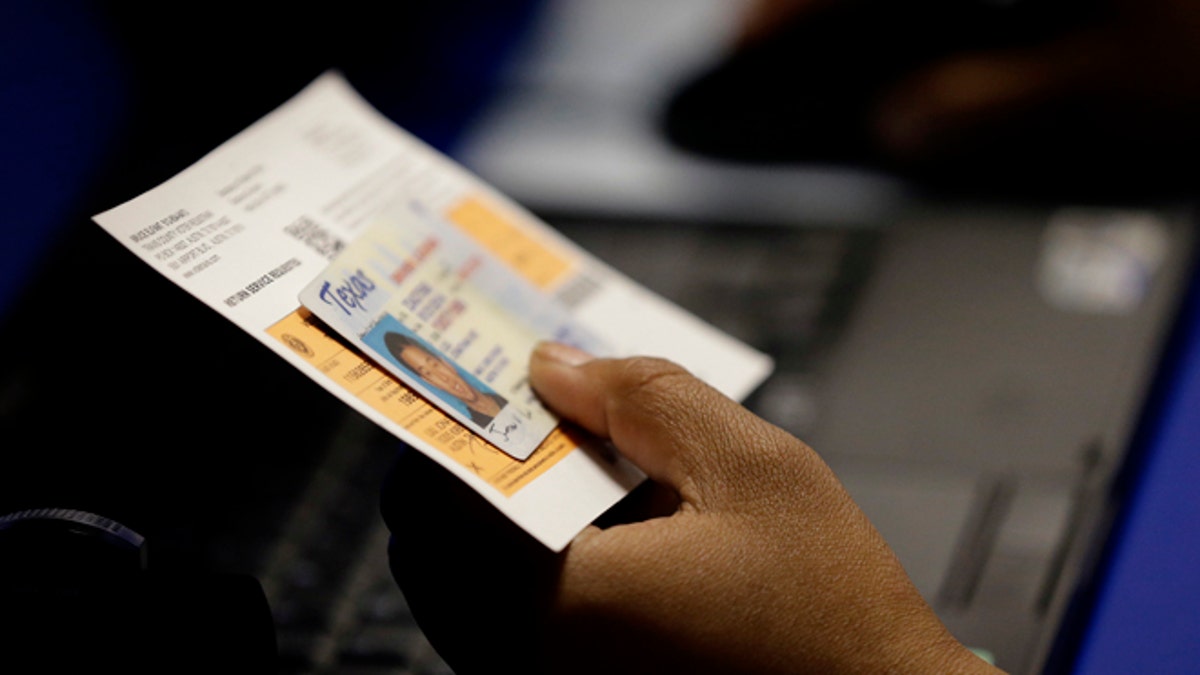
In this Feb. 26, 2014, file photo, an election official checks a voter’s photo identification at an early voting polling site in Austin, Texas. (AP Photo/Eric Gay, File)
Her injunction was later reversed by the U.S. Court of Appeals for the 4th Circuit. The state Supreme Court also upheld the law in a separate state-level case.
CLICK HERE TO DOWNLOAD THE FOX NEWS APP
North Carolina Republicans have defended the law has one designed to be accommodating to all voters, saying it offered a wide range of identification options for people showing up to the polls while also boosting election integrity and confidence in elections.
federal judges, voting, elections, north carolina
INTERNACIONAL
El Salvador abordará la integración de inteligencia artificial y sistemas alimentarios descentralizados en la Cumbre SOVAI 2026

El Salvador acogerá la Cumbre SOVAI 2026, un evento internacional enfocado en la convergencia entre inteligencia artificial soberana, agricultura y sistemas alimentarios descentralizados. El anuncio se realizó a través de las redes sociales por parte de los organizadores, quienes destacaron que el país centroamericano se consolida como un referente mundial en innovación tecnológica y agrícola.
La Cumbre SOVAI, que se celebrará del 20 al 21 de abril en San Salvador, promete reunir a líderes mundiales en áreas como inteligencia artificial, infraestructura tecnológica, energía, desarrollo global y agricultura regenerativa.
El evento, presentado como el primero de su tipo, busca empoderar a naciones y ciudadanos para que construyan y controlen su propia infraestructura tecnológica y, a la vez, reflexionen sobre la soberanía alimentaria como pilar de la independencia nacional.
Texas Slim, fundador de The Beef Initiative y propietario de Beef.com, explicó que “esto es más que alimentar personas—es mostrarle al mundo cómo luce un sistema alimentario soberano. El ganado, la tierra y los productores son la base de la verdadera independencia». Agregó que a través de la cumbre se está “llevando ese mensaje al escenario global”.
La iniciativa cuenta con la colaboración de BeefBackBetter, que será responsable junto a The Beef Initiative de servir las hamburguesas durante el evento.
La acción busca demostrar en tiempo real los principios de trazabilidad, producción ética y descentralización alimentaria, en contraposición a los sistemas centralizados de distribución de alimentos. James Snyder, fundador de BeefBackBetter, afirmó: “El ganado empodera a las personas, mejora la tierra, genera ingresos y provee nutrición real. Combinado con sistemas descentralizados como Bitcoin y la innovación que ocurre en El Salvador, estamos construyendo algo totalmente nuevo—algo que funciona».

Por su parte, Andrea Hernández Tobar, directora nacional de The Beef Initiative en El Salvador, señaló que el futuro no depende únicamente de la tecnología o la agricultura por separado, sino de la integración de ambas. “Lo que observamos es la integración de infraestructura, trazabilidad y sistemas de producción reales. Aquí es donde se dirigen los sistemas globales. La tecnología sin seguridad alimentaria está incompleta”, dijo.
La elección de El Salvador como sede de la Cumbre SOVAI responde, según los organizadores, a su liderazgo en la adopción de tecnologías disruptivas como Bitcoin, su marco regulatorio innovador, las inversiones en infraestructura y los modelos de desarrollo soberano. Estas características han posicionado al país como un centro de referencia para la innovación tanto tecnológica como agrícola a nivel mundial.
“Estamos agradecidos de que la Oficina de Bitcoin de El Salvador haya confiado en The Beef Initiative y en el equipo de BeefBackBetter para servir hamburguesas de calidad en esta importante conferencia de inteligencia artificial”, expresó Tom Taber, director de divulgación ejecutiva para The Beef Initiative y Beef.com. “Esto demuestra nuestra cooperación con el gobierno de El Salvador en la construcción de un sistema alimentario más seguro para esta nación”, añadió.
El evento pondrá sobre la mesa temas centrales como la soberanía alimentaria, los sistemas descentralizados, el empoderamiento de los productores y la colaboración global.
La cita aspira a sentar las bases para una conversación crítica sobre el futuro de la soberanía alimentaria y el papel de la inteligencia artificial en la construcción de sistemas más resilientes y autónomos. Con la mirada puesta en el largo plazo, El Salvador se posiciona como un laboratorio vivo donde se ensayan modelos de desarrollo que integran innovación, seguridad alimentaria y empoderamiento comunitario, mostrando al mundo una nueva visión de independencia y colaboración en la era digital.
corresponsal:Desde San Salvador, El Salvador

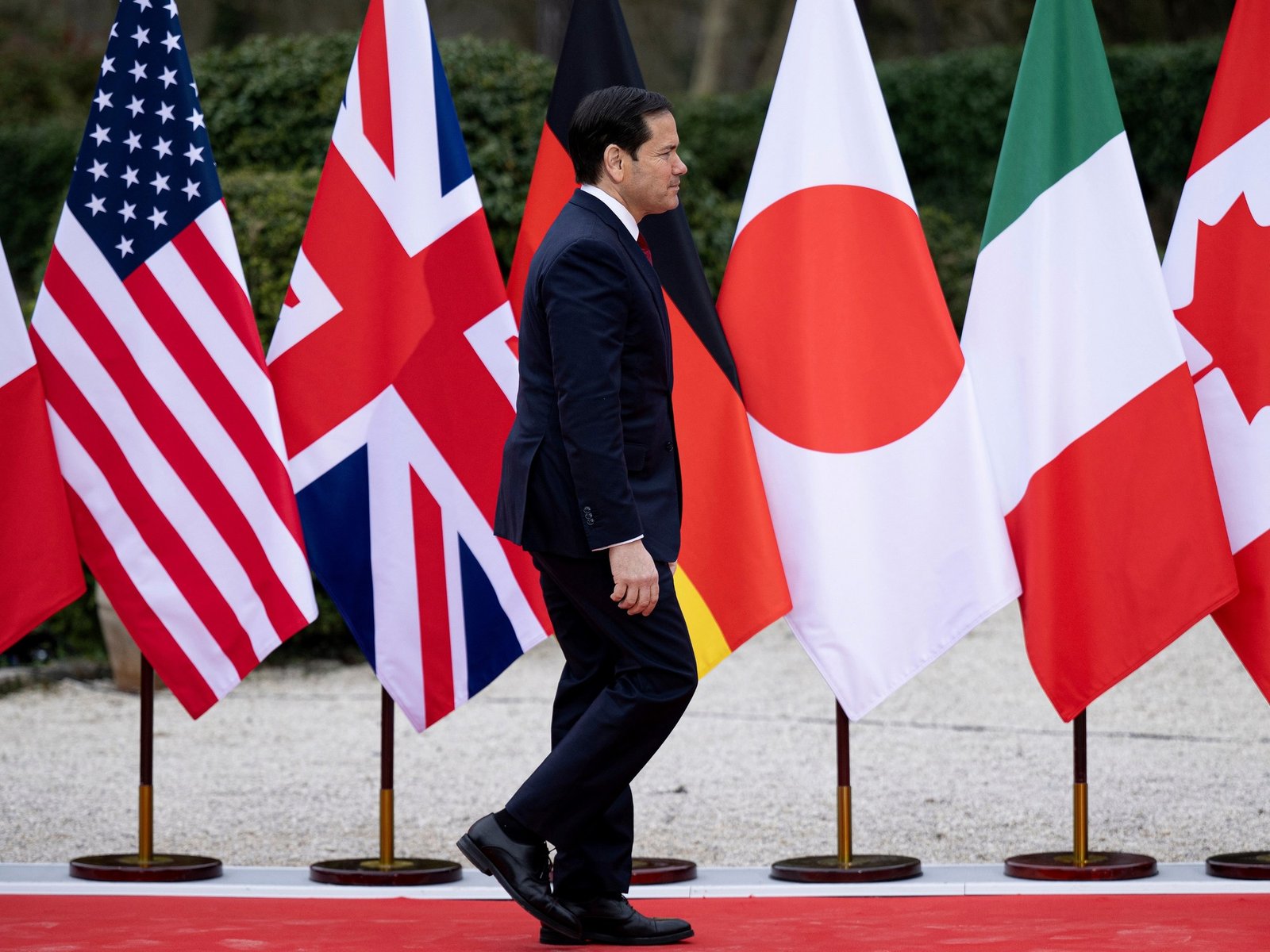
G7 en París: Marco Rubio presiona a Europa para reabrir el Estrecho de Ormuz

Carnet de mochilero, registro de palomas mensajeras y sanciones por azotar: una por una, las normas que derogará la “ley hojarasca”

Cristina Kirchner y Kicillof también celebraron el fallo por YPF y contestaron las críticas de Milei: “El juicio era absurdo”

Obama-appointed judge reverses course, rules voter ID law isn’t discriminatory in GOP win

Declaró la secretaria del piloto que vendió el vuelo de Adorni en un avión privado: “Me pidieron que no lo facturara”

Luna Rosa 2026: cuándo se verá en Argentina este espectáculo astronómico único

¡VERGÜENZA NACIONAL! Humillan a la Policía Federal mandándolos a un merendero antes de darles un aumento de sueldo digno

24 DE MARZO: La historia completa que el relato omitió sobre el golpe de 1976 y el Juicio a las Juntas

El mensaje de Milei sobre la “traición” que llamó la atención en el Gobierno y también en la oposición

El Presidente y Karina Milei volvieron a respaldar a Manuel Adorni tras la polémica por sus vuelos

 POLITICA2 días ago
¡VERGÜENZA NACIONAL! Humillan a la Policía Federal mandándolos a un merendero antes de darles un aumento de sueldo digno
- POLITICA3 días ago
24 DE MARZO: La historia completa que el relato omitió sobre el golpe de 1976 y el Juicio a las Juntas
- POLITICA2 días ago
El Presidente y Karina Milei volvieron a respaldar a Manuel Adorni tras la polémica por sus vuelos