INTERNACIONAL
Canada stares down consequences of Trump tariff war: Job losses, grocery price hikes, possible recession

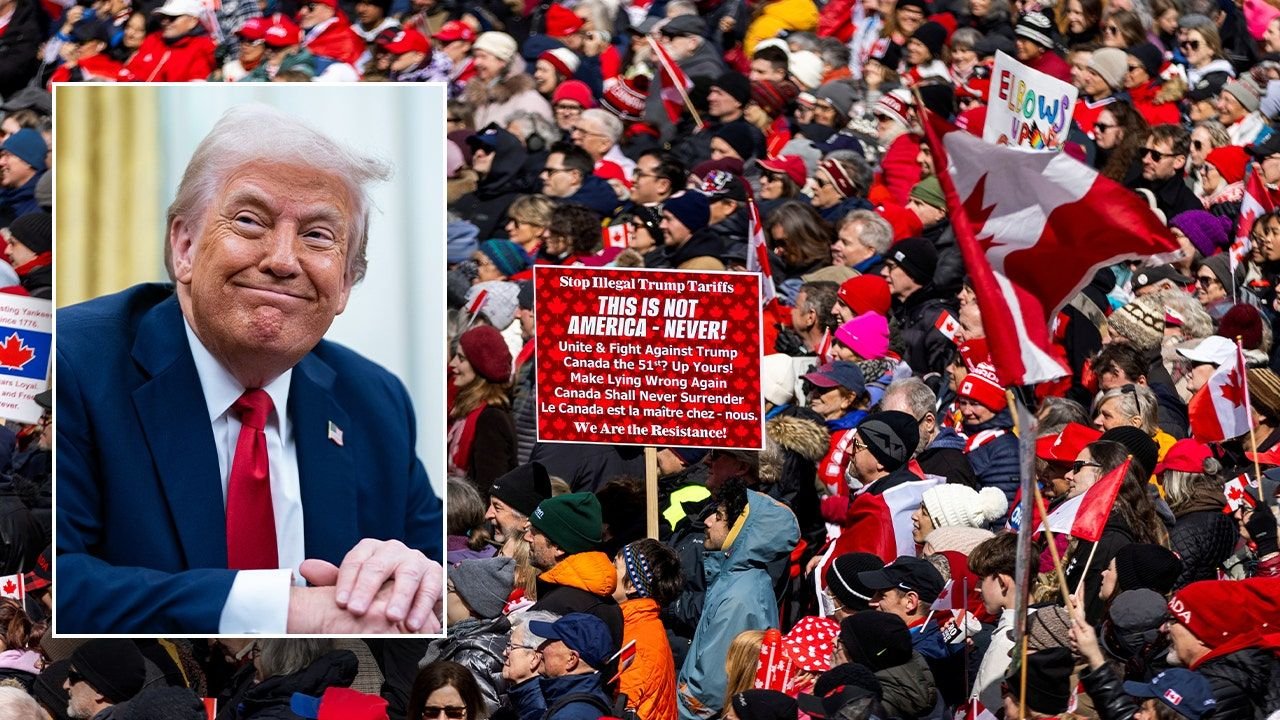
Canada is bracing for the fallout of President Donald Trump’s escalating trade war, with economists warning of spiking grocery prices, major job losses and even a potential recession if threatened U.S. tariffs take effect.
The United States is Canada’s largest trading partner, accounting for nearly two-thirds of Canadian imports and receiving over 70% of its exports. But under Trump’s new «liberation day» tariffs – 25% on Canadian goods and 10% on energy – Ottawa now faces an economic gut punch that could ripple across key provinces, industries and its national election campaign.
Trump has repeatedly blasted what he calls «unfair» trade practices, citing Canada’s trade imbalance with the U.S. to justify the sweeping tariffs.
«This is the beginning of liberation day in America,» Trump said last week. «We’re going to charge countries for doing business in our country and taking our jobs, taking our wealth, taking a lot of things that they’ve been taking over the years. They’ve taken so much out of our country, friend and foe. And, frankly, friend has been oftentimes much worse than foe.»
TRUMP’S 11TH WEEK IN OFFICE SET TO FOCUS ON TARIFFS AS PRESIDENT TOUTS ‘LIBERATION DAY’
Canadians protest U.S. tariffs and other policies of President Donald Trump in Toronto on March 22, 2025. (REUTERS/Carlos Osorio)
Increased tariffs could mean that Americans will see higher price tags on everything ranging from fertilizer and oil, vehicles and machinery, to plastic and wood products, which, theoretically, would deter consumers from purchasing those products and result in a loss for Canada’s economy.
Likewise, Canada in mid-March implemented reciprocal tariffs on $30 billion worth of U.S. goods, which means Canadians will not only feel losses on a macro scale but also in an immediate sense as prices at the grocery store have spiked on things like leafy greens, citrus, orange juice, beef, pork and fish.
Ottawa has yet to announce any tariffs on U.S. imported vehicles due to reported concerns over how it could further hinder Canada’s economy. Though there are some $95 billion worth of U.S. goods that it is reportedly considering putting tariffs on, depending on Trump’s April 2 announcements, according to Canadian outlet Financial Post.
«They’re in the midst of a general election campaign,» Andrew Hale, a senior policy analyst in trade policy with the Heritage Foundation, told Fox News Digital. «I think it’s very difficult for them to negotiate and put these measures on during an election campaign.
«Everything they do and say now carries electoral weight,» he added, noting that Canadian politicians will need to strike a careful balance: tough enough on Trump to appeal to voters but measured enough to leave room for future negotiations on tariffs.
«If they were to put on reciprocal tariffs, it would damage the Canadian standard of living and have an impact – as all this already is having an impact – in Canada,» Hale said, noting that auto tariffs not only affect direct car sales but all businesses that rely on vehicles, creating a trickle-down effect.
CANADIANS CLAIM THEY ARE CANCELING TRIPS TO US FOR REMAINDER OF TRUMP TERM
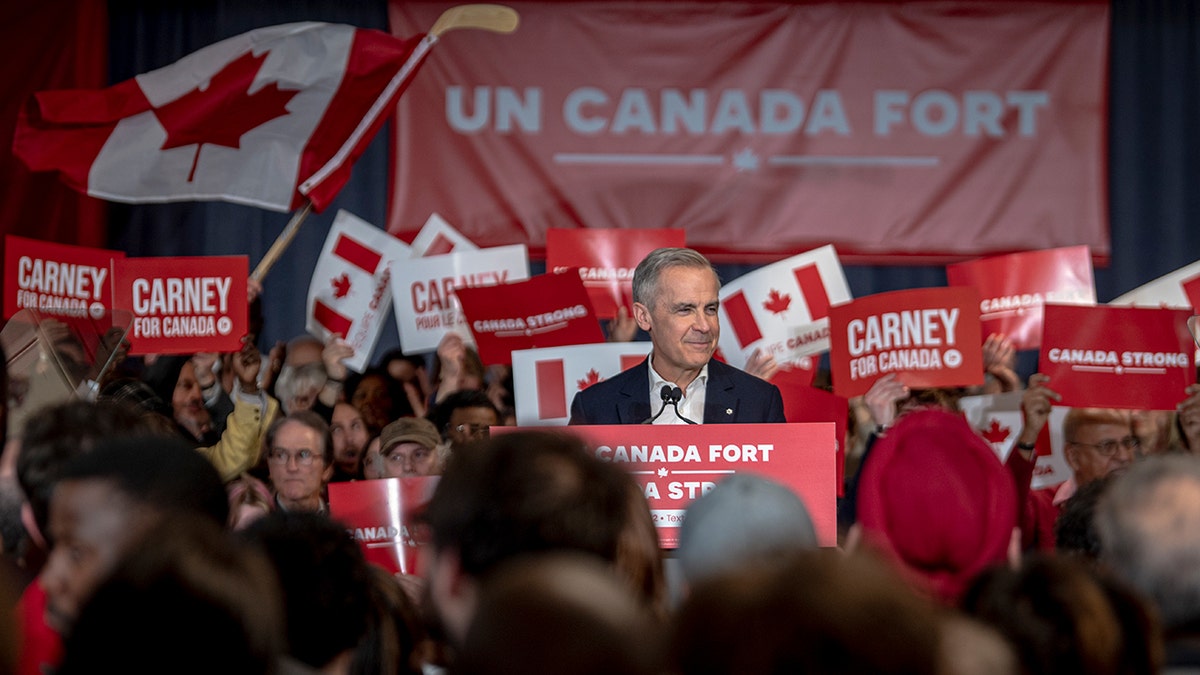
Canadian Liberal Party leader Mark Carney speaks to supporters during a rally in Montreal on March 27, 2025. A federal election has been called, and Canadian voters go to the polls on April 28. (Andrej Ivanov/Getty Images)
While Trump has argued that his tariffs protect U.S. manufacturing – especially the auto sector – the fallout could be far more severe for Canada. Immigration Minister Marc Miller has warned that up to 1 million Canadian jobs are at risk.
«Most Canadians live within 100 miles of the U.S.-Canadian border, and so they obviously will be heavily impacted,» said Hale. «Most Americans don’t.»
Hale noted that while the tariffs will affect the entire U.S., the hardest-hit areas will be industries closely tied to Canadian imports, such as agriculture. The U.S., for instance, sources 90% of its potash fertilizer from Canada.
«This will have a disproportionate impact on border states,» Hale said, but he added that the economic strain on Canadian regions like Ontario will be far greater.
Canadian leaders have already voiced concern that as many as 160,000 jobs could be lost in Quebec, along with another 500,000 jobs in Ontario, depending on how long the tariff dispute lasts.
Both Quebec and Ontario are two of the provinces expected to be among those hardest hit in Canada as they rely heavily on their steel and aluminum and lumber and forestry sectors for exports.
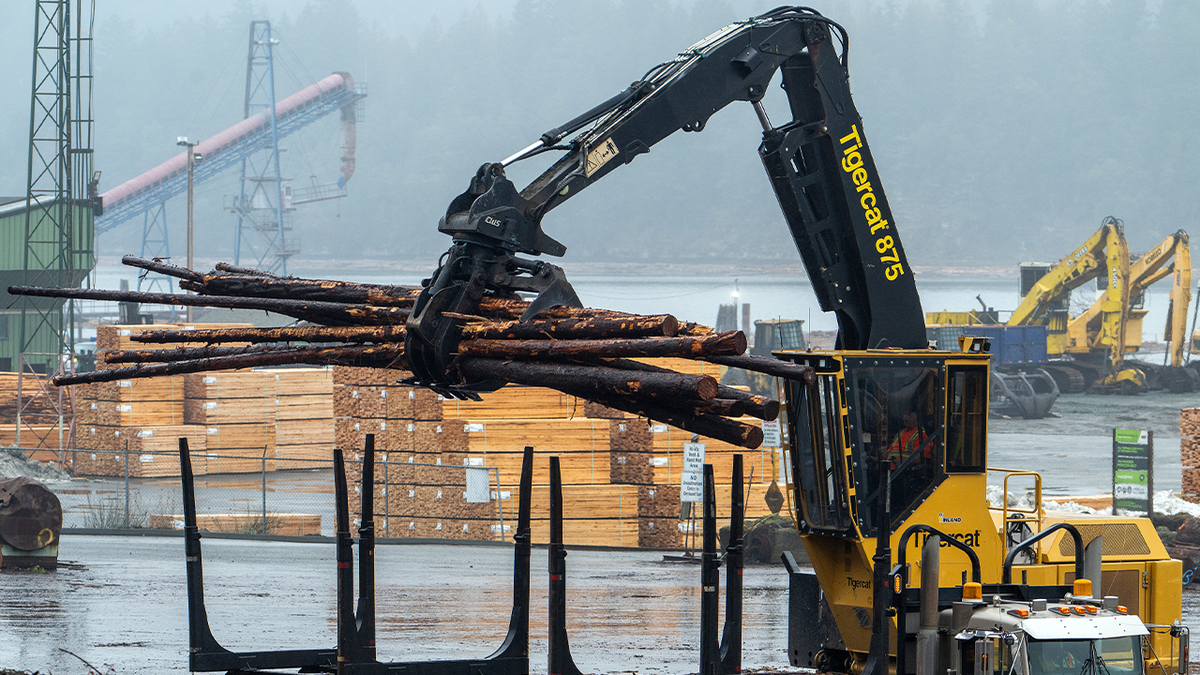
A worker loads logs onto a truck at the Western Forest Products Ladysmith Log Sort in Ladysmith, British Columbia, Canada, on Feb. 18, 2025. Canada is the U.S.’ biggest foreign lumber supplier and has already been dealing with higher duties on its shipments that started last summer. (James MacDonald/Bloomberg via Getty Images)
Canada could face a recession this year if it can’t rein in Trump’s tariff offensive, Oxford Economists first warned in a report last November.
Previous tariff wars between trading partners during the first Trump administration resulted in billions of dollars of losses for Americans and their foreign counterparts.
TRUMP HOLDS ‘EXTREMELY PRODUCTIVE CALL’ WITH CANADIAN PRIME MINISTER: ‘WE AGREE ON MANY THINGS’
But Trump is banking on the U.S. being less severely affected than nations like Canada.
The full impact of the tariff war with Canada remains uncertain as Washington has also imposed steep tariffs on the European Union, China and Mexico. Trump has pledged to target the «Dirty 15,» which are countries he accuses of contributing most to the U.S. trade deficit.
Cambodia, India, Indonesia, Japan, Malaysia, South Africa, South Korea, Switzerland, Taiwan, Thailand and Vietnam are expected to be among those next targeted in Trump’s April 2 tariff announcement, which he has dubbed «liberation day.»
Details on what Trump’s next steps in his tariff war with Canada and dozens of other nations remain unknown ahead of the April 2 deadline, which has created a sense of uncertainty, Hale said.
«Last week’s Bureau of Economic Analysis Reports signaled a continued high core personal consumption expenditure PC inflation at 2.8%. So inflation, one could argue, is not coming down, and certainly price levels continue to rise,» he said. «Consumer spending has slowed sharply in both Canada and the United States.»
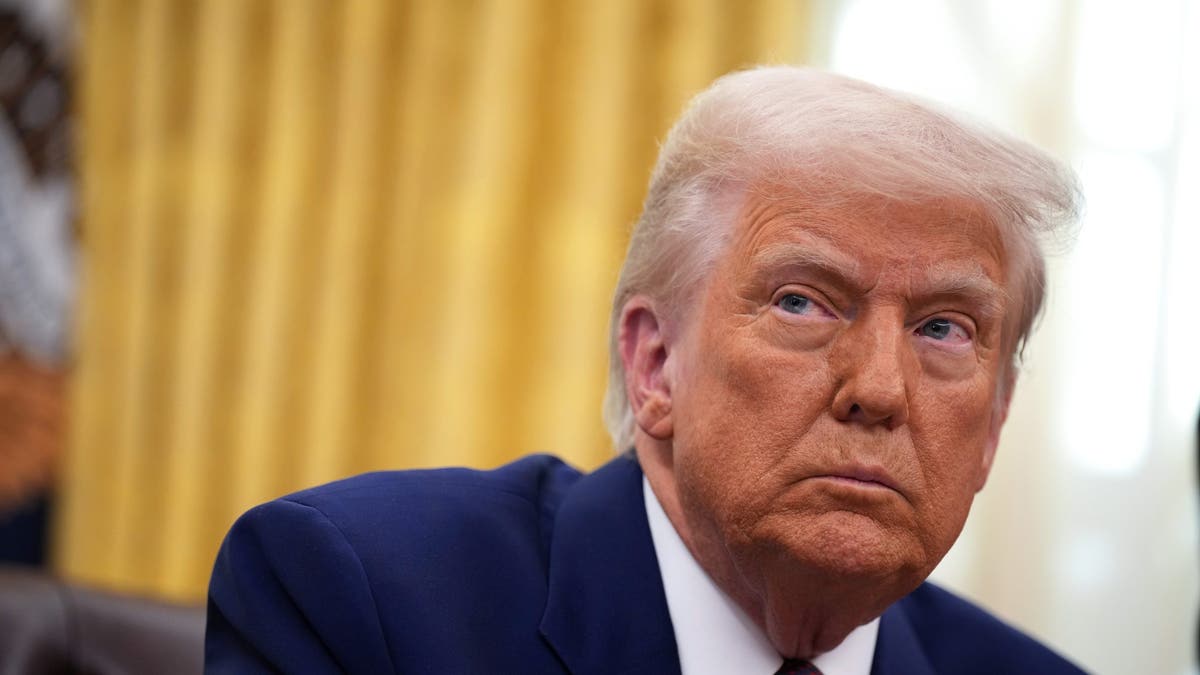
President Donald Trump delivers remarks after signing an executive order on reciprocal tariffs in the Oval Office on Feb. 13, 2025. (Andrew Harnik/Getty Images)
CLICK HERE TO GET THE FOX NEWS APP
«Businesses want certainty. They can’t make future investment decisions in this climate,» he added, noting that while a recession could be on the horizon in Canada, there are too many variables to make a prediction on the U.S. at this time.
«What I do know is that businesses and banks, people who are investing in projects, want to be able to plan,» Hale said. «Hopefully, we’ll have a clear idea [on Tuesday] where this is all going to land, and then we can work with it.»

INTERNACIONAL
Uruguay quiere reformar sus cárceles: hay 477 personas presas por cada 100 mil habitantes, el nivel más alto de la región
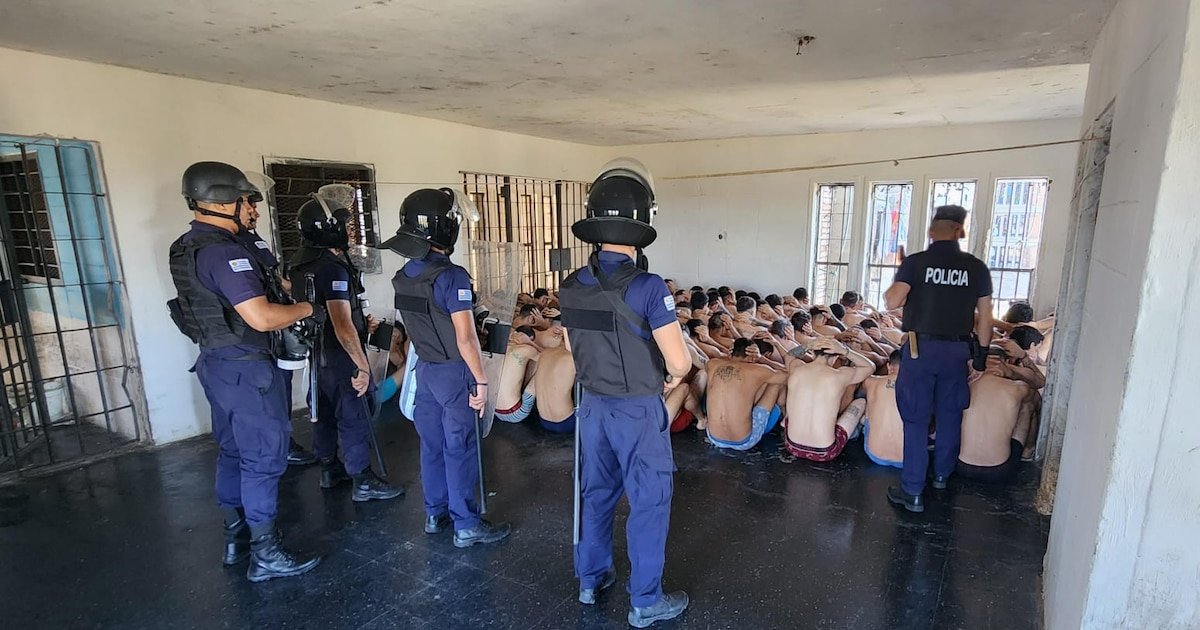
El sistema carcelario de Uruguay tiene un estado crítico desde hace años. Los informes sobre lo que ocurre dentro de las cárceles generan alarmas: allí más del 40% de los presos no tiene acceso a medicamentos, asistencia ni posibilidades de rehabilitación. Y, además, sufren un “trato cruel, inhumano y degradante”, como lo definió el ex comisionado para el sistema carcelario Juan Miguel Petit. Describió que en la prisión hay un “estado inconstitucional”.
Con este marco crítico de fondo, el gobierno de Yamandú Orsi prepara una reforma para el Instituto Nacional de Rehabilitación (INR), como se le llama al organismo que gestiona las cárceles en el país.
Uno de los cambios previstos es una modificación del nombre: las cárceles pasarán a ser gestionadas por un Instituto Nacional de Reinserción, si es que se aprueba el proyecto de ley presentado por el ministro del Interior, Carlos Negro, a la bancada oficialista.

“El instituto que se propone crear tendrá como competencia el cumplimiento de las medidas o penas privativas de libertad o alternativas, el diseño, implementación y control de las políticas y programas de reinserción social, la organización y gestión del sistema penitenciario y la vigilancia y control de las unidades penitenciarias”, dice la exposición de motivos del proyecto de ley, informado por La Diaria.
Esta propuesta surge como una respuesta a la “crisis estructural” del sistema penitenciario del país, reconoce el Ministerio del Interior en el texto. Y luego detalla las características que tiene: “Niveles inaceptables de hacinamiento, condiciones edilicias deficitarias, dificultades para el ejercicio de derechos y acceso a programas de tratamiento por parte de la población encarcelada, carencias de recursos humanos y materiales, así como debilidad extrema del sistema de medidas alternativas”.
Una de las explicaciones del gobierno uruguayo es que las dificultades “están fuertemente asociadas al incremento constante de la población privada de libertad”. Esta cantidad en 2025 volvió a romper su récord histórico y consolidó “la posición de liderazgo en América del Sur y en el mundo, con 477 personas privadas de libertad cada 100.000 habitantes”.

El texto menciona otros datos que a las autoridades le genera alarma: solo el 17% de los privados de libertad accede a oportunidades adecuadas de integración social, mientras casi la mitad (46%) está sometida a los tratos crueles, inhumanos y degradantes, tal como reflejó Petit en su informe.
“La evidencia muestra que los sistemas penitenciarios colapsados no solo no logran operar como mecanismos eficaces para combatir el delito, sino que incluso pueden actuar reforzando identidades y hábitos delictivos, así como consolidar grupos criminales”, agrega la exposición de motivos del proyecto de ley.
Además, el texto menciona que en los últimos años hubo “propuestas innovadoras” para revertir esta crisis, pero no tuvieron éxito. “No han logrado transformar radicalmente las condiciones de vida de la mayor parte de la población sujeta a sanciones penales, ni los resultados obtenidos a partir de la intervención estatal”.

El proyecto ahora será enviado a los sindicatos que están involucrados con la gestión diaria del Instituto Nacional de Rehabilitación, así como a la Organización de Funcionarios Civiles Penitenciarios. En el oficialismo tienen previsto que, durante el tratamiento parlamentario del proyecto, se incorporan cambios a la propuesta original.
El Ministerio del Interior define que el proyecto de ley presentado es “un paso fundamental para avanzar en el proceso de reforma penitenciaria”.
Además, según consignó El Observador, uno de los principales objetivos de este proyecto de ley es avanzar en la autonomía del organismo y separar definitivamente la “tarea de persecución y represión del delito, de la del tratamiento de las personas sujetas a sanciones penales”. De aprobarse la propuesta, este nuevo organismo dejará de depender del Ministerio del Interior pero seguirá relacionado con el Poder Ejecutivo a través de esta cartera.
INTERNACIONAL
Dem lawmaker compares ICE agents to Nazis and Gestapo during fiery House hearing on enforcement
NEWYou can now listen to Fox News articles!
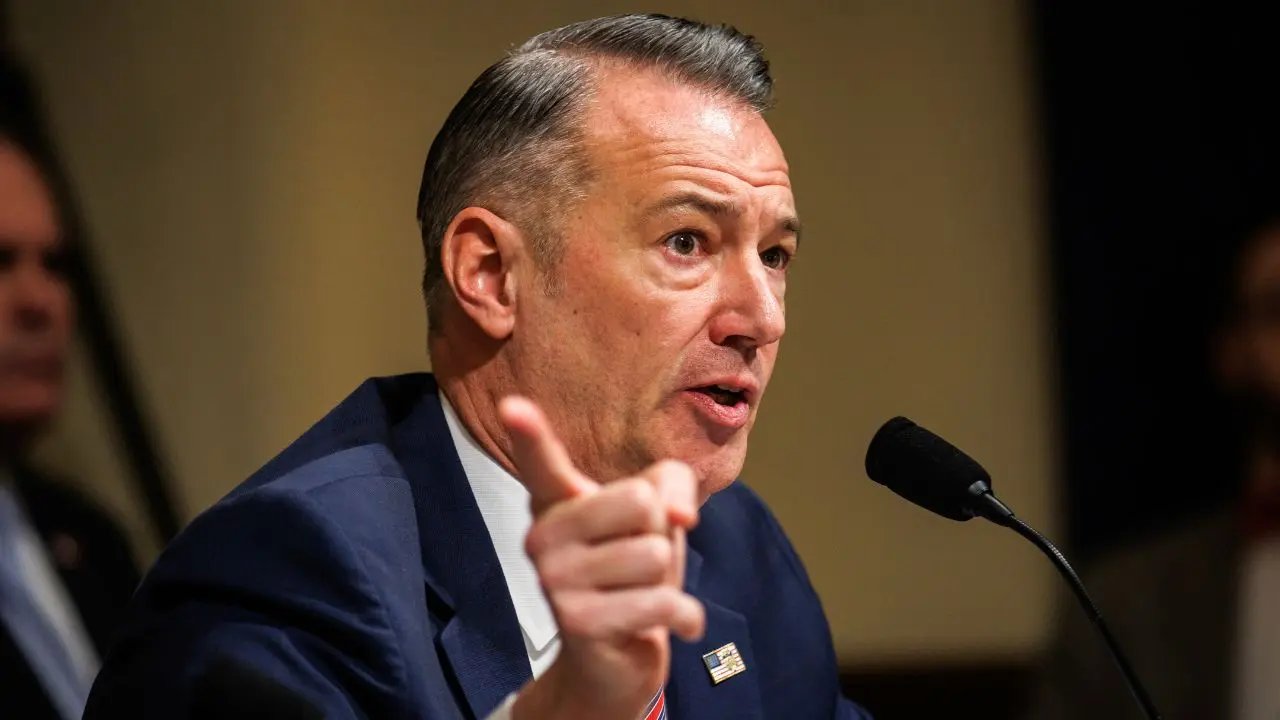
Democratic lawmakers compared Immigration and Customs Enforcement (ICE) agents to Nazis and the Gestapo during a heated House Homeland Security Committee hearing Tuesday, as the agency’s acting director faced sharp questioning over enforcement tactics and accountability.
The exchange turned explosive when Rep. Dan Goldman, D-N.Y., pressed ICE acting director Todd Lyons on whether agents have been asking people on the streets to show proof of U.S. citizenship, citing reports claiming that American citizens have allegedly been questioned during immigration enforcement actions.
Goldman escalated the line of questioning by invoking historical comparisons, asking pointedly, «Is Nazi Germany one?» after Lyons acknowledged that «very nefarious regimes» had required proof of citizenship. Goldman also pressed Lyons on whether the Soviet Union employed similar tactics.
Lyons pushed back, calling the comparison inappropriate and «the wrong type of questioning,» before snapping, saying, «The Holocaust Museum is on 14th Street and Independence. If you want to go see Nazis, that’s where it is.»
MARYLAND DEMOCRAT’S BILL SEEKS TO ‘DIGITALLY UNMASK’ ICE AGENTS AFTER FATAL MINNEAPOLIS SHOOTING
U.S. Immigration and Customs Enforcement acting director Todd Lyons testifies during a House Homeland Security Committee hearing on Capitol Hill in Washington, D.C., on Feb. 10, 2026. (Samuel Corum/Getty Images)
Goldman reclaimed his time and accused ICE leadership of having it «backwards,» arguing that public criticism of the agency stemmed from its own conduct.
«People are simply making valid observations about your tactics, which are un-American and outright fascist,» Goldman said. «So I have a simple suggestion. If you don’t want to be called a fascist regime or secret police, then stop acting like one.»
Goldman’s questioning followed Lyons’ own testimony earlier in the hearing, in which the ICE acting director said agents have been labeled «Gestapo or secret police» by elected officials and activists. Lyons tied that rhetoric to what he described as a sharp rise in threats and assaults against ICE personnel, saying it has endangered agents and their families.
BORDER CZAR TOM HOMAN CALLS ANTI-ICE ROADBLOCKS IN MINNEAPOLIS A ‘JOKE’ AFTER POLICE CHIEF DISBANDS THEM
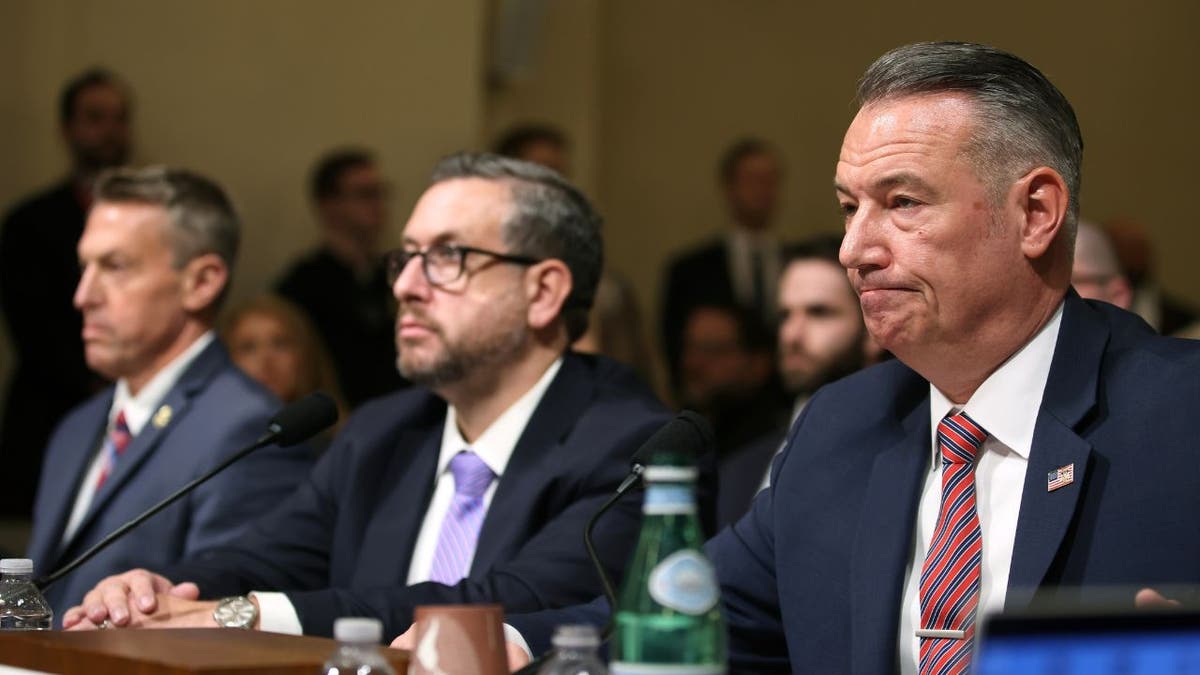
Immigration and Customs Enforcement acting director Todd Lyons testifies alongside U.S. Customs and Border Protection Commissioner Rodney Scott and U.S. Citizenship and Immigration Services Director Joseph Edlow during a House Homeland Security Committee hearing on Capitol Hill on Feb. 10, 2026. (Samuel Corum/Getty Images)
Nazi references surfaced elsewhere during the hearing as well. Rep. Bennie Thompson, D-Miss., cited «Greg Bovino, who styled himself in Nazi attire,» while criticizing federal immigration operations in Minnesota and the use of masked agents during recent enforcement actions.
The hearing focused on oversight of the Department of Homeland Security and its immigration enforcement agencies amid questions about the limited use of body cameras, particularly following the fatal shootings of Renee Good and Alex Pretti in Minneapolis last month.
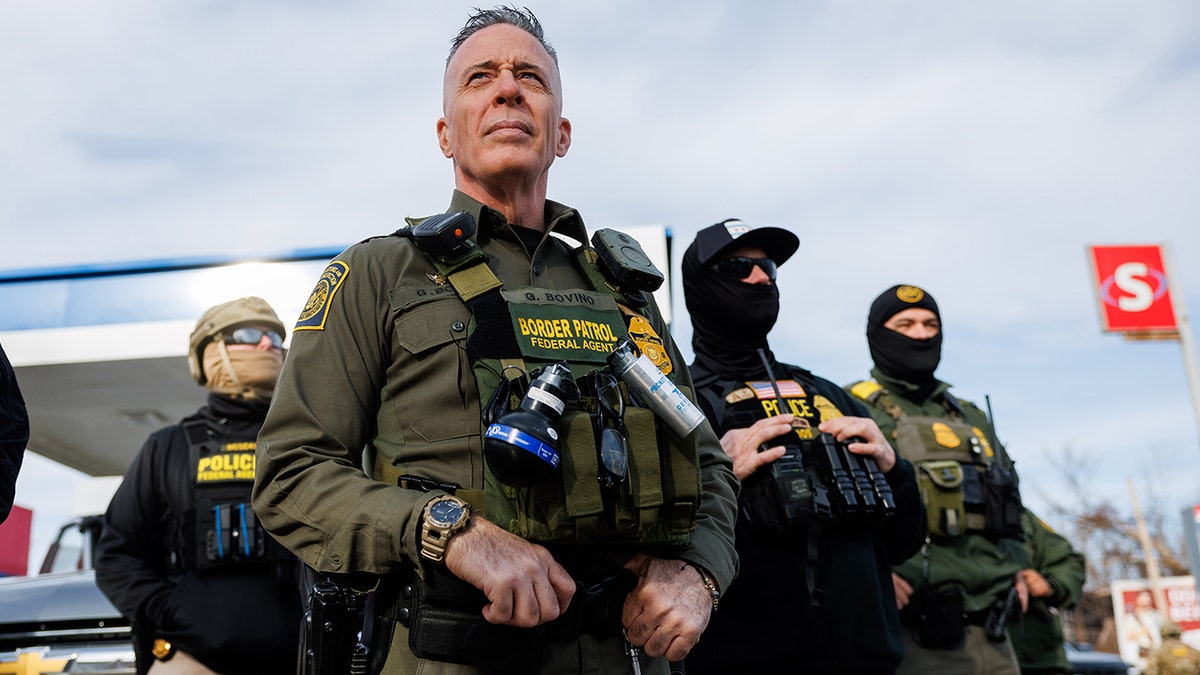
U.S. Border Patrol commander Gregory Bovino was also compared to a Nazi. (Armando L. Sanchez/Chicago Tribune/Tribune News Service via Getty Images)
Lawmakers raised concerns about agents operating in masks or unmarked gear, whether encounters involving U.S. citizens are being adequately documented and whether the lack of body-camera footage has hindered transparency and accountability in recent use-of-force incidents.
CLICK HERE TO DOWNLOAD THE FOX NEWS APP
Under questioning, Lyons acknowledged that only a fraction of ICE agents are currently equipped with body cameras, as lawmakers pressed the agency to expand their use and release footage to the public.
politics,immigration,holocaust,illegal immigrants,homeland security,border security,congress
NEWYou can now listen to Fox News articles!
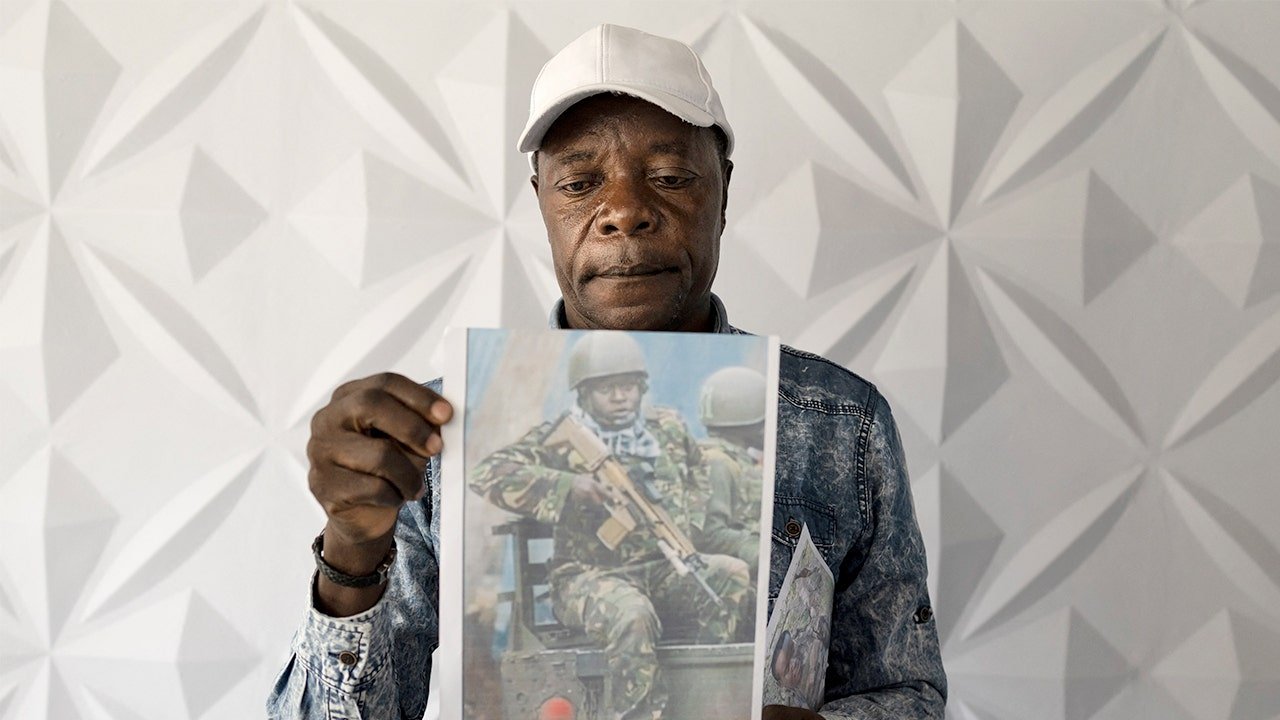
Kenya will press Russia for answers after reports emerged that its citizens are being recruited to fight in Ukraine, the country’s foreign minister said.
Musalia Mudavadi told the BBC in an interview on Tuesday that the recruitment was «unacceptable and clandestine.»
He said the government has shut down illegal recruiters and would urge Moscow to sign an agreement barring the conscription of Kenyan citizens.
Nairobi estimates that about 200 nationals have been recruited to fight for Russia, and Mudavadi explained that families have struggled to recover the bodies of loved ones killed in the conflict.
NEW FOOTAGE SHOWS NORTH KOREAN TROOPS CLEARING DANGEROUS MINES FOR RUSSIA IN WAR ZONE
Musalia Mudavadi speaks after signing a bilateral agreement supporting Kenyan police officers deployed to the Multinational Security Support Mission in Haiti in Santo Domingo, Dominican Republic, on May 12, 2025. (Erika Santelices/Reuters)
«It is difficult because, remember, it depends on where the body has been found,» the foreign minister told the BBC. «There some have been found in Ukraine – we are also working with the government of Ukraine to try and get the remains of those people repatriated.»
In a November post on X, Ukraine’s Foreign Minister Andrii Sybiha said Kyiv estimates that at least 1,436 foreign nationals from 36 African countries have been recruited to fight for Russia in its war against Ukraine, warning the true number may be higher.
Sybiha said Russia uses a range of tactics to recruit foreigners, including financial incentives, deception and coercion.
US ACCUSES RUSSIA OF ‘DANGEROUS AND INEXPLICABLE ESCALATION’ IN UKRAINE WAR DURING PEACE NEGOTIATIONS
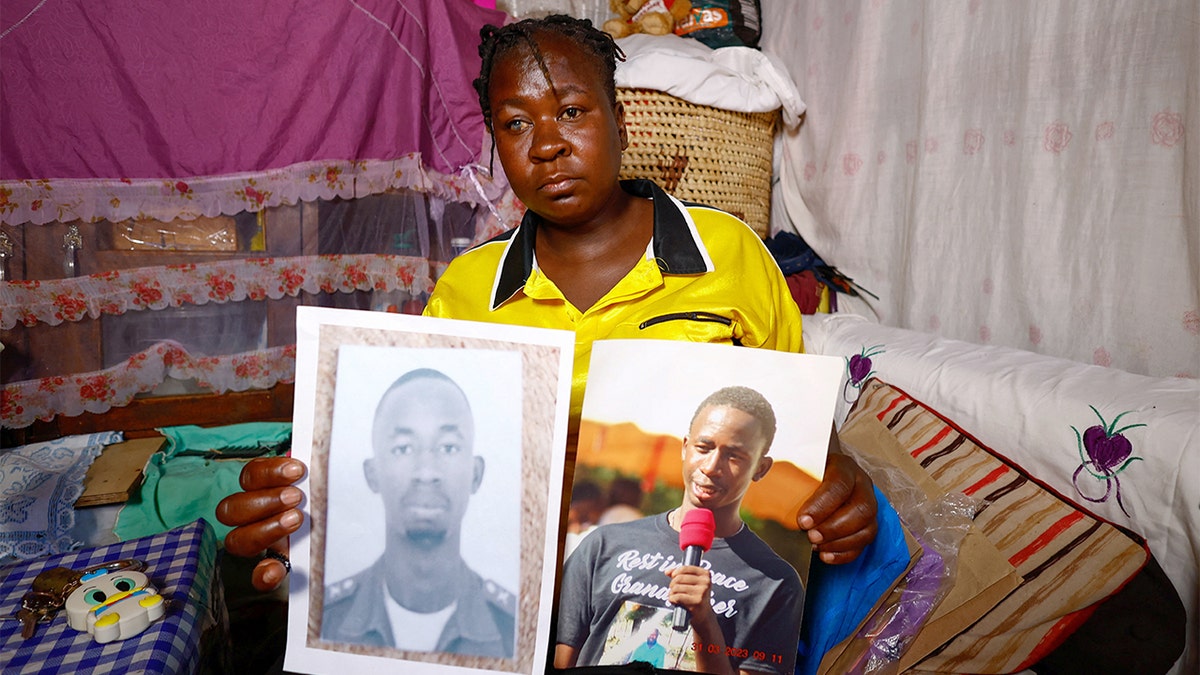
Susan Khandasi Kuloba, whose son David Kuloba died while fighting for Russia in Ukraine, poses with portraits of him during an interview at her home in Kibera, Nairobi, Kenya, on Dec. 2, 2025. (Thomas Mukoya/Reuters)
«Signing a contract is equivalent to signing a death sentence,» he wrote. «Foreign citizens in the Russian army have a sad fate. Most of them are immediately sent to the so-called ‘meat assaults,’ where they are quickly killed.»
Mudavadi said in December that the government had received multiple emails and urgent communications from Kenyans in distress at military camps in Russia.
AS UKRAINE WAR DRAGS ON, TRUMP HITS PUTIN BY SQUEEZING RUSSIA’S PROXIES
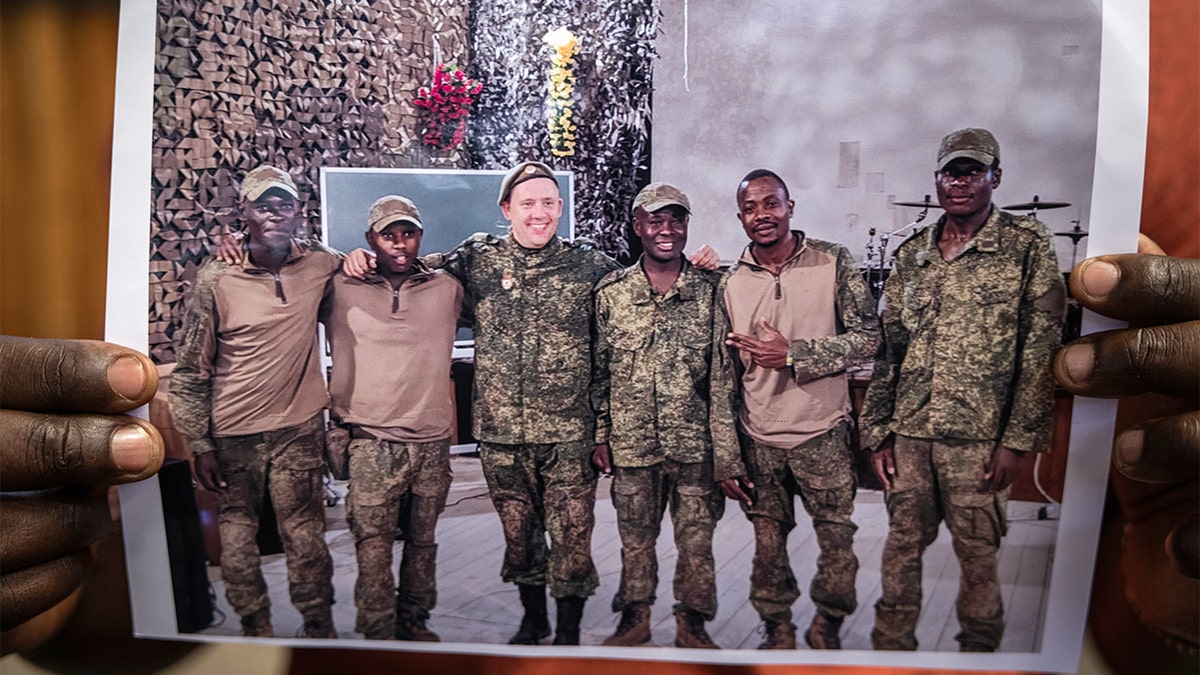
Evans Khagola, cousin of Oscar Khagola, holds a printed photo sent by Oscar to his father showing him and other soldiers when they started training in Russia, photographed in Nairobi, Kenya, on Jan. 21, 2026. (Ed Ram/The Washington Post via Getty Images)
CLICK HERE TO DOWNLOAD THE FOX NEWS APP
«Several of them have reported injuries among our nationals and others stranded, following attempted recruitment into the violent conflicts,» he told the Kenya News Agency, the country’s state-run news service.
Mudavadi said the government has since tightened recruitment regulations, deregistering more than 600 non-compliant agencies and strengthening job verification through the Diaspora Placement Agency to curb exploitation.
africa,russia,ukraine,recruitment

En una sesión que se prevé extensa, el Senado tratará la reforma laboral con un kirchnerismo con estrategia propia

Uruguay quiere reformar sus cárceles: hay 477 personas presas por cada 100 mil habitantes, el nivel más alto de la región

Cuadernos de las Coimas: un exfuncionario cargó contra los “delatores” y se calienta el juicio

Tini Stoessel mostró el tatuaje que se hizo borracha: se arrepintió y lo quiere borrar

Guía para entender el proyecto de reforma laboral: banco de horas, vacaciones y despidos

Superó graves lesiones e hizo historia en los Juegos Olímpicos de Invierno: la esquiadora argentina que corre como un F1, pero sobre hielo

Natalie Weber contó toda la verdad del coqueteo de Sabrina Rojas a Mauro Icardi en un boliche: “Yo sé lo que pasó esa noche y te puedo decir que Sabrina no fue”

El sector industrial advierte que la apertura económica exige eliminar las distorsiones internas

Mirtha Legrand se quebró desconsolada al hablar de la renuncia de Jimena Monteverde a su mesaza

Central Córdoba vs. Unión: formaciones, hora y dónde ver por tv

 ECONOMIA3 días ago
El sector industrial advierte que la apertura económica exige eliminar las distorsiones internas
- POLITICA1 día ago
Acuartelamiento policial en Santa Fe: reclamo salarial y temor a un conflicto nacional de seguridad
- ECONOMIA3 días ago
Argentina usa la canasta más vieja de la región: así mide el INDEC frente a países vecinos