INTERNACIONAL
Canada’s antisemitism envoy resigns, citing exhaustion amid hate surge

NEWYou can now listen to Fox News articles!
Antisemitism in Canada surged following Hamas’s Oct. 7, 2023, massacre in Israel, culminating in a record 920 hate crimes targeting Jews last year.
The spike in incidents prompted Deborah Lyons, the country’s special envoy on preserving Holocaust remembrance and combating antisemitism, to step down earlier this month, citing exhaustion from «waking up every day to a fight.»
Lyons told The Canadian Jewish News last week that the «job was one that tore at you physically and emotionally. I mean, I faced a lot of hate out there myself… a lot of nasty words and in some cases actions,» she said.
ANTISEMITISM SPIKING AROUND THE WORLD, ADL TASK FORCE FINDS IN ITS 1ST-EVER GLOBAL REPORT
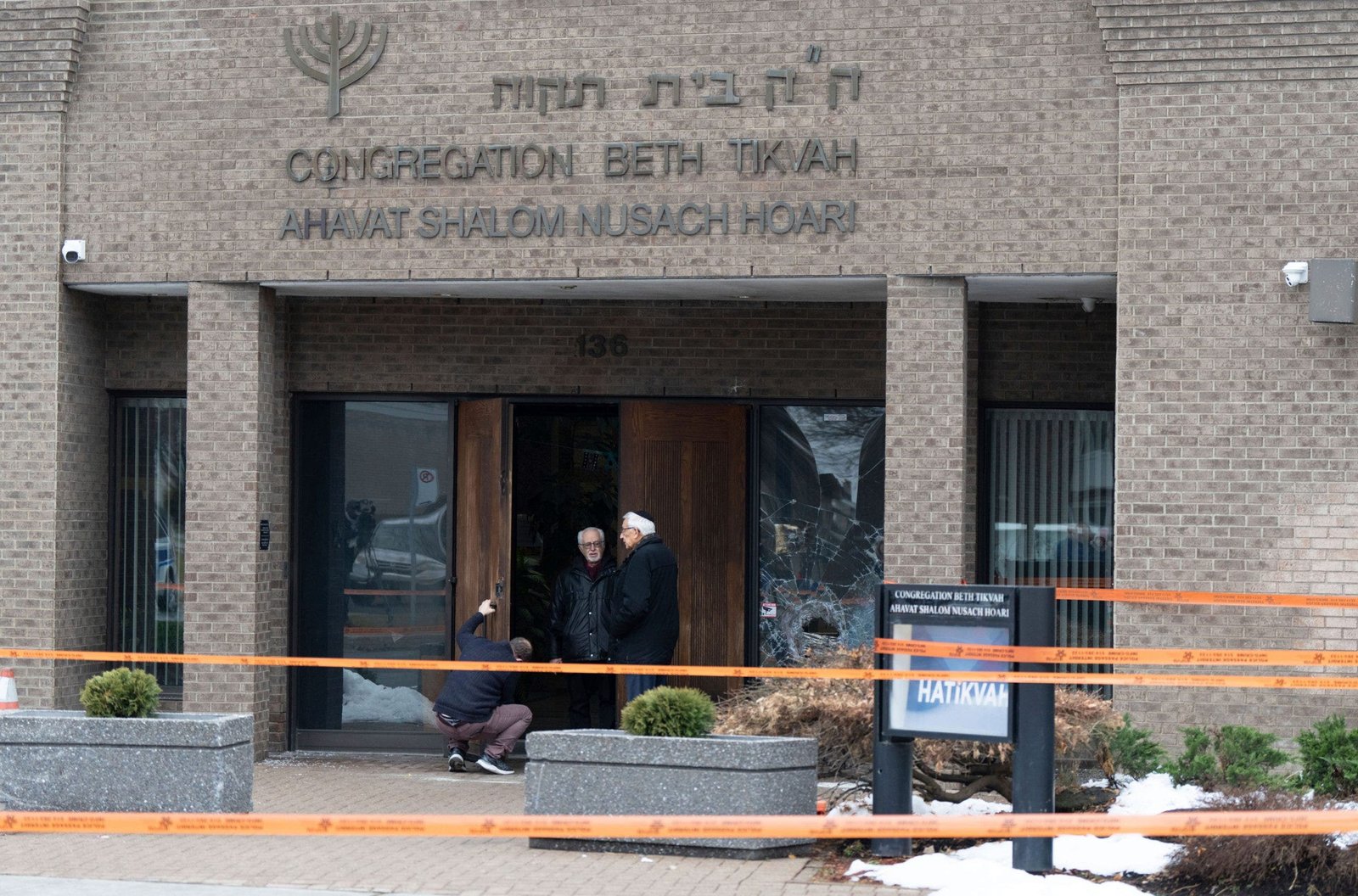
A man fixes the lock of the doors of Congregation Beth Tikvah as police investigate an alleged arson at the synagogue in the suburb of Dollard-des-Ormeaux in Montreal, Wednesday, Dec. 18, 2024. (Christinne Muschi/The Canadian Press via AP)
«I would say that during this period, these last two years, I’ve been really quite amazed and often become quite despondent and despairing about the fact that it was hard to get people to speak up, to speak with clarity, to speak with conviction about what we were seeing happening here on Canadian soil,» she added.
Irwin Cotler, a former Canadian Justice Minister and Lyons’s predecessor as special envoy on antisemitism, told Fox News Digital that the «explosion» in Jew-hatred has been met not with broad condemnation, but with «silence, denial, acquiescence, support, and justification.»
«The government can’t just virtue signal or be performative—it needs to act,» Cotler said. «That’s something Deborah had to contend with. She’s a very loyal civil servant, and I’m sure it was difficult for her—disheartening even—to see the government not moving as quickly, effectively, or decisively as the mandate required.»
Although Jews make up less than one percent of Canada’s population, 18.8% of all reported hate crimes in 2024 were motivated by antisemitism.
Of the 1,342 religiously motivated hate crimes reported last year, 920—or 68.5%—targeted the Jewish community.
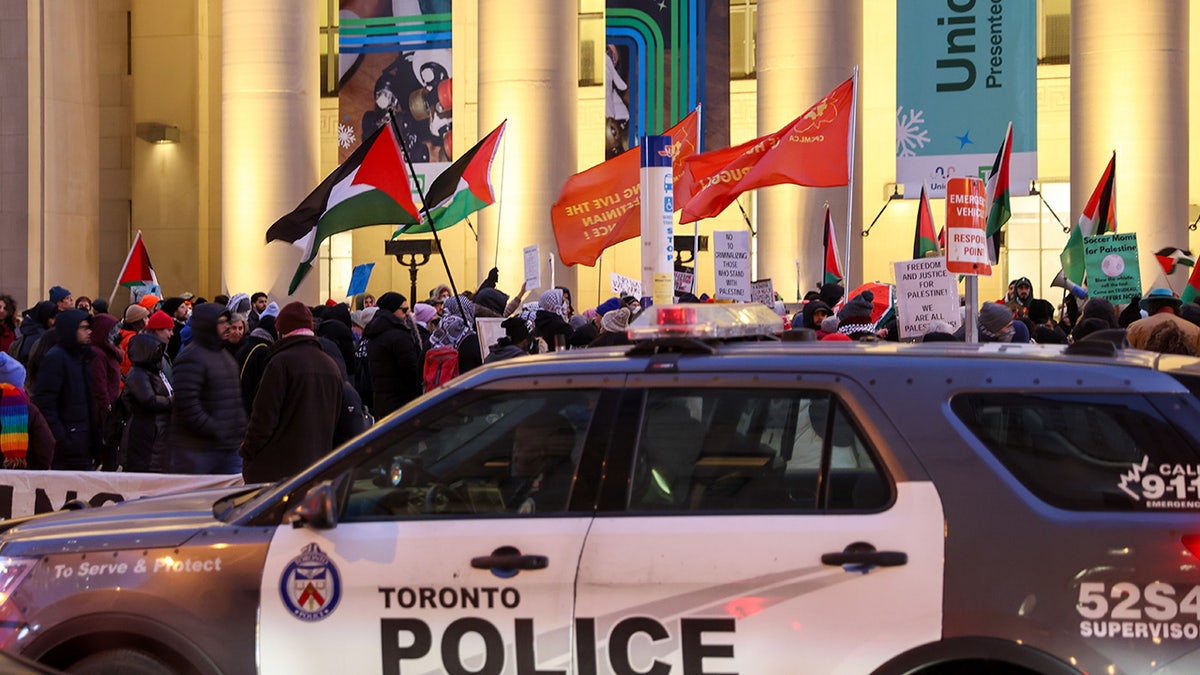
TORONTO, CANADA – JANUARY 4 : Anti-Israel demonstrators gather outside Union Station during a rally in Toronto, Ontario on January 4, 2024. Demonstrators demanding ceasefire gathered outside Union Station in downtown Toronto. (Mert Alper Dervis/Anadolu via Getty Images)
«Since Special Envoy Lyons took office, we’ve seen a 124% increase in antisemitism,» Richard Robertson, director of research and advocacy at B’nai Brith Canada, told Fox News Digital.
«The situation has become increasingly untenable for the community. And although some positive steps were taken by the federal government, not enough has been done to stem the tide—putting someone like the special envoy in a very tough position,» he continued. «So it’s understandable that she felt fatigued and disheartened by the current state of hate in Canada.»
SIGN UP FOR ANTISEMITISM EXPOSED NEWSLETTER
Both Cotler and Robertson acknowledged key accomplishments by Lyons during her tenure, including the publication of a handbook on the IHRA Working Definition of Antisemitism, produced by the envoy’s office. According to Cotler, the resource is now being used internationally by governments for training police, prosecutors, law enforcement officials, and public servants.
Lyons was also an important voice in the international coalition of special envoys for combating antisemitism, giving Canada a presence with global resonance, Cotler said. He also highlighted her success in building out the Office of the Special Envoy with a strong staff and dedicated budget—an institutional foundation that did not exist before.
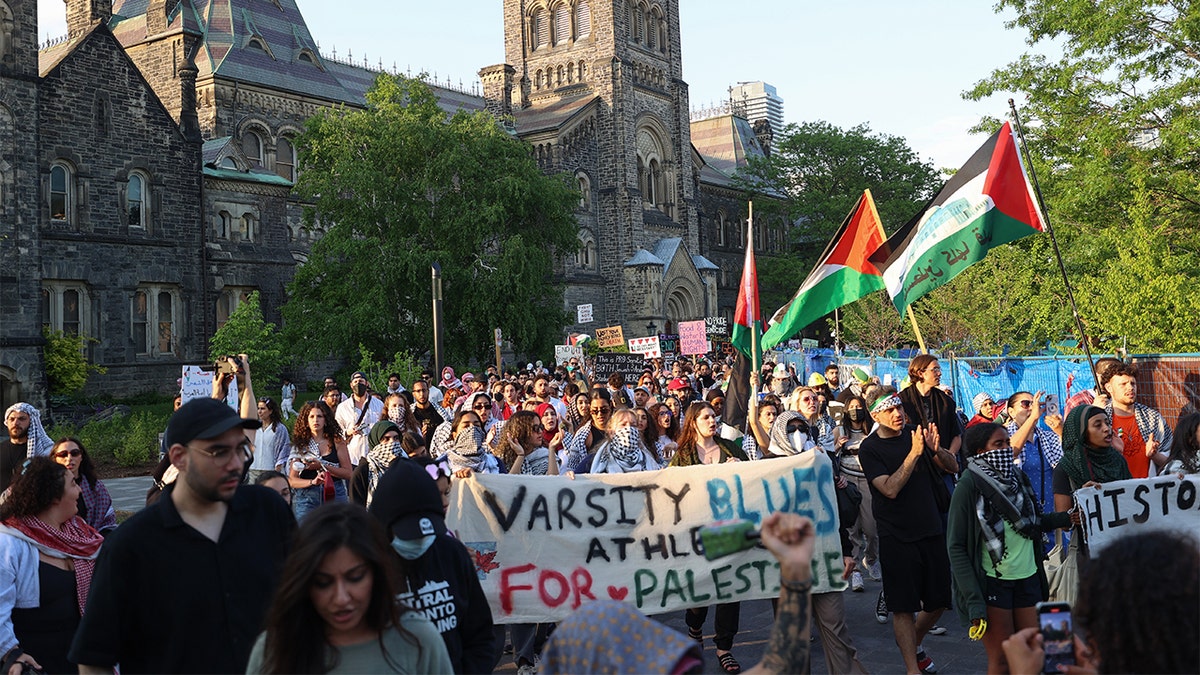
Anti-Israel agitators protest at the University of Toronto in Toronto, Ontario, Canada. (Photo by Mert Alper Dervis/Anadolu via Getty Images)
Lyons also helped organize the National Forum on Combating Antisemitism, held in March 2024 and co-chaired by the Minister of Justice and Attorney General of Canada. The forum brought together leaders from all levels of government to address the growing public safety threat posed by Jew-hatred.
«We need a whole-of-government approach,» Robertson said. «That’s why, immediately following the election of Mark Carney, we wrote to the prime minister and outlined key ministries that could be mandated to have an immediate impact on the crisis of antisemitism. This isn’t something the special envoy can resolve alone—it requires coordinated government-wide effort.»
SKYROCKETING ANTISEMITISM IN CANADA SPARKS CONCERN FOR COUNTRY’S JEWS AHEAD OF ELECTION
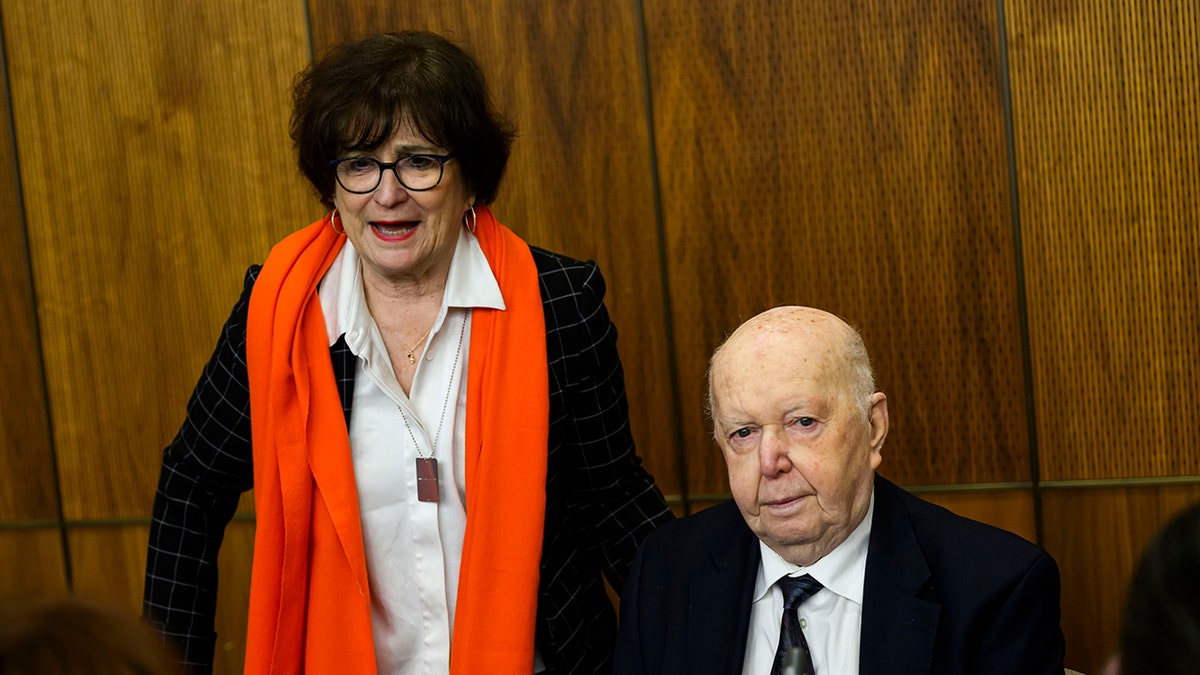
Deborah Lyons, left, the former Special Envoy on Preserving Holocaust Remembrance and Combatting Antisemitism, speaks with David Moscovic, a Holocaust and Auschwitz survivor, before an event commemorating the 80th anniversary of the Liberation of Auschwitz, in the Parliamentary Precinct in Ottawa, on Friday, Jan. 24, 2025. (Justin Tang/The Canadian Press via AP)
Noah Shack, CEO of the Center for Israel and Jewish Affairs (CIJA), told Fox News Digital that when law enforcement or public institutions have directly confronted antisemitic protests, harassment, or intimidation, they quickly collapsed.
«I think that’s instructive—that when our public institutions take action to push back, it dissipates,» he said. «We really need government, law enforcement, and broader society to recognize that we all have a duty to stand against this hate that is targeting the Jewish community right now, but also targeting our core values as Canadians. And if we fail to stand up, it will overtake our society and lead to a very dark future for all Canadians.»
Shack outlined three urgent actions he believes Canada can take to meaningfully address the issue. First, he emphasized the need to follow through on commitments to establish safety zones around places of worship, community centers, daycare centers, schools, and other sites where the Jewish community gathers.
Second, he called for increased support for Jewish community security programs to protect these facilities from the violent threats they face.
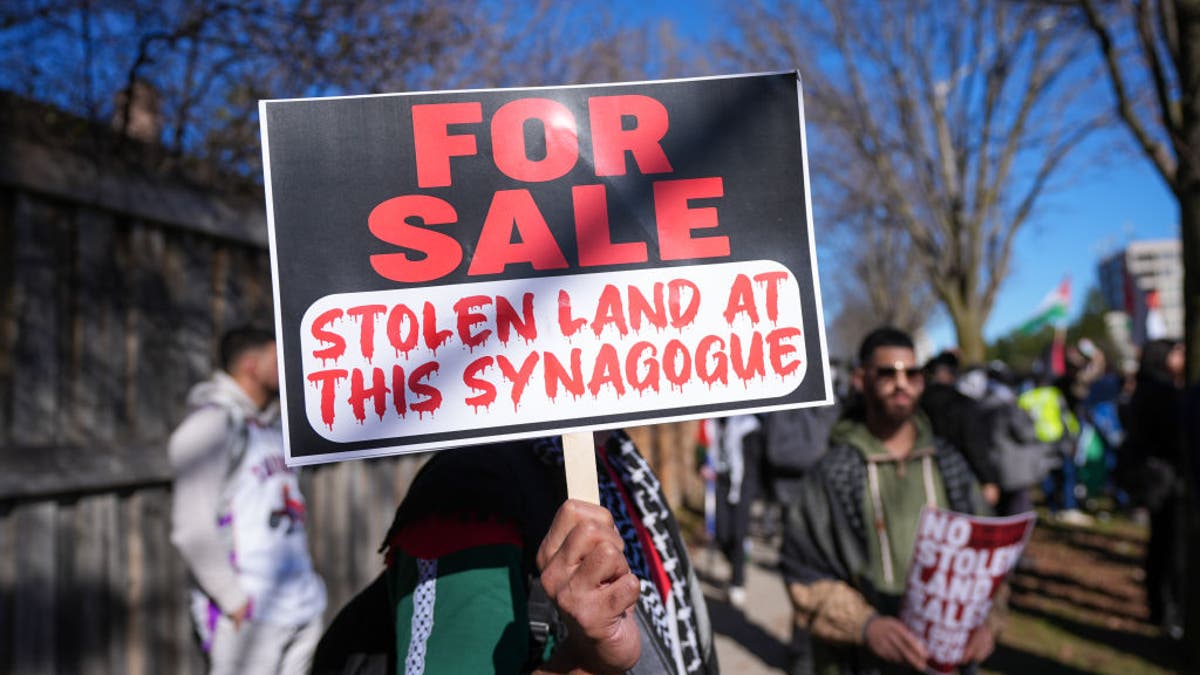
Anti-Israel protesters gather outside Beth Avraham Yoseph of Toronto synagogue hosting ‘Israeli Real Estate Event’ in Thornhill, north of Toronto, Ontario on March 7, 2024. Thornhill is home to a large Jewish population. (Photo by Mert Alper Dervis/Anadolu via Getty Images)
«We’ve had schools shot at, synagogues set on fire. This is a very concerning situation, and we need to ensure that the government is funding and integrating our community security programs at a level that exponentially improves safety,» he said.
Third, Shack emphasized the need to address the growing issue of radicalization seen on the streets and within public institutions.
«Canada’s anti-terrorism laws should be aligned with those of countries like the UK, where the glorification of terrorism and membership in a terror organization are criminal offenses,» he said.
CLICK HERE TO GET THE FOX NEWS APP
Shack also cautioned against attempts to separate anti-Zionism from antisemitism, stating that the premise itself is flawed, and stressed that blaming Jews around the world for disagreements with Israeli government policies is equally hateful.
«I don’t represent the government of Israel; I represent myself as a Jewish person living here in Canada. Just like my friends, family, and colleagues who live in the U.S. are Jewish Americans, we deserve to be treated with the same respect and rights as any other Canadian or American citizen, period,» he said.
anti semitism,canada,israel,conflicts








INTERNACIONAL
EN VIVO: El secretario de Defensa de Estados Unidos brindará una conferencia de prensa para hablar sobre la guerra en Irán

Durante la sesión, programada para las 8:00 (hora de Washington), Pete Hegseth estará acompañado por el jefe del Estado Mayor Conjunto, el general Dan Caine. Ambos funcionarios ofrecieron su última rueda informativa el 19 de marzo, en el marco de un total de seis sesiones desde el inicio de los ataques el 28 de febrero
Durante la madrugada del martes, Irán atacó e incendió un petrolero con bandera kuwaití completamente cargado frente a las costas de Dubai. La agencia estatal de Kuwait informó que el buque, con capacidad para unos 2 millones de barriles de crudo, resultó alcanzado, lo que provocó un alza momentánea en los precios internacionales. En paralelo, medios iraníes reportaron explosiones y cortes eléctricos en Teherán tras ataques israelíes contra infraestructura militar, mientras también se registraron bombardeos en Beirut vinculados a posiciones de Hezbollah.
En este contexto, los mercados reaccionaron con subas del crudo, caídas bursátiles en Asia y un fortalecimiento del dólar. Además, el presidente de Estados Unidos, Donald Trump, difundió el lunes por la noche un video de un ataque militar masivo sin precisar ubicación ni fecha, en medio de tensiones en la quinta semana del conflicto. La publicación se realizó en su cuenta oficial de Truth Social, sin detalles adicionales sobre el hecho mostrado.
El video, de 32 segundos, muestra una toma panorámica de una explosión de gran magnitud y también circuló en medios de la región, que señalan reportes de detonaciones masivas en Isfahán. Horas antes, Trump había advertido que podría “aniquilar” la infraestructura civil de Irán, incluyendo plantas eléctricas, la isla petrolera de isla de Kharg, pozos de petróleo y “posiblemente” plantas desalinizadoras de agua, si Teherán no acuerda un tratado de paz “pronto”. El mandatario sostuvo que las negociaciones para terminar la guerra con un “nuevo y más razonable régimen” avanzan “con gran progreso”, mientras desde Irán rechazan las afirmaciones sobre contactos directos con Washington.
A continuación, la cobertura minuto a minuto:
El liderazgo fragmentado de Irán tiene dificultades para coordinarse
A medida que los líderes son asesinados y reemplazados, los negociadores iraníes pueden desconocer qué está dispuesto a ceder su gobierno en las negociaciones
Seguir en

La guerra entre Estados Unidos e Israel contra Irán ha fracturado al gobierno iraní, lo que complica su capacidad para tomar decisiones y coordinar ataques de represalia de mayor envergadura, según funcionarios familiarizados con las evaluaciones de los servicios de inteligencia estadounidenses y occidentales.Varias decenas de líderes iraníes y sus lugartenientes han muerto desde que comenzó la guerra hace cuatro semanas. Los que sobrevivieron han tenido dificultades para comunicarse y no pueden reunirse en persona por temor a que sus llamadas sean interceptadas por Estados Unidos o Israel y a ser blanco de un ataque aéreo.
Al menos ocho heridos en Tel Aviv tras la caída de fragmentos de municiones iraníes
Los servicios de emergencia de Israel informaron el martes que ocho personas con heridas leves fueron evacuadas a hospitales en el área de Tel Aviv, donde la policía reportó la caída de fragmentos de municiones tras una alerta por misiles lanzados desde Irán.
Seis de los heridos fueron atendidos en la ciudad de Bnei Brak, de población mayoritariamente judía ultraortodoxa, según Magen David Adom. El organismo precisó que todos presentaban lesiones leves por la onda expansiva.
El Comando del Frente Interno del Ejército indicó que recibió “reportes de daños” en zonas del centro del país. Más temprano, al menos diez explosiones se escucharon en el área de Jerusalén tras detectarse lanzamientos de misiles desde Irán, aunque no se informaron víctimas en ese episodio.
Los precios del petróleo se mantienen estables y las bolsas asiáticas registraron pérdidas

El petróleo se estabilizó y las bolsas asiáticas operaron mayormente a la baja el martes, en un contexto de señales mixtas sobre una posible desescalada de la guerra en Irán. El índice Nikkei 225 de Tokio cayó 1,6%, mientras que el Kospi perdió 4,3%. En tanto, el Hang Seng retrocedió 0,3% y el Shanghai Composite bajó 0,8%. En contraste, el S&P/ASX 200 avanzó 0,3%, mientras que el Taiex cedió 2,5%.
En Estados Unidos, los futuros subieron más de 0,7% en las primeras operaciones. Con el conflicto en su quinta semana, los ataques en Medio Oriente continuaron sin un final claro. El crudo Brent bajó menos de 0,1% hasta 107,37 dólares por barril, mientras que el WTI avanzó 0,1% hasta 102,93 dólares. Desde el inicio de la guerra, los precios del Brent acumulan un alza superior al 40%.
El CENTCOM confirmó que el almirante Cooper visitó Israel esta semana para hablar sobre la guerra

El Comando Central de Estados Unidos confirmó que su jefe, el almirante Brad Cooper, visitó Israel esta semana y se reunió con el jefe del Estado Mayor de las Fuerzas de Defensa de Israel, el teniente general Eyal Zamir.
Durante la visita del domingo y el lunes, ambos líderes militares “discutieron los progresos realizados durante las operaciones en curso para eliminar la capacidad de Irán de proyectar poder de manera significativa fuera de sus fronteras”, indicó el portavoz del CENTCOM, el capitán Tim Hawkins.
“También reafirmaron la solidez de la alianza de defensa entre Estados Unidos e Israel y destacaron la importancia de mantener la coordinación”, añadió.
Los ministros de Energía UE abordarán este martes la seguridad del suministro por la crisis en Medio Oriente
Los ministros de Energía de los Veintisiete celebrarán este martes una reunión informal por videoconferencia para abordar la seguridad del suministro energético, en un contexto de tensiones en los mercados derivadas de la crisis en Medio Oriente.
“Tendremos una videoconferencia informal de los ministros de Energía el martes a las 15.00 (hora de Bruselas). El tema de debate será la seguridad del suministro energético debido a la crisis en Oriente Próximo”, indicaron fuentes de la Presidencia chipriota del Consejo de la Unión Europea.
El encuentro, del que no trascendieron más detalles, se produce en medio de la escalada del conflicto en la región, que genera inquietud en la Unión Europea por sus posibles efectos sobre el abastecimiento, los precios energéticos y la economía.
“Las perspectivas están marcadas por una profunda incertidumbre. Pero está claro que existe el riesgo de un ‘shock’ de estanflación”, advirtió el comisario de Economía, Valdis Dombrovskis, quien señaló que una escalada prolongada podría reducir hasta 0,6 puntos porcentuales el crecimiento en los próximos años.
La Comisión de Seguridad Nacional del Parlamento iraní aprobó la ley que establece el pago de peajes en el estrecho de Ormuz
La iniciativa deberá recibir el aval del Parlamento iraní y posteriormente del Consejo de los Guardianes, órgano con capacidad de veto sobre las decisiones legislativas, antes de su entrada en vigor

La Comisión de Seguridad Nacional del Parlamento iraní aprobó un proyecto de ley que establece el pago de peajes en el estrecho de Ormuz y prohíbe el tránsito de buques de Estados Unidos e Israel, según informó la agencia Fars. El paso marítimo concentra alrededor del 20% del comercio mundial de petróleo y su situación incide de forma directa en los mercados energéticos.
El secretario de Defensa de Estados Unidos, Pete Hegseth, brindará una conferencia de prensa para hablar sobre la guerra en Irán

El Pentágono realizará este martes por la mañana una conferencia de prensa sobre la guerra en Irán, la primera en casi dos semanas.
La sesión estará encabezada por el secretario de Defensa, Pete Hegseth, y el jefe del Estado Mayor Conjunto, el general Dan Caine, a partir de las 8:00 hora del Este.
Ambos funcionarios ofrecieron su última rueda informativa el 19 de marzo, en el marco de un total de seis sesiones desde el inicio de los ataques el 28 de febrero. En conflictos previos en Medio Oriente, especialmente en las primeras etapas, las autoridades militares estadounidenses mantenían un cronograma regular de conferencias y brindaban actualizaciones diarias. La administración de Donald Trump optó por reducir la frecuencia de las comparecencias.
El régimen de Irán celebró el funeral del jefe de la Armada de la Guardia Revolucionaria, Alireza Tangsiri
Irán celebró este martes el funeral del contralmirante Alireza Tangsiri, jefe de la armada de la Guardia Revolucionaria. El oficial murió la semana pasada en un ataque aéreo atribuido a Israel, aunque Teherán no confirmó su fallecimiento hasta el lunes.
Imágenes difundidas mostraron el ataúd trasladado sobre un camión de plataforma que avanzaba por las calles de Bandar Abbas, una ciudad portuaria clave ubicada en el estrecho de Ormuz.
Bandar Abbas ha sido escenario de repetidos ataques aéreos estadounidenses durante la guerra, en medio de la escalada de tensiones en esa vía marítima estratégica para el comercio energético mundial.
Corea del sur destinará un presupuesto de 14 millones de euros para amortiguar el impacto del aumento del petróleo
El Gobierno de Corea del Sur propuso este martes un presupuesto suplementario de 26,2 billones de wones (unos 14.870 millones de euros) para amortiguar el impacto del aumento de los precios del petróleo derivado de la guerra de Estados Unidos e Israel contra Irán. La iniciativa del Ministerio de Planificación y Presupuesto apunta a responder a la suba del crudo, estabilizar los medios de subsistencia y minimizar los daños a la economía, además de garantizar las cadenas de suministro, según informó la agencia local Yonhap.
El plan incluye ayudas directas por 4,8 billones de wones (alrededor de 2.700 millones de euros) destinadas al 70% de la población con menores ingresos, con pagos diferenciados según nivel de ingresos, región y zonas afectadas por despoblación. También asigna 5,1 billones de wones (unos 2.900 millones de euros) a un programa de limitación de precios de combustibles y medidas ante posibles interrupciones en el suministro de nafta. A su vez, prevé 9,7 billones de wones (5.500 millones de euros) para gobiernos locales, 1,9 billones (mil millones de euros) para emprendimiento juvenil, 700.000 millones (397 millones de euros) para cadenas de suministro y 500.000 millones (284 millones de euros) para la transición a energías renovables.
El oficialismo y la oposición acordaron tratar el presupuesto el 10 de abril, en un contexto de incertidumbre por el bloqueo del estrecho de Ormuz y la dependencia energética surcoreana de Oriente Medio, de donde importa cerca del 70% de su petróleo y el 20% de su gas natural licuado.
El ejército de Israel continúa destruyendo infraestructura del grupo terrorista Hezbollah en el sur del Líbano
Por medio de un comunicado publicado en X, las Fuerzas de Defensa de Israel informaron que “en las últimas 24 horas, decenas de terroristas identificados durante intentos de emboscada en la zona fueron neutralizados”.
Además, señalaron que “las fuerzas destruyeron almacenes donde se encontraban numerosos depósitos de armas, cuarteles generales, pozos subterráneos y un lanzador para disparar hacia el territorio del país. Entre las armas encontradas había chalecos militares, cascos y lanzagranadas RPG cargados”.
En paralelo, las FDI afirmaron que “continuarán actuando con firmeza contra la organización terrorista Hezbollah, que ha decidido unirse a la campaña y operar bajo los auspicios del régimen iraní, y no permitirán que se cause daño a los ciudadanos del Estado de Israel”.
Asia / Pacific
INTERNACIONAL
Watchdog targets taxpayer-funded National Academies over DEI, climate and transgender spending
NEWYou can now listen to Fox News articles!
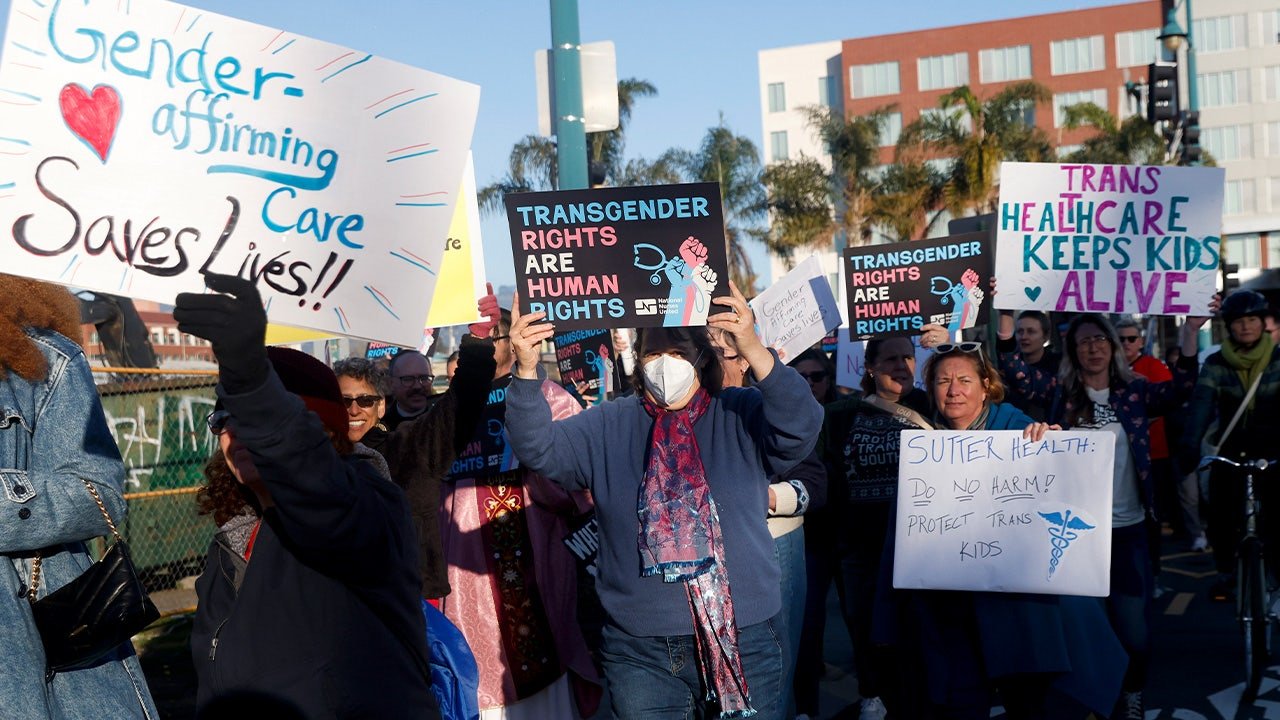
FIRST ON FOX: A consumer watchdog group is accusing the federally funded National Academies of Sciences, Engineering, and Medicine of using taxpayer dollars to support DEI, transgender-related and other left-leaning initiatives, according to a new report.
Consumers’ Research compiled the «Woke Alert» report outlining what it describes as left-leaning research, workshops and grants from the congressionally chartered institution, including projects related to transgender youth, diversity and inclusion initiatives, policing and climate advocacy.
Will Hild, executive director of Consumers’ Research, accused the organization, which receives 70% of its budget from federal funds, of being «a radical woke organization masquerading as a nonpartisan educational institution.»
«From pushing transgender ideology onto kids to spreading ‘defund the police’ insanity, this taxpayer-supported organization regularly abuses its status and reputation to fund the left’s favorite causes,» Hild said in a statement to Fox News Digital. «It has shamefully used hundreds of millions in taxpayer dollars to push a highly polarized woke agenda behind lofty BS rhetoric about independence and objectivity.»
TRUMP-SIGNED SHUTDOWN BILL SENDS $4M TO CHILDREN’S HOSPITALS UNDER FEDERAL PROBE FOR TRANSGENDER CARE
A close-up view of the National Academy of Sciences sign at the organization’s headquarters in Washington, D.C. (Caspar Benson / Getty Images)
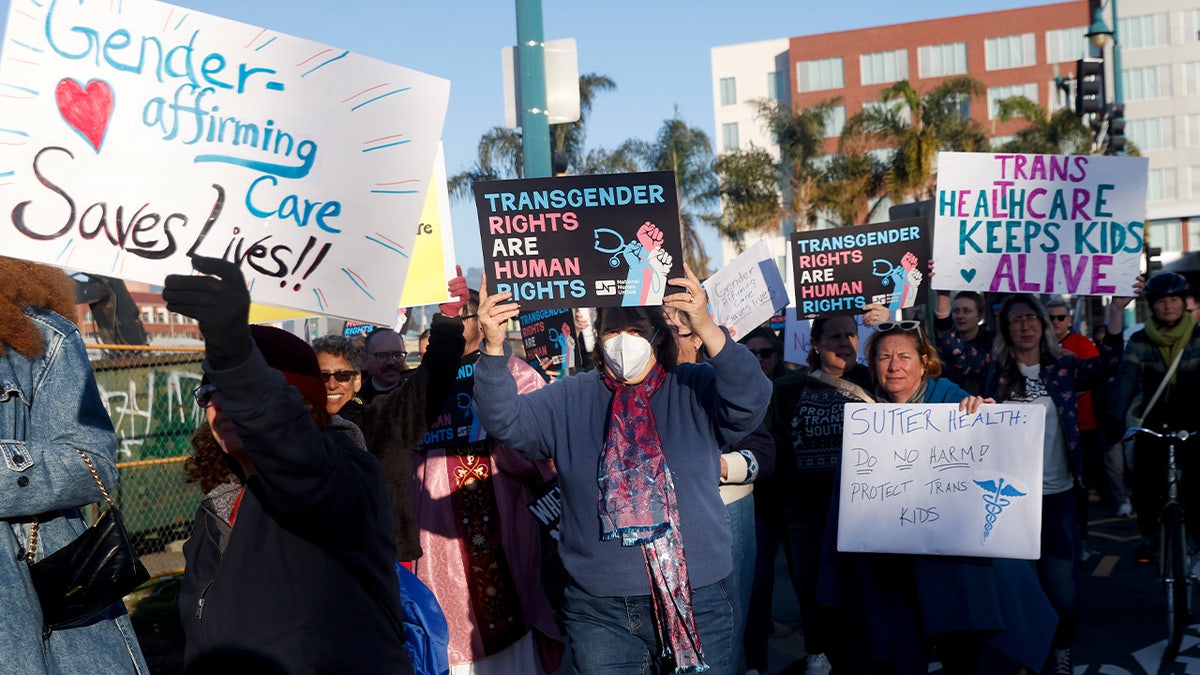
Consumers’ Research argued that NASEM has established its allegiance with left-leaning transgender ideology through its various publications, such as a workshop titled «Supporting the Health and Well-Being of Transgender and Gender Diverse Youth,» and a book titled «Reducing Inequalities Between Lesbian, Gay, Bisexual, Transgender, and Queer Adolescents and Cisgender, Heterosexual Adolescents: Proceedings of a Workshop 2022.»
The report highlighted that for years, NASEM has run a variety of DEI workshops with titles including «Advancing Antiracism, Diversity, Equity, and Inclusion in STEMM Organizations: Current Context and Challenges;» and another titled «Protecting Diversity, Equity, and Inclusion in Higher Education and the Workforce,» which was focused on putting affirmative action in place without race-based criteria.
HHS GOLD STANDARD STUDY FLIPS ‘GENDER AFFIRMING CARE’ ON ITS HEAD AS DEMS KEEP PUSHING TRANS ISSUES AT SCOTUS
Members of Rainbow Families march from Bay Street in Sydney, Australia, as part of an action for LGBTQIA+ visibility and family rights, Feb. 22, 2025. (Steven Siewert / Getty Images)
In 2022, the National Academies partnered with the Chan Zuckerberg Initiative to hand out grants worth $1.15 million per recipient in an effort to promote DEI among biomedical researchers.
In response to the 2020 Black Lives Matter protests, NASEM established its Committee on Reducing Racial Inequalities in the Criminal Justice System. The committee evaluated a proposal to cut $50 million from Austin, Texas’s police budget.
WATCHDOG FINDS DEI, CRT BAKED INTO ACCREDITATION RULES FOR HUNDREDS OF UNIVERSITY SOCIAL-WORK PROGRAMS
The report noted that committee co-chair Bruce Western accused police officers of having «caused a great deal of harm in low-income communities and communities of color.»
In one of NASEM’s studies, researchers accused police officers of being a «leading cause of death for young men in the United States.»
The National Academies have also published multiple studies raising concerns over climate change. In one of the studies, the Academies focused on elevating techniques that would make Americans more likely to participate in climate activism.

Republicans are ramping up their election messaging on crime and law enforcement support (Getty Images)
NASEM previously came under fire in August 2025 for publishing a climate review seeking to influence the Environmental Protection Agency’s decision on whether to rescind an Obama-era greenhouse gas finding. Critics suggested that NASEM was seeking to undermine the authority of the Trump administration.
Roger Pielke Jr., a senior fellow at the American Enterprise Institute specializing in science and technology policy, told Fox News Digital that in recent years, the National Academies has gone from acting under the direction of Congress to acting as an «independent actor» for the interests of billionaires and foundations.
Pielke said the National Academies received funding from the Bezos Earth Fund, a Jeff Bezos project created to address climate change. Through that support, the National Academies published a manual titled «Constructing Valid Geospatial Tools for Environmental Justice.» Pielke noted that the Bezos Earth Fund funds litigation centered on climate change and argued that «there is pretty strong evidence of a bias» in the Bezos Earth Fund.
«So I think issues about conflicts of interest and bias go well beyond just funding sources,» Pielke said. «They also extend to the groups researchers choose to partner with when conducting work that is supposed to be neutral and scientific.»
Fox News Digital reached out to NASEM for comment.
dei, environment, health, police and law enforcement


Piqué reveló que creó la Kings League por sus hijos: “La nueva generación ama el fútbol, pero lo consume diferente”

Presidente de YPF reveló cuánto debería aumentar la nafta: buscan un acuerdo con petroleras privadas

¡Contó todo! Roberto García Moritan habló del romance con Virginia Gallardo: «Le doy mi apoyo para que sea gobernadora»

EN VIVO: El secretario de Defensa de Estados Unidos brindará una conferencia de prensa para hablar sobre la guerra en Irán

Dos jubiladas que le habrían prestado dinero a Manuel Adorni negaron conocerlo

Hay alerta naranja y amarilla por tormentas, lluvias y vientos para este martes 31 de marzo: las provincias afectadas

Máximo Kirchner salió al cruce de Milei y Macri tras el fallo por YPF a favor de la Argentina

La secretaria del piloto denunció que el amigo de Adorni la hostiga y la justicia dispuso medidas

El Gobierno cambia su propuesta de reforma: endurece penas para delitos comunes, pero no para los casos de corrupción

¡DERIVA ECONÓMICA Y SOBERBIA POLÍTICA! El abismo entre el «relato oficial» y la realidad de una clase media que no aguanta más

 POLITICA2 días ago
Máximo Kirchner salió al cruce de Milei y Macri tras el fallo por YPF a favor de la Argentina
- POLITICA3 días ago
La secretaria del piloto denunció que el amigo de Adorni la hostiga y la justicia dispuso medidas
- POLITICA2 días ago
El Gobierno cambia su propuesta de reforma: endurece penas para delitos comunes, pero no para los casos de corrupción