INTERNACIONAL
Chaos in Syria sparks fears of ISIS prison breaks as US rushes detainees to Iraq


NEWYou can now listen to Fox News articles!
Chaos engulfing northeastern Syria has sparked fresh security fears after Syria’s new governing authorities moved against U.S.-backed Kurdish forces, forcing the U.S. military to rush ISIS detainees out of Syria and into Iraq.
The U.S. military launched an operation Wednesday to relocate ISIS detainees amid fears that instability could trigger mass prison breaks. So far, about 150 detainees have been transferred from a detention center in Hasakah, Syria, with plans to move up to 7,000 of the roughly 9,000 to 10,000 ISIS detainees held in Syria, U.S. officials said.
The operation comes as Syria’s new government, led by President Ahmed al-Sharaa, ordered the Kurdish-led Syrian Democratic Forces (SDF) — Washington’s longtime partner in the fight against ISIS — to disband following a rapid offensive over the weekend that severely weakened the group.
Syrian government forces have since assumed control of several detention facilities previously guarded by the SDF. At least 120 ISIS detainees escaped during a breakout at the al-Shaddadi prison in Hasakah this week, according to Syrian authorities, who say many have been recaptured. U.S. and regional officials caution that some escapees remain at large.
The deteriorating security situation also has raised alarms around al-Hol camp, a sprawling detention site housing the families of ISIS fighters and long viewed by Western officials as a breeding ground for radicalization.
US, SYRIAN TROOPS COME UNDER FIRE WHILE ON PATROL: REPORT
Syrian security forces stand guard outside Syrian prison. (Karam al-Masri/Reuters)
Kurdish forces announced they would withdraw from overseeing the camp, citing what they described as international indifference to the ISIS threat.
«Due to the international community’s indifference towards the ISIS issue and its failure to assume its responsibilities in addressing this serious matter, our forces were compelled to withdraw from al-Hol camp and redeploy,» the SDF said in a statement.
The camp is currently home to about 24,000 people, mostly women and children linked to ISIS fighters from across the Middle East and Europe. Many residents have no formal charges, according to aid groups, and humanitarian organizations have long warned that extremist networks operate inside the camp.
TRUMP VOWS ‘VERY SERIOUS RETALIATION’ AGAINST ISIS AFTER DEADLY SYRIA AMBUSH KILLS US SOLDIERS
The SDF said guards were redeployed to confront the threat posed by Syrian government forces advancing into Kurdish-held territory. On Tuesday evening, Kurdish forces and Syrian government troops agreed to a four-day ceasefire, though officials warned the truce remains fragile.
Meanwhile, The Wall Street Journal reported that U.S. officials are weighing whether to withdraw the roughly 1,000 American troops still stationed in Syria, raising questions about Washington’s long-term ability to secure ISIS detainees as local alliances shift.
Two U.S. Army soldiers were killed in Syria in December 2025 by a lone ISIS gunman.
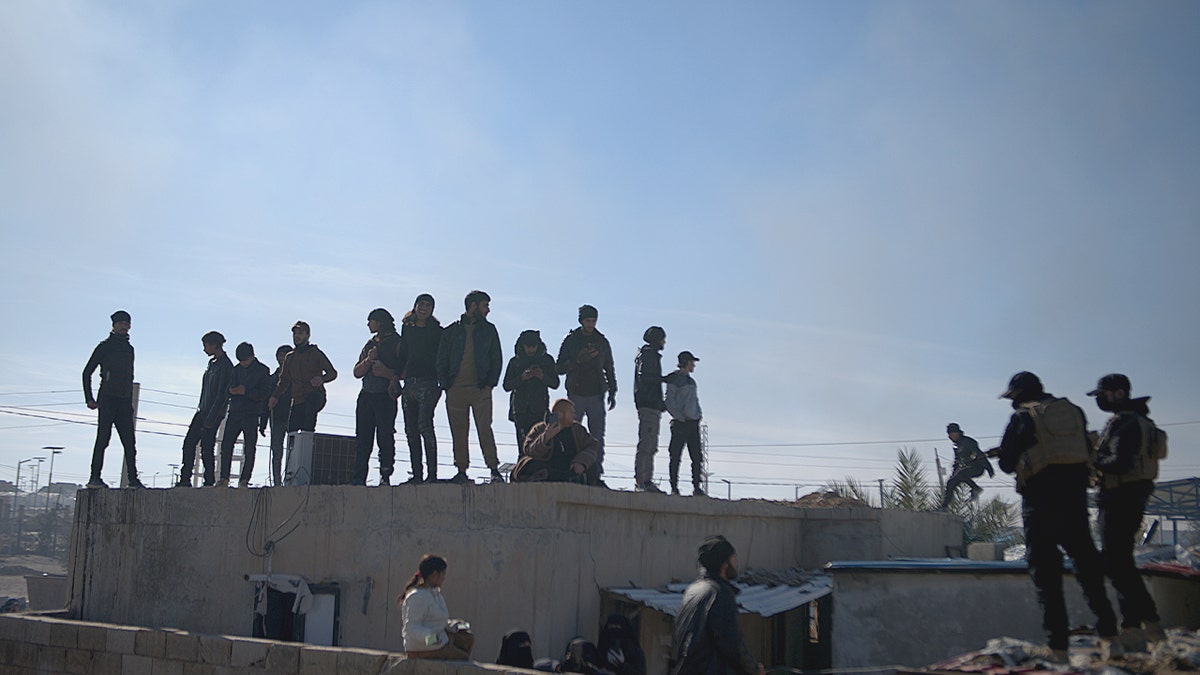
Syrian security forces increased security measures at Al-Hawl refugee camp. (Santiago Montag/Anadolu via Getty Image)
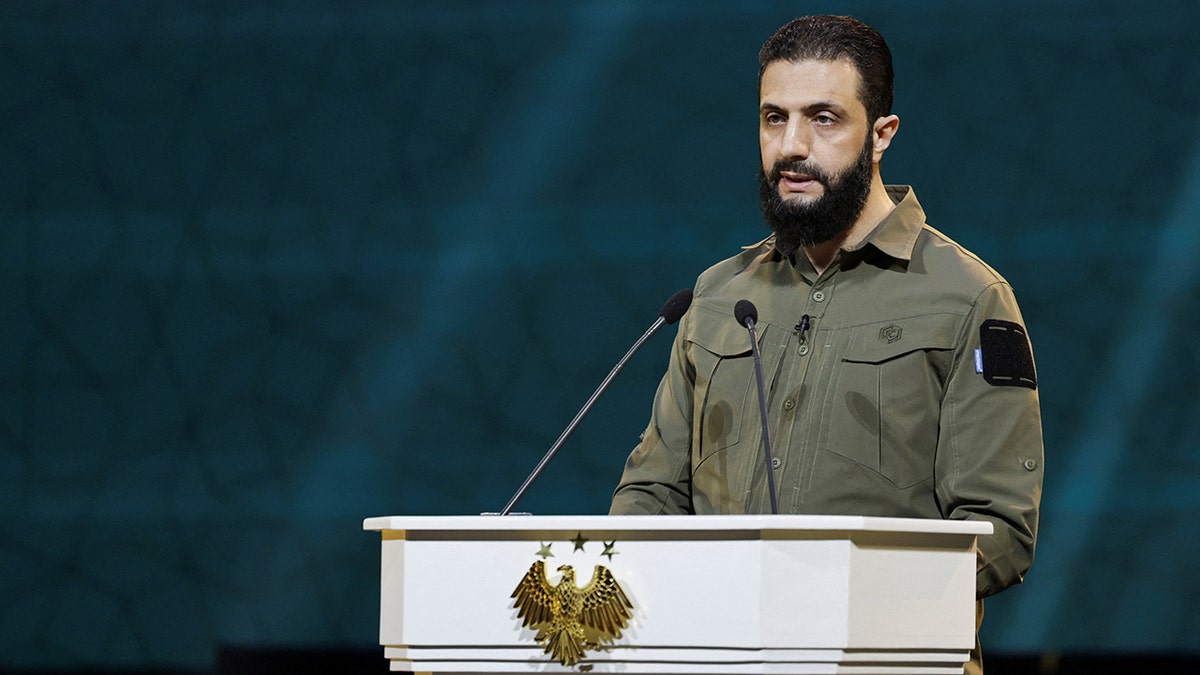
Syria’s President Ahmed al-Sharaa delivers a speech on the first anniversary of Bashar al-Assad’s fall, in Damascus, Syria, Dec. 8, 2025. (Khalil Ashawi/Reuters)
ISIS lost its last territorial stronghold in Syria in 2019, when U.S. forces and their SDF partners overran the group’s enclave in Baghouz. While the defeat ended the group’s self-declared caliphate, U.S. and allied officials say ISIS has since regrouped as a decentralized insurgency, repeatedly targeting prisons and detention camps in Syria and Iraq.
Western governments have cautiously backed al-Sharaa — a former militant once designated as a terrorist — since his forces overthrew longtime Syrian leader Bashar al-Assad, framing the support as a pragmatic security calculation rather than an endorsement of his past.
U.S. envoy to Syria Tom Barrack urged Kurdish leaders to reach a permanent deal with the new Syrian government, emphasizing Washington’s focus on preventing an ISIS resurgence rather than maintaining an indefinite military presence.
CLICK HERE TO DOWNLOAD THE FOX NEWS APP
«The United States has no interest in a long-term military presence,» Barrack said, adding that U.S. priorities include securing ISIS detention facilities and facilitating talks between the SDF and the Syrian government.
syria,national security,isis,middle east












INTERNACIONAL
Irán busca extender la guerra para causar un caos económico que ponga en aprietos a Trump en un año electoral

El nuevo líder supremo de Irán, el ayatollah Mojtaba Jamenei, está decidido a resistir, causar el mayor caos económico posible y extender la guerra hasta las últimas consecuencias para trasladar la presión a Donald Trump, que enfrentará en noviembre unas cruciales elecciones de medio término.
El objetivo es simple: la supervivencia de la Revolución Islámica a cualquier costo.
Leé también: Con la designación de Mojtaba Jamenei, Irán endurece el régimen y profundiza la confrontación con EE.UU.
Irán sabe que no ganará esta guerra de drones y misiles, pero puede tomar de rehén al comercio global con ataques a sus vecinos del Golfo y sus continuas amenazas de cierre en el Estrecho de Ormuz, donde pasa más del 20% del crudo mundial y que se encuentra virtualmente paralizado.
Si la guerra termina pronto, solo habrá un perdedor: el “régimen de los ayatollah”. Pero si se extiende lo suficiente como para poner en crisis al comercio mundial y que sus consecuencias impacten de lleno en Estados Unidos en un año electoral, el gran perdedor puede ser Trump.
“La lógica detrás de las acciones de Irán sería intentar frenar a Estados Unidos mediante una estrategia de desestabilización económica de alcance global, aunque con un impacto especialmente sensible para Occidente”, dijo a TN el analista Eddy Borges Rey, académico de la Northwestern University, de Qatar.
La estrategia de Donald Trump en un año electoral
Trump suele ser imprevisible y contradictorio. Pasó de afirmar que la guerra se extendería por cuatro o cinco semanas a afirmar que el conflicto acabará pronto. La causa de este cambio de visión no se fundamenta en un éxito militar rotundo, más allá de las claras diferencias de poder de fuego entre ambos bandos, sino en la intención de calmar los mercados energéticos.
Las trabas comerciales, el incremento de los costos, la paralización del transporte marítimo y el alza del precio del barril del petróleo, que superó los 100 dólares, aumentaron la presión mundial por el fin de la guerra.
El presidente estadounidense, Donald Trump.(Foto: Kevin Lamarque/REUTERS)
Pero Trump tiene una presión extra que le preocupa mucho más que cualquier atisbo de protesta de sus socios europeos o de potencias enemigas como Rusia y China.
Cada vez más dirigentes republicanos, en especial desde el movimiento MAGA (Make America Great Again), se muestran preocupados por el alza de la nafta y de los insumos agrícolas en el mercado interno.
Leé también: La guerra en Medio Oriente golpea a China: petróleo, asociación estratégica con Irán y tensión geopolítica
Esta situación puede costarle caro a muchos republicanos que este año buscarán su reelección en decenas de gobernaciones, en los Congresos estatales y en el Capitolio.
Un informe del influyente The Wall Street Journal reveló que algunos asesores de Trump le piden elaborar una estrategia de salida de la guerra ante el temor de una reacción política interna.
Según el reporte, Trump está tratando de equilibrar una demostración de éxito militar con la presión para evitar una guerra prolongada que podría profundizar la tensión económica y debilitar el apoyo entre sus votantes.
El problema que tiene hoy la Casa Blanca es cómo presentar el fin del conflicto si Irán prosigue con sus bombardeos a Israel o a los países del Golfo. Por eso, Washington no empezaría a ver mal una negociación más allá de las declaraciones bélicas. Humo se eleva tras un ataque aéreo en el centro de Teherán, Irán. (Foto: EFE/EPA/Abedin Taherkenareh)
En tanto, Irán solo busca resistir. Borges Rey señaló que el gobierno iraní tendría “dos grandes objetivos. Por un lado, una lógica de represalia dirigida contra Estados Unidos, especialmente a través de ataques contra las bases aéreas estadounidenses establecidas en países del Golfo. Por otro, ataques dirigidos a infraestructura civil vinculada al petróleo y al gas licuado, que son sectores absolutamente estratégicos para la región y para la economía internacional”.
Para el analista, “también influye el cierre del Estrecho de Ormuz, que evidentemente agrava muchísimo la situación. Todo parece apuntar a esa estrategia: generar suficiente presión económica y energética como para que Europa empiece a matizar su retórica de apoyo y, eventualmente, presione a Estados Unidos para reconsiderar su permanencia en el conflicto”.
La presión de Israel se suma al complejo frente interno
Trump enfrentará unas elecciones de medio término cruciales en solo ocho meses, cuyo resultado marcará a fuego la segunda parte de su mandato.
“Los republicanos ya se enfrentan a un entorno político complejo en las elecciones de este año. El partido del presidente históricamente pierde escaños en las elecciones intermedias, y la aprobación de Trump ha caído en los últimos meses, en parte debido a la preocupación por el aumento de los costos, algo en lo que los asesores del presidente le han instado a centrarse”, escribió el diario The Washington Post.
El conflicto hizo disparar el precio de la nafta en Estados Unidos, que llegó a 3,48 dólares el galón (3,7 litros) el lunes. Se trata de un aumento de casi el 17 por ciento desde que comenzó la guerra el 28 de febrero.
Leé también: Por qué la guerra en Irán puede ser muy costosa para Rusia: drones militares, rutas estratégicas y negocios
Además, Trump se enfrenta a la presión de Israel, que quiere ir a fondo en la guerra para tumbar al gobierno iraní. El premier Benjamin Netanyahu está listo para seguir la ofensiva hasta lograr la caída de Teherán. Pero la población no ha salido a las calles, como preveía Washington. Si no hay una invasión terrestre, o una ofensiva de los kurdos iraníes que podría desembocar en una guerra civil, el objetivo israelí parece cada vez más lejano.
El director gerente del Instituto de Política del Cercano Oriente de Washington, Michael Singh, citado por The Times of Israel, dijo que los objetivos de Estados Unidos e Israel en el conflicto no son idénticos.
Israel quiere que Irán sea “permanentemente debilitado. Pero Estados Unidos puede no tener tanto apetito por un conflicto extenso, especialmente porque tiene prioridades en otros teatros que Israel obviamente no tiene. Nosotros podemos empacar e irnos a casa, mientras que Israel no puede”, dijo Singh, exasesor de la Casa Blanca en Medio Oriente durante la presidencia de George W. Bush.
Irán, Israel, Donald Trump
NEWYou can now listen to Fox News articles!
Passage of the SAVE America Act is of paramount importance to President Donald Trump and many congressional Republicans.
In his State of the Union speech, the president implored lawmakers «to approve the SAVE America Act to stop illegal aliens and other unpermitted persons from voting in our sacred American elections.»
The House approved the plan to require proof of citizenship to vote last month, 218-213. There’s now a different version of the legislation that’s in play. And, as is often the case, the hurdle is the Senate. Specifically, the Senate filibuster.
Upper Senate Park outside the U.S. Capitol is the scene of an «Only Citizens Vote» rally advocating passage of the SAVE Act, in Washington, D.C., on Sept. 10, 2025. (Kent Nishimura/Getty Images)
So some Republicans are trying to save the SAVE America Act.
It’s important to note that Trump never called for the Senate to alter the filibuster in his State of the Union address. But in a post last week on Truth Social, Trump declared, «The Republicans MUST DO, with PASSION, and at the expense of everything else, THE SAVE AMERICA ACT.»
Again, the president didn’t wade into questions about overcoming a filibuster. But «MUST DO» and «at the expense of everything else» is a clear directive from the commander in chief.
That’s why there’s a big push by House Republicans and some GOP senators to alter the filibuster — or handle the Senate filibuster differently.
It’s rare for members of one body of Congress to tell the other how to execute their rules and procedures. But the strongest conservative advocates of the SAVE America Act are now condemning Senate Republicans if they don’t do something drastic to change the filibuster to pass the measure.
Some Senate Republicans are pushing for changes, or at the very least, advocating that Senate Republicans insist that Democrats conduct what they refer to as a «talking filibuster» and not hold up the legislation from the sidelines. It takes 60 votes to terminate a filibuster. The Senate does that by «invoking cloture.» The Senate first used the cloture provision to halt a filibuster on March 8, 1917. Prior to that vote, the only method to end a filibuster was exhaustion — meaning that senators finally just run out of gas, quit debating and voted.
So let’s explore what a filibuster is and isn’t and dive into what Republicans are talking about when they’re talking about a talking filibuster.
The Senate’s leading feature is unlimited debate. But, ironically, the «debate» which holds up most bills is not debate. It’s simply a group of 60 lawmakers signaling offstage to their leaders that they’ll stymie things. No one has to go to the floor to do anything. Opponents of a bill will require the majority tee up a cloture vote — even if legislation has 60 yeas. Each cloture vote takes three to four days to process. So that inherently slows down the process — and is a de facto filibuster.
But what about talking filibusters? Yes, senators sometimes take the floor and talk for a really long time, hence, the «unlimited debate» provision in the Senate. Senators can generally speak as long as they want, unless there’s a time agreement green-lighted by all 100 members.
That’s why a «filibuster» is hard to define. You won’t find the word «filibuster» in the Senate’s rules. And since senators can just talk as long as they want, they might argue that suggesting they are «filibustering» is pejorative. They’re just exercising their Senate rights to speak on the floor.
A true filibuster is a delay. For instance, the record-breaking 25-hour and 8-minute speech last year by Sen. Cory Booker, D-N.J., against the Trump administration was technically not a filibuster. Booker began his oratory on the evening of March 31, ending on the night of April 1. Once Booker concluded, the Senate voted to confirm Matt Whittaker as NATO ambassador. The Senate was supposed to vote on the Whitaker nomination on April 1 anyway. So all Booker’s speech did was delay that confirmation vote by a few hours. But not much.
In October 2013, Sen. Ted Cruz, R-Texas, held the floor for more than 21 hours. It was part of Cruz’s quest to defund Obamacare. But despite Cruz’s verbosity (and a recitation of «Green Eggs and Ham» by Dr. Seuss), the Senate was already locked in to take a procedural vote around 1 p.m. the next day. Preparations for that vote automatically ended Cruz’s speech. Thus, it truly wasn’t a filibuster either.
COLLINS BOOSTS REPUBLICAN VOTER ID EFFORT, BUT WON’T SCRAP FILIBUSTER
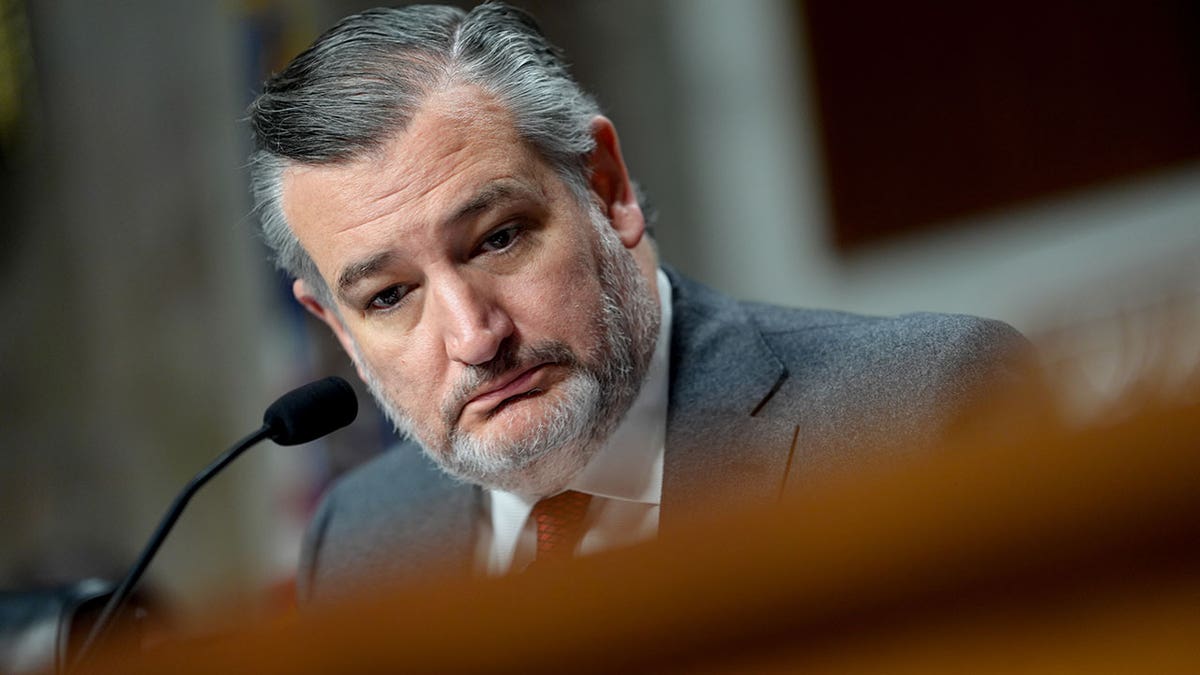
Sen. Ted Cruz during an oversight hearing in Washington, D.C., on Dec. 17, 2025. (Kent Nishimura/Bloomberg via Getty Images)
So, this brings us to the talking filibuster, which actually gums up the Senate gearboxes. A talking filibuster is what most Americans think of when they hear the term «filibuster.» That’s thanks to the iconic scenes with Jimmy Stewart in the Frank Capra classic, «Mr. Smith Goes to Washington.»
Most senators filibuster by forcing the Senate to take two cloture votes — spread out over days — to handle even the simplest of matters. That elongates the process by close to a week. But if advocates of a given bill have the votes to break the filibuster via cloture, the gig is up.
However, what happens if a senator, or a group of senators, delays things with long speeches? That can only last for so long. And it could potentially truncate the Senate’s need to take any cloture vote, needing 60 yeas.
Republicans who advocate passage of the SAVE America Act believe they can get around cloture — and thus the need for 60 votes — by making opponents of the legislation talk. And talk. And talk.
And once they’re done talking, the Senate can vote — up or down — on the SAVE Act. Passage requires a simple majority. The Senate never even needs to tangle with 60.
Senate Rule XIX (19) states that «no senator shall speak more than twice upon any one question in debate on the same legislative day.»
Easy enough, right? Two speeches per day. You speak twice on Monday, then you have to wait until Tuesday? Democrats would eventually run out of juice after all 47 senators who caucus with Democrats have their say — twice.
But it’s not that simple. Note the part about two speeches per «question.»
Well, here’s a question. What constitutes a «question» in Senate parlance? A «question» could be the bill itself. It could be an amendment. It could be a motion. And just for the record, the Senate usually cycles through a «first-degree» amendment and then a «second-degree» amendment — to say nothing of the bill itself. So, if you’re scoring at home, that could be six (!) speeches per senator, per day, on any given «question.»
Questions?
But wait. There’s more.
Note that Rule XIX refers to a «legislative day.» A legislative day is not the same as a calendar day. One basic difference is if the Senate «adjourns» each night versus «recessing.» If the Senate «adjourns» its Monday session on calendar day Monday, then a new legislative day begins on Tuesday. However, the legislative day of «Monday» carries over to Tuesday if the Senate «recesses.»
It may be up to Senate Majority Leader John Thune, R-S.D., whether the Senate «adjourns» or «recesses.» The creation of a new legislative day inhibits the GOP talking filibuster effort.
SEN LEE DARES DEMOCRATS TO REVIVE TALKING FILIBUSTER OVER SAVE ACT, SLAMMING CRITICISM AS ‘PARANOID FANTASY’
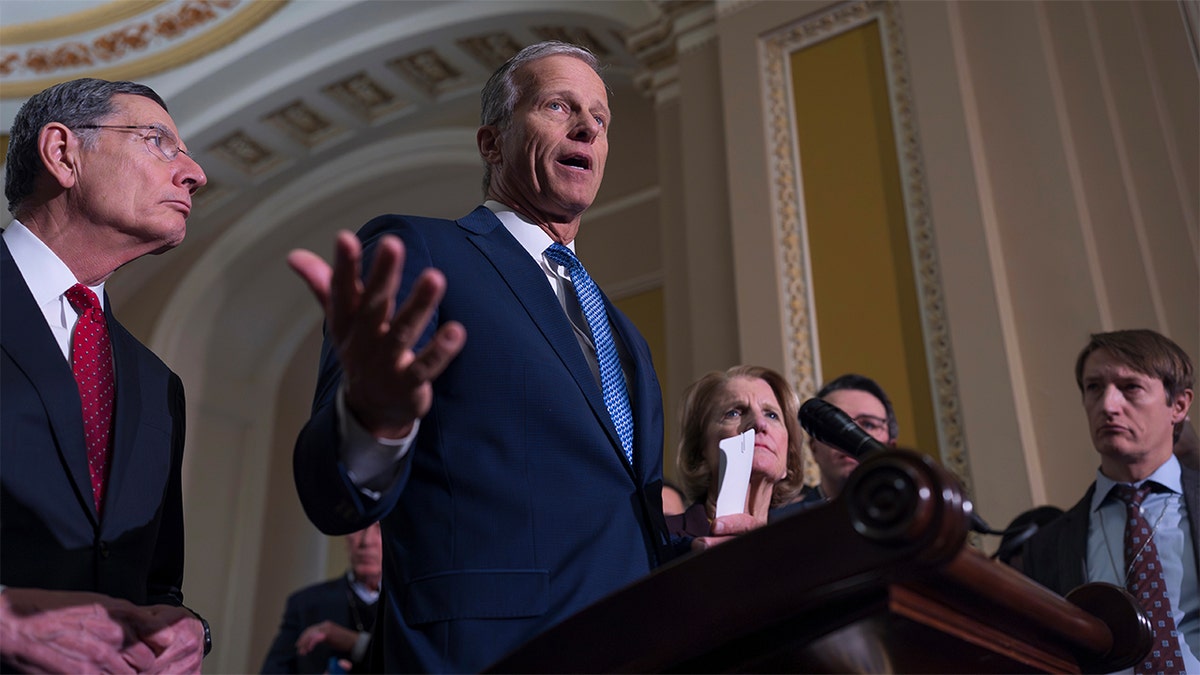
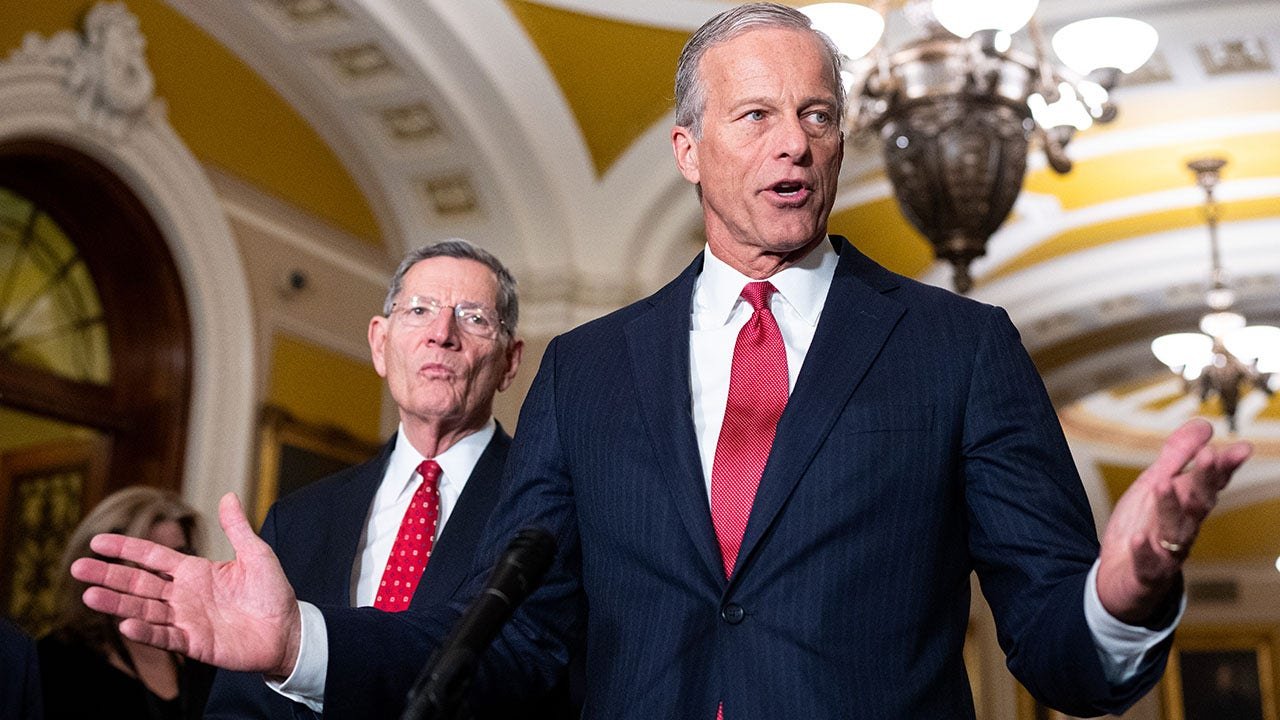
Senate Majority Leader John Thune arrives for a news conference after a policy luncheon on Capitol Hill, Feb. 3, 2026. (Mariam Zuhaib/AP Photo)
Democrats would obviously push for the Senate to adjourn each day. But watch to see if talking filibuster proponents object to Thune’s daily adjournment requests. If the Senate votes to stay in session, that forces the legislative day of Monday to bleed over to Tuesday.
Pro tip: Keep an eye on the adjournment vs. recess scenario. If a talking filibuster supporter tries to prevent the Senate from adjourning, that may signal whether the GOP has a shot at eventually passing the SAVE Act. If that test vote fails and the Senate adjourns for the day, the SAVE Act is likely dead in the water.
We haven’t even talked about a custom practiced by most Senate majority leaders to lock down the contours of a bill when they file cloture to end debate.
It’s typical for the presiding officer to recognize the Senate majority leader first on the floor for debate. So Thune and his predecessors often «fill» what’s called the «amendment tree.» The amendment tree dictates how many amendments are in play at any one time. Think of the underlying bill as a «trunk.» A «branch» is for the first amendment. A «sprig» from that branch is the second amendment. Majority leaders often load up the amendment tree with «fillers» that don’t change the subject of the bill. He then files cloture to break the filibuster.
That tactic curbs the universe of amendments. It blocks the other side from engineering controversial amendments to alter the bill. But if Thune doesn’t file cloture to end debate, then the Senate must consider amendment after amendment, repeatedly filling the tree and voting on those amendments. This would unfold during a talking filibuster, not when Thune is controlling the process by filing cloture and «filling the tree.»
This is why Thune is skeptical of a talking filibuster to pass the SAVE Act.
«This process is more complicated and risky than people are assuming at the moment,» said Thune.
In fact, the biggest «benefit» to filing cloture may not even be overcoming a filibuster, but blocking amendments via management of the tree. Republicans are bracing for amendments Democrats may offer.
«If you don’t think Democrats have a laundry list of amendments, talking about who won the 2020 election, talking about the Epstein files — if you don’t think they have a quiver full of these amendments that they’re ready to get Republican votes on the record, then I’ve got a bridge to sell you,» said George Washington University political science professor Casey Burgat.
Plus, forcing a talking filibuster for days precludes the Senate from passing a DHS funding bill. That’s to say nothing of confirming Sen. Markwayne Mullin, R-Okla., as Homeland Security secretary. His confirmation hearing likely comes next Wednesday, but a protracted Senate debate would block a confirmation vote from the floor.
JEFFRIES ACCUSES REPUBLICANS OF ‘VOTER SUPPRESSION’ OVER BILL REQUIRING VOTER ID, PROOF OF CITIZENSHIP
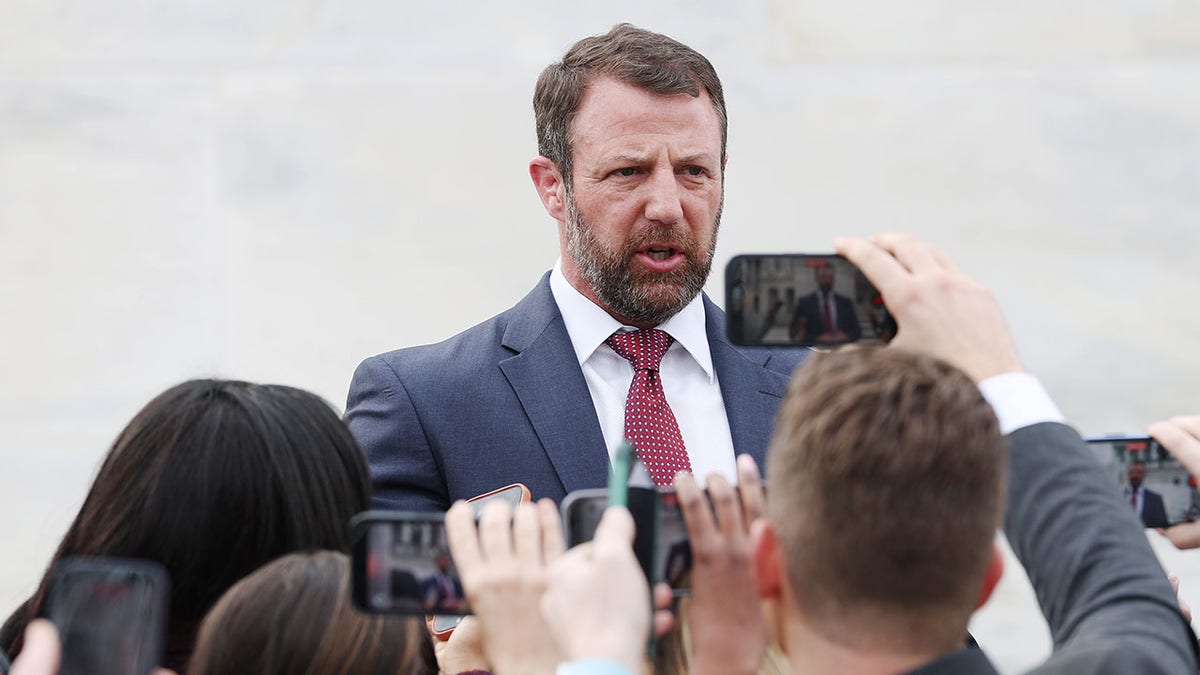
Sen. Markwayne Mullin addresses reporters at the U.S. Capitol after being tapped as President Donald Trump’s new nominee to lead DHS, March 5, 2026. (Anna Moneymaker/Getty Images)
Thune all but killed the talking filibuster maneuver on Tuesday — despite the president’s ultimatum.
«Do you run a risk of being on the wrong side of President Trump and your resistance to do this talking filibuster, tying the Senate in knots for weeks?» asked yours truly.
«We don’t have the votes either to proceed, get on a talking filibuster, nor to sustain one if we got on it,» replied Thune. «I understand the president’s got a passion to see this issue addressed.»
I followed up.
«Does he understand that, though?»
«Well, we’ve conveyed that to him,» answered Thune. «It’s about the math. And, for better or worse, I’m the one who has to be a clear-eyed realist about what we can achieve here.»
And there just doesn’t appear to be any parliamentary way to get there with the talking filibuster.
CLICK HERE TO DOWNLOAD THE FOX NEWS APP
Like many things in Congress, it all boils down to one thing.
As Thune said, «It’s about the math.»
politics,congress,senate,republicans,democratic party,voting,illegal immigrants

El nombre de Alice Walton vuelve a encabezar el listado de las mujeres más ricas del planeta, según el último ranking anual de multimillonarios publicado por la revista financiera Forbes. La heredera de Walmart amplió la distancia respecto a otros grandes patrimonios femeninos, tras ver crecer su fortuna en unos 33 mil millones de dólares (USD) durante el último año. El impulso provino, principalmente, del aumento del 30% en el valor de las acciones del gigante minorista, lo que llevó su patrimonio hasta los 134 mil millones de dólares (USD).
Su liderazgo se consolida tras haber recuperado el primer puesto en 2025, desplazando a la heredera francesa de Françoise Bettencourt-Meyers. En la edición más reciente del ranking, Walton no solo mantiene el título de mujer más acaudalada, sino que amplía su ventaja gracias al desempeño bursátil de Walmart, de acuerdo con Forbes.
Este crecimiento coloca a Walton en una posición de privilegio en el exclusivo grupo de multimillonarios, superando la barrera de los 100 mil millones de dólares, umbral que solo han cruzado dos mujeres en la lista de este año. El dinamismo de las acciones de Walmart y la solidez de la participación familiar en la compañía han sido claves en este salto patrimonial.

El ascenso de Alice Walton en la clasificación de Forbes la ubicó en el puesto 14 entre las personas más ricas del mundo, la posición más alta que ha alcanzado hasta ahora. Sus hermanos, Rob Walton y Jim Walton, figuran inmediatamente por delante, con patrimonios estimados en USD 146 mil millones y USD 143 mil millones, respectivamente. Los tres forman parte del denominado “Club de los 100 mil millones”, un grupo que batió récord al contar con 20 miembros en la edición 2026, frente a los 15 del año anterior.
La familia Walton controla aproximadamente el 44% de las acciones de Walmart, factor clave en la magnitud de sus fortunas. Rob Walton, quien sucedió a su padre como presidente de la compañía y dirigió la firma durante más de dos décadas antes de ceder la presidencia de la junta a su yerno Greg Penner en 2015 y retirarse del directorio en 2024. Jim Walton, por su parte, continúa al frente del holding financiero regional Arvest Bank Group, aunque dejó la dirección de Walmart en 2016, siendo reemplazado por su hijo Steuart Walton.
La estructura sucesoria y el peso accionario familiar han sido determinantes para sostener el liderazgo económico de los Walton en la industria minorista y en la lista global de grandes fortunas. Alice Walton, pese a su perfil más vinculado al arte y la filantropía, se mantiene en la élite financiera junto a sus hermanos.

Françoise Bettencourt-Meyers, heredera de L’Oréal y nieta de Eugène Schueller, tuvo que ceder en 2025 el liderazgo como la mujer más rica del mundo, aunque su patrimonio continuó creciendo de manera sostenida.
En los últimos 12 meses, su fortuna sumó USD 18.400 millones y alcanzó los USD 100 mil millones, favorecida por un incremento del 13% en el precio de las acciones de la empresa familiar. Este crecimiento, sin embargo, no fue suficiente para recuperar el primer puesto en el ranking de Forbes, que ahora ocupa Alice Walton.
Durante cinco años consecutivos, desde 2020, Bettencourt-Meyers dominó el listado femenino de multimillonarios publicado por Forbes, respaldada por el sólido desempeño y expansión del conglomerado cosmético fundado por su abuelo. La empresaria francesa sigue incrementando su riqueza, pero el avance de Walton en los últimos años ha ampliado la diferencia, relegando a Bettencourt-Meyers al segundo lugar entre las grandes fortunas femeninas a nivel mundial.

Alice Walton se ha consolidado como figura clave en la promoción del arte y la filantropía. Fundó el Crystal Bridges Museum of American Art en Bentonville, Arkansas, que abrió en 2011 con una inversión de 1.600 millones de dólares mayormente procedente de fideicomisos familiares. Walton presidió el museo una década antes de delegar la dirección a Olivia Walton en 2021, impulsando así el acceso y la difusión del arte estadounidense.
En el campo filantrópico, ha destinado más de USD 6.300 millones a cinco fundaciones familiares, de los cuales 2.000 millones ya se han distribuido a distintas causas. Su Art Bridges Foundation ha permitido que más de 300 museos accedan a obras de arte, mientras que la Walton Family Foundation ha enfocado donaciones de unos USD 400 millones en educación, medio ambiente y desarrollo regional.
En 2023, Alice Walton destinó USD 250 millones de dólares de su Art Bridges Foundation para crear la Alice L. Walton School of Medicine en Bentonville. La escuela abrió sus puertas en julio y recibió a sus primeros 48 estudiantes de medicina, quienes cursarán un programa de cuatro años.
Walton explicó públicamente que su visión es formar médicos que integren el bienestar físico, mental, emocional y social en su práctica. La apertura de esta institución refleja uno de los proyectos filantrópicos más recientes y ambiciosos de la heredera de Walmart, alineado con su apuesta por transformar la educación y la atención sanitaria en la región.

Irán busca extender la guerra para causar un caos económico que ponga en aprietos a Trump en un año electoral

Reporter’s Notebook: Trump’s SAVE Act ultimatum runs into Senate reality

¿Con la nuestra? Adorni, su esposa y la doble vara de la austeridad

Patricia Bullrich le envió un guiño al campo: “Vamos a seguir bajando las retenciones”

VIDEO | Panorama económico financiero de hoy en menos de 2 minutos

Boca Juniors buscará arrimarse a la cima en el clásico ante San Lorenzo: hora, TV y formaciones

La cruda confesión de Amalia Granata por el trastorno que sufre su hijo Roque: “Le hicimos estudios y salió que tiene TDAH, dislexia y disgrafia”

El mercado le está corriendo el arco a Caputo y el riesgo país no baja: en la City palpitan medidas

Jenny Mavinga angustiada tras una quemadura en Gran Hermano 2026: “¡Ay, me quemó!

¿Fraude? Robertito Funes Ugarte contó todo sobre el “porro” y el celular dentro de Gran Hermano: “Se dice que les pasan información a los chicos”

 ECONOMIA3 días ago
El mercado le está corriendo el arco a Caputo y el riesgo país no baja: en la City palpitan medidas
- CHIMENTOS2 días ago
Jenny Mavinga angustiada tras una quemadura en Gran Hermano 2026: “¡Ay, me quemó!
- POLITICA2 días ago
Juan Carlos Schmid deja la conducción de Dragado y Balizamiento después de 33 años