INTERNACIONAL
China quietly loads 100+ ICBMs into new missile silos near Mongolia: report


NEWYou can now listen to Fox News articles!
China has reportedly loaded more than 100 intercontinental ballistic missiles into three newly constructed silo fields near its border with Mongolia and shows little interest in arms control talks, according to a draft Pentagon report seen by Reuters.
The assessment underscores Beijing’s accelerating military buildup, with the report saying China is expanding and modernizing its nuclear forces faster than any other nuclear-armed power. Chinese officials have repeatedly dismissed such findings as attempts to «smear and defame China and deliberately mislead the international community.»
The Pentagon declined to comment when contacted by Fox News Digital about the Reuters report.
Military vehicles carrying DF-41 intercontinental ballistic missiles travel past Tiananmen Square during the military parade marking the 70th founding anniversary of People’s Republic of China, on its National Day in Beijing, China Oct. 1, 2019. Jason Lee/Reuters (Jason Lee/Reuters)
Last month, U.S. President Donald Trump said he may pursue denuclearization discussions with China and Russia. The Pentagon report, however, concluded that Beijing does not appear inclined to engage.
«We continue to see no appetite from Beijing for pursuing such measures or more comprehensive arms control discussions,» the report said.
TAIWAN UNVEILS $40B DEFENSE SPENDING PLAN TO COUNTER CHINA MILITARY THREAT OVER NEXT DECADE
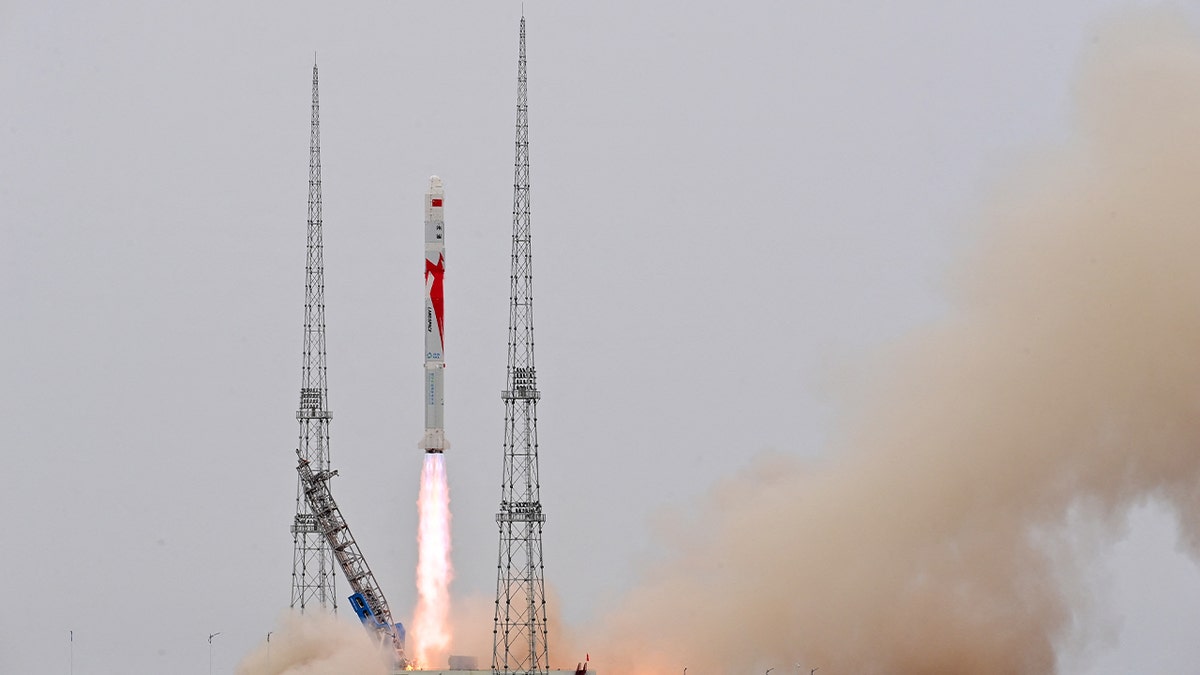
China’s rocket force has rapidly advanced. (CNS Photo via Reuters)
According to the assessment, China has likely loaded more than 100 solid-fueled DF-31 intercontinental ballistic missiles into silo fields near the Mongolian border. While the Pentagon had previously disclosed the existence of the silo fields, it had not publicly estimated how many missiles had been placed inside them.
China’s embassy in Washington did not immediately respond to a request for comment.
The report did not identify potential targets for the newly loaded missiles and could change before it is formally submitted to Congress, U.S. officials said.
CHINA’S ENERGY SIEGE OF TAIWAN COULD CRIPPLE US SUPPLY CHAINS, REPORT WARNS
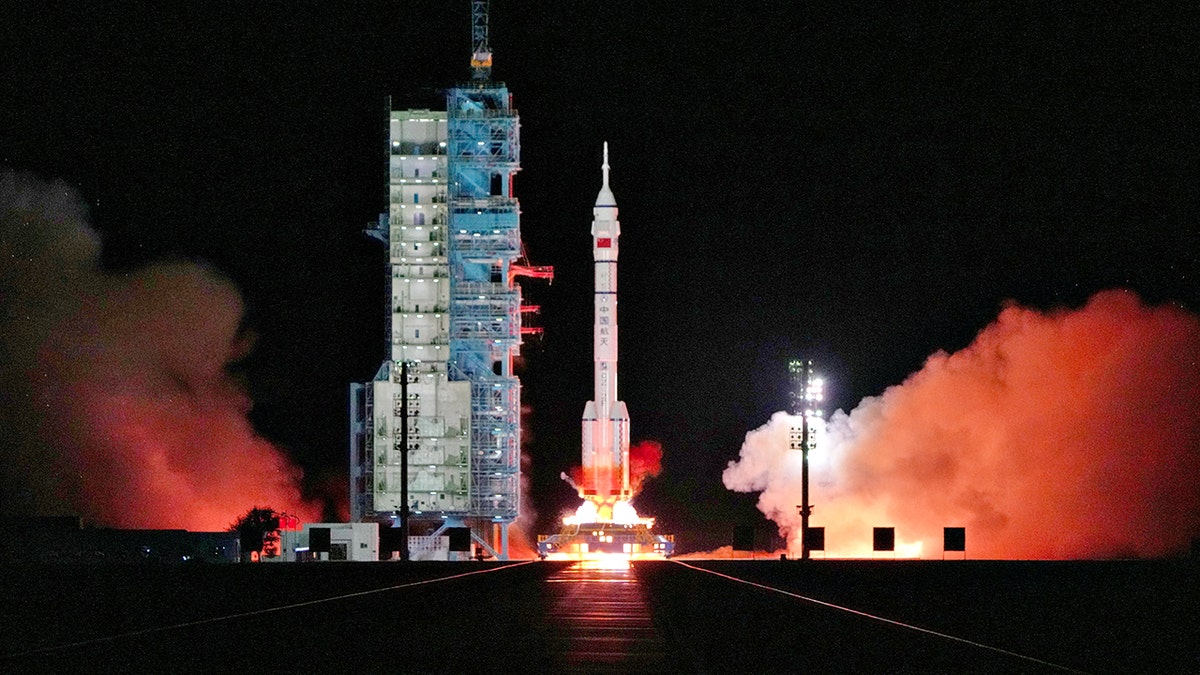
China’s Long March 2F rocket, carrying three astronauts for the Shenzhou 21 manned space mission, blasts off at the Jiuquan Satellite Launch Center in Jiuquan, northwestern China, Friday, Oct. 31, 2025. (AP Photo/Andy Wong) (Andy Wong/AP Photo)
China’s nuclear warhead stockpile remained in the low 600s in 2024, reflecting what the report described as a slower production rate compared to previous years. Still, Beijing is on track to exceed 1,000 nuclear warheads by 2030.
China says it adheres to a nuclear strategy of self-defense and maintains a no-first-use policy. But analysts say Beijing’s public messaging increasingly contradicts that restraint.
«For a country that still advocates a policy of ‘no-first use,’ China has become increasingly comfortable showcasing its nuclear arsenal, including parading its nuclear triad together for the first time in September,» said Jack Burnham, a senior research analyst in the China Program at the Foundation for Defense of Democracies.
TRUMP ORDERS US NUCLEAR WEAPONS TESTING TO BEGIN ‘IMMEDIATELY’ AFTER RUSSIA TESTS NEW MISSILES
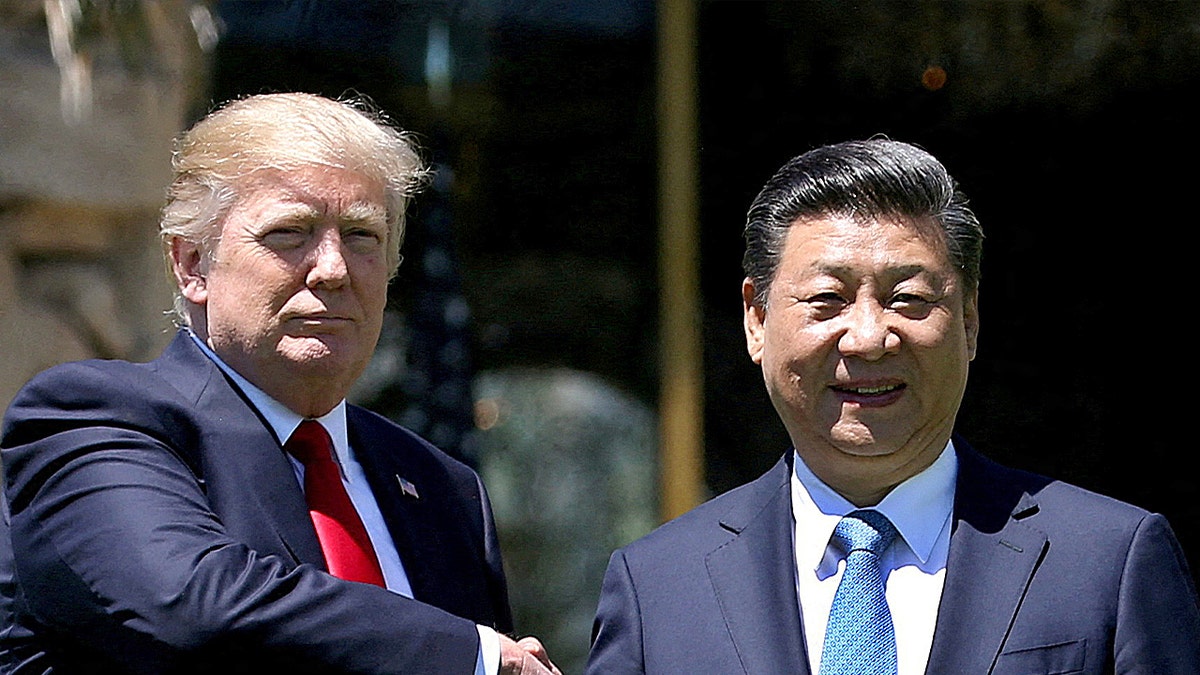
Trump and Xi will meet in South Korea for the first time in six years, on Oct. 30, 2025. (Carlos Barria/Reuters)
Burnham said Beijing’s rejection of arms control talks reflects the pace of its weapons construction. «China has no interest in locking in a long-term strategic disadvantage, and every intention of building an arsenal on par with its perceived place in the world, alongside and potentially eventually ahead of the United States,» he said.
The report also warned that China expects to be able to fight and win a war over Taiwan by the end of 2027. Beijing claims the self-governed island as its own territory and has never ruled out the use of force.
China is refining options to seize Taiwan by «brute force,» including long-range strikes up to 2,000 nautical miles from the mainland that could disrupt U.S. military operations in the Asia-Pacific, the report said.
The findings come as the 2010 New START treaty, the last remaining nuclear arms control agreement between the United States and Russia, approaches expiration. The treaty limits both sides to 1,550 deployed strategic nuclear warheads.
CLICK HERE TO DOWNLOAD THE FOX NEWS APP
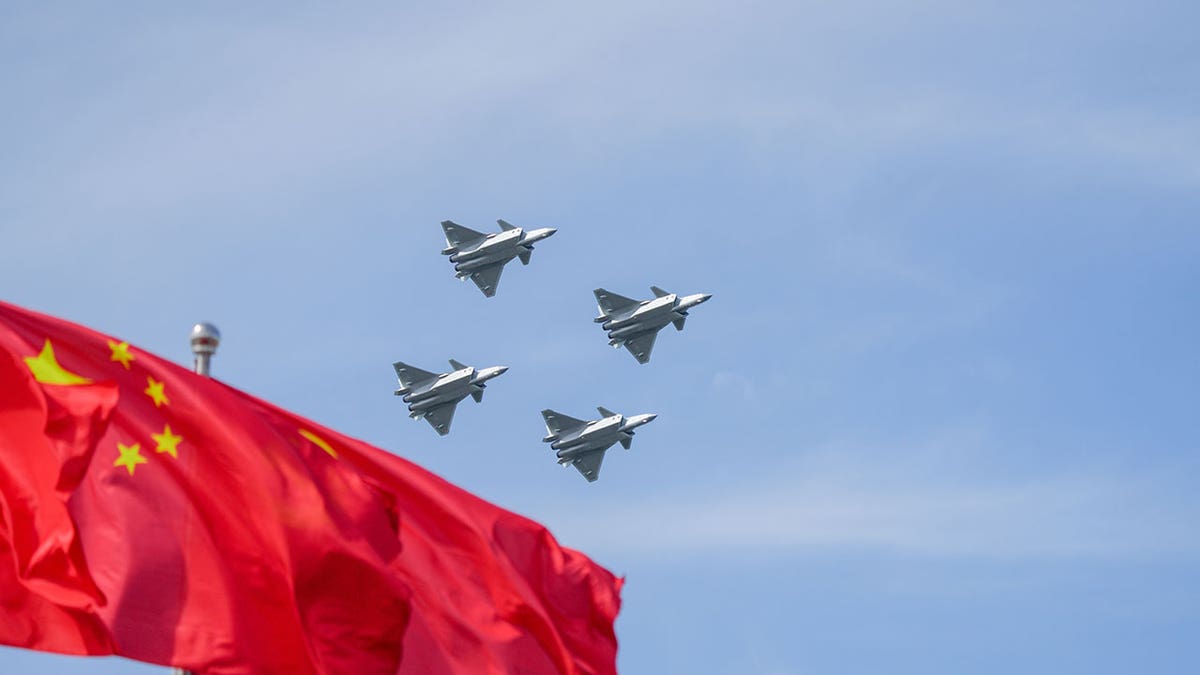
J-20 fighter jets fly in the sky during flight performance at the aviation open-day activities of the Chinese People’s Liberation Army Air Force (PLAAF) and the Changchun Air Show 2025 on Sept. 19, 2025 in Changchun, Jilin Province of China. The event will be held from Sept. 19 to 23 in Changchun. (VCG via Getty Images)
«What is surprising is that China has now loaded only about 100 of the silos it has built recently,» said Gordon Chang. «That’s an indication money is tight in the People’s Liberation Army.»
Chang warned against extending New START without Beijing’s participation. «This is no time for the U.S. to agree to an extension of the New START Treaty with Russia,» he said. «Russia and China are de-facto allies, and they are ganging up on America. Without China in a deal — Beijing has flatly rejected every nuclear arms-control initiative of the U.S. —no treaty can be in America’s interest.»
Reuters contributed to this report.
china,wars,donald trump,national security,taiwan





INTERNACIONAL
Estados Unidos anunció la destrucción de 16 embarcaciones iraníes utilizadas para minar el Estrecho de Ormuz

El Comando Central de Estados Unidos (CENTCOM) anunció este martes que fuerzas estadounidenses destruyeron 16 buques minadores iraníes cerca del Estrecho de Ormuz, en una operación militar que se produce en medio de informaciones de que Teherán está intentando desplegar explosivos navales en uno de los corredores energéticos más importantes del mundo.
Según informó el propio CENTCOM en una publicación difundida en redes sociales, la acción estuvo dirigida contra varias embarcaciones vinculadas con operaciones navales iraníes en la zona.
“Fuerzas estadounidenses eliminaron múltiples embarcaciones navales iraníes, el 10 de marzo, incluidos 16 buques minadores cerca del estrecho de Ormuz”, indicó el comando militar estadounidense.
El organismo acompañó su comunicado con un video en el que se observan ataques contra varias embarcaciones en el mar, seguidos de explosiones que destruyen los barcos. Las imágenes muestran proyectiles impactando contra los objetivos y columnas de humo elevándose desde los buques alcanzados.
El Estrecho de Ormuz conecta el Golfo Pérsico con el océano Índico y constituye uno de los puntos más sensibles del sistema energético global. Aproximadamente una quinta parte del petróleo que se consume en el planeta circula diariamente por esa estrecha vía marítima, utilizada por grandes productores de crudo de la región para exportar sus recursos a los mercados internacionales.
La posibilidad de que se coloquen minas en el área genera preocupación por el impacto que podría tener en la seguridad de la navegación y en el suministro energético mundial. Incluso interrupciones limitadas del tráfico en ese corredor pueden provocar efectos inmediatos en los precios del petróleo y en las cadenas logísticas internacionales.
Horas antes del anuncio del CENTCOM, el presidente de Estados Unidos, Donald Trump, había informado que el ejército estadounidense había destruido varias embarcaciones relacionadas con estas actividades. En un mensaje difundido en redes sociales, el mandatario aseguró que las fuerzas estadounidenses habían atacado y destruido diez barcos utilizados para colocar minas.
“Me complace informar de que, en las últimas horas, hemos atacado y destruido por completo diez buques o embarcaciones minadores inactivos. ¡Y seguirán otros!”, escribió Trump.
Trump también lanzó una advertencia a Irán sobre las consecuencias de desplegar minas navales en esa ruta estratégica.

“Si por cualquier motivo se colocaran minas y no se retiraran de inmediato, las consecuencias militares para Irán serán de un nivel jamás visto”, afirmó el presidente estadounidense.
En el mismo mensaje, el mandatario añadió que la retirada de cualquier artefacto explosivo que haya podido ser colocado sería interpretada como un gesto positivo.
“Si, por el contrario, retiran lo que hayan podido colocar, será un paso gigantesco en la dirección correcta”, señaló.
Además, Trump indicó que las fuerzas estadounidenses están preparadas para actuar contra cualquier embarcación que participe en operaciones de minado en el estrecho. Según explicó, los buques implicados serían atacados con el mismo tipo de misiles utilizados por Estados Unidos para interceptar embarcaciones del narcotráfico en otras regiones.
“Serán tratados de forma expedita y violenta. ¡CUIDADO!”, advirtió el presidente.
El anuncio sobre la destrucción de los buques minadores se produce en un contexto de guerra regional que ha elevado significativamente las tensiones en Medio Oriente durante las últimas semanas. Desde el inicio de las hostilidades, Irán ha lanzado ataques contra Israel y contra intereses estadounidenses en varios países de la región.

En paralelo, el tráfico marítimo en el Estrecho de Ormuz se ha reducido considerablemente ante el aumento de los riesgos para la navegación, mientras los gobiernos y las compañías navieras siguen de cerca la evolución de la situación en uno de los puntos más estratégicos del comercio global.
(Con información de AFP)
buque,barco,buque de mando,buque a motor,mar,vigilancia,militar,infrarrojo,térmico,nave
INTERNACIONAL
Entre los misiles de Irán y los ataques de Hezbollah: cómo se vive en el kibutz Hanita, el territorio israelí que limita con Líbano


NEWYou can now listen to Fox News articles!
Russia has turned to its so-called «shadow fleet» to carry out a roughly $29.3 million «semi-dark» ship-to-ship oil transfer in the Gulf of Oman, deliberately sidestepping Western sanctions, according to reports.
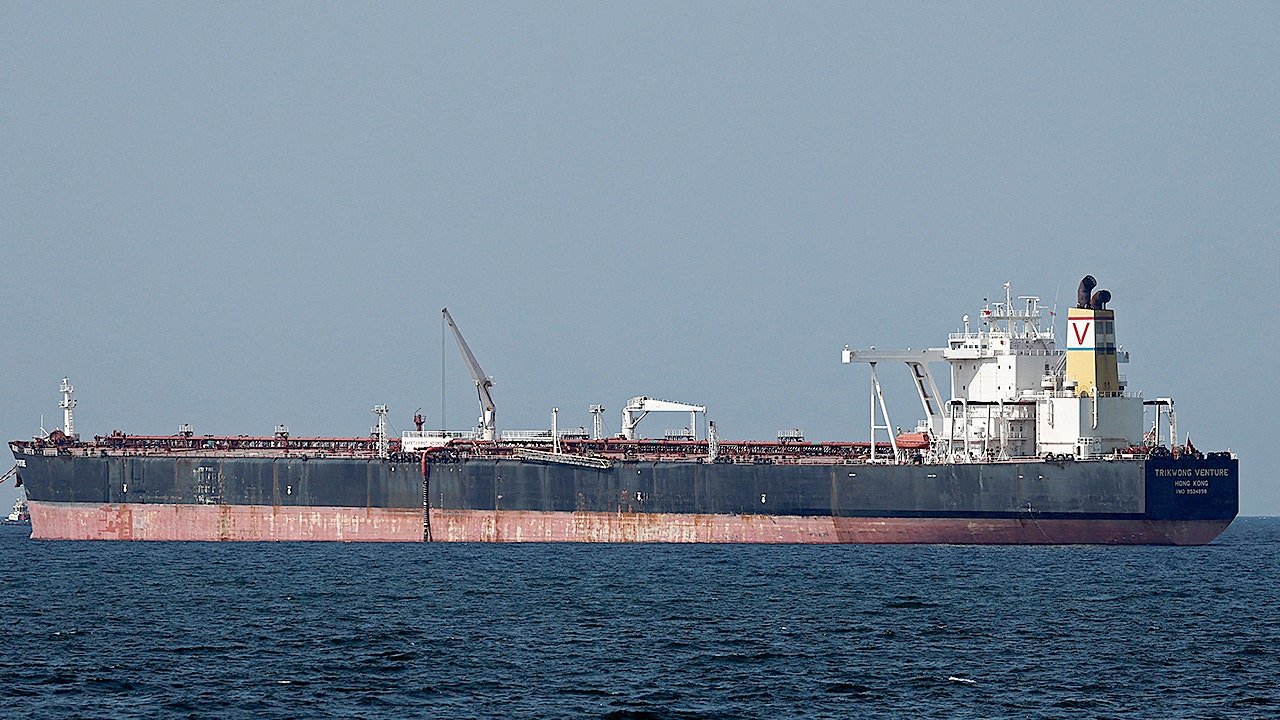
Maritime intelligence firm Windward AI reported on March 8 that the Russian-flagged tanker M/V TRUST, a vessel already blacklisted by the U.S., European Union and United Kingdom, carried out a «high-probability» covert crude transfer in Omani territorial waters.
Based on an estimated price of about $90 per barrel on March 10, the cargo involved in the transfer was valued at roughly $29.3 million.
«The timing of the operation coincided with heightened military escalation in the Gulf following Operation Epic Fury, suggesting the vessel exploited regional instability to conduct the transfer under reduced scrutiny,» Windward said.
HORMUZ ERUPTS: ATTACKS, GPS JAMMING, HOUTHI THREATS ROCK STRAIT AMID US-ISRAELI STRIKES
A crude oil tanker sits anchored in Muscat during the U.S.-Israeli conflict with Iran in Muscat, Oman, March 6, 2026. (Reuters/Benoit Tessier)
The tanker had previously loaded approximately 325,000 barrels of Russian crude oil at the Russian port of Ust-Luga, Windward said.
Windward described the operation as a «semi-dark» activity, meaning one of the vessels transmitted its automatic identification system (AIS) signal while the other did not.
According to the firm, the M/V TRUST had anchored and switched off its AIS transponder while holding what it called a «prolonged stationary meeting» with another tanker, likely producing an anonymous vessel to transfer cargo process.
TRUMP SAYS IT’S AN ‘HONOR’ TO KEEP STRAIT OF HORMUZ OPEN FOR CHINA AND OTHER COUNTRIES
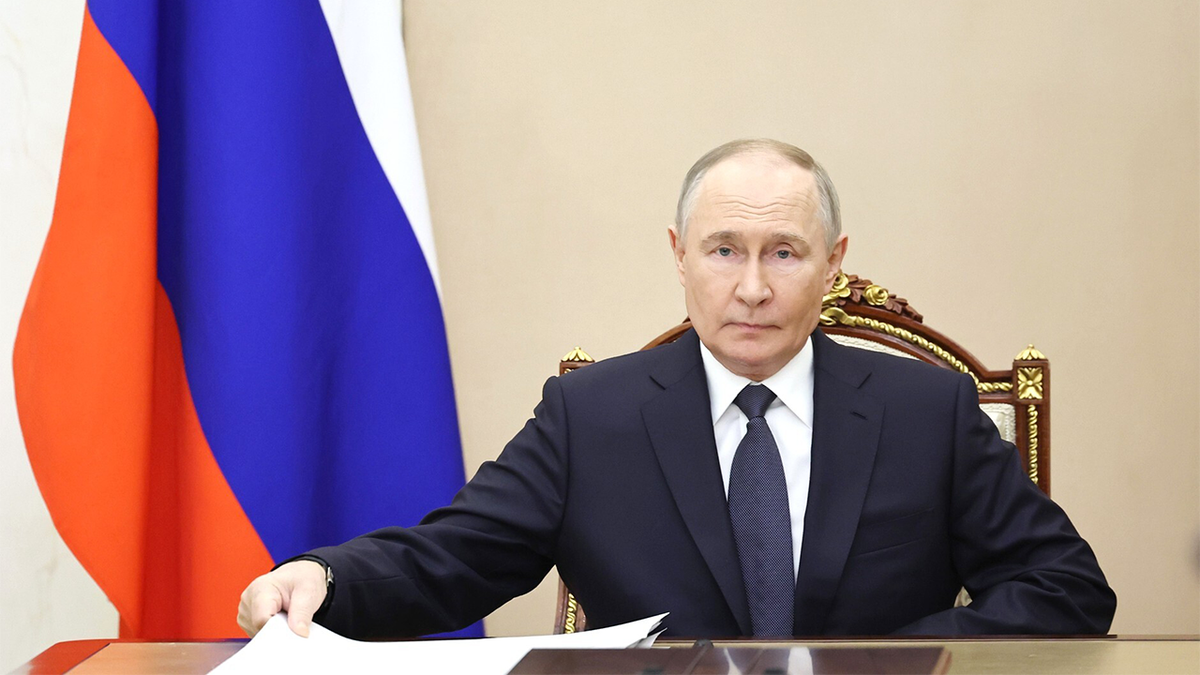
Russian President Vladimir Putin meets the Russian delegation and some officials ahead of the Istanbul talks May 14, 2025, in Moscow, Russia. (Kremlin Press Office/Handout/Anadolu via Getty Images)
A fully «dark» meeting, Windward said, typically involves two vessels not transmitting, but, in this case, only one ship appeared to be broadcasting, creating partial visibility that still complicates tracking efforts.
Such tactics are part of a broader strategy by Moscow to continue exporting crude despite sweeping Western sanctions imposed after Russia’s invasion of Ukraine.
The semi-dark oil transfer comes amid heightened volatility in global energy markets tied to the escalating conflict in the Middle East and limited traffic in the Strait of Hormuz given the joint U.S.-Israeli military action against Iran.
US SIGNALS READINESS TO ESCORT TANKERS THROUGH HORMUZ AS TRAFFIC THINS BUT NO MISSION LAUNCHED
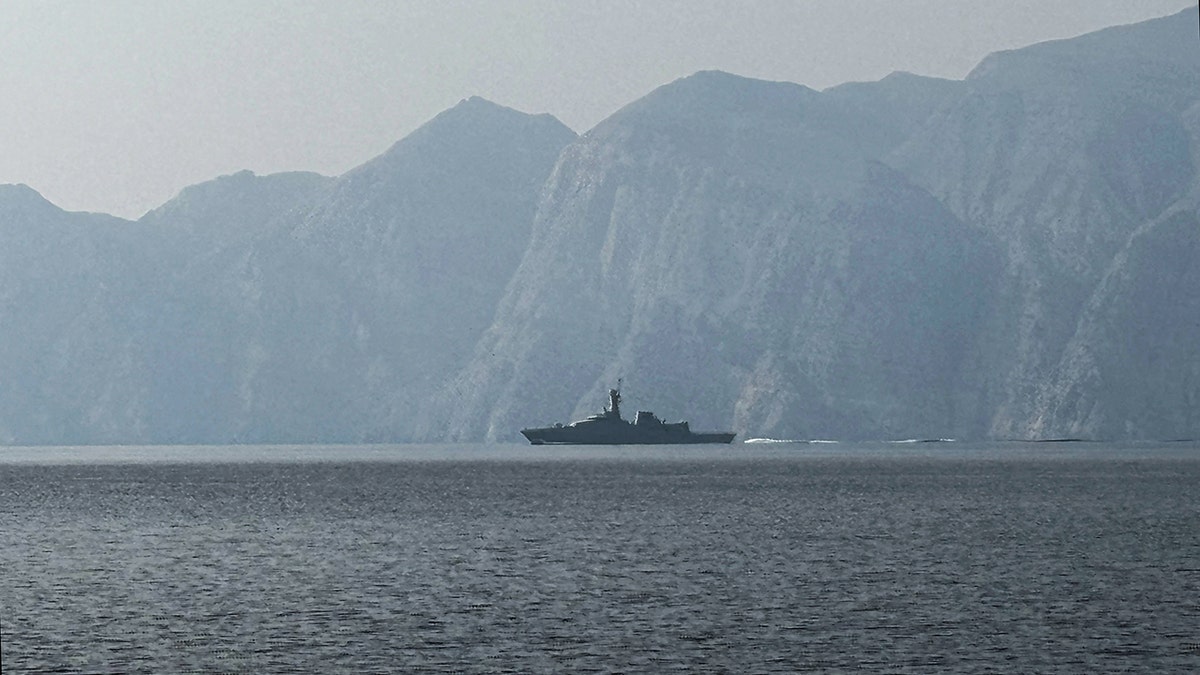
A navy vessel sails in the Strait of Hormuz, a vital waterway through which much of the world’s oil and gas passes, March 1, 2026. (Sahar Al Attar/AFP via Getty Images)
Oil topped $100 a barrel March 9 as traders priced in the risk that the conflict was disrupting flows through the Strait, which carries about a fifth of global supply, CNBC reported.
Russian President Vladimir Putin said on March 9 that Russia, the world’s second-largest oil exporter and holder of the largest natural gas reserves, stands ready to resume long-term energy cooperation with European customers if they choose to return, Reuters reported.
CLICK HERE TO DOWNLOAD THE FOX NEWS APP
Meanwhile, Secretary of War Pete Hegseth said Tuesday that Russia «should not be involved» in the escalating conflict between the U.S., Israel and Iran.
His comments followed reports suggesting Moscow may be providing intelligence support to Tehran, though the Kremlin has not publicly confirmed the claims.
On Russia’s ship-to-ship semi-dark cargo transfer amid the ongoing conflict, Windward highlighted «operational blind spots that enable illicit maritime activity to proceed largely uninterrupted.»
russia,vladimir putin,sanctions,iran,war with iran,middle east

Estados Unidos anunció la destrucción de 16 embarcaciones iraníes utilizadas para minar el Estrecho de Ormuz

Senado. Con la tropa propia y de aliados diezmada por viajes, Bullrich posterga las sesiones para la semana próxima

Vandalizaron en San Luis la entrada del estudio del senador Bartolomé Abdala: denunció complicidad del gobierno de Claudio Poggi

Qué enfermedades permiten acceder a la pensión por discapacidad y cuánto se cobra en marzo

Independiente empata contra Unión de Santa Fe en busca de ser escolta de la Zona A del Torneo Apertura

El baile de Javier Milei en una gala de la comunidad judía durante su visita a Estados Unidos

La cruda confesión de Amalia Granata por el trastorno que sufre su hijo Roque: “Le hicimos estudios y salió que tiene TDAH, dislexia y disgrafia”

Wanda Nara involucrada en la separación de su hijo Valentino: su ex nuera contó toda la verdad

«Crisis industrial masiva»: alarmante informe de la UBA se mete en la pelea de Milei con la UIA

El mercado le está corriendo el arco a Caputo y el riesgo país no baja: en la City palpitan medidas

 CHIMENTOS2 días ago
La cruda confesión de Amalia Granata por el trastorno que sufre su hijo Roque: “Le hicimos estudios y salió que tiene TDAH, dislexia y disgrafia”
- ECONOMIA2 días ago
El mercado le está corriendo el arco a Caputo y el riesgo país no baja: en la City palpitan medidas
- CHIMENTOS1 día ago
Jenny Mavinga angustiada tras una quemadura en Gran Hermano 2026: “¡Ay, me quemó!