INTERNACIONAL
China y Rusia escalan la presión militar en Asia con ejercicios conjuntos cerca de Japón

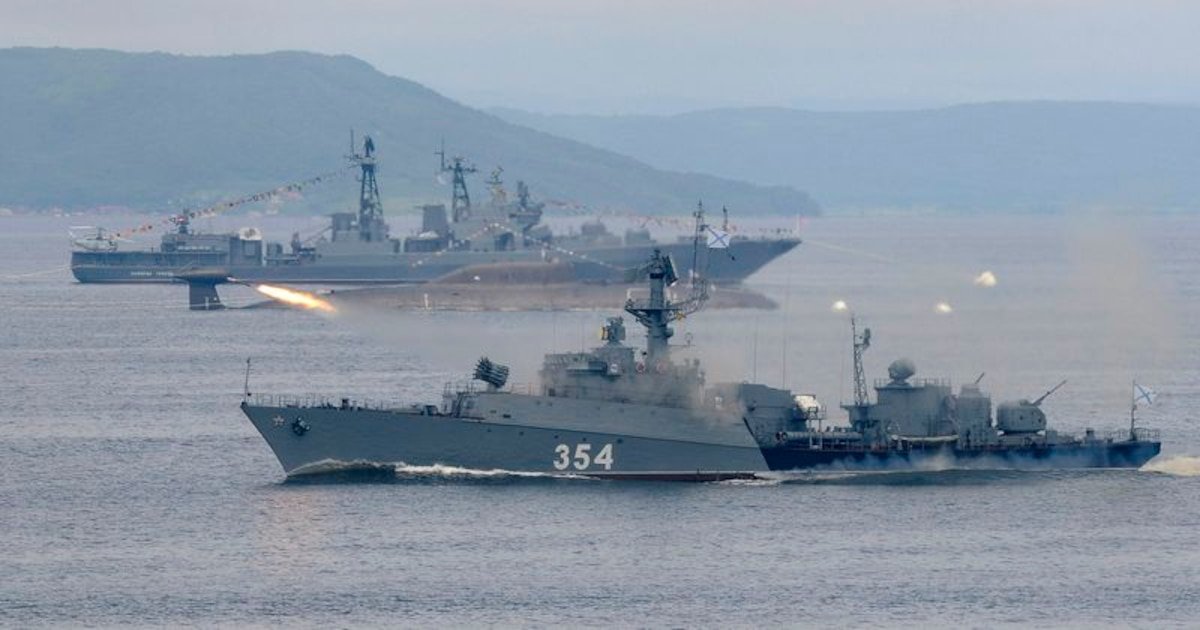
Las armadas de China y Rusia comenzaron recientemente una nueva ronda de ejercicios navales conjuntos en el Mar del Japón, una muestra explícita de su creciente alianza estratégica en un contexto global cada vez más tenso. Bajo la denominación Joint Sea‑2025, los ejercicios arrancaron cerca de Vladivostok el domingo y se extenderán durante al menos cinco días, según informó la agencia Interfax citando a la Flota del Pacífico rusa.
Las maniobras incluyen ejercicios de artillería y antisubmarinos, rescate de submarinos, operaciones conjuntas antisubmarinas, defensa aérea, antimisiles y combates marítimos simulados. Participan dos destructores chinos —entre ellos el Shaoxing y el Urumqi— junto con un gran buque antisubmarino ruso, submarinos diésel‑eléctricos y un buque de rescate submarino chino.
El Ministerio de Defensa chino explicó que el ejercicio busca la “profundización de la asociación estratégica integral” entre ambos países, y subrayó que no está dirigido contra ningún país tercero. Asimismo, recalcó que forma parte de su cooperación bilateral regular.
La elección del Mar del Japón (o mar del Este) como escenario no es casual. En su último informe anual, el Ministerio de Defensa de Japón advirtió que la creciente cooperación militar entre Beijing y Moscú representa una “seria preocupación de seguridad” para la región.
Este ejercicio naval se inscribe en una tradición iniciada en 2012 con los primeros Joint Sea, reforzada tras la firma del acuerdo bilateral poco antes de la invasión rusa a Ucrania en febrero de 2022. China se negó a condenar el ataque y rehusó acompañar las sanciones occidentales contra Rusia.

Aunque Beijing afirma actuar como un tercero neutral en el conflicto ucraniano, tanto Ucrania como sus aliados occidentales acusan a China de facilitar apoyo militar indirecto a Moscú, incluidas transferencias tecnológicas sensibles.
En otras ocasiones, estos ejercicios se llevaron a cabo en zonas cercanas a la costa sur de China. El traslado de los ejercicios al noroeste del Pacífico, en aguas del Mar del Japón (mar del Este), refleja una intención geopolítica más ambiciosa, elevando la visibilidad estratégica de la cooperación militar entre ambos países.
Según un análisis del Financial Times, el principal efecto de los ejercicios conjuntos reside en su valor simbólico: un mensaje de cohesión táctica entre dos potencias que, aunque no poseen una alianza militar formal, buscan proyectar coordinación frente a Occidente. No obstante, expertos como Alexander Gabuev, del Carnegie Russia Eurasia Center, advierten que estas maniobras “no deben interpretarse como señales de una alianza estructural”, sino como movimientos pragmáticos basados en intereses compartidos y desconfianza común hacia Washington
Este despliegue responde también a un contexto en el que EEUU fortaleció su presencia militar en Asia. Según Reuters, Washington posicionó dos submarinos nucleares en la región tras declaraciones provocadoras de Dmitri Medvédev, lo que generó escalada verbal entre Washington y Moscú.
La ausencia de una alianza formal entre China y Rusia no impide una colaboración frecuente en ejercicios militares, intercambio de inteligencia y cooperación tecnológica. Aun sin interoperabilidad completa, las maniobras sugieren que comparten intereses estratégicos puntuales.

(EPA/BIANCA DE MARCHI)
En la práctica, ambos gobiernos se apoyan mutuamente: Rusia obtiene respaldo económico y político frente al aislamiento europeo, mientras China proyecta un equilibrio de poder ante EEUU en el Indo‑Pacífico.
Mientras tanto, Japón y sus vecinos han fortalecido su defensa. Tokio realizó en junio de 2025 su primera prueba de misiles en territorio nacional desde la Segunda Guerra Mundial, como parte de una estrategia de disuasión frente a lo que su Ministerio de Defensa ha calificado como un deterioro del entorno de seguridad regional.
Además del ejercicio en el Mar del Japón, China y Rusia han realizado patrullajes aéreos conjuntos en zonas cercanas a Taiwán, operaciones en el Ártico y ejercicios en alta mar frente a Alaska en 2023, contrarrestando la presencia estadounidense.
Algunos expertos apuntan que lo relevante no es un pacto defensivo formal, sino la claridad de propósito. “No hay una estructura de mando conjunta”, afirma Alexander Gabuev al Financial Times, “pero existe una voluntad compartida de desafiar el orden global liderado por EEUU”.
Las repercusiones regionales son palpables. Gobiernos como Japón, Corea del Sur, Taiwán y Filipinas han intensificado la coordinación con Washington ante lo que consideran una nueva fase de competencia geoestratégica en el Indo‑Pacífico.
Las maniobras Joint Sea‑2025 no alteran por sí solas el equilibrio de poder en la región, pero refuerzan una tendencia preocupante para las democracias occidentales: la consolidación táctica entre dos regímenes autoritarios que buscan erosionar las normas internacionales vigentes y ampliar su margen de maniobra en zonas estratégicas. Para Estados Unidos y sus aliados, este tipo de ejercicios representa un desafío directo a la arquitectura de seguridad regional basada en reglas, cooperación multilateral y disuasión defensiva.
Defense,Middle East,GULF OF OMAN






INTERNACIONAL
Japón desplegará misiles tierra-aire cerca de Taiwán para reforzar su defensa ante la amenaza militar del régimen chino
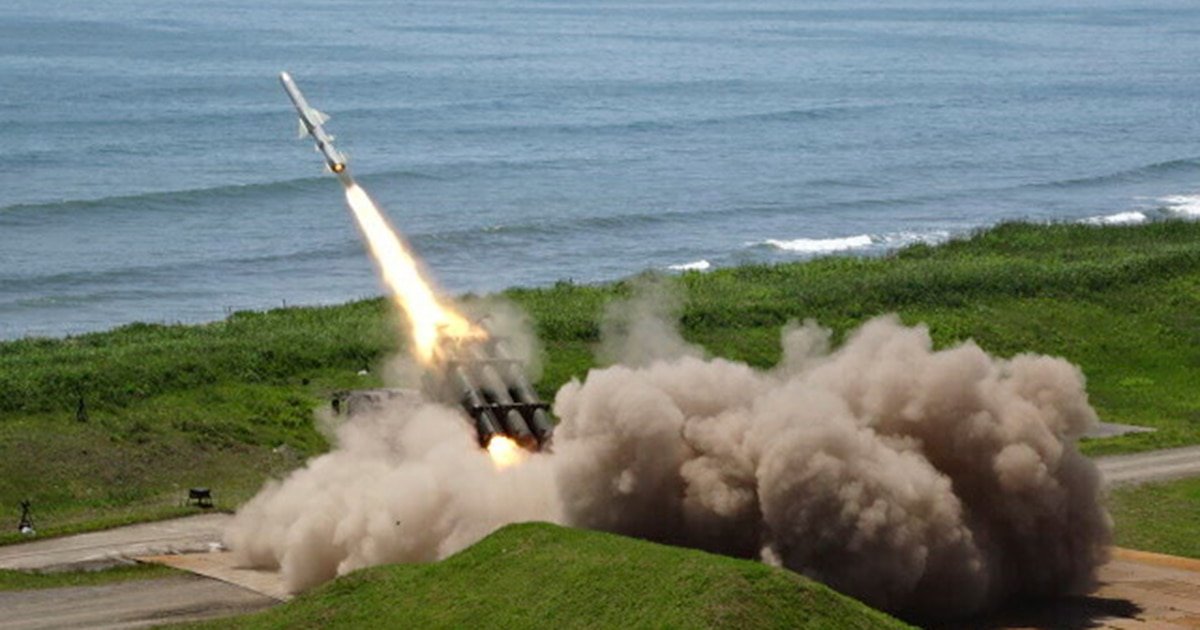
Japón desplegará misiles tierra-aire en la isla de Yonaguni antes de marzo de 2031, en la que será la posición militar nipona más próxima a Taiwán y un movimiento clave frente al incremento de la presión militar del régimen de China en Asia oriental.
El ministro de Defensa, Shinjiro Koizumi, confirmó que la instalación del sistema se llevará a cabo durante el año fiscal 2030, es decir, entre abril de 2030 y marzo de 2031, según el calendario oficial anunciado.
Yonaguni, ubicada a apenas 110 kilómetros de Taiwán, es la isla más occidental de Japón y forma parte del archipiélago Nansei. Actualmente ya alberga una base militar, pero será la primera vez que se desplegará allí una unidad de misiles guiados tierra-aire de medio alcance.
Según Koizumi, el objetivo es proporcionar una cobertura adicional frente a amenazas aéreas, en respuesta al aumento sostenido de la presencia militar china y a la preocupación por un posible conflicto en el estrecho de Taiwán, una de las zonas más sensibles del escenario geopolítico asiático.

El plan de despliegue fue anunciado originalmente en 2022, pero hasta ahora no se había divulgado el cronograma específico. Koizumi precisó que el gobierno llevará a cabo una sesión informativa para los residentes locales el 2 de marzo, en la que se explicarán los detalles del proyecto y las medidas de seguridad previstas.
El Ministerio de Defensa busca así minimizar la inquietud de la población de Yonaguni y garantizar la transparencia del proceso.
La determinación de Tokio se produce tras varios meses de creciente tensión diplomática y militar con Beijing. Esta semana, el régimen chino impuso nuevas restricciones de exportación a 40 empresas japonesas, incluidas firmas aeroespaciales y del sector defensa, acusándolas de contribuir al desarrollo del poderío militar nipón.
El ministro de Relaciones Exteriores chino, Wang Yi, manifestó que Japón pretende “reavivar el militarismo” y denunció los planes defensivos japoneses como una amenaza directa a la estabilidad regional.

La ubicación de Yonaguni es estratégica no solo por su proximidad a Taiwán, sino porque esta isla marca el extremo suroeste del territorio japonés, en una zona donde convergen intereses de China, Japón y Estados Unidos.
Taiwán, que funciona como territorio autónomo aunque China lo reclama como propio, se ha convertido en el epicentro de la rivalidad geopolítica en la región. Beijing no descarta la posibilidad de recurrir a la fuerza para recuperar la isla, lo que genera preocupación en Tokio por la posibilidad de un conflicto armado a escasa distancia de su territorio.
En noviembre pasado, la primera ministra japonesa, Sanae Takaichi, advirtió que Japón podría intervenir militarmente si China atacara Taiwán, lo que incrementó la tensión diplomática con el gobierno chino y dio lugar a nuevas represalias, como advertencias de viaje, restricciones comerciales y la inclusión de empresas japonesas en listas de control de exportaciones.
El despliegue de misiles forma parte de una estrategia más amplia impulsada por las Fuerzas de Autodefensa de Japón para reforzar la seguridad en el suroeste del país y disuadir cualquier avance militar chino.

En los últimos años, Japón ha incrementado la presencia de sus fuerzas en el archipiélago Nansei y ha estrechado la cooperación militar con Estados Unidos, realizando ejercicios conjuntos destinados a mejorar la capacidad de respuesta ante situaciones de crisis o agresión. Según el Ministerio de Defensa, estas maniobras buscan enviar una señal clara de disuasión a Beijing y contribuir a la estabilidad regional.
Las autoridades japonesas subrayan que el fortalecimiento de la defensa en Yonaguni responde exclusivamente a la necesidad de proteger la soberanía nacional y garantizar la paz en la región, aunque el gobierno chino sostiene que Tokio utiliza la situación en Taiwán como pretexto para expandir su arsenal y aumentar la tensión. Este cruce de acusaciones se produce en un contexto de maniobras militares chinas cerca de Taiwán, interceptaciones de aeronaves japonesas y ejercicios conjuntos entre China y Rusia en las inmediaciones de Okinawa.
(Con información de AFP y EFE)

NEWYou can now listen to Fox News articles!
Several Democratic lawmakers are hosting State of the Union guests who have come under scrutiny from the Department of Homeland Security, including suspected illegal immigrants, Dreamers and citizens arrested for allegedly obstructing federal immigration enforcement.
A Fox News correspondent received the list when inquiring with the agency about a tweet released earlier Tuesday that said some Democrats are «planning to bring illegal aliens as guests to the State of the Union.»
«Once again, they are putting illegal aliens above the safety of American citizens. Yesterday alone our officers arrested pedophiles, rapists, and violent criminals from our communities.
«President Trump and Secretary Noem have made it abundantly clear: if you come to our country illegally and break our laws, we will find you, we will arrest you, and you will never return,» the agency said in its tweet.
A Fox News Digital review of the list found guests with varied backgrounds and circumstances.
Rep. Ilhan Omar, D-Minn., is reportedly hosting Aliya Rahman, who was detained during an operation targeting Ecuadorian national Jonathan Chachipanta-Pualacin Jan. 13.
Members of Congress begin to arrive in the House Chamber before President Donald Trump delivers the State of the Union address at the U.S. Capitol in Washington, D.C., 24, 2026. (Andrew Caballero-Reynolds/AFP via Getty Images)
«ICE executed an arrest warrant to arrest an illegal alien with a final order of removal in the Park Avenue area of Minneapolis. ICE officers apprehended four illegal aliens,» a DHS spokesperson said.
«As officers carried out their law enforcement duties, a significant crowd surrounded them and began impeding law enforcement operations — a federal crime. One agitator ignored multiple commands by an officer to move her vehicle away from the scene. She was arrested for obstruction,» the spokesperson added.
DHS further disputed claims from outlets such as the CBC that reported Rahman was denied medical care after being pulled from her vehicle and detained.
DHS SLAMS DEMS FOR COMPLAINING ABOUT IMMIGRATION LAW: ‘IT IS QUITE LITERALLY THEIR JOB TO CHANGE IT’

Rep. Ilhan Omar, D-Minn., arrives for a town hall event in Minneapolis Jan. 27, 2026. (Angelina Katsanis/Bloomberg via Getty Images)
Another Omar guest, Mary Granlund, is a local school board chairwoman who has taken action since the detention of a 5-year-old at Columbia Heights School, according to a statement from Omar’s office.
Granlund works with a group of faculty members who are «conducting daily patrols, working to connect detained children and families with legal assistance and coordinating food deliveries for families too scared to leave their homes,» Omar’s office said.
A DHS spokesperson said ICE does not go into schools and instead targets child predators to protect those same children.
Rep. Jesus Garcia’s guest is Marimar Martinez, who DHS alleged was part of an «ambush» of federal officers in October and whom the agency labeled a «domestic terrorist.»
Martinez, who was reportedly armed and «has a history of doxxing federal agents,» «took defensive fire» from CBP and was later taken into FBI custody after a hospital stay.
When asked about the criticism, Garcia told Fox News Digital, «I invited Marimar Martinez to be my guest to the State of the Union because her own government almost murdered her and is now covering it up by smearing her and failing to hold Charles Exum and other agents accountable.
DHS SAYS ANTI-ICE AGITATORS HELPED CHILD RAPISTS, GANG MEMBERS EVADE DEPORTATION
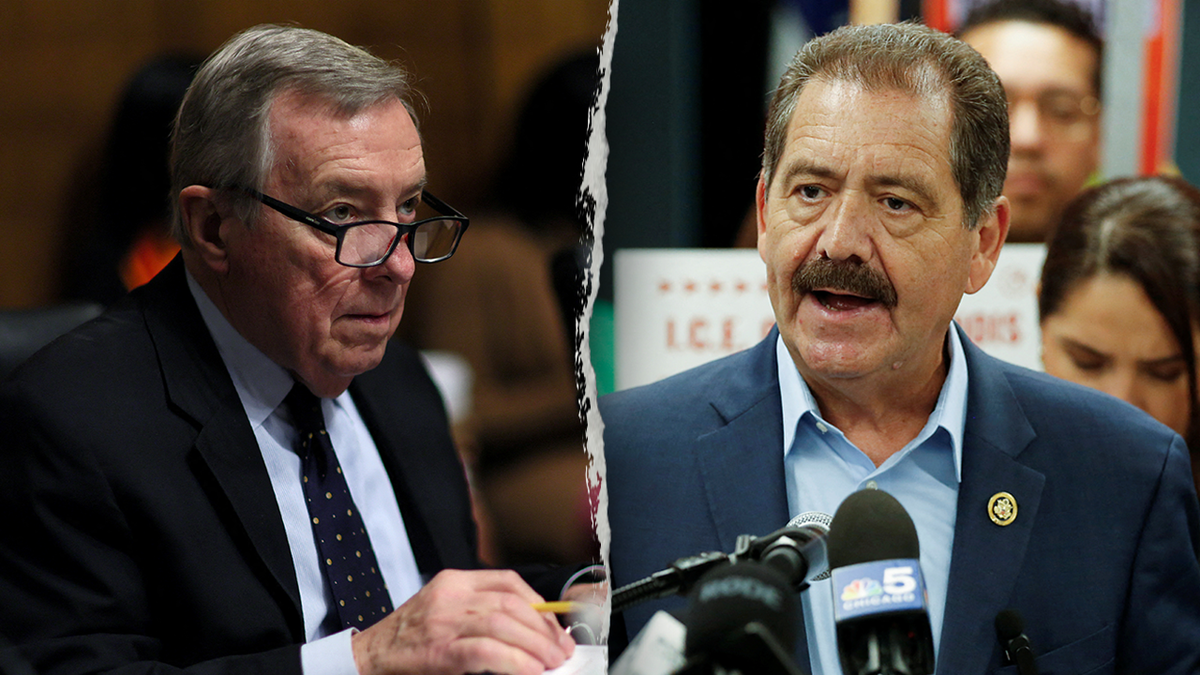
Sen. Richard Durbin, left, Rep. Jesus Garcia (Reuters)
«This is their playbook,» the Chicago lawmaker added. «I’m proud that Marimar is my guest. Her courage stands in stark contrast to the cowardice and brutality of DHS and the rest of this lawless Administration.»
In a prior statement, Garcia said that a Border Patrol agent «brutally shot Marimar and bragged about it, and the Trump administration wrongly called her a ‘domestic terrorist’.»
Sen. Richard Durbin, D-Ill., the forefather of the DREAM Act, invited Tereza Lee, a pianist and daughter of Korean immigrants whom Durbin said is the inspiration behind the legislation he has put forth in each Congress since 2001. The latest version was introduced in 2025 and co-sponsored by Sen. Lisa Murkowski, R-Alaska.
In a statement Monday, Durbin announced Lee’s invitation, crediting her «bravery for sharing her story» and adding that President Donald Trump’s «animus towards immigrants is on full display in his second term.»
DHS noted the DREAM Act would «allow noncitizens without legal status who were brought to the U.S. as children and meet certain education, military service or work requirements — to earn lawful permanent residence.»
Another Illinois lawmaker, Rep. Raja Krishnamoorthi, is inviting the daughter of a man detained by DHS during the height of Operation Midway Blitz.
DHS DEMANDS MN LEADERS HONOR ICE DETAINERS, ALLEGES HUNDREDS OF CRIMINAL ALIENS HAVE BEEN RELEASED UNDER WALZ
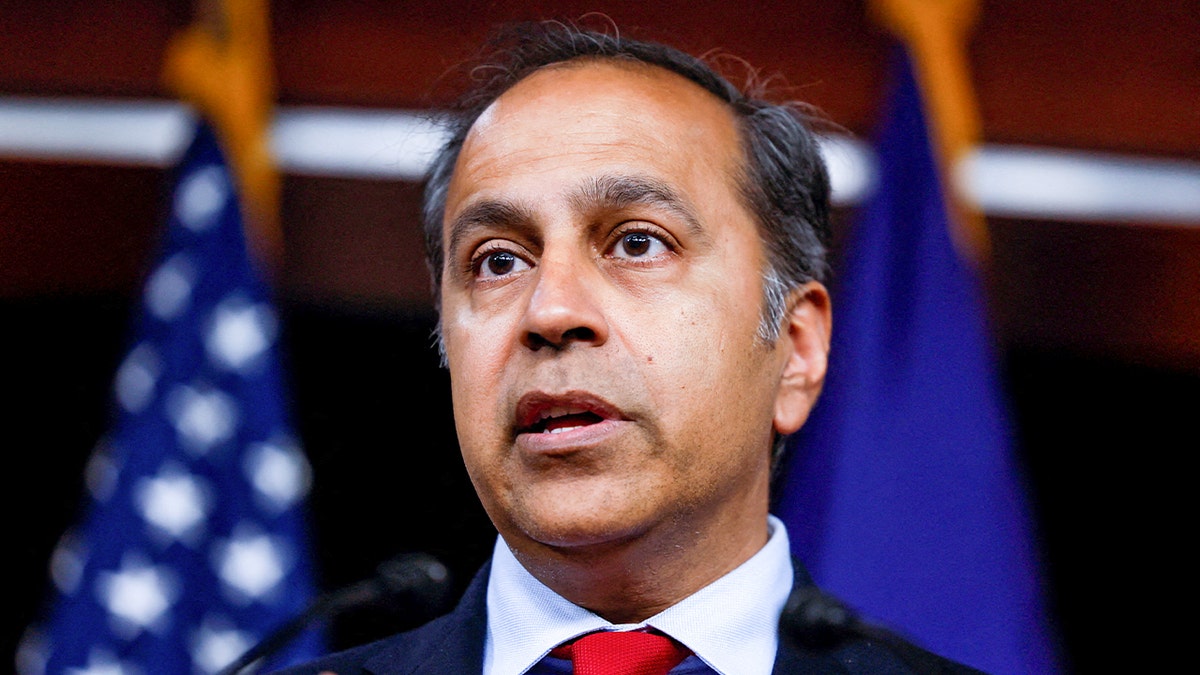
U.S. Rep. Raja Krishnamoorthi, D-Ill., answers questions during a news conference about the recent congressional delegation trip to the Indo-Pacific region on Capitol Hill in Washington, D.C., Aug. 10, 2022. (Reuters/Evelyn Hockstein/File Photo)
«Donald Trump can try to rewrite his record tonight, but communities across America are living with the consequences of militarized immigration operations that have terrorized families and left Americans dead,» Krishnamoorthi said in announcing that he invited University of Illinois Urbana-Champaign student Jamie to join him.
Rep. Seth Moulton, D-Mass., is inviting Marcelo Gomes da Silva, a man whom DHS said was detained in May 2024 while driving the car of his father, who was being sought by authorities.
Marcelo’s student visa had lapsed, and Assistant Secretary Tricia McLaughlin told Fox News that the «facts [of his case] haven’t changed.»
«[He] is still an illegal alien and subject to removal proceedings. The Trump administration is committed to restoring the rule of law and common sense to our immigration system and will continue to fight for the arrest, detention and removal of aliens who have no right to be in this country.»
Senate Minority Leader Charles Schumer, D-N.Y., is hosting a Venezuelan immigrant whose son was detained during a May 2025 immigration court hearing and is now being held in Pennsylvania.
«Dylan Josue Lopez Contreras is an illegal alien from Venezuela who illegally entered the U.S. more than one year ago. Under the Biden administration, he was encountered at the border and released into the country,» a DHS spokesperson countered.
NOEM SLAMS DEMS BLOCKING DHS FUNDING BILL CITING TSA, FEMA, COAST GUARD: ‘I HOPE THEY COME TO THEIR SENSES’
«On May 21, 2025, Contreras was arrested and placed in expedited removal proceedings. Most aliens who illegally entered the United States within the past two years are subject to expedited removals. [Joe] Biden ignored this legal fact and chose to release millions of illegal aliens, including violent criminals, into the country with a notice to appear before an immigration judge.
«ICE is now following the law and placing these illegal aliens in expedited removal, as they always should have been.»
Rep. Mike Levin, D-Calif., is hosting Stephanie Quintino, whose parents, Gladys and Nelson Gonzalez, have been deported to Colombia, according to the agency.
Sen. John Hickenlooper, D-Colo., is hosting Carolina Dias-Goncalves, a Dreamer at the University of Utah who was temporarily held at an ICE detention center after a Colorado traffic stop.
Rep. Robert Menendez Jr., D-N.J., is honoring Adriana Quiroz Zapata, an asylum seeker from Colombia who reports said fled a violent and «politically connected» former partner with his choice of guest.
Zapata’s niece, Monica Van Housen, who has been working to prevent Zapata from being deported, will be joining Menendez in the chamber.
CLICK HERE TO DOWNLOAD THE FOX NEWS APP
«Adriana, Monica and their family deserve so much better from America than what Donald Trump, Kristi Noem, and ICE have subjected them to,» Menendez told the New Jersey Globe.
Fox News Digital reached out to each member mentioned by DHS for comment.
Related Article

homeland security,state of the union,ilhan omar,democrats,illegal immigrants
INTERNACIONAL
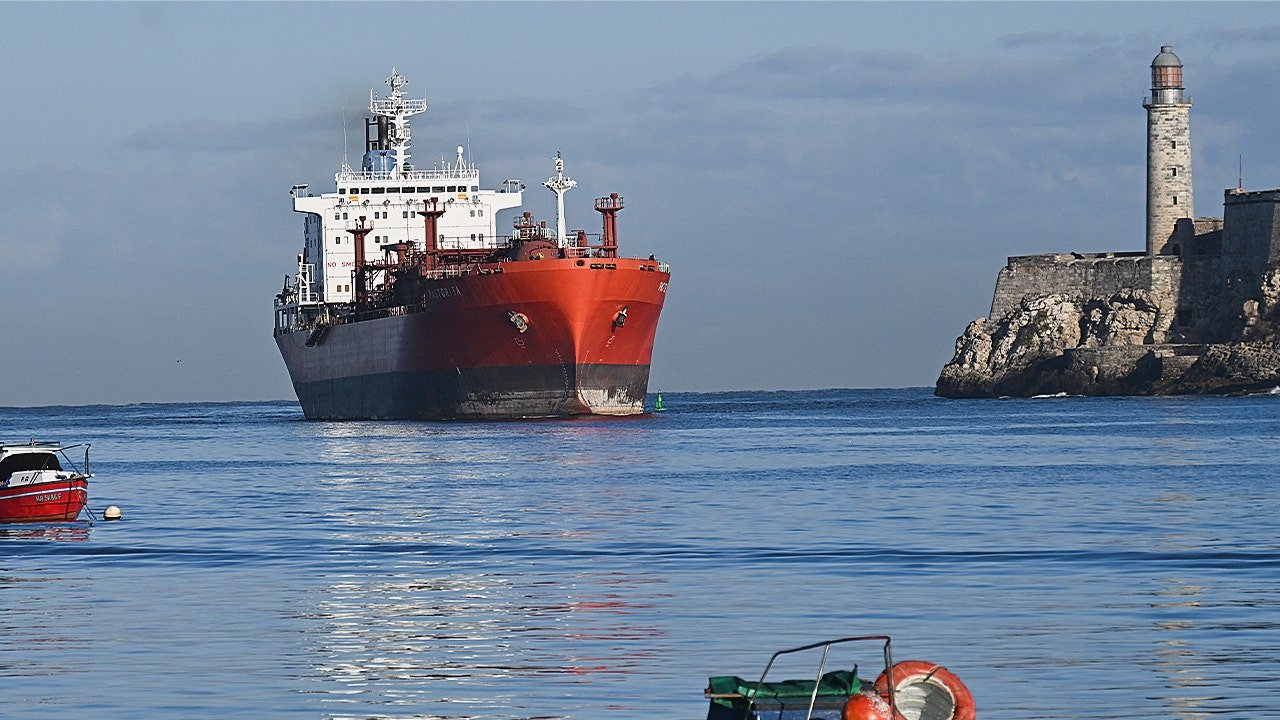
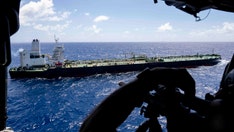
Russian ‘dark fleet’ tanker believed to be delivering oil to Cuba, detected off US coast amid Trump ban
NEWYou can now listen to Fox News articles!
A tanker allegedly carrying Russian fuel en route to Cuba is using deceptive «dark fleet» tactics, including signal manipulation and offshore ship-to-ship transfers, according to maritime intelligence firm Windward.
According to MarineTraffic, the vessel, called Sea Horse, was located Tuesday on the U.S. East Coast with its signal, noted as «roaming.»
The move comes as the U.S. pressured Cuba’s fuel supplies, disrupting deliveries and targeting third-party countries that provide oil, following new sanctions and the detention of Venezuelan leader Nicolás Maduro.
On Jan. 29, President Donald Trump also signed an executive order declaring a national emergency with respect to Cuba and authorizing tariffs on imports from countries that sell or supply oil there.
Windward reported that the Russian oil tanker initially broadcast Havana as its destination on Feb. 7, and was «Hong Kong-flagged» before quietly changing tack. Windward said the tanker had an expected arrival in Cuba in early March.
The Gabon-flagged crude oil tanker NS Concord at the Port of Matanzas in Matanzas, Cuba, on Saturday, March 30, 2024. (Yander Zamora/Bloomberg via Getty Images)
The vessel altered its Automatic Identification System (AIS) signal to show it would arrive in the «Caribbean Sea» within two weeks — a vague designation the firm said is often used to hide a ship’s final port of call.
The destination was later switched again to Gibraltar for orders, even after the tanker had already transited the strait, a move Windward described as inconsistent with standard commercial routing.
Windward’s analysis also suggests the vessel loaded its cargo through a ship-to-ship (STS) transfer conducted offshore near Cyprus.
RUSSIAN OIL TANKER ‘THE GRINCH’ INTERCEPTED AS US, ALLIES ESCALATE SANCTIONS CRACKDOWN
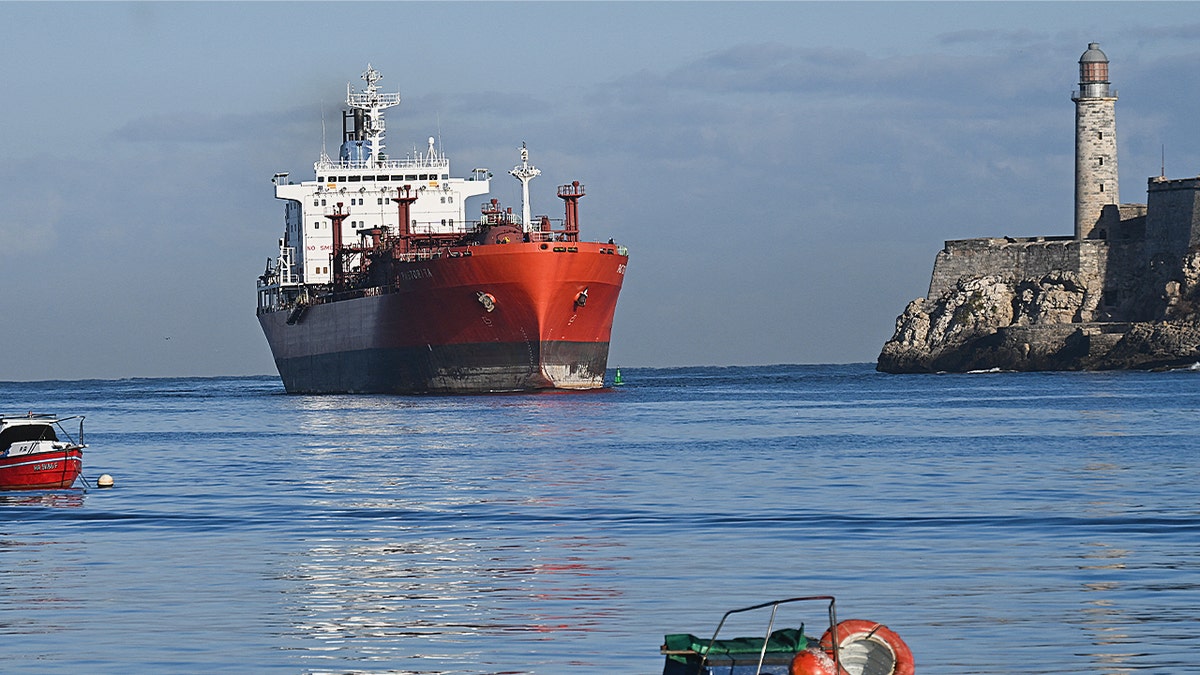
A tanker sailing under the flag of Cuba, arrives at the port of Havana on Feb. 9. (Yamil Lage / AFP via Getty Images)
During the loading process, the tanker’s AIS signal was temporarily switched off — «a tactic of deceptive maritime operations designed to avoid regulatory scrutiny,» Windward said.
Windward data also shows the vessel’s draft increased on Feb. 8, several days after leaving an area used for floating storage and transshipment of Russian middle distillate cargoes originating from Black Sea ports.
The tanker had loitered in that zone for roughly two weeks before departing, Windward said.
«Ship-to-ship transfers outside territorial waters, where port-state oversight is limited, have become a common practice in oil trade to circumvent sanctions and regulatory scrutiny,» Windward noted.
‘IRREGULAR’ ARMED GUARDS ABOARD RUSSIAN SHADOW TANKERS ALARM NORDIC-BALTIC GOVERNMENTS
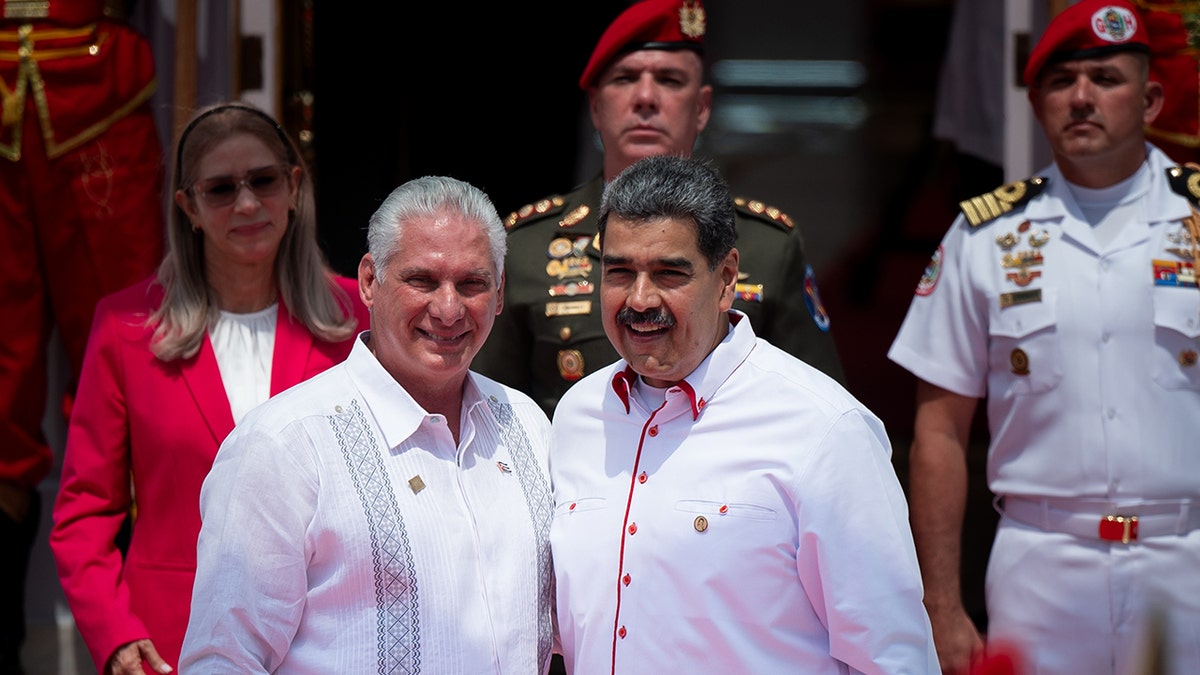
Venezuelan President Nicolás Maduro, right, with Cuban President Miguel Diaz-Canel in 2024. (Gaby Oraa/Bloomberg via Getty Images)
The company added that AIS manipulation, offshore transfers and ambiguous destination reporting are now standard features of shadow-fleet activity sustaining Russian oil exports despite any U.S. sanctions.
CLICK HERE TO DOWNLOAD THE FOX NEWS APP
Cuba is also facing an energy crisis that has worsened in recent weeks after oil shipments from Venezuela, its primary supplier, were halted following U.S. action in early January.
Mexico, another major supplier, also suspended oil shipments, according to The Associated Press.
Related Article
cuba,world,russia,sanctions,donald trump,world politics,venezuelan political crisis

Japón desplegará misiles tierra-aire cerca de Taiwán para reforzar su defensa ante la amenaza militar del régimen chino

Aumento de sueldo de empleada doméstica: cuánto cobran por día y mes en febrero y marzo 2026

Infantino bancó la sede de México para el Mundial, pese al estallido

Dems tap ICE detainees, suspected illegal immigrants as guests for Trump’s speech: DHS

El Gobierno limita su ofensiva al plano judicial y no sale a confrontar con la AFA por el paro del fútbol

Julián López, ministro de Justicia de Córdoba: “Celebramos la media sanción de la ley de baja de edad de imputabilidad”

Villarruel cuestionó la apertura de importaciones: «Sin industria, se pasa a depender de China»

“Ahora es la hora de jugarse”: el mensaje de Patricia Bullrich a los empresarios tras aprobarse la reforma laboral

Según un especialista, el precio de la carne se mantendrá alto “entre dos y tres años”

Cómo será el tratamiento de la reforma laboral en el Senado, luego de haber obtenido la media sanción en Diputados

 POLITICA1 día ago
“Nos hacemos cargo”: Patricia Bullrich admitió un error del Gobierno en la inclusión del artículo de las licencias médicas
- POLITICA1 día ago
Daiana Fernández Molero defendió la reforma laboral: “Va a haber mayor creación de empleo porque va a ser más fácil contratar en blanco”
- CHIMENTOS3 días ago
¡Llora Wanda Nara! Anunciaron el casamiento de Mauro Icardi y la China Suárez: “Un súper anillo”, anticipó la tarotista Jimena La Torre sobre el futuro de la pareja