INTERNACIONAL
China’s global aggression check: Taiwan tensions, military posturing and US response in 2025

China, Russia condemn US pressure on Venezuela
Former CIA station chief Dan Hoffman joins ‘Fox News Live’ reacting to China and Russia’s public condemnation of U.S. military pressure against Venezuela as oil tanker blockades continue to impact their economies.
NEWYou can now listen to Fox News articles!
As 2025 ends, tensions between China and Taiwan are higher — and more overt — than at any point in recent years, fueled by expanded U.S. military support for Taipei, increasingly bold warnings from regional allies, and Chinese military drills that look less like symbolism and more like rehearsal.
Beijing has spent the year steadily increasing pressure on Taiwan through large-scale military exercises, air and naval incursions, and pointed political messaging, while Washington and its allies have responded with sharper deterrence signals that China now openly labels as interference.
The result is a more volatile status quo — one where the risk of miscalculation has grown, even as most analysts stop short of predicting an imminent Chinese invasion.
A year of escalating pressure
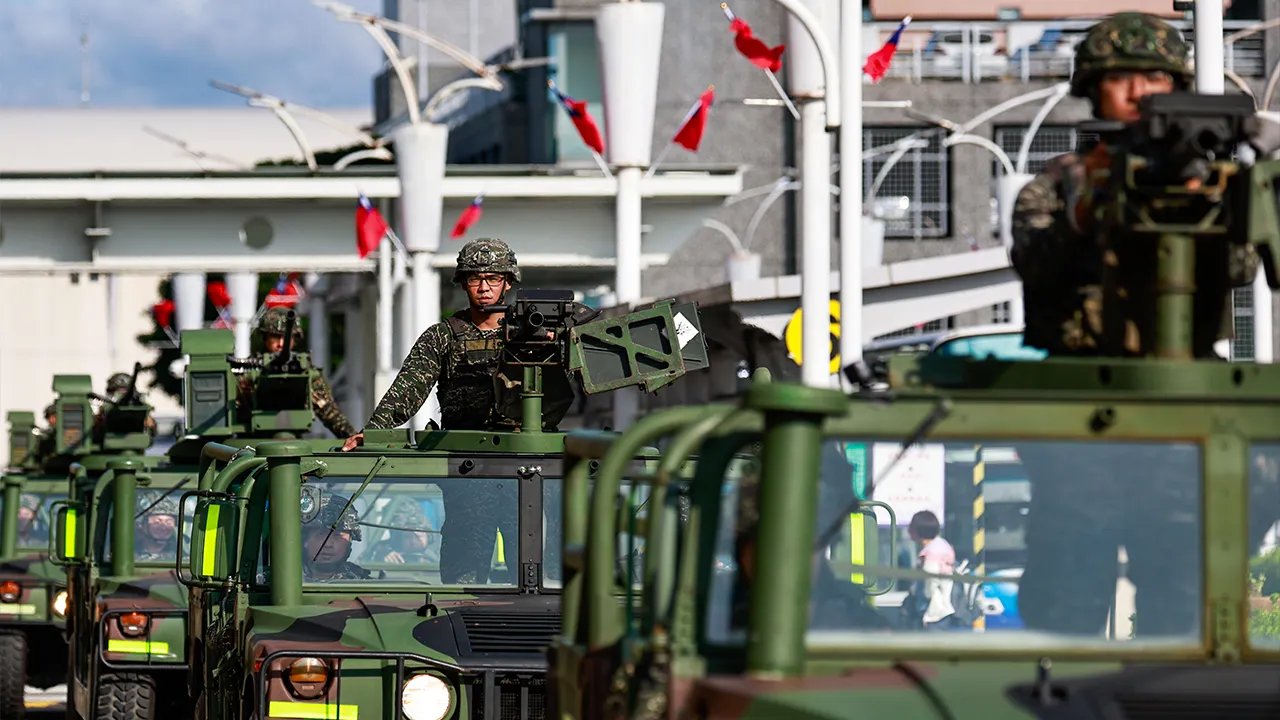
China capped off 2025 with what it described as its largest Taiwan-focused military exercises to date, launching expansive drills in December that included live-fire elements and simulated island encirclement operations.
As 2025 draws to a close, tensions between China and Taiwan are higher — and more overt — than at any point in recent years. (Daniel Ceng/Anadolu via Getty Images)
The exercises followed a familiar pattern seen throughout the year: People’s Liberation Army aircraft and ships operating closer to Taiwan with greater frequency, reinforcing Beijing’s claim of sovereignty while testing Taipei’s response capacity.
Unlike earlier shows of force, the late-year drills were widely interpreted as practice for coercive scenarios short of outright war — particularly a blockade or quarantine designed to strangle Taiwan economically and politically without triggering immediate global conflict.
Chinese officials explicitly tied the escalation to Washington’s actions, pointing to a massive U.S. arms package approved in December — valued at roughly $11 billion and described as one of the largest such sales to Taiwan in years — as proof of what Beijing calls «foreign interference.»
XI JINPING HAILS ‘UNSTOPPABLE’ CHINA AS TRUMP ACCUSES BEIJING OF CONSPIRING AGAINST US
Chinese officials have been unusually blunt in their response.
«Any external forces that attempt to intervene in the Taiwan issue or interfere in China’s internal affairs will surely smash their heads bloody against the iron walls of the Chinese People’s Liberation Army,» China’s Taiwan Affairs Office said in a Monday statement.
The arms package continued the U.S. push to strengthen Taiwan’s asymmetric defenses, including missiles, drones and systems designed to complicate a Chinese assault rather than match Beijing weapon-for-weapon.
Taipei welcomed the support but remained cautious in its public response, emphasizing restraint while warning that Chinese military pressure has become routine rather than exceptional.
Japan steps into the frame
One of the most consequential shifts in 2025 came not from Washington or Taipei, Taiwan, but from Tokyo.
In November, Japanese Prime Minister Sanae Takaichi made unusually direct remarks linking a potential Taiwan contingency to Japan’s own security, suggesting that an attack on Taiwan could trigger collective self-defense considerations under Japanese law.
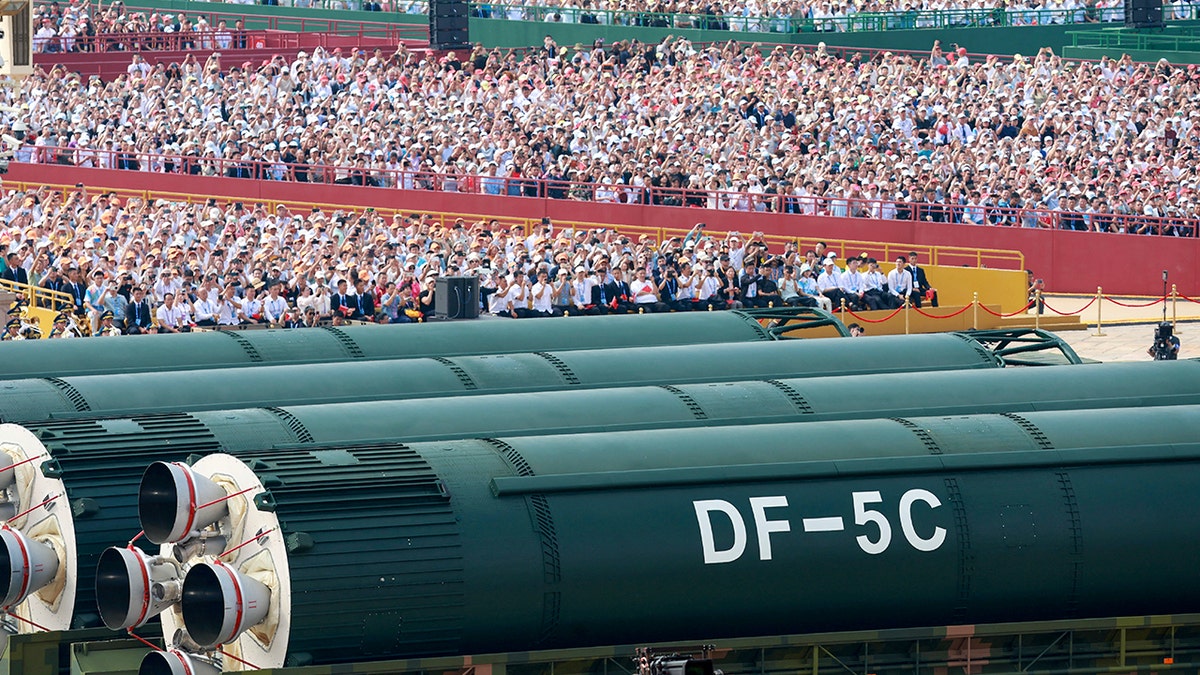
China shows off DF-5C intercontinental strategic nuclear missiles are showcased at a military parade to mark the 80th anniversary of the end of World War Two, in Beijing. (China Daily via Reuters)
The comments marked one of the clearest acknowledgments yet from a sitting Japanese leader that a Taiwan conflict would not remain a bilateral issue between Beijing and Taipei.
China reacted angrily, accusing Japan of abandoning its post-war restraint and aligning itself with U.S. efforts to contain Beijing. The rhetoric underscored a growing Chinese concern: that any move on Taiwan would draw in a widening coalition of U.S. allies.
That concern has also been reinforced by U.S. treaty commitments to the Philippines, where Chinese and Philippine vessels clashed repeatedly in the South China Sea throughout the year, raising fears of a multifront crisis.
Washington’s deterrence gamble
For the United States, 2025 was defined by a balancing act — reinforcing Taiwan without triggering the very conflict Washington seeks to prevent.
In addition to the December arms package, U.S. officials repeatedly reaffirmed that peace and stability in the Taiwan Strait are vital U.S. interests, while avoiding any explicit shift away from long-standing strategic ambiguity.
The Pentagon’s annual report on China, released late in 2025, reiterated that U.S. defense assessments see the Chinese military developing capabilities that could enable it to fight and win a war over Taiwan by 2027 — a benchmark that has increasingly shaped U.S. and allied planning.
U.S. officials, however, have also cautioned that military readiness does not equal intent, warning against treating exercises or procurement timelines as a countdown clock to war.
Is an invasion coming?
The question hanging over the region — and Washington — is whether China is moving closer to launching a full-scale invasion of Taiwan.
The evidence cuts both ways.
On one hand, the scale and sophistication of Chinese military activity around Taiwan has grown noticeably, with drills emphasizing joint operations, rapid mobilization and isolation of the island. Beijing’s rhetoric has also hardened, portraying reunification as increasingly urgent and framing U.S. involvement as an existential threat.
On the other hand, an amphibious invasion of Taiwan would be among the most complex military operations in modern history, carrying enormous political, economic and military risks for China — whose armed forces have not fought a major war since its 1979 invasion of Vietnam.
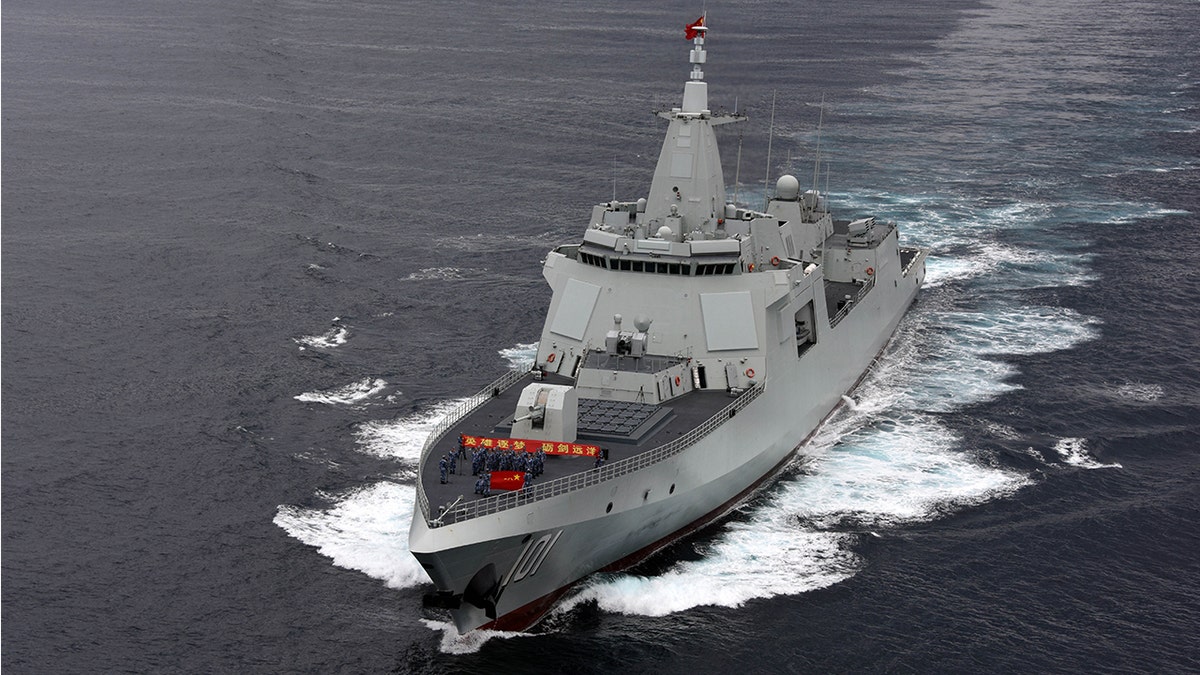
China’s type 055 guided-missile destroyer Nanchang sails during a naval exercise. (Sun Zifa/China News Service via Getty Images)
US COULD BURN THROUGH KEY MISSILES IN ‘A WEEK’ IF WAR WITH CHINA ERUPTS, TOP SECURITY EXPERT WARNS
Many defense analysts argue that Beijing has strong incentives to continue applying pressure through gray-zone tactics — cyber operations, economic coercion, legal warfare and military intimidation — rather than crossing the threshold into open war.
The December drills reinforced that view, highlighting blockade-style scenarios that could test Taiwan and its partners without immediately triggering a shooting war.
The road ahead
As 2026 approaches, the Taiwan Strait remains a flashpoint where deterrence and coercion are colliding more frequently and more visibly.
The most widely held assessment among U.S. and regional officials is that while the risk of conflict is rising — particularly as China approaches its 2027 military readiness goals — an invasion is not yet the most likely near-term outcome.
CLICK HERE TO DOWNLOAD THE FOX NEWS APP
Instead, the danger lies in sustained pressure, miscalculation and crisis escalation, especially as more actors — from Japan to the Philippines — become directly implicated in the Taiwan equation.
For now, 2025 ends with no shots fired across the Taiwan Strait — but with fewer illusions about how close the region may be to its most serious test in decades.
china,taiwan,conflicts defense,pacific










INTERNACIONAL
El secreto peor guardado de Vladimir Putin en Ucrania tras cuatro años de invasión rusa
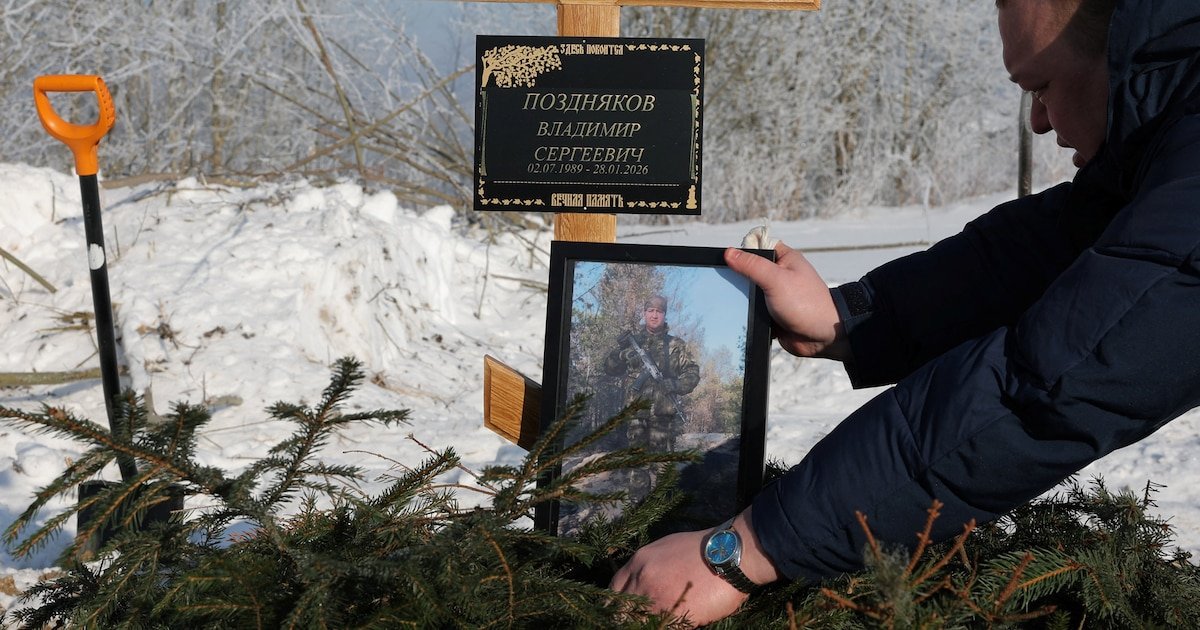
El Ejército ruso ha perdido más de 300.000 hombres en los cuatro años de guerra en Ucrania, según fuentes independientes. Aunque las bajas rusas son un secreto a voces, el Kremlin mantiene silencio para no instigar aún más el creciente descontento entre los rusos con la campaña militar.
La última vez que el Ministerio de Defensa ruso informó sobre muertos en acción –Cargo 200– fue en septiembre de 2022 -cuando los situó en 5.937-, justo antes de la movilización de reservistas que provocó el exilio de más de un millón de hombres en edad militar.
Fuentes occidentales, desde la OTAN a la inteligencia estadounidense y británica, estiman en un millar las bajas diarias en las filas rusas y en más de 30.000 las pérdidas mensuales. Además, enero sería el primer mes en el que el Ejército ruso no puede reponer las bajas con voluntarios.
Los militares rusos caídos se llaman Cargo 200 desde la guerra de Afganistán (1979-1989). Entonces, el talón que acompañaba al cargo ponía 200, ya que ese era el peso máximo del féretro de zinc permitido por el Ministerio de Defensa de la Unión Soviética.
El conocido bloguero militar Yuri Podoliak, que ha sido invitado a recepciones en el Kremlin, fue el que rompió la baraja al abordar en enero en YouTube el sensible tema del Cargo 200.

Podoliak admitió que el Ejército ruso podría haber perdido hasta 415.000 hombres entre soldados, voluntarios y antiguos presidiarios reclutados por el grupo Wagner.
Además, situó las bajas totales en más de 800.000 de los más de dos millones de rusos que han participado en la conocida como ‘operación militar especial’. Ese número de pérdidas humanas contrasta con las conquistas territoriales: apenas un 12% del territorio ucraniano desde el 24 de febrero de 2022.
Según los expertos occidentales, ningún país ha sufrido tantas bajas en un conflicto desde el fin de la Segunda Guerra Mundial en 1945. De hecho, las tropas rusas han sufrido más bajas en estos cuatro años que en todos los conflictos anteriores desde la contienda mundial, lo que incluye las dos sangrientas guerras chechenas.
El portal independiente Mediazona, en colaboración con Meduza y la BBC, cifra los combatientes rusos muertos e identificados con nombres y apellidos en más de 168.000.
A esta cifra hay que sumar los muertos aún no identificados, pero incluidos, entre otros, en los certificados de defunción y hereditarios de acceso público, datos de servicios funerarios o denuncias de desaparición. De hecho, Mediazona admite que, según sus cálculos aproximados, esa cifra rondaría ya los 300.000, a falta de los datos de este año.

En los primeros meses la mayoría de muertos eran soldados profesionales -efectivos de las fuerzas aerotransportadas y de las brigadas motorizadas-, después los presidiarios y a partir de mediados de 2023, los voluntarios.
Mientras, el Centro de Estudios Estratégicos e Internacionales de EE.UU. publicó a principios de año un informe en el que aseguraba que “desde febrero de 2022 las fuerzas rusas han sufrido casi 1,2 millones de bajas (325.000 muertos), más que ninguna otra potencia en cualquier campaña desde la Segunda Guerra Mundial”.
En cuanto a Ucrania, según las estimaciones del centro, habría sufrido entre 500.000 y 600.000 bajas y entre 100.000 y 140.000 muertos.
“A este ritmo, las bajas rusas y ucranianas combinadas podrían alcanzar los 2 millones para la primavera de 2026”, destacó.
Al contrario que el Kremlin, el presidente de Ucrania, Volodímir Zelensky, sí admitió recientemente más de 55.000 muertos en las filas de su ejército.

El Kremlin ha intentado ocultar por todos los medios esta información, lo que incluye el cese de la publicación de datos oficiales sobre mortalidad en Rusia, pero también otros indicadores demográficos que permitirían calcular los muertos en combate.
El presidente ruso, Vladímir Putin, prohibió la publicación de datos de bajas en las filas de las Fuerzas Armadas en mayo de 2015, después de que soldados irregulares rusos fueran desplegados en el este de Ucrania para apoyar la sublevación prorrusa.
De esta forma, los rusos no tienen acceso a datos sobre las pérdidas humanas en el ejército tanto en tiempos de paz, como durante operaciones militares especiales.
Con todo, la censura no es infalible. El segundo tribunal militar del Distrito Occidental admitió a finales de enero, contra la versión oficial, que el buque insignia de la Flota del Mar Negro, el ‘Moskvá’, había sido hundido en abril de 2022 en un ataque ucraniano con torpedos.
Además, el fallo admitió la muerte de 20 marineros, identificados con nombres y apellidos, a lo que hay que añadir ocho desaparecidos.
(Con información de EFE)
War,Europe,Military Conflicts
INTERNACIONAL
Major drug lord ‘El Mencho’ killed in Mexican military operation with US intelligence support
NEWYou can now listen to Fox News articles!
Major Mexican drug lord Nemesio Oseguera, known as «El Mencho,» was killed in a military operation Sunday morning, the country’s Defense Department announced, marking one of Mexico’s most significant blows to organized crime amid pressure from President Donald Trump to intensify the crackdown on drug cartels.
The announcement came as government officials warned of clashes in Jalisco state and widespread criminal activity across the country, prompting the U.S. Embassy in Mexico to issue shelter-in-place advisories for multiple states.
On Sunday, Mexican troops reportedly conducted operations in Tapalpa, Jalisco, targeting Nemesio Rubén Oseguera Cervantes, a former police officer who became the elusive leader of the Cartel de Jalisco Nueva Generación (CJNG), a major supplier of fentanyl to the United States.
Known as «El Mencho,» Oseguera Cervantes carried a $15 million U.S. bounty and rose to power following the arrest of Joaquín «El Chapo» Guzmán, the former head of the Sinaloa Cartel. Over the past 15 years, CJNG has grown from a local criminal group into a global trafficking organization operating out of its stronghold in Jalisco.
A MEXICAN DRUG KINGPIN YOU’VE NEVER HEARD OF IS INFILTRATING SMALL-TOWN AMERICA
El Mencho was killed during a Mexican operation in Jalisco on Feb. 22, 2026. (Drug Enforcement Administration)
«I’ve just been informed that Mexican security forces have killed ‘El Mencho,’ one of the bloodiest and most ruthless drug kingpins,» U.S. Deputy Secretary of State Christopher Landau said in a post on X. «This is a great development for Mexico, the US, Latin America, and the world. The good guys are stronger than the bad guys.»
The Mexican Defense Department said the operation was conducted as part of bilateral coordination and cooperation with the U.S., whose authorities provided complementary intelligence that contributed to Oseguera Cervantes’ capture.
White House Press Secretary Karoline Leavitt confirmed that the U.S. «provided intelligence support to the Mexican government in order to assist with an operation in Talpalpa, Jalisco, Mexico, in which Nemesio ‘El Mencho’ Oseguera Cervantes, an infamous drug lord and leader within the Jalisco New Generation Cartel, was eliminated.»
«‘El Mencho’ was a top target for the Mexican and United States government as one of the top traffickers of fentanyl into our homeland. Last year, President Trump rightfully designated the Jalisco New Generation Cartel as a Foreign Terrorist Organization — because that’s exactly what it is. In this operation, three additional cartel members were killed, three were wounded, and two were arrested,» she wrote on X.
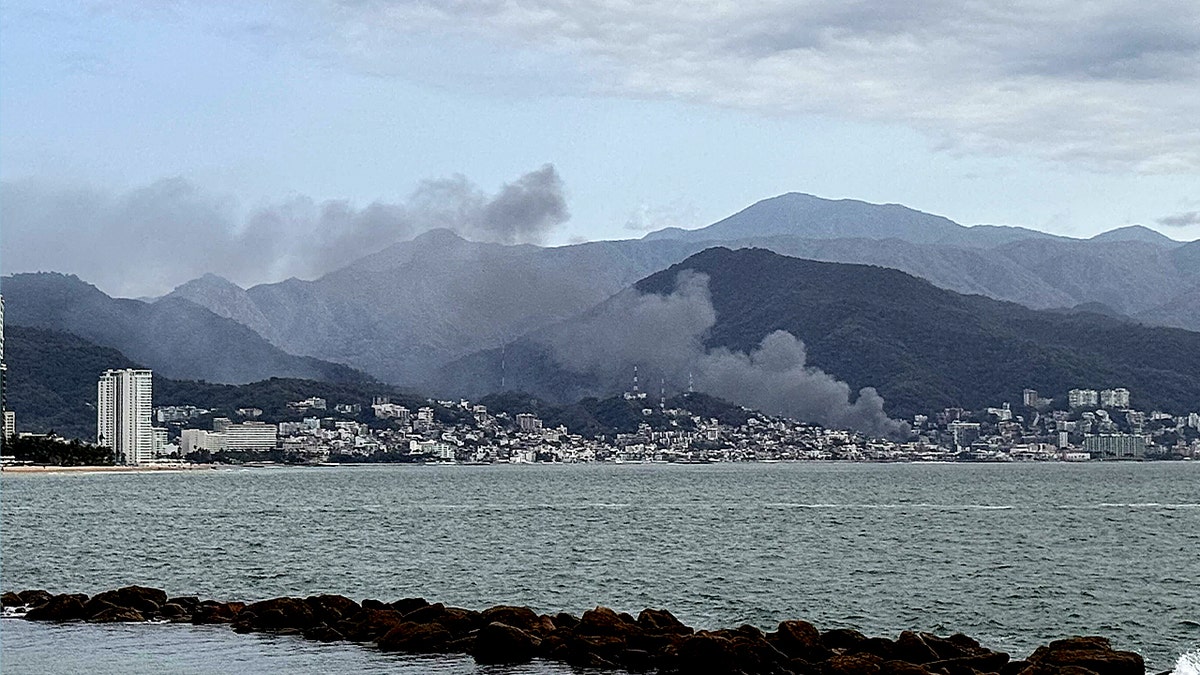
Smoke rises into the sky over Puerto Vallarta during an operation targeting cartel activity on Feb. 22, 2026. (Obtained by Fox News Digital)
During the capture, the CJNG ringleader became wounded and died en route to Mexico City, the Defense Department said.
Four others were reportedly killed at the scene of a shootout between Mexican troops and criminal suspects in Jalisco, with Oseguera Cervantes among three additional individuals who were wounded and later died.
Authorities said they detained two other members of the criminal organization and seized a range of weaponry, including armored vehicles and «rocket launchers capable of downing aircraft and destroying armored vehicles.»
Consequently, three members of the armed forces became injured and are receiving treatment.
TOURISTS IN MEXICAN SEASIDE CITY TOLD TO STAY ON RESORT AS GOVERNMENT WARNS OF ‘CLASHES’

Four others were reportedly killed in a Jalisco shootout during the operation (Gabriel Trujillo/Reuters)
Widespread criminal activity has been reported in Jalisco, the cartel’s stronghold, as well as in northern regions that serve as key border and transit corridors for the organization.
The Security Cabinet of the Government of Mexico noted that multiple buildings were reportedly damaged during the «violent incidents,» including roughly 20 branches of Banco del Bienestar, a state-run banking institution.
At least 21 highways remain blocked, with authorities reporting that five have already been reopened.
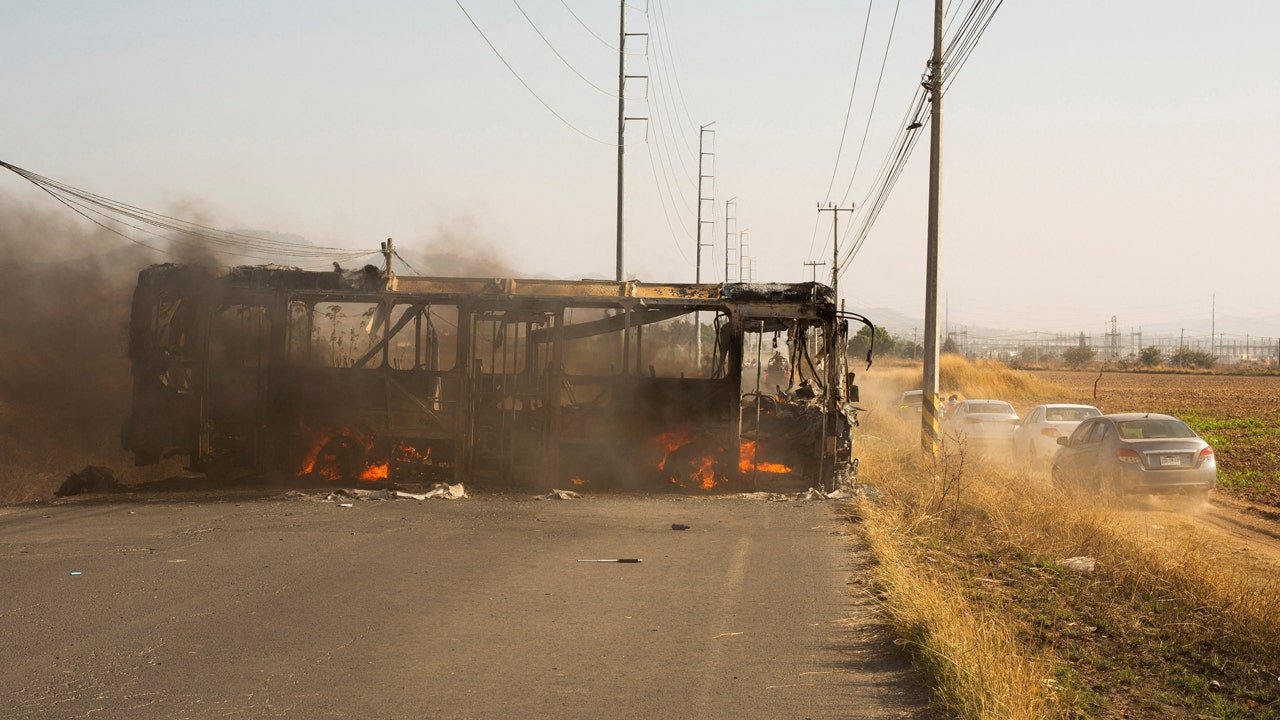
Photos showed numerous roadblocks and burning vehicles, with dark smoke rising into the sky, across the country – tactics officials say cartels often use to slow or block military operations.
Photos and videos shared with Fox News Digital show thick, dark smoke rising over the skyline of the tourist city of Puerto Vallarta on Mexico’s Pacific Coast in Jalisco.
ALLEGED SINALOA CARTEL FENTANYL PRODUCER CHARGED IN NEWLY UNSEALED FEDERAL INDICTMENT

Widespread criminal activity has been reported in Jalisco, the cartel’s stronghold. (Obtained by Fox News Digital)
«I’m watching the scenes of violence from Mexico with great sadness and concern. It’s not surprising that the bad guys are responding with terror. But we must never lose our nerve,» Landau said.
The Mexican National Guard and Army units from central Mexico and states neighboring Jalisco are currently mobilizing to reinforce security, the Defense Department said.
«We remain in Code Red. We reiterate the recommendation to avoid leaving your homes. The clashes are occurring in several federal entities,» Jalisco state Governor Pablo Lemus Navarro added.
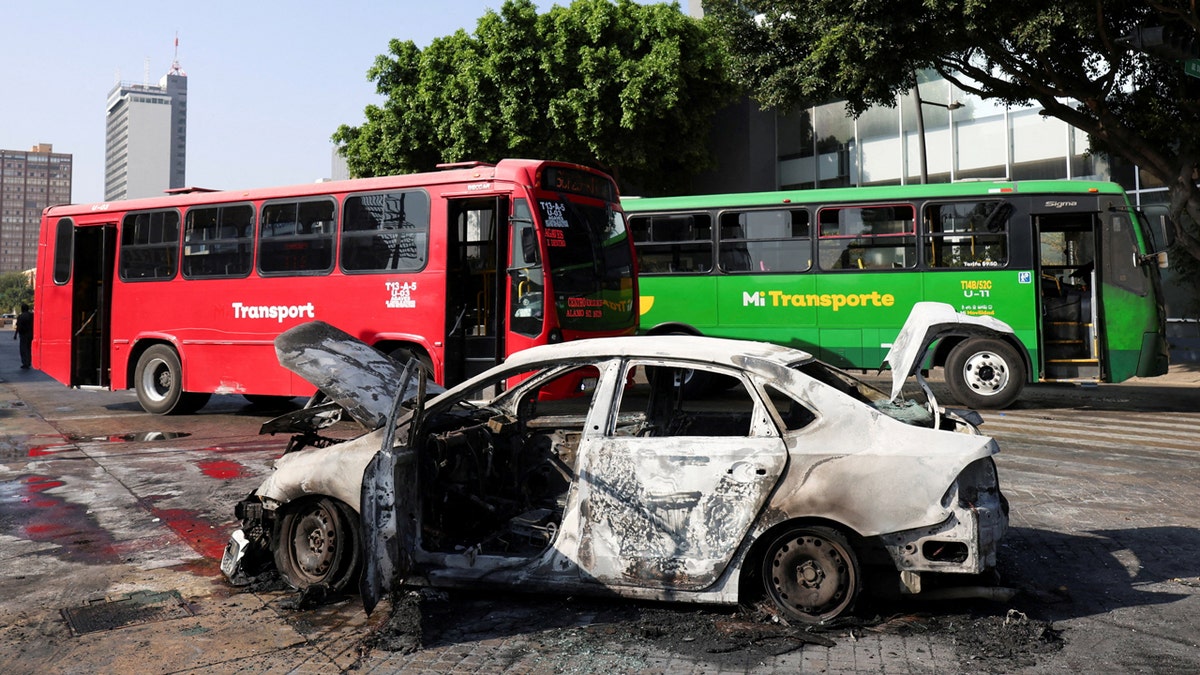
At least 21 highways remain barricaded. (Michelle Freyria/Reuters)
Travel warnings have been issued for Jalisco, including Puerto Vallarta, Chapala, and Guadalajara; Tamaulipas, including Reynosa and other municipalities; and parts of Michoacán, Guerrero, and Nuevo León.
«Due to ongoing security operations and related road blockages and criminal activity, U.S. citizens in the named locations should shelter in place until further notice,» the U.S. Embassy & Consulates in Mexico said.
CLICK HERE TO DOWNLOAD THE FOX NEWS APP
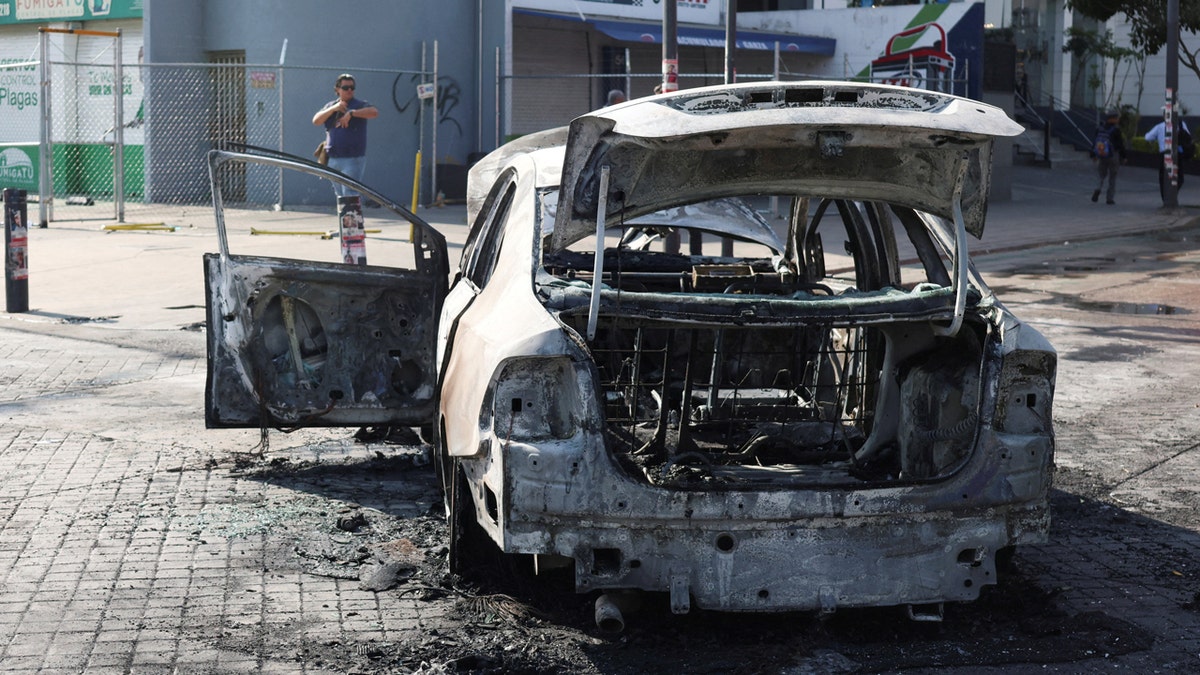
Complementary intelligence from U.S. authorities aided in the operation. (Michelle Freyria/Reuters)
The operation against Oseguera follows sustained pressure from the Trump administration on President Claudia Sheinbaum’s government, urging Mexico to step up its fight against drug trafficking amid threats of potential U.S. intervention.
mexican cartel violence,location mexico,drugs

Reforma tributaria, Ley de Glaciares y el acuerdo con EE.UU.: los temas clave que el Gobierno quiere encarar en las sesiones ordinarias

Afirman que Nahuel Gallo está en huelga de hambre total: no come ni toma agua

ANSES: quiénes cobran hoy, lunes 23 de febrero 2026

Nueva Chicago vs. Tristán Suárez: formaciones, hora y dónde ver por tv

Milei abrirá las sesiones ordinarias del Congreso: nueva hegemonía libertaria, paquete de reformas y desbandada peronista

Hay alerta amarilla por tormentas y viento para este lunes 23 de febrero: las provincias afectadas

Escándalo en MasterChef: una famosa abandonó a los gritos y acusando que está todo arreglado

Del himno peronista de Kelly Olmos al exabrupto de Agustina Propato: las perlitas del debate por la reforma laboral

Villarruel cuestionó la apertura de importaciones: «Sin industria, se pasa a depender de China»

“Ahora es la hora de jugarse”: el mensaje de Patricia Bullrich a los empresarios tras aprobarse la reforma laboral

 ECONOMIA2 días ago
Villarruel cuestionó la apertura de importaciones: «Sin industria, se pasa a depender de China»
- POLITICA2 días ago
“Ahora es la hora de jugarse”: el mensaje de Patricia Bullrich a los empresarios tras aprobarse la reforma laboral
- ECONOMIA2 días ago
Según un especialista, el precio de la carne se mantendrá alto “entre dos y tres años”