INTERNACIONAL
Cómo es la nueva “Cortina de Hierro” que está construyendo Europa ante la amenaza rusa

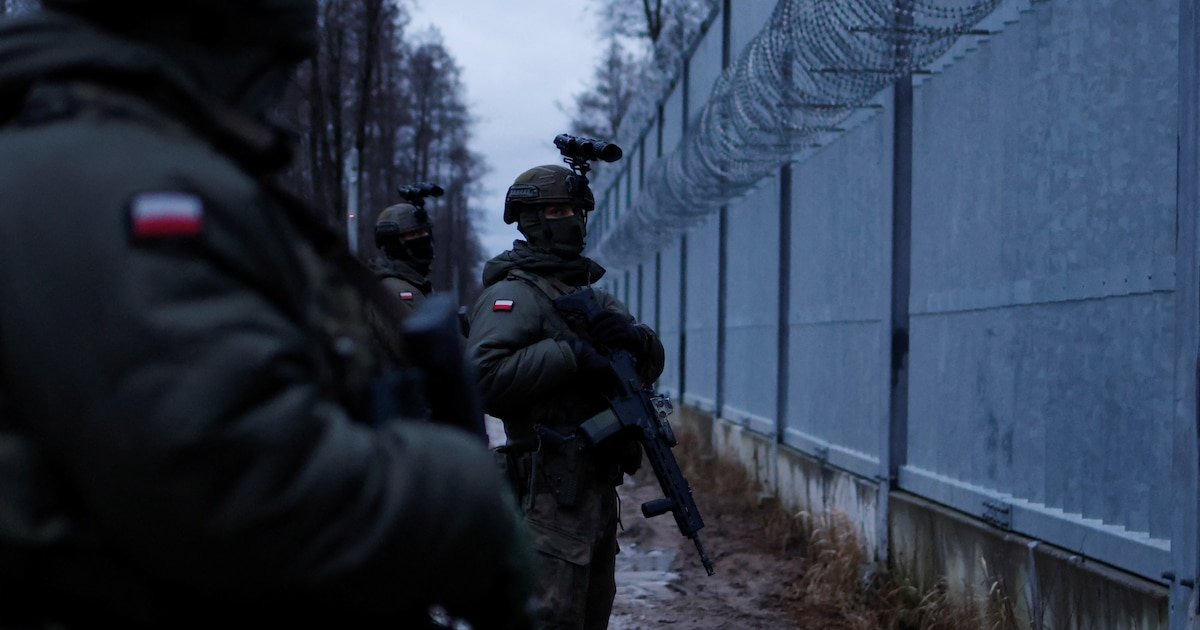
En 1946, Winston Churchill anunció que una “Cortina de Hierro” había caído sobre Europa “desde Stettin, en el Báltico, hasta Trieste, en el Adriático”. Esta vez es Occidente quien está construyendo las barreras.
Todas las naciones europeas que limitan con Rusia y su aliada Bielorrusia están acelerando sus planes para construir cientos de kilómetros de fronteras fortificadas con el fin de defenderse de una posible agresión rusa.
Las razones son claras. El marco de seguridad europeo posterior a la Guerra Fría, que se basaba en el fortalecimiento de las instituciones internacionales y el comercio, la expansión de la OTAN y las garantías militares de Estados Unidos, se está erosionando.
Finlandia, que comparte una frontera de 832 millas (1338 kilómetros) con Rusia, propuso en 2023 la construcción de un muro que cubriría aproximadamente el 15% de su frontera, con un coste superior a 400 millones de dólares (297 millones de libras esterlinas) y con la esperanza de que esté terminado en 2026.

Esta iniciativa está motivada en parte por la invasión de Ucrania por parte de Rusia en 2022, pero también por el aumento del número de rusos que huyen a Finlandia para escapar del servicio militar obligatorio. El Gobierno finlandés aprobó una ley en julio de 2023 para construir vallas más resistentes y altas, ya que las anteriores, de madera, estaban diseñadas únicamente para impedir el paso del ganado. Se erigieron ocho puestos fronterizos (incluido uno al norte del círculo polar ártico) junto con obstáculos más grandes en la franja más meridional del país.
Incluso se están erigiendo defensas en zonas remotas del noreste de Finlandia, donde en un pasado no muy lejano un flujo constante de rusos y finlandeses cruzaba regularmente la frontera para comprar alimentos.
Y Finlandia no es la primera. En agosto de 2015, Estonia anunció que construiría una valla a lo largo de su frontera oriental con Rusia, tras la anexión de Crimea por parte de Moscú en 2014.
En 2024, los países bálticos y Polonia propusieron fortificar aún más sus fronteras con un muro defensivo. Tendría una longitud de 700 kilómetros y costaría más de 2000 millones de libras esterlinas. Los planes y la construcción se están acelerando ahora, ya que los líderes de los países bálticos temen que las perspectivas de un alto el fuego entre Ucrania y Rusia puedan significar que Moscú redirija su ejército hacia ellos.

Letonia invertirá unos 350 millones de dólares en los próximos años para reforzar su frontera de 386 kilómetros con Rusia, mientras que Lituania está planeando una línea de defensa de 48 kilómetros contra una posible invasión rusa. Polonia ha comenzado a construir una valla permanente en su frontera con Bielorrusia como parte de su defensa contra los posibles aliados de Moscú.
Estas murallas irán acompañadas de otras barreras físicas, como zanjas antitanques, dientes de dragón de hormigón de 15 toneladas (que pueden detener el avance de los tanques rusos), enormes bloques y pirámides de hormigón, barricadas, enormes puertas metálicas, campos minados y cabezas de puente bloqueadas.
Lituania tiene previsto construir hasta 30 millas (48 kilómetros) de zanjas de recuperación, puentes preparados para bombardeos y árboles destinados a caer sobre las carreteras cuando sea necesario.
Los países bálticos también están construyendo más de 1000 búnkeres, depósitos de municiones y refugios de suministros para proteger aún más las 600 millas de territorio que limitan con Rusia. Se espera que los búnkeres tengan unos 35 metros cuadrados, puedan albergar hasta diez soldados y sean capaces de resistir los ataques de artillería de Rusia.
Los países bálticos, además de Finlandia y Polonia, también anunciaron en 2025 que se retirarían del tratado internacional de 1997 que prohíbe las minas terrestres antipersonales, mientras que Lituania revocó su compromiso con un tratado sobre bombas de racimo. Polonia anunció en junio de 2025 que había añadido campos de minas a sus planes fronterizos “Escudo del Este”.

Estas defensas fronterizas utilizarán la última tecnología, sistemas de alerta temprana y unidades de artillería. Lituania, Letonia, Estonia, Polonia, Finlandia y Noruega se reunieron en Riga en 2024 para comenzar a planificar la construcción de un “muro de drones” de 1850 millas (2977 kilómetros) para proteger sus fronteras.
Este muro de drones contará con una red de sensores, compuesta por radares y herramientas de guerra electrónica para identificar y destruir los drones rusos. En cuestión de segundos tras detectar un objetivo que cruza la frontera, se activaría un sistema de reconocimiento cercano de drones.
Este proyecto requerirá una gran cooperación entre los Estados participantes. Las empresas estonias ya están diseñando drones que pueden detectar y neutralizar amenazas en terrenos complejos, como lagos, pantanos y bosques, que cubren la frontera de Rusia con los países bálticos.
Tanto la cooperación de todos los países que limitan con Rusia en Europa como el conocimiento del terreno son fundamentales para evitar los fracasos de la Línea Maginot, parte de un conjunto de barreras defensivas que Francia construyó a lo largo de sus fronteras en la década de 1930 y que no lograron impedir la invasión alemana en la Segunda Guerra Mundial. En ese caso, se asumió que los alemanes no podrían atravesar el bosque de las Ardenas en Bélgica.
Aunque las fortificaciones de la Línea Maginot hicieron que los alemanes se replantearan su plan de ataque, Bélgica quedó vulnerable. Hoy en día, las naciones europeas son conscientes de que no pueden impedir por completo un ataque ruso, pero sí pueden, posiblemente, influir en la naturaleza de una invasión rusa. El objetivo de estas barreras es tanto disuadir como intentar controlar la ubicación de cualquier invasión.
Si se anuncia un alto el fuego entre Ucrania y Rusia, los líderes de las naciones bálticas temen que el Kremlin pueda volver a desplegar tropas en sus fronteras.
Los países vecinos de Rusia están tratando de estar lo más preparados posible para cualquier cosa que Vladimir Putin pueda hacer a continuación.
Defense,Europe,NUIJAMAA












NEWYou can now listen to Fox News articles!
A custody hearing in Ada, Oklahoma, last month took a turn for the unexpected — and the incredibly loud — after an attorney who identified himself as transgender was arrested and dragged from the courtroom where he had appeared to represent his client just minutes before.
The exchange occurred during a custody hearing in Pontotoc County, Oklahoma, some 90 minutes southeast of Oklahoma City. The attorney, Rob Hopkins, was jailed for contempt after sparring repeatedly with the judge, Lori Jackson, during an otherwise unremarkable proceeding.
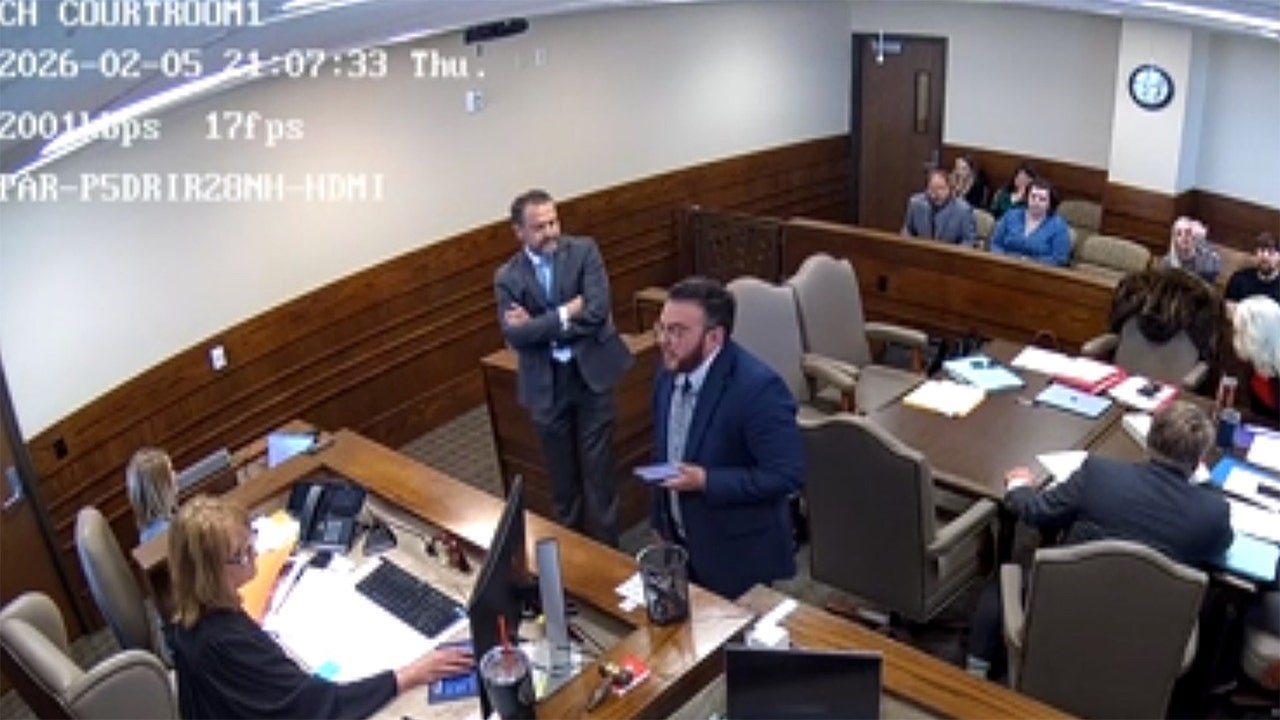
Surveillance footage, audio, and body camera footage reviewed by Fox News Digital has shed new light on the extraordinary confrontation, in which Hopkins can be seen actively resisting arrest by bailiffs. At one point, Hopkins can be seen splaying his body across the judge’s bench, resulting in a pile of documents being swept off its finely polished wood surface.
«You’re HURTING ME!» Hopkins bellowed, as bystanders looked on. «I can’t BREATHE!» he shrieked again, louder.
Attendees in the courtroom could be seen looking on quietly as Hopkins twisted, turned, and contorted his body to evade the handcuffs that officers used to restrain him.
«I felt very threatened by this person,» one individual could be heard telling the judge.
SHELTERS, JESUS, AND MISS PAC-MAN: US JUDGE GRILLS DOJ OVER TRANS POLICY IN DIZZYING LINE OF QUESTIONING
(Surveillance footage provided to Fox News Digital by the Oklahoma District Attorney’s Office, 22nd District.)
The meltdown in question, and the arrest, occurred during a custody hearing punctuated by repeated interruptions from Hopkins and warnings from Jackson that he would be held in contempt.
Hopkins then suggested she was discriminating against him for his transgender status, escalating tensions inside the courtroom.
«It’s because I’m a transgender attorney practicing all over the state,» Hopkins leveled sharply, to which Jackson shot back: «I don’t know what you are.»
«I don’t know you from Adam,» Jackson said later, describing his conduct as «entirely inappropriate.»
Shortly after, bailiffs entered the courtroom, prompting the hearing to descend into complete chaos.
«Do NOT HURT ME!» Hopkins yelled at the officers.
«I’m being thrown down!» he bellowed, as he threw himself on the bench before the officers eventually forced him onto the floor.
‘BLANKIES,’ ICE TACTICS AND LUXURY JETS: TOP MOMENTS FROM NOEM’S HOUSE TESTIMONY
More officers streamed in to help restrain Hopkins, whose uproarious exclamations had, at that point, drawn a crowd — not only in the courtroom, but also in the hallways surrounding it, as the body camera footage shows.
«Get a female officer, now!» Hopkins demanded. «Call 911!» he shrieked, as the officers attempted to place him in handcuffs.
«I can’t breathe! I can’t breathe!» he declared.
From the floor of the court, Hopkins accused the officers of «throwing his glasses» onto the floor — a claim that surveillance footage reviewed by Fox News Digital appears to refute — and ordered the officers to place them back on his face.
«Put them on my face,» Hopkins demanded repeatedly, as the officers attempted to place Hopkins into a seated position and escort him from the court. «PUT THEM ON MY FACE!» Hopkins screamed once more, the volume and urgency unchanged from his request for emergency services just seconds before.
‘YOU SHOULD BE ASHAMED!’: PROTESTER DRAGGED FROM KRISTI NOEM’S SENATE HEARING
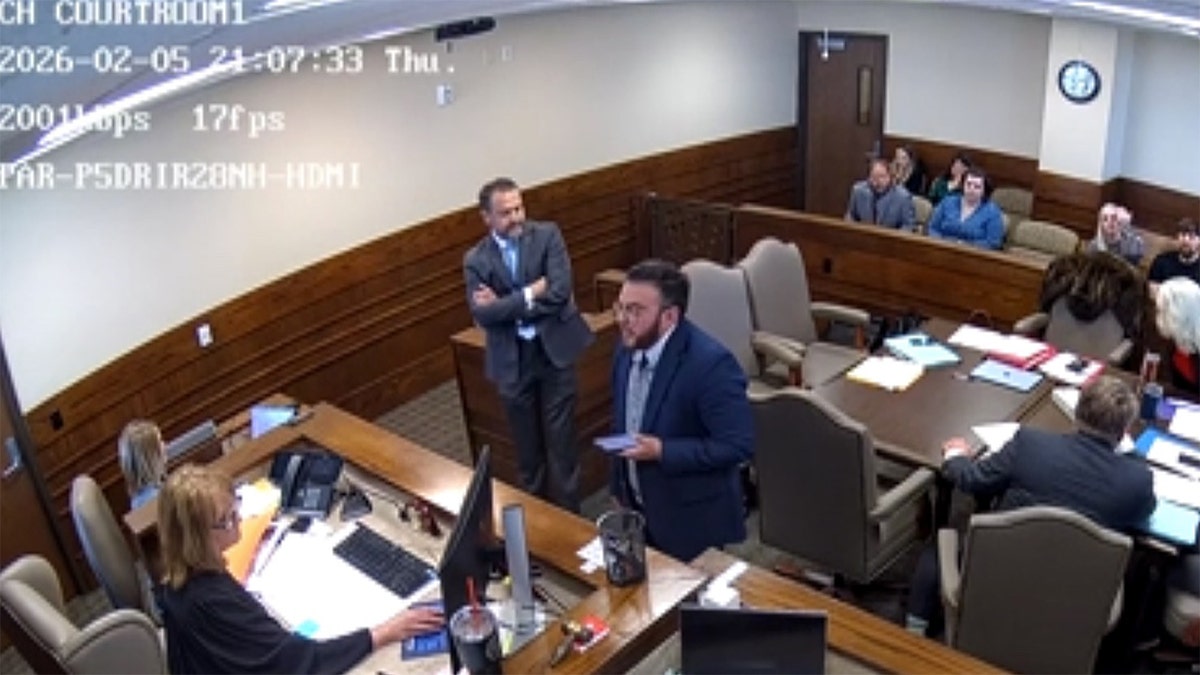
Rob Hopkins, a transgender lawyer in Oklahoma, was jailed for contempt during a procedural hearing in Ada, Oklahoma, last month after a viral meltdown. ( Oklahoma District Attorney’s Office, 22nd Prosecutorial District.)
Hopkins said he has since shuttered his law firm following the contempt charge and fallout from the hearing.
CLICK HERE TO DOWNLOAD THE FOX NEWS APP
He did not respond to Fox News Digital’s requests for comment regarding either the proceedings in question or the reason for his firm’s closure.
politics, crime world, donald trump, federal judges, us, fox news media, federal courts, judiciary



NEWYou can now listen to Fox News articles!
The Islamic Republic of Iran took the lives of two men convicted of trying to storm a military facility and access an armory in January, the Mizan news outlet of Iran’s judiciary indicated on Sunday, according to Reuters.
An organization called Iran Human Rights said that the Iranian news agency reported that the two individuals, Mohammad Amin Biglari and Shahin Vahedparast Kolor, were hanged on April 5.
Biglari, a 19-year-old computer science student, Kolor, 30, were arrested with several other individuals on January 8 amid a crackdown against protesters in the nation’s capital city of Tehran, according to the Hengaw Organization for Human Rights.
They faced charges that included «‘enmity against God (moharebeh), corruption on earth, arson of public facilities, and assembly and collusion to commit crimes against national security,’» the group indicated.
TRUMP WARNS IRAN HE MAY STRIKE ‘EVERY POWER PLANT’ AS DEADLINE TO REOPEN HORMUZ NEARS
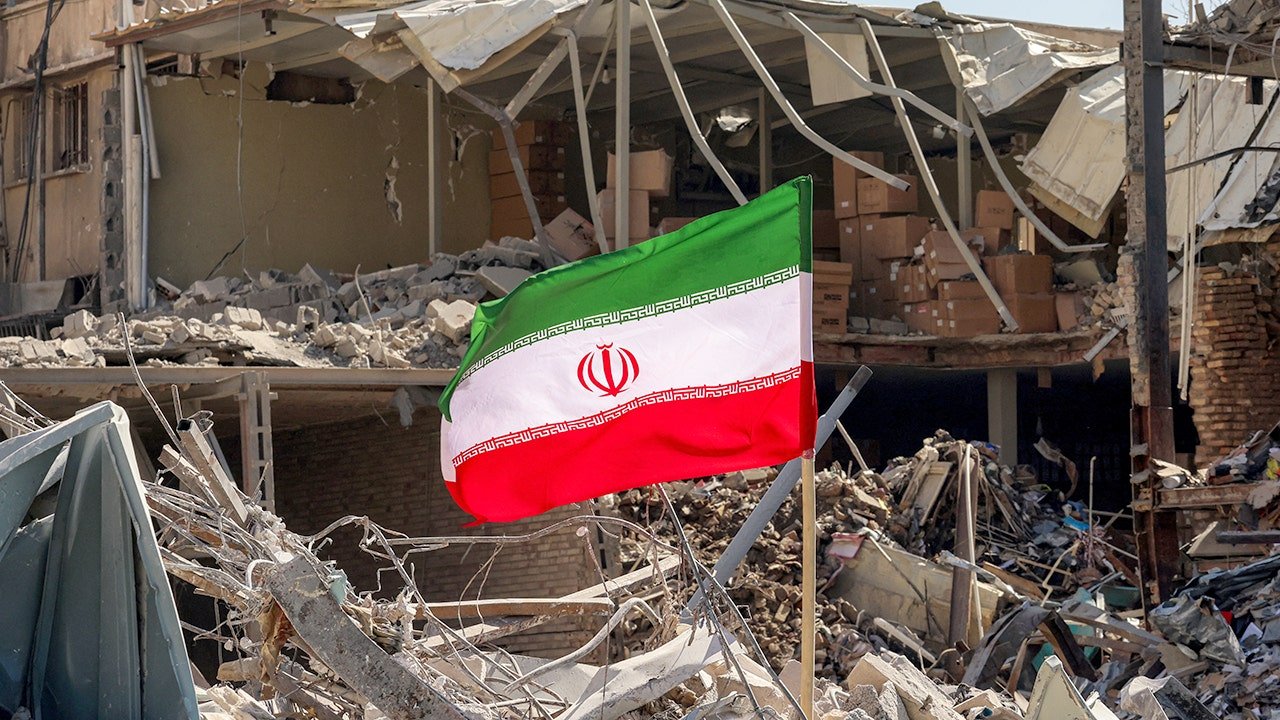
An Iranian flag is placed amids rubble and debris next to a destroyed residential building near Ferdowsi square in Tehran on March 3, 2026. ( ATTA KENARE / AFP via Getty Images)
Another individual arrested January 8, 18-year-old Amirhossein Hatami, was hanged on April 2, Iran Human Rights noted, citing the Mizan News Agency.
Ali Fahim, a 23-year-old who was among those arrested on January 8, was executed on April 6, the Hengaw Organization noted on Monday, explaining that the Mizan news agency confirmed the killing.
«These executions are part of the Islamic Republic’s strategy of survival, waging war against its own people under the shadow of external conflict,» Iran Human Rights Director Mahmood Amiry-Moghaddam noted. «The international community must respond with urgency. The situation of prisoners and the regime’s systematic use of the death penalty as a political tool of repression must be made a central condition in any negotiations or engagement with the Islamic Republic.»
The executions occurred as the U.S. and Israel continue to wage war against Iran.
EX-CIA STATION CHIEF REVEALS HOW AGENCY EXPLOITED IRANIAN COMMUNICATION CHANNELS DURING AIRMAN RESCUE
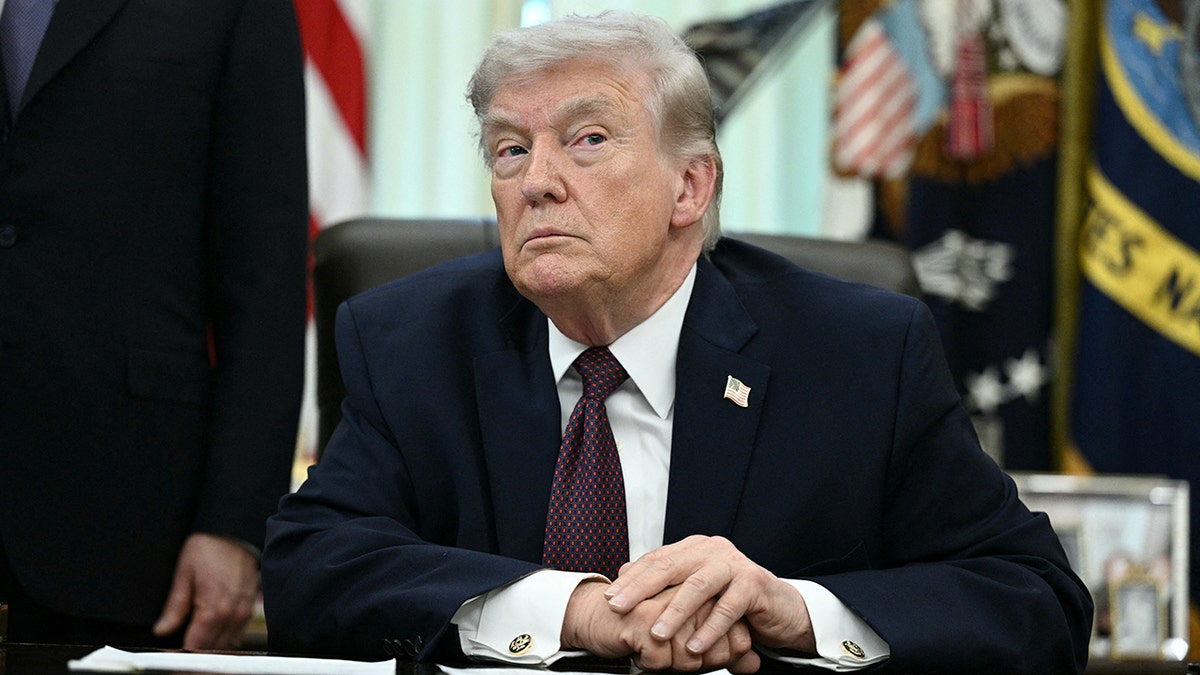
US President Donald Trump takes a question from a reporter after signing an executive order in the Oval Office of the White House in Washington, D.C., on March 31, 2026. (Brendan SMIALOWSKI / AFP via Getty Images)
In a Sunday Truth Social post, President Donald Trump threatened to attack Iranian power infrastructure and bridges on Tuesday.
He demanded that Iran open the Strait of Hormuz.
WHY THE STRAIT OF HORMUZ MATTERS AS TRUMP ISSUES FRESH ULTIMATUM TO IRAN
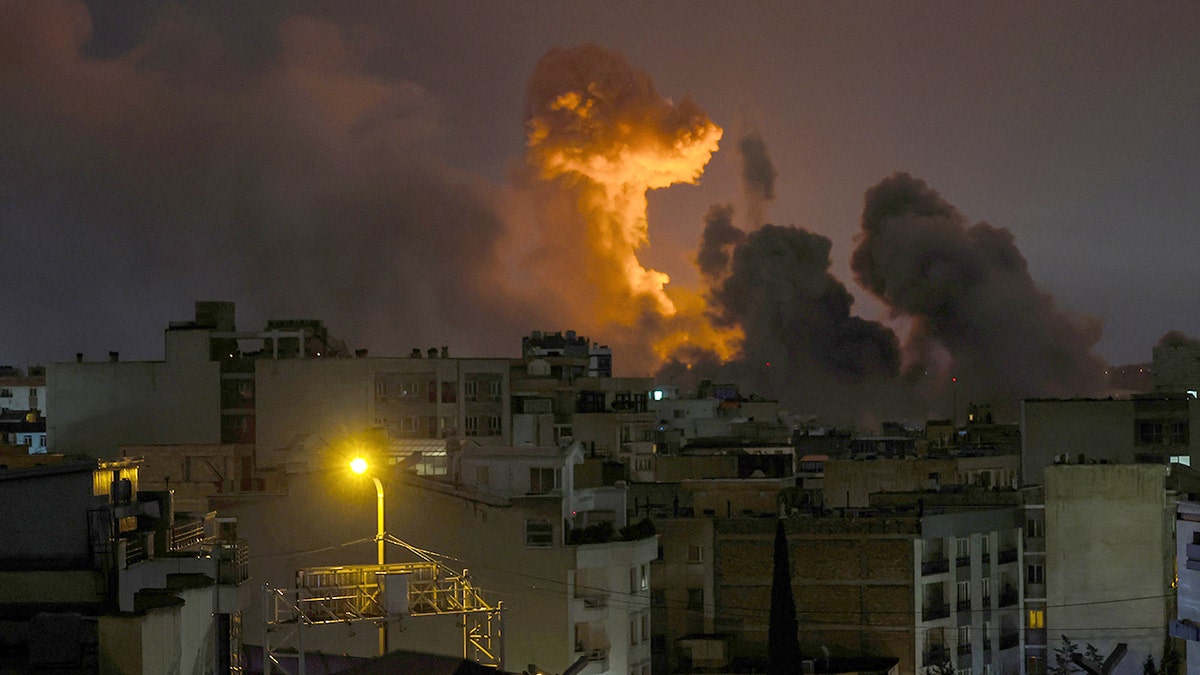
A large plume of smoke rises over Tehran after explosions were reported in the city during the night on March 28, 2026 in Tehran, Iran. (Getty Images)
CLICK HERE TO DOWNLOAD THE FOX NEWS APP
«Tuesday will be Power Plant Day, and Bridge Day, all wrapped up in one, in Iran. There will be nothing like it!!! Open the F—in’ Strait, you crazy bastards, or you’ll be living in Hell – JUST WATCH! Praise be to Allah,» the president declared.
world, war with iran, iran

Carlos Melconian: “Los dólares de Vaca Muerta aparecen en Punta Cana”

WATCH: Oklahoma trans attorney jailed for contempt after epic court meltdown

¡Incendio! Fernanda Iglesias le tiró a Eduardo Feinmann con la peor acusación que se le puede hacer a un periodista: «Sobres»

Javier Milei habló de la guerra en Irán: “Apoyo total y absolutamente el accionar de Estados Unidos e Israel”

Clan Kennedy: podrá el furor por «Love Story» llevar al nieto de JFK al Congreso

Pese al auxilio de $400.000 millones, las urgencias financieras de las provincias conspiran contra la reforma fiscal que impulsan Milei y Caputo

La Armada sorteará 30 lugares en el buque que escoltará la salida de la Fragata Libertad: cómo anotarse

La nueva advertencia de Donald Trump a Irán: «El tiempo se acaba, quedan 48 horas antes del infierno»

Círculo rojo: intrigas en el gabinete, desgaste por el caso Adorni y movimientos inquietantes en el Poder Judicial

AFAgate: el juez Armella le derivó la causa a su colega González Charvay, como pretendían Tapia

 INTERNACIONAL2 días ago
La nueva advertencia de Donald Trump a Irán: «El tiempo se acaba, quedan 48 horas antes del infierno»
- POLITICA1 día ago
Círculo rojo: intrigas en el gabinete, desgaste por el caso Adorni y movimientos inquietantes en el Poder Judicial
- POLITICA2 días ago
Créditos del Banco Nación: el Gobierno reveló que Pettovello echó a Massaccesi porque “mintió”