INTERNACIONAL
Cómo la genética logró descifrar el origen y la expansión eslava en Europa Central y Oriental

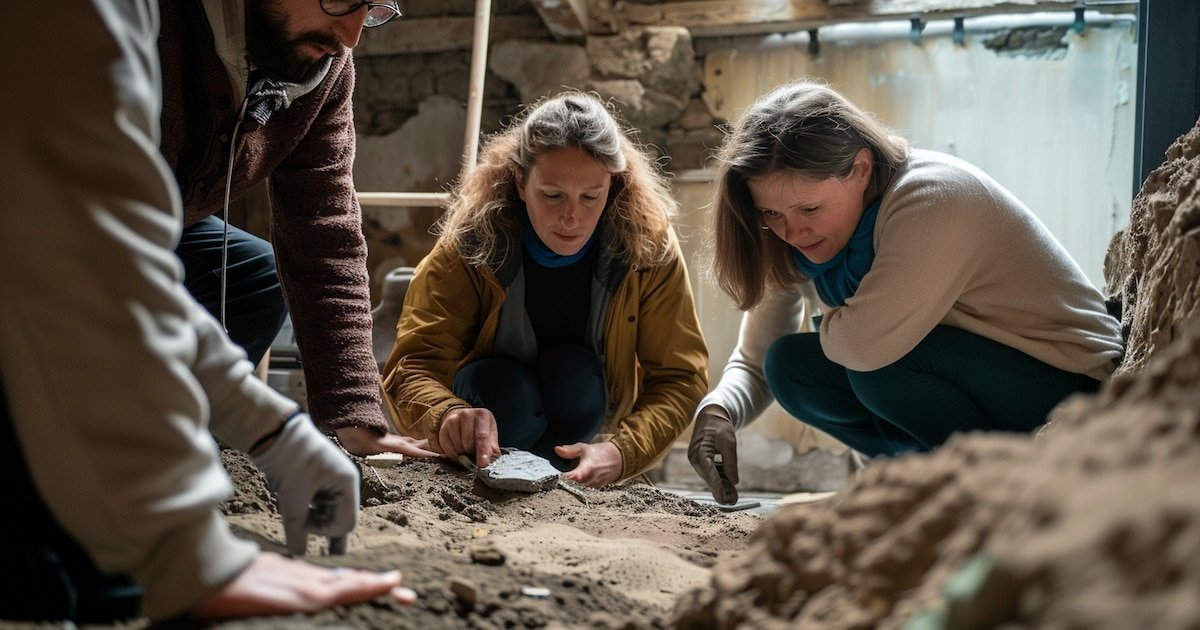
El trabajo internacional liderado por la Sociedad Max Planck revela cómo la mezcla de poblaciones y la flexibilidad social transformaron la diversidad cultural y genética de Europa Central y Oriental. El origen y expansión de los eslavos, uno de los mayores enigmas de la historia europea, quedó esclarecido gracias a un estudio genético de alcance continental.
Analizando más de 550 genomas antiguos, los investigadores demostraron que la transformación de Europa Central y Oriental durante la Edad Media respondió a migraciones masivas y mestizaje, redefiniendo la composición genética y cultural de la región. El impacto de estos movimientos perdura en la actualidad.
El consorcio HistoGenes, con participación de expertos de Alemania, Austria, Polonia, Chequia y Croacia, publicó en Nature el primer análisis exhaustivo de ADN antiguo de poblaciones eslavas medievales.
Los resultados situaron el origen de los eslavos en una franja desde el sur de Bielorrusia hasta el centro de Ucrania, una localización coherente con las hipótesis previas de lingüística y arqueología.
Joscha Gretzinger, genetista del Instituto Max Planck de Antropología Evolutiva y autor principal, explicó a la Sociedad Max Planck: “Nuestros resultados genéticos ofrecen las primeras pistas concretas sobre la formación de la ascendencia eslava, apuntando a un origen probable en algún lugar entre los ríos Dniéster y Don”.

A partir del siglo VI d.C., los datos genéticos revelaron grandes movimientos de población desde el este hacia vastas zonas de Europa Central y Oriental. Este proceso alteró la composición genética de regiones como Alemania Oriental y Polonia, con un reemplazo casi total de la población local por los recién llegados.
Sin embargo, la investigación subraya que la expansión eslava no siguió un patrón de conquista militar, sino que surgió de migraciones familiares y comunidades flexibles, unidas por lazos de parentesco. La diversidad de este fenómeno se evidenció en distintos escenarios. En Alemania Oriental, tras la caída del reino de Turingia, más del 85% de la ascendencia genética correspondía a migrantes del este.
El yacimiento de Brücken, en Sajonia-Anhalt, mostró el paso de una población cosmopolita a una sociedad fundada en grandes linajes familiares, con un perfil genético cercano al de los actuales grupos eslavoparlantes del este de Europa. La minoría sorbia de Alemania Oriental todavía conserva un legado genético vinculado a aquellos primeros colonos eslavos.
En Polonia, los análisis genéticos y arqueológicos, como los del yacimiento de Gródek, desmintieron la idea de una continuidad poblacional prolongada. La población original, conectada con el norte de Europa y Escandinavia, desapareció casi por completo desde los siglos VI y VII d.C., siendo sustituida por migrantes del este. Aunque el reemplazo dominó, los estudios identificaron cierta mezcla con las poblaciones locales, aumentando la complejidad genética y lingüística.

El caso de Croacia y los Balcanes del Norte aportó un patrón distinto. Aquí, la llegada de los eslavos produjo integración más que reemplazo. El ADN antiguo muestra que la ascendencia del este representa cerca de la mitad —o menos— del acervo genético moderno.
En yacimientos como Velim, los enterramientos eslavos más antiguos reflejan una mezcla significativa, con hasta un 30% de ascendencia local. Este mestizaje forjó la diversidad cultural y lingüística que caracteriza a la península balcánica.
Una confirmación independiente provino de Moravia, en Chequia, donde un estudio publicado en Genome Biology, con participación de la Dra. Zuzana Hofmanová, identificó un cambio poblacional asociado a la llegada de los eslavos.
Los individuos vinculados a la cultura de Praga-Korchak presentaban afinidades genéticas con el noreste de Europa, manteniendo esa señal hasta los siglos IX y X, etapa de consolidación del principado de Moravia y nacimiento de la primera lengua eslava literaria.

El análisis de la Sociedad Max Planck propuso nuevas perspectivas sobre el éxito de esta expansión. Walter Pohl, medievalista y coautor, señaló: “La migración eslava representa un modelo fundamentalmente diferente de organización social: una difusión demográfica, a menudo en pequeños grupos o alianzas temporales, que ocupa nuevos territorios sin imponer una identidad fija ni estructuras de élite”.
Esta flexibilidad social, junto a una economía de subsistencia y capacidad de adaptación, permitió a los eslavos prosperar durante la inestabilidad y decadencia de los imperios vecinos.
Las pruebas genéticas confirman que, aunque los eslavos comparten un origen ancestral común, la diversidad regional resultó del grado de mezcla con las poblaciones locales. En el norte, los antiguos pueblos germánicos dieron paso a los eslavos, mientras que en el sur, la fusión con las comunidades existentes originó una amplia variedad de culturas, lenguas y perfiles genéticos.

Zuzana Hofmanová sintetizó la complejidad del fenómeno: “La expansión eslava no fue un evento monolítico, sino un mosaico de diferentes grupos, cada uno adaptándose y fusionándose a su manera, lo que sugiere que nunca existió una sola identidad ‘eslava’, sino muchas”.
Johannes Krause, director del Instituto Max Planck de Antropología Evolutiva, destacó: “La expansión de los eslavos fue probablemente el último acontecimiento demográfico a escala continental que transformó de forma permanente y fundamental el panorama genético y lingüístico de Europa”.
La investigación liderada por la Sociedad Max Planck permitió rastrear el alcance real de las migraciones eslavas y comprender cómo su legado continúa manifestándose en la variedad de lenguas, culturas y perfiles genéticos que distinguen a Europa Central y Oriental en el presente.

INTERNACIONAL
La mirada de un ex marine: “Trump no tiene una estrategia, busca ser el virrey de Irán”

Una guerra de poco tiempo
Trump no es el primero ni el último líder del mundo que vaya a contradecirse de hacer una cosa y decir otra. Pero Estados Unidos, que nunca ha sido un país perfecto, siempre ha sido un país líder
Molestias en Estados Unidos por la guerra
¿Una Delcy iraní?
No hay Delcy Rodríguez en Irán. Irán no era y no es un régimen basado en el crimen organizado
¿Trump, el virrey?
La espera de los republicanos
Para realmente cambiar un régimen, para instalar un gobierno títere, para controlar los recursos de un país, todavía se requiere lo que se requería en la época medieval y esos son soldados
El poder del Estrecho de Ormuz
INTERNACIONAL
Rubio designates Afghanistan as ‘state sponsor of wrongful detention’: ‘Despicable tactics’

NEWYou can now listen to Fox News articles!
U.S. Secretary of State Marco Rubio designated Afghanistan as a «state sponsor of wrongful detention,» accusing the Taliban of «unjustly» detaining Americans and other foreign nationals.
In his announcement on Monday, Rubio said the Taliban continues to use «terrorist tactics» that he insisted «need to end.»
«I am designating Afghanistan as a State Sponsor of Wrongful Detention,» Rubio said in a statement. «The Taliban continues to use terrorist tactics, kidnapping individuals for ransom or to seek policy concessions. These despicable tactics need to end.»
The secretary also called on the terror group to free a pair of Americans who are «unjustly detained» in Afghanistan.
IRAN REGIME CITED AS TRUMP ADMIN SET TO DESIGNATE SUDAN’S MUSLIM BROTHERHOOD A TERROR GROUP
U.S. Secretary of State Marco Rubio designated Afghanistan as a «state sponsor of wrongful detention.» (Alex Wong/Getty Images)
«It is not safe for Americans to travel to Afghanistan because the Taliban continues to unjustly detain our fellow Americans and other foreign nationals,» he said. «The Taliban needs to release Dennis Coyle, Mahmoud Habibi, and all Americans unjustly detained in Afghanistan now and commit to cease the practice of hostage diplomacy forever.»
Coyle, 64, was detained more than a year ago without charges by the Taliban General Directorate of Intelligence, according to his family, noting that he still has not been charged. His family said he was legally working to support Afghan language communities as an academic researcher.
Habibi, a 38-year-old American citizen who was born in Afghanistan, was taken along with his driver from their vehicle in the capital of Kabul in August 2022 by the Taliban General Directorate of Intelligence, according to the State Department.
The FBI said Habibi was previously Afghanistan’s director of civil aviation and worked for the Kabul-based telecommunications company Asia Consultancy Group. The FBI said the Taliban detained 29 other employees of the company but has released most of them.
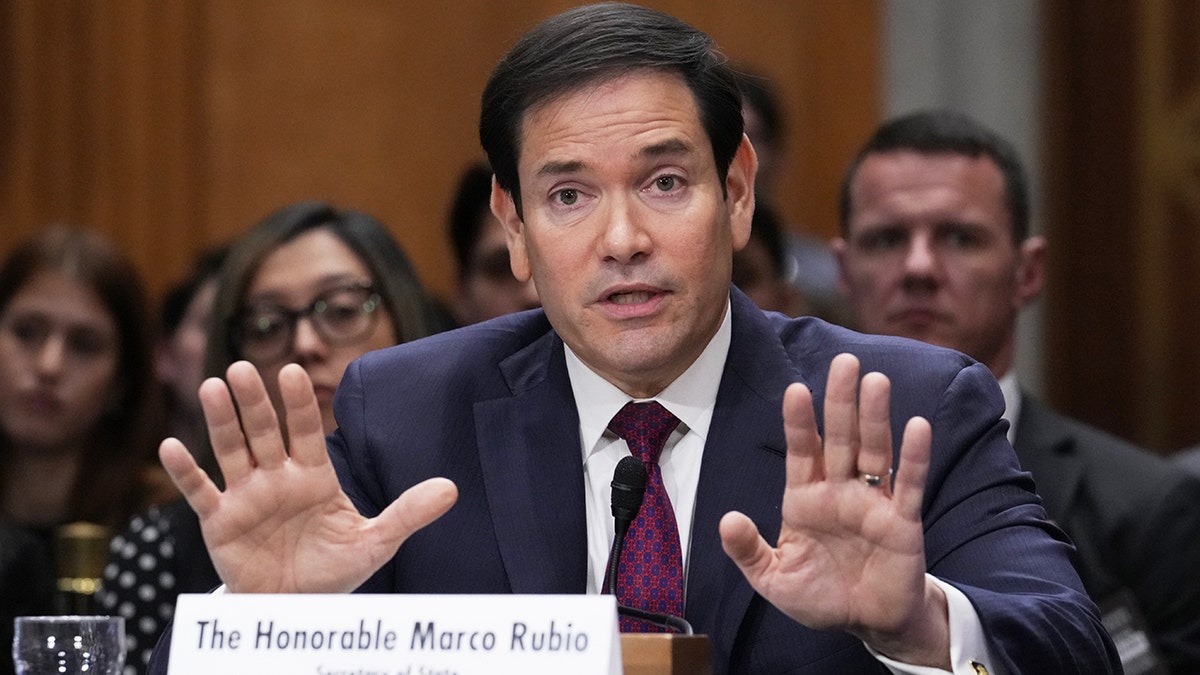
Secretary of State Marco Rubio said the Taliban continues to use «terrorist tactics» that he insisted «need to end.» (J. Scott Applewhite/AP Photo)
Habibi has not been heard from since his arrest, and the Taliban has not disclosed his whereabouts or condition, according to the State Department and FBI. The Taliban has previously denied it detained Habibi.
The U.S. is also calling for the return of the remains of Paul Overby, an author who was last seen close to Afghanistan’s border with Pakistan in 2014, according to Reuters, citing two sources familiar with the situation.
The State Department could restrict the use of U.S. passports for travel to Afghanistan if the Taliban does not meet the U.S. government’s demands, the sources told the outlet.
A passport restriction of this kind is currently only in place for North Korea.
The Taliban called the decision by Rubio to designate Afghanistan a «state sponsor of wrongful detention» regrettable, adding that it wanted to resolve the matter through dialogue.
STATE DEPARTMENT DEFENDS ‘PROACTIVE’ EVACUATION EFFORTS AGAINST DEMS’ CLAIMS OF DIPLOMATIC CHAOS
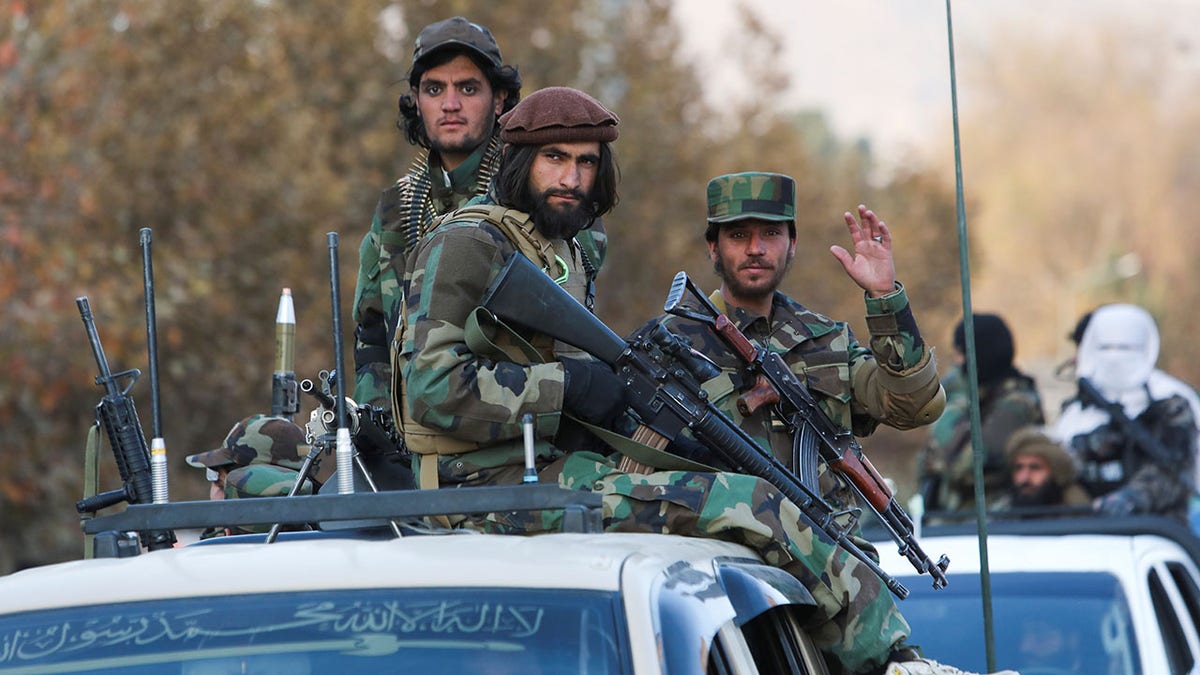
The Taliban called the decision to designate Afghanistan a «state sponsor of wrongful detention» regrettable. (Reuters/Ali Khara)
CLICK HERE TO DOWNLOAD THE FOX NEWS APP
The Taliban took control of Afghanistan in 2021 during the U.S. military’s chaotic withdrawal from the country that ended the 20-year war in the region.
Rubio gave the «state sponsor of wrongful detention» designation to Iran late last month, just one day before the U.S.-Israeli strikes on the country. He warned that the U.S. could restrict travel to Iran over its detention of U.S. citizens, but there have not been any restrictions yet.
«The Iranian regime must stop taking hostages and release all Americans unjustly detained in Iran, steps that could end this designation and associated actions,» Rubio said at the time.
Reuters contributed to this report.
afghanistan,world,terrorism,marco rubio,secretary of state,state department
INTERNACIONAL
Mamdani avoids ‘radical Islamic terror’ phrase after ISIS-inspired NYC attack, echoing Obama-era debate

NEWYou can now listen to Fox News articles!
New York Mayor Zohran Mamdani condemned an alleged ISIS-inspired bomb plot outside Gracie Mansion but did not use the phrase «radical Islamic terror,» reviving long-running criticism from the Obama era that some Democratic leaders avoid the term.
Two suspects were arrested after allegedly throwing improvised explosive devices near the mansion during a protest Saturday, with one reportedly telling authorities he was inspired by ISIS. Mamdani later described the attempted attack as «terrorism» but did not reference radical Islam in his initial public remarks.
Several Republican lawmakers and political rivals criticized Mamdani’s choice of words.
«There is absolutely no excuse for any public official to equivocate or be confused here,» New York State Sen. Steve Chan, R-Brooklyn, told Fox News Digital Tuesday.
DRAMATIC VIDEO SHOWS NYPD TACKLING MAN WHO THREW ‘IGNITED DEVICE’ NEAR NYC MAYOR’S HOME DURING PROTEST CLASH
New York State Sen. Steve Chan marches along the Avenue of the Americas during the Dominican Day Parade in Manhattan. (Luiz Rampelotto/NurPhoto)
«Anyone who throws a bomb is not a protester: they are a terrorist, plain and simple, and elected officials need to call it like it is,» Chan said, adding that he commends the NYPD for their brave and swift action at the scene.
Authorities said the two suspects, Emir Balat and Ibrahim Kayumi, both from the Philadelphia suburbs, allegedly threw improvised explosive devices containing a compound known as the «Mother of Satan» during the protest, with one reportedly admitting he was inspired by the Islamic State of Iraq and Syria (ISIS).
Greg Kelly, the son of former NYPD Commissioner Ray Kelly, who led New York through the aftermath of both 9/11 and the 1993 World Trade Center bombing, critiqued Mamdani for calling out the protest as led by an alleged «White supremacist» but whiffing on the ideology behind suspected ISIS-supporters’ actions.
«Imagine that: a bomb goes off in New York City, laid by ISIS-inspired terrorists. The mayor points at White supremacy as the problem; White supremacy if only we could get rid of those White supremacists,» Kelly said on his 77WABC radio program.
After the alleged attack, Mamdani held a press conference with NYPD Commissioner Jessica S. Tisch and called out the «vile protest» against Islam led by January 6 defendant Jake Lang that allegedly inspired the two boys to attack.
«New York City will never tolerate violence, whether from protests or counterprotests,» Mamdani said, condemning the arrested suspects for «coming here to commit an act of terrorism» in return.
New York Democratic scion Andrew Cuomo, the former three-term governor and mayoral candidate, lambasted Mamdani’s response as well.
HERO NYPD OFFICERS HONORED FOR FOILING ALLEGED ISIS-INSPIRED TERROR PLOT NEAR GRACIE MANSION
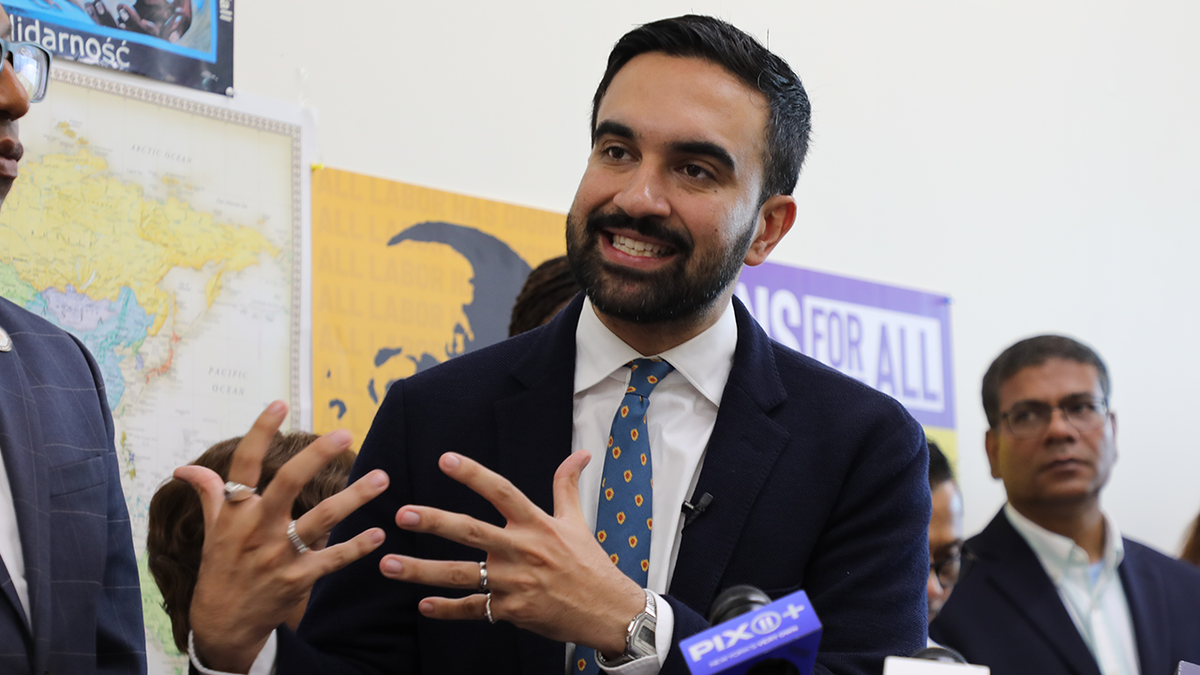
New York City Democratic mayoral candidate Zohran Mamdani (Deirdre Heavey/Fox News Digital)
«Had the bomb gone off … [it] literally would have done horrific damage. And the police, ironically, were closest to the bomb. Not Jake Lang,» he said.
«The mayor puts out a statement condemning Jake Lang. I agree. And in the second part of the statement, (he) condemns the terrorists. There is no moral equivalency: Jake Lang; bigot, hateful, of course. Yes, I agree — terrorists who bring a bomb to kill people? They are not equivalent, and this city has no tolerance for terrorism or attempted terrorists, and that statement has to be made loud and clear,» Cuomo said.
Hours later, Mamdani returned with a statement posted to social media that cited ISIS.
«Emir Balat and Ibrahim Kayumi have been charged with committing a heinous act of terrorism and proclaiming their allegiance to ISIS. They should be held fully accountable for their actions,» the statement said in part.
A few minutes later, former Mayor Eric Adams posted his own more thorough response to the situation, saying that «no one should be surprised.»
«After years of hateful rhetoric and incitement, attempts to justify attacks on Jews in Israel, praise for violence like the killing of a CEO, and chants about ‘globalizing the intifada’ and ‘Death to America,’ words have now escalated into violence on the streets of New York City, with explosives being thrown,» Adams said.
He identified a «serious radicalization problem» on both political fringes and said it is troubling to see an emphasis on young people being radicalized.
«If we don’t confront it, this will only get worse,» Adams said.
SUSPECT IN NYC TERROR PROBE PLANNED ATTACK ‘BIGGER THAN THE BOSTON MARATHON BOMBING,’ PROSECUTORS SAY
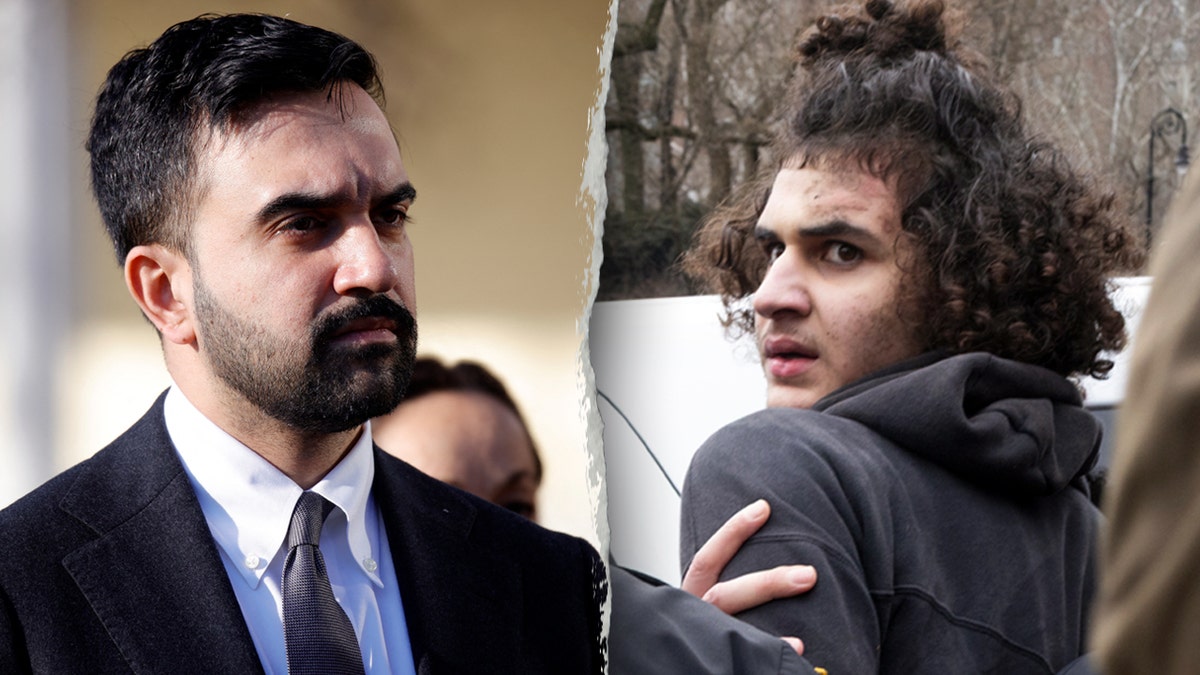
New York Mayor Zohran Mamdani, left, and one of the alleged Gracie Mansion terrorists, right. (Leonardo Munoz/Getty Images; Andrew Lictenstein/Getty Images)
One of the two alleged terrorists arrested was still a student at Neshaminy High School in Neshaminy, Pennsylvania.
Rep. Brian Fitzpatrick, R-Pa., the longtime Bucks County moderate, said in a statement that authorities in Middletown Township were investigating the situation near the boys’ homes.
«Authorities have indicated that there is no known threat to the surrounding community, and the situation remains under the control of law enforcement. The activity was not related to immigration enforcement,» Fitzpatrick said.
In a letter to parents, Neshaminy Superintendent Jason Bowman said the school is in contact with law enforcement and that there is no threat to other students at this time.
President Donald Trump made what he described as the left’s refusal to call out «radical Islamic terrorism» a centerpiece of his 2016 platform, when he regularly criticized former President Barack Obama for failing to fully identify such attacks.
CLICK HERE TO DOWNLOAD THE FOX NEWS APP
«Radical Islamic terrorism, and people don’t like saying that. And our president refuses to use the term. Every time another event happens, I say, ‘I wonder if he’ll say it this time,’» Trump said during a campaign rally in Fort Lauderdale, Florida. He went on to criticize his 2016 opponent, former first lady Hillary Clinton, along similar lines.
Fox News Digital reached out to Mamdani’s office for comment.
ericadams,isis,zohran mamdani,terrorism,bombings

El ex de Luana entró con el derecho a réplica en Gran Hermano y la destrozó en vivo: “Tengo pruebas”

Un violenta pelea entre jóvenes en Neuquén terminó a los tiros y con una persona herida

Una ex Gran Hermano aseguró haber sido novia de Alberto Fernández y que la ayudó a gestionar licitaciones de Procrear

El Gobierno nombró a Gustavo Coria como director ejecutivo de la Comisión de Ex Combatientes de Malvinas

El CEO de JP Morgan elogió a Milei: «Tiene convicciones muy sólidas sobre cómo arreglar un país»

Fase 3 de la Libertadores: primer clasificado y así quedan los bombos para el sorteo

La cruda confesión de Amalia Granata por el trastorno que sufre su hijo Roque: “Le hicimos estudios y salió que tiene TDAH, dislexia y disgrafia”

El mercado le está corriendo el arco a Caputo y el riesgo país no baja: en la City palpitan medidas

Jenny Mavinga angustiada tras una quemadura en Gran Hermano 2026: “¡Ay, me quemó!

Trump anunciará la creación del Escudo de las Américas, una alianza regional que integrará Milei para enfrentar al narcoterrorismo y a China

 CHIMENTOS3 días ago
La cruda confesión de Amalia Granata por el trastorno que sufre su hijo Roque: “Le hicimos estudios y salió que tiene TDAH, dislexia y disgrafia”
- ECONOMIA2 días ago
El mercado le está corriendo el arco a Caputo y el riesgo país no baja: en la City palpitan medidas
- CHIMENTOS2 días ago
Jenny Mavinga angustiada tras una quemadura en Gran Hermano 2026: “¡Ay, me quemó!