INTERNACIONAL
Cómo las potencias del Golfo Pérsico convencieron a Donald Trump de no atacar Irán


NEWYou can now listen to Fox News articles!
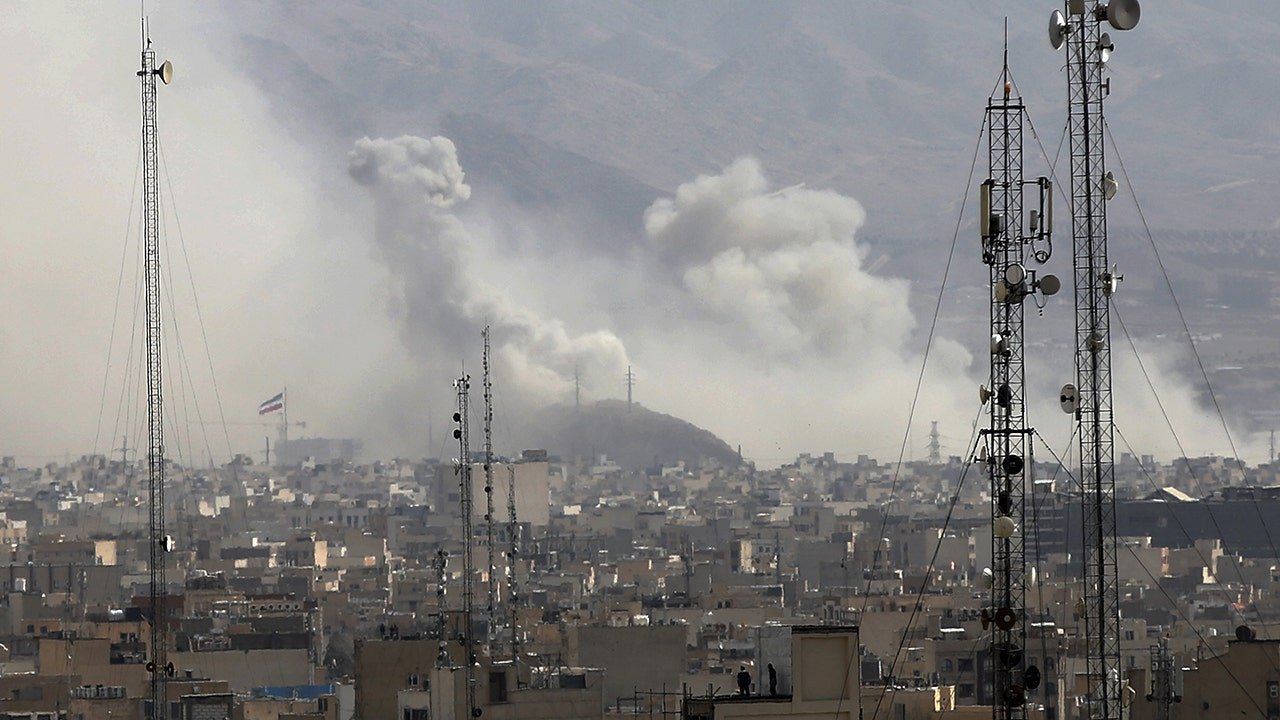
In coordinated, sweeping U.S.–Israeli strikes on Iran in the predawn hours of Saturday, key military and nuclear-linked sites were targeted inside the country.
The strikes focused on what U.S. officials described as high-value Iranian targets, which included Iran Revolutionary Guard Corps (IRGC) command and control facilities, naval assets and underground sites believed to be associated with Iran’s nuclear program.
In addition, Iranian air defense weapons, missile and drone launch sites, and military airfields were also targeted, according to officials.
Israeli forces targeted sites linked to Iran’s Supreme Leader Ayatollah Ali Khamenei, a senior Israeli official confirmed to Fox News.
President Donald Trump confirmed Saturday afternoon that Khamenei had been killed in a strike. He is among more than 40 senior Iranian security and regime figures killed in the attack, a senior Israeli official told Fox News.
In coordinated, sweeping U.S.–Israeli strikes on Iran in the predawn hours of Saturday, key military and nuclear-linked sites were targeted inside the country. (Fatemeh Bahrami/Anadolu via Getty Images)
«Khamenei, one of the most evil people in History, is dead,» Trump wrote in a Truth Social post. «This is not only Justice for the people of Iran, but for all Great Americans, and those people from many Countries throughout the World, that have been killed or mutilated by Khamenei and his gang of bloodthirsty THUGS.»
He also claimed that the IRGC is seeking immunity from the U.S.
The leaders had all been meeting at a compound in Tehran on Saturday morning.
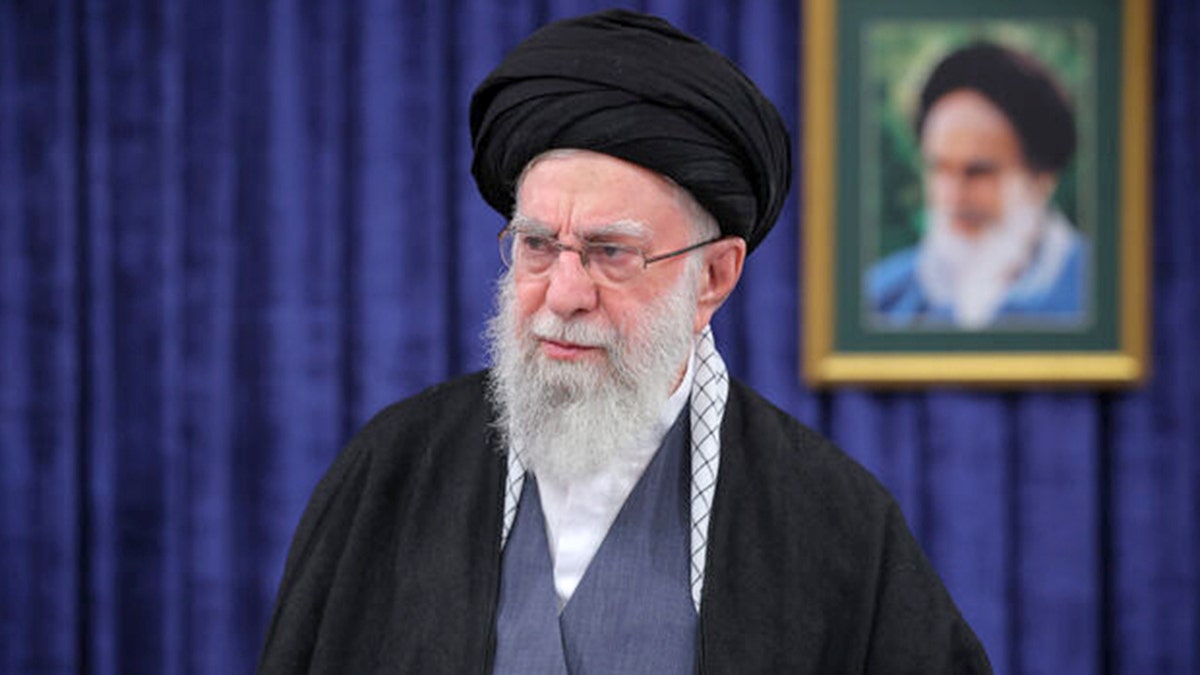
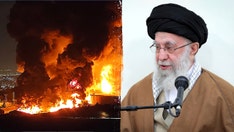
Iran’s Supreme Leader Ali Khamenei was killed in the strikes, President Donald Trump confirmed. (Iranian Leader Press Office/Anadolu via Getty Images)
FBI RAISES COUNTERTERROR TEAMS TO HIGH ALERT AMID IRAN TENSIONS
The strikes were moved up due to the «target of opportunity,» multiple sources told Fox News, which is why the strikes happened in the daytime in Iran, keeping the element of surprise. «There was a deliberate decision to accelerate the timeline,» one source said.
The campaign, which Trump described overnight from Mar-a-Lago as the beginning of «major combat operations» in the region, encompasses multi-geographic targets in an effort to overwhelm Iran’s defensive capabilities.
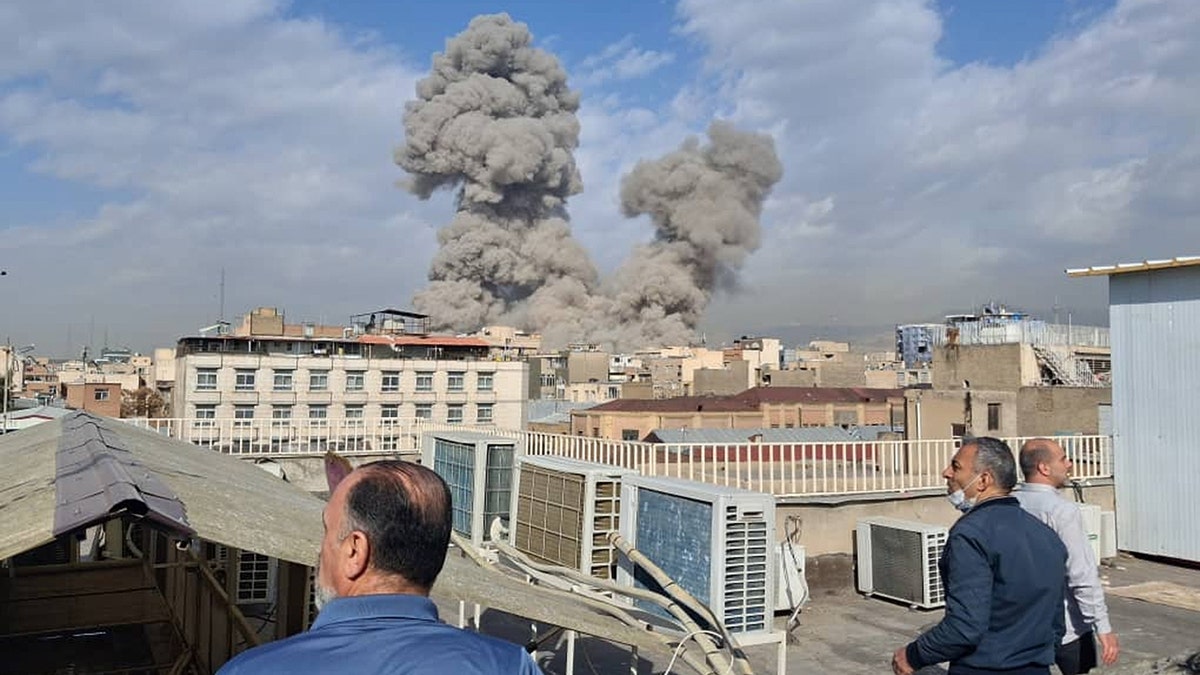
People watch as smoke rises on the skyline after an explosion in Tehran on Saturday. (AP Photo)
ISRAEL’S LARGEST EVER MILITARY FLYOVER HAMMERS IRANIAN MILITARY TARGETS
The strikes could also continue for multiple days.
CLICK HERE TO DOWNLOAD THE FOX NEWS APP
Trump said the campaign aimed to devastate Iran’s military, dismantle its nuclear program, and he urged the Iranian people to «take over» their government.
Tomahawk cruise missiles were used in the first strikes of the operation, called Operation Epic Fury, along with one-way attack drones that were used for the first time, according to a U.S. official.
Fox News’ Liz Friden, Morgan Phillips, Amanda Macias, Alexandra Koch and Kelley Kramer contributed to this report.
Related Article
war with iran,iran,world,israel,military
INTERNACIONAL
Tras el ataque a Irán, tambalea la Revolución Islámica y Trump apuesta a una rebelión interna
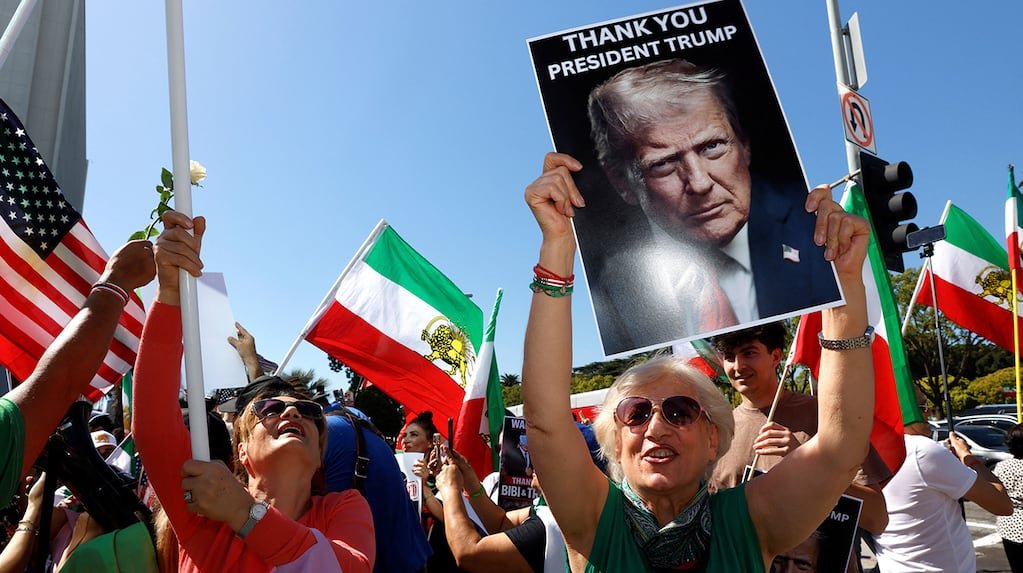
El ataque conjunto de Estados Unidos e Israel contra Irán, que provocó la muerte del ayatolá Ali Jamenei, dejó a la Revolución Islámica frente a un riesgo de colapso inminente, pero al mismo tiempo abrió una fuerte incertidumbre sobre el futuro de un país jaqueado por un frente interno en ebullición y una oposición dividida.
Donald Trump dejó en claro que el objetivo es un “cambio de régimen”, pero el Pentágono es consciente de que no bastará usar la fuerza militar para derrocar al gobierno de los ayatolás.
Leé también: Trump confirmó que el líder supremo de Irán murió en los ataques coordinados de Israel y EE.UU.
El llamado del presidente estadounidense a la población iraní para que tomen el control del gobierno dejó en evidencia que Washington apuesta a una rebelión interna bajo el impulso de la debilidad del poder religioso-militar y las protestas de los últimos dos meses que dejaron miles de muertos.
Pero hay dos hechos palpables: 1) el discurso de Trump no llega a la población iraní por el cierre de internet y telefonía a nivel nacional y 2) no hay a simple vista una Delcy Rodríguez local que pueda asumir un gobierno tutelado como el que emergió en la Venezuela chavista tras el ataque del 3 de enero.
De lo contrario, si el gobierno teocrático no sobrevive, el riesgo de caos es total, con el peligro latente de una desintegración nacional como la que ocurrió en Irak, Libia y Siria y con graves consecuencias geopolíticas. En Washington no olvidan que la crisis siria e iraquí llevó a la irrupción del Estado Islámico (ISIS).
El rol de Reza Pahlavi, el heredero del sha
El “príncipe” Reza Pahlavi, heredero del fallecido sha de Irán Mohammad Reza Pahlavi, derrocado en 1979 por la Revolución Islámica, no tiene hoy ningún tipo de influencia real en la sociedad iraní.
Desde hace meses busca posicionarse como el hombre indicado para una eventual transición en su país, aunque sus detractores minimizan su llegada en el Irán profundo y hasta destacan que no maneja bien el farsi.
Un exiliado iraní porta un cartel con la imagen de Reza Pahlavi en Londres (Foto: REUTERS/Toby Melville)
Sus videos y mensajes subidos a sus redes sociales de las últimas semanas, en los que llama a redoblar las protestas contra la Revolución Islámica que derrocó a su padre, no lograron posicionarlo como un líder visible en el país. Su apoyo está basado en el exilio.
Reza Pavhlavi “no tiene una red organizada sobre el terreno y sigue siendo una figura divisiva” en la sociedad iraní, dijo en una entrevista reciente con TN el analista Ali Vaez, encargado de temas iraníes del Crisis Group, una ONG especializada en la resolución de conflictos.
Leé también: El Gobierno refuerza la seguridad en la Embajada de Israel y activa el protocolo de alerta en las fronteras
Lo mismo sucede con la oposición iraní. No solo se encuentra muy dividida, sino que además sus referentes están fuera del país.
“Ningún grupo de oposición externo tiene una base amplia de apoyo” en el territorio, indicó.
Las protestas que sacudieron Irán desde fines de diciembre no tuvieron “cabezas” visibles. Incluso comenzaron como un reclamo económico ante la difícil situación del país cuando un grupo de comerciantes salió a las calles a manifestar su descontento por la elevada inflación.
La protesta ganó adeptos y el país pronto se incendió bajo una marea de manifestantes descontentos con el gobierno. Pero no hubo líderes ni rostros que arrastraran multitudes, bajo un esquema de represión sistemática.
¿Hay una Delcy Rodríguez iraní?
A menos que Trump sorprenda con una jugada como la que emergió en la Venezuela chavista tras la captura de Nicolás Maduro, en Irán no se observa una Delcy Rodríguez que pueda conducir una transición.
“En el sistema político iraní la máxima autoridad proviene del líder supremo (Ali Jamenei). La máxima autoridad ejerce poder real, y viene institucionalmente respaldada por la guardia revolucionaria, una guardia pretoriana ideológica y económicamente (pragmáticamente) interesada en la supervivencia del régimen. Si bien uno puede conjeturar que algún militar de las guardias revolucionarias podría tomar las riendas del país o intentar hacerlo, en el caso iraní sería mucho más difícil armonizar la ideología del régimen con un esquema de cooperación (o sumisión) con Estados Unidos. Hay muchísima incertidumbre”, dijo a TN el analista Federico Gaón, especializado en Medio Oriente.
Analistas consultados por TN coincidieron en señalar que a Estados Unidos no le conviene un colapso total de la Revolución Islámica, sino el surgimiento de un “núcleo progresista” y moderado, ya sea militar o político de la actual estructura de poder islámica, que tome el lugar de los ultraconservadores comandados por el líder supremo.
Pero hoy el progresismo está representado por el presidente Masoud Pezeshkian, uno de los objetivos de los ataques de este sábado. Buscar una alternativa militar es el premio mayor para Washington.
Es un escenario muy endeble y peligroso. Cualquier tropiezo en este juego de ajedrez geopolítico y militar podría derivar en un terreno hostil que ponga al país al borde de una guerra civil y a la región en un conflicto abierto que sacuda al mundo entero.
Irán, Israel, Donald Trump
INTERNACIONAL
Bill Clinton’s credibility threatened by decades of scandals amid grilling over Epstein ties
NEWYou can now listen to Fox News articles!
Former President Bill Clinton has vigorously denied many of them, allegations of sexual improprieties have punctuated his career and repeatedly made questions about his character the focus of national attention.
His truthfulness is again back in the national spotlight after lawmakers on Friday questioned Clinton about his connections to Jeffrey Epstein — the disgraced financier who died in 2019 while incarcerated on charges of sex trafficking minors.
Clinton has not been implicated in any wrongdoing.
Friday’s questioning, however, is just the most recent entry in a list of questions and controversies that stretches back almost 30 years.
Former President Bill Clinton was pictured in a pool in the newly released Epstein files. The images were released by the Department of Justice on Friday, Dec. 19. (Department of Justice)
Juanita Broaddrick – 1998
Allegations against Clinton began in 1998 when Juanita Broaddrick accused Clinton of raping her when he was running for governor of Arkansas in 1978. In the years since, Broaddrick described attempts she believes the Clintons made to keep her from speaking about the incident.
«I was at a fundraiser, but [Hillary Clinton] caught me before I left, and she came up very friendly and said, ‘Bill and I are so appreciative of everything you do.’ And then her voice changed,» Broaddrick recalled in an interview with Fox News in 2018.
«It frightened me,» she said.
By the time Broaddrick’s allegations became public, the statute of limitations protected Clinton from prosecution for the accusation.
Clinton has denied the claim.
HOUSE REPUBLICANS DESCEND ON CLINTONS’ HOMETOWN FOR HIGH-STAKES EPSTEIN PROBE GRILLING
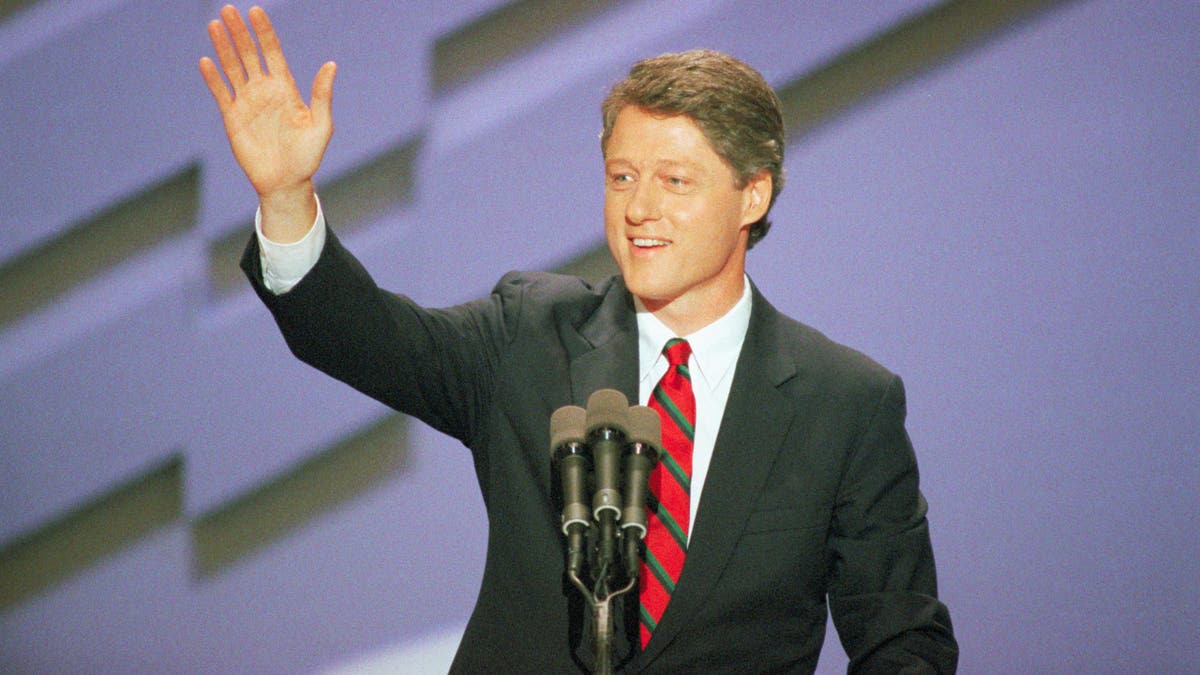
Clinton was the governor of Arkansas before becoming president. (Getty Images)
Kathleen Willey – 1998
In an interview with Fox, Willey called herself a former friend of Clinton and said she supported him when he launched his presidential ambitions.
«We raised an awful lot of money for him,» Willey recalled.
Willey explained that her husband had fallen on hard financial times, prompting her to turn to the White House in 1993 in hopes of finding a job. Clinton was the president then.
«He sat down on the sofa. I proceeded to tell him what was going on, and I told him, ‘I need a job.’ He took my coffee cup from me and the next thing I knew he had me backed into a corner, hands all over me, trying to kiss me,» Willey said, describing an altercation between the two that took place in a study just outside the Oval Office.
Willey first went public with her allegation in a CBS interview with «60 Minutes» in 1998. Clinton has repeatedly denied the allegation.
Gennifer Flowers – 1992
A former television reporter, Gennifer Flowers claimed that she had a longstanding affair with Clinton from the late 1970’s through 1989.
Years later, she said Clinton’s advances started when she and Clinton met during a reporting assignment.
«He proceeded to come on to me for three months before I decided I wanted to have a relationship with him which at that point was consensual. In today’s standards, it was definitely sexual harassment,» Flowers said in an appearance on the Ingraham Angle in 2018.
The story spread to national media as Bill Clinton waged a presidential campaign, just weeks before the Iowa caucuses.
Clinton, in an interview with 60 Minutes in the fallout of the news, didn’t confirm the allegations from Flowers but said he had «acknowledged causing pain» in his marriage.
MONICA LEWINSKY SAYS BILL CLINTON ‘ESCAPED A LOT MORE THAN I DID’ AFTER WHITE HOUSE SCANDAL
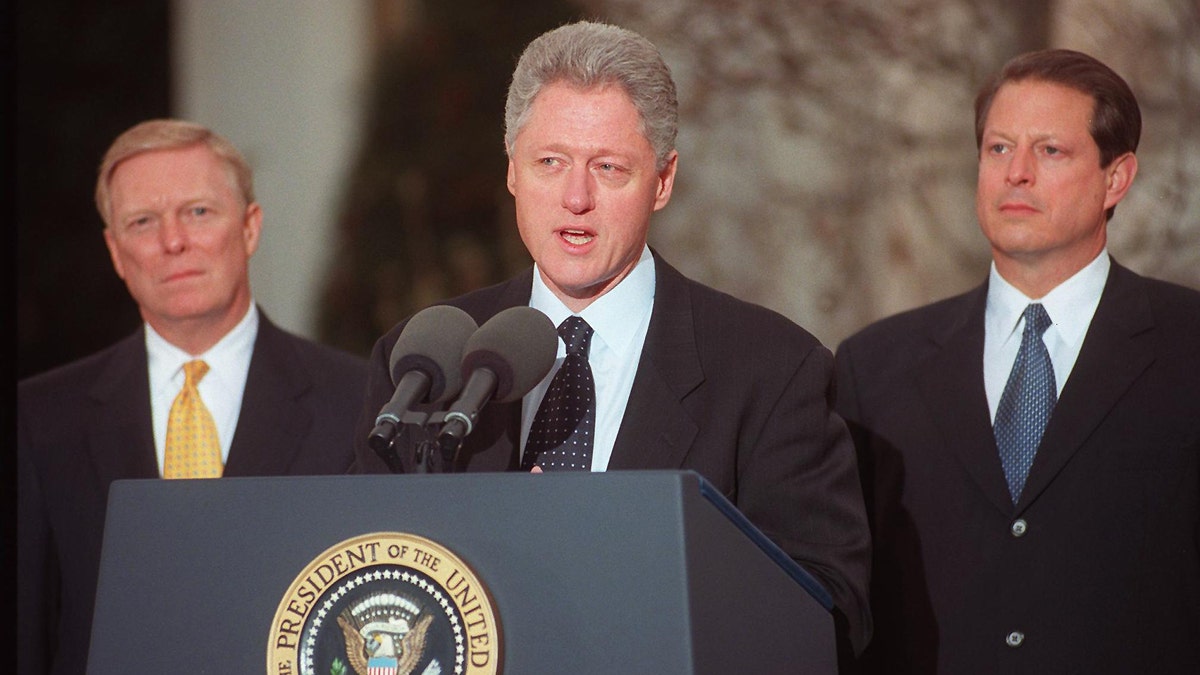
Former President Bill Clinton. (George Bridges / AFP via Getty Images)
Troopergate – 1993
Shortly after President Bill Clinton assumed office, allegations first reported by The American Spectator magazine began to surface that Clinton had used state troopers as governor to arrange sexual encounters with women.
Among them, Larry Patterson, Roger Perry and Danny Ferguson all claimed Clinton had ordered them to facilitate his encounters.
Time magazine quoted the original American Spectator allegations, stating that the troopers had said «their official duties included facilitating Clinton’s cheating on his wife.»
«They were instructed by Clinton to drive him in state vehicles to rendezvous points and guard him during sexual encounters … and to help Clinton cover up his activities by lying to Hillary.»
The allegations about the troopers also became a part of independent counsel Ken Starr’s later investigation of separate cases.
Paula Jones
Jones’ case, which eventually led to Clinton’s impeachment in 1998, began while Clinton was governor of Arkansas.
«I was asked to work the governor’s quality management conference,» Jones recalled in an interview with Sean Hannity in 2016. «His security was hanging out with us, and later that day, he came over and said, ‘The governor would like to meet with you.’»
Jones said she was escorted up to Clinton’s room at a hotel.
«We did some small talk, and then he started kinda getting a little comfortable. He said he liked my curves and then I’m like — I didn’t know what to do. It was him and me in the room,» Jones said.
Jones described how the governor then exposed himself to her before she left the room.
«’I’m not that kind of girl,’» Jones remembers telling Clinton.
After Jones launched a sexual harassment lawsuit in 1991, Ken Starr, an independent counsel who was assigned to the case, began an investigation that would uncover not just the details about the Jones incident but also the Monica Lewinsky scandal that finally led to Clinton’s impeachment in the House of Representatives.
Jones herself was awarded an $850,000 settlement as a result of her private suit.
BILL CLINTON FACES HIGH-STAKES HOUSE GRILLING IN EPSTEIN PROBE AND MORE TOP HEADLINES
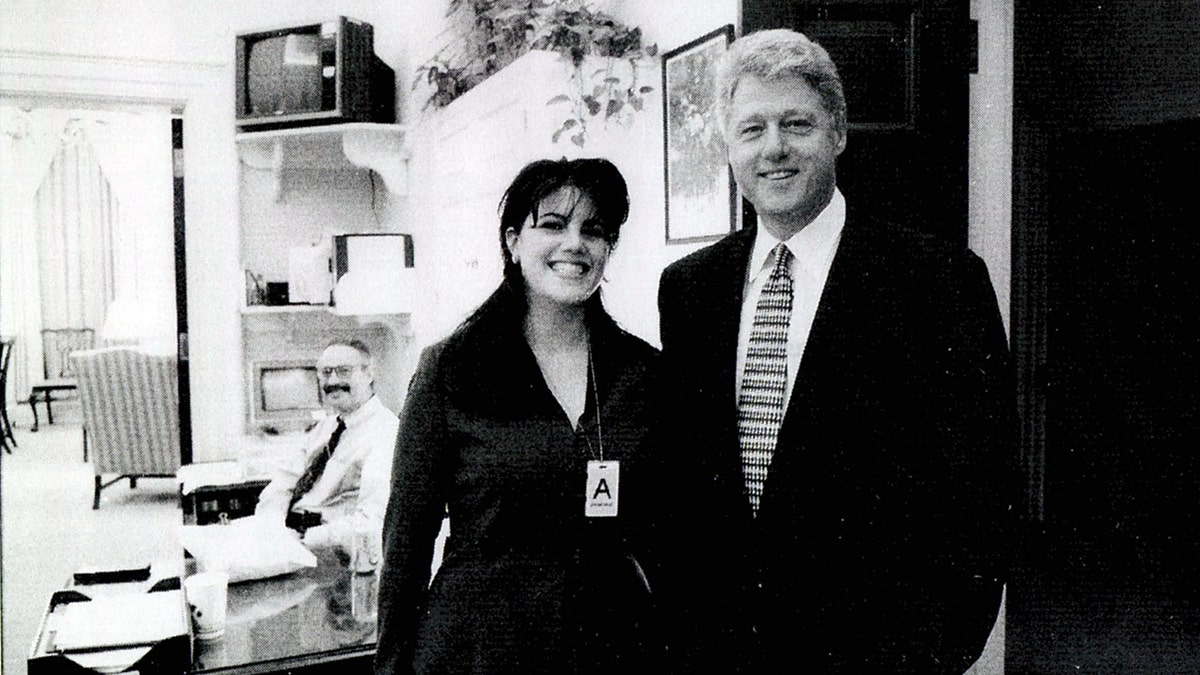
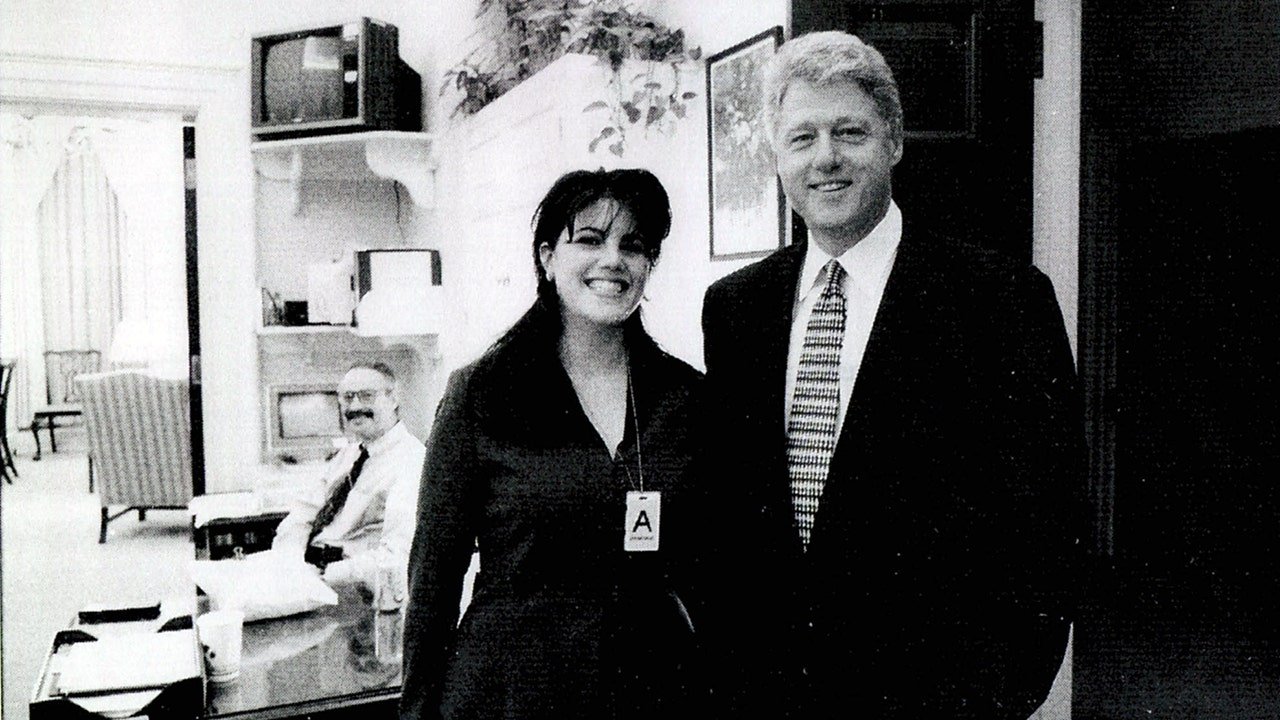
An image provided by the Starr team to the House shows Monica Lewinsky, center, and President Bill Clinton, right. (House Judiciary Committee/Getty Images)
Monica Lewinsky – 1998
The case that would eventually lead to Clinton’s impeachment first came to the public’s attention when the Drudge Report picked up a story, initially abandoned by Newsweek, that Clinton was having an affair with an intern at the White House.
«She was a frequent visitor to a small study just off the Oval Office, where she claims to have indulged the president’s sexual preference. Reports of the relationship spread in White House quarters, and she was moved to a job at the Pentagon, where she worked until last month,» the reporting read.
Clinton famously denied the allegations when answering questions under oath from Ken Starr, who, at the time, was investigating Paula Jones’ claims.
«I did not have sexual relations with that woman,» Clinton famously said in an interview at the White House.
Eventually, Clinton’s infidelity was confirmed when a friend of Lewinsky recorded her talking about the affair and turned the tapes over to Starr.
CLICK HERE TO DOWNLOAD THE FOX NEWS APP
Clinton would be forced to admit that he had misrepresented his boldest of assertions. At least one voter in Houston told NBC the admission left him with more questions.
«What else has he lied about?» a man asked reporters.
Related Article
jeffrey epstein,bill clinton,democratic party,hillary clinton

La inesperada confesión de Lionel Messi que dejó a todos en shock: “Me arrepiento de…»

Key military sites targeted inside Iran as part of coordinated US-Israeli strikes

La Iglesia pidió rezar este domingo por la paz en el mundo y y rechazó “el camino de la violencia”

La Fiscalía Nacional Electoral inició la revisión anual de la personería de partidos políticos

China casi no aparece: las inversiones inesperadas que tienen los principales bancos de Wall Street

Independiente empata contra Central Córdoba en el inicio de la fecha 8 del Torneo Apertura

Jorge Macri prepara su discurso para abrir el año legislativo: el deseo de reelección y el espejo en Bukele

Catherine Fulop contó el difícil momento que atraviesa su madre en Venezuela: “Está postrada”

Crisis en la industria: otra multinacional se achica y cierra una planta en la Argentina

Alarma por la salud de Divina Gloria tras salir de Gran Hermano: “La internaron directamente en terapia intensiva”

 CHIMENTOS2 días ago
Alarma por la salud de Divina Gloria tras salir de Gran Hermano: “La internaron directamente en terapia intensiva”
- CHIMENTOS2 días ago
Ginette Reynal dio una rotunda marcha atrás con una decisión que tomó hace dos meses: “No aguanto más”
- CHIMENTOS2 días ago
¡Titi revolucionó Gran Hermano! Cuáles son las 5 cosas que ya extraña: «Accesorios, pilates, bondiola, auriculares y bailar»