INTERNACIONAL
Con la amenaza de los aranceles, Trump golpea a la economía de Brasil y provoca un cimbronazo político


La demoledora amenaza arancelaria de Donald Trump a Lula no solo tendría un enorme impacto económico en Brasil. También afecta duramente a la política nacional a poco más de un año de las elecciones presidenciales de octubre de 2026.
Los números asustan. La eventual aplicación de un gravamen del 50% a los productos brasileños, como adelantó el presidente estadounidense, provocaría la caída de hasta 13.000 millones de dólares en las exportaciones del país sudamericano a los Estados Unidos solo el año próximo, según cálculos del banco de inversiones BTG Pactual.
Son cifras provisorias, pero que preocupan. Las pérdidas estimadas equivalen al 0,6% del PIB de Brasil y a casi la tercera parte de las ventas brasileñas a EE.UU. en 2024, que ascendieron a 41.000 millones de dólares.
Leé también: Trump amenazó con aplicar aranceles del 50% al cobre y del 200% a los productos farmacéuticos
Pero el daño a la economía no sería proporcional al perjuicio que Trump entiende que provocaría en las aspiraciones de Lula, o de la izquierda brasileña sea quien fuere el candidato, en las elecciones del 4 de octubre de 2026.
Al contrario, analistas creen que el mayor perjudicado de esta represalia económica sería el propio expresidente Jair Bolsonaro, a quien Trump intenta “rescatar” con sus amenazas arancelarias de la ola de juicios en su contra, en especial el que se lleva adelante por golpismo y que lo puede arrastrar a una condena a 40 años de cárcel.
“Las implicaciones políticas deben ser negativas para Bolsonaro. Queda en evidencia el papel de su hijo (Eduardo Bolsonaro, autoexiliado en Estados Unidos y que lleva a cabo un fuerte ”lobby» anti-Lula y a favor de su padre en ese país). Además, la injerencia de Trump en los asuntos internos cae muy mal en Brasil», dijo a TN el analista Marco Teixeira, investigador del Instituto Getulio Vargas de Río de Janeiro.
Por qué Trump amenaza con aranceles del 50% a los productos brasileños
Trump suele lanzar amenazas arancelarias hacia todos los costados. No importa si son aliados, como la Unión Europea, Japón o la misma Argentina de Javier Milei. Todos caen en el mismo saco de la guerra comercial fogoneada por la nueva Casa Blanca.
Ahora le tocó el turno a Brasil, casualmente el anfitrión de la reciente cumbre de los BRICS (Rusia, China e Irán, entre otros) celebrada en Río y que cuestionó duramente las políticas arancelarias, pidió el fin de la guerra en Gaza y criticó los ataques estadounidenses e israelíes a Teherán. Luiz Inacio Lula da Silva fue el anfitrión de la cumbre de los BRICS celebrada en Río de Janeiro (Foto: REUTERS/Ricardo Moraes)
En un inesperado posicionamiento público, Trump pidió a Brasil que “deje a Bolsonaro en paz” y que cese “la caza de brujas” que, a su juicio, se lleva adelante contra el expresidente. Dos días después, subió la apuesta y le escribió una carta a Lula para avisarle que impondrá un nuevo arancel de 50% a los productos procedentes de Brasil.
“Conocí y traté con el expresidente Jair Bolsonaro, y le tenía un gran respeto, al igual que la mayoría de los demás líderes de otros países. La forma en que Brasil ha tratado al expresidente Bolsonaro, un líder muy respetado en todo el mundo durante su mandato, incluso por Estados Unidos, es una vergüenza internacional. Este juicio no debería celebrarse. ¡Es una caza de brujas que debe terminar DE INMEDIATO!”, afirmó Trump.
Leé también: La Casa Blanca extendió hasta el 1 de agosto el plazo para cerrar acuerdos por los aranceles
Lula reaccionó de inmediato en un posteo en X. “Cualquier aumento arancelario unilateral se abordará de conformidad con la Ley de Reciprocidad Económica de Brasil”, que conllevaría la imposición de aranceles recíprocos a los productos estadounidenses.
“Brasil es un país soberano con instituciones independientes y no aceptará ser controlado por nadie”, afirmó el presidente izquierdista.
Por qué la amenaza de Trump perjudica más a Jair Bolsonaro que a Lula
Para el analista Marco Teixeira, la jugada de Trump podría tener el efecto contrario en la política brasileña. Según dijo, “el bolsonarismo no calculó bien como para estar dependiendo de acciones de Trump. Solo muestra su desesperación” ante la difícil situación judicial de su líder, apuntó.
“No les quedan muchas cosas por hacer para intentar salvarlo, a no ser más acciones desesperadas como estas”, indicó.
Además de sus problemas judiciales, Bolsonaro enfrenta una inhabilitación política hasta 2030.
La analista Denilde Holzhacker, directora del área de Investigación y posgrado de la Escuela Superior de Propaganda y Marketing de San Pablo, dijo a TN que las amenazas de Trump “pueden generar una mayor incertidumbre en el campo de la derecha”.
Por ejemplo, según dijo, traería serios perjuicios económicos al rico estado exportador de San Pablo, gobernador por Tarcisio de Freitas, aliado de Bolsonaro. “Esto puede ser negativo para sus bases”, sostuvo.
“En cambio, las amenazas arancelarias movilizarán a los grupos pro-gobierno porque accionará un sentimiento antiamericano. Sin embargo, también traerá perjuicios económicos a largo plazo y quedará la sensación de que el gobierno de Lula creó esta situación”, dijo.
Para Holzhacker, los riesgos son para ambos lados. “Pero el gobierno tiene más posibilidades de consolidar con esta acción el apoyo de la sociedad”. Donald Trump observa una camiseta de la selección brasileña (Foto de archivo: AFP)
El debate que generó la amenaza de la Casa Blanca fue tan grande que el influyente diario Folha de San Pablo abrió su edición digital con un duro cuestionamiento al gobierno republicano.
“El inaudito ataque de Trump a Brasil, después de meses ignorando solemnemente la relación con el país, transformó al presidente estadounidense en actor central de la campaña electoral del año que viene”, escribió el editorialista Igor Gielow.
Leé también: Guerra comercial: Trump anunció que le aplicará aranceles del 25% a Japón y Corea del Sur
“No hay precedente histórico para lo que sucedió, aunque sea importante recordar que el (presidente) estadounidense acostumbra revertir sus decisiones más drásticas en poco tiempo como parte de su propalada técnica de negociación pasiva-agresiva”, prosiguió.
Para el periódico paulista, con esta decisión “pierde de inmediato Bolsonaro, que ya declaró tener en Trump a su ídolo político. La coincidencia del arco narrativo de los dos populistas siempre fue notable, en el ascenso, en la caída, en la contestación institucional con toques golpistas”.
Por el contrario, continuó el reporte, Lula “gana un acto electoral inesperado. Es facilísimo colar cualquier crisis, si es que la habrá, en la relación entre Bolsonaro y Trump”, concluyó.
Brasil, Donald Trump, Lula Da Silva, Jair Bolsonaro







INTERNACIONAL
Mamdani’s response to Trump’s Iran strike sparks conservative backlash: ‘Rooting for the ayatollah’
NEWYou can now listen to Fox News articles!
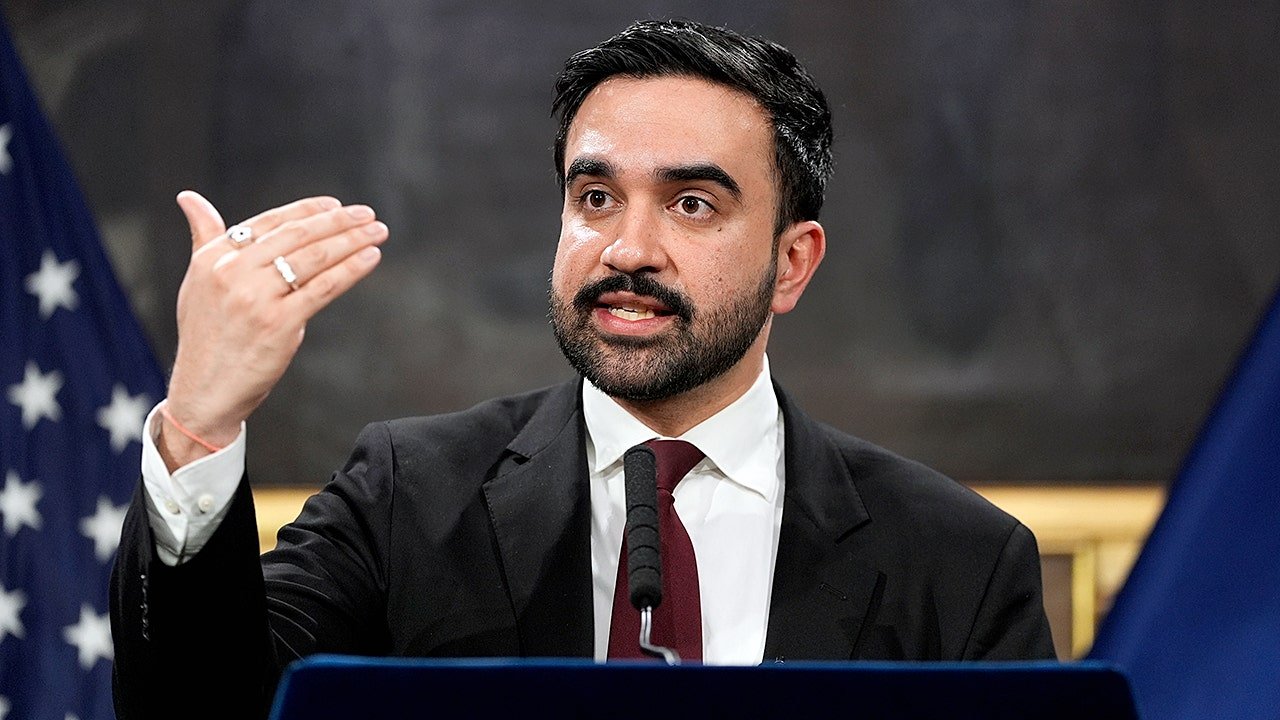
New York City’s socialist Mayor Zohran Mamdani is facing blowback from conservatives on social media over his post condemning the U.S. attack on Iran that led to the killing of Iran’s supreme leader, Ayatollah Ali Khamenei.
On Saturday, as a joint strike on Iran by the United States and Israel was developing, Mamdani blasted the Trump administration’s decision in a post on X that has been viewed roughly 20 million times.
«Today’s military strikes on Iran — carried out by the United States and Israel — mark a catastrophic escalation in an illegal war of aggression,» Mamdani wrote.
«Bombing cities. Killing civilians. Opening a new theater of war. Americans do not want this. They do not want another war in pursuit of regime change.»
New York City Mayor Zohran Mamdani speaks to reporters during a news conference in New York Feb. 17, 2026. (AP Photo/Seth Wenig)
Mamdani said Americans prefer «relief from the affordability crisis» before speaking directly to Iranians in New York City.
«You are part of the fabric of this city — you are our neighbors, small business owners, students, artists, workers, and community leaders,» Mamdani said. «You will be safe here.»
The post was quickly slammed by conservatives on social media making the case that Mamdani’s response appeared sympathetic to Iran’s brutal regime and pointing to his lack of public reaction to the Iranian protesters killed in recent years.
«Comrade Mayor is rooting for the Ayatollah,» GOP Sen. Ted Cruz posted on X. «They can chant together.»
OBAMA OFFICIAL WHO BACKED IRAN DEAL SPARKS ONLINE OUTRAGE WITH REACTION TO TRUMP’S STRIKE: ‘SIT THIS ONE OUT’
«Do u say anything pro American ?» Fox News host Brian Kilmeade posted on X. «do u know any Iranians – ? they hate @fr_Khamenei they celebrate his death, you should be celebrating his death ! hes killed thousands of American’s and just killed 30k Iranians, did u even say a word about that? You are an embarrassment !! Please quit.»
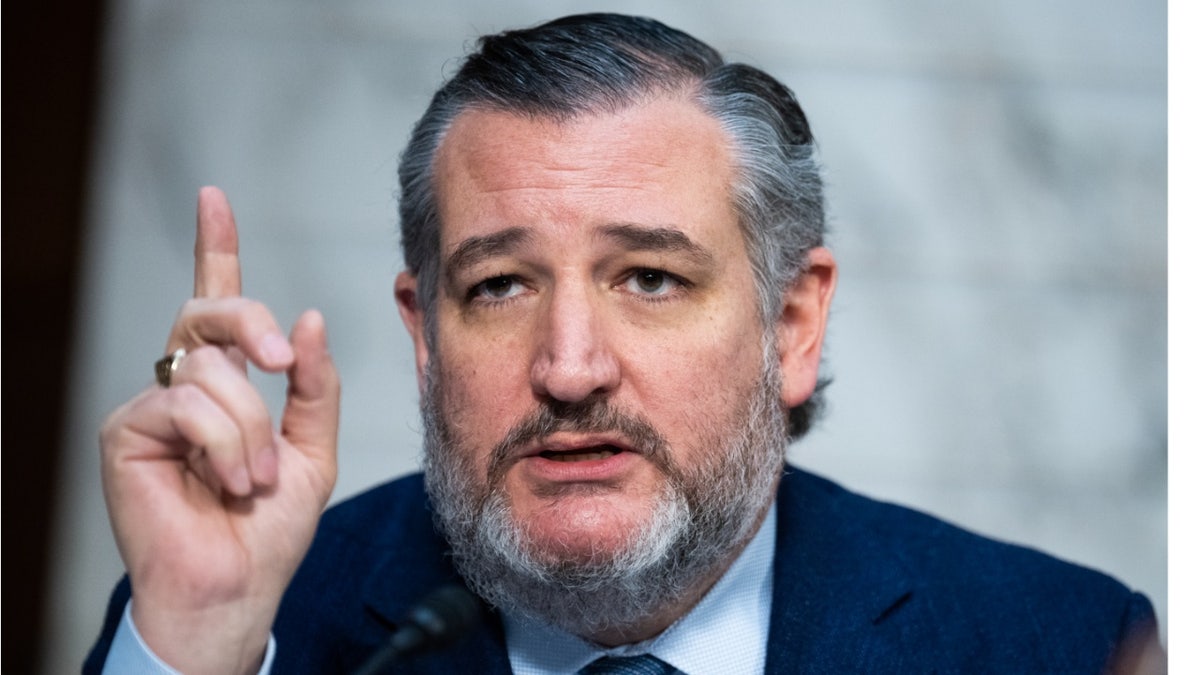
Sen. Ted Cruz, R-Texas, questions Pam Bondi, President-elect Donald Trump’s nominee to be attorney general, during her Senate Judiciary Committee confirmation hearing in Hart building Jan. 15, 2025. (Tom Williams/CQ-Roll Call, Inc via Getty Images)
«I don’t feel safe in New York listening to someone like you, Mamdani, who sympathizes with the regime that killed more than 30,000 unarmed Iranians in less than 24 hours,» Iranian American journalist Masih Alinejad posted on X.
«We Iranians do not allow you to lecture us about war while you had nothing to say when the Islamic Republic shot schoolgirls and blinded more than 10,000 innocent people in the streets. You were busy celebrating the hijab while women of my beloved country Iran were jailed and raped by Islamic Security forces for removing it.
«And NOW you find your voice to defend the regime? No. I will not let you claim the moral high ground. The people of Iran want to be free. Where were you when they needed solidarity?»
CLICK HERE TO DOWNLOAD THE FOX NEWS APP
«How is it that you can’t differentiate between good and evil?» Billionaire hedge fund manager Bill Ackman posted on X. «Why is this so hard for you?»
«It takes a particular kind of audacity, or ignorance, for a city mayor to appoint himself the conscience of American foreign policy while his constituents step over garbage on their way to work,» GOP Rep. Nancy Mace posted on X. «History will not remember his bravery. It will not remember him at all.»
«Iranian New Yorkers are thrilled today and see right through you,» Republican New York City Councilwoman Vickie Paladino posted on X.
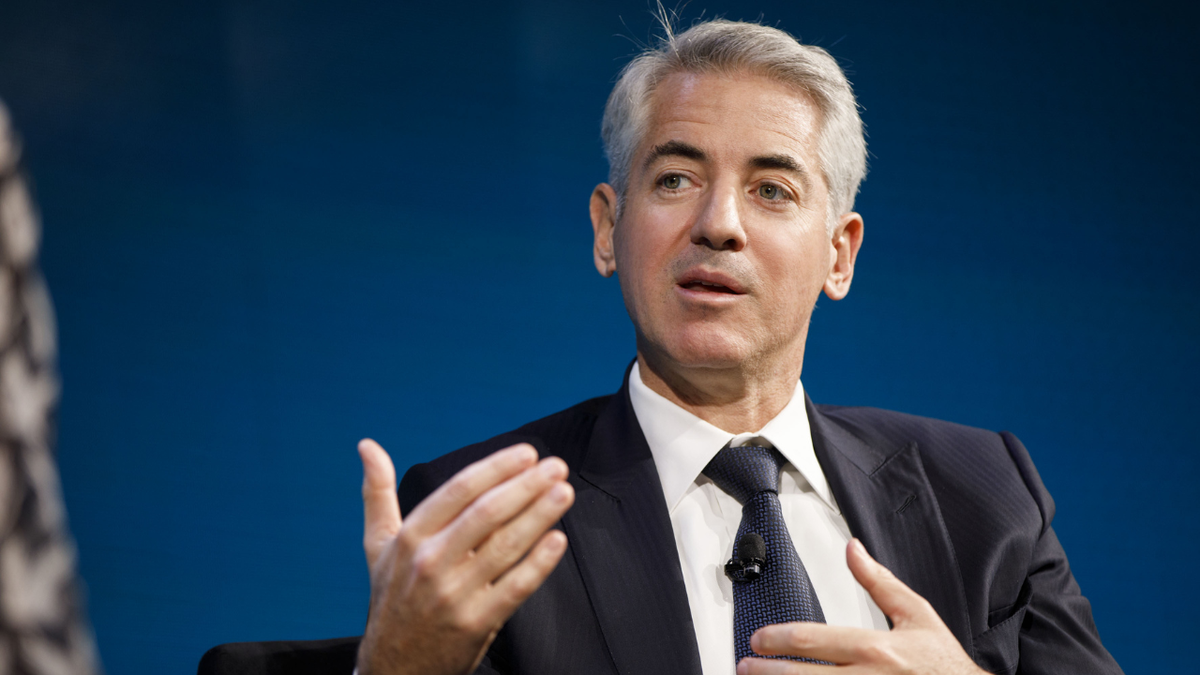
Bill Ackman, CEO of Pershing Square Capital Management LP, speaks during the WSJ D.Live global technology conference in Laguna Beach, Calif., Oct. 17, 2017. (Patrick Fallon/Bloomberg/Getty Images)
«When Kuwait, Saudi Arabia, Qatar, Turkey, UAE, Bahrain all support today’s operation eliminating world’s #1 sponsor of terror, but New York City’s Mayor @ZohranMamdani is shilling for Iran,» Republican New York City Councilwoman Inna Vernikov posted on X.
Fox News Digital reached out to Mamdani’s office for comment.
Shortly after Mamdani’s post, it was announced by President Trump and Israeli officials that the military operation resulted in Khamenei’s death.
Israeli leaders confirmed Khamenei’s compound and offices were reduced to rubble early Saturday after a targeted strike in downtown Tehran.
«Khamenei was the contemporary Middle East’s longest-serving autocrat. He did not get to be that way by being a gambler. Khamenei was an ideologue, but one who ruthlessly pursued the preservation and protection of his ideology, often taking two steps forward and one step back,» Behnam Ben Taleblu, senior director of FDD’s Iran program, told Fox News Digital.
Related Article
war with iran,zohran mamdani,politics
INTERNACIONAL
Iran goes dark amid ‘regime paranoia’, blackout follows Israeli, US strikes on compound
NEWYou can now listen to Fox News articles!
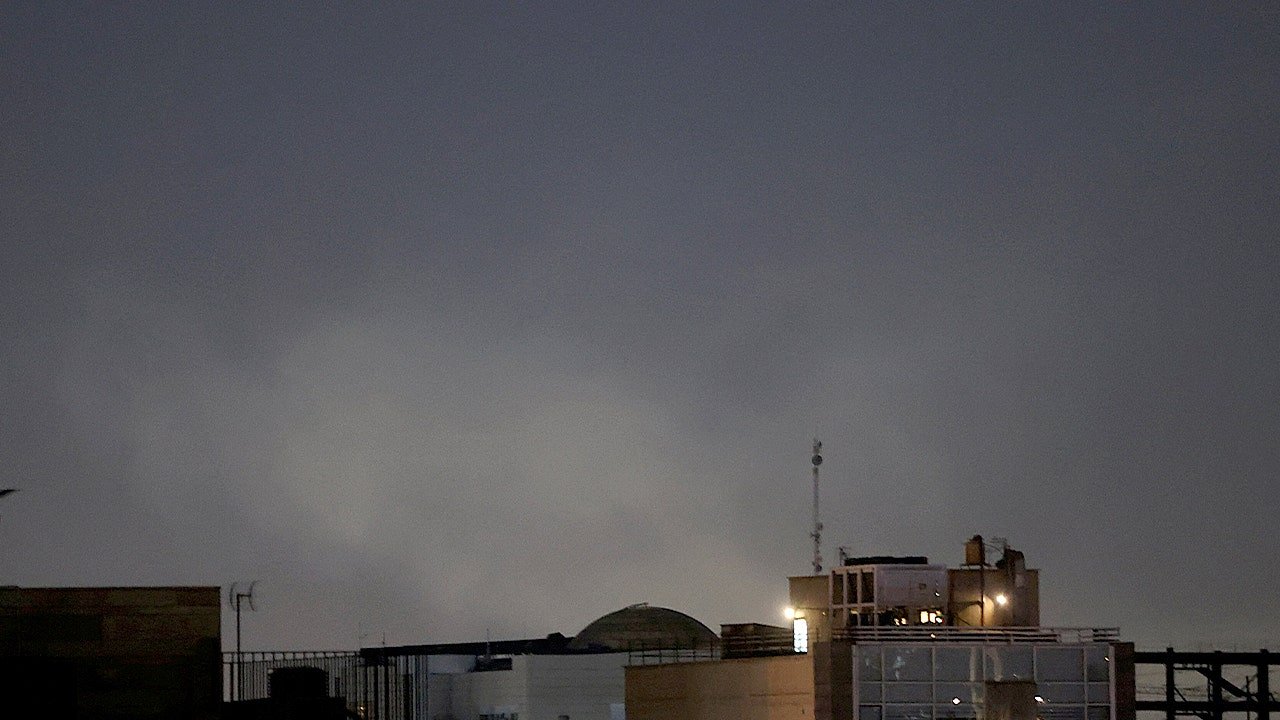
Iran was plunged into an internet blackout Saturday after Israel and the U.S. launched military strikes around the country, according to a global internet monitor.
Within hours of the strikes — which officials said targeted infrastructure and killed dozens of senior regime figures at a compound in Tehran— NetBlocks CEO Alp Toker confirmed connectivity started «flatlining.»
«We’re tracking the ongoing blackout, but our assessment is that this is straight out of Iran’s wartime playbook and consistent both technically and strategically with what we saw during the 2025 Twelve-Day War with Israel,» Toker told Fox News Digital.
«Iran’s internet connectivity is now flatlining around the 1% level, so the original blackout the regime imposed during the morning has been consolidated,» he confirmed.
«The blackout was imposed just after 7:00 UTC, not long after the attack on the Iranian regime compound,» Toker clarified, adding that Iran had been largely offline for approximately 12 hours following the attack.
«At 06:10 UTC, there is the main compound strike; at 07:10 UTC, telecoms disruption starts; at 08:00 UTC, the blackout is largely in effect; and by 08:30 UTC, connectivity flatlines.»
«Wartime national blackouts are exceedingly rare around the world, and it’s something we’ve only really seen at this scale in Iran,» he said.
President Donald Trump monitors U.S. military operations in Iran following an Israeli strike in Tehran on Saturday, Feb. 28, 2026. (@WhiteHouse/X)
In the wake of the attack, dubbed Operation Epic Fury, President Donald Trump said on Truth Social that the «heavy and pinpoint» bombing in Iran «will continue uninterrupted throughout the week or as long as necessary to achieve our objective of PEACE THROUGHOUT THE MIDDLE EAST AND, INDEED, THE WORLD!»
He claimed Iranian security forces and members of the regime’s powerful Islamic Revolutionary Guard Corps were already seeking immunity. He urged them to «peacefully merge with the Iranian Patriots.»
«We are hearing that many of their IRGC, Military, and other Security and Police Forces no longer want to fight and are looking for Immunity from us,» Trump said in the post. «As I said last night, ‘Now they can have Immunity; later they only get Death!’»
Toker argued the timing of the blackout suggested it was imposed deliberately as the regime sought to secure communications amid fears of further targeting.
TRUMP TELLS IRANIANS THE ‘HOUR OF YOUR FREEDOM IS AT HAND’ AS US-ISRAEL LAUNCH STRIKES AGAINST IRAN
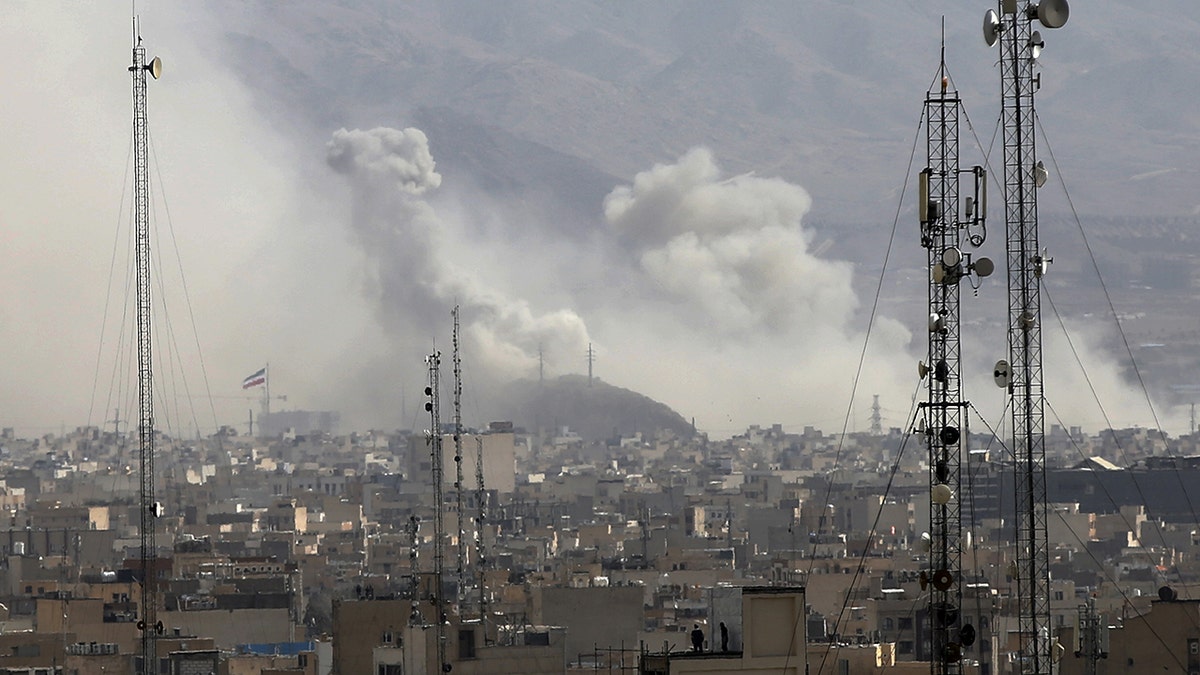
TEHRAN, IRAN – FEBRUARY 28: Smoke rises over the city center after an Israeli army launches 2nd wave of airstrikes on Iran on February 28, 2026. (Photo by Fatemeh Bahrami/Anadolu via Getty Images) (Fatemeh Bahrami/Anadolu via Getty Images)
«The Iranian regime will have deployed this new blackout to counter potential cyberattacks during their own military operation, but also to avoid leaking the locations of senior regime figures through metadata and user-generated content,» he said.
«Communications would have been limited, and Iran’s leadership would have proceeded with the assumption that all communications, including satellite or whitelisted networks, carry risks,» he said before claiming that «paranoia would be well grounded at this point, with the blackout a belated but direct response to that.»
«Those participating directly would already know to avoid technology that could betray their whereabouts,» Toker said.
«However, the metadata may well have played a part in determining that the meeting of regime leaders was being held at the Tehran compound, who was in attendance, and at what time.»
DID THEY GET HIM? KHAMENEI’S FATE REMAINS UNKNOWN AFTER ISRAEL-US STRIKE LEVELS HIS COMPOUND
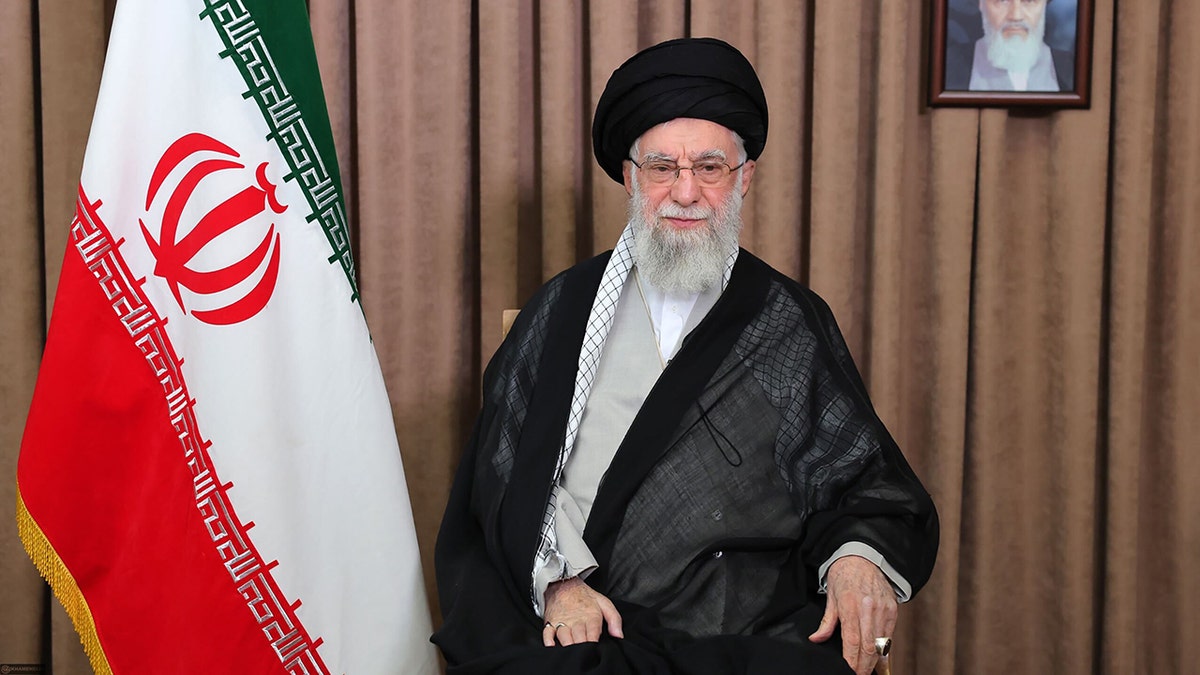
In this handout image provided by the Office of the Supreme Leader of Iran, Iranian Supreme Leader Ali Khamenei addresses the nation in a state television broadcast on June 18, 2025 in Tehran, Iran. (Office of the Supreme Leader of Iran via Getty Images)
Toker revealed that the broader network around the regime leaders and around the compound wouldn’t have had the same strict restrictions.
«This kind of adjacent ‘background noise’ can be correlated against other intelligence sources to build an understanding of activity on the ground,» he added.
«Smartphones are a readily available, almost ‘free’ source of intelligence, and even when locked down, they eventually connect to international online services and generate insights that can be used to pinpoint regime figures,» Toker said.
CLICK HERE TO DOWNLOAD THE FOX NEWS APP
«In the aftermath of Saturday’s strike, this concern will have been high on the remaining Iranian leadership’s minds, especially if they didn’t have a clear and specific understanding of how the meeting was compromised.»
Iran has previously imposed sweeping internet shutdowns during periods of domestic unrest, including nationwide protests in January, which saw thousands killed, often seeking to curb the spread of information and restrict coordination.
Related Article

war with iran,ali khamenei,bombings,middle east,terrorism
INTERNACIONAL
El Salvador registra más de 25,000 inmuebles inscritos en el primer bimestre de 2026 y mantiene dinamismo en la creación de empresas

En lo que va del año 2026, el Centro Nacional de Registros (CNR) reporta la inscripción de 25,381 inmuebles, una cifra que equivale a $720 millones, según datos oficiales difundidos por el director ejecutivo del CNR, Camilo Trigueros. Este comportamiento refleja la continuidad de una tendencia positiva que se consolidó en 2025, cuando se efectuaron 151,567 transferencias de dominio, generando un movimiento superior a $4,212 millones en el mercado inmobiliario salvadoreño. El incremento interanual en las transferencias de dominio alcanzó el 13%, impulsado tanto por la recuperación de zonas residenciales antes afectadas por la violencia, como por el renovado interés de inversionistas y ciudadanos residentes en el exterior.
Trigueros explicó en entrevista con el Noticiero Hechos, de Canal 12, que el proceso de transferencia de dominio responde principalmente a operaciones de compraventa, aunque también se registran casos de donaciones y herencias. Un estudio interno del CNR identificó que, en años recientes, las compraventas en colonias bajo control de pandillas eran prácticamente inexistentes debido a la falta de compradores y al temor de los propietarios a vender. Actualmente, tras mejoras en las condiciones de seguridad, estas zonas experimentan una reactivación del mercado inmobiliario, con participación de inversionistas nacionales, extranjeros y miembros de la diáspora salvadoreña.
El dinamismo del sector inmobiliario se suma al crecimiento sostenido de la actividad empresarial en el país. De acuerdo con datos publicados por Infobae el 4 de enero, El Salvador cerró 2025 con la creación de 8,373 nuevas empresas y más de 13,000 solicitudes de registro de marca, alcanzando cifras récord para la economía nacional. El crecimiento interanual en la conformación de nuevas empresas fue del 11%, mientras que las solicitudes de marca aumentaron un 18%, con especial énfasis en los sectores de gastronomía y comercio. Entre los factores que explican esta expansión se encuentran la digitalización de trámites, la simplificación de procesos y la implementación de figuras jurídicas más accesibles, como las Sociedades por Acciones Simplificadas (SAS).
El inicio de 2026 mantiene la tendencia al alza. Según datos oficiales, solo en enero se constituyeron cerca de 900 nuevas entidades, lo que proyecta que, de mantenerse el ritmo actual, El Salvador podría superar las 10,000 empresas creadas al finalizar el año. La digitalización de los servicios del CNR permite que el 70% de los usuarios obtenga respuesta a sus trámites en menos de 24 horas, lo que ha fortalecido la confianza de los inversionistas y emprendedores.
La recuperación del sector inmobiliario y el auge en la creación de empresas se explican, en parte, por la percepción de mayor seguridad, la estabilidad macroeconómica y el fortalecimiento institucional. De acuerdo con el balance presentado por Trigueros en medios radiales y televisivos, la mayoría de las nuevas empresas corresponden a sectores de servicios y comercio, con énfasis en pequeñas empresas familiares y emprendimientos gastronómicos. Además, la eliminación de barreras burocráticas y la gratuidad de trámites electrónicos han sido determinantes para el aumento de la formalización empresarial.
En 2025, la demanda de servicios del CNR creció un 11.1%, con más de 130,000 atenciones registradas a nivel nacional. El Instituto Adam Smith de la Universidad de la Florida ubicó a El Salvador en la quinta posición de facilidad para abrir una empresa en Latinoamérica, subiendo quince posiciones respecto a años previos. Las autoridades anticipan que la continuidad de las reformas y la ampliación de los servicios digitales mantendrán el ritmo de crecimiento en ambos rubros durante 2026.
corresponsal:Desde San Salvador, El Salvador

Marcelo Gallardo, el que ‘siempre está volviendo’ a River Plate, dice adiós una vez más

El Gobierno celebró la aprobación del Senado sobre el acuerdo comercial entre el Mercosur y la Unión Europea

Frotar una hoja de diario en los vidrios: por qué lo recomiendan y para qué sirve

Milei lanzará la «fase reformista» de su gestión y apelará a una alianza con los gobernadores

San Lorenzo empató con el Talleres de Carlos Tevez en la continuidad de la octava fecha del Torneo Apertura

Reapareció Divina Gloria y contó su verdad tras dejar Gran Hermano

Catherine Fulop contó el difícil momento que atraviesa su madre en Venezuela: “Está postrada”

Jorge Macri prepara su discurso para abrir el año legislativo: el deseo de reelección y el espejo en Bukele

Crisis en la industria: otra multinacional se achica y cierra una planta en la Argentina

Alarma por la salud de Divina Gloria tras salir de Gran Hermano: “La internaron directamente en terapia intensiva”

 CHIMENTOS2 días ago
Alarma por la salud de Divina Gloria tras salir de Gran Hermano: “La internaron directamente en terapia intensiva”
- CHIMENTOS2 días ago
Ginette Reynal dio una rotunda marcha atrás con una decisión que tomó hace dos meses: “No aguanto más”
- CHIMENTOS2 días ago
¡Titi revolucionó Gran Hermano! Cuáles son las 5 cosas que ya extraña: «Accesorios, pilates, bondiola, auriculares y bailar»