INTERNACIONAL
Democrat who broke with party says his DHS funding vote a ‘mistake’ after 2nd Minneapolis ICE shooting


NEWYou can now listen to Fox News articles!
One of the seven House Democrats who voted with Republicans to advance a Department of Homeland Security (DHS) spending bill last week is now characterizing his vote as a mistake, highlighting growing unrest among moderate Democrats over the department’s funding even as lawmakers look to escape a looming government shutdown.
In the wake of a deadly clash between immigration enforcement and agitators in Minnesota over the weekend, Rep. Tom Suozzi, D-N.Y., apologized publicly for his vote in a post to Facebook.
«I failed to view the DHS funding vote as a referendum on the illegal and immoral conduct of ICE in Minneapolis,» Suozzi said, referring to Immigration and Customs Enforcement (ICE), a key agency in President Donald Trump’s immigration crackdown efforts.
DEMS RELENT, SENATE SENDS $174B SPENDING PACKAGE TO TRUMP’S DESK AS SHUTDOWN LOOMS OVER DHS FUNDING
Rep. Tom Suozzi, left, pictured next to ICE agents, right. (Tom Williams/CQ-Roll Call, Inc. via Getty Images; Aaron Lavinsky/The Minnesota Star Tribune)
«I hear the anger from my constituents and I take responsibility for that. I have long been critical of ICE’s unlawful behavior, and I must do a better job demonstrating that,» he added.
The other six Democrats contacted by Fox News Digital did not respond to inquiries about their votes.
Suozzi’s comments come as Democrats in the Senate are signaling growing opposition to passing the DHS bill and funding the government ahead of a possible shutdown on Jan. 30. The DHS bill, which includes funding for ICE, is part of a four-bill package that the House of Representatives passed last week.
The political outlook of the DHS funding bill changed over the weekend with the death of Alex Pretti.
According to DHS, ICE officers shot and killed Pretti, 37, in a confrontation on Saturday when Pretti attempted to disrupt law enforcement activities while in possession of a firearm. DHS Secretary Kristi Noem has said agents acted in self-defense.
Pretti is the second civilian shot by ICE in the past month.
The Friday before Pretti’s death, Suozzi and six other Democrats broke with the rest of their party to advance a DHS funding bill that the majority of the party had condemned as inadequate in its provisions on ICE.
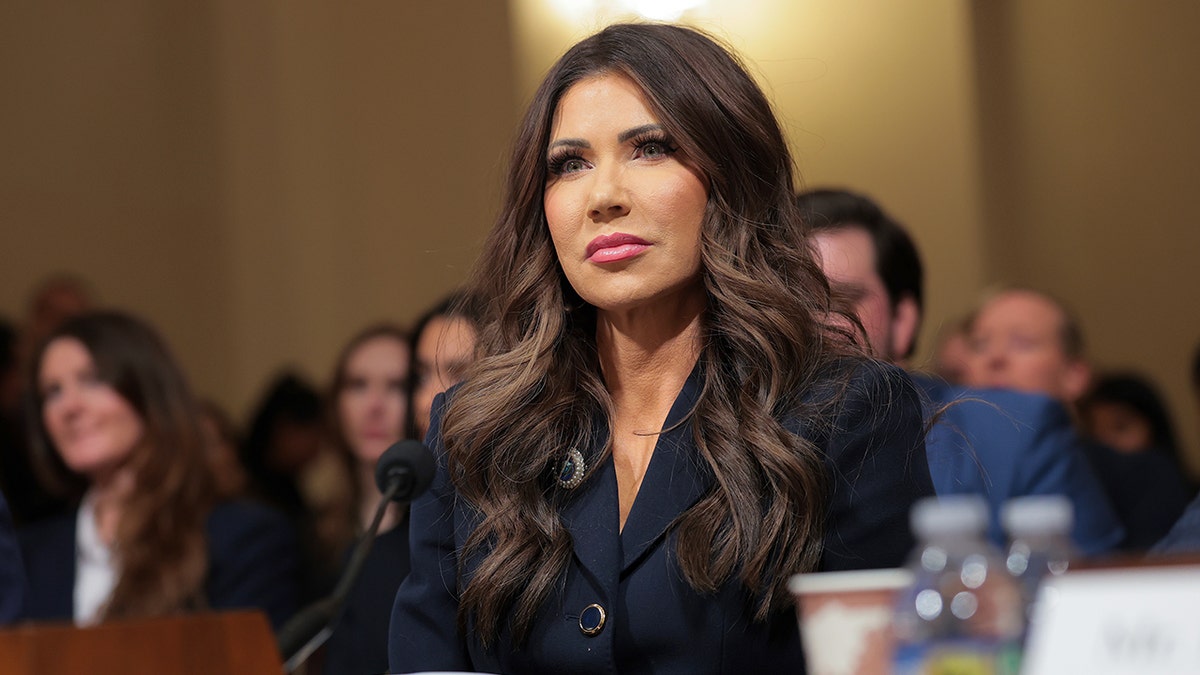
Secretary of Homeland Security Kristi Noem testifies before the House Committee on Homeland Security in the Cannon House Office Building on Dec. 11, 2025, in Washington, D.C. (Anna Moneymaker/Getty Images)
GOP SEN. CASSIDY BREAKS WITH TRUMP OVER DEADLY SHOOTING BY BORDER PATROL AGENT IN MINNEAPOLIS
Even with new body camera requirements, additional training mandates and some reductions in funding, Democrats saw the package as unlikely to prevent future deadly clashes between ICE and agitators.
Rep. Ilhan Omar, D-Minn., and the Congressional Progressive Caucus, a group of over 70 lawmakers, said they wouldn’t support a spending bill that didn’t include greater guardrails for ICE.
«I am glad to announce that the Congressional Progressive Caucus has adopted an official position to hold ICE accountable. Our caucus members will oppose all funding for immigration enforcement in any appropriations bills until meaningful reforms are enacted to end militarized policing practices,» Rep. Ilhan Omar, D-Minn., said at a press event shortly before Republicans unveiled their DHS bill last week.
Their calls were soon adopted by party leadership in the chamber.
Now, with the death of Pretti, what little support the DHS funding had among Democrats is dwindling further.
Suozzi, who had highlighted his role as one of seven Democrats to support the bill on his website, called on Trump to end his ICE deportation campaign.
«The senseless and tragic murder of Alex Pretti underscores what happens when untrained federal agents operate without accountability. President Trump must immediately end ‘Operation Metro Surge’ and ICE’s occupation of Minneapolis that has sown chaos, led to tragedy and undermined experienced local law enforcement,» Suozzi said.

An ICE agent is seen standing in front of a house in a residential area. (Victor J. Blue/Bloomberg via Getty Images)
CLICK HERE TO DOWNLOAD THE FOX NEWS APP
The Senate is expected to vote on the bundle of four bills in the coming days. Questions remain whether negotiators will modify the DHS package to avoid a shutdown if Democrats remain united in their opposition.
If modified, the package would have to be taken up again in the House. U.S. House Speaker Mike Johnson, R-La., has said he has no intention of bringing the House back in the coming week.
congress,democrats,minnesota,politics











INTERNACIONAL
Donald Trump vuelve a amenazar a Irán, mantiene sus tropas en la zona y no es claro cómo sigue la tregua


INTERNACIONAL
Inside Tehran after strikes: Iranian woman describes fear, checkpoints and people used as ‘human shields’

NEWYou can now listen to Fox News articles!
An anonymous Iranian woman has bravely stepped forward on the international stage to describe what’s really happening on the ground in Tehran as President Donald Trump’s two-week ceasefire with Iran tentatively began Tuesday.
In an essay published in The Australian, the anonymous author details nightly explosions, sweeping checkpoints and communications blackouts as a part of Iranian daily life since the beginning of operations launched by the United States and Israel in February.
«In effect, ordinary people have been turned into human shields within a vast militarized landscape,» she wrote. «A pervasive sense of anger, paranoia and exhaustion has taken hold.»
Flagrant public executions of protesters by the thousands by the Iranian regime in January moved residents to cheer on the initial days of attacks by U.S. and Israeli forces as Operation Epic Fury began on Feb. 28.
WHY TRUMP, IRAN SEEM LIGHT-YEARS APART ON ANY POSSIBLE DEAL TO END THE WAR
Iranians gather after a ceasefire announcement at Enqelab Square, Wednesday, in Tehran. The U.S. and Iran agreed to a two-week ceasefire Tuesday, barely an hour before President Donald Trump’s deadline to obliterate the rival country was set to expire. Tehran temporarily reopened the vital Strait of Hormuz. (AFP via Getty Images)
«They say they’ve hit the leader’s residence,» the author’s daughter was quoted saying. «All the children were screaming and cheering. … Even our teacher was quietly snapping their fingers and dancing.»
The author described everyday Iranians celebrating the death of Supreme Leader Ayatollah Khamenei that same Saturday, and the streets of Tehran filling with cheers of «death to the dictator.»
«Perhaps for the first time,» the anonymous author recalled, «we allowed ourselves to believe our long-held dream was beginning to take shape.»
RED CROSS SHARES AUDIO OF IRANIAN CIVILIAN EXPLAINING SITUATION ON THE GROUND IN TEHRAN: ‘NO RESPITE’
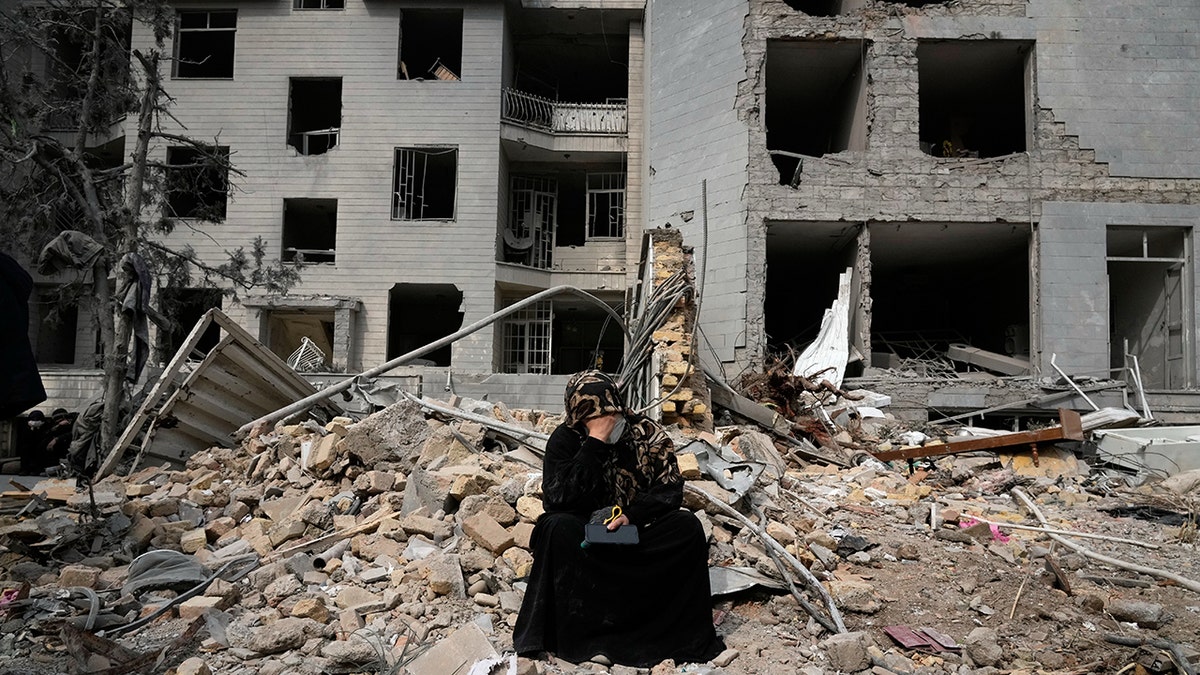
A woman sits on rubble across from a building damaged during airstrikes March 12 in Tehran, Iran. (Vahid Salemi/AP)
But soon enough, the reality of day-to-day life under a threatened, crumbling regime and ongoing attacks took a toll. One of the harshest realities those on the ground in Iran face is the internet blackout, effectively ending communications with the outside world and leading to great uncertainty at the hands of the regime.
«So far, none of those close to us have suffered physical harm, but no night is calm,» the Iranian woman wrote. «What weighs most heavily is not only the war itself, but the possibility that it may end leaving behind a regime even more authoritarian, more repressive and more violent.»
According to the author, a stubborn faction of regime supporters remain, blasting propaganda on loudspeakers nightly through the streets of Tehran and reinforcing its authority to those who support the revolution.
TRUMP’S IRAN CEASEFIRE ROCKED WITHIN HOURS AMID REPORTED MISSILE, DRONE ATTACKS

Rescue workers search through the rubble of a collapsed building after an airstrike March 27 in Tehran, Iran. (Majid Saeedi/Getty Images)
«The streets are now covered with checkpoints,» she wrote. «Under bridges and along main roads, movement is restricted. Long traffic lines form. Young people are stopped, their phones inspected under the pretext of routine checks.»
After the announcement of the ceasefire between U.S. forces and the Iranian regime Tuesday, the author said, most of her country went to sleep that night in a «state of deep anxiety.»
«What weighs most heavily is not only the war itself, but the possibility that it may end up leaving behind a regime even more authoritarian, more repressive, and more violent,» the author notes.
She urged a ceasefire that is not «abandonment,» but peace, destabilizing the Iranian regime.
«A ceasefire that stabilizes the current order, without addressing the demands that have brought Iranians into the streets for years, risks being experienced not as peace, but as abandonment,» the author wrote.
CLICK HERE TO DOWNLOAD THE FOX NEWS APP
Negotiations between Iran and the U.S. are scheduled to begin Friday in Pakistan.
«We wait, and we continue, in whatever ways possible, to insist that light will eventually overcome this darkness,» she concluded.
The Australian notes the author remains anonymous for «fear of retribution.»
war with iran, iran, israel, world, geopolitics, military, donald trump
INTERNACIONAL
Elecciones en Hungría: después de 16 años en el poder, Viktor Orbán busca otro mandato frente a un rival en ascenso

Viktor Orbán, el primer ministro ultranacionalista de Hungría y uno de los políticos más controvertidos de Europa, buscará este domingo su cuarta reelección consecutiva en clara desventaja, según todas las encuestas.
Tras 16 años en el poder, los sondeos señalan que el premier podría perder las elecciones frente a su rival, el conservador Péter Magyar, de 45 años y líder del partido Tisza, en medio de una fuerte radicalización de su discurso.
El líder de la derecha populista húngara está en el poder desde 2010 con mayorías parlamentarias de dos tercios al frente de un sistema político centralizado y personalista que tensó cada vez más su relación con la Unión Europea (UE).
Orbán, líder del partido Fidesz, es el principal aliado de Rusia entre los líderes de los 27 países de la UE y un fuerte crítico de las sanciones europeas a Moscú por la invasión de Ucrania. Ha sido, en los últimos años, una piedra en el zapato para las políticas de Bruselas en el conflicto.
La última encuesta, publicada la semana pasada por el Centro de Investigaciones 21, otorga al Tisza el 56 % de los votos, 19 puntos más que al Fidesz de Orban, de 62 años.
En ese escenario adverso, el gobierno de Donald Trump envió esta semana a Budapest a su vice, J.D. Vance, para demostrar su respaldo al gobierno de Orbán, en un intento por traccionar el voto oficialista.
La campaña culmina en un ambiente de elevada tensión
La campaña para las elecciones generales de este domingo culmina en un ambiente tenso, marcado por acusaciones de injerencias extranjeras, compra de votos y otros fraudes electorales.
Un reciente estudio del instituto Publicus publicado en el diario independiente Népszava señala que el 79 % de los húngaros considera posible que algún país extranjero realice acciones secretas para influir en las elecciones.
El candidato opositor Peter Magyar, líder del partido Tisza (Foto: REUTERS/Bernadett Szabo)
El 46 % apunta a Rusia, el 30 % a Ucrania, el 28 % a la Unión Europea (UE) y el 17 % a Estados Unidos. El portal de investigación VSquare aseguró en marzo, en base a fuentes de seguridad nacional europeas, que Moscú envió un equipo a Budapest para interferir en las elecciones.
Este equipo estaría “en contacto activo con los operativos de la campaña relacionados con el gobierno de Orbán”, afirmó el portal. Además, dijo que la prensa cercana al Gobierno publica narrativas “alineadas con el Kremlin”.
Mientras tanto, el prestigioso instituto Political Capital asegura que “se está llevando a cabo una campaña de desinformación, que según todos los indicios tiene origen ruso” sobre supuestas injerencias ucranianas en la campaña electoral.
Leé también: Una protesta en una cárcel de presos políticos extranjeros en Venezuela fue reprimida y hay heridos
El Gobierno, por su parte, afirma que es Ucrania la que quiere interferir en las elecciones. Kiev, afirma Orbán, bloquea el envío de crudo ruso a Hungría a través de su territorio para debilitar a su Gobierno, para lo que cuenta con el apoyo de “los burócratas de Bruselas”.
En este punto, el primer ministro contó con el apoyo del vicepresidente de EEUU, JD Vance, que en su visita a Budapest el martes afirmó que “lo que ha sucedido en este país es el peor ejemplo de una intervención extranjera”.
Según Vance, “la intervención de los burócratas de Bruselas es indigna” y se debe a que “no les gusta el líder electo de Hungría”.
Prácticas populistas, amenazas y compra de votos
Por otra parte, un reciente documental independiente emitido por Youtube, titulado El precio del voto, denunció estructuras de poderes locales que presionan a los sectores más vulnerables en el interior del país, donde mucha gente dependen de las prestaciones sociales, para que emitan votos a su favor.
El Fidesz profundizó este sistema, existente desde hace décadas en las regiones más pobres de Hungría, afirma el documental. Así, aplica métodos de compra de votos y otros de intimidación, como la amenaza de pérdida de prestaciones sociales o de empleo, y hasta el chantaje de quitarles los hijos menores de edad.
Un activista señala en ese documental, producido por asociaciones civiles y periodistas independientes, que esta red en caso extremo podría llegar hasta a medio millón de votantes, en un país con poco más de 8 millones de ciudadanos con derecho a voto.
Temor a una postergación de las elecciones
La encuesta de Publicus asegura por otra parte que el 88 % de los votantes dice que en la recta final de la campaña ya no sucederá nada que le haría cambiar sus preferencias.
Eso sí, el 66 % de los encuestados dice que el gobernante partido Fidesz sería capaz de cometer fraude electoral, mientras que en el caso del Tisza la proporción es sólo del 15 %.
En los últimos meses los críticos de Orbán temían que en vista de los malos datos en las encuestas y de la gran popularidad de su rival, el Fidesz podría posponer las elecciones.
Pese a que el Gobierno asegura que las elecciones se realizarán de acuerdo al orden legal, el 55 % de los húngaros no excluye que los comicios se pospondrán hasta el último momento, aludiendo a alguna situación de excepción.
(Con información de EFE)
hungria, Viktor Orban

Gigante fast fashion sueca cada vez más cerca de Argentina: abriría primer local en shopping premium

Pep Biel: ‘Con el mismo calendario que en Europa, la MLS puede crecer más’

Kicillof lanzó su rama universitaria, denunció “saña” del Gobierno y lo calificó de “manga de chorros e ignorantes”

Donald Trump vuelve a amenazar a Irán, mantiene sus tropas en la zona y no es claro cómo sigue la tregua

Kicillof advirtió que el peronismo no puede repetir la interna que atravesó el Gobierno del Frente de Todos

El horóscopo de hoy: viernes 10 de abril

Se viene el buen clima: el pronóstico del clima para este fin de semana de abril

Trump blasts Biden admin for releasing illegal immigrant now charged in fatal hammer attack on Florida mother

Elecciones en Hungría: después de 16 años en el poder, Viktor Orbán busca otro mandato frente a un rival en ascenso

El Gobierno enviará al Congreso una reforma para eliminar y fusionar varios organismos públicos

 3 horas ago
Se viene el buen clima: el pronóstico del clima para este fin de semana de abril
- INTERNACIONAL2 horas ago
Trump blasts Biden admin for releasing illegal immigrant now charged in fatal hammer attack on Florida mother
- INTERNACIONAL2 horas ago
Elecciones en Hungría: después de 16 años en el poder, Viktor Orbán busca otro mandato frente a un rival en ascenso